Trendy haircuts for women over 40 – 2027 becomes a far more useful subject when you stop scanning for a single “best” shape and start reading how each cut is actually composed. The details that matter are proportion, where volume sits relative to the jawline, how colour placement directs attention, and what the perimeter line does at the back versus the sides. A haircut is architecture, and understanding the blueprint matters more than copying the finished building.
Before you scroll, the comparison worth making across every image below is the relationship between length and density. A bob that ends at the chin creates a different visual weight than one that grazes the collarbone, even when both are called “bobs.” Notice where highlights start, whether ends are blunt or textured, and how much of the forehead is exposed or screened. No single silhouette here is a universal answer, and that is the point.
1. Warm Highlights Anchor a Soft Inverted Hem
The dominant element is the colour graduation — a medium-brown base darkening at the crown and lightening through the mid-lengths into caramel-toned ends. The cut falls to roughly chin level, with the back slightly shorter than the sides, forming a gentle inverted line. Volume is concentrated in the upper-mid section, giving the shape a rounded profile rather than a flat one.
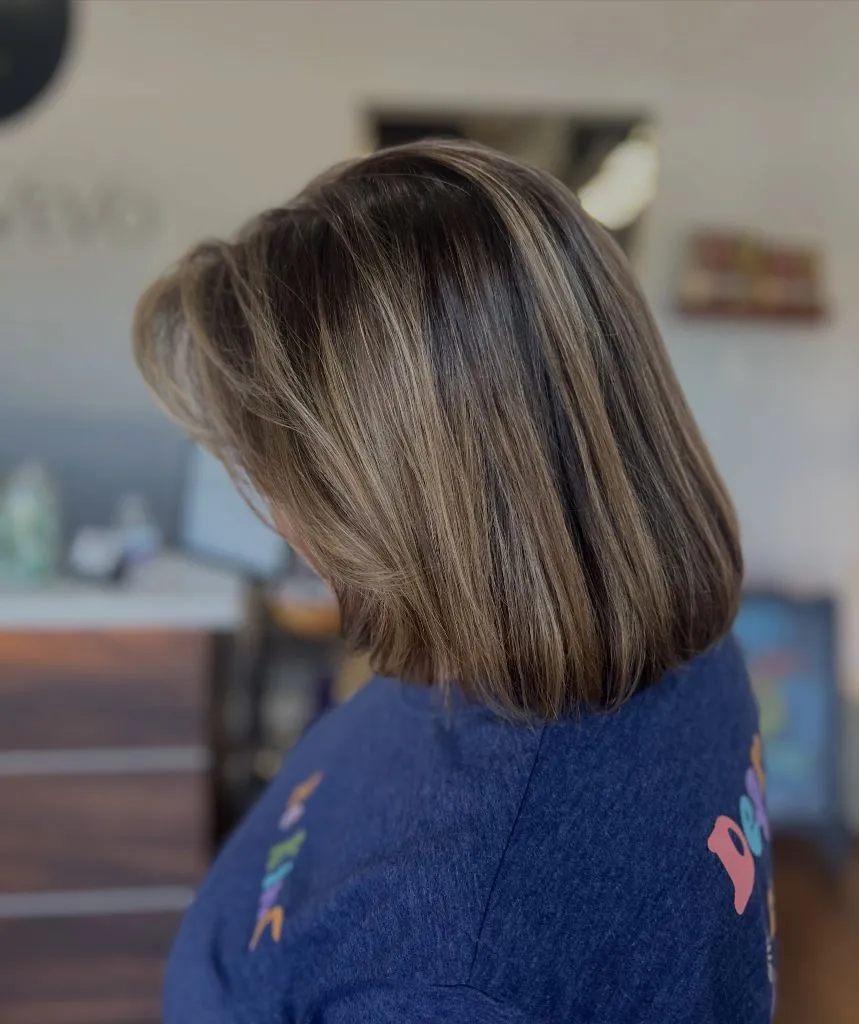
The lighter strands around the perimeter catch the most light, which pulls the eye downward and outward, away from the crown. This keeps the shape from reading top-heavy despite the visible root depth. The blowout finish adds a slight inward curve at the ends, creating a clean endpoint that contrasts with the otherwise natural-looking texture through the body of the hair.
The transferable principle here is about endpoint control. If you want a cut at this length to look deliberate rather than grown-out, the ends need to land in a clean line or a consistent curve, not a ragged scatter. The colour does heavy lifting by drawing attention to exactly where the shape resolves, so even a simple trim reads as intentional architecture.
2. Side-Swept Fringe Sharpens a Cropped Silhouette
A short, stacked shape dominates here, with the back closely tapered and the front sweeping forward past the cheekbone in a long, angled fringe. The colour is a warm blonde with visible darker lowlights running vertically through the lengths, which creates a striped visual rhythm rather than a smooth, blended gradient. The cut’s asymmetry — short in the back, long in the front — is the structural headline.
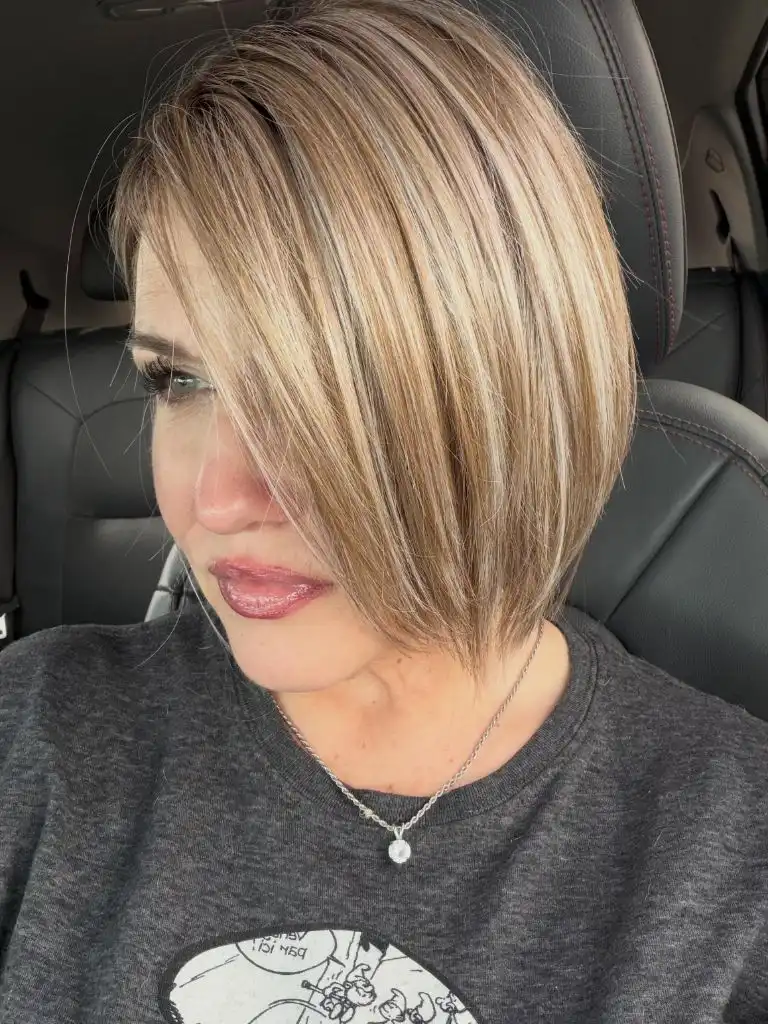
The lowlights serve as internal lines that emphasise the direction of the cut, pointing from crown to chin like drawn guides. Without them, the blonde field would flatten out and the angular geometry would lose definition. The fringe screens one eye, which concentrates attention on the jawline and the lips rather than distributing it evenly across the face.
The honest limitation is maintenance. An asymmetric shape this precise grows out quickly; even two or three weeks of growth at the nape will soften the sharp contrast between front and back. If you want the drama of this angle without the schedule, you could ask for a less extreme version — an inch less difference between back and front still reads as directional without requiring monthly trims.
3. Bangs Frame a Rounded Classic Bob
Here, the composition centres on a full, blunt fringe sitting just above the eyebrows, paired with a chin-length bob that curves gently inward at the ends. The hair is a cool-toned, medium brown — close to a natural salt-and-pepper blend — and the overall shape is notably symmetrical. Compared with the angular cut above, this silhouette is deliberately even and centred.
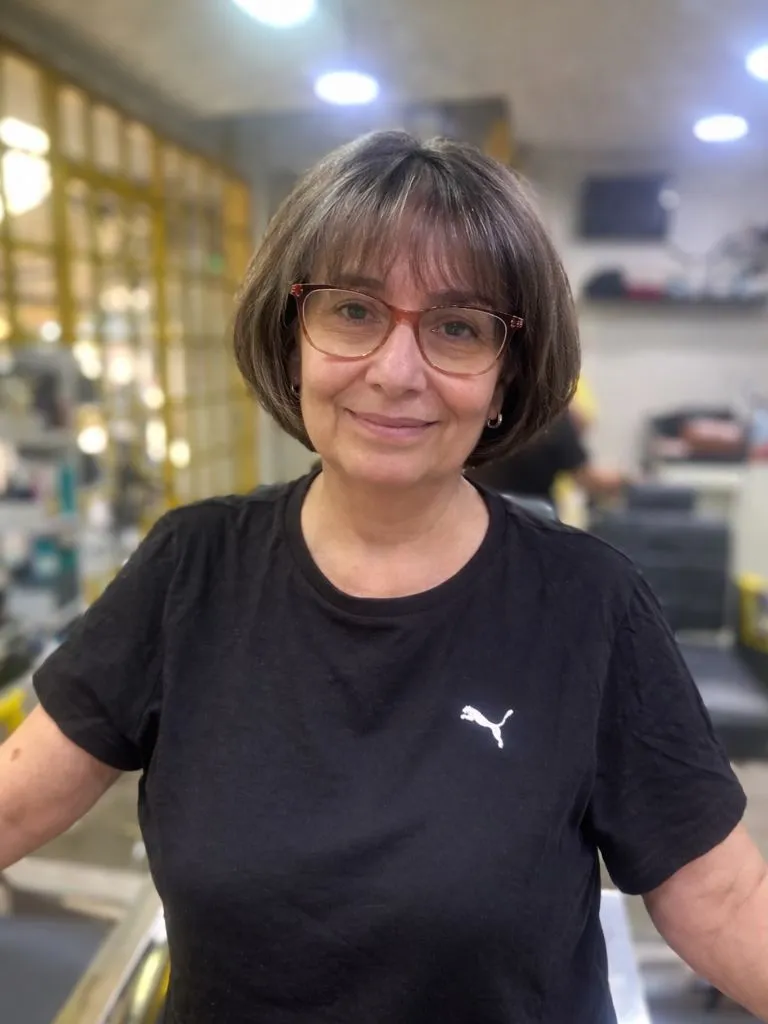
The fringe acts as a horizontal frame across the top of the face, echoed by the horizontal line where the ends meet the jaw. These two parallels create a contained rectangle of face between them, which reads as structured and tidy. The glasses add a second frame within the first, and because their tortoiseshell colour is close to the hair’s mid-tones, they integrate rather than compete.
For anyone drawn to trendy haircuts for women over 40 – 2027, this particular shape is worth studying because of how little it relies on colour technique. There are no highlights, no balayage, no tonal tricks — the cut itself does all the work. That also means the shape has nowhere to hide: the line must be precise, and the fringe must be trimmed consistently, or the geometry collapses.
4. Layered Volume Lifts a Silver Shoulder Cut
Silver-white hair with a slight warm undertone takes up nearly the entire visual field, and the volume is the story. The layers begin around ear level and build outward through the mid-lengths, creating a rounded, almost bouffant-like profile at the back. The ends land just below the shoulders, and their soft, feathered texture prevents the shape from reading heavy despite the density.
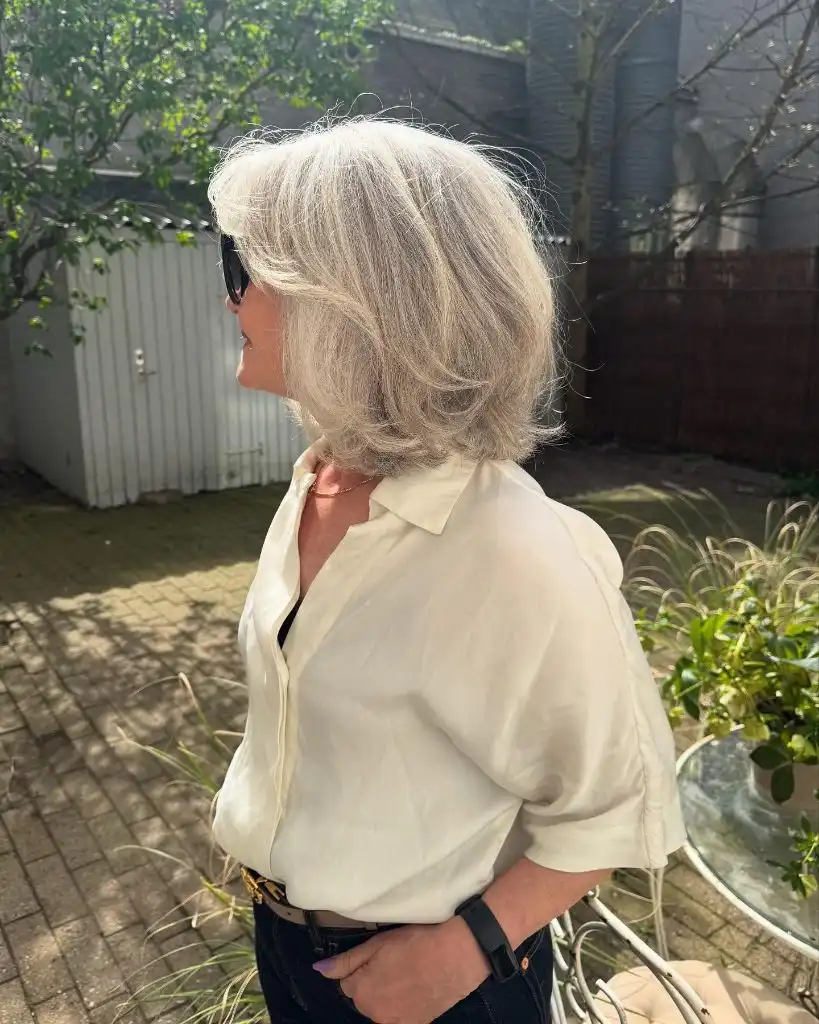
A side-swept section keeps the top relatively flat, which means the volume peaks at the mid-back rather than the crown. This placement matters: high volume adds height, while volume at the mid-back adds width and movement. The pale colour amplifies every strand’s separation, so the layers look more pronounced than they would in darker hair. Sunglasses and a cream-coloured shirt disappear into the tonal range, leaving the hair as the sole focal point.
The principle to borrow is volume placement as a design choice, not an accident. If you layer from the crown, the silhouette lifts upward; if you start layers at the jaw or below, the width shifts lower. This cut chooses the latter, and the result is a relaxed, lateral spread that reads as effortless rather than structured, though it clearly required deliberate cutting to achieve.
5. Dark Layers Cascade With Controlled Movement
After the light, airy shapes above, this medium-length cut reads notably darker and denser. The hair is a deep, cool-toned brown — almost charcoal at the crown — with natural-looking grey strands threaded through the lengths. Layers are cut to flip outward at the ends, creating a visible separation between the upper curtain of smooth hair and the textured, flipped-out lower section.
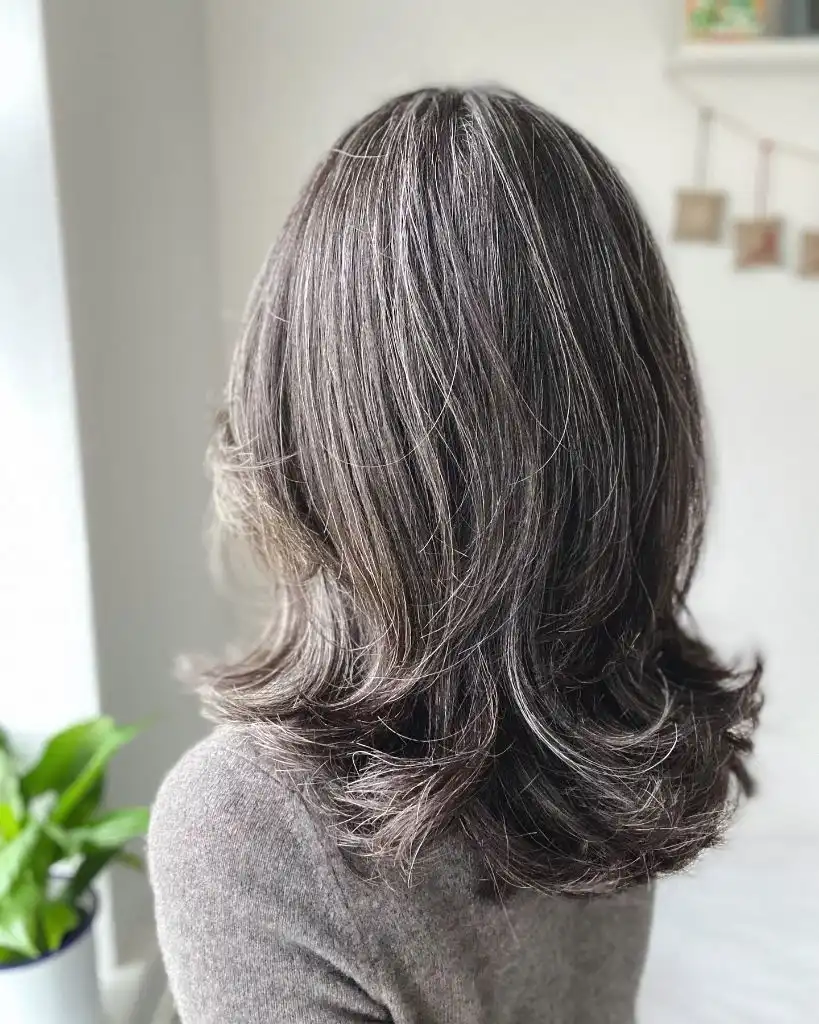
The grey threads function like built-in highlights, adding visual texture without any obvious colouring process. They break up the dark field enough to prevent the shape from reading as a single solid block, which is a risk with dense, dark hair at this length. The longest pieces reach mid-back, but the shorter interior layers create movement that begins around the shoulder blades, so the silhouette has internal life rather than hanging flat.
The useful adaptation note: if you are growing out grey naturally and want the transition to look intentional, this kind of layered cut gives the salt-and-pepper blend a framework. Without layers, the grey-to-dark gradient can look unfinished; with them, each strand has its own endpoint, and the colour variation reads as textural depth rather than neglect. Exploring medium-length hairstyle ideas can help refine what specific layer length suits your face shape.
6. Platinum Crop Keeps Its Weight Forward
A short, textured cut in platinum white dominates, with the fringe pushed forward and slightly to one side. The hair’s visual weight sits at the front of the head, over the forehead and temples, while the back and sides are cropped closer. This front-loading creates a clear directional energy — the eye moves from back to front, ending at the fringe tips.
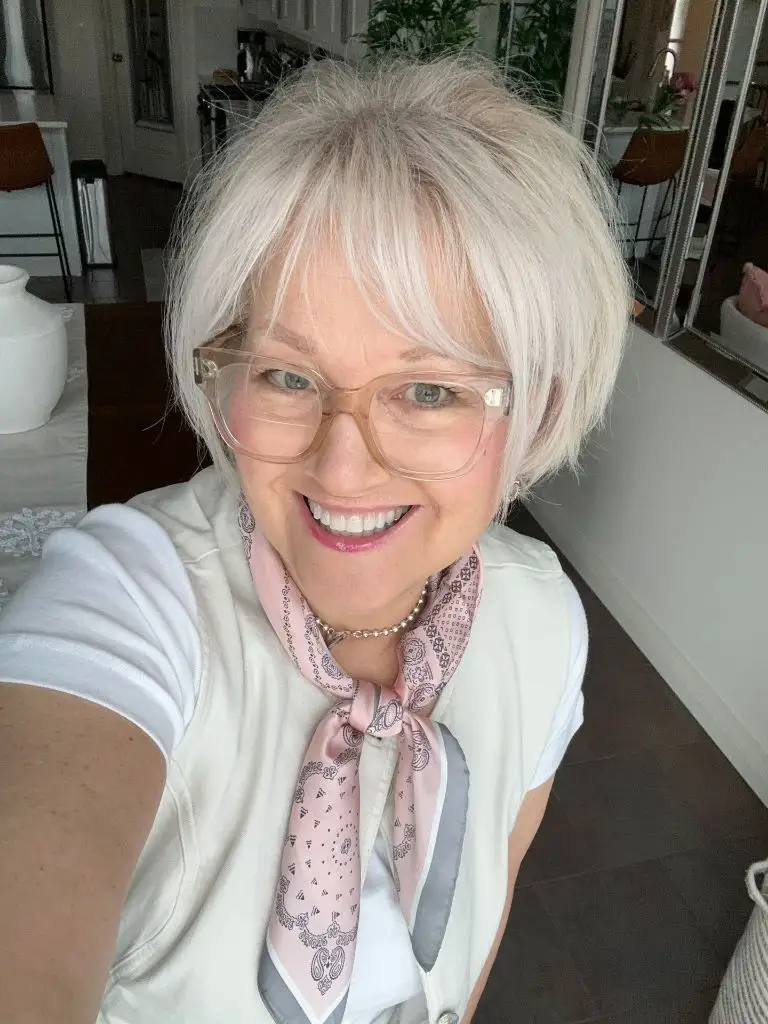
Glasses with warm, translucent frames sit in the middle of the composition, and their colour — a pale amber — introduces the only warmth in an otherwise cool-toned palette. The scarf adds a pink-and-grey pattern at the neckline, but it sits below the hair’s endpoint and reads as a separate layer rather than part of the hairstyle’s story. The platinum colour shows every directional choice in the cut because there is no tonal variation to distract.
I like the restraint of this silhouette — it does not try to add volume or length where neither exists. The trade-off is that platinum this light requires significant upkeep, including toning to prevent yellowing and regular root touch-ups. The cut itself, however, is low-maintenance: a short crop with texture needs only product and fingers, not heat tools, to hold its shape each morning.
7. Tousled Silver Meets a Curtain Part
Silver hair again, but the composition is entirely different from item 4 or 6. Here, the length reaches the chin, the part is roughly centred, and the texture is deliberately undone — loose, separated pieces that move in different directions rather than falling in a uniform curtain. The effect is soft, wide, and unstructured, with the hair framing the face on both sides equally.
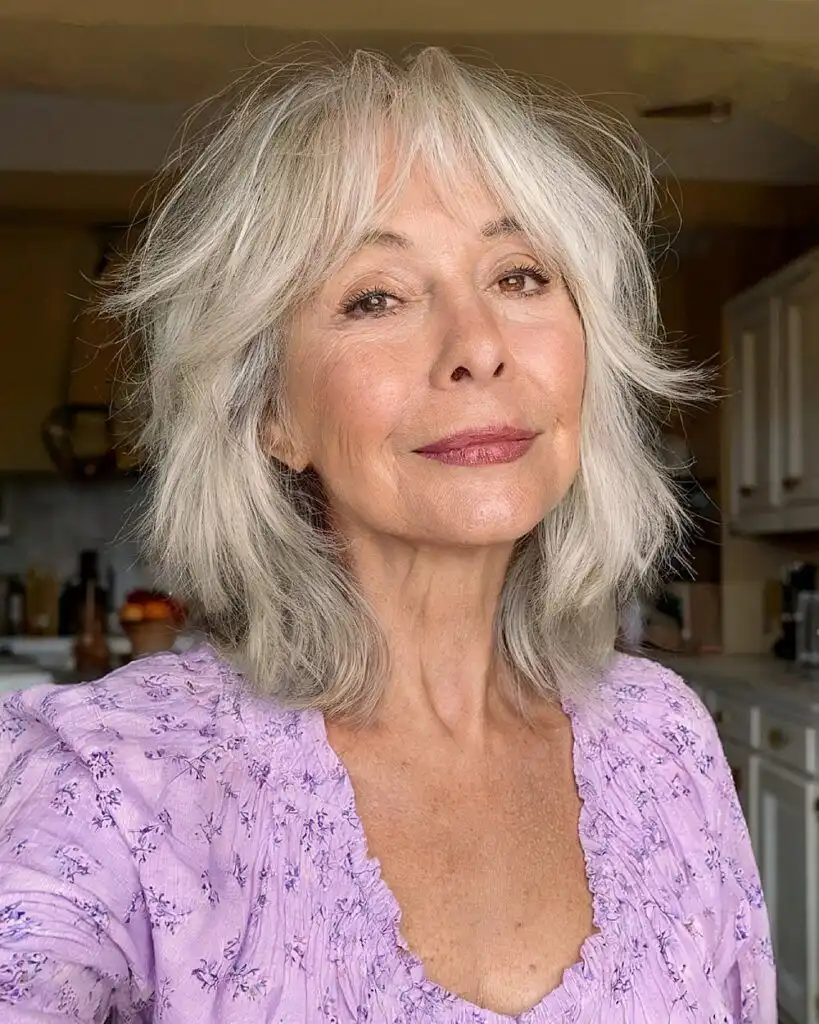
The face-framing sections are the longest, reaching past the jawline, while the back appears slightly shorter, which gives the profile a gentle A-line quality without the sharp angle of a true inverted bob. The silver reads warmer here than in the platinum crop — there is a hint of ash-blonde running through the mid-lengths — and this slight warmth keeps the hair from looking stark against the skin.
The comparison worth noting is between this and item 3, both chin-length and both with a relatively simple palette. But where item 3 uses blunt precision and a structured fringe to create order, this cut uses deliberate disorder — the tousled finish, the uneven part, the varied strand directions — to create softness. They are opposite strategies for the same length, and neither is inherently better; the choice depends on whether you want your cut to read as architecture or atmosphere.
8. Feathered Blonde Layers Build Outward
A short, layered cut in warm blonde creates a silhouette that expands outward from a close-cropped nape to a wider, flipped-out mid-section. The heaviest visual weight is at the sides, around ear-to-jaw level, where the layers kick out and catch light on their curved surfaces. The back view reveals a stacked construction — shorter, tighter layers at the base graduating into longer, freer ones above.
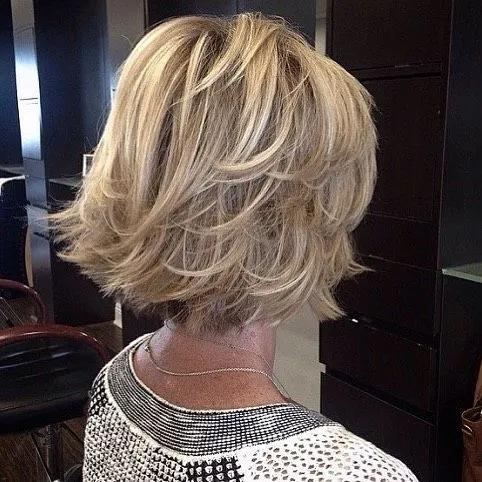
Highlights in a lighter, almost white-blonde are concentrated at the ends of each layer, which means the outermost perimeter is lighter than the interior. This creates a halo-like outline when backlit and adds visual separation between the individual layers. The darker roots — visible at the crown — provide an anchor that keeps the blonde from floating away into shapelessness.
Among trendy haircuts for women over 40 – 2027, this stacked approach is a useful example of how layers can add width precisely where you want it. The lesson is about endpoint variety: every layer ends at a slightly different point, and because each tip is highlighted, you can see the graduation clearly. If you prefer a smoother read, you would skip the end-highlighting and keep the tonal range tighter; if you want more drama, you would increase the flip with a round brush.
9. Smooth Side-Parted Bob Holds a Clean Curve
A chin-length bob in natural-looking medium brown, parted to one side, curves gently inward at the ends and catches strong sunlight along its outer surface. The smoothness is the dominant characteristic — there is no visible layering, no texture, no breakup. It reads as one continuous, polished surface from root to end, and the light slides across it in a single unbroken gradient.
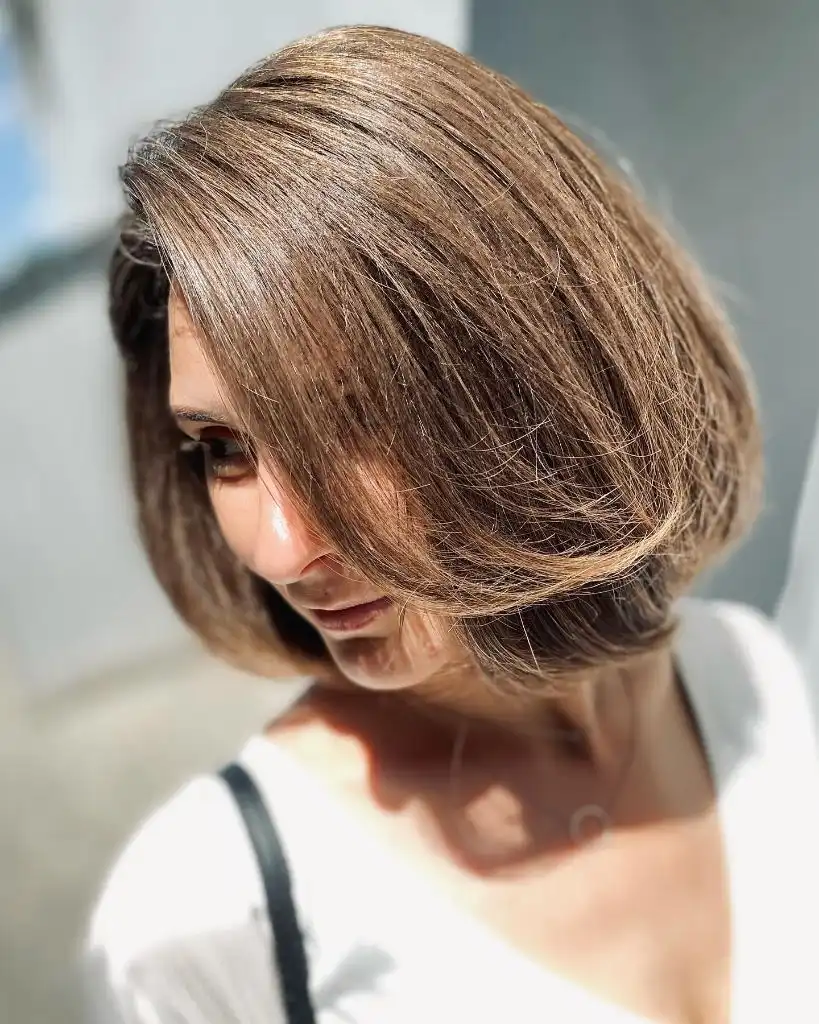
The side part introduces a subtle asymmetry: more hair falls to one side, which adds a slight diagonal to an otherwise horizontal shape. In direct sunlight, the surface reveals very fine natural highlights — likely the result of sun exposure rather than salon colour — which give the brown a dimensional quality that would be invisible under indoor lighting. The inward curve at the endpoints creates a contained, rounded perimeter.
This is the quietest shape in the set so far, and its strength is that quietness. The limitation is real, though: a smooth, one-length bob at this level of polish requires either naturally straight, glossy-looking hair or regular blowouts and possibly smoothing treatments. Humidity, natural wave, or even sleeping on it can disrupt the unbroken surface that makes this cut read as intentional rather than merely uncut.
10. Wavy Dark Lengths Sit Against a Half-Up Pin
A medium-length cut in deep brunette, styled in loose waves and partially pinned up at the crown. The half-up section pulls hair away from the face and adds height at the top of the head, while the remaining lengths fall in defined waves to the collarbone. The colour is uniform — a rich, warm chocolate brown with no visible highlights — which means the waves themselves are the only source of visual texture.
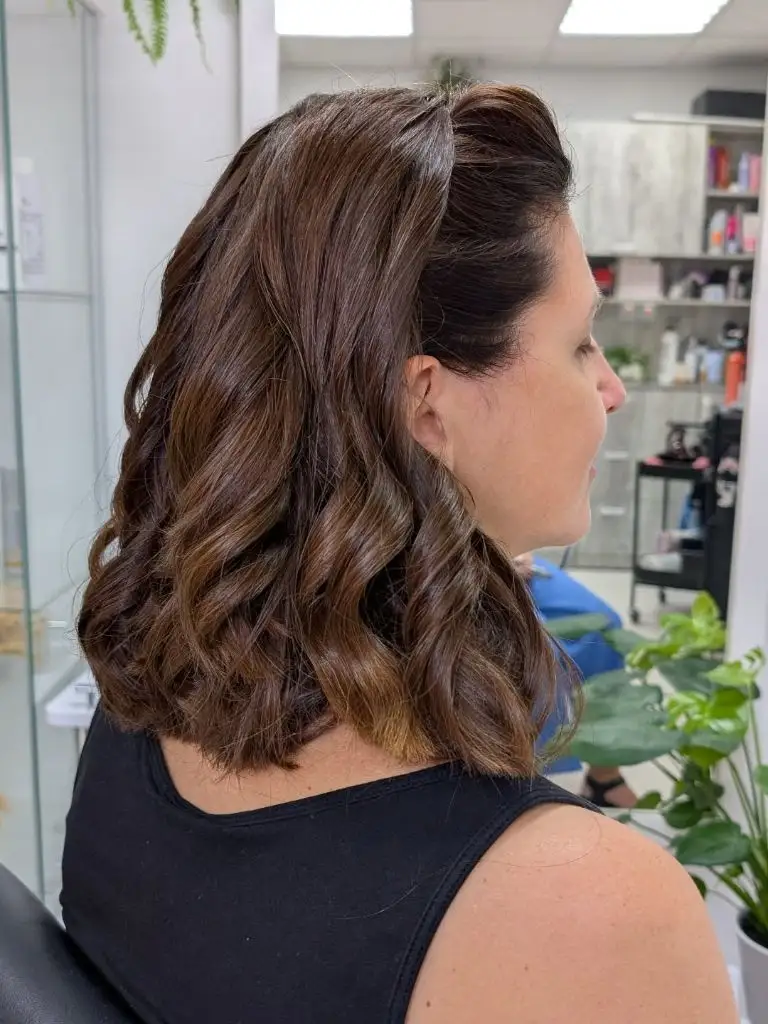
The waves are fairly uniform in size, suggesting a curling iron or wand rather than natural pattern, and they begin at ear level, leaving the roots and mid-shaft relatively smooth. This smooth-to-wavy transition creates a tonal shift in the surface, even though the colour does not change. The salon setting visible in the background suggests this is a freshly styled result, which means the day-two version of this look would read quite differently as the waves relax.
The adaptation worth noting: if you want this kind of wave pattern without the half-up element, the waves alone at this length can read as too uniform — almost pageant-like. The half-up pin breaks the predictability and adds a structural anchor at the crown. Without it, you might want to vary the wave sizes or leave a few straighter pieces to create the contrast that the pin currently provides.
11. Blunt Bob With Vertical Highlight Stripes
A straight, chin-length bob in medium brown is shot from above, revealing a pattern of thin, evenly spaced highlights running vertically from crown to ends. The cut is blunt — every strand appears to terminate at the same line — and the hair lies flat against the head with minimal volume. The highlight pattern is the composition’s organising principle, creating a striped visual rhythm across the entire surface.
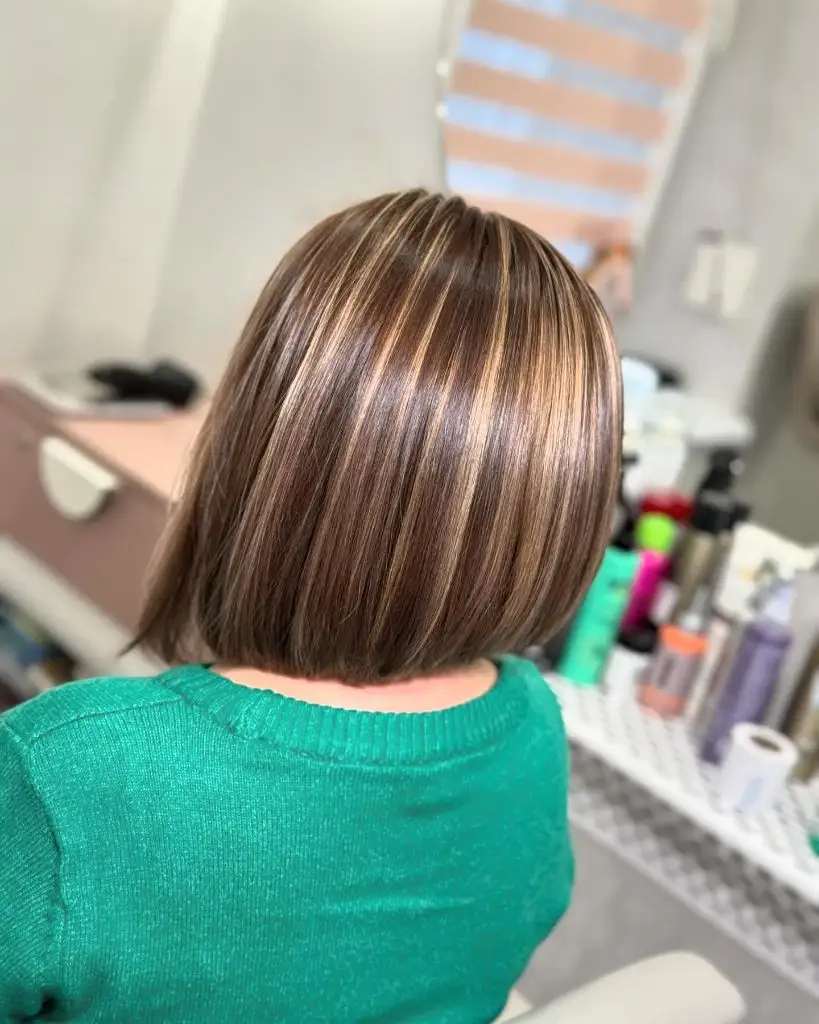
The highlights are a warm caramel, lighter than the base but not dramatically so, and their even distribution means no single section is lighter or darker than any other. This uniformity gives the bob a graphic quality — it reads almost like a textile pattern rather than a natural hair-colour effect. The blunt endpoint amplifies this graphic feeling by providing a hard, ruled line at the bottom of the composition.
Compared with the smooth brown bob in item 9, this cut occupies the same length and general shape territory but achieves an entirely different visual effect through colour alone. Item 9 is monochrome and relies on surface sheen; this one is patterned and relies on tonal contrast. The trade-off is visibility of regrowth — highlights this precise, starting this close to the root, will show a clear line of demarcation within a few weeks.
12. Angled Rose-Toned Bob Sharpens the Nape
A short angled bob in a distinctive rose-brown tone — a muted pink with warm undertones — creates one of the more unusual colour profiles in this set. The cut is precise: the back is cropped close to the nape, and the front extends to the jawline in a clean diagonal. The stylist’s hand is visible holding the hair, emphasising the geometry of the angle and the smoothness of the finish.
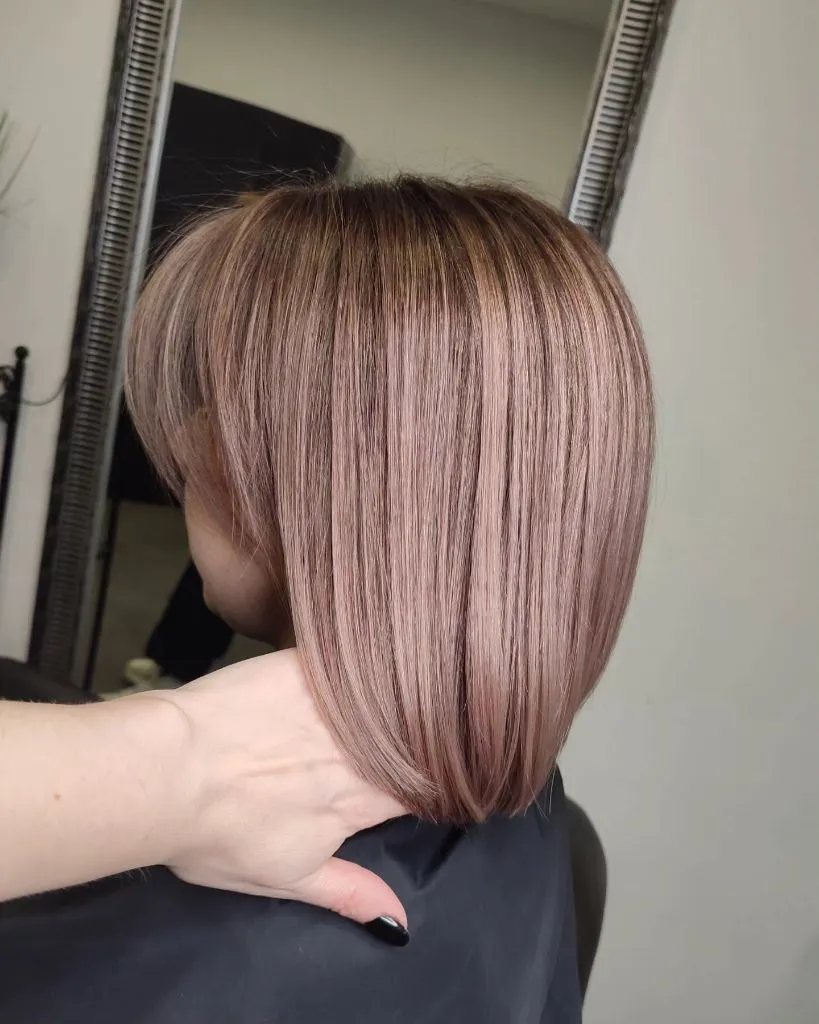
The rose tone functions as a colour field — it is consistent from root to end with no visible variation, which makes the shape the only structural element. The smooth, flat-ironed finish removes all texture, so the angle is the composition’s sole event. A mirror in the background doubles the image, reinforcing the precision of the line and making any asymmetry visible from two directions simultaneously.
For anyone exploring trendy haircuts for women over 40 – 2027, this is worth studying as an example of how colour choice and cut geometry can serve the same goal. The unusual pink-brown hue already draws attention; the sharp angle gives that attention a clear path to follow. If the colour were a standard brown, the cut would still work but would attract less notice. If the cut were a standard bob, the colour alone would not look as purposeful.
13. Straight Black Lengths Read as a Single Sheet
This image presents the longest hair in the entire set — straight, jet-black hair falling well past the mid-back in what appears to be a single, unbroken curtain. There are no visible layers, no highlights, no curl, and no breakup of any kind. The hair is so uniform in colour and texture that it reads almost as a solid geometric shape: a dark, elongated triangle narrowing toward the bottom.
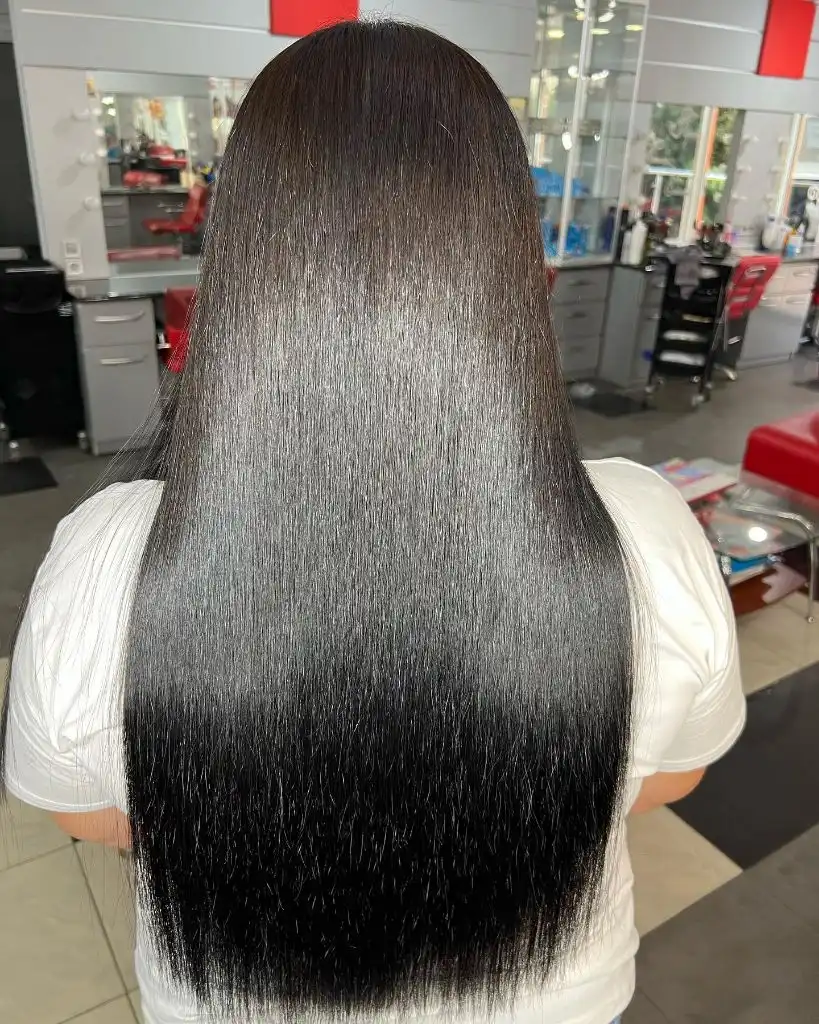
The glossy-looking surface catches overhead salon lights in a clear, horizontal band across the shoulders, which introduces the only visual event in the composition. Below that highlight, the hair darkens into its own shadow. The white top creates a stark border at the shoulders, providing contrast that makes the black appear even darker and the sheet-like quality even more pronounced.
The honest limitation is practical: hair this long and this straight requires either very cooperative natural texture or significant heat styling and smoothing to maintain the mirror-flat surface. It is also a maximalist choice — you are carrying visible weight and length, which affects how clothing drapes at the back and how the hair behaves in wind, heat, or humidity. The visual payoff is undeniable, but the daily commitment is real.
14. Cool Ash Bob Balances Between Blonde and Grey
A chin-length bob in a cool, ashy tone that sits somewhere between light brown and dark blonde, with a slight lavender-grey cast visible in the lengths. The cut is one-length and the ends are blunt, but a subtle inward bend at the tips prevents it from reading as rigid. The stylist’s hand supports the shape from behind, and the salon setting with its purple-accented decor echoes the hair’s cool undertone.
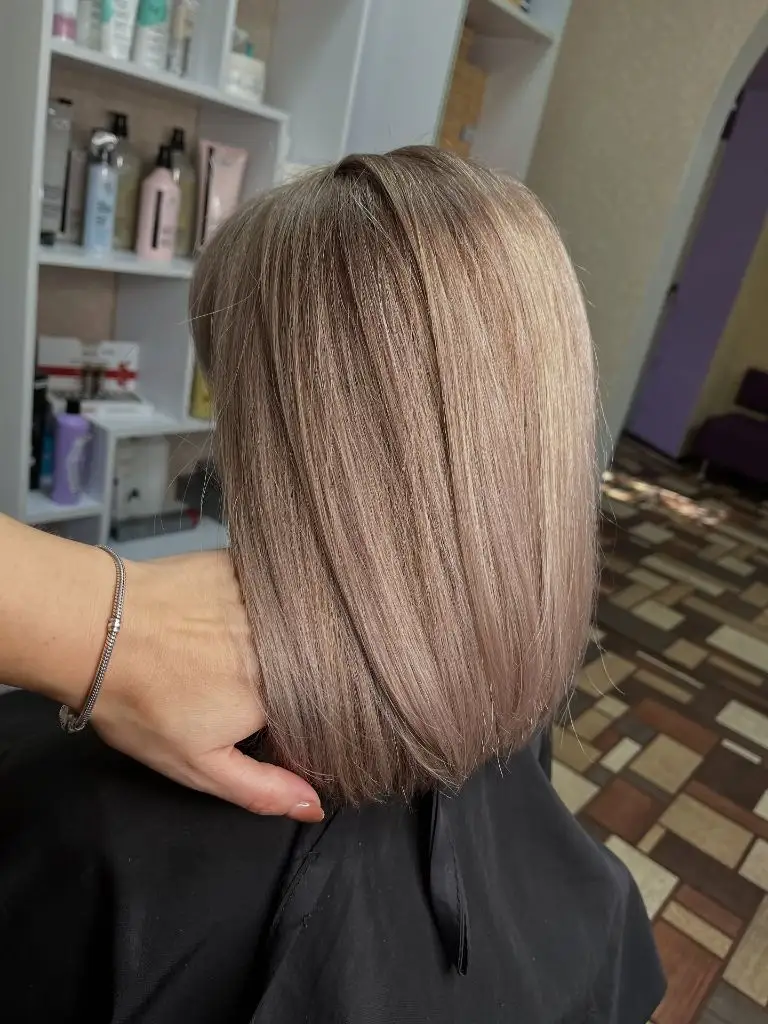
The colour’s ambiguity is the interesting element here. It does not commit to blonde, brown, or grey, occupying a liminal space that reads differently depending on the light. In this image, the top of the head catches warmer light and appears more brown, while the lower lengths fall into cooler shadow and lean grey. This natural light gradient means the hair shows two tonal personalities in a single frame.
This is a useful shape for anyone growing out previously coloured hair toward natural grey. The ash tone acts as a bridge — it is close enough to grey to ease the transition but warm enough to avoid looking washed-out under artificial light. The one-length cut helps because there are no shorter layers to reveal root contrast earlier than the rest; the regrowth line moves uniformly down the entire shape.
15. Black Textured Crop Creates Sculptural Volume
A short, dark crop in near-black hair produces one of the most sculptural shapes in this set. The hair is thick, with natural-looking wave and body, and it is cut to sit above the jawline on all sides. The volume is concentrated at the crown and temples, creating a rounded, almost helmet-like silhouette that frames the face in a contained oval.
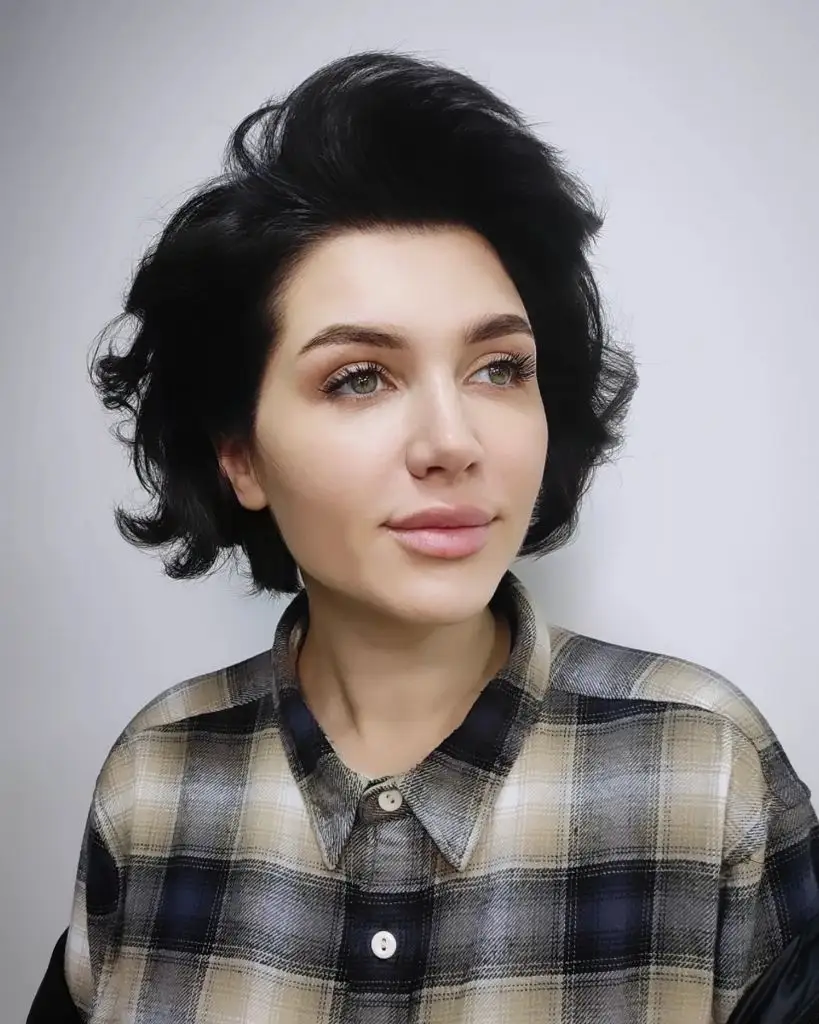
The texture does the work that highlights do in lighter hair — it creates surface variation through light and shadow on each wave and bend, rather than through colour difference. The absence of any visible colour treatment means the shape is entirely dependent on cut and texture for its visual interest. A few pieces near the face curve forward, softening the transition between hair and skin.
The adaptation to consider is density. This shape works because the hair appears naturally thick and holds its volume without visible product. On finer hair, the same cut would likely collapse at the crown and lose the sculptural quality. If you have thinner hair but want this rounded perimeter, a texturising cut with internal layering — or even a subtle wave treatment — could approximate the fullness, but the shape will always be more delicate than what is shown here.
16. Warm Blonde Waves Carry a Root-Shadow Gradient
Medium-to-long hair in a warm blonde sits in soft, open waves that fall to the mid-back. The colour features a visible root shadow — a medium brown at the crown — that transitions into golden blonde through the mid-lengths and lightens further toward the ends. This gradient creates a vertical colour journey that the waves interrupt with their horizontal curves.
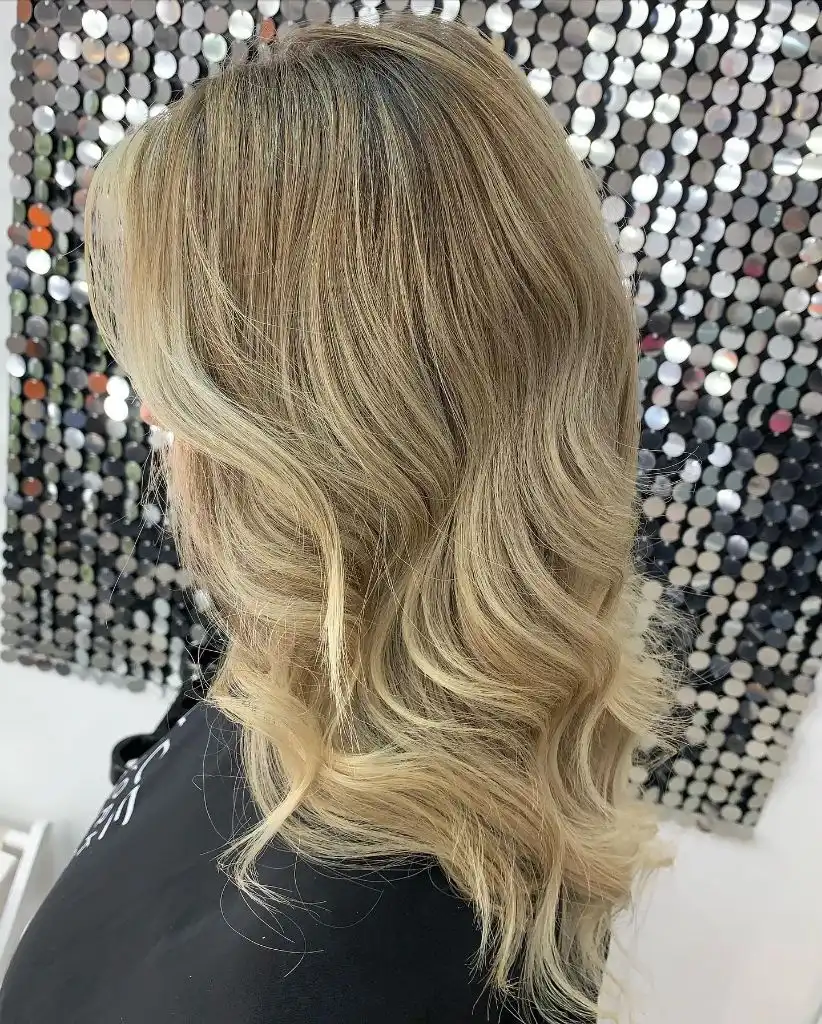
The waves are loose and open, more S-pattern than tight curl, which means the colour gradient remains readable through the bends. If the curls were tighter, the colour changes would fragment and read as patchy. This is a case where the styling choice and the colour placement are calibrated to work together — the open wave preserves the gradient’s legibility. A shimmering, disc-covered background adds reflected light that picks up the blonde’s warmth.
This is the first of two consecutive images with a similar colour palette and setting, which makes the differences between them more instructive than the similarities. Here, the waves are uniform and the ends resolve in smooth curves. The overall mood is polished and deliberate. Watch how the next image adjusts length, wave tightness, or colour placement to create a distinct outcome from a related starting point.
17. Deeper Roots Extend the Shadow Zone
The second of the pair, and the root shadow here is deeper and extends further down the head — the brown occupies the top third of the visible hair, compared with perhaps the top fifth in item 16. The blonde through the lengths is also slightly cooler, leaning ash rather than gold. The result is a more grounded, less sun-kissed effect, even though the overall structure — medium-long waves with a balayage-style gradient — is similar.
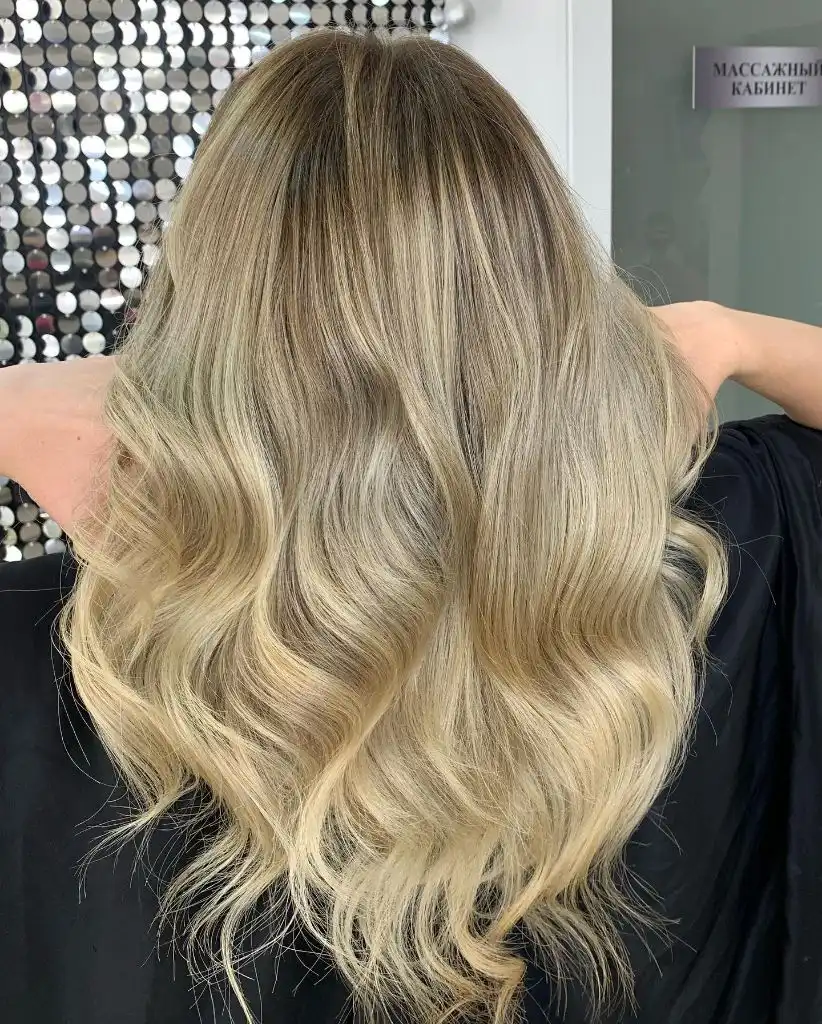
The waves are slightly more defined and slightly tighter than in item 16, which means each curve catches light differently — more highlight on the crest, more shadow in the trough. The Cyrillic text on a sign in the background suggests a salon context, and the disc wall reappears, but the lighting here is flatter, which reduces the blonde’s shimmer and lets the root shadow dominate the composition’s upper half.
The comparison reveals a clear principle: how far down the roots extend controls the overall warmth or coolness of the first impression. More root means more brown in the initial read, which makes the style look lower-maintenance and more dimensional. Less root means the blonde takes over earlier, which reads as lighter and brighter but also requires more frequent salon visits to prevent a hard demarcation line from appearing as growth continues.
18. Straight Blonde With Bangs Holds a Column Shape
A shoulder-length cut in a neutral-toned, ashy blonde, styled smooth and straight, with a layered fringe that sweeps across the forehead and blends into the side sections. The overall silhouette is a column — the width is consistent from the ears down to the endpoints, with no tapering, flaring, or layered interruption. This vertical consistency is the shape’s defining quality.
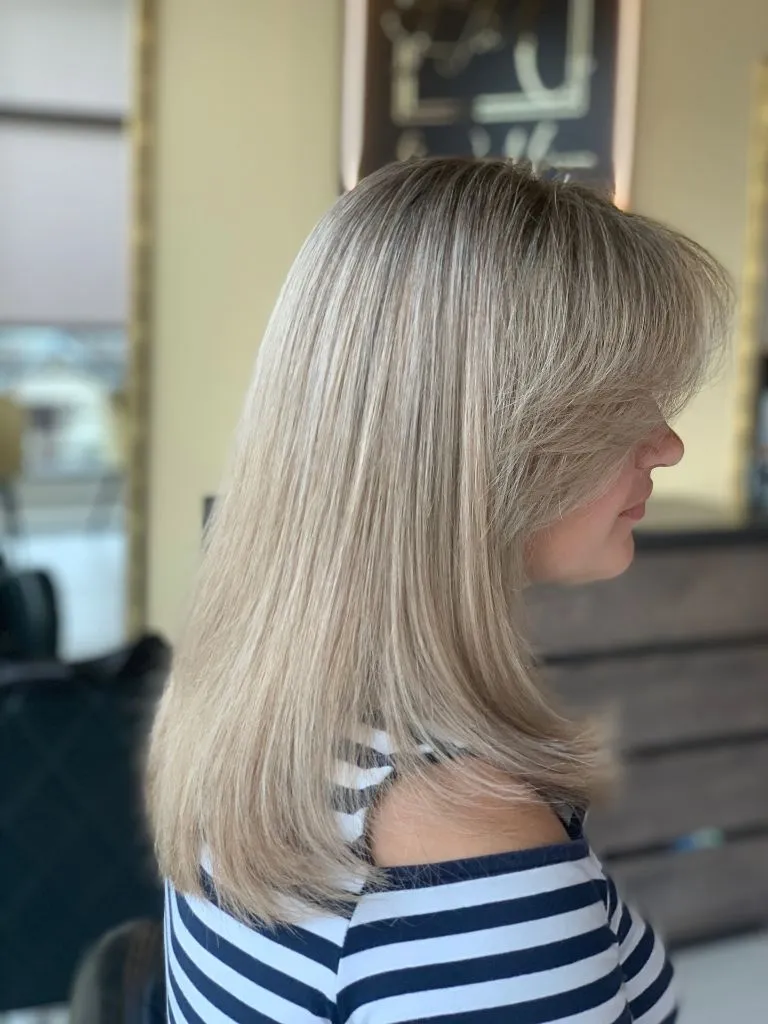
The bangs are the only element that breaks the vertical line, adding a diagonal across the forehead that gives the eye an entry point. Without them, the column shape might read as too uniform. The colour is remarkably even — no visible root shadow, no highlights, no darker underlayer — which reinforces the singular, clean impression. A striped top introduces horizontal lines at the shoulder, providing a geometric counterpoint to the hair’s verticality.
The useful context from popular hairstyle trends suggests that column shapes like this are re-emerging as an alternative to the heavily layered looks that have dominated recent years. The advantage is simplicity and a clean, elongating line. The trade-off is that the shape relies on consistent straightening; any natural wave or frizz will disrupt the column and make it read as an unfinished blowout rather than a deliberate form.
19. Copper Bob Curls Inward at the Nape
A chin-length bob in warm copper — noticeably redder and warmer than any other colour in this set — curves inward at the ends, with the curls tightening near the nape to create a tucked, rounded endpoint. The colour is uniform throughout, with no highlights or roots, which gives the shape a single, uninterrupted colour field to work with.
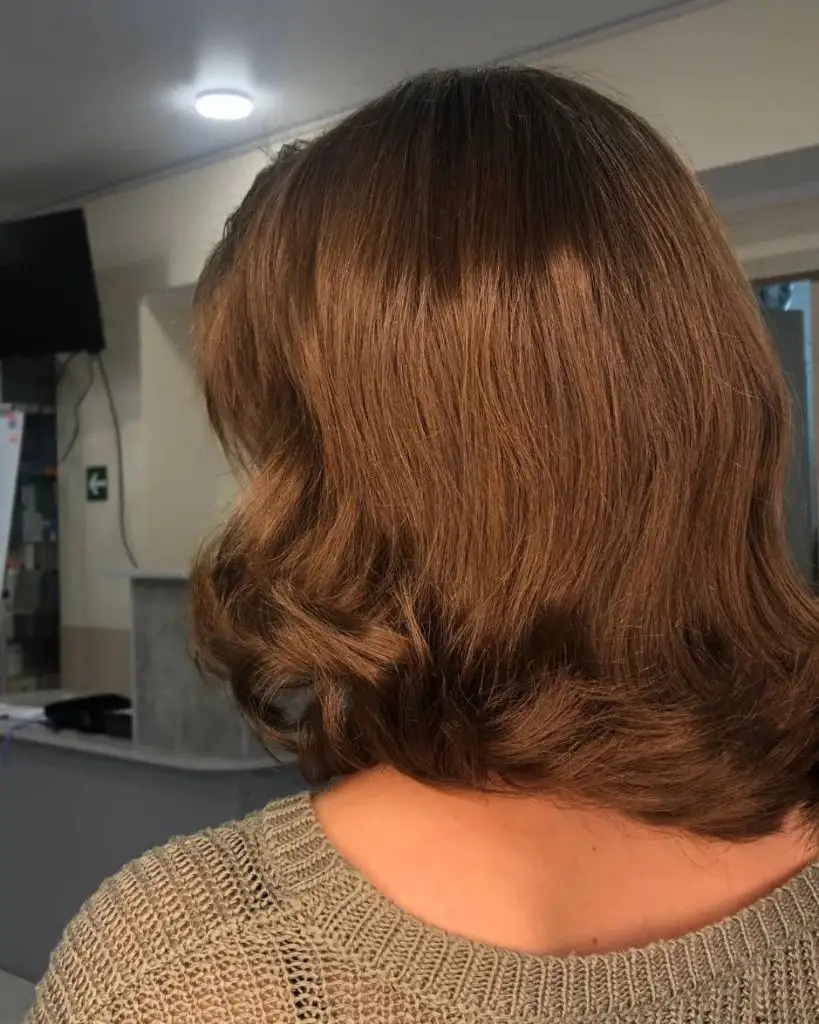
The inward curl is tighter than the gentle bends in items 9 or 11, creating a more enclosed, cocoon-like shape at the base. This tight endpoint contrasts with the relatively smooth, flat surface through the top and mid-lengths, so the composition reads as two zones — a calm, straight upper section and a dynamic, curled lower section. The knitted texture of the visible top adds a tactile contrast that reinforces the soft, warm tone of the hair.
The colour is doing significant atmospheric work here. Copper sits in a part of the spectrum that reads as warm, inviting, and autumnal, and when paired with a rounded, curled-under shape, the overall impression is cozy and contained. If this same cut were in cool ash blonde, the mood would shift considerably. I find the match between colour temperature and shape energy particularly well-calibrated — warm colour, rounded form, closed endpoints all pointing the same direction.
20. Vintage Waves Set a Sculptural Blonde Rhythm
Blonde hair is styled in precise, defined waves that recall a vintage finger-wave or pin-curl set, with each curve placed deliberately and uniformly. The length is chin-to-shoulder, and the waves begin at the root, close to a deep side part, and continue through to the ends. The regularity of the wave pattern is the structural headline — this is not tousled or undone but engineered.
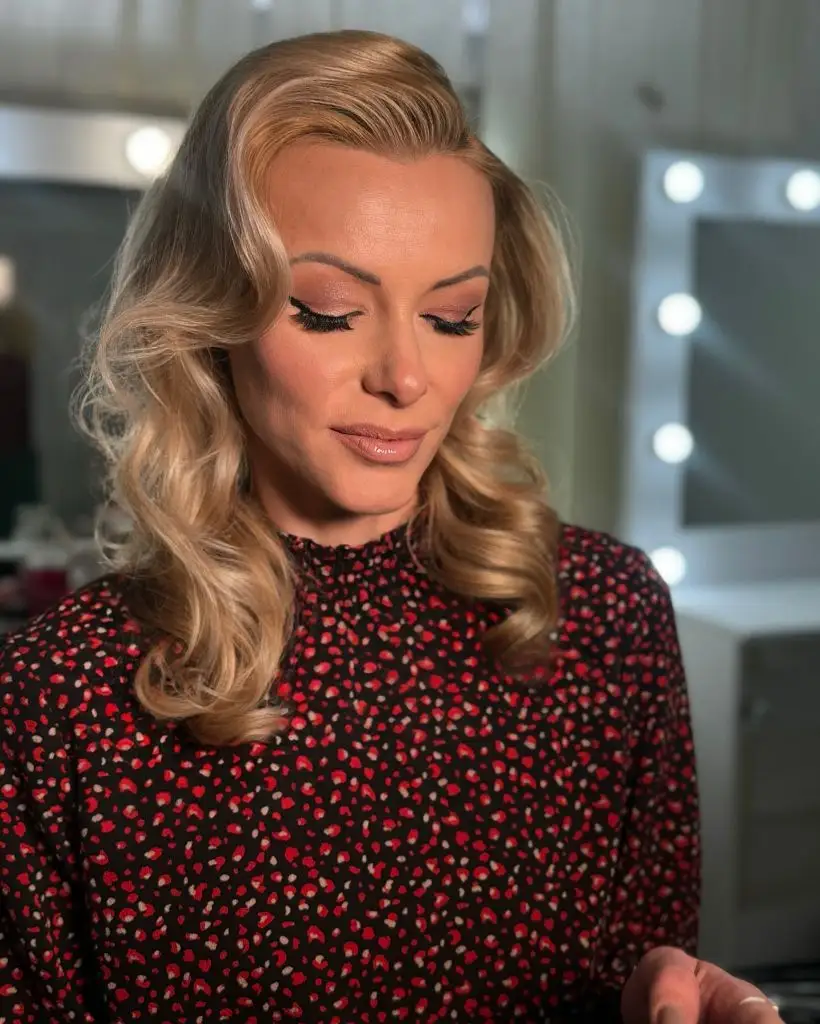
The blonde is warm, with golden undertones, and the wave crests catch light while the troughs drop into shadow, creating a pronounced light-dark alternation across the surface. The patterned top — dark with small red and white details — sits below the waves and, because it is busy and dark, it acts as a visual base that pushes the lighter, sculptural hair forward in the composition. Makeup is visible but neutral, keeping the face as a resting zone between the hair and the clothing.
This is the most styling-dependent shape in the set. The cut beneath these waves could be a simple one-length bob; it is the setting technique that creates the entire visual effect. The implication is that the same underlying cut could produce five different moods depending on whether you blow it straight, air-dry it, add loose waves, pin-set it, or simply pull it back. That versatility is the practical takeaway — invest in a well-cut foundation, and the styling becomes a daily variable rather than a locked-in commitment.
21. Platinum Pixie Carries Clean, Minimal Lines
A very short cut in pale platinum blonde — almost white — styled close to the head with a slight sweep at the front. The silhouette is compact and close-cropped, with no volume, no layers kicking out, and no visible texture beyond the natural direction of the hair. After the complexity of curls and waves in the preceding items, this reads as a reset — a deliberate reduction to essentials.
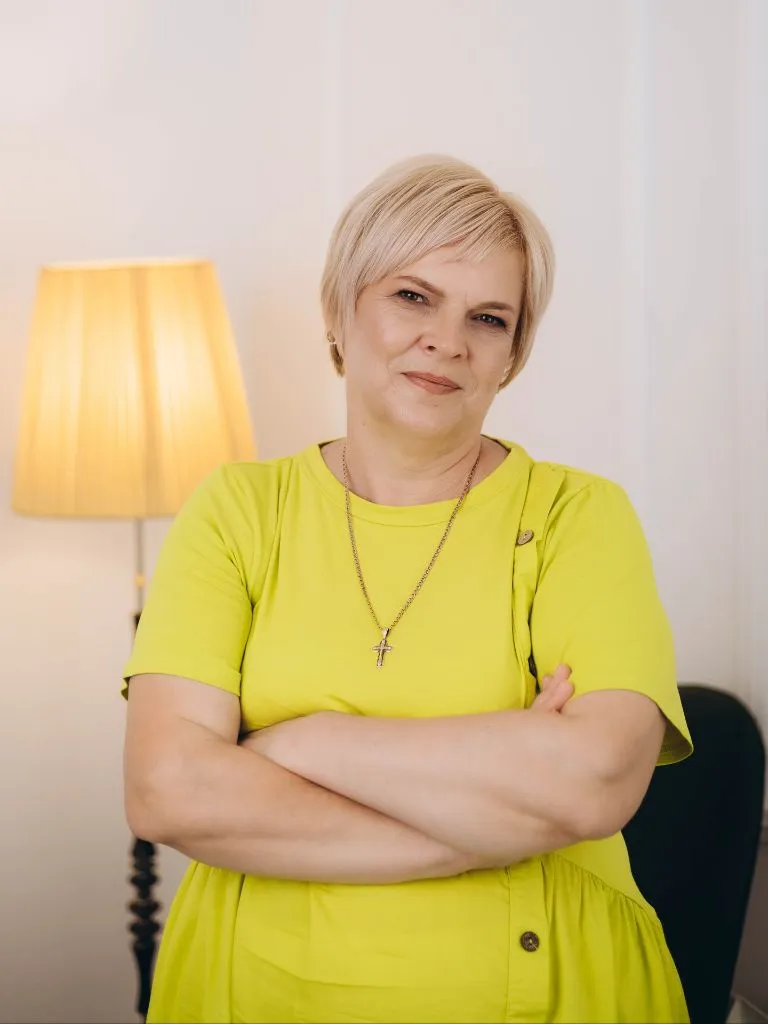
The pale colour means the cut’s geometry is drawn against the skin rather than within the hair itself. The hairline, the ear exposure, the nape line — these edges become the composition’s primary lines, and they are all clean and deliberate. A bright yellow-green top introduces a strong colour contrast below the neckline, which actually emphasises the hair’s near-colourlessness by comparison. A necklace with a small cross pendant adds a vertical line at the centre.
The takeaway is about scale. Every other shape in this set uses the hair to create a frame, a field, or a silhouette around the face. This cut removes that frame almost entirely, which puts the face and neck on full display. That is either a feature or a trade-off depending on your comfort level and preference, but the structural honesty of a cut this short is hard to replicate at any other length. There is nothing to hide behind, which can be either liberating or exposed.