Gray blending highlights are the quiet revolution of salon color: instead of covering gray, the colorist works with it, weaving silver, ash, and pearl tones through the hair so regrowth, natural gray strands, and dyed color all melt into one soft, dimensional finish. The result reads as intentional — luminous, modern, and far easier to maintain than full coverage. The same theme, explored from another angle, is in Best Summer Hairstyles for Long Hair in 2025 Elegant Easy Looks to Try This Season.
Below are 24 gray blending highlight ideas, each matched with a real photo, covering bobs, pixies, long layers, curls, and growing-out transitions. For every look you’ll find what to ask for at the salon, how to style it, and the honest trade-offs around upkeep. We break down a similar look in Gorgeous Homecoming Hairstyles for Long Hair.
Natural Salt-and-Pepper with Layered Dimension
Courtesy of: petalandpomade.com
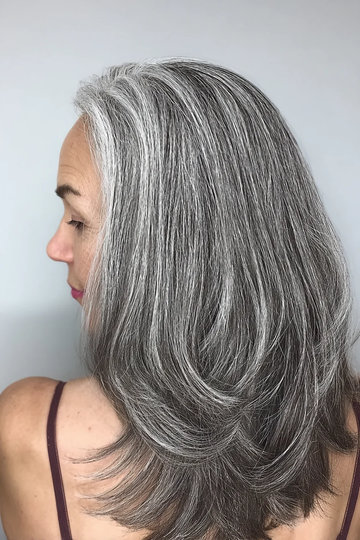
The base here is the wearer’s own salt-and-pepper growth — medium-length, straight, layered through the ends — with the colorist simply enhancing what nature started. Fine silver and charcoal strands are blended throughout so the darker brown underneath reads as intentional lowlights rather than a “missed” dye job. The layers keep the length from sitting heavy, and the face-framing pieces catch the light to keep the overall effect bright rather than flat. The same idea, styled another way, appears in Best Hairstyles for Round Faces 2025.
This is the lowest-commitment gray blending there is: the salon technique is typically a partial foil of ash and silver pieces placed where the gray is sparsest, refreshed every 3 to 4 months. Styling is just a blowout or air-dry with a light oil; silver shampoo once a week keeps the bright pieces from yellowing. The advantage is near-zero regrowth lines. The trade-off is that it only works if you already have a good amount of natural gray to blend into — on mostly dark hair it reads as simple highlights instead.
Salt-and-Pepper Blend with a Soft Dark Underlayer

Photo credit: floeyeliner.com
From the back, this bob shows the classic salt-and-pepper recipe: silver and ash highlights woven through the crown and mid-lengths, while a deeper charcoal underlayer sits at the nape. The dark underlayer is doing quiet work — it gives the gray on top something to sit against, which is what creates the “blended” look instead of a flat silver wash. The bob’s curved-under ends keep the whole thing soft and wearable rather than edgy.
Ask for fine babylights in silver and ash over your natural base, with a few deeper lowlights kept near the nape for contrast. Bobs suit most face shapes when the length hits near the jaw or collarbone, and this one styles in minutes with a round brush. Expect a gloss or toner every 6 to 8 weeks to keep the silver crisp. Advantage: regrowth is nearly invisible, so appointments can stretch far apart. Trade-off: fine highlighting takes a long time in the chair on the first visit, and very porous hair can grab ash tones too dark if the colorist isn’t careful.
Silver-Gray Blending on a Textured Pixie
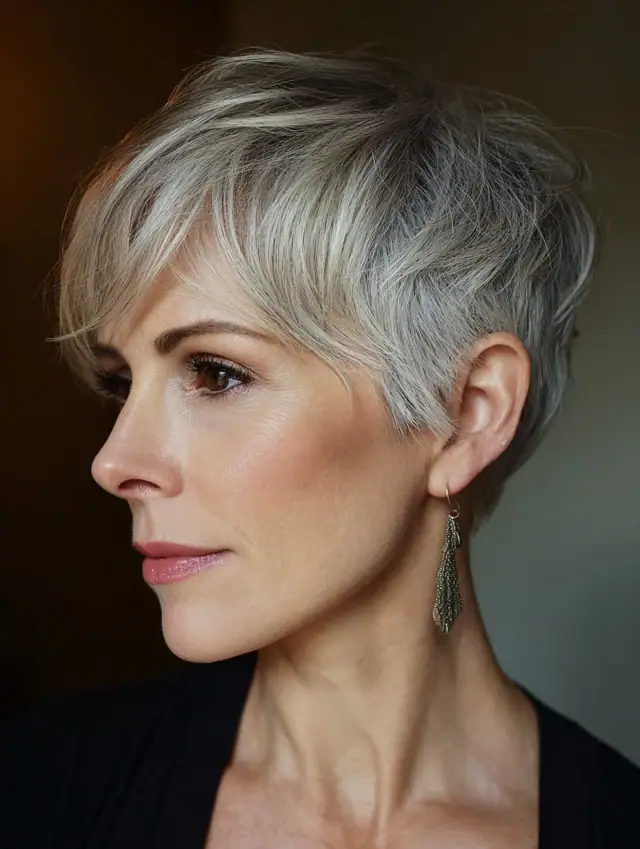
Image credit: divainspo.com
This textured pixie keeps a shadow of darkness at the roots while the lengths go fully silver-gray, which is exactly the trick that makes gray blending work on short hair. The root shadow means the color grows out softly instead of revealing a hard line after three weeks, and the choppy, piece-y texture breaks up the color so it reads as dimension rather than a single flat shade. The longer fringe sweeps across the forehead, keeping the pixie feminine and face-framing. For more ideas in the same lane, see our Short Fall Hairstyles for 2025.
At the salon, request a pixie with a darker root melt and silver-ash pieces through the top, plus point-cutting for texture. Style with a dab of matte paste, pushing the fringe forward and slightly to the side. Pixies need a trim every 5 to 7 weeks to hold the shape, but the color itself can go 10 to 12 weeks thanks to the root shadow. Advantage: maximum style with minimal color maintenance. Trade-off: if your natural gray pattern is patchy, the colorist may need to add more silver pieces than your hair supplies naturally, which adds cost and time.
Silver-Gray Balayage on a Wavy Bob
Source: yourstyleinspo.com
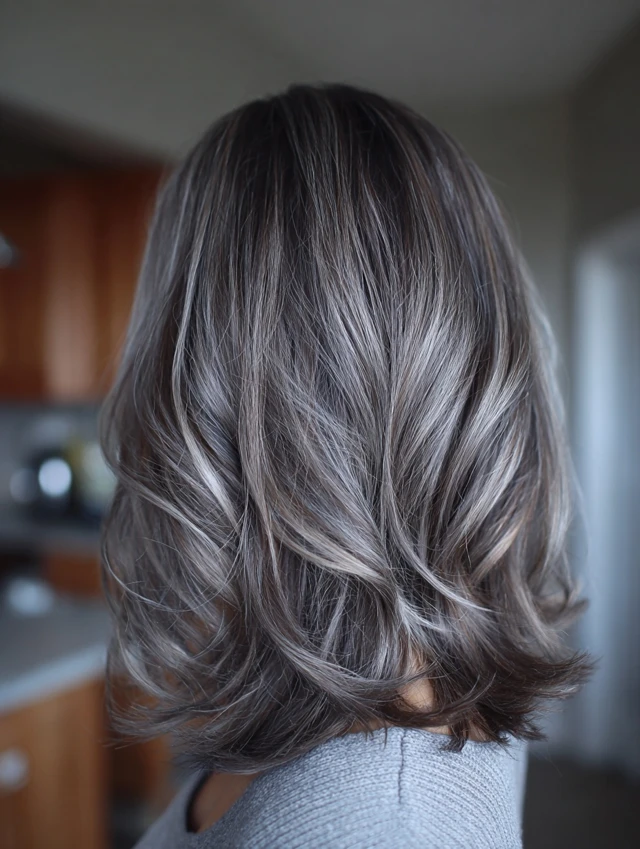
Here the gray blending takes the form of a soft balayage: dark roots dissolve into silver-gray through the mid-lengths and ends, all worn in loose waves. The waves are important — they separate the color into ribbons, which is what makes hand-painted balayage look three-dimensional instead of striped. The shoulder-grazing length keeps it versatile enough to wear straight, waved, or half-up.
The technique is open-air painting with ash and silver tones, feathered up from the mid-shaft so there’s no harsh line where the dark meets the light. A purple toning mask every other week keeps the silver from turning brassy, and a heat protectant is non-negotiable since lightened ends are fragile. Advantage: the dark root makes this one of the lowest-maintenance ways to wear silver — you can easily go 3 months between appointments. Trade-off: the initial lightening session is long and pricey, and previously colored hair may need more than one visit to lift cleanly to silver.
Smoky Gray Balayage on Long Waves
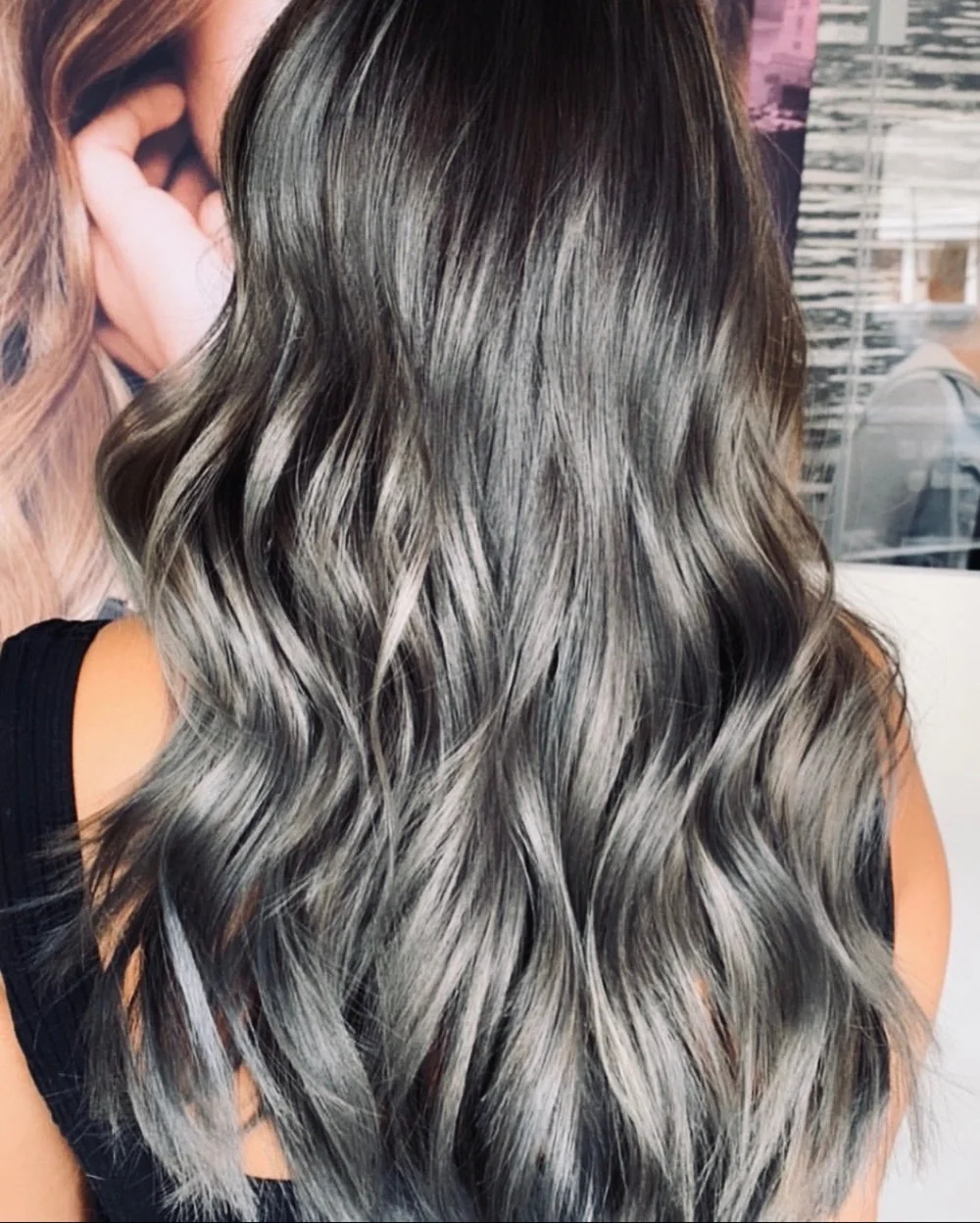
This long look leans smoky rather than bright: the base is a deep brown-black that melts through ash into a cool, smoky silver through the lengths. Keeping the silver slightly muted (rather than icy white) is a smart move on long hair, because it flatters a wider range of skin tones and hides the dullness that can creep into over-lightened ends. The waves are loose and polished, giving the color movement. For a different spin on the same theme, browse Hair Color Ideas for Pale Skin.
Ask for a balayage with a deep smoky root melt in level 3 to 4, blending into ash-silver ends, then glossed with a cool toner. Long hair like this needs regular trims every 10 to 12 weeks and a weekly deep-conditioning mask to keep the lightened lengths healthy. Advantage: the smoky tone is forgiving — it looks rich even as it fades. Trade-off: ash tones wash out fastest, so you’ll likely need a gloss refresh halfway between full appointments, and swim or hard water can turn the silver greenish without protection.
Charcoal-to-Silver Root Melt

Courtesy of: us.wella.professionalstore.com
The root melt is the workhorse of gray blending: charcoal at the scalp fading seamlessly into silver-gray through the ends, worn here in soft long waves. There’s no visible line anywhere — the color graduates like a gradient, which is what lets you stretch appointments to the maximum. The cool undertone throughout keeps the whole look cohesive, and the waves add the dimension that makes the melt visible instead of muddy.
The salon process involves coloring the roots in a deep cool shade, then blending it downward with a transitional mid-tone before the silver ends — essentially three colors melting into each other. At home, silver shampoo once a week and a cool-gloss refresh every 8 weeks will keep the ends bright. Advantage: this is the most forgiving grow-out in the entire gray blending family. Trade-off: the root color still needs refreshing every 8 to 10 weeks or the contrast starts looking like undyed regrowth, and the double process (root color plus lightened ends) means a long first appointment.
Gray Blending Balayage with Deep Roots

Photo credit: mockuphunt.co
Deep, nearly black roots give way to ash-gray through the lengths in this long balayage — a bolder take on gray blending for anyone whose natural base is dark. Keeping the roots genuinely deep (instead of a soft shadow) makes the silver read brighter by contrast, and it means the top of the hair looks “done” even months after the appointment. The straight-ish texture with soft bends at the ends shows off the gradient cleanly.
This suits dark natural hair best, since the roots can simply be your own color enhanced with a cool gloss. Ask for hand-painted ash pieces starting lower (mid-shaft) for a softer, more modern blend. Smoothing serums and a flat iron or round-brush blowout show this color off best. Advantage: minimal root maintenance if the dark matches your natural color. Trade-off: lifting dark hair to true ash-gray is the hardest lift in color work — expect possible warmth on the first session and a toner to neutralize it. Our Fall 2025 Hairstyles for Women Over 50 rounds up more takes on this exact idea.
Long Natural Silver with Blended Tones
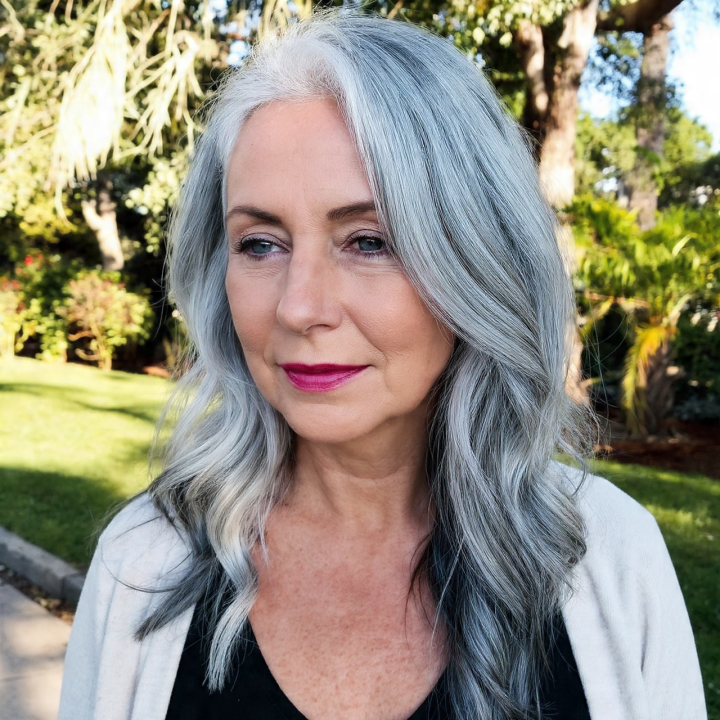
Image credit: hairdolab.com
This is gray blending in its purest form: long, fully natural silver hair where the colorist has added nothing but a few tonal glosses to even out the mix. The hair has natural variation — brighter silver at the crown, deeper charcoal lowlights through the lengths — which is exactly what makes real gray hair look rich instead of flat. Worn long and wavy, it has a striking, confident presence that no dye job quite replicates.
The salon work here is maintenance rather than transformation: periodic clear or silver glosses, trims to keep long hair healthy, and possibly fine lowlights only where the gray pattern is uneven. A purple shampoo used sparingly (overuse dulls natural silver) and regular trims every 8 to 10 weeks are the whole routine. Advantage: zero regrowth, zero dye damage, and the most authentic result. Trade-off: growing it out takes patience — most people need a year or more of transition — and natural silver can turn yellow from sun, hard water, or heat styling without protection.
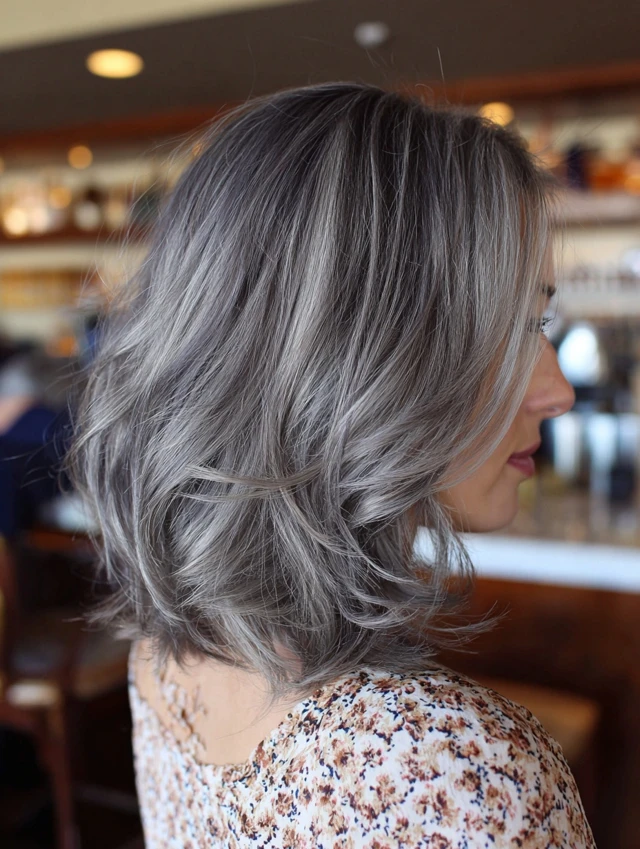
Silver-Gray Blending on a Textured Short Bob
Source: yourstyleinspo.com
A chin-grazing bob with choppy, airy texture is the perfect vehicle for gray blending on shorter hair. The silver pieces are woven through a slightly deeper base, and the piece-y texture separates the colors so each strand of silver catches the light individually. The cut has movement built in — flipped ends, tousled layers — which means the color looks different (and interesting) from every angle.
Ask for a textured bob with point-cut ends and silver-gray babylights over a natural or lightly deepened base. Style with a texturizing spray and a quick tousle; a flat iron bend through the ends adds polish for evenings. Short bobs need reshaping every 6 to 8 weeks, but the blended color stretches well past that. Advantage: the texture hides regrowth beautifully, and short hair makes the whole color process faster and cheaper. Trade-off: on very fine hair, too many lightened pieces can make the ends look thin, so the colorist should keep the brightest pieces near the crown and face. We covered this territory more deeply in Short Fall Hairstyles Ideas.
Icy All-Over Silver on Long Waves

Via fb.ru
For those ready to go all in, an icy all-over silver on very long, wavy hair is gray blending’s most dramatic statement. There’s still dimension — a subtle shadow at the root and slightly deeper ribbons through the interior keep it from looking like a wig — but the overall read is luminous, cool, and unmistakable. The waves are essential here; they scatter light across the silver so it looks like liquid metal rather than flat gray.
This is a full-head lightening plus silver toning job, usually booked as a double process and potentially two sessions on dark or previously colored hair. At home, purple shampoo weekly, a bond-building treatment, and heat protectant are mandatory — icy silver is the most fragile color to maintain. Advantage: the most striking, head-turning version of gray blending, and ironically no “blending” maintenance at the roots since everything is one color. Trade-off: the highest damage risk and the highest maintenance cost of the whole list; long icy hair demands serious commitment to conditioning and toning.
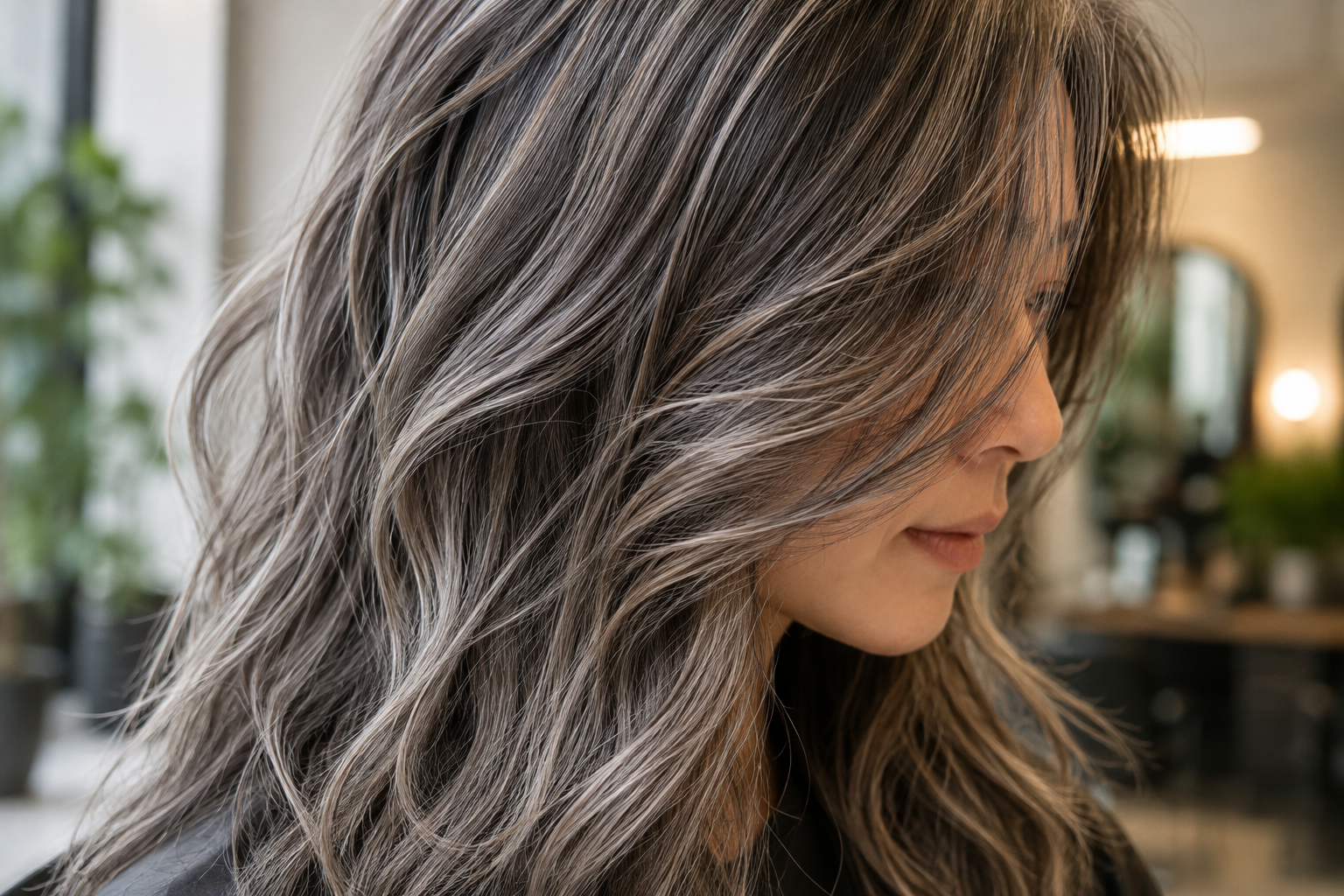
Gray Blending Highlights on Dark Brown Hair
Courtesy of: beuhairdesign.com
Gray blending isn’t only for people going fully gray — this look weaves silver-gray highlights through a dark brown base for a dimensional, cool-toned brunette. The silver pieces concentrate through the mid-lengths and ends rather than the roots, which keeps the grow-out soft and the overall effect sophisticated instead of streaky. The loose waves help the silver ribbons catch the light against the darker base.
Ask for cool-toned silver and ash highlights (not warm caramel) placed in a balayage or foilayage pattern over your natural dark brown. This flatters cool and neutral skin tones especially well, and suits oval, round, and heart faces when the lightest pieces start below the chin. A blue or purple toning conditioner every week or two keeps the silver from warming up. Advantage: you get the gray-blending aesthetic without committing to going gray, and dark roots make regrowth invisible. Trade-off: silver over dark brown needs significant lift, so the pieces can fade warm between appointments and need re-toning more often.
Sleek Silver Bob with a Root Shadow

Photo credit: cortesdecabelofeminino.com.br
Precision meets gray blending in this sleek, straight bob: a clean one-length cut with dark roots that melt into polished silver-gray ends. The straight texture shows off the gradient with maximum clarity — there’s nowhere for uneven color to hide, which is why the blend itself has to be seamless. The result is sharp, modern, and quietly luxurious. See also Stylish Homecoming Hairstyles for more variations on this look.
This demands a skilled colorist, because straight hair exposes every flaw in the blend; ask specifically for a root shadow melted into silver with a cool gloss over everything. A flat iron and smoothing serum are the daily styling tools, and a straight bob needs trimming every 6 weeks to keep the line crisp. Advantage: the sleekest, most polished version of gray blending — it reads expensive. Trade-off: the least forgiving of regrowth and imperfection; the root shadow needs refreshing every 6 to 8 weeks or the line of demarcation appears.
Gray Blending on Curly Silver Hair
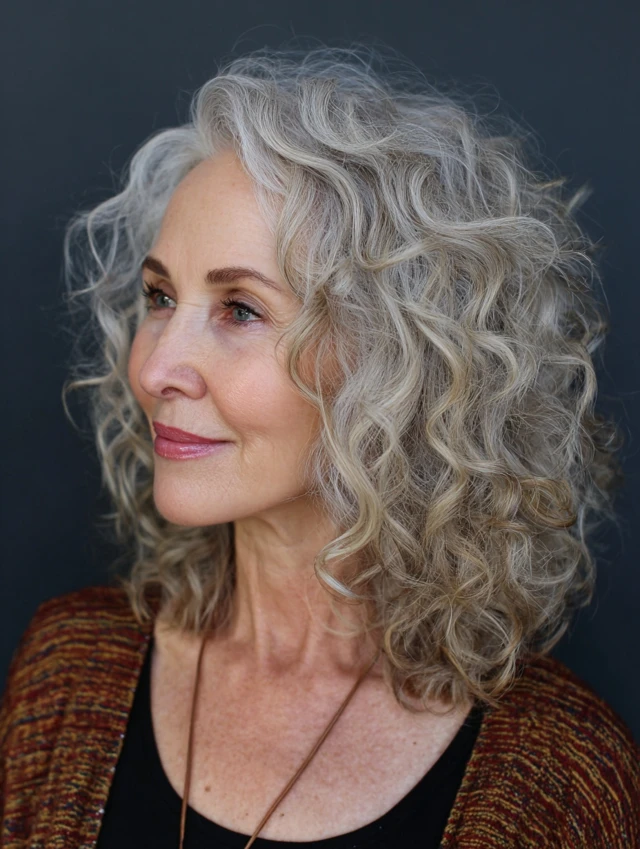
Image credit: forhairstylesinspo.com
Curls and gray blending are a natural match: each curl is its own little highlight reel, with silver, white, and soft gray tones shifting as the hair moves. This shoulder-length curly cut wears a mix of bright silver pieces and deeper gray lowlights, which gives the curls definition and prevents the color from washing out against the skin. The volume at the sides also balances longer or narrower face shapes beautifully.
On curly hair, gray blending is usually done with a “curl-by-curl” painting technique or fine foils placed to follow the curl pattern. Curly color fades slower than straight (less heat styling, less washing), so appointments can stretch to 4 months — but deep conditioning is essential since curls plus lightening equals dryness risk. Advantage: curls hide regrowth and uneven color better than any other texture. Trade-off: lightening curly hair requires an experienced curl colorist; over-processing can loosen the curl pattern, and shrinkage means the “length” of the blend looks different wet versus dry.
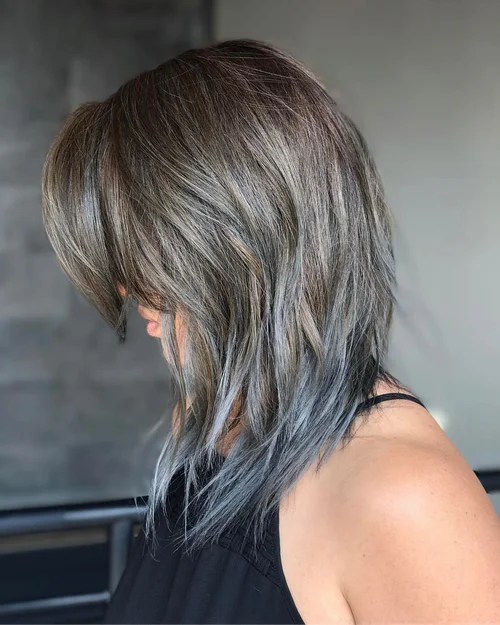
Gray Blending with Warm Brown Dimension
Source: jamiekeikohair.com
Who says gray blending has to be all cool tones? This shoulder-length layered cut mixes silver-gray highlights over a warm brown base, and the interplay between warm and cool is what makes it look expensive. The silver pieces brighten the face while the warm brown underneath keeps the overall look grounded and natural — a great middle path for brunettes who find all-over silver too stark. If this look speaks to you, Best Hair Color Ideas for Brown Skin 2026 Modern Highlights Rich Reds Soft Chocolate Tones continues the thread.
Ask for silver and cool-ash pieces woven through your existing warm brown, concentrated around the face and through the layers. This combination flatters warm and neutral skin tones better than icy all-over silver does. Maintenance is moderate: the contrast between warm base and cool highlights means a toner refresh every 8 weeks keeps it cohesive. Advantage: the most natural-looking option for brunettes — it reads as “great highlights” rather than “gray transition.” Trade-off: warm and cool tones fight each other as they fade, so without regular toning the silver pieces can turn muddy or brassy.
Cold-Turkey Grow-Out with Blending Foils

The cold-turkey grow-out — stopping dye entirely — is the hardest phase of going gray, and blending foils are what make it bearable. Fine silver and ash highlights are placed along the line where the dyed hair meets the natural gray roots, breaking up the harsh stripe so the transition looks like intentional dimension instead of neglect. It’s a bridge, not a destination: the foils camouflage the grow-out until the natural silver has enough length to stand on its own.
Book this as a “transition appointment”: your colorist will assess the line of demarcation and place fine babylights and lowlights to blur it, sometimes with a demi-permanent gloss over everything to unify the tones. These touch-ups happen every 8 to 12 weeks during the grow-out year, then stop entirely once you’re happy with your natural silver. Advantage: the fastest route to your real gray with the least awkward phase. Trade-off: it’s still a year (or more) of patience, and the foils add cost to a process whose whole point is eventually spending nothing on color.
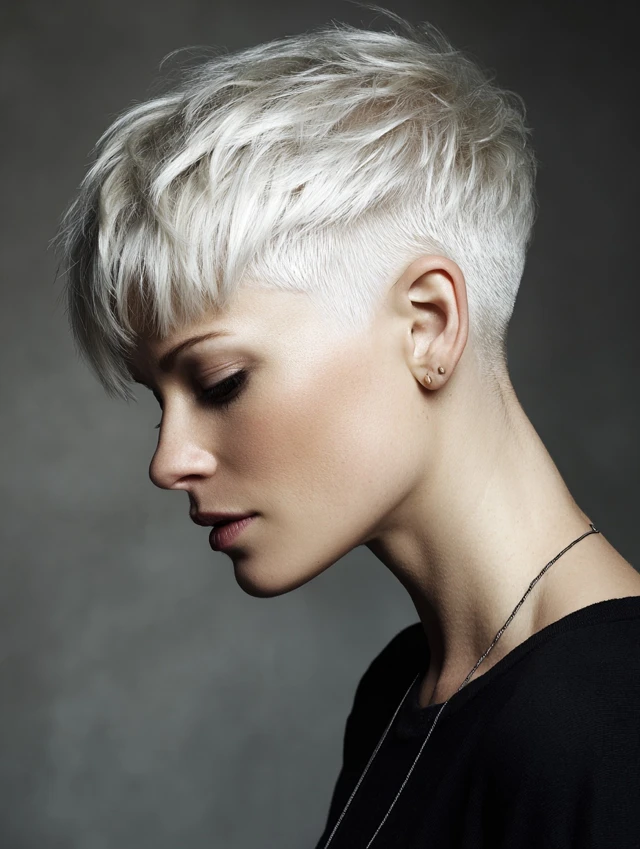
Platinum-White Blending on a Cropped Pixie
Courtesy of: forhairstylesinspo.com
A cropped pixie in platinum-white is gray blending at its boldest — the color goes nearly white, but subtle shadow at the roots and slightly deeper tones at the nape keep it dimensional rather than flat. The faded sides and textured top give it an edgy, modern silhouette that works beautifully with the icy color. This is a statement look, not a quiet transition, and it owns that fully.
The salon process is a global lightening to pale yellow followed by a white-silver toner, with the roots kept a touch deeper for the blend. Styling is minimal — a bit of wax or clay for texture — but the color needs purple shampoo twice a week and regular toning every 4 to 6 weeks to stay white instead of yellow. Advantage: zero regrowth camouflage needed (everything’s light), and the short length means damaged ends get cut off constantly. Trade-off: the most damaging option on this list; fine or fragile hair may not survive the lift to white, and the upkeep rhythm is relentless. Related reading: Flattering Hair Color Inspirations for Latina takes the same concept further.
Glass-Smooth Icy Silver Blending
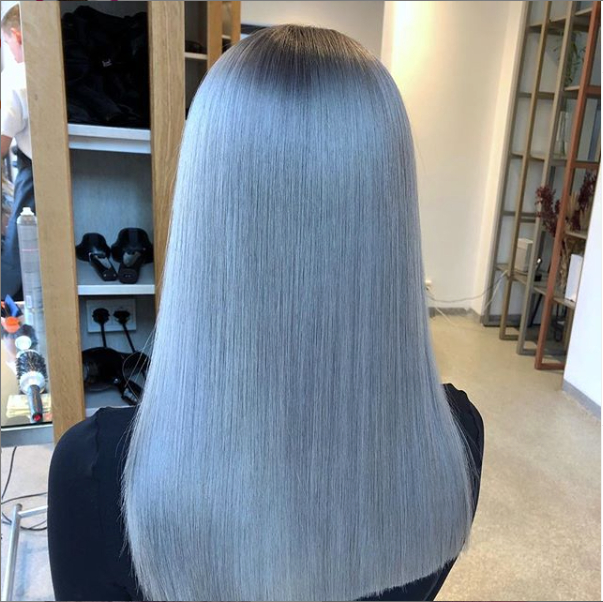
Photo credit: colourworlduk.com
Worn pin-straight and glass-smooth, this icy silver shows gray blending as pure polish. The color is even from roots to ends — a cool, luminous silver with no warmth anywhere — and the straight texture turns the hair into a mirror for light. On very long hair this is breathtaking, but it’s also the least forgiving finish: straight hair shows every uneven tone, so the color work has to be flawless.
Achieving this usually means lightening to a clean pale base and toning with an icy silver, finished with a keratin-style smoothing treatment or meticulous flat-ironing. A shine serum and heat protectant are daily essentials; purple shampoo keeps it icy. Advantage: the most head-turning, editorial version of silver — it photographs beautifully. Trade-off: high damage risk on long hair, and any yellow undertone shows immediately, so toning appointments every 4 to 6 weeks are the price of admission.
Gray Blending with Soft Curtain Bangs
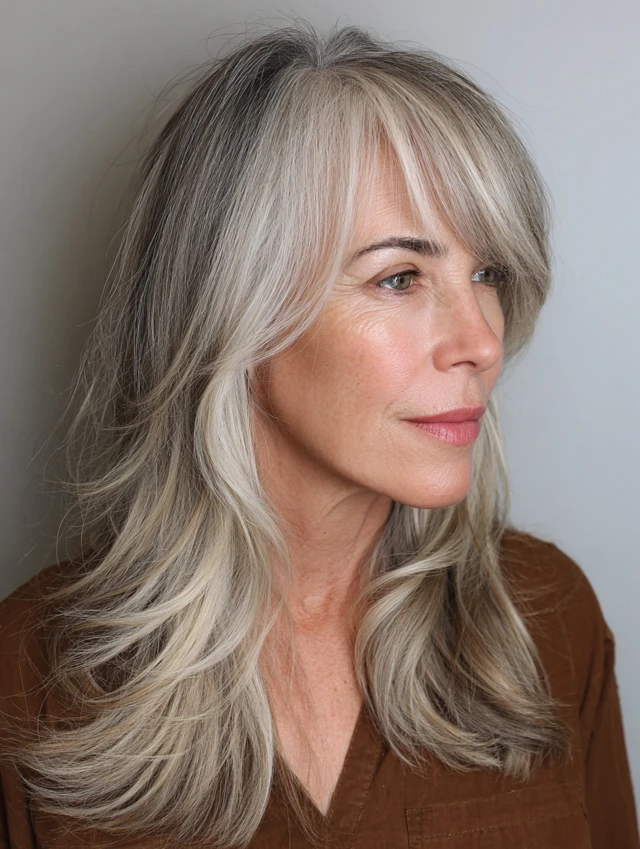
Image credit: outfitarea.com
Curtain bangs plus gray blending is a combination that flatters almost everyone: the bangs frame the face and soften the forehead, while the silver pieces woven through them brighten the eyes. The bangs themselves carry the blending — lighter silver at the face, melting into the deeper tones of the lengths — so the whole haircut feels cohesive. It’s a gentle, approachable way to wear gray that still looks completely current.
Ask for curtain bangs cut to part in the middle and sweep to the sides, with face-framing silver babylights through the fringe area. Bangs need a trim every 3 to 4 weeks (many salons do fringe trims free between appointments), and a round brush gives them that soft bend. Advantage: the bangs draw attention to the face, not the regrowth, so the color lasts longer between appointments. Trade-off: bangs are a daily styling commitment — they show oil and cowlicks faster than the rest of the hair, and growing them out is its own project. For the fuller picture, Stylish Natural Hairstyles for Black Women is worth your time.
Textured Silver-Gray Pixie with Darker Roots

Source: jawdropink.com
This pixie keeps things interesting with visible texture: choppy layers on top in bright silver-gray over roots that stay deliberately deeper. The contrast is the whole point — the darker roots give the silver something to pop against, creating depth that a single-process silver could never achieve on short hair. The textured top can be worn tousled for edge or smoothed for polish.
The technique is a root shadow (a few levels deeper than the ends) plus silver toning on the lengths, with heavy texturizing through the crown. Style with a pea-sized amount of matte clay, working it through dry hair for separation. Trims every 5 to 6 weeks keep the pixie shape; the color can go 10 weeks or more. Advantage: the root contrast makes regrowth invisible and the texture makes styling nearly foolproof. Trade-off: the two-tone effect needs the root shadow refreshed eventually or it starts reading as undyed roots rather than intentional shadow.
Lavender-Tinted Gray Blending
Via minimodel.jp
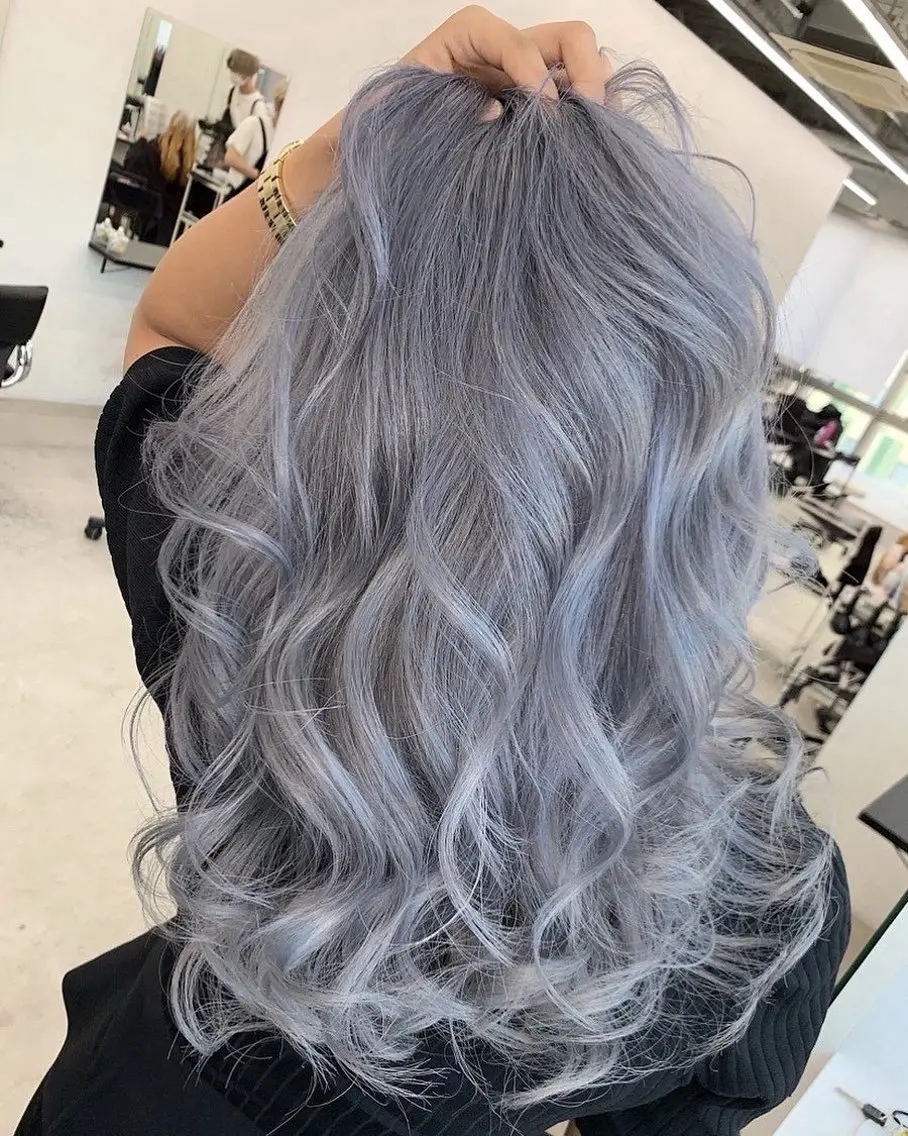
A whisper of lavender over silver-gray is gray blending’s playful side: the cool violet tint neutralizes any yellow in the silver while adding a fashion-forward edge. Worn here on long, loose waves, the lavender reads as a soft iridescence rather than a bold fashion color — it shifts in the light, looking silver in some angles and faintly lilac in others. It’s the subtlest possible way to wear a “fun” color.
This is usually achieved with a lavender toner or a pastel violet gloss over pre-lightened silver hair. The catch is that pastel tones fade fast — expect the lavender to wash out within 2 to 4 weeks, leaving the silver underneath (which is a graceful fade, at least). Cool water washing and sulfate-free shampoo stretch it a bit. Advantage: the most unique look on this list, and the fade-out is soft rather than harsh. Trade-off: the shortest-lived color here by far; maintaining the lavender means toning almost monthly, and on porous hair it can grab unevenly.
Silver-Gray Bob with Soft Fringe
Courtesy of: hairs.london
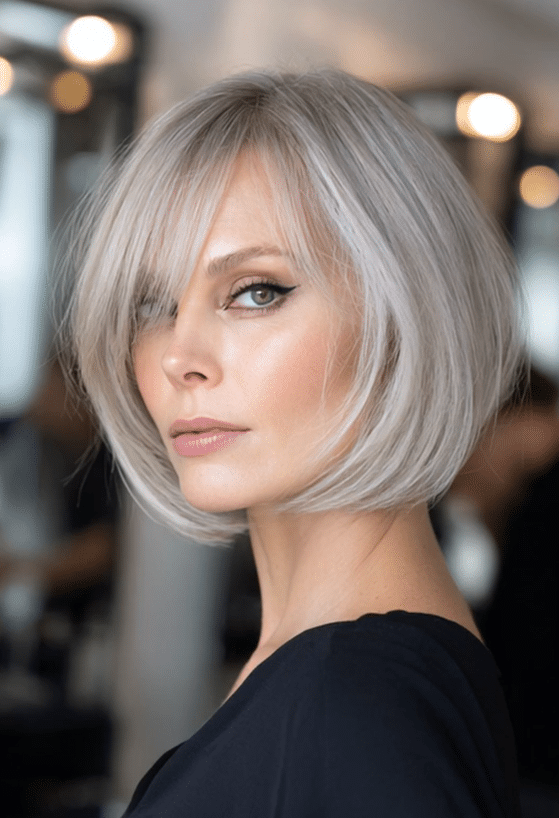
A chin-length bob with soft, wispy fringe is a classic shape made modern by all-over silver-gray blending. The fringe is the star: cut light and airy, it lets the forehead show through while the silver brightens the whole face. The bob itself is softly rounded rather than razor-sharp, which keeps the icy color feeling warm and wearable instead of severe. The concept gets a fuller treatment in Fall Hairstyles for Women 40.
Ask for a rounded bob with a soft, textured fringe, colored in blended silver with slightly deeper lowlights underneath for depth. The fringe needs trimming every 3 to 4 weeks to stay out of the eyes; the bob holds its shape for 6 to 8. A light blowout with a round brush gives the classic smooth finish. Advantage: the fringe makes the silver feel intentional and styled even on no-effort days. Trade-off: fringe plus silver is double maintenance (trims plus toning), and bangs show regrowth faster than any other part of the cut.
Gray Blending That Adds Volume to Fine Hair

Photo credit: hairtical.com
Fine hair gets a real boost from gray blending: this short, feathered cut uses layers of silver, white, and soft gray to create the illusion of density. Light colors reflect more light than dark ones, so the mix of bright pieces literally makes the hair look thicker — and the feathered, piece-y cutting adds airy volume on top of that. It’s a clever double play of cut and color working toward the same goal.
Ask for a layered pixie-bob with feathered ends and blended highlights in silver, white, and light ash — no single dark base that would flatten the look. A volumizing mousse at the roots and a quick blow-dry with the head flipped upside down maximize the effect. Advantage: the rare color service that actually makes fine hair look fuller, with low regrowth visibility. Trade-off: fine hair lightens fast (easy to over-process), so the colorist must work gently, and heavy products will collapse the volume the cut creates.
Soft Silver Blending on Wavy Shoulder-Length Hair
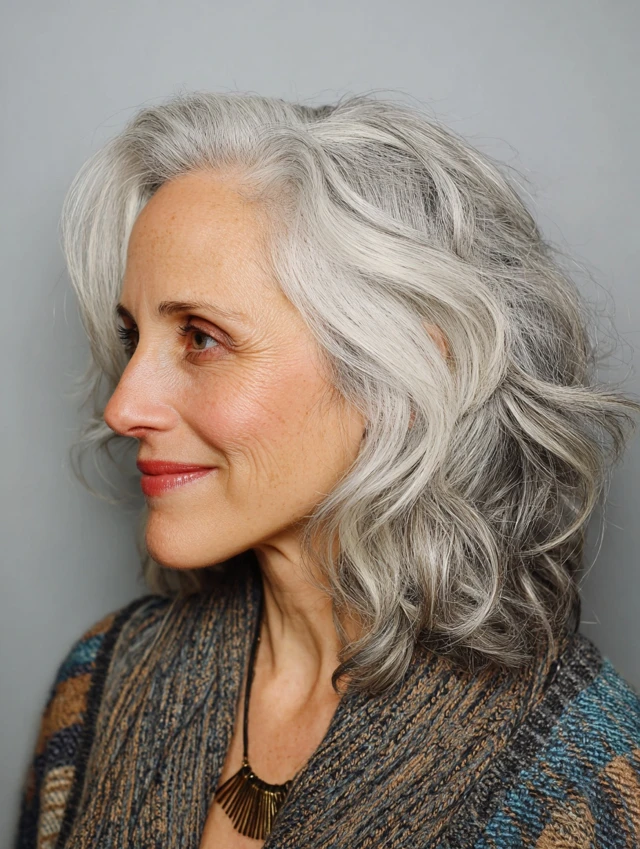
Image credit: forhairstylesinspo.com
Softly waved, shoulder-length, and naturally varied — this is gray blending for real life. The silver isn’t uniform: brighter pieces frame the face and catch the light, while deeper gray tones sit underneath for depth. The waves are loose and touchable rather than sculpted, which keeps the whole look relaxed. It’s the kind of hair that looks good on day three, not just day one. A companion piece, Best Choppy Medium Layered Hair Ideas for 2026, explores the same palette.
The technique is typically fine foils or balayage in two to three silver tones over the natural base, with the brightest pieces saved for the face frame. Air-drying with a curl cream or a quick pass with a large-barrel iron gives the waves; a silk pillowcase helps them last. Toner refresh every 10 to 12 weeks is plenty. Advantage: the most low-effort, forgiving look on the list — waves hide everything. Trade-off: “natural” silver blending can read as simply uncolored gray to some eyes, so if you want the color to look deliberate, ask for slightly brighter face-framing pieces.
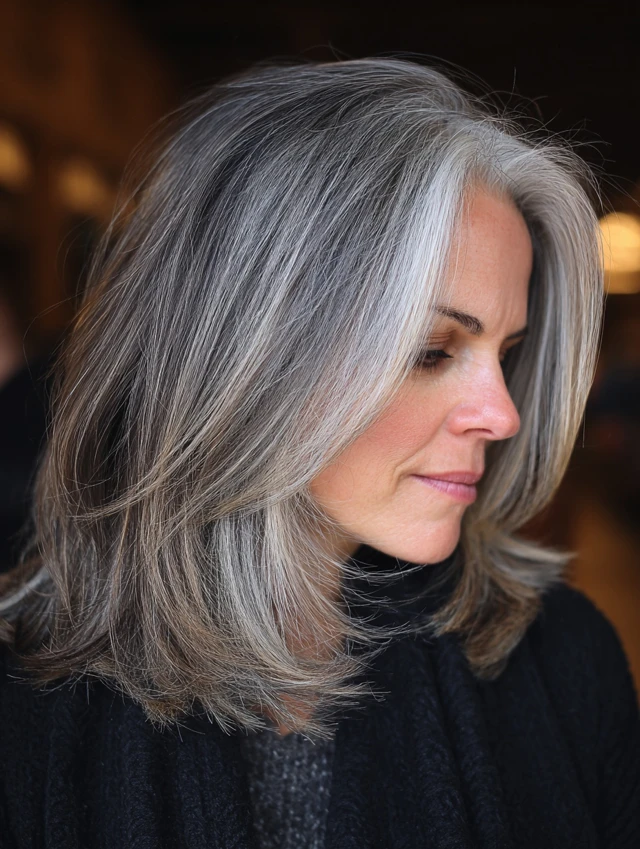
Face-Framing Silver Strands with Gray Blending
Source: jawdropink.com
The money piece goes gray: bright silver strands frame the face while the rest of the hair stays deeper, blending from dark roots into ash-gray lengths. It’s the highest-impact placement in color work — the lightest pieces sit exactly where the eye goes first — and on gray blending it doubles as camouflage, drawing attention to the face instead of any uneven regrowth. The medium layered cut keeps it soft and current.
Ask for bold silver face-framing pieces (the “money piece”) plus softer blended highlights through the lengths, with the roots kept deep for contrast. This placement suits nearly every face shape since the brightness is at the front, not the crown. The face frame fades fastest (it’s the most washed, most sun-exposed hair), so expect to tone it every 6 weeks. Advantage: maximum brightness payoff for minimum foils — and the smartest camouflage for a grow-out. Trade-off: the contrast means the face frame needs the most frequent toning, and if the pieces are too chunky it can read as stripes rather than blend.
Final Thoughts
The strongest gray blending options work because of dimension and undertone control, not simply because they are silver. A root shadow that melts, lowlights that give the bright pieces something to sit against, and a toner matched to your skin’s undertone are what separate expensive-looking gray from flat, dull gray. Choose based on your maintenance appetite (root melts and natural blends need the least), your texture (curls and waves hide regrowth best), and how far along your natural gray already is — the more gray you have, the less the salon needs to manufacture.
- Trim every six to eight weeks to keep the shape sharp.
- Use a heat protectant before every hot-tool session.
- Tone blonde or highlighted hair every six weeks to keep brassiness away.
- Match the upkeep schedule to your routine before committing to high-maintenance color.
The best color is the one that still looks intentional at week six.