Locs are a natural canvas for color that actually holds — no pre-lightening panic, no split ends from a single session. The current shift is toward lived-in tones and glossy natural texture, so dyed locs skip the flat, uniform look in favor of depth and dimension.
These twenty dyed loc ideas cover the full spectrum: from subtle ombré you could attempt at home to full rainbow effects that need a skilled colorist. They work for fine locs that need visual weight, thick locs that can hold multiple tones, and every length from sister locs to mid-back. No more guessing whether a color will read or just fade into a muddy washout. For the style family in general, locs hairstyles for Black women show how the base styles work before color enters the picture.
Vibrant Solid Red Mid-Back Locs
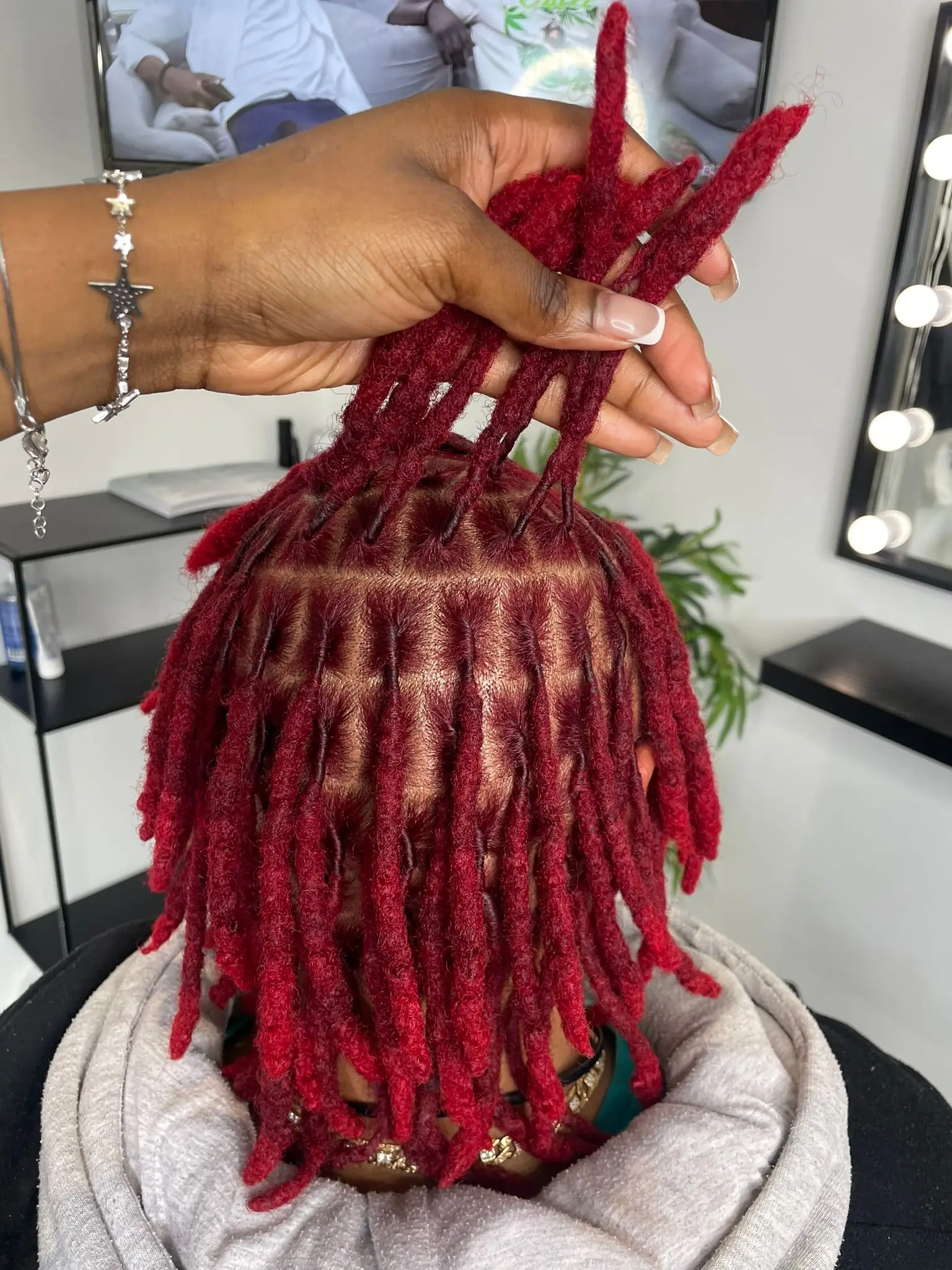
Photo via The Loc Pod
Getting a solid vibrant red on locs is less about the shade and more about saturation. The goal is even coverage from root to tip, which means a skilled colorist will pre-lighten if needed and then apply a direct dye that penetrates each loc fully. Ask your colorist for solid vibrant red mid-back locs.
Thick, coily locs at mid-back length take this color best, and a middle part keeps the look symmetrical. This finish typically lasts two to three weeks before it needs a refresh, and a weekly color-depositing conditioner will keep it from fading into something sad and pink. For the red family beyond locs, red hair colors for 2026 show how the same vivid shades behave on loose hair.
High Bun With Fiery Copper Locs
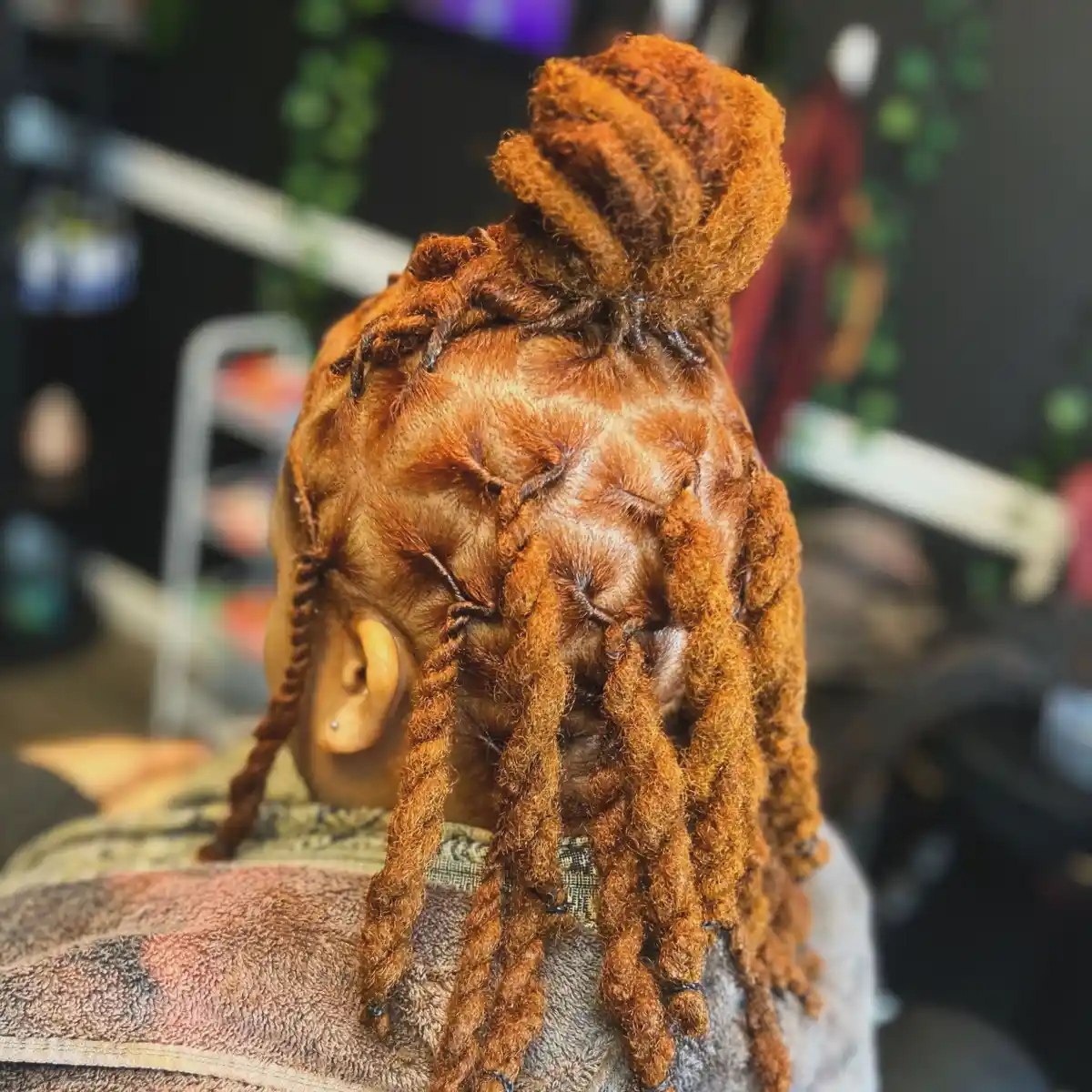
Image credit: The Derway House of Locs
Wondering if a high bun works with thick, wavy locs? It does, especially when the color is a vibrant copper that catches every angle. The bun pulls the locs away from the face, making the uniform fiery hue the star of the show. Ask your colorist for a high bun with vibrant copper locs.
This style suits most face shapes because the height adds vertical balance, and a middle part keeps it grounded. The thick, wavy texture holds the bun shape without constant pinning, which is the real win here. A quick mist of water and leave-in conditioner in the morning is all the styling it needs. For the copper family, winter copper hair color ideas show how the shade deepens in cold light.
Dark Brown To Honey Blonde Ombré Ponytail
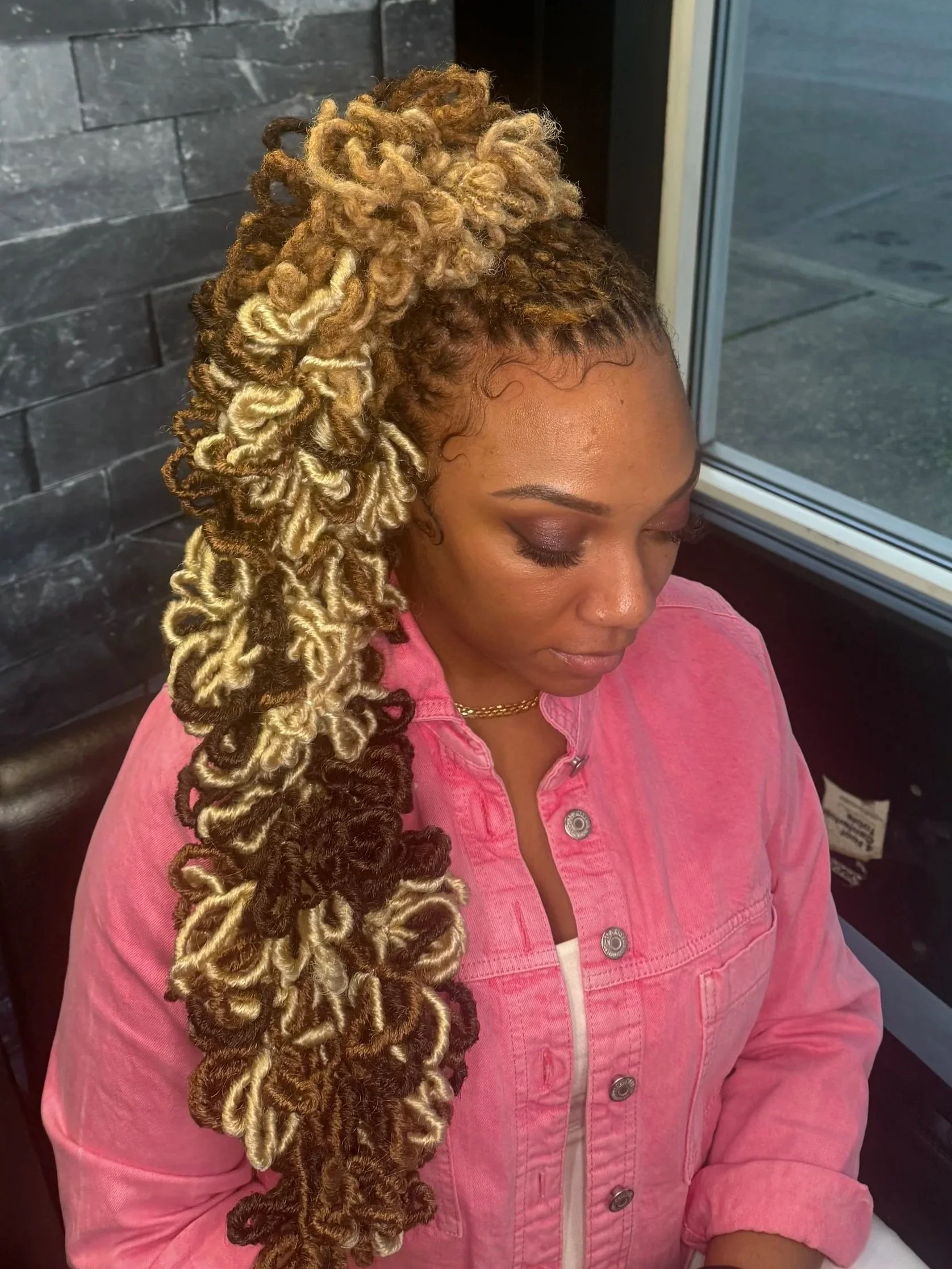
Courtesy of Mr. Naturalz
Full color on locs is a commitment, but an ombré gives you the drama with a gentler grow-out. This high ponytail starts dark brown at the roots and melts into honey blonde at the ends, a two-toned effect that softens the contrast. Ask your colorist for a dark brown to honey blonde ombré ponytail.
It works best on thick, coily locs at mid-back length, with a high ponytail that shows off the gradient. Oval and heart faces get the most from the vertical line. Wrap locs in a silk scarf overnight to preserve the blonde, and plan a root touch-up every ten to twelve weeks. For the honey end of the blonde family, honey blonde hair ideas show how the golden tone behaves on different bases.
Black Base With Red Yellow Streaks
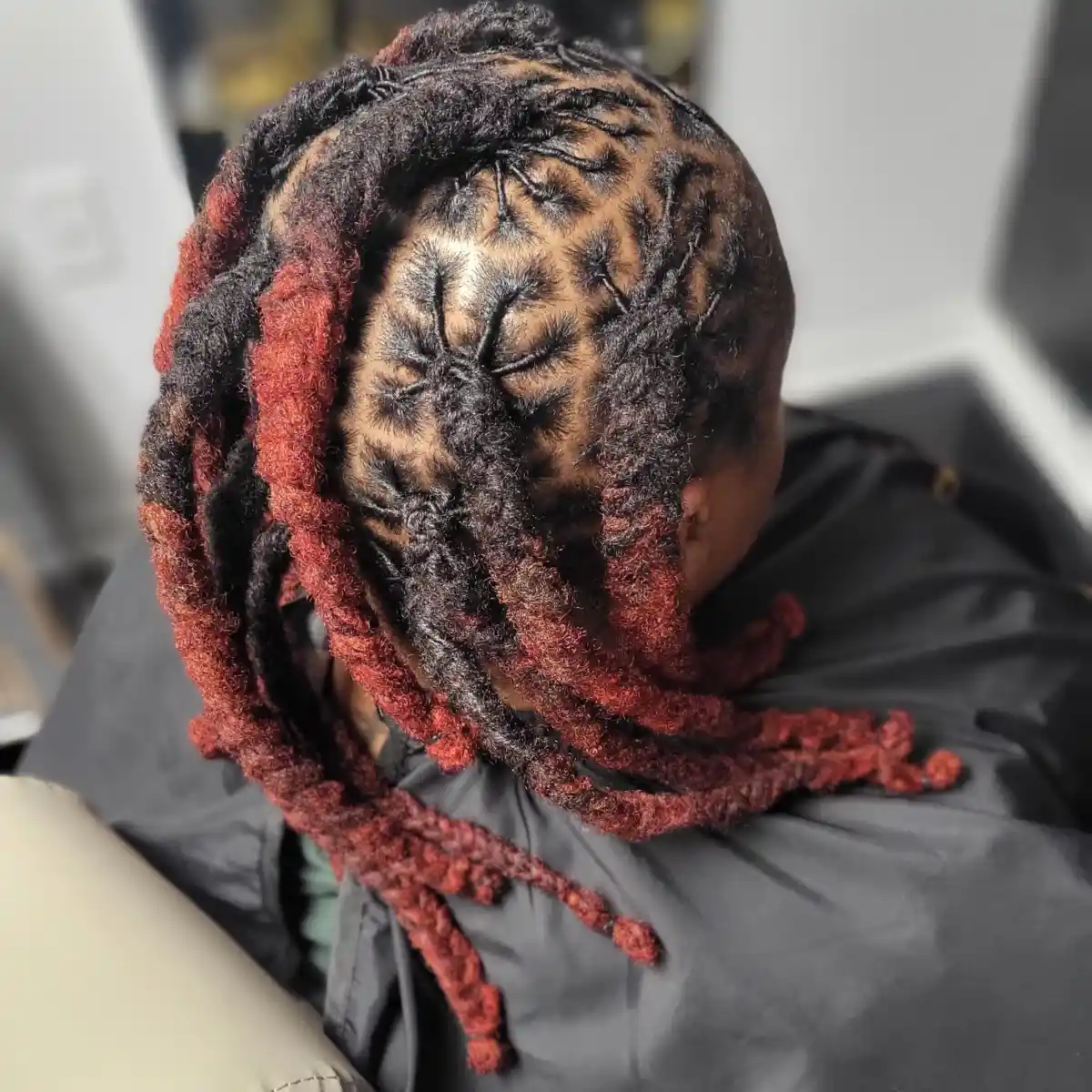
Source: Enjoy Your Journey
Red and yellow streaks on a black base create a fiery effect that demands attention. The streaks are woven through mid-back length, coily, thick locs, with a middle part that lets each strand show. Ask your colorist for a black base with red and yellow streaks.
The honest downside is that bright streaks on a dark base can fade unevenly, especially the yellow. A color-safe serum helps, but expect to refresh the vivid tones every four weeks with a tinted conditioner. This is a look that asks for maintenance in exchange for impact — skip it if you prefer a low-touch routine.
Bright Pink To Blonde Ombré Braids
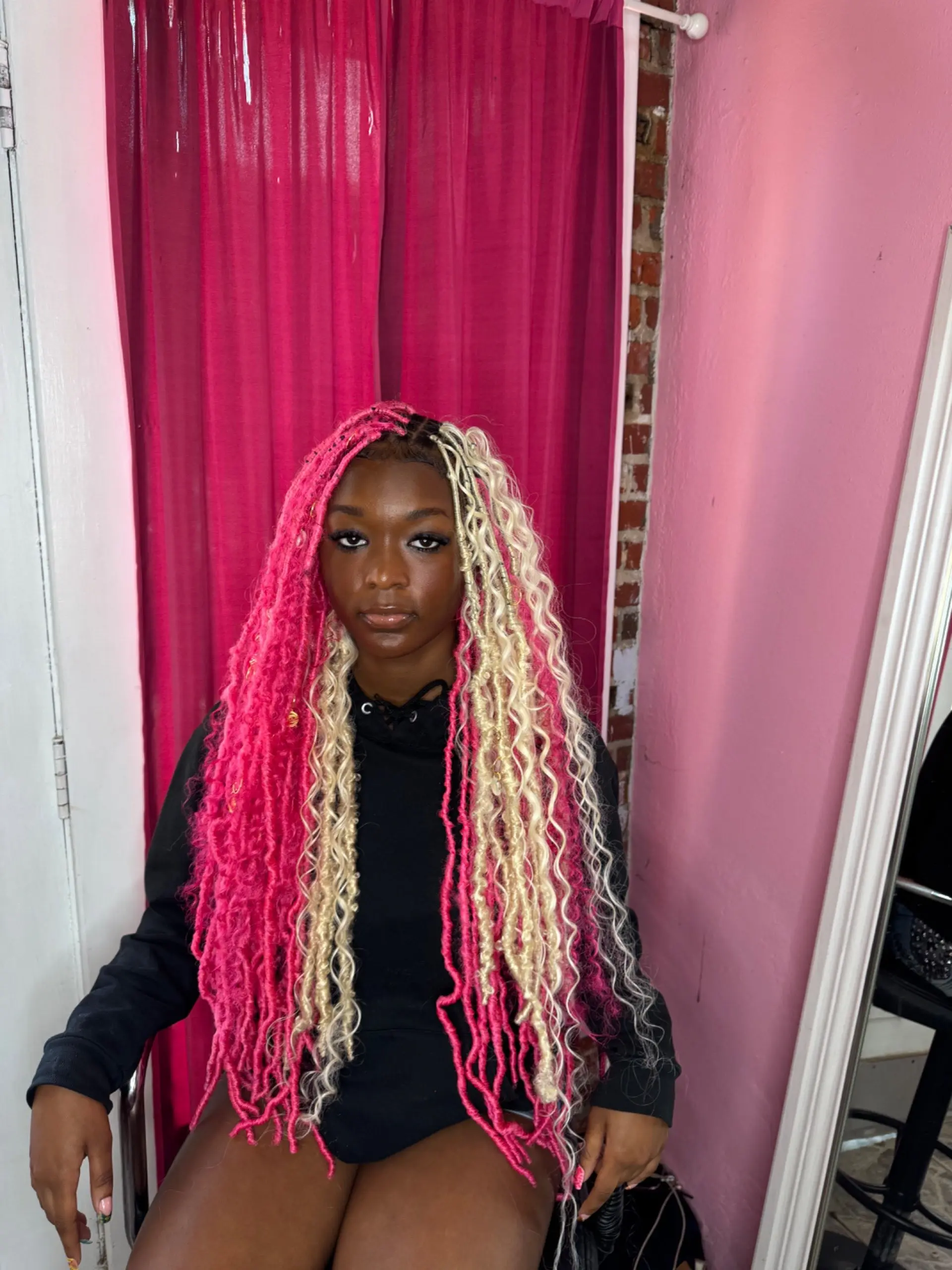
Photo credit: Glowed Up By Glo
How do you ask for a color transition that goes from bright pink to blonde in braided locs? Be specific about the placement. Ask your colorist for bright pink to blonde ombré braided locs. The zig-zag parting adds structure, while the ombré keeps the pink from overwhelming the look.
Mid-back length, thick, wavy locs carry the gradient well, and the braids hold the color longer than loose locs would. Oval and square faces suit the angled parting. Unbraid the locs occasionally to let the color breathe, and keep the scalp moisturized with a light oil to prevent dryness. For the ombré technique in general, summer ombre hair color ideas show how the gradient works across shades.
Shoulder Length Locs With Rainbow Accents
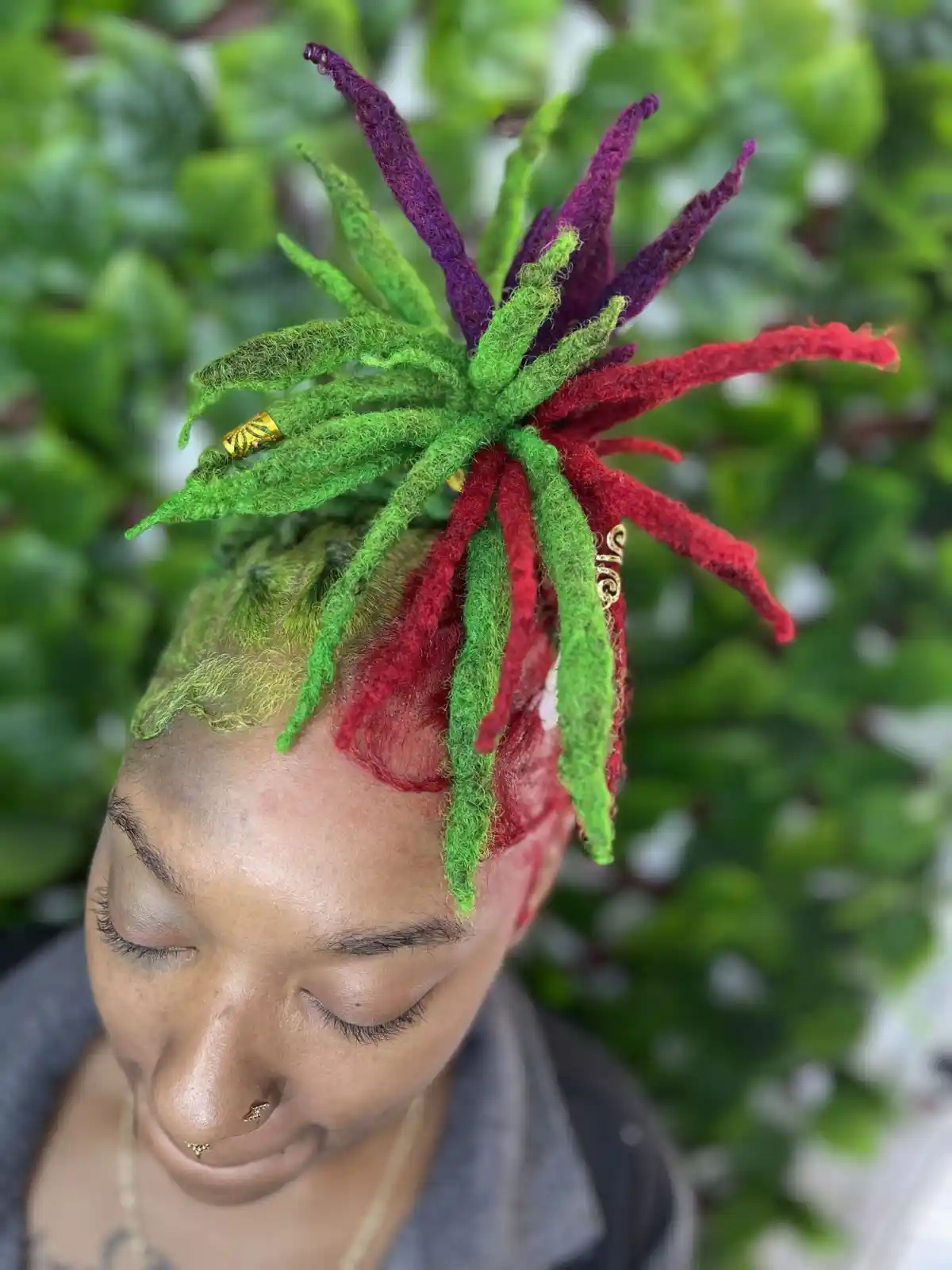
Rainbow accents on shoulder-length locs work because they don’t demand full commitment. Just a few locs in red, yellow, green and blue break up the wavy texture without overwhelming it. This design suits any face shape and looks best on locs that already have some movement. Ask your colorist for rainbow colored shoulder length locs.
Expect those vivid sections to fade faster than the rest, so a color-depositing shampoo every third wash helps keep them from turning muddy. A leave-in conditioner keeps the wavy texture defined and the colored strands from drying out. Accents are the lowest-risk way into rainbow color — you can always add more later.
Multicolored Locs With Red Purple Blue Accents
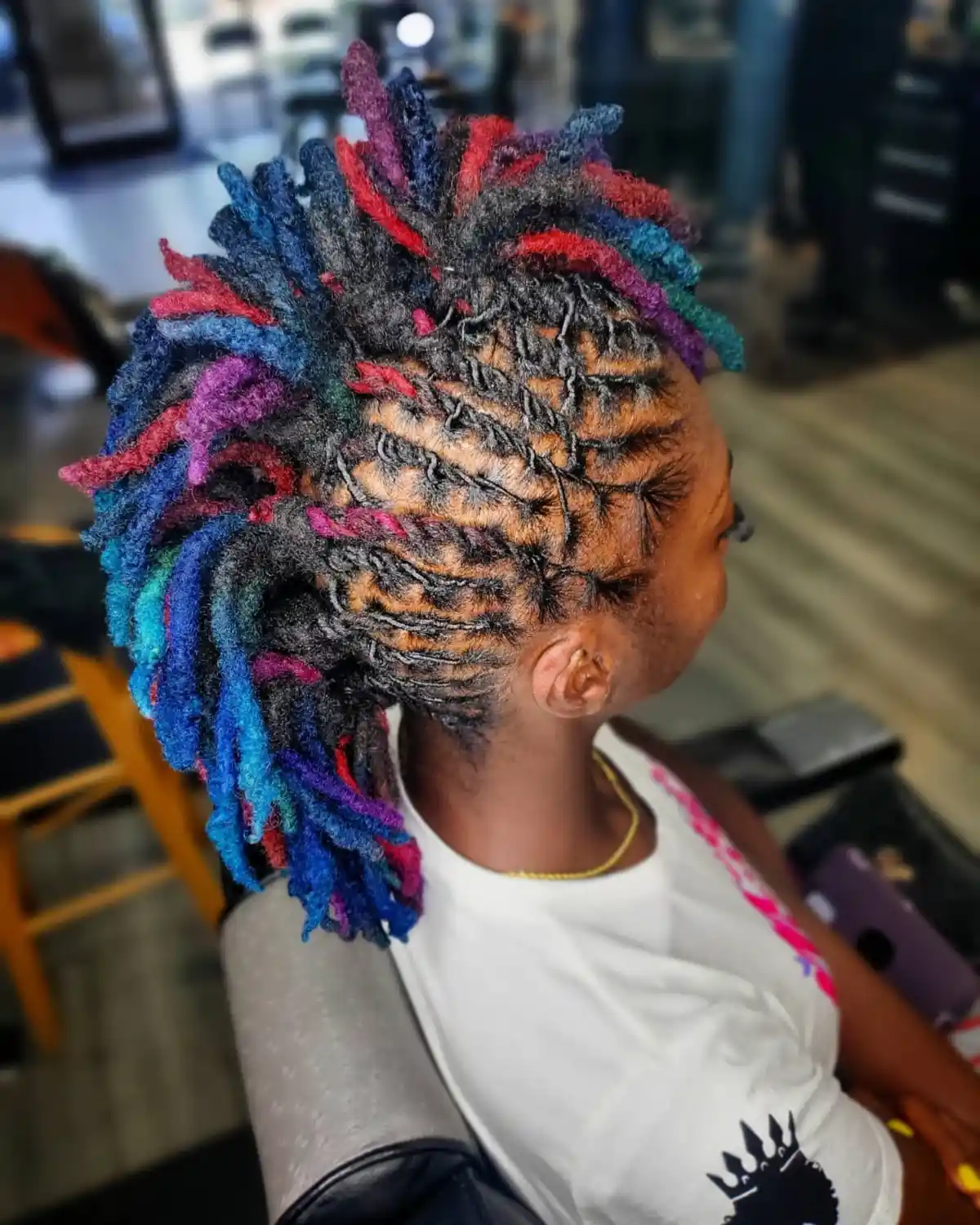
Image credit: Laced By Od
The technique behind red, purple, blue and gold accents on wavy locs is methodical, not random. Your colorist sections each loc individually, applies the shade to the ends, then wraps it to prevent bleeding into neighboring locs. The gold accents here act as a visual bridge between the cooler blues and warmer reds. Ask your colorist for shoulder length locs with red, purple, blue and gold accents.
This process takes time, usually a few hours in the chair, because each loc is a separate canvas. The color shifts with every turn of the head, which is the whole point — the look is never the same twice, and the gold keeps the cool and warm tones from fighting each other.
Shoulder Length Rainbow Effect Locs, Middle
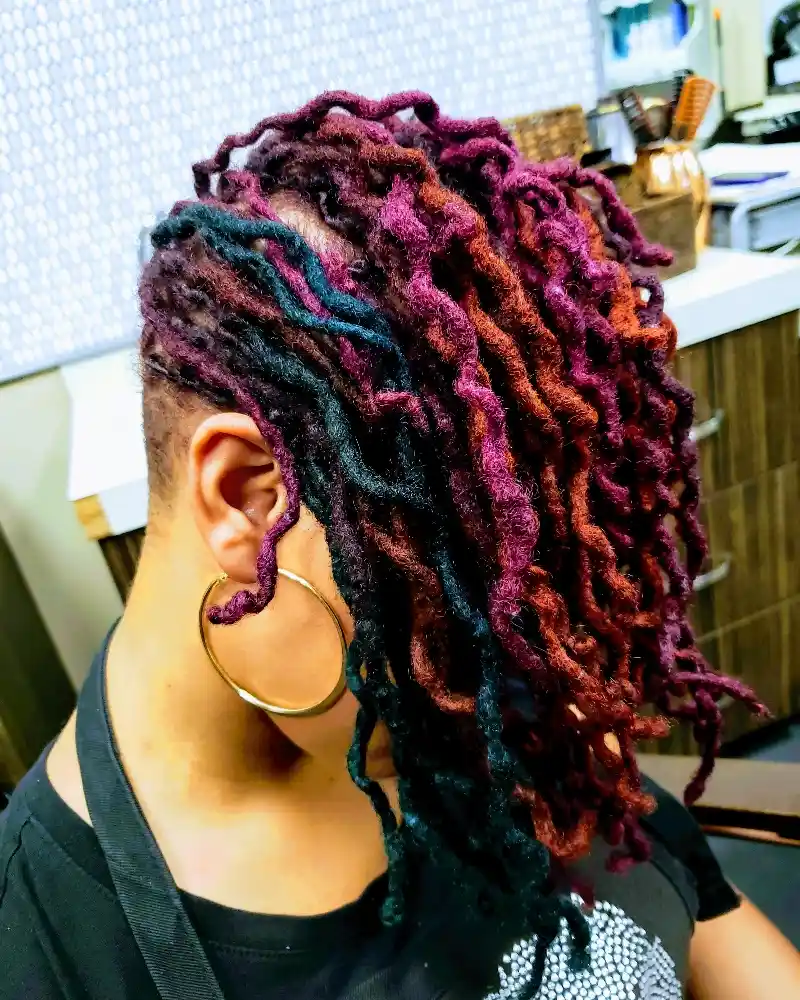
Photo via Relate Yah
Rainbow bands on shoulder-length locs are a summer statement that does not need a special occasion to justify it. The distinct stripes of red, orange, yellow, green, blue and purple run horizontally across each loc, creating a deliberate, graphic effect that stands out against a middle parting. This look suits any face shape, though the bold color draws the eye outward, which can balance a longer face.
Ask your colorist for shoulder length locs with rainbow bands. Seasonal events like music festivals or beach vacations are natural fits, but the real appeal is wearing something this playful on a random Tuesday. A sulfate-free shampoo is non-negotiable here — any harsh cleanser will strip those vivid bands in two washes.
Vibrant Red Shoulder Length Locs
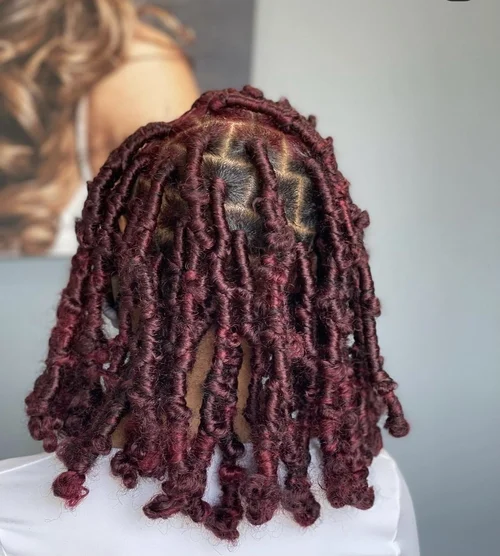
Courtesy of Mnandi Salon Spa
A vibrant red on coily, thick locs is a color that announces itself, but getting it right is where the salon earns its fee. The dark roots visible here are intentional. They create depth and make the red pop more than a solid shade would. Ask your colorist for vibrant red shoulder length locs with dark roots.
DIY red on locs is risky because the color can grab unevenly on the textured sections, leaving some locs brighter than others. A salon application ensures each loc is saturated consistently, and the dark roots are left untouched for a seamless grow-out. For the fall version of this red, fall red hair color ideas show how the shade deepens for the season.
Shoulder Length Creamy Pink Ombré Locs
Source: Hair Studio 910
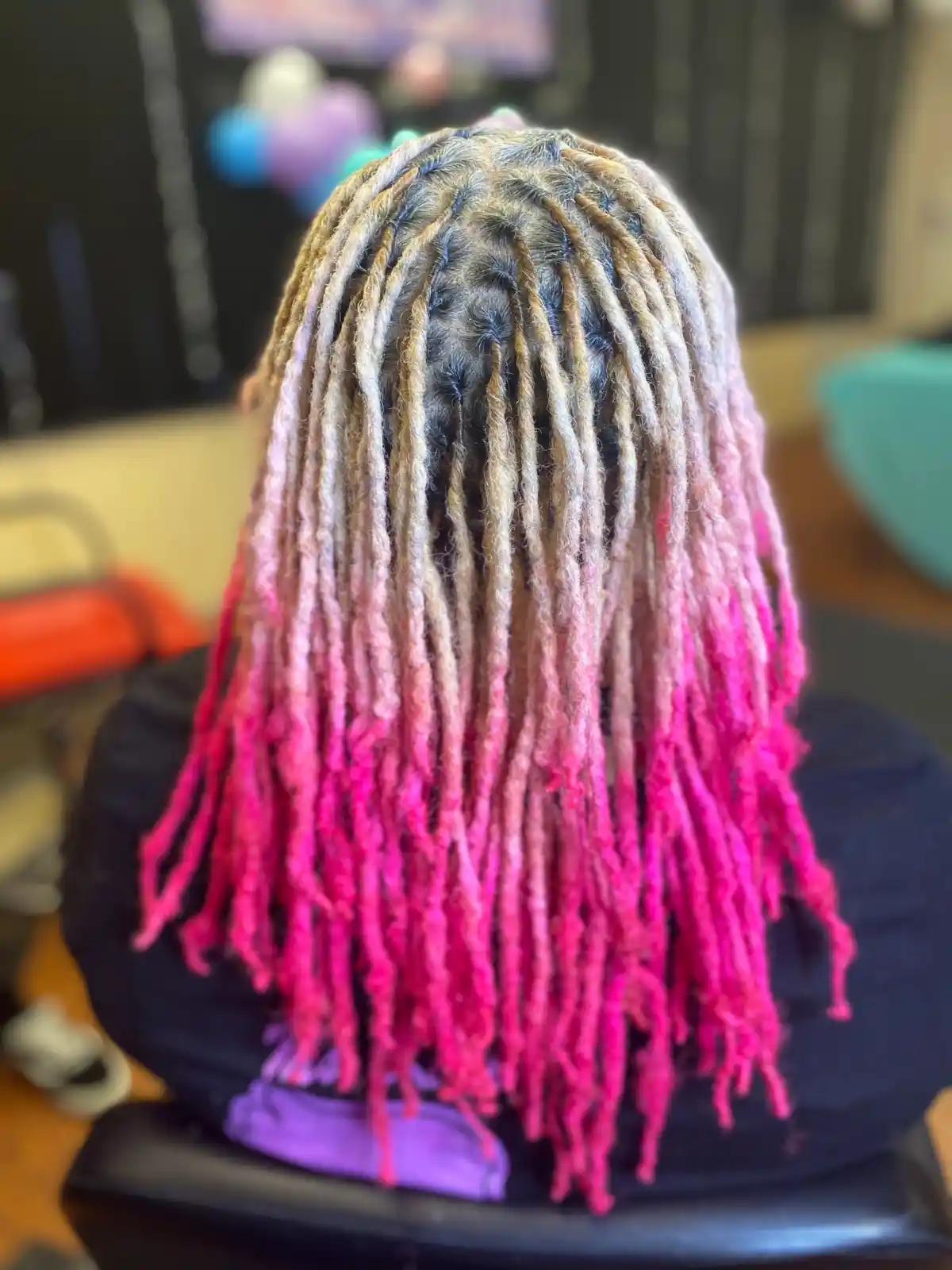
A creamy pink ombré on shoulder-length locs is a low-commitment way to try pastel color. The darker root keeps the grow-out line soft, so you are looking at a toning session every six to eight weeks rather than a full root touch-up. This gradient suits oval and heart face shapes best, as the darker top anchors the look while the lighter ends add softness.
Ask your colorist for creamy pink ombré shoulder length locs. The curly, medium texture here is air-dried with a diffuser to keep the ombré transition visible. A silk bonnet at night prevents the pink ends from rubbing onto the darker roots.
Split Dye Blue And Red Shoulder Locs
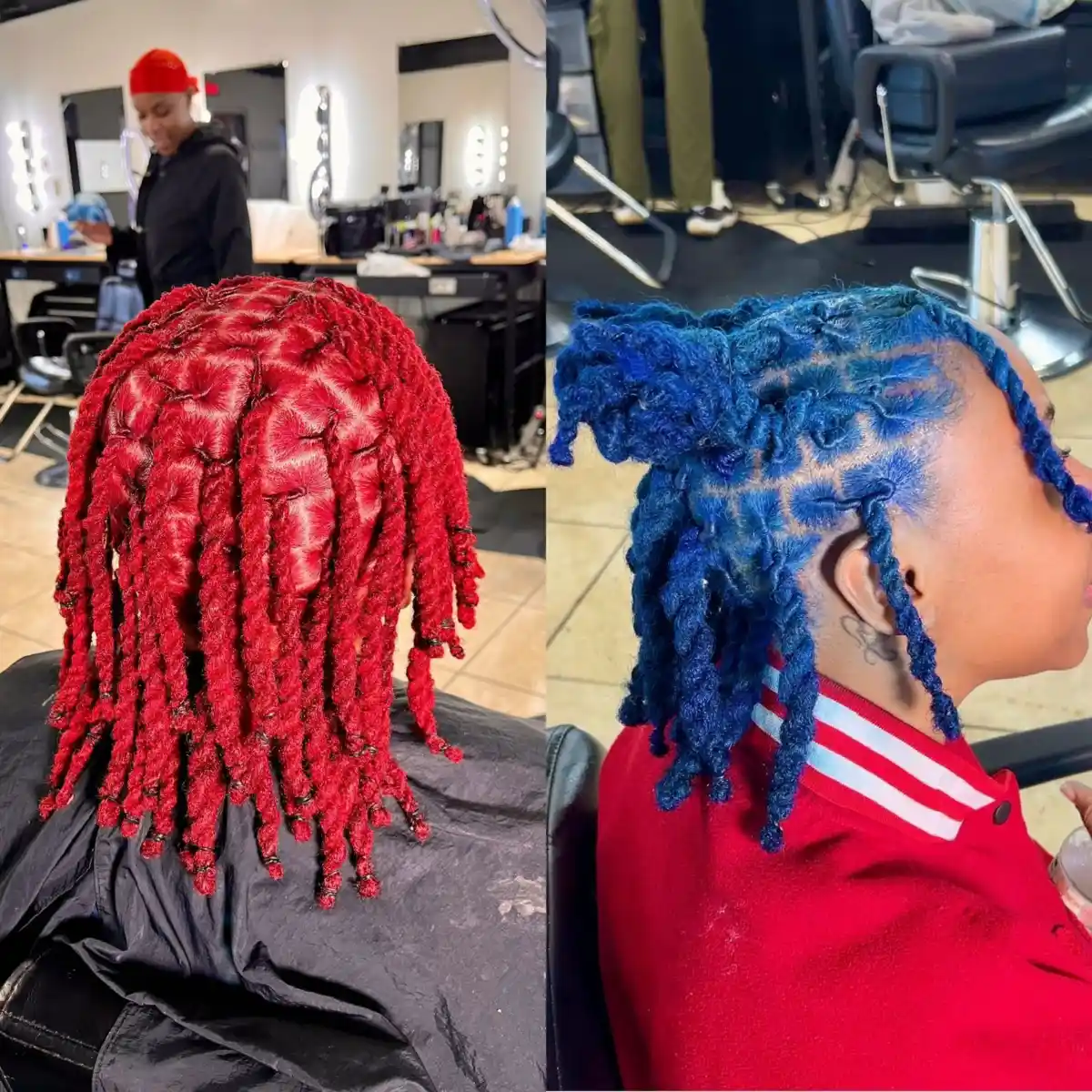
Photo credit: Ivory Briana
A split dye and a rainbow ombré both give you multiple colors, but they ask for different things. A rainbow ombré blends gradually; a split dye demands a precise vertical line. Shoulder-length locs in two buns, one vibrant blue and one bright red, make that line the whole point. The wavy texture keeps the color separation crisp.
Ask your colorist for split dye blue and red shoulder locs in two buns. The drawback is that the line is unforgiving: if a single loc strays, the effect looks messy. Wavy locs of shoulder length can pull it off; all face shapes work because the symmetry balances the look.
Mid-Back Rainbow Ombré Updo With Undercut
Via This Girl Know
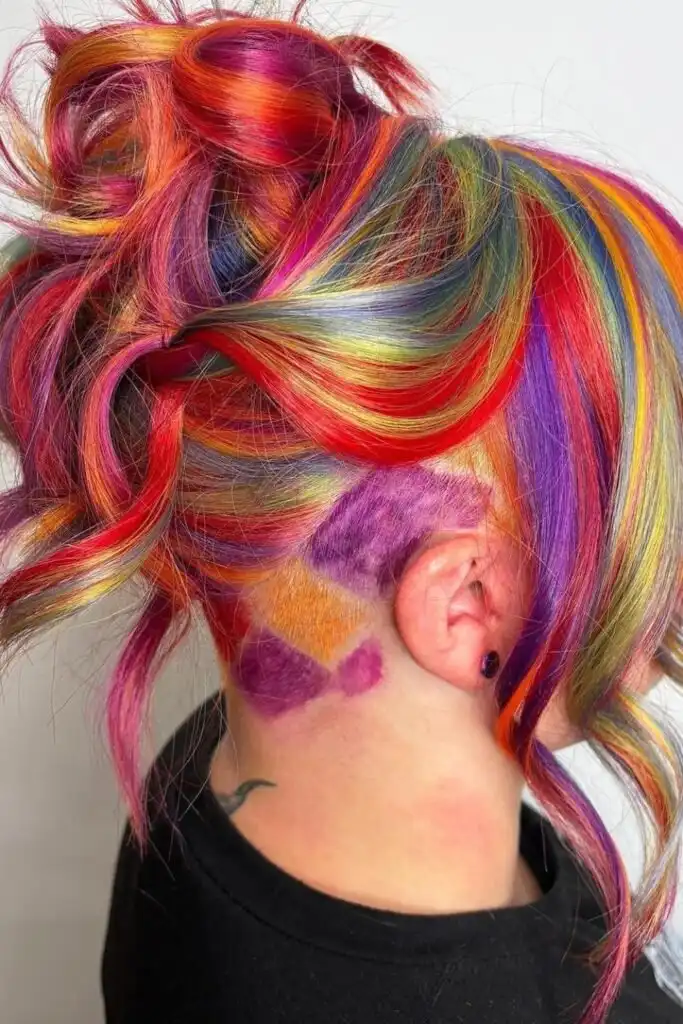
The rainbow ombré here transitions from black at the roots through red, orange, yellow, green and blue at the ends, all packed into a high bun with loose strands falling down the back. Thick, coily locs of mid-back length are the minimum canvas for that many colors to show as individual bands. The side undercut keeps the updo from looking heavy.
Ask your colorist for a rainbow ombré updo with undercut. The blending work is the trick: each color section needs to be saturated separately, which means a full day in the chair. Oval faces suit the height and side exposure best. For the updo family, romantic summer updo hairstyles show how the same height works with softer color.
Dark Brown Base With Orange Tips Undercut
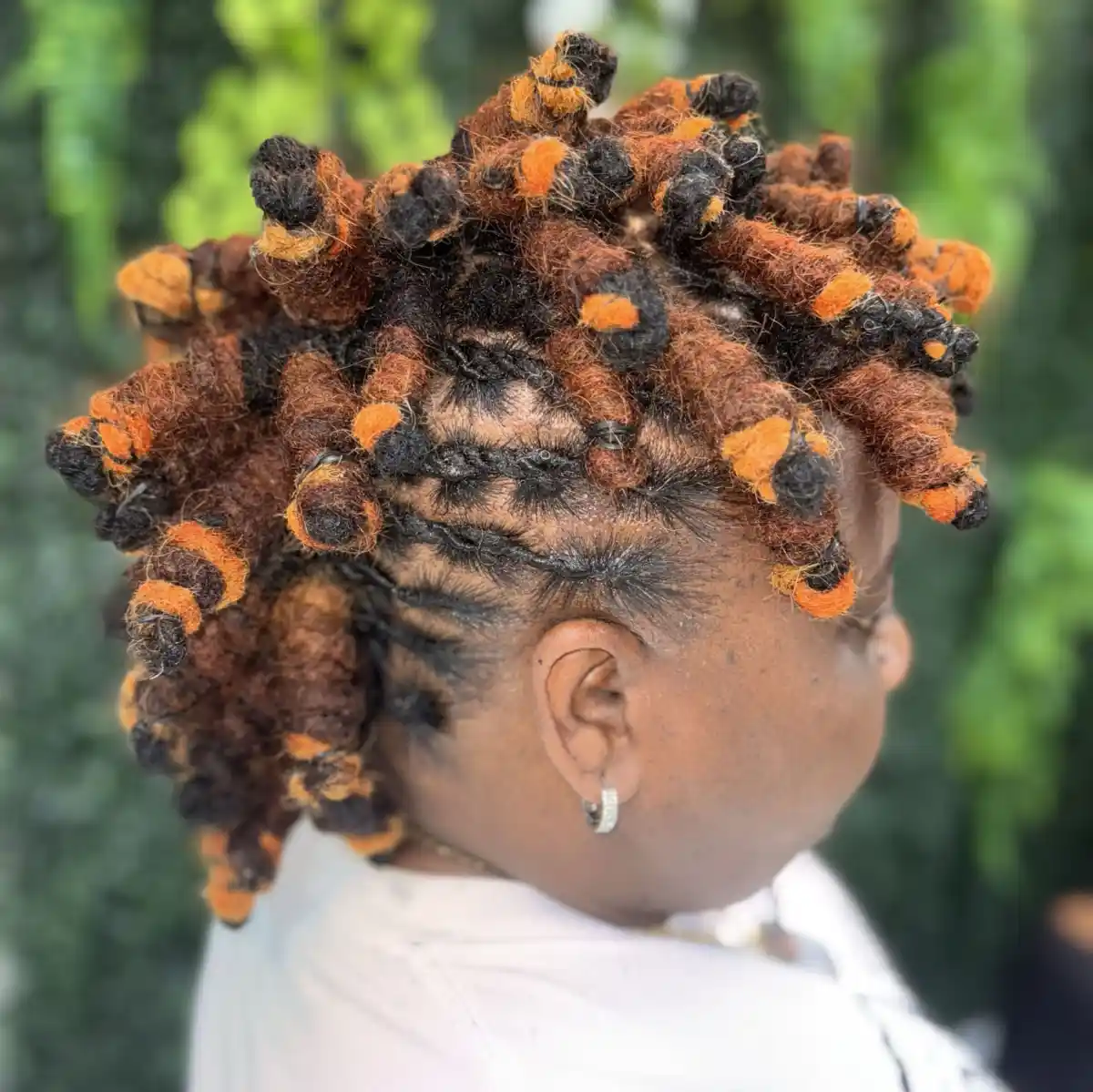
Image credit: Locsirie
If you want color without committing to a full head of it, tip dye is the practical sibling. A dark brown base keeps the roots low-maintenance while vibrant orange at the ends delivers the payoff. The undercut and high ponytail make the orange tips the focal point from every side angle. Thick, naturally textured locs of mid-back length hold the saturation well.
Ask your colorist for a dark brown base with orange tips and undercut. Round faces benefit from the height of the ponytail and the shaved sides, which add vertical line. Tip dye is the easiest color to grow out — you just trim the ends when you are done with it.
Black Locs With Red Updo And Undercut
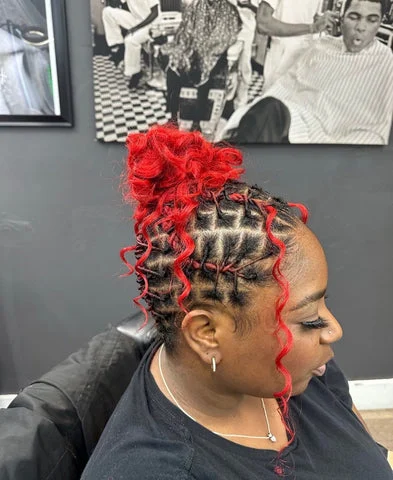
Photo via Jaliza
Red on black is a classic color combination for a reason: the contrast is immediate and the red pops without needing a full bleach lift. Here the vibrant red wraps around the top of a high bun while the black base locs and sharp undercut ground the rest. Coily, thick locs of mid-back length give the red enough density to appear as a solid block.
Ask your colorist for black locs with a red accent updo and undercut. The red sections will need a color-depositing shampoo every three to four weeks to stay bright against the dark base. The volume at the crown and the clean side lines help frame the face. For the winter version of this red, best winter red hair colors lean into the same deep, saturated tones.
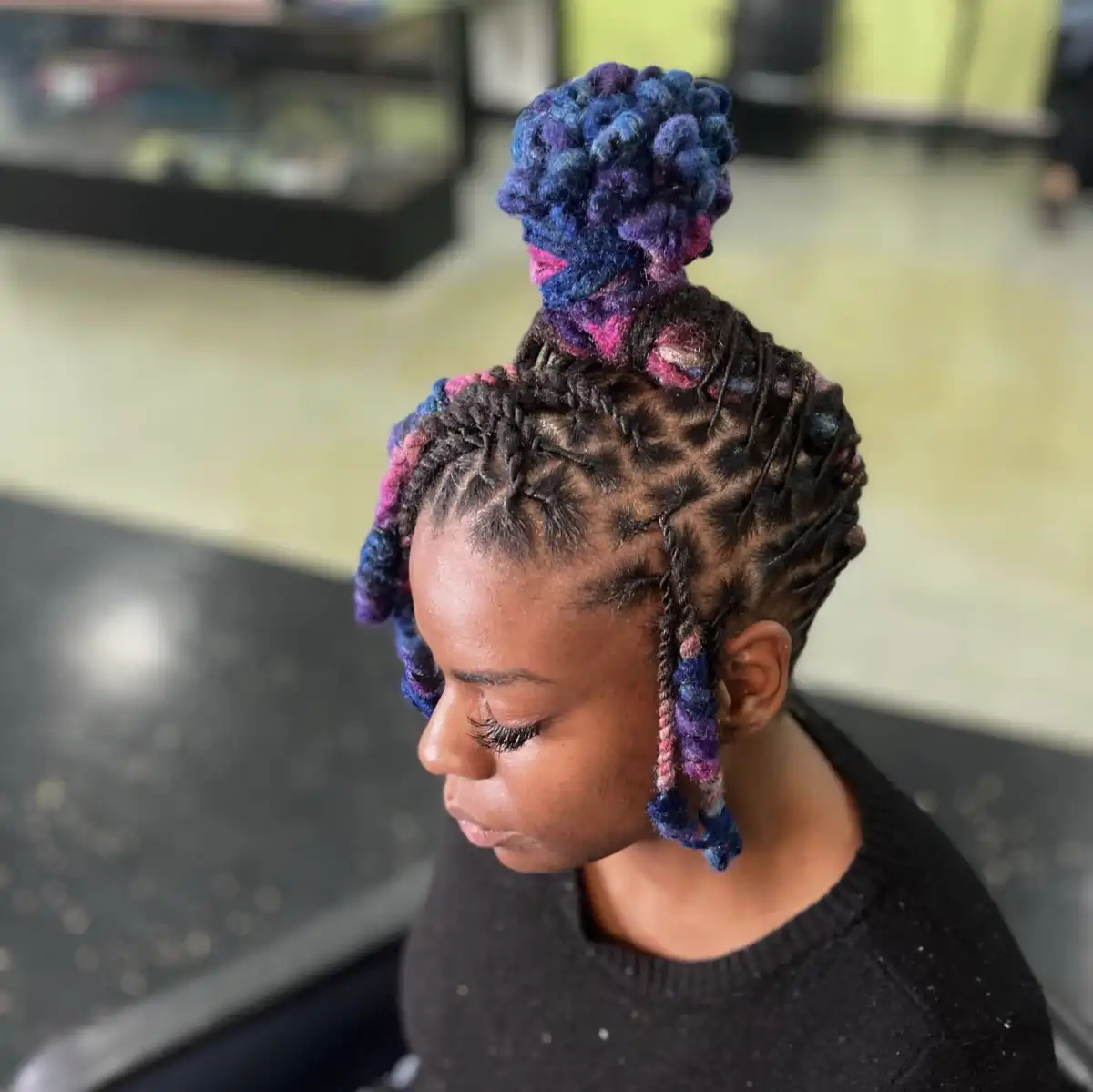
Multi-Colored Locs Updo With Highlighted Sections
Courtesy of Hairkilla 360
Multiple highlight colors work best when the placement follows a deliberate pattern. Here pink, orange, blue and purple are applied as individual highlighted sections, with a detailed parting pattern at the back that keeps each color in its own lane. The updo styling pulls the colors together without blending them into mud. Coily, thick locs of mid-back length are ideal: fine locs would lose the separation.
Ask your colorist for a multi-colored locs updo. The steps are simple once the color is done: gather into an updo, secure the base, let the highlighted sections fall naturally. All face shapes work with a centered updo and a middle part.
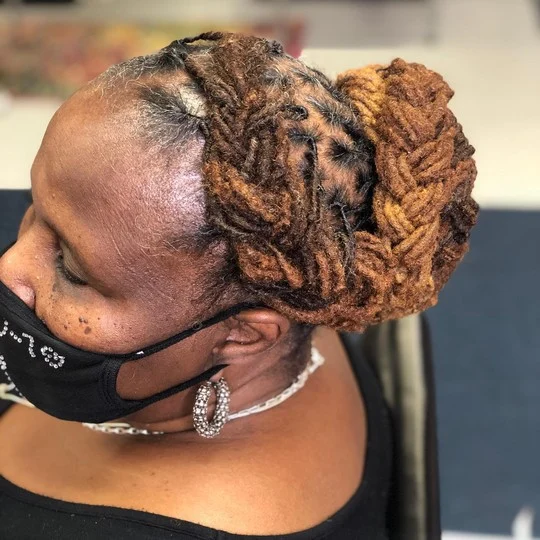
Dark Brown Base With Blonde Highlights Updo
Source: StyleSeat
A high updo with braided sides is usually a go-to for events, but add blonde highlights on a dark brown base and it shifts from practical to deliberate. The two-tone contrast works best on wavy locs at least mid-back length, where the lighter strands have room to show as woven in. Ask your colorist for a dark brown base with blonde highlights updo.
Oval and long faces benefit from the vertical line of the style. Braid each section tightly for definition, then secure with a light hold spray. This look is not for low-maintenance color — those highlights will need a toning refresh around every eight weeks to stay cool.
Collarbone Length Black Base With Brown Highlights
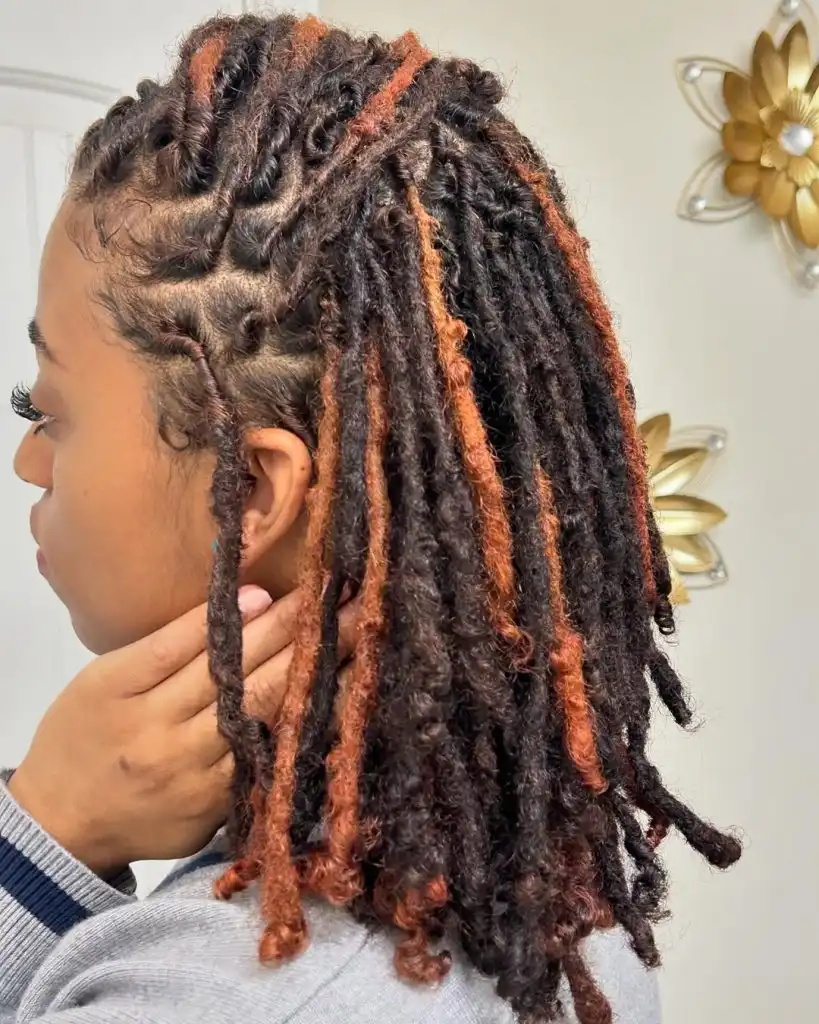
Photo credit: Homy Glow
A black base that melts into brown at the ends creates a natural ombre effect. The collarbone length keeps the transition visible without the color dropping off below the shoulders. Thick, wavy locs hold the gradient best because the texture catches both shades. Ask your colorist for black base with brown highlights collarbone locs.
A middle parting opens up the face, suiting square and round shapes. Initial application takes about two hours, then a gloss every six weeks keeps the brown from fading flat. Trim every eight weeks to maintain the shape.
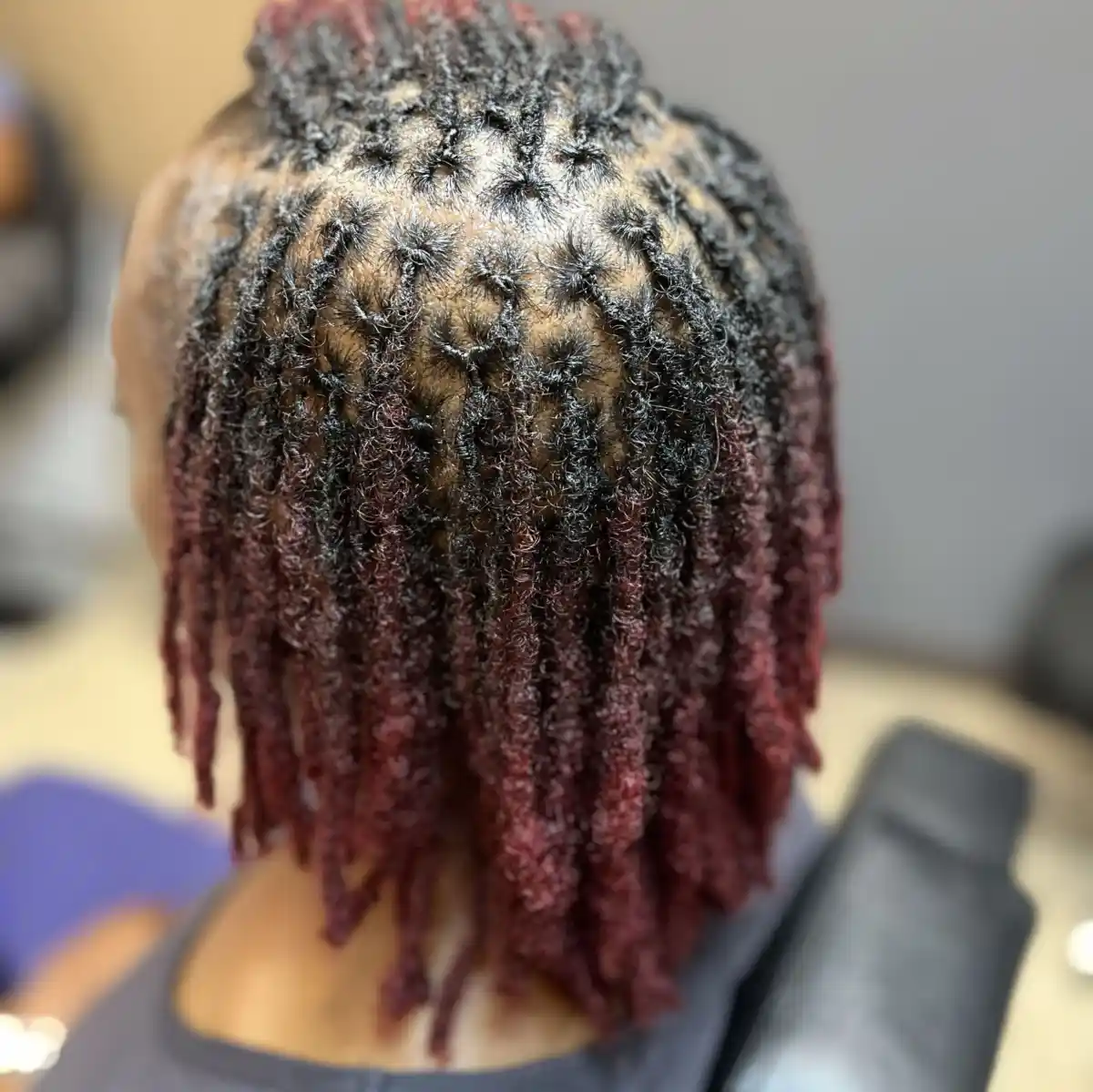
Mid-Back Dark Brown With Reddish Undertones
Via House of Stylez
Subtle reddish undertones on dark brown locs are a gamble. Done right, the hair shows a warm sheen; done wrong, it turns brassy within two washes. The trick is a semi-permanent gloss applied over the natural base, not a lift. Mid-back length gives the color enough surface to shift in different angles, and wavy texture softens the effect further.
Ask your colorist for dark brown locs with subtle reddish undertones. This works on all face shapes because the tone is low-contrast. The red fades fastest on porous locs, so skip this if you cannot commit to a color-depositing conditioner every third wash. For the burgundy side of this warmth, burgundy summer red hair color shows how the undertone deepens when the light changes.
Mid-Back Dusty Rose Pink Locs
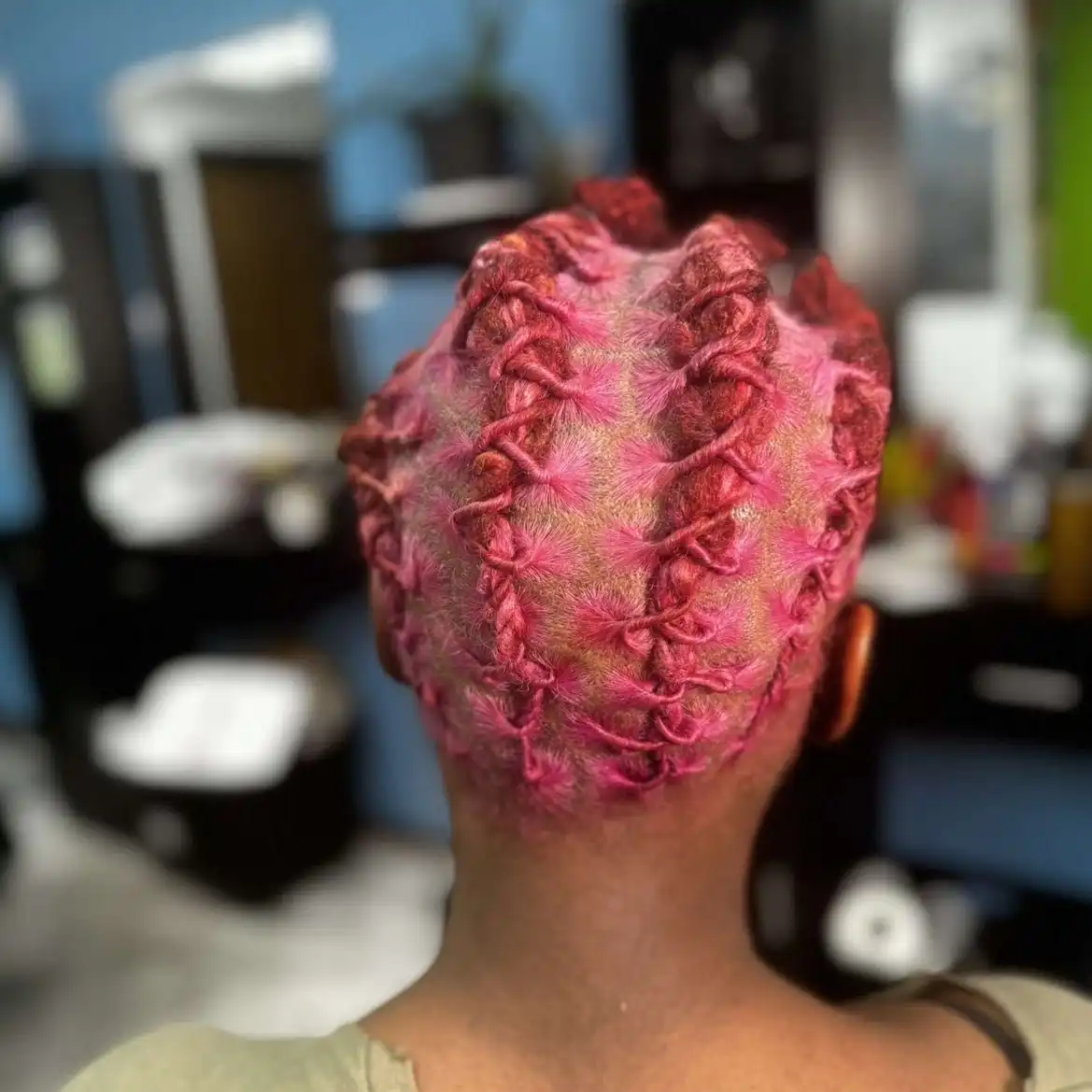
Image credit: Crown Heads LLC
Dusty rose pink is a tricky saturation — too pale and it looks washed out, too bright and it seems costumey. On mid-back length locs with a wavy, thick texture, the shade settles into something soft but visible. The middle part keeps the color from overwhelming the shape. Ask your colorist for dusty rose pink mid-back locs.
Oval and heart faces get the most balance from the even distribution. Achieving that even saturation on locs takes significant time, so plan for a full afternoon. Skip this if your locs are highly porous or if you need a color that fades gracefully — pink tends to leave a peachy stain on the way out.
Short Copper Red Sister Locs
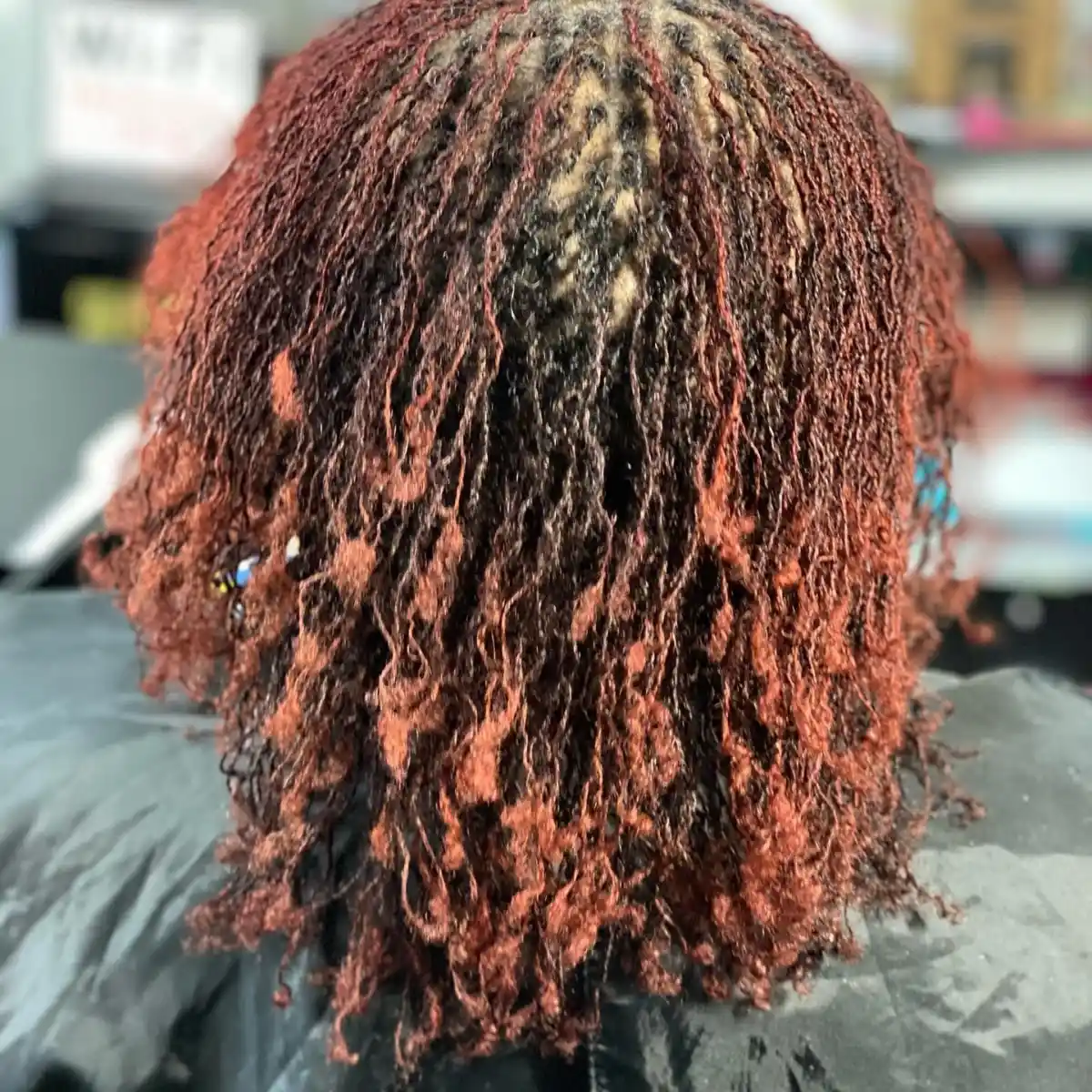
Photo via Locs of Beauty Studio
Copper red on fine sister locs is a salon-only proposition. The color requires lifting the natural pigment first, and the root shadow is not optional — it prevents a harsh line as the locs grow. Short length keeps the copper concentrated and the dense, coily texture holds the vibrancy longer than looser textures. Ask your colorist for copper red sister locs with root shadow.
Round and oval faces suit the close crop. DIY is not realistic here; the risk of uneven saturation on fine locs is high. A color-safe shampoo and a trim only when necessary will stretch the life of the shade to about eight weeks before the copper starts to dull. For the copper balayage branch of this family, soft summer copper balayage shows how the same warmth works when it is painted rather than saturated.
Final Thoughts
For vibrant, multi-colored effects, opt for salon services to ensure even saturation and prevent damage. For subtle ombré or single-process colors on healthy locs, consider DIY if you have prior experience, but always patch test.
Deep condition locs every two to three weeks to maintain moisture. Use color-safe shampoos and conditioners to preserve vibrancy. Avoid excessive heat styling; air dry when possible. Retouch color as needed, typically every six to ten weeks for vibrant shades. Embrace the art of color with your locs.