Winter is the season red hair was made for. Under gray skies and low sunlight, copper tones pick up a richness that summer light flattens out — a deep auburn looks nearly jewel-toned against a dark coat, and even a bright ginger reads warmer when the air turns cold. The trade-off is real, though: red molecules are the smallest color molecules, so they slip out of the hair shaft faster than any other shade. Every color on this list is built with that reality in mind — some lean into the fade gracefully, others earn their longevity with deeper bases and glosses. We covered this territory more deeply in Stylish Homecoming Hairstyles.
Below are 24 winter hair color ideas for redheads, from subtle strawberry blends to bold fire-engine copper. Each one includes honest upkeep notes: how often you’ll be back in the salon chair, what the grow-out looks like, and who the color suits best. Related reading: Top 15 Fall 2025 Hairstyles Hair Colors Ideas takes the same concept further.
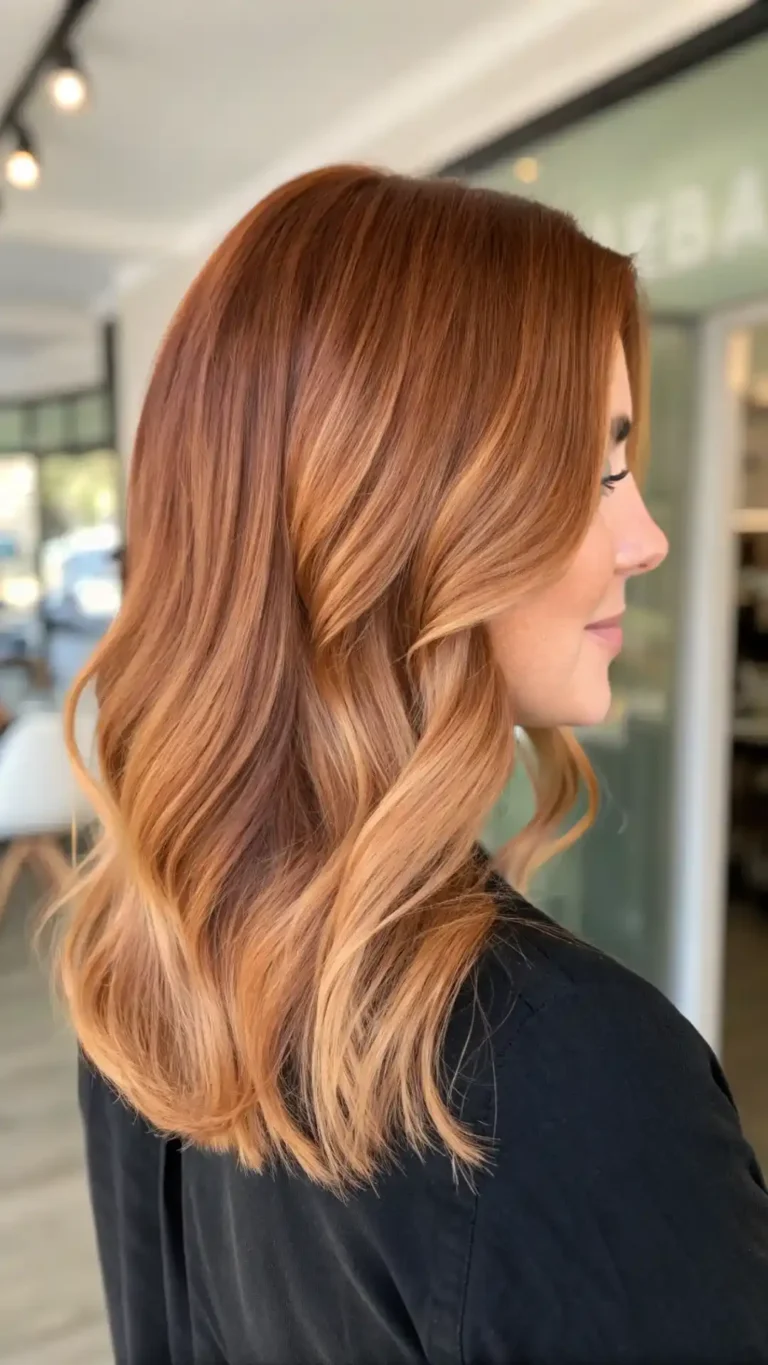
Auburn with Honey Balayage on Long Waves
Courtesy of: herstylepulse.com
Rich auburn base with hand-painted honey-toned pieces through the mid-lengths and ends, worn in long loose waves with a middle part. The honey lifts add warmth without tipping into orange, and the waves give the lighter sections room to catch the low winter sun. This is a flattering choice for medium to thick wavy hair, since the length shows off the balayage gradient; on fine hair, the same technique works best at a shorter length so the ends don’t look sparse. You’ll find the same spirit in Short Fall Hairstyles for 2025.
Ask your colorist for a warm auburn base with balayage highlights in a golden-honey tone. The grow-out is soft because balayage has no hard line, so most people can stretch appointments to ten or twelve weeks. A gloss refresh between visits keeps the honey from going brassy, and a sulfate-free shampoo slows the fade of the red base. Trade-off: the honey pieces need toning discipline, or they drift toward a brassy gold by week eight.
Copper Penny with a Dark Shadow Root
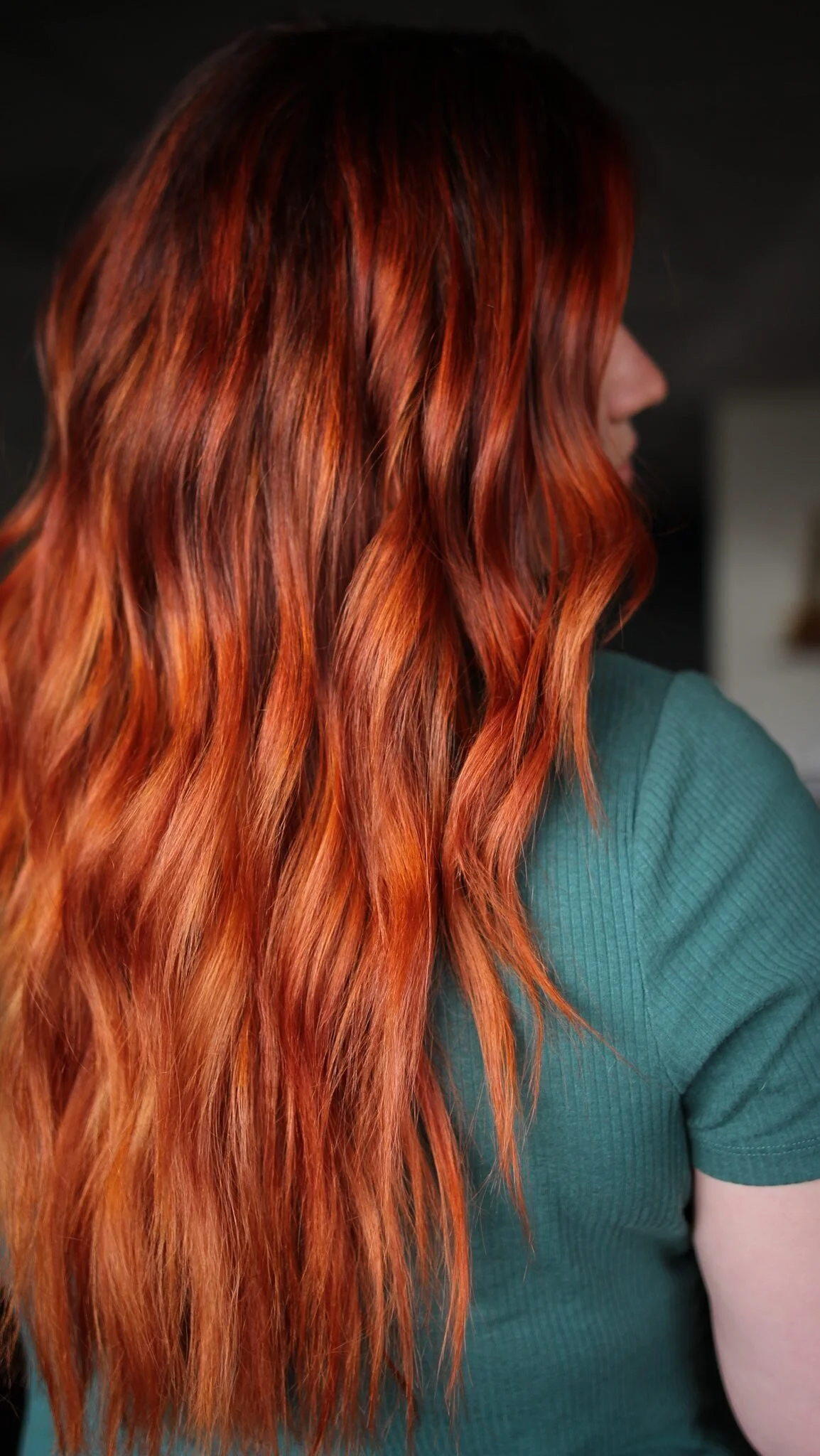
Photo credit: shelbyalexandrahair.com
A bright penny-copper color melted into a deeper copper-brown shadow root, worn long with soft waves. The shadow root is the workhorse here — it blurs the regrowth line, so a color that would otherwise call for a touch-up at week four stays believable through week eight. The penny tone sits between classic copper and auburn, warm enough for winter but not so vivid it washes out fair skin.
This is a two-step process: the copper is applied first, then the root is deepened with a demi-permanent shade. Expect toner refreshes every six to eight weeks and a root re-shadow at the same visit. A color-safe shampoo keeps the brightness on track, since overuse of purple shampoo can dull copper. Best suited to fine-to-medium density hair; the trade-off is that the shadow root makes this lower-maintenance than a root-to-tip copper, but the ends still fade and will need glossing.
Spiced Cinnamon Ginger in a Sleek Bob
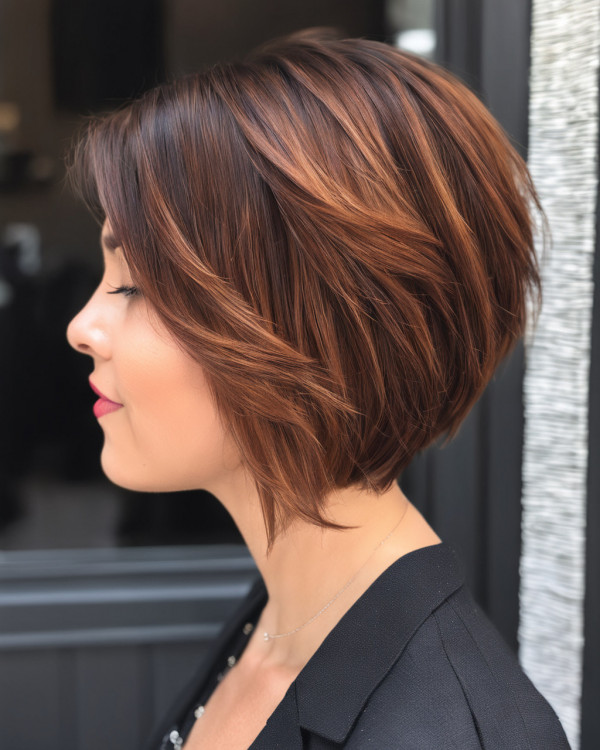
Image credit: itakeyou.co.uk
A single-process cinnamon-ginger shade — deeper and more brown-based than bright copper — worn as a sleek chin-length bob with a deep side part. The cinnamon tone has a warm, almost spiced depth that reads sophisticated rather than loud, and the blunt bob line makes the color look expensive. On straight, fine-to-medium hair this cut-and-color pairing is a knockout: the gloss finish reflects winter light and the side part gives the crown natural lift.
Maintenance is moderate: the all-over color shows regrowth at the part by week six, so plan touch-ups accordingly, and a copper-depositing conditioner between washes keeps the spice from cooling into brown. The bob needs a trim every five to six weeks to hold its edge. Best for straight hair types; very wavy or curly hair will need more heat styling to get the sleek finish. The main trade-off is that single-process reds fade noticeably, so this color demands consistent washing with cool water and color-safe shampoo.
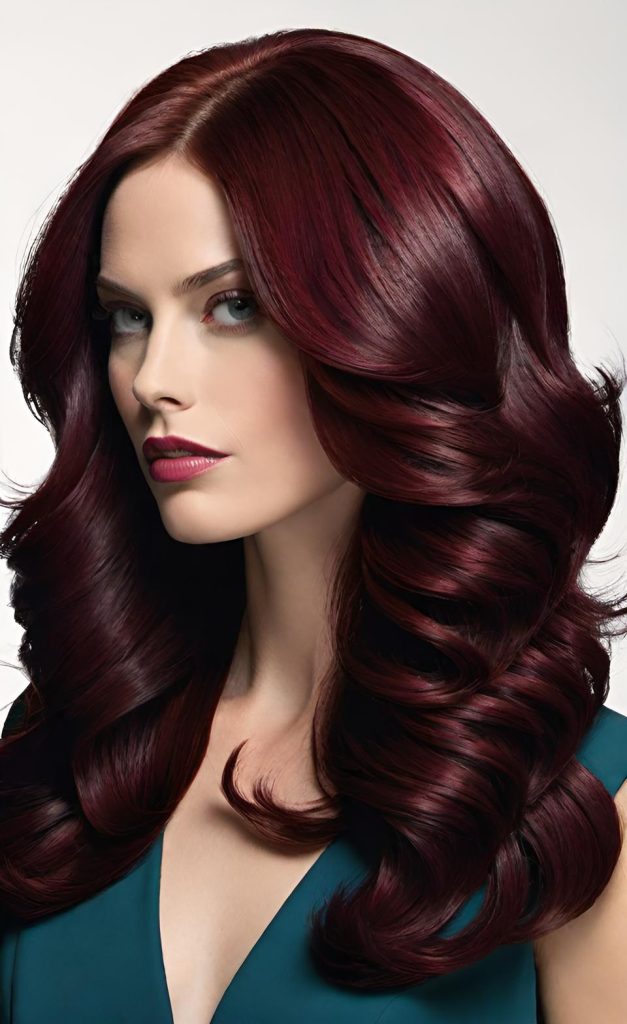
Deep Mahogany with a Cherry Gloss
Source: egitimkultur.com
A dark mahogany-red base lifted with a translucent cherry-red gloss, worn long with loose waves. Indoors it reads as a rich brunette with red undertones; in daylight the cherry layer ignites. This is the redhead color for people who want depth rather than brightness — it flatters warm and neutral skin tones especially, and the long length lets the gloss layer show its full range of tones as the waves move. This pairs naturally with the ideas in Gorgeous Caramel Hair Colors for 2026 Trendy Honey Balayage Coffee Tones Chocolate Shades.
The gloss is the fragile part: it fades in four to six weeks, faster in dry winter air. A color-depositing conditioner in a cherry or red tone between salon visits keeps it alive, and spacing washes helps. Ask for a demi-permanent gloss over a permanent mahogany base so the fade leaves dimension rather than a flat brown. Works on medium to thick hair; very fine hair can look weighed down by the darkness. Trade-off: the maintenance is gloss-driven and recurring, but the regrowth line stays soft because the base is deep.
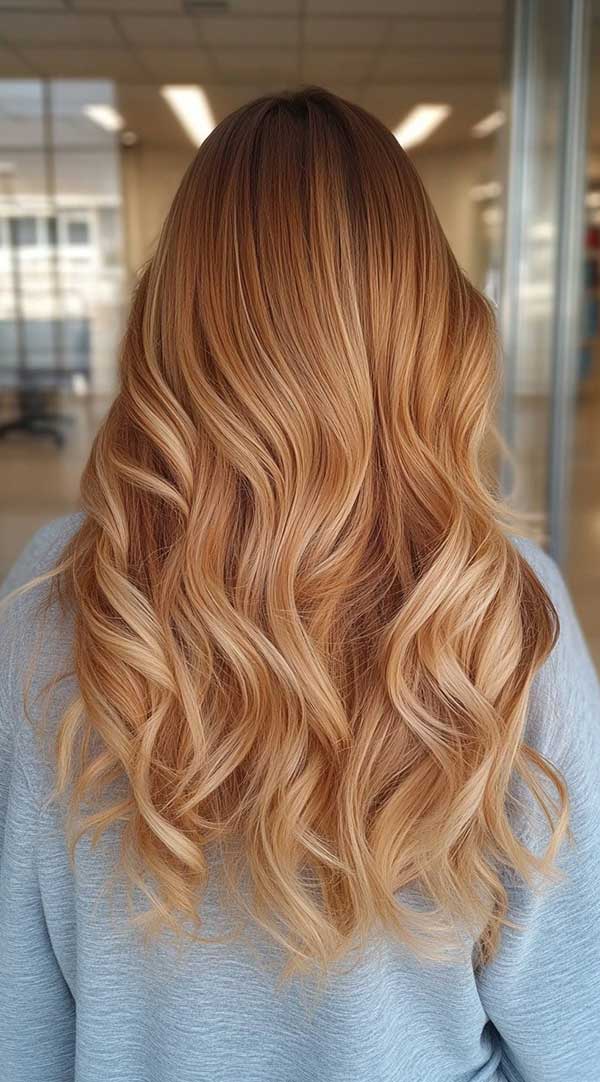
Honey Strawberry Blonde Balayage with Beachy Waves
Via cozyfeeds.com
A strawberry blonde base lightened with honey-toned balayage, worn long in tousled beach waves. The honey pieces sit in the golden range rather than the pink one, which makes this the most wearable strawberry blonde here — warm and sunlit rather than delicate. The beachy texture is the styling partner: the bends in each wave catch the lighter pieces and make the color look like it’s moving. Best on fair to medium skin with warm or neutral undertones, and medium to thick hair that holds a wave.
Ask for hand-painted honey balayage over a strawberry blonde base, with the lightest pieces through the mid-lengths and ends. The grow-out is soft — ten to twelve weeks between appointments is realistic — with a gloss refresh midway to keep the honey from going brassy. A purple shampoo used sparingly keeps the blonde pieces clean, though overuse can push the strawberry muddy. Trade-off: the honey tone needs toning discipline to stay golden rather than yellow, but the rooted balayage placement keeps the maintenance rhythm gentle.
Fiery Orange Copper with Curtain Bangs on Long Layers
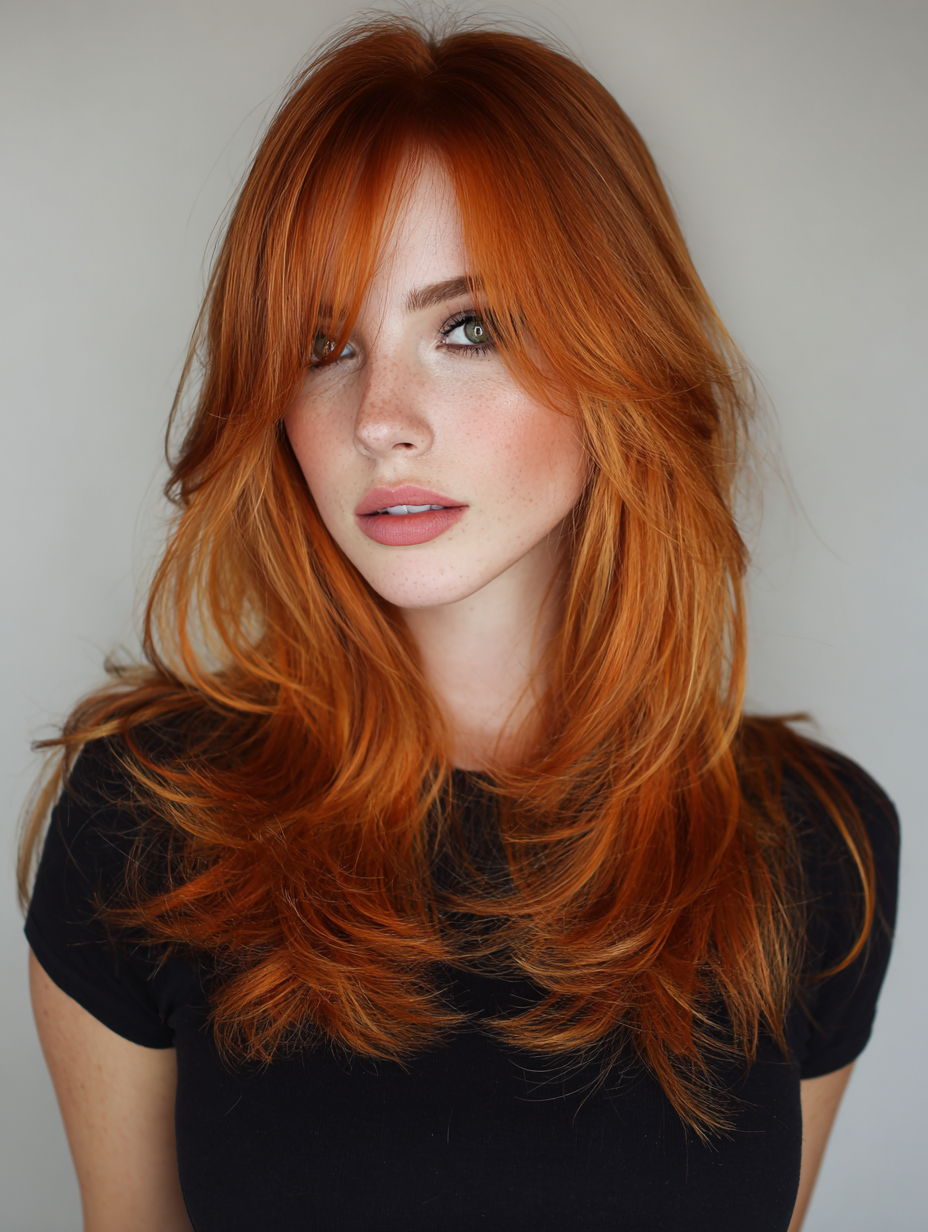
Courtesy of: inkinspo.com
A vivid tangerine-orange copper worn long with face-framing layers and curtain bangs. The length is what makes this version work — the brightness has room to unfold instead of shouting from a short cut, and the curtain bangs soften the statement by framing the eyes. The layers keep the long length from looking heavy and let the color shift as the hair moves. This is the boldest warm copper on the list, and it turns winter into its backdrop.
Honest maintenance talk: bright coppers fade the fastest of any red. Expect a toner or gloss every three to four weeks, washing in cool water, and minimal heat styling to protect the pigment. The curtain bangs need five minutes of styling each morning and a trim every three weeks. This color suits confident warm-toned complexions best; cool undertones can make tangerine copper clash. Trade-off: it’s the highest-maintenance idea here, but nothing else delivers the same impact per salon visit.
Caramel-Copper Ombré on Long Waves
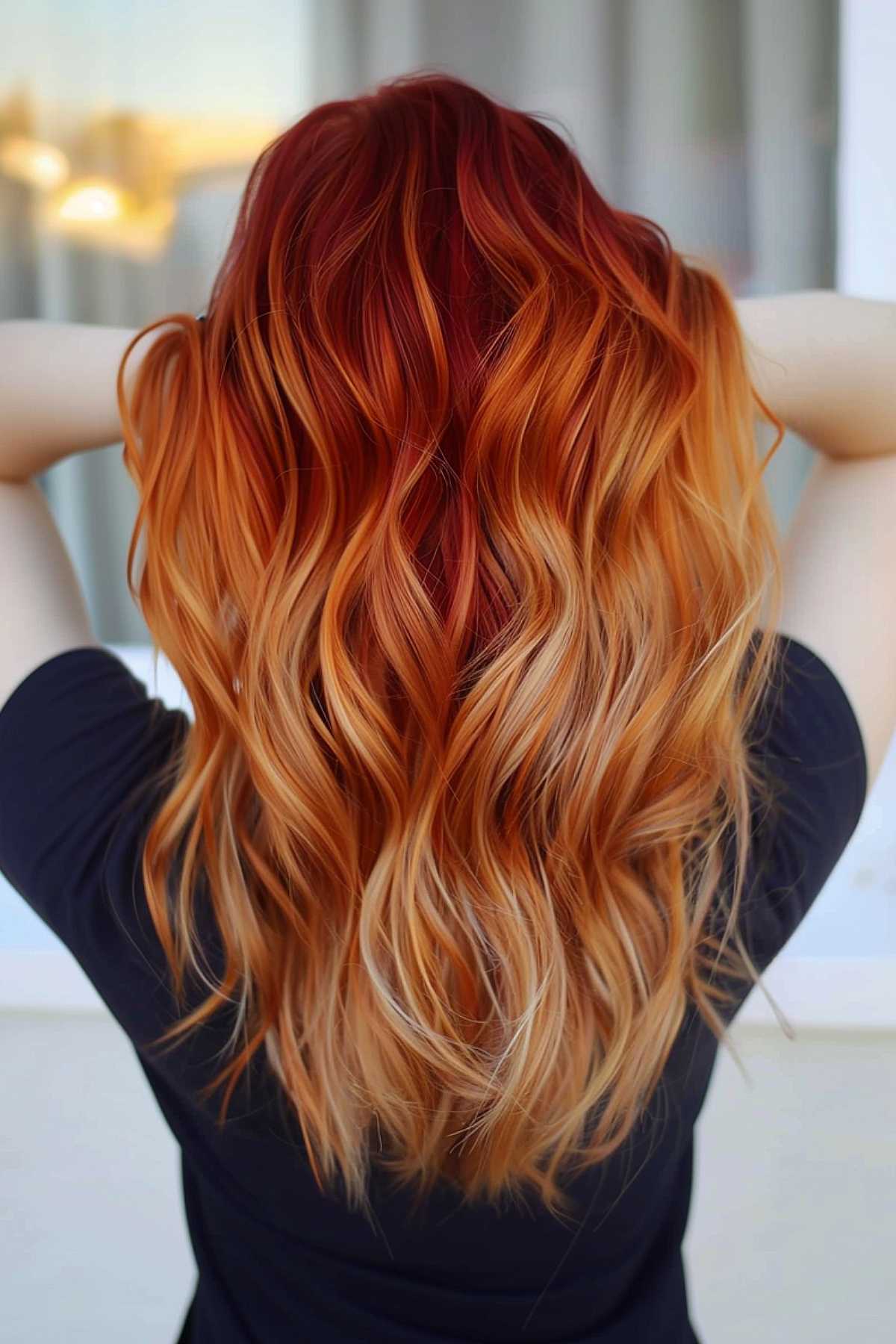
Photo credit: latest-hairstyles.com
A dark auburn root melting into caramel-copper ends, worn at mid-back length in loose waves. The ombré gradient does what a deep root does: it makes regrowth invisible, since the roots were never colored to begin with. The caramel note keeps the copper from reading flat or orange, and the long length gives the gradient room to unfold — short versions of this can look dip-dyed, so length matters. For the fuller picture, Perfect Hair Colors for Olive Skin is worth your time.
This is one of the lowest-maintenance reds on the list. The ends can be refreshed with a gloss every eight to ten weeks without touching the roots, and the base stays your natural color or a matching demi. Best for thick, wavy hair that can carry the long length; fine hair may look thin at the lightened ends. Trade-off: the lightened ends are more porous and fade faster than the base, so they’ll need glossing even while the roots coast.
Strawberry Copper with Golden Face-Framing Highlights
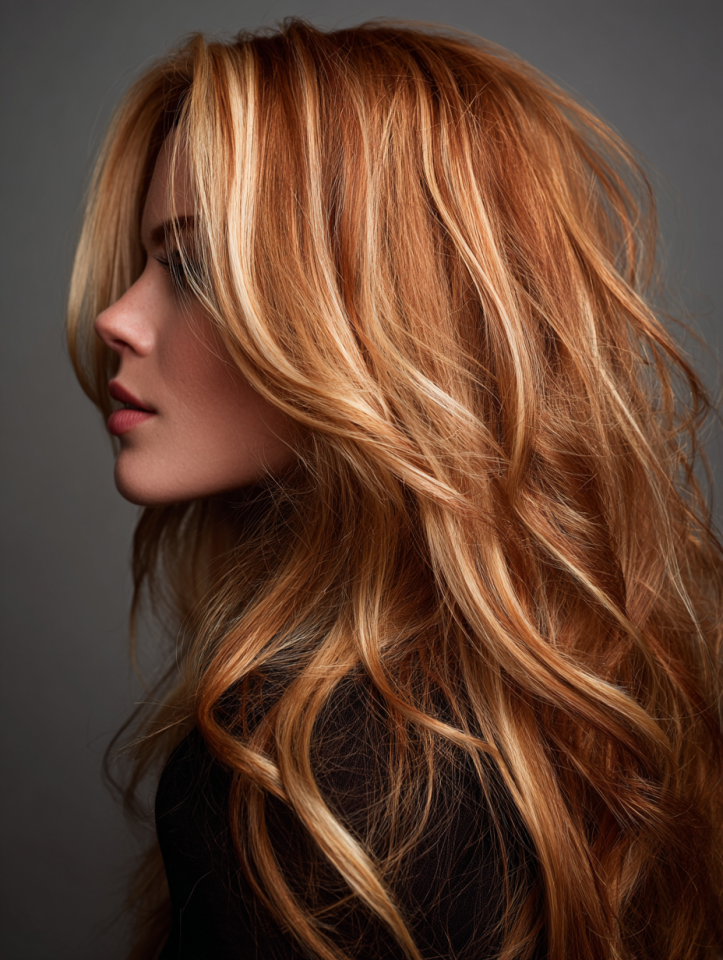
Image credit: stylescrave.com
A warm strawberry-copper all-over color with golden-blonde face-framing highlights — the “money piece” technique — worn long with soft waves. The golden brightness sits exactly where the face meets the hair, which lifts the complexion the way a highlighter lifts cheekbones. The rest of the copper stays rich and deep, so the overall effect is dimensional rather than stripy. Flattering on most face shapes, since the framing pieces draw attention to the eyes.
The highlights are foiled, so they need refreshing every eight to twelve weeks depending on how fast your hair grows. The copper base needs its own toning on a similar schedule, so book them together. Ask for the framing pieces to start at the cheekbone, not the root, so the grow-out stays soft. Works on medium-density straight-to-wavy hair. Trade-off: the face-framing brightness is the first thing to fade and the most visible, so this needs consistent gloss maintenance to look intentional.
Ginger Blonde Babylights on Medium-Length Hair
Source: gemmaetc.com
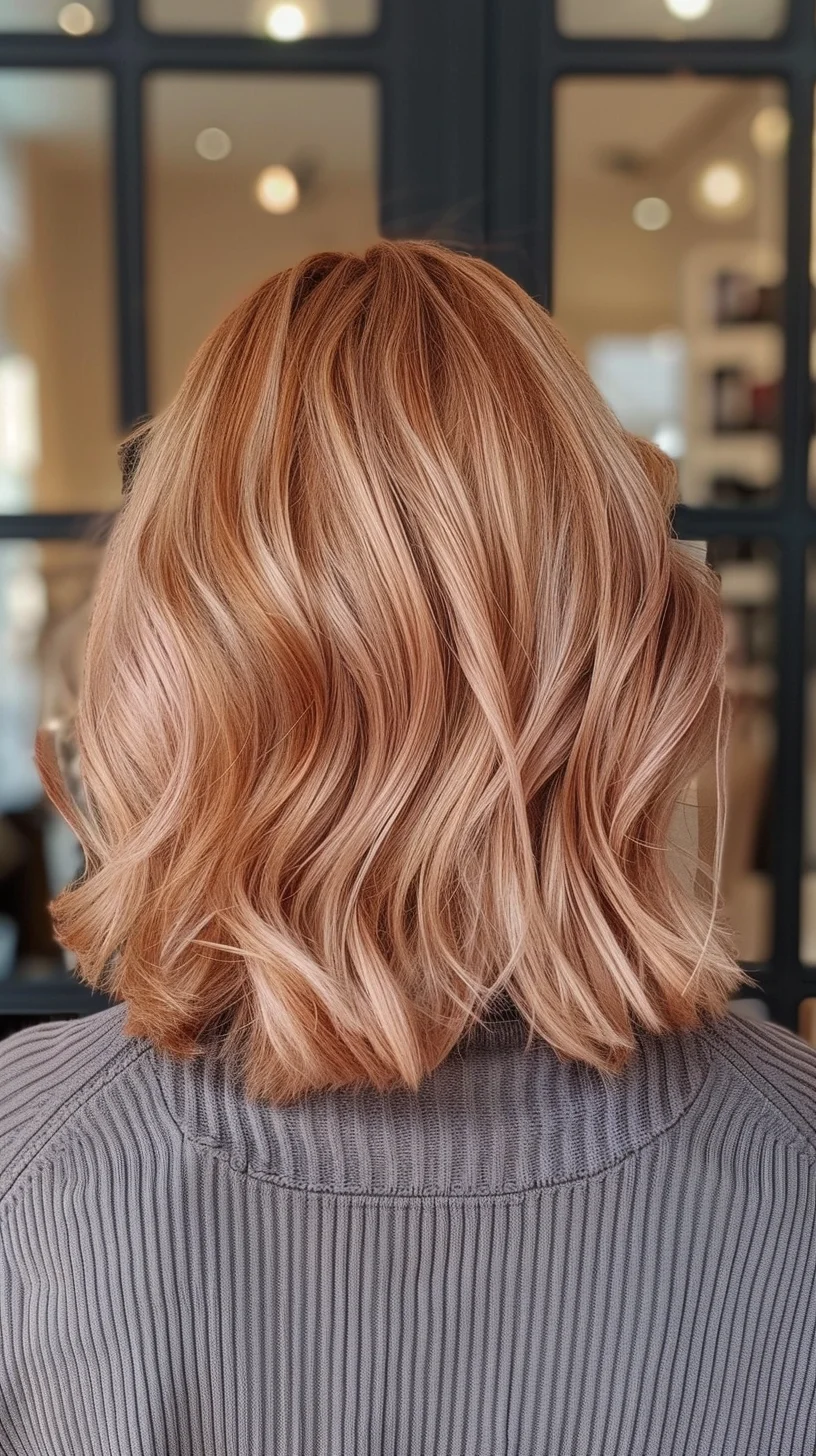
Delicate ginger-blonde babylights woven through a warm copper-blonde base, worn at medium length with loose waves. Babylights are ultra-fine highlights that mimic the way sun lightens hair naturally — the result reads as a luminous, multi-tonal ginger rather than an obvious dye job. This is the subtlest red on the list, and it flatters fine hair especially, since the fine highlights don’t stress fragile strands the way chunky ones can.
The technique is low-lift, so it’s gentler on the hair, but the fine highlights still need toning every six to eight weeks to avoid going brassy. A purple shampoo used sparingly keeps the blonde pieces clean; overuse can push the copper muddy. Best on fine to medium hair and fair to light-medium skin. Trade-off: the effect is so subtle that the maintenance-to-impact ratio is high — you’re in the salon regularly for a color that reads as “just healthy hair.”
Dark Plum Red with Copper Undertones, Long and Wavy
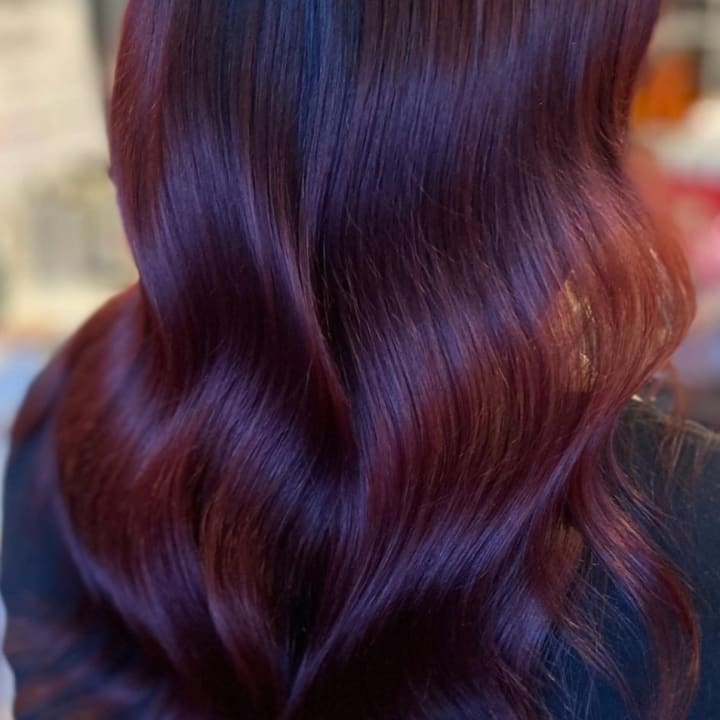
A deep plum-red all-over color with warm copper undertones, worn long in soft waves. The plum gives the shade its winter character — berry-dark indoors, glowing red-violet in the light — while the copper undertones keep it from going flat or blue. The long, wavy styling shows the color’s range: the waves catch the copper at their ridges and the plum in their valleys. This flatters warm and neutral skin tones; the berry depth can overwhelm very fair cool complexions. The concept gets a fuller treatment in Stunning Hair Colors That Make Green Eyes.
This is typically a single-process color with a plum-red shade, though very dark starting hair may need a light lift first. A gloss refresh every six to eight weeks keeps the plum from fading to a flat brown-red, and a red color-depositing conditioner helps between visits. Best on medium to thick hair; the darkness can weigh down very fine hair. Trade-off: the deep base disguises fade better than brighter reds, so the color looks good longer — but the plum tone is a commitment that’s harder to lift out if you change your mind.
Strawberry Blonde Pixie with Soft Texture
Courtesy of: hairtical.com
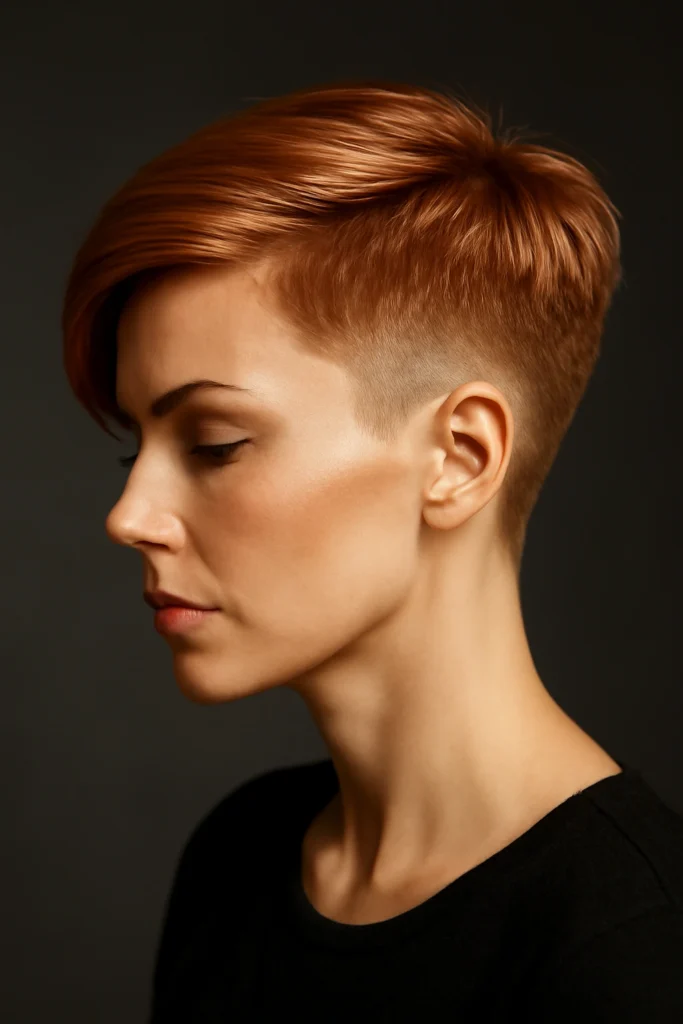
A strawberry blonde single-process color on a textured pixie with longer pieces on top and tapered sides. Short hair plus red color is a bold pairing: the strawberry tone keeps the pixie soft and feminine rather than severe, and the texture on top catches light in a way that shows off the color’s pink-gold range. This suits oval, heart, and diamond face shapes, where the cropped cut opens up the face.
Short hair means fast regrowth visibility — touch-ups every three to four weeks, and a trim every four to five to hold the shape. Styling is wash-and-go with a texturizing product; the color does the heavy lifting. The trade-off is frequency: this is the most salon-intensive maintenance rhythm on the list, since short red hair shows every millimeter of fade and regrowth. Best for people who love the salon and want a color that makes a short cut feel intentional.
Copper Melt with a Root Shadow
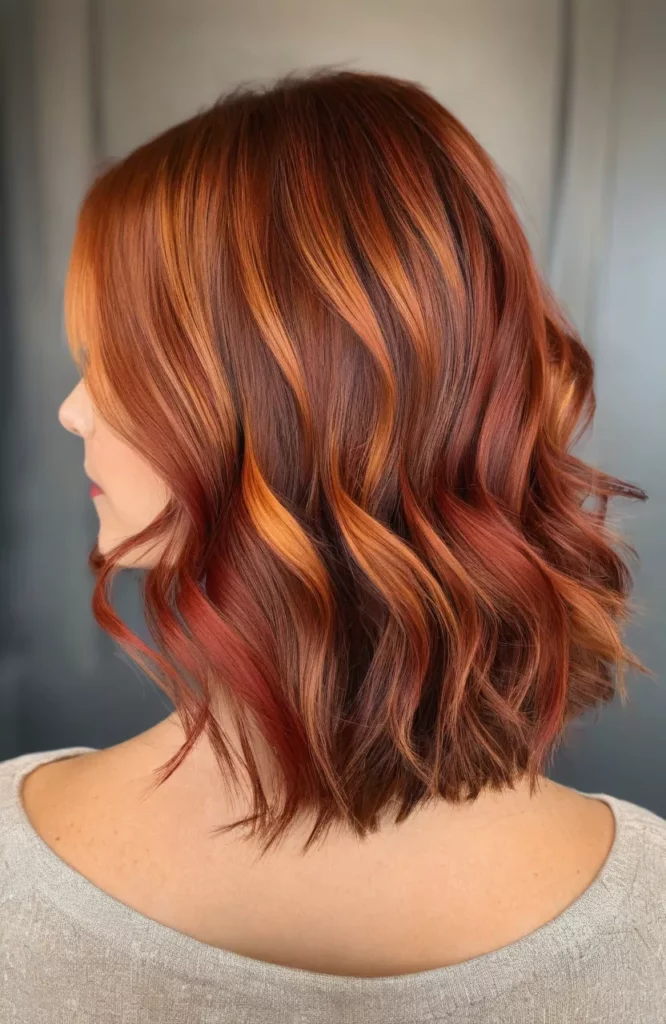
Photo credit: hairprimo.com
A seamless melt from a deeper auburn root into bright copper mid-lengths and ends, worn as a wavy lob with soft layers. The “melt” technique blends the root into the copper with no visible line, so the grow-out is as soft as balayage with the saturation of an all-over color. This is the color for people who want vivid copper ends without the four-week root appointment — the darker root carries the color through month two and three.
Book a gloss every ten to twelve weeks to keep the copper mid-lengths bright; the root shadow itself needs refreshing at the same visit. Toning shampoo every other wash keeps the copper from going flat. Best on wavy, medium-density hair where the melt’s gradient shows; very straight hair can make the transition look like a sharp ombré, so ask for an extra-blended application. Trade-off: the ends fade faster than the rooted top, so the color needs gloss attention even while the roots coast.
Hidden Red Underlights on Chocolate Brown
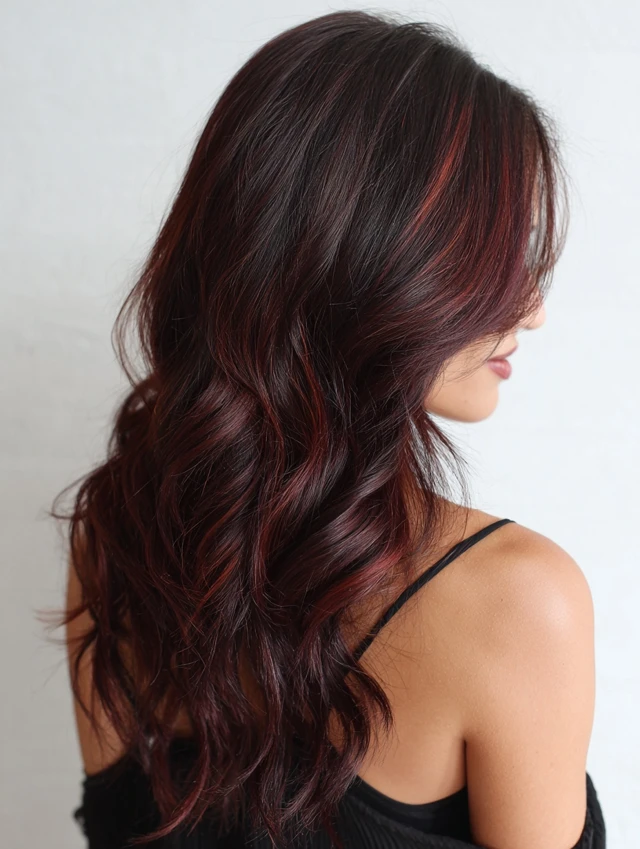
Image credit: womenshairtoday.com
A chocolate brown base with copper-red underlights hidden in the lower layers — subtle when the hair is down, revealed in flashes when it moves or is styled up. This is the gateway red: all the warmth of copper with none of the commitment of an all-over color, since the top layer stays your natural or near-natural brown. It flatters nearly every skin tone because the red is an accent, not the main event. See also Fall Hairstyles for Women 40 for more variations on this look.
The underlights are foiled, so they need refreshing every eight to ten weeks as they grow out — but the grow-out is hidden under the top layer, which makes the maintenance feel easier than it is. A copper gloss keeps the red vivid; without it, the underlights fade to a rusty brown. Best for medium to thick hair with enough density to hide the foiled sections. Trade-off: the color is subtle by design, so if you want people to notice your red hair, this isn’t it — but as a first red or an office-friendly option, it’s ideal.
Sunkissed Copper Balayage with Beach Waves
Source: mybellastyle.com
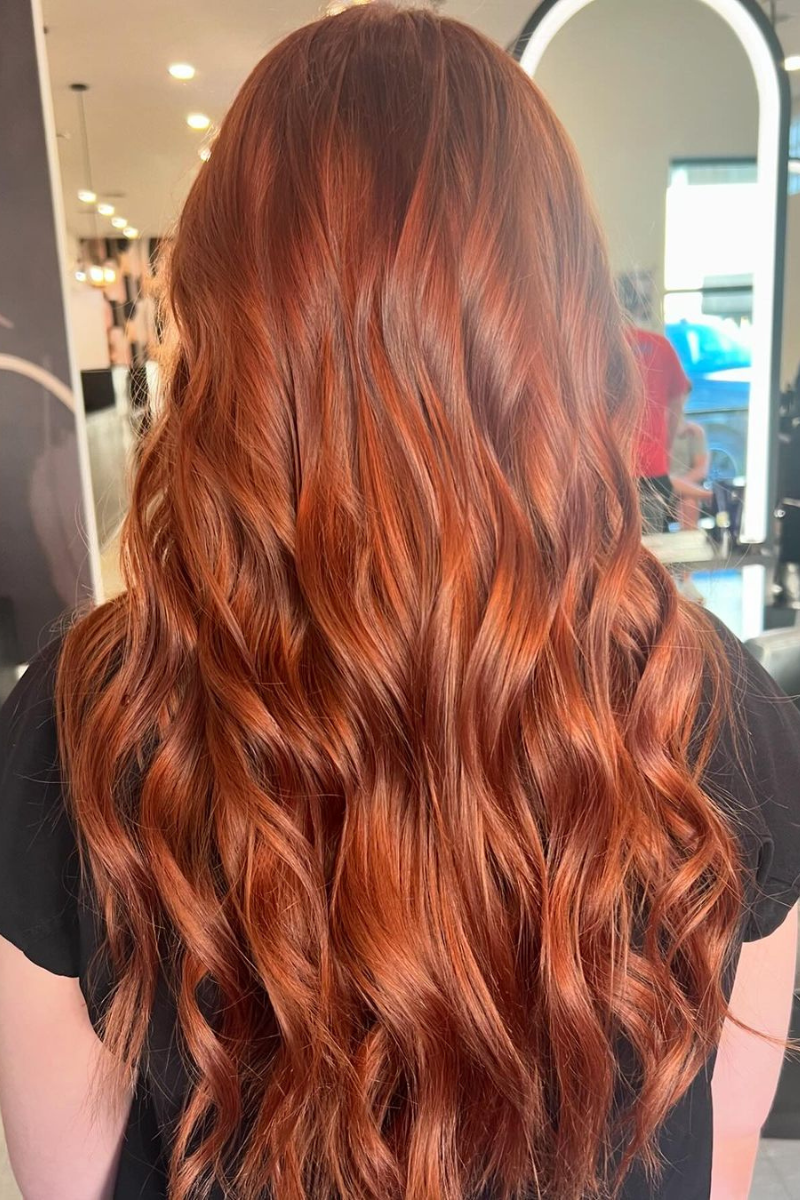
Warm copper balayage pieces scattered through a natural auburn base, styled in loose, air-dried beach waves. The placement is deliberately scattered rather than uniform, which mimics the way summer sun lightens hair — in winter, that sunkissed effect reads as warmth against the cold. The beachy texture is the styling partner: the bends in each wave catch the copper pieces and make the color look like it’s moving.
This is a genuinely low-styling option: air-dry with a sea-salt or texture spray and the color does the work. The balayage grows out softly, so ten to twelve weeks between appointments is realistic, with a gloss refresh midway. Toning shampoo keeps the copper pieces from going brassy. Best on thick, wavy hair that air-dries well; fine hair may need heat styling to get the wave. Trade-off: the scattered placement means some visits feel like “not much changed,” which is the point — but it can frustrate people who want visible transformation.
Rich Terracotta at Shoulder Length with a Soft Side Part
Via minimodel.jp
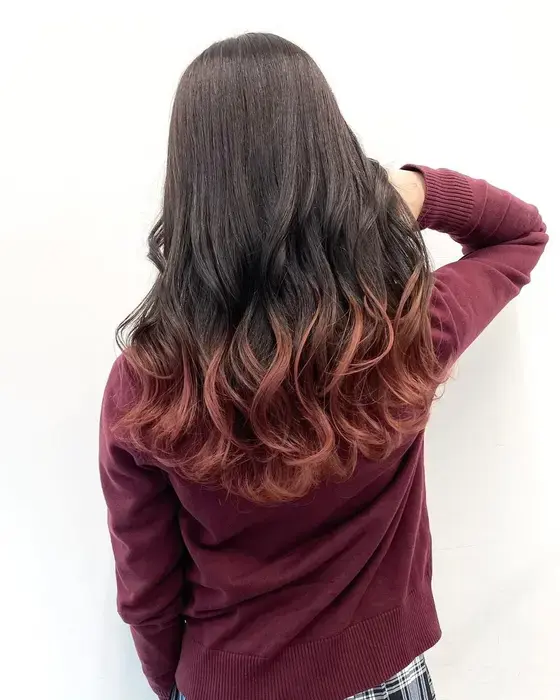
A warm terracotta single-process color — orange-brown with earthy depth — worn at shoulder length with a soft side part and loose waves. Terracotta sits between copper and auburn: warmer than auburn, deeper than copper, with an earthy quality that feels grounded in winter. The side part adds volume at the crown, which suits round and square faces, and the shoulder length keeps the color from overwhelming.
As a single-process red, it needs a toner refresh every six to eight weeks and consistent color-safe washing. A copper-depositing conditioner extends the life of the warmth. Best on warm and neutral skin tones with medium-density hair. Trade-off: terracotta’s earthiness is its charm and its risk — if it fades, it goes muddy-brown rather than pretty-blonde, so the maintenance schedule matters more than with brighter coppers.
Deep Auburn with Mahogany Lowlights in Defined Curls
Courtesy of: courtneysworld.co
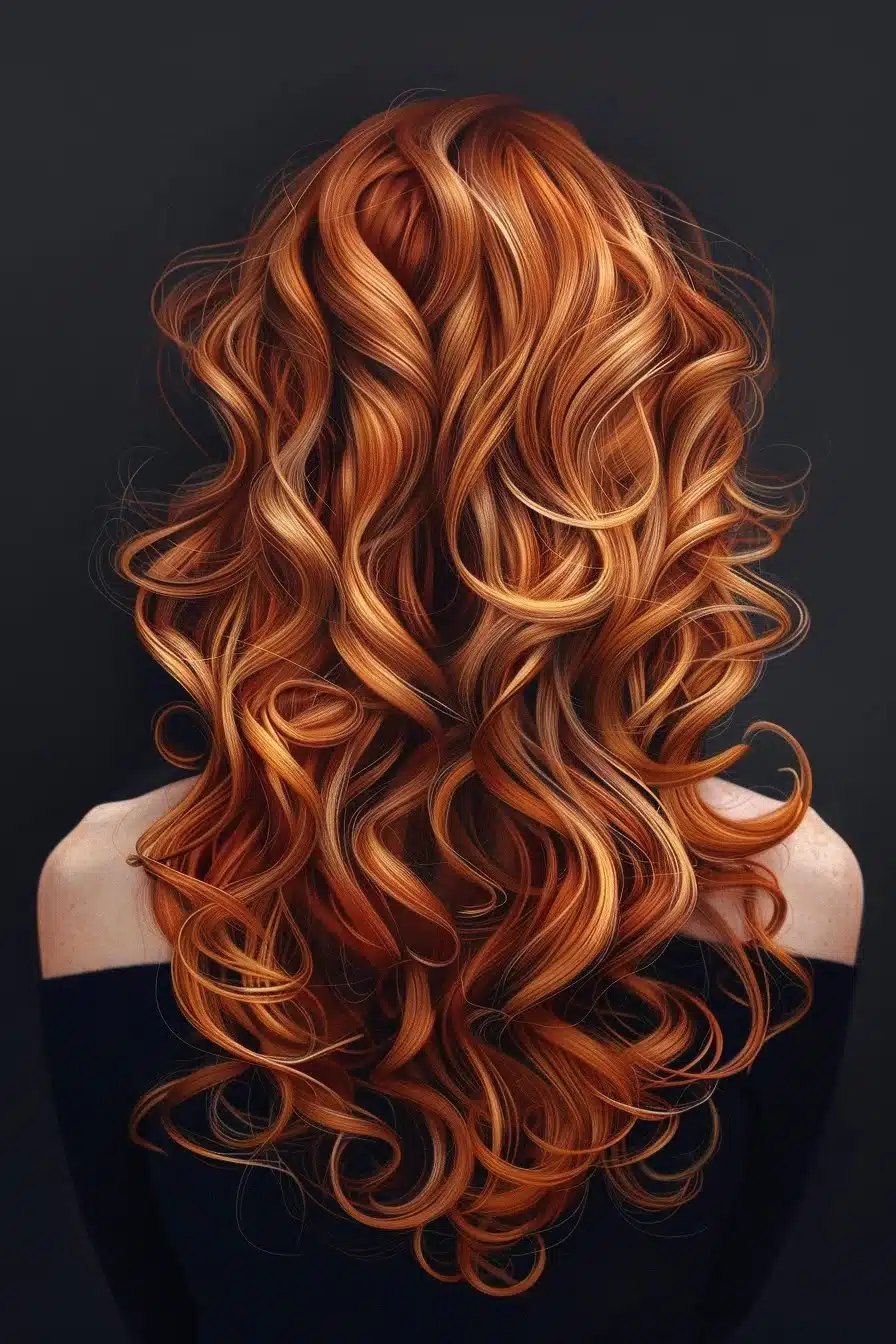
A deep auburn base with mahogany lowlights woven through defined curls, worn long. On curly hair, lowlights do double duty: they add depth to the curl pattern and make each curl read as a separate ribbon of color. The mahogany tone deepens the auburn without going black-red, and the curls disguise regrowth better than any straight style — the texture hides the root line. If this look speaks to you, Best Homecoming Hairstyles for Short Hair continues the thread.
The lowlights need a gloss refresh every six to eight weeks to stay mahogany rather than fading brown. Curly hair is naturally drier, so deep conditioning matters doubly with red color — dry curls fade faster. Best on thick, curly to coily hair; the technique translates across curl patterns. Trade-off: the appointment is long (painting lowlights through curls takes time), but the grow-out is among the most forgiving here because curls scatter the eye.
Copper Blonde Ombré on a Lob
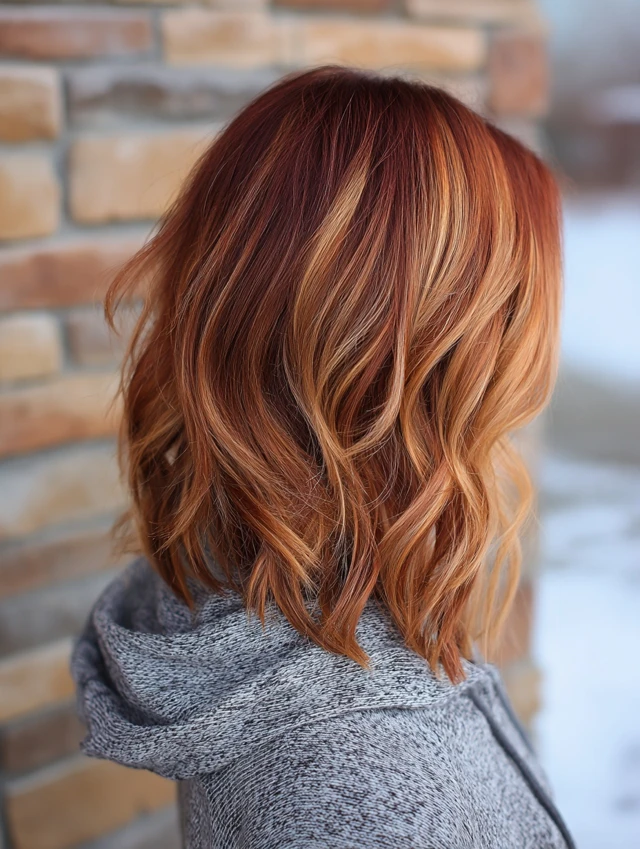
Photo credit: cleodiva.com
Bright copper-blonde ends melting from a warm copper root, cut as a collarbone lob with a center part. The blonde end of the ombré is the statement — it’s the lightest, brightest version of red on the list, and it needs lifting to get there. The lob length keeps the brightness wearable, and the center part gives it a clean, modern line. This suits medium-density straight-to-wavy hair; the smooth texture shows the gradient best.
The lightened ends fade fast — four to six weeks before they need a gloss — and they’re porous, so they need bond-building treatments. Toning shampoo is essential to keep the blonde end from going yellow. Book end-refreshes separately from root work to save chair time. Trade-off: this is the most damage-prone color here because of the lift, and the maintenance is end-focused and frequent. The payoff is a striking, high-contrast winter red.
Vivid Raspberry Red with a High-Gloss Finish
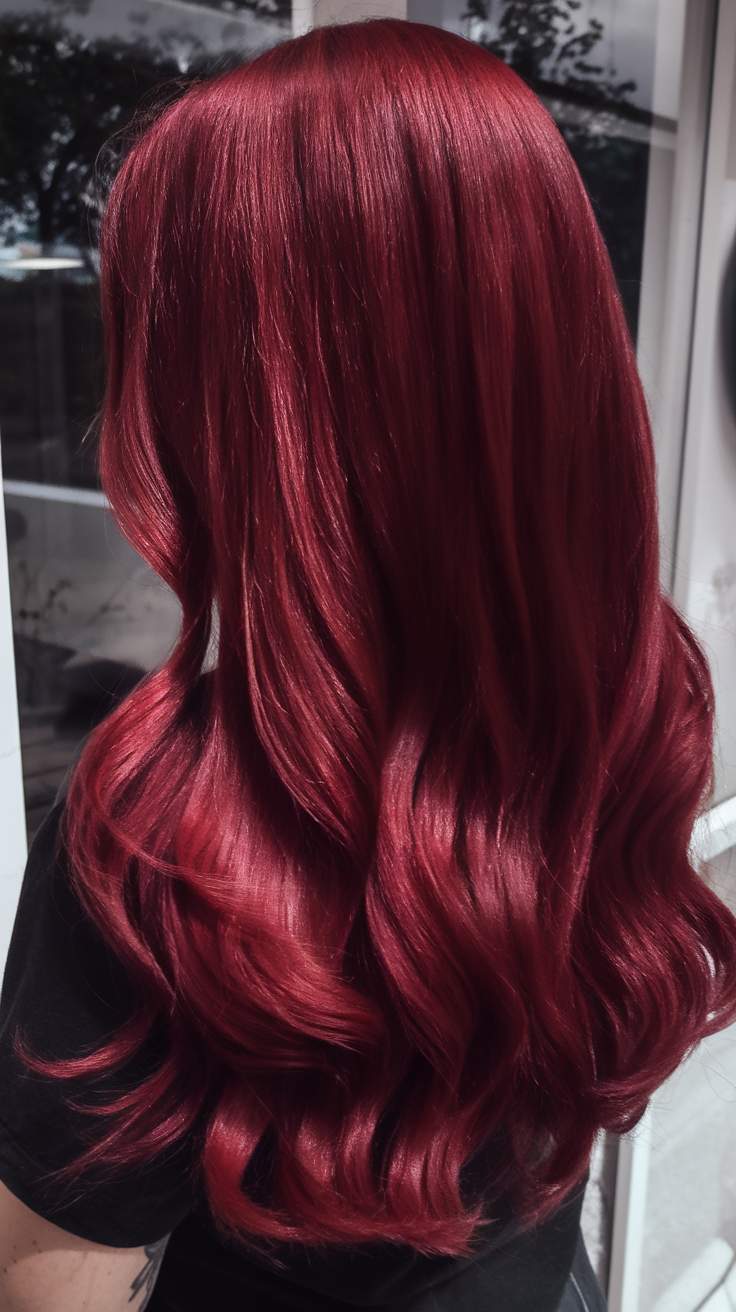
Image credit: glowinspo.com
A saturated raspberry-red — pink-leaning, vivid, unapologetic — worn long in glossy waves. This is a fashion red rather than a natural one: the pink undertone makes it read modern and bold, and the high-gloss finish is essential because matte raspberry looks dull fast. The long length gives the vivid color room to shine, and the waves keep it from looking flat or one-dimensional. Best on fair to medium skin; the pink-red can clash with very warm golden undertones.
Vivid reds need lift on most starting colors and fade quickly — expect a gloss or toner every three to four weeks and a color-depositing conditioner in a red-pink tone between washes. Cool water and sulfate-free shampoo are non-negotiable. The color will stain light pillowcases at first. Trade-off: this is one of the highest-maintenance shades on the list, and the pink undertone limits its versatility — but as a winter statement, few reds photograph better.
Ginger with Warm Gold Highlights, Sleek and Long

Source: salonbrielleva.com
A natural ginger base with warm golden highlights, worn long and sleek with a middle part. The gold highlights are woven through the top layers only, so the ginger reads as the main color and the gold just adds light — the effect is like winter sun on natural red hair. The sleek, straight styling shows the highlight placement at its best, and the long length gives the color room to shine. We break down a similar look in Cozy Winter Brunette Hair Color.
The highlights are foiled and need refreshing every eight to ten weeks; the ginger base needs toning on a similar schedule to avoid going brassy. Heat protectant is non-negotiable with the sleek styling, since heat fades red faster. Best on medium to thick straight hair; very fine hair can look stringy at this length with highlights. Trade-off: the sleek styling is a daily commitment — air-drying won’t give you this finish — so the color’s maintenance includes a styling routine, not just salon visits.
Fire-Engine Red Blunt Bob
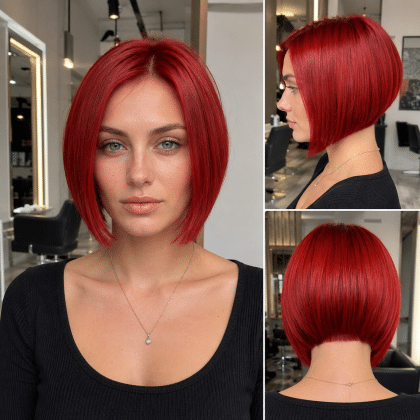
Via hairs.london
A vivid, true fire-engine red — the brightest, most saturated red on the list — cut as a blunt chin-length bob. This is not a natural red; it’s a fashion color, and it behaves like one: maximum impact on day one, visible fade by week two. The blunt bob is the perfect partner because its sharp line makes the color look deliberate and editorial rather than accidental.
The maintenance is intense: toning shampoo every wash, cool water always, a color-depositing conditioner between salon visits, and a gloss every three to four weeks. Without it, the red pulls pink, then fades to a washed-out rose. The bob needs a trim every four to five weeks to hold the blunt line. Best for bold personalities and warm-to-neutral skin; the color will stain pillowcases and light clothing at first. Trade-off: this is the highest-commitment color here in every way — but nothing else on the list photographs like it.
Copper Layers with Toffee Ribbons
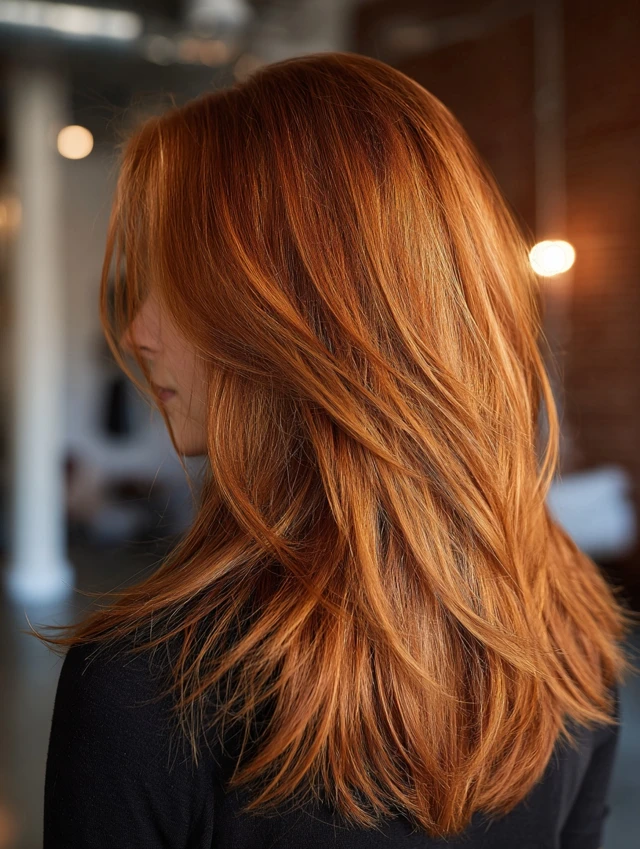
Courtesy of: yourstyleinspo.com
Layered copper hair with toffee-toned ribbon highlights woven through the layers. Layers are made for highlights — each one catches a different ribbon of toffee, so the color looks like it’s in motion even when it’s still. The toffee tone is a warm, caramel-adjacent blonde that softens the copper and adds a sunlit quality. On thick, wavy hair, the layers and the ribbon placement work together for natural-looking dimension.
The highlights need refreshing every eight to ten weeks, and the layers need a trim every six to eight to hold their shape — book them together. A gloss keeps the toffee from going brassy. Best on thick, wavy to curly hair with enough density for the layers; fine hair can look thin with too much layering. Trade-off: the color needs the layers to show, and the layers need the color for dimension — so growing it out means committing to both.
Copper Balayage on a Dark Auburn Base
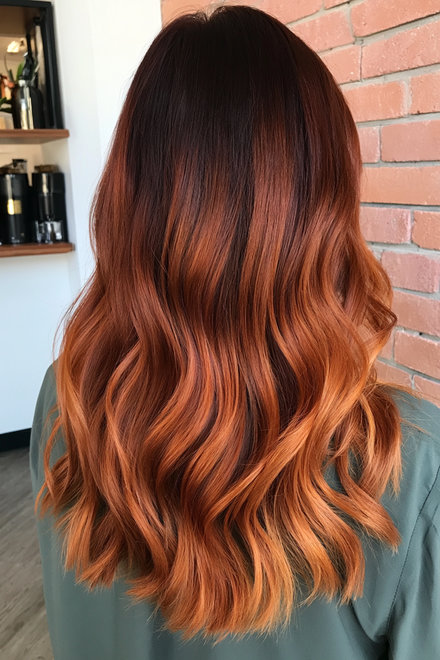
Photo credit: petalandpomade.com
A dark auburn base with copper balayage painted through the mid-lengths and ends, worn in loose waves at mid-back length. The contrast between the deep, near-natural root and the bright copper ends is the drama here — it reads as intentional and modern without the upkeep of an all-over bright copper. The balayage placement keeps the regrowth line soft, and the waves show the gradient at its best. For more ideas in the same lane, see our Formal Winter 2025 2026 Hairstyles for Women 25 Chic Styles.
The dark base needs little more than a gloss every ten to twelve weeks, while the lightened copper ends need glossing every eight to ten to stay bright rather than fading brassy. Toning shampoo keeps the copper ends warm and clean. Best on medium to thick wavy hair with at least shoulder length to give the gradient room. Trade-off: the ends are the fragile, higher-maintenance part of an otherwise easy color — treat them as a separate maintenance zone from the low-effort base.
Rust Copper with Wispy Bangs
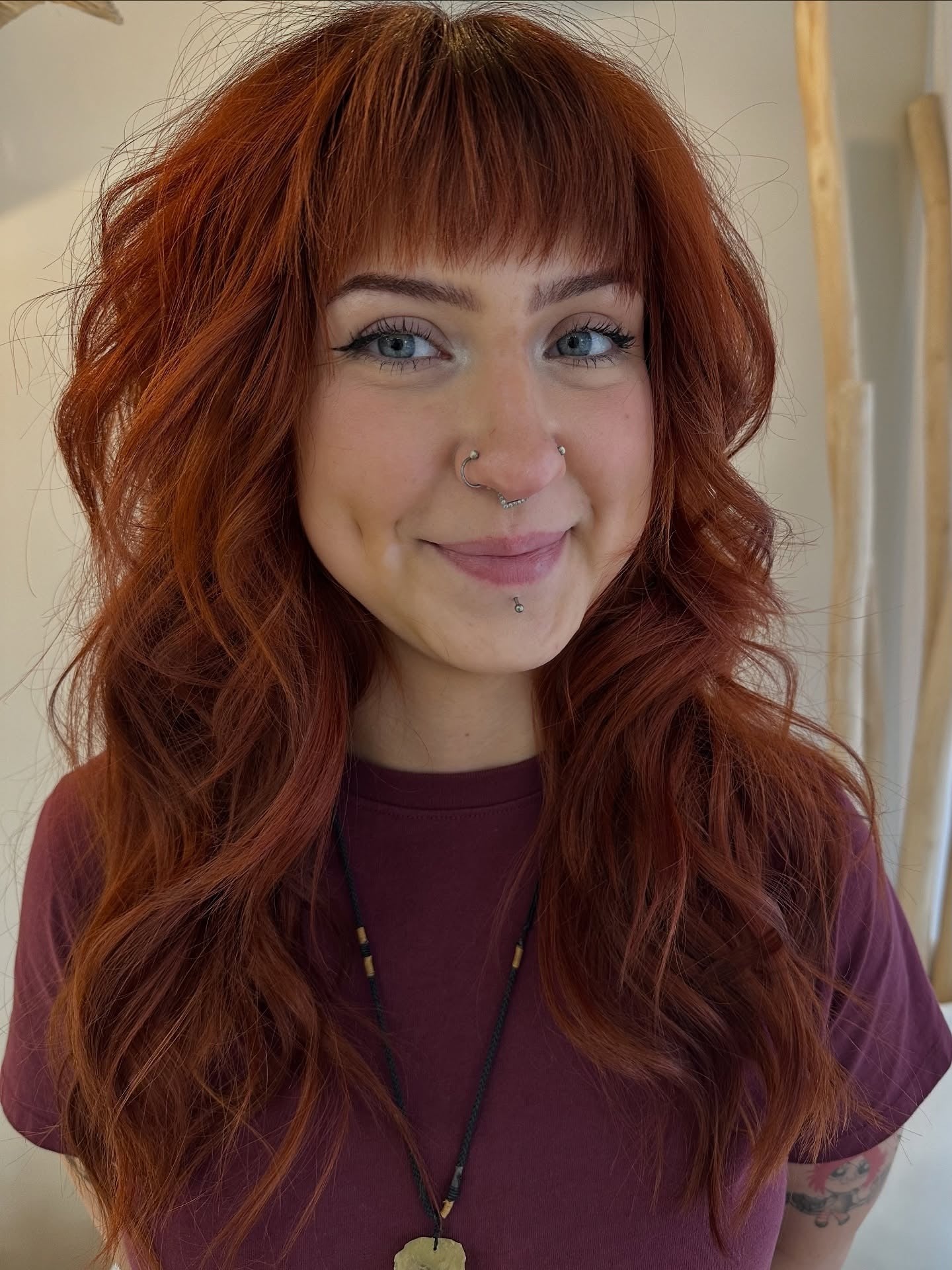
Image credit: pixelify.net
A warm rust-copper single-process color — deeper and more brown-based than bright copper, with an earthy orange undertone — paired with wispy bangs and shoulder-length layers. The rust tone is a quieter red that flatters warm skin beautifully, and the wispy bangs soften the forehead without the commitment of a blunt fringe. The layers keep the shoulder length from looking heavy.
The bangs need a trim every three to four weeks to hold their wispy shape — this is the maintenance driver, more than the color. The rust tone needs a toner refresh every five to six weeks; a copper-depositing conditioner helps between visits. Best on medium-density hair; very fine hair may struggle with the bang commitment. Trade-off: wispy bangs are the highest-maintenance fringe style relative to their subtlety — they need regular trims for an effect that reads as effortless.
Dark Red Wine with a Copper Gloss in Loose Curls
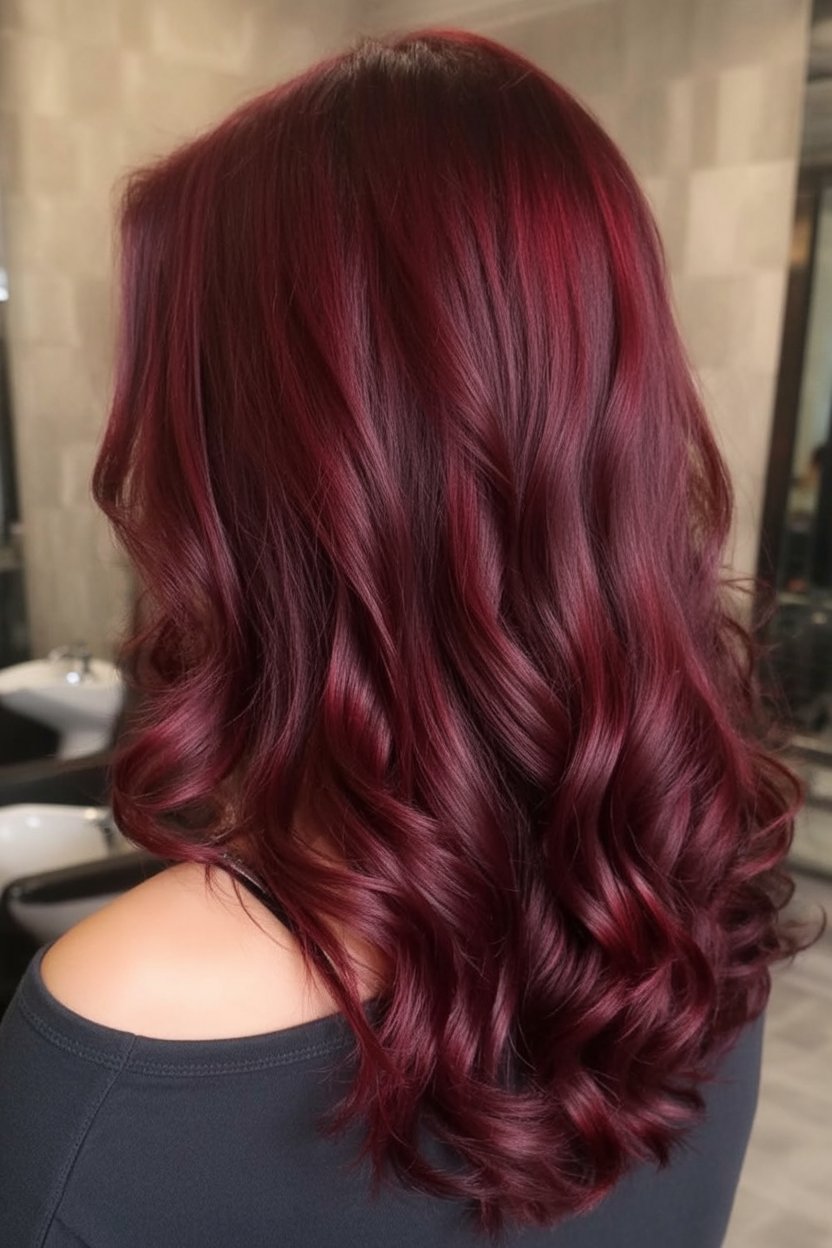
Source: glamvortex.com
A deep wine-red base — the darkest red on the list, nearly burgundy in low light — finished with a copper gloss and worn in loose curls. Indoors it reads as a rich, dark red; in winter sunlight the copper gloss ignites the curls with warm highlights. The loose curls are the styling partner: each curl catches the gloss differently, so the color looks dimensional rather than flat. This is the most dramatic dark red here, and it flatters warm and neutral skin tones especially.
The gloss fades in five to six weeks and needs reapplication to keep the copper layer alive; without it, the wine base goes flat. The curls need heat protectant and the color needs cool-water washing. Best on medium to thick wavy-to-curly hair that holds a curl. Trade-off: the wine base is a commitment — it’s hard to lift out if you change your mind — and the gloss layer needs regular renewal. But as a winter statement red, nothing else on the list has this depth.
Final Thoughts
The strongest winter reds work because of depth and undertone, not simply because they are darker or brighter. A deep auburn with mahogany lowlights holds its richness longer than a flat single-process copper; a copper melt with a shadow root stays believable for weeks longer than a root-to-tip bright copper. Choose based on your maintenance appetite, your hair’s texture, and how much fade you can tolerate — the best red is the one you’ll actually maintain.
- Trim every six to eight weeks to keep the shape sharp.
- Use a heat protectant before every hot-tool session.
- Tone blonde or highlighted hair every six weeks to keep brassiness away.
- Match the upkeep schedule to your routine before committing to high-maintenance color.
The best color is the one that still looks intentional at week six.