There is a particular kind of pressure that arrives with the colder months, a quiet expectation that your hair should announce the season for you. Cozy winter brunette hair color gets discussed as if there is one correct answer, one depth, one warmth level that earns the label. That framing is not useful. You get to decide how much warmth you want, how much contrast feels like yours, and whether dimension means something dramatic or something only you notice when the light shifts.
The more useful question is not which shade is trending but how color decisions actually read on your hair given the variables that matter. This article looks at twenty brunette variations through four consistent lenses: root-to-end contrast, warmth placement, surface texture, and how much visible dimension the color carries in different lighting and styling conditions. Some of these photos show bold tonal shifts from dark roots to warm ends. Others keep everything close in value, relying on texture and movement to create the sense of depth. A few sit in the middle, using a handful of lighter pieces to break up a single-tone base without fully committing to highlight work. The range is deliberate, and each section describes only what the image in front of it actually shows rather than projecting a season or a mood onto hair that simply looks good on its own terms.
1. A Deep Cherry Undertone Anchors Dark Brunette Warmth
The first detail the eye catches is the color itself, a dark brunette base that shifts into a deep cherry or burgundy-red tone from the mid-lengths downward. The hair is medium-long, styled with a loose bend at the ends and a soft side-swept fall across the face. Roots are very dark, nearly black, and the warm red dimension becomes more apparent through the lower half of the hair.
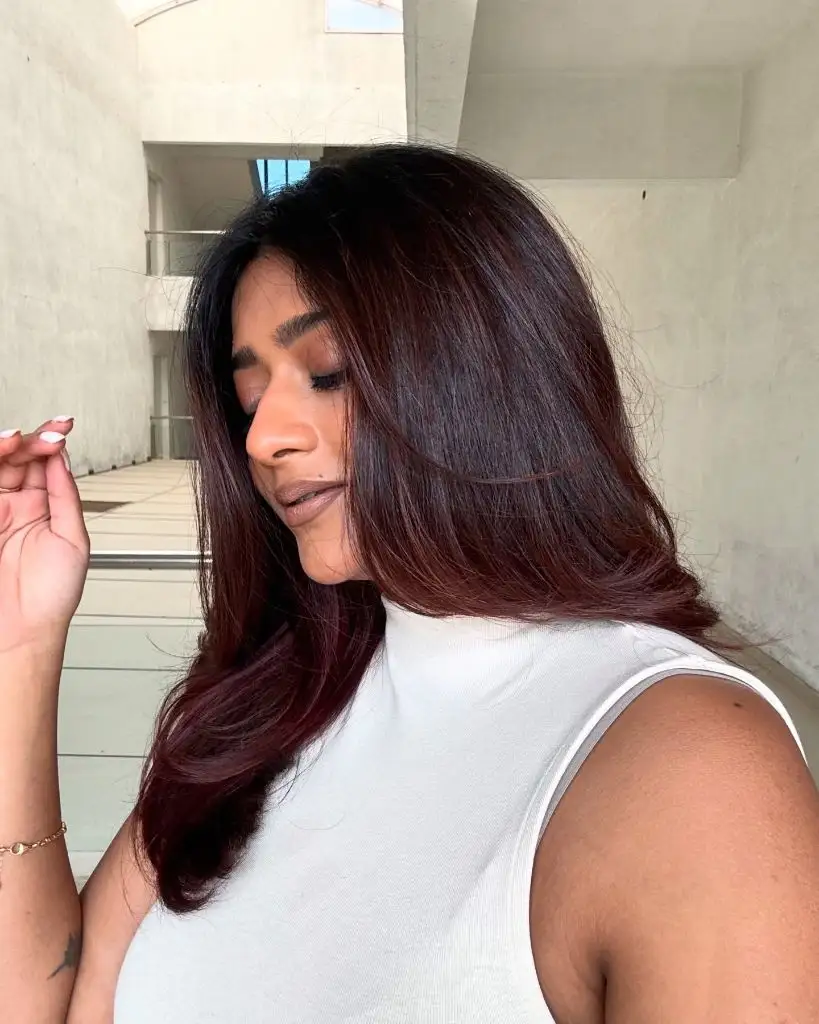
Photo via Instagram
The contrast between the nearly black root area and the warmer mid-lengths creates a sense of depth that would read as flat if the entire length were one shade. Because the styling is relatively smooth with only a slight curve at the ends, the tonal shift does the work of creating movement rather than relying on curl pattern. The concrete balcony setting and natural daylight make the red undertone more visible than it would be indoors, which is worth noting when considering how this kind of brunette color reads in different environments.
This is a version of winter brunette that leans into richness rather than subtlety. The cherry tone is not a highlight in the traditional sense but a wash of warmth that lives in the lower portion of the hair. The principle is that a single undertone shift, placed from the mid-shaft down, can add visible interest to very dark hair without requiring foils or heavy contrast.
2. Volume and Curl Pattern Frame Warm Brown Dimension
The visible detail that leads here is the volume. This is long, dark brown hair styled with large, bouncy curls that frame the face symmetrically and create a rounded silhouette from the shoulders down. The color is a warm chocolate brown with lighter brown tones catching the light along the outer surface of each curl, and the roots stay close in tone to the mid-lengths.
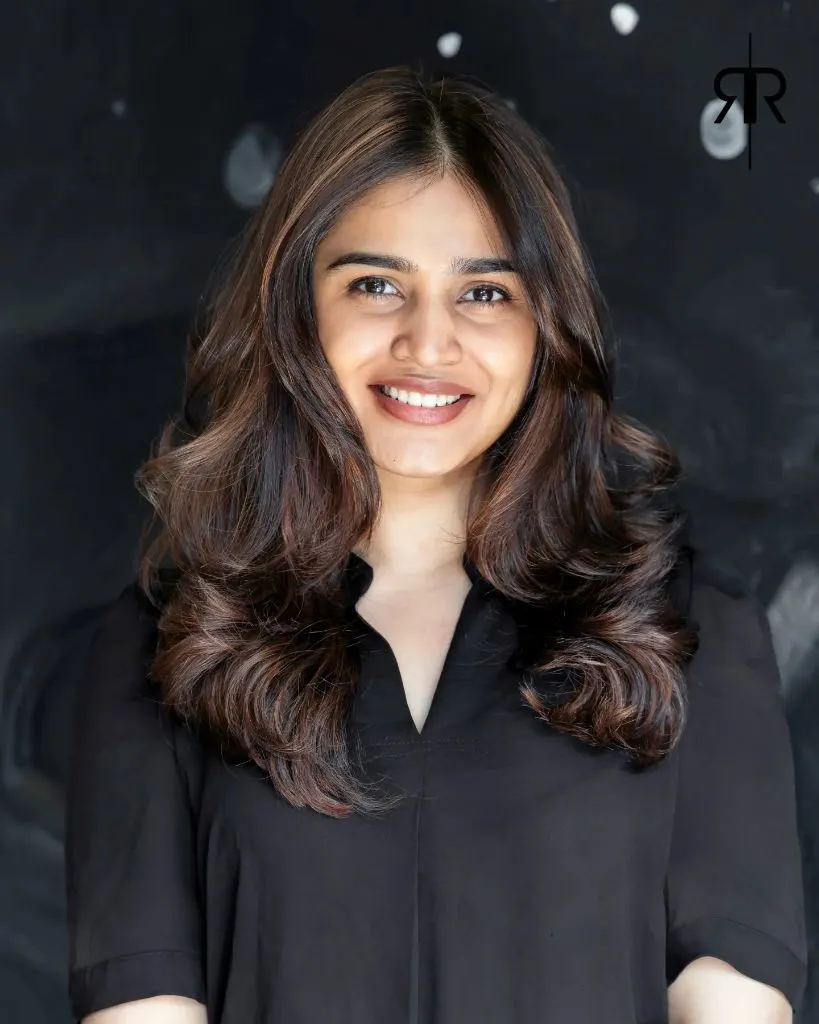
Photo via Instagram
The curl pattern is doing significant work for the color here. Each wave creates a ridge that catches light differently from the valley beside it, so even a relatively uniform brown reads as multi-tonal. The dark background and the black top push all attention to the hair itself, which is an effective framing choice. The curls are consistent in size and direction, giving the overall shape a polished, deliberate feel rather than a tousled one. The “RR” watermark in the corner suggests a salon context.
The appeal is how much dimension is created by styling alone on a color that could look single-note when worn flat. This is a useful reference for anyone whose hair styling approach leans toward volume, because it demonstrates that richness and depth do not always require contrasting highlight work. Sometimes the curl does the reading for you.
3. Dark Waves Keep Dimension Close to the Surface
This is a back view of long, dark brunette hair with soft waves running from the mid-lengths to the ends. The color is deep and cool-leaning, with very subtle lighter tones visible only where the wave crests catch the light. The overall impression is of a single dark shade with quiet, natural dimension rather than any applied highlight technique.
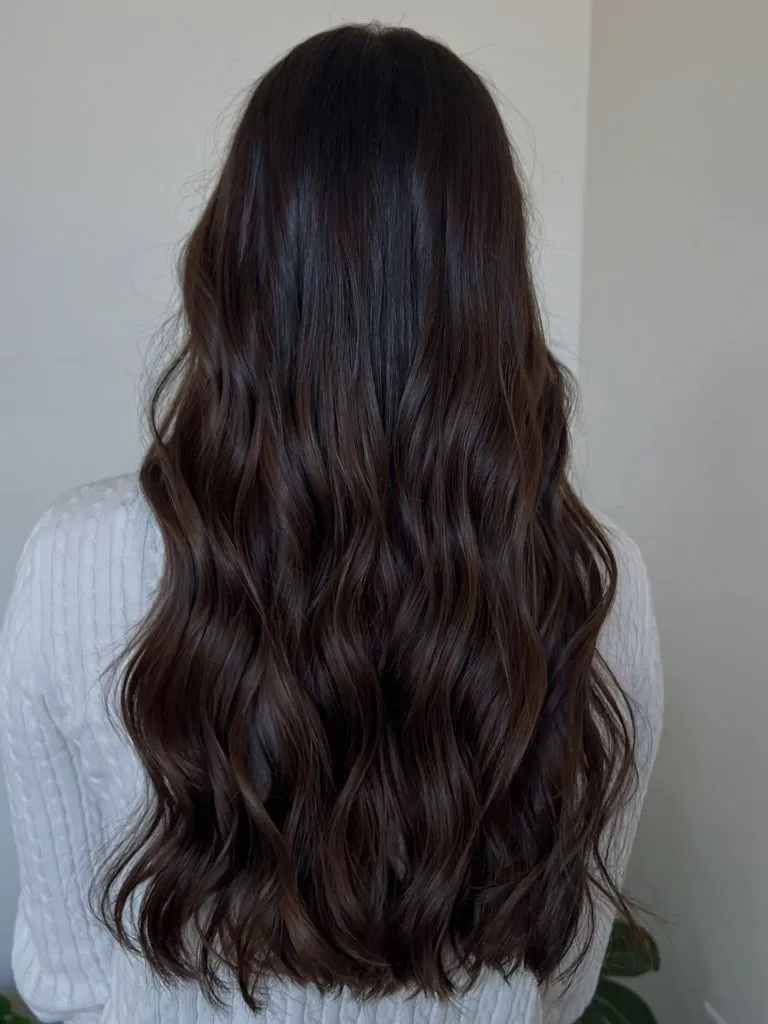
Photo via Instagram
The white cable-knit sweater and plain wall behind create a clean frame that isolates the hair entirely. The waves are loose and consistent, not heavily curled, and the length extends well past the shoulder blades. Because the color stays so close in value from root to end, the dimension is almost entirely textural. The lighter tones are not placed highlights but the natural result of light interacting with the wave surface. This means the look would shift significantly depending on lighting conditions.
The strength here is restraint. The color is deep enough to feel seasonal without any overt warmth or tonal shift, and the waves add just enough surface interruption to prevent it from reading as flat. The transferable idea is that a very dark, close-value brunette can still carry visible dimension if the texture is doing its share of the work.
4. Ash Highlights Soften a Dark Root Shadow
The strongest detail is the tonal range. This back view shows dark brunette hair with a pronounced shadow root transitioning into cooler, ash-toned highlights through the mid-lengths and ends. The lighter pieces are concentrated along the outer layers and around the ends, while the interior stays darker. The hair is styled in loose, soft waves at medium length.
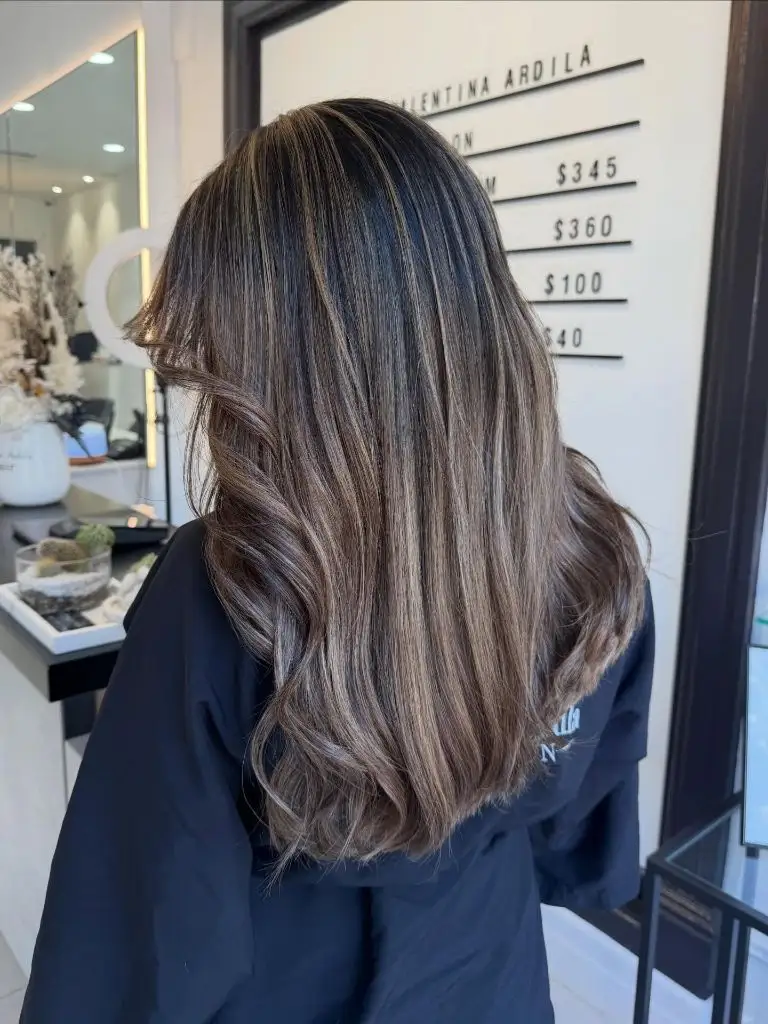
Photo via Instagram
The salon setting is visible in the background, with a price board partially readable, confirming this is a professional color result. The contrast between the dark root zone and the lighter ends is more dramatic than the previous images, placing this firmly in balayage or hand-painted highlight territory rather than a single-process shade. The ash tone in the highlights keeps the overall mood cool, which differentiates it from the warmer chocolate and cherry tones seen earlier. The wave pattern is relaxed and natural-looking, allowing the color transition to stay visible without being interrupted by tight curls.
I like the way the ash tone works against the dark root here. It creates enough separation to read as dimensional from a distance, but the transition is soft enough that it avoids a striped or heavy-handed appearance. The lesson is that cool-toned winter hair highlights can serve the same depth-creating role as warm ones, and the choice between them is about preference rather than correctness.
5. Face-Framing Pieces Lift a Dark Brunette Base
The leading detail is the placement of lighter color around the face. This image shows long, dark brunette hair with lighter, warm-toned pieces concentrated near the part and the face-framing layers. The rest of the hair stays darker, and the styling is a soft, undone wave with significant volume through the front sections.
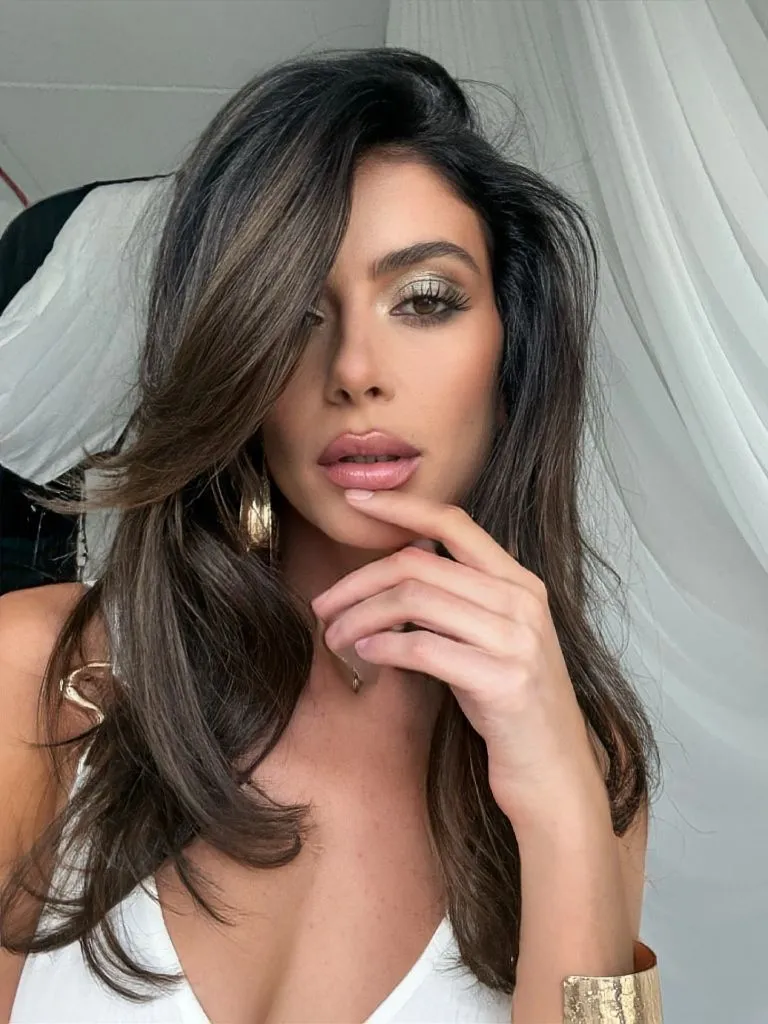
Photo via Instagram
The lighter pieces are not distributed evenly through the hair. They sit almost exclusively in the front sections and along the part line, which creates a brightening effect near the face while the back and underneath remain deep. The white curtain and white top let the hair dominate the frame without competing color. The warm tone in the lighter pieces leans toward a sandy caramel rather than a true blonde, which keeps the overall reading solidly brunette. Volume at the root, especially through the front, gives the lighter pieces more surface area to catch light.
The effect is a look that carries its dimension where it matters most, at the front and around the face, while leaving the rest of the hair undisturbed. This is a deliberate, economical approach to adding visible warmth, and the principle applies broadly: if you want dimension without a full head of highlights, face-framing placement creates the highest visual return for the least color commitment.
6. Cool-Toned Length Balances a Dark Crown
What reads first is the length and the cool undertone. This is very long brunette hair with a dark root that transitions into a slightly lighter, cool-toned brown through the lengths. The styling is loose and flowing with a soft wave, and the hair extends well past the chest. The lighter sections are subtle, concentrated on the outer layers and front pieces near the face.
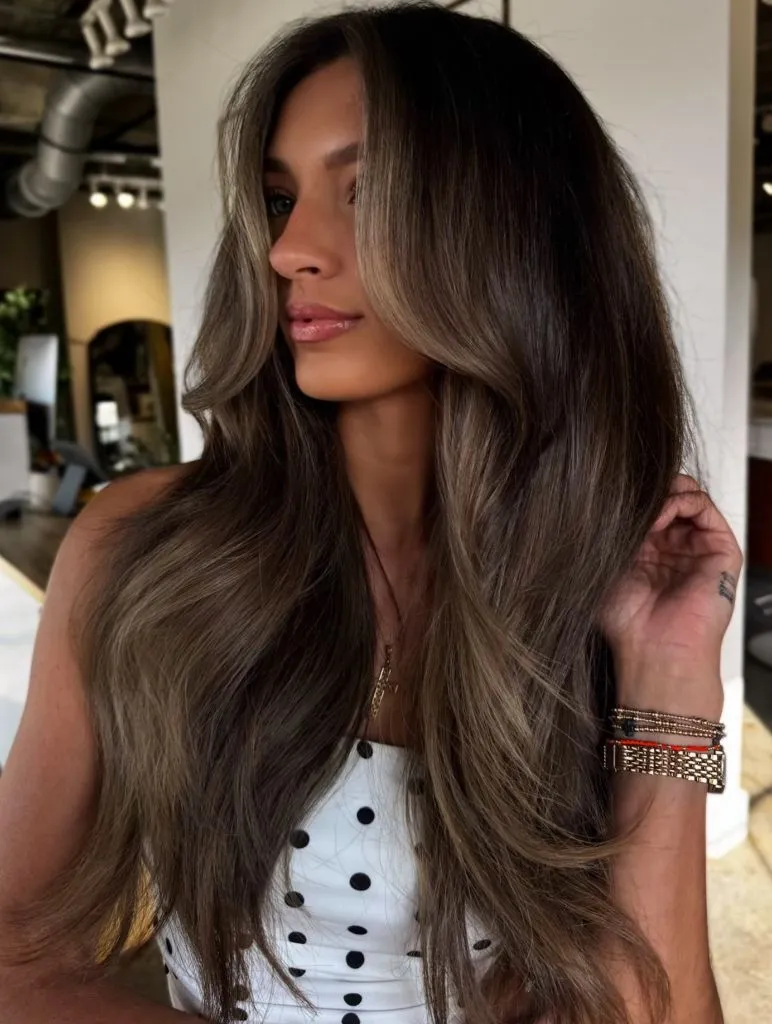
Photo via Instagram
The salon interior is visible behind the subject, and the bright, even lighting makes the tonal difference between the darker crown area and the lighter lengths easier to see. The overall color leans neither obviously warm nor ashy, sitting in a neutral brown range that could shift depending on the light. The front pieces are a touch lighter, mirroring the face-framing concept from the previous section, but the execution here is more diffused and less contrasted. The sheer length of the hair means the lighter tones have more space to reveal themselves gradually.
The value is in the graduation. There is no hard line between the dark roots and the lighter ends, which makes the entire length look like one cohesive color story with natural depth. The principle worth borrowing is that on very long hair, even a small tonal difference between root and end becomes visible because the distance is so great. A subtle shift that might not register on a bob becomes unmistakable at this length.
7. Warm Highlights Interrupt a Cool Dark Base
The strongest visible element is the interplay between the cool, dark base tone and the warm, golden-brown highlights woven through the mid-lengths and ends. This is a back view of medium-long hair styled with a relaxed wave, and the highlight placement appears hand-painted, concentrated on the outer layers and the pieces that would swing forward when the hair moves.
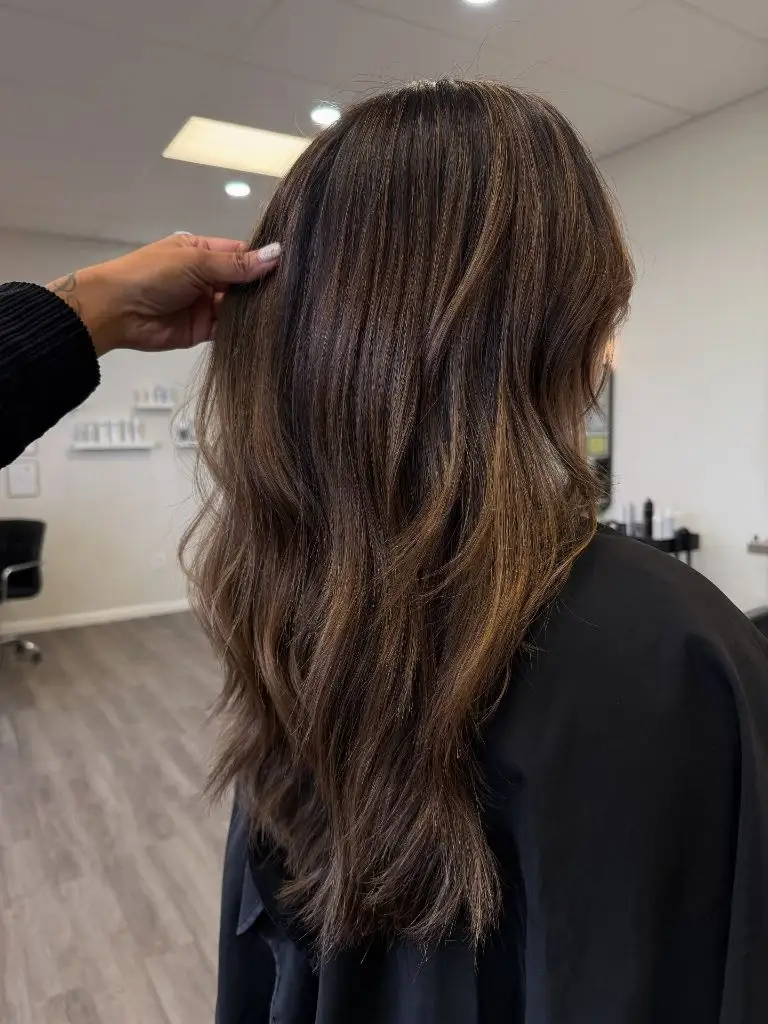
Photo via Instagram
A stylist’s hand is visible lifting a section of the hair, which reveals the contrast between the darker interior and the lighter exterior pieces. This two-tone structure, dark underneath and lighter on top, is a deliberate technique that creates the appearance of dimension from the surface while keeping the interior rich. The salon setting with its grey wood floor and white walls provides neutral ground for the color to read accurately. The warm tone in the highlights is distinctly golden rather than ashy, which places this look firmly in the warm winter brunette family.
This is a cozy winter brunette interpretation that uses warmth strategically rather than uniformly. The golden pieces are warm enough to notice but not so light that they break from the overall brunette identity. The idea to carry forward is that a handful of warm-toned highlights placed on the outer surface can change the entire reading of a dark base without affecting the depth that makes it feel seasonal.
8. Layered Movement Carries a Neutral Brunette Tone
The first thing the image communicates is shape. This is long, voluminous brunette hair with significant layering that creates a rounded, face-framing silhouette. The color is a neutral medium-dark brown, and the dimension comes less from highlight work and more from the way layers at different lengths catch light at different angles. The styling is blown out and smooth with a bend at the ends.
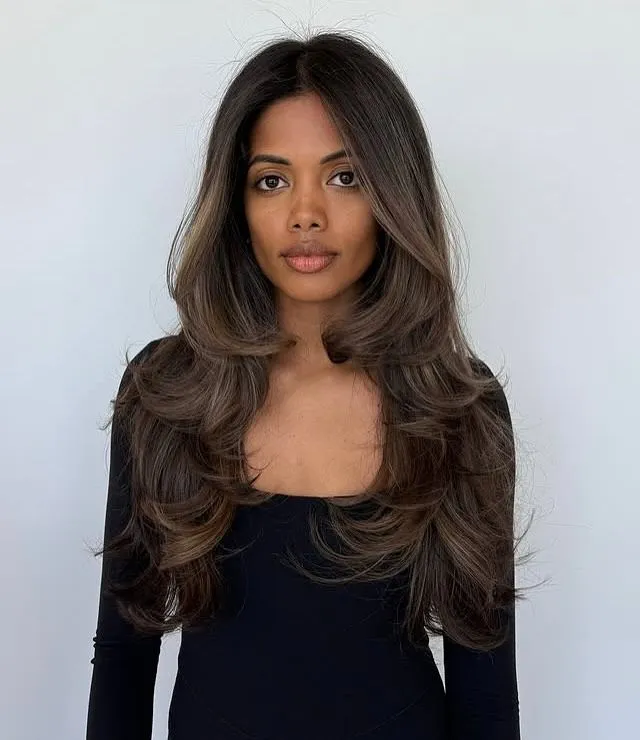
Photo via Instagram
The layers begin around the chin and cascade through the chest and past the elbows, with the ends flipping outward to create width at the lower half. The light background and dark long-sleeve top frame the hair cleanly. The color appears consistent in value from root to end, suggesting a single-process or gloss application rather than highlight work. The volume through the crown and the overall roundness of the shape are the primary visual events, which means the cut is doing what color usually does in creating interest and perceived depth.
The best detail is how the layers work as a dimension substitute. Where other images in this article rely on tonal variation, this version relies on the physical structure of a layered cut to break up light across the surface. The takeaway is that layered hairstyle choices and cut architecture can create the appearance of depth even when the color itself is uniform, which is worth considering for anyone who prefers low-maintenance color.
9. Curtain Bangs Open a Warm Brunette Frame
The leading detail is the curtain bangs. These long, face-framing bangs sweep outward from a center part, and the rest of the hair falls in soft, layered waves past the shoulders. The color is a warm medium brown, lighter through the front sections and the ends, with a slightly darker root area. The overall tone is warm and golden-leaning.
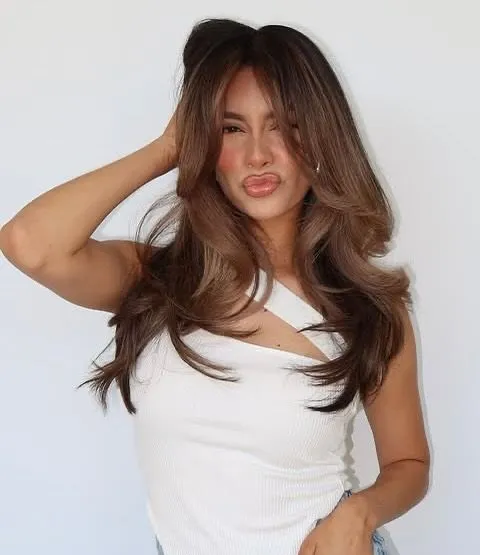
Photo via Instagram
The white background and white ribbed top keep the framing minimal, which lets the hair color and the bang shape do all the talking. The curtain bangs are long enough to blend into the layers rather than sitting as a separate fringe, which creates a continuous sweep from the face outward. The warm tone reads most clearly in the mid-lengths and the pieces around the face, while the root stays a shade darker. The layering gives the ends a feathered, lifted quality that adds width and movement to the overall silhouette.
The appeal is the openness that the curtain bangs create around the face. They soften the forehead without covering it, and they give the front sections of the hair a deliberate direction. The principle is that bangs can be a framing device for color as much as for the face itself, because the lighter front pieces draw the eye to the warmest part of the palette first.
10. A Rich Chocolate Balayage Grounds Long Waves
The most visible element is the rich, warm transition from dark roots into chocolate and caramel tones through the lower two-thirds of the hair. This is a back view of very long hair with defined, large waves, and the color is unmistakably a balayage application with the lighter tones concentrated on the outer layer and the ends while the root and interior remain deep.
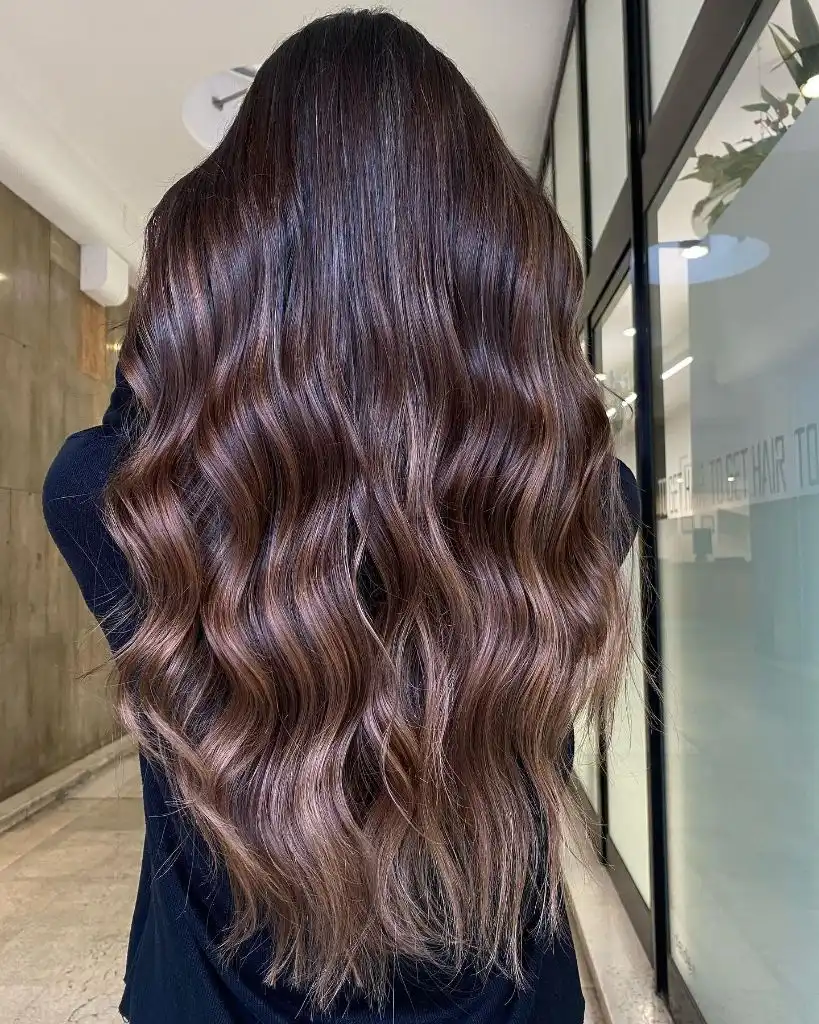
Photo via Instagram
The setting appears to be a brightly lit hallway or corridor with a glass wall reflecting some text, and the overhead lighting emphasizes the tonal gradient from root to end. The waves are consistent and well-defined, which gives each curl a light side and a shadow side that amplifies the color contrast. The warm caramel tones at the very ends are the lightest points in the image, pulling the eye downward along the length. The dark navy top creates a backdrop that makes the mid-brown and caramel tones appear richer by comparison.
What stands out most is the depth of the tonal journey from root to tip. This is not a subtle shift but a deliberate gradient that takes the eye through three or four distinct value levels. The lesson is that when a cozy winter brunette color includes this much range, the wave pattern becomes essential for revealing it, because each curl turns the lighter and darker tones toward and away from the viewer.
11. Deep Waves With a Rich Chocolate Single Tone
This image shows long, dark brunette hair styled in voluminous, well-defined waves with curtain bangs that fall into the face. The color appears to be a single rich chocolate brown from root to end, with no visible highlight work. The waves are large and full, creating a rounded silhouette with significant body through the mid-lengths, and the bangs blend seamlessly into the longer layers.
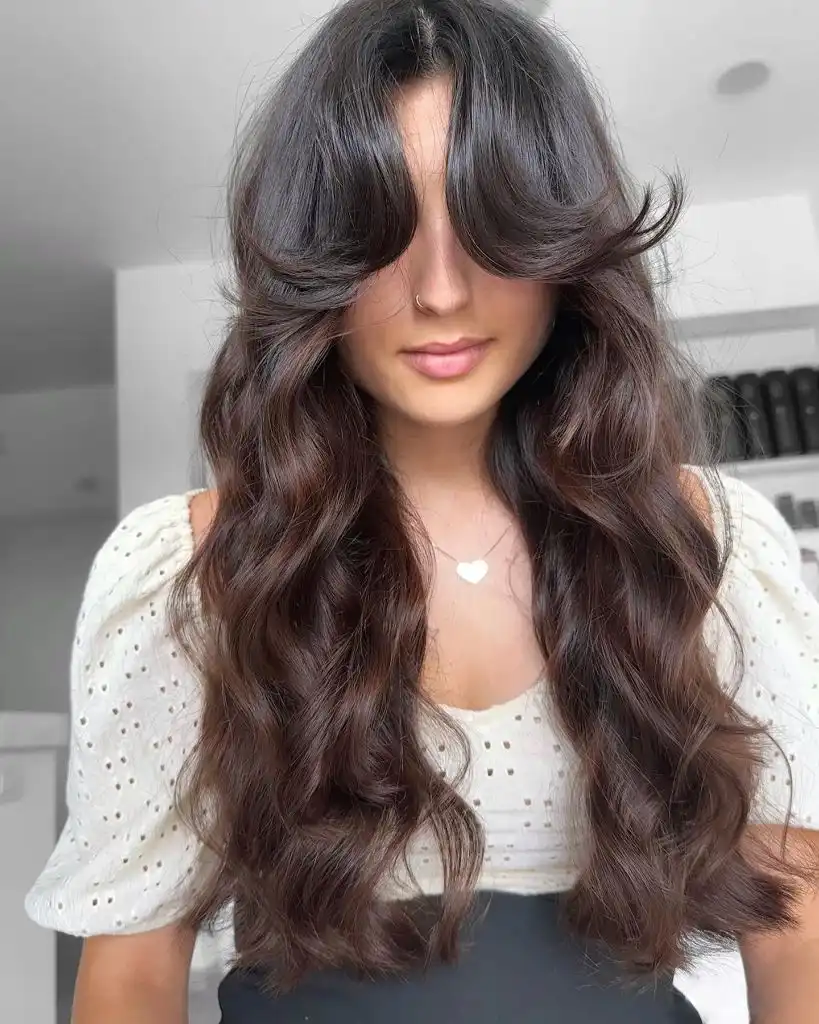
Photo via Instagram
The cream-colored eyelet blouse and delicate heart necklace are visible in the lower portion of the frame, and the white interior background keeps the focus on the hair. The single-tone application means all the perceived dimension comes from the wave pattern itself. The larger waves create deep shadows in the valleys and bright reflections on the crests, which gives the uniform chocolate shade a multi-tonal appearance in practice. The bangs are thick and dramatic, falling past the brow and partially covering the eyes, which makes the face-framing aspect feel bold rather than polished.
The strength here is the proof that a single well-chosen shade of rich chocolate brown does not need support from highlights to feel complex. The curl pattern, the volume, and the bangs together create enough visual movement that the color reads as dimensional. This is a useful benchmark for anyone exploring dark brunette shades who wants warmth and richness without a multi-tonal color service.
12. Caramel Ribbons Balance a Dark Brunette Interior
The detail that reads first is the contrast between the dark brunette base and the caramel-toned ribbons woven through the lengths. This is long, wavy hair photographed in what appears to be a salon setting, and the lighter pieces are distributed broadly across the hair, creating a blended, sun-kissed effect that sits in the warm caramel-to-honey range against a dark brown base.
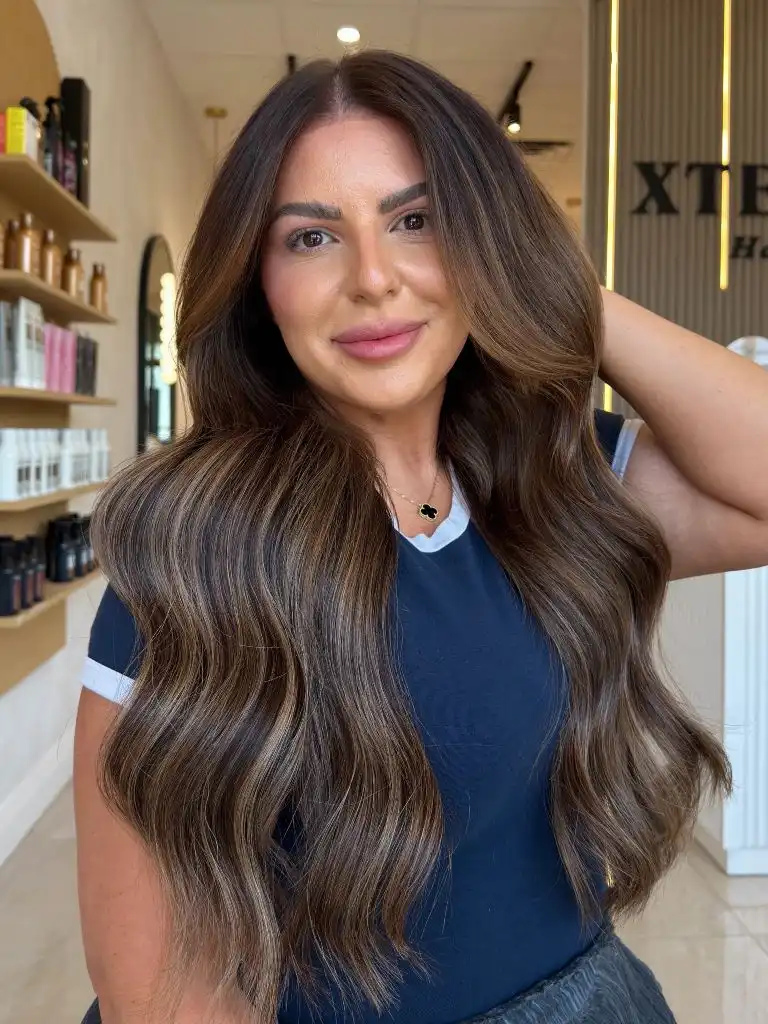
Photo via Instagram
Product shelves and salon branding are visible in the background, confirming the professional context. The hair is parted in the center with volume at the roots, and the waves are loose and relaxed. The caramel highlights are not concentrated only at the front but appear throughout the entire visible hair surface, which creates a more uniform brightness than the face-framing-only approaches seen earlier. A small clover-shaped pendant necklace and the navy blue top with white trim are visible, and the dark top once again serves to push the warm tones in the hair forward.
This is a version of winter brunette that sits on the warmer, brighter end of the spectrum without leaving the brunette family. The caramel pieces are plentiful enough that the overall reading could lean toward a bronde territory, yet the dark root and interior keep it grounded. The principle is that the ratio of dark base to lighter surface color determines whether the eye reads warmth or depth first, and adjusting that ratio is the lever that controls the look’s personality.
13. Soft Body Waves Ground an Ash-Brown Palette
The leading visible element is the wave pattern set against an ash-leaning brown tone. This is a back view of medium-long hair with soft, wide waves and a color that sits in a cool ash-brown range. The roots are darker, and a few subtle lighter pieces appear on the outer surface, but the overall palette stays muted and cool compared to the warmer tones in other sections of this article.
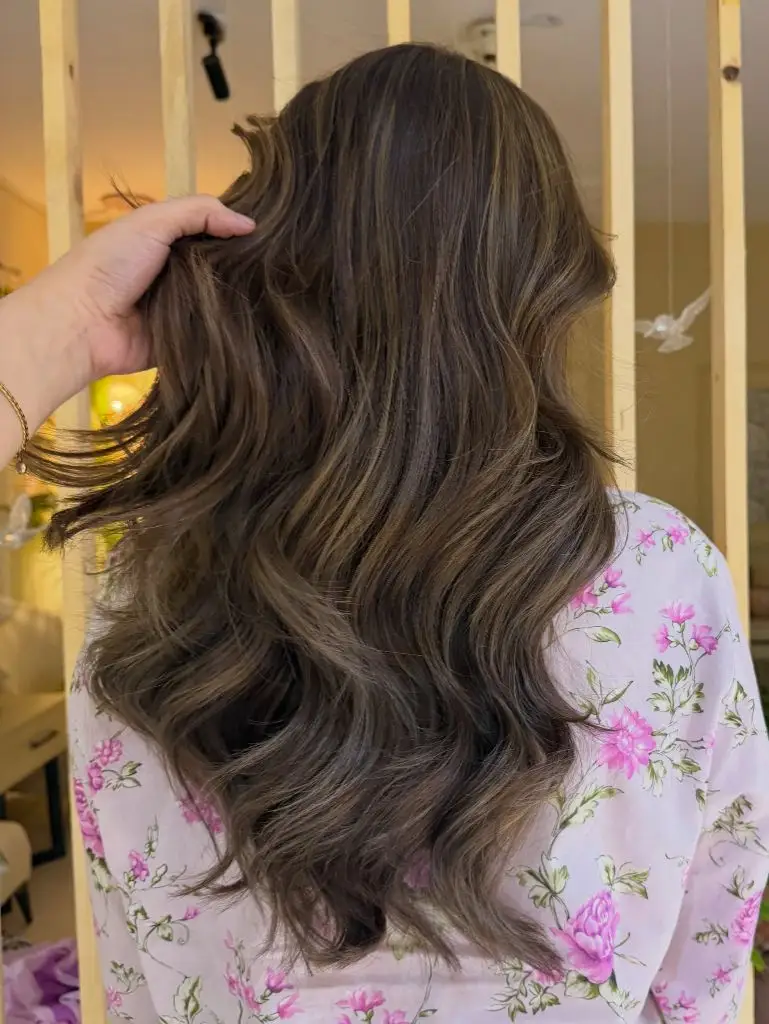
Photo via Instagram
The background features vertical wooden slats with a warm golden light filtering through, and the subject wears a pink floral-print top. These warmer environmental tones actually make the cool quality of the hair color more apparent by contrast. The waves are soft and open, not tightly defined, and the hair length sits just past the shoulders. A hand lifts a section from the back, revealing that the interior is close in tone to the surface, suggesting a relatively uniform color with minimal interior variation.
The effect is a quiet, tonal version of winter brunette that does not rely on warmth at all. Not every iteration of this color family needs golden or red undertones to feel rich, and this ash-leaning example demonstrates that coolness can carry its own seasonal hair character. The transferable idea is that undertone is a separate decision from depth, and choosing cool over warm is simply a different mood, not a lesser one.
14. Warm Auburn Tones Carry a Casual Layered Shape
The image shows long, layered brunette hair with warm auburn or copper-brown tones visible from the mid-lengths through the ends. The subject wears a black cap, sunglasses, a black long-sleeve top, and olive-toned drawstring pants. The styling is casual, with the hair falling in soft, unfussy layers rather than in defined curls or waves. Roots appear darker, and the warmth increases as the hair reaches the ends.
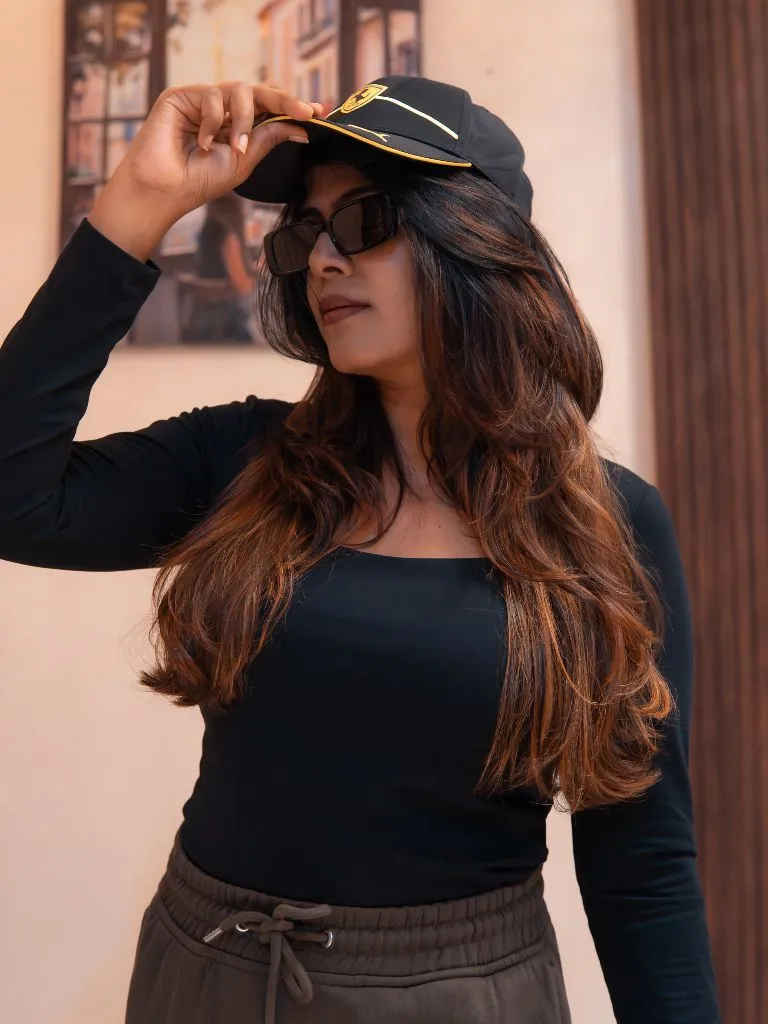
Photo via Instagram
This image is worth noting because the styling and setting are significantly more casual than the other photographs in this article. The warm interior lighting gives the auburn tones a richer appearance, and the relaxed layering shows how this kind of color behaves when it is not freshly curled or blown out. The cap pushes the front hair down and forward, which means the visible color is concentrated on the side-swept lengths rather than distributed symmetrically. The warm, painterly lighting of the room and the artwork visible in the background add context that salon-lit photos do not.
The best detail is how the color reads under lifestyle conditions rather than studio lighting. This photograph shows a cozy winter brunette shade in a natural setting, which is genuinely useful because salon-lit results and home-lit results often look different. The takeaway is that warm auburn-leaning brunette tones tend to look their richest in warm artificial light, which is exactly the lighting condition most people experience during winter months.
15. A Center Part Sharpens Symmetrical Brown Waves
The visible detail that anchors this image is the symmetry. The hair is parted cleanly at the center, and identical waves fall on either side of the face, creating a rounded, almost oval shape. The color is a medium-dark warm brown that appears close in tone from root to end, and the face is obscured by a heart-shaped overlay. The waves are large, defined, and uniform.
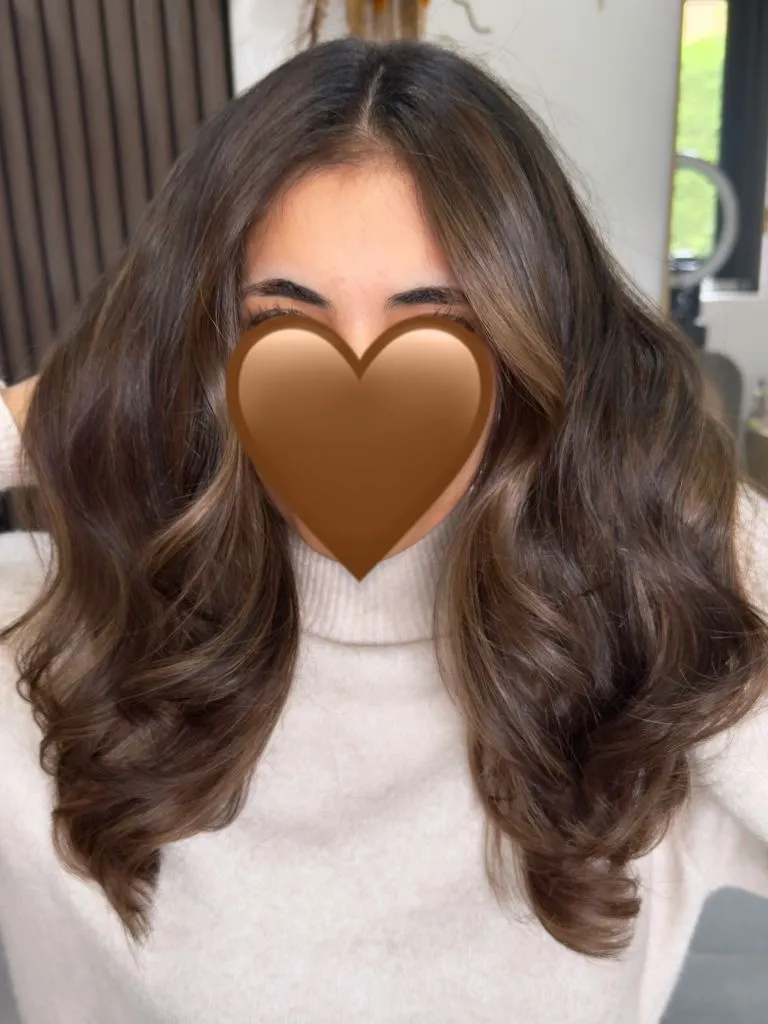
Photo via Instagram
The beige turtleneck and the muted salon interior behind keep the color palette neutral, which allows the warm brown tones to stand on their own. The waves end at approximately the same point on both sides, just past the collarbone, reinforcing the sense of precision. The face being obscured actually shifts all reading onto the hair itself, which makes the shape and color the complete subjects of the image. The color is warm but not dramatically highlighted, suggesting a gloss or single-process application.
This is a useful image for studying shape rather than color complexity. The symmetrical, rounded wave structure frames an imagined face line in a way that would work with many slightly different brunette shades, and the even warmth of the tone gives the waves a healthy, reflective quality. The principle is that styling symmetry can add visual polish to a simple, single-tone color, making the shade itself appear richer than it would with asymmetrical or chaotic texture.
16. Layered Ends Open a Dark Brunette Silhouette
This is a back view of medium-long, dark brunette hair that is mostly straight with a slight bend at the layered ends. The color is a deep, cool-leaning brown with very faint lighter tones visible only at the very tips and along a few surface strands. The overall reading is of a dark, natural-looking brunette with minimal color intervention.
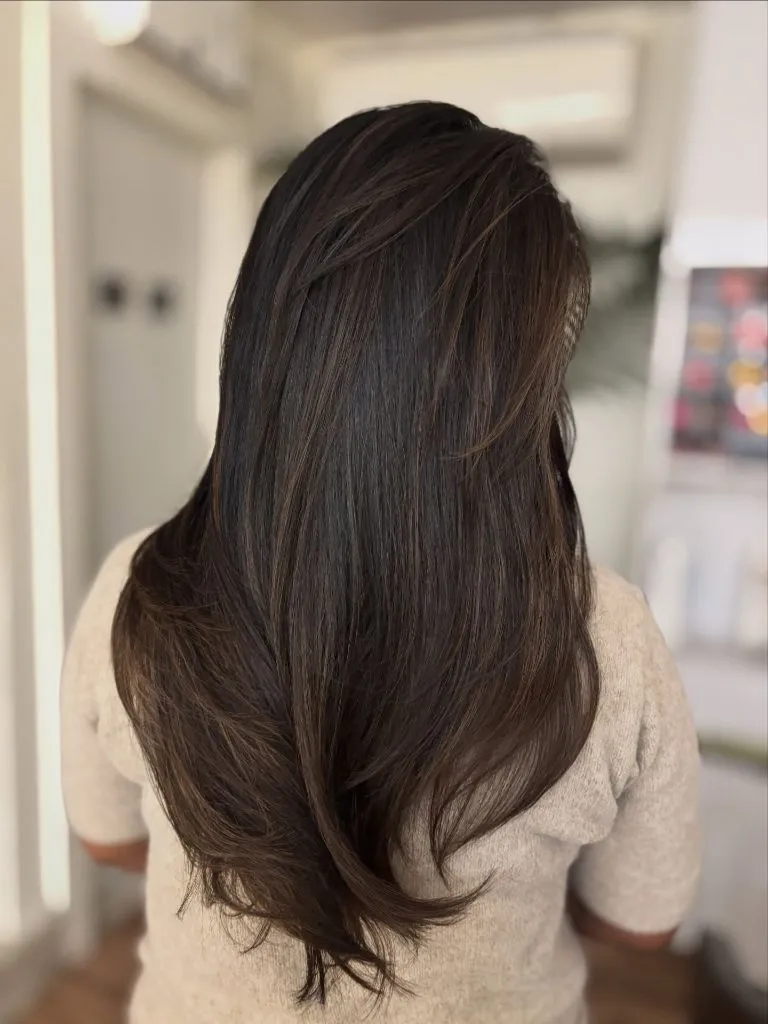
Photo via Instagram
The hair sits against a beige or oatmeal-colored top, and the interior behind is bright and slightly blurred. The layers are visible primarily in how the ends graduate in length, with the shortest layers sitting at the shoulder blades and the longest reaching several inches below. The straight texture means there is very little surface interruption, so the faint lighter pieces at the ends are the primary source of visual variation. This is one of the most minimal color approaches in the entire article, sitting very close to an uncolored dark brunette.
The value is in what this image shows about natural dimension. This photograph demonstrates that dark brunette hair without dramatic color work can still read as considered and intentional if the cut has shape. The layered ends open up the silhouette at the bottom and prevent the straight lengths from looking heavy. The idea is that when the color is this simple, the cut and layer placement become the primary tools for creating visual interest.
17. Smooth Brunette Warmth With a Uniform Light Brown Tone
The back view shows long, very smooth, straight-to-slightly-wavy hair in a uniform light-to-medium brown shade. The color is noticeably lighter and warmer than most of the images in this article, sitting in a chestnut or light chocolate range. The surface is extremely smooth and reflective, with visible shine running along the lengths, and the ends have a soft flip outward.
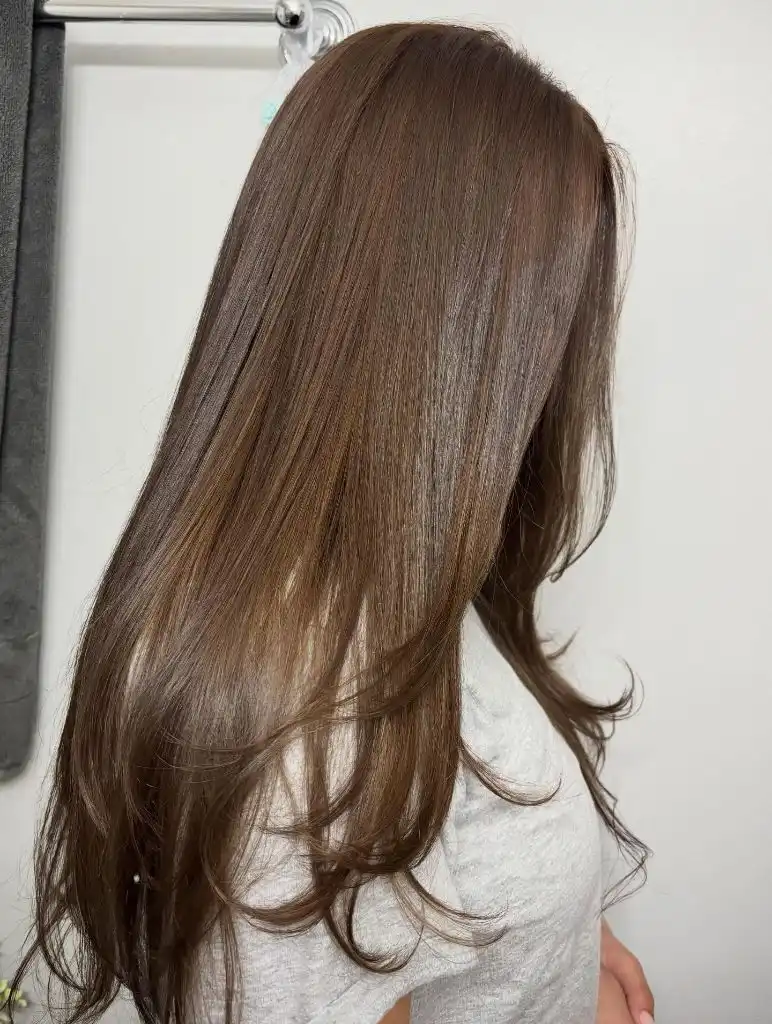
Photo via Instagram
The setting appears to be a bathroom or home space, with a towel bar visible in the corner. The grey top provides a neutral frame. The lack of wave or curl means the shine is unbroken along the hair surface, creating a glossy, sleek appearance. This is the smoothest texture in the article, and the light brown shade reads warm and golden under what appears to be natural or neutral-white indoor lighting. The uniform tone from root to end suggests a single-process color or a very well-maintained gloss.
This is the image worth noting for what it can and cannot support as a reference for cozy winter brunette color. The shade is genuinely lighter and warmer than most interpretations of winter brunette, sitting closer to a chestnut or autumn brown. It works beautifully as a smooth, low-dimension look, but it demonstrates that the term brunette covers a wider tonal range than people often assume, and the useful distinction is not dark versus light but how much visible depth the shade carries.
18. A Warm Gloss Adds Richness to a Medium Brown Base
The image shows medium-length brunette hair with a warm brown tone, soft body waves, and what appears to be a very healthy, glossy finish. The face is obscured by a heart-shaped overlay. The color is a warm medium brown, slightly lighter at the outer layers and ends, with a marginally darker root that blends smoothly. The hair length sits at the collarbone.
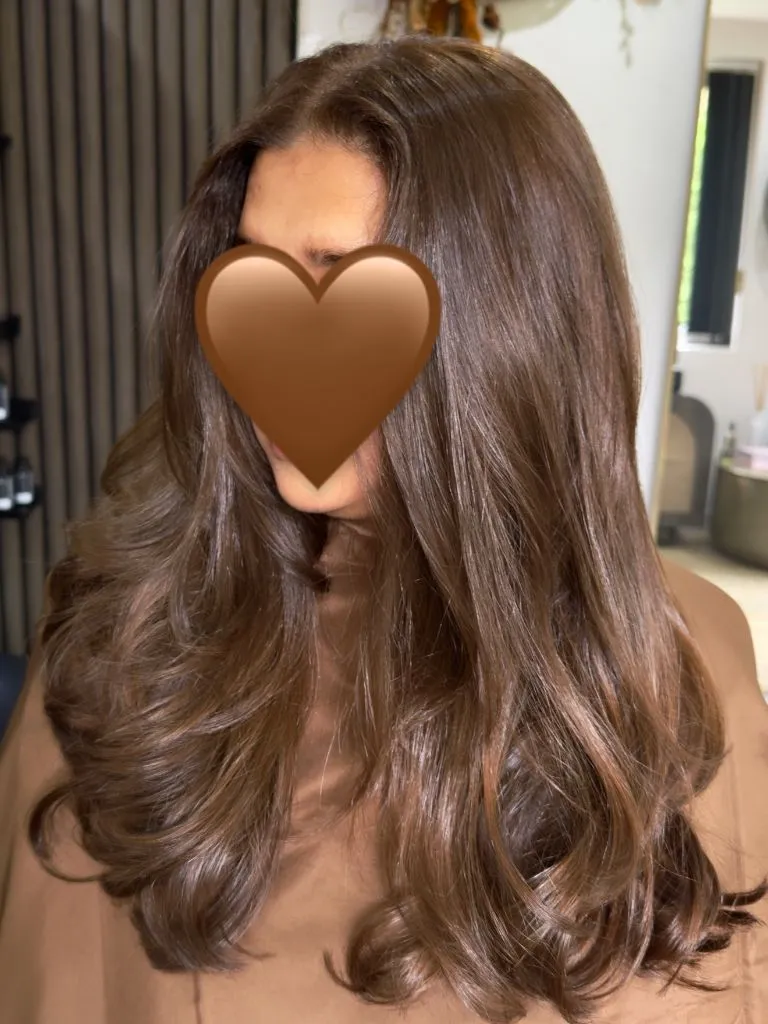
Photo via Instagram
The camel or tan-colored top picks up the warm tones in the hair, creating a cohesive warm palette. The salon interior is visible in the background, with vertical paneling and product shelves. The waves are medium-sized and soft, giving the hair enough movement to create light-and-shadow variation across the surface without dramatic curl definition. The overall impression is of a well-maintained, freshly treated brunette with a gloss or toner adding an extra layer of shine and tonal warmth.
The appeal is the finish. Gloss and shine are doing as much work as color in this image, because the reflectiveness of the surface amplifies the warmth and makes the medium brown appear richer than it would with a matte or dry finish. The takeaway is that surface condition and color are inseparable in how a shade reads, and investing in hair shine and health often matters more than adding another tonal layer.
19. Soft Brown Waves Frame a Warm Salon Finish
The image shows long brunette hair in a warm, medium brown shade with soft waves and a healthy, glossy finish. The subject is photographed in a salon environment with warm golden lighting, product shelves, and illuminated mirrors visible behind. The hair is parted slightly off-center and falls in relaxed, undone waves past the shoulders.
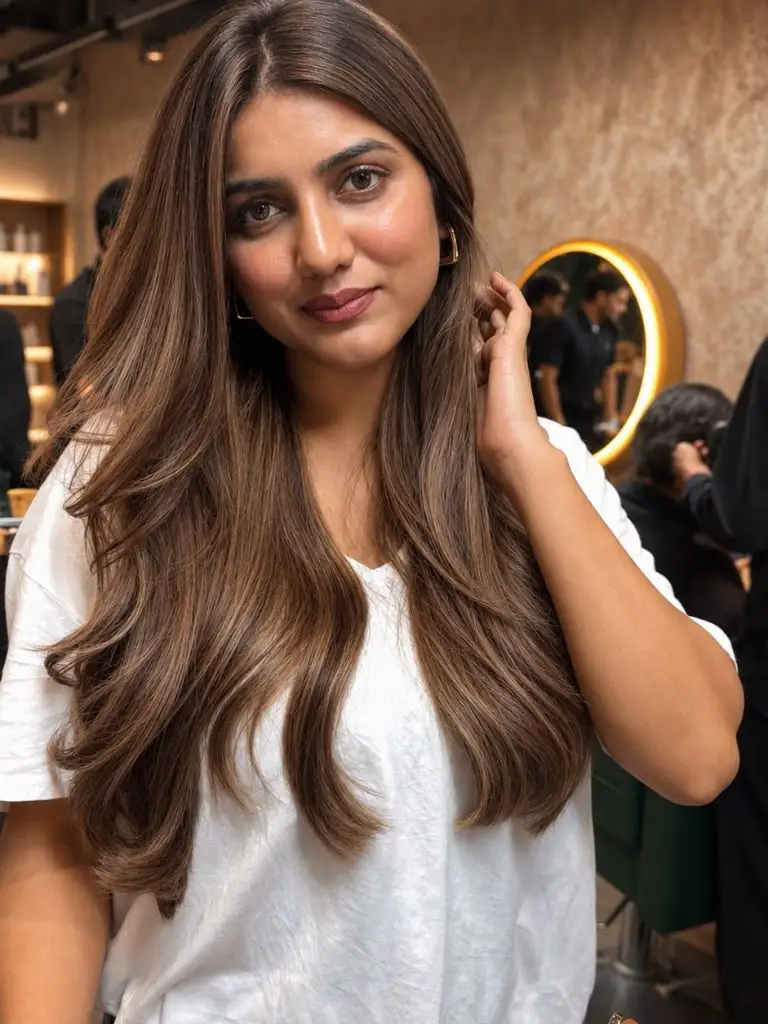
Photo via Instagram
The warm salon lighting is critical to how this color reads. The golden ambient light enriches the brown tones and makes the hair appear more luminous than it might under cooler or harsher lighting. A small gold hoop earring is visible, and the white t-shirt keeps the outfit neutral, directing attention to the hair. The waves have a natural, unstructured quality, suggesting either air-drying or minimal heat styling. The color appears consistent from root to end with no dramatic tonal shifts, sitting in a comfortable warm brown territory.
The strength here is the harmony between the lighting environment and the hair color. Warm brunette shades naturally benefit from warm ambient light, and this salon photo demonstrates that relationship clearly. The principle is that when considering a warm brunette shade, the lighting you live and work in genuinely affects how the color performs day to day, and matching warmth in hair to warmth in environment creates a cohesive, natural appearance.
20. A Dark Cherry Gradient Grounds a Warm Brunette End
The final image is a back view of the same person and setting as the first section, showing the hair from behind. The dark root zone transitions into a deep cherry-red brunette tone through the mid-lengths and ends, and the gradient is smooth and continuous. The hair is styled with a soft bend and light wave, falling past the shoulders in a relaxed shape.
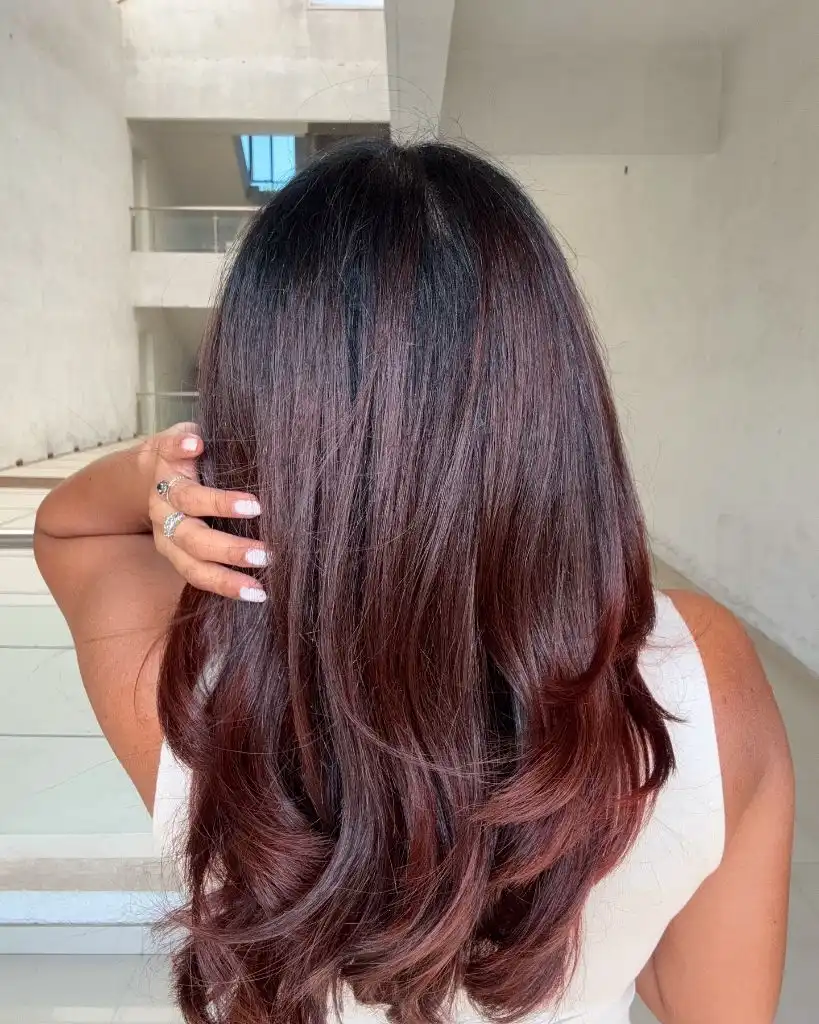
Photo via Instagram
The balcony setting with concrete walls and natural daylight returns from the opening section, and the back view reveals how much of the cherry undertone is distributed through the lengths. The transition from near-black roots into the reddened ends is visible as a gradual wash rather than a distinct line, suggesting a balayage or color melt technique. The hand on the shoulder shows nails in a light polish, and the white tank top once again keeps the framing clean and lets the color gradient carry the visual weight.
The effect is a full-circle return to the same warm, cherry-leaning brunette, now visible from a different angle that reveals the color’s full behavior. Seeing the same shade from the front and the back is informative because it confirms that the warmth is distributed evenly rather than existing only on one side. The principle is that a color with real depth should look intentional from every angle, and back-view photos are an underused tool for evaluating whether a shade truly carries through the whole head.