Choosing a haircut when your body does not match the frame most stylists photograph should not feel like solving a problem someone else invented. Winter haircuts for plus-size women get treated as a correction exercise far too often, as though the goal is always to narrow, slim, or distract. That framing is worth discarding. A cut works when it feels deliberate, not when it follows a rule chart written for a body that is not yours. You get to want volume. You get to want short. You get to want whatever reads as yours.
The useful question is not which cut makes a plus-size frame look smaller but which cut makes the whole silhouette feel considered. A good decision begins before anyone picks up shears, and the variables worth thinking through are proportion, where the widest point of the cut falls relative to the shoulders and jaw; movement, how the ends behave and whether they hold shape or release it; color placement, which changes where the eye travels first; and texture, whether the surface reads smooth, broken, or soft. Those four concerns run through every section here. Some of these photographs show salon blowouts, some show natural texture, and one or two show color choices that do more structural work than the cut itself. Each image earns its own reading on those terms.
1. Burgundy Curls Soften a Layered Blowout
The strongest detail here is the burgundy-to-plum color shift running from the mid-lengths to the curled ends, set against a dark brown root. The hair is medium-long, layered through the lower half, and blown out into large, defined curls that sit just below the collarbone. The side-swept framing around the face keeps the volume away from the cheeks while letting the color do the heavier visual work.
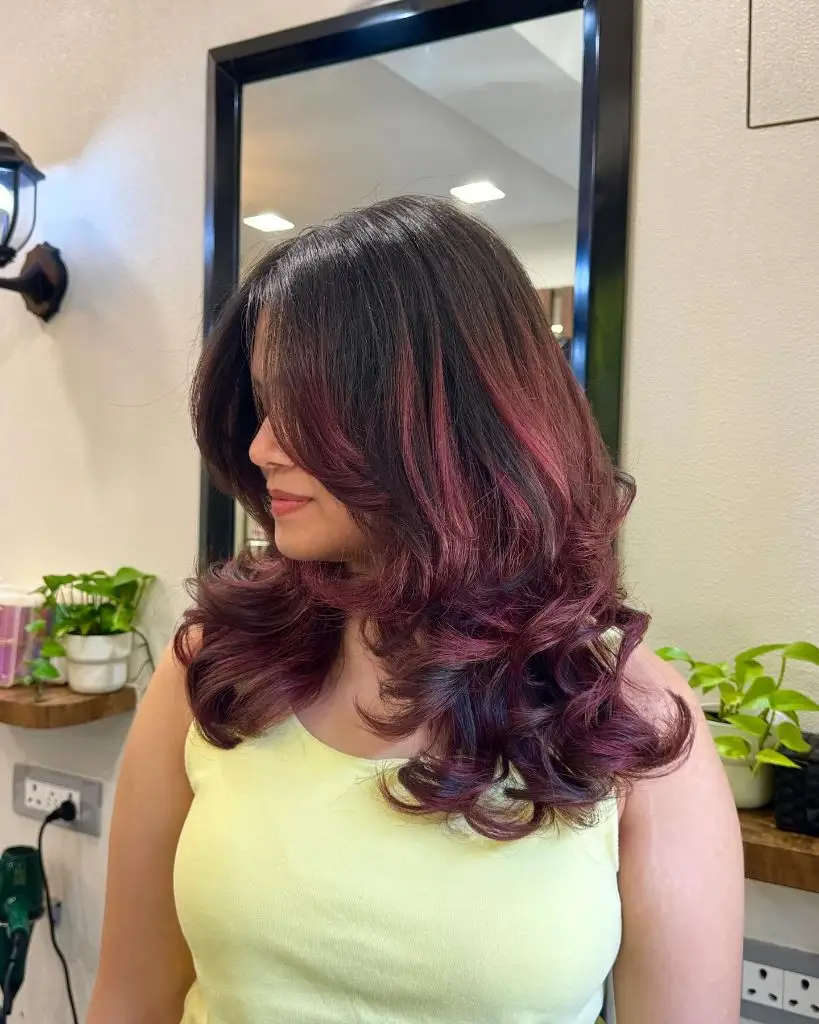
Photo via Instagram
The curls hold a deliberate shape rather than a loose wave, which means the widest point of the hair lands at the collarbone rather than at the jaw. That placement matters on a plus-size frame because it draws the eye downward through the color gradient rather than outward at the face. The yellow sleeveless top visible beneath the hair creates a quiet warm contrast that makes the plum tones read richer. The mirror and salon plants in the background confirm this is a freshly styled result, so the bounce and separation are at their peak.
The appeal is the way color substitutes for structure. The layers alone are modest, but the shift from dark root to saturated burgundy end gives the cut a sense of direction it would not have in a single shade. The transferable principle is that a visible color transition on dark hair can do the same framing work as a more dramatic cut, with less commitment.
2. Caramel Highlights Carry a Textured Lob
This photograph shows the back of a shoulder-length lob with fine caramel highlights threaded through a dark chocolate brown base. The cut sits just above the shoulders and has a slight textured wave that breaks the surface without adding bulk. The ends are blunt with minimal layering, and the highlights are concentrated through the mid-shaft rather than packed near the roots or tips.
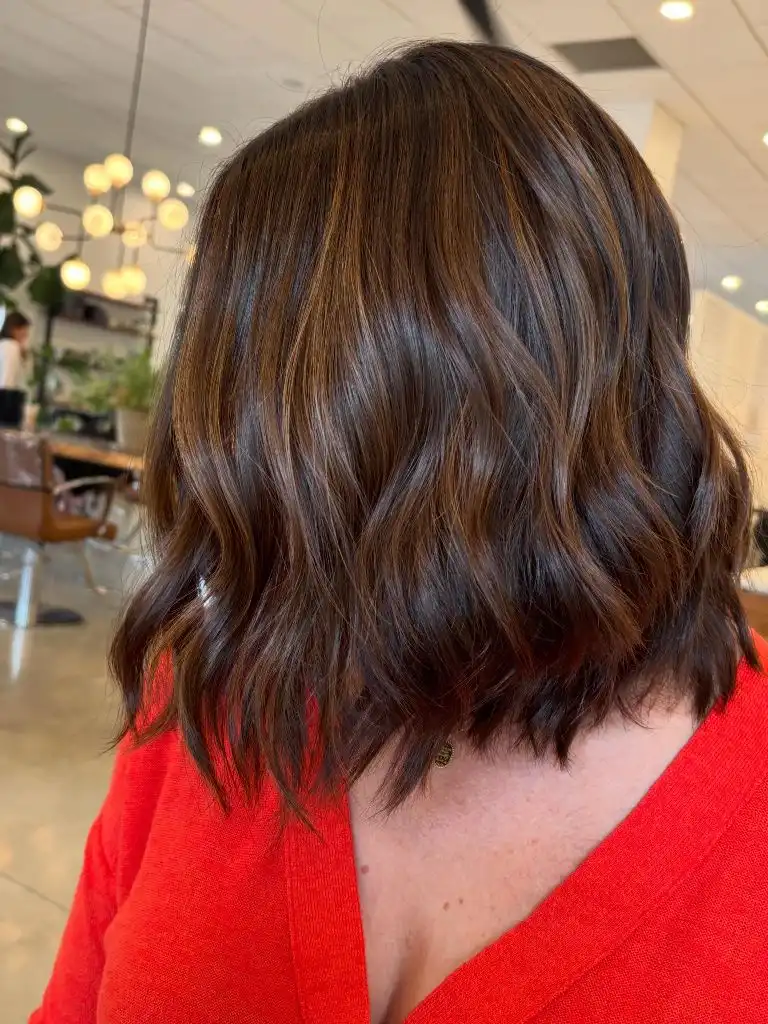
Photo via Instagram
The highlight placement is doing the real work. By keeping the lighter pieces in the center of each strand, the surface catches light in a broken pattern that gives the hair dimension without volume. On a plus-size frame, a lob that lands at the shoulder can sometimes flatten against the body and lose definition, but the wave texture here prevents that. The red top visible at the neckline pushes the warm tones in the highlights forward. The salon background, with its globe lighting and leather chair, reads as a mid-tone neutral that lets the hair color register clearly.
This is a cut that trusts color over shape. The structure is simple, almost plain, and the highlights carry the entire visual weight. For anyone considering a shorter length, the lesson is that a lob does not need dramatic layers to hold interest if the tone and placement of highlights create enough surface movement on their own.
3. Long Layers Ground a Center-Parted Frame
The hair here is very long, dark black-brown, center-parted, and falls past the chest with soft bends through the lower third. The face-framing pieces are cut slightly shorter and angled outward, creating a subtle curtain effect without a true bang. The texture is smooth through the top half and loosens into gentle movement near the ends.
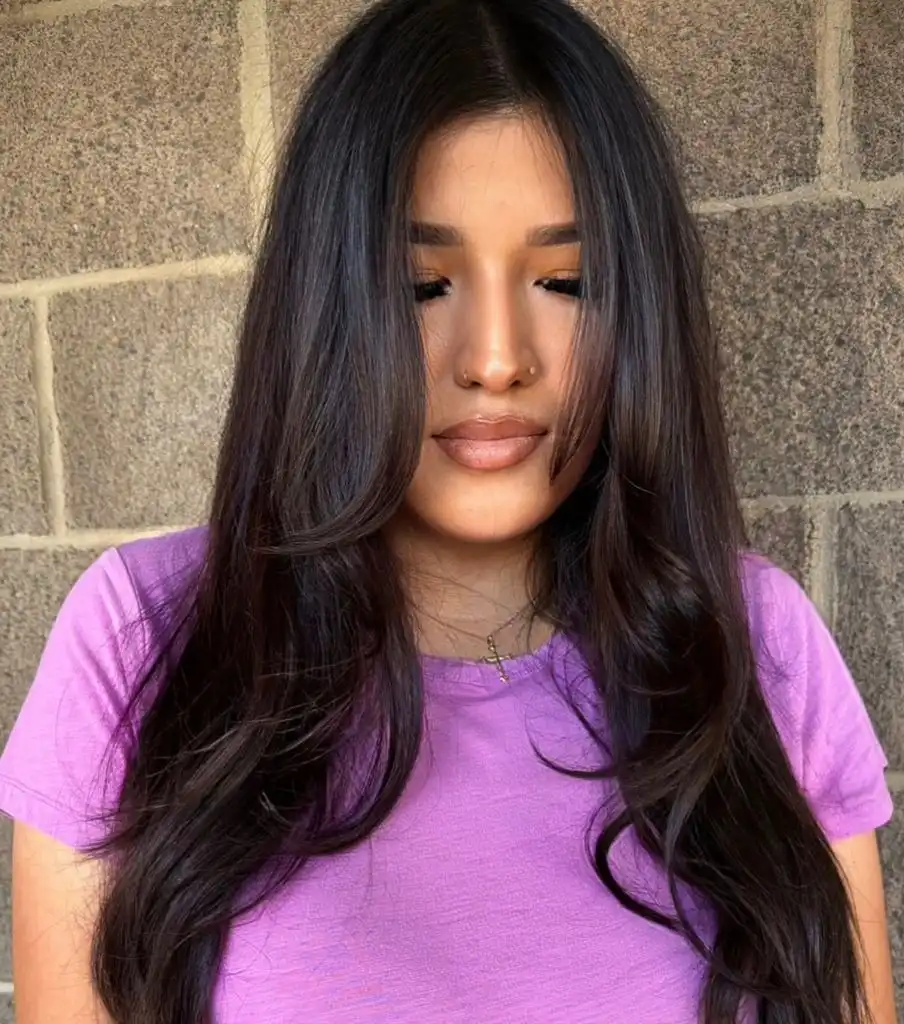
Photo via Instagram
What makes this work on a broader frame is the sheer vertical pull the length creates. The center part splits the volume evenly, and the face-framing layers sit just below the chin, which opens the area around the jaw without cutting across it. The lavender tee visible below adds a cooler contrast that keeps the dark hair from reading heavy. The cinder block wall behind provides a flat, neutral backdrop that makes the hair’s surface sheen the clearest element in the frame. The lack of highlights means the cut relies entirely on silhouette and movement.
This is the quietest option in this set, and the strength is in that restraint. Long dark hair without color needs a precise layering strategy around the face to avoid reading as a single curtain, and the angled pieces here achieve that. The principle worth keeping is that face-framing layers do not have to be dramatic to do their job; a few inches of difference near the chin can shift the whole proportion.
4. A Short Pixie Lifts Volume Above the Ears
This is a platinum-toned short pixie with volume concentrated at the crown and soft, tapered sides that sit close to the head just above the ears. The texture is wavy and deliberately tousled through the top, while the lower sections are smoother and shorter. The color reads as a cool ash blonde with slightly warmer roots.
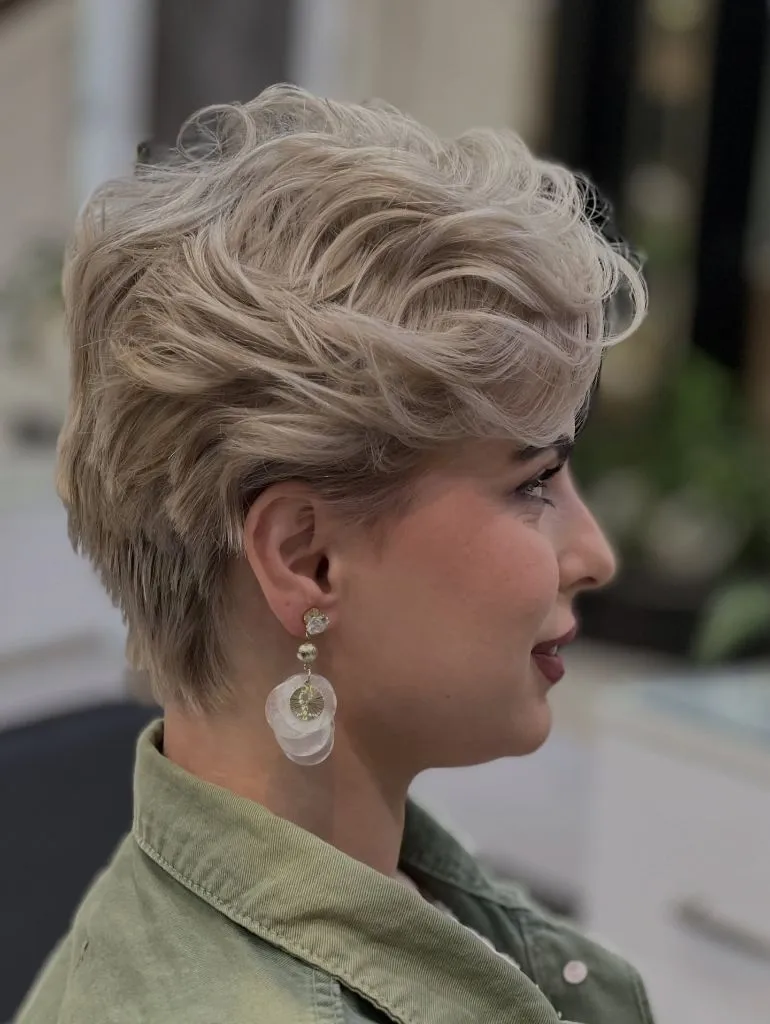
Photo via Instagram
The profile view shows exactly how the volume sits: high and forward, which is a strong choice on a plus-size frame because it moves the visual weight upward rather than outward. The tapered sides keep the area around the jaw and neck clean, and the ear is fully exposed, which makes the statement earring a deliberate part of the composition. The olive green jacket collar visible at the bottom provides a muted warm base that makes the cool blonde pop. This cut requires confidence in the neckline and jawline being visible, and the result here is clean and intentional.
The best detail is the wave texture at the crown, which prevents the pixie from reading flat or severe. A short cut on a larger frame can sometimes feel like it exposes too much, but the height and movement here give it personality rather than bareness. The takeaway is that a short pixie with texture shifts proportion most effectively when the volume is stacked high and the sides stay close.
5. Curtain Layers Frame a Voluminous Blowout
The hair is jet black, very long, and styled into a large, sweeping blowout with dramatic curtain layers that part just off-center and fan outward from the face. The ends curve inward at the chest level, and the overall silhouette is wide and full without looking uncontrolled. The surface is smooth and high-shine.
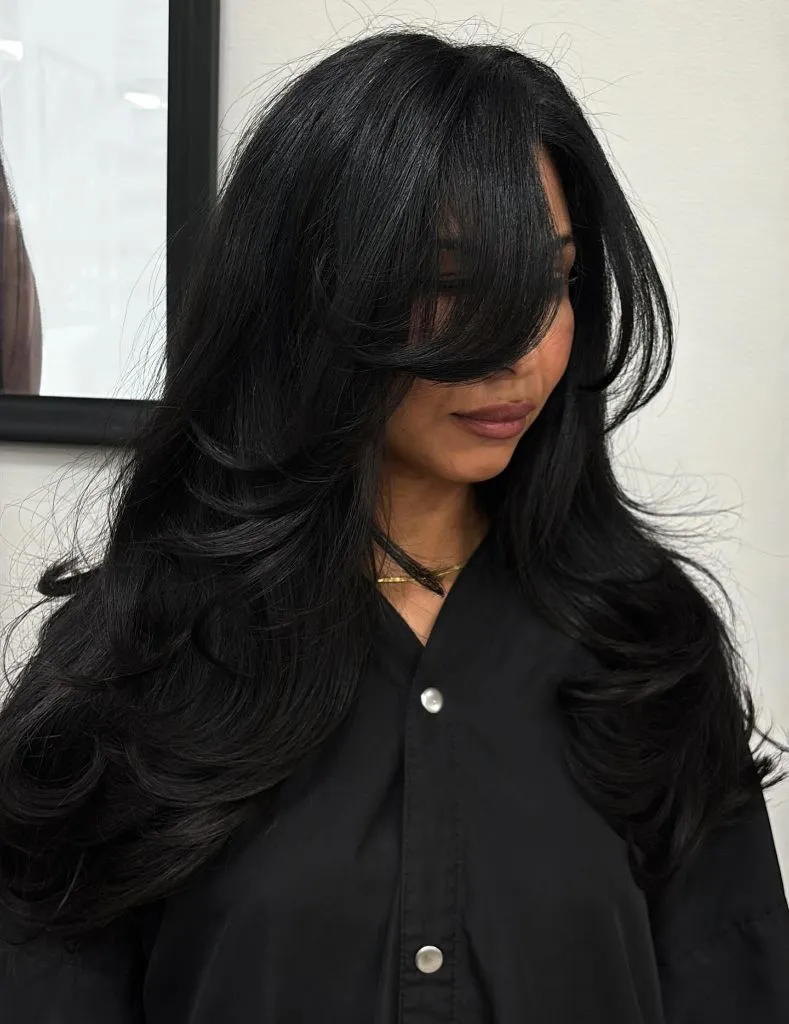
Photo via Instagram
This is the most volume-forward look in this set, and the fact that it reads as structured rather than overwhelming comes down to the curtain framing. The layers sweep back from the face in a single direction, which channels the width into a deliberate shape rather than letting it spread evenly. The black button-front shirt disappears into the hair color, which means the silhouette of the hair itself becomes the entire visual statement. The gold choker at the neckline is the only interruption, and it draws a thin line of contrast that defines where the hair ends and the body begins.
I like the boldness of choosing maximum volume on a plus-size frame rather than trying to minimize it. The cut treats the hair as the main event, and the smooth finish keeps it from reading chaotic. The transferable idea here is that volume works when it has a clear direction, and curtain layers on long hair give the eye a path to follow rather than a mass to process.
6. Natural Waves Build Texture Without Styling
This photograph shows long, naturally wavy dark brown hair falling past the shoulders with no visible blowout or heat styling. The texture is uneven and organic, with some sections curling more tightly than others. The part is slightly off-center, and the volume is distributed broadly around the face and shoulders. The person wears a denim jacket over a pink knit top.
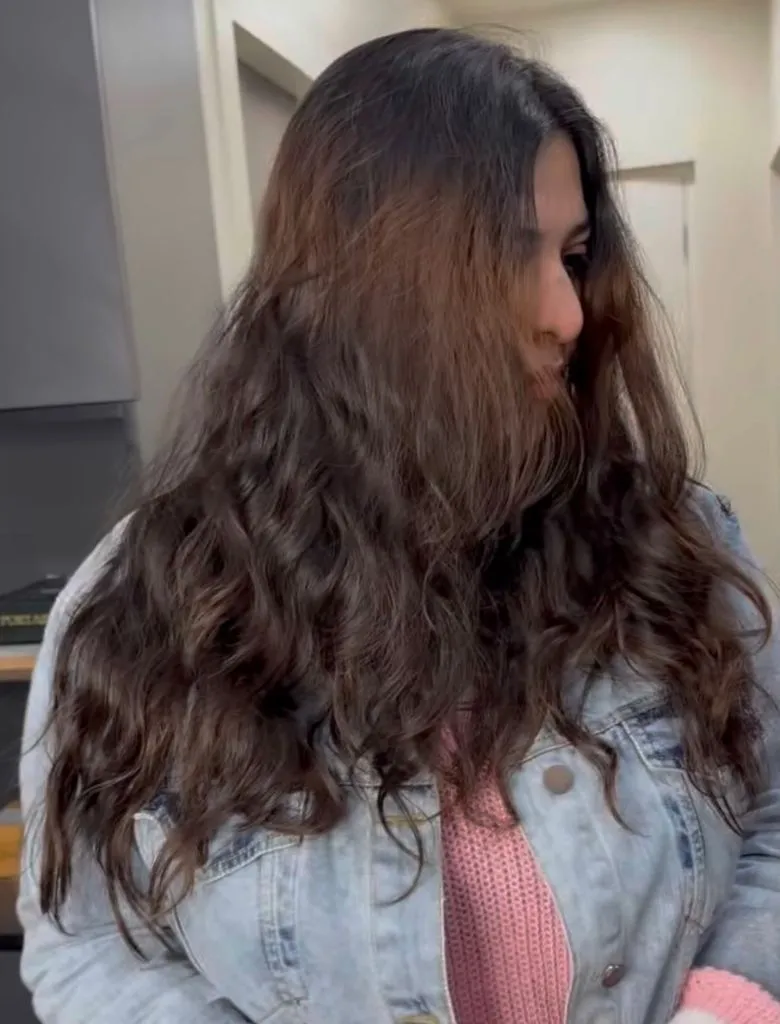
Photo via Instagram
This image is worth noting for what it does not show: there is no blowout, no curl definition product visible in the result, and no salon-polished finish. The texture is genuinely natural, which makes it the most honest representation of what this hair type looks like between appointments. On a plus-size frame, unstyled waves at this length can add width at the shoulders, and this image does not pretend otherwise. The denim jacket adds structure around the torso that partially offsets that width, and the pink knit beneath introduces a softer color contrast.
The value is in the realism. Most hair inspiration imagery shows a finished salon moment, and this photograph shows what the cut looks like when left to its own behavior. The principle is that choosing a winter haircut means choosing something that works at its most natural texture state as well as its styled one, especially when daily blowouts are not part of the plan.
7. Layered Ends Anchor a Brunette Blowout
The hair is medium-to-long, dark brunette with warm caramel highlights visible through the lower layers, and styled into a smooth blowout with curled-under ends. The back view shows the layers graduating from shorter at the crown to longer at the bottom, and the ends flip inward in a classic bouncy finish. The person wears a dark plum cap-sleeve top.
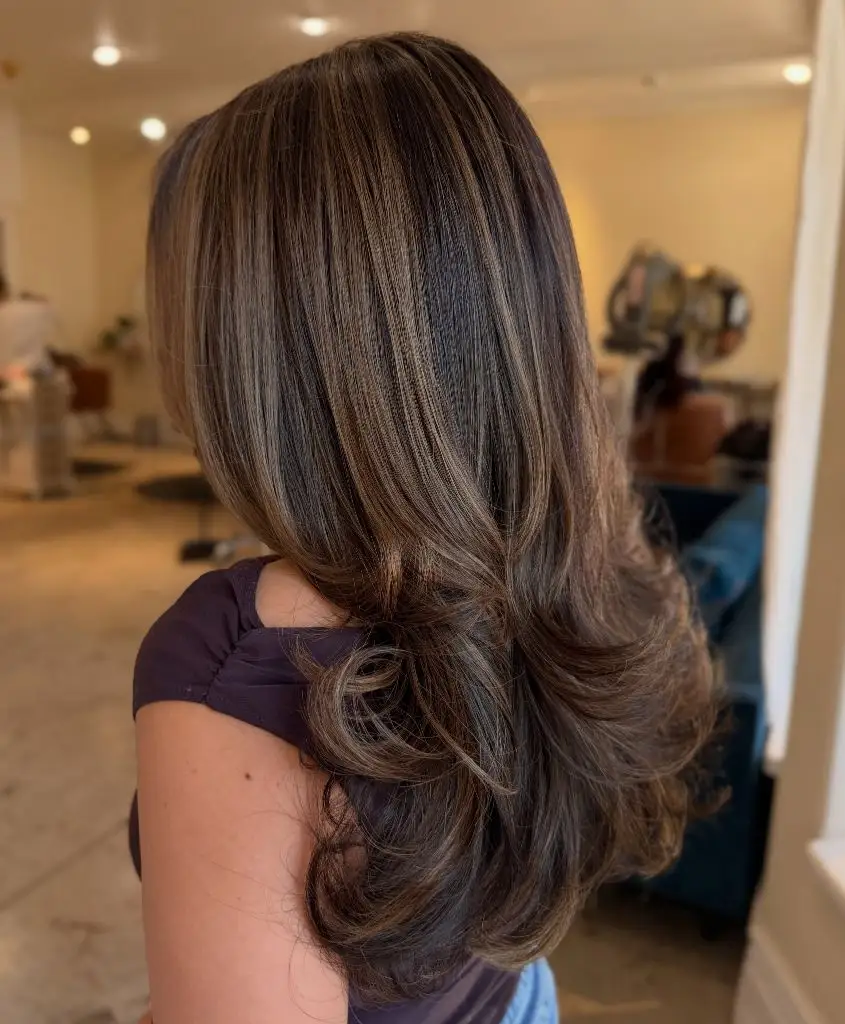
Photo via Instagram
The curled-under ends are the structural anchor here. They pull the widest point of the hair inward at the bottom rather than letting it fan out, which narrows the silhouette at its lowest edge. The highlights, concentrated in the lower third, create a sense of lightness at the ends that prevents the length from reading heavy. The salon background is softly blurred, but the visible hair dryers and stations confirm this is a professional styling result. The plum top is dark enough to let the caramel tones in the hair register clearly.
The strength here is in the graduated layering, which creates visible movement from the crown down without thinning the hair at any single point. This is a reliable winter blowout approach for longer hair because the shape holds its structure and the curled ends maintain the look’s intention even as it relaxes through the day. The lesson is that inward-curving ends do real proportion work.
8. A Straight Blonde Lob Opens the Collarbone
This is a straight, shoulder-length lob in a gradient blonde, darker at the roots and brighter toward the ends. The hair is parted slightly off-center and falls perfectly flat, with no wave or curl. The ends are blunt-cut and land just at the collarbone. The person wears a black salon cape, and the text overlay on the image says “Swipe to see the process.”
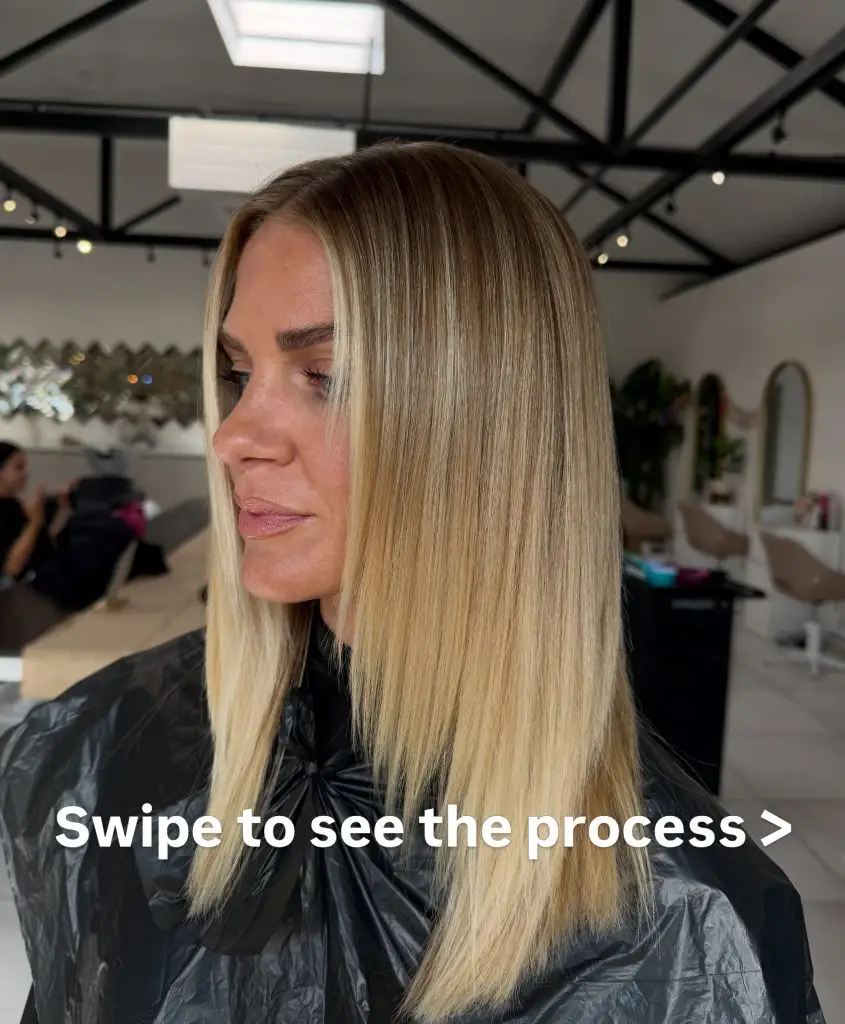
Photo via Instagram
The blunt ends and flat finish give this lob a graphic quality that most textured cuts do not have. On a plus-size frame, a straight lob at collarbone length can work well because it creates a horizontal line across the upper chest that draws attention to the neck and shoulders rather than to the midsection. The root-to-end blonde gradient adds just enough dimension to prevent the flatness from reading dull. The salon setting, with its black steel beams and blurred styling chairs, frames the hair’s clean lines.
This is a cut that relies on precision over texture. The blunt ends must be even, and the color transition must be smooth, because there is no wave or curl to hide imperfections. The transferable principle is that a straight lob with tonal depth can achieve visual interest through color alone, without needing the movement that most winter haircuts lean on for dimension.
9. Ash Blonde Layers Quiet a Medium Length
The back view shows a medium-length cut in an ash blonde tone with subtle darker roots, styled into soft flipped ends that curve outward at the bottom. The layers are visible through the lower third, and the overall surface has a satin finish rather than high shine. A white painted brick wall provides the background.
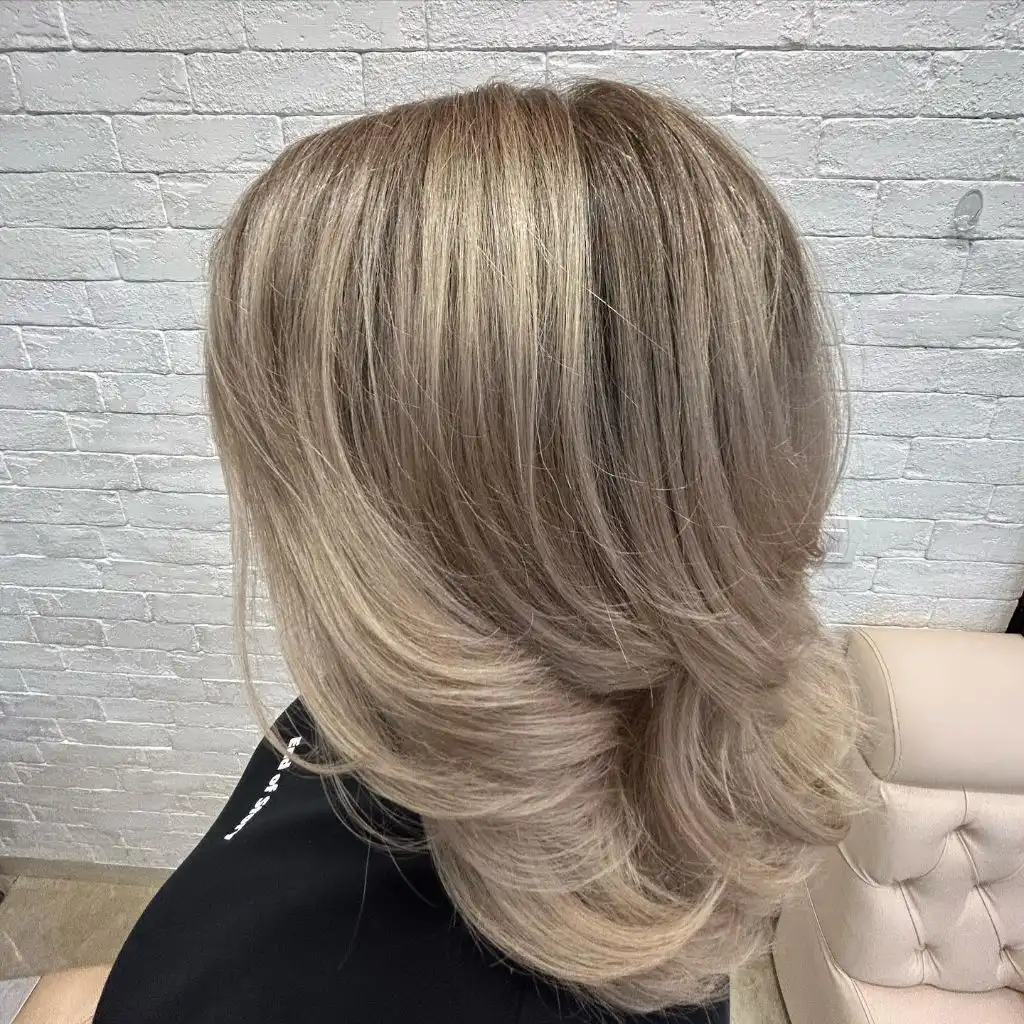
Photo via Instagram
The outward flip at the ends is a subtle but effective choice. It widens the bottom edge of the hair slightly, which on a plus-size frame could add breadth at the shoulders, but here the medium length keeps the flip well above the shoulder line, so it reads as movement rather than width. The ash blonde tone is cool and muted, which gives the whole look a quiet, winter-appropriate feel. The white brick behind pulls the cooler tones in the hair forward, and the dark top beneath anchors the lightness.
The effect is calm and polished without looking overdone. The ash tone does not demand attention the way a warm blonde or a platinum would, and the flipped ends add just enough personality to keep the cut from reading plain. The principle is that medium-length hair in a cool tone works best for winter when the styling is minimal and the layers create gentle shape rather than dramatic volume.
10. Sleek Black Hair Sharpens a Center Part
The hair is jet black, long, center-parted, and straightened to a smooth, flat finish. It falls evenly past the shoulders on both sides with no visible layering or texture. The person wears a black V-neck top with a thin red-and-white stripe at the collar, and a tree-of-life pendant necklace sits at the center of the chest. The backdrop is a textured white wall.
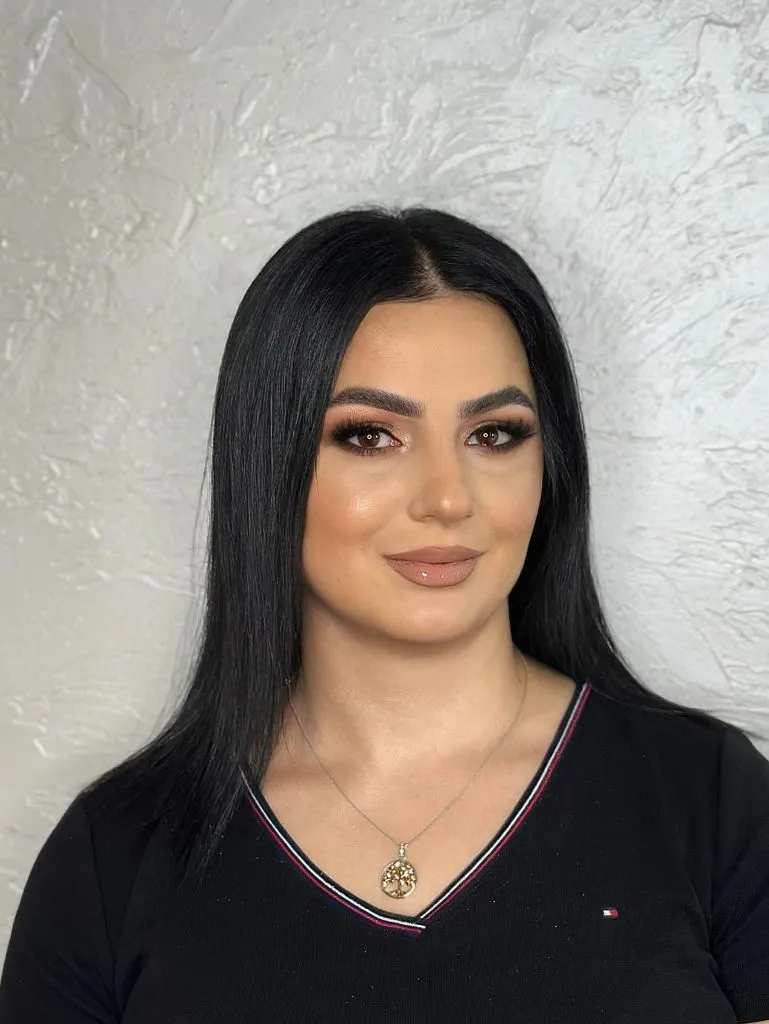
Photo via Instagram
The absence of layers or texture here is the defining choice. The hair falls as a single, unbroken surface, and the center part creates perfect symmetry. On a plus-size frame, this can work as a strong, intentional statement because the vertical lines on both sides of the face elongate the visual field. The pendant necklace adds a focal point at the chest that breaks the dark mass of hair and top into two halves. The textured white wall provides just enough contrast to define the hair’s edges.
What stands out most is the commitment to simplicity. There is no color, no movement, and no layering to soften or redirect. The cut relies entirely on shine, symmetry, and the clean edge at the ends. The takeaway is that sleek, one-length hair makes its argument through surface quality rather than structure, and for anyone drawn to this approach, the hair’s health and shine become the entire design.
11. Curly Layers Balance a Shoulder-Length Cut
The hair is a medium brown with warmer, lighter tones visible where the curls catch sunlight, cut to shoulder length with curly bangs that fall across the forehead. The curl pattern is tight and consistent, somewhere between a 3A and 3B texture, and the volume is evenly distributed around the head. The person wears a dark military-style jacket with braided detailing.
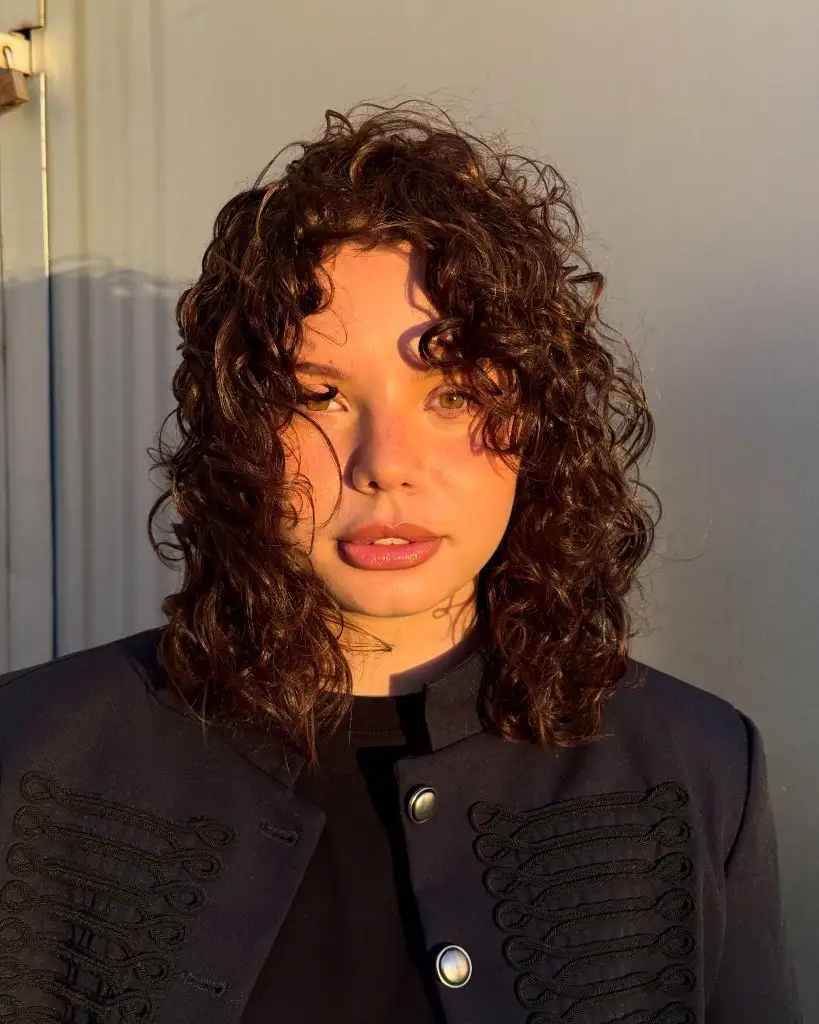
Photo via Instagram
The curly bangs are the strongest framing element. They sit across the forehead and break the face into a smaller visible area, which changes the proportion of the head relative to the body. The even curl distribution means the volume is balanced on all sides rather than concentrated at the back or crown, which prevents the look from pulling in any single direction. The warm sunlight hitting from the left picks up golden and copper tones in the curls that the overhead shade on the right side does not show, which means the color reads as more complex than it may be.
The appeal is the way the natural texture does all the structural work. There are no blown-out sections, no straightened pieces mixed in, and no visible product creating definition artificially. The curls create their own layered effect through varying lengths in the spiral pattern. The principle for anyone with similar texture is that a shoulder-length cut with bangs lets curly hair do what it already does well without fighting against it.
12. A Rich Auburn Grounds Wavy Medium Hair
The back of the head shows medium-length hair in a rich, warm auburn tone, styled into soft waves that fall just past the shoulders. The color is consistent from root to end with no visible highlights or lowlights, and the surface has a healthy, reflective sheen. The person wears a black-and-white patterned top, and a hand holds one section of the hair to display the color.
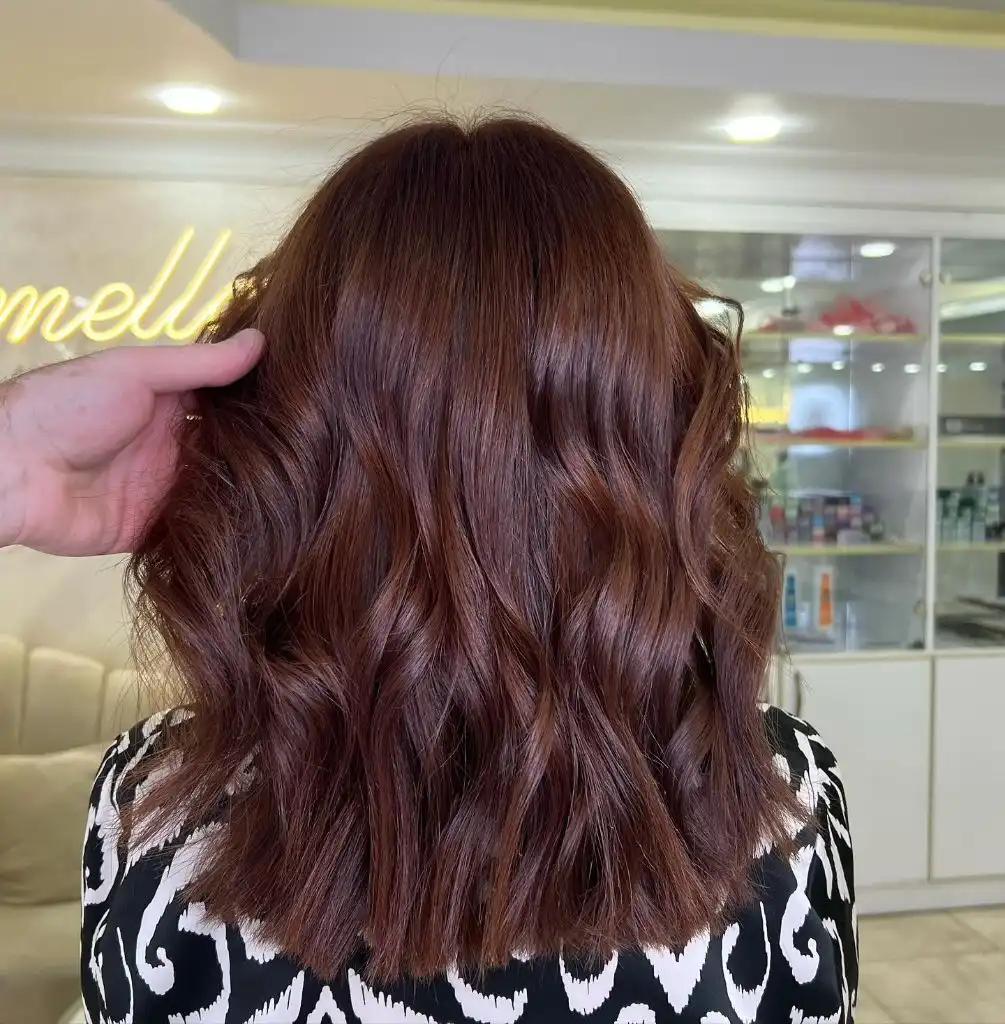
Photo via Instagram
The single-tone auburn is doing something that multi-toned color cannot: it reads as a complete, finished statement rather than a technique showcase. The waves add enough texture to prevent the solid color from looking flat, and the warmth of the shade feels appropriate for winter without reading as summery copper. The black-and-white patterned top creates a high-contrast base that makes the red-brown tone of the hair feel intentional and saturated. The salon background, with its warm lighting and glass shelves, pushes the color warmer.
This is a strong reminder that winter hair color does not have to mean cool tones. A deep auburn on medium-length wavy hair provides warmth that cool blonde and ash brown cannot, and the single shade keeps the maintenance simpler than a balayage or highlight pattern. The principle is that one deliberate color choice can carry a cut entirely when the tone is rich enough to hold attention on its own.
13. Bronde Waves Soften a Long Natural Texture
The back view shows very long hair in a bronde shade, darker at the roots and lightening to a sandy blonde through the lengths, with soft, natural-looking waves running from the ears to the ends. A tattooed hand holds a section of hair to display the color and movement. The neon sign behind reads “Hair Tigran” against a wall of artificial tropical greenery.
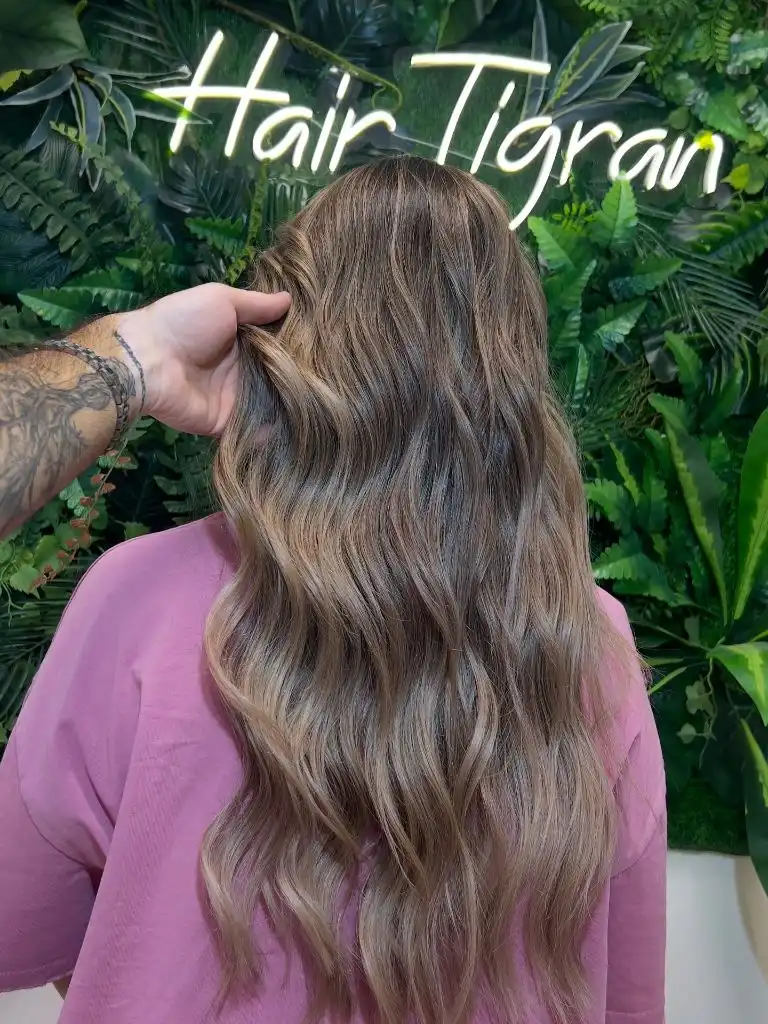
Photo via Instagram
The root-to-blonde transition is gradual and well-blended, which gives the length a sense of depth rather than a harsh line between two colors. On a plus-size frame, very long hair like this creates a strong vertical pull that works well when the color has enough variation to keep the eye moving downward through the strands. The mauve-pink top visible at the shoulders provides a muted warm base that connects to the warmer tones in the lighter ends. The artificial greenery backdrop is loud, but it does help the sandy tones in the hair stand out as distinctly warm rather than ashy.
The effect is effortless, which is harder to achieve at this length than it appears. Very long hair can read heavy or uniform, and the combination of natural wave texture and a carefully placed bronde transition prevents both problems. The lesson is that long winter haircuts for plus-size women do not need aggressive layering to feel light if the color does the work of breaking up the surface.
14. A Rose Gold Updo Changes the Silhouette Entirely
The back of the head shows a loosely gathered updo in a rose gold and peachy pink tone, with soft, curled tendrils escaping at the nape and sides. The style is romantic and slightly undone, with twisted sections pinned in an organic pattern rather than a tight structure. The person wears a black top, and a salon mirror is visible in the background.
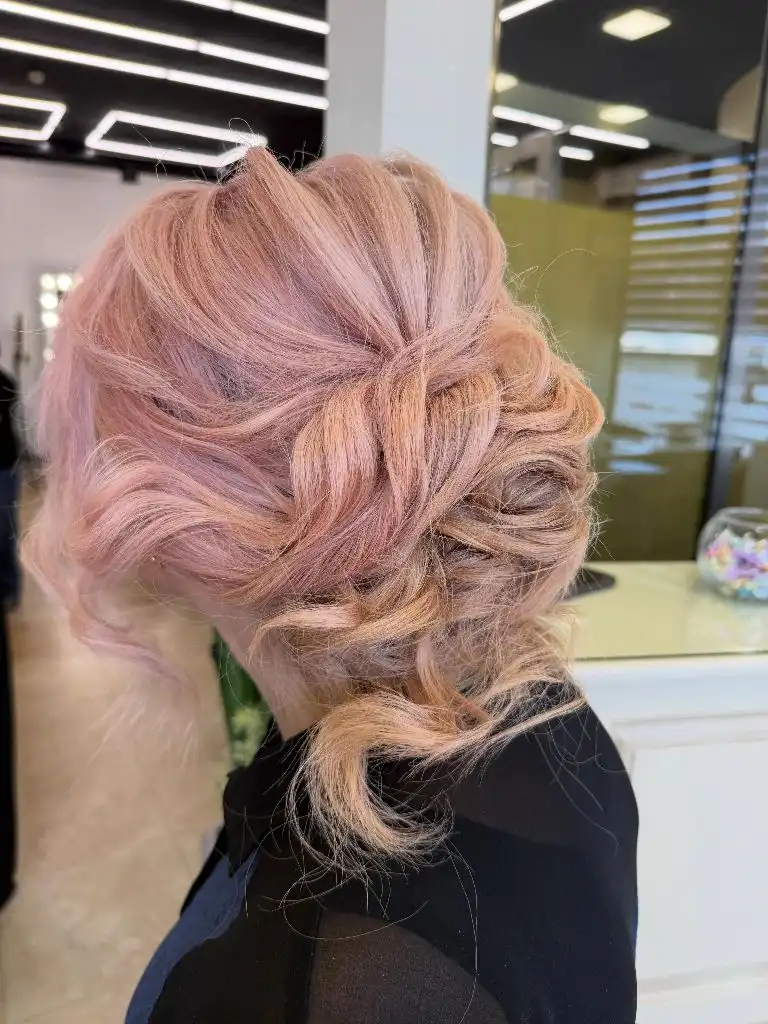
Photo via Instagram
An updo changes the conversation about winter haircuts entirely because it removes length and volume from the equation and replaces them with neckline, shape, and the texture of the pinned sections. This rose gold tone catches the salon light in a way that makes the style feel warmer than the room, and the loose tendrils at the nape soften the transition between hair and skin. The black top creates maximum contrast, which makes the pastel tone the clearest thing in the frame. The slightly undone quality prevents it from reading as formal or stiff.
This is the most useful departure from the other looks here because it demonstrates that an updo is a haircut decision as much as a styling one. The cut beneath determines what the tendrils look like, how the twisted sections hold, and where the volume sits when gathered. The principle is that updos deserve consideration as part of a winter hair strategy rather than as an afterthought for events.
15. A Dark Bob With Layers Frames Below the Chin
The hair is a dark chocolate brown, cut into a layered bob that lands just below the chin, with a side-swept section falling across the face. The ends flip outward slightly, and the layers create visible movement through the lower half. The surface is smooth and shiny. The person wears a dark charcoal long-sleeved top and looks downward.
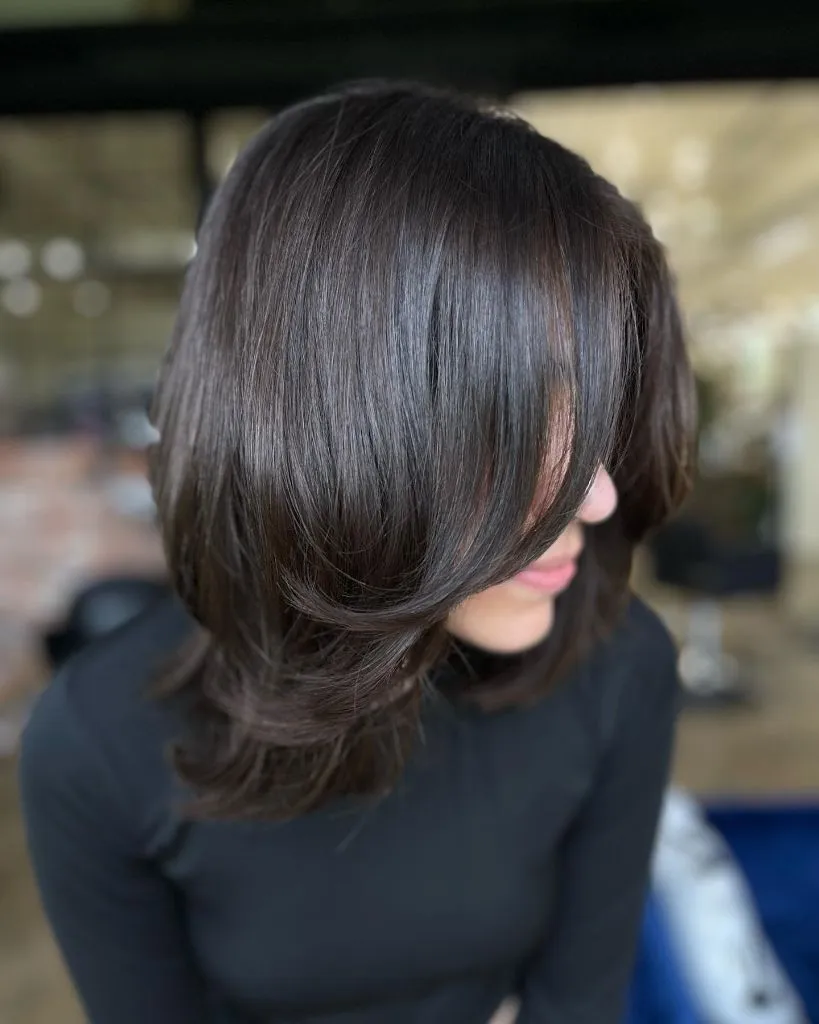
Photo via Instagram
The below-chin length is the critical proportion decision. A bob that stops at the jaw can sometimes widen the appearance of the lower face, but this one extends an inch or two past the jawline, which means it frames rather than bisects. The outward flip at the ends adds width at the neck level, which reads as movement rather than bulk because the hair is dark enough to blend with the dark top beneath. The downward angle of the person’s gaze lets the hair fall forward and shows exactly how the layers separate when gravity pulls them.
The strength here is the layering through the lower half, which gives the bob internal movement without reducing its overall density. A dense, dark bob at this length is one of the most reliable winter haircuts for plus-size women because it holds its shape in cold weather and does not require daily heat styling. The principle is that a bob below the chin earns its framing through the exact placement of its lowest edge.
16. Jet Black Layers Anchor a Long Blowout
The hair is very long, jet black, and styled into a voluminous blowout with layered ends that curve outward and inward in alternating directions. The longest pieces reach the mid-chest, and the face-framing layers sit at the collarbone. The person wears a black strapless top, and a delicate flower pendant necklace sits at the center of the chest. A cinder block wall provides the background.
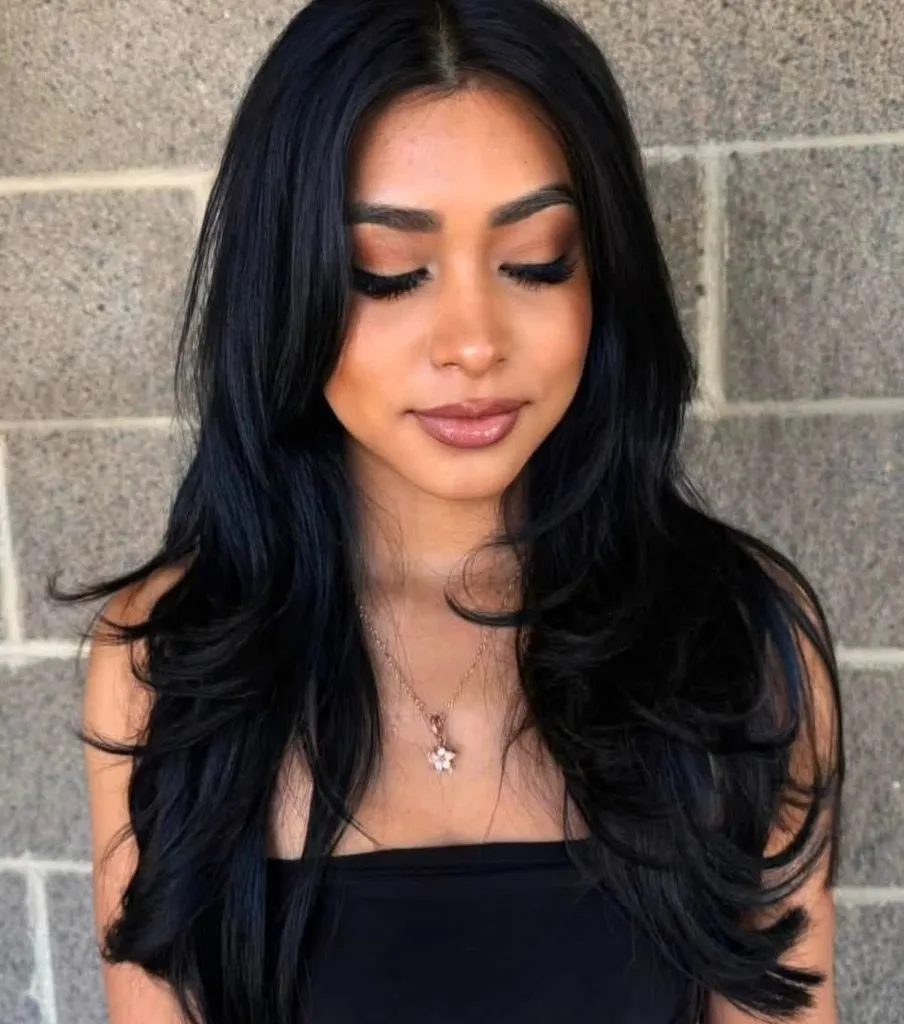
Photo via Instagram
The alternating direction of the end curls creates a pattern that prevents the long black hair from reading as a single heavy mass. Each section flips independently, which breaks the edge of the hair into smaller shapes that catch light differently. The strapless top exposes the shoulders and collarbone, which means the face-framing layers are doing their work against bare skin rather than fabric, and the contrast between the dark hair and the warm skin tone gives the layers more definition. The flower necklace is a small, deliberate focal point that centers the eye.
This is a look that commits fully to length and darkness without trying to lighten or shorten its way into a different proportion. The layering at the ends is the only concession to movement, and it is enough. The transferable idea is that very long, very dark hair on a plus-size frame works when the ends are actively shaped rather than left blunt, because the movement at the perimeter prevents the silhouette from flattening.
17. Long Dark Layers Build a Curled Perimeter
The back view shows long, dark brown-black hair with subtle layering that becomes most visible at the ends, where the hair has been curled into large, outward-facing rolls. The hair is smooth through the upper half and breaks into movement only in the lower third. The person wears a white T-shirt, and a cream-colored wall with green trim is visible behind.
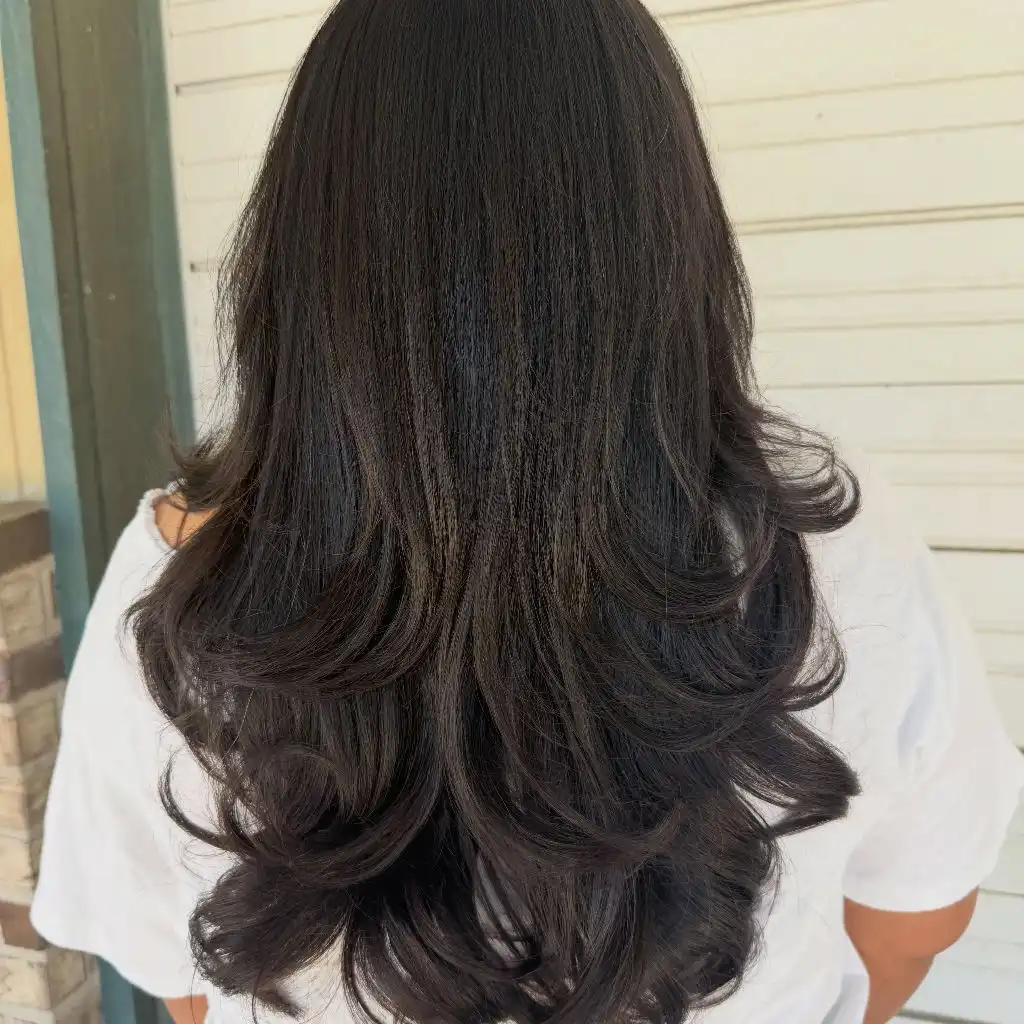
Photo via Instagram
The curled perimeter is the defining detail. Everything above the shoulder blades is flat and smooth, and everything below is shaped into deliberate curls that fan outward. This creates a silhouette that is narrow at the top and wider at the bottom, which can balance a plus-size frame by placing the hair’s visual weight lower rather than at the head or shoulders. The white T-shirt keeps the focus on the hair, and the cream wall behind is neutral enough to let the dark shade and the curl pattern register clearly.
The appeal is in the contrast between the smooth top and the active bottom. It reads as if the hair was styled only where it needed to be, which gives the whole look a considered but not overwrought quality. The principle is that concentrating curl or wave only at the ends of long dark hair is a reliable way to add shape to a winter haircut without committing to all-over volume.
18. Warm Brunette Bangs With Layered Body
The hair is a warm, medium brunette with lighter golden tones visible through the lengths, cut into a layered style with curtain bangs that part in the center and sweep to either side of the face. The length falls past the shoulders, and the ends have a soft, lived-in bend. The person wears a beige or tan top, and the background is a plain off-white wall.
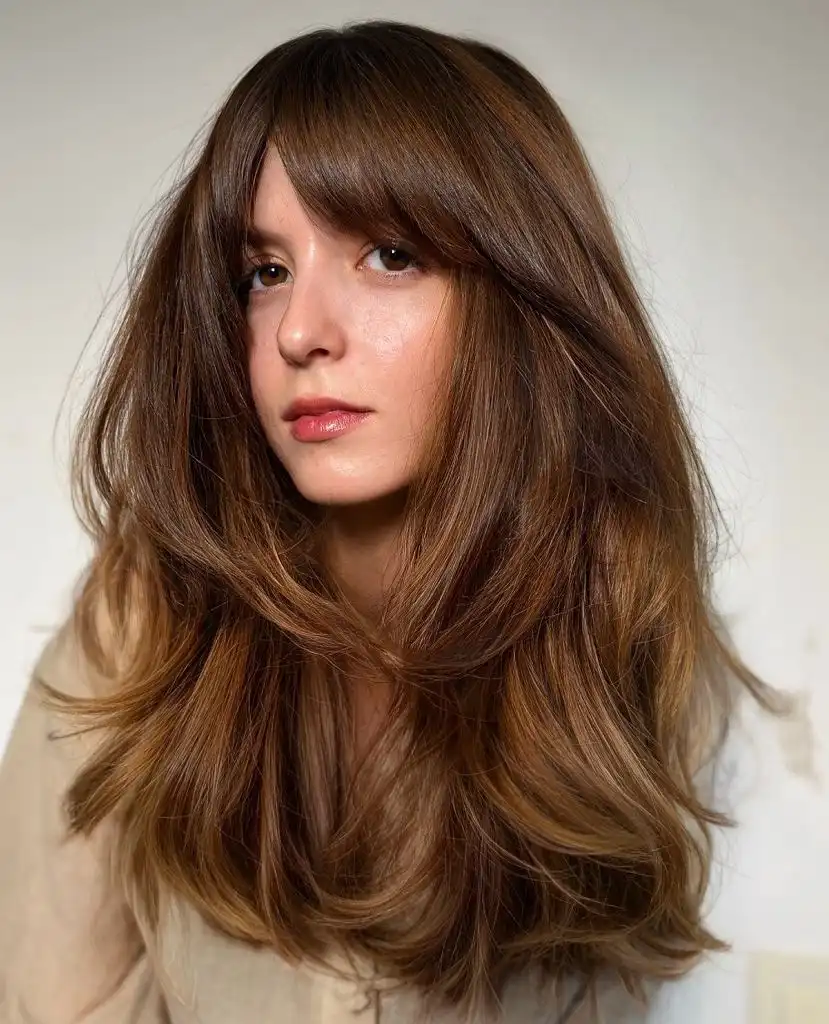
Photo via Instagram
The curtain bangs here sit at cheekbone level and sweep outward, which frames the eyes and upper face while leaving the jawline open. This is one of the most effective framing techniques for any face shape because it narrows the visible area of the forehead without covering the eyes. The golden tones through the mid-lengths add warmth that the brunette base alone would not provide, and the soft bend at the ends keeps the lower edge from looking rigid. The beige top connects tonally to the lighter pieces in the hair, creating a harmonious warm palette from neckline to crown.
The value is in the bangs themselves, which change the proportions of the face more than any layer or length adjustment could. Curtain bangs on a warm brunette base with subtle highlights soften the overall look without requiring dramatic color or heavy styling. The lesson is that bangs are a proportion tool first and a trend choice second, and their placement relative to the cheekbone determines whether they frame or simply cover.
19. Cool Dark Layers Hold a Quiet Winter Weight
The back of the head shows long, dark hair in a cool-toned brown-black shade with no visible highlights, cut into gentle layers that show mostly at the ends. The hair is smooth, slightly thick in density, and falls to the mid-back. The person wears a navy-and-white striped long-sleeve top, and a gray cinder block wall is visible behind.
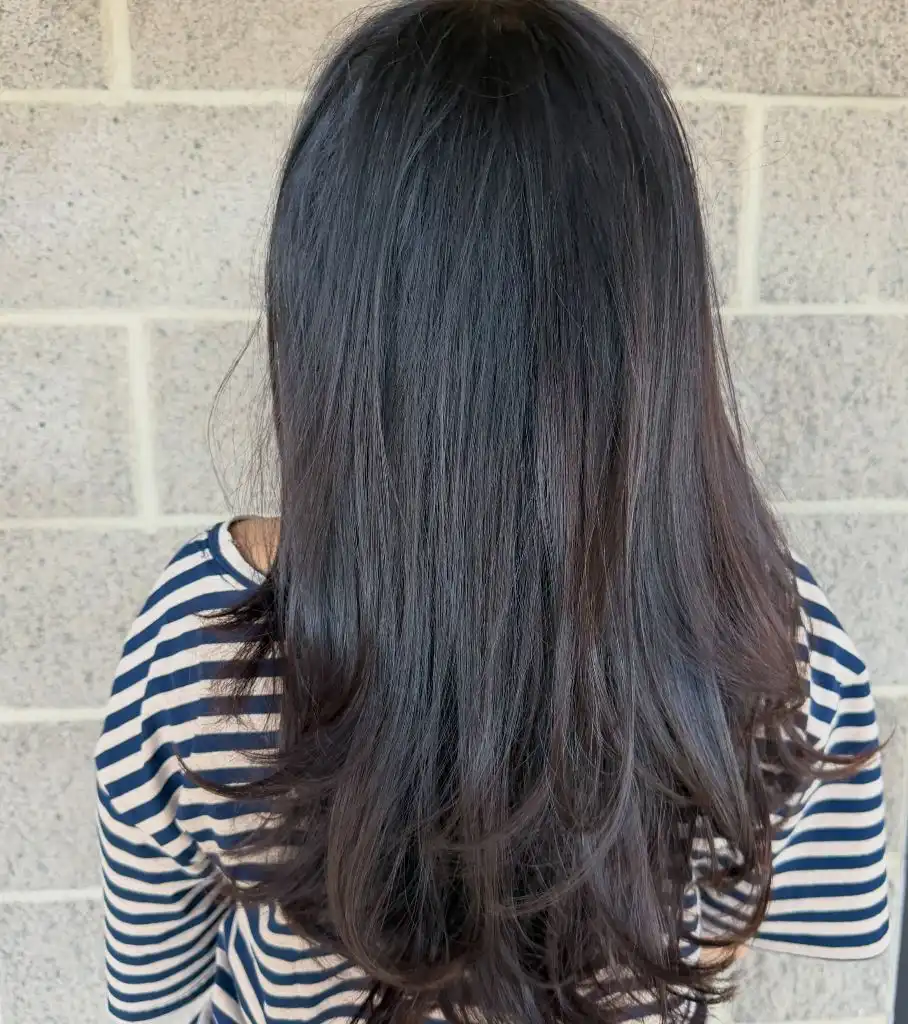
Photo via Instagram
This image is the most understated in the entire set, and that is its purpose. There is no color technique, no blowout styling, and no dramatic layering. The hair simply falls in its natural density with a cool surface tone that reads as genuinely winter-appropriate. The striped top introduces a graphic element that gives the eye something structured below the hair’s soft edge. The gray cinder block wall is the coolest-toned background in this set, and it pushes the hair’s own cool undertones forward. The gentle layers at the ends prevent the blunt, heavy look that very dense hair can default to without them.
This is the most honest photograph here in terms of what daily winter hair actually looks like for many people. It does not photograph as dramatically as a blowout or a color transformation, but the quiet layering and cool tone are doing real work. The principle is that not every winter haircut needs to announce itself, and a simple, well-maintained layered cut on thick dark hair carries its own quiet authority.
20. Blonde Highlights Lift a Voluminous Blowout
The hair is long, styled into a large bouncy blowout with face-framing curtain layers, and colored in a bronde-to-blonde gradient with darker roots and lighter pieces concentrated around the face. The volume is generous and the ends curl inward and outward. The person wears a cream ribbed top and sits in a beige salon chair. Other salon clients are visible in the blurred background.
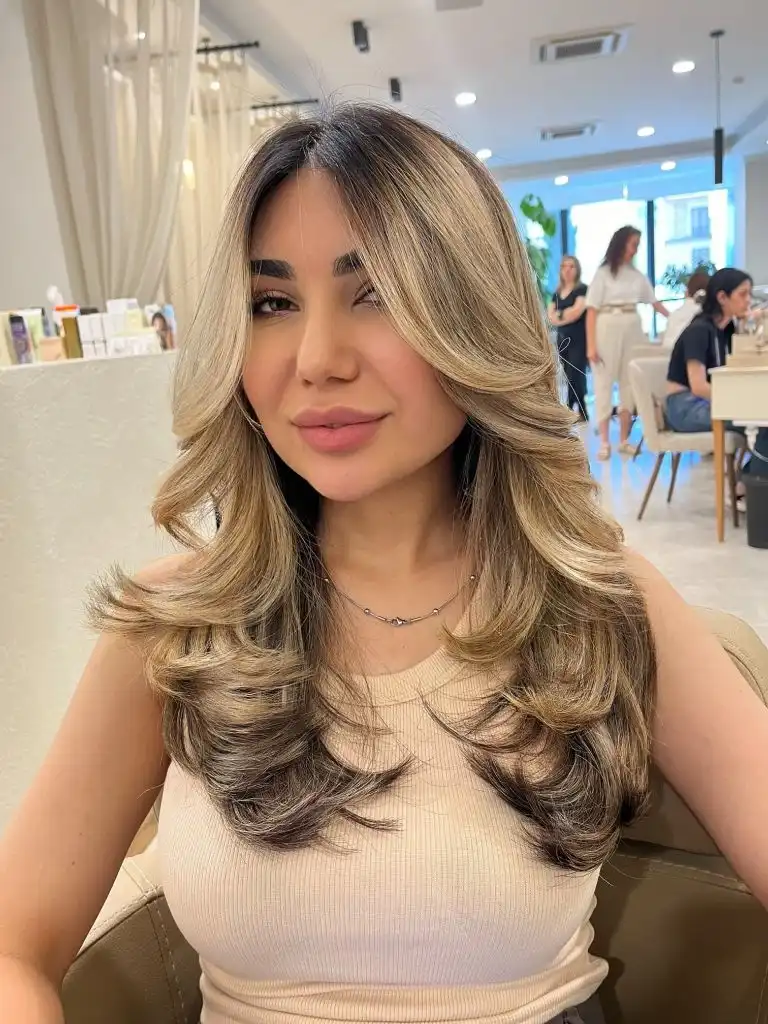
Photo via Instagram
The blonde concentration around the face is a deliberate placement choice that pulls light toward the center of the image. The darker roots and lower sections provide a base that keeps the overall look grounded, while the lighter front pieces lift and open the face. The bouncy ends, curling in multiple directions, create a wide silhouette that embraces volume rather than fighting it. The cream ribbed top blends with the lighter hair tones, which makes the entire upper body read as one warm, cohesive block. The busy salon background, with figures moving in soft focus, confirms this is a real styling context.
The best detail is the face-framing blonde placement, which does more for the proportions than the cut structure alone could achieve. On a plus-size frame, this kind of strategic highlighting around the face draws attention upward and inward while the length and volume below provide balance. The principle is that color placement around the face is a proportion tool as powerful as layering, and the two work best together when neither overwhelms the other.