The phrase business casual dress code has been used to mean so many different things that it can feel like a moving target rather than an actual guideline. You are not wrong if the term leaves you second-guessing a perfectly good outfit. The ambiguity is built in. No one handed you a clear visual standard, and most advice online just lists garments without explaining why they work together. You get to decide what professional ease actually looks like on your frame, and that starts with looking at proportion rather than shopping for permission.
A good decision begins before you reach for any specific piece. The useful question is not whether an item is “allowed” in a business casual setting but whether the combination reads as considered. This article works through twenty real outfits and evaluates each one on four variables: proportion between the top and bottom half, tonal contrast or continuity across the layers, the role of a single deliberate detail that signals intention, and the silhouette balance between structure and softness. When those four elements align, the outfit communicates competence without rigidity, and the dress code stops feeling like a constraint. Each section below corresponds to one photograph, examined on its own terms, so the observations stay grounded in what is actually visible rather than in borrowed assumptions about what business casual should be.
1. A Plaid Vest Sharpens Camel Trousers
The strongest detail here is the dark brown plaid vest worn buttoned over a white crewneck, creating a visible V-shaped frame at the chest. The matching blazer is draped over one shoulder rather than worn, and the camel wide-leg trousers sit at a natural waist, falling in a clean, unbroken line to the shoe. A single bright red glove, held or tucked at the waist, introduces an unexpected color note against the otherwise earth-toned palette.
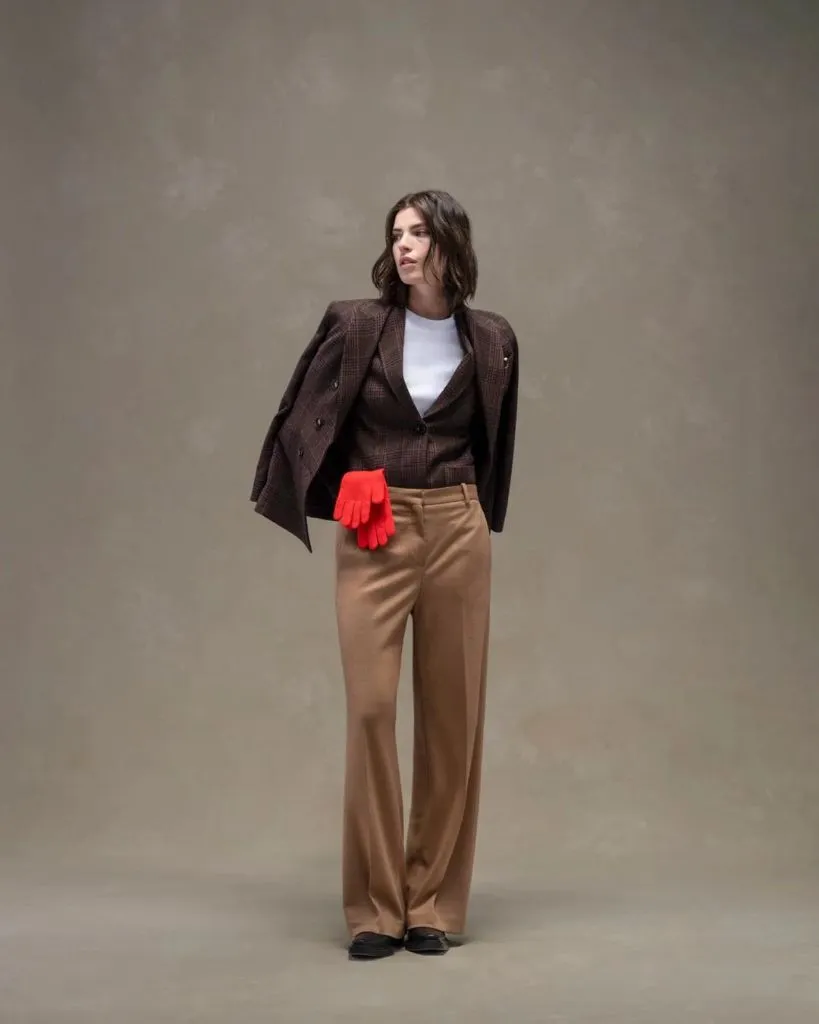
Photo via Instagram
The vest does the structural work that a worn blazer would normally handle, pulling the midsection in and giving the top half a defined shape that counterbalances the volume of the wide trousers below. The brown plaid and the camel sit close enough in tone to feel continuous, but the texture shift between the woven check and the smooth trouser fabric keeps the eye moving. The white tee provides breathing room at the neckline, and the red glove acts as a deliberate punctuation mark, proving the palette was chosen, not defaulted to. The draping of the blazer reads as relaxed authority rather than carelessness, because the rest of the outfit is precise enough to support it.
The appeal is in how one accessory color can reframe an entire neutral outfit as intentional. When every other element stays within a close tonal range, even a small interruption of bright color communicates that the wearer is paying attention to the whole composition rather than assembling pieces by habit.
2. A Blue Lace Top Carries Beach Ease Into Structure
This image sits outside a traditional office context, showing a blue lace sleeveless top paired with light-wash denim cutoff shorts at the beach. The wide-brimmed black hat adds a single structured note above, and the overall feeling is casual and warm-weather. The lace pattern on the top has a scalloped wave texture that echoes the water behind the figure, and the shorts end well above the knee with frayed edges.
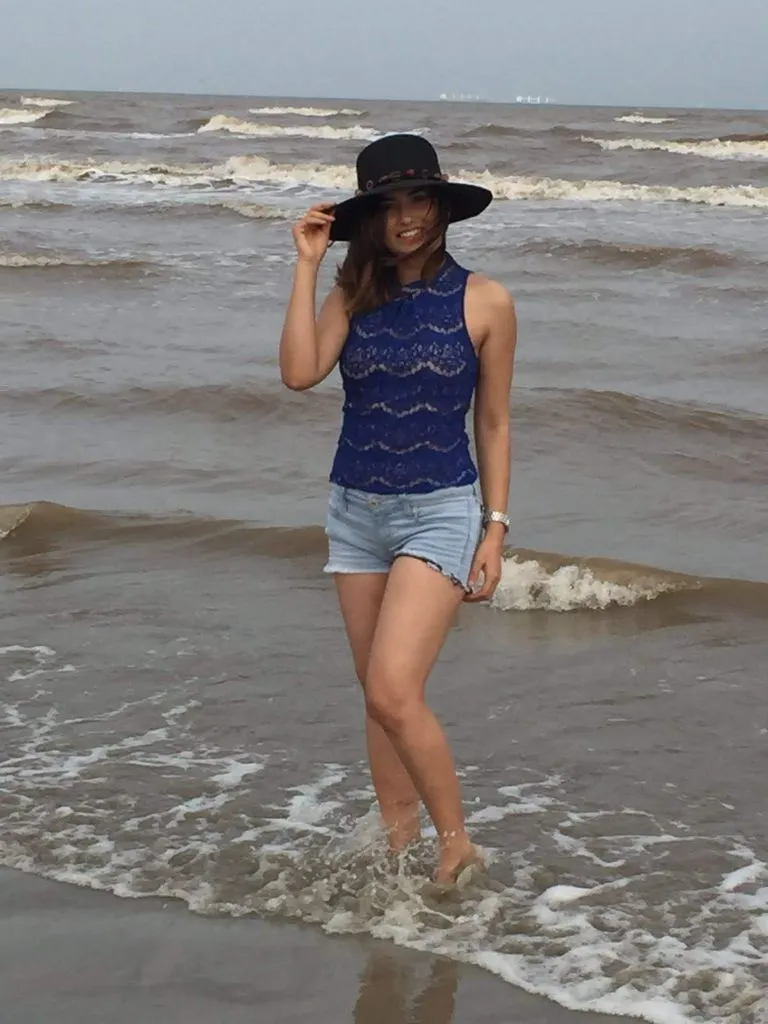
Photo via Instagram
This photograph does not show a business casual outfit in any conventional sense, so the useful reading is about visible texture and proportion rather than workplace application. The lace top demonstrates how a single fabric with visual complexity can anchor a look even when everything else is minimal. The hat grounds the silhouette from above, and the bare legs and sandy setting communicate leisure. What translates to a professional wardrobe context is the principle of one richly textured piece doing the work of multiple layers. A lace blouse with this same wave pattern, tucked into tailored trousers, could carry the same visual weight without any of the casualness.
The effect is that texture alone can signal effort. When a top has enough surface interest on its own, the rest of the outfit does not need to compete, and that restraint is a transferable idea whether the setting is sand or a conference room.
3. Stripes Make a Neutral Knit Feel Intentional
A beige oversized sweater with horizontal black stripes is the only upper-body piece visible here, worn over white wide-leg trousers. The sweater has a relaxed fit with dropped shoulders, and the stripes are spaced unevenly, clustering more tightly near the cuffs and hem. The trousers appear to be a heavier fabric with a smooth finish and a high waist, and the white sneakers at the bottom keep the entire silhouette grounded in the same light register. A small black handbag provides the only dark accent below the waist.
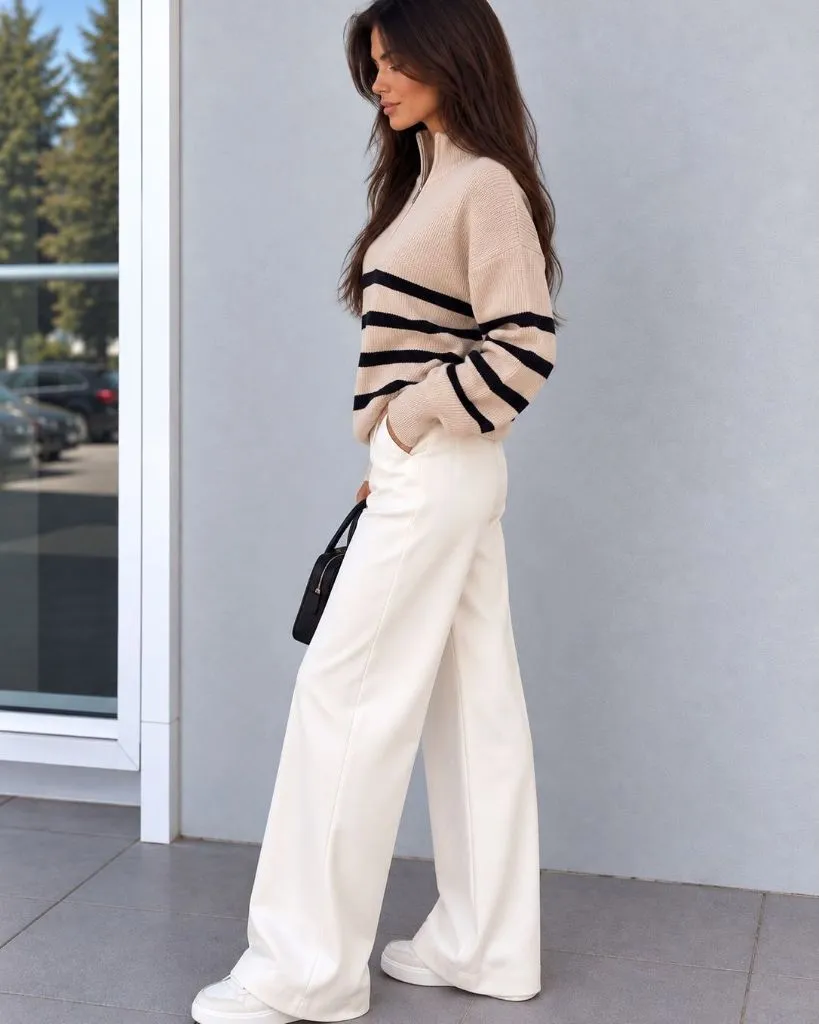
Photo via Instagram
The proportion here is deliberately top-heavy in volume but balanced by the vertical drop of the wide trousers, which creates a continuous column of white from waist to shoe. The stripes do the work of an accessory, adding rhythm to what would otherwise be a flat field of beige. The black in the stripes connects visually to the black bag, creating a quiet dialogue between two opposite ends of the outfit. The sneakers are a deliberate casual styling choice that shifts this from dressed-up to dressed-down without undermining the coherence of the palette.
This is a strong example of business casual dress code logic applied through knitwear rather than tailoring. The outfit reads as considered because the color repetition is clearly not accidental, and the relaxed silhouette still communicates intention through its tonal control.
4. A Monochrome Suit Grounds Itself With White Shoes
Every visible piece here is the same deep teal green, from the single-button blazer to the turtleneck underneath to the ankle-length tapered trousers. The fabric of the blazer appears to be a slightly different weight than the trousers, creating a subtle tonal shift within the same color family. The white slip-on shoes are the only departure from the green, and the setting is outdoor with weathered wood behind the figure, which provides a warm, neutral contrast to the cool green.
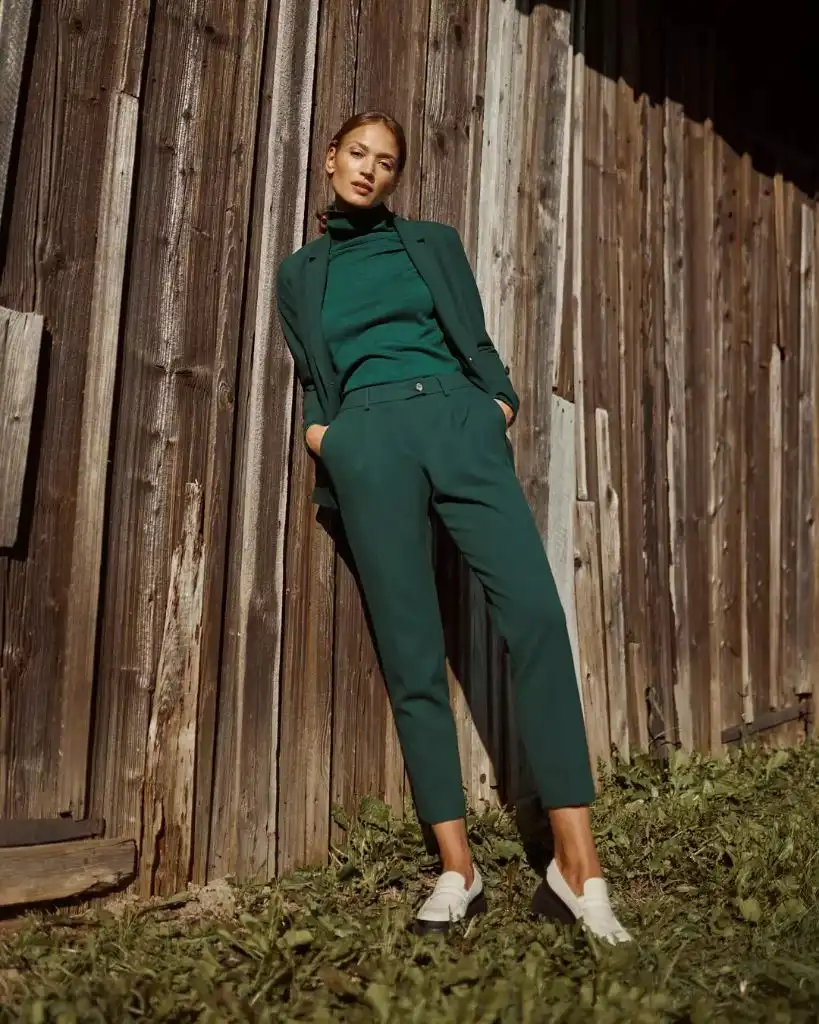
Photo via Instagram
Monochrome suiting can flatten a silhouette if every piece matches too precisely, but here the slight difference in texture between blazer and trouser keeps the eye moving from one surface to the next. The turtleneck eliminates the need for a visible neckline decision, which simplifies the look further. The white shoes break the column at the ankles and prevent the green from reading as a uniform. Against the wood backdrop, the green reads richer and more saturated than it might against a neutral interior wall, which is a useful reminder that context affects how a color communicates.
The strength here is in the commitment to a single hue without losing visual interest. Anyone considering a monochrome approach to workwear can note that a texture variation between jacket and trouser, plus one contrasting shoe, is enough to keep the outfit alive.
5. A Long Black Coat Anchors a Plaid Layer Beneath
A floor-length black wool coat is worn open over a plaid button-up shirt in muted grey and beige tones, paired with black jogger-style trousers that taper and gather at the ankle with an elastic cuff. The shoes are black loafers with a visible gold-toned hardware detail. The overall silhouette is long and vertical, with the coat creating a dark frame on both sides and the plaid shirt providing the only pattern and lighter color visible at the chest.
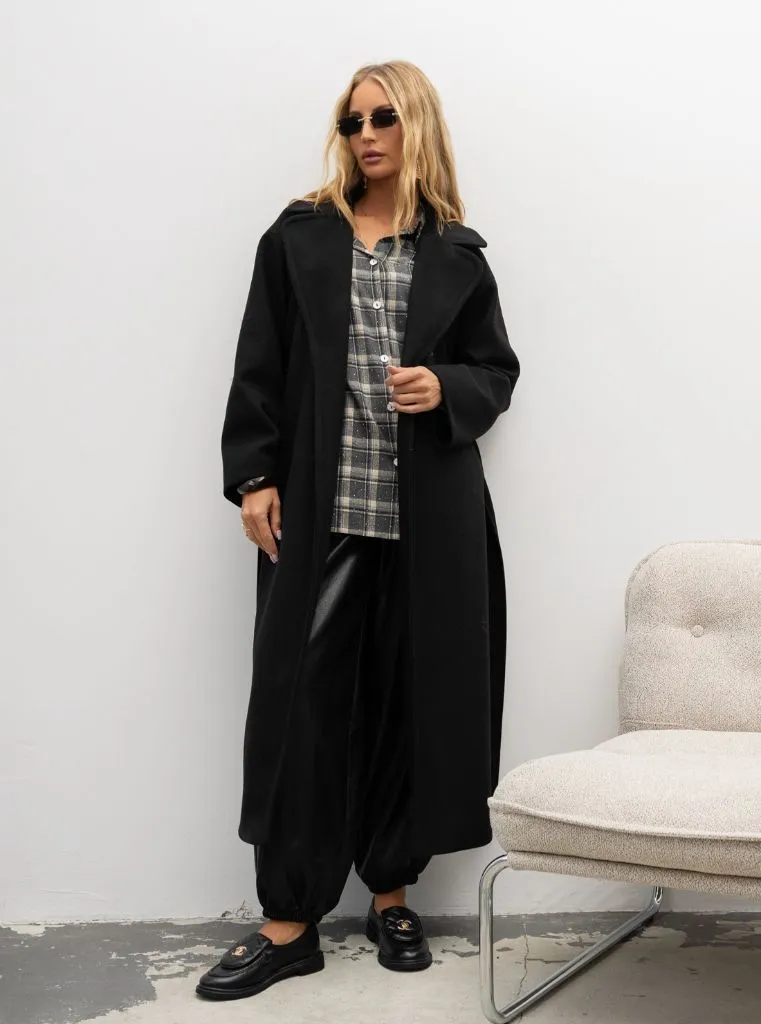
Photo via Instagram
The coat does most of the proportional work, stretching the visual line from shoulder to floor and giving the outfit a sense of deliberate scale. The plaid shirt reads as the personality layer, the one piece that prevents the entire outfit from becoming a monochrome column. The jogger trousers introduce a casual element that could pull the look out of business casual territory for some settings, but the loafers with their hardware and the structured coat above counterbalance that softness. The coat hangs with enough weight to frame the body without cinching it, which keeps the proportion generous rather than restrictive.
I like the way the plaid is sandwiched between two dark layers, visible but not dominant. This framing technique applies broadly: when one patterned piece is held between two solid, structured pieces, it reads as a controlled choice rather than an afterthought.
6. A Beige Trench Opens a Dark Layered Base
A long beige trench coat, unbuttoned and open, falls past the knee over a black crew-neck top and a grey midi skirt or wide-leg trouser with a smooth, almost satin-like finish. Black ankle boots are partially visible, and a black tote bag sits on one shoulder. The figure wears cat-eye sunglasses and small hoop earrings, and the stone architectural background reinforces the neutral, structured feeling of the outfit.
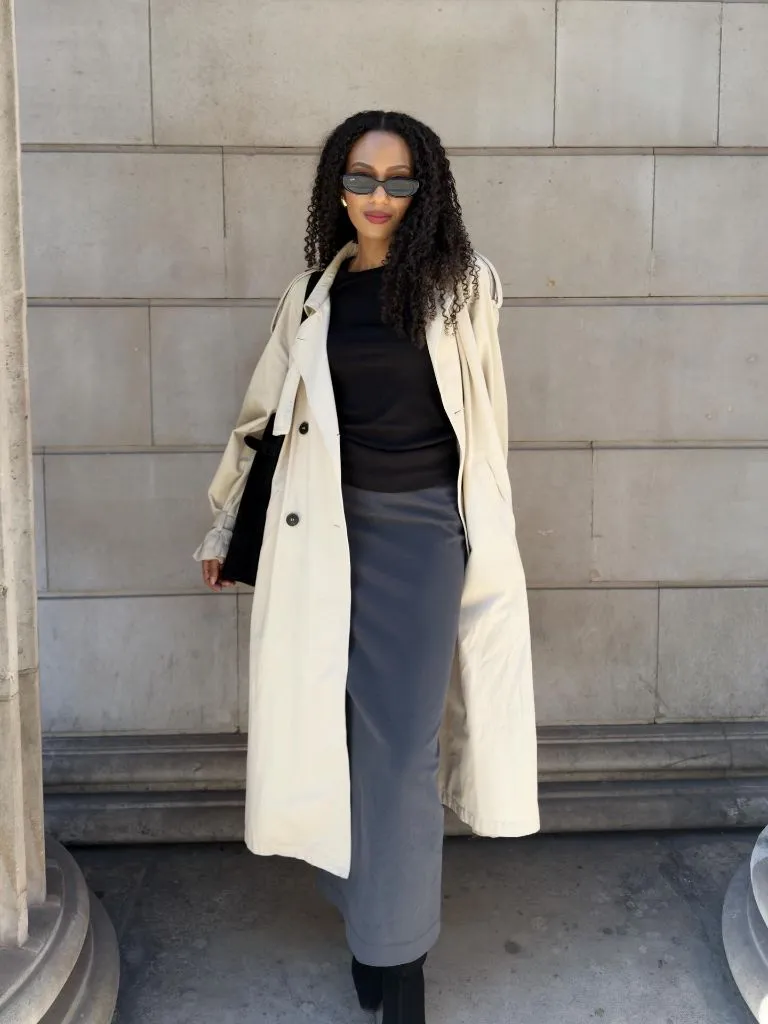
Photo via Instagram
The trench acts as a light-colored frame around a darker interior, which reverses the more common pattern of a dark outer layer over light pieces. This inversion gives the outfit a sense of openness even though the underlying pieces are relatively heavy in tone. The grey bottom layer mediates between the black top and the beige coat, creating a three-step tonal gradient from dark at the center to light at the edges. The boots and bag keep the lower half anchored in black, so the trench does not float away from the rest of the palette. The sunglasses add a polished finishing detail that reads as deliberate rather than decorative.
This is the kind of layered business casual outfit that reads well from a distance because the contrast is organized from inside out. The transferable idea is that a lighter outer layer can make darker base pieces feel less severe without introducing any new color.
7. A Leather Jacket Interrupts White Denim
The visible outfit here is a black leather jacket, slightly oversized, worn over white or off-white straight-leg jeans. The figure is crouching, which changes the way the fabric gathers at the knee and hip. Sunglasses, a brown suede or leather crossbody bag, and white chunky sneakers complete the look. The hair is long, wavy, and blonde, and the setting is a pale stone sidewalk beside an ornate building facade.
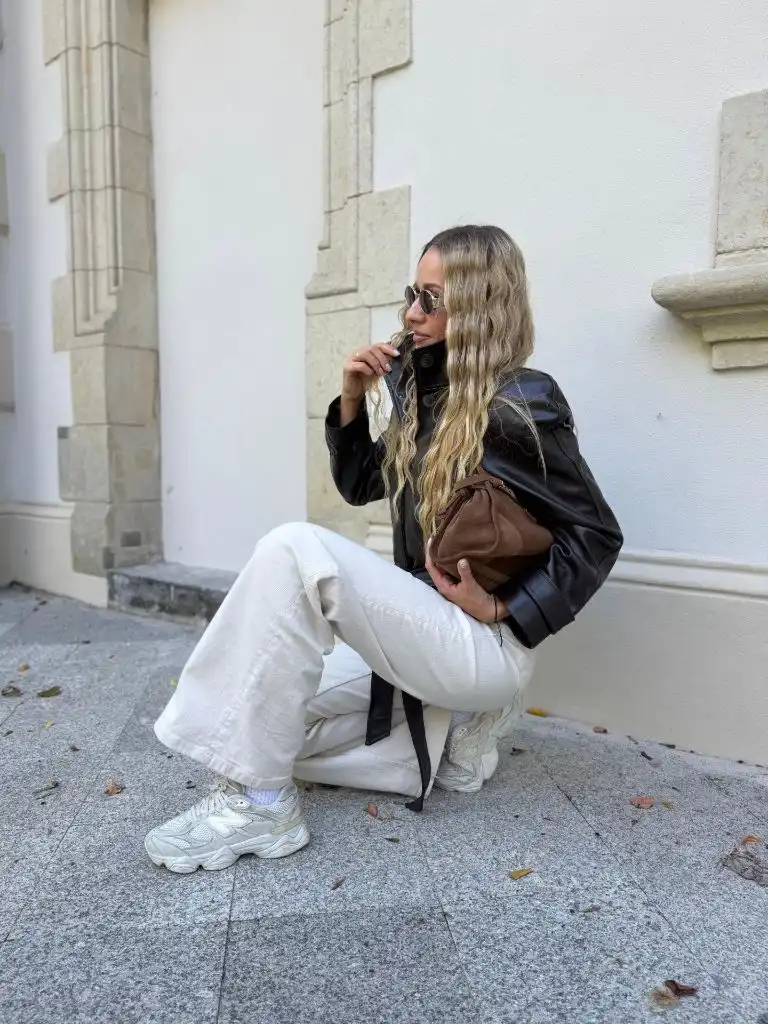
Photo via Instagram
The black-and-white contrast between jacket and jeans is the most immediate visual signal, but the brown bag softens the binary by introducing a third, warmer tone. The chunky sneakers share the white of the jeans, which extends the light column downward and makes the black jacket the clear focal point. The crouching pose compresses the silhouette, so the proportion reading changes here: the jacket appears shorter and the legs more prominent. The leather surface catches light differently than the matte denim, and that material contrast keeps the outfit from feeling flat even in just two main colors.
The best detail is the brown bag acting as a bridge between the two dominant tones. In any high-contrast outfit, one element in a middle-ground tone can prevent the look from reading as too graphic, and that principle holds whether the bridge is a bag, a shoe, or a visible belt.
8. A Pinstripe Suit Balances With a Crocodile Bag
A light grey or lavender-toned pinstripe suit with an oversized blazer and matching wide-leg trousers forms the base here. The suit is worn with what appears to be a brown or burgundy scarf or thin tie at the neckline. The most prominent accessory is a structured crocodile-embossed handbag in deep burgundy, held at the forearm. The shoes are two-toned, appearing to be brown-and-white sneaker-style shoes, and dark sunglasses complete the look. The setting is a European-style town square with a fountain and colorful facades behind.
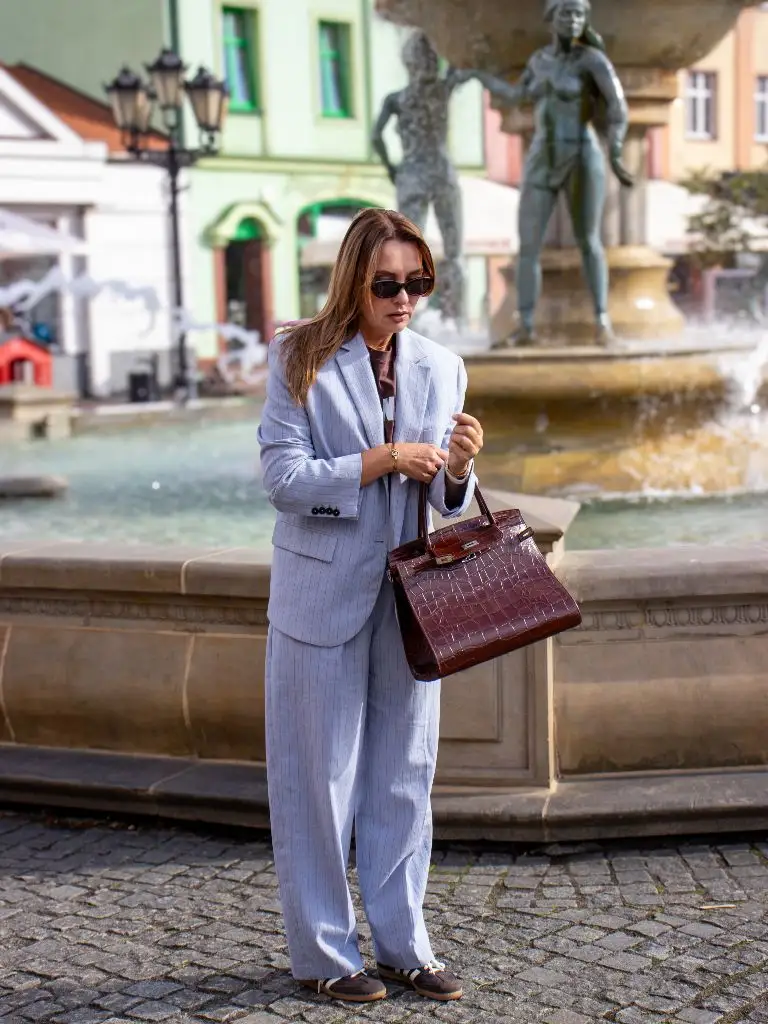
Photo via Instagram
The oversized suit silhouette could read as shapeless, but the pinstripe pattern gives the fabric a visual vertical line that elongates the figure even with the extra width. The burgundy bag is the richest color in the frame and pulls the eye to the center of the body, acting as a weight that anchors the lighter suit. The two-tone shoes echo the contrast between light and dark that the bag introduces, and the overall effect is a palette that shifts from cool grey to warm burgundy without any jarring break. The suit jacket sits below the hip, which pushes the visual waist lower and makes the trouser line appear longer.
The value is in how one deeply saturated accessory can give direction to an otherwise quiet outfit. A light suit in business casual territory can feel underpowered without a darker anchor, and a bag in a contrasting, richer tone is one of the simplest ways to solve that.
9. Wide Khaki Trousers Lift a Leather Jacket Pairing
The standout proportion here is the extremely wide, pleated khaki trouser worn at a high waist with a thin black belt. A burgundy or chocolate leather jacket is worn open over a white tank or camisole, and a small structured vanity-style bag in deep burgundy is held in one hand. The figure has dark curly hair and is standing in front of a glass storefront with warm lighting visible inside. The overall palette is warm neutrals accented by the rich leather tones.
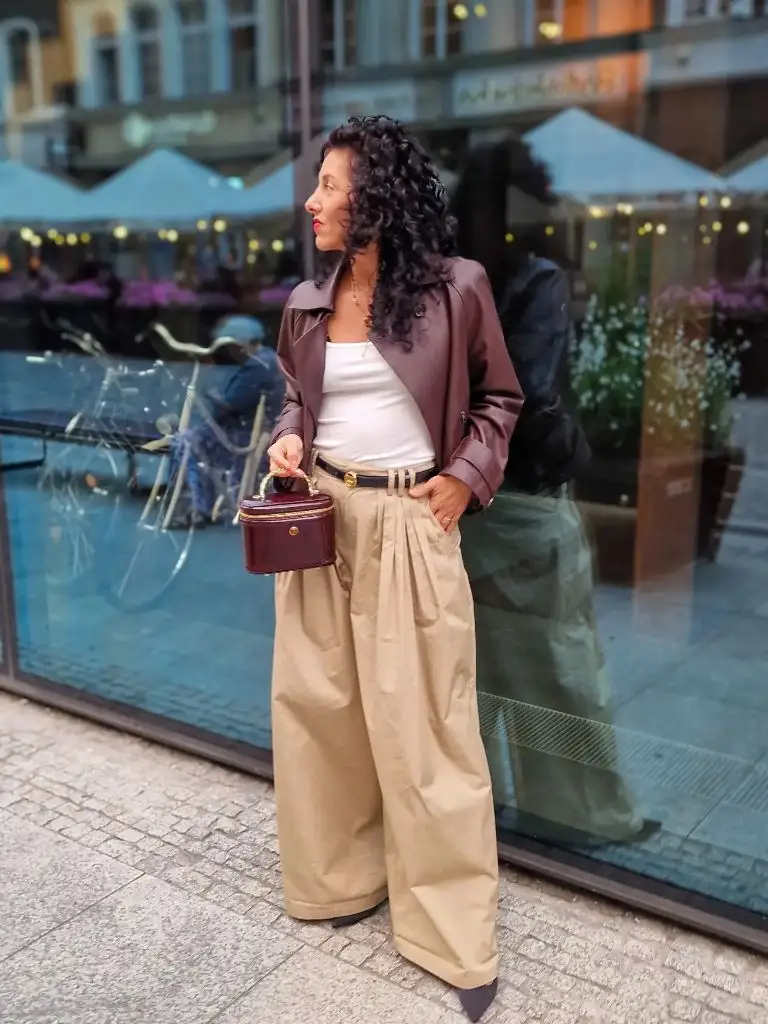
Photo via Instagram
The wide trouser is the volume piece, and everything above the belt is fitted or semi-fitted, which creates a clear top-to-bottom proportion shift. The leather jacket provides structure at the shoulder while the trousers provide movement and width below, and the thin black belt draws a visible line between the two zones. The white tank keeps the chest area light and prevents the leather from making the top half feel too heavy. The vanity bag matches the jacket closely enough in color to read as a set, and that repetition strengthens the outfit’s coherence even though the pieces are different textures entirely.
The appeal is in the volume being placed deliberately at the bottom rather than distributed evenly. When wide trousers carry the drama and the top half stays close to the body, the silhouette reads as architectural and the business casual register stays intact because the structure is visible, just relocated.
10. Tweed With Gold Buttons Carries a Full Suit Forward
The image shows a cream or ivory tweed jacket with a collarless neckline, gold dome-shaped buttons down the center front, and fringe trim at the pockets, cuffs, and hem. Matching tweed trousers are partially visible at the waist. The model wears large gold hoop earrings, and her nails appear to be a soft, neutral finish. The fabric has a visible boucle texture with tiny flecks throughout, and the jacket sits at the natural waist with a slightly nipped shape.
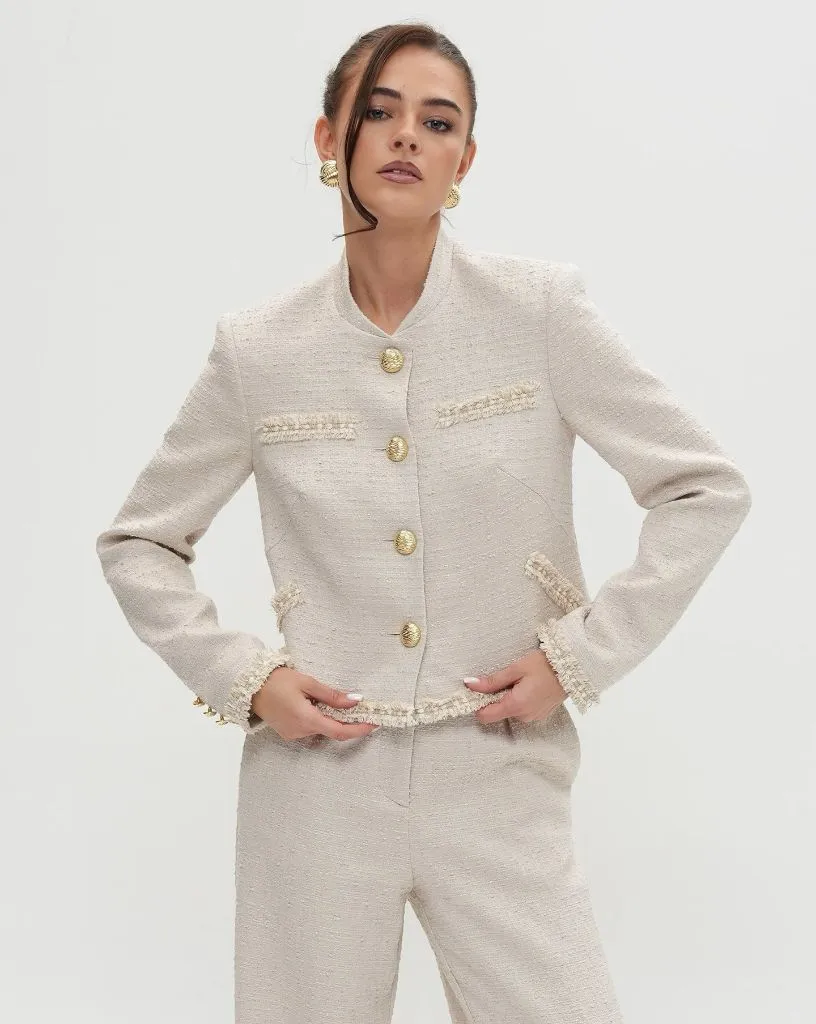
Photo via Instagram
The gold buttons and fringe trim do the decorative work that jewelry would normally handle, which means the earrings can be simple and round without the outfit feeling under-accessorized. The collarless neckline opens the chest area and gives the face more visual space than a lapel would, and the nipped waist prevents the boxy tweed texture from hiding the body’s shape. This is one of the more formally tailored approaches to business casual in this set, leaning closer to the structured end of the spectrum while the boucle texture keeps it from reading as corporate in a rigid way.
This is a suit that signals formality through fabric quality rather than color contrast. The transferable principle is that when the material itself is visually rich, the color can stay quiet and the silhouette can stay close to the body without the outfit needing any additional accent.
11. A Brown Shirt With a Draped Knit Reads as Warm Authority
A camel or tobacco-toned button-down shirt is worn untucked over medium-wash blue jeans, and a dark brown ribbed knit sweater is draped over the shoulders like a scarf, hanging asymmetrically across the chest. The jeans appear to be a relaxed straight or wide-leg cut. The setting is a stone balcony or terrace with an arched doorway behind, and the light falls from the side, catching the cotton shirt surface.
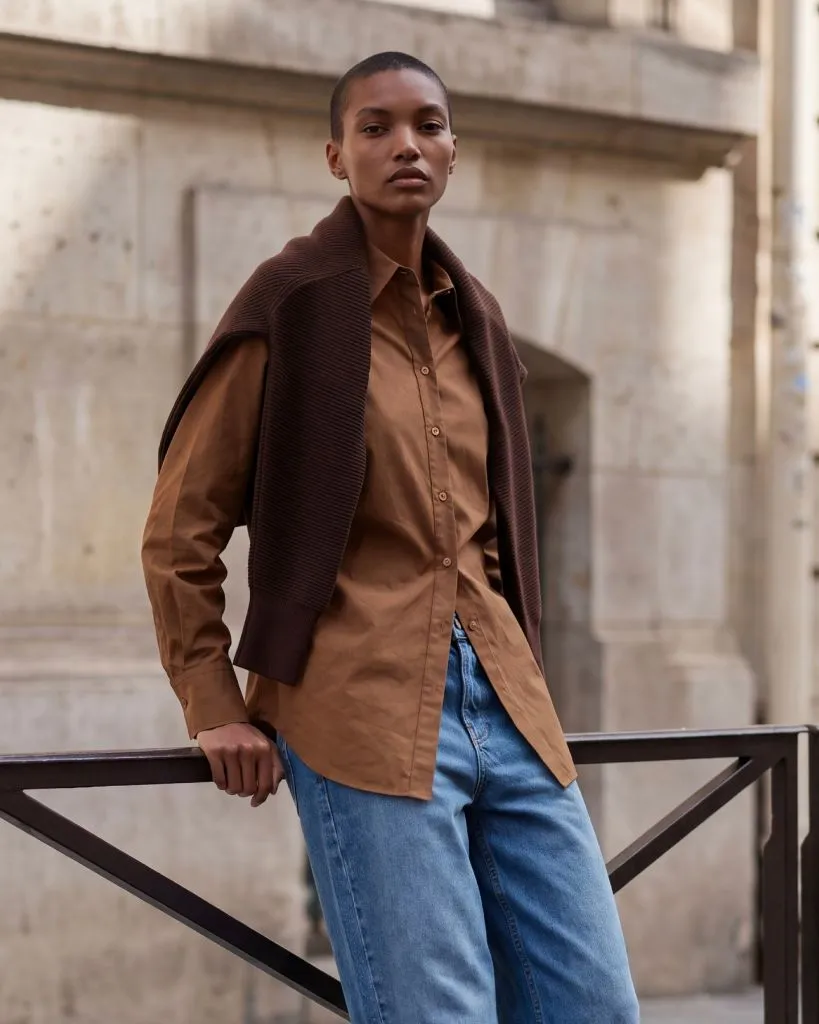
Photo via Instagram
The draped sweater adds a layer of dimension across the upper body without adding any bulk, and because it is darker than the shirt, it creates a visual border that frames the chest and shoulders. The tobacco shirt and brown knit are close in hue but separated by texture and weight, which makes the top half feel layered rather than flat. The blue jeans introduce the only cool tone, and they sit far enough below the warm layers to feel like a base rather than a competing element. The stone backdrop reinforces the warm palette and makes the blue denim stand out more than it might against a modern white wall.
What stands out most is how the drape replaces a blazer without losing the sense of a structured shoulder line. For anyone building a business casual wardrobe around warm neutral tones, this technique of draping a knit over a collared shirt achieves formality through layering gesture rather than through a traditional jacket.
12. An All-Black Suit Relies on Pointed Shoes for Direction
The entire outfit is black: an oversized double-breasted blazer cinched slightly at the waist with a belt, matching wide-leg trousers that break over the shoes, and black pointed-toe mules or flats with a visible low heel. Sunglasses rest on the face, and a black leather tote sits on the concrete bench beside the figure. A white coffee cup provides the only non-black element in the frame. The setting is a minimal courtyard with concrete surfaces and wooden slat benches.
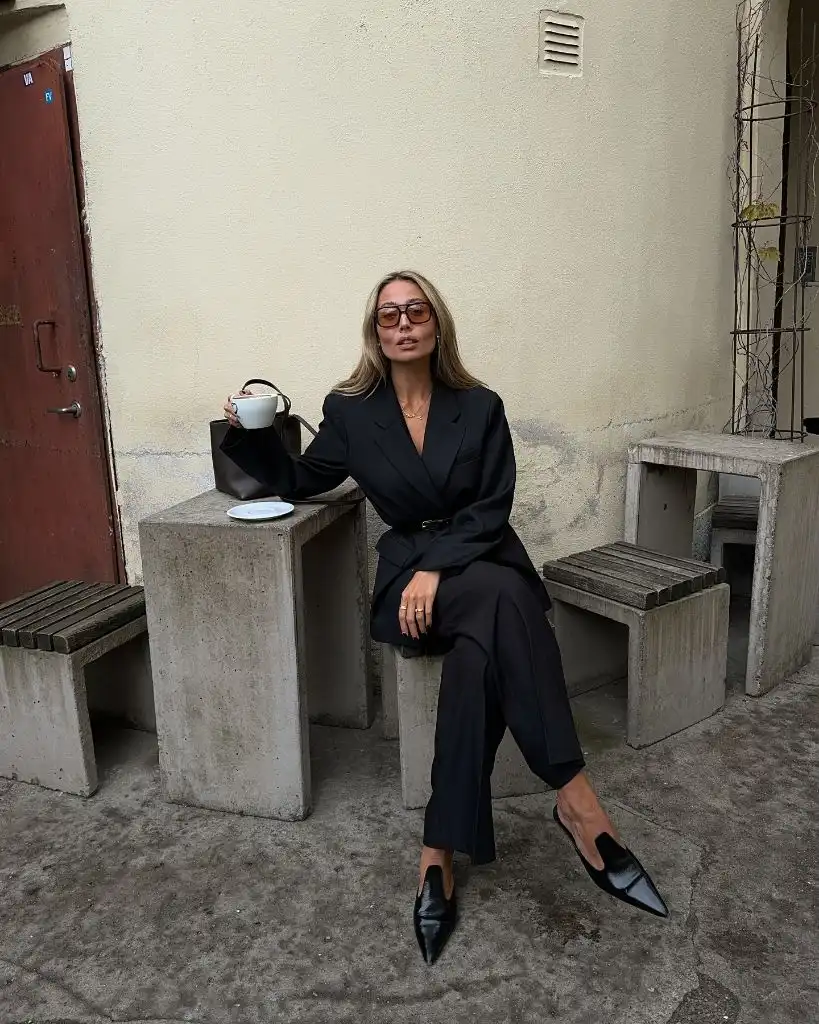
Photo via Instagram
When every piece shares the same color, shape becomes the primary communicator. The belt at the waist creates the only horizontal interruption in an otherwise vertical silhouette, and the pointed shoes direct the eye outward at the base, preventing the wide trousers from making the bottom half look heavy. The oversized blazer shoulders are wider than the body, and that extra width at the top is mirrored by the trouser width at the bottom, creating a subtle hourglass through proportion rather than through fit. The concrete and wood setting echoes the tonal restraint of the outfit itself, which makes the white cup an accidental focal point.
The strength here is that an all-black outfit still communicates range when the silhouette has clear points of tension. A cinched waist against oversized shoulders, a wide leg against a pointed shoe: these opposing shapes are what give a monochrome business casual look its visual energy.
13. A White Blazer Refines a Lavender Lace Skirt
A white cropped blazer with a clean, structured shoulder line is worn over a white ribbed turtleneck, and below the waist, a lavender lace pencil skirt extends to just below the knee. The lace pattern is a floral motif with visible cutout detailing near the hemline. Cream or off-white pointed-toe pumps continue the light palette downward, and a small white handbag with a chain strap is carried in one hand. The setting is a modern urban sidewalk with dark-framed glass doors behind.
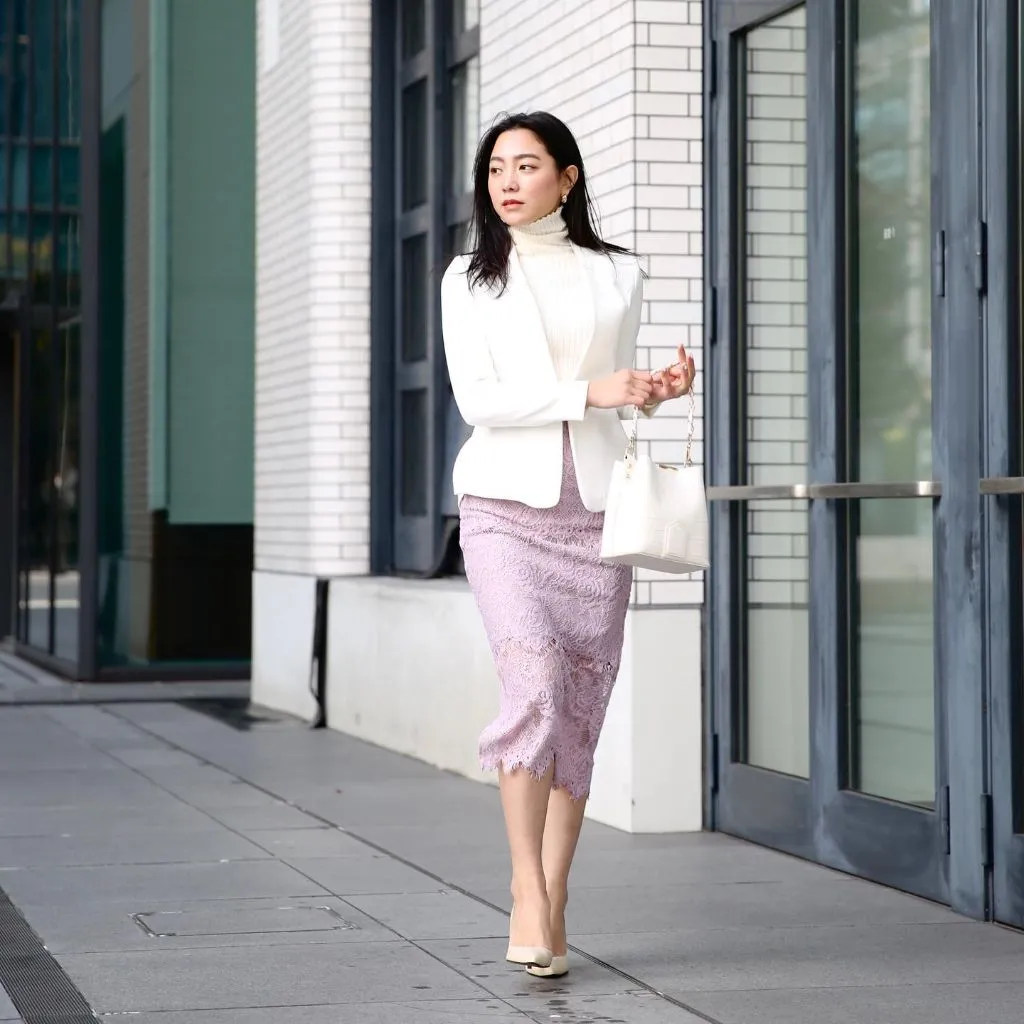
Photo via Instagram
The lavender skirt is the only color element, and because the entire top half and the shoes are white or cream, the eye is drawn directly to the midsection where the lace introduces both color and texture simultaneously. The blazer sits just at the waist, which frames the beginning of the skirt neatly and creates a clean boundary between the structured top and the decorative bottom. The turtleneck fills the neckline completely, so there is no bare skin between the chin and the jacket lapel, which keeps the formality level high even though the lace might otherwise read as evening-oriented. The pencil silhouette holds the skirt close to the body, preventing the lace from introducing too much visual movement.
This is a strong demonstration of how one color piece placed in the middle of an otherwise neutral outfit can carry the entire composition. The principle is that lace in a business casual context works when the surrounding pieces are structured and tonally quiet enough to let the texture speak without competition.
14. Black Asymmetry Changes a Wide-Leg Denim Look
A black blazer with an asymmetric closure, buttoning at the shoulder rather than the center front, is worn over what appears to be a matching black crewneck. Below, wide-leg faded black or dark grey jeans with visible whiskering and a baggy silhouette fall to the floor. The shoes are pointed-toe with metallic hardware, and a black leather shoulder bag with a visible strap ring sits on one shoulder. The background is a flat grey studio setting.
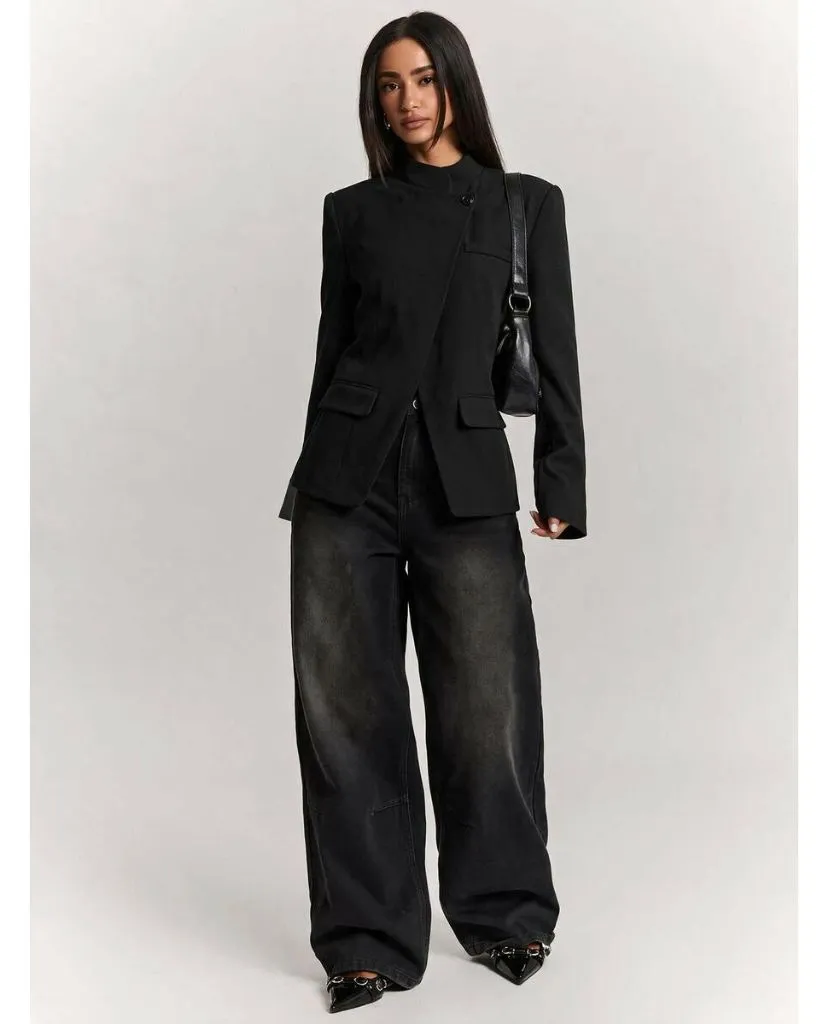
Photo via Instagram
The asymmetric blazer closure is the detail that lifts this outfit out of basic territory, changing the visual line across the chest and creating a diagonal that the eye follows from shoulder to waist. The wide jeans add significant volume below, and the contrast between the structured, fitted blazer and the loose, faded denim creates tension between formal and casual registers within a single outfit. The pointed shoes with hardware push the formality back up at the base, and the bag stays close to the body rather than introducing additional width. The fading on the jeans adds a lived-in quality that prevents the all-dark palette from reading as too uniform.
The best detail is the diagonal closure, which introduces architectural interest without any color change. In a business casual dress code context, the cut of a blazer can do more to signal intention than the color or fabric, and an asymmetric line is one way to communicate that a familiar piece has been deliberately selected.
15. A Red Satin Shirt Anchors a Navy Maxi Silhouette
A deep red satin button-down shirt with rolled three-quarter sleeves is tucked into a high-waisted navy maxi skirt or very wide trouser with visible pleats. A thin black belt with a gold buckle, which appears to be a recognizable hardware style, sits at the waist. The figure holds a pair of sunglasses hooked into the shirt front and carries a structured black tote. The setting is a light, modern interior, and the photograph is a mirror selfie with the brand watermark HAGOO visible in the corner.
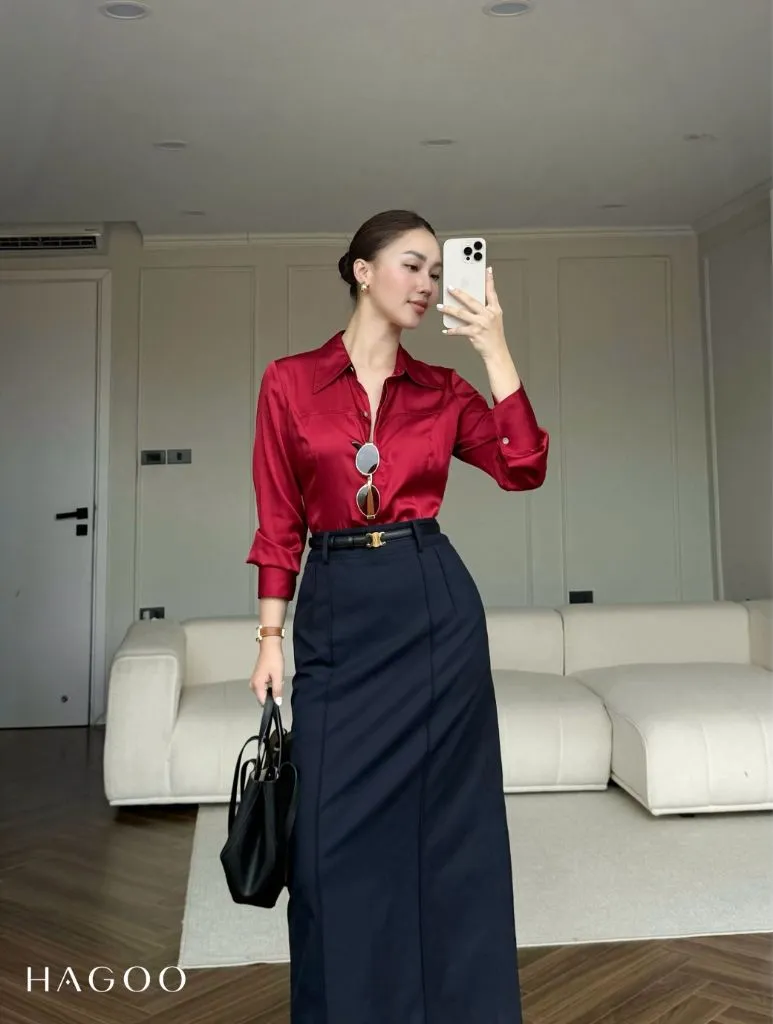
Photo via Instagram
The red satin and navy pairing works because both colors are saturated but not bright, sitting in a rich, deep register that reads more serious than a primary red-and-blue combination would. The satin surface of the shirt catches light and adds a sense of polish that a cotton shirt in the same color would not deliver. The belt creates a sharp division between the two halves, and the gold hardware provides a metallic accent that is small enough to feel incidental rather than decorative. The tucked-in shirt with a belted waist is one of the most reliable proportion strategies in business casual because it establishes a clear visual center.
The effect is formality achieved through color depth and fabric sheen rather than through tailoring or layers. A satin blouse in a deep, muted color is one of the most efficient ways to move a bottom-heavy silhouette into professional territory without adding structure above the waist.
16. A Burgundy Knit Grounds Striped Wide Trousers
A fitted burgundy or maroon long-sleeve crewneck is worn with navy-and-white vertically striped wide-leg trousers that sit at a high waist. A thin belt with subtle hardware is partially visible at the waistband. The figure wears sunglasses, has her hair in a high bun, and carries a crossbody bag on a chain strap. The setting is an alpine path with green mountain slopes and a wooden structure in the background, and the HAGOO watermark appears again.
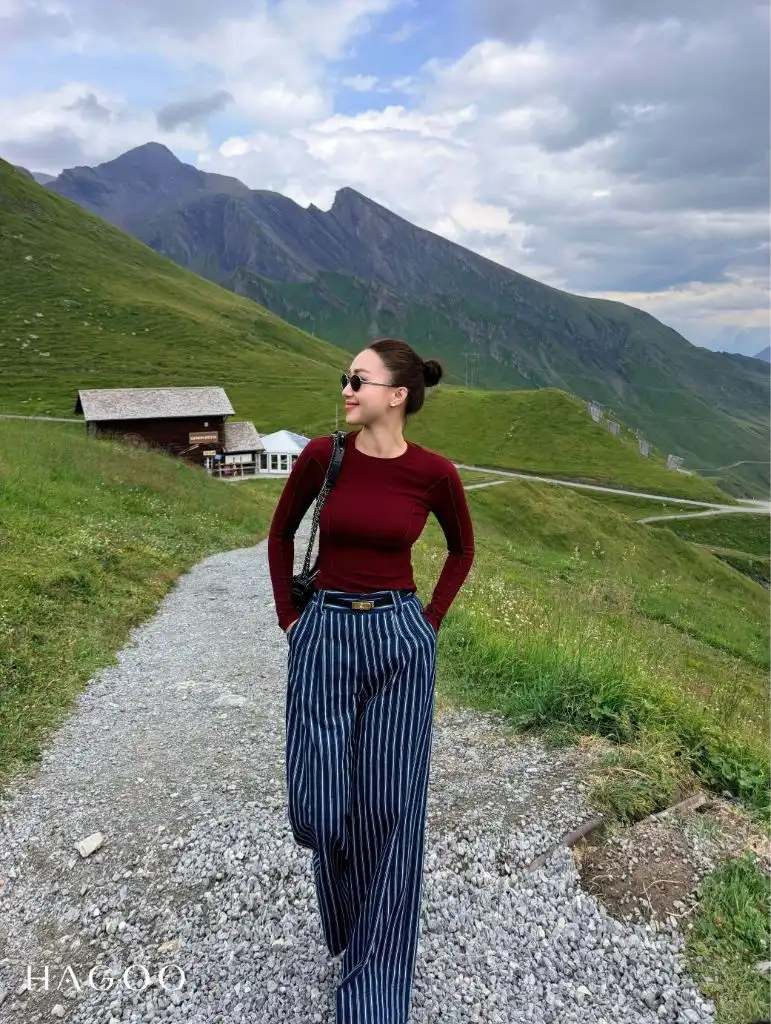
Photo via Instagram
The vertical stripes on the trousers elongate the lower body, and because the top is solid and fitted, the visual weight and pattern interest are concentrated below the waist. The burgundy and navy are close enough in depth to feel coordinated without matching, and the white stripe adds just enough contrast to prevent the bottom half from reading as dark and heavy. The alpine setting is incidental to the outfit itself, but the green landscape behind does make the burgundy and navy feel warmer by contrast. The high waist placement combined with the fitted top creates a clear waistline that organizes the proportions efficiently.
This is a look where the trousers carry the personality and the top stays supportive. The transferable principle for business casual dressing is that when one piece has strong pattern or movement, the piece closest to it should be solid and close-fitting, giving the pattern room to communicate without competition.
17. An Oversized White Tee Quietens Beige Volume Below
A loose, oversized white V-neck tee with dropped shoulders and pushed-up sleeves is worn over what appears to be a beige or oatmeal maxi skirt or very wide palazzo trousers. A cream or beige cardigan or sweater is tied at the waist, and a pale yellow or beige soft shoulder bag hangs on one side. A pendant on a long black cord and large sunglasses pushed up onto the head are the visible accessories. The setting is a European-style cobblestone street captured in a mirror selfie.
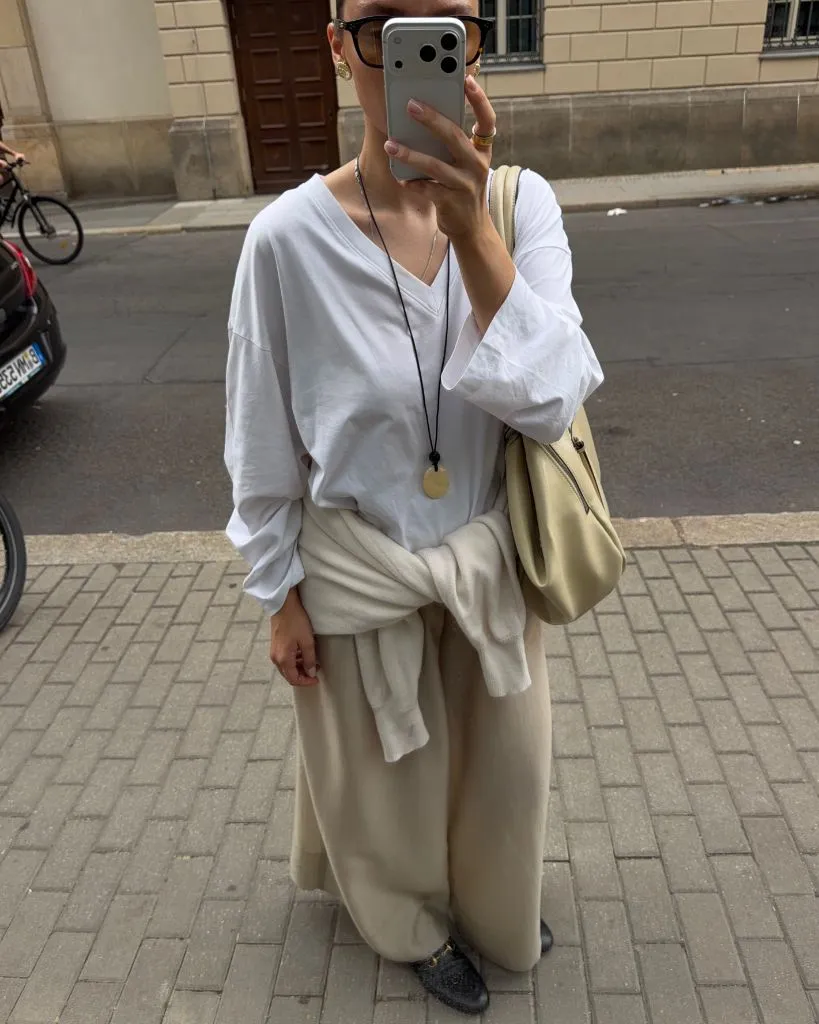
Photo via Instagram
This outfit sits at the most relaxed edge of what could read as business casual, and honestly, the image supports a reading more toward weekend ease than workplace dressing. The volume is distributed evenly from shoulder to floor, with no belt or tuck creating a waist definition. The tied sweater adds a slight gathering at the hip but does not create a structured waistline. The all-neutral, all-light palette keeps the look calm and unified, and the pendant adds a single vertical line down the center that subtly lengthens the torso. The soft bag in a matching tone refuses to introduce any contrast.
The value is in the tonal discipline. Every visible element stays within a narrow band of white to oatmeal, and that commitment to a single register is what keeps an otherwise very relaxed silhouette from looking unfinished. For a more office-appropriate version, replacing the tee with a structured blouse in the same color range would shift the register without breaking the palette.
18. An All-Black Suit With Cropped Trousers Sharpens the Ankle
A black double-breasted oversized blazer is worn with matching black cropped trousers that end above the ankle, and dark grey or black pointed-toe pumps complete the lower line. A black leather bag with visible studs and buckle hardware, in a style that reads as a recognizable moto-inspired design, hangs from one shoulder. The hair is pulled back, and gold hoop earrings are partially visible. The setting is a European-style street with light stone buildings and cobblestone pavement.
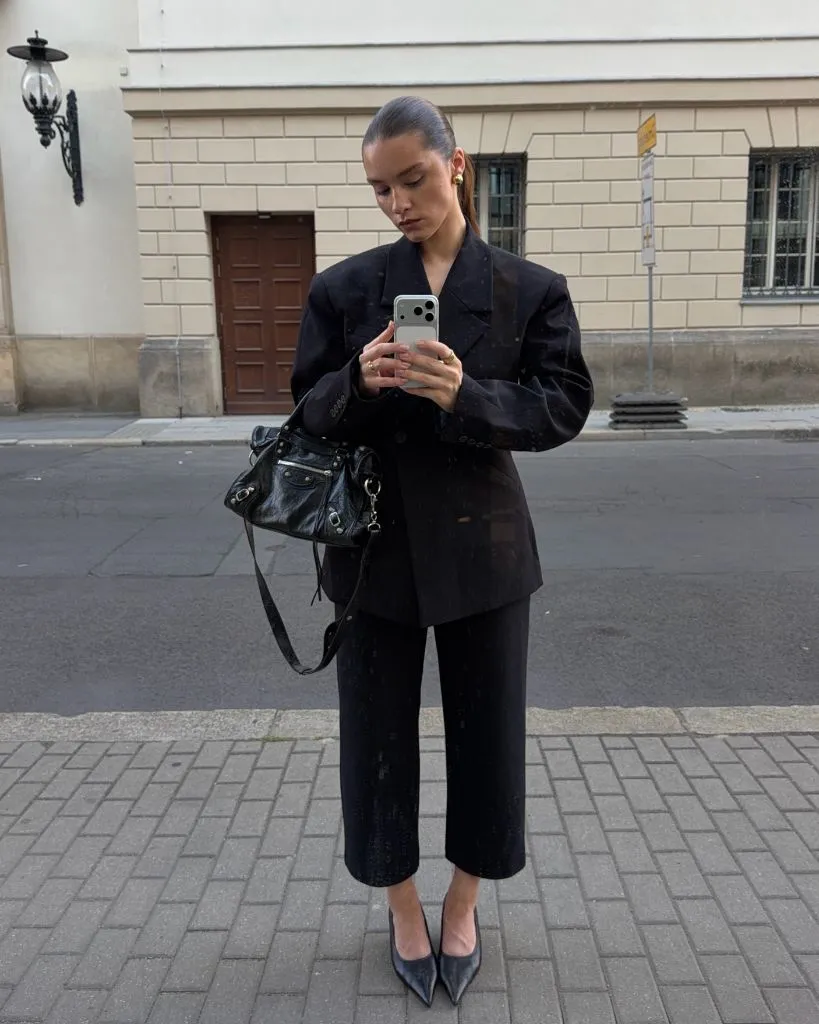
Photo via Instagram
The cropped trouser length is the proportion decision that defines this outfit, exposing a strip of ankle that breaks the vertical black column and gives the silhouette a stopping point before the shoe. Without that ankle reveal, the blazer-and-trouser combination could read as a conventional suit, but the crop adds a modern, slightly abbreviated quality that shifts the formality register toward business casual. The pointed pumps continue the dark tone but their sharp shape adds directional energy at the base. The studded bag introduces texture and a slight edge that contrasts with the smooth suiting fabric, and the gold earrings repeat the metallic note from the bag hardware at the opposite end of the body.
What stands out most is how a small length adjustment at the hem changes the entire character of a suit. The principle is worth noting for anyone working within a business casual dress code framework: cropping the trouser even slightly above the ankle introduces enough informality to move a structured suit into that middle register.
19. A Cream Knit Softens Beige Wide Trousers to a Whisper
A cream or ivory loose-knit sweater with a slightly asymmetric or cowl-like neckline and wide sleeves is worn over beige or sand-toned wide-leg trousers. The trousers have a smooth, fluid drape and appear to be a lighter-weight fabric. Black ballet flats or loafers are visible at the base, and a small patterned bag in dark tones hangs from one hand. Large black sunglasses and the phone taking the mirror selfie partially obscure the face. The setting is a European-style street with parked cars behind.
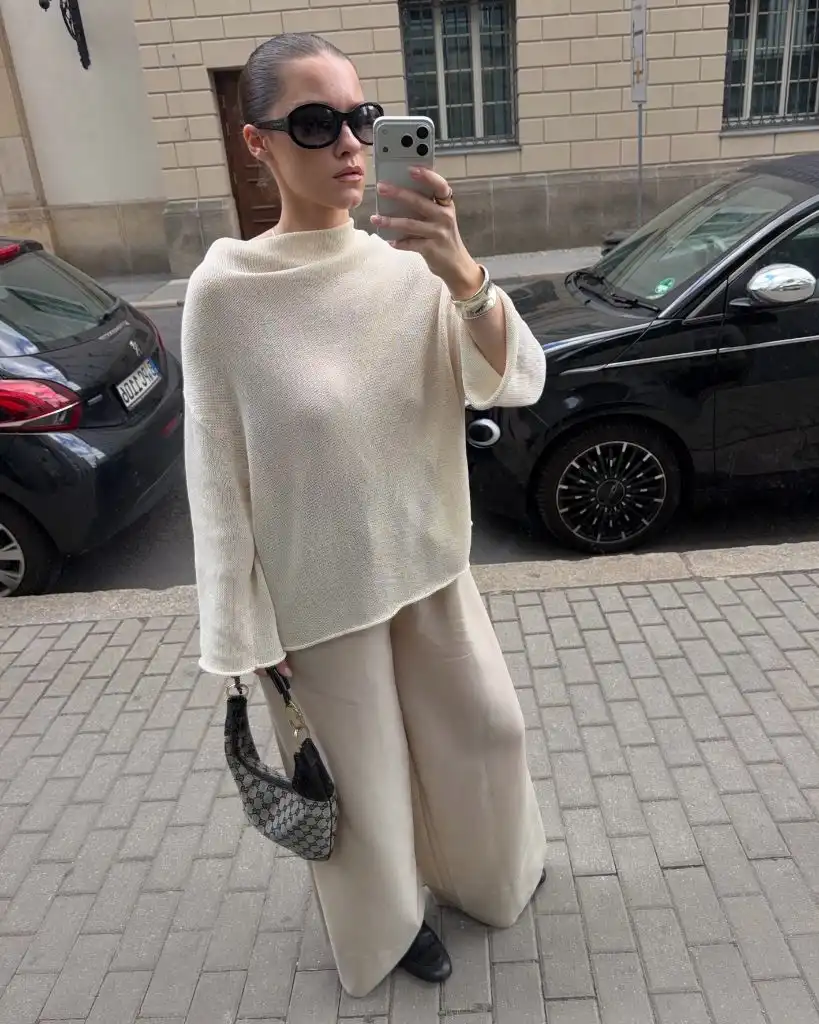
Photo via Instagram
The palette here is almost a single tone split into two closely related shades, with the cream knit and beige trousers differing just enough to register as separate pieces rather than a matched set. The knit texture adds surface variation to the top half, while the smooth trouser keeps the bottom half clean. The black shoes and dark bag anchor the look at the base and prevent the light palette from dissipating entirely. The loose knit has enough structure through its neckline shape to avoid looking shapeless, and the wide trouser mirrors the volume of the sweater, creating a consistent, generous silhouette from top to bottom.
The appeal is in how little contrast is needed when the textures are doing the differentiation. This outfit suggests that a near-tonal outfit built on soft neutrals still reads as intentional when the fabric surfaces vary enough to keep the eye interested across the body.
20. A Belted Black Cardigan Frames a White Collar
A black knit cardigan or jacket with a V-neckline, button front, and a visible tie belt at the waist is worn over a white collared shirt, with the collar and a hint of the shirt front visible at the neckline. Matching black wide-leg trousers fall to the floor, and the shoes appear to be black-and-white flats. A structured black rectangular handbag is held in front, and the figure wears cat-eye glasses and small hoop earrings. The setting is a garden courtyard with green plants and white flowers behind.
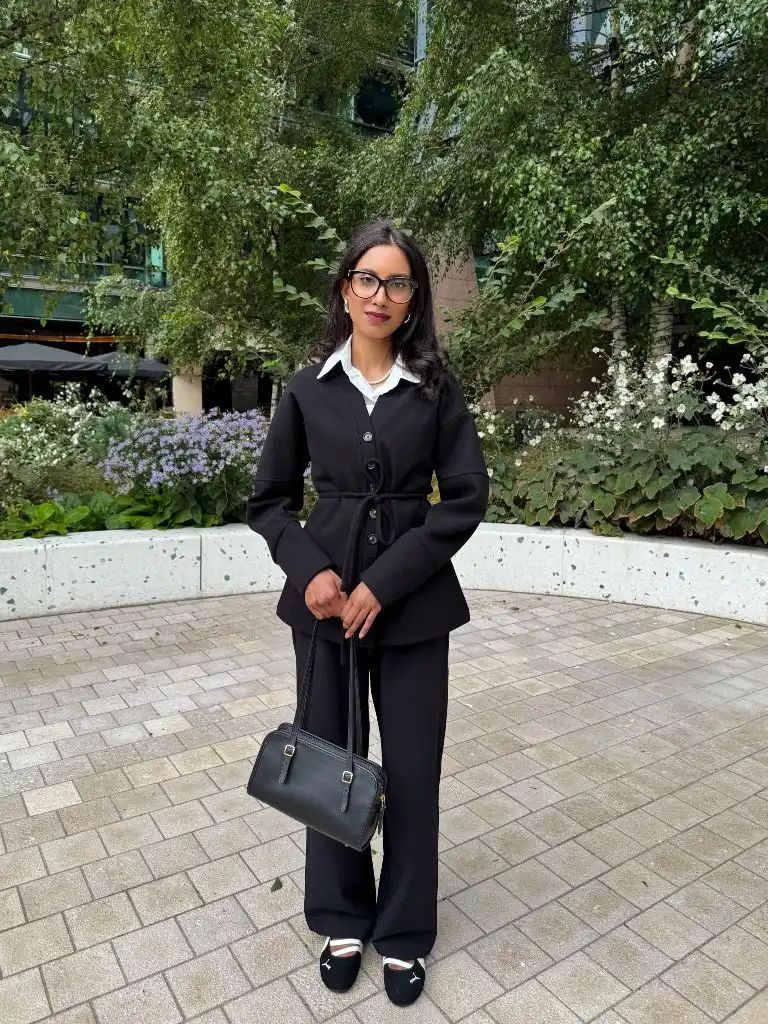
Photo via Instagram
The white collar is the single lightest element in the frame, and because it sits directly beneath the face, it draws attention upward and creates a bright focal point within the dark palette. The belted waist gives the cardigan a defined shape that a standard open cardigan would not have, and that structure is what moves this from knitwear casualness into business casual territory. The wide trousers maintain the generous proportion below, and the cat-eye glasses add a geometric accent near the face that echoes the structured lines of the collar and belt. The garden backdrop softens the overall mood without making the outfit feel less intentional.
This is a layering approach that earns its formality through one visible detail rather than through the weight of the pieces themselves. The white collar does the same work that a structured blazer shoulder might, signaling precision at the point where the eye naturally rests, and that principle applies to any dark knit layered over a crisp collared foundation.