Reverse balayage flips the usual script: instead of lightening toward the ends only, the colorist deepens the roots and paints a soft, blended transition into a lighter or brighter mid-length and ends. The result is dimension that grows out gracefully, with none of the harsh line that foil highlights leave behind. It works beautifully for brunettes who want brightness without a full lighten, and for blondes who are tired of high-maintenance upkeep and want to melt back toward something richer. You’ll find the same spirit in Pretty Fall Wedding Hairstyles 2025.
The 24 ideas below run the full spectrum — espresso roots with golden ends, cinnamon and copper balayage, mushroom and ash tones, and burgundy and sangria blends for anyone craving a bolder winter shade. For each one you will find what the color actually involves, how it is styled, and what the upkeep looks like, so you can walk into a salon appointment knowing exactly what to ask for. The concept gets a fuller treatment in Stunning Fall Hair Colors for Brunettes.
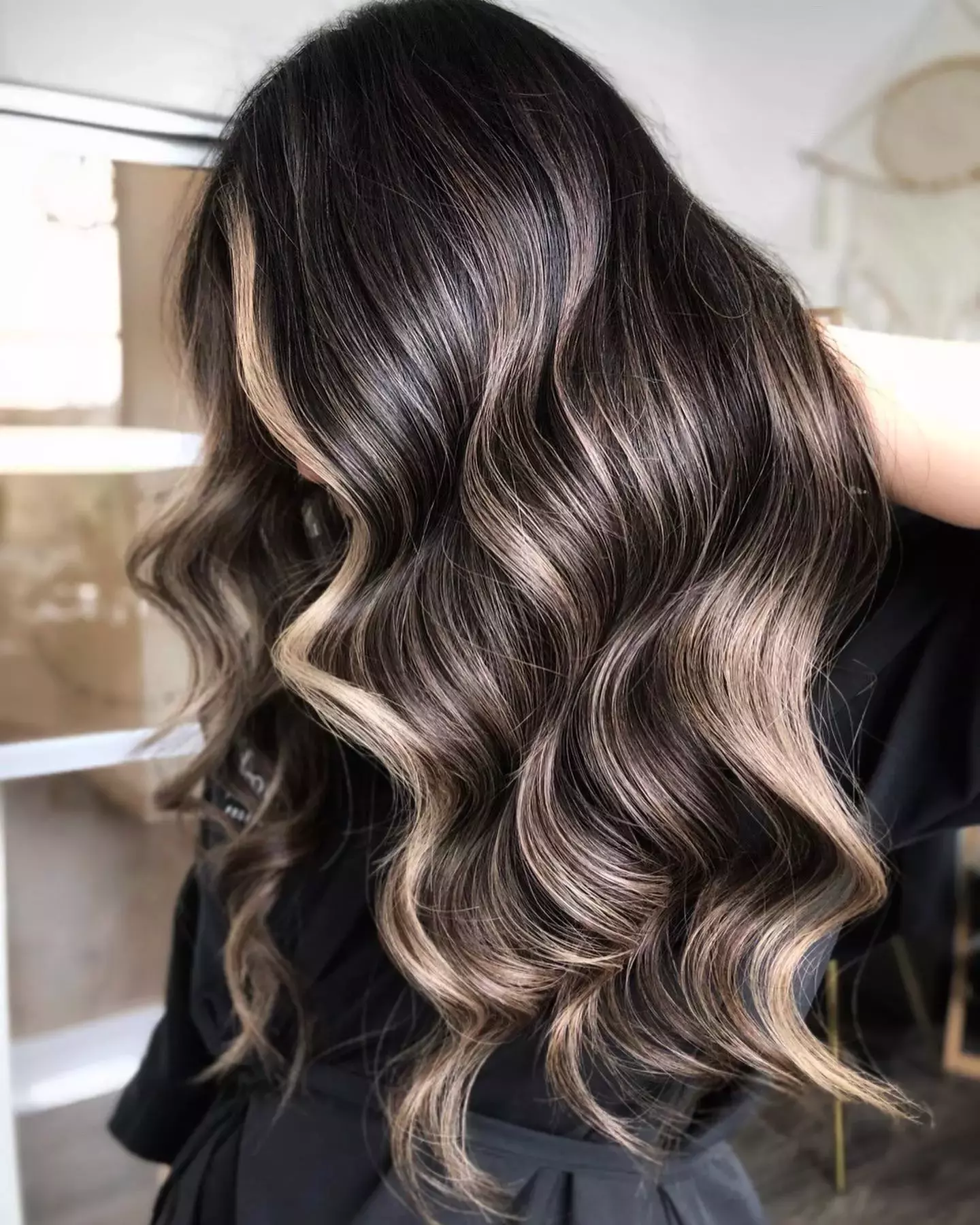
Dark Espresso with Golden-Blonde Balayage on Long Waves
Courtesy of: herstylecode.com
This is reverse balayage in its most classic form: a deep espresso base that stays rich at the crown and melts, strand by strand, into golden-blonde through the mid-lengths and ends. The hair is long with soft, loose waves that let the color shift read as a gradient rather than stripes, and a center-leaning part keeps the grow-out even on both sides. The warm golden undertone flatters medium and warm skin tones especially, and the overall effect is luminous without looking platinum. See also Stylish Natural Hairstyles for Black Women for more variations on this look.
A colorist builds this by deepening the natural base first, then hand-painting lighter pieces lower on the hair, concentrating brightness from the cheekbones down. Styling with a large-barrel curling iron away from the face shows off the melt; a shine spray keeps the darker top looking glassy. Expect a root gloss refresh every 6 to 8 weeks as the espresso fades. The advantage is soft, low-line regrowth; the trade-off is that golden balayage can turn brassy, so a purple or blue toning shampoo once a week is worth keeping on the shelf.
Ash Beige with Cool Blonde Ends on Long Layered Hair
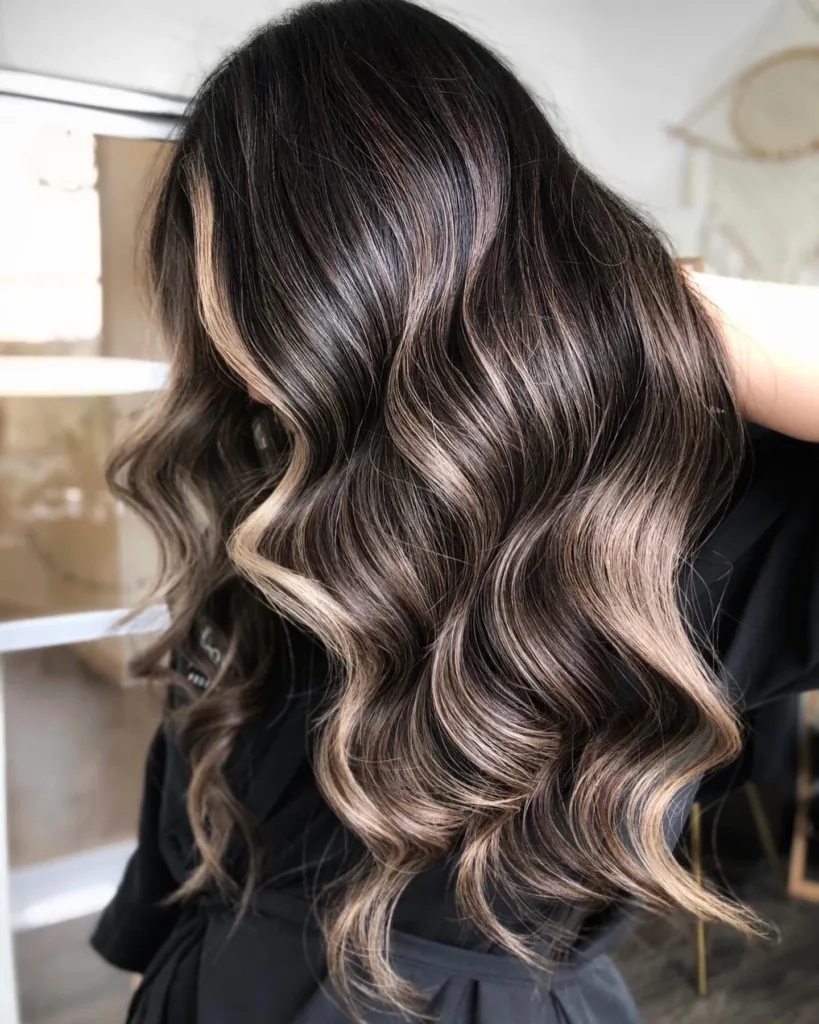
Photo credit: prettysweetprintables.com
For anyone who likes their blonde on the cool side, this version pairs a dark, near-black root with ash-beige balayage ends on long, layered waves. The beige is deliberately muted — more mushroom than gold — which makes the dark base look even richer by contrast. The layers start around the collarbone, giving the color somewhere to break and move rather than sitting in one heavy block, and the finish is soft and airy rather than super-defined.
The cool tones here require a violet or ash-based toner over the lifted pieces, and the colorist will likely deepen the base with a demi-permanent gloss in one sitting. Because cool blondes fade warmer, salon toning every 6 to 10 weeks keeps the beige from going muddy. Style with loose bends and a dry texture spray to emphasize the layers. The advantage is a modern, expensive-looking neutral; the trade-off is that ash balayage on very warm natural hair needs more upkeep than its warm-toned cousins, and over-toning can dull the shine if you go too cool.
Beige Blonde with Bright Face-Framing Pieces on Shoulder Waves
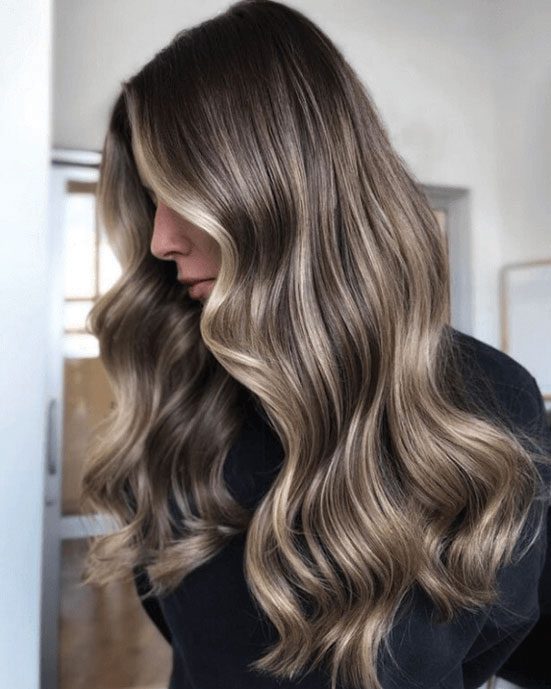
Image credit: osratimagazine.com
This shoulder-grazing cut gets its lift from bright, beige-blonde face-framing pieces painted against a dark root. The lighter pieces start higher around the face than through the back, which draws attention upward and gives the illusion of a fuller fringe area without cutting one. The waves are loose and touchable, and the overall length keeps the look light and easy for anyone who does not want to commit to very long hair.
A colorist achieves the face frame by bringing a few select pieces around the hairline up to 2 to 3 levels lighter than the base, while the back stays deeper for a natural reverse effect. This is a great entry point for reverse balayage because the boldest color sits where it is easiest to see and maintain. Style with a middle part and gentle waves, or wear it straight to make the face frame pop. The advantage is instant brightness around the face; the trade-off is that those front pieces take the most heat and washing, so they fade fastest and may need a glossing appointment between full color sessions.
Caramel with Beige-Toned Balayage on Long Salon Waves
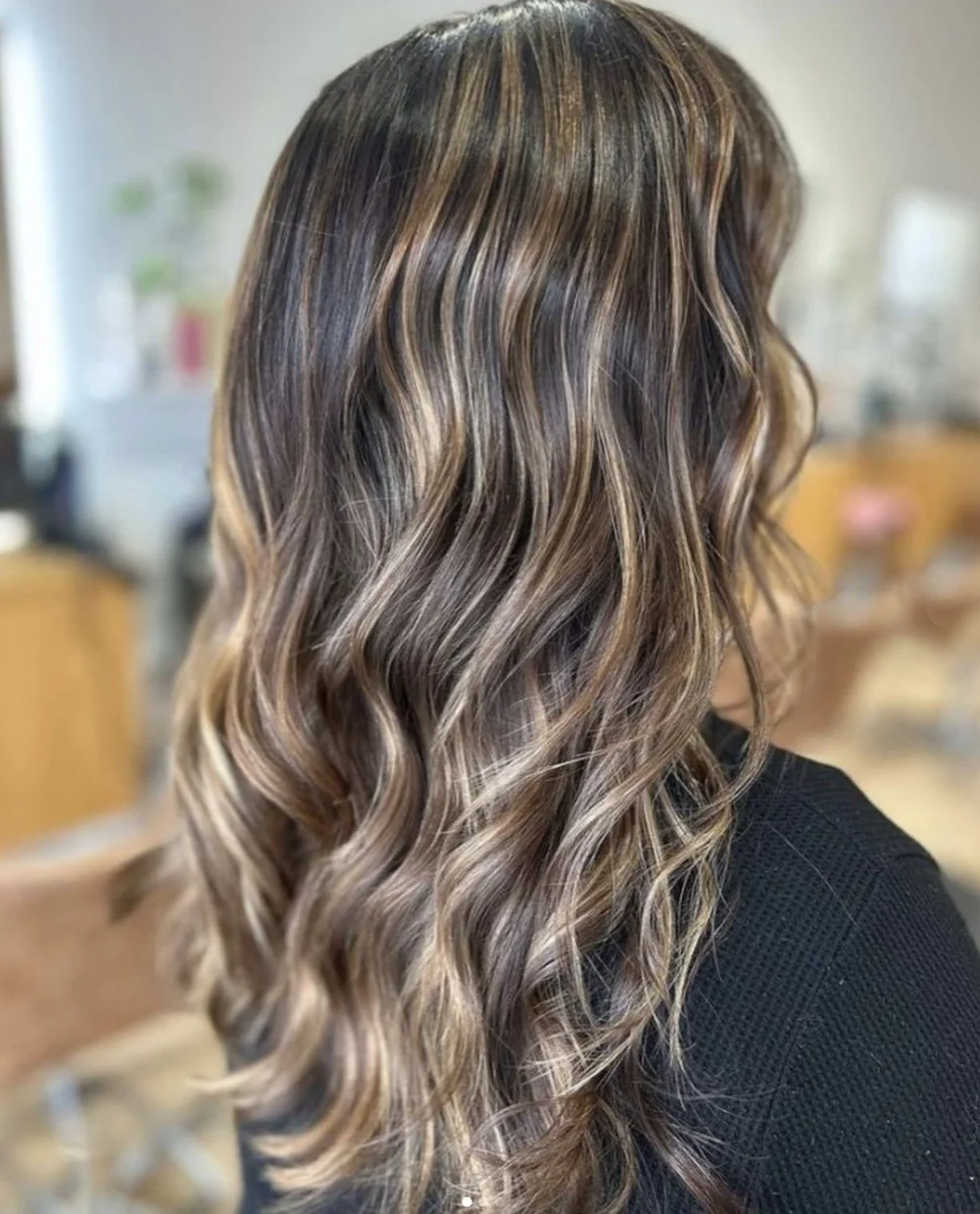
Source: bloomsalonmtairy.com
Straight from a salon portfolio, this long wavy style shows caramel balayage softened with beige tones so nothing reads too orange or too ashy. The base is a rich dark brown, and the lighter ribbons begin around ear level, woven evenly through the back so the color looks dimensional from every angle. The waves are uniform and bouncy, the kind of finish you get from a proper blowout with a round brush or a professional wave set. For the fuller picture, Best Hairstyles for Round Faces 2025 is worth your time.
For a colorist, this is bread-and-butter balayage: teased or freehand-painted sections, a warm-neutral toner, and a gloss to seal the cuticle. Ask for the caramel to sit between gold and beige if you want this exact neutral-warm balance. Maintenance is forgiving — roots deepen with a demi-permanent color that fades gracefully, and the balayage itself can go 10 to 12 weeks between refreshes. The advantage is its versatility across skin tones; the trade-off is that very dark natural hair may need two sessions to reach caramel without brassiness.
Golden Brunette with Subtle Highlights on Long Soft Layers
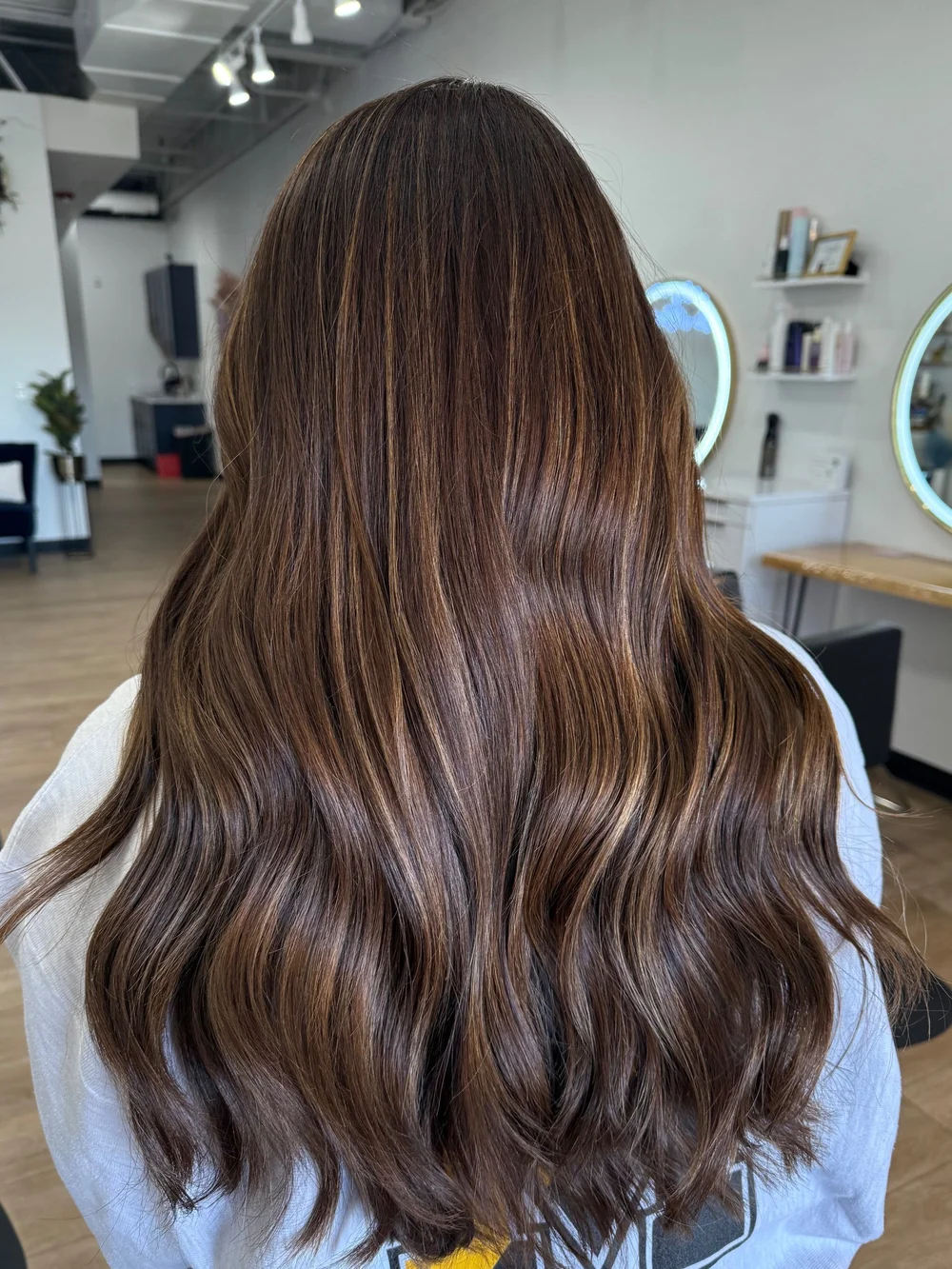
Via jessboheim.com
If full balayage feels like too much, this subtle golden brunette is the quiet version: long, softly layered hair with golden highlights woven so finely they read as a sunlit glow rather than distinct color. The base stays firmly brunette, and the lighter pieces concentrate through the mid-lengths and ends with barely any contrast at the root. It suits fine to medium hair that needs movement, since the layers and the color work together to create fullness.
This is typically done with a teased balayage technique, where the colorist backcombs each section before painting so the lighter color diffuses softly. Styling is simple — loose waves or even air-dried texture both show the dimension. Regrowth is nearly invisible, so salon visits can stretch to 12 weeks or more. The advantage is the lowest-commitment way into the reverse balayage family; the trade-off is that anyone wanting dramatic change may find it too subtle and wish they had asked for more contrast.
Mushroom Ash with Cool-Toned Balayage on Voluminous Waves
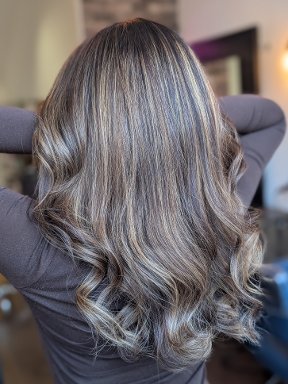
Courtesy of: treatwell.ie
Mushroom balayage takes a dark base and lifts the ends into a cool, taupe-blonde that sits between gray and beige. On these voluminous waves the tone looks almost smoky, with the ash undertone giving the color a modern, editorial edge. The contrast is noticeable but not harsh because the cool tones blur the line where dark meets light. This suits cool and neutral skin tones and anyone whose natural hair pulls too warm when lightened.
Getting true mushroom requires lifting past the orange stage and toning with a level 8 or 9 ash-violet formula, so expect a longer first appointment, especially on virgin dark hair. After that, cool-toned shampoos and a glossing treatment every 8 weeks keep the taupe from warming up. Style with big, soft waves — the more movement, the more the multidimensional tones show. The advantage is a distinctive, trend-forward neutral; the trade-off is that ash tones can look flat in low light and may need stronger styling to show their dimension.
Dark Red with Vivid Wine Balayage on Long Waves
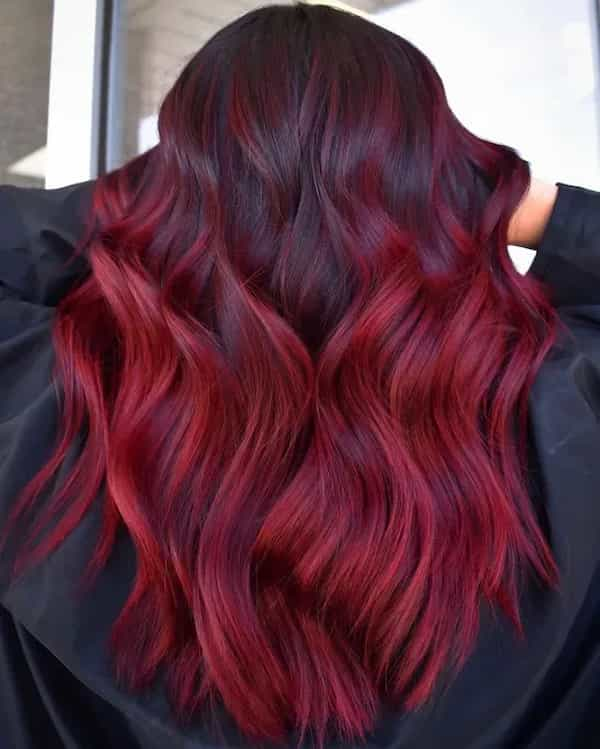
Photo credit: sistersbombshell.com
Red gets a reverse treatment here: a dark, near-black root that flows into a vivid wine-red balayage through long, full waves. The red is saturated rather than subtle, sitting somewhere between cherry and burgundy, and it catches the light dramatically against the dark base. This is a statement color — glamorous, high-impact, and especially striking on deeper skin tones where the warm red glows. The same idea, styled another way, appears in Fall Hairstyles for Women 40.
Red pigments fade faster than any other family, so this needs a color-safe, sulfate-free routine and cool-water washing to hold the vibrancy. A colorist will likely use a permanent red on the lifted balayage and a demi on the root for blendability. Salon gloss refreshes every 4 to 6 weeks keep the wine tone rich instead of washing out to pink. The advantage is pure drama and shine; the trade-off is the highest maintenance of this list, and red can stain pillowcases and light-colored clothing in the first week.
Espresso Sangria with Burgundy-Plum Balayage on Wavy Lengths
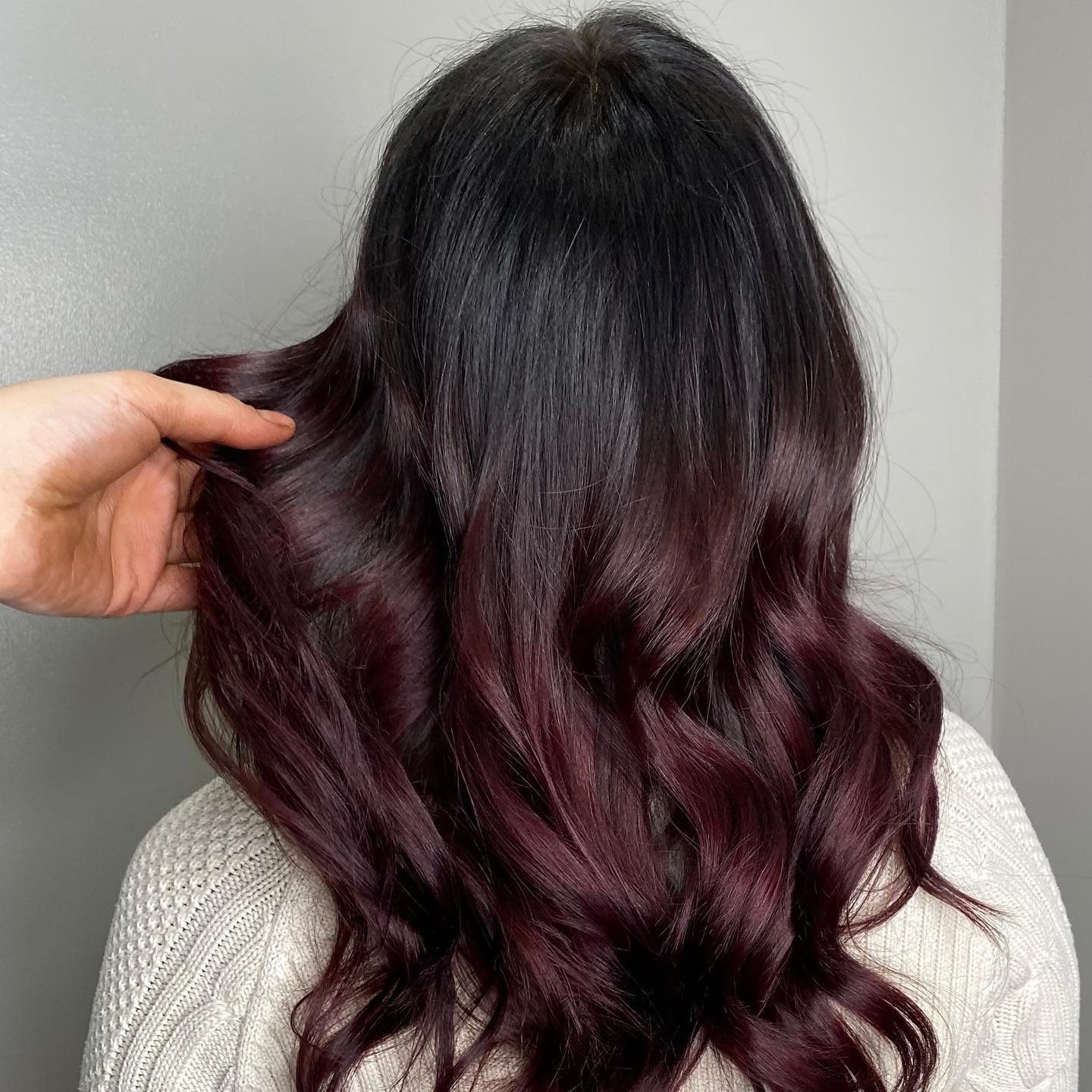
Image credit: mockuphunt.co
Think of this as red balayage for brunettes who want to stay moody: espresso-black roots dissolve into a burgundy-plum blend through the ends, like wine swirled into dark chocolate. The plum undertone keeps it cooler and more wearable than a bright red, and the waves show the color shifting from almost-black at the crown to deep berry at the tips. It is a winter-perfect shade that pairs beautifully with dark clothing and low light.
The technique layers a plum-violet demi over lifted ends while the root is deepened to espresso in the same appointment. Because plum is a blue-based red, it fades more gracefully than true reds but still needs color-depositing care. A burgundy color-depositing conditioner every week or two extends the life of the tone between salon visits, which can be spaced 6 to 8 weeks apart. The advantage is rich, dimensional color that looks expensive; the trade-off is that plum tones can go flat if over-toned, so ask your colorist to keep some red warmth in the formula.
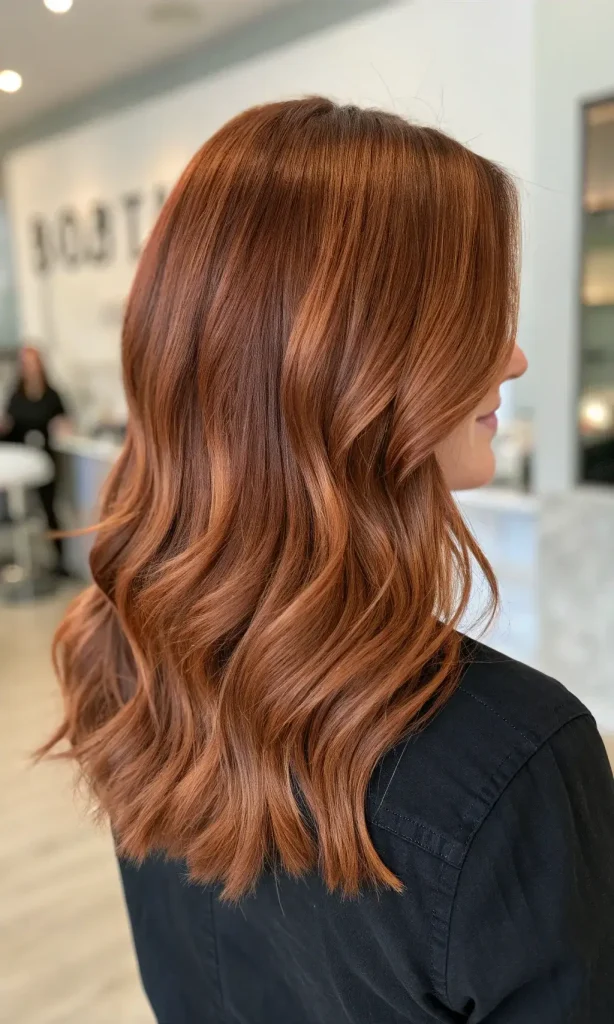
Warm Copper with Brunette Balayage on Medium-Length Waves
Source: herstylepulse.com
Copper is one of the friendliest warm tones for brunettes, and this medium-length wavy version shows why: a rich brunette base warmed through with coppery balayage that glows in salon lighting. The copper is painted mainly through the mid-lengths and ends, leaving the root naturally dark, and the waves are soft and touchable rather than over-styled. The warmth brings life to the complexion, making it a strong pick for anyone whose skin has golden or peachy undertones.
Copper balayage lifts relatively easily on brunette hair, so many people reach this in a single session with a warm level-7 copper toner. Styling is low-effort — the color does the talking, so simple waves or even a smooth blowout work. Copper fades warm rather than brassy, which is forgiving, but a copper-toning gloss every 6 to 8 weeks keeps it vivid. The advantage is warmth and shine with moderate maintenance; the trade-off is that copper and chlorine are enemies, so swimmers should protect the hair or expect faster fading.
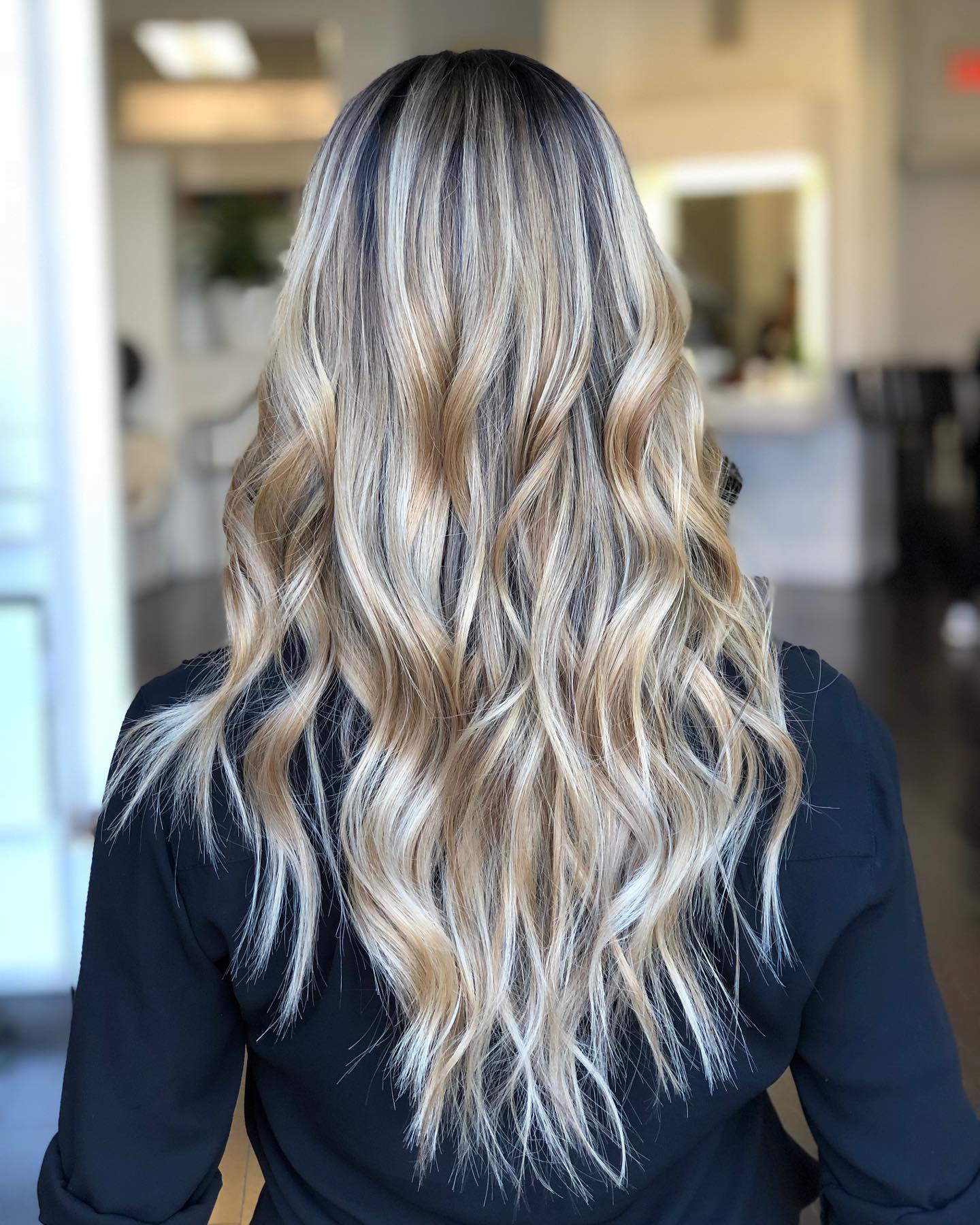
Shadow Roots with Bright Ash-Blonde Balayage on Long Waves
Via mklstylist.com
The shadow root is reverse balayage’s signature move: the first few inches are kept deliberately dark, then the color melts quickly into bright, ash-toned blonde for the lengths. The contrast is bold but the transition is seamless, and on these long waves the effect is almost holographic as the light moves across the hair. The ash blonde reads icy and modern, a nice counterpoint to the softness of the waves. We covered this territory more deeply in Must Try Hairstyles for Oval Faces.
A stylist creates this by applying a root shadow — usually a level 5 or 6 demi — over freshly lifted hair, smudging it down 2 to 4 inches before it meets the blonde. It is the best grow-out insurance in color work: when the roots come in, they simply extend the shadow. Plan a tone and shadow refresh every 8 to 10 weeks. The advantage is high contrast with low maintenance; the trade-off is that the initial lift to bright blonde is the most damaging step here, so the hair needs bond-building treatments and careful heat protection going forward.
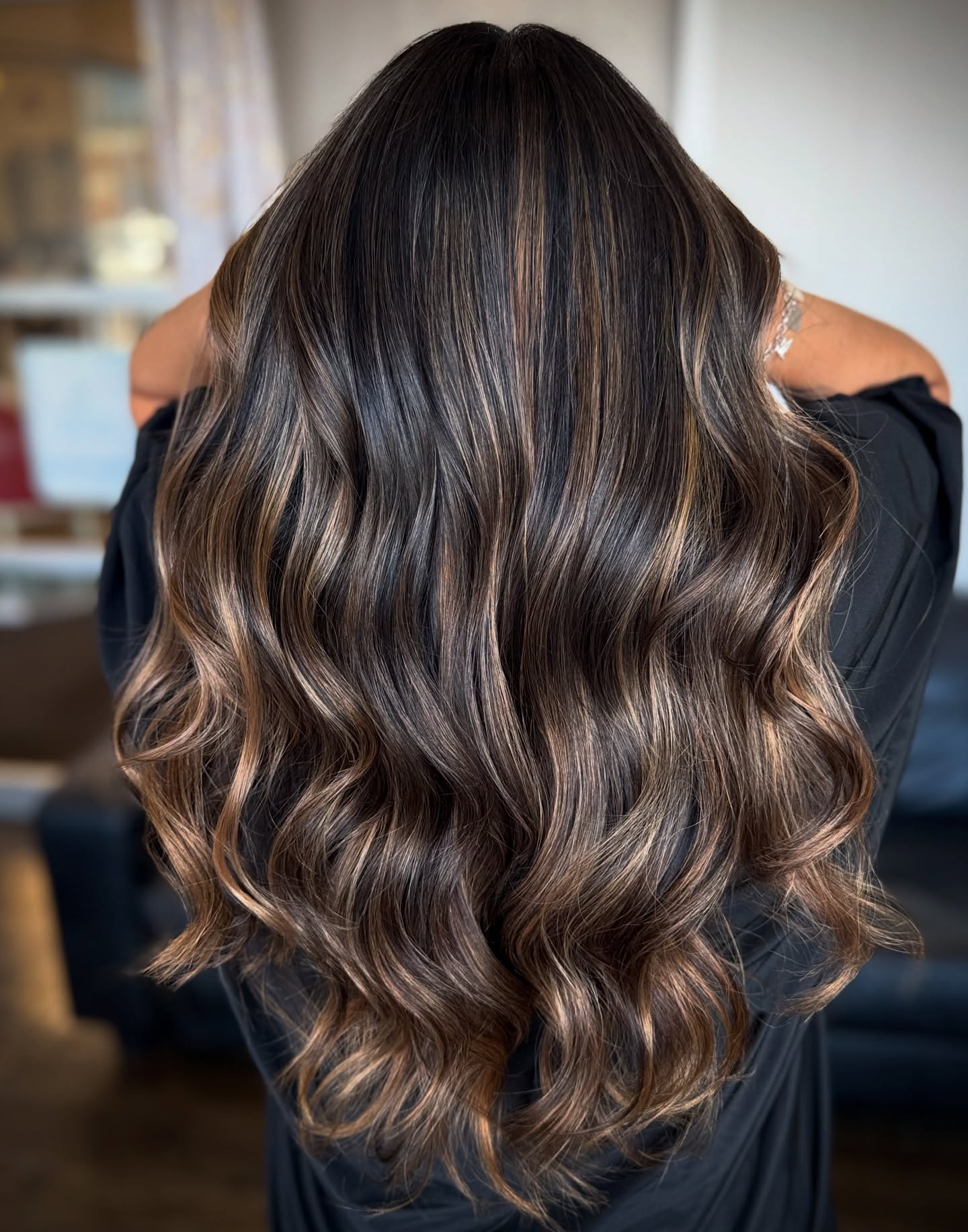
Caramel Copper with Warm Balayage on Long Glossy Waves
Courtesy of: latest-hairstyles.com
Where copper meets caramel: this long, glossy wavy style blends warm copper pieces with classic caramel balayage over a deep brunette base. The copper gives the color its fire while the caramel keeps it wearable and natural, and the high-shine finish makes every tone pop. The waves are polished and defined, showing off how the warm pieces catch light differently depending on how they fall.
Achieving this usually means lifting to a level 7 and toning with a blend of copper and gold — ask for a formula that leans copper but does not cross into full red. Gloss is the hero product here, both in the salon and at home, since shine is what sells warm color. A weekly deep-conditioning mask keeps the lifted hair from looking dull. The advantage is a rich, glowing warmth that photographs beautifully; the trade-off is that warm tones fade visibly, so expect the copper to soften toward caramel between appointments and plan refreshes every 6 to 8 weeks.
Honey with Warm Balayage on Long Textured Layers
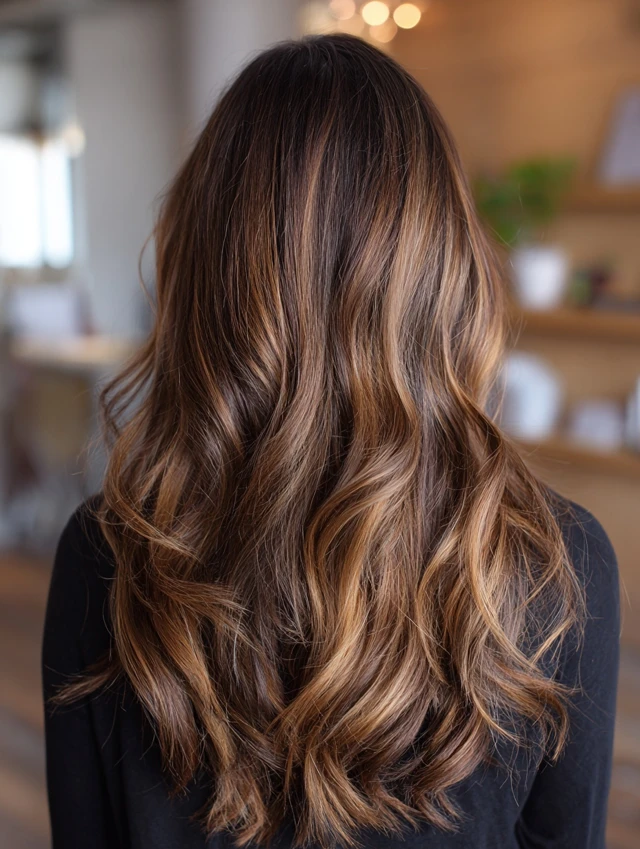
Photo credit: yourstyleinspo.com
Honey balayage is the warm neutral of the color world — golden without being brassy, bright without going blonde. Here it is painted through long, textured layers over a medium brunette base, and the layering does half the work: each shorter layer catches a different ribbon of honey, so the color looks naturally varied. The texture is piecey and lived-in rather than sleek, giving the whole style a relaxed, effortless feel.
Textured layers pair best with a freehand balayage technique where the colorist follows the haircut, painting more heavily on the pieces that flip and move. Ask for the honey to be placed to frame the face and concentrate through the ends for that lived-in look. Styling with a flat iron bent through the mid-lengths creates the piecey texture; a light wax or cream defines the ends. The advantage is an easy, beachy warmth that grows out beautifully; the trade-off is that heavily layered hair can look thin if the balayage is over-lifted, so keeping some depth at the root matters.
Golden with Sunlit Balayage on Dark Brown Waves
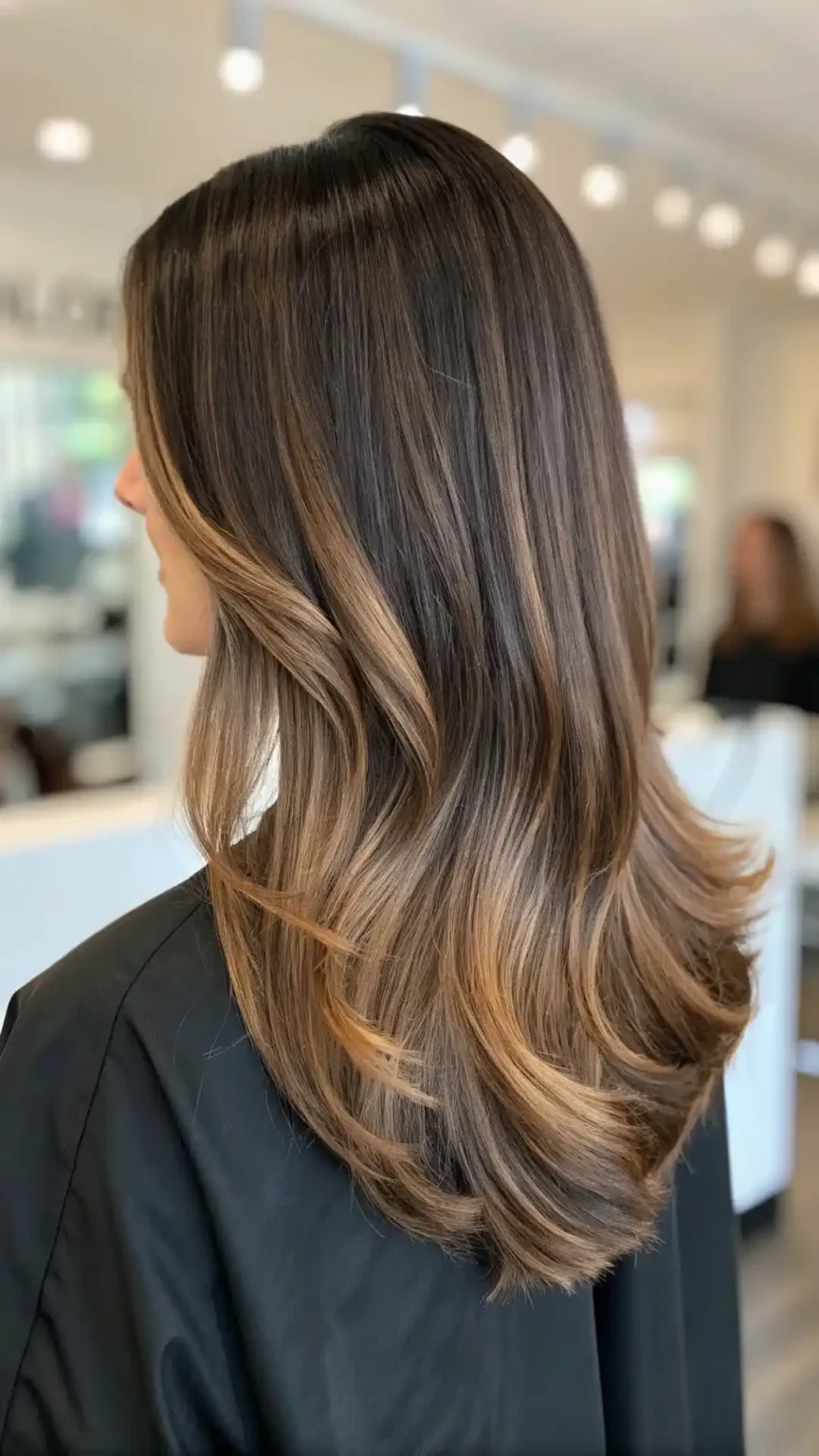
Image credit: herstylepulse.com
Sunlit is the right word for this one: dark brown waves threaded with golden balayage that looks like afternoon light caught in the hair. The golden pieces are woven fairly high in places, so the brightness reads as natural dimension rather than an obvious dye job, and the side-view styling shows how the color brightens the perimeter of the cut. It is cheerful, youthful, and one of the most universally flattering warm options. For more ideas in the same lane, see our Trendy Sleek Ponytail Hairstyles.
A colorist builds the sunlit effect by painting finer, more numerous sections than a chunky balayage, keeping each piece soft. The root stays its natural dark brown, so regrowth blends seamlessly. Styling with a curling iron and a light-hold spray gives that just-back-from-vacation bounce; air-drying with a wave cream works too. The advantage is a bright, healthy look with minimal upkeep; the trade-off is that gold tones on dark hair can drift toward orange if the toner is not balanced, so ask for a golden-beige rather than pure gold formula.
Cinnamon Brunette with Warm Caramel Balayage on Long Hair

Source: therighthairstyles.com
Cinnamon sits right between copper and caramel — spicy, warm, and deeply autumnal. On this long wavy style, the cinnamon balayage melts from a dark brunette root into glowing warm ribbons that brighten the whole face. The front view shows the color’s real power: the warm pieces around the face act like a spotlight, warming the skin and making the eyes stand out. A center part keeps the placement symmetrical and balanced.
This tone lifts well on naturally dark hair because cinnamon is close to the warm stage hair passes through during lightening — the colorist is working with the hair, not against it. A copper-gold toner seals the deal. Style with a middle part and long, loose waves, or pull it back and let the warm ends peek out. The advantage is gorgeous warmth that flatters olive and warm skin tones; the trade-off is that cinnamon fades toward plain brown over time, so a color-depositing copper mask every couple of weeks keeps the spice alive.
Mushroom Brown with Honey Highlights on Long Waves
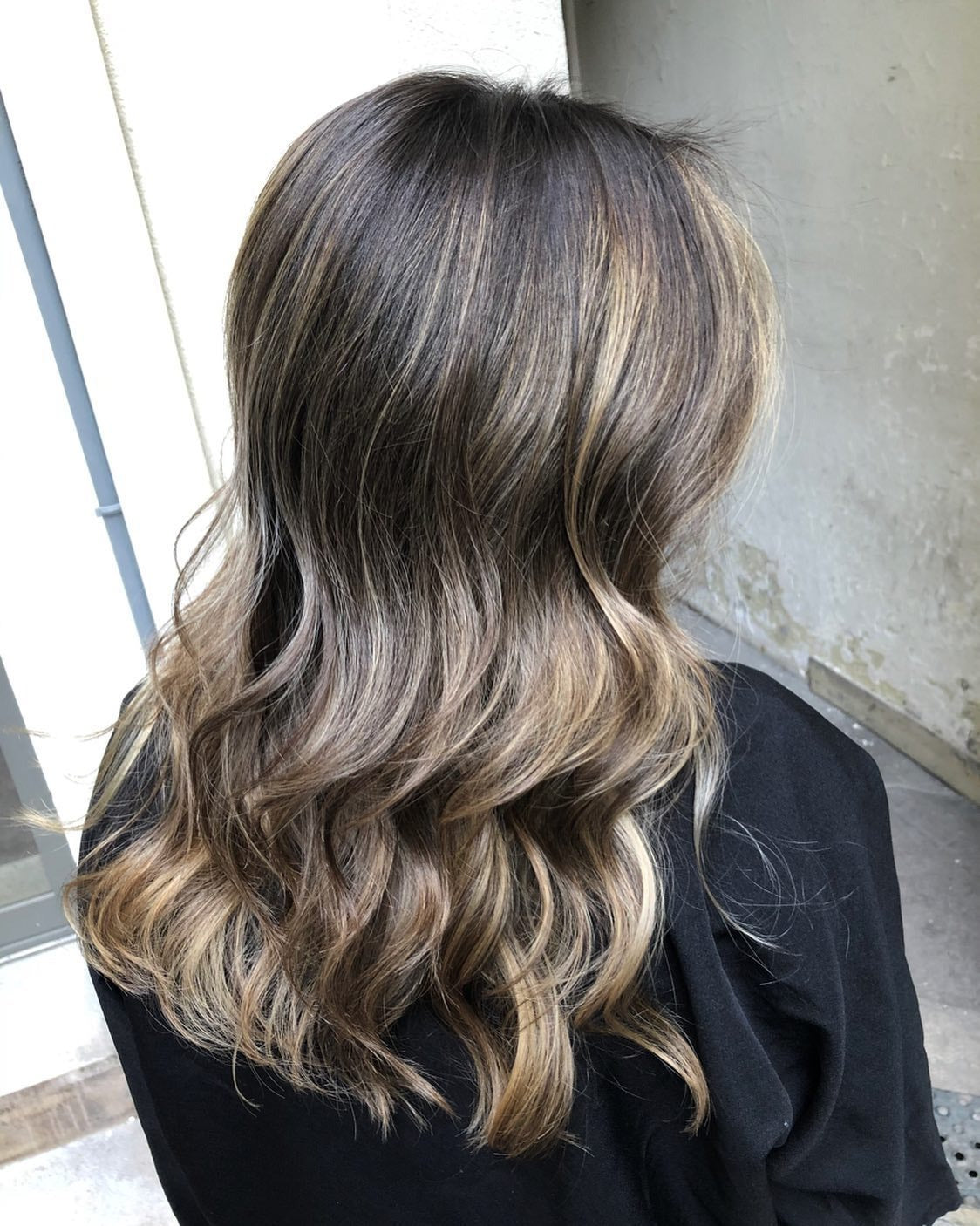
Mushroom brown gets a warm twist here: the cool, taupe-toned base is threaded with honey highlights that keep the color from going too gray or flat. The combination is surprisingly harmonious — the honey reads as light catching the mushroom, and the long waves give each tone room to show. The root stays dark, so the whole thing grows out like a reverse balayage should, with the brightness concentrated where the light hits.
The technique pairs two toners: an ash-violet for the mushroom pieces and a warm gold for the honey ones, often applied in alternating sections. It is a more advanced color appointment, so bring reference photos and expect a thorough consultation. Maintenance means alternating between cool-toned and moisturizing products — too much purple shampoo can push the honey toward dullness. The advantage is a complex, multi-tonal color that looks custom; the trade-off is that two-tone upkeep is fussier, and the honey pieces will need their own toning schedule.
Toffee with Warm-Toned Balayage on Rich Brunette Waves
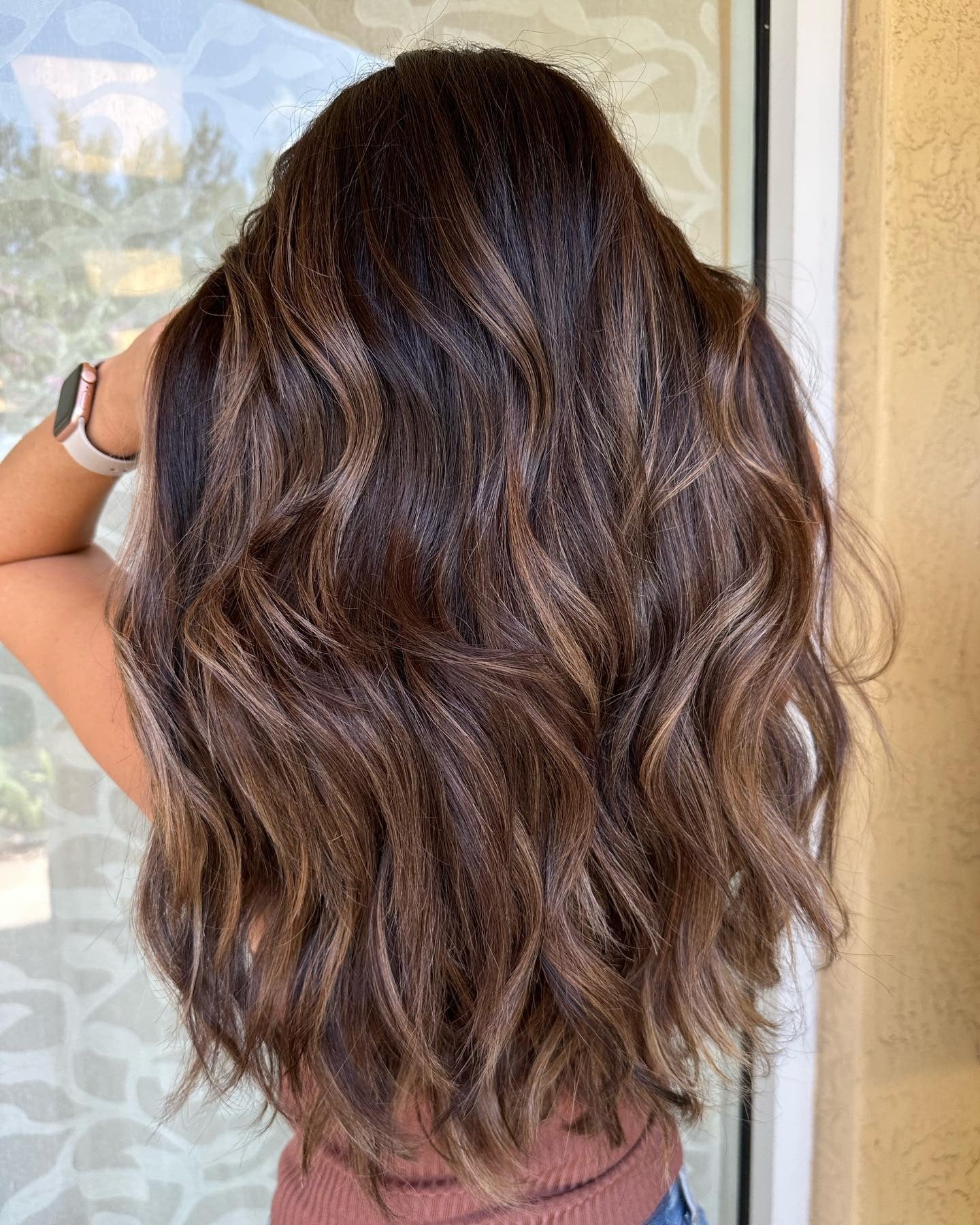
Courtesy of: mockuphunt.co
Toffee is caramel’s deeper, richer sibling, and on this rich brunette it looks downright edible. The toffee balayage is rooted — meaning the darker base color is intentionally dragged down into the balayage for a seamless, textured blend rather than a stark contrast. The waves are full and touchable, and the color has a glossy, almost lacquered quality that makes the toffee tones look liquid. For readers who want more, Gorgeous Pixie Hairstyles for Straight Hair keeps the ideas coming.
The rooted technique is what gives this its softness: after painting the toffee pieces, the colorist melts the root color down a few inches so there is no visible line. This makes regrowth nearly invisible and stretches salon visits to 10 or 12 weeks. A glossing treatment at home or in the salon keeps the toffee luminous, since rich warm tones lose their depth as they fade. The advantage is a luxurious, low-contrast color with excellent grow-out; the trade-off is that the rooted look can darken the overall impression, so anyone craving real brightness should ask for the toffee to be placed more generously through the ends.
Mushroom Brown with Soft Ash Balayage on Long Waves
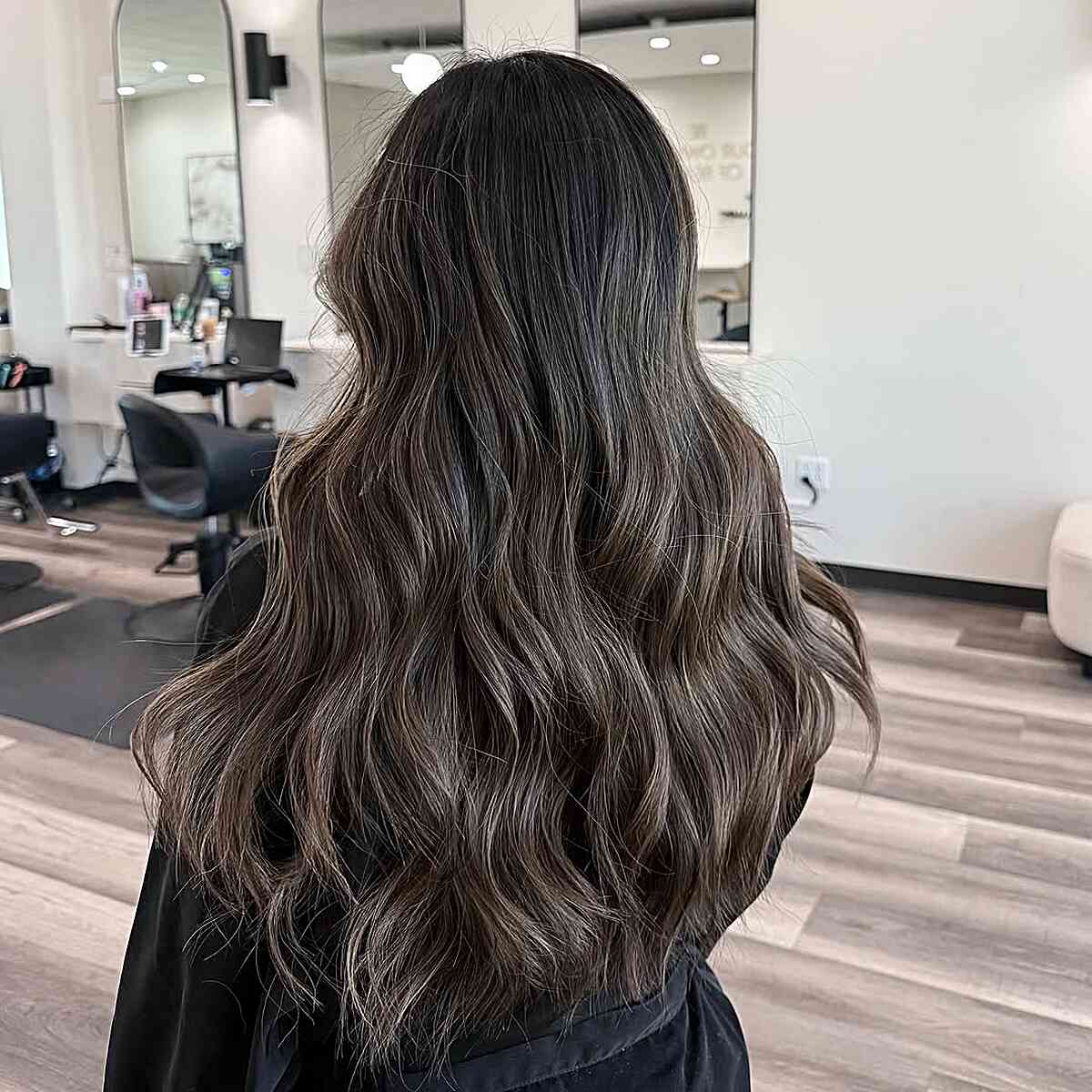
Photo credit: latest-hairstyles.com
This is mushroom balayage in its purest form: a dark base softened into cool, grayish-beige waves with no warm tones in sight. The soft waves are styled to look natural and touchable, letting the ash tones blend into each other like watercolor. It is a cool-girl neutral that reads modern and understated — the kind of color that looks intentional in every light, from office fluorescents to golden hour.
Pure ash mushroom demands a precise lift and a careful ash toner; too much lift and it goes silver, too little and it turns muddy. This is a job for a colorist who understands cool tones, and a consultation is essential for very warm natural hair. Aftercare is all about fighting warmth: cool-toned shampoo, heat protection, and toning glosses every 6 to 8 weeks. The advantage is a uniquely cool, fashion-forward neutral; the trade-off is that ash color can make some complexions look washed out, so a bit more blush or bronzer in the makeup routine goes a long way.
Toffee Caramel with Golden Balayage on Long Layered Hair
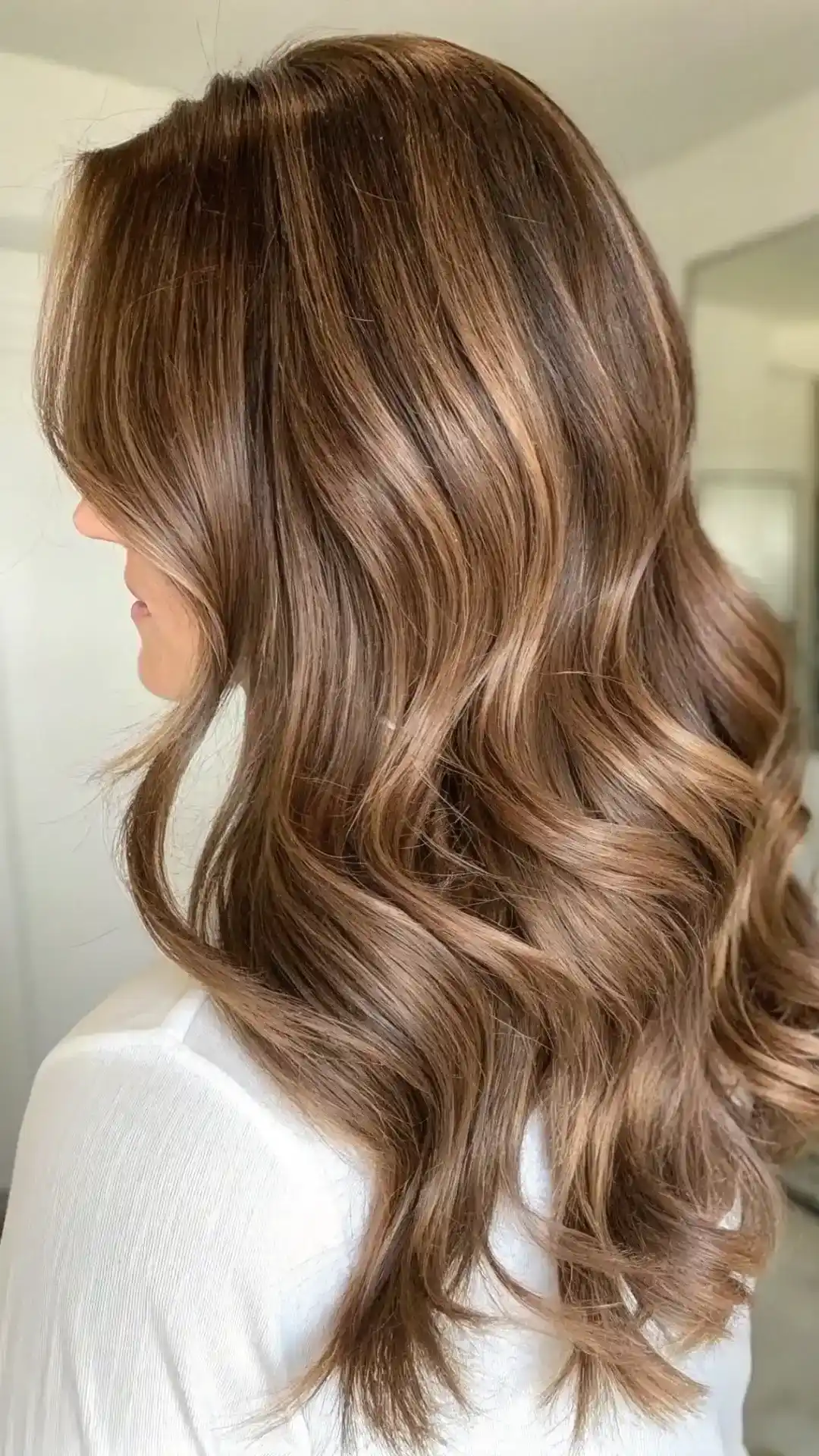
Image credit: herstylepulse.com
Toffee and caramel together make a double-warm balayage that is pure comfort color. On this long, layered cut, the golden balayage ribbons weave through a medium-brown base, with the layers breaking the color into soft, natural-looking variation. The side view shows how the lighter pieces concentrate through the ends and around the face, giving the whole style a warm, glowing frame.
Double-warm color like this is forgiving to apply — the colorist can blend toffee and caramel toners for a custom melt that suits the client’s skin tone. It is also forgiving to grow out, since the root is close to the natural base. Style with long layers enhanced by a large curling iron, or wear it straight for a sleeker take on the warmth. The advantage is a cozy, flattering color that suits most warm and neutral skin tones; the trade-off is that double-warm tones fade fastest of all, so expect the color to soften noticeably by week six without a gloss refresh.
Dark Caramel with a Pop of Blonde on Long Waves
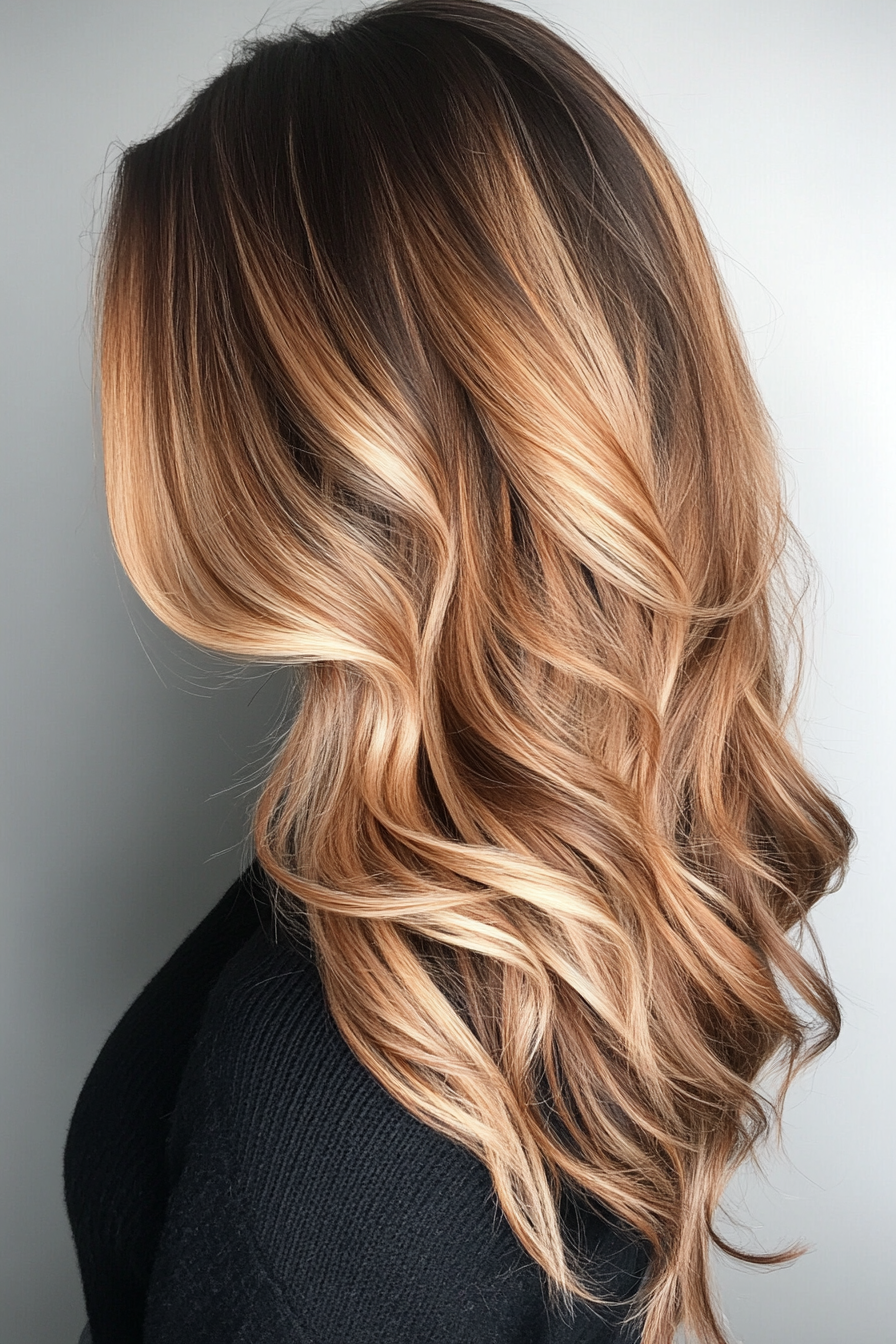
Source: needlestyle.com
Dark caramel does the heavy lifting here, with a few brighter blonde pieces scattered through for contrast — the “pop” that keeps the color from feeling one-note. The base is deep and rich, the caramel is warm and glossy, and those lighter pops are placed strategically through the mid-lengths where they catch the eye. The side-swept styling shows off how the brighter pieces frame the face and add dimension. Related reading: Homecoming Hairstyles for Black Women takes the same concept further.
The technique is a standard balayage with a twist: most sections get the dark caramel toner, while a handful of accent pieces are lifted one or two levels higher and toned brighter. It is a good way to test brighter blonde without committing the whole head. Maintenance is straightforward — the dark base and caramel grow out softly, and only the accent pieces might want a tone refresh. The advantage is dimension with a built-in highlight effect; the trade-off is that the accent pieces can fade at a different rate than the rest, so they occasionally need individual attention.
Dark Caramel with Luminous Balayage on Luscious Layers
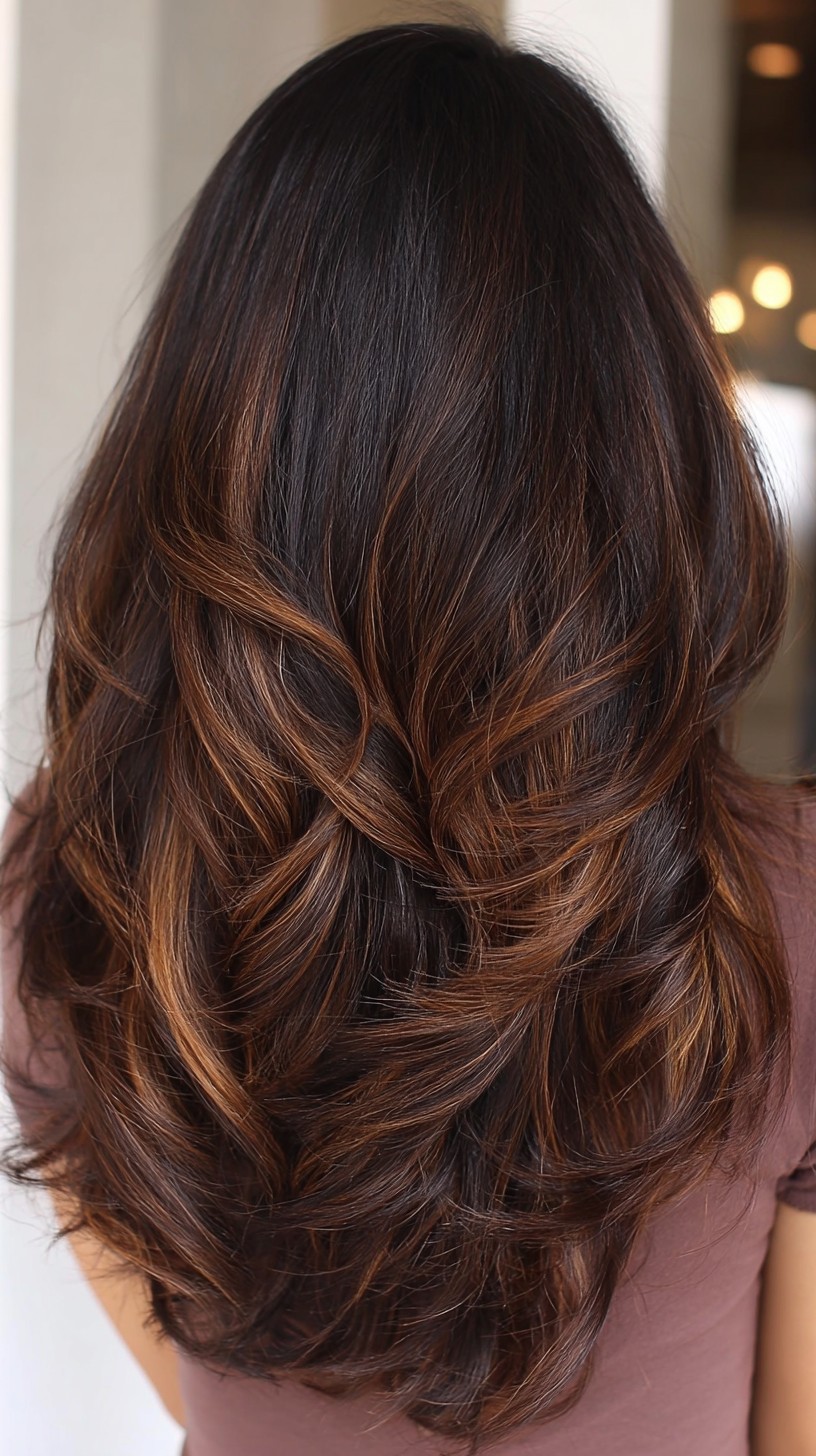
Luscious is the operative word: thick, long layers saturated with luminous dark caramel balayage that looks lit from within. The caramel is painted generously through the layers so the color feels abundant rather than streaky, and the dark root grounds everything with depth. This is a maximalist take on reverse balayage — plenty of brightness, plenty of shine, and hair that looks expensive from across the room.
Generous balayage placement like this usually means a longer appointment with more sections, and the colorist may use a combination of freehand painting and foils to get even lift on thick hair. The payoff is color that looks full and rich rather than sparse. At home, shine is the priority: glossing treatments, leave-in oils, and minimal heat keep the caramel luminous. The advantage is a head-turning, high-impact color; the trade-off is more time and money in the salon chair, and thick, heavily colored hair needs diligent conditioning to stay healthy.
Ash Silver with Cool-Toned Balayage on Long Waves
Courtesy of: tressnails.com
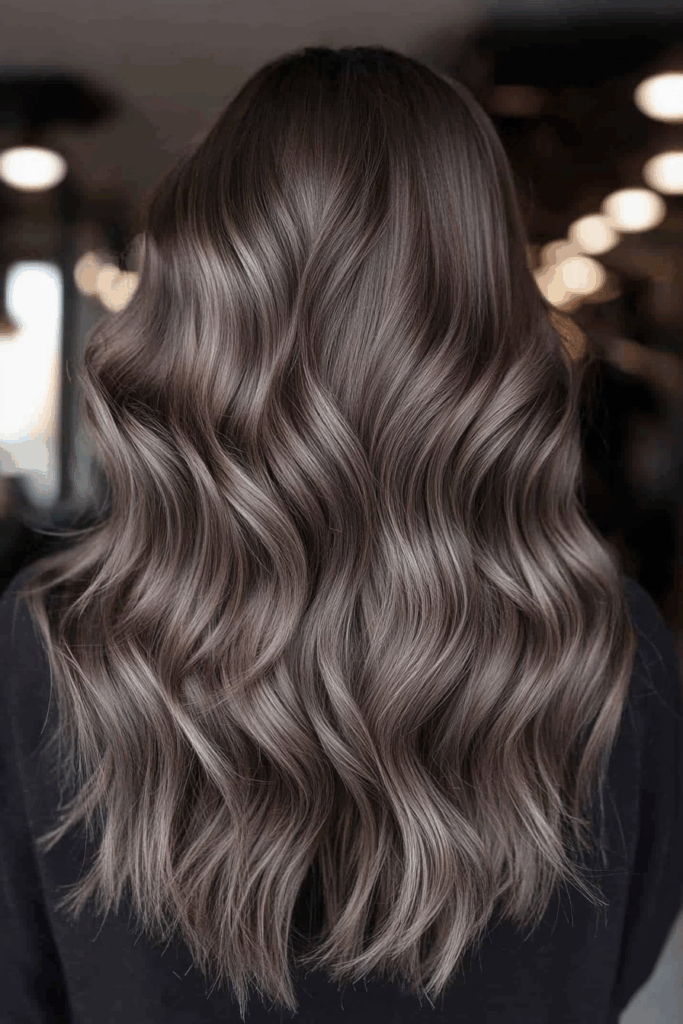
At the coolest end of the spectrum, this ash-silver balayage takes a dark base nearly to silver through the lengths. The tone is icy and metallic, with the waves showing off how the silver shifts between gray and pale beige depending on the light. It is a bold, fashion-forward choice that makes a strong style statement — less natural, more editorial — and it pairs strikingly with minimalist wardrobes and sharp makeup.
Reaching true silver from a dark base is a multi-session project involving significant lift, careful toning, and bond-building treatments at every step. This is not a one-appointment color for most people, and honesty about the process matters: the hair needs to be healthy enough to lift, and the silver will need toning every 4 to 6 weeks to stay icy. Purple shampoo is mandatory. The advantage is a truly distinctive, head-turning color; the trade-off is the highest damage risk and maintenance commitment on this list, so it is best for healthy hair and realistic expectations.
Honey Blonde with Warm Balayage on Extra-Long Layers

Photo credit: gustohair.com
Extra-long hair is the perfect canvas for balayage, and this honey-blonde version proves it: warm golden ribbons run the full length of the layers, getting brighter toward the ends in a true reverse melt. The length lets the gradient unfold gradually, so the transition from the darker top to the honey ends feels completely natural. The layers keep the very long hair from hanging flat, and the warm tone gives the whole style a sun-kissed glow. Our Cornrow Hairstyles for 2025 rounds up more takes on this exact idea.
Very long hair means a longer color appointment — there is simply more hair to paint — but the grow-out is the easiest of any length since the color sits far from the root. A colorist will section carefully to keep the placement even through all that length. At home, the ends need the most care: they are the oldest, most processed part of the hair, so regular trims and deep conditioning keep them from looking dry. The advantage is a stunning, flowing gradient; the trade-off is that maintaining very long, colored hair is a real time investment in both the salon and the shower.
Caramel with Hand-Painted Balayage on Medium-Long Waves
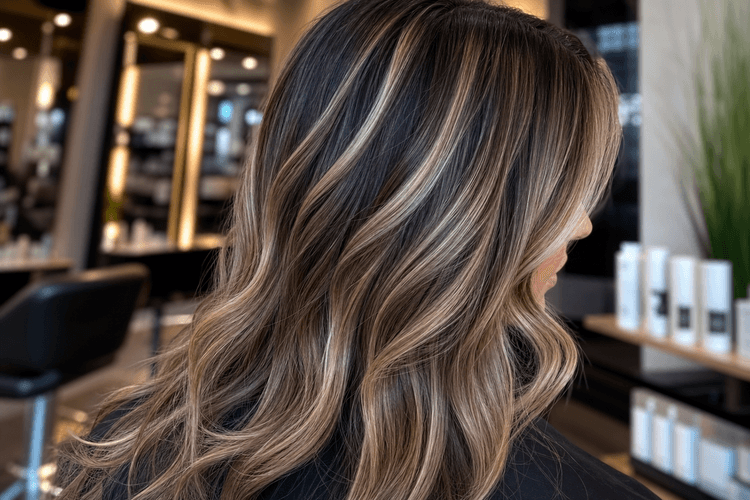
Image credit: maison-celeste-hair-salon.vercel.app
Hand-painted balayage is the technique behind the most natural-looking color, and this medium-long wavy style is a textbook example: caramel pieces swept through a dark base with soft, diffused edges and no visible starting points. The color looks like it could have grown that way, with the caramel concentrated through the ends and the root left untouched. The salon setting shows the fresh, just-finished result — glossy, bouncy, and seamless.
Freehand painting gives the colorist complete control over placement, following the haircut and the way the hair naturally falls. Ask for the caramel to be kept soft and blended rather than chunky, and for the root to stay natural for the easiest grow-out. This is a great consultation piece: bring this kind of photo and discuss exactly how high the color should start. The advantage is the most natural-looking balayage possible; the trade-off is that freehand results depend heavily on the colorist’s skill, so choosing an experienced balayage specialist matters more than with any other technique here.
Mocha Espresso with Copper-Caramel Balayage on Long Waves

Source: hairs.london
Mocha espresso — that deep, coffee-brown base — gets warmed up with copper-caramel balayage in this long wavy style. The copper brings a reddish glow while the caramel keeps things golden, and together they turn a flat dark brown into something rich and multidimensional. The salon-fresh waves show the color at its best: glossy, defined, and full of warm dimension that flatters a wide range of skin tones.
This is a smart color for naturally dark hair because the copper-caramel sits close to the warm tones hair reveals when lifted — less fighting, less damage. A colorist can often achieve it in one session with a warm level-6 or 7 toner over balayaged sections. Maintenance is moderate: the warm tones fade gradually, and a copper-gold gloss every 6 to 8 weeks keeps the richness. The advantage is maximum warmth and dimension with minimal lift; the trade-off is that the copper will always want to fade warmer, so cool-toned products should be avoided to keep the intended glow.
Final Thoughts
Across these 24 ideas, the strongest reverse balayage looks work because of the blend and the undertone, not simply because they are dark at the top and light at the bottom. A seamless melt makes regrowth invisible, while the right undertone — warm caramel for glow, ash mushroom for edge, copper for vibrancy — is what makes the color feel personal rather than generic. Choose based on how much maintenance you want (shadow roots and subtle brunettes are the easiest), your natural texture (waves show dimension best), and how bold you want the contrast to be.
- Trim every six to eight weeks to keep the shape sharp.
- Use a heat protectant before every hot-tool session.
- Tone blonde or highlighted hair every six weeks to keep brassiness away.
- Match the upkeep schedule to your routine before committing to high-maintenance color.
The best color is the one that still looks intentional at week six.