The shag is the rare haircut that looks better the less you fuss over it — which makes it a natural fit for winter. When cold air flattens volume and hats crush carefully styled hair, a well-cut shag keeps its shape thanks to built-in layers and texture. For 2027, the winter shag spans chin-length bobs to long wolf-cut hybrids, in colors from ash brown to copper red. These 24 winter shag haircut ideas cover fine, thick, wavy and curly hair, with honest notes on upkeep so you can pick the version that fits your routine. The same theme, explored from another angle, is in French Bob Haircuts 2026.
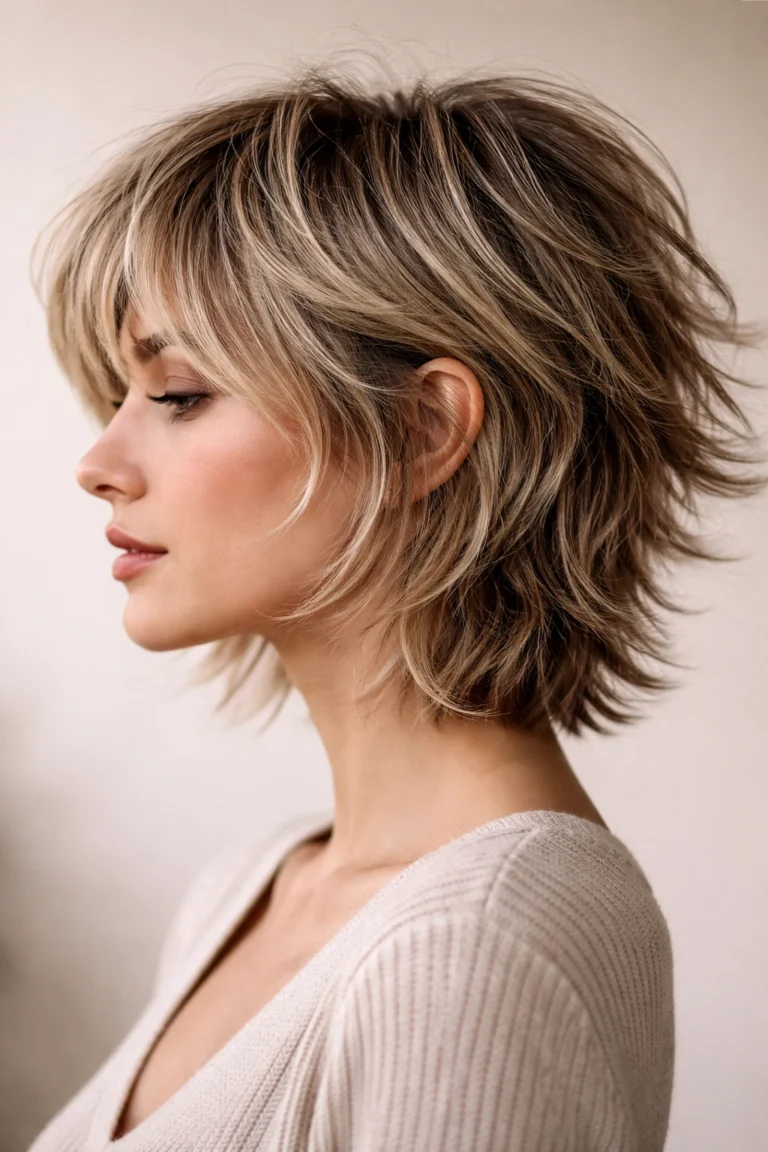
1. Chin-Length Shaggy Bob with Soft Bangs
Courtesy of: hairtical.com
This cut pairs a chin-grazing bob with softly textured bangs that melt into the sides. The layers are carved through the mid-lengths rather than stacked at the crown, so the silhouette stays rounded instead of triangular. Fine to medium hair with a natural wave gets the most from this shape — the texture reads as intentional movement, and the shorter length keeps ends from looking wispy. Oval, heart and long face shapes tend to suit it best, since the bangs shorten the forehead visually. For the fuller picture, Winter Haircuts is worth your time.
Ask your stylist for a shaggy bob with point-cut ends and bangs that can be worn parted or forward. Styling is minimal: a pea-sized amount of texture cream scrunched into damp hair, then air-dried. Because the shape relies on precise layering, plan a trim every six to eight weeks; fine hair may need a light volumizing mousse at the roots to keep the crown from falling flat by afternoon. Those who wash daily and dislike any styling product may find a blunter bob simpler. For a different spin on the same theme, browse Best Fall Hairstyles for Round Faces 2025.
2. Collarbone Shag with Curtain Fringe
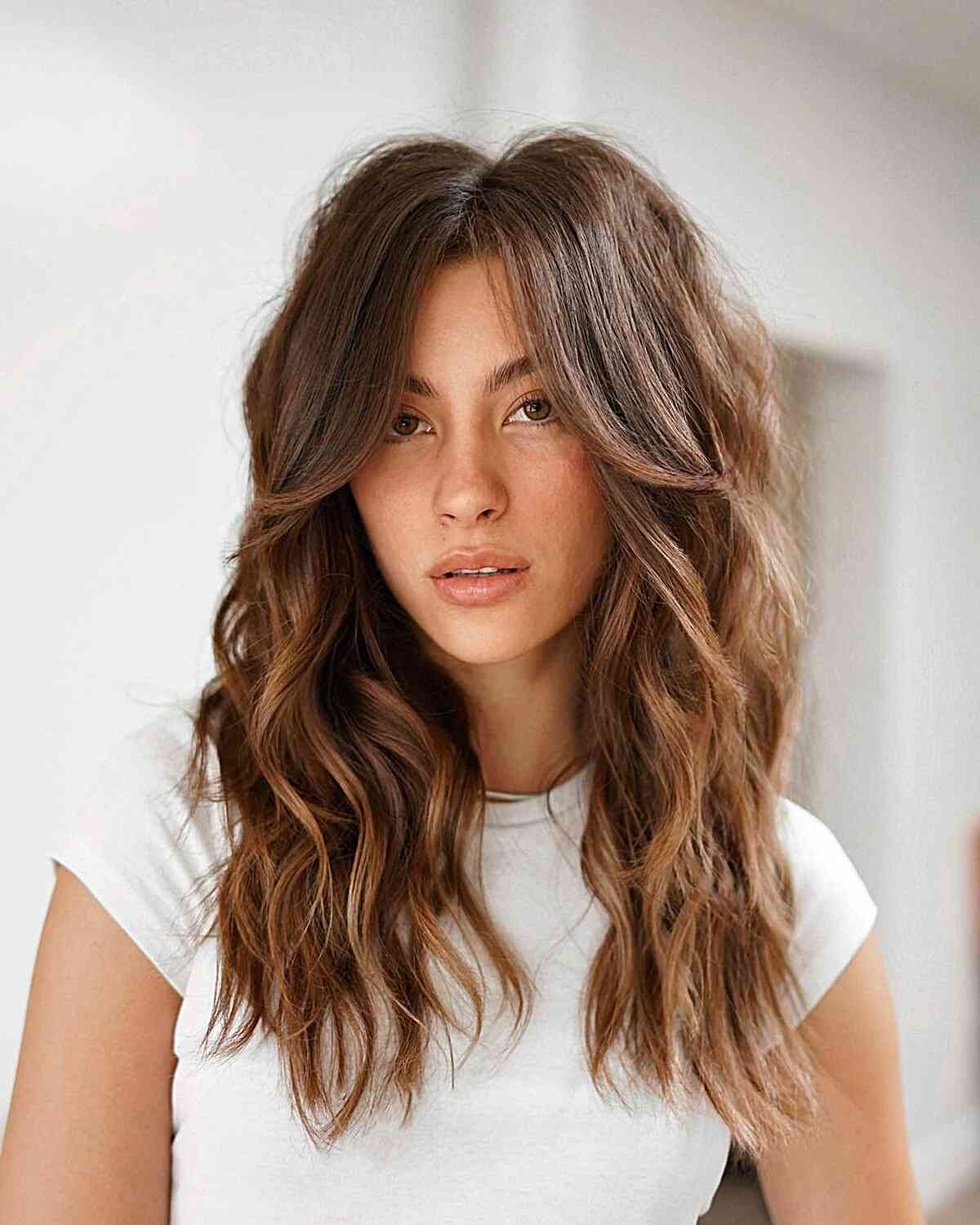
Photo credit: latest-hairstyles.com
Here the shag sits at the collarbone, with internal layers doing the quiet work of removing bulk while the curtain fringe frames the cheekbones. The fringe is cut to part in the middle and sweep outward, connecting directly into the shortest face-framing layer so there is no visible disconnect. Medium-density wavy hair is the sweet spot — straight enough for the fringe to sweep, textured enough for the layers to separate. It flatters round and square faces by adding diagonal lines around the jaw.
The key salon request is internal layering rather than surface chopping, which keeps the perimeter looking full while the interior moves. Style by blow-drying the fringe forward with a round brush, then flicking each side outward. Curtain fringe typically needs a tidy-up every four to six weeks to stay out of the eyes, though the rest of the cut grows out gracefully. Very curly hair can work with this cut, but the fringe may need regular smoothing to hold its sweep.
3. Long Copper Balayage Shag
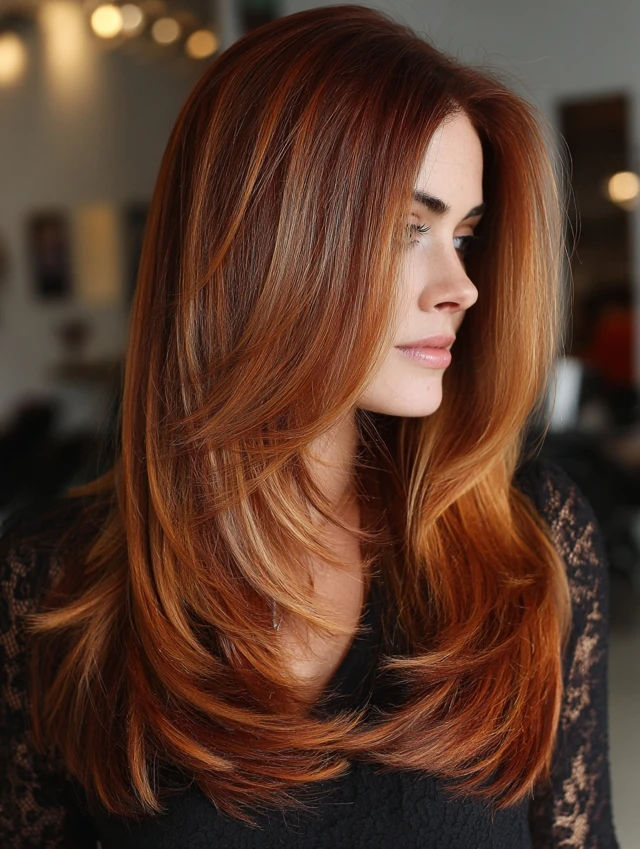
Image credit: yournextinspo.com
A long shag becomes a color story when copper balayage is painted through the layers. The base stays a deeper auburn while ribbons of bright copper catch the light at the mid-lengths and ends, which makes every layer of the cut visible. The length falls past the shoulders with choppy, disconnected ends that keep the shape from reading as a plain long layer cut. Warm skin tones glow against copper, and the warmth is especially striking against winter’s grey palette and dark coats.
This is a two-part salon service: the shag cut first, then hand-painted balayage placed to follow the layers. Copper fades faster than most reds, so expect a gloss refresh every six to eight weeks and color-safe, sulfate-free shampoo at home. The grow-out is soft by design, which stretches the time between full appointments. Anyone unwilling to commit to color maintenance may prefer the same cut in their natural shade. For readers who want more, Haircuts for Autumn 2025 keeps the ideas coming.
4. Shoulder Shag with Bottleneck Bangs

Source: fillevibe.com
Bottleneck bangs — narrow at the top, widening as they curve around the cheekbones — give this shoulder-length shag its distinctive frame. The cut itself is a classic textured shag with layers that begin at the chin and cascade to the shoulders, keeping enough weight at the perimeter to avoid a straggly finish. It suits medium to thick hair best, where the density supports the curved bang shape, and it softens strong jawlines beautifully.
Ask for bangs cut with a curved, bottleneck silhouette rather than a straight-across fringe, and layers that graduate from the cheekbones down. A quick blow-dry with a round brush sets the bang curve each morning; the rest of the hair can be left to air-dry with texture spray. Bottleneck bangs need trimming every five to seven weeks to hold their shape. Fine, sparse hair may struggle to fill out the curved bang, making a wispier fringe a better choice.
5. Textured Bixie Shag with Auburn Highlights
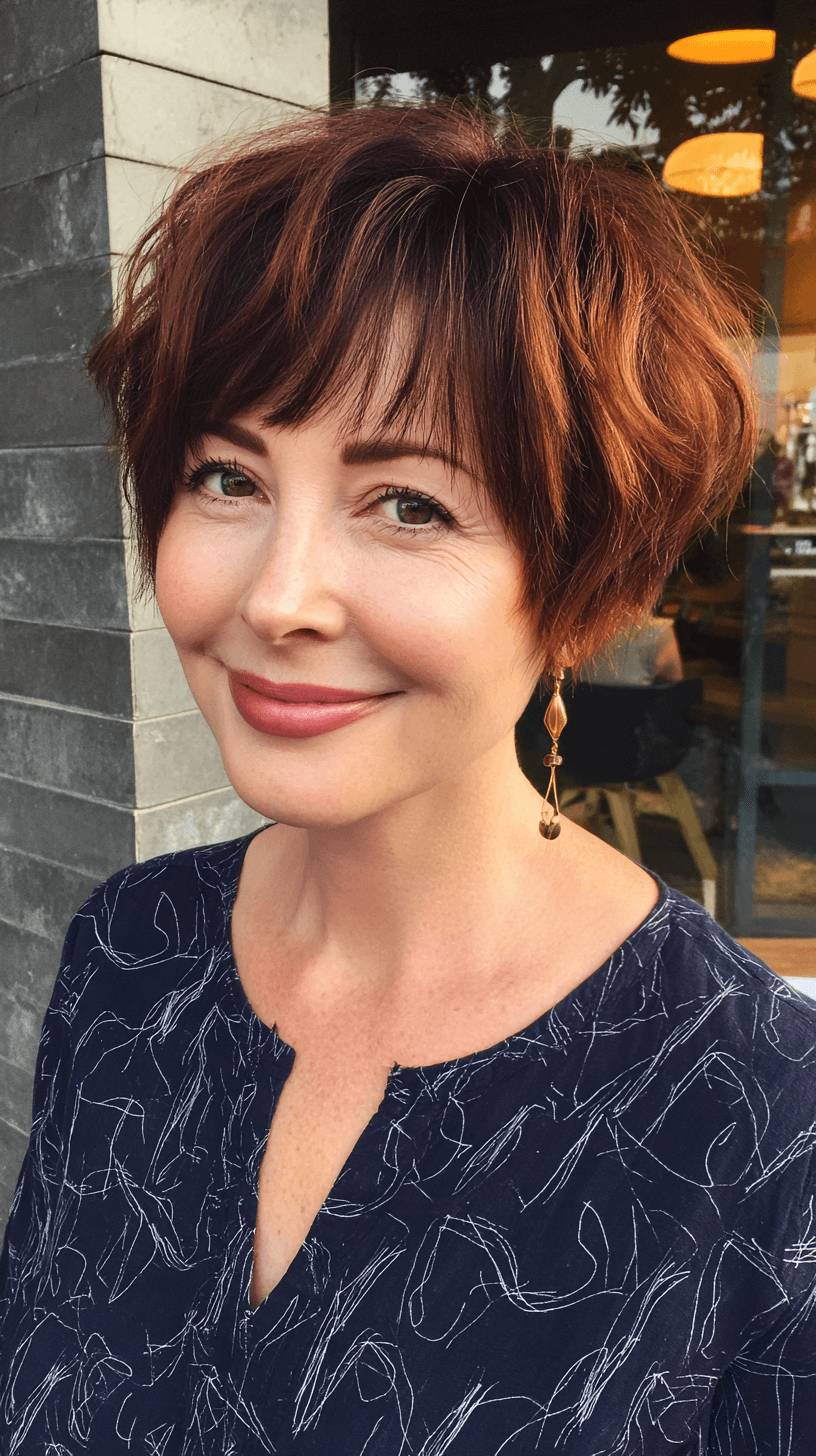
The bixie — a pixie-bob hybrid — gets the shag treatment here with choppy texture and warm auburn highlights woven through a brunette base. The back stays close and tapered while the top keeps enough length for piecey separation, and the highlights add dimension that stops the short cut from looking flat. It is a strong option for women over 40 who want edge without severity, and the auburn warmth flatters neutral to warm complexions.
Request a bixie with shaggy, point-cut texture rather than a sleek finish, plus partial highlights concentrated on the top layers. Styling takes minutes: work a matte paste through dry hair and piece out the ends. Short cuts demand the most frequent maintenance — a tidy-up every four to five weeks keeps the nape clean and the shape crisp. Those growing out a pixie will find this an ideal in-between stage.
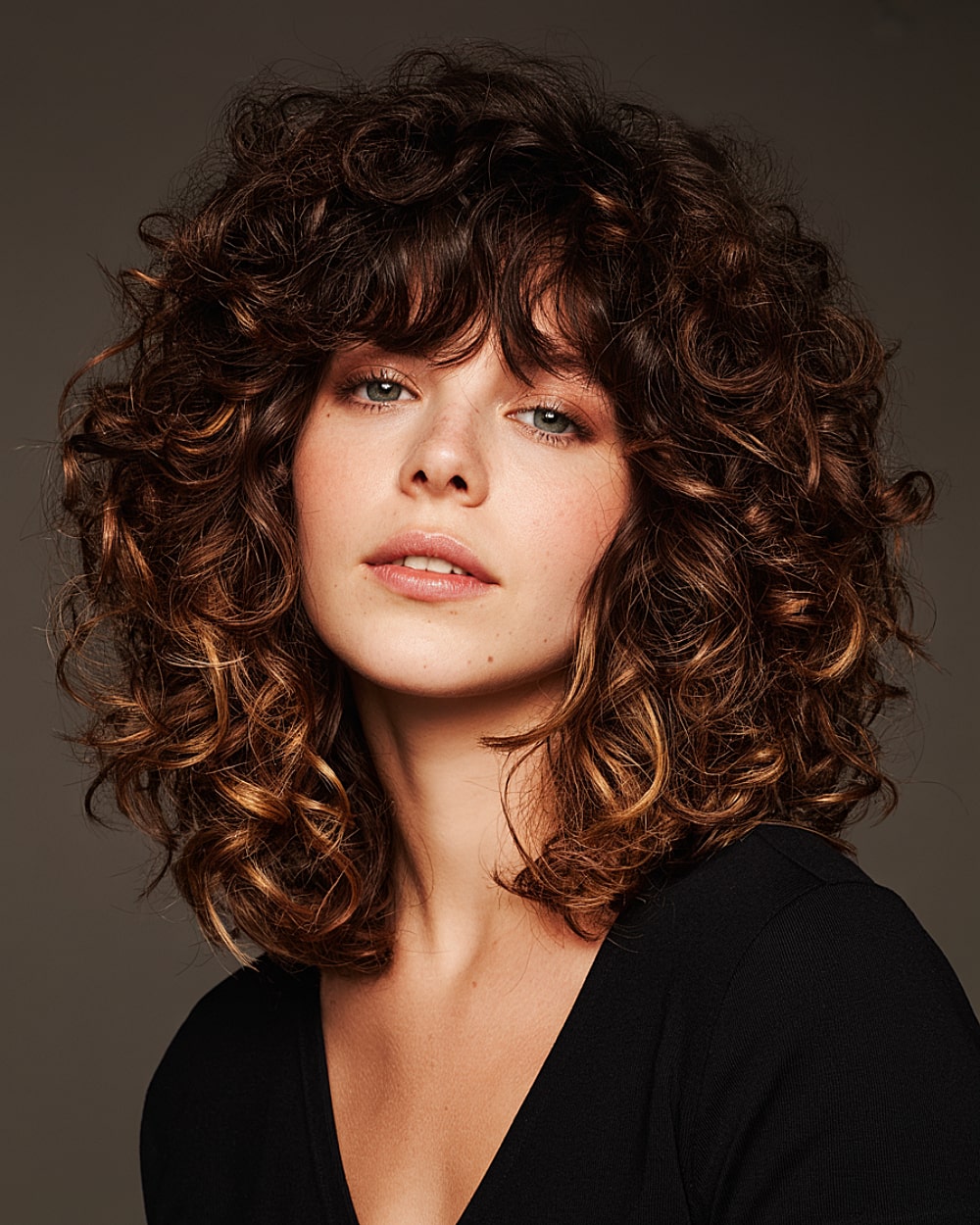
6. Curly Medium Shag
Courtesy of: latest-hairstyles.com
Curls and shags were made for each other: the layering removes the bulk that turns curly cuts triangular, letting each curl spring into a rounded, balanced silhouette at medium length. The layers are cut to follow the curl pattern rather than fight it, so the shape holds with minimal styling. This is one of the best winter cuts for curly hair, since the structure survives hats and scarves far better than a one-length cut. Round and heart faces benefit from the volume distributed around the sides rather than the crown. We covered this territory more deeply in Airy Butterfly Haircuts Summer 2026.
Book a stylist experienced with dry-cutting curls, and ask for layers carved curl by curl. The routine is simple: curl cream on soaking-wet hair, scrunch, and either diffuse or air-dry. Trims every ten to twelve weeks are usually enough, since curls disguise grow-out well. The main trade-off is the cut itself — an inexperienced hand can easily take off too much, so the salon choice matters more than the styling.
7. Brunette Shag with Face-Framing Layers
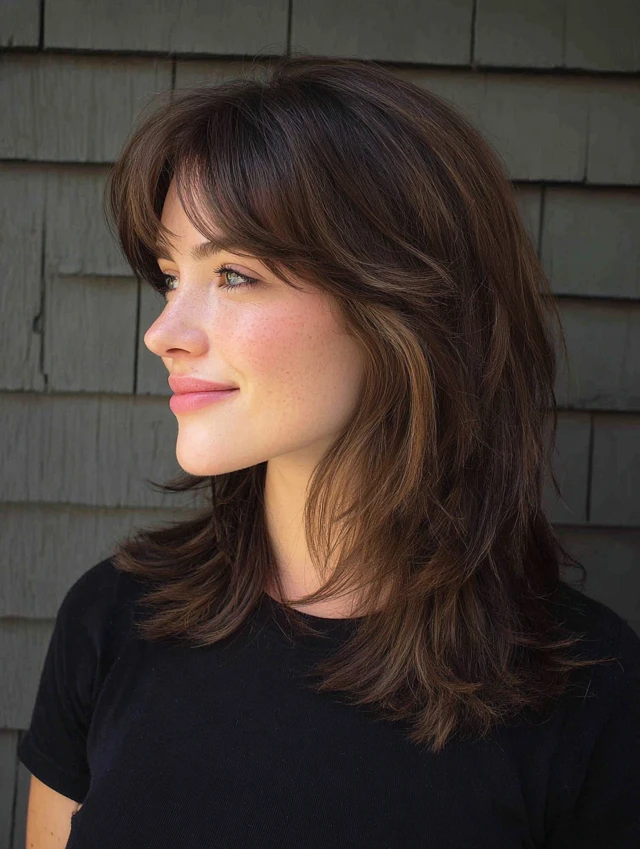
Photo credit: yourstyleinspo.com
For anyone who loves the shag’s texture but not the commitment of bangs, this brunette version keeps the forehead clear and lets face-framing layers do the work. The layers start at the chin and angle forward, drawing attention to the eyes and cheekbones while the rich brunette base adds depth. It works across densities — fine hair gains the illusion of fullness, thick hair loses bulk — and the absence of bangs makes it the most grow-out-friendly shag on this list.
Ask for long layers concentrated around the face with a textured perimeter, worn with a center or slightly off-center part. Styling can be as simple as air-drying with a smoothing cream, or a quick pass with a flat iron bent at the ends for polish. Because there is no fringe to maintain, salon visits can stretch to ten or twelve weeks. The only real requirement is healthy ends; split ends show quickly in a layered cut, so regular trims matter more than styling products.
8. Shaggy Wolf Cut with Wispy Bangs
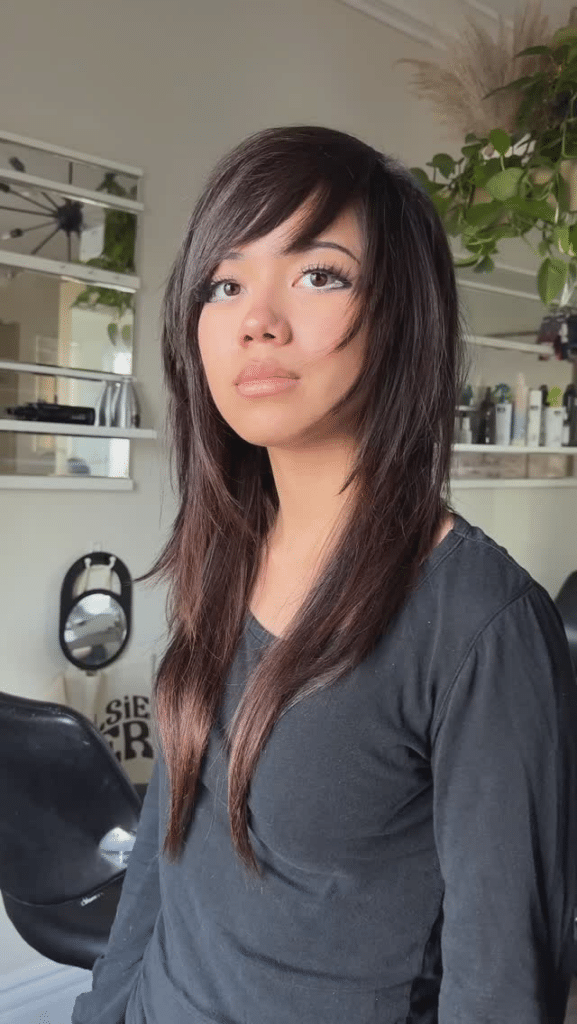
Image credit: hairstylewhiz.com
The wolf cut pushes the shag to its most dramatic: heavy, choppy layers through the crown that taper into long, wispy lengths, finished with feathery bangs. The contrast between the voluminous top and the thinner ends is the whole point — it creates an edgy, rock-inspired silhouette that photographs beautifully. Thick, straight to wavy hair carries it best, since the cut needs density up top to balance the tapered lengths. It suits oval and heart faces particularly well.
Request a wolf cut with disconnected crown layers and wispy, textured bangs, and be clear about how dramatic you want the taper. Styling leans into the messiness: texture spray and a rough blow-dry with fingers, no brushes. The crown layers need reshaping every eight weeks or the shape goes shaggy in the wrong way. Fine hair may find the tapered ends look sparse, so a softer, more blended version is worth discussing with your stylist. Our Trendy Haircuts 2027 rounds up more takes on this exact idea.
9. Ash Brown Layered Shag

Source: rybakovacl.ru
Ash brown is winter’s most wearable cool tone, and on a layered shag it reads as expensive and understated. The cool, smoky base makes the layering more visible than a flat dark brown would, since light catches each textured piece differently. Medium length with layers through the mid-shaft keeps the shape versatile — it can be worn smooth for work or tousled for the weekend. Cool and neutral skin tones pair naturally with ash, while very warm complexions may find it draining.
Ask your colorist for an ash brown with a demi-permanent formula, which fades softly rather than leaving a harsh line, and pair it with a shag cut that has soft, blended layers. Ash tones need blue or purple shampoo every week or two to stay cool rather than brassy. Trims every eight to ten weeks keep the layers defined. This is a lower-maintenance color choice than blonde, but it does demand consistent toning to hold its smokiness.
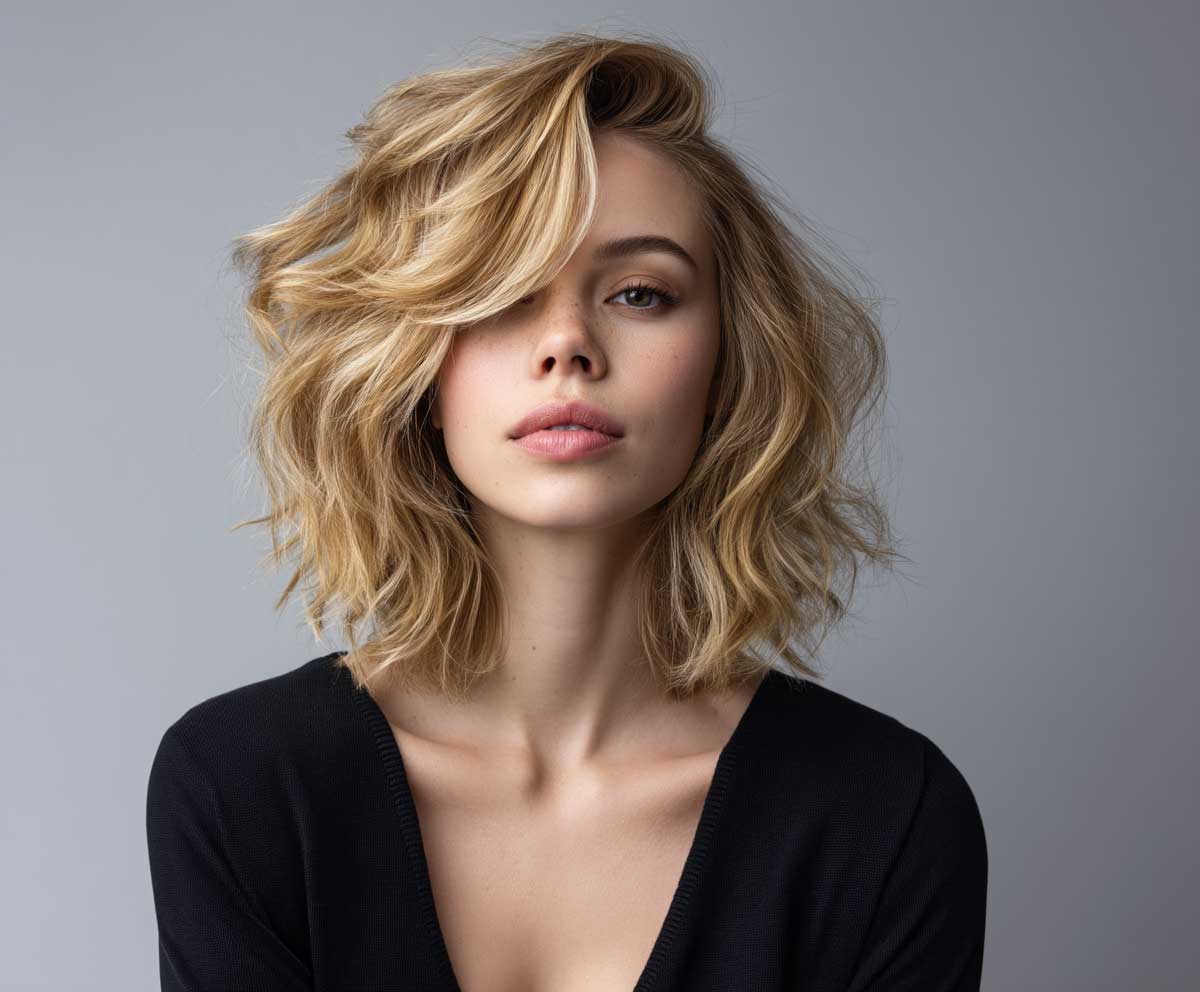
10. Honey Blonde Medium Shag
Via artfasad.com
Honey blonde brings warmth to the winter shag without the high maintenance of icy platinum. The golden tone sits beautifully on a medium-length shag with soft waves, where the layers create natural dimension that makes the color look multi-tonal even when it is not. It brightens the face in the darker months, which is reason enough to consider it, and it flatters warm and neutral skin tones especially well.
Request a warm honey blonde — either all-over color or a root-melted blonde — with a medium shag cut featuring soft, touchable layers. Honey blonde is forgiving: grow-out looks intentional, and toning appointments can stretch to eight weeks. Use a moisturizing routine in winter, since blonde hair tends to dry out faster in heated indoor air. Those with very cool undertones may want to test the warmth against their skin before committing.
11. Cropped Shag with Tapered Nape
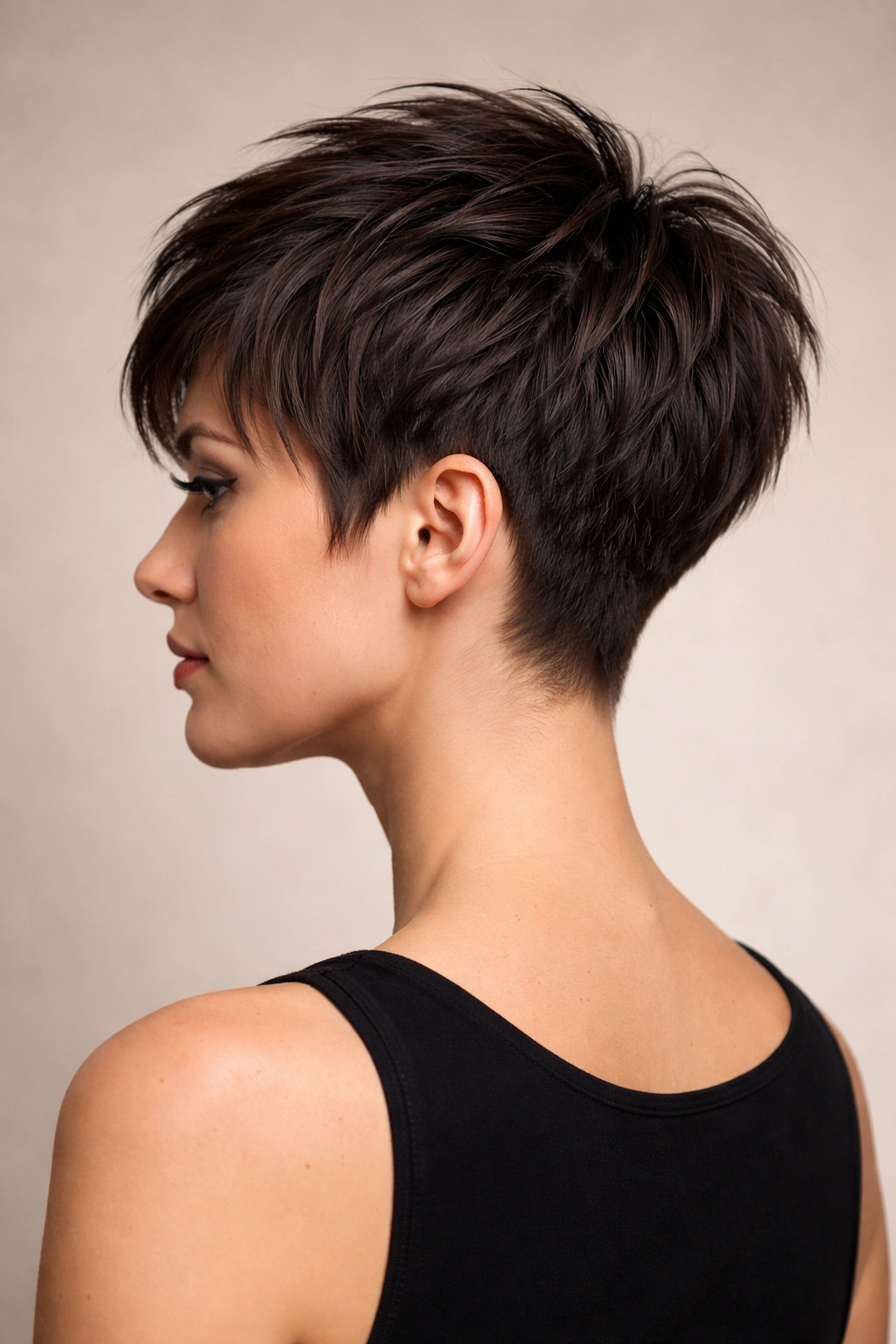
Courtesy of: hairtical.com
This is the shag at its shortest and sharpest: choppy layers on top with a cleanly tapered nape that keeps the neckline crisp. The contrast between the textured crown and the neat nape gives it a tailored edge that longer shags lack. It suits thick, straight to wavy hair that can hold the piecey texture, and it shows off earrings and jawlines to full effect. Petite frames often love it, since the short length keeps proportions balanced. For more ideas in the same lane, see our Fall Bob Haircuts 2026.
Ask for a cropped shag with a tapered — not shaved — nape, so the grow-out stays soft. Styling is quick: a matte wax worked through the crown pieces creates separation in under two minutes. The trade-off is frequency — the nape needs cleaning up every four to six weeks to stay sharp. Anyone who stretches salon visits will find this cut loses its edge quickly, so it rewards commitment.
12. Copper-Auburn Layers with Curtain Bangs
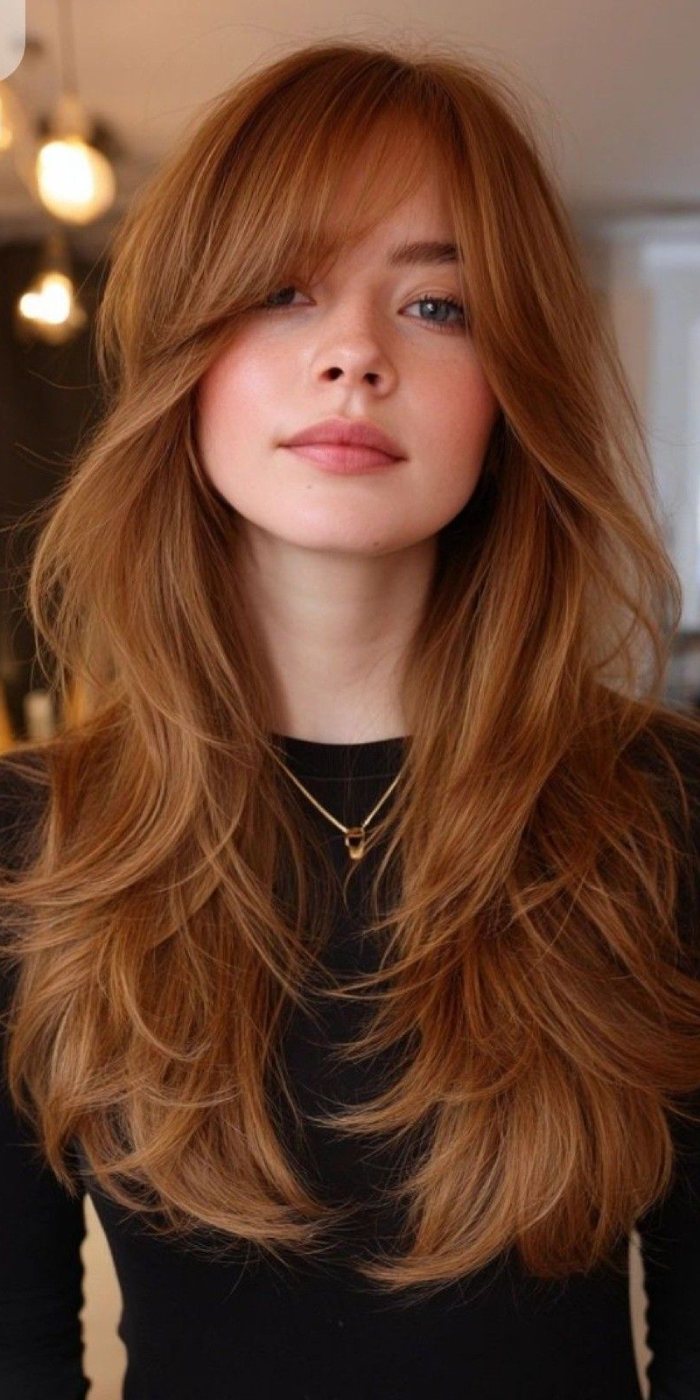
Photo credit: fabmood.com
Warm copper-auburn poured over soft, long layers with curtain bangs is one of winter’s most flattering combinations. The color brings light to the face during the darkest months, while the curtain bangs and flowing layers keep the overall effect soft rather than severe. Longer lengths carry this look best — the layers need room to move — and the warmth complements fair to medium skin with warm or neutral undertones.
Request a copper-auburn base with slightly lighter pieces through the mid-lengths, cut into long layers with curtain bangs that blend at the cheekbones. Copper is a fading color, so plan gloss appointments every six weeks and wash in cool water with color-safe products. The cut itself is forgiving and grows out well. If low-maintenance color is a priority, a deeper auburn without the bright copper pieces will hold longer between appointments.
13. Black Wolf Cut Shag
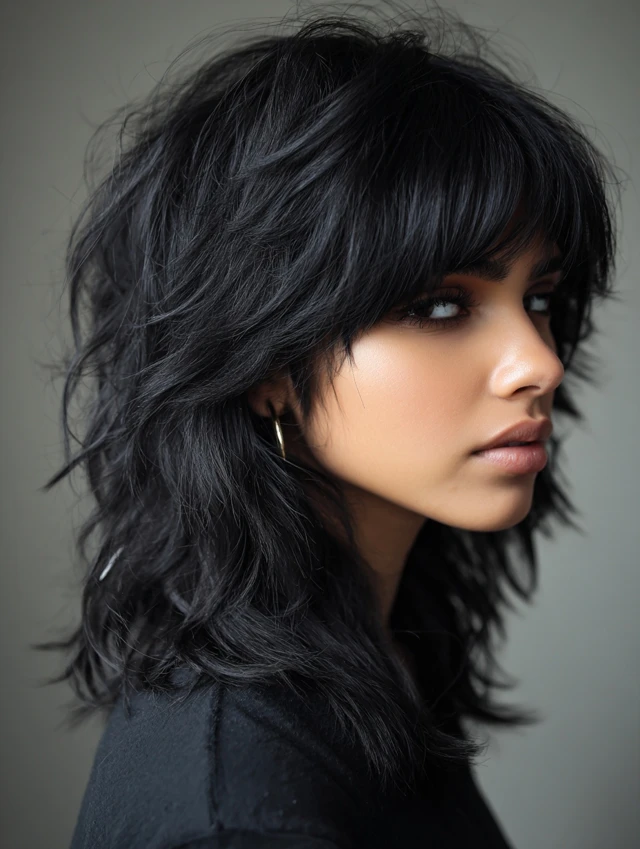
Image credit: womenshairtoday.com
Jet black takes the wolf cut’s drama and doubles it. The inky, uniform color makes every choppy layer and tapered end razor-visible, turning the haircut itself into the statement. The dark shade also adds the illusion of density, which helps the voluminous crown look even fuller. It is a bold choice that pairs strikingly with winter’s pale light and dark wardrobe palette, and it suits those who want maximum impact with minimum color upkeep.
Ask for a wolf cut with strong crown layering and thinned ends, kept in a rich, level-black shade. Black dye is the lowest-maintenance color there is — no toning, no brass — but it is also the hardest to change later, so be sure before committing. Style with texture spray for separation; the cut does most of the work. Regular trims every eight weeks keep the layers from blurring together into one heavy shape. The same idea, styled another way, appears in Best Cozy Hair Colors for October 2025.
14. Edgy Asymmetrical Shaggy Bob

Source: femmecrown.com
Asymmetry gives the shaggy bob an architectural twist: one side cut slightly longer, layers carved at an angle, and a deep side part that throws everything off-center. The result is modern and a little rebellious without tipping into costume. Straight to slightly wavy hair shows off the angled lines best, and the asymmetry can balance a rounder face by creating diagonal movement. It is the shag for someone who finds classic bobs too predictable.
Request an asymmetrical shaggy bob with at least an inch of difference between the sides and a deep side part. Styling is straightforward — smooth the longer side, piece out the shorter side with wax — but the cut only looks intentional when it is precise, so this is firmly a salon-maintained style with trims every six weeks. Those who prefer wash-and-go simplicity may find the styling demands outweigh the payoff.
15. Feathered Textured Shag
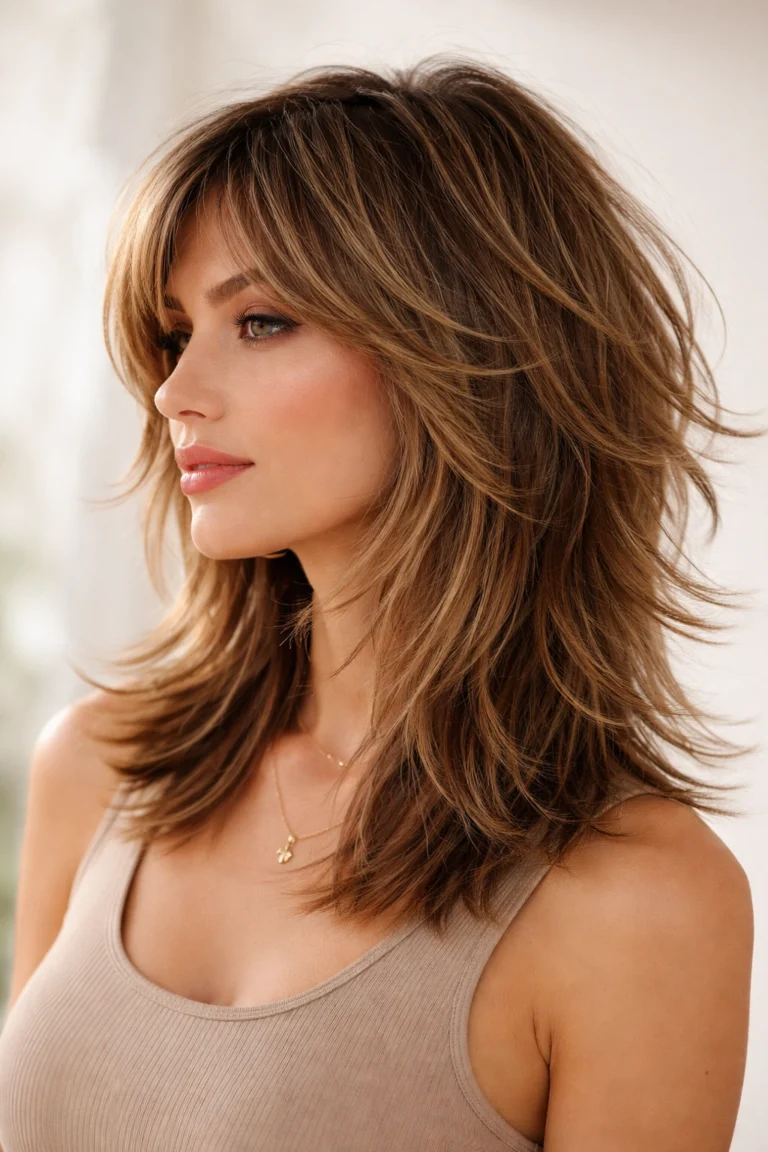
Via hairtical.com
Feathering softens the shag into something romantic: instead of chunky, disconnected pieces, the layers are razor-thinned at the ends so they fall like feathers. The effect is movement without messiness — hair that looks touchable and light. This is a particularly good shag for women over 50, since the softness flatters without trying too hard, and for fine hair, because feathered ends remove weight strategically rather than hacking it away.
Ask for a shag with feathered, razor-cut ends rather than blunt choppy layers. A round brush blow-dry enhances the feathered flick, though air-drying with a light cream also works for a softer finish. Because razor cutting can encourage split ends on fragile hair, keep up with trims every seven to nine weeks and use a heat protectant. Very thick, coarse hair may need more aggressive thinning than feathering alone can provide. We break down a similar look in Best Bob Haircuts for Women 2026 Modern Short Cuts with Soft Layers.
16. Curly Copper-Red Shag with Bangs

Courtesy of: salonvanessabeauty.com
Copper-red curls in a shag cut are pure winter fire. The vibrant color electrifies the curl pattern, and the shag’s layers keep the volume distributed so the shape stays rounded instead of pyramidal. Bangs cut into curly hair need a confident hand, but when done right they frame the face with soft, springy pieces rather than a solid wall. This combination suits medium to thick curl patterns best and absolutely glows on fair skin.
This look needs two specialists in one: a curl-cutting stylist and a colorist comfortable with vivid copper. Ask for curl-by-curl layering with bangs cut longer than you think — curls spring up as they dry. Copper fades quickly, so expect color refreshes every five to seven weeks. The payoff is enormous, but between the cut precision and the color upkeep, this is one of the higher-maintenance options here.
17. Dimensional Brunette Shag

Photo credit: hairtical.com
Not all brunettes are created equal, and this dimensional version proves it: multiple brown tones — espresso, chestnut, a whisper of caramel — woven through a textured shag so the layers practically highlight themselves. The color variation does the work that styling products usually do, giving flat-looking hair instant depth. It is arguably the most versatile entry here, flattering nearly every skin tone and working on straight, wavy or loosely curled hair.
Ask for a multi-tonal brunette with fine babylights or lowlights rather than bold contrast, cut into a medium shag with textured ends. Dimensional brunette is wonderfully low-maintenance — grow-out is nearly invisible, and appointments can stretch to twelve weeks. The main consideration is the initial appointment, which takes longer and costs more than a single-process color. After that, it practically takes care of itself.
18. Long Dark-Blonde Shag with Blended Layers
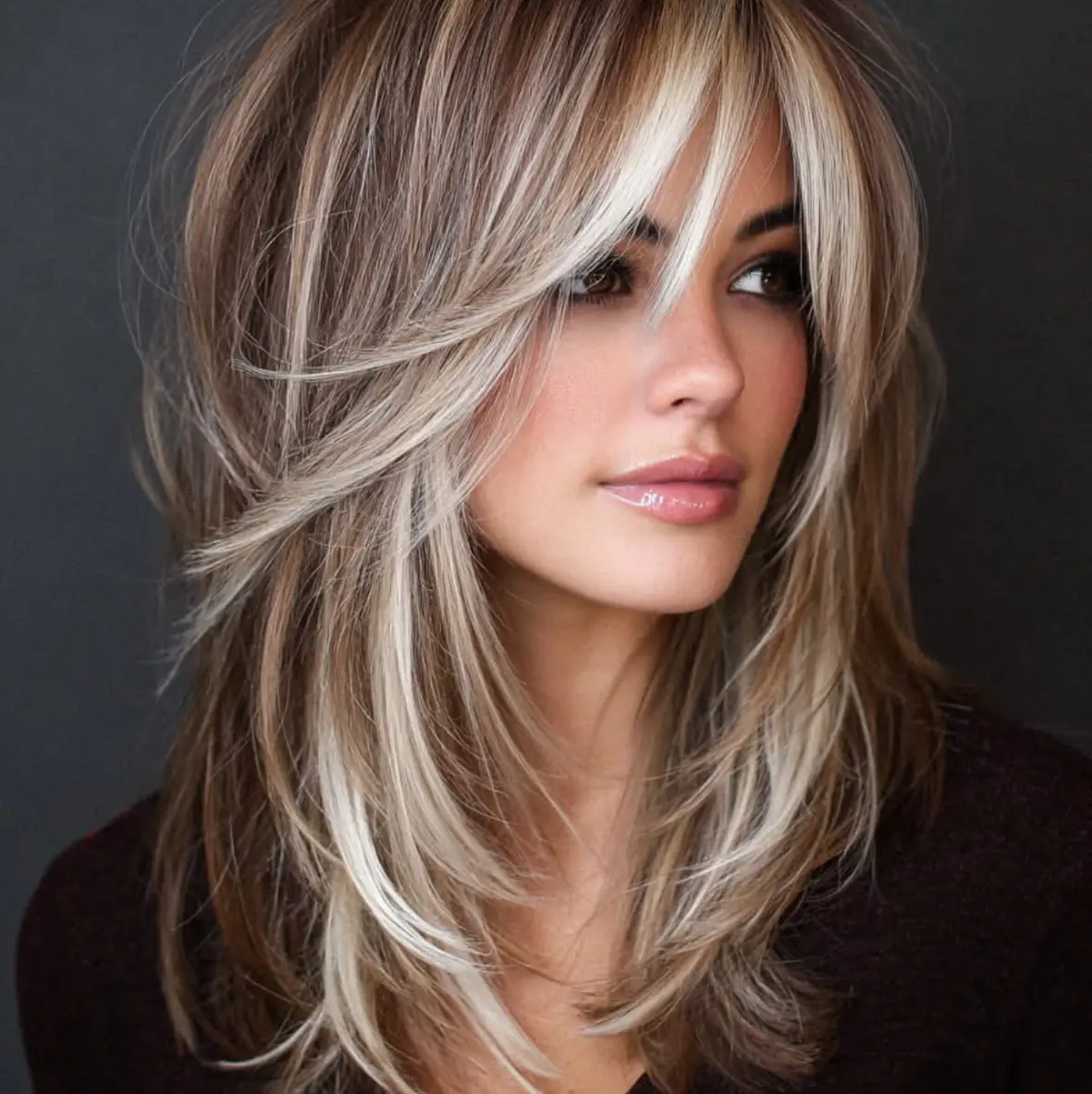
Image credit: infusesalon.setmore.com
For those who want shag texture without the rock-and-roll edge, this long dark-blonde version blends its layers so softly the cut reads as polished rather than piecey. The length stays past the shoulders, the layers melt into each other, and the dark-blonde shade keeps everything looking natural and expensive. It is the office-friendly shag — all the movement, none of the mess — and it suits medium to thick hair that can support long layers without looking stringy. A companion piece, Winter Blonde Hair Color Ideas, explores the same palette.
Request long, blended layers with a soft perimeter rather than choppy ends, in a dark-blonde shade close to your natural color for easy grow-out. Style with a large round brush for smoothness, or braid damp hair overnight for soft waves. Trims every ten weeks keep the blended layers from merging into one length. Fine hair may find this much length pulls the layers flat, so a slightly shorter version could work better.
19. Burgundy Chin Shag with Soft Fringe
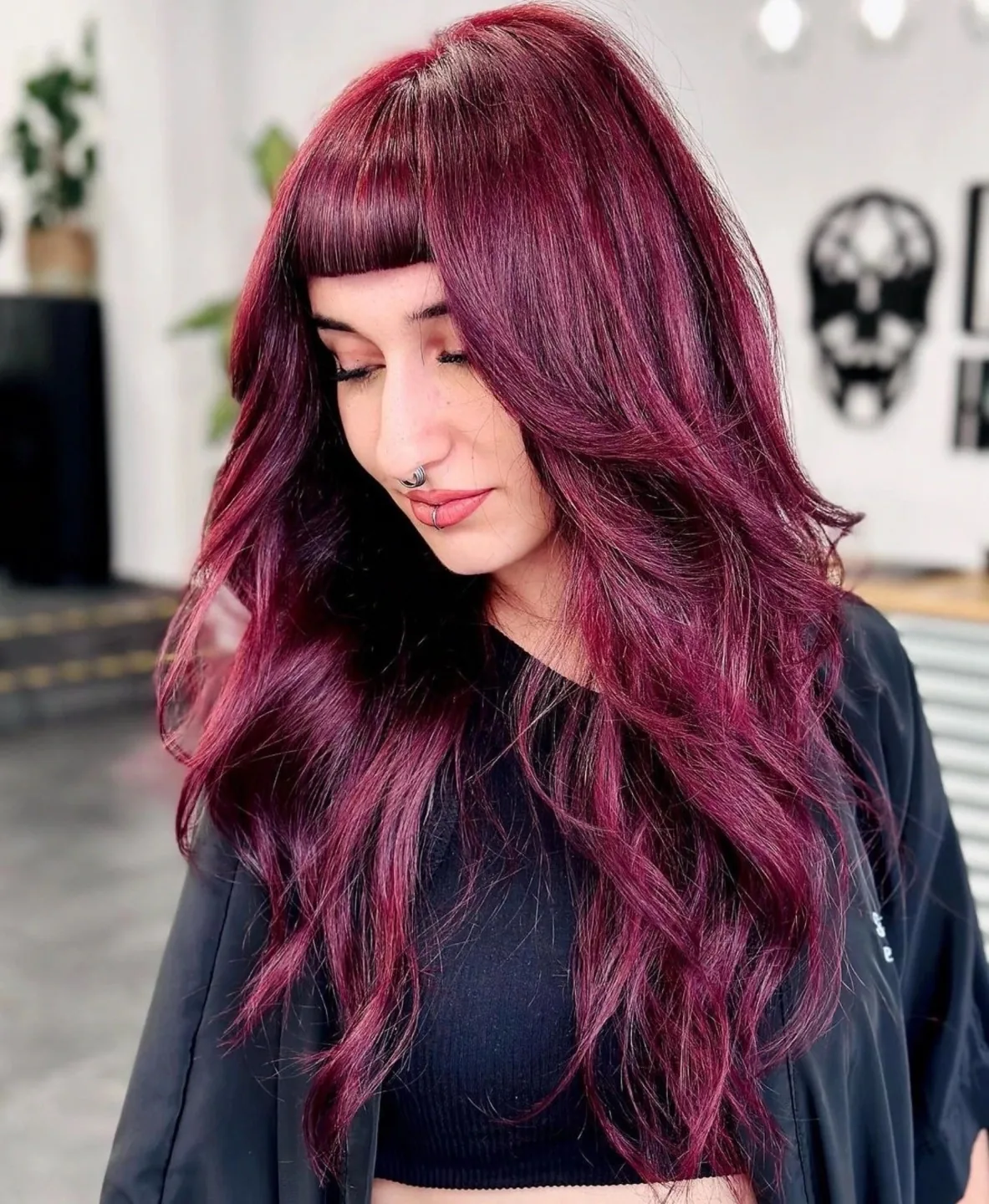
Source: creatifhairsalon.com
Burgundy sits in the sweet spot between brown and red — rich, seasonal, and just bold enough to feel intentional. On a chin-length shag with a soft, feathery fringe, the deep wine tone makes the textured layers glow, especially under warm indoor lighting. The shorter length keeps the strong color from overwhelming, and the fringe softens the forehead. It flatters fair to medium skin tones and looks striking against winter neutrals like camel, grey and black.
Ask for a burgundy shade with violet undertones rather than orange-red, cut into a chin shag with a light, airy fringe. Burgundy fades toward brown without proper care, so use color-depositing conditioner every couple of weeks. The chin length needs reshaping every six to eight weeks. Anyone hesitant about red tones will find burgundy an easier entry point than true copper or cherry.
20. Golden-Brown Midi Shag with Curtain Bangs

Via cleodiva.com
The midi — landing between the shoulders and collarbone — may be the most practical shag length of all: long enough to tie back, short enough to show off the layers. In golden brown with curtain bangs, it has a warm, approachable quality that works for professional settings and weekends alike. The curtain bangs open up the face while the textured layers prevent the mid-length from looking heavy. Fine to medium hair does well here, as the length is not so long that it drags the layers down.
Request a midi shag with curtain bangs starting at the cheekbones and layers that keep the ends light. This is a genuinely easy cut to live with: air-dry with texture spray, or blow out the bangs in two minutes and leave the rest. Bang trims every six weeks, full reshaping every ten. It is an excellent first shag for anyone nervous about going too short or too choppy. If this look speaks to you, Cornrow Hairstyles for 2025 continues the thread.
21. Silver-Grey Choppy Shag
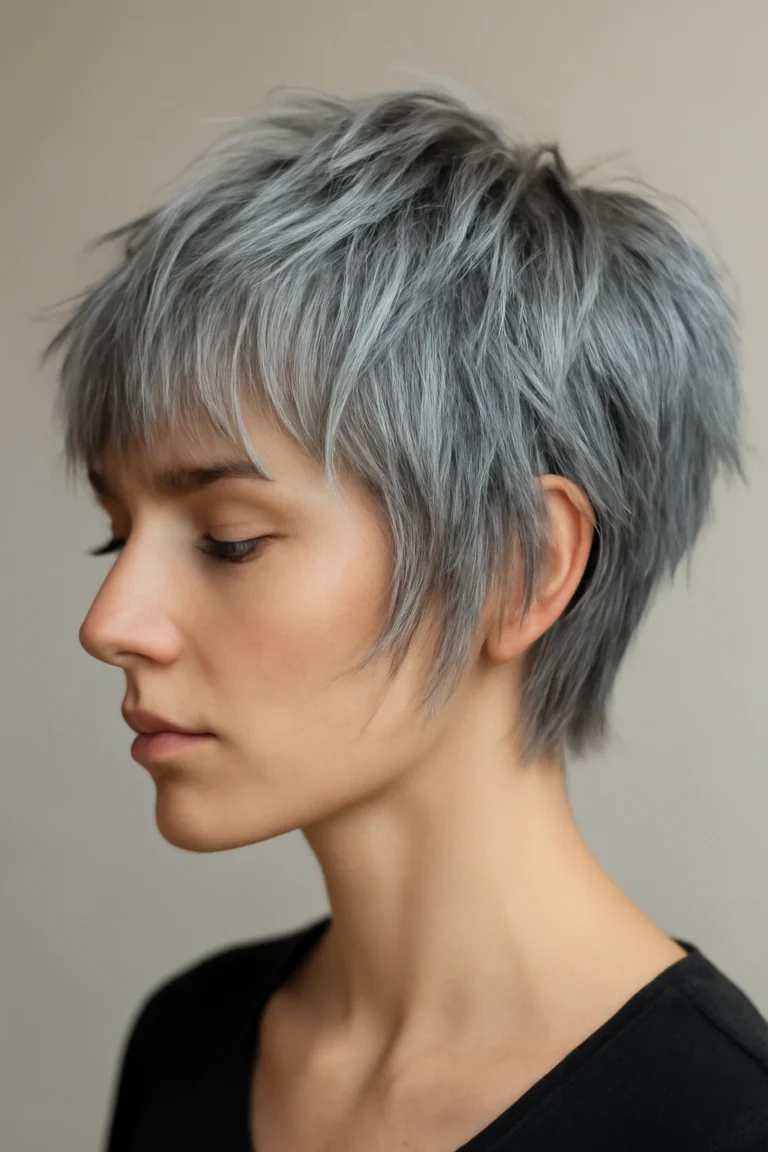
Courtesy of: hairtical.com
Silver-grey turns the shag into a fashion statement. The metallic, almost-white tone makes choppy layers look sculptural, and against winter’s pale landscape the whole head becomes an accessory. It works beautifully on those embracing natural grey — the shag’s texture keeps grey hair looking deliberate and modern rather than aging. On dyed hair, it demands bleaching first, so it is best suited to hair that can handle the process or is already light.
For natural grey, ask for a choppy shag that works with your growth pattern; for dyed silver, expect a double-process service with a steel toner. Purple shampoo is non-negotiable to keep the tone icy rather than yellow. Trims every seven to nine weeks maintain the choppy definition. This is a high-commitment color, but for the right person it is unforgettable.
22. Wavy Low-Maintenance Shag
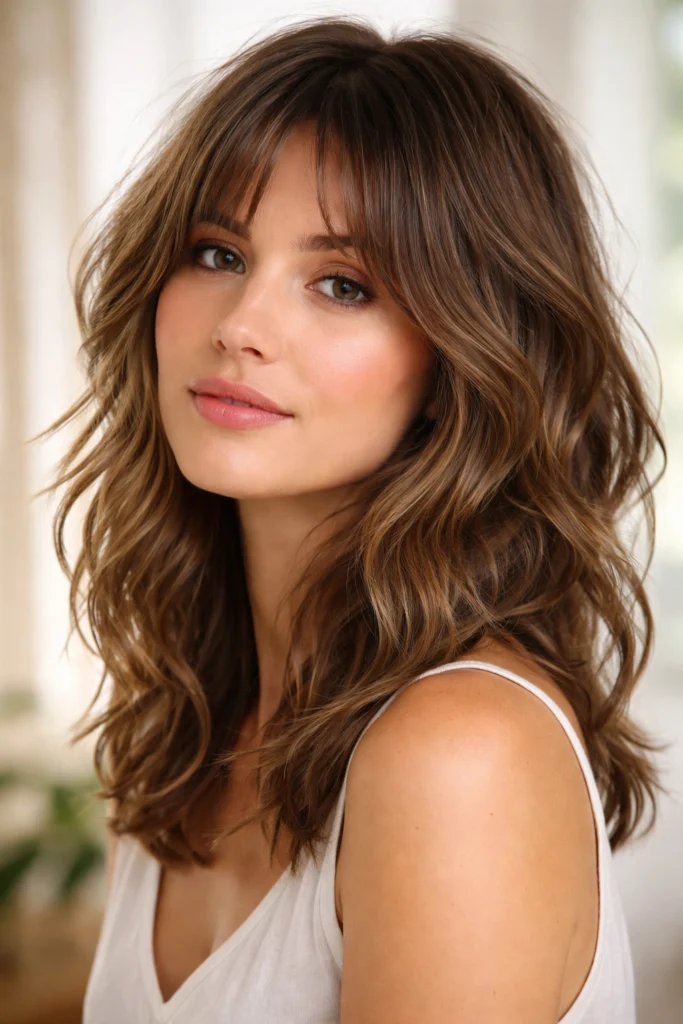
Photo credit: hairtical.com
This is the shag for people who want to look like they tried without actually trying. Cut with long, soft layers that follow the hair’s natural wave, it is designed to be air-dried and left alone — the wave pattern provides all the texture the cut needs. No bangs means no fringe maintenance, and the grown-out look is essentially the same as the fresh cut. Medium-density wavy hair is ideal; the cut simply organizes what is already there.
Ask for a shag with long, blended layers and no fringe, cut to enhance your natural wave pattern. The routine is minimal: leave-in conditioner on damp hair, scrunch, done. Salon visits can stretch to twelve weeks or more. The trade-off is that very straight hair will not get much from this cut without styling effort, and very curly hair needs a curl-specific approach instead.
23. Dark Shag with Statement Bangs
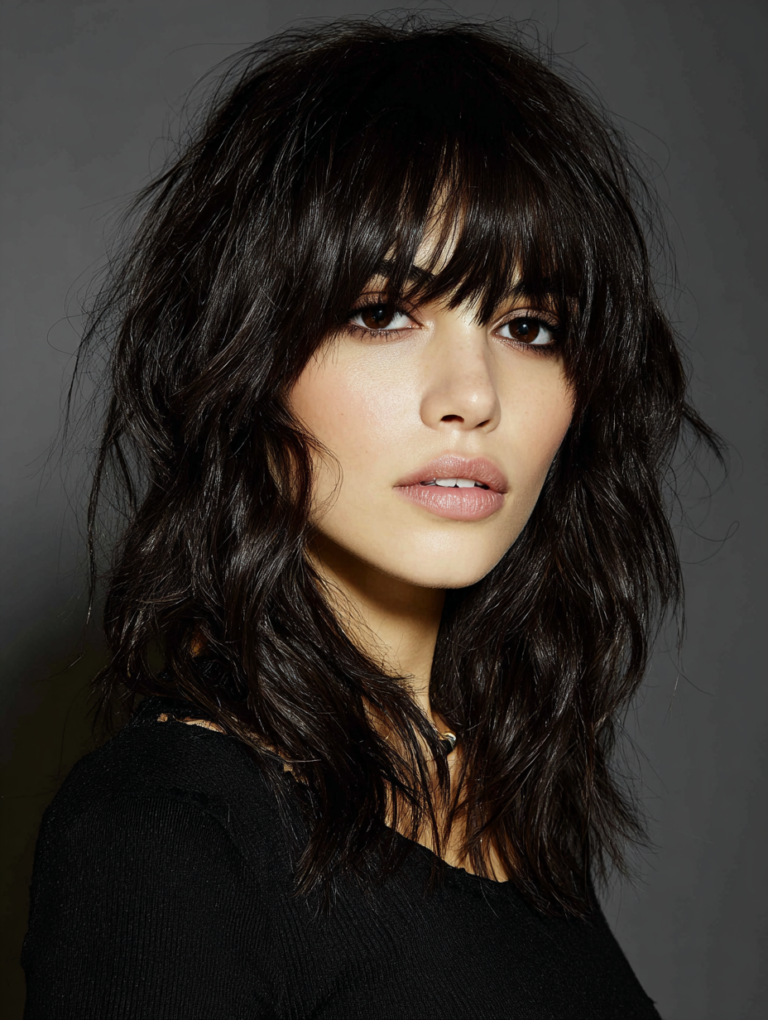
Image credit: jawdropink.com
When the bangs are the main event, the rest of the shag plays supporting role. This dark version features a bold, full fringe — thick, deliberate, brow-grazing — set against textured layers that fall past the shoulders. The deep, near-black shade makes the fringe look even more graphic. It is a confident, editorial look that frames the eyes dramatically and suits oval and long faces, where the strong horizontal line of the fringe balances length. This pairs naturally with the ideas in Bixie Haircuts for Women.
Request a full, dense fringe cut with texture at the ends so it does not look like a helmet, paired with a layered shag. Statement bangs need a quick daily style — a round brush or flat iron pass — and trims every four to five weeks to stay at the right length. Round faces should discuss fringe width with their stylist, since a very wide, heavy bang can emphasize fullness.
24. Textured Butterfly Shag for Long Hair

Source: hairtical.com
The butterfly cut meets the shag in this long-hair hybrid: short, face-framing layers up top that mimic a shorter cut, flowing into long lengths below, all finished with bangs. The shag influence comes through in the choppy texture of the upper layers, which keeps the butterfly’s volume from looking too polished. It is the answer for long-haired wearers who want change without losing length, and the face-framing pieces are especially kind to long faces.
Ask for a butterfly cut with shaggy, textured upper layers and bangs that suit your face shape. Style the top layers with a round brush for bounce and leave the lengths smooth or waved. Because the cut has two distinct zones, it needs reshaping every eight to ten weeks to keep the shorter layers from growing into the longer ones. Fine hair should keep the upper layers light to avoid a top-heavy look.
Final Thoughts
The strongest options here work because of their layering, texture and face framing — not simply because they are short or choppy. A shag earns its place in winter by holding shape when other cuts go flat, but the right version depends on honest self-assessment. Choose based on your hair’s natural texture, how often you will see your stylist, and how much daily styling you will actually do. Match those three, and the shag practically styles itself.
- Trim every six to eight weeks to keep the shape sharp.
- Use a heat protectant before every hot-tool session.
- Tone blonde or highlighted hair every six weeks to keep brassiness away.
- Match the upkeep schedule to your routine before committing to high-maintenance color.
The best color is the one that still looks intentional at week six.