Winter is the season when curls either thrive or sulk — dry indoor heating, cold wind and hat hair all conspire against definition. But the right haircut can do half the styling work for you. A well-planned curly cut removes winter-damaged ends, builds shape that holds under a beanie, and lets your natural texture take center stage with less daily effort. Below are 24 curly haircut ideas for winter 2027, from long layered looks to bold short crops, each chosen for real curls, real weather and real maintenance levels.
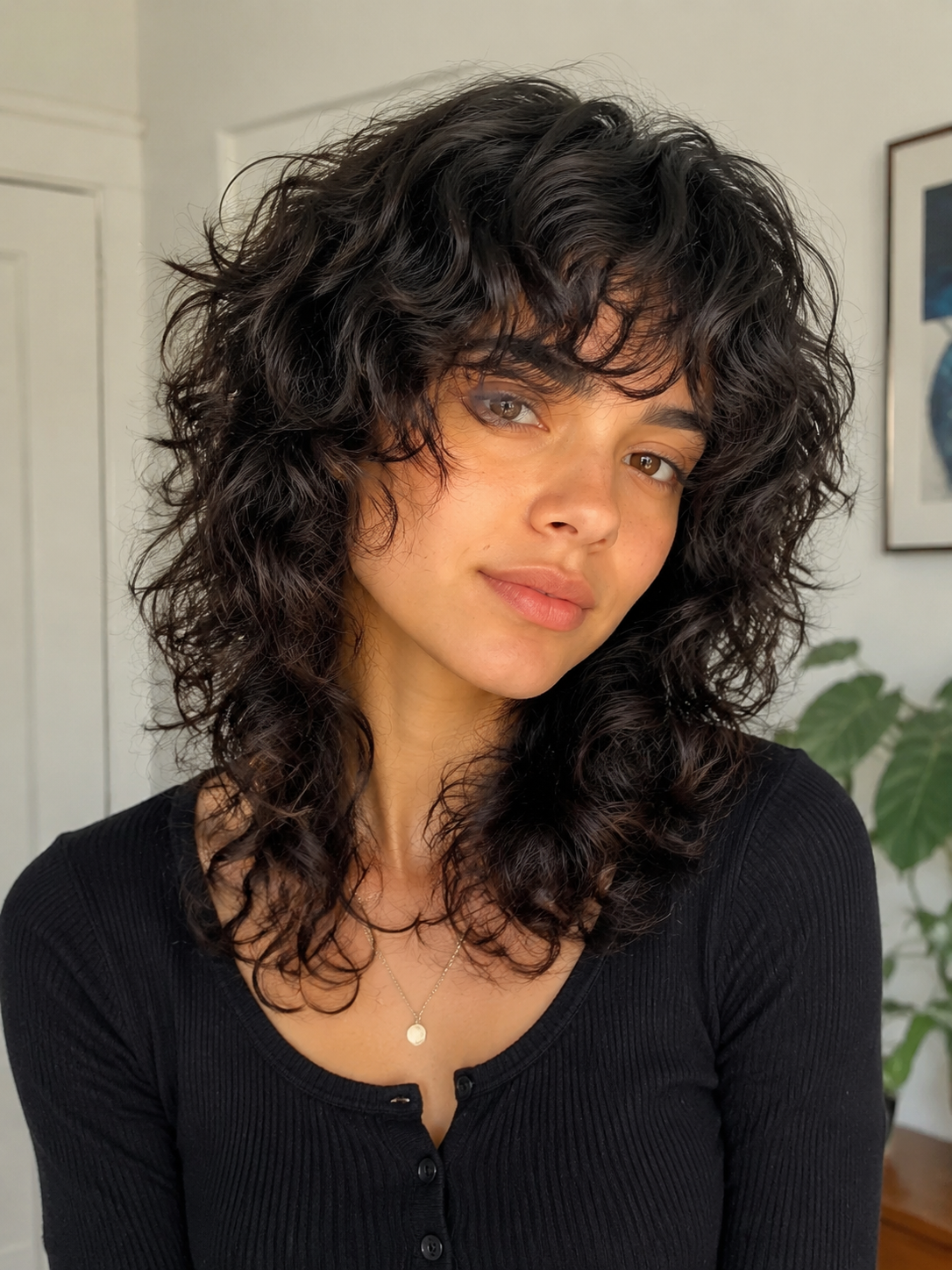
1. Long Curly Layers with Face-Framing Pieces
Courtesy of: hairinspocorner.com
The base here is a long curly cut with shag-style layering throughout — the layers start around the cheekbones and cascade down, giving the length a tousled, airy shape rather than a heavy triangle. The texture is mid-density with natural ringlets, worn with a center-ish part that lets the shorter face-framing pieces soften the jawline. This silhouette suits most face shapes because the volume is balanced: fullness at the crown is controlled while the ends stay light. The same theme, explored from another angle, is in Flattering Spring Haircuts 2026 for Chubby Faces Modern Cuts That Define.
Ask a curl-specialist stylist for dry-cut layers so the spring of each curl is accounted for before scissors touch it. Styling is refresh-friendly: a leave-in cream and a diffuser on low heat, or a simple scrunch-and-go routine on non-wash days. Trims every 10–12 weeks keep the layers from growing out unevenly. The main advantage is versatility — it looks intentional both air-dried and diffused — while the trade-off is that long layers demand consistent conditioning in winter, when dry air makes ends thirsty. The same idea, styled another way, appears in Summer Haircuts for Women Over 50 2026.
2. Voluminous Curly Bob with Graduated Shape
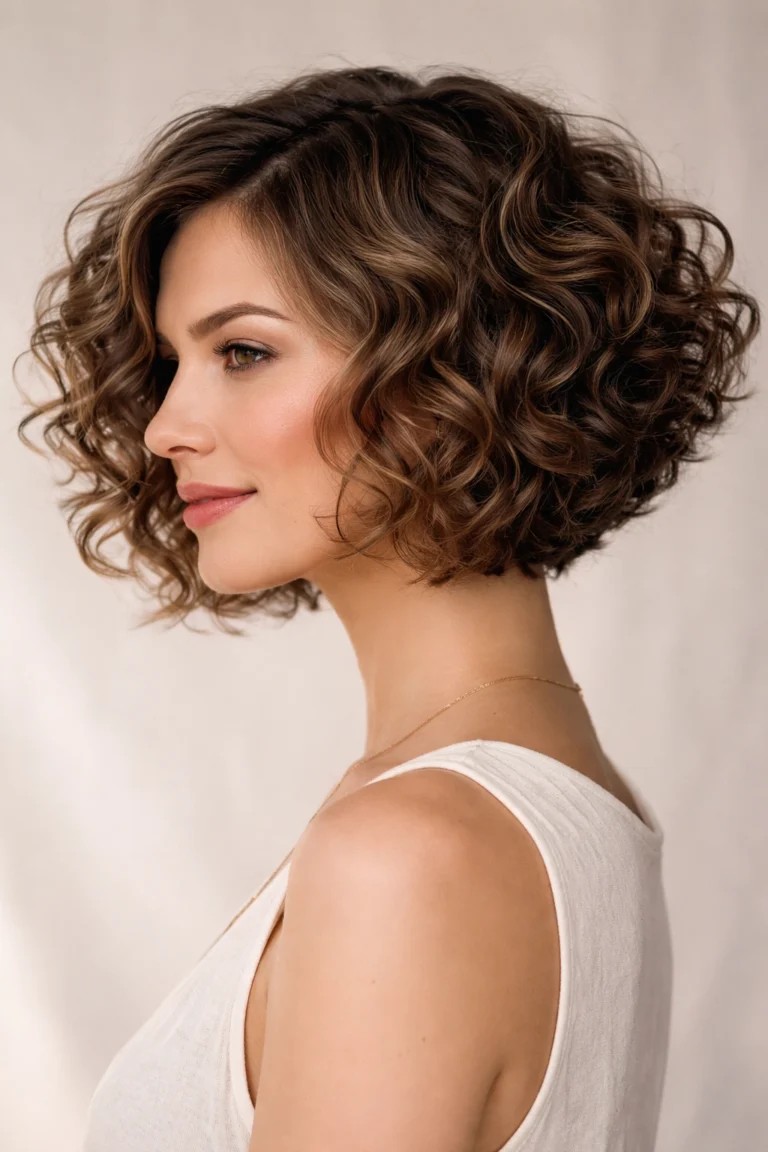
Photo credit: hairtical.com
This curly bob sits around the jawline with a subtly graduated, stacked back that builds volume where curls naturally want to lift. The cut keeps the front pieces slightly longer, which frames the face and prevents the classic “pyramid” effect that blunt cuts can create on curly hair. Texture is medium to dense curls with a polished-yet-touchable finish, and the shape works especially well for round and oval faces, since the height at the crown adds the illusion of length. For the fuller picture, Easy Chic Winter Hairstyles for Women in 2025 2026 That Elevate Your Everyday Style is worth your time.
Request a Deva-style or dry curl-by-curl cut so the stylist shapes each section at its true dry length. Day-to-day styling needs little more than a curl cream and a scrunch; in winter, sleeping in a satin-lined bonnet preserves the shape for multiple days. Expect trims every 6–8 weeks, since bobs lose their silhouette fast as curls grow. The payoff is a statement shape with minimal morning effort, though very fine curls may need a root-lifting product to keep the crown from falling flat.
3. Curly Shag with Full Bangs
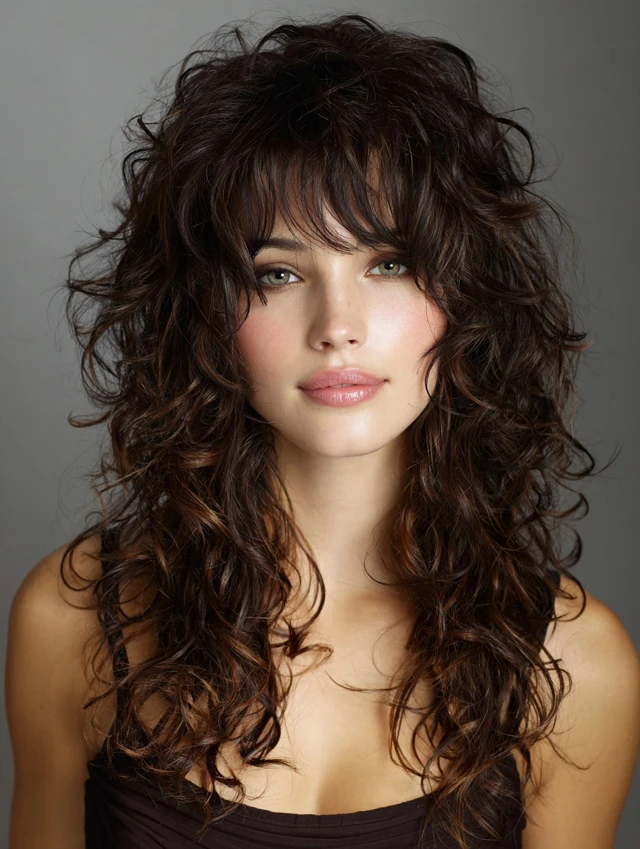
Image credit: cleodiva.com
A full set of curly bangs changes the whole mood of long hair, and this shag proves it: the fringe is cut with enough length to coil softly over the forehead rather than spring up, while long layers through the lengths give the dark curls that lived-in, rock-and-roll texture. The overall length falls well past the shoulders, so the cut keeps drama at the face while the body of the hair stays manageable. It flatters long and oval faces especially, since the fringe shortens the forehead visually.
Curly bangs should be cut dry and conservatively — they always bounce shorter than they look wet. Style them by twirling damp fringe pieces around a finger with a touch of gel, then diffusing or air-drying. In winter, fringe is a commitment: it needs refreshing more often than the rest of the hair and can frizz under hats, so keep a small refresher spray in your bag. The advantage is a genuinely transformative look without sacrificing length; the trade-off is the extra daily attention the fringe demands.
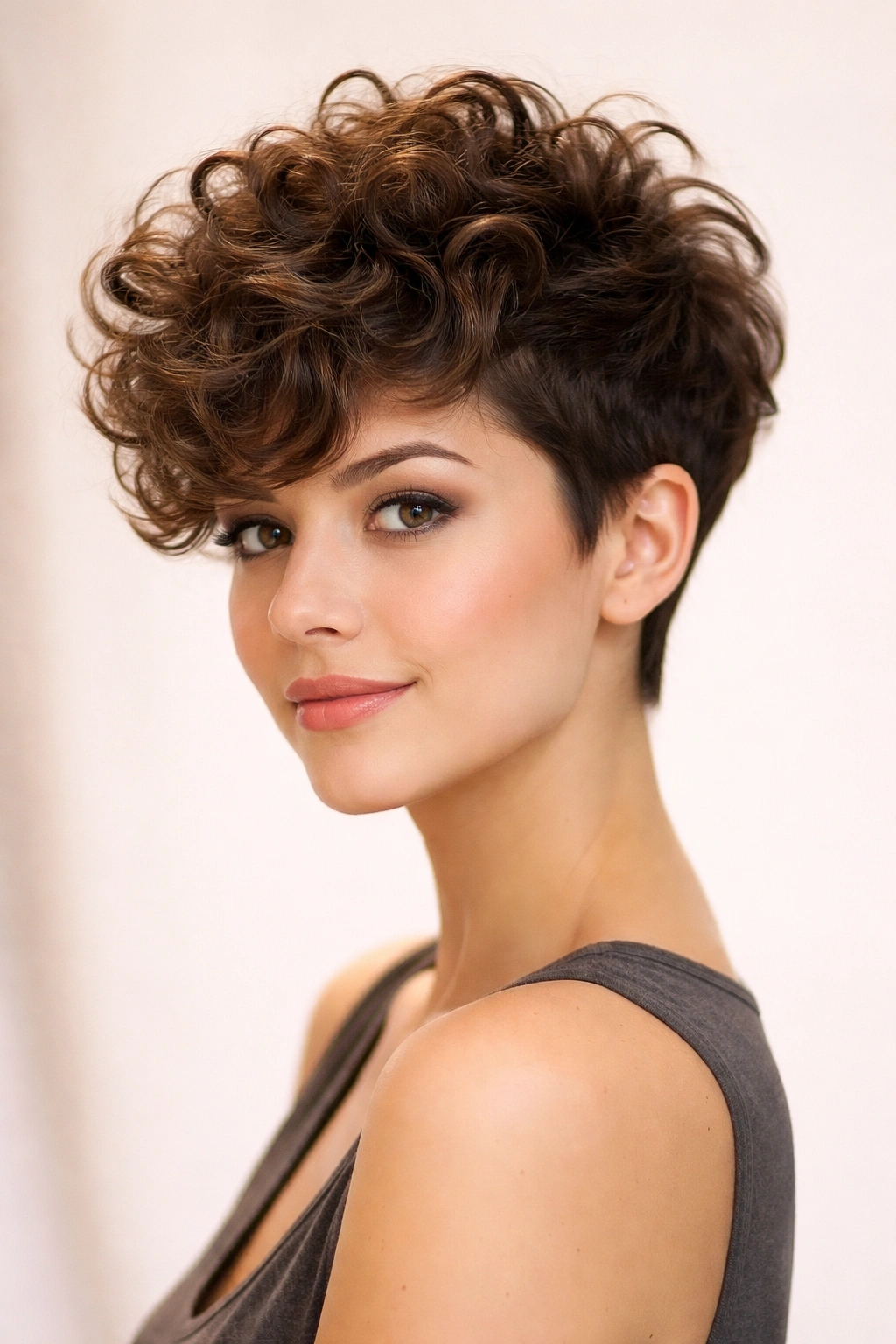
4. Curly Pixie with Crown Volume
Source: hairtical.com
For anyone ready to go short, this curly pixie keeps the magic where it matters: height and texture at the crown, with the sides and nape tapered close. The curls on top are left long enough to coil and catch light, creating a silhouette that is bold but still soft. It suits oval, heart and diamond faces beautifully, and it is one of the most hat-friendly cuts on this list — a beanie simply presses it down and it springs right back. For readers who want more, Top 20 2026 Haircuts for Thin Fine Hair Long Layers Volume Boosters Modern Styles keeps the ideas coming.
The technique that matters most is the taper: ask for the sides to be faded or clipper-blended into the textured top so the grow-out stays graceful. Styling takes minutes — a pea-sized amount of curl cream scrunched into damp hair, air-dry or diffuse. Upkeep is the real consideration: pixies need a shape-up every 4–6 weeks or the proportions disappear. The advantage is near-zero daily styling; the trade-off is the salon commitment and the patience required to grow it out if you change your mind.
5. Medium Curly Cut with Bangs
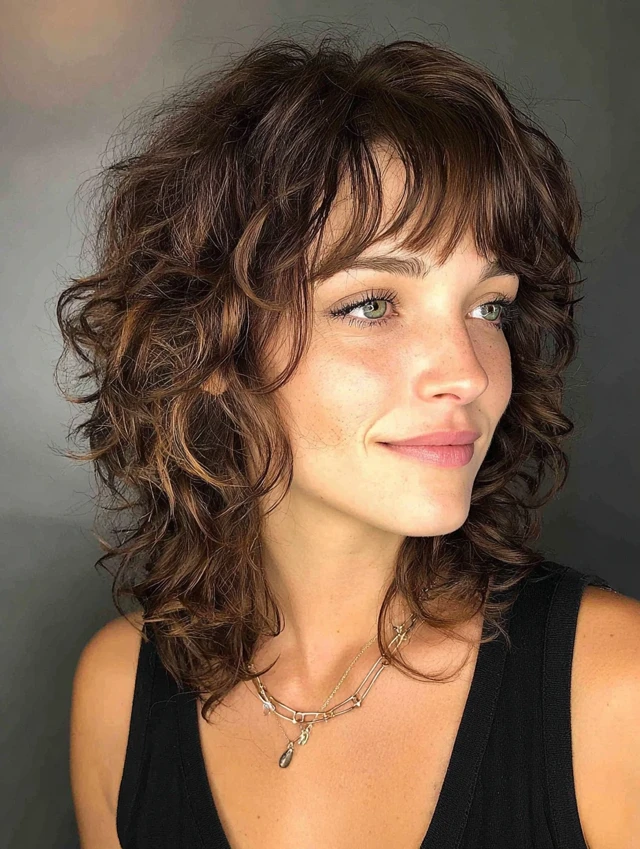
Via cleodiva.com
Medium length is the sweet spot for many curl types — long enough to pull back, short enough to keep its bounce — and this cut adds a soft fringe to the mix. The layers are rounded through the mid-lengths so the silhouette reads full and playful rather than weighed down, and the bangs are cut long enough to blend into the face-framing layers. It works for fine to medium curls that need help looking thicker, and the overall effect is youthful without reading juvenile.
Ask for the bangs to be cut at least an inch longer than your target when wet, since curly fringe shrinks dramatically. Style with a lightweight mousse to avoid weighing down the bounce, and pineapple the hair at night to preserve both the fringe and the layers. Trims every 8–10 weeks. The strength of this cut is its balance of style and practicality; the one caveat is that medium curls with bangs can get unruly in humid-to-dry indoor transitions, so a satin pillowcase helps year-round.
6. Rounded Curly Afro
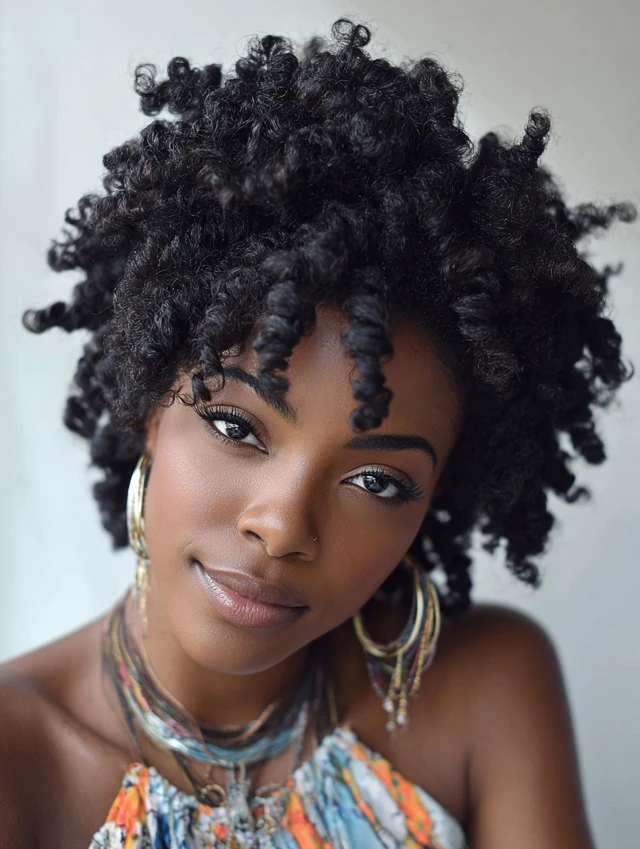
Courtesy of: outfitarea.com
The rounded afro is a timeless shape that winter actually flatters — coily, dense texture holds a sculpted silhouette that structured coats and turtlenecks frame beautifully. The key is the shape: cut into a deliberate rounded profile with subtle internal layering, so the volume reads intentional rather than untamed. This cut celebrates natural shrinkage and density, and it suits anyone with type 4 texture who wants a strong, low-manipulation shape.
A stylist experienced with natural hair should shape it dry or stretched, never cutting more than intended since shrinkage is significant. Moisture is the entire game in winter: the LOC or LCO method, a satin-lined hat, and regular deep conditioning keep the shape soft instead of brittle. Trims every 8–12 weeks maintain the round profile. The advantage is a striking, culturally rooted look with true wash-and-go potential; the trade-off is that keeping the shape crisp requires a stylist who genuinely understands coily hair, not just a generalist. If this look speaks to you, Trendy Haircuts 2027 continues the thread.
7. Long Curly Hair with Deep Side Part
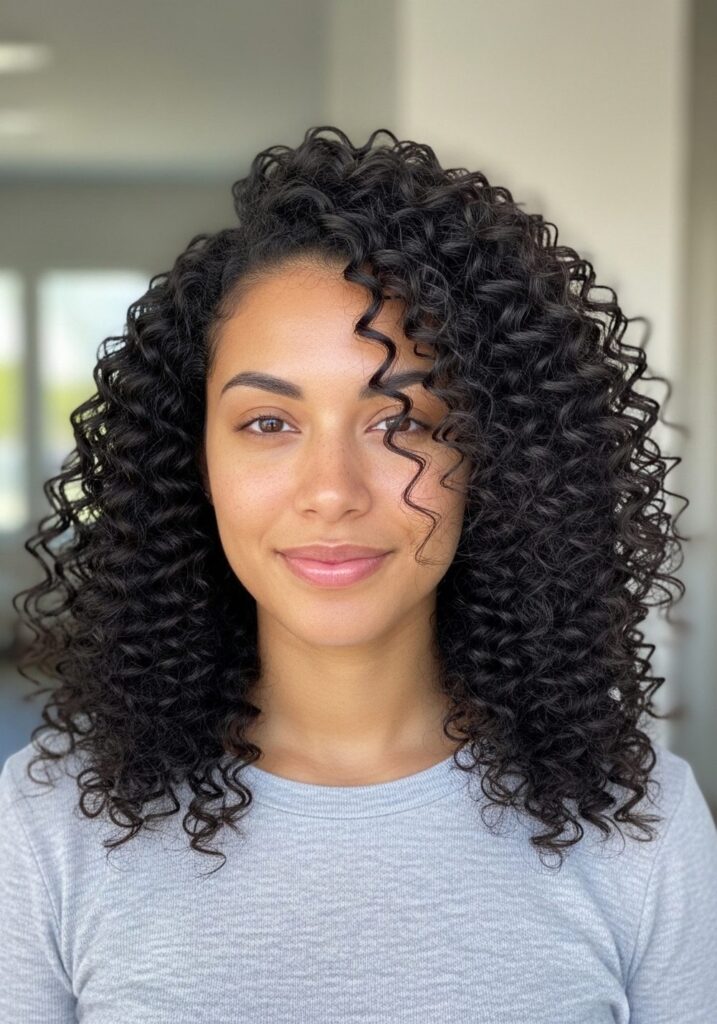
Photo credit: dailyhairvibes.com
Sometimes the most flattering “haircut” is a styling shift, and a deep side part transforms long curls without removing an inch. Here the length falls past the shoulders in defined ringlets, but the part flips the volume to one side, creating an asymmetric cascade that elongates the face and adds red-carpet polish. The base cut is simple long layers — the drama comes entirely from the parting, which makes this the lowest-commitment idea on the list.
To make a deep side part hold, train it: part damp hair deeply to the side, clip the roots flat on the heavy side, and diffuse. Long layers keep the ends from tangling, and winter hats sit more comfortably over an asymmetric part than a center one. Because the shape depends on styling rather than cutting, there is no special upkeep — just your normal trim schedule. The advantage is instant glamour with zero risk; the trade-off is that it only works if you are willing to style the part each morning, since curls revert to their natural fall.
8. Curly Lob (Long Bob)
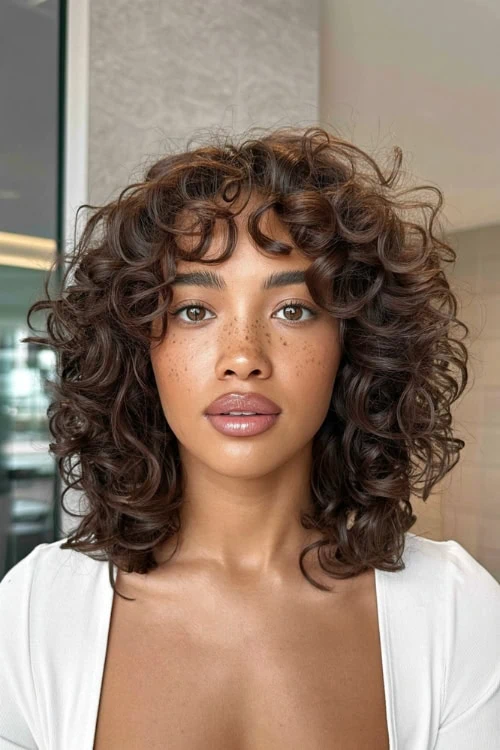
Image credit: thebeautydeeplife.com
The curly lob lands between the chin and collarbone, giving curls enough length to hang while keeping the bounce of a shorter cut. This version is cut with long internal layers so the curls stack into a full, rounded silhouette instead of flaring outward at the ends. The finish is defined and glossy — the kind of lob that looks equally at home in the office and at a holiday dinner. It suits most curl patterns and face shapes, particularly when the front is kept slightly longer.
Ask for the cut dry if possible, with the length calibrated to sit at the collarbone when dry (curls shrink, so wet-cut lobs often end up shorter than planned). Style with a cream-gel combo for definition that survives winter static, and refresh second-day curls with a water-and-conditioner mist. Trims every 8–10 weeks keep the ends thick. The lob’s strength is its versatility — it ties back, tucks behind ears, and survives hats — while its one weakness is that fine curls can look thin at the ends without enough layering.
9. Curly Wolf Cut
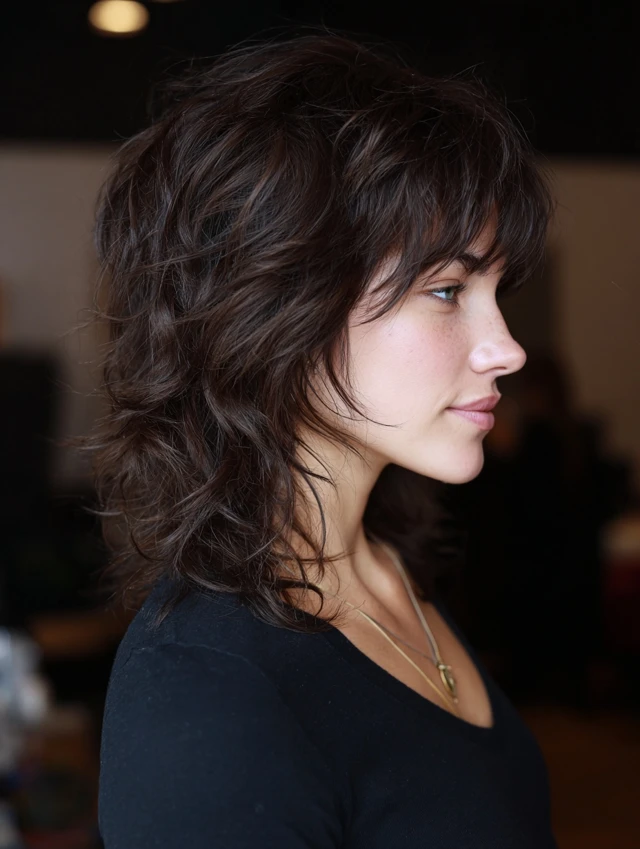
Source: yourstyleinspo.com
The wolf cut’s choppy, disconnected layers were practically invented for curly texture — the style’s signature volume at the crown and wispy, piecey ends happen naturally when curls are cut this way. This version skips the bangs for a cleaner grow-out and a more wearable take on the trend, keeping the emphasis on the shaggy silhouette through the mid-lengths. It suits medium to thick curls best; very fine curls can end up looking sparse with this much internal layering. A companion piece, Bixie Haircuts for Women, explores the same palette.
The critical instruction is “connected but textured”: the layers should be visibly choppy without creating holes in the silhouette. Style by scrunching with a texturizing foam and diffusing upside down for maximum root lift. In winter, the piecey ends need extra oil to avoid looking frayed. Trims every 8–10 weeks. The wolf cut’s edge is its fashion-forward shape with genuinely easy styling; its risk is that an inexperienced cutter can take out too much weight, so bring reference photos and confirm the plan before the first snip.
10. Dark Brunette Balayage on Curls
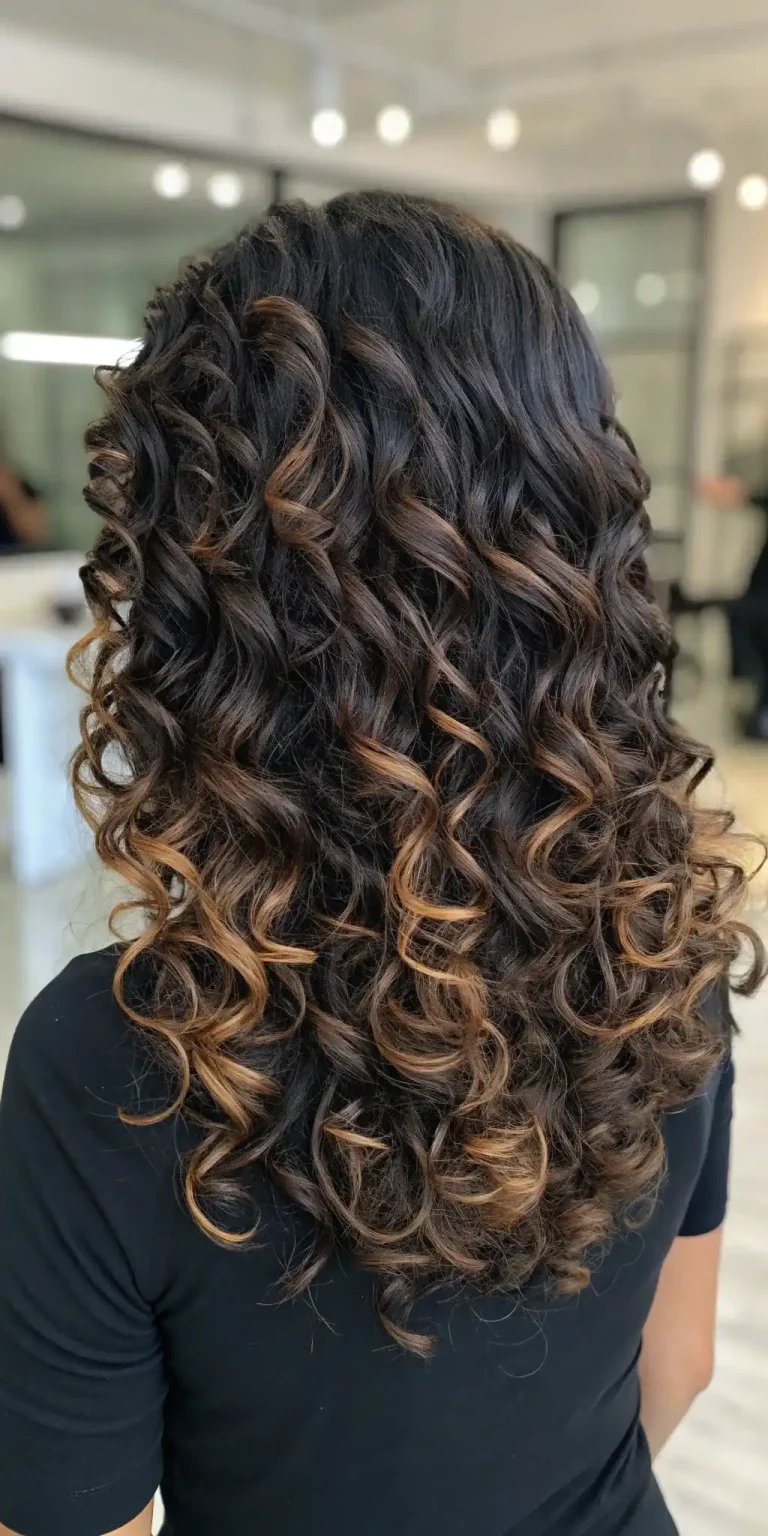
Color can be the haircut’s best friend, and this dark brunette balayage shows why: hand-painted caramel ribbons woven through deep brown curls make every coil catch the light, adding visible dimension that reads as extra volume. The base cut is simple long layers — the color does the architectural work, separating the curl clumps visually so the whole head looks thicker. It suits anyone whose dark curls feel one-dimensional in winter’s flat light.
Ask for a balayage (not foils) placed to follow your curl pattern, with the lightest pieces framing the face and through the mid-lengths. Balayage grows out softly, so salon visits stretch to every 12–16 weeks, but winter demands color-safe, sulfate-free care and regular glosses to keep brunette tones rich rather than brassy. The advantage is dimension without the maintenance of a full color; the trade-off is the upfront cost and the fact that lightened curls need more protein-moisture balance than virgin hair.
11. Tapered Curly Cut
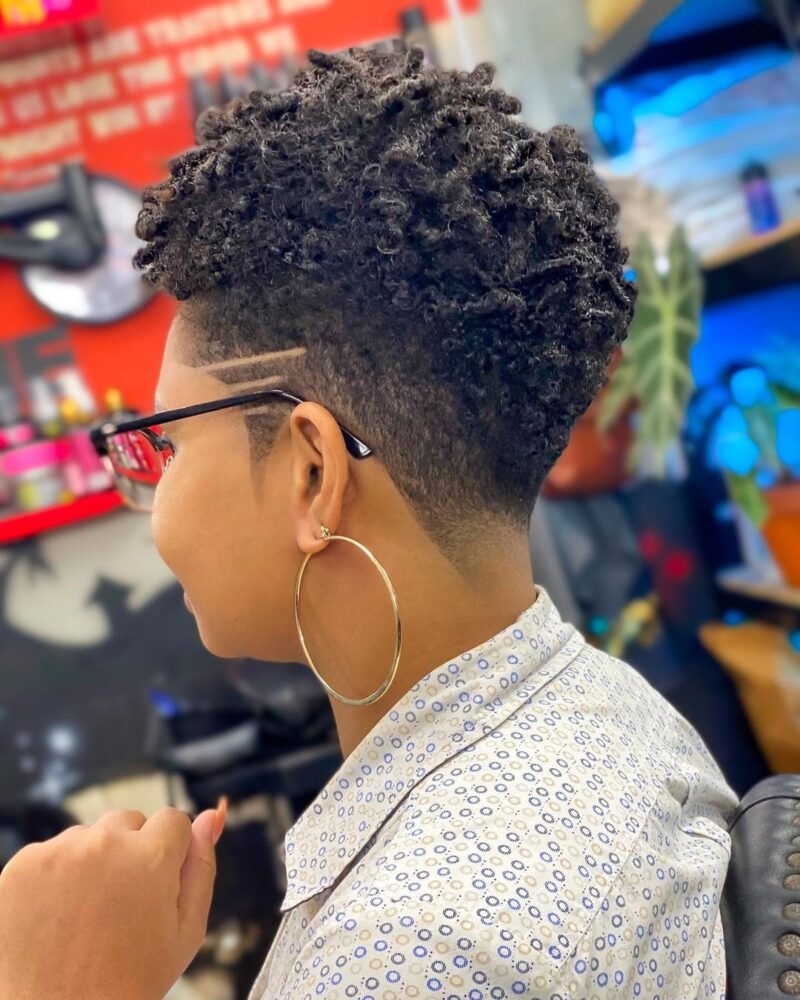
Courtesy of: mavipic.com
The tapered cut keeps the sides and nape short and neat while leaving the crown full and curly — a shape that is equal parts polished and expressive. It works across curl types, from tight coils to loose curls, because the contrast between the tapered perimeter and the voluminous top is what carries the look. It is also one of the most practical winter cuts: less hair at the nape means no tangled collar friction, and it grows out into an attractive shape. For a different spin on the same theme, browse Fall Haircuts for Women 2026.
The technique lives in the blend — ask for a smooth taper (clipper or scissor, your preference) that melts into the longer top with no harsh line. Styling the top takes minutes: curl cream, pick the roots for lift, go. Edge-ups every 3–4 weeks keep the taper crisp, while the top can be trimmed every 8–10. The advantage is a sharp, low-effort silhouette; the trade-off is the regular barber or stylist visits to maintain the tapered edges.
12. Curly Mullet
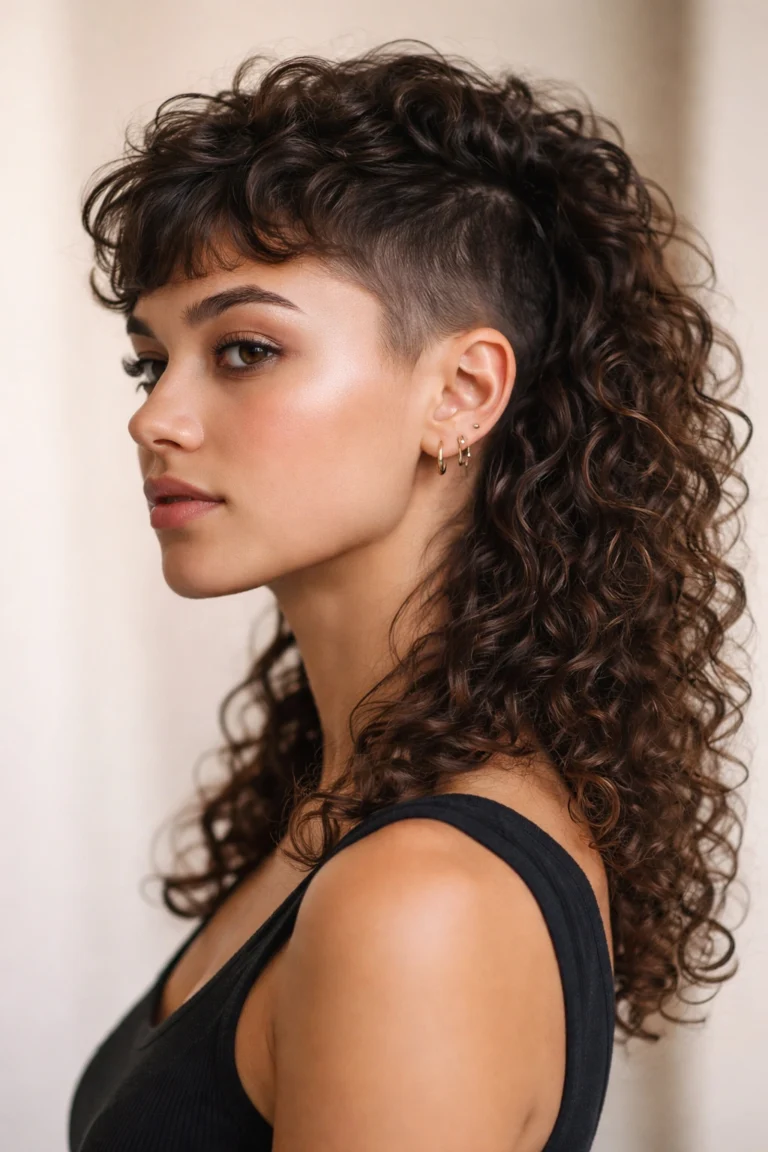
Photo credit: hairtical.com
The curly mullet is the statement cut of the moment: short, textured layers through the crown and sides with real length left through the back. On curls, the silhouette softens into something wearable — the coils blur the transition between the short and long sections so it reads edgy rather than costume-y. It suits confident dressers and oval or oblong faces, where the cropped top adds width and the length balances everything out.
Communication is everything here: specify how short the top should go and exactly how much length stays in the back, ideally with photos. Style the crown with a small amount of pomade or wax for piece separation, and let the back curls do their thing with cream. Trims every 6–8 weeks keep the contrast deliberate rather than overgrown. The advantage is a genuinely distinctive look that styles itself once the shape is right; the trade-off is that it is a commitment — growing out a mullet’s proportions takes patience and interim trims.
13. Layered Shoulder-Length Curly Cut
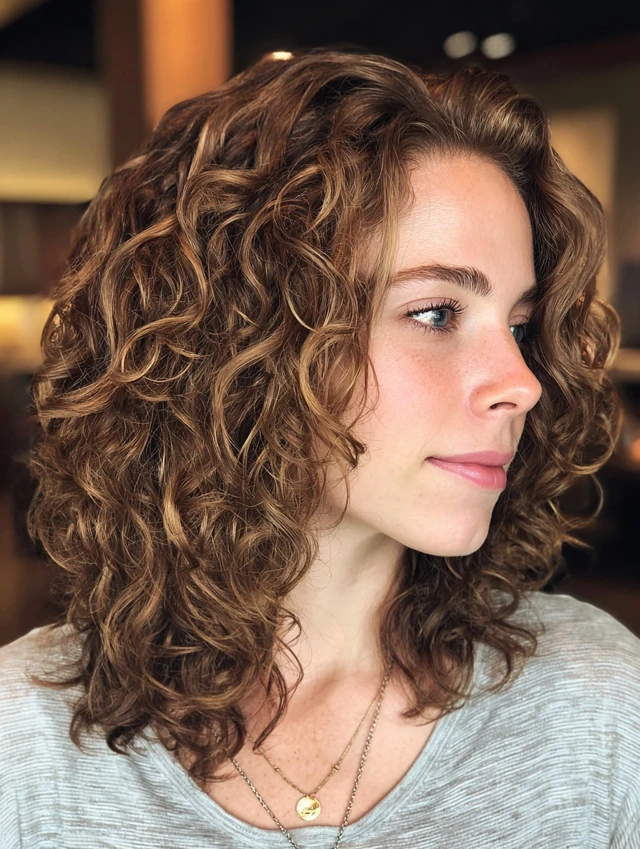
Image credit: jawdropink.com
Shoulder length with soft layering is the workhorse curly cut — it sits right at the collarbone, moves freely, and flatters nearly every face shape. The layers here are long and blended rather than choppy, which keeps the silhouette smooth and the curls defined in uniform clumps. It is an ideal choice if your winter goal is simply healthy, pretty curls without a dramatic restyle: the cut refines what you already have.
Ask for long layers cut to remove bulk without creating visible steps, and have the ends shaped dry so the length is true. This cut responds well to wash-and-go styling with a leave-in and gel cast, scrunched out once dry. Because the shape is simple, it grows out gracefully — trims every 10–12 weeks are plenty. The advantage is maximum versatility with minimum risk; the honest trade-off is that it is not a transformative look, so if you want drama, pair it with a color change or a new parting. This pairs naturally with the ideas in Trendy Haircuts for Round Faces in 2026 Face Framing Cuts That Look Amazing.
14. Copper Curly Hair
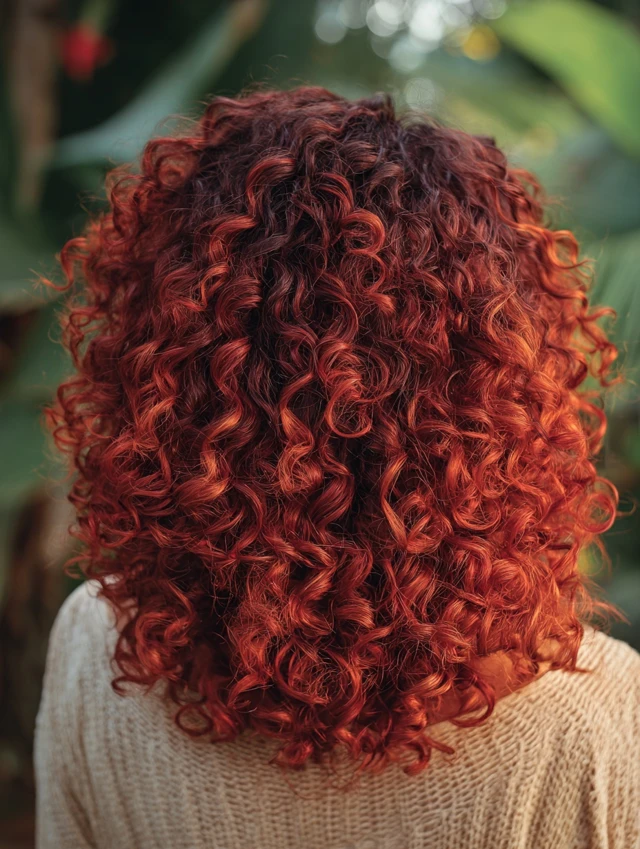
Source: yournextinspo.com
Copper is winter’s most flattering warm tone, and on curls it is electric — the coils act like tiny prisms, showing off every shade from deep auburn roots to bright penny ends. This all-over copper keeps the cut simple (medium length, soft layers) and lets the color carry the entire look. It suits fair to medium skin tones especially well, though deeper skin tones glow against a richer, more auburn-leaning copper.
Getting here usually requires lifting the natural base, so this is firmly a salon color — ask for a copper formulated for your starting level, with a gloss to seal the shine. Red and copper tones fade faster than any other color, so expect a refresh every 6–8 weeks plus color-depositing conditioner at home, and extra moisture since lightened curls dry out faster in heated indoor air. The advantage is a head-turning, season-perfect shade; the trade-off is the highest maintenance of any color on this list.
15. Curly Butterfly Cut
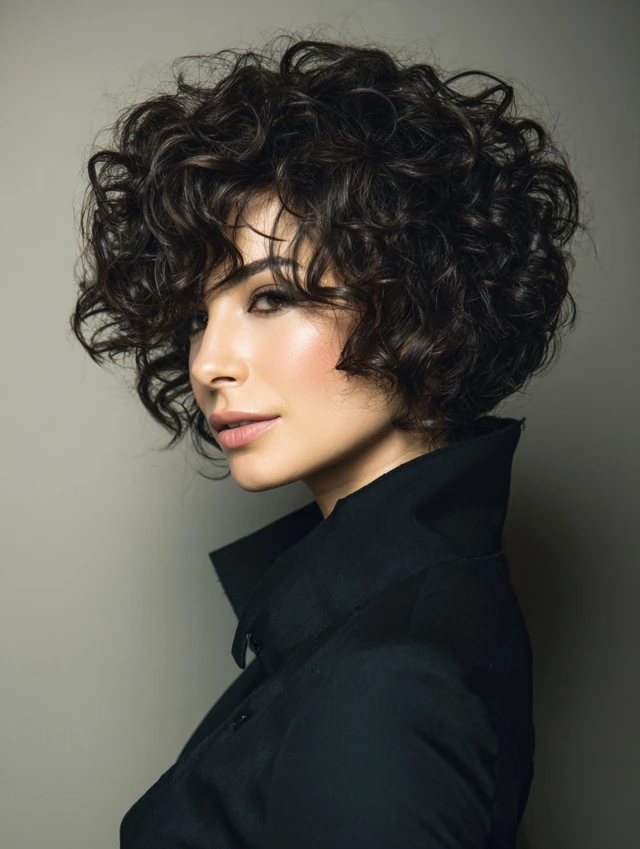
Via inkinspo.com
The butterfly cut’s signature is its two-tier layering: short, bouncy layers through the crown that flip outward like wings, over longer lengths beneath. On curls, the effect is pure volume and movement — the top layers spring up to create that airy, winged silhouette while the bottom length keeps the look grounded. It suits medium to thick curls and round or square faces, where the crown volume adds flattering height.
Ask for distinct short layers (chin to shoulder) blended over a longer base, cut dry so the spring is visible as the stylist works. Style by diffusing the crown layers upward and outward to emphasize the wing effect, with a light hold mousse. Trims every 8–10 weeks keep the two tiers distinct; left too long, it just becomes a regular layered cut. The advantage is show-stopping volume with a trendy shape; the trade-off is that the short top layers need styling most mornings to look intentional rather than bedhead.
16. Chin-Length Curly Bob with Bangs
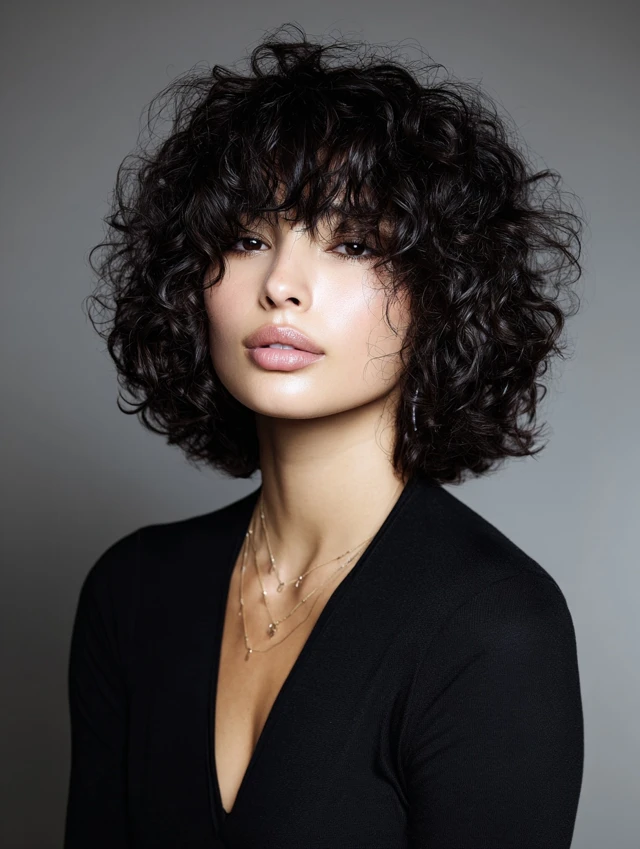
Courtesy of: yourstyleinspo.com
Going shorter than the classic curly bob takes confidence, and this chin-length version with bangs rewards it with a chic, French-girl silhouette. The length hugs the jawline, the layers are kept close to the head to control the width, and the short fringe adds a graphic edge that makes the whole cut feel deliberate. It suits petite features and oval or heart faces, where a shorter frame keeps the proportions balanced. The concept gets a fuller treatment in Best Spring Haircuts 2026 for Plus Size Women Flattering Lob Bob Short Cuts.
This is a precision cut: ask for it dry, and be explicit about where the fringe should land, since curly bangs at this length have zero margin for error. Styling is quick — cream, scrunch, diffuse — but the shape demands trims every 6 weeks to stay crisp. The advantage is a bold, fashion-forward look with five-minute styling; the trade-off is the tightest maintenance schedule on this list and a grow-out phase that requires interim shaping.
17. Black Curly Hair with Golden Highlights
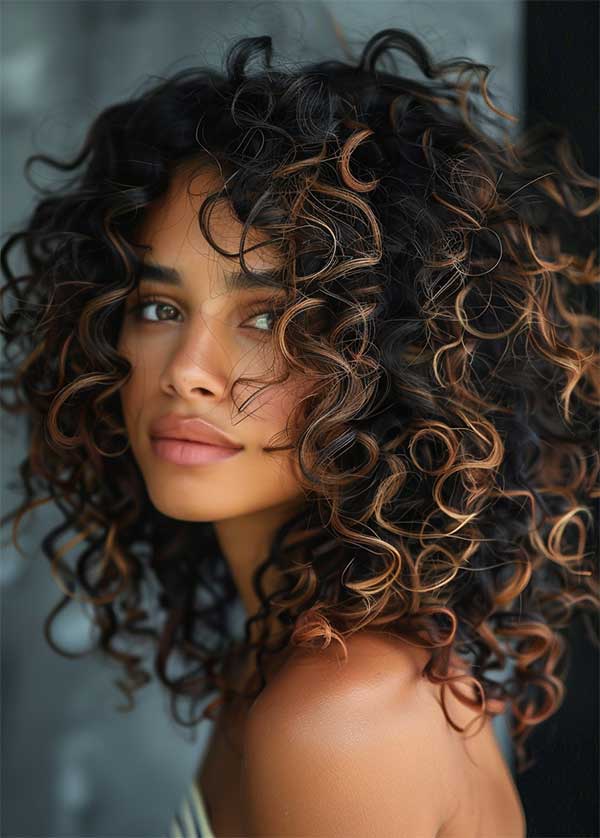
Photo credit: cozyfeeds.com
Golden highlights scattered through black curls create one of the most striking contrasts in hair color — each lit coil pops against the dark base like it is backlit. The highlights here are placed as ribbons through the mid-lengths and ends rather than at the roots, which keeps the grow-out soft and the maintenance sane. The base cut is a full, rounded curly shape that gives the color maximum surface area to play across.
Ask for hand-painted highlights in a golden (not ashy) tone, concentrated where light naturally hits. Because the roots stay dark, touch-ups stretch to every 10–14 weeks, but the lightened pieces need purple or blue shampoo used sparingly plus deep conditioning, since winter dryness hits highlighted curls hardest. The advantage is dramatic dimension with forgiving regrowth; the trade-off is that the contrast fades over time, so a gloss between appointments keeps the gold from going dull.
18. Long Curly Hair with Curtain Bangs
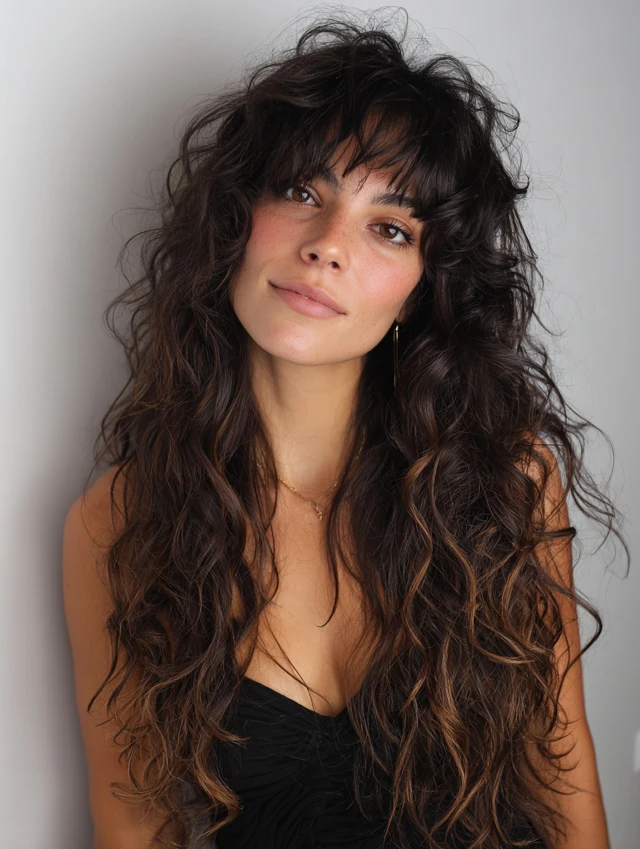
Image credit: fitsbydee.com
Curtain bangs are the gentlest way into fringe territory for curly hair: parted in the middle and left long enough to sweep to the sides, they frame the face without the commitment of a full bang. Paired with very long, subtly highlighted curls, the effect is soft and romantic — the face-framing pieces draw attention to the eyes and cheekbones while the length keeps its bohemian flow. It suits most face shapes, particularly when the bangs are kept at cheekbone length or longer. Our Top 20 Medium Length Haircuts for 2026 Stylish Cuts That Add Volume Softness Natural Shape rounds up more takes on this exact idea.
Ask for the curtain pieces to be cut dry at their natural fall, starting no shorter than the cheekbones. Style by twirling the damp pieces away from the face and clipping them while they dry, which trains the sweep. They grow out seamlessly into face-framing layers, so trims can wait 10–12 weeks. The advantage is face-framing impact with the easiest grow-out of any fringe; the trade-off is that curtain bangs on curls need that daily training step or they revert to their natural pattern.
19. Curly Bixie
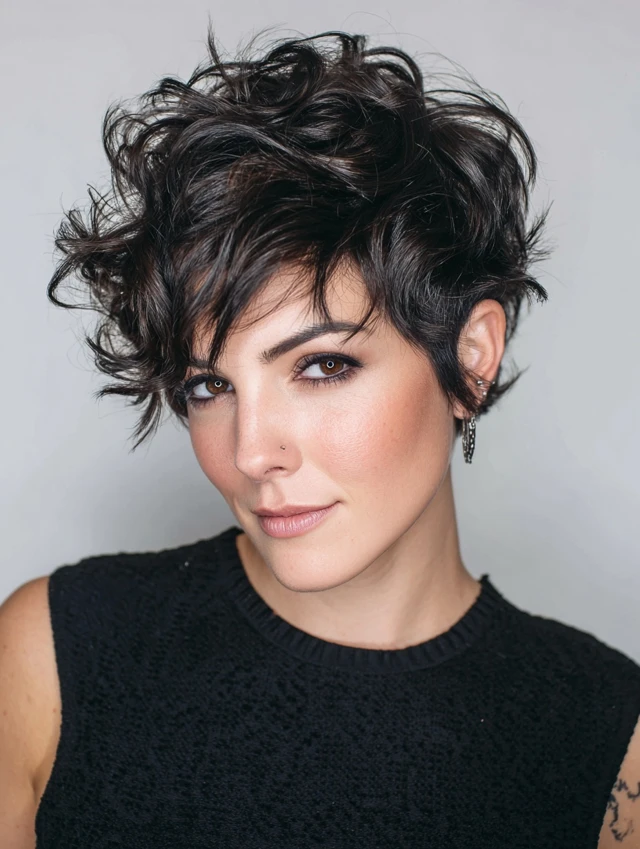
Source: cleodiva.com
The bixie — part bob, part pixie — is the ideal middle ground for curls: longer than a pixie through the top and sides, with enough length to show off the curl pattern, but cropped enough to feel bold and modern. The texture does the styling here, with coils creating natural piece-iness that a straight-hair bixie needs product to fake. It suits oval, square and heart faces, and it is a great “first short cut” for anyone nervous about going full pixie.
Ask for the perimeter to sit between the ears and the nape with textured, point-cut ends — never blunt, which would read as a mushroom on curls. Style with curl cream and a diffuser, directing the top forward or to the side depending on your growth patterns. Trims every 6–8 weeks. The advantage is edgy short-hair energy with more styling forgiveness than a pixie; the trade-off is the awkward in-between stage if you decide to grow it into a bob, which will need professional shaping.
20. Voluminous Ash-Brown Curly Layers
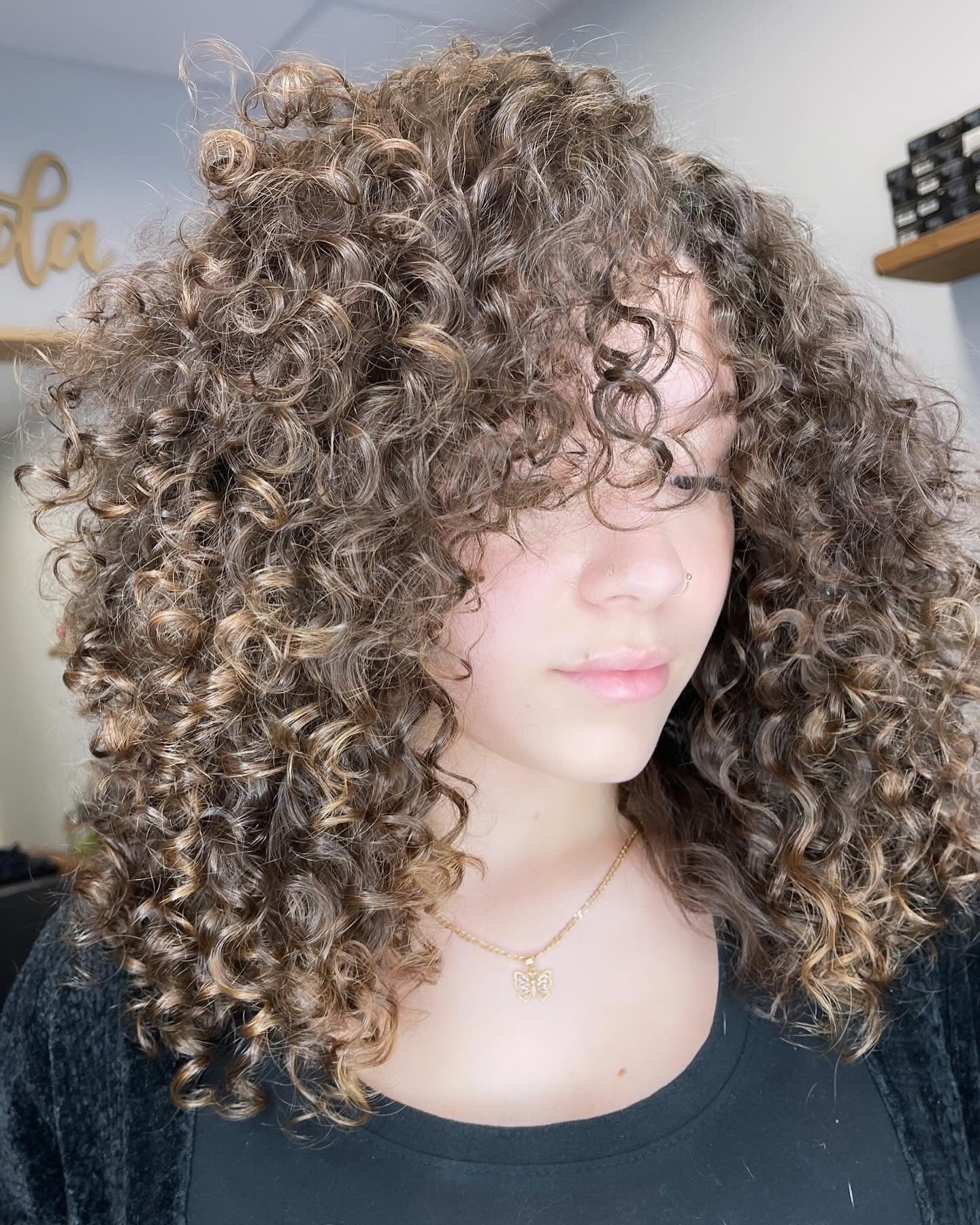
This cut is all about engineered volume: dense, springy curls in a cool ash-brown shade, layered to build a full, rounded halo of texture. The layers are cut to encourage the curls to stack and support each other, creating that salon-fresh fullness that thinner curl patterns envy. The ash-brown tone keeps the overall effect modern and muted rather than brassy — a smart winter choice when warm indoor lighting can exaggerate red undertones.
Achieving this volume starts with the cut — ask for layers that remove interior weight while keeping the perimeter full — and continues with styling: root-clipping while diffusing upside down is non-negotiable for this much lift. Cool brown tones need a gloss every couple of months to stay ashy rather than fading warm. The advantage is maximum-impact volume and a sophisticated color; the trade-off is that this much body requires the most diligent styling routine on the list to recreate at home. See also Fall Short Haircuts 2026 for more variations on this look.
21. Curly Bob with Side-Swept Fringe
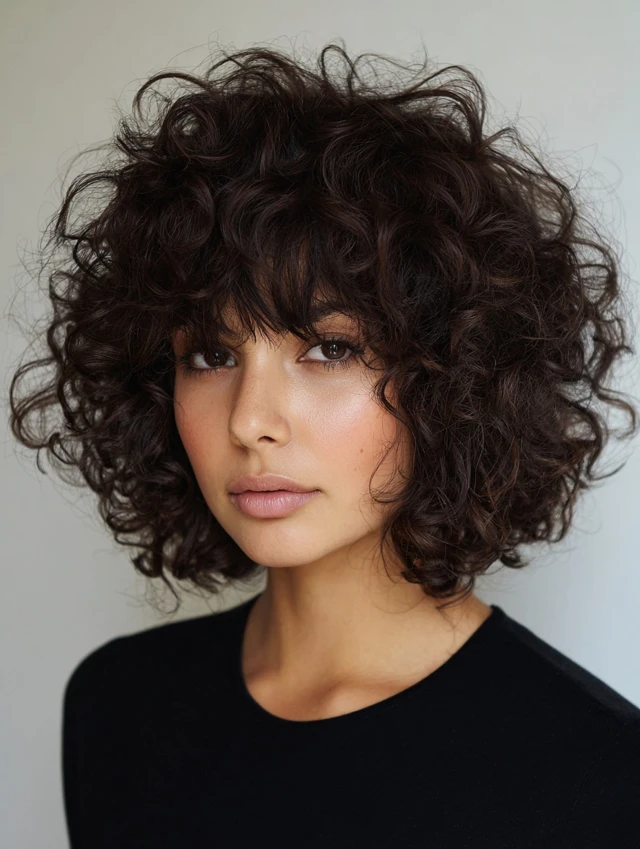
Courtesy of: womenshairtoday.com
A side-swept fringe softens the curly bob into something romantic and versatile: instead of a straight-across bang, the fringe is cut on a diagonal so it melts into the longer front pieces. The bob itself is a classic jaw-skimming shape with enough layering to keep the curls bouncy. This is a particularly flattering choice for square and round faces, since the diagonal line breaks up width and draws the eye across rather than down.
Have the fringe cut dry and on the long side — you can always take more off, and curly fringe shrinks unpredictably. Style it by directing damp fringe across the forehead with a denman-style brush or your fingers, then pinning it while it sets. It needs refreshing most mornings, but the rest of the bob is wash-and-go. Trims every 6–8 weeks. The advantage is a soft, face-flattering detail on a classic shape; the trade-off is the fringe’s daily styling demand, especially under winter hats.
22. Curly Shaggy Lob
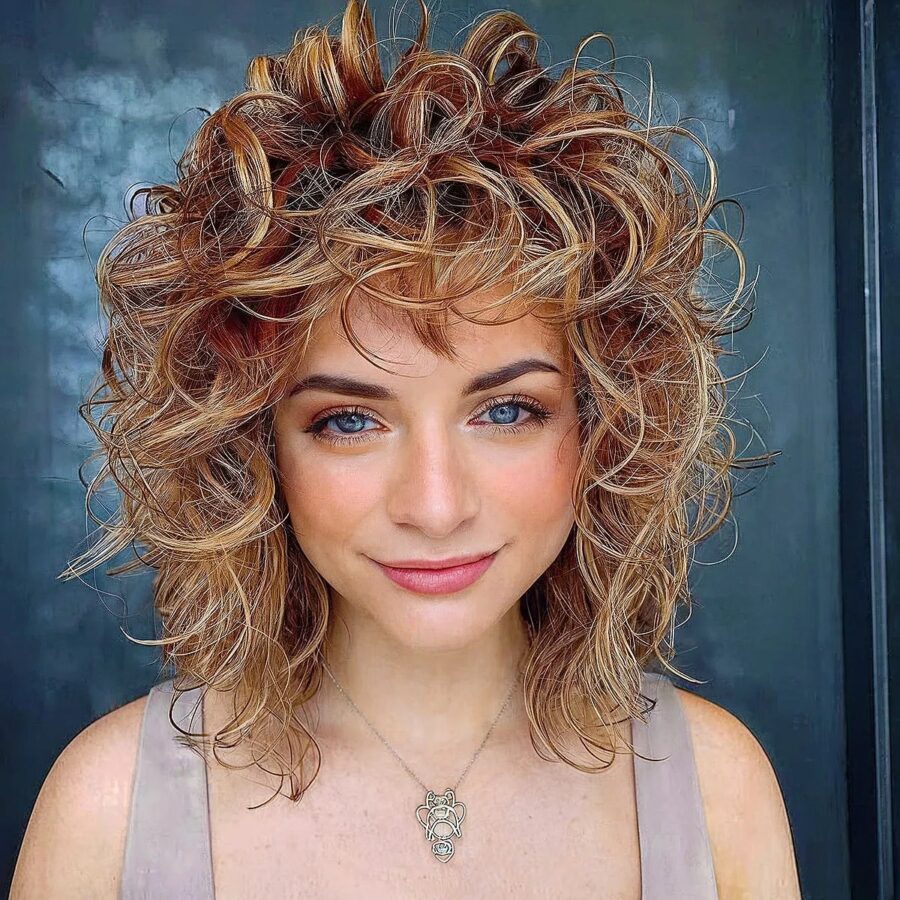
Photo credit: latest-hairstyles.com
The shaggy lob takes the collarbone-grazing bob and roughs it up with choppy, textured ends — a cut that looks better slightly undone, which is perfect for real life. The curls here are defined but piecey, with the ends thinned just enough to move. It suits medium-density curls and anyone who wants the polish of a lob without its neatness; the texture makes it read modern and effortless rather than prim.
Ask for point-cutting through the ends to create the shaggy texture, with longer layers through the interior for movement. Style with a sea-salt or texture foam scrunched in, diffused or air-dried — this cut genuinely looks better with a little imperfection. In winter, seal the textured ends with a light oil to prevent them from looking frayed. Trims every 8–10 weeks. The advantage is a low-maintenance cut that thrives on second-day texture; the trade-off is that the thinned ends can look sparse on very fine curls.
23. Honey Blonde Highlights on Curls
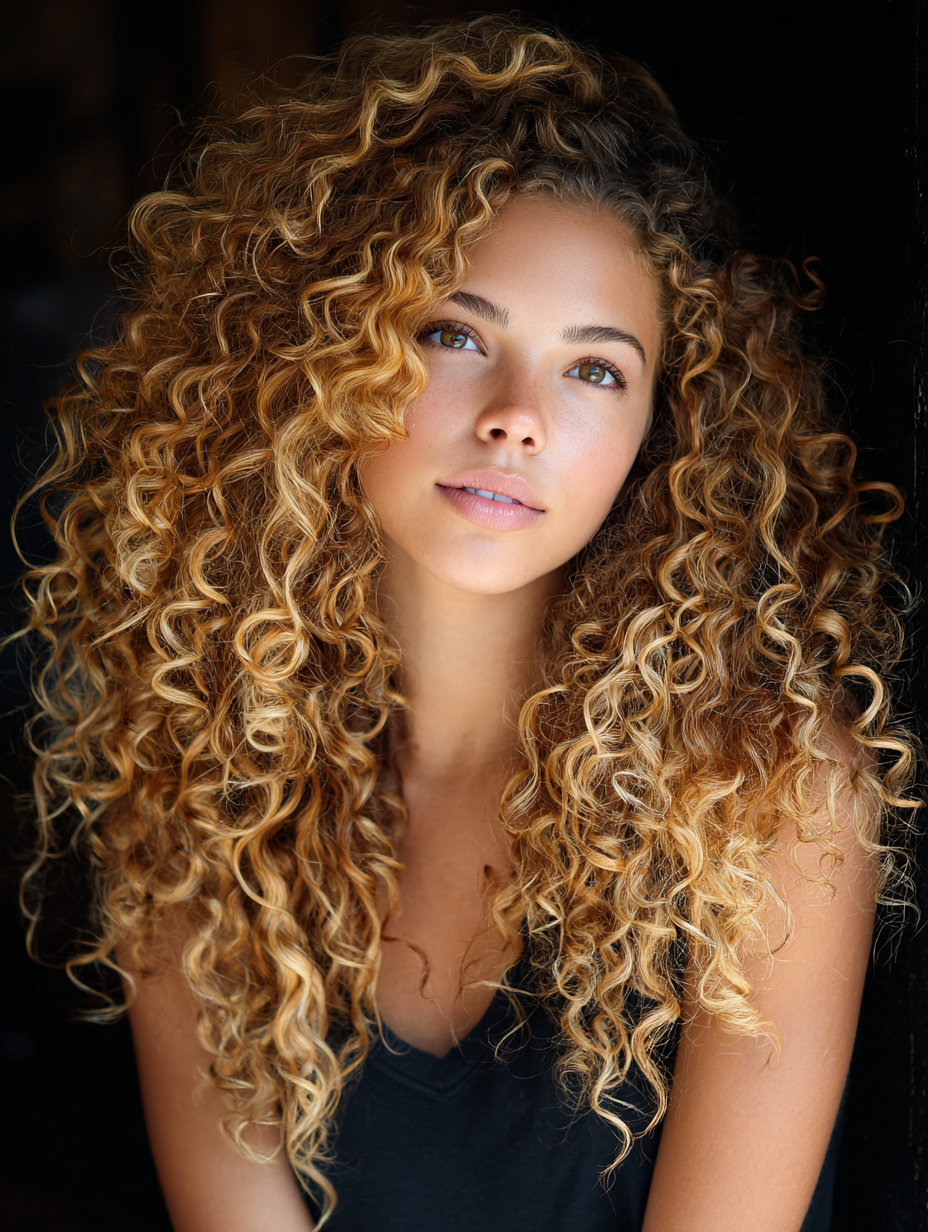
Image credit: inkinspo.com
Honey blonde highlights are winter’s answer to dull hair: warm, golden ribbons woven through voluminous curls that catch even weak seasonal light. The placement here is generous and chunky rather than fine and subtle, which suits the scale of big curly hair — delicate babylights would disappear in this much texture. The base cut is a full, rounded shape that gives the color room to shine, and the warmth flatters warm and neutral skin tones beautifully. Related reading: Winter Blonde Hair Color Ideas takes the same concept further.
Ask for chunky, hand-painted highlights in a true honey tone (golden, not platinum), with a toner to keep them warm rather than brassy. Highlighted curls need extra moisture in winter — a weekly deep-conditioning mask is close to mandatory — and a gloss every 8–10 weeks keeps the honey rich. The advantage is a luminous, dimensional color that makes curls look thicker; the trade-off is the ongoing moisture and toning maintenance that lightened curls demand.
24. Short Curly Crop with Definition
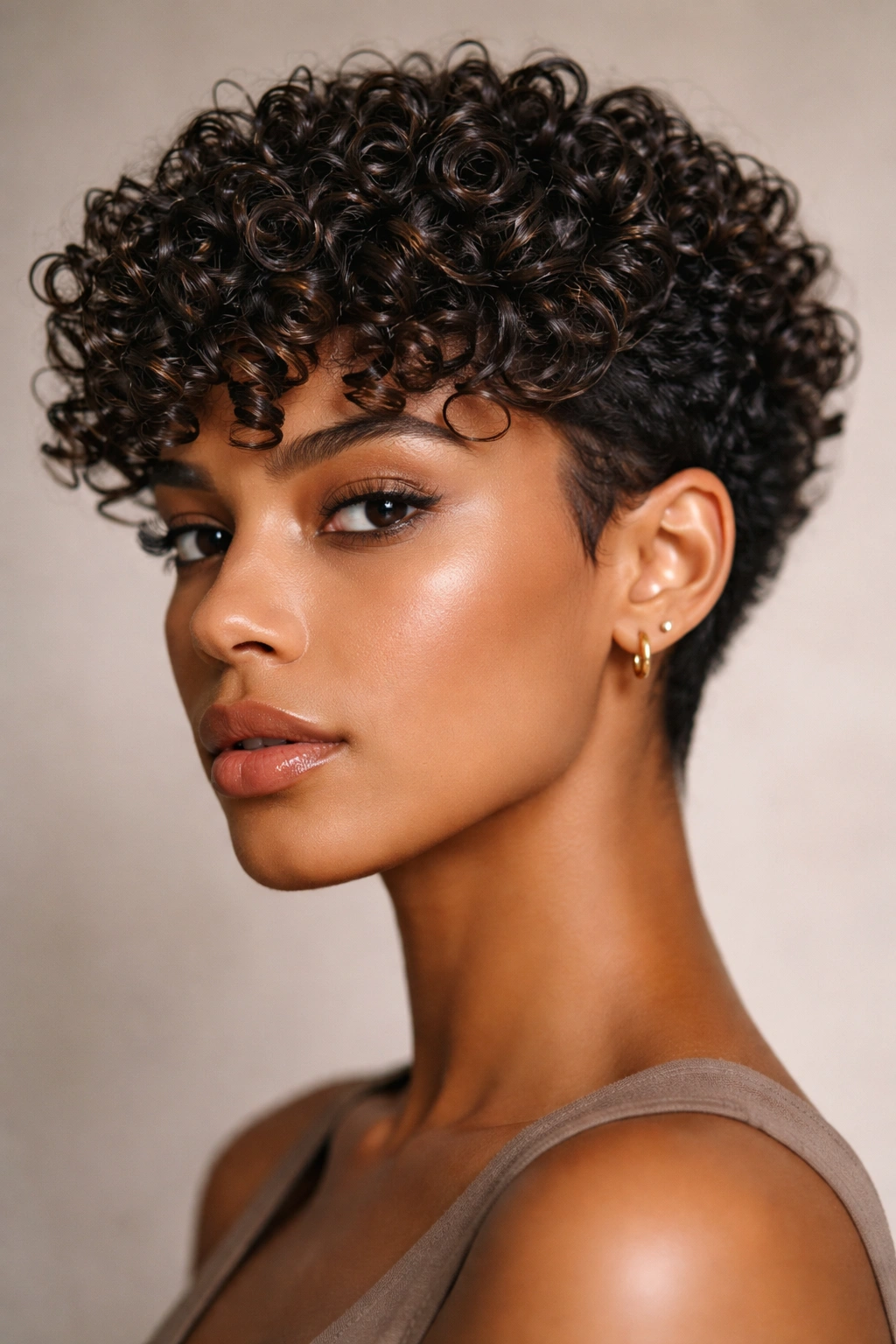
Source: hairtical.com
Closing the list with the boldest short option: a cropped cut where every curl is defined to perfection, likely set with gel for that glossy, sculpted finish. The shape is close to the head with enough length on top to show the curl pattern, creating a clean, architectural silhouette. It suits strong features and anyone who wants their face — not their hair — to be the focal point, and it is unbeatable under winter hats and hoods.
The cut itself is simple; the look lives in the styling, so ask your stylist to teach you the routine: gel on soaking-wet hair, scrunch, diffuse or air-dry, then scrunch out the cast for soft definition. In winter, gel-cast styling actually protects curls from dry air. Trims every 4–6 weeks keep the crop sharp. The advantage is a striking, genuinely wash-and-go look with the lowest product cost of any style here; the trade-off is the frequent trims and the fact that this length offers no bad-hair-day hiding options.
Final Thoughts
The strongest options in this roundup work because of shape and texture management, not simply because they are short or long. The curly shag and wolf cut earn their popularity by distributing volume where curls naturally want it; the graduated bob and tapered cut win on structure; and the color ideas — copper, honey blonde, brunette balayage — succeed because dimension makes curls look fuller. Choose based on your maintenance appetite, your curl density, and how much daily styling you will honestly do. When in doubt, book a consultation with a curl-specialist stylist and bring photos: a good cut is a collaboration, not a gamble.
- Trim every six to eight weeks to keep the shape sharp.
- Use a heat protectant before every hot-tool session.
- Tone blonde or highlighted hair every six weeks to keep brassiness away.
- Match the upkeep schedule to your routine before committing to high-maintenance color.
The best color is the one that still looks intentional at week six.