Feed-in braids are a protective style built by adding synthetic hair strand by strand, which keeps the base flat while the length builds smoothly. The current shift leans toward softer finishes: lived-in color blends and wavy ends that move rather than sit stiff. For the full range of lengths this technique suits, Feed-In Braid Hairstyles for Every Hair Length is the reference list.
Below are 16 feed-in braid styles, from a quick weekend set to an intricate salon piece. You will find options for fine hair that needs grip, a visible grow-out line that needs hiding, and a length that works with a bob or mid-back hair. Every look here prioritizes a clean hold without the tension headache. For the cornrow side of the family, Cornrow Hairstyles covers the classics.
1. Intricate Swirl Feed-In Braids with Baby Hairs
Courtesy of: sellox.app
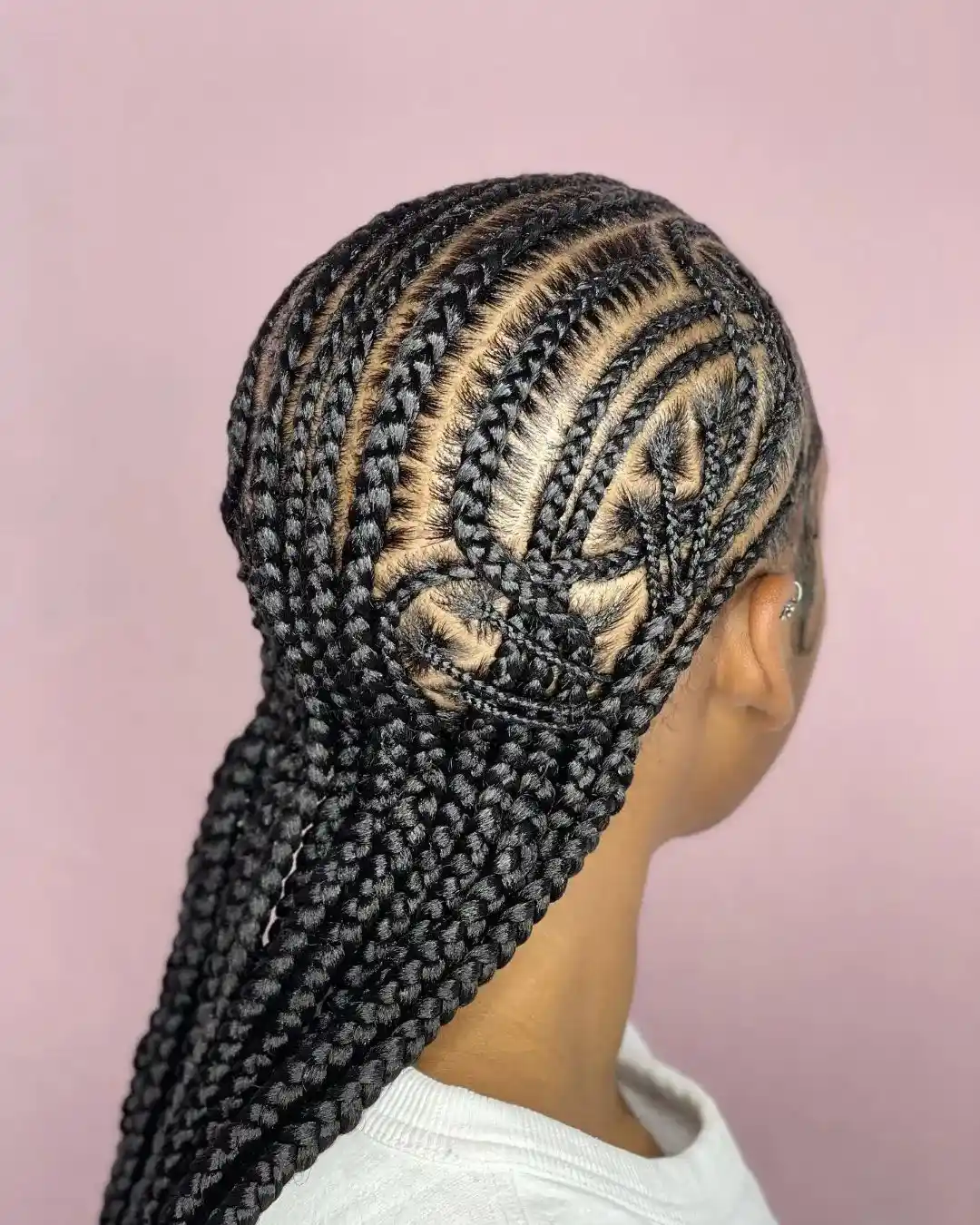
A swirl pattern that starts at the crown and travels down the scalp defines this style. The braids fall to mid-back, thick and black, with a middle parting that keeps the geometry symmetrical, and the baby hairs frame the face with sharp, deliberate curves, held in place with a firm-hold gel.
Those with dense, straight hair who want a sculpted, architectural look will get the most from this one. The precision of the scalp work and the neatness of the baby hairs mean this is strictly a salon-only request, and a stylist with experience in intricate parting patterns is essential here.
2. Shoulder-Length Braids with Gray Highlights
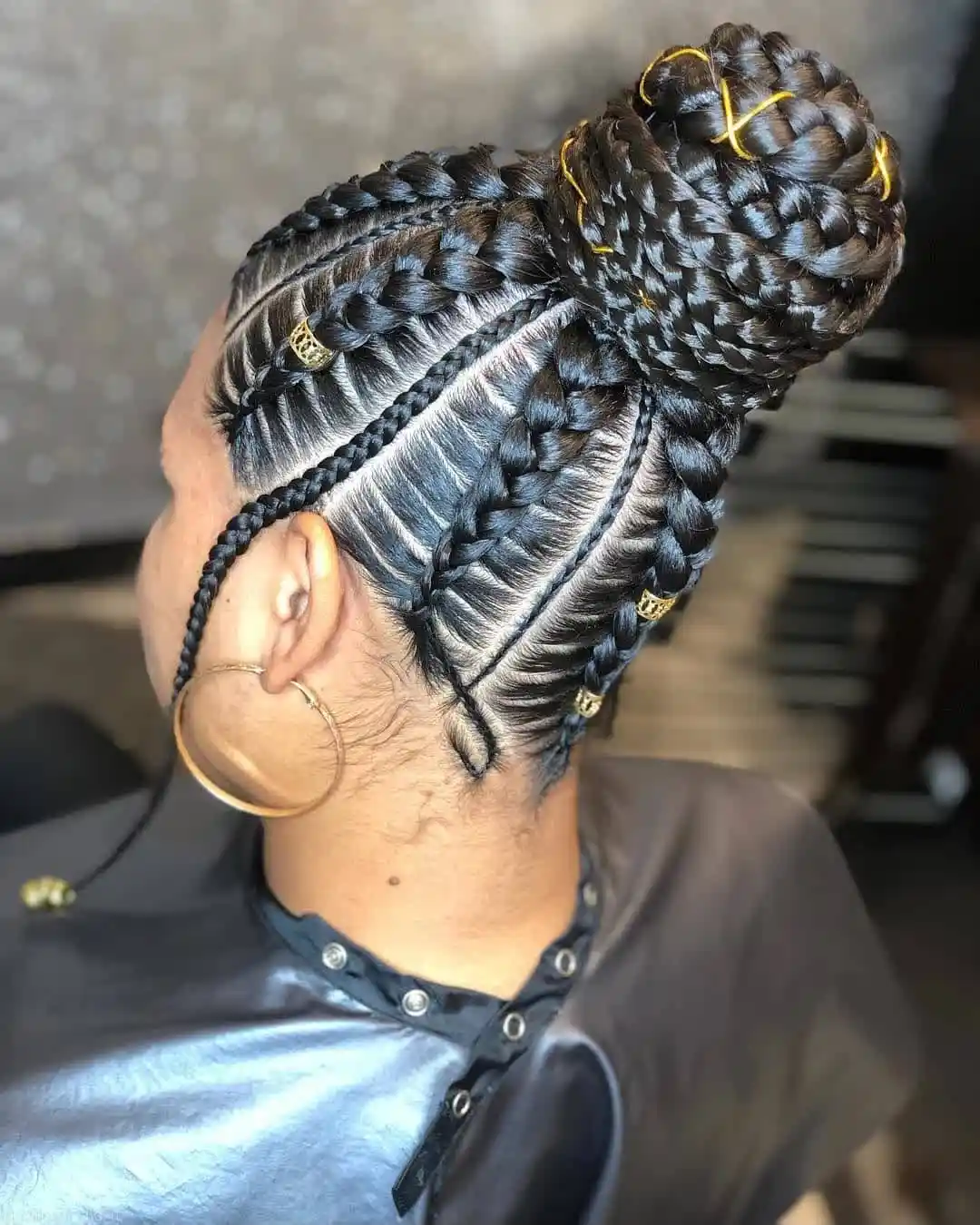
Photo credit: thrivenaija.com
Longer braids can feel heavy and take hours to install, so shoulder length versions exist for those who want the look without the commitment. These thick, wavy braids stop at shoulder length, and the subtle gray highlights woven through the black base add a modern touch.
A light serum on the ends maintains shine and prevents dryness, and a weekly check for flyaways keeps the lines sharp. The layers in the cut stop the braids from feeling blocky, and the shorter length means faster drying time and less weight on the scalp.
3. Cornrow Braids into a Voluminous Nape Bun
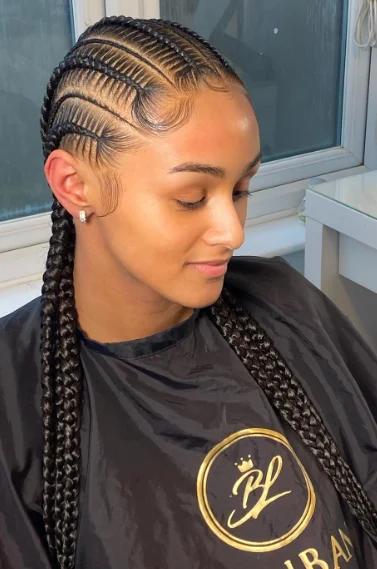
Image credit: heartafact.com
The cornrows start at a middle parting and travel back in neat, parallel lines before gathering into a thick, coily bun at the nape. It is a style that showcases the scalp work and then transitions into volume.
Coily, dense hair types benefit from the tension distribution, and the bun holds its shape without excessive pinning. This is a salon-only design; the precision of the cornrow pattern and the smooth transition into the bun require a steady hand, and a silk scarf at night preserves the bun’s shape.
4. Heart-Shaped Feed-In Braids with Blonde Highlights
Source: thrivenaija.com
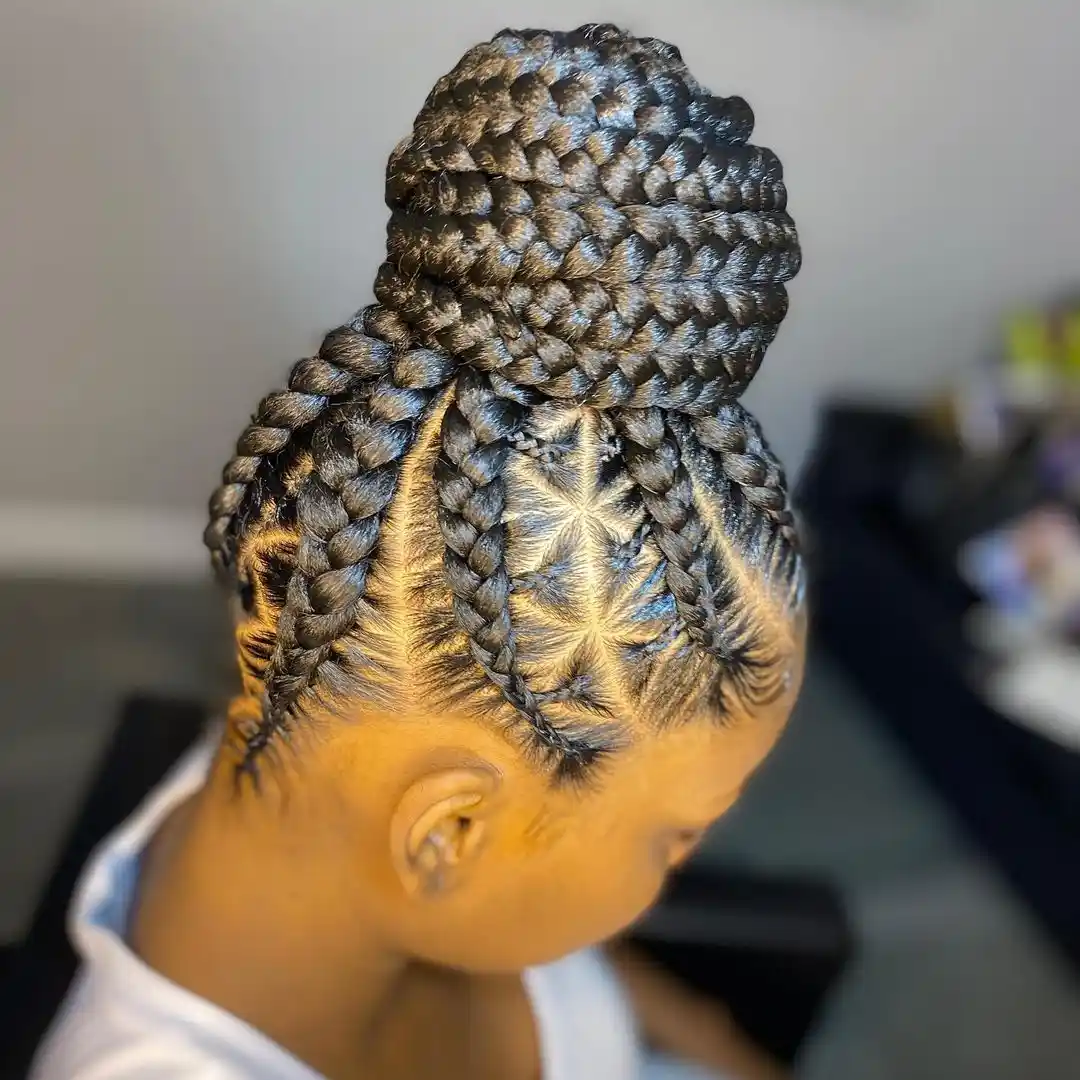
Heart-shaped braids on the side of the head turn a protective style into a conversation piece. The design uses a middle parting and feeds into long, flowing braids at mid-back, with blonde highlights cutting through the black base for contrast.
Straight, thick hair holds the clean lines of the heart shape best, and the glossy finish comes from a lightweight shine serum on the loose ends. One real drawback: the heart pattern requires a stylist with solid geometric parting skills, and not every braider will take it on.
5. Multi-Toned Chunky Stitch Braids
Via thrivenaija.com
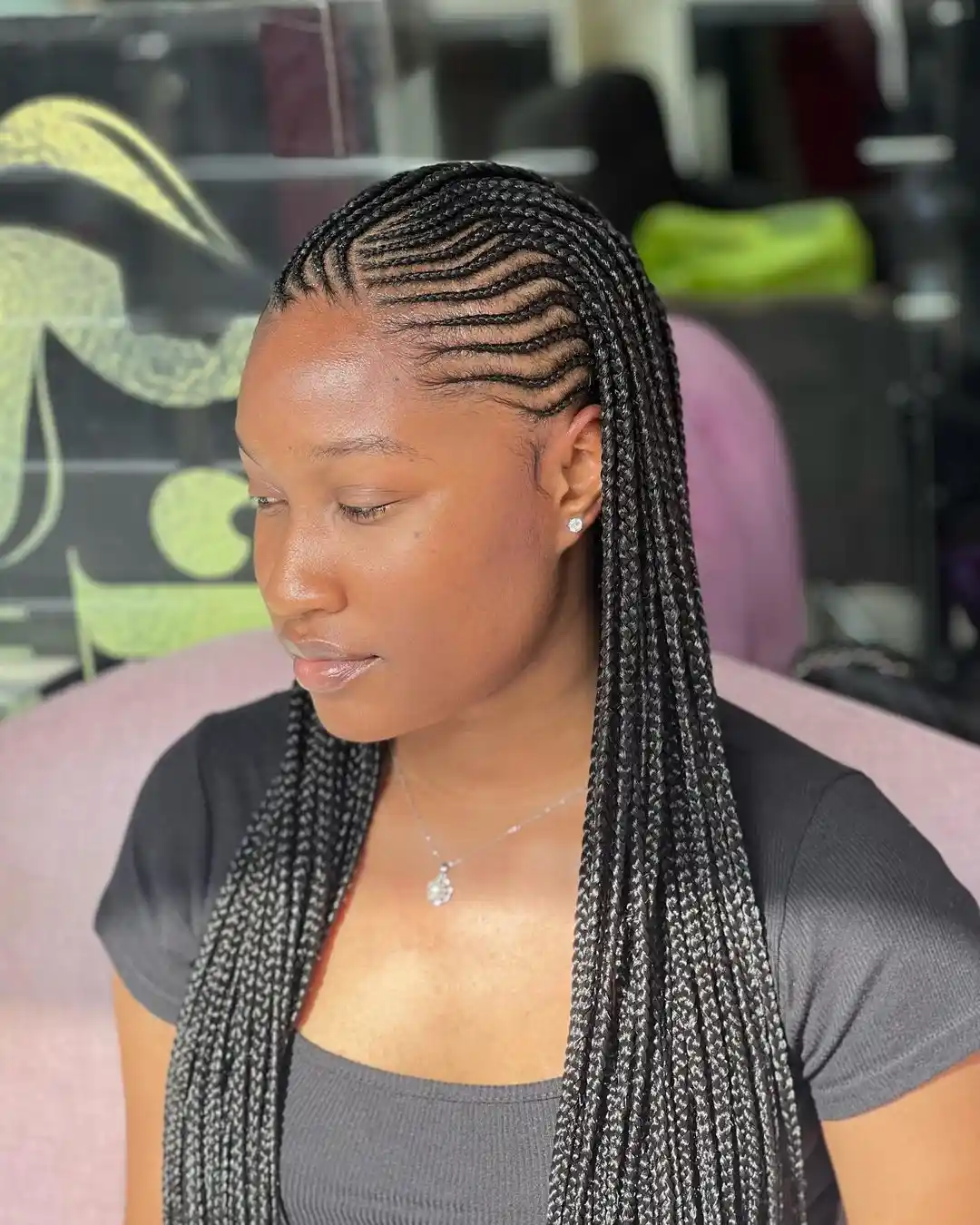
Can a braid style feel bold and practical at the same time? These chunky stitch braids make the case. Seen from the back, the middle parting splits a palette of blonde, brown, and gray into clean sections that fall to mid-back.
The multi-toned color means any regrowth becomes less obvious than it would be with a single shade. Thick, straight hair carries the weight of chunky braids without pulling at the roots, and a braid-defining cream rubbed between the palms and smoothed down each section enhances the separation. For more long braided color, Bora Bora Braids Hairstyle Ideas takes the same multi-tone idea to the beach.
6. Feed-In Braids with a Zig-Zag Pattern and Wavy Ends
Courtesy of: hairstylepicks.com
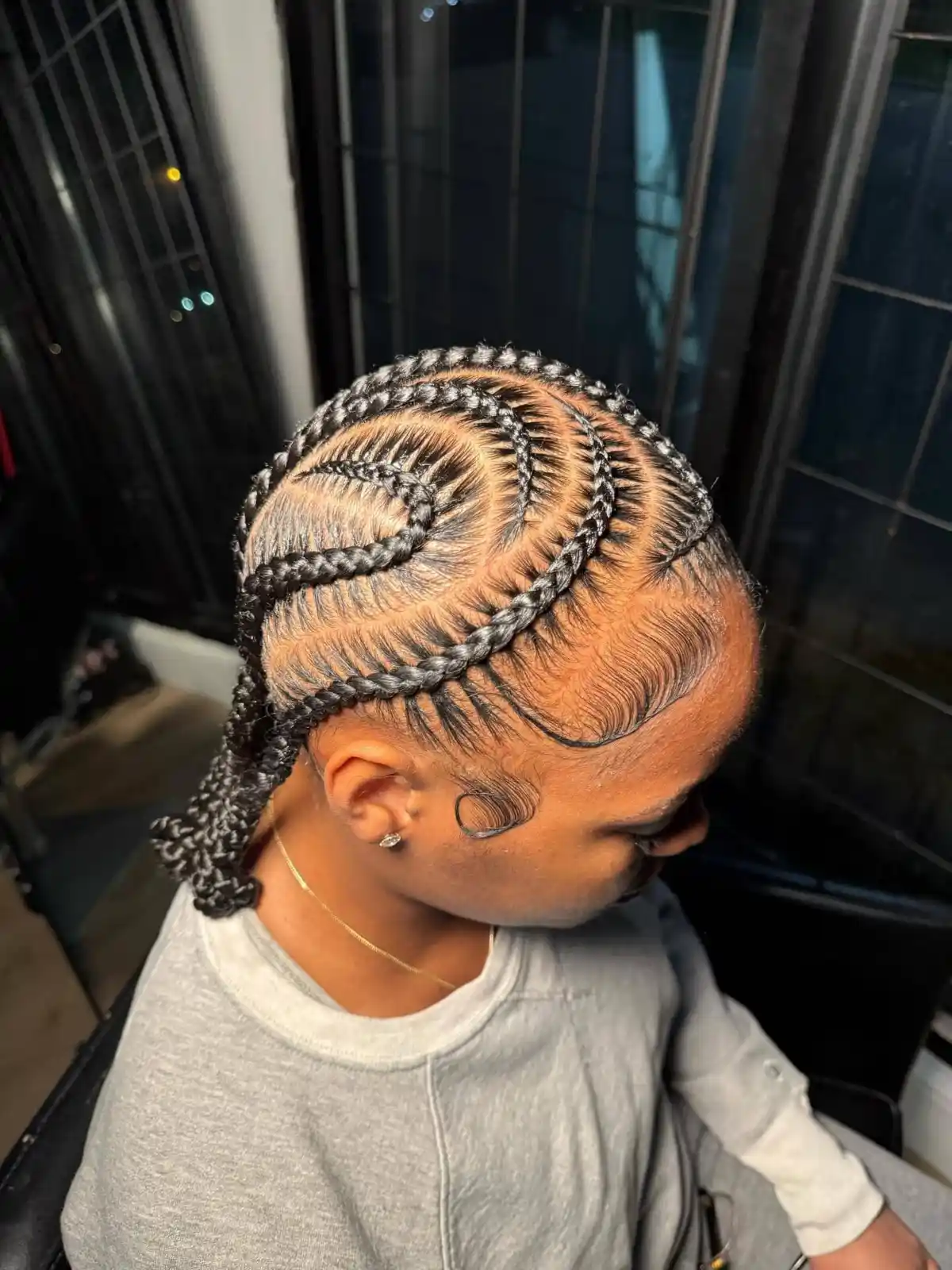
The zig-zag pattern near the hairline is the first thing you notice, a deliberate design choice that breaks up the usual straight-back rows. These mid-back feed-in braids mix black, blonde, and brown strands, so the color variation is built into the braid itself rather than added after.
The wavy ends soften the whole look, giving it movement that the structured scalp work lacks on its own. To keep the wave definition, gently separate the ends with your fingers and re-curl them between washes.
7. Two-Tone Feed-In Braids with Loose Wavy Ends
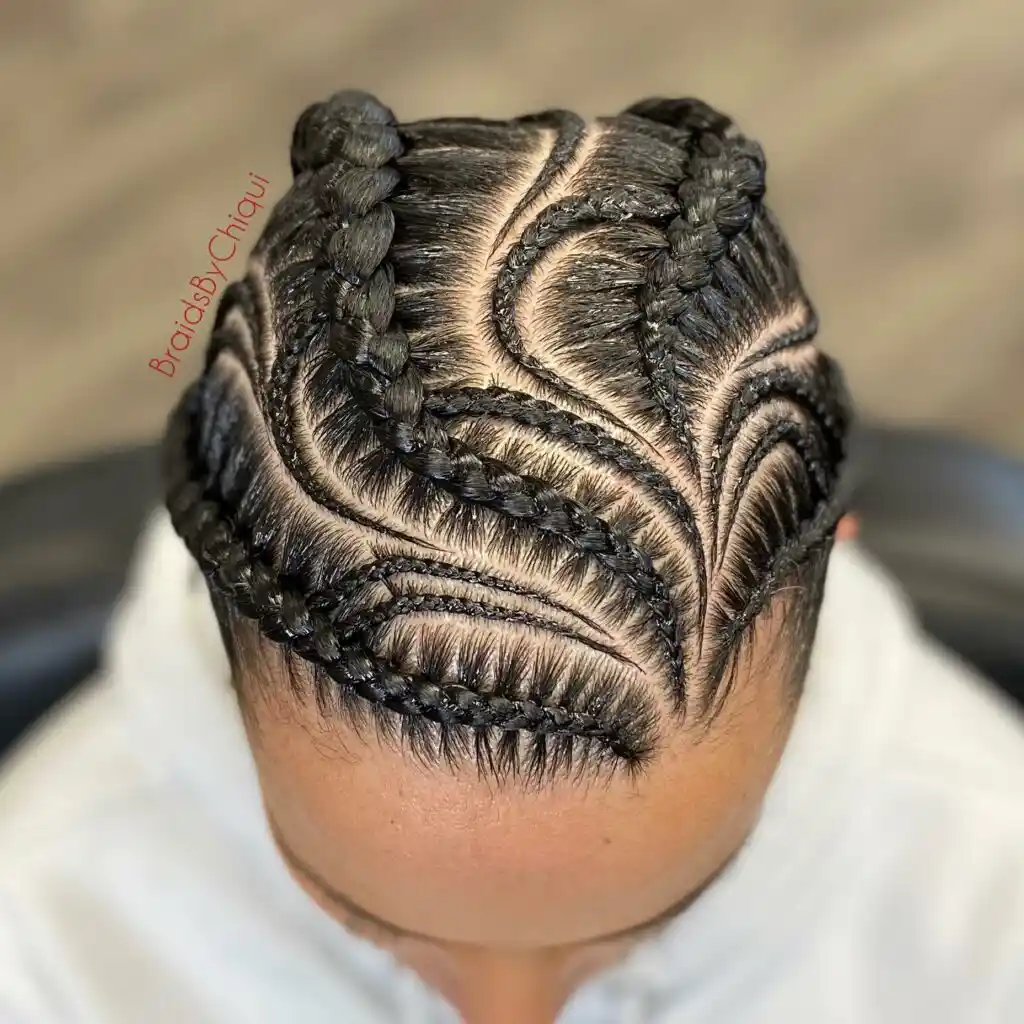
Photo credit: braidhairstyles.com
How do you get that high-contrast blonde-through-black effect without it looking like a costume? You ask for it by name. These long feed-in braids start at a middle parting and run straight back, with blonde highlights woven into the black base at regular intervals.
The loose wavy ends keep the style from feeling severe, which is the risk with any two-tone look. For styling, apply a hydrating product to the wavy ends to keep them moisturized and prevent tangling. For a softer braided cousin, Butterfly Braids Hairstyles uses the same loose-end finish.
8. Feed-In Braids Adorned with Decorative Beads
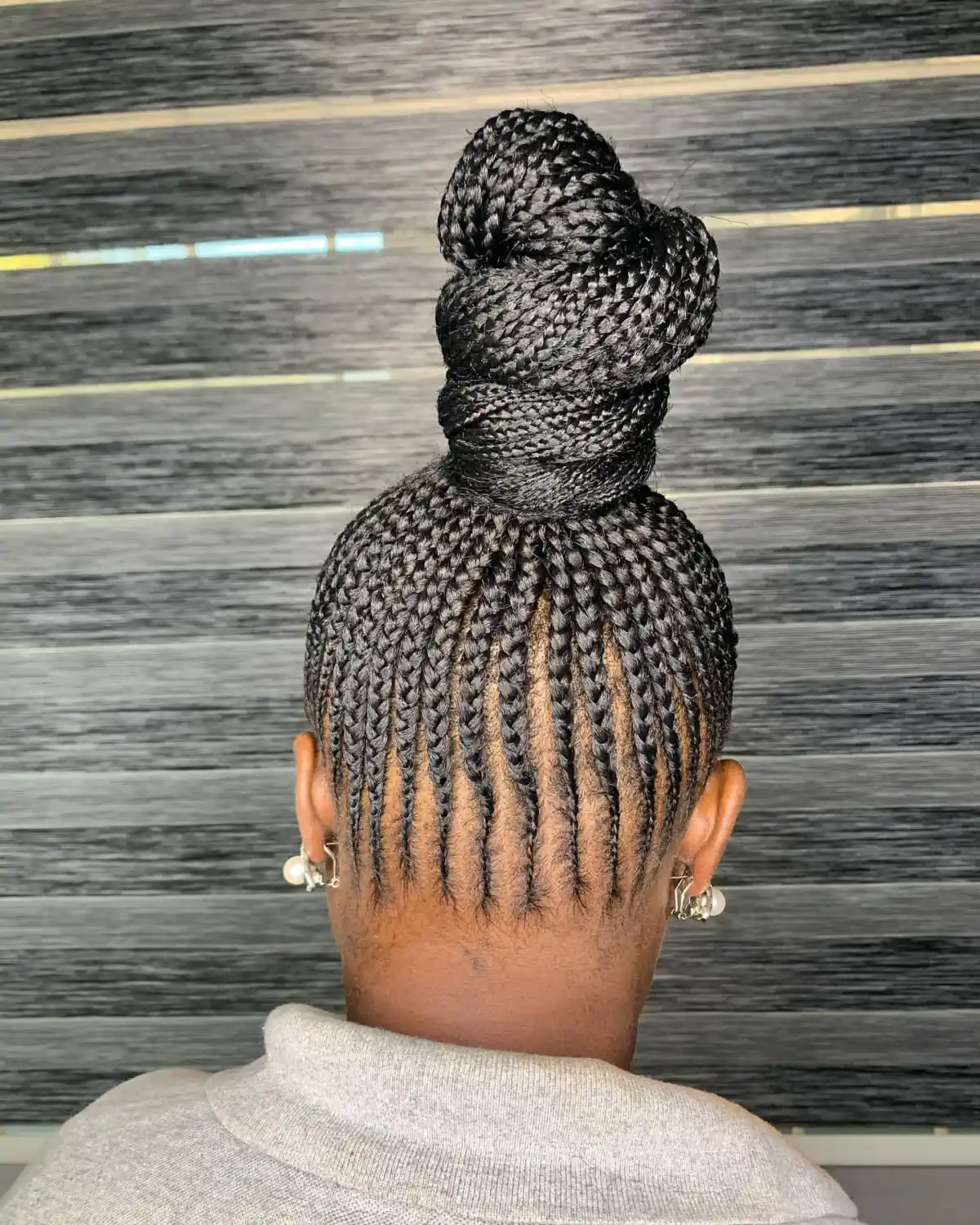
Image credit: hairstyleforblackwomen.net
The beads here use blonde and brown tones matched to the braids themselves, threaded onto the ends at mid-back length. The cornrow patterns on the scalp are clean and precise, which is the foundation the beads need to look polished and not tacked on.
Adding beads is a DIY-friendly step in theory, but getting them evenly spaced and securely fastened usually requires a salon visit. The real drawback is weight: too many beads can pull at the roots over time, so keep them concentrated at the ends.
9. Intricate Parting Feed-In Braids into a Bun
Source: lemon-styles.com
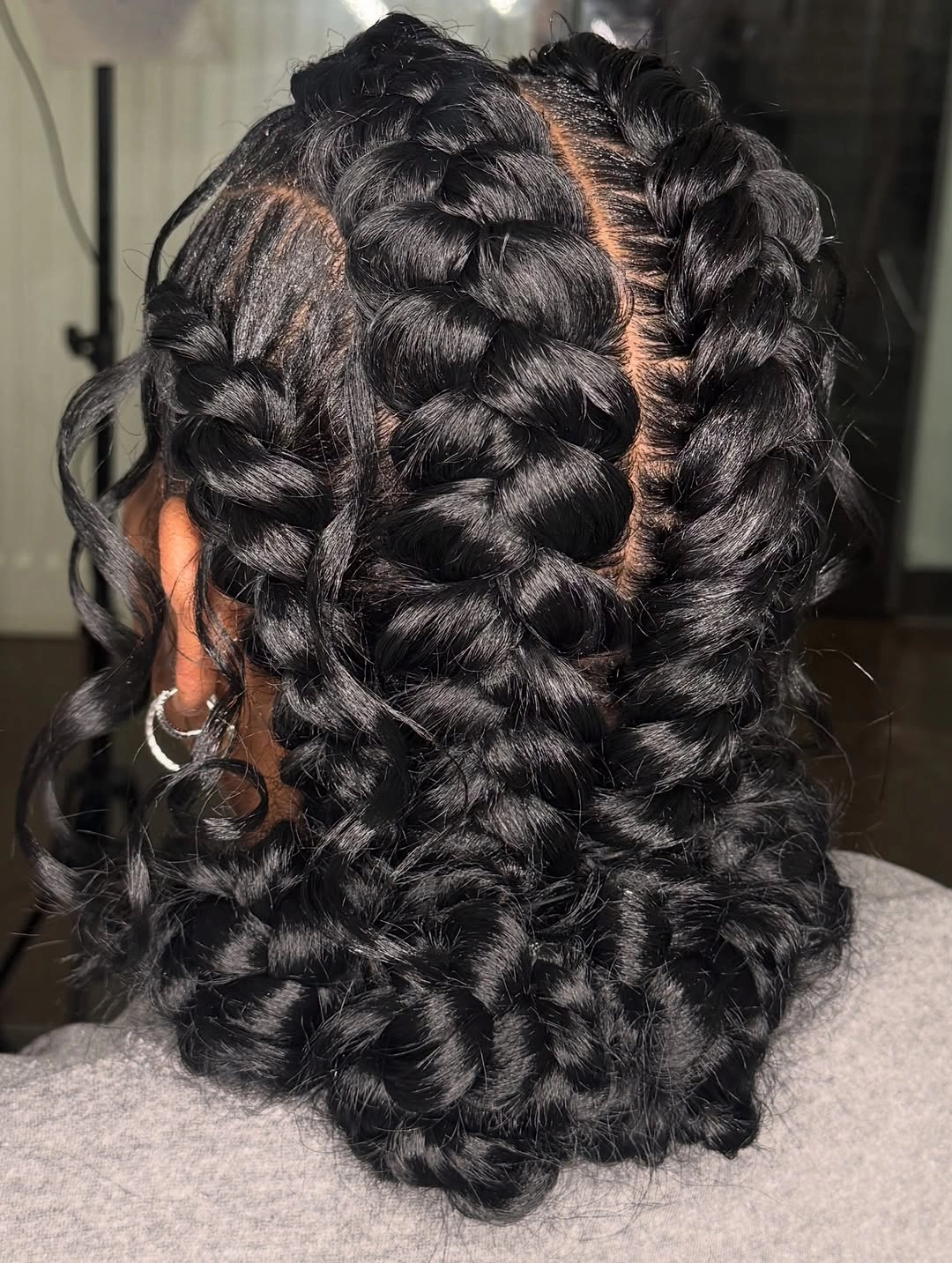
The parting is symmetrical, precise, and visible from a top-down view because the scalp is clean between each braid. Thick black feed-in braids follow the part lines into a neatly styled bun, which keeps the length out of the way while showing off the scalp pattern.
This is not a style you rush through. The parting alone takes a skilled hand, and the bun needs to sit low enough to not disrupt the braid lines above it. A strong-hold hairspray on the edges and the bun helps everything stay in place for the day. For more sculpted braided updos, Goddess Braid Ideas leans on the same crown-and-bun construction.
10. Feed-In Braids with Vibrant Orange Accents
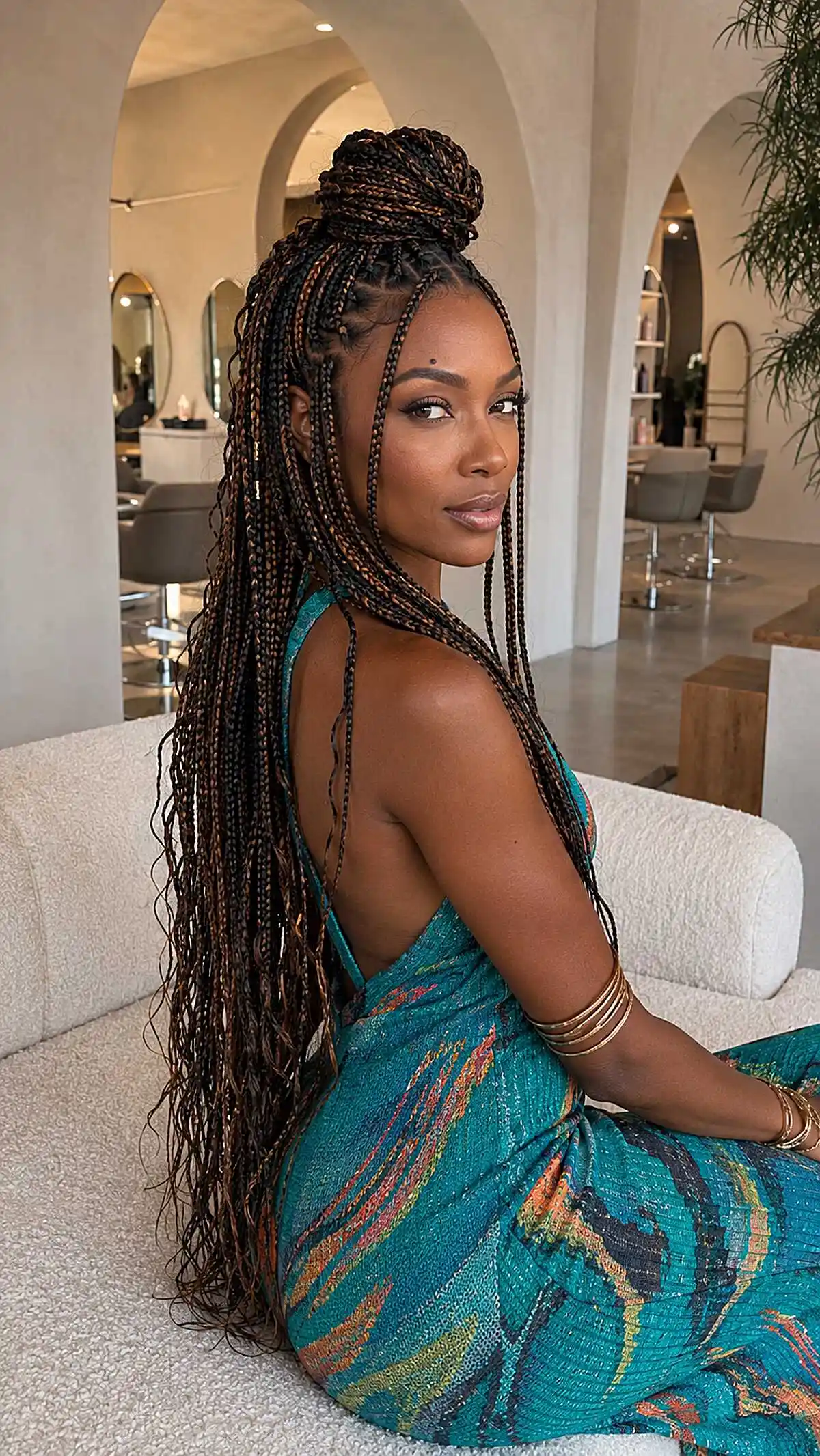
Orange is not the obvious choice for a braid accent, which is exactly why it works. These mid-back feed-in braids are mostly black, with vibrant orange strands woven in at intervals, and the ends are styled into loose curls that soften the contrast.
For fall festivals or any occasion where you want the hair to do the talking, this is the color move. The orange holds up better on synthetic braiding hair than on natural strands, so the vibrancy lasts the full wear period.
11. Two Large Feed-In Braids
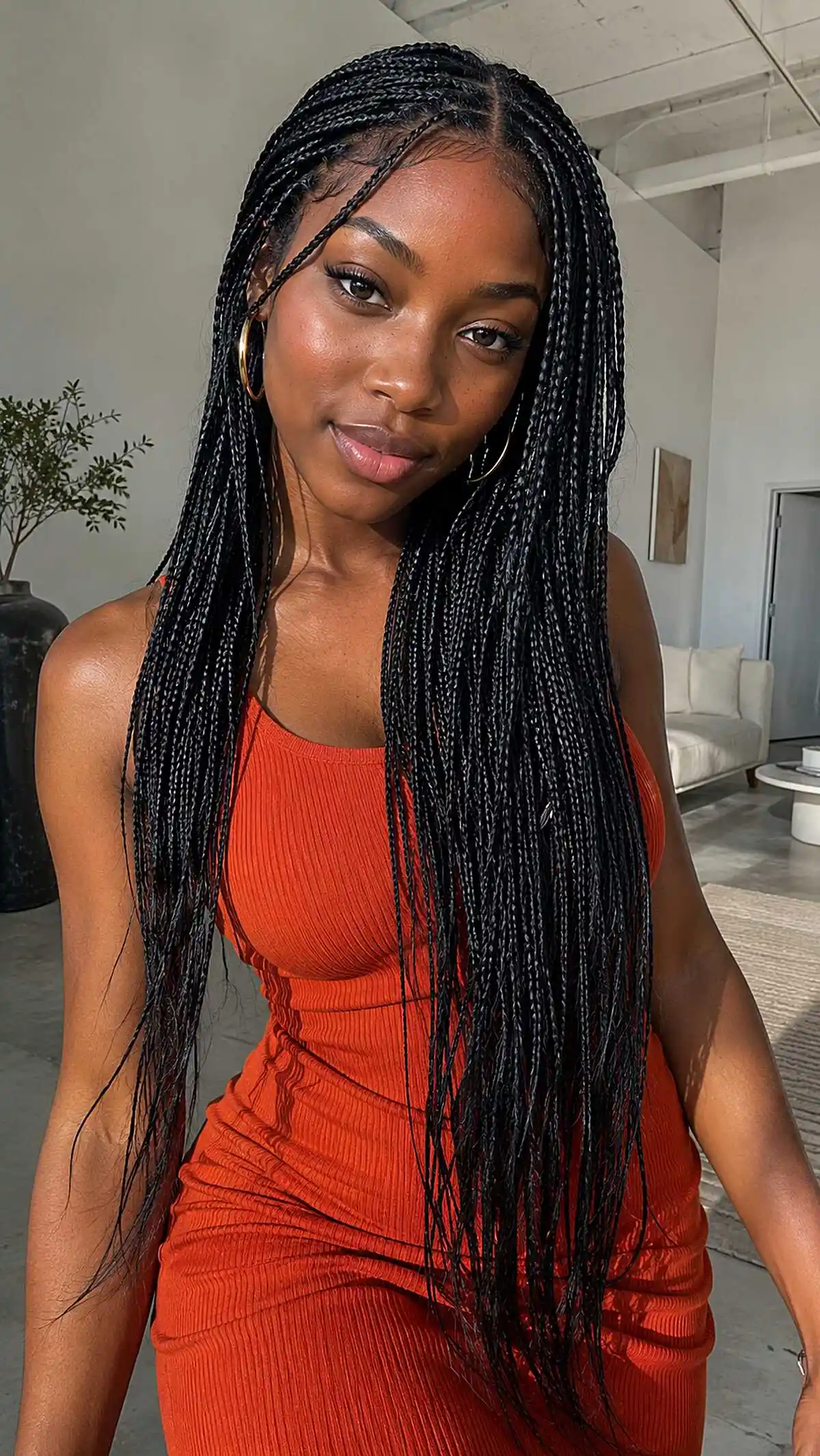
Courtesy of: latest-hairstyles.com
Thick, straight hair carries the weight best; finer textures may find the braids pull at the roots. The scalp between the braids needs regular cleansing and moisturizing, and a light oil applied with a dropper keeps the part clean without greasing the braids.
A trim every eight weeks prevents the ends from fraying, and the style holds its shape for about three weeks before the roots grow out noticeably. It is the simplest feed-in on this list, and sometimes simple is the smartest protective choice. For cold-weather protective styling, Winter Braided Hairstyles covers the same idea in heavier textures.
12. Coily Feed-In Braids with a Geometric Pattern
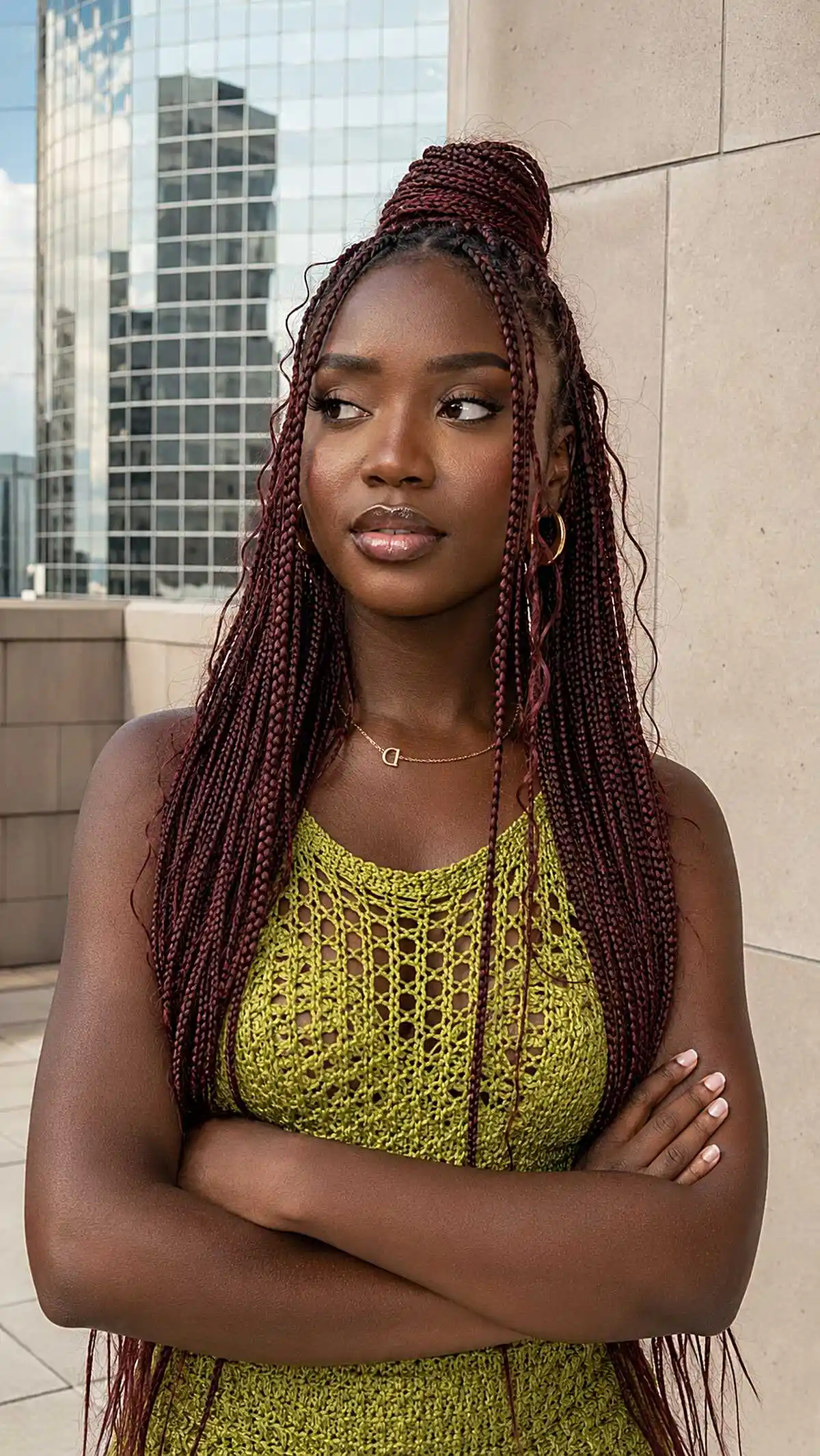
Photo credit: latest-hairstyles.com
This is a style that genuinely works best for those with naturally coily, dense hair. The geometric scalp pattern relies on thick strands to hold the angles crisp, and shoulder-length coily braids have enough weight to hang neatly without bouncing into a different shape every hour.
This is a salon-only project. The pattern requires a steady hand and about three hours in the chair, and straight hair lacks the grip to keep those sharp lines defined, so if your texture is fine or slippery, pass on this one.
13. Precise Feed-In Braids with Clean Edges
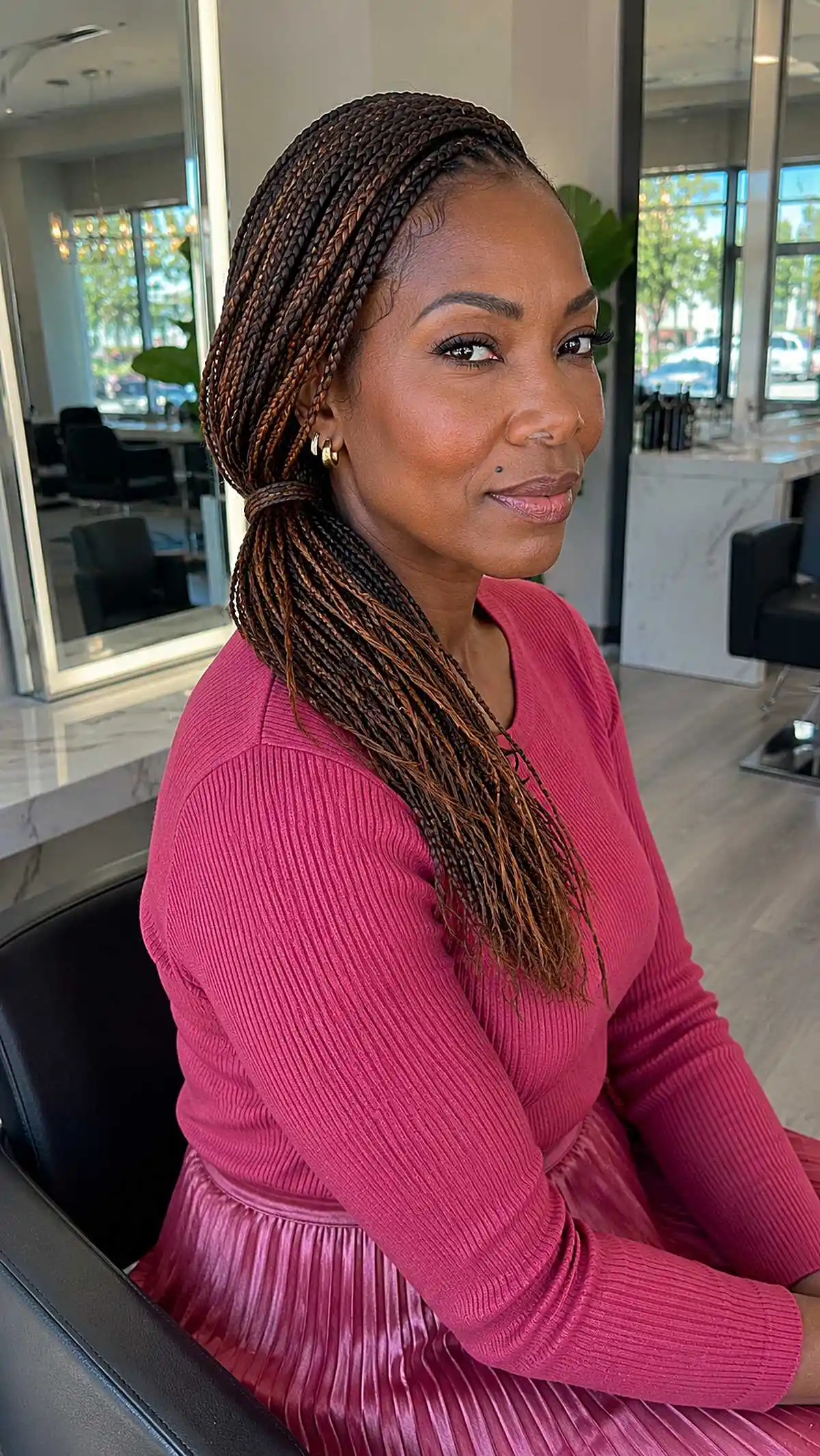
Image credit: latest-hairstyles.com
Neat feed-in braids with exceptionally clean edges and precise application along the scalp, extending to mid-back length. The middle parting is razor-straight, and every braid sits flush against the scalp with zero lifting, which means the braids will not loosen or bunch up at the roots for at least two weeks.
But it also comes with a real drawback: the edges will start to soften and fray around the hairline within ten days. A soft brush and a dab of edge control each morning keeps the hairline tidy, but you cannot skip it. For more braided shapes for Black hair, Winter Braids for Black Women rounds up the season’s options.
14. Sharp Stitch Braids with a Side Parting
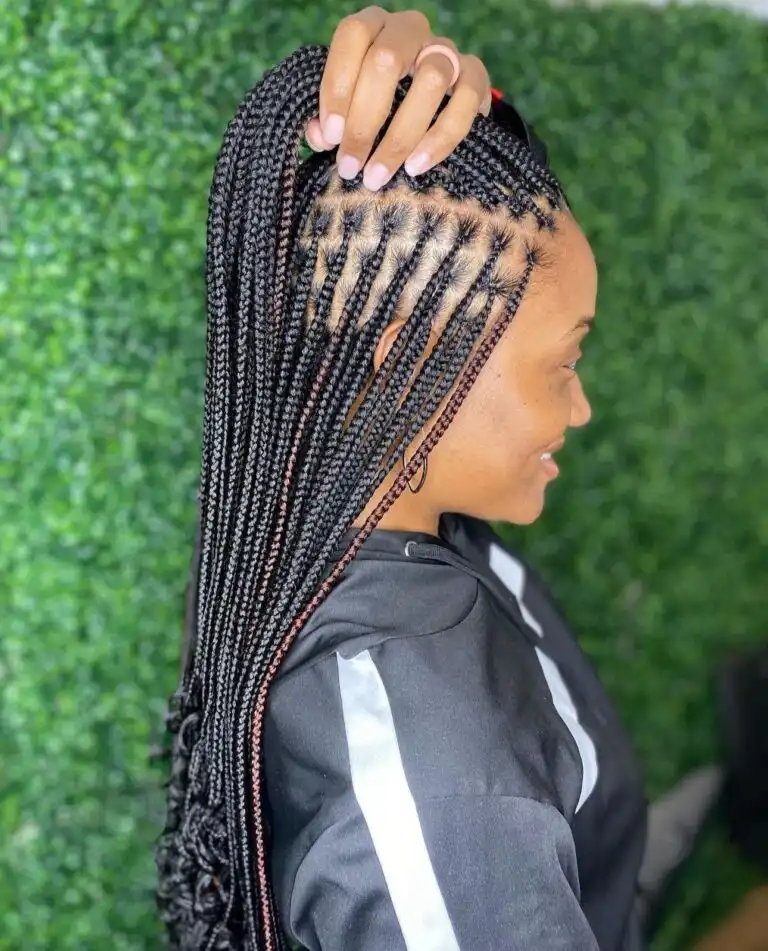
Source: sevynnbeautelounge.com
A practical rule for stitch braids: the sharper the part, the longer the style reads as fresh. These stitch braids use a clean side parting and precise lines along the scalp, with the braids falling to mid-back in a uniform black shade.
The side part changes the visual weight. It pulls the eye diagonally across the head instead of straight down, which makes the braids look fuller on one side. Straight hair holds these sharp lines best; coarser textures may blur the part. The braiding technique here is about consistent tension, so plan for three to four hours in the chair. For braided color in the same family, Winter Braid Colors for Black Women has the shades.
15. Mid-Back Braids with Dark Brown and Blonde Highlights
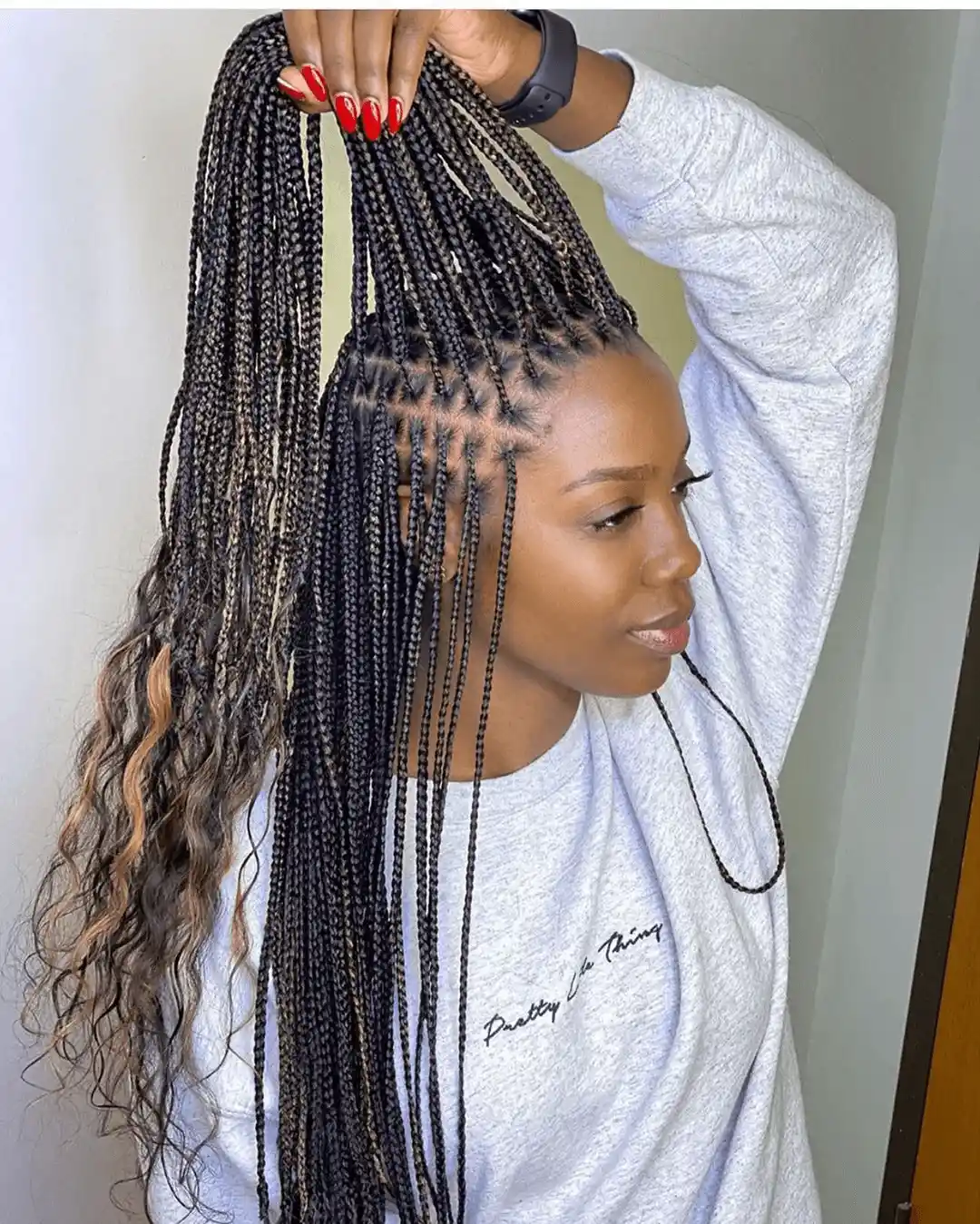
Most highlight braids rely on a single contrast, dark base, light ends. This one does something different: the blonde runs through the mid-back length as actual highlights, not just dipped tips, with a dark brown base that keeps the overall look grounded.
The wavy, thick texture gives the color depth, because the light catches the waves at different angles. It is a salon-only job, and the appointment runs about four hours for the braiding alone, so a color-protecting conditioner in your wash routine keeps both tones from muddying into each other. For protective styles that last through the season, Winter Protective Hairstyles is the guide.
16. Thin Feed-In Braids with Wavy Ends and Beads
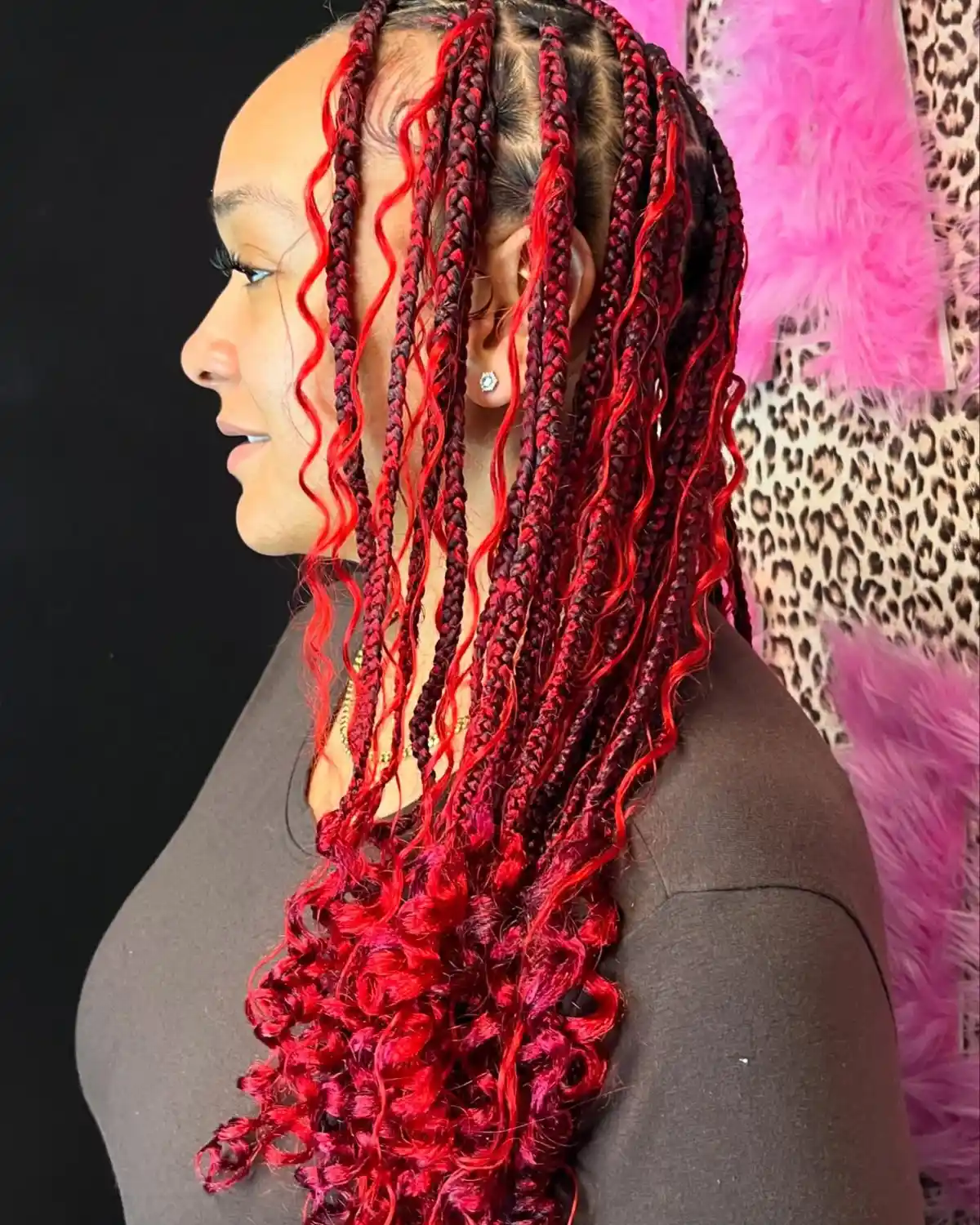
Courtesy of: thrivenaija.com
Thin feed-in braids with loose wavy ends and earthy-toned decorative beads make for a delicate, bohemian look that rewards patience. The style works best on thick, wavy hair that can support the fine braids without looking sparse, and it needs at least mid-back length for the waves to fall properly.
Styling requires a salon visit. The braiding itself takes several hours, and the beads are hand-tied one by one. The honest trade-off: wavy ends need gentle detangling to prevent frizz, and beads can snag on scarves or loosen over time, so check each bead’s knot weekly. For low-effort styles between braid appointments, Low Maintenance Summer Hairstyles for Black Women keeps the same easy brief.
Final Thoughts
For a low-maintenance routine, stick with solid black or dark brown braids at a mid-back length. If you want more visual interest without extra styling time, choose a style with subtle highlights or a few beads.
- Keep the scalp moisturized with a lightweight, non-greasy oil or spray.
- Avoid excessive manipulation or tight styles to prevent tension.
- Cover hair with a silk or satin bonnet at night to reduce frizz.
- Schedule touch-ups or re-braiding every 6-8 weeks depending on growth.
Feed-in braids offer a canvas for creativity and protection.