Office hair has a winter problem. Dry heated air brings static and flyaways, scarves flatten volume at the crown, and a commute through damp air can undo a blowout before the first meeting. The hairstyles that survive office winter are the ones that are pinned, gathered or smoothed on purpose: low buns, chignons, twists and ponytails that look deliberate at 9 a.m. and still hold at 5 p.m. This roundup gathers 24 polished work hairstyles built for the cold months, each with honest notes on styling, upkeep and who each look suits best. We break down a similar look in Autumn 2025 Must Try This Hair Colors Ideas.
Every style below is office-appropriate by design — neat silhouettes, no exaggerated volume, and finishes that read professional rather than party-ready. Where a look needs a salon technique or asks for regular upkeep, the trade-off is stated plainly so you can choose what fits your mornings. For a different spin on the same theme, browse Trendy Fall Hairstyles for 2025 Stylish Ideas Tips and Inspiration for the Season.
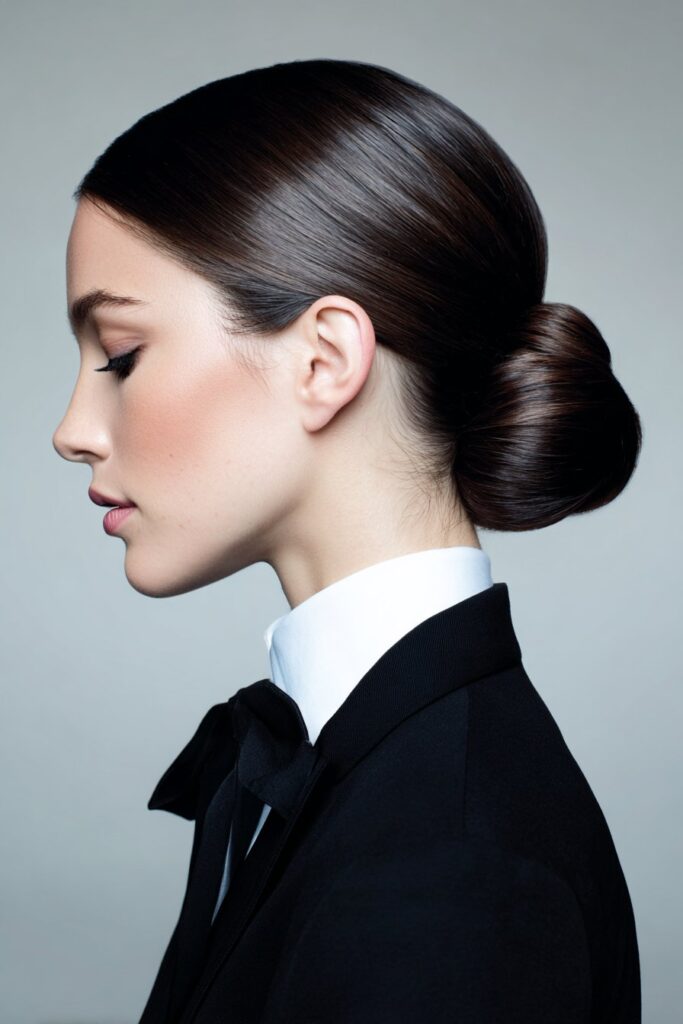
Sleek low bun with a crisp middle part
Courtesy of: socialglamm.com
The base is long, straight hair gathered into a smooth bun that sits at the nape, with a center part drawn clean from forehead to crown. The finish is deliberately glassy: no stray texture, no loose pieces, just a controlled surface that catches light evenly. This is the most boardroom-safe silhouette on the list, and it flatters oval, heart and round faces alike because the center part and low placement keep the emphasis horizontal and balanced rather than lifting height at the crown. The concept gets a fuller treatment in Best Homecoming Hairstyles for Short Hair.
Build it on second-day hair or a smoothing blowout, mist the roots with a flexible hold spray, and part with the tail of a comb so the line stays true. A small amount of pomade or a smoothing cream pressed over the crown tames winter static. The trade-off is honesty of surface: any frizz or regrowth shows immediately, so keep a travel-size smoothing serum at your desk. Those with very fine hair can pad the bun with a small donut form to keep the proportions generous.
Twisted low chignon with face-framing pieces
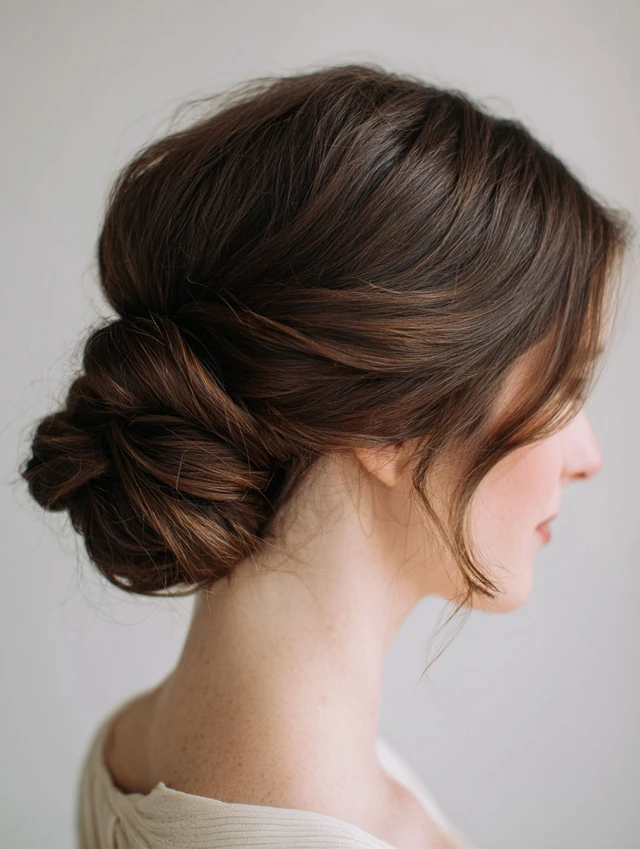
Photo credit: yournextinspo.com
Sections of dark brown hair are twisted back and pinned into a soft, low chignon at the nape, with two slender face-framing pieces left loose at the temples. The twists add visible dimension without formal rigidity, so the style reads polished rather than bridal. It suits medium to long hair and flatters square and round faces because the diagonal lines of the twists draw the eye inward and the front pieces soften a strong jawline.
Work a texturizing cream through dry hair before twisting so the sections grip each other, and secure with bobby pins placed against the grain of each twist. The front pieces can be curled once with a large iron for a soft bend. Upkeep is minimal — the style survives a scarf and hat better than most because the pinning is distributed rather than concentrated at one point. Very slippery, freshly washed hair will need dry shampoo at the roots first or the twists will loosen by midday.
Classic French twist
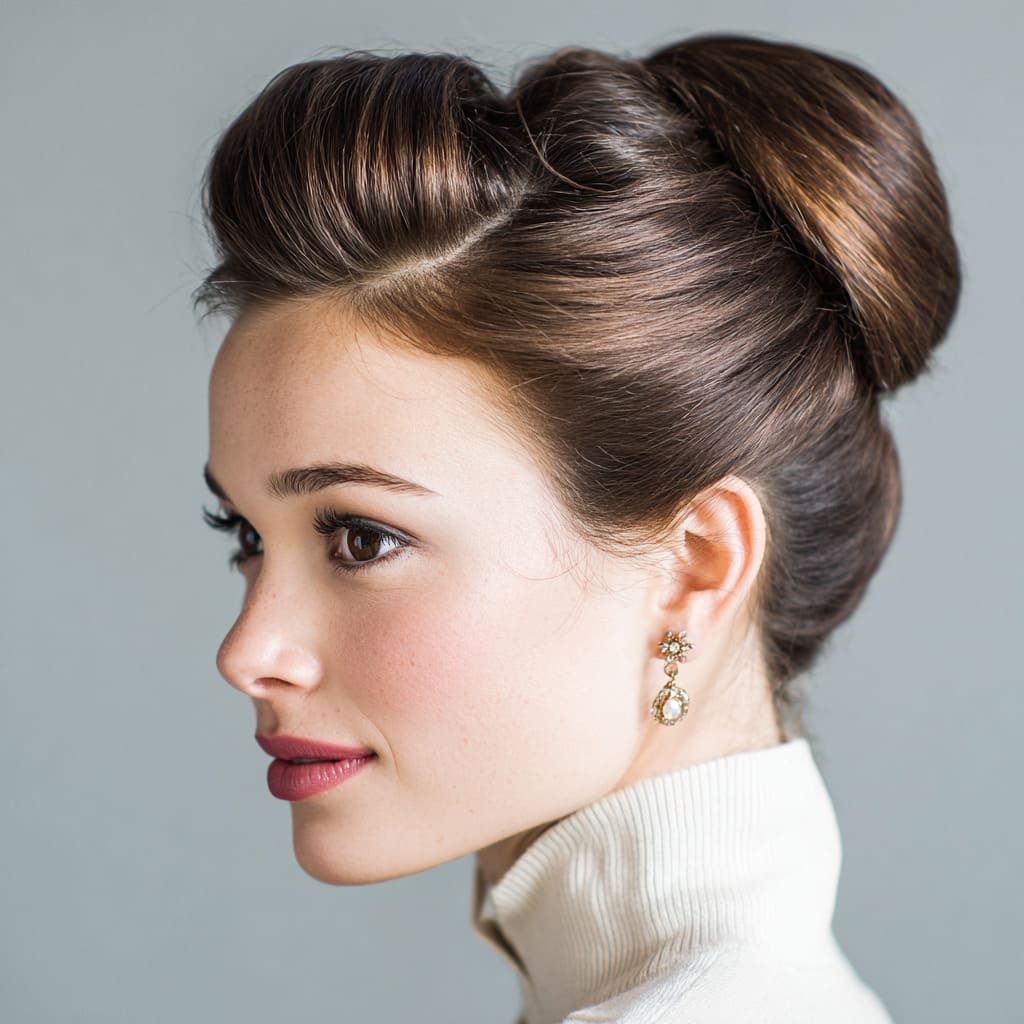
Image credit: styleyourbeauty.com
The hair is swept to one side, rolled vertically against the head and tucked into the signature folded seam of the French twist, with the ends secured inside. It is the definitive executive updo: all height is kept vertical and close to the head, so it frames the face without widening the silhouette. Best on medium to long hair with enough length to roll, it flatters long and oval faces particularly well and looks especially sharp under structured winter tailoring. We covered this territory more deeply in Easy Chic Winter Hairstyles for Women in 2025 2026 That Elevate Your Everyday Style.
Ask a stylist to demonstrate the roll once if you have never done one — the technique is simple but benefits from seeing the hand placement. At home, gather the hair low, hold it with one hand while the other rolls upward, and anchor the seam with pins placed vertically along the fold. A light mist of strong-hold hairspray is non-negotiable, especially in dry winter air. The main trade-off is tension: worn too tight daily it can strain the hairline, so alternate with a softer low bun through the week.
Sleek high ponytail with blunt ends
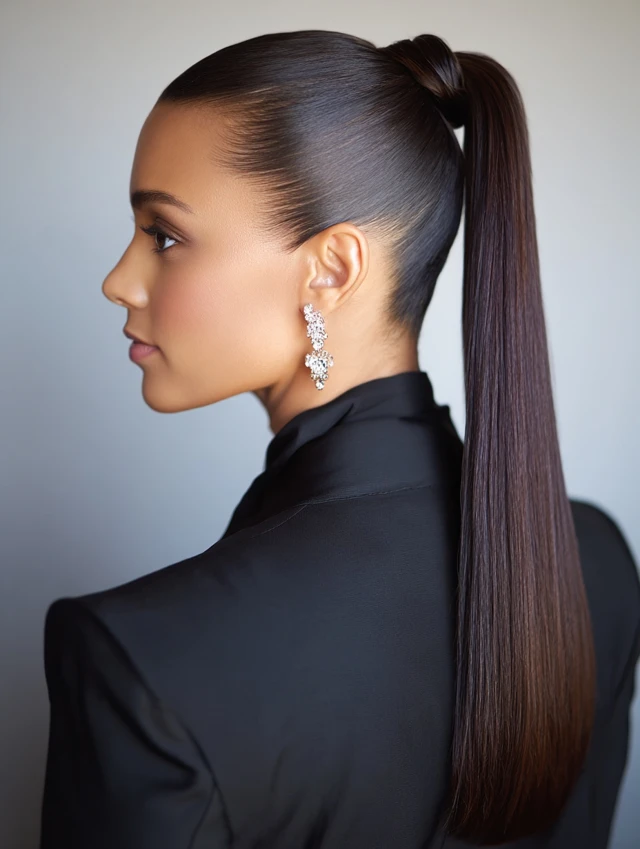
Source: forhairstylesinspo.com
The hair is drawn up high and back into a smooth ponytail with a wrapped base, the ends cut blunt so the tail reads thick and intentional rather than straggly. A high placement lifts the whole face and reads energetic and modern, which suits creative offices and client-facing days. It works best on long hair with enough density to keep the tail full; the sleek crown is the professional signal here, so flyaways must be controlled.
Smooth the crown with a boar-bristle brush and secure with a strong elastic, then wrap a thin strand around the base to hide it. A pea of smoothing cream on the ends and a flexible hairspray over the crown handle winter static. Expect some maintenance: a high ponytail loosens under a heavy coat collar, so pack a spare elastic. Those with tension-sensitive scalps should reserve this for shorter office days rather than daily wear.
Low textured ponytail with soft volume
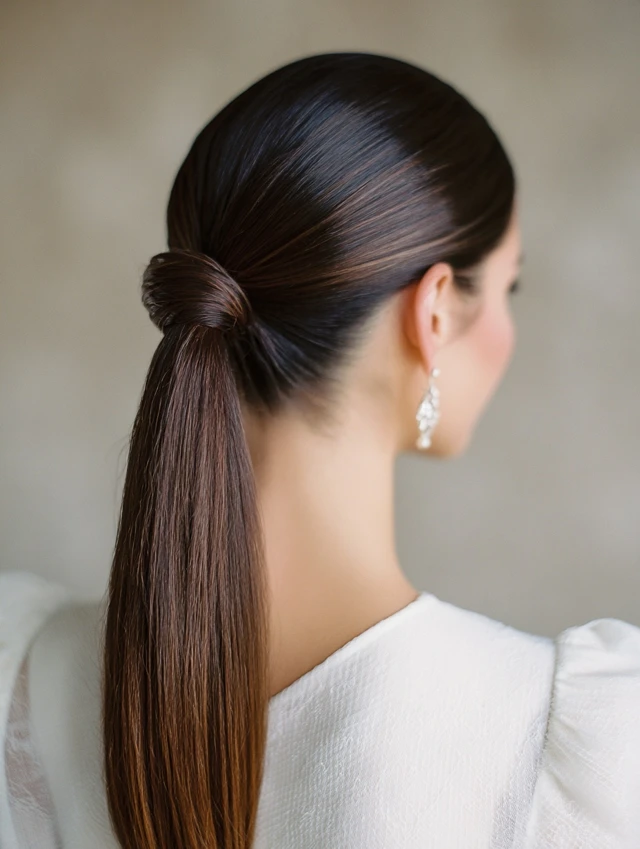
Gathered at the nape, this ponytail keeps gentle texture and body through the crown instead of the severe flatness of a slicked style. The softness makes it the friendliest option for fine or thin hair, since a little root lift goes a long way toward a fuller look. It flatters most face shapes and reads approachable and calm — the right register for everyday office wear when a formal updo would feel overdressed. For more ideas in the same lane, see our Pretty Fall Wedding Hairstyles 2025.
Tease lightly at the crown or use a root-lifting spray before gathering, and keep the elastic snug but not tight. A quick pass of a curling wand through the tail adds the lived-in bend that defines this style. It survives the commute well under a scarf because there is no intricate pinning to disturb. The trade-off is polish: by late afternoon the texture can read casual, so keep a smoothing brush at your desk for a quick refresh before evening plans.
Side-part low chignon
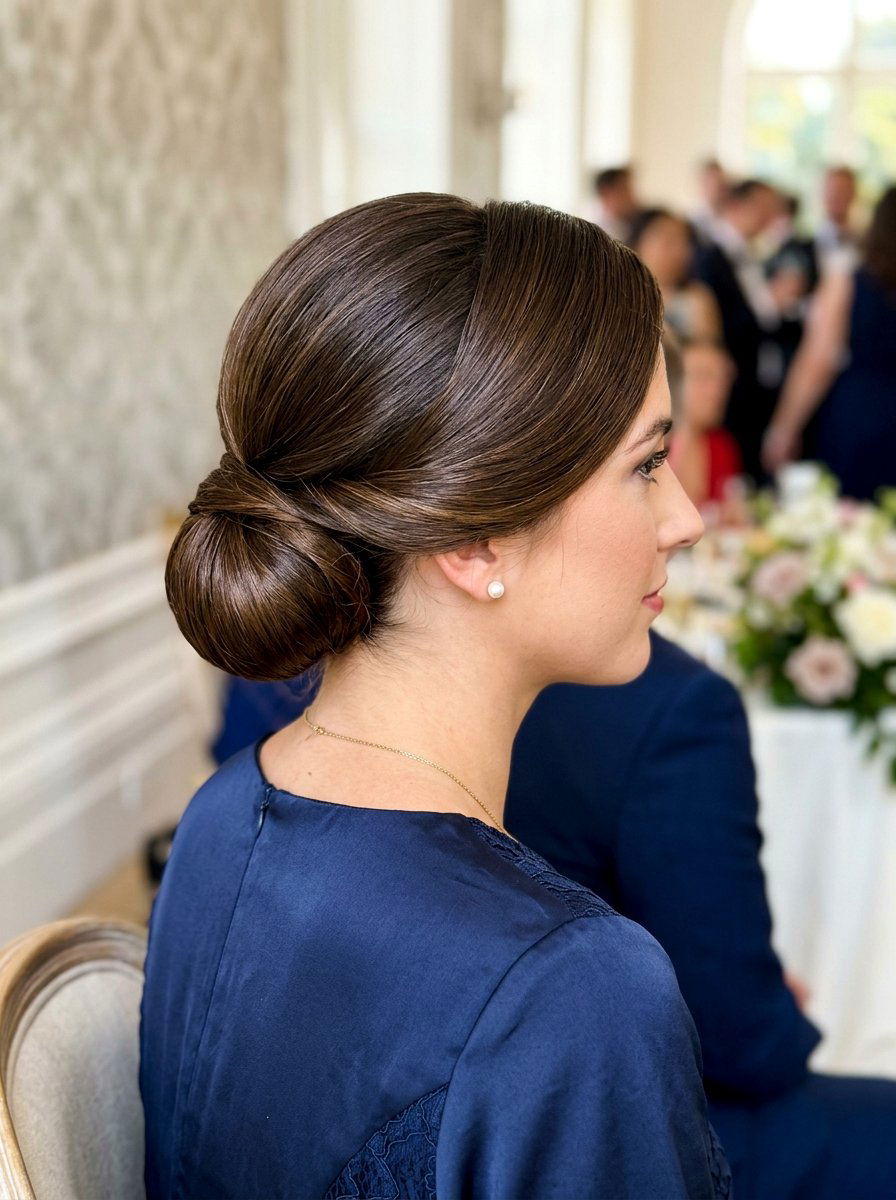
Courtesy of: lovelyish.com
A deep side part leads into a smooth, compact chignon pinned low at the nape. The asymmetry of the part gives the style its quiet drama: one side sweeps cleanly across the forehead while the other stays tight, framing the face with an elegant diagonal. It suits straight to slightly wavy hair and is particularly kind to round and square faces, since the diagonal part breaks up width and adds a lengthening line.
Set the part while the hair is damp for a lasting line, then smooth toward the nape and twist the lengths into the chignon, pinning as you go. A touch of shine serum on the swept section keeps it glossy through dry office air. This is a five-minute style once practiced, which makes it a reliable rushed-morning choice. Those with cowlicks at the hairline may need a firm-hold gel at the part to keep it from migrating by noon.
Half-up twisted style on long wavy hair
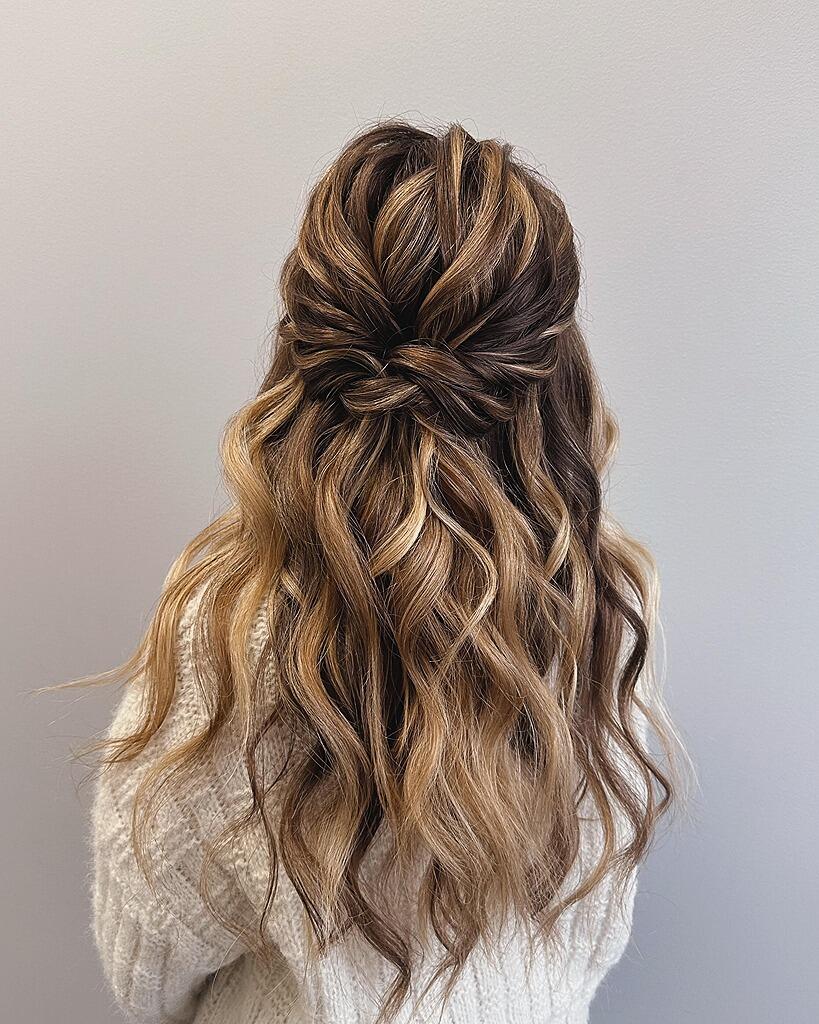
Photo credit: updosbyjocelyn.com
The top sections are twisted back and joined at the crown while the long, wavy lengths fall free past the shoulders. This is the best of both worlds for long hair at work: the face stays clear and the silhouette reads styled, but the length keeps its movement and color dimension. It suits thick, wavy or curly hair especially well, since the waves give the loose portion its shape without any heat styling. See also Fall 2025 Bob Hairstyles Ideas for more variations on this look.
Take two front sections, twist each away from the face, and join them at the back with pins or a small clear elastic hidden beneath the twists. A light-hold spray keeps the twists intact through the day. It is one of the most winter-friendly long-hair options because the gathered crown survives a hat while the loose lengths can simply be shaken out at the office. The caveat is professionalism in formal settings: for very traditional workplaces, a fully gathered style may read safer than half-up.
Side braid wrapped into a low bun
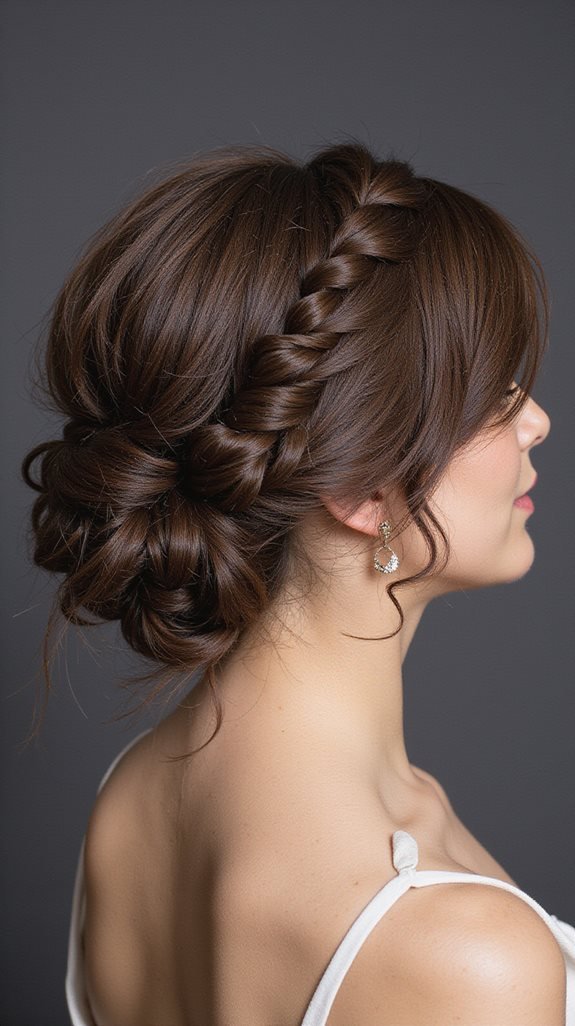
Image credit: stylesagepro.com
A chunky side braid sweeps from the front hairline and feeds into a low bun at the nape, combining two textures — the woven detail of the braid and the soft fullness of the bun. The braid adds visible craftsmanship that elevates an ordinary bun into something memorable, making it ideal for presentation days or client dinners. It flatters oval and heart faces, and the side placement keeps the look from reading too severe.
Braid with slight looseness rather than pulled-tight sections so the style stays soft and office-appropriate. Pin the bun over the braid tail and secure with pins placed against the braid’s direction for the strongest hold. Expect this to take ten to fifteen minutes once practiced — it is not the rushed-morning pick. Very short layers around the face may escape the braid; smooth them with a little wax and tuck the ends into the bun.
Elegant knot bun with a center part
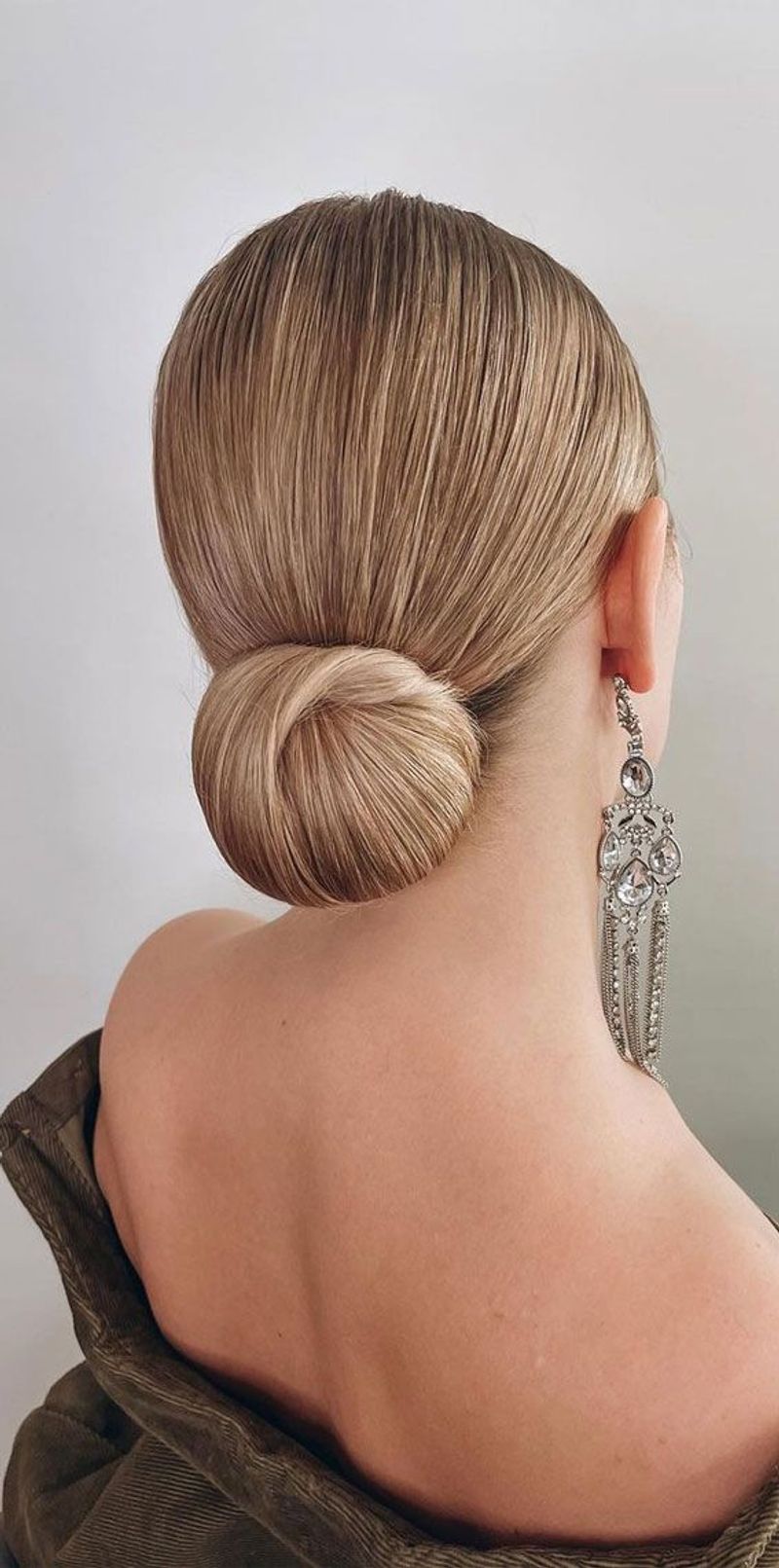
Source: hairstyletalk.com
The hair is parted in the middle and twisted into a neat knot at the nape — a bun built from a single coiled section rather than a folded loop, which gives it a slightly sculptural finish. The center part keeps everything symmetrical and composed, the office equivalent of a straight tie. It is an excellent choice for mature hair and for fine hair, because the knot shape concentrates what density there is into one tidy form rather than spreading it thin. The same theme, explored from another angle, is in Homecoming Hairstyles for Black Women.
Twist the ponytail section around its own base and pin the ends underneath, smoothing the crown as you go. A center part needs the hairline to lie flat, so apply a dab of smoothing cream before parting. The style holds well through winter commutes since there are no delicate loops to catch on a scarf. Those with very thick, heavy hair may need extra pins and a strong elastic at the base to stop the knot from sliding by late afternoon.
Ballerina top knot
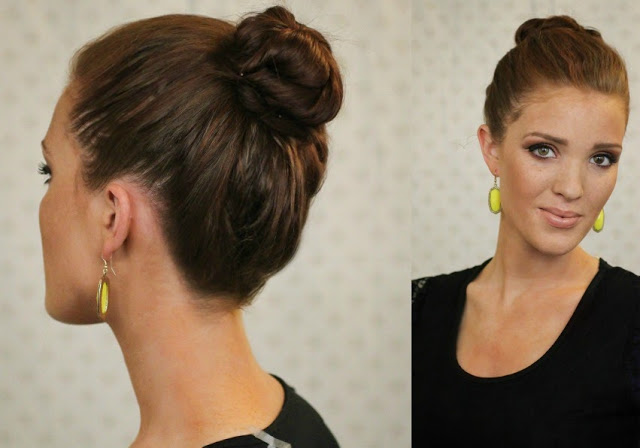
Via bms.co.in
Set high on the crown, the ballerina top knot is a tightly coiled bun with a perfectly smooth base — the cleanest high silhouette available and a classic for dancers and executives alike. It elongates the neck and reads crisp under blazers and high collars. Best on long, straight to wavy hair with enough length to coil, it suits oval and round faces; the height on top is the whole point, so anyone wanting to minimize forehead height may prefer a lower placement.
Pull the hair into a high ponytail, smooth the base thoroughly, then coil and pin. A bun form underneath gives fine hair the full, round shape this style demands. This is the most hat-hostile style on the list — plan around it on days you need headwear, or accept a quick rebuild at your desk. The trade-off is all-day tension at the hairline, so keep it for days when the look matters and loosen it on the commute home.
Scarf-wrapped silk bun
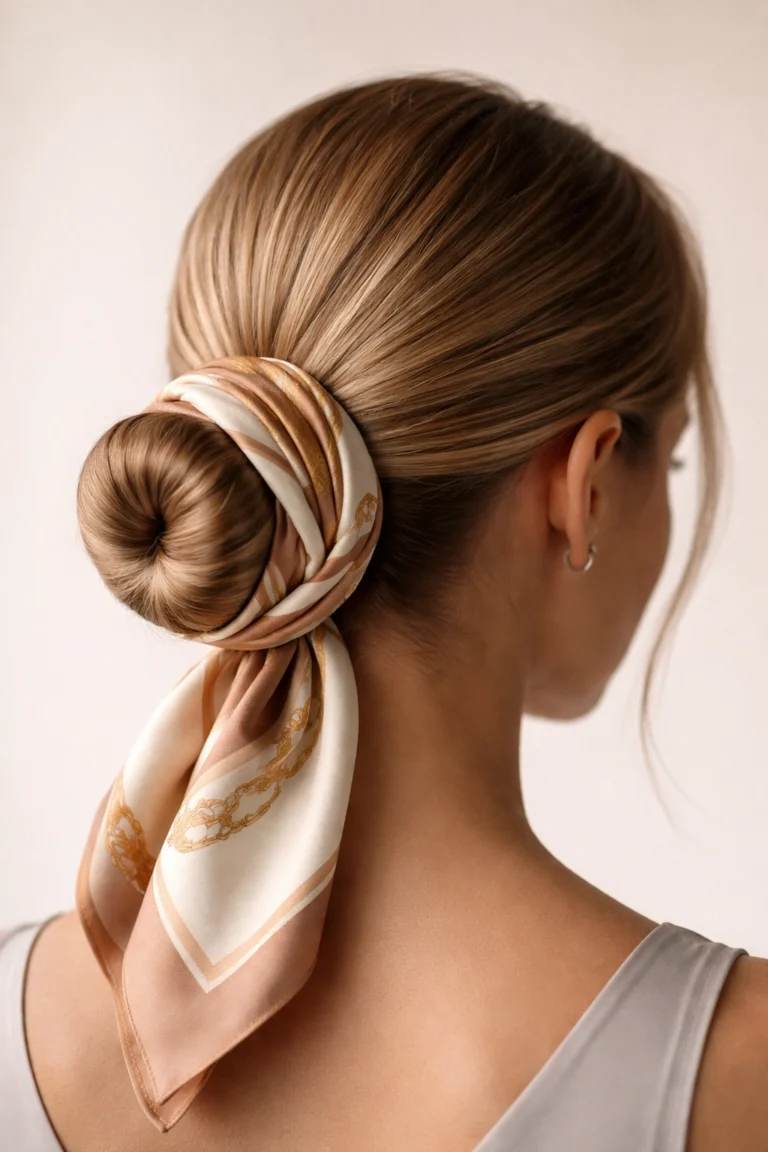
Courtesy of: hairtical.com
A low bun is finished by wrapping a slim silk scarf around its base, the ends tied in a small knot or left to trail. The scarf adds a controlled pop of pattern or color while keeping every strand pinned — a rare combination of personality and discipline that works well in creative offices. It also protects the bun’s surface from winter static, since the silk layer shields the smoothed hair beneath. The same idea, styled another way, appears in Stylish Homecoming Hairstyles.
Build a simple low bun first, then wrap the scarf twice around the base and knot it underneath. Choose a scarf in a muted print or solid tone for conservative workplaces; bolder patterns suit Fridays and creative roles. The silk does shift during the day, so check the knot at lunch. Those with very short hair can use a smaller bun and a narrower scarf — the principle works at any scale.
Sleek side ponytail with a wrapped base
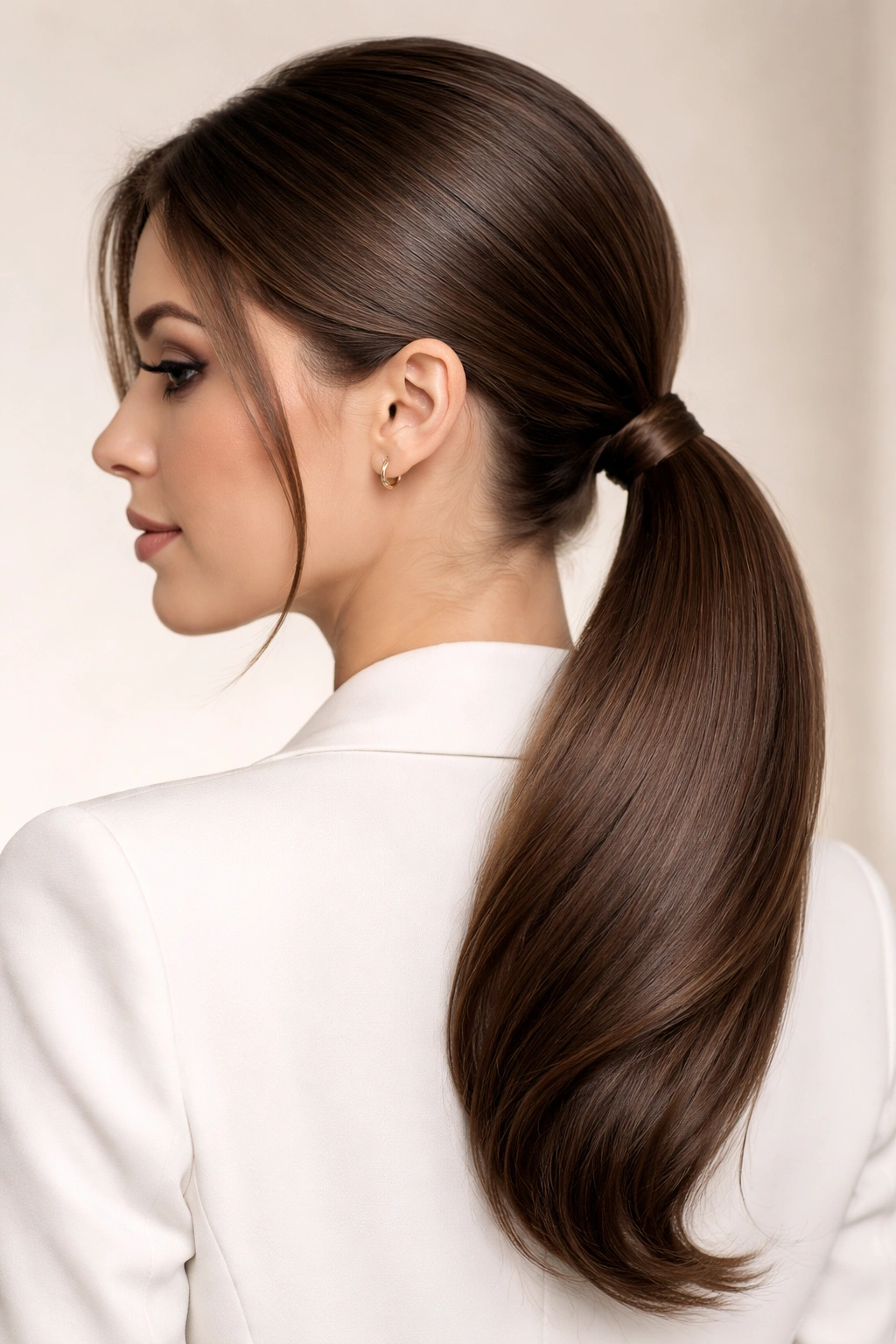
Photo credit: boldhairstyles.com
The ponytail sits low and to one side, swept smooth over one shoulder with the elastic concealed by a wrapped strand of hair. The asymmetry softens the formality of a classic ponytail while staying neat enough for the office, and it photographs well for days with headshots or video calls. It suits straight and slightly wavy hair and flatters round faces by creating a strong diagonal line across the shoulder.
Sweep all the hair to one side and secure behind the ear at the nape, wrapping a strand around the elastic and pinning it underneath. A smoothing serum on the swept side prevents frizz where the hair crosses the shoulder and rubs against coats. The side placement means it sits comfortably under a scarf without getting crushed. Fine hair benefits from a gentle backcomb at the crown before sweeping to keep the style from looking flat.
Double twist low bun
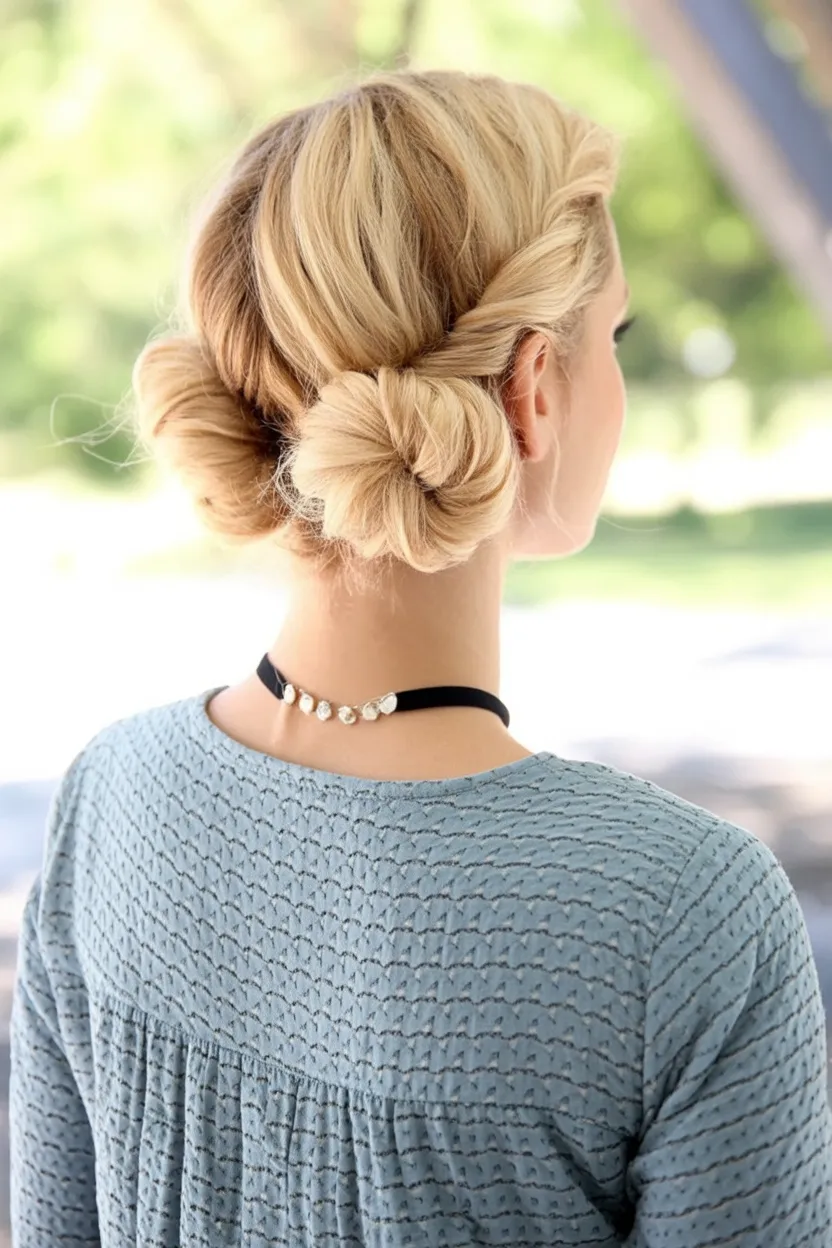
Image credit: azureglam.com
Two rope twists are coiled together into a low bun, giving the updo a woven, dimensional texture that a plain bun lacks. The twists catch light along their ridges, so the style has visual interest even in flat office lighting. It works on medium to long hair and is forgiving on texture — waves and curls actually improve the result by adding grip and body to each twist. If this look speaks to you, Must Try Hairstyles for Oval Faces continues the thread.
Split the ponytail into two sections, twist each in the same direction, then coil them together and pin. Rope twists tighten on themselves, so this bun holds longer than a folded bun with less pinning. In winter the multiple pinned sections resist scarf friction well. The one caution is bulk: on very thick hair the double twist can become oversized, so keep each twist snug and the overall bun compact for office proportions.
Simple low bun with a black velvet ribbon
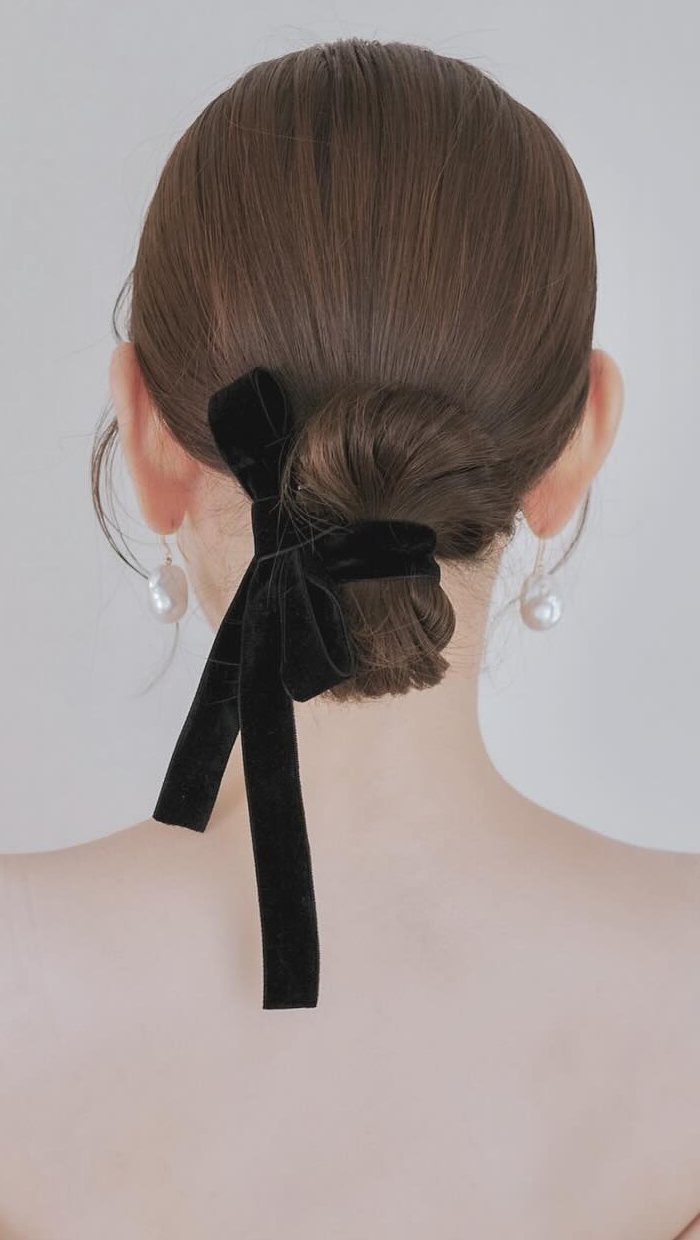
Source: fabmood.com
A smooth, compact low bun is finished with a black velvet ribbon tied in a bow at its base — the kind of quiet luxury detail that suits December offices and holiday-season meetings. The velvet’s matte texture against sleek hair is the whole point: restrained, seasonal, and unmistakably intentional. It works on any hair length long enough to bun and flatters every face shape, since the silhouette itself is neutral.
Build the bun first and secure it firmly, then tie the ribbon around the base and finish with a bow, trimming the tails to matching lengths. Black velvet reads professional; save colorful or patterned ribbons for creative settings. The ribbon needs one pin behind the bow to stop it rotating during the day. A practical bonus: the ribbon hides any pins or elastics, so the finish looks cleaner than it actually is.
Slicked-back low bun
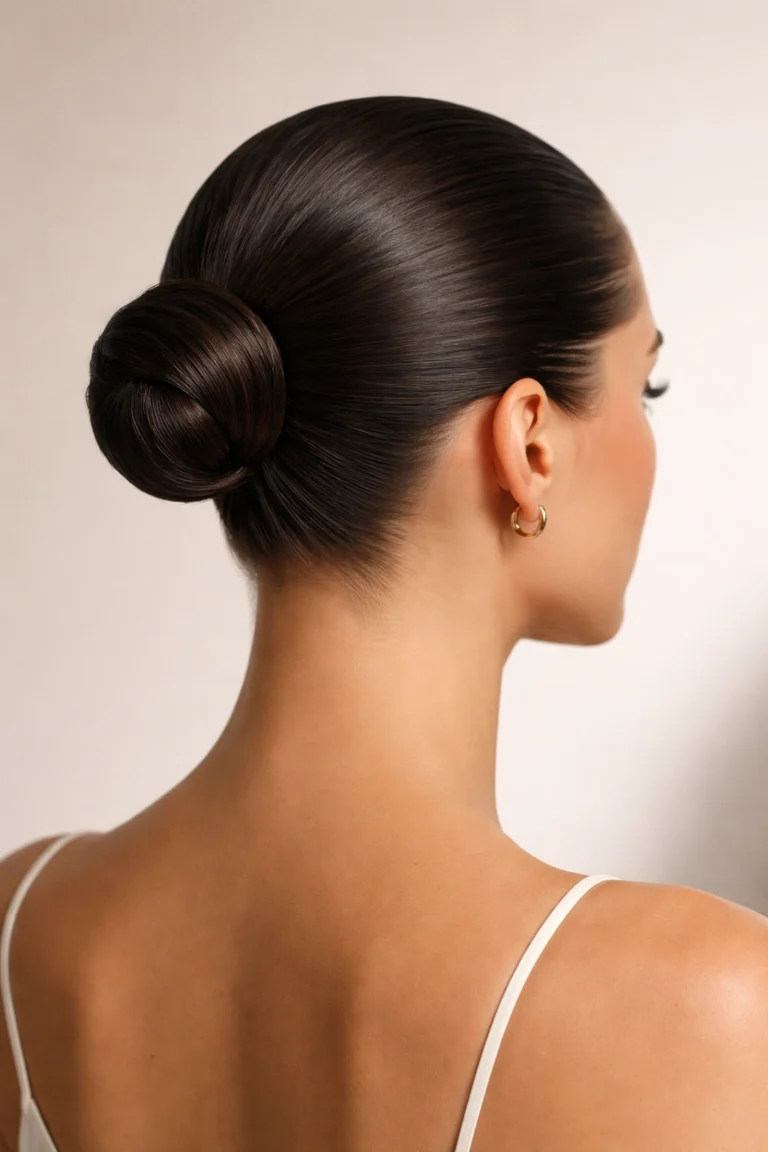
Via hairtical.com
Every strand is combed straight back from the hairline into a precise low bun — no part, no texture, no softness, just a mirror-smooth surface. This is the sharpest, most fashion-forward option on the list and it reads powerful in leadership settings. It suits straight hair best and flatters strong bone structure, since nothing interrupts the line from forehead to bun. In winter it is also the most static-proof style here, because the smoothing products seal the cuticle flat. For readers who want more, Classy Half Up Mother of the Groom Hairstyles keeps the ideas coming.
Work a strong-hold gel or pomade through damp hair and comb it straight back before coiling into the bun. A fine-tooth comb is essential for the seamless finish, and a final mist of high-shine spray completes the look. The trade-off is severity: it shows every feature plainly, so it is not the pick for days you want softness. It also demands healthy ends, since the slicked surface highlights damage — regular trims are part of the deal.
Gibson tuck updo
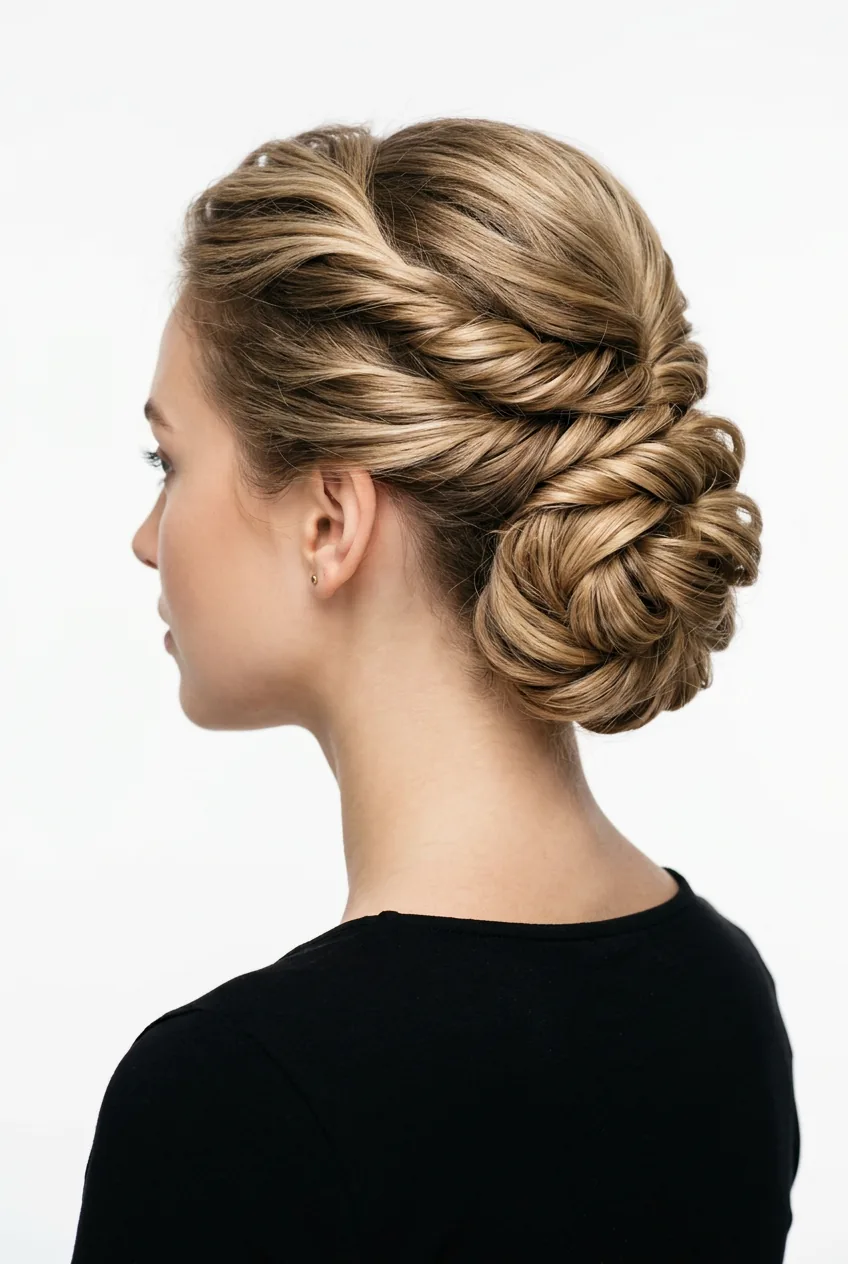
Courtesy of: herlocks.com
The vintage Gibson tuck gathers the hair into a low roll tucked up and under at the nape, creating a soft, rounded silhouette with no visible ends. It is the gentlest formal updo — romantic rather than severe — and it suits medium-length hair beautifully, including cuts that are too short for a full bun. The rounded shape flatters long and narrow faces by adding width at the sides.
The easiest method uses a hair donut or a sock bun form: pull the hair through, roll the ends up and over the form, then tuck and pin. Without a form, twist and tuck the lengths into a low pocket secured with pins. It takes some practice to get the tuck even on both sides, so trial it on a weekend first. The payoff is a style that holds all day with minimal product and survives scarves well, since there is nothing protruding to catch.
Fishtail braid into a low ponytail
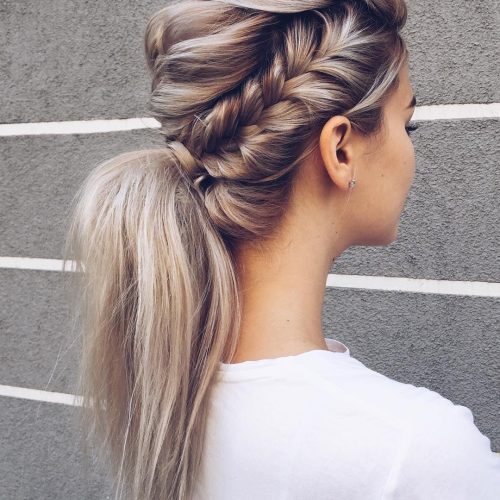
Photo credit: inflexa.com
A fishtail braid runs from the crown and dissolves into a smooth low ponytail, the fine woven texture of the braid giving way to sleek length. The combination is more refined than a plain braid and more interesting than a plain ponytail, landing in a smart middle ground for the office. It suits long hair and shows off dimensional color — like the ash blonde here — because the fishtail’s narrow weaving alternates light and shadow along its length. Related reading: Rich Dark Brown Fall Hair Color for 2025 takes the same concept further.
Braid the fishtail from the crown to the nape, then gather everything into a low ponytail and wrap the base. Keep the braid slightly pancaked — gently pulled wider — so the weave reads clearly rather than disappearing into a rope. It takes a few minutes longer than a standard ponytail, so it is a planned-morning style rather than a rushed one. The braid also keeps the ponytail from tangling under a winter coat, a genuine practical win.
Braided low bun
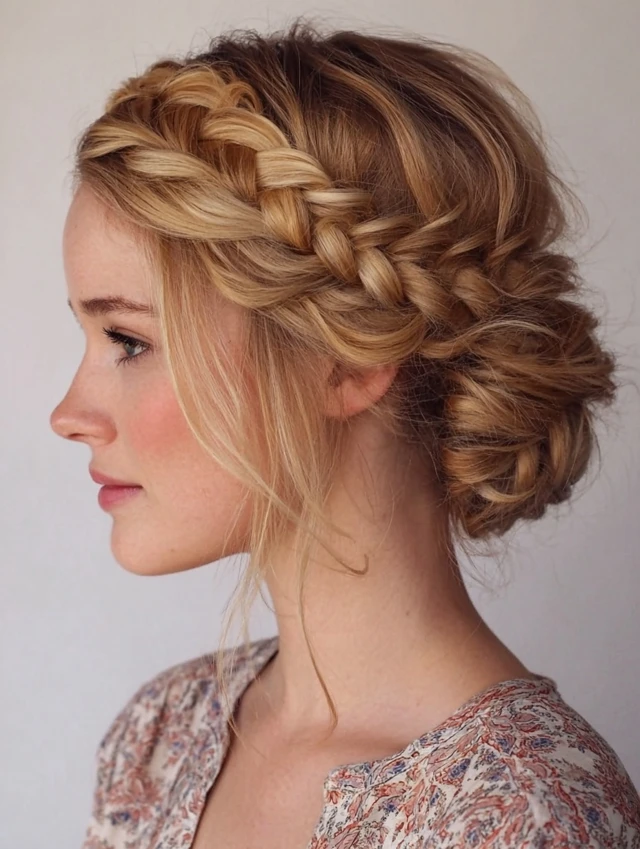
Image credit: cleodiva.com
A classic three-strand braid is coiled into a low bun, the braided texture giving the bun a patterned, crafted surface. This is the most secure updo on the list: a coiled braid barely moves, making it the best choice for long, heavy hair that slips out of ordinary buns. It reads neat and traditional, which suits conservative offices, and it flatters most face shapes because the silhouette stays close and compact.
Braid the full length with even tension, then coil and pin the braid around its base, tucking the tail underneath. A texturizing spray before braiding adds grip, especially on fine hair. Once built, it needs almost no attention all day and holds up under hats and scarves better than any other style here. The only real cost is the morning minutes — braiding plus coiling takes longer than a simple twist, so reserve it for days when longevity matters most.
Side chignon
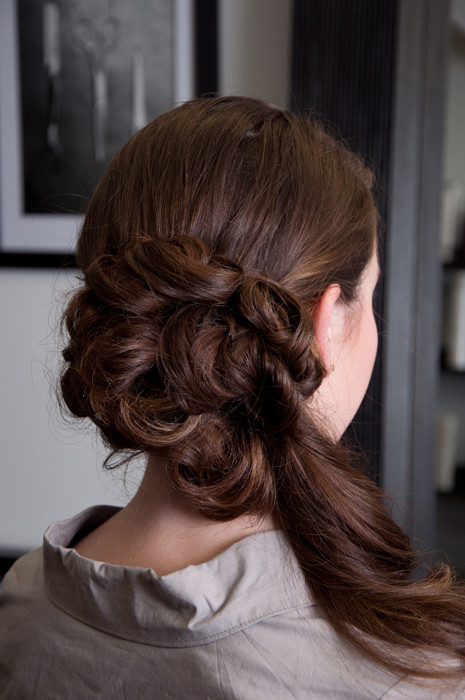
Source: wedissimo.com
The chignon is pinned low and to one side rather than centered, an asymmetric placement that makes a familiar shape feel fresh. The side position keeps the style visible from the front, which matters in meetings and on video calls, and it adds a gentle diagonal that flatters round and square faces. It works on medium to long hair and can be built smooth or slightly textured depending on the office register. Our Best Cozy Hair Colors for October 2025 rounds up more takes on this exact idea.
Sweep the hair to one side, twist or fold the lengths into a compact chignon behind the ear, and pin generously. A side part strengthens the asymmetry. Because the weight sits off-center, distribute pins on both sides of the chignon so it does not migrate toward the middle by afternoon. This is a good compromise style: more distinctive than a centered bun, but still firmly within professional bounds.
Effortless textured chignon
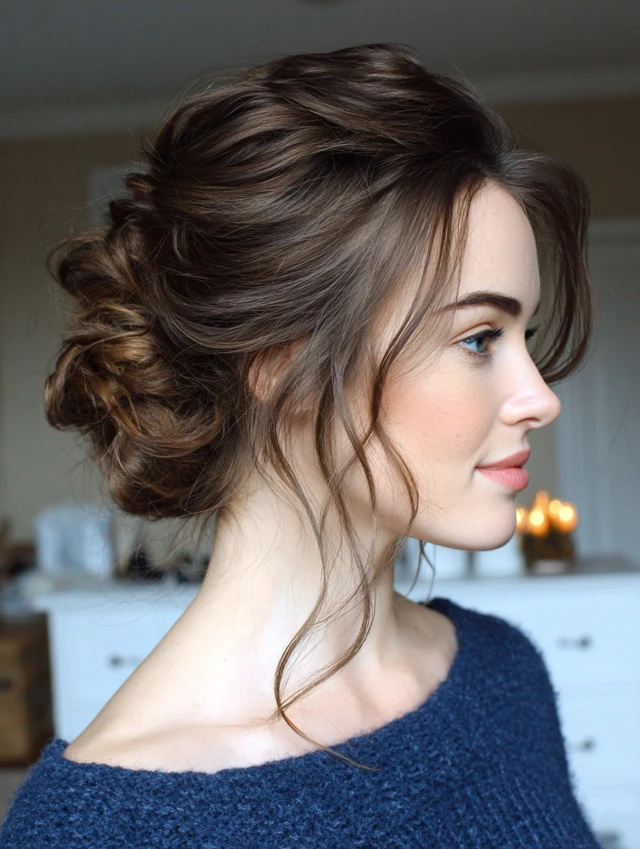
Built from loosely pinned sections rather than a single smooth twist, this chignon keeps visible texture and a soft, undone edge while staying firmly off the neck. It is the relaxed Friday version of the office chignon — polished enough for work, easy enough for real mornings. The texture adds fullness, so it is a strong pick for fine or thin hair that looks sparse in a slicked bun.
Start with dry shampoo or texturizing spray for grip, then pin sections loosely at the nape, leaving the surface slightly uneven on purpose. A few pins placed at angles hold better than a neat row. The style actually improves as the day goes on, settling into a softer shape rather than falling apart. The trade-off is precision: in very formal settings, the deliberate looseness can read unfinished, so keep the smooth chignon for those days instead.
Sleek chin-length bob with a deep side part

Courtesy of: lovelyish.com
Cut to the chin and worn glassy-smooth with a deep side part, this bob is the short-hair answer to office polish. The deep part creates dramatic sweep across the forehead and generous volume on one side, which flatters round faces by breaking symmetry and adding height. It is also the most winter-proof short style: there is nothing to pin, nothing to loosen under a hat, and the cut itself does the work. A companion piece, Trendy Hairstyles for School 2025 Simple Stylish Ideas for All Hair Types, explores the same palette.
Ask a stylist for a chin-length bob with a slightly longer front so the sweep has length to work with. Style with a flat iron and a smoothing serum, setting the part while the hair is warm so it holds. Trims every six weeks keep the line crisp — a bob past its shape reads instantly. The commitment is the upkeep rhythm, but the daily styling is near zero, which many find a fair trade.
Bob with a sleek side part
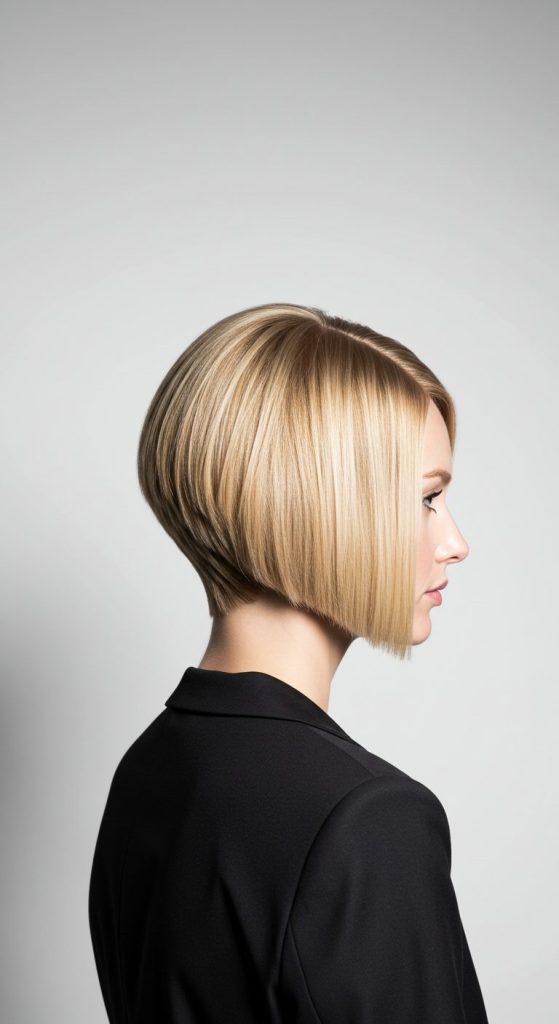
Photo credit: hairguru.net
A jaw-skimming bob worn smooth with a clean side part — the minimalist’s office haircut, all sharp lines and shine. Where the previous bob leans chin-length and dramatic, this one is shorter and more graphic, with the side part as its only softening detail. It suits straight, fine to medium hair and flatters oval and heart faces; the clean geometry pairs beautifully with structured winter tailoring.
The cut does the heavy lifting, so ask for a precise bob with a defined perimeter and a side part cut in, not just styled in. Daily styling is a quick flat-iron pass and serum. Like any precision cut, it needs trims every five to six weeks to keep its edge — let it grow out and the graphic effect dissolves. Those with strong cowlicks should have the part placed where the hair naturally wants to fall.
High curly ponytail with volume
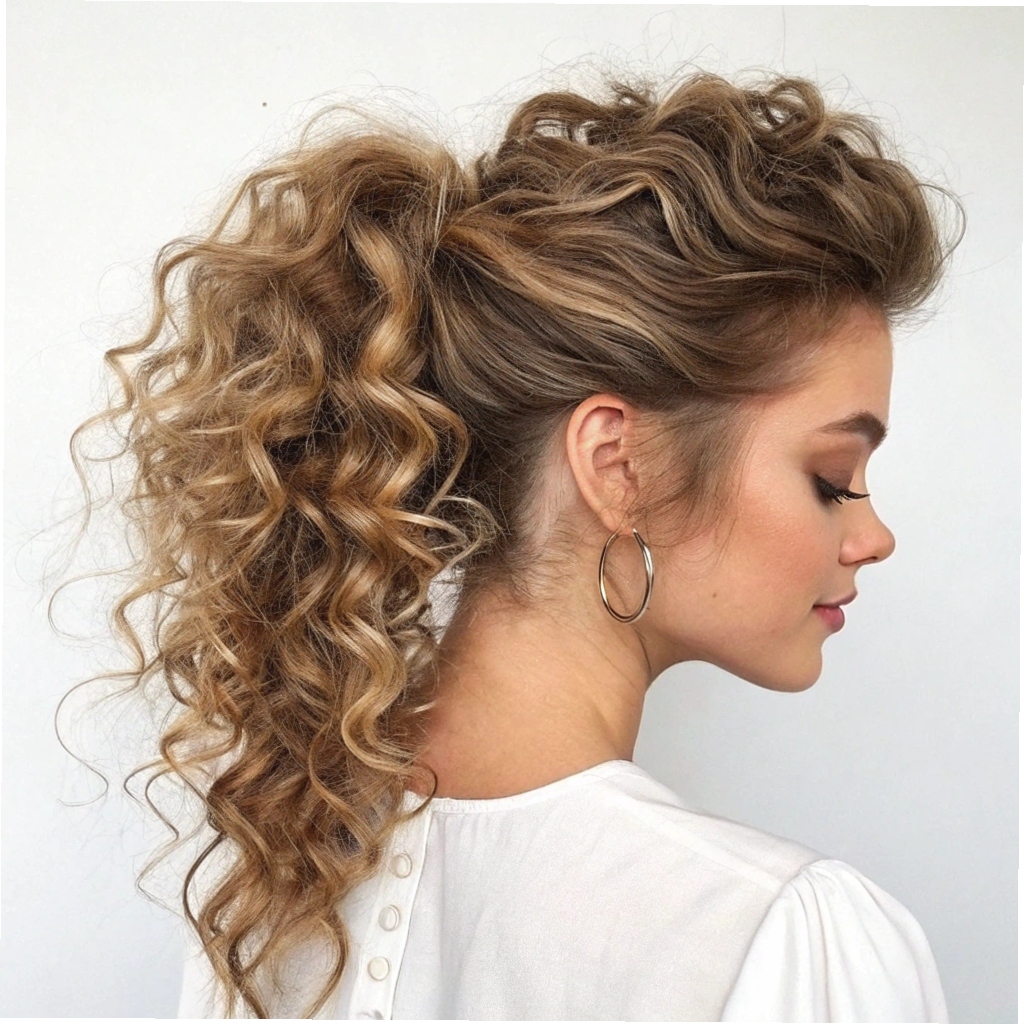
Image credit: trendygirlsstyle.com
Curls are gathered high into a full, voluminous ponytail that shows off natural texture instead of taming it. This is the style for curly and coily hair at work: the height keeps curls off the shoulders and out of the way, while the volume itself is the statement. It suits dense curl patterns best and flatters round and oval faces, since the lift on top lengthens the silhouette. You’ll find the same spirit in Best Old Money Hairstyles.
Gather with a satin scrunchie or a wide, fabric-covered elastic to protect the curl pattern, and define the curls with a curl cream before gathering. A light oil on the lengths keeps winter dryness at bay. The practical note is weather: high humidity or rain will expand the volume further, so a light-hold gel helps it stay office-shaped. Avoid thin elastics, which dent the curl pattern and snap more easily under the weight.
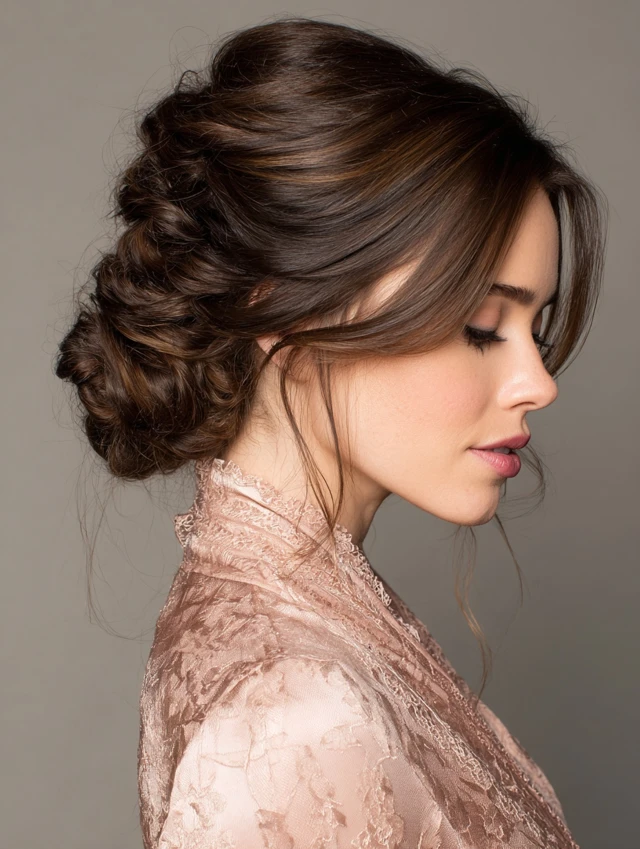
Woven twisted low updo with face-framing pieces
Source: womenshairtoday.com
Multiple twisted sections are woven together into a low updo with soft pieces left to frame the face — the most intricate-looking style on the list, though it is simpler to build than it appears. The woven texture gives the updo depth and movement, making it a strong choice for important work events when you want hair to look considered. It suits medium to long hair and flatters square and heart faces, since the front pieces soften the perimeter.
Twist sections away from the face and pin them into the low base one at a time, overlapping each new twist over the last. Work with a texturizing product so the twists grip. This takes the longest of any style here — allow twenty minutes — so plan it for days that merit the effort. The payoff is longevity: woven, multi-pinned styles are the most commute-proof of all, barely shifting under coats and scarves.
Final Thoughts
Across these 24 looks, the strongest options work because of control and placement, not simply because they are buns or ponytails. A low chignon survives a scarf where a loose blowout will not; a wrapped base or a ribbon turns a basic ponytail or bun into something deliberate; and texture — twists, braids, weaves — is what keeps gathered hair from looking flat in winter light. Choose based on your mornings: the slicked-back bun and the sleek bob ask for product and precision, while the textured chignon and braided bun ask for a few extra minutes and repay you with all-day hold. Match the style to your hair’s density and your office’s formality, and keep the upkeep rhythm honest — a sharp style maintained beats an ambitious one abandoned.
- Trim every six to eight weeks to keep the shape sharp.
- Use a heat protectant before every hot-tool session.
- Tone blonde or highlighted hair every six weeks to keep brassiness away.
- Match the upkeep schedule to your routine before committing to high-maintenance color.
The best color is the one that still looks intentional at week six.