Winter tends to flatten how people dress. The temperature drops, the layers pile on, and personality gets buried under whatever keeps the cold out. But the most interesting cold-weather dressing works the other way, using the season’s bulk as a canvas rather than a constraint. That is the logic behind streetwear women winter outfits built around color: each look starts from a single hue or tonal decision and lets the rest fall into place. When the palette leads, the layering stops feeling accidental and starts reading as intent.
The simplest way to approach this is to pick one anchor before anything else. It might be a coat, a bag, a scarf, or even a pair of shoes, but it should be the thing your eye lands on first. Build the rest of the outfit to support that anchor rather than compete with it, keeping the surrounding pieces quieter in tone or texture. Prioritize comfort where it matters most, usually the base layers and footwear, since those determine whether you actually wear the look or abandon it by noon. Everything else is negotiation.
The Teddy Shearling in Warm Beige
A shaggy shearling coat in warm beige does most of the styling work on its own. The texture is loud, so the surrounding pieces stay deliberately calm: cable-knit trousers in a soft grey, a small black accessory, and nothing that fights for attention. The contrast between the dense, almost sculptural pile of the coat and the flat matte knit of the trousers is what gives the look its rhythm. Add earmuffs and dark sunglasses, and the palette reads as monochrome with a single sharp punctuation mark.
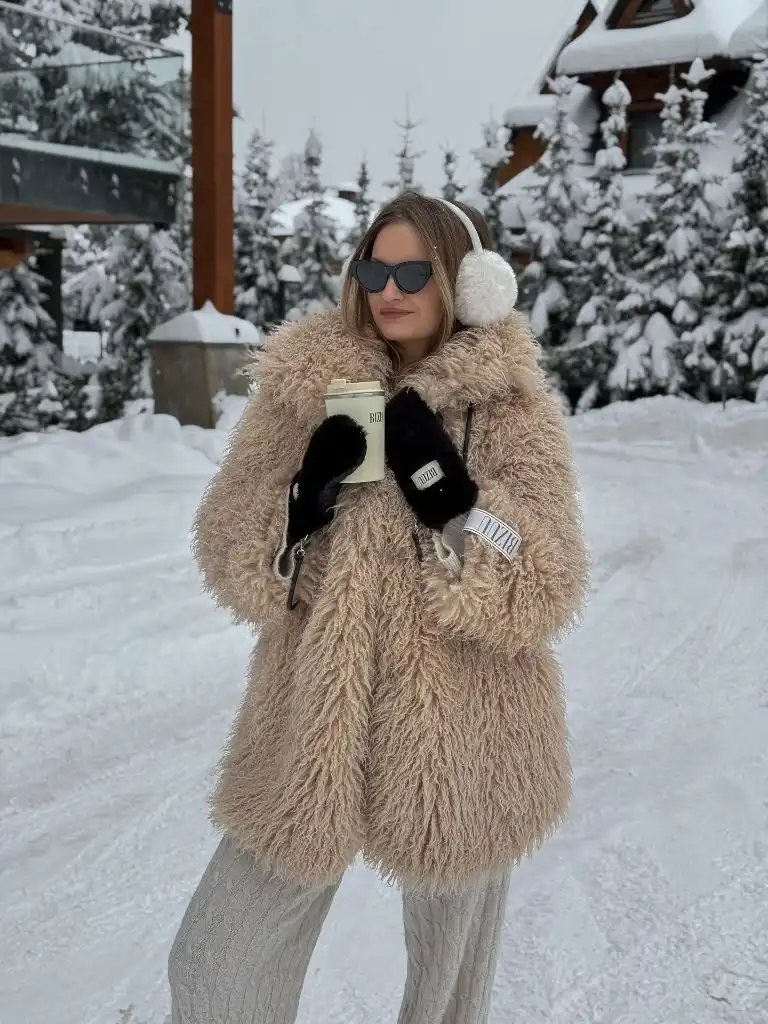
If a full teddy coat feels like too much volume, the same idea scales down to a cropped shearling jacket paired with straight-leg jeans. You lose some of the drama but keep the tonal warmth, and it moves better through a commute or a crowded train. For real cold, the coat length matters more than the texture, so lengthen it before you slim it. The beige also forgives snow better than you would expect, hiding the salt marks that darker fabrics broadcast.
The reason this palette holds up is that beige sits between neutral and warm, so it reads as intentional even when the rest of the outfit is thrown together. Swap the black gloves for chocolate brown and the whole thing softens further into a single tonal family. If you want more edge, a black leather boot at the hem breaks the warmth and grounds the look. The coat does the talking, so let it.
Off-White Curly Lamb Against Stone
There is a specific pleasure in wearing all cream against a pale stone building, where the outfit nearly dissolves into its backdrop. A curly Mongolian lamb jacket in off-white, layered over an ivory turtleneck and cream trousers, becomes an exercise in tonal shading rather than contrast. The trick is the black bag: one dark object placed against all that pale texture stops the eye and gives the composition a center. Without it, the look would drift; with it, everything organizes around a single point.
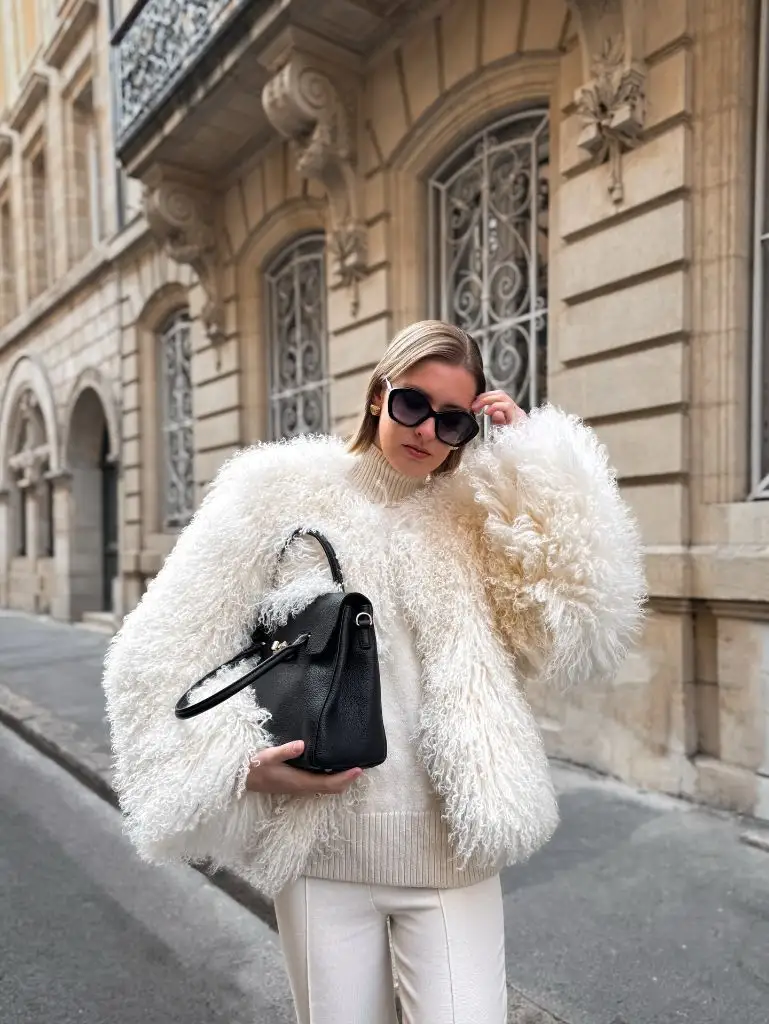
Tonal dressing this pale is unforgiving in practice, so the adaptation is about fabric choice more than color. Choose a cream trouser with some weight and texture, which hides wear far better than a flat, thin one. If white bottoms feel impractical, a warm sand or oatmeal shade keeps the tonal effect while surviving a wet pavement. For anyone who finds all-cream too precious, one darker layer underneath, like a taupe knit, adds depth without breaking the scheme. If you want to see how the shaggy-jacket idea plays across other palettes, this roundup of faux fur jacket outfit ideas covers the range.
What makes near-monochrome work is the range of textures doing the job that color usually does. The curly pile, the ribbed knit, the smooth leather bag, and the flat trouser all read as different even though they share a hue. Substitute the black bag for a deep chocolate one and you soften the contrast into something quieter and more autumnal. The principle holds: when color goes quiet, texture has to speak.
Charcoal Tailoring in the Snow
A long, double-breasted charcoal coat cuts a hard vertical line against a snowy park, and that severity is the whole point. This is tailoring pretending to be streetwear, with a nipped waist and a floor-grazing hem that reads as structured rather than cozy. The palette is almost entirely grey and cream, so the silhouette carries the look instead of any single detail. A cream beret and pale gloves lift the top of the figure and keep the dark coat from swallowing the frame.
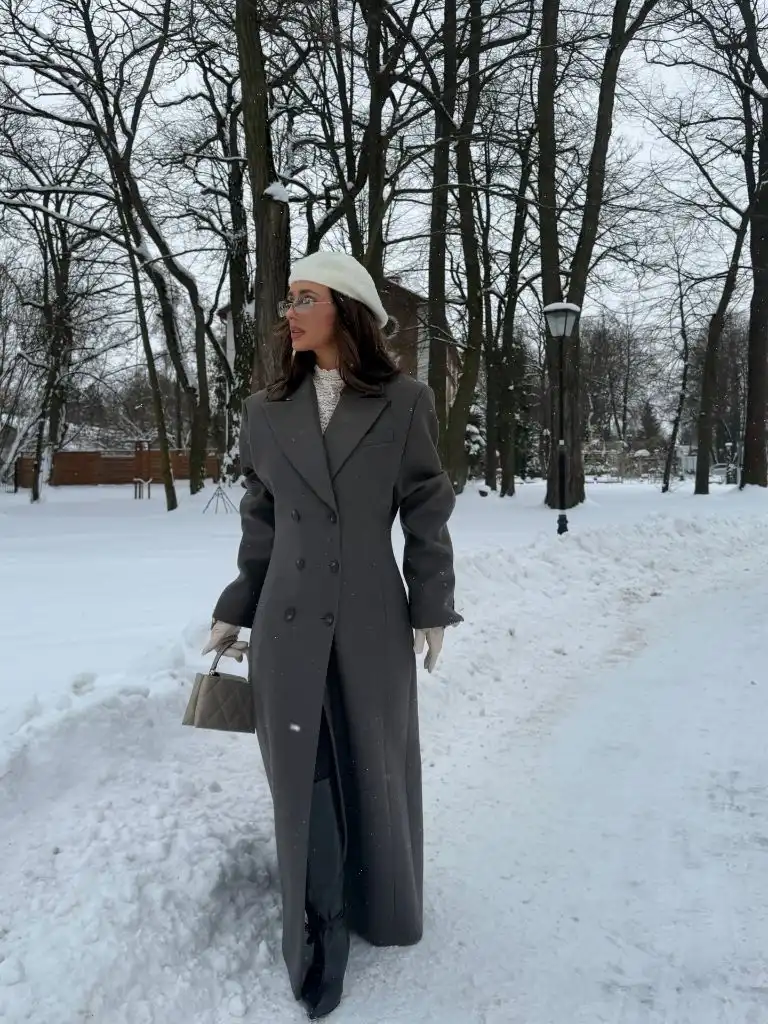
A full-length tailored coat is a commitment, so the shorter version of this idea stops at the knee and loses none of the discipline. If the double-breasted cut feels stiff, a single-breasted wrap coat gives similar length with more ease across the body. Charcoal is also more practical than true black in winter, since it doesn’t show lint and pale salt residue as aggressively. Keep the accessories small and light-toned so the coat stays the focal point.
The reason charcoal works better than black here is that it reads as softer against snow, avoiding the harsh cutout effect of full black on white. Pale accents at the head and hands frame the figure and prevent the dark column from feeling heavy. Swap the cream beret for a soft grey one and the whole look tips further into tonal restraint. Structure, not warmth, is what this outfit is selling.
Espresso Fur and the Black Cap
Dark brown fur against pale Parisian stone is a study in richness held in check. The coat is long and glossy, an espresso tone that catches light differently across its length, and it dominates the frame entirely. Everything else stays minimal: a black knit cap, a dark tote, and no competing color anywhere. The single hard line of the cap brim against all that soft, flowing fur is what keeps the look sharp rather than sleepy.
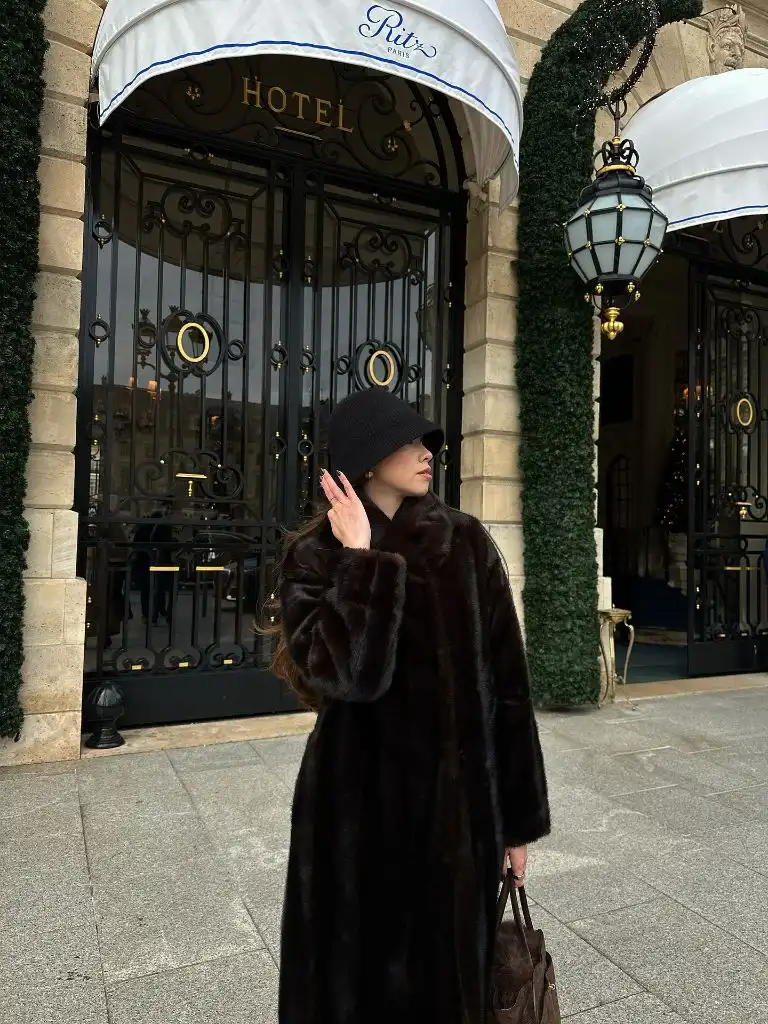
Full-length fur is impractical for most days, so the wearable version borrows the color and swaps the length for a hip-length faux-fur coat. The espresso tone is the transferable part, warmer and less severe than black while still reading as polished. If glossy fur feels like too much, a matte teddy texture in the same brown keeps the palette and dials down the shine. Pair it with dark trousers and a low, quiet shoe to keep the attention on the coat.
Deep brown functions almost like a warmer black, giving you the depth of a dark neutral without the coldness. The black cap and bag create a tonal step-down that adds dimension instead of flattening everything into one shade. Substitute the cap for a chocolate suede one and the look goes fully monochrome and softer. Richness works best when it’s restrained by one hard, plain element.
Black Leather and Camo Utility
Not every winter look leans luxe, and this one leans the other way entirely. A cracked black leather jacket with a shearling collar over faded green denim reads as urban, cold-weather utility with an editorial edge. The camo tote breaks the black-and-green scheme with pattern rather than color, which keeps the palette moody without going flat. The overall effect is muted and tonal, greens and blacks and greys, built for movement rather than posing.
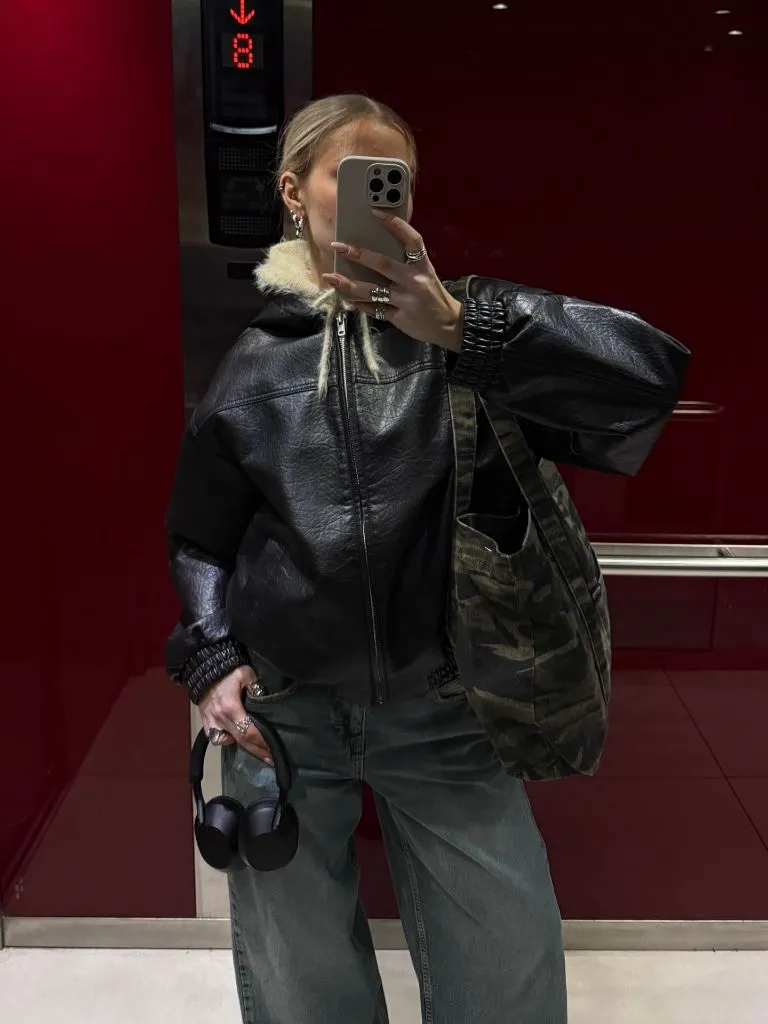
This is one of the more forgiving looks to adapt because every piece is genuinely practical. A faux-leather jacket with a removable shearling collar handles a range of temperatures and layers cleanly over a hoodie. If camo feels too loud, a solid olive or washed-black bag keeps the tonal scheme without the pattern. The jeans can go slightly cropped or full-length depending on your shoe, and the whole thing survives a real day out. For more on transitional dressing that bridges seasons, these September outfit ideas share the same utilitarian logic.
What holds this together is a restricted palette punctuated by one textural disruption. The camo isn’t adding color so much as adding visual noise in a controlled place, which keeps the eye moving. Swap the camo for a deep burgundy bag and the mood shifts warmer while staying dark. Streetwear reads best when the palette is disciplined and the disruption is deliberate.
Soft Pink Knit in Golden Light
A blush pink sweater catching low winter sun is a reminder that cold-weather color doesn’t have to mean deep and dark. Paired with a two-tone pink-and-cream fringed scarf and light-wash straight jeans, the look leans soft and diffused, almost washed out by the golden hour behind it. The oversized white tote adds bulk without adding contrast, keeping everything in the same gentle register. Nothing here is sharp, which is the intention: the whole outfit reads as warm light made wearable.
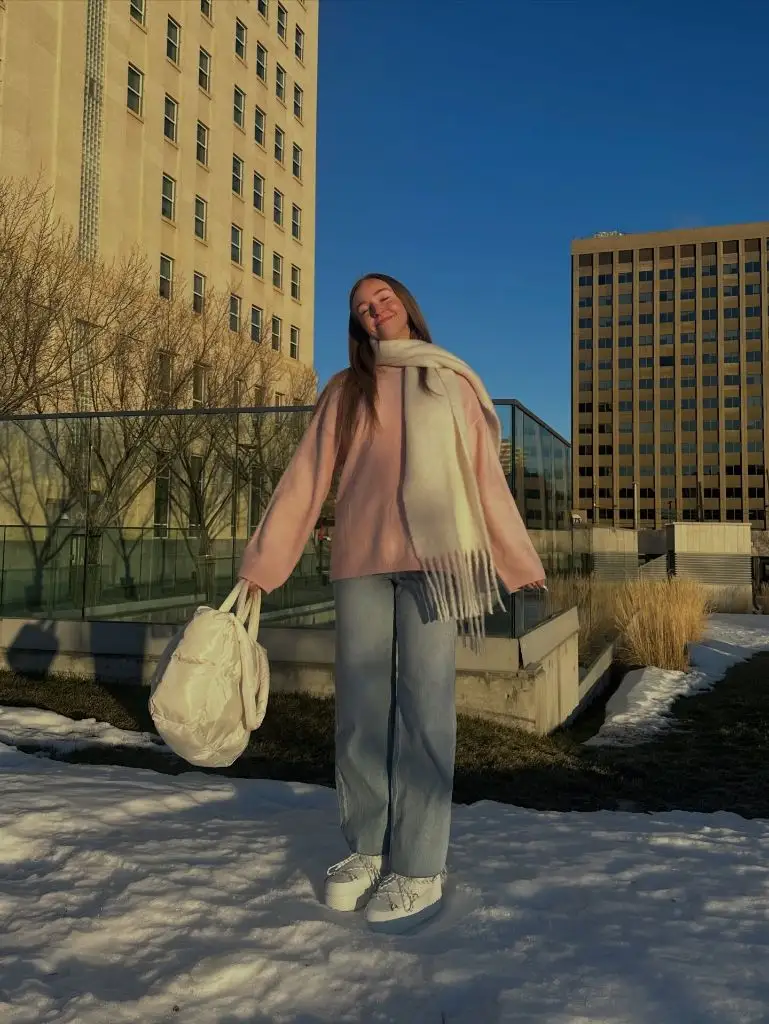
Pale pink can feel delicate, so the practical adjustment is grounding it with a heavier bottom. A darker wash denim or a grey trouser anchors the softness and stops the look from floating. If the fringed scarf feels like too much surface, a plain cream one keeps the tonal blend while quieting the texture. The chunky white sneakers add just enough weight at the base to balance the airy top half.
Soft palettes work when there is at least one point of visual weight to keep them from dissolving. The oversized tote and the platform sneakers provide that ballast here, letting the pink stay gentle without going insubstantial. Swap the blush for a pale lavender and the same golden-light effect holds with a cooler edge. Warmth in winter dressing is as much about tone as it is about fabric.
Gingham Puffer with a Beanie
A black-and-white gingham puffer is pattern doing the work that a bold color usually would. The check is small and tight, so from a distance it reads as a soft grey, but up close it gives the cropped puffer real texture and movement. Worn over an all-black base of fitted top, wide trousers, and a logo beanie, the pattern becomes the single loud element in an otherwise flat palette. The cream shoulder bag lifts the lower half and keeps the black from going heavy.
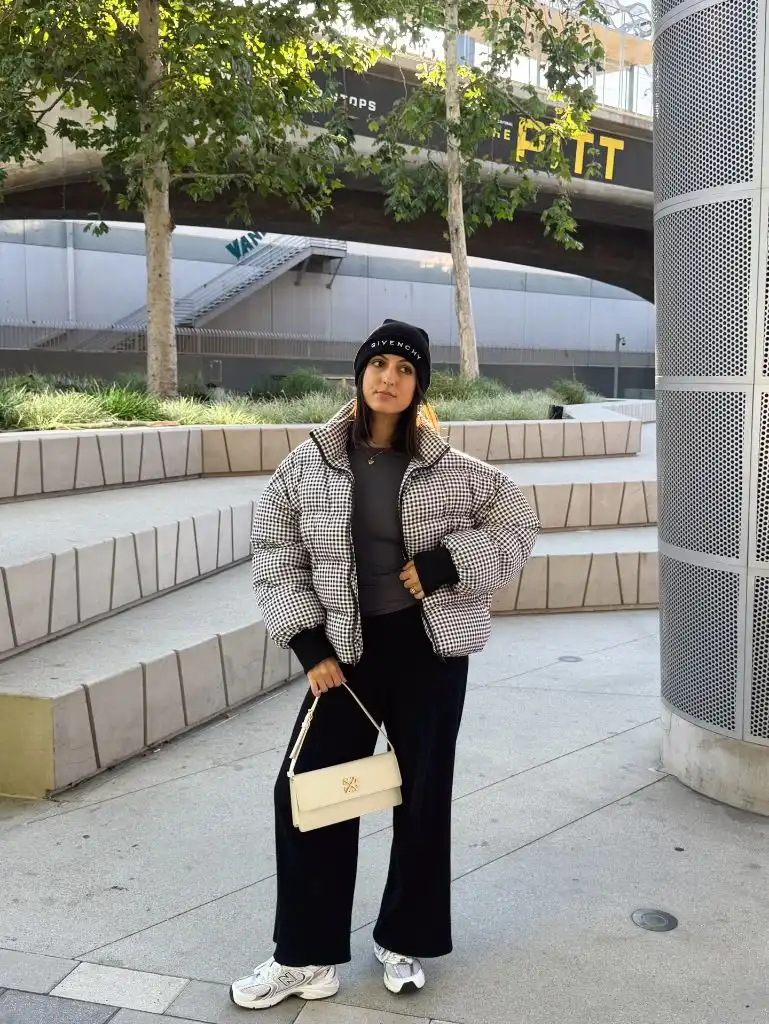
A cropped puffer suits milder cold better than deep winter, so for lower temperatures a longer version of the same gingham keeps the pattern while adding coverage. If the check feels busy, a solid black or cream puffer keeps the proportions and loses the pattern entirely. The wide black trousers balance the volume of the puffer, so keep the bottom relaxed rather than fitted. White sneakers keep the whole thing grounded and easy.
Pattern functions as a focal point the same way a bright color does, drawing the eye and organizing the rest around it. Because the gingham is monochrome, it adds interest without introducing a new color to manage. Swap the gingham for a houndstooth and the effect is nearly identical, just slightly softer at the edges. A single patterned piece over a solid base is one of the most reliable ways to keep winter dressing from going dull.
Blush Faux Fur Against Limestone
A pale blush faux-fur jacket photographed against warm limestone tile is almost a tonal illusion, the coat nearly the color of the wall behind it. Layered over a cream turtleneck and light-wash jeans, the look sits entirely in the warm-neutral family, soft and low-contrast throughout. The tan leather pouch bag is the one saturated object, a caramel note that grounds all the pale texture around it. The composition works because it’s built on subtle steps rather than hard contrast.
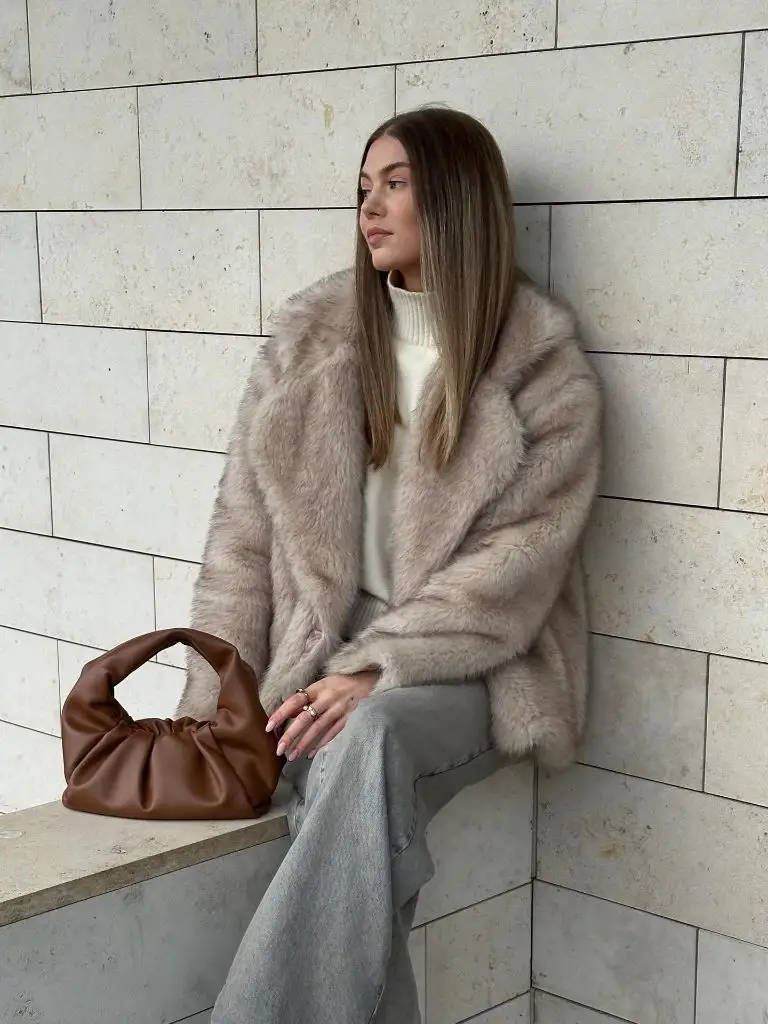
Faux fur in a pale shade shows wear quickly, so the practical version leans toward a slightly deeper mushroom or taupe that hides handling. The jacket length here hits mid-hip, which layers cleanly over jeans without adding bulk at the leg. If the blush feels too soft, a warm grey faux fur keeps the plush texture with a cooler, more neutral read. Keep the knit underneath simple so the fur stays the star.
Low-contrast dressing succeeds when one warm accent gives the eye somewhere to rest. The caramel bag does exactly that, keeping the tonal palette from reading as vague. Substitute the tan pouch for a soft brown and the warmth deepens without breaking the scheme. Subtlety needs an anchor, or it drifts into looking unfinished.
Red-Lined Black Coat with Heart Tights
Here color arrives as a hidden lining, a flash of scarlet inside a black wrap coat that only shows when the wearer moves. The palette is mostly black and white, a crisp shirt under a cinched coat, but the red lining and the heart-patterned tights turn a severe look playful. The quilted black bag and pointed shoes keep the base sharp, so the red reads as a chosen accent rather than an accident. It’s a study in how a small amount of a strong color changes the entire temperature of an outfit.
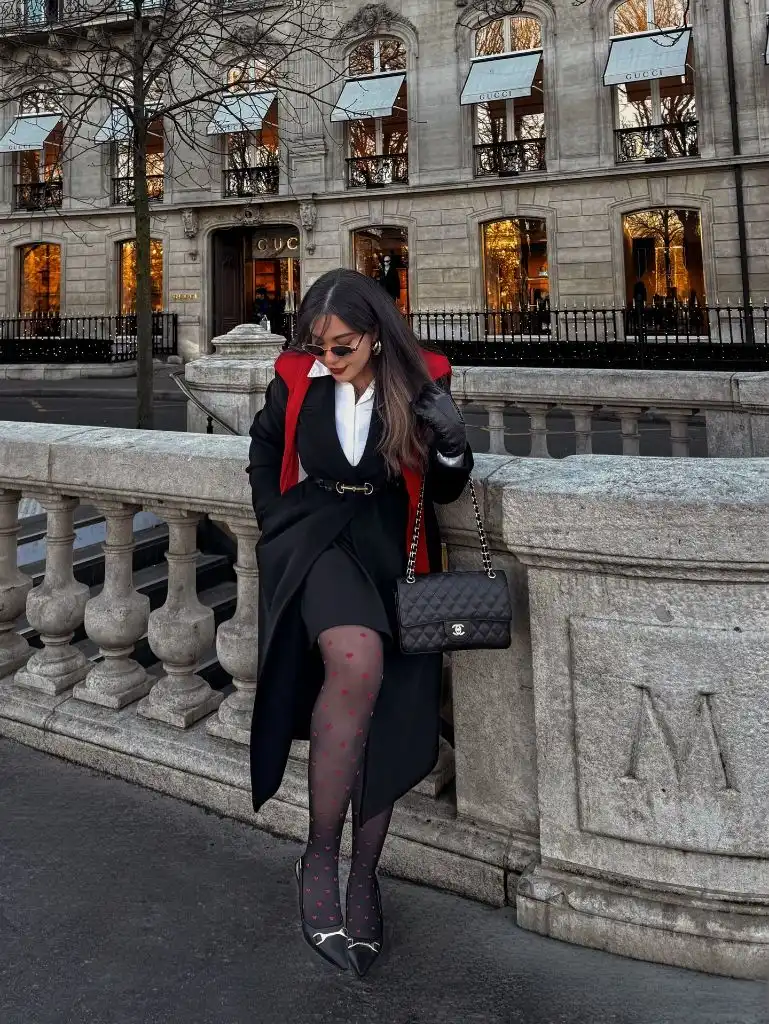
A red-lined coat is a specific find, so the everyday version puts the red somewhere more accessible, like a scarf or a glove. The heart tights are the mood-setter here, so if patterned hosiery feels like too much, a sheer black keeps the look sleek and adult. The belted waist is what gives the long coat its shape, so cinch whatever coat you use rather than leaving it open. Pointed shoes lengthen the line and keep the silhouette deliberate.
A restrained hit of red against black and white is one of the oldest reliable moves in dressing, and it works because the contrast is maximal. The color doesn’t need to cover much surface to dominate the read. Swap the red for a deep burgundy and the look goes moodier while keeping the same structure. Accent color earns its power by being scarce.
Oversized Leather Bomber with Mink Knit
An oversized black leather bomber over a mink-brown fur-textured knit is contrast built from material rather than color. The hard, cracked leather and the soft, plush knit sit against each other in the same dark register, and the tension between them carries the look. Wide black trousers keep the bottom half quiet, so the interplay stays at the torso where the two textures meet. The taupe top-handle bag adds a warm neutral that bridges the brown knit and the black leather.
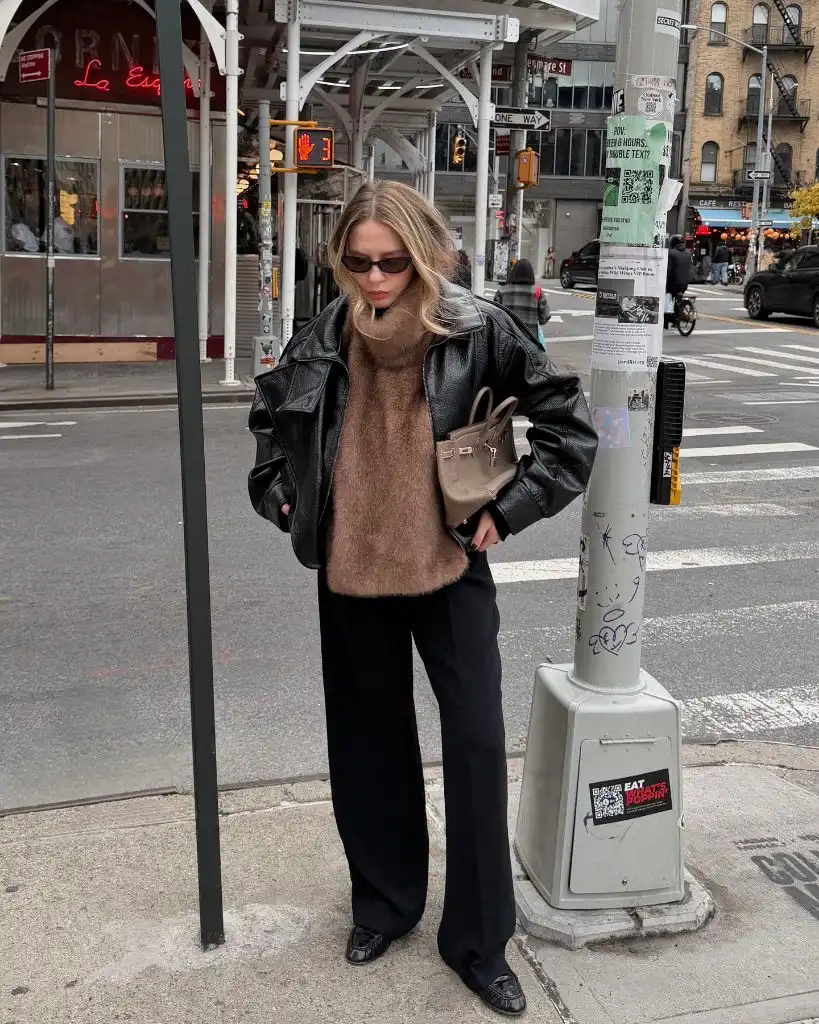
The oversized bomber runs warm despite its cropped feel, so for colder days a longer leather coat in the same spirit adds coverage. The mink knit can be swapped for any fur-textured or brushed sweater in a warm brown, which is the transferable element. Wide trousers balance the volume up top, so keep the leg relaxed rather than slim. Low loafers keep the proportion grounded without adding height.
The whole look rests on the dialogue between two textures in a narrow color range. When leather meets fur in the same tonal family, the contrast reads as considered rather than clashing. Substitute the brown knit for a deep grey and the palette cools while the texture play survives. Material contrast is the quiet engine behind a lot of good winter dressing.
Oxblood Leather with Polka Dots
An oxblood leather coat over a mix of blue knit and polka-dot brown trousers is color layering that shouldn’t work and does. The deep wine of the leather anchors an otherwise busy combination of powder blue and brown-and-blue spots, holding the whole thing together. The burgundy bag echoes the coat, creating a tonal thread through the outfit, while the matching wine shoes close the loop. It’s maximalism kept in check by repeating one strong color at three points.
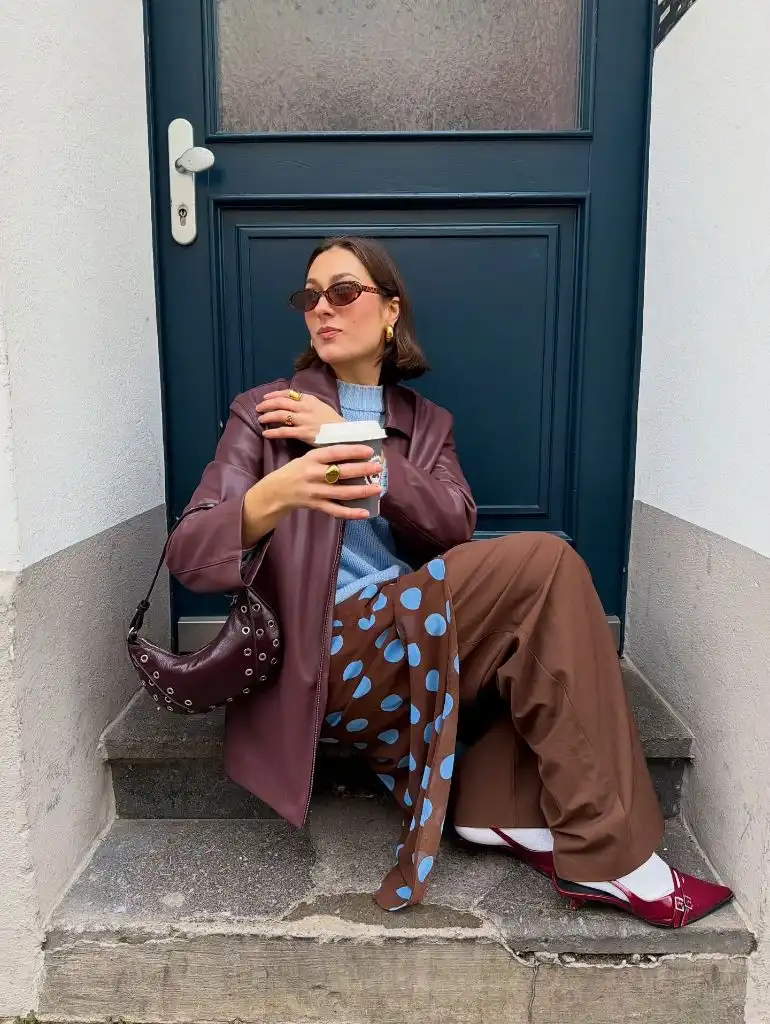
This much pattern and color takes confidence, so the toned-down version keeps the oxblood coat and simplifies the trousers to a solid brown. The polka dots are the risk here, so if they feel like too much, the blue knit and brown trouser alone keep the palette interesting. The leather coat length hits mid-thigh, which layers easily over wide trousers. Keep the shoe in the wine family to preserve the color echo.
Repetition is what makes an eclectic outfit read as intentional rather than chaotic. The oxblood appearing in the coat, bag, and shoes gives the eye a path to follow through the pattern. Swap the oxblood for a forest green and the same repetition logic holds with a different mood. When you mix a lot, repeat one thing.
Cobalt Scarf Over Cream Shearling
A cobalt blue knit scarf worn as a hood over a cream shearling jacket is the clearest example of color as focal point. The jacket and jeans stay soft and neutral, all creams and light denim, so the electric blue reads as the entire story. Wrapped over the head and trailing down the front, the scarf becomes the compositional line that organizes everything. The chocolate brown leather bag adds a warm counterweight that keeps the blue from feeling cold.
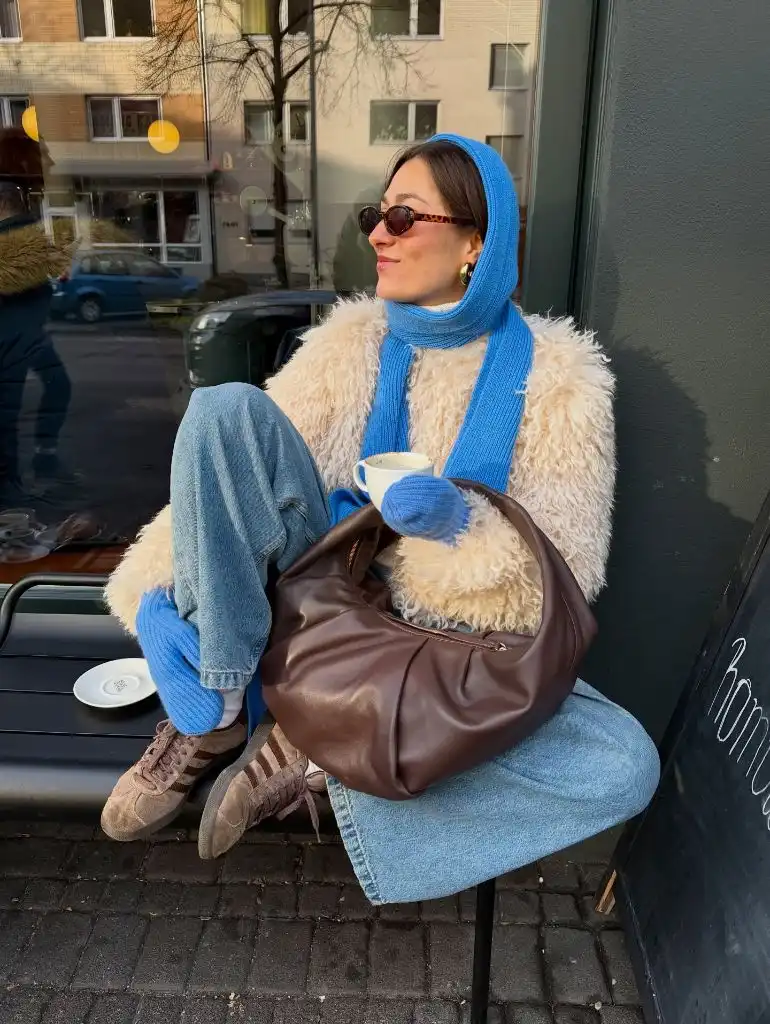
A matching scarf-and-glove set is a specific commitment, so a simpler version just adds a bold scarf to a neutral base without the full hood treatment. The cobalt is the transferable idea, a single saturated color against a soft ground. If bright blue feels like too much, a deep teal or forest green delivers the same jolt with more restraint. Keep the rest neutral so the color stays the focus.
One saturated color against a fully neutral base is among the most dependable ways to build a striking streetwear women winter outfit. The neutral ground does the work of making the color look deliberate and rich. Swap the cobalt for a marigold yellow and the same principle produces an entirely different but equally sharp result. Color works hardest when it has room to breathe.
Oxblood Leather Jacket with Argyle
A wine-colored leather jacket over a grey argyle vest is a quiet study in autumnal layering pushed into winter. The oxblood repeats in the beret and the studded bag, threading the same deep color through the top and center of the look. Grey baggy jeans keep the bottom half muted, letting the layered knits and leather hold the attention. The argyle pattern adds a subtle grid of burgundy and grey that ties back to the jacket without shouting.
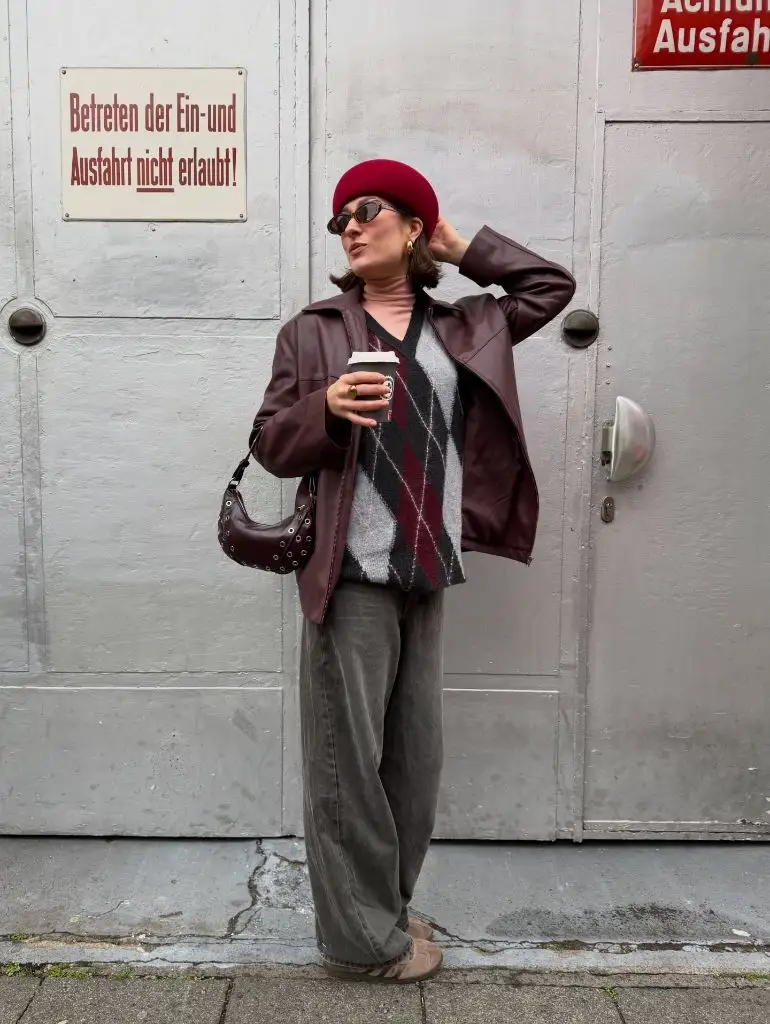
The layered vest-over-turtleneck combination is warmer than it looks, making this a genuinely practical cold-weather build. If the argyle feels dated, a solid grey knit vest keeps the layering and loses the pattern. The baggy grey jeans balance the fitted top, so keep the leg relaxed. A soft suede shoe grounds the look without adding contrast.
Layering succeeds when a color repeats across the pieces, giving separate items a reason to belong together. The oxblood in the jacket, beret, and bag does exactly that here. Swap the wine tones for a forest green set and the same layering logic reads cooler and fresher. Cohesion in layers comes from repetition, not matching.
Fair Isle Knit in a Ski Lodge
A brown Fair Isle turtleneck with gold button details reads as après-ski polish rather than practical warmth. The pattern is dense and traditional, browns and creams worked into a yoke, and it carries the whole look on its own. Paired with cream trousers and a quilted black bag, the palette stays warm and tonal with one dark anchor. Dark sunglasses indoors add the deliberate, styled quality that keeps it from reading as merely cozy.

Fair Isle knits can read as costume if styled too literally, so pairing it with sleek trousers and a structured bag keeps it modern. The pattern is the statement, so keep everything around it plain. If the traditional knit feels like too much, a solid brown turtleneck keeps the warm palette and loses the busyness. Cream trousers keep the tonal warmth going through the bottom half.
Patterned knits work best when the rest of the outfit stays quiet enough to let them speak. The single black bag provides the tonal step that keeps the browns from blending into one. Swap the brown Fair Isle for a grey-and-cream version and the look cools without losing its structure. A busy knit needs a calm frame.
Grey Shag Coat with Denim
A long grey shag-trimmed coat over a white tee and dark wide-leg jeans is texture-led dressing in a cool palette. The shaggy grey fur runs down the front and cuffs, framing a simple base with maximum surface interest. The Louis Vuitton crescent bag in warm brown breaks the grey-and-blue coolness with a single warm note. Metallic silver shoes add an unexpected shine at the base that keeps the look from going too earthy.
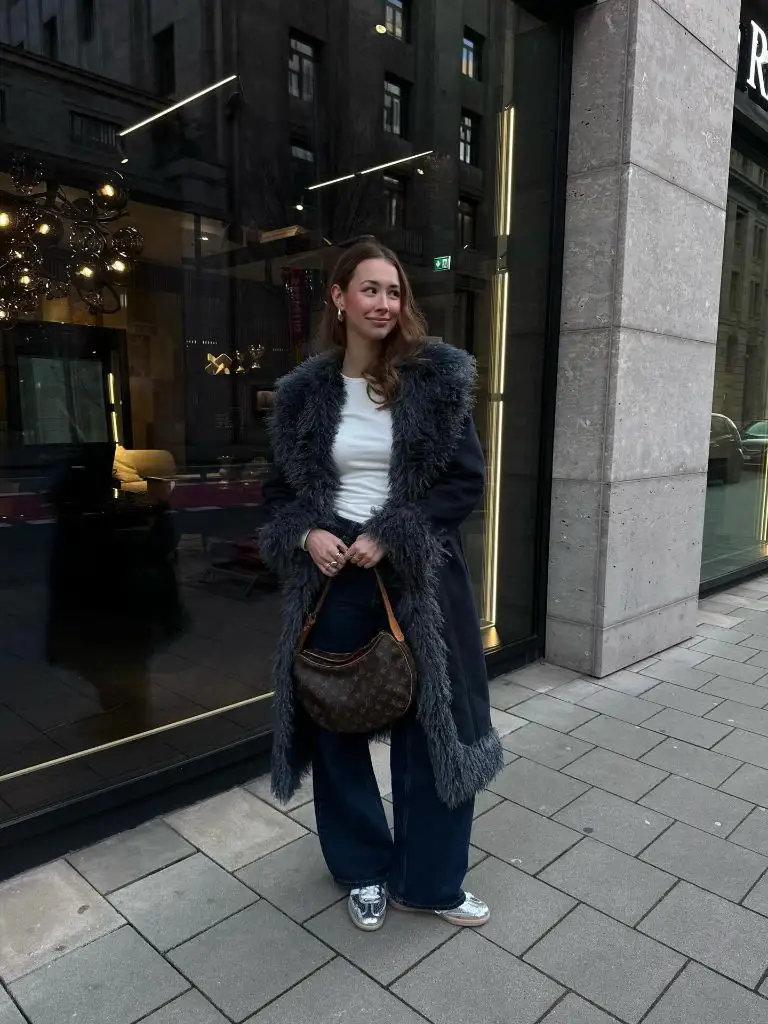
A shag-trimmed coat is a strong texture, so the simpler version keeps the grey but chooses a smoother wool with just a fur collar. The wide dark jeans balance the volume of the coat and keep the silhouette relaxed. If the metallic shoes feel like too much, a plain white sneaker keeps the base clean. The warm brown bag is worth keeping, since it’s what warms the cool palette.
Cool-toned outfits benefit from one warm accent to keep them from feeling clinical. The brown bag and silver shoes each do a version of that job here, one warming and one lifting. Swap the grey shag for a soft camel and the whole look tips warmer while keeping the texture. A cool palette reads best with a single deliberate warm interruption.
Chocolate Fur-Collar Coat in Kensington
A chocolate brown belted coat with an oversized fox-fur collar and cuffs is old-world glamour translated to the street. The fur frames the face and wrists in a rich warm brown, and the belt cinches the waist to keep the volume controlled. Worn over black trousers and boots, the dark base lets the brown fur read as the entire focal point. The whole look sits in a warm brown-and-black register that feels deliberate and grown.
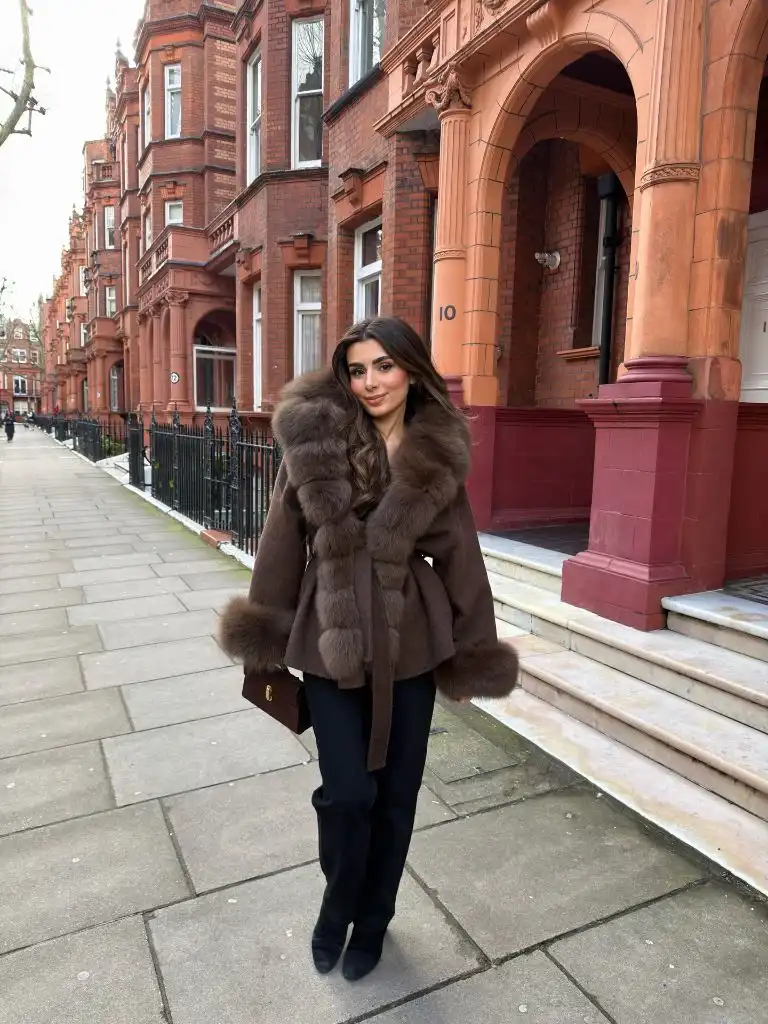
A large fur collar is a statement, so the everyday version keeps the belted brown coat and scales the fur down to a slim trim. The belt is doing important work here, so keep the waist defined rather than leaving the coat loose. If the fox fur feels like too much, a faux shearling collar keeps the framing effect with less drama. Black trousers and boots keep the base grounded and let the coat lead.
Framing the face and hands with a warm texture draws the eye exactly where you want it. The belted waist balances the volume of the fur so the look reads structured rather than heavy. Swap the chocolate brown for a soft grey fur and the mood cools while the framing effect stays. Fur works best as a frame, not a whole garment.
Forest Green Leather with a Pink Boa
A forest green leather set styled with a shocking pink feather boa is deliberate, confident color clashing. The deep green of the matching jacket and trousers is muted and rich, which is exactly what lets the electric pink read as playful rather than garish. The boa runs down the front as a single bright line, and the small studded brown bag stays quiet so the pink keeps its power. It’s a lesson in how two unexpected colors can hold each other in balance.
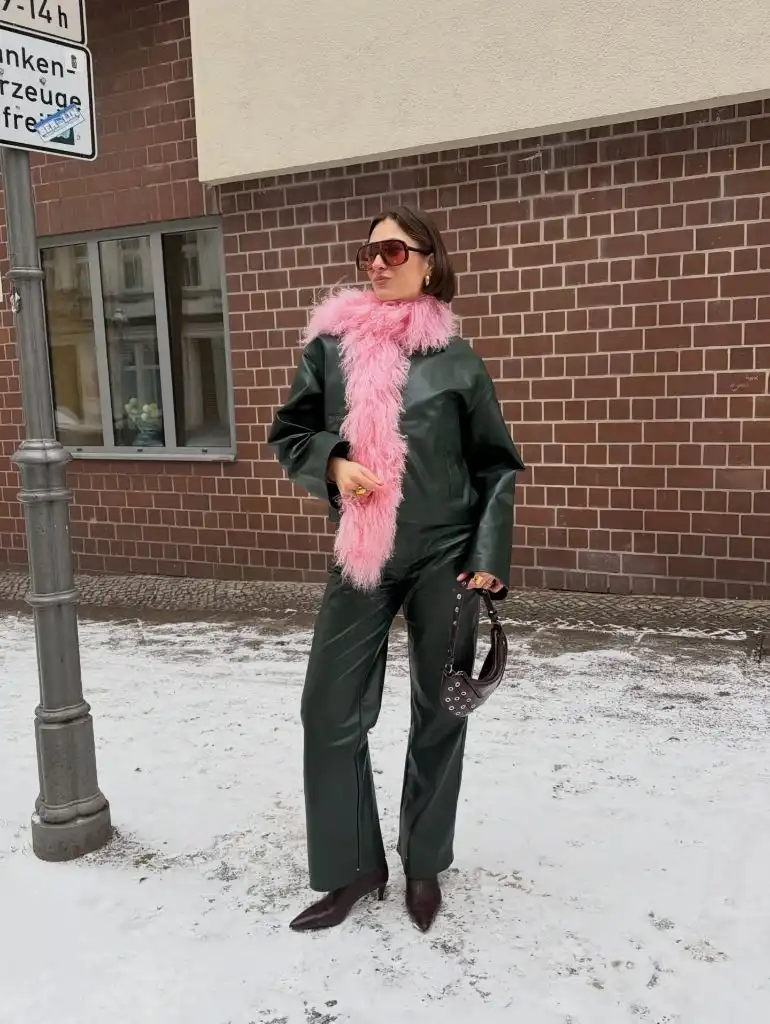
A feather boa is a bold commitment, so the wearable version keeps the green leather and swaps the boa for a pink knit scarf. The green set is the transferable foundation, and it works with any warm accent. If the pink feels like too much, a cream or camel scarf keeps the outfit polished and calm. Dark boots ground the leather and keep the silhouette clean.
Complementary-adjacent colors like green and pink work because they’re far enough apart on the wheel to create real tension. The muted green tempers the loud pink, keeping the pairing sophisticated rather than costume. Swap the pink for a marigold and the clash softens into something warmer. Bold color pairings need one of the two tones to hold back.
Brown Faux Fur Hat and Plaid Skirt
A chocolate faux-fur jacket worn with a matching fur hat and a plaid midi skirt layered over grey trousers is texture and pattern stacked deliberately. The all-brown fur pieces frame the top of the look, while the muted plaid skirt adds a grid of browns and creams below. Layering the skirt over trousers is the unexpected move, adding proportion and a slightly avant-garde read. A white tee at the neck keeps the dark palette from closing in entirely.
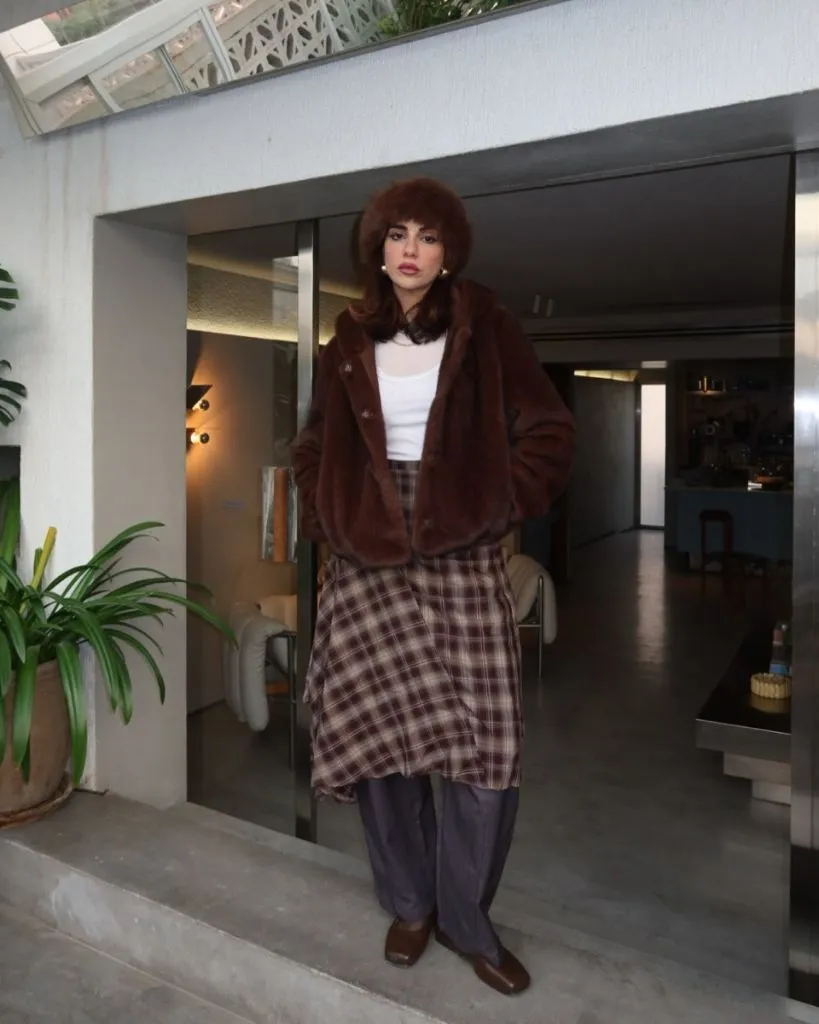
The skirt-over-trousers layering is a fashion-forward choice, so the simpler version drops the skirt and keeps the fur jacket with the trousers alone. The matching fur hat is the styling flourish, and it can be swapped for a plain beanie without losing the palette. If the plaid feels busy, a solid brown skirt keeps the layering idea quieter. The warm brown throughout ties every piece together.
Stacking texture and pattern in one tonal family keeps a complex look from fragmenting. Because everything sits in warm brown, the fur and plaid read as layers of one idea rather than competing pieces. Swap the brown for a grey-and-charcoal version and the same layering holds in a cooler key. Tonal discipline is what makes bold layering legible.
Camel Teddy Coat on a Crosswalk
A camel teddy coat worn open over white trousers and a cream turtleneck is warm-neutral dressing at its most classic. The plush camel texture is soft and substantial, and the all-cream base underneath keeps the palette in one warm family. Black leather gloves and dark sunglasses add the only sharp notes, framing the face and hands against the softness. The cream top-handle bag echoes the trousers, keeping the tonal thread consistent from top to bottom.
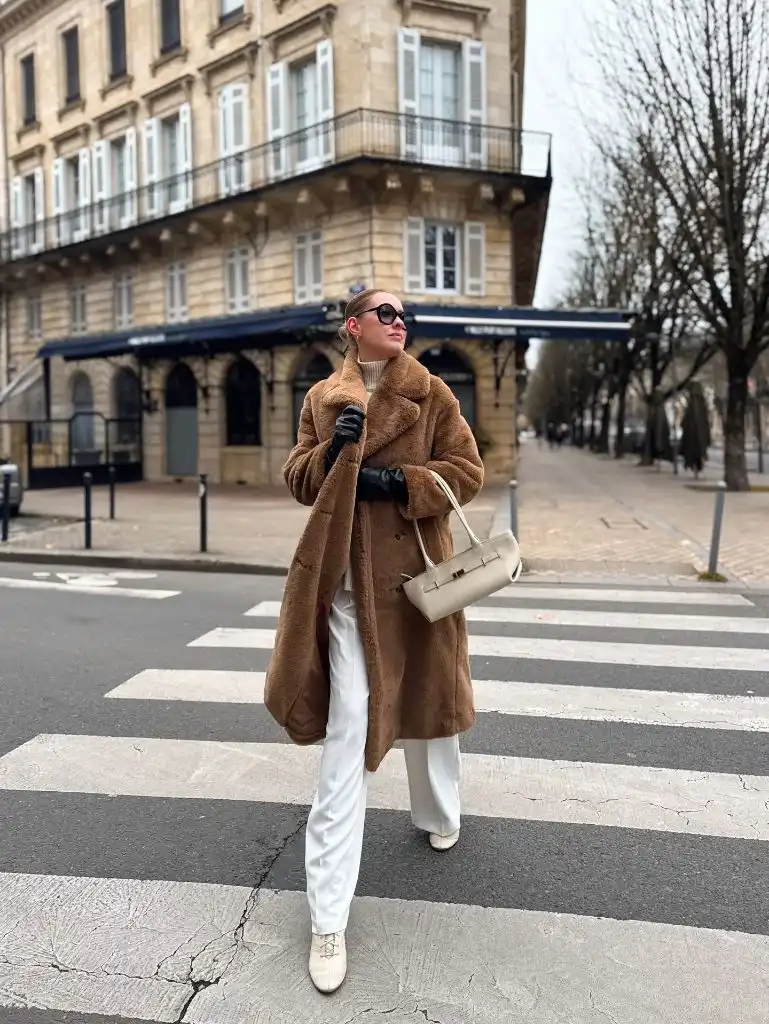
A long teddy coat runs warm, making it one of the more practical statement pieces for real cold. White trousers are the impractical element, so a warm cream or oatmeal reads similarly while surviving winter streets better. If the all-neutral palette feels flat, the black gloves provide enough contrast to keep it sharp. Cream boots keep the tonal line unbroken down to the ground.
Warm neutrals layered together read as considered when the tones are close but the textures vary. The plush teddy, the ribbed knit, and the smooth leather bag all differ enough to keep the cream palette alive. Swap the camel for a soft grey teddy and the look cools without losing its ease. Neutral dressing lives or dies on texture variation.
Cream Faux Fur Outside Ralph Lauren
A cream faux-fur jacket shot in profile against a holiday-lit facade is plush texture treated as pure silhouette. The jacket is oversized and shaggy, a soft off-white that catches the warm shop lights, worn over a simple dark base. The monogram clutch tucked under the arm adds a small warm brown note against all the cream. Seen from the side, the look is about the shape the fur makes as much as its color.
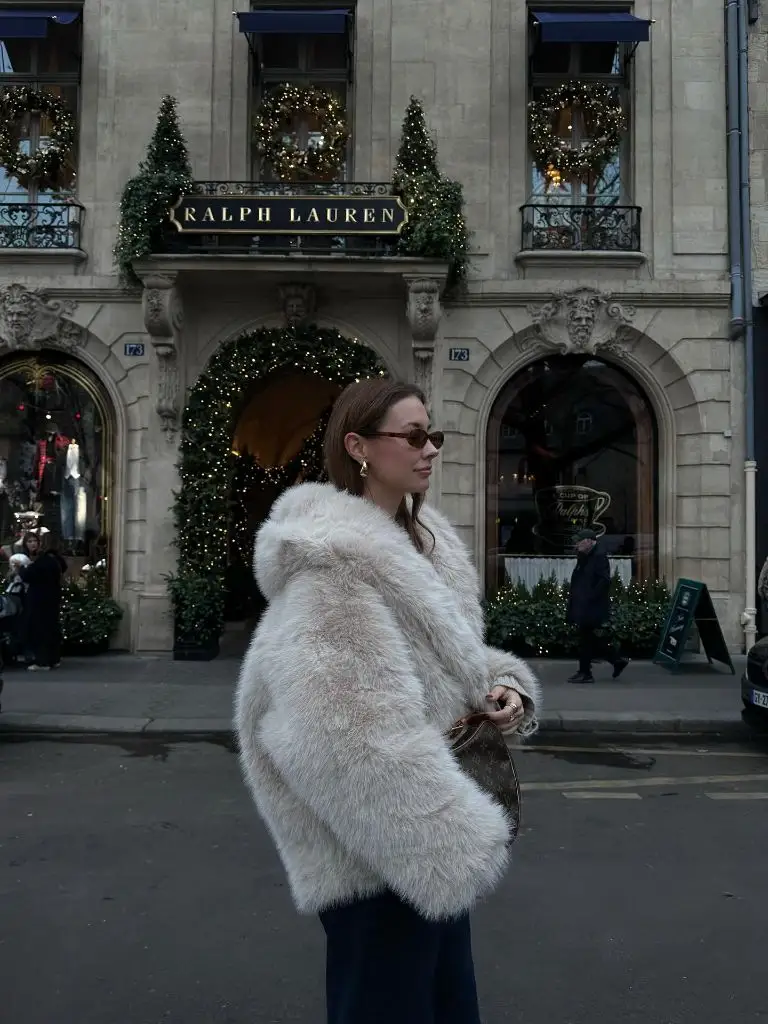
Oversized faux fur can overwhelm a smaller frame, so a more fitted version keeps the plush texture without the bulk. The cream shade shows wear, so a slightly deeper shade holds up better through a season of use. If the volume feels like too much, a cropped length keeps the texture while lightening the silhouette. A dark base underneath grounds the pale fur and keeps it from washing out. For a fuller look at how these plush pieces get styled across occasions, this guide to faux fur jacket outfit ideas is a useful reference.
A pale plush texture works as a silhouette piece when the base underneath stays dark and simple. The contrast between the fluffy cream and the sleek dark layer is what gives the profile its shape. Swap the cream for a soft grey and the silhouette effect holds with a cooler read. Texture can carry a whole look when the color stays quiet.
Brown Fur Bomber and Black Baggies
A cropped brown fur bomber worn in profile against a red-brick wall is a study in dark warm texture and long lines. The dense chocolate fur sits high and cropped, while the washed-black baggy jeans drop into a long, relaxed line below. The proportion play, short and full up top against long and loose below, is the whole composition. A small dark bag and black loafers keep the base quiet so the fur reads as the statement.
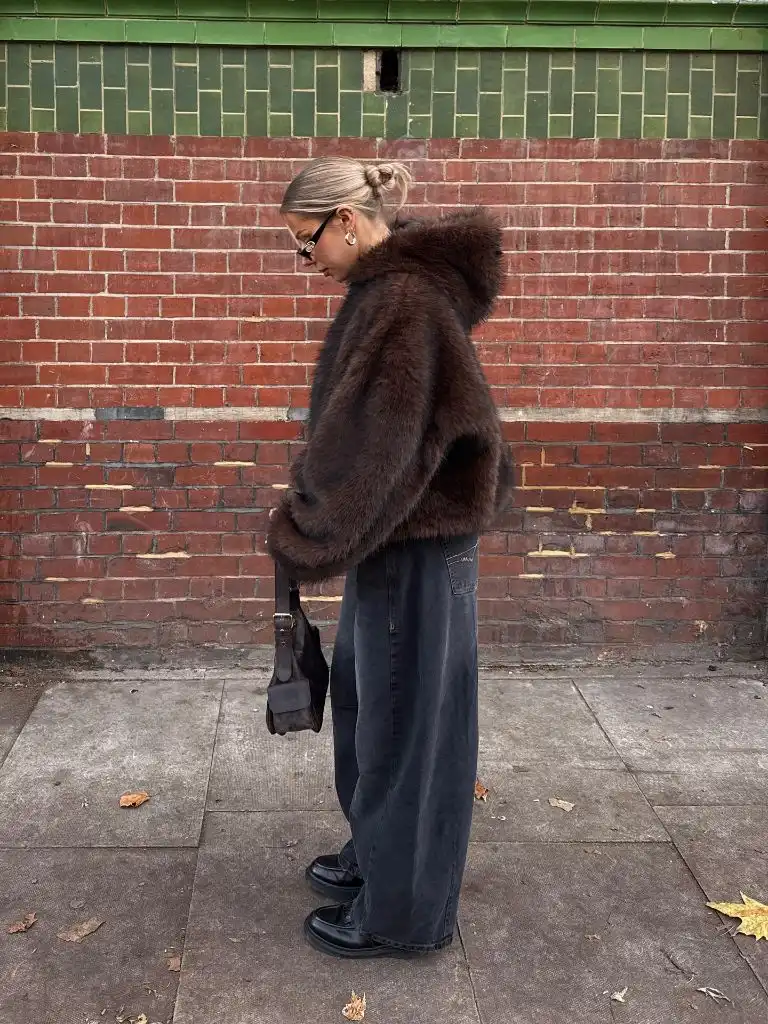
A cropped fur bomber suits milder cold, so for deeper winter a longer version of the same texture adds coverage. The washed-black baggy jeans are the transferable element, grounding the plush top with an easy line. If the brown fur feels like too much volume, a slimmer faux-fur jacket keeps the palette. Chunky black loafers balance the proportion at the base.
Playing a short, full top against a long, loose bottom creates rhythm through proportion rather than color. The cropped fur and the extended jean line balance each other visually. Swap the brown fur for a black one and the look goes tonal and moodier while the proportion holds. Silhouette contrast is its own kind of styling, no color required.
Camel Fur Stole Over a Black Coat
A caramel fur stole draped over one shoulder of a long black coat is old-money layering with a single warm gesture. The stole is the entire event here, a rich tan fur thrown over the dark base, framing the face against the black wool. The woven black leather bag stays quiet, letting the tan fur read as the one indulgent note. Dark sunglasses keep the look cool and composed rather than fussy.
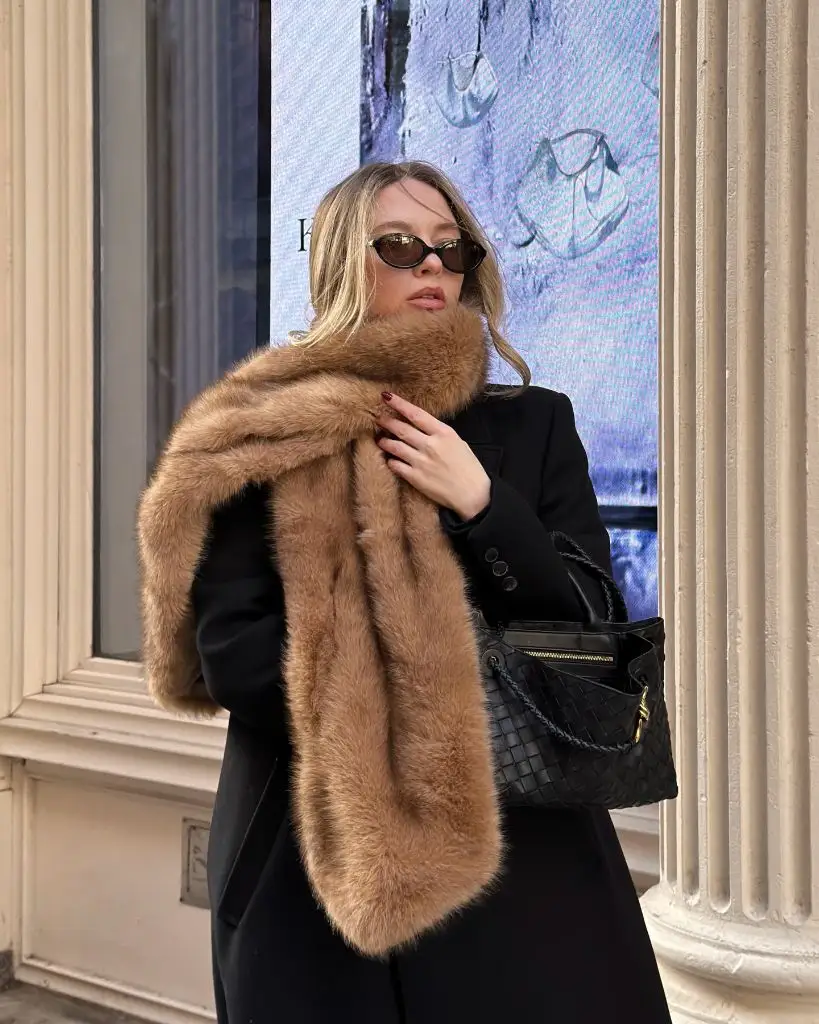
A real fur stole is a specific piece, so the accessible version uses a faux-fur scarf or wrap over any black coat. The stole is the transferable idea, a warm texture draped over a dark base. If the tan feels like too much, a black or grey fur wrap keeps the layering with less contrast. The black coat and bag stay simple so the fur leads.
Draping one rich texture over a plain dark base is a minimal move with maximum effect. The single tan gesture against the black does all the work, needing nothing else. Swap the caramel for a silver-grey fur and the look cools while the draping effect stays. One considered layer can carry an entire outfit.
Teddy Cardigan and Suede Moccasins in a Café
A cream teddy-textured cardigan with matching suede-trim details, worn with tan corduroys and shearling moccasins, is soft warm dressing built for a slow morning. Every piece sits in the same cream-and-tan family, plush cardigan, fuzzy trim, warm cord, and the palette reads as cozy without going shapeless. The small shearling flap bag echoes the cardigan’s texture, keeping the tonal thread consistent. It’s an outfit about comfort styled with enough intention to leave the house.
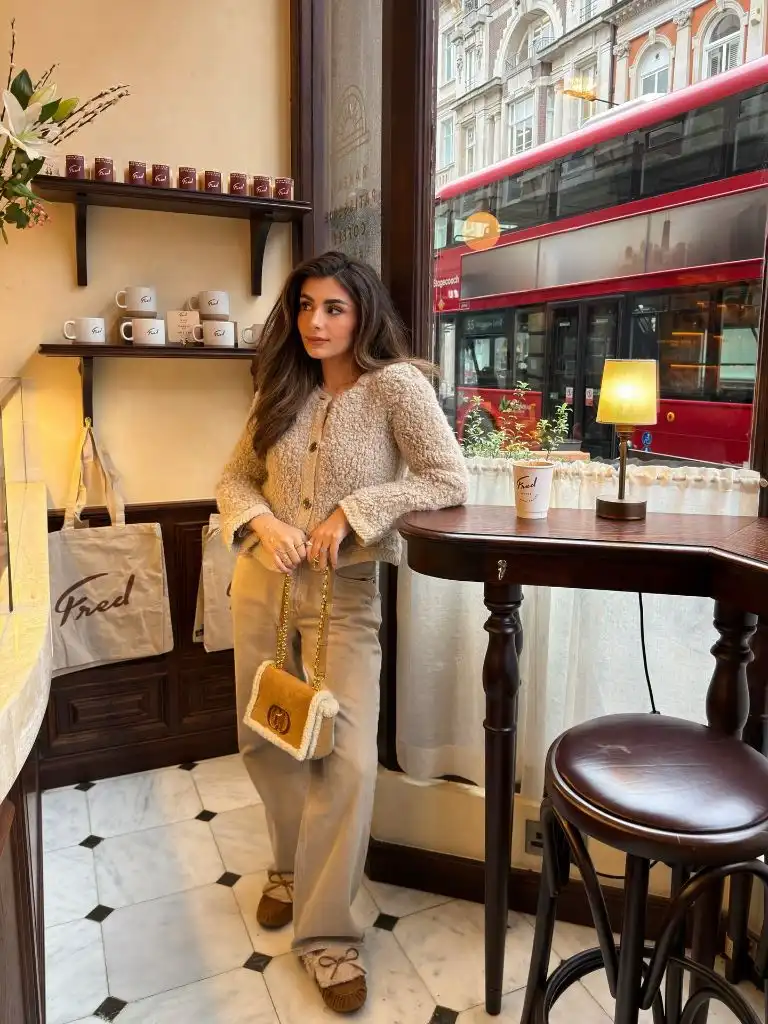
This is one of the most genuinely comfortable looks here, built for indoor warmth and short errands rather than deep cold. The moccasins are the giveaway, so for colder days a suede boot keeps the palette with more coverage. If the all-cream feels too soft, the tan corduroys add enough tonal depth to ground it. The matching bag is a small touch that pulls the whole thing together. For more low-effort styling that still reads considered, these September outfit ideas follow a similar comfort-first logic.
Tonal comfort dressing works when the textures vary enough to keep a single palette interesting. The teddy knit, the corduroy ribbing, and the shearling trim all read as different within the same cream family. Swap the cream for a soft grey and the coziness holds in a cooler tone. Comfort and intention aren’t opposites when the palette is disciplined.
Camel Coat with a Red Scarf and Beret
A long camel coat worn open with a bright red ribbed scarf and a checked beret is classic winter color used with restraint. The camel and cream base is quiet and warm, so the single red scarf running the length of the coat becomes the whole statement. The checked beret adds a small dose of pattern that picks up the red without overwhelming it. A warm brown bag ties the palette back to the camel coat, keeping everything in one considered range.
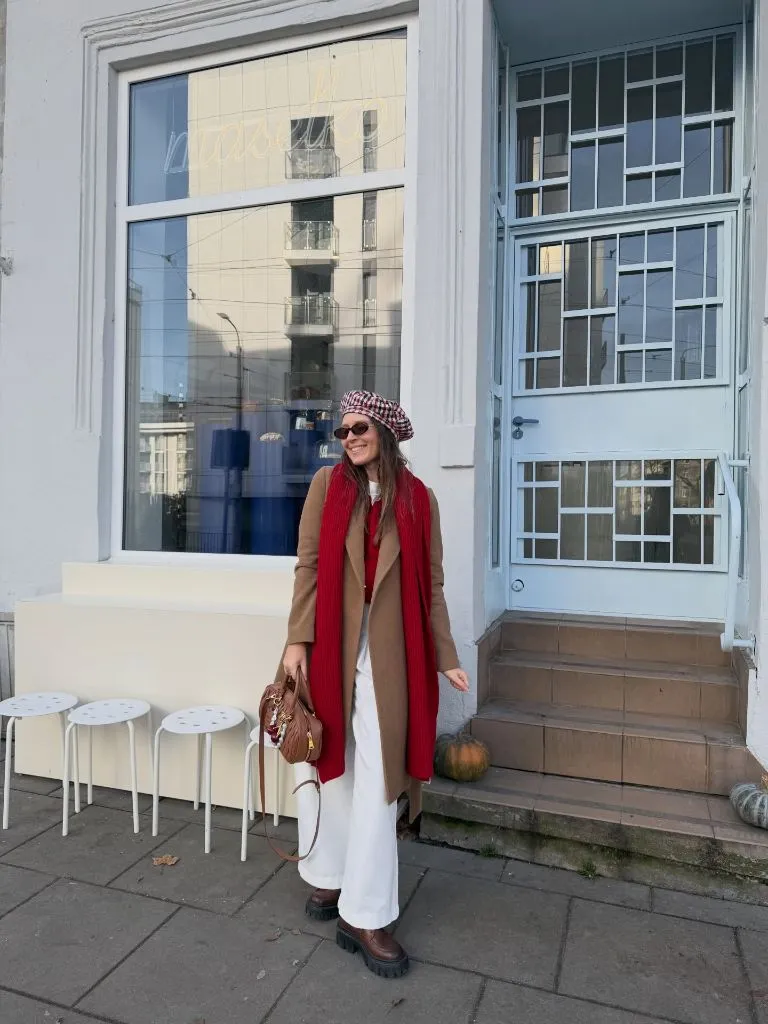
The camel coat and white trousers are timeless, so this look adapts easily to whatever red accent you have. The long scarf is the transferable idea, a single bright line down a neutral base. If red feels like too much, a burgundy or rust scarf keeps the warmth with less brightness. The checked beret can be swapped for a plain one without losing the effect.
A single bright accent against a warm neutral base is a formula that rarely fails in winter. The red scarf draws the eye down the length of the camel coat, organizing the whole look around one line. Swap the red for a deep green and the same neutral base reads cooler and more subdued. Restraint is what lets a single color carry a whole outfit.