Pale skin and winter light have a complicated relationship. Gray skies can wash out a fair complexion, and the wrong hair color can make you look drained instead of delicate. But the right shade does the opposite — it gives your skin something to play against, adds warmth where winter strips it away, or leans into the cool tones of the season with total confidence. For 2027, the best winter hair colors for pale skin fall into two camps: shades that echo the season’s coolness (icy platinum, silver, smoky ash, mushroom brown) and shades that fight it (copper, auburn, cinnamon, espresso, black cherry). This pairs naturally with the ideas in Perfect Hair Colors for Olive Skin.
Below are 24 fully wearable ideas, each with honest notes on technique, upkeep, and who each shade suits best. Every color is chosen with fair complexions in mind — the focus is on contrast, undertone harmony, and colors that stay flattering under flat January light. For a different spin on the same theme, browse Formal Winter 2025 2026 Hairstyles for Women 25 Chic Styles.
Icy Platinum with Bright Face Frame
Courtesy of: fabmodes.com
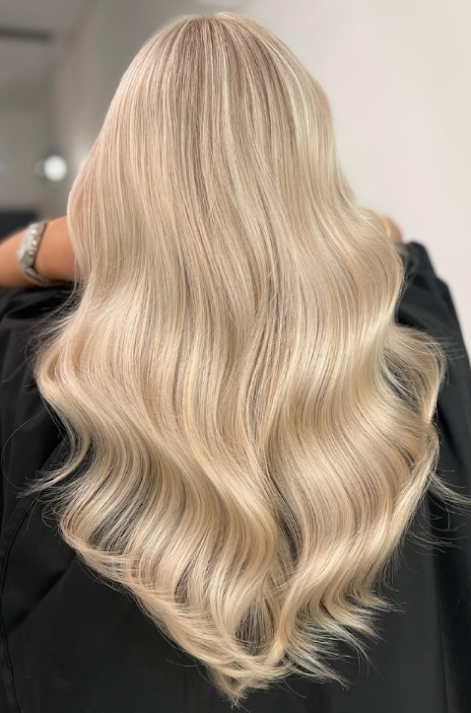
Icy platinum is winter’s signature blonde, and on pale skin it reads as luminous rather than harsh — as long as the tone stays clean. This version wears the platinum long and straight with a middle part and a glassy finish, with the brightest pieces framing the face so the color looks intentional, not washed out. The near-white shade echoes the season’s frost and makes fair skin look porcelain. The same idea, styled another way, appears in Fresh Spring 2026 Hair Color Ideas for Dark Skin with Bold and Bright Updates.
Ask your colorist for a full platinum with a violet or pearl toner and a soft shadow at the crown for grow-out. Maintenance is the trade-off: purple shampoo weekly, gloss refreshes every 4–6 weeks, and serious conditioning, since lifting to this level stresses the hair. Best for naturally light bases and those comfortable with high-commitment color.
Soft Black with Glass-Like Shine
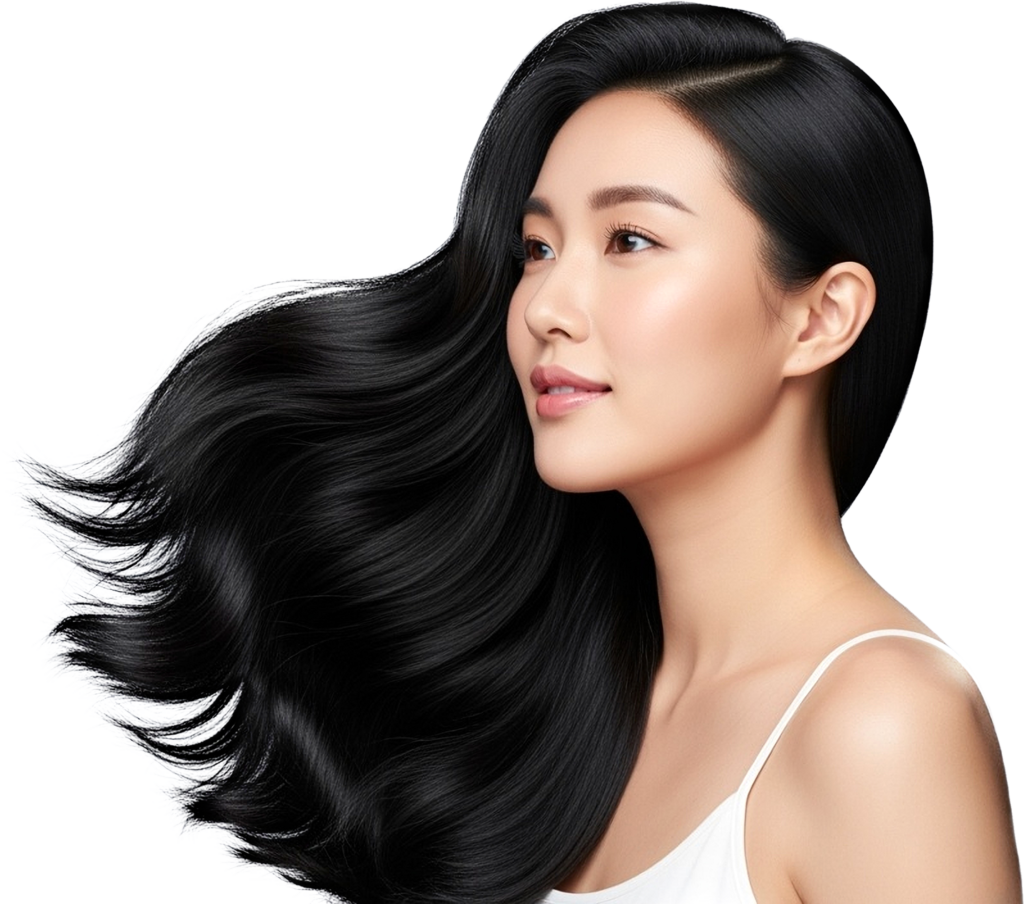
Photo credit: beijing101hair.com
Few combinations are as striking as pale skin against deep, glossy black hair. This look keeps the black soft rather than blue-black — a neutral, rich shade worn long with flowing movement and a side part. The shine is the whole point: light reflects off the dark surface, and the contrast makes fair skin glow by comparison.
One-process color is simple to achieve at the salon, and the payoff is huge. The upkeep is mostly about keeping the shine: gloss treatments every 6–8 weeks and color-safe care to prevent fading to a dull brown. The trade-off is grow-out — roots show quickly — but the drama is hard to beat for winter. For more ideas in the same lane, see our Best Fall Blonde Hair Colors Ideas 2025.
Espresso Balayage with Warm Low Lights
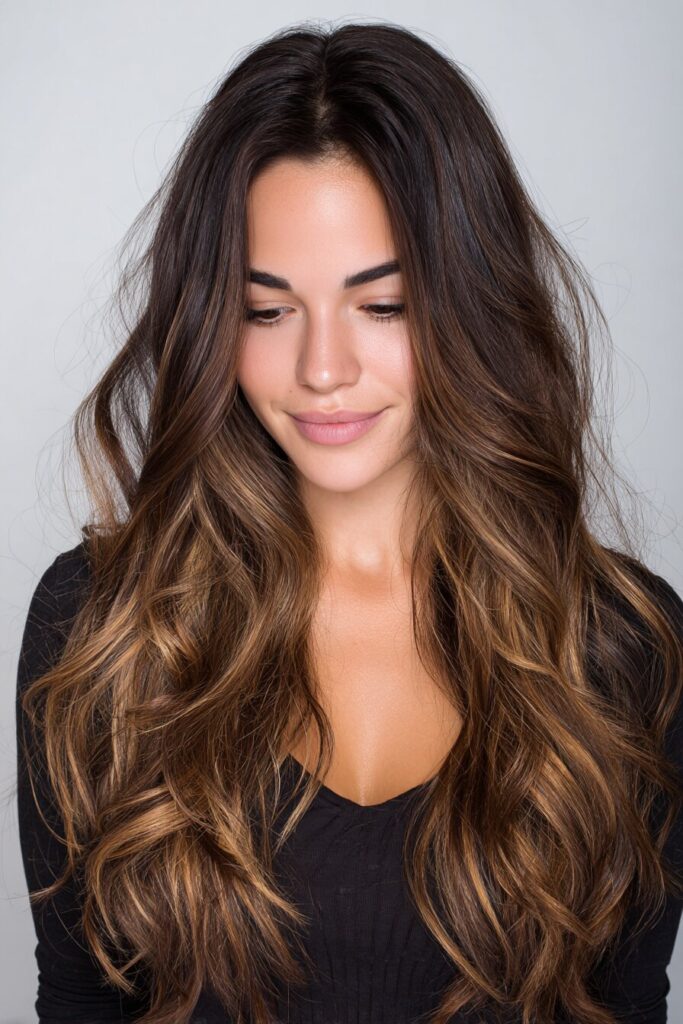
Image credit: hairaide.com
Espresso is the dark brown that flatters pale skin without going flat. Here it’s lifted with hand-painted balayage and warmed through with lowlights, giving the shade movement that reads beautifully in winter’s dim light. The base stays deep, so the overall effect is rich rather than light — ideal if you want dimension without going blonde.
Balayage placement keeps regrowth soft, so salon visits stretch to every 10–12 weeks with just a toner refresh in between. The advantage is low maintenance for a dark shade; the trade-off is that fine hair may want a gloss rather than heavy lightening to protect density.
Dark Chocolate Brown with Soft Waves
Source: partygleam.com
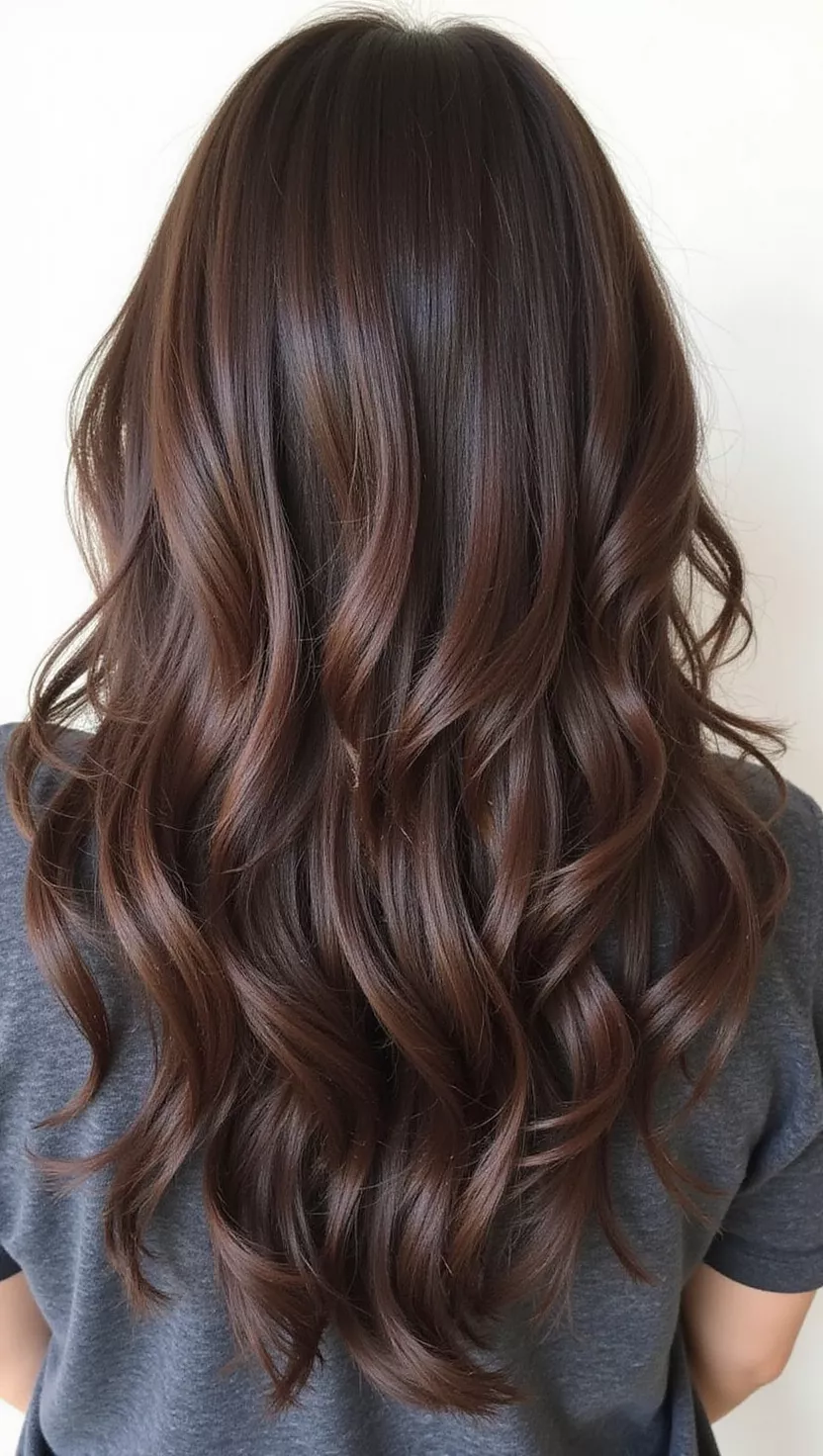
Dark chocolate is the comfort-food brown of winter color — deep, warm, and flattering on fair skin because it adds warmth without any brassiness. Worn in loose, soft waves, the shade shows subtle shifts of tone as the light moves, which keeps a single-process color from looking one-dimensional.
This is one of the easiest salon asks: a rich level-4 chocolate gloss, refresh every 6–8 weeks. It suits almost every skin undertone on the pale spectrum and grows out gracefully. The only real trade-off is that very warm chocolate can look flat in artificial light, so ask for a touch of depth at the roots. The concept gets a fuller treatment in Unique Hair Colors Ideas.
Ash Blonde Bob with Soft Shadow Root
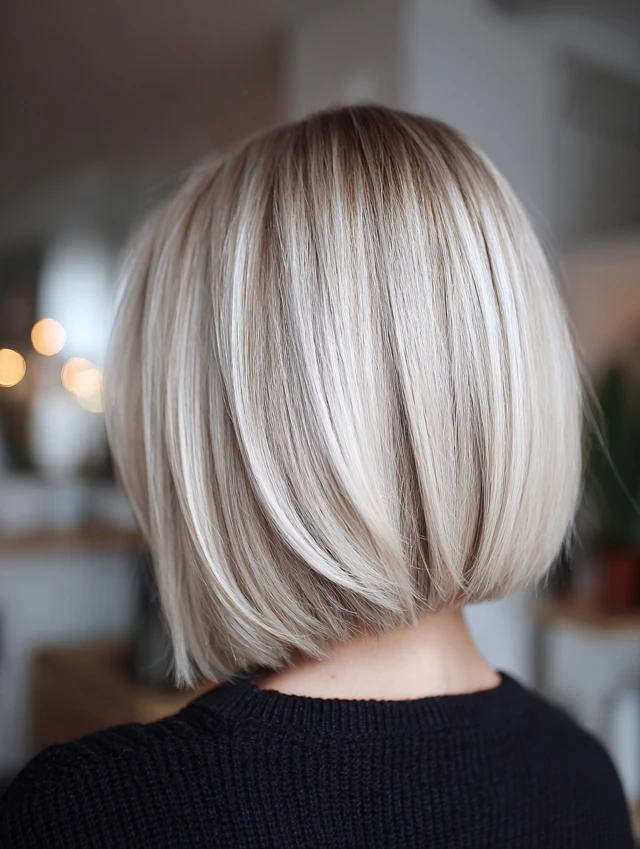
An ash blonde bob with a soft shadow root is the wearable version of icy blonde — the cool, smoky tone flatters pale skin, while the deeper root keeps the color grounded and the grow-out invisible. The bob shape, cut just below the jaw with a clean line, gives the cool shade structure so it reads polished rather than washed out.
Your stylist melts a deeper ash tone at the roots into lighter ash-blonde ends, which means 8–10 weeks between appointments. The advantage is low-maintenance cool blonde; the trade-off is that ash tones can fade warm, so a blue-based shampoo helps keep the smoke in the shade.
Silver-Gray with Voluminous Blowout
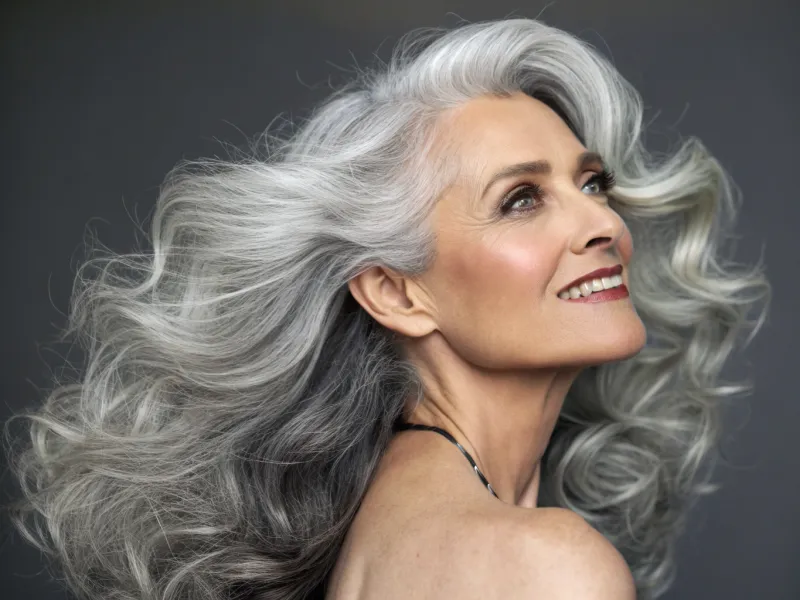
Courtesy of: momskoop.com
Silver-gray is winter’s boldest neutral, and on pale skin it looks intentional and editorial rather than aging — especially with volume. This version pairs a cool metallic silver with a big, bouncy blowout, so the shade reads as a style choice with energy. The fullness keeps the look youthful and the gray luminous.
Achieving silver on darker bases means full lightening plus a silver toner, so expect a long salon session and a conditioning regimen at home. Purple shampoo and gloss refreshes every 4–6 weeks keep it from yellowing. The trade-off is commitment; the advantage is a color that turns heads all season. Related reading: Radiant Hair Color Ideas for Pale Skin takes the same concept further.
Auburn with Copper Undertones
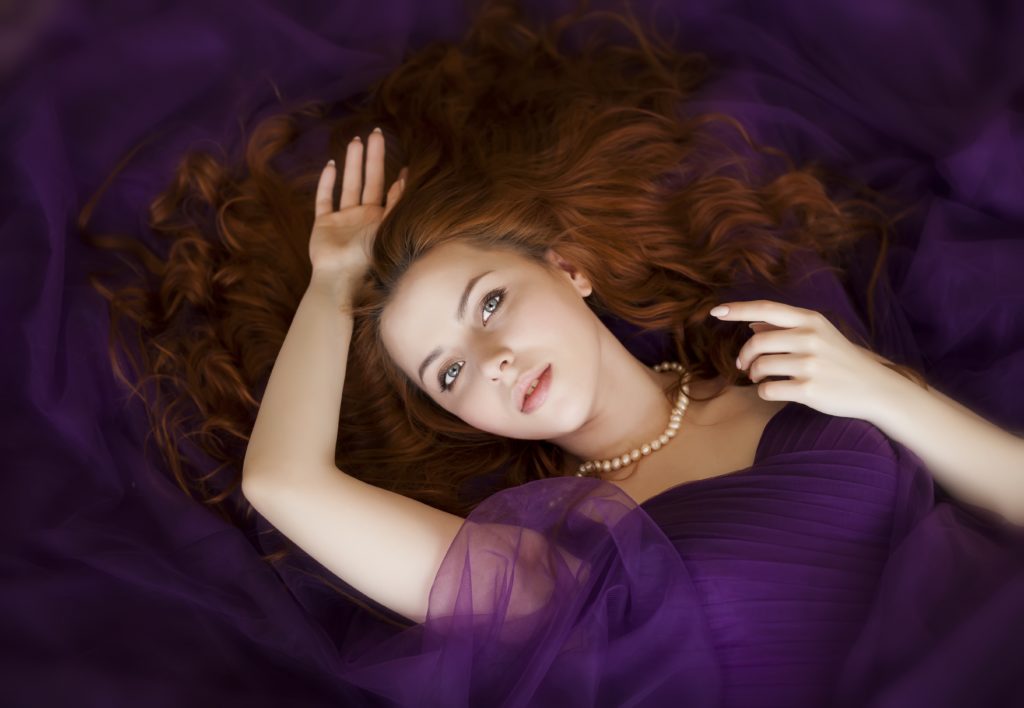
Photo credit: besthair.cz
Auburn is arguably the most flattering red family for pale skin, and copper undertones are what make it sing in winter. The warmth in the shade brings life to fair complexions when everything outdoors is gray, and the red-brown base keeps it sophisticated rather than fiery. This is the red for people who want glow, not neon.
Ask for a level-5 auburn with copper reflects; single-process color with a gloss refresh every 6 weeks. Reds fade faster than any other family, so color-depositing conditioner is your friend. Best for warm and neutral pale undertones; very cool skin may prefer a deeper, more burgundy red.
Copper Penny with Long Layers
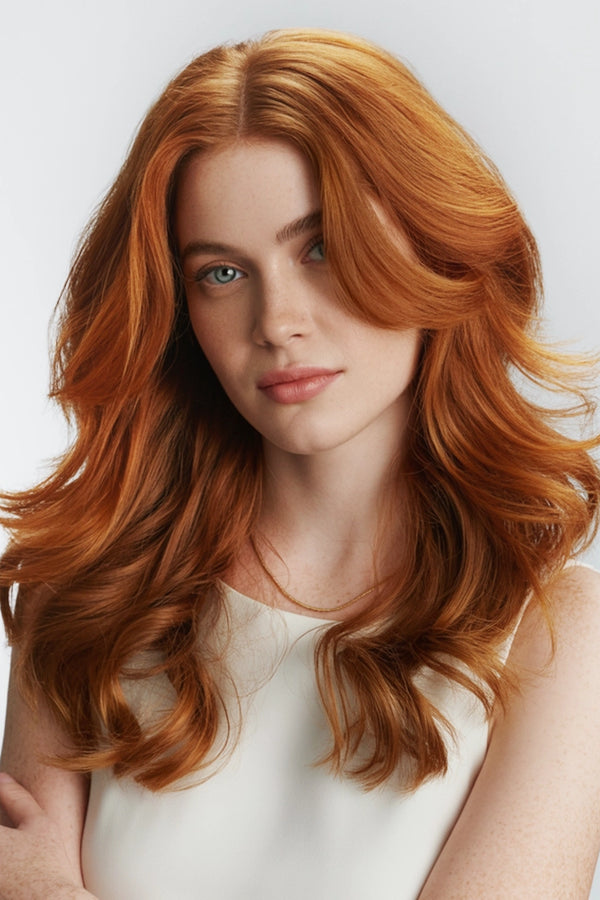
Image credit: moehair.com
Copper penny is the statement red of 2027 — a true, bright copper that looks spectacular against pale skin because the warm metal tone mirrors the skin’s own warmth. Worn long with soft layers and a middle part, the color moves and catches light, and the waves keep it romantic rather than severe.
This is a high-impact, higher-maintenance choice: copper fades fast and needs gloss refreshes every 4–6 weeks plus color-safe care. The advantage is unforgettable color that photographs beautifully; the trade-off is the upkeep calendar. Those with warm or neutral fair skin get the most harmonious result. We break down a similar look in Fall Hairstyles for Women 40.
Strawberry Blonde with Curtain Bangs

Source: therighthairstyles.com
Strawberry blonde sits in the sweet spot between red and blonde, and curtain bangs make it feel current. The soft golden-red shade lights up pale skin without overwhelming it, and the face-framing bangs add softness around the eyes. It’s a gentle way into red if full copper feels like too much.
Balayage or babylights in strawberry tones keep regrowth soft — salon visits every 10–12 weeks. The advantage is a low-drama warm shade; the trade-off is that strawberry can fade toward plain blonde, so a copper-gold gloss now and then keeps the fruit in the color.
Honey Blonde Balayage with Warm Depth
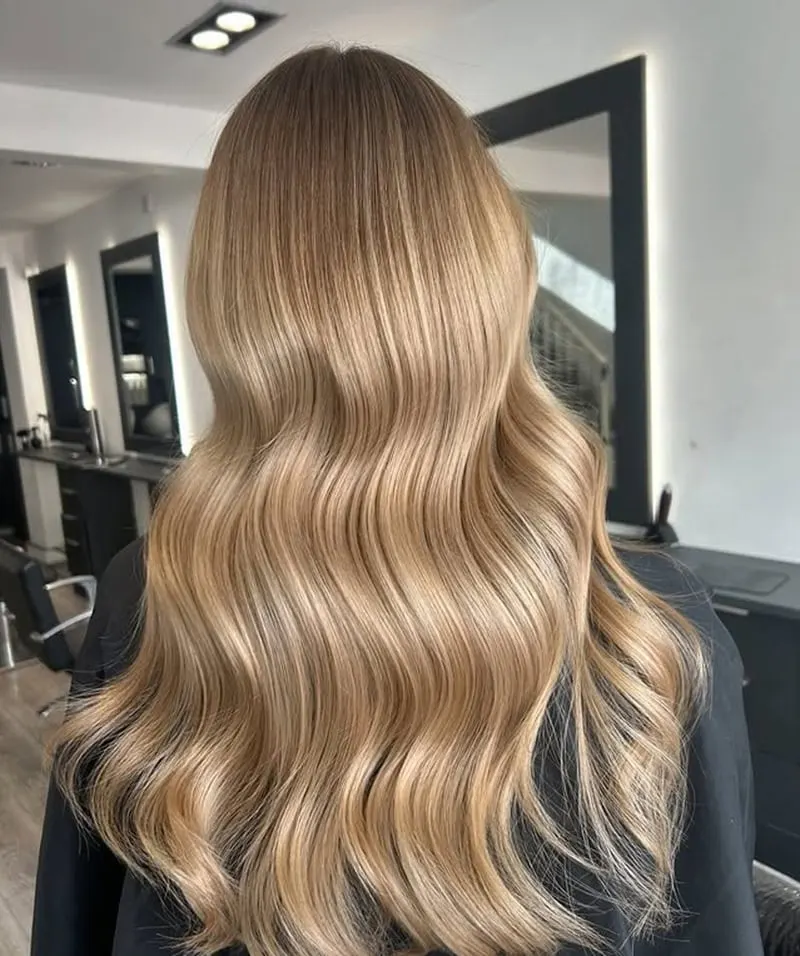
Honey blonde balayage is winter’s answer to summer highlights — the same warmth, but deeper and richer. The golden tones sit beautifully against pale skin, adding the sun-kissed warmth that winter light steals away. Worn in long waves, the balayage placement creates ribbons of honey that look expensive and lived-in. We covered this territory more deeply in Winter Hairstyles 2025 2026 25 Chic Trendy Ideas for Black Women.
Balayage grows out softly, so expect 10–12 weeks between full appointments with a toner refresh halfway. The advantage is warmth without brassiness when toned correctly; the trade-off is that honey shades need gold-toned glosses to avoid drifting toward yellow.
Mushroom Brown with Multidimensional Waves
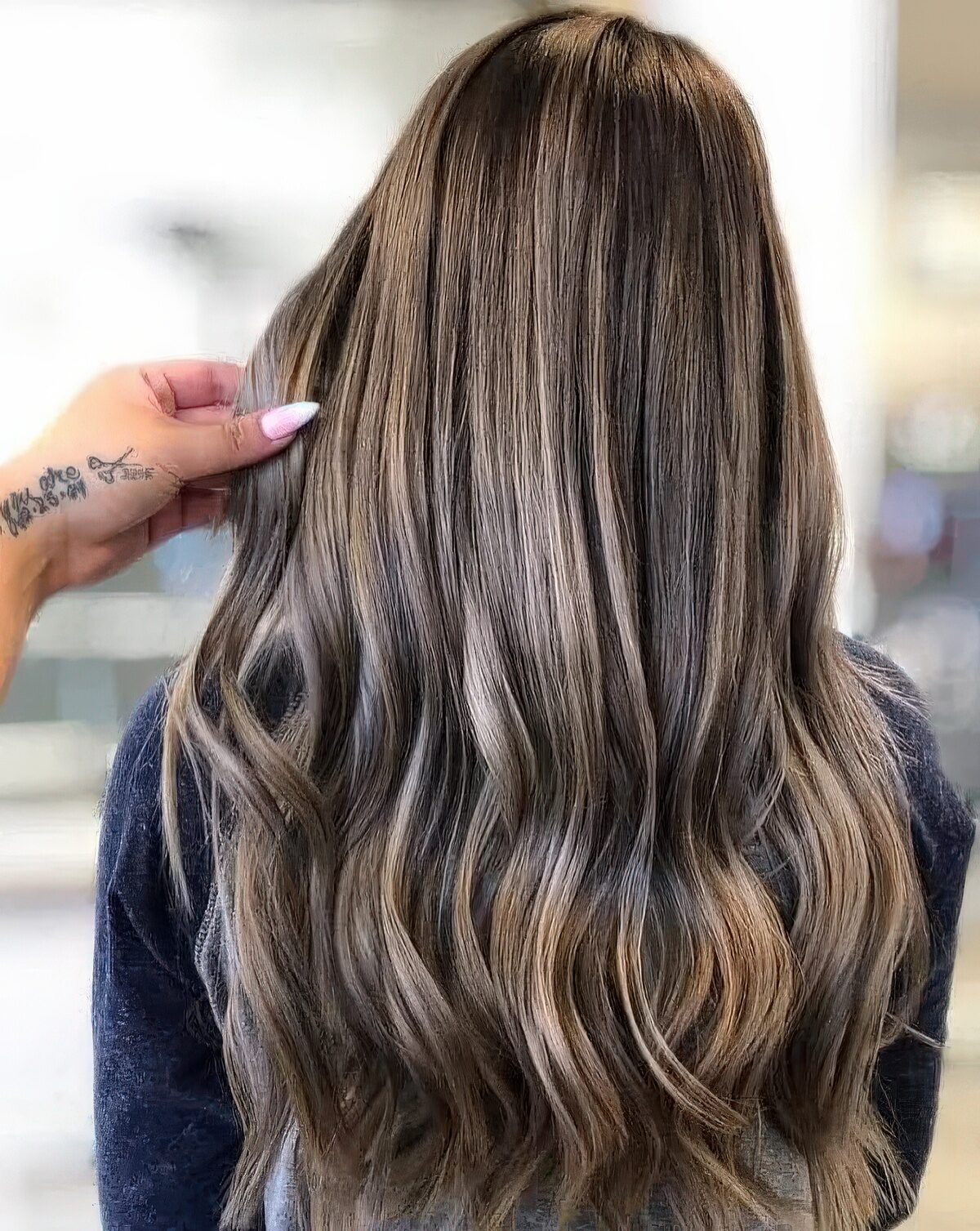
Courtesy of: styleoholic.com
Mushroom brown is the cool girl’s brunette — a taupe-gray brown that flatters pale, cool-toned skin like nothing else. The ashy, almost smoky quality of the shade harmonizes with fair complexions instead of fighting them, and worn long with textured waves it has a modern, undone feel that suits winter’s mood.
Achieving mushroom means lifting to a light brown and toning with ash-beige, so it’s a two-step salon process. Cool tones fade warm, so purple or blue shampoo keeps the mushroom from turning brassy. The trade-off is maintenance of the tone; the advantage is a genuinely unique shade.
Jet Black, Sleek and Straight
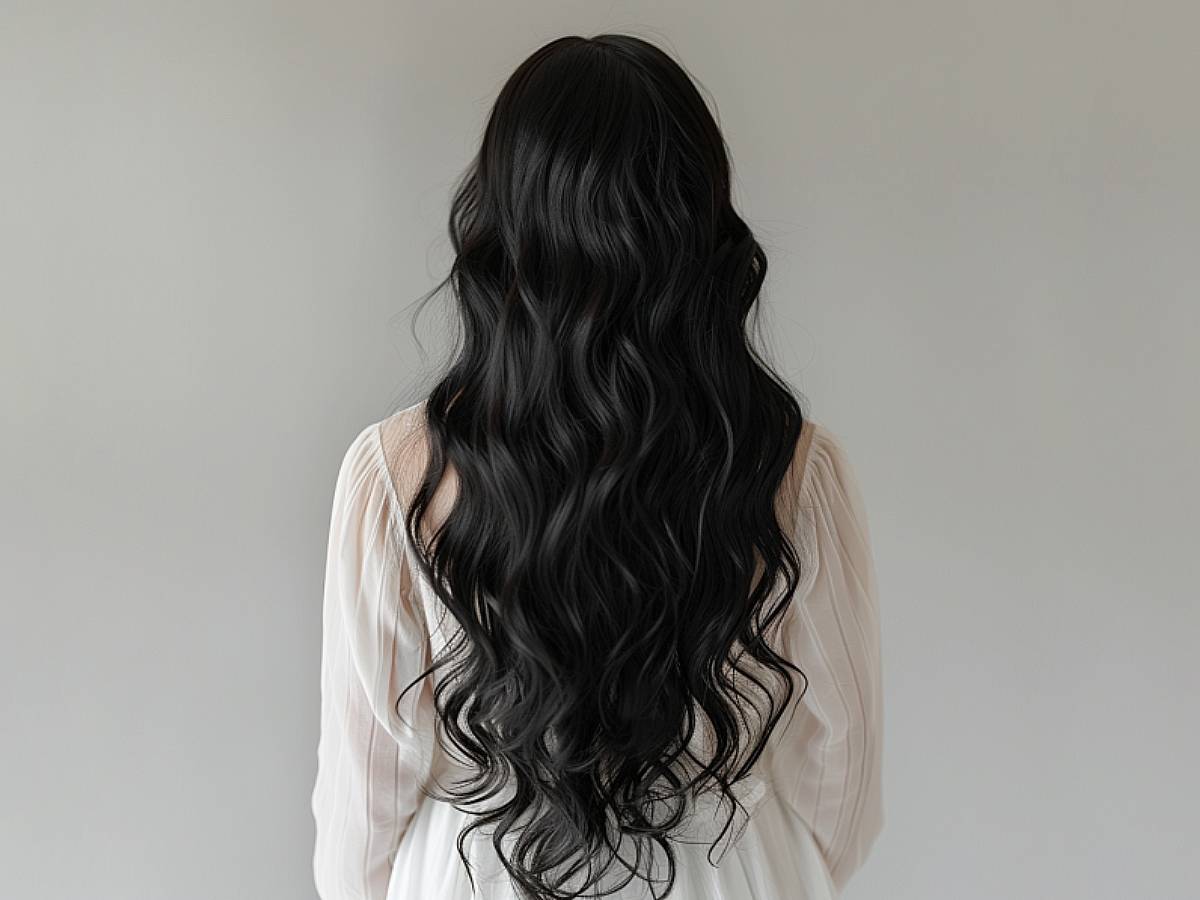
Photo credit: latest-hairstyles.com
Jet black worn sleek and straight is the high-fashion answer to winter color. The inky depth against pale skin creates maximum contrast — the kind of look that makes features stand out in low winter light. The pin-straight, mirror-shine finish keeps it chic rather than goth. For the fuller picture, Homecoming Hairstyles for Black Women is worth your time.
Single-process jet black is straightforward at the salon, with gloss refreshes to maintain the shine. Heat styling is what keeps the sleek finish, so heat protectant is non-negotiable. The trade-off is visible regrowth and the commitment — black is the hardest color to lift out of later.
Dark Red with Burgundy Richness
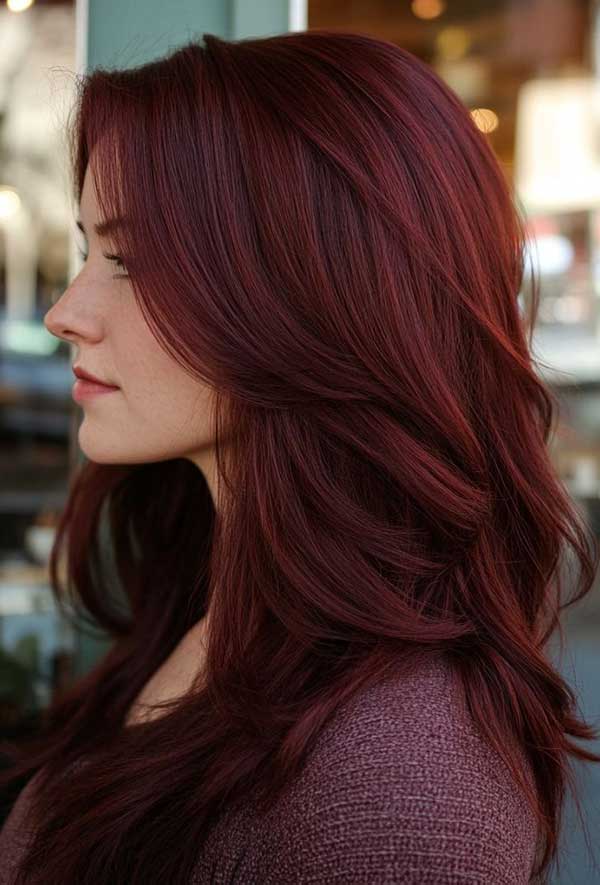
Image credit: cozyfeeds.com
Dark red with burgundy depth is red wine for hair — rich, moody, and perfect for winter. The wine tones flatter pale skin because the cool red reflects don’t compete with the complexion; instead they add a flush of color that looks healthy. Glossy waves show off the shade’s depth.
A level-4 burgundy-red gloss holds better than brighter reds, with refreshes every 6–8 weeks. The advantage is a red that suits cool and neutral pale skin; the trade-off is the usual red fade, so sulfate-free care and cool water help it last.
Cinnamon Brown with Warm Glow
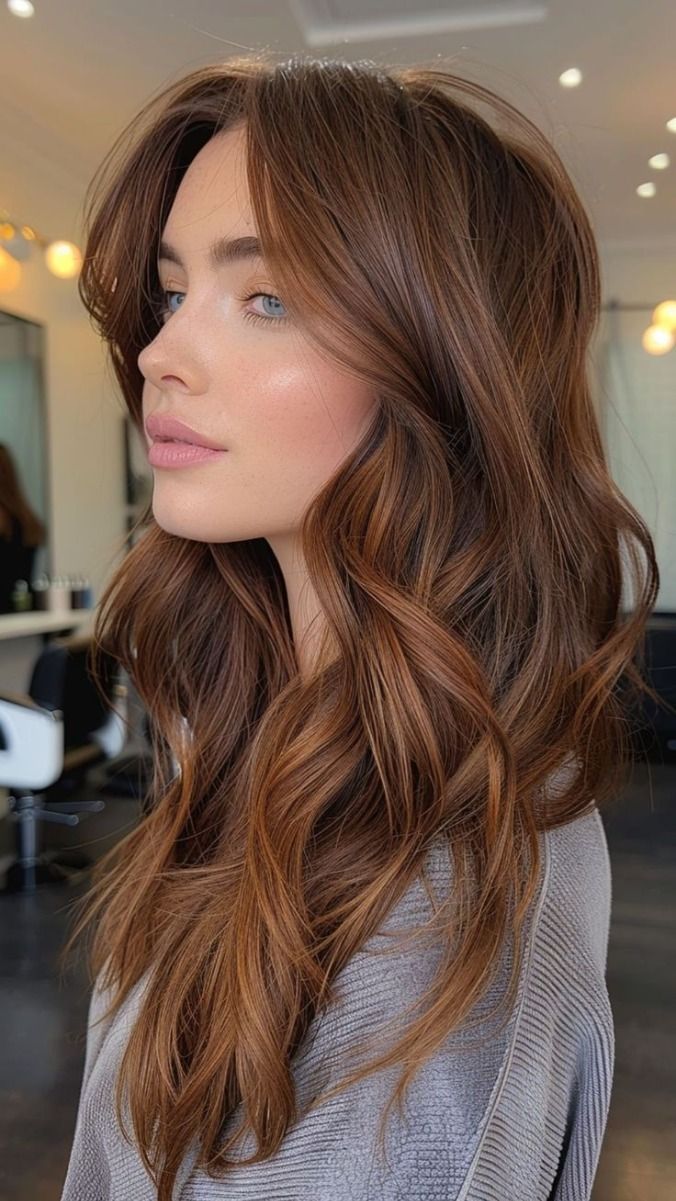
Source: chicessences.com
Cinnamon brown is the spice shade of the season — a warm, reddish brown that glows against pale skin like candlelight. It’s softer than copper and richer than auburn, making it one of the most wearable warm shades for fair complexions. The warmth reads cozy and festive without trying too hard. The same theme, explored from another angle, is in Gorgeous Homecoming Hairstyles for Long Hair.
A cinnamon gloss over a medium brown base is an easy salon service, refreshed every 6–8 weeks. The advantage is instant warmth for washed-out winter skin; the trade-off is that the red reflects fade first, so the shade drifts toward plain brown without glosses.
Toffee Mocha Balayage
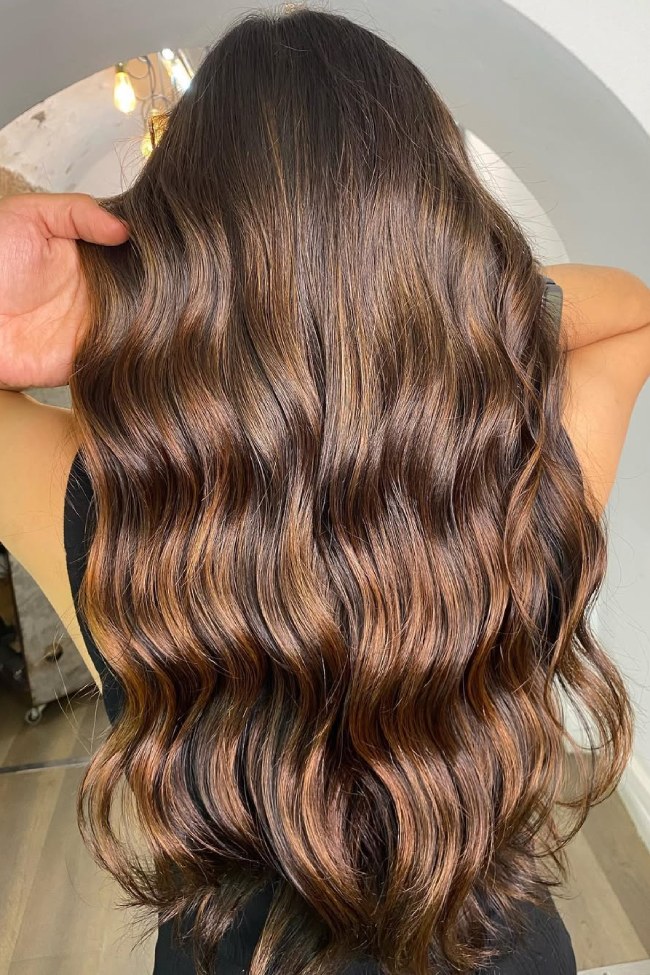
Via fabmood.com
Toffee mocha balayage is dessert in hair form — deep brunette melted with golden toffee ribbons. The warm, glossy dimension flatters pale skin by adding light around the face without going blonde. It’s the balayage for brunettes who want richness, not contrast.
Hand-painted placement means soft regrowth and 10–12 weeks between appointments. The advantage is low-maintenance warmth; the trade-off is that the toffee pieces need gold-toned glosses to keep their caramel glow from fading.
Pearl Blonde Bob with Side Part
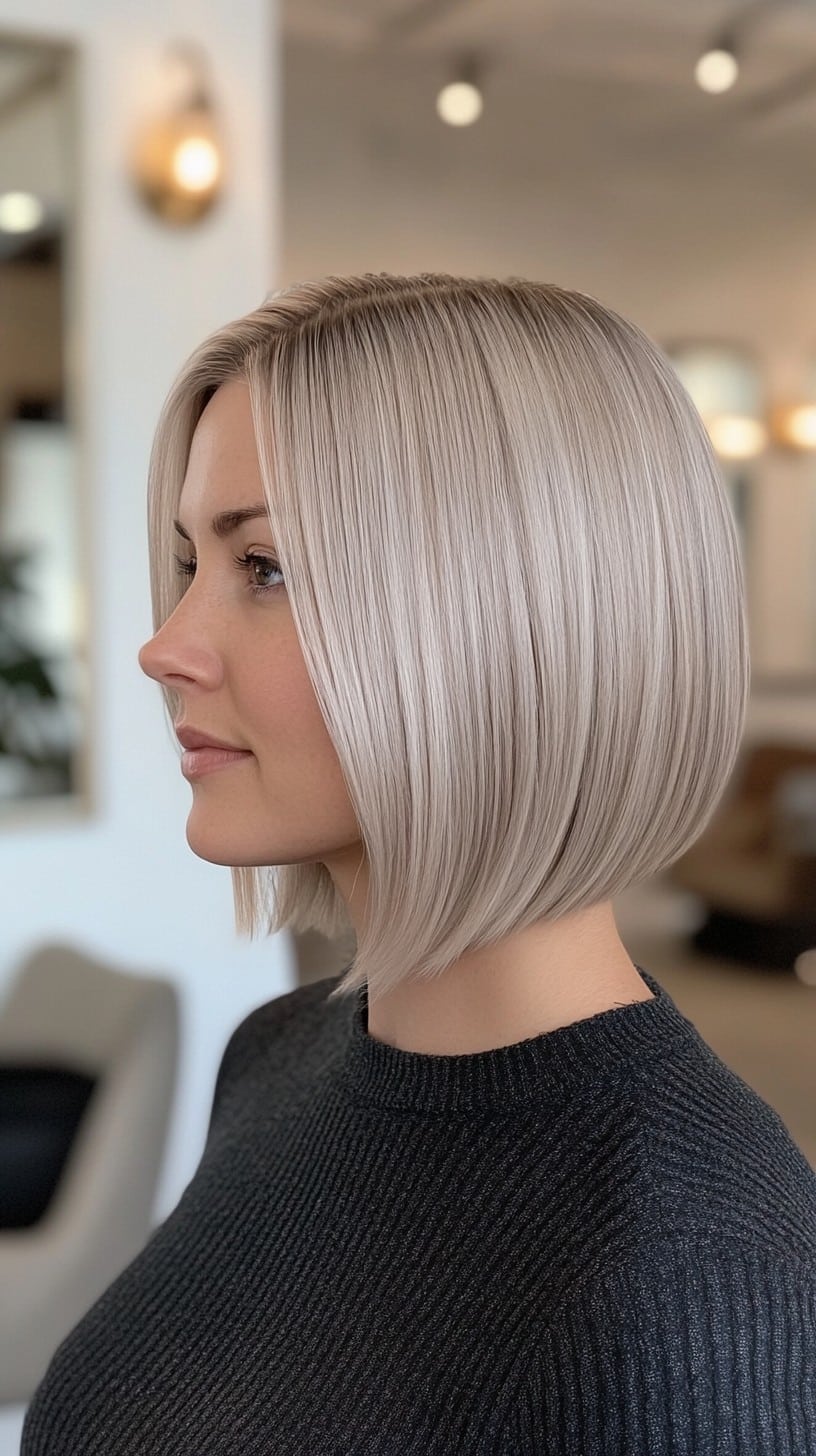
Courtesy of: hairs.london
Pearl blonde is the softest icy shade — a luminous, almost opalescent blonde that looks stunning on pale skin. Paired with a chin-length bob and a deep side part, the color frames the face with light and the cut keeps it modern. The pearl tone has a subtle warmth that keeps icy blonde from looking stark. See also Fall Braid Hairstyles 2025 for more variations on this look.
Lifting to pearl requires bleaching plus a pearl-violet toner; purple shampoo and gloss refreshes every 4–6 weeks maintain the tone. The advantage is a blonde that flatters fair skin without yellowing; the trade-off is the familiar high-maintenance blonde routine.
Smoky Ash Brown
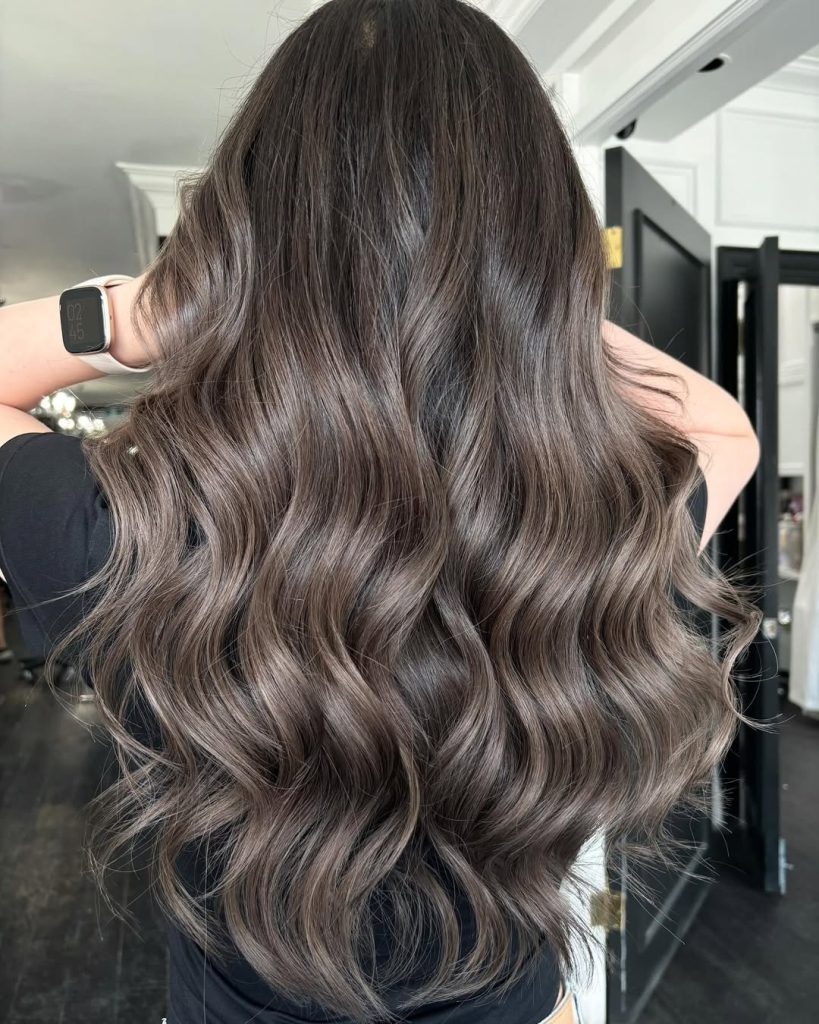
Photo credit: homyglow.com
Smoky ash brown is the understated cool brunette — muted, matte, and quietly chic. On pale skin with cool undertones it’s a perfect match, echoing the season’s gray light instead of fighting it. The smoky quality gives the shade depth that flat brown lacks.
Ash brown is typically a gloss or demi-permanent service, which means gentler processing and easy refreshes every 6–8 weeks. The advantage is a sophisticated cool shade; the trade-off is that ash fades warm fastest of all tones, so blue shampoo is essential. For readers who want more, Stunning Hair Colors That Make Green Eyes keeps the ideas coming.
Cool-Tone Brown with Caramel Highlights
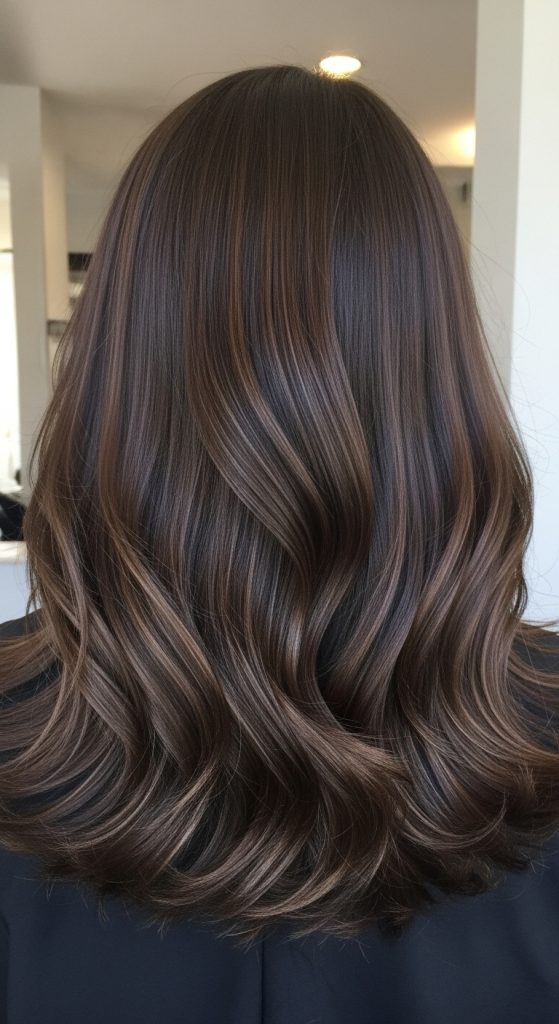
Image credit: cooltipsforu.de
A cool brown base with caramel highlights gives you the best of both temperatures — the smoky base flatters pale, cool skin while the caramel ribbons add the warmth winter complexions crave. The contrast between cool and warm keeps the color interesting in every light.
Foil or balayage highlights over a cool brown gloss, refreshed every 8–10 weeks. The advantage is dimension that suits nearly every pale undertone; the trade-off is balancing the two tones — too much caramel and the cool base gets lost.
Beige Blonde with Soft Neutrality
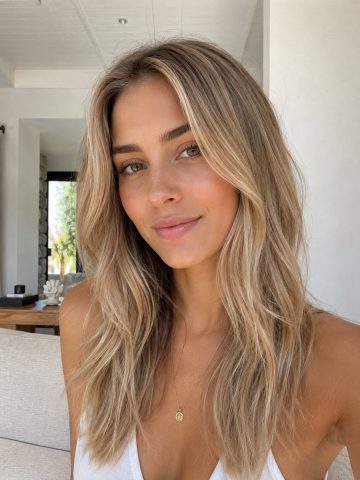
Source: nextstyleideas.com
Beige blonde is the diplomat of blondes — neither icy nor golden, it sits in the neutral middle that flatters pale skin of any undertone. The soft, sandy quality looks natural and expensive, and it avoids the two blonde pitfalls for fair skin: too-yellow warmth and too-stark white.
A beige toner over highlighted hair, refreshed every 6–8 weeks with a neutral gloss. The advantage is a blonde that grows out softly and suits everyone; the trade-off is that beige can read as “plain” if you love drama — it’s the quiet luxury of blondes. You’ll find the same spirit in Easy Chic Winter Hairstyles for Women in 2025 2026 That Elevate Your Everyday Style.
Black Cherry with Subtle Highlights
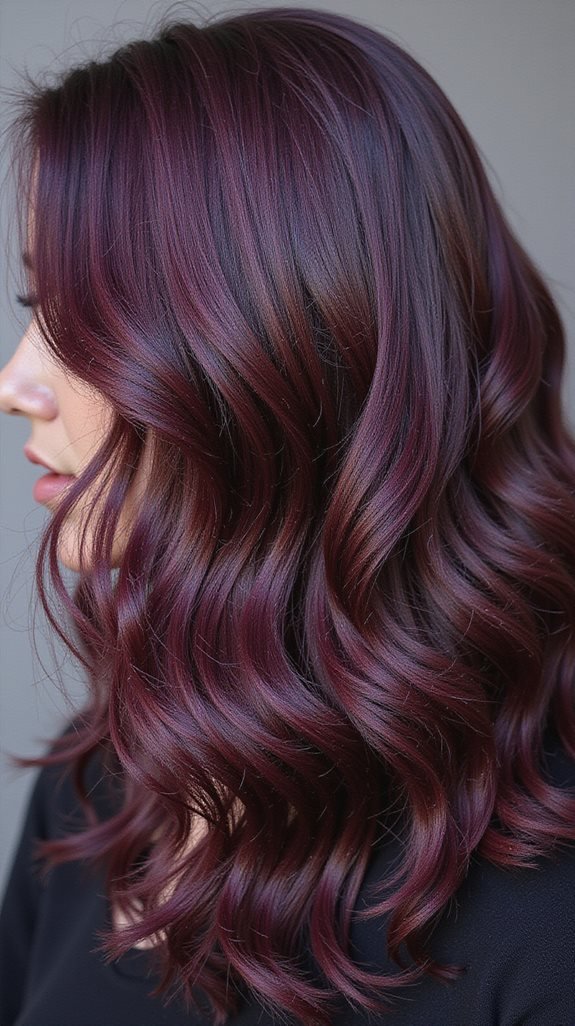
Via stylesagepro.com
Black cherry is nearly black until the light hits it — then deep red highlights reveal themselves. On pale skin it’s mesmerizing: the dark base provides the contrast fair complexions love, while the hidden red adds warmth and mystery. Subtle highlights woven through keep it from looking flat.
A dark cherry gloss over a near-black base, with fine highlights for the reveal effect. Refresh every 6–8 weeks. The advantage is drama with subtlety; the trade-off is that the red reflects are the first to fade, so the shade drifts toward plain dark brown without upkeep.
Mahogany with Copper Highlights
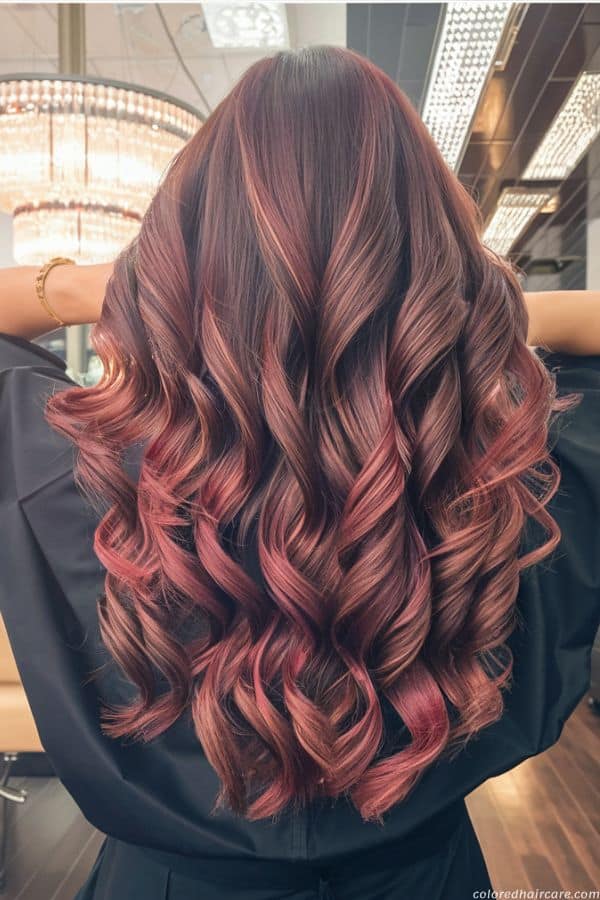
Courtesy of: coloredhaircare.com
Mahogany is the deep red-brown that glows like polished wood, and copper highlights are what give it fire. The combination is rich and warm — exactly what pale skin needs in winter — without the brightness of true copper. It’s a red for brunettes, essentially, and a flattering one.
A mahogany base with hand-painted copper pieces, refreshed every 6–8 weeks. The advantage is a red that suits deeper pale complexions and dark eyes; the trade-off is fade — both the mahogany and copper need regular glosses to stay vibrant. A companion piece, Beautiful Light Hair Colors for Summer, explores the same palette.
Chestnut Brown with Natural Shine
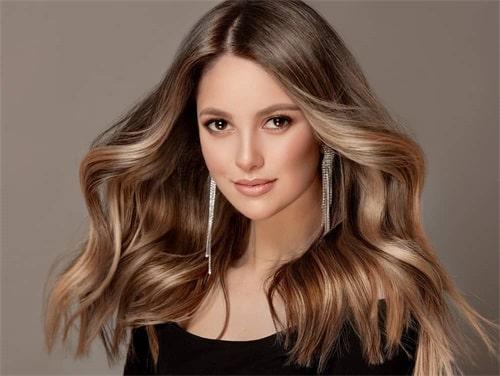
Photo credit: nadula.com
Chestnut is the natural-looking warm brown that suits almost everyone, and on pale skin it adds a healthy flush of warmth. The reddish-gold reflects mimic the way brown hair looks in sunlight, which is precisely what’s missing in winter. A high-shine finish makes the shade look healthy and expensive.
One of the easiest colors to achieve and maintain — a chestnut gloss refreshed every 6–8 weeks. The advantage is universal flattery with minimal upkeep; the trade-off is simply that it’s a classic rather than a trend, which for many is the point.
Old-Money Blonde Bob
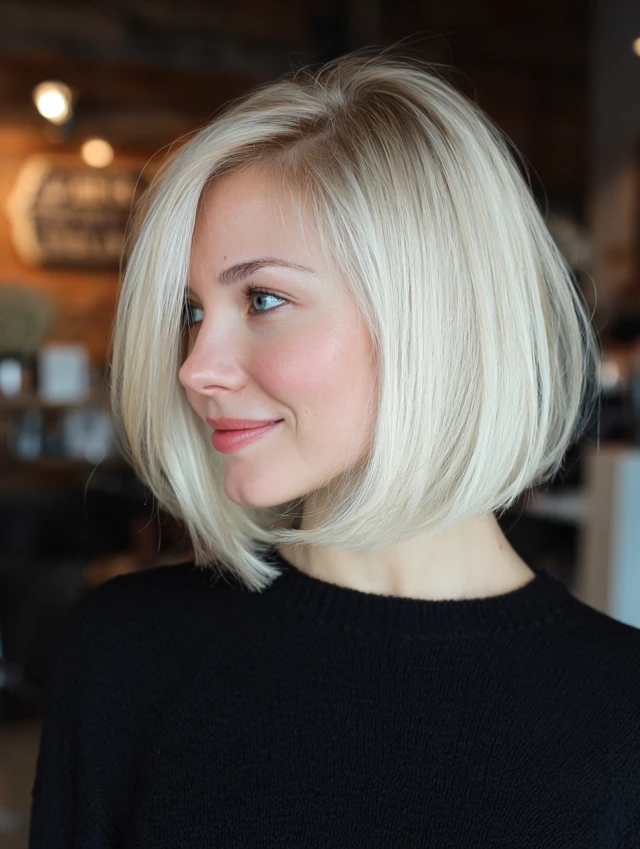
Image credit: yourstyleinspo.com
Old-money blonde is the polished, creamy blonde that looks like it was always there — no visible roots, no harsh lines, just a seamless, expensive shade. On pale skin it’s a natural fit, and the sleek bob with a side part gives it the quiet-luxury polish the trend demands.
Achieving the seamless look means fine babylights and a creamy toner, with root melts that keep everything blended. Expect 8–10 weeks between appointments. The advantage is a blonde that always looks intentional; the trade-off is the precision required — this one needs a skilled colorist. If this look speaks to you, Fall Blonde Hair Colors 2026 continues the thread.
Dark Mocha with Warm Dimension
Source: yournextinspo.com
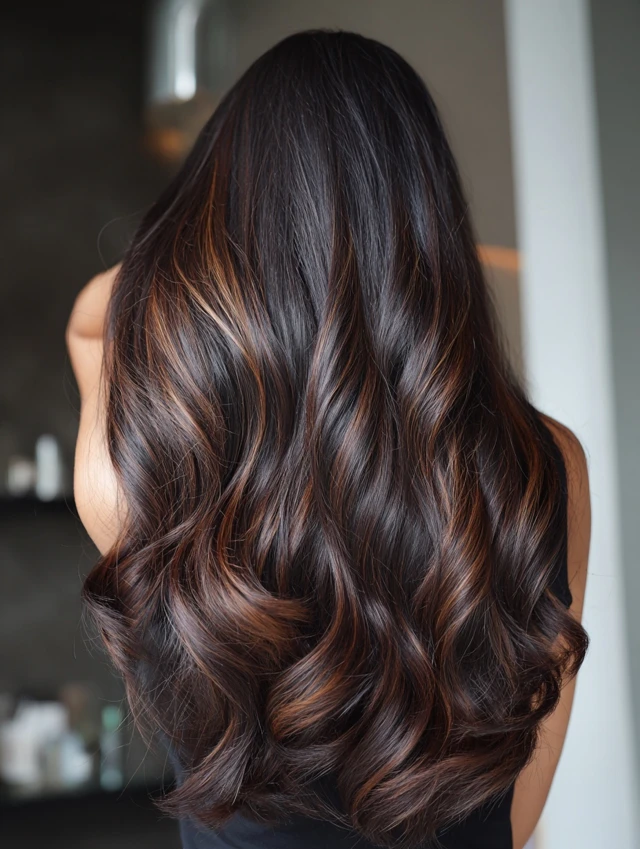
Dark mocha with warm dimension is the coffee-inspired brunette that flatters pale skin with its soft warmth. The deep base keeps the contrast fair complexions love, while ribbons of warmer brown add movement that reads beautifully in winter light. Worn in waves, the dimension is on full display.
Balayage or foilayage over a dark base, with warm-toned glosses to maintain the mocha glow. Salon visits every 10–12 weeks. The advantage is rich, low-maintenance dimension; the trade-off is that the warmth needs periodic refreshing to avoid drifting ashy or dull.
Final Thoughts
Across these 24 shades, the strongest options work because of undertone harmony and contrast, not simply because they are dark or light. Pale skin looks its best with hair color that either echoes its coolness (silver, ash, mushroom) or deliberately warms it (copper, auburn, cinnamon, espresso) — the middle ground of muddy, indistinct browns is what washes fair complexions out. Choose based on maintenance appetite, natural base, and how much contrast you want: high-contrast shades like jet black and platinum make a statement but demand upkeep, while lived-in options like balayage and shadow roots give you the color with a fraction of the salon time.
- Trim every six to eight weeks to keep the shape sharp.
- Use a heat protectant before every hot-tool session.
- Tone blonde or highlighted hair every six weeks to keep brassiness away.
- Match the upkeep schedule to your routine before committing to high-maintenance color.
The best color is the one that still looks intentional at week six.