The wolf cut earned its reputation the hard way: it asks for confidence and gives back character. Part shag, part mullet, and entirely its own animal, this cut stacks short, choppy layers at the crown over longer, wispy ends, creating that unmistakable silhouette — volume on top, movement everywhere else. It refuses to sit quietly on your head, which is exactly the point. Whether you arrive at it through choppy layered cuts or arrive as a complete convert, the wolf cut rewards people who like their hair to have opinions.
What keeps the cut relevant, season after season, is how many versions it supports. It can go soft and wearable, edgy and disconnected, curly and wild, or sleek with just a hint of attitude at the ends. The through-line is texture: a wolf cut lives or dies on how the layers separate. The ideas below run the full range, each with honest notes on the styling it demands — because this is a cut that looks effortless precisely when you put a little thought into it. If you prefer a gentler entry into heavy layering, the retro shag is the wolf cut’s softer cousin and a good reference point for the shapes you like.
1. Soft Wolf Cut with Wispy Bangs

Photo credit: therighthairstyles.com
This is the friendliest doorway into the trend. The crown layers stay rounded and controlled rather than jagged, and the bangs are cut wispy and light so they read as a soft frame instead of a heavy statement. Stylists often achieve this with slide-cutting through the ends rather than blunt chopping, which keeps the texture feathery.
The upkeep is refreshingly modest: the softness means grow-out stays graceful for weeks, and the bangs can be pushed aside as they lengthen. The trade-off is that fine hair may need a root-lifting spray or the crown goes flat by afternoon — this version leans on styling products more than its edgier siblings do.
2. Wolf Cut with Curtain Bangs

Image credit: therighthairstyles.com
Curtain bangs are the wolf cut’s most flattering partner because they open the face while the crown layers do their wild thing behind them. The bangs are cut to part in the middle and sweep outward, blending into the face-framing pieces so there’s no harsh line between fringe and length. It suits round and heart-shaped faces especially well, since the parting draws the eye diagonally rather than straight across. If you want more fringe inspiration before committing, browse haircuts with bangs to see how different bang lengths behave with layered cuts.
Styling-wise, this pairing asks for a round brush through the curtain pieces — let them dry flat against your forehead and the center part collapses into a limp fringe. Trim the bangs every three to four weeks if you want them to keep their sweep; grown-out curtain bangs simply merge into layers, which isn’t a tragedy, just a different haircut.
3. Choppy Long Wolf Cut

Courtesy of: therighthairstyles.com
Here’s the classic blueprint: aggressive texture at the crown, deliberately piece-y ends, and enough length to keep the mullet DNA visible. The choppiness comes from point-cutting deep into the layers, which creates those separated, almost spiky tufts at the top. On long hair this cut removes surprising weight — a real relief if your one-length hair has always felt heavy. The structure sits closest to long layered haircuts, but with the crown taken much further.
Be honest with yourself about maintenance: the crown layers lose their lift as they grow, and by week eight the shape can drift toward shapeless unless the top is re-textured. A texturizing spray worked through dry hair is non-negotiable for definition. Thick hair wears this best; on fine hair, the same technique can expose too much scalp at the part if the stylist gets overenthusiastic with thinning shears.
4. Sleek Wolf Cut for Straight Hair

Source: therighthairstyles.com
Straight hair doesn’t have to sit out the wolf cut — it just wears a more polished version. Here the layers are blended rather than shattered, so the silhouette keeps the crown volume and tapered ends without the deliberate messiness. A smoothing blowout with the ends flicked out shows off the layer placement while keeping everything sleek.
The honest catch: straight hair shows every layer line, so the cut has to be precise, and you’ll likely need to style it daily since pin-straight hair doesn’t hold the crown lift on its own. Flat-ironing with a slight bend at the ends is the quickest way to keep this looking intentional rather than grown-out.
5. Ultra-Long Wolf Cut

Keeping serious length while going full wolf is a power move. The stylist concentrates the drama in the top third — short, lifted pieces around the crown — and lets the remaining length flow with only light texturing through the ends. It reads dramatic from the front and romantic from the back, which is a combination few cuts pull off. Think of it as the bolder sibling of the butterfly cut, with the crown pushed further for contrast.
Long hair makes this version heavier to style, so a layered blowout takes real time, and the ends are prone to thinning out if the texturizing goes too deep. Regular dusting trims keep the long layers from turning stringy, and a light oil on the ends prevents the feathery texture from reading as damage.
6. Soft, Wearable Wolf Cut

Photo credit: therighthairstyles.com
Not every wolf cut wants to howl. This toned-down take keeps feathered layers and a lifted crown but blends everything so smoothly it could pass in a conservative office. The layering is graduated rather than disconnected, which gives movement without the wild top-to-bottom contrast.
It’s the lowest-commitment version on this list: grow-out is seamless, styling can be as simple as air-drying with a little mousse, and it flatters oval and oblong faces that might find extreme versions too widening at the top. The compromise is that it lacks the signature edge — if you want the full wolf attitude, this one will feel like a half-measure.
7. Wolf Cut with Blonde Balayage

Image credit: therighthairstyles.com
Color and cut amplify each other here. Hand-painted blonde pieces are placed through the crown and face-framing layers, so every choppy piece catches light and the texture becomes visible even from across the room. Balayage is the right technique for this because the soft grow-out line won’t fight the cut’s already busy silhouette.
Upkeep is really two routines in one: the cut needs re-texturing every couple of months, and the blonde needs toning to stay bright. Heavily layered ends are more vulnerable to lightener damage, so bond-building treatments aren’t optional — they’re what keep the wispy pieces from snapping.
8. Pixie-Length Wolf Cut

Courtesy of: therighthairstyles.com
Taking the wolf cut up to pixie length turns it into something closer to a textured bixie with attitude. The crown stays piece-y and lifted, the nape tapers close, and a longer fringe keeps the face-framing softness. It’s a brilliant option for fine hair, since short lengths make the texture read fuller than it is. The energy lands somewhere near edgy pixie cuts, with more mullet influence at the back.
Short means frequent trims — four to six weeks — or the shape collapses fast. But daily styling is minimal: a dab of matte paste, some finger tousling, and the cut does the rest. Square jawlines should ask for softer pieces around the ears rather than harsh angles.
9. Wolf Cut Lob

Source: therighthairstyles.com
Applying wolf-cut layering to a collarbone-grazing lob gives you the trend in its most office-friendly proportions. The crown gets the signature lift, the ends get flicked and textured, and the overall perimeter stays blunt enough to look polished. It’s arguably the most versatile length — long enough to tie back, short enough to style in minutes.
This length grows out beautifully, morphing into a textured lob rather than an awkward in-between stage. Wavy and straight textures both work; very curly hair at this length may need the layers carefully placed to avoid a triangle silhouette.
10. Chin-Length Wolf Cut
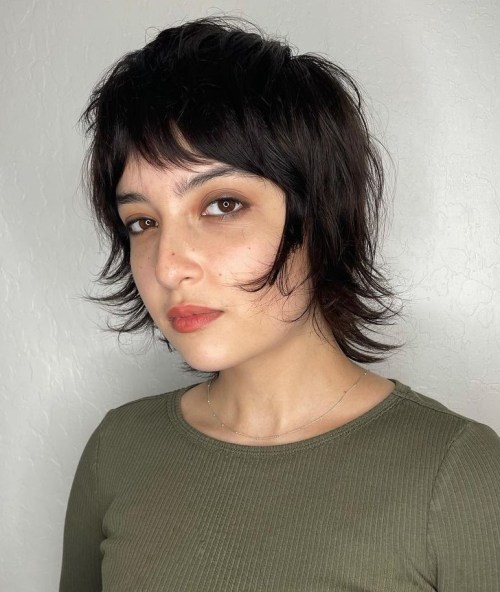
A chin-length wolf cut concentrates everything: the crown layers, the texture, the attitude — all packed into a compact shape that frames the face tightly. It’s a strong choice for fine hair, since the shorter lengths and heavy layering create maximum fullness where it’s needed most. For more ideas built on the same principle, see cuts for thin, fine hair that use layering for lift.
The short perimeter means the ends flip and kick with minimal effort, but the crown still needs root lift to avoid the top going flat while the bottom flares. Round faces should ask for slightly longer front pieces to keep the shape from widening the cheeks.
11. Dark Wolf Cut with Purple Streaks

Photo credit: therighthairstyles.com
Fashion color finds its perfect canvas in a wolf cut. The separated layers mean streaks of purple sit in distinct ribbons rather than blending into a muddy wash, and the dark base makes the color glow by contrast. Peekaboo placement — color tucked under the top layers — keeps it office-stealthy until the hair moves.
Fantasy shades fade fast, especially on pre-lightened pieces, so expect to refresh with color-depositing conditioner every couple of weeks. The lightened streaks are also the most fragile part of a heavily layered cut, so heat protectant is essential if you’re styling daily.
12. Razored Wolf Cut
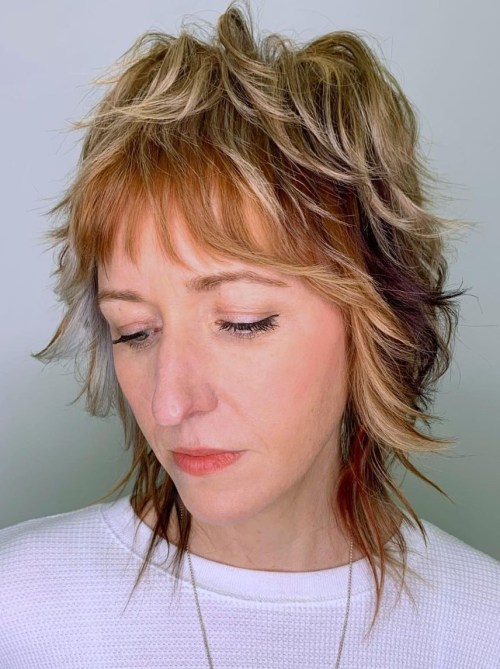
Image credit: therighthairstyles.com
When a stylist reaches for the razor instead of scissors, the wolf cut gets its airiest, most feathered texture. Razoring tapers each strand to a fine point, creating soft, wispy ends that move like nothing else. It’s the technique behind those impossibly light, shattered layers that look like they took zero effort.
The technique has a real caveat: razored ends can fray on fine or damaged hair, and the feathered texture grows out faster than scissor-cut layers, needing reshaping sooner. Ask your stylist honestly whether your hair density can handle it — on the wrong hair type, a razor turns texture into frizz.
13. Wavy Razored Wolf Cut

Courtesy of: therighthairstyles.com
Pair the razor technique with natural waves and you get the wolf cut at its most romantic. The waves blur the layer lines into one continuous cascade of texture, while the razored ends keep everything light enough to move. This is the version that looks best slightly undone — air-dried, scrunched with a little cream, and left alone.
Wavy hair is forgiving here: the texture hides minor grow-out sins and the shape holds for weeks. Humidity is the main adversary, since frizz can turn feathered ends puffy. A smoothing serum on the mid-lengths keeps the definition without weighing the waves down.
14. Platinum Wolf Cut with Curtain Bangs

Source: therighthairstyles.com
Platinum takes the wolf cut’s texture and puts it under a spotlight — every choppy layer and flicked end becomes visible in icy detail. The curtain bangs keep the brightness from overwhelming the face, parting softly to frame the eyes. It’s a high-impact combination that reads editorial without trying too hard.
This is the highest-maintenance pairing on the list. Platinum needs toning every few weeks to fight brass, and lightened layered ends are fragile — over-styling them with heat will show damage immediately. If you’re not prepared for the salon schedule and the bond treatments, this one will punish you.
15. Shoulder-Grazing Curly Wolf Cut with Fringe
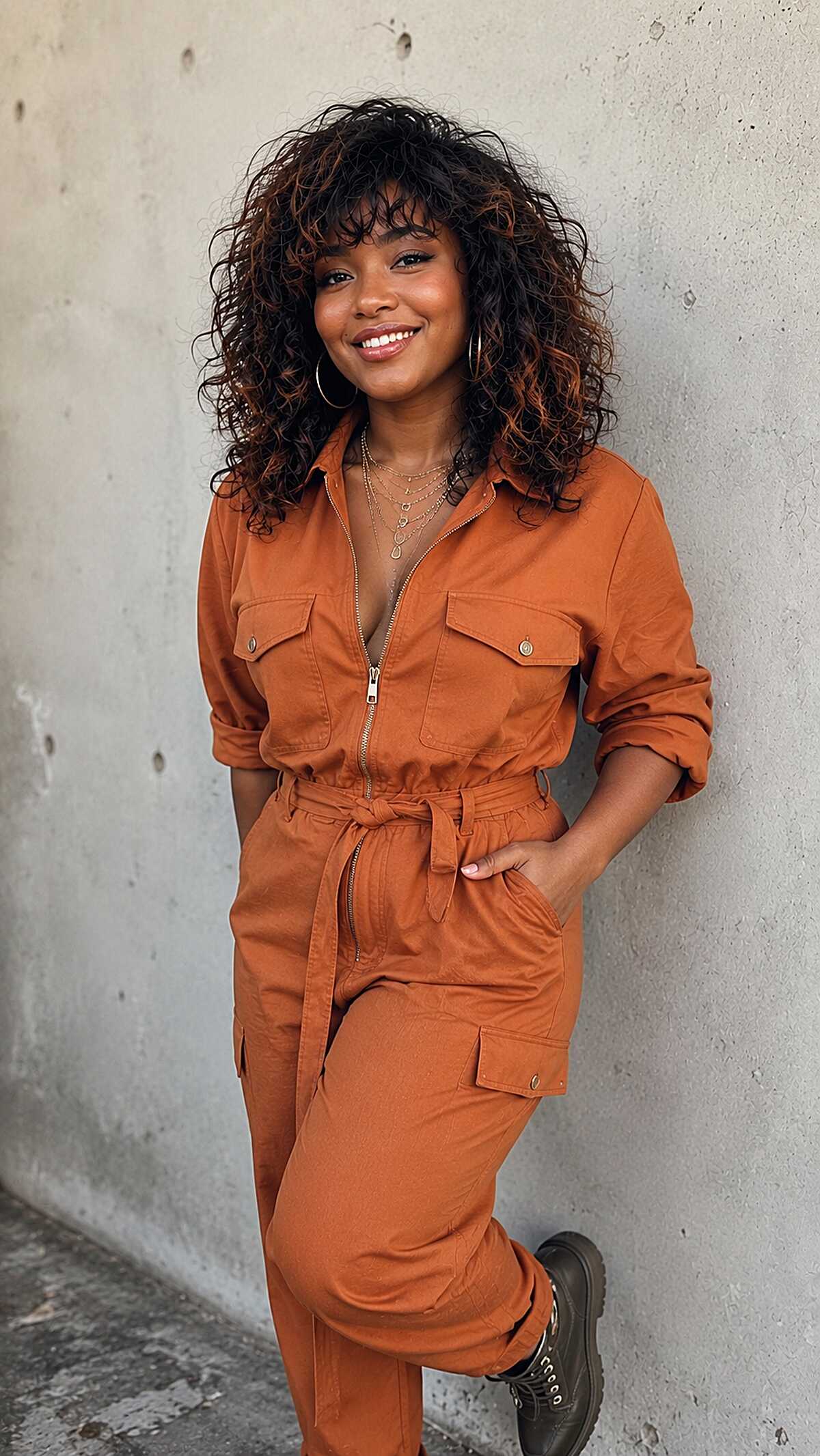
Curly hair and the wolf cut are a natural match — the cut was practically designed to solve the problems one-length curly hair creates. The shorter crown layers lift the roots instead of letting the weight drag everything down, and the full curly fringe brings the eyes forward. Layers are cut to respect curl shrinkage, so the shape lands where it’s supposed to once dry. For more curl-first inspiration, browse curly hairstyles that celebrate natural texture.
Ask for a dry cut if your stylist offers it — curly wolf cuts shaped on dry hair behave far more predictably. Diffusing upside down builds the crown volume this cut is known for, and a curl cream scrunched through damp hair keeps the layers defined instead of frizzy.
16. Copper-Red Curly Wolf Cut with Soft Fringe
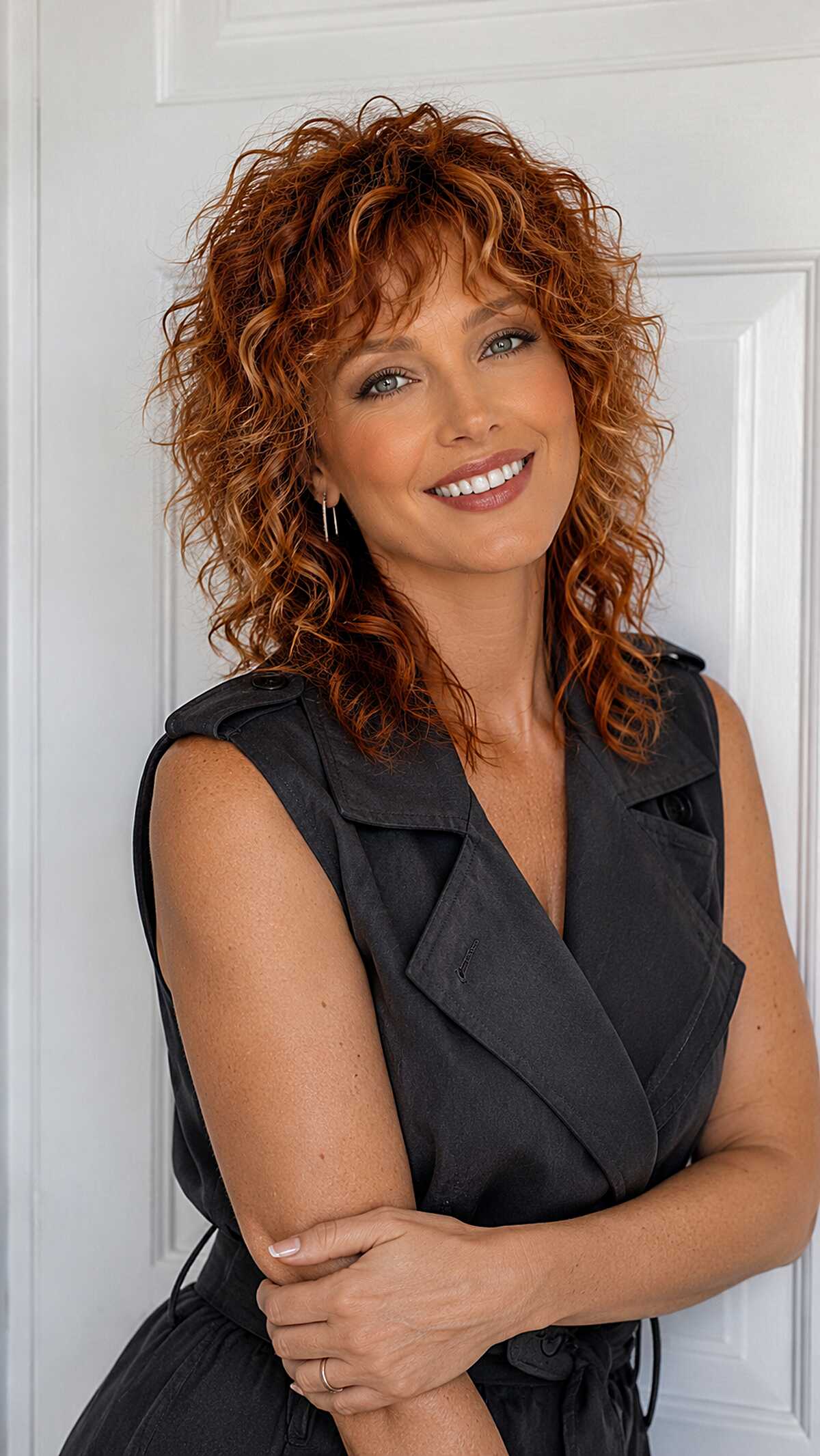
Photo credit: latest-hairstyles.com
Copper on curls is pure dimension — every coil catches the light differently, so the red reads as five shades at once. The soft, broken fringe keeps the look playful rather than heavy, with pieces falling lightly across the forehead instead of sitting as a solid block. The layering stays on the gentler side of the wolf spectrum, letting the color do the talking. Copper is a commitment color, so check hair color ideas for curly hair to see how the shade behaves across curl patterns before you book.
Warm reds fade faster than any other shade, so color-safe, sulfate-free washing and less frequent shampooing are the price of admission. The cut itself is forgiving — curls disguise grow-out beautifully — but keep the fringe trimmed or it starts competing with the curls for attention.
17. Curly Wolf Cut with Curly Bangs on Permed Hair
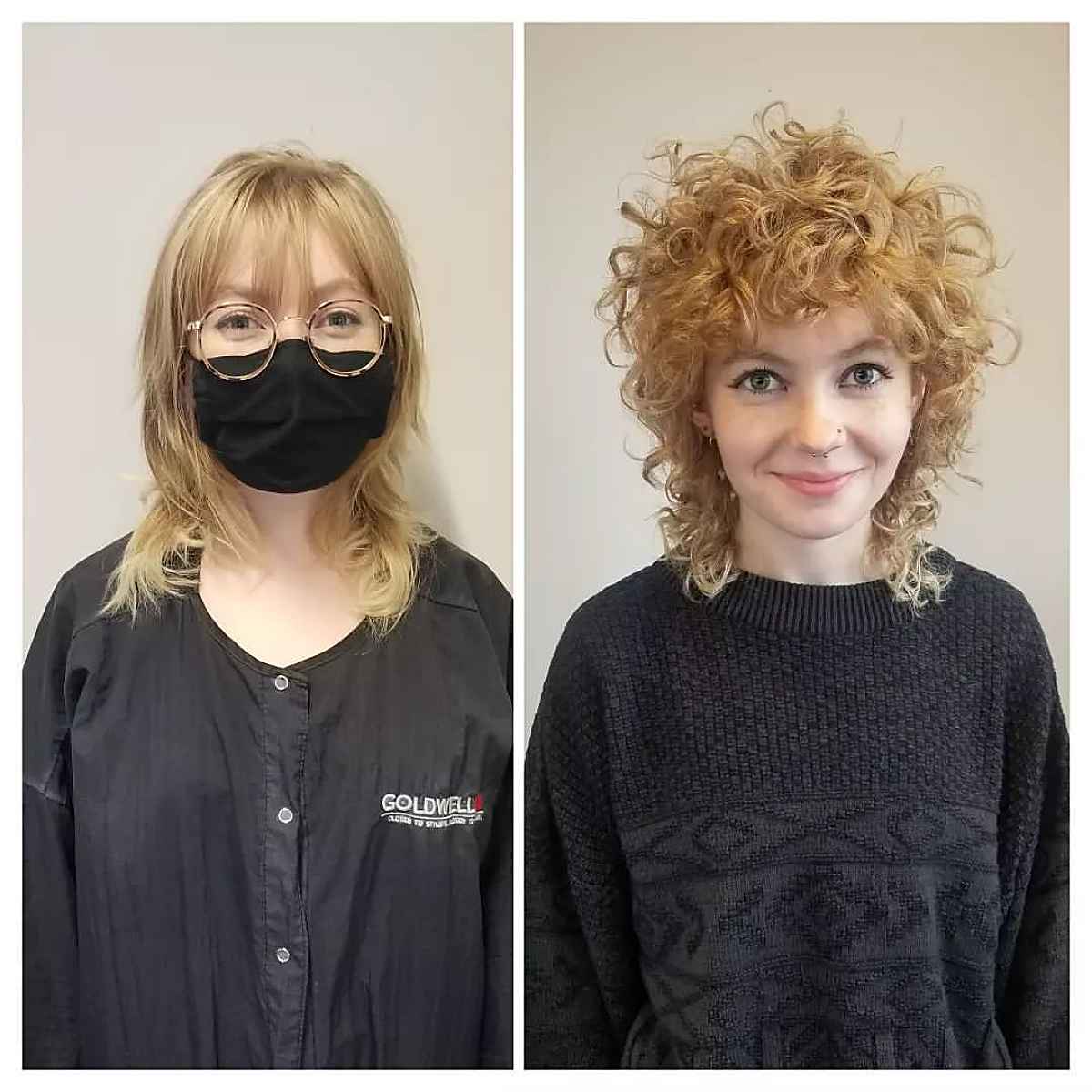
Image credit: latest-hairstyles.com
No natural curls? A perm plus a wolf cut gets you there. The layered structure gives the perm shape and direction instead of a uniform poodle effect, and the curly bangs integrate into the cut rather than sitting on top of it like an afterthought. This is proof the wolf cut isn’t exclusive to any texture — it’s a shape, and shapes can be built. See curly haircuts for how the same layering logic applies across curl types.
The double commitment is real: perms need touch-ups as they grow out, and the chemical process plus heavy layering means the ends need serious conditioning. But between appointments, styling is nearly effortless — scrunch, diffuse, done.
18. Youthful Fluffy Wolf Cut

Courtesy of: therighthairstyles.com
This version dials the wolf cut toward softness: rounded, airy layers with a cloud-like crown instead of sharp points. The texture is fluffy rather than piece-y, achieved with light layering and a bouncy blowout that keeps everything full. It flatters mature faces beautifully, since the volume around the crown lifts the whole look without any harsh lines.
The fluff needs defending — fine hair will want mousse at the roots and a cool-shot finish to lock the lift. On humid days, anti-frizz serum is the difference between fluffy and frizzy. The grow-out is gentle, though, making this one of the easier wolf cuts to live with.
19. Beachy Wavy Wolf Cut

Source: therighthairstyles.com
Salt-spray texture meets wolf-cut structure, and the result is the most low-effort version of the trend. The waves are loose and separated, the ends are piece-y, and the whole thing is designed to look like it dried in ocean air. A few bends with a large-barrel iron — or just braiding damp hair overnight — gets you there. The laid-back wave pattern sits comfortably alongside wavy hairstyles for anyone who prefers their texture casual.
This is genuinely wash-and-go territory for naturally wavy hair; straight hair will need the waves refreshed every couple of days. Sea salt spray can dry the ends over time, so alternate with a moisturizing cream to keep the texture touchable.
20. Long Curly Wolf Cut

Long curls get the wolf treatment here with cascading layers that prevent the dreaded triangle — wide at the bottom, flat at the top. The crown layers are carved to spring upward, giving the roots lift while the length keeps its density. It’s the curly wolf cut at its most dramatic, with maximum volume and maximum movement.
Long layered curls tangle more easily than one-length hair, so detangling on wash day with conditioner and a wide-tooth comb is essential. The shape holds well between cuts, but schedule trims before the ends thin out — curly ends show wear faster when they’re heavily layered.
21. Jagged Wolf-Mullet Cut

Photo credit: therighthairstyles.com
This is the wolf cut leaning hard into its mullet heritage: very short, jagged layers up top with a distinctly longer, tapered back. The contrast is the whole point — business in the front taken to an extreme, party in the back to match. It’s the boldest version on this list and makes no apologies for it.
Commitment level: high. The extreme crown layers need frequent re-cutting to keep their edge, and the grow-out has an undeniably awkward phase where the top catches up to the back. Wear it because you love it, not because it’s trending — this one demands conviction.
22. Face-Framing Medium Wolf Cut

Image credit: therighthairstyles.com
The Korean-inspired take on the wolf cut trades jagged edges for softness: airy bangs, gently flicked face-framing layers, and a smooth, blended finish through the ends. The volume sits close to the face rather than exploding at the crown, which makes it flattering on petite features and narrower face shapes.
Styling is a blow-dry brush affair — curve the face layers away from the cheeks and let the ends flick outward. The blended layering means grow-out is seamless and trims can stretch further apart than with choppier versions. It’s the wolf cut for people who want the silhouette without the snarl.
Final Thoughts
The wolf cut endures because it’s a framework, not a formula. From the softest wearable version to the jagged mullet extreme, the same principles — crown volume, textured layering, movement over precision — adapt to nearly every texture, length, and comfort level. The real decision isn’t whether the cut suits you; it’s which version matches the amount of styling you’re honestly willing to do. And if the full wolf still feels like a leap, the edgy short cuts family offers the same rebellious energy in a smaller package.
- Bring reference photos from multiple angles. Front, side, and back shots tell your stylist what words can’t about how much contrast you want between crown and length.
- Talk texture before length. Whether you want piece-y, fluffy, or sleek matters more than the exact inches — the same cut behaves completely differently across textures.
- Budget for the grow-out. Crown layers lose definition fastest; plan a re-texturing trim every 8-10 weeks, or choose a softer version that grows out gracefully.
- Invest in two products, not ten. A root-lifting mousse for the crown and a texturizing spray for the ends cover 90% of wolf-cut styling needs.
Pick the version that fits your real routine, find a stylist who cuts texture for a living, and let the layers do what they were made to do.