Tangles are a fact of life for almost every hair type, but how you deal with them makes the difference between healthy, growing hair and constant breakage. Yanking a brush through a knot might feel quick, but it snaps strands, frays the ends, and over time leaves hair thinner and rougher than it needs to be.
Good detangling is a technique, not a battle. With the right tools, a little slip from conditioner or a detangling spray, and a patient approach that works from the ends upward, most knots come out with far less damage. This guide covers what works for curly, wavy, and straight hair — and the habits that keep tangles from forming in the first place. Healthy, tangle-free hair also shows off a cut far better, whether it is the defined curls in Curly Hair Haircut Ideas with Defined Curls or the soft layers in Curly Hair Hairstyles with Bangs.
Key Takeaways
- Always detangle from the ends upward, working in small sections — never drag a brush from roots to tips through a knot.
- Detangle damp hair with conditioner or a detangling spray for slip; dry detangling suits some straight hair but not most curls.
- A wide-tooth comb or a flexible detangling brush causes far less breakage than a fine-tooth comb or a stiff brush.
- Finger-detangle first to find and loosen the worst knots before any tool touches your hair.
- Preventing tangles — protective styles, silk pillowcases, regular trims — saves more hair than any detangling session.
Why Hair Tangles — and Why Rough Detangling Damages It
Hair tangles when strands wrap around each other, usually where the cuticle — the hair’s outer layer — is raised or rough. Wind, friction from clothing and pillowcases, washing without enough conditioner, and skipping trims all make tangling worse. Curly and coily hair tangles most easily because the bends in each strand catch on neighbouring hairs, but long straight hair knots too, especially at the nape of the neck.
When a brush is forced through a tangle, the hair does not simply slide apart. Strands stretch, the cuticle lifts and chips, and eventually the hair snaps. Repeated rough detangling shows up as split ends, frizz that will not smooth down, and a halo of broken short hairs. The fix is mostly about patience and slip, not strength.
Your Detangling Toolkit
The right tools make detangling faster and far gentler. You do not need many — just the right ones for your hair type.
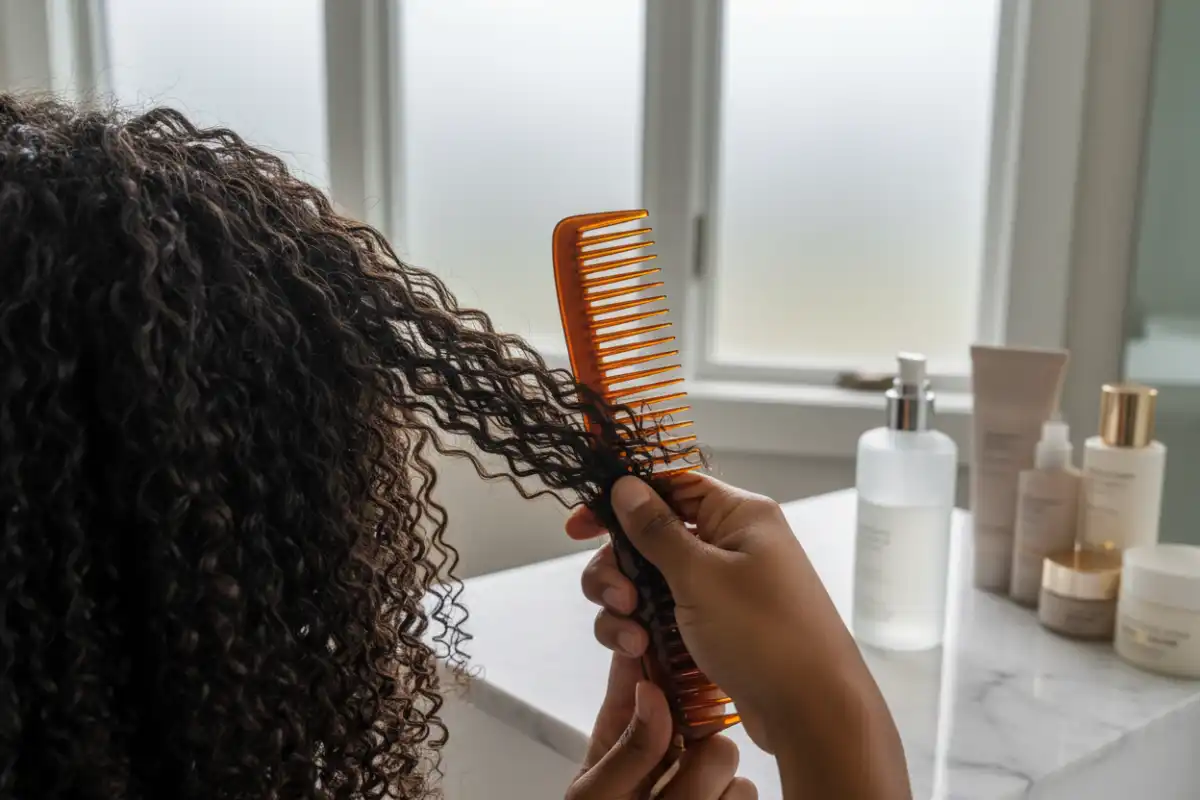
Photo via annieinc.com
- Wide-tooth comb: the single most useful detangling tool. The spacing lets strands separate without forcing them, and it works on wet and dry hair.
- Flexible detangling brush: a brush with bendable bristles that flex around knots instead of ripping through them. Look for one designed for wet hair if you detangle in the shower.
- Fingers: free, always available, and the gentlest option of all. Finger-detangling first finds the knots your comb would catch on.
- Leave-in conditioner or detangling spray: adds slip so strands glide apart instead of catching. Essential for curly and coily hair.
- Sectioning clips: keep finished sections out of the way so you work through the hair systematically instead of re-tangling what you just did.
Avoid fine-tooth combs and stiff paddle brushes for detangling — both are designed for smoothing finished hair, not for working through knots.
Step by Step: How to Detangle Properly
The method matters more than the tool. Follow this sequence and most tangles come out with minimal breakage.
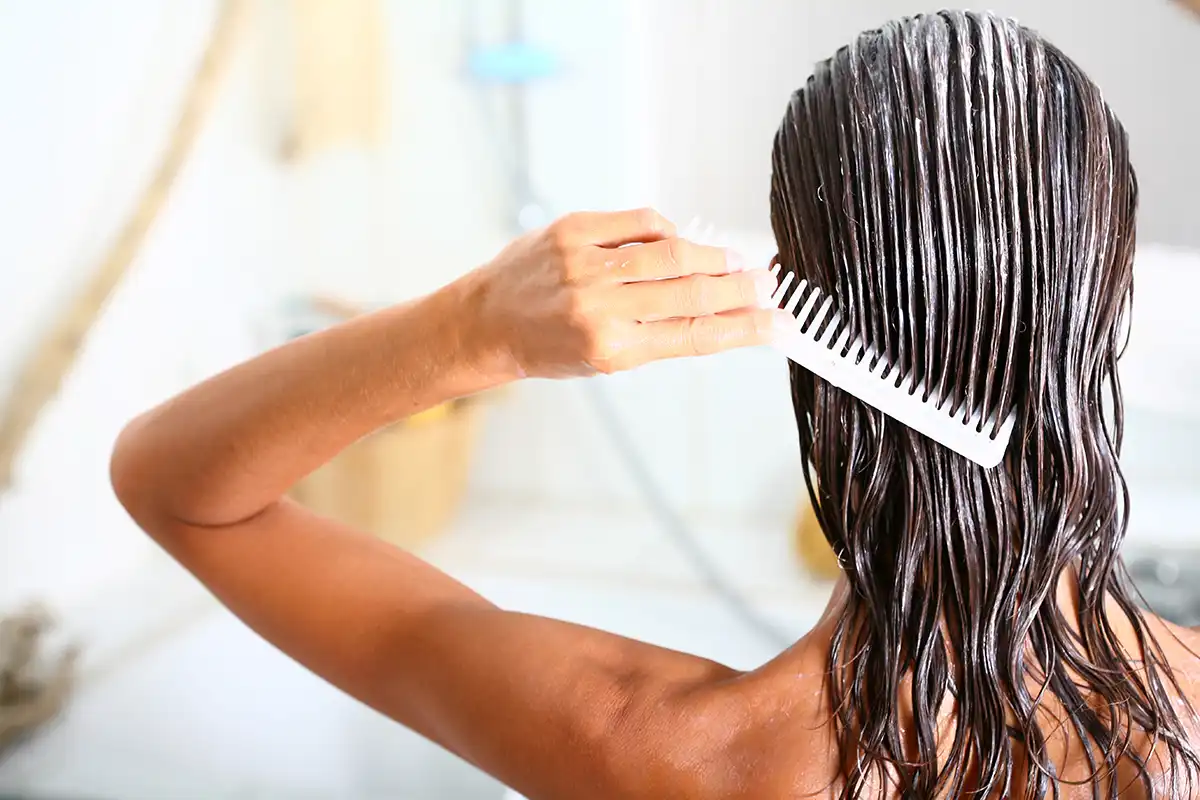
Photo via brandlifemag.com
- Start with damp, conditioned hair: detangle after washing while conditioner is still in, or mist dry hair with water and a leave-in conditioner. Slip is what lets knots release.
- Finger-detangle first: gently separate the hair with your fingers, feeling for knots and teasing them apart. This removes the worst tangles before a tool touches them.
- Work in sections: divide the hair into four to six sections and clip the ones you are not working on out of the way. Small sections mean less pulling and fewer re-tangles.
- Start at the ends: hold the section firmly above the tangle so you are not pulling on the roots, and comb the bottom few centimetres first. Once the ends are smooth, move up a little and repeat, working toward the roots.
- Be patient with stubborn knots: add more conditioner or spray, and tease the knot apart with your fingers from the outside in. If a knot truly will not budge, it is better to carefully snip it out than to rip through it.
- Finish with a smooth pass: once each section is detangled, run the comb through it once from roots to ends to check nothing was missed.
Holding the hair above the tangle is the detail most people miss. It takes the tension off the scalp and the roots, so even a stubborn knot does not pull hair out at the root.
Wet vs. Dry Detangling: Which Is Right for Your Hair?
Wet or Damp Detangling
Best for curly, coily, and thick hair. Wet hair with conditioner has maximum slip, and the curl pattern is at its most defined, so you can detangle without disturbing the shape. Hair is more elastic — and more fragile — when wet, so use only a wide-tooth comb or a flexible brush, and never force it.
Dry Detangling
Suits many straight and fine hair types, especially before washing. Dry detangling before a shower prevents the wash from turning small tangles into matted knots. Use a detangling spray for slip, and work in the same ends-upward order. For curly hair, dry detangling usually causes frizz and breakage, so it is best avoided.
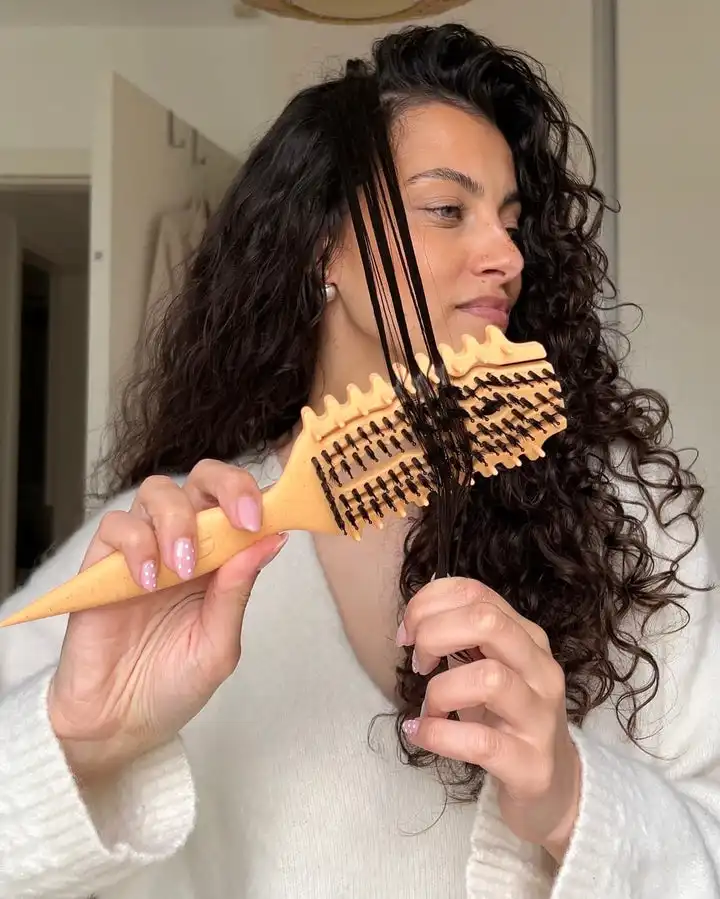
Photo via hairlust.fr
Detangling Tips by Hair Type
Curly and coily hair: always detangle wet with plenty of conditioner, in small sections, and consider finger-detangling as your main method. A wide-tooth comb or a curl brush comes second. The voluminous styles in Classy Curly Hair Natural Hairstyles and Afro Hairstyle Ideas with Natural Volume depend on curls that have been detangled gently enough to keep their shape.
Wavy hair: detangle damp with a light leave-in conditioner, and avoid over-brushing once dry, which pulls the wave out and creates frizz.
Straight and fine hair: detangle dry before washing or damp after, with a wide-tooth comb. Fine hair snaps easily, so keep the pressure light and never tug at the roots.
Thick hair: sectioning is non-negotiable — work through six or more sections, and give yourself enough time. Rushing thick hair is the fastest route to breakage.
Preventing Tangles in the First Place
The easiest detangling session is the one you barely need. A few habits reduce tangling dramatically:
Photo via dailylenta.ru
- Braid or twist hair before bed: a loose braid keeps strands from knotting overnight.
- Use a silk or satin pillowcase: smooth fabric creates far less friction than cotton.
- Keep hair contained on windy days: a bun, braid, or scarf stops wind from matting it.
- Trim regularly: split ends catch on neighbouring strands and start tangles. A trim every eight to twelve weeks keeps ends smooth.
- Condition every wash: conditioner smooths the cuticle, which is the single biggest factor in whether hair tangles easily.
Regular trims also keep a cut looking its best — the defined shapes in Simple Curly Hair Cutting for Volume and Defined Curls and Blonde Curly Hair Ideas to Inspire Your Next Cut both rely on healthy, smooth ends.
Frequently Asked Questions
Should I detangle my hair wet or dry?
It depends on your hair type. Curly and coily hair should almost always be detangled wet with conditioner for slip. Straight and fine hair can be detangled dry before washing, which prevents the wash from worsening tangles. Wavy hair usually does best damp with a light leave-in product.
What is the best tool for detangling?
A wide-tooth comb is the safest all-rounder for every hair type. A flexible detangling brush with bendable bristles is a good second option, especially for thick or curly hair. Your fingers are the gentlest tool of all and should always come first for serious knots.
How often should I detangle my hair?
Most people should detangle every wash day, and curly hair benefits from detangling each time it is washed rather than letting several days of tangles build up. Between washes, a gentle finger-detangle is enough for most hair types.
Why does my hair tangle so easily?
Common causes are dryness, raised or damaged cuticles, split ends, friction from cotton pillowcases or rough towels, and going too long between trims. Regular conditioning, a silk pillowcase, and trims every eight to twelve weeks usually make a noticeable difference.
Is it bad to brush wet hair?
Wet hair is more fragile than dry hair, so brushing it roughly causes breakage. But detangling wet hair gently with a wide-tooth comb or a flexible brush — with conditioner for slip — is actually the recommended method for curly and coily hair. The key is the tool and the technique, not whether the hair is wet.
Final Thoughts
Detangling well comes down to three things: slip, sections, and patience. Add conditioner or a detangling spray, work in small sections from the ends upward, and give stubborn knots time instead of force. Your hair will repay the care with fewer split ends, less breakage, and more length over time. And the habits that prevent tangles — a loose braid at night, a silk pillowcase, regular trims — mean the whole process gets easier with every wash.
Disclaimer: This article is for general informational purposes only and does not constitute medical or professional advice. If you experience sudden, severe hair loss, scalp pain, or irritation, please consult a dermatologist or trichologist before changing your hair care routine.