Zinc rarely gets the attention that iron or calcium receive, yet it quietly supports more than 300 enzymes in your body — from immune defence and wound healing to healthy skin, hair, and hormones. Because your body cannot store zinc for long, you need a steady supply from food every day, and many women fall short without realizing it.
This guide covers why zinc matters for women, how much you actually need, the best food sources — both animal and plant-based — the signs that you may not be getting enough, and simple ways to help your body absorb more of the zinc you eat. For the wider picture of the nutrients women need most, the Vitamins for Women: Essential Nutrients guide is a useful companion.
Key Takeaways
- Adult women need about 8 mg of zinc per day; needs rise to 11 mg in pregnancy and 12 mg while breastfeeding.
- Oysters are by far the richest source, followed by red meat, poultry, and seafood.
- Plant sources include chickpeas, lentils, pumpkin seeds, cashews, and whole grains.
- Zinc supports immunity, skin and hair health, wound healing, and hormone balance.
- Phytates in grains and legumes reduce absorption — soaking, sprouting, and fermenting help.
- Food first: supplements are useful only when diet alone is not enough.
Why Zinc Matters for Women
Zinc is involved in nearly every system in the body. It helps immune cells function properly, which is why even a mild deficiency can mean catching every cold going around. It supports wound healing and skin repair, and it plays a role in keeping hair and nails strong. Zinc also contributes to hormone production and reproductive health, and it supports taste and smell — a dulled sense of taste is one of the classic early signs of low zinc.
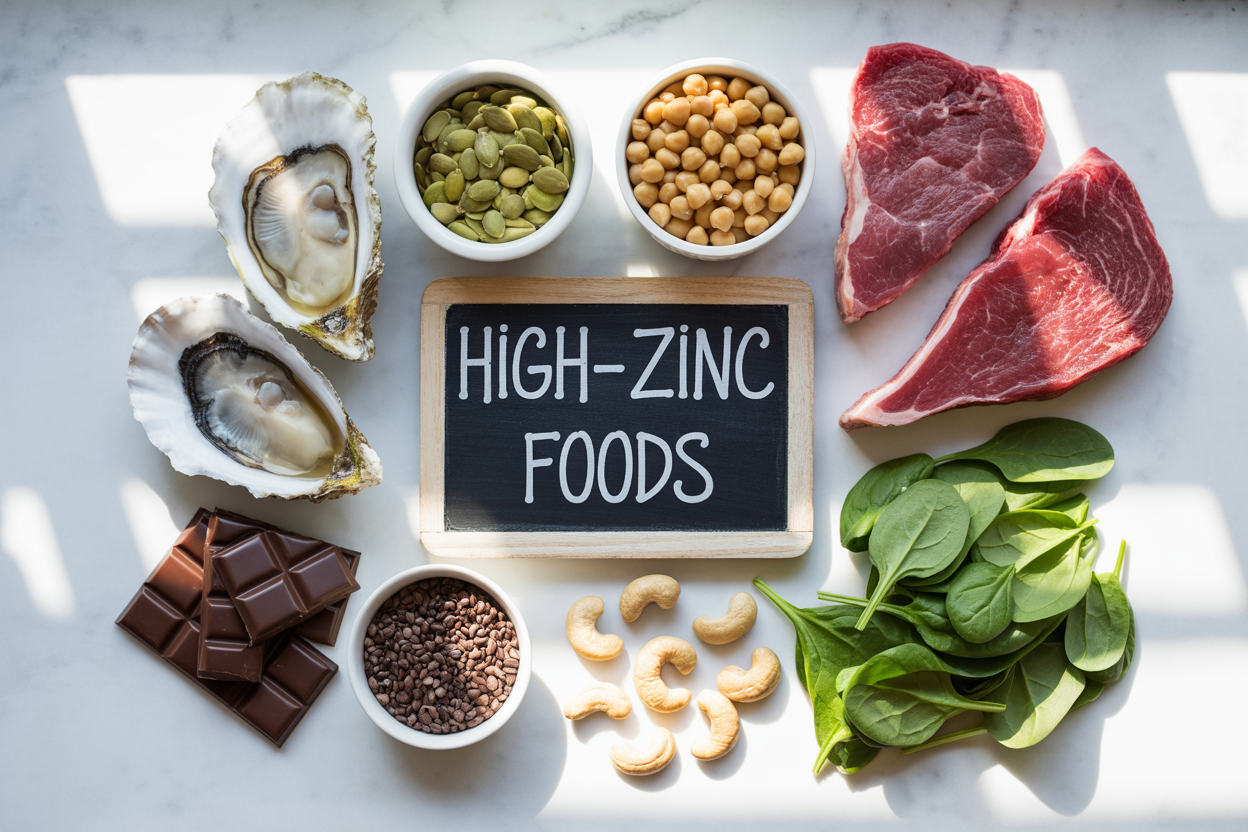
Photo via halflook.com
Women face a few specific zinc challenges. Menstrual blood loss, pregnancy, and breastfeeding all increase zinc needs. Diets low in animal foods — increasingly common — make it harder to meet those needs, because the zinc in plant foods is absorbed less efficiently. And because the body has no dedicated zinc store, a few weeks of low intake can start to show up as tiredness, slow healing, or skin and hair changes. Skin is often where low zinc shows first, which is one reason zinc and skincare are so closely linked — a healthy diet supports the same glow that a glowing skin morning skincare routine builds from the outside.
How Much Zinc Do Women Need?
The recommended daily intake for adult women is 8 mg of zinc per day. That rises to 11 mg during pregnancy and 12 mg while breastfeeding, when the body is building new tissue and supplying zinc to the baby. Teenage girls need around 9 mg per day. These figures are for total intake from food and any supplements combined.
There is also an upper limit: 40 mg per day for adults. Going above that regularly can interfere with copper absorption and cause nausea, headaches, and a weakened immune response — the opposite of what you want. That is why high-dose zinc supplements taken casually, without a reason, are not a good idea. Food, which delivers zinc in moderate amounts alongside other nutrients, is the safest way to meet your needs.
The Best Zinc-Rich Foods
Zinc is found in a wide range of everyday foods. Animal sources provide the most easily absorbed zinc, but plant sources can absolutely meet your needs with a little planning.

Photo via harlanmd.com
Animal Sources
- Oysters: the richest zinc food by far — a single serving can provide several times the daily requirement.
- Red meat: beef and lamb are excellent sources; a serving of beef provides roughly half the daily need.
- Poultry: chicken and turkey, especially the darker meat, provide a solid amount of zinc.
- Seafood: crab, lobster, shrimp, and mussels are all good sources.
- Eggs and dairy: eggs, yoghurt, and cheese provide moderate amounts and add up across the day.
Plant Sources
- Chickpeas and lentils: a cup of cooked chickpeas provides around 2.5 mg of zinc, plus fibre and protein.
- Pumpkin seeds: one of the best plant sources — a small handful provides about 2 mg.
- Cashews and almonds: a handful of cashews provides roughly 1.5 mg of zinc.
- Whole grains: oats, quinoa, and brown rice contribute modest amounts that add up.
- Tofu and tempeh: fermented soy products like tempeh are especially useful, since fermentation improves zinc absorption.
A day built around these foods adds up quickly: oats with pumpkin seeds at breakfast, a chickpea salad at lunch, and a serving of chicken or lentils at dinner can comfortably cover the 8 mg target. Protein-rich meals do double duty here — many zinc sources are also the foods featured in the High-Protein Diet for Women guide.
Signs You May Not Be Getting Enough Zinc
Mild zinc deficiency is easy to miss because its signs overlap with many other things. The most common clues include frequent colds or slow recovery from illness, wounds that take a long time to heal, hair shedding or thinning, brittle nails with white spots, skin breakouts or slow-healing blemishes, a reduced sense of taste or smell, and persistent tiredness. None of these proves a deficiency on its own — but several together, especially on a diet low in animal foods, are worth paying attention to.

Photo via thedeliciousplate.com
Certain groups are more at risk: vegetarians and vegans, women with digestive conditions that affect absorption, those on very restrictive diets, and pregnant or breastfeeding women. If you suspect low zinc, a blood test through your doctor can confirm it — self-diagnosing from symptoms alone is unreliable, and the signs of low zinc overlap with low iron, low B12, and thyroid issues.
How to Absorb More Zinc From Your Food
Getting zinc onto your plate is only half the story — your body also has to absorb it. Plant foods contain phytates, compounds that bind zinc and reduce how much you take in. Fortunately, a few simple kitchen habits reduce phytates significantly:
- Soak beans, lentils, and grains for several hours before cooking, and discard the soaking water.
- Sprout grains and legumes when you can — sprouting breaks down phytates and improves mineral absorption.
- Choose fermented foods: sourdough bread, tempeh, and yoghurt all have lower phytate levels than their unfermented equivalents.
- Pair zinc foods with protein: animal protein improves zinc absorption, so a mixed meal absorbs better than a plant-only one.
- Add vitamin C: citrus, peppers, and tomatoes eaten with a meal can modestly improve mineral uptake.
- Space out calcium supplements: large doses of calcium taken at the same time as a meal can reduce zinc absorption, so take supplements between meals if you use them.
These habits fit naturally into a weekly cooking rhythm. A Sunday reset that includes soaking beans or prepping a batch of lentil salad sets up a zinc-friendly week with very little extra effort.
Supplements: When Food Is Not Enough
For most women eating a varied diet, supplements are unnecessary. They make sense in specific situations: a confirmed deficiency, a very restricted diet, a digestive condition that limits absorption, or pregnancy when dietary intake falls short. In those cases, a low-dose supplement of 8 to 15 mg is usually enough, and it is best taken with food to avoid nausea.
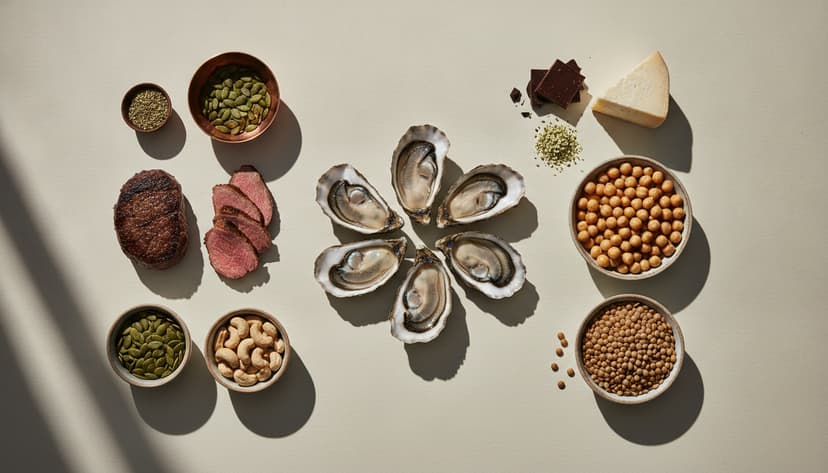
Photo via larderlab.com
Do not take high-dose zinc long-term without medical guidance. Doses above 40 mg a day can cause copper deficiency, which brings its own problems — anaemia, nerve issues, and weakened immunity. Zinc lozenges for colds are a separate, short-term use and should not become a daily habit. If you are unsure whether you need a supplement, a blood test and a conversation with your doctor will give you a clearer answer than guesswork. And remember that strong nails and healthy skin reflect overall nutrition, not one mineral — the same steady habits that support zinc intake also support the look of a polished elegant nude almond manicure and healthy skin, which is why skincare guides like Physical vs Chemical Exfoliation for Skin always pair products with the basics of diet and sleep.
Frequently Asked Questions
What is the best food source of zinc?
Oysters are the richest source by a wide margin. After that, red meat, poultry, and shellfish provide the most easily absorbed zinc. For plant-based eaters, pumpkin seeds, chickpeas, lentils, and cashews are the strongest options.
How much zinc do women need per day?
Adult women need about 8 mg per day. Needs rise to 11 mg in pregnancy and 12 mg while breastfeeding. The upper safe limit is 40 mg per day from all sources combined.
Can vegetarians get enough zinc?
Yes, with planning. Vegetarians need to eat more zinc-rich plant foods because phytates reduce absorption. Soaking, sprouting, and fermenting grains and legumes helps, as does including a variety of sources — chickpeas, lentils, seeds, nuts, and whole grains — across the day.
What are the signs of zinc deficiency?
Common signs include frequent infections, slow wound healing, hair shedding, brittle nails, skin breakouts, reduced taste or smell, and tiredness. These overlap with other deficiencies, so a blood test is the reliable way to confirm low zinc.
Is it safe to take zinc supplements every day?
Low-dose supplements of 8 to 15 mg are generally safe for most adults, but long-term high doses above 40 mg can cause copper deficiency and other problems. Food should be your main source; take supplements only when diet alone is not enough, ideally with medical guidance.
Final Thoughts
Zinc is one of those nutrients that works quietly in the background — until you do not have enough of it. The good news is that meeting your needs is straightforward: a varied diet with a few zinc-rich foods each day, whether that is oysters and red meat or chickpeas, lentils, and pumpkin seeds, covers most women comfortably. Pair those foods with simple absorption habits, watch for the early signs of low intake, and let food do the work before reaching for a supplement.
Disclaimer: This article is for general informational purposes only and does not constitute medical or dietary advice. Zinc needs vary, especially during pregnancy, breastfeeding, or with digestive conditions. Please consult a doctor or registered dietitian before starting supplements or making significant dietary changes.


