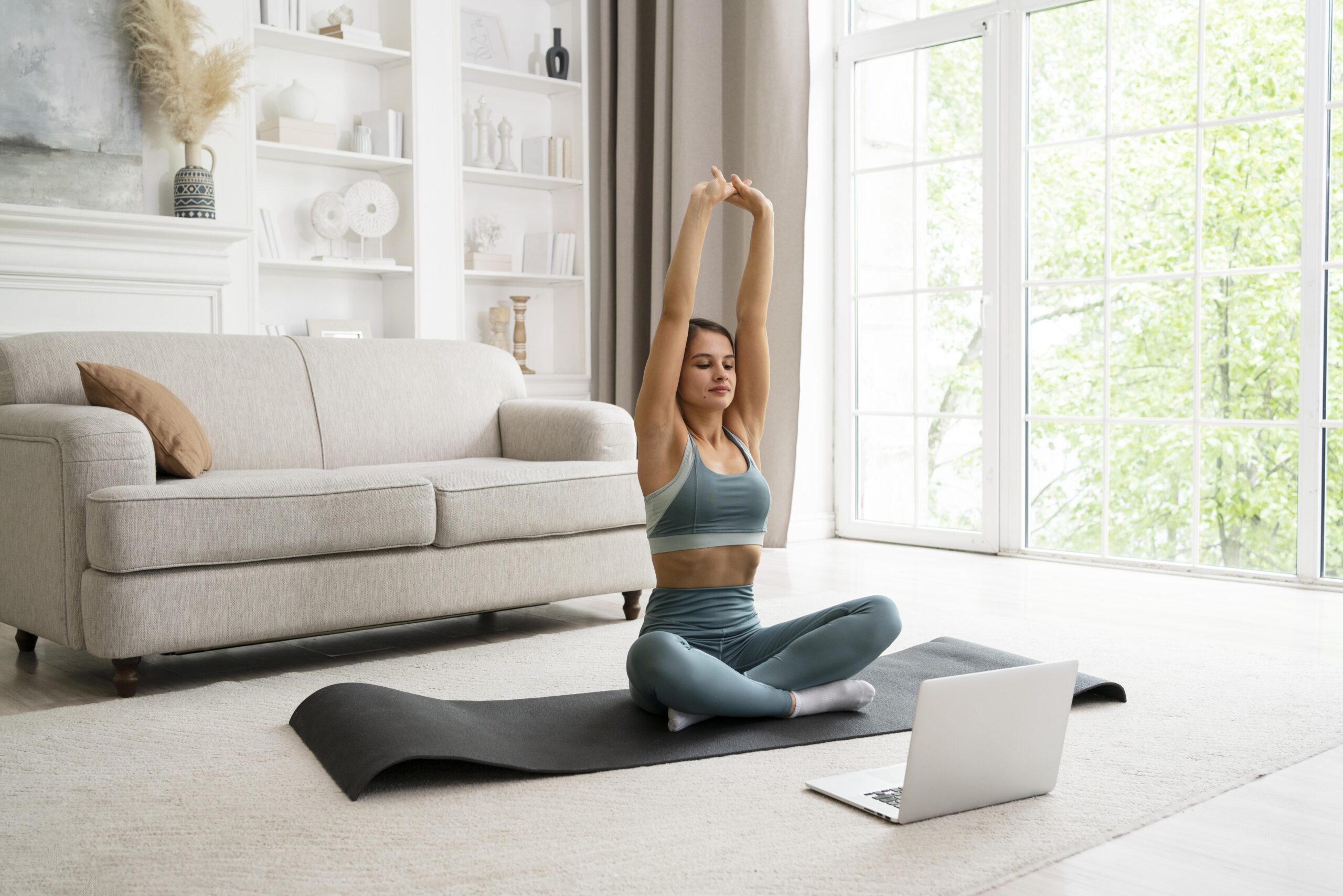
If unwinding at the end of the day feels difficult, a few gentle yoga poses before bed can make a real difference. Slow stretches and deep breathing calm the nervous system and release the tension that builds up through the day, making it easier to drift off and sleep more deeply.
This guide walks through eight beginner-friendly poses to practice before bed, how long to hold each one, the simple props that make them more comfortable, and a weekly routine to build the habit. No flexibility or experience is needed — just a quiet corner and ten to twenty minutes. Comfortable, easy-moving clothes help too, and the relaxed looks in Blue Sweatpants Outfit Ideas for Cozy Comfort are perfect for an evening wind-down.
Key Takeaways
- Hold each pose for at least one to three minutes, or longer if it feels comfortable.
- Practice in a dimly lit, quiet space, and use pillows or blankets to support your body.
- End every session with five to ten minutes of Corpse Pose (Savasana).
- Aim for a ten- to twenty-minute practice most nights for the best results.
- Bedtime yoga is about unwinding, not working out — keep every movement slow and gentle.
Why Gentle Yoga Before Bed Helps You Sleep
Gentle yoga before bed works by activating the parasympathetic nervous system — the branch responsible for rest and digestion. Slow, restorative poses combined with deep breathing lower the body’s alertness, release physical tension, and quiet the mental chatter that keeps many people awake.
The key is choosing the right kind of yoga. An energising flow or a heated class can wake you up, while slow stretches, long holds, and supported poses send the opposite signal. Think of it as a transition ritual: the same sequence each night teaches your body that sleep is coming. Pair it with a calm evening routine — dim lights, screens off, and a simple skincare step like the one in Glowing Skin Morning Skincare Routine adapted for night — and the effect builds over weeks.
The 8 Beginner Poses for Your Bedtime Practice
Work through these poses in order, breathing slowly throughout. There is no need to force any shape — a gentle stretch is enough.

Photo via naturemade.com
1. Child’s Pose (Balasana)
Start on your hands and knees, bring your big toes together, and spread your knees wide. Sink your hips back toward your heels and stretch your arms forward, resting your forehead on the mat. Breathe deeply and let your body release tension. Hold for one to three minutes. Place a pillow under your forehead or chest for extra support.
2. Cat-Cow Stretch (Marjaryasana-Bitilasana)
From hands and knees, with wrists under shoulders and knees under hips, inhale as you drop your belly and lift your chest and tailbone, then exhale as you round your spine and tuck your chin. Flow gently between the two shapes with your breath for one to three minutes to warm up the spine.
3. Supine Spinal Twist (Supta Matsyendrasana)
Lie on your back, hug your right knee to your chest, then let it fall across your body to the left while your right arm extends out to the side. Keep both shoulders grounded and hold for one to three minutes on each side. A pillow under the bent knee makes the twist more comfortable.

Photo via lifecoachhub.com
4. Legs-Up-the-Wall Pose (Viparita Karani)
Sit with one hip against a wall, then swing your legs up the wall as you lie back. Rest your arms by your sides or on your belly, and place a pillow under your hips if you like. Stay for five to ten minutes, keeping your legs relaxed and your lower back on the mat.
5. Reclined Bound Angle Pose (Supta Baddha Konasana)
Lie on your back, bring the soles of your feet together, and let your knees fall open to the sides. Place pillows or rolled blankets under your outer thighs for support, rest your hands on your belly or by your sides, and hold for one to three minutes or longer.
6. Gentle Seated Forward Fold (Paschimottanasana Variation)
Sit with your legs extended forward, with a folded blanket under your sitting bones if that helps. Hinge gently from your hips and reach toward your shins, ankles, or feet, keeping a soft bend in your knees. Focus on lengthening your spine rather than rounding it, and hold for two to three minutes.
7. Supported Bridge Pose (Setu Bandhasana Variation)
Lie on your back with knees bent and feet flat on the floor, hip-width apart. Press into your feet to lift your hips, then slide a yoga block, firm pillow, or rolled blanket under your sacrum. Let your body rest on the support, opening the chest gently, for one to three minutes.
8. Corpse Pose (Savasana)
Lie flat on your back with legs extended and arms by your sides, palms facing up. Let your feet fall open naturally, close your eyes, and consciously relax your whole body, scanning from head to toe and releasing tension in your jaw, shoulders, and hips. Stay for five to ten minutes — do not skip this pose, even when short on time, as it lets your body absorb the relaxation of the whole practice.
What You Need for a Bedtime Yoga Practice
You do not need much to start, but a few basics make the practice more comfortable and effective.

Photo via thesleepreset.com
- Yoga mat: provides cushioning and grip so you do not slip during poses.
- Comfortable clothing: loose, breathable fabrics let you move freely and relax fully.
- Pillows or cushions: essential for support in restorative poses like Reclined Bound Angle or under your hips in Legs-Up-the-Wall.
- Soft blanket: keeps you warm during Savasana and adds comfort to the practice.
- Yoga bolster (optional): offers extra support for deeper stretches and seated or reclined poses.
- Yoga strap (optional): helps extend your reach in forward folds, making poses more accessible.
For daytime movement, the same comfortable approach applies — the outfit ideas in Gym Outfit Ideas for Your Next Workout work just as well for a morning stretch as for the gym.
Building a Weekly Bedtime Yoga Routine
Consistency brings the biggest benefits, so aim for a ten- to twenty-minute practice most nights. A simple weekly pattern helps the habit stick: choose three or four poses on lighter nights and the full set when you have more time, always ending with Savasana. Weekends are a good moment to repeat a favourite sequence or linger longer in the poses that feel best.
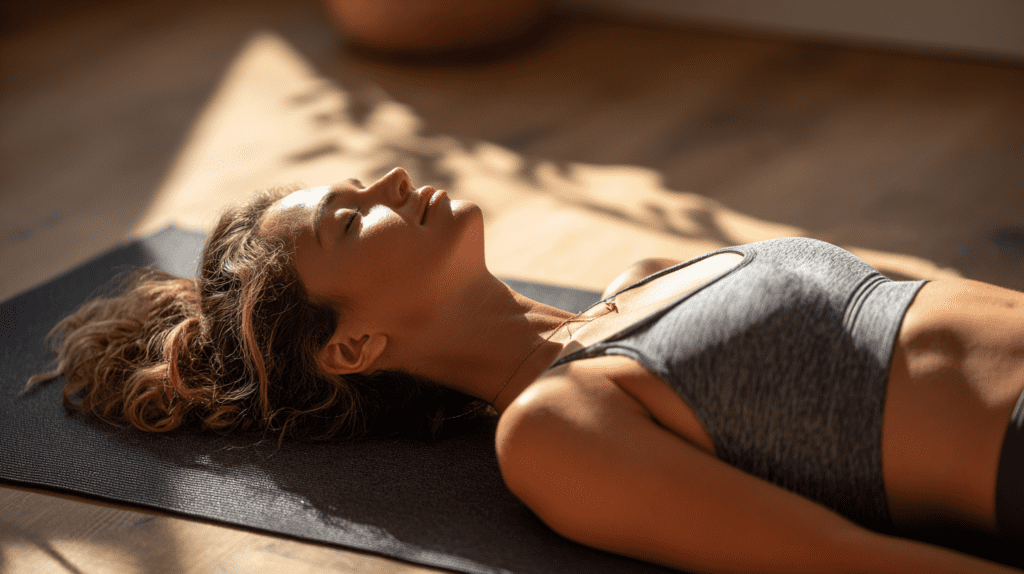
Photo via yogamindmag.it
Try to practice at a consistent time, ideally within an hour or two before bed, so your body starts to associate the sequence with sleep. Avoid practising right after a heavy meal — wait at least an hour or two, or keep the session very gentle if you are still digesting. Over time, you will notice which poses your body asks for on a given night, and the routine becomes something you look forward to rather than a task. A calm evening pairs beautifully with a tidy, low-effort look the next morning, like the sleek styles in Classy Medium Hair Hairstyles, Sleek or the polished simplicity of Aesthetic Clean Girl Outfits with a Cream Trench.
Common Mistakes to Avoid
Treating it like a workout: bedtime yoga should feel restful, not effortful. If you are straining or sweating, slow down and choose gentler variations.
Skipping Savasana: the final rest is where the relaxation settles in. Even two minutes is better than none.
Forcing flexibility: flexibility is not required. Use props freely and aim for a gentle stretch, not a perfect shape.
Practising in bright light with screens on: dim the lights and put the phone away so your body gets a clear wind-down signal.
Expecting instant results: sleep usually improves gradually over a few weeks of regular practice, not after a single night.
Frequently Asked Questions
How long should I hold each yoga pose?
For a bedtime practice, hold each pose for at least one to three minutes, or longer if it feels comfortable. Restorative poses like Legs-Up-the-Wall and Savasana can be held for five to ten minutes. The key is to stay long enough for your body to relax into the stretch.
Can I do yoga on a full stomach before bed?
It is best to avoid practising right after a heavy meal, since a full stomach can cause discomfort, especially in poses that involve lying on your back or twisting. Wait at least one to two hours after eating, or keep your practice very gentle if you are still digesting.
What if I am not flexible enough for these poses?
Flexibility is not required for these beginner poses. Each one can be modified with props like pillows, blankets, or a strap. The goal is a gentle stretch, not forcing your body into a perfect shape, and flexibility improves naturally with consistent practice.
Is it okay to do yoga every night?
Yes, gentle restorative yoga is generally safe to practise every night, and consistency can enhance the calming benefits. Just make sure you are not pushing into pain and that you are choosing poses that promote relaxation rather than stimulation. If you have health concerns, check with a doctor first.
What is the best time to do evening yoga?
The best time is whenever you can fit it in, but ideally within an hour or two before bed, so your body shifts into a relaxed state just as you are getting ready to sleep. A consistent time each night helps signal to your body that it is time to wind down.
Final Thoughts
Ten to twenty minutes of gentle yoga most nights is a small investment with a real return: easier sleep, less tension, and a calmer end to the day. Start with three or four poses, keep a pillow and blanket nearby, and always finish with Savasana. With regular practice, you will likely notice you fall asleep more easily and wake up feeling more rested — and a fresh, simple detail like the soft manicures in Basic Nail Designs in Milky Pink Floral is a nice match for a calmer, more rested you.
Disclaimer: This article is for general informational purposes only and is not a substitute for professional medical advice. If you have a pre-existing health condition, an injury, or are pregnant, consult a doctor or qualified yoga instructor before starting a new exercise routine. Stop immediately if you feel pain, dizziness, or numbness during practice.