If you have ever done a hundred leg lifts and wondered why your lower belly looks exactly the same, you are not doing the exercise wrong. You are working from a myth: the idea that you can burn fat from one specific area by exercising the muscle underneath it. Core training does a great deal for your body — but spot reduction is not one of those things.
This guide separates what core training can do from what it cannot, walks through the most effective core exercises, and explains what actually changes the appearance of your midsection. Comfortable workout clothes help you move well, and the practical looks in Gym Outfit Ideas for Your Next Workout are a good place to start.
Key Takeaways
- Spot reduction is a myth — fat loss happens across the whole body, not from one exercised area.
- A consistent calorie deficit through diet and full-body exercise is what drives fat loss.
- Genetics, posture, stress, and bloating all affect how the lower belly looks.
- Full-body strength training and cardio are more effective for fat loss than isolated ab work.
- Sleep and stress management support hormone balance and healthier fat distribution.
Can You Really Target Lower Belly Fat with Exercise?
A “lower belly workout” strengthens the lower portion of the rectus abdominis and the hip flexors, which improves muscle tone and can make the area look firmer. What it does not do is burn the fat sitting on top of those muscles. Fat loss is systemic: when you are in a calorie deficit, your body draws energy from fat stores across the whole body, in an order largely decided by genetics and hormones.
Think of core exercises as building a strong foundation, not a fat-burning shortcut. A stronger core improves posture, supports your spine, and makes everyday movement easier — and better posture alone can change how your midsection looks in the mirror. The fat-loss part comes from diet and full-body training, covered below.
The Core Exercises That Actually Work
These moves build genuine core strength when done with good form. Quality matters far more than quantity: slow, controlled repetitions with a braced core beat fast, sloppy sets every time.
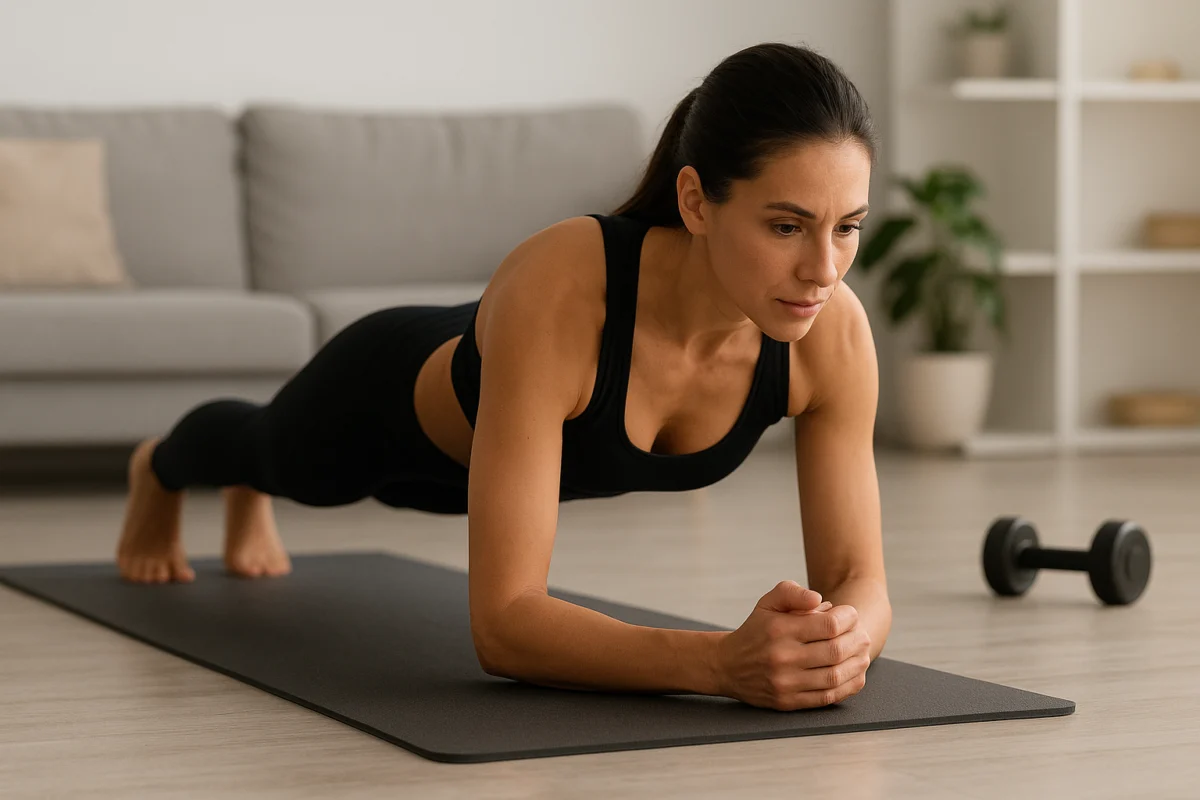
Photo via lifetipsandideas.com
Warm Up: Cat-Cow Stretch
Start on all fours, hands under shoulders and knees under hips. Inhale as you drop your belly toward the mat and lift your chest for Cow; exhale as you round your spine toward the ceiling for Cat. Move slowly through 10 to 12 repetitions, coordinating breath with movement.
Reverse Crunches
Lie on your back with knees bent at 90 degrees and feet lifted. Engage your core to lift your hips off the mat, bringing your knees toward your chest, then lower with control. Three sets of 10 to 15 repetitions. Initiate the movement from your lower abs, not your legs, and avoid swinging momentum.
Leg Raises
Lie on your back with legs straight and arms by your sides, hands tucked under your glutes for lower back support if needed. Press your lower back into the mat and slowly lower both legs toward the floor, stopping just before your back arches, then lift back up. Three sets of 10 to 15 repetitions.
Plank and Side Plank
For the plank, rest on your forearms with elbows under your shoulders and hold a straight line from head to heels for 30 to 60 seconds, three sets. Squeeze your glutes and draw your belly button toward your spine. For the side plank, prop up on one forearm, stack your hips, and hold 30 to 60 seconds per side. Drop to your knees to modify either version.
More Moves for a Complete Core Session
A well-rounded session works the core from several angles: front, sides, and the deep stabilisers that protect your spine.
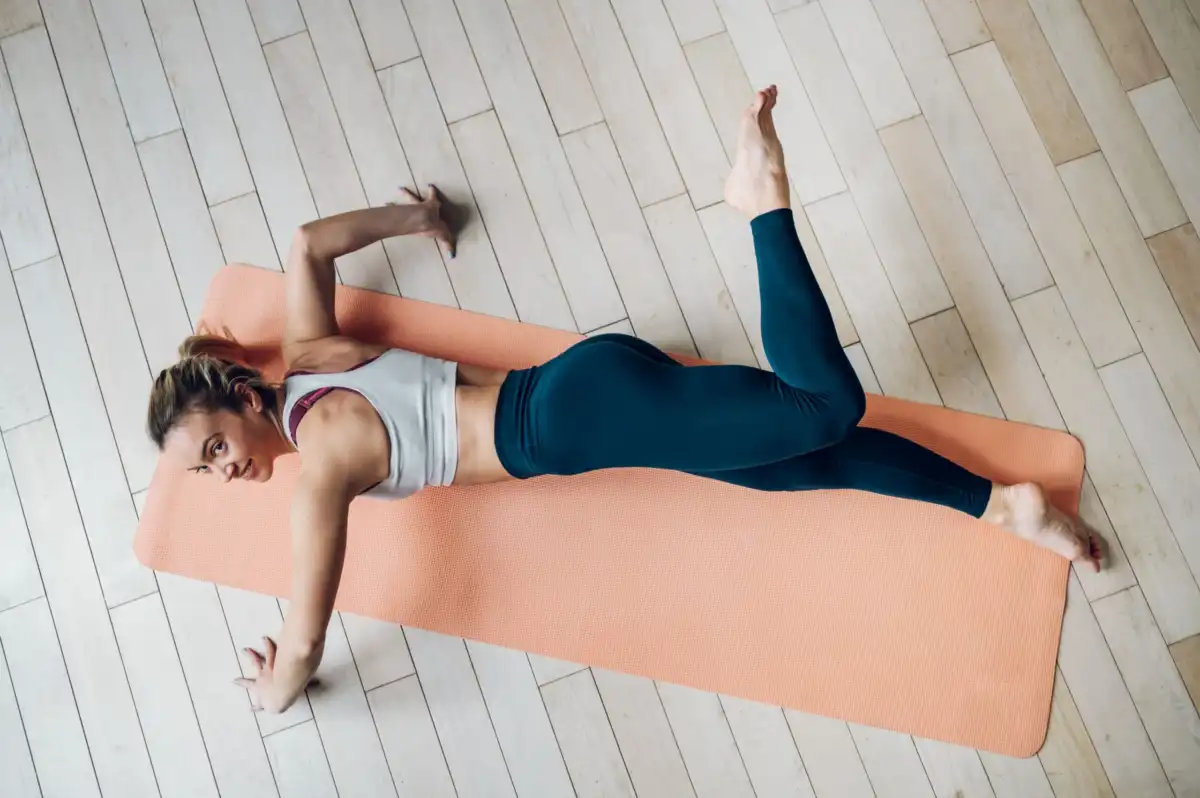
Photo via pilatesworkoutvideo.com
Bicycle crunches: lie on your back, hands behind your head, and bring your right elbow toward your left knee while extending the right leg, then switch sides. Three sets of 10 to 15 per side. Twist from your ribcage, not your neck, and keep your chin off your chest.
Dead bug: lie on your back with arms toward the ceiling and knees bent at 90 degrees. Slowly extend your right arm overhead and your left leg forward, hovering above the floor, then return and switch sides. Three sets of 10 to 12 per side. Keep your lower back pressed into the mat throughout — that pressure is the whole point of the exercise.
Cool down with a cobra stretch: lie face down, hands under your shoulders, and gently press your chest up while keeping your hips on the mat. Hold 20 to 30 seconds, two to three times. You should feel a gentle stretch across your abdomen, not pressure in your lower back.
Flexible, comfortable clothing makes floor work far easier, and the stretch-friendly options in Cute Leggings Outfit Ideas and Flare Leggings Outfit Ideas for Everyday Style move with you through every rep.
Why Your Lower Belly Might Look More Prominent
If your lower belly seems stubborn, the explanation often has little to do with how much you work out. Several factors shape this area, and most of them are unrelated to ab exercises.
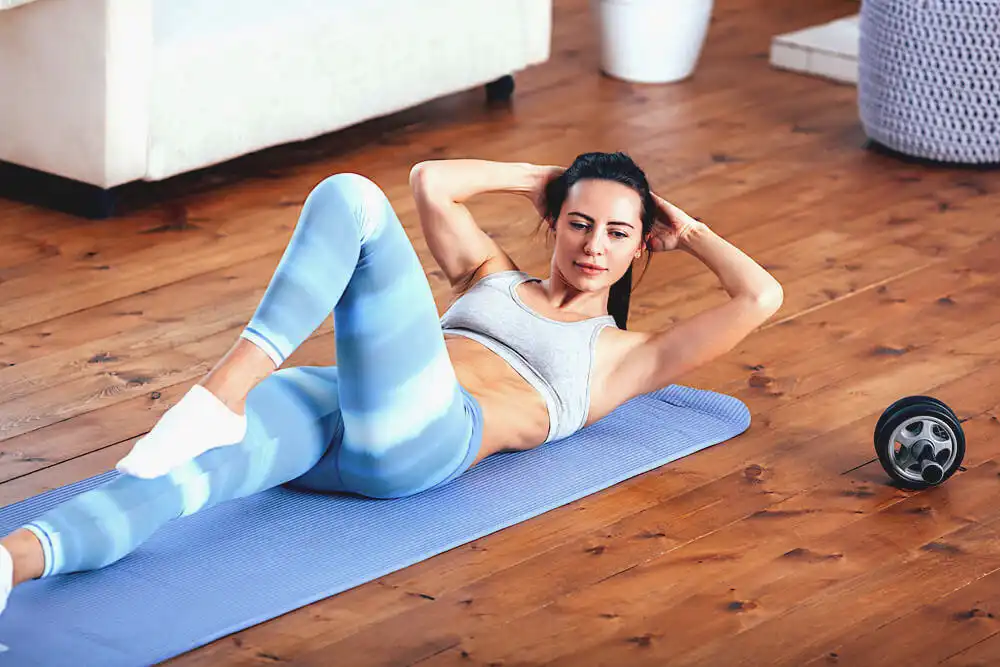
Photo via resveralife.com
- Genetics: your DNA influences where your body prefers to store fat, and for many women the lower abdomen is a common storage site.
- Bloating: diet, digestive issues, or food sensitivities can cause temporary bloating that makes the lower belly look larger, especially later in the day.
- Posture: an anterior pelvic tilt — when the pelvis tilts forward — pushes the lower abdomen outward, making it appear more prominent even at low body fat. Core and glute strength help correct it.
- Stress: chronic stress raises cortisol, which may encourage the body to store more visceral fat around the abdomen.
- Sleep: short or disrupted sleep affects hunger hormones and fat storage, making the midsection harder to change.
Understanding these factors takes the pressure off any single workout. The lower belly is not a problem to be solved by one exercise — it is a reflection of the whole picture.
What Actually Changes Your Midsection
The honest answer is a combination, none of which is a secret: a balanced diet with a moderate calorie deficit, full-body strength training two to three times a week, regular cardio such as walking or cycling, and enough sleep. Compound exercises like squats and deadlifts build more total muscle — and burn more energy — than isolated ab work, which is why they do more for fat loss than a hundred extra crunches.
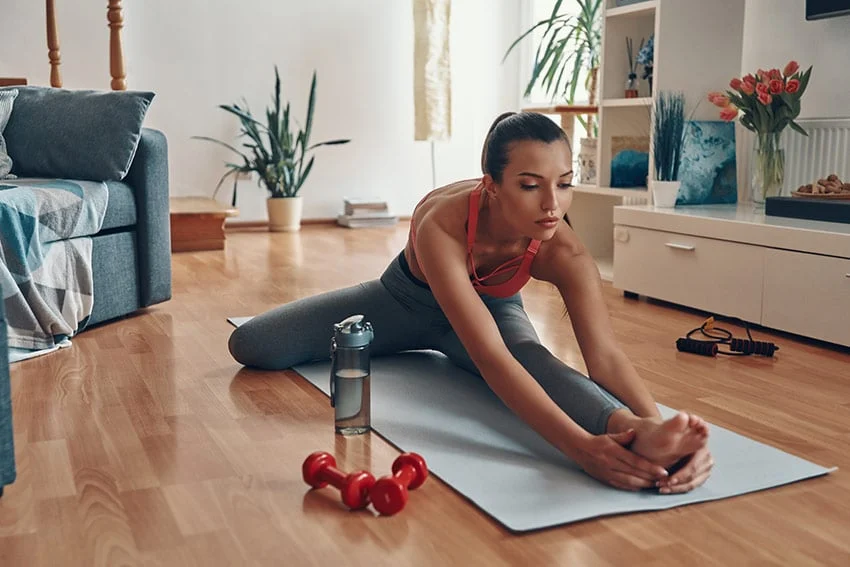
Photo via sfd.pl
Protein supports the process by preserving muscle while you lose fat, and the meal ideas in High Protein Diet for Women show how to keep protein steady through the day. Cardio does not need to be punishing — regular brisk walking, a weekend hike in the easy layers from Cute Hiking Outfit for Trails and Towns, or a social game in the sporty looks from Tennis Outfit Ideas with Courtside Style all count, because the best cardio is the kind you will actually repeat.
The Real Role of Core Exercises
Core training deserves its place in a routine — just for the right reasons. A strong core improves posture, which can instantly change how your midsection looks. It supports your spine and can reduce lower back discomfort during daily activities. It makes everyday movements — lifting, twisting, bending — easier and safer. And the muscle it builds raises your resting metabolism slightly, which supports overall fat loss when combined with a balanced diet and full-body training. Those are real benefits, and they are worth training for on their own terms.
Frequently Asked Questions
Can I get a flat lower belly without changing my diet?
It is very difficult. Diet is the primary driver of fat loss because a calorie deficit is essential for reducing overall body fat, including in the lower belly. Core exercises strengthen muscles but do not burn fat directly, so without adjusting what you eat, visible fat loss is unlikely.
How long does it take to see results from core workouts?
With consistent diet and exercise, noticeable changes in body composition typically take several weeks to months. Core strength improvements, like better posture, may show up sooner, but fat loss is gradual. Do not expect visible changes in just a week or two.
Do lower belly workouts target specific fat?
No. Exercises like leg raises or reverse crunches strengthen the lower part of the rectus abdominis muscle, but they do not selectively burn fat from that area. Fat loss occurs throughout the body when you are in a calorie deficit, not just where you exercise.
What is the best exercise for lower belly fat?
There is no single best exercise, because spot reduction does not work. The most effective approach combines compound exercises like squats, full-body strength training, and cardiovascular activity, all paired with a calorie-conscious diet.
Can stress cause lower belly fat?
Chronic stress leads to elevated cortisol, which may encourage the body to store more visceral fat around the abdomen. Managing stress through meditation, yoga, walking, or adequate sleep can help support overall fat loss and reduce belly prominence.
Final Thoughts
Stop chasing the myth of spot reduction and start training for what core work actually delivers: strength, posture, stability, and a body that moves well. Pair that with a balanced diet, full-body training, regular cardio, and good sleep, and the midsection will change — gradually, over weeks and months, not overnight. A strong core is a win regardless of what the mirror shows, and it is the foundation every other kind of fitness builds on.
Disclaimer: This article is for general informational purposes only and does not constitute medical or professional advice. Before starting any new exercise or diet program, consult a healthcare professional or physical therapist, especially if you have pre-existing conditions or pain. Individual results vary.