A long to-do list has a strange way of making the most important tasks the easiest ones to postpone. The day fills up with small errands, replies, and interruptions, and by evening the thing that actually mattered is still sitting there, untouched. Setting priorities is the skill that breaks that pattern: it turns a flat list of everything into a clear order of what comes first, what can wait, and what can go.
This guide explains a simple, practical method for doing exactly that. You will learn how to sort your tasks with the ABCDE method, how to tell the difference between urgent and important, and how a five-minute daily review keeps the whole system working. A weekly reset pairs naturally with this habit — the ideas in the Sunday Reset Checklist for Home and Body show how a short Sunday session can set up a focused week.
Key Takeaways
- Sort tasks with the ABCDE method: A is critical, B is should-do, C is nice-to-do, D is delegate, and E is eliminate.
- Keep your A list short — about three tasks — and finish every A task before starting any B task.
- Urgent is not the same as important; urgency is about timing, importance is about your goals.
- Put important-but-not-urgent work on your calendar, or it will always lose to the next interruption.
- Review your list for five to ten minutes a day and once a week in more depth.
What Setting Priorities Really Means
Setting priorities is not the same as making a to-do list. A list records everything you could do; priorities decide what you will actually do first, and why. That decision starts with your goals and values: the work project that moves your career forward, the health habit you have been meaning to build, the people you want more time with. When those things are clear, the daily choices get easier, because each task can be weighed against something real instead of against the noise of the moment.
The payoff is practical. People who prioritize well tend to feel less scattered, because the day has a shape instead of a scramble. They also finish more of what matters, since the important work gets the best hours rather than the leftover ones. The same principle works in small corners of life too: a simple rotation of Simple Professional Outfits for Everyday Wear removes one daily decision entirely, leaving more attention for the decisions that count.
Tools That Make Prioritizing Easier
You do not need a complicated system. A few basic tools are enough to keep your priorities visible and your list honest.

Photo via sfbm.co.jp
- Planner or journal: a paper home for your task list and a place to reflect on what mattered each day.
- Calendar app: for time-blocking important work and setting reminders so nothing quietly slips.
- Sticky notes or a whiteboard: useful for visual thinkers who like to move tasks around as the day shifts.
- Pen and paper: the fastest way to empty your head in a full task dump before you start sorting.
Pick the tools you will actually open. A beautiful planner that stays in a drawer is worth less than a plain notebook you carry everywhere, and a simple phone app you check daily beats a powerful one you forget exists.
The ABCDE Method, Step by Step
The ABCDE method sorts every task into one of five letters, and it forces the honest question most lists avoid: what happens if this does not get done?
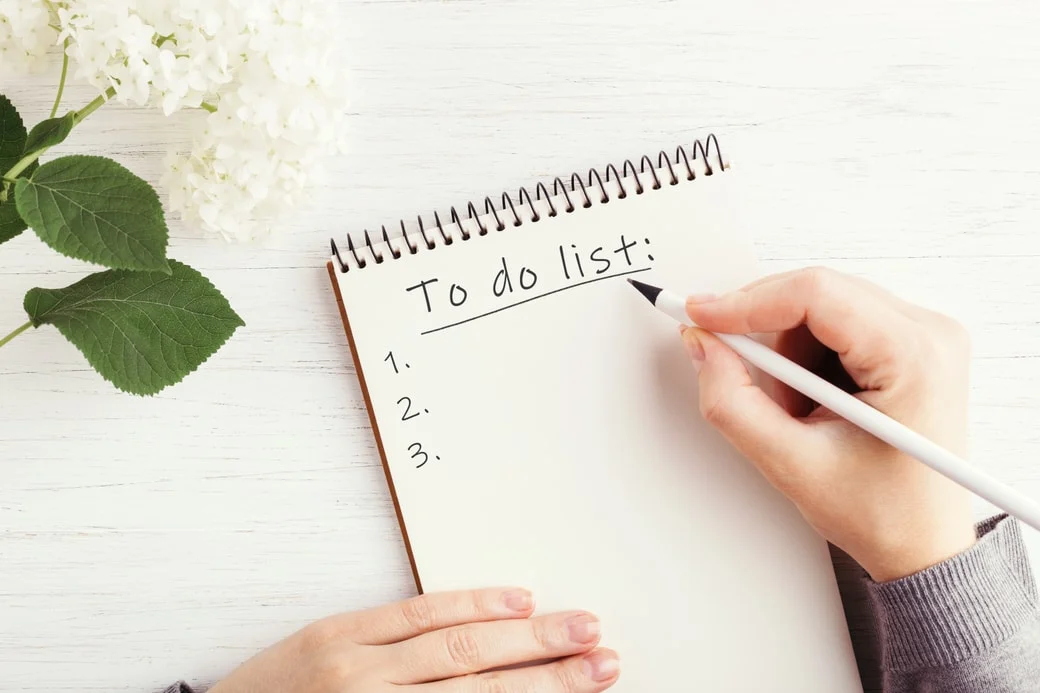
Photo via saita-puls.com
- Write down everything: empty your head onto paper without filtering. Every task, errand, and half-formed obligation goes on the list.
- Label each task A to E: A tasks are critical, with serious consequences if left undone. B tasks are things you should do, with only minor consequences if skipped. C tasks would be nice to do but carry no real consequences. D tasks can be delegated to someone else. E tasks can be eliminated entirely.
- Rank your A tasks: limit yourself to about three and order them A1, A2, A3. These are the tasks that define a successful day.
- Work A before B: do not start any B task until every A task is finished. This single rule is where most of the method’s power lives.
- Delegate and eliminate: hand off the D tasks, and cross out the E tasks without guilt. A shorter list is a kinder list.
- Review and re-label: priorities shift as the day unfolds. A quick re-check in the evening keeps tomorrow’s list honest.
The first time you run through the method, allow thirty to sixty minutes. After that, the daily version takes about five minutes, and the habit quickly becomes second nature.
Urgent vs. Important: The Question That Changes Everything
Most priority problems are really confusion between two different qualities of a task. Urgent means it demands attention right now: a ringing phone, a same-day deadline, a message marked urgent. Important means it moves you toward a goal you care about: your health, your work, your relationships. The two overlap sometimes, but very often they do not — and when they conflict, urgency almost always wins the moment while importance loses the week.
Why Urgency Feels So Convincing
Urgent tasks come with noise and pressure, and responding to them feels productive. Clearing an inbox or answering every message gives a quick sense of accomplishment. But a day spent entirely on urgent tasks can still end with nothing important done. The test is simple: ask yourself, “If I skip this, what actually happens?” If the honest answer is “not much,” the task is urgent noise, not a real priority.
Protecting the Important-but-Not-Urgent
The tasks that matter most rarely shout. Exercise, planning, learning, and long-term projects sit quietly in the important-but-not-urgent corner, and they are the first things a busy day squeezes out. The fix is to give them a calendar slot, the same way you would a meeting. A blocked hour for focused work, a morning walk, or a weekly planning session turns a good intention into an appointment you keep. Even small routines benefit from this treatment — laying out Classy Casual Work Outfits the night before is a tiny version of the same idea: decide once, then stop deciding.
Mistakes That Scatter Your Focus
Treating every task as equal: a flat list hides the difference between a deadline that matters and a chore that does not.
Skipping the goal step: without knowing what you want the week to achieve, every task looks equally reasonable. A sentence or two about your goals, written at the top of the list, changes how everything below it reads.
Overcommitting: saying yes to everything guarantees that something important gets a rushed, half-hearted effort. A realistic list with three A tasks beats an ambitious one with twelve.
Confusing busy with productive: a full day of small tasks can feel accomplished while the real work stays untouched. Measure the day by what moved forward, not by how many boxes got ticked.
Letting distractions run the schedule: notifications, open tabs, and constant messages break concentration into pieces too small for deep work. Guard at least one focused block a day, and let the rest of the noise wait.
Staying on Track Week After Week
A priority system only works if it survives contact with a real week. The habits below are what keep it alive after the first enthusiastic days.

Photo via searcle.ai
Do a five-minute daily review: each morning or evening, glance at the list, re-label anything that changed, and pick tomorrow’s A tasks. This tiny ritual is the whole maintenance plan.
Hold a weekly review: spend fifteen to thirty minutes once a week looking at what worked, what got pushed aside, and what next week actually needs. A calm weekend review, perhaps with a relaxed outfit from Casual Style Inspiration: Oversized Outfits, turns planning into something you look forward to rather than a chore you dodge.
Break big goals into small steps: a project that feels huge is easy to avoid. Split it into steps small enough to fit on one line of the list, and give the first step an A label.
Practice saying no: a polite decline protects the time your A tasks need. “I can’t take that on this week” is a complete sentence, and it keeps your list believable.
How Long It Takes to Feel the Difference
Most people notice a change within the first week: the day feels less reactive, and the important work starts getting done earlier instead of later. The deeper shift — a calmer relationship with your workload and a steadier sense of progress — usually builds over a month of consistent reviews. The method costs nothing but a few minutes a day and a willingness to be honest about what can be dropped.

Photo via accent-language.com
Expect some friction at first, especially around saying no and eliminating tasks you are used to carrying. That discomfort is normal, and it fades as the results show up: fewer end-of-day regrets, more finished projects, and a list that finally reflects what you actually care about. Students can use the same approach for coursework and deadlines — the relaxed, ready-to-go ideas in College Outfit Ideas for Casual Campus Style pair well with a morning routine that starts with three clear priorities instead of a scramble.
Frequently Asked Questions
How often should I review my priorities?
A quick five- to ten-minute review each morning or evening is enough for daily alignment, plus a deeper fifteen- to thirty-minute review once a week. The daily check keeps the list current; the weekly one keeps it connected to your bigger goals.
What if I have more than three A tasks?
More than three A tasks usually means the list needs a second pass. Ask which tasks carry genuinely serious consequences if left undone, and move the rest to B. If a task is large, break it into smaller steps and label only the first step as an A.
How do I handle an unexpected emergency?
Pause and judge whether it is truly both urgent and important. If it is, set the A list aside temporarily and deal with it, then return to the list and re-label what remains. Emergencies are the exception, not the pattern — if every day brings one, the system needs a look at what keeps breaking.
Can the ABCDE method work for long-term goals?
Yes. Write each long-term goal down, break it into small tasks, and label those tasks like any other. A weekly A task that advances a big goal is often the most valuable item on the list, because it is the one that would otherwise never get a slot.
What is productive procrastination?
It is staying busy with low-priority tasks to avoid starting the important ones — tidying the desk instead of writing the report. The ABCDE method exposes it, because a day full of C tasks with untouched A tasks is easy to spot once the letters are on the page.
Final Thoughts
Setting priorities is not about doing more; it is about doing the right things first. Write everything down, label it honestly, finish your A tasks before anything else, and give the list five minutes a day. The method is simple enough to start tonight, and the first week usually shows whether it is working: fewer loose ends, calmer evenings, and the quiet satisfaction of a day spent on what actually mattered. For a softer daily rhythm to match, the easy layers in Simple Everyday Outfits are a good reminder that a simple system, repeated daily, beats a complicated one used once.
Disclaimer: This article is for general informational purposes only and does not constitute professional, medical, or financial advice. Productivity methods work differently for different people, and what helps one person focus may not suit another. If stress, overwhelm, or difficulty concentrating persists, consider speaking with a qualified professional for personalized guidance.