Strong glutes and legs are the foundation of almost every movement you make — walking, climbing stairs, lifting, running. You do not need a squat rack to build them. A simple resistance band, costing less than a takeaway dinner, can give your lower body a genuinely challenging workout at home, in a hotel room, or anywhere with a little floor space.
This guide explains why bands work so well for glutes and legs, how to choose the right resistance, and the key exercises to build into a weekly routine. All you need is a band or two and clothes you can move in — the ideas in Gym Outfit Ideas for Your Next Workout cover comfortable pieces for home training.
Key Takeaways
- Bands keep tension on the muscle through the whole movement, including the return phase.
- Loop bands around the thighs or ankles are best for glute and leg work; start light and progress.
- Train glutes and legs 2 to 3 times per week, with at least one rest day between sessions.
- Slow, controlled repetitions build more strength than fast, bouncy ones.
- Good form matters more than heavy resistance — master the movement first, then add tension.
Why Resistance Bands Work So Well
A resistance band works differently from a dumbbell. With a weight, the resistance is constant and gravity does part of the work for you on the way down. With a band, the resistance increases as the band stretches, so the muscle works hardest at the end of the movement — exactly where the glutes need the most challenge. The band also pulls your knees inward during squats and bridges, which forces the glute muscles to work harder to keep your legs aligned.
Bands are also joint-friendly. The resistance builds gradually rather than hitting all at once, which is kinder on knees and hips than heavy weights, and the exercises are easy to scale: a lighter band, a shorter range of motion, or fewer repetitions all make a move more manageable. That makes them a good choice whether you are returning to exercise or adding variety to an established routine.
Choosing the Right Band
For glute and leg work, loop bands — also called booty bands or mini bands — are the most useful. They come in light, medium and heavy resistance, usually colour-coded. Start with a light or medium band: you should be able to complete 12 to 15 repetitions with good form, feeling the last few as a real effort. If you can breeze through 20, move up a resistance. Fabric loop bands grip better than latex ones and are less likely to roll or pinch during squats.
A longer tube band with handles is useful for deadlifts and rows, but it is not essential for this routine. One or two loop bands will cover every exercise below. Check your bands regularly for nicks or thinning — a snapped band mid-squat is unpleasant, and worn bands should be replaced.
The Exercises
Work through these moves in order, resting 30 to 60 seconds between sets. Aim for 2 to 3 sets of each exercise, and focus on feeling the glutes engage rather than rushing through repetitions.
Banded Squats
Place a loop band just above your knees, stand with feet shoulder-width apart, and squat as if sitting back into a chair, keeping your chest lifted and your knees pressing gently outward against the band. Push through your heels to stand. The band forces your glutes to stabilise your knees, which makes a bodyweight squat far more effective. Aim for 3 sets of 12 to 15 repetitions.
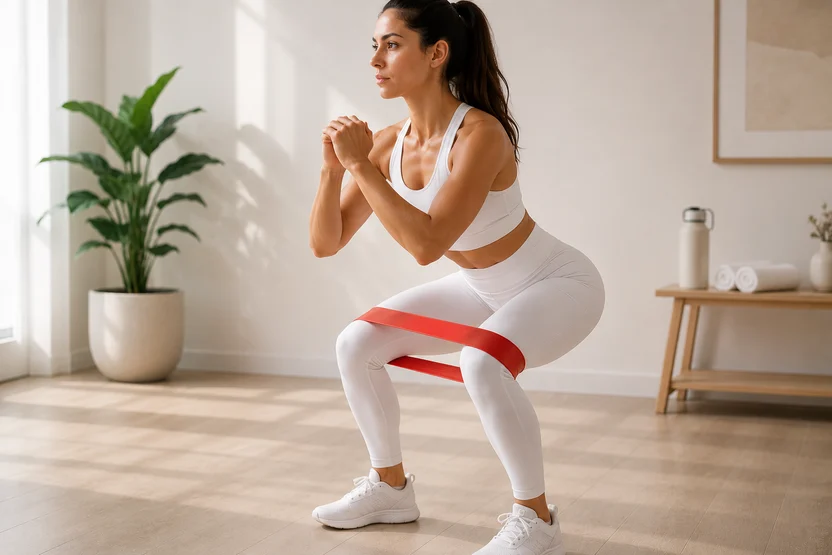
Photo via shopmedsolutions.com
Glute Bridges
Lie on your back with knees bent, feet flat and a band above your knees. Press through your heels to lift your hips until your body forms a straight line from shoulders to knees, squeezing your glutes at the top and holding for two seconds before lowering slowly. For a harder version, lift one leg and bridge on a single leg. Aim for 3 sets of 12 to 15 repetitions per side.
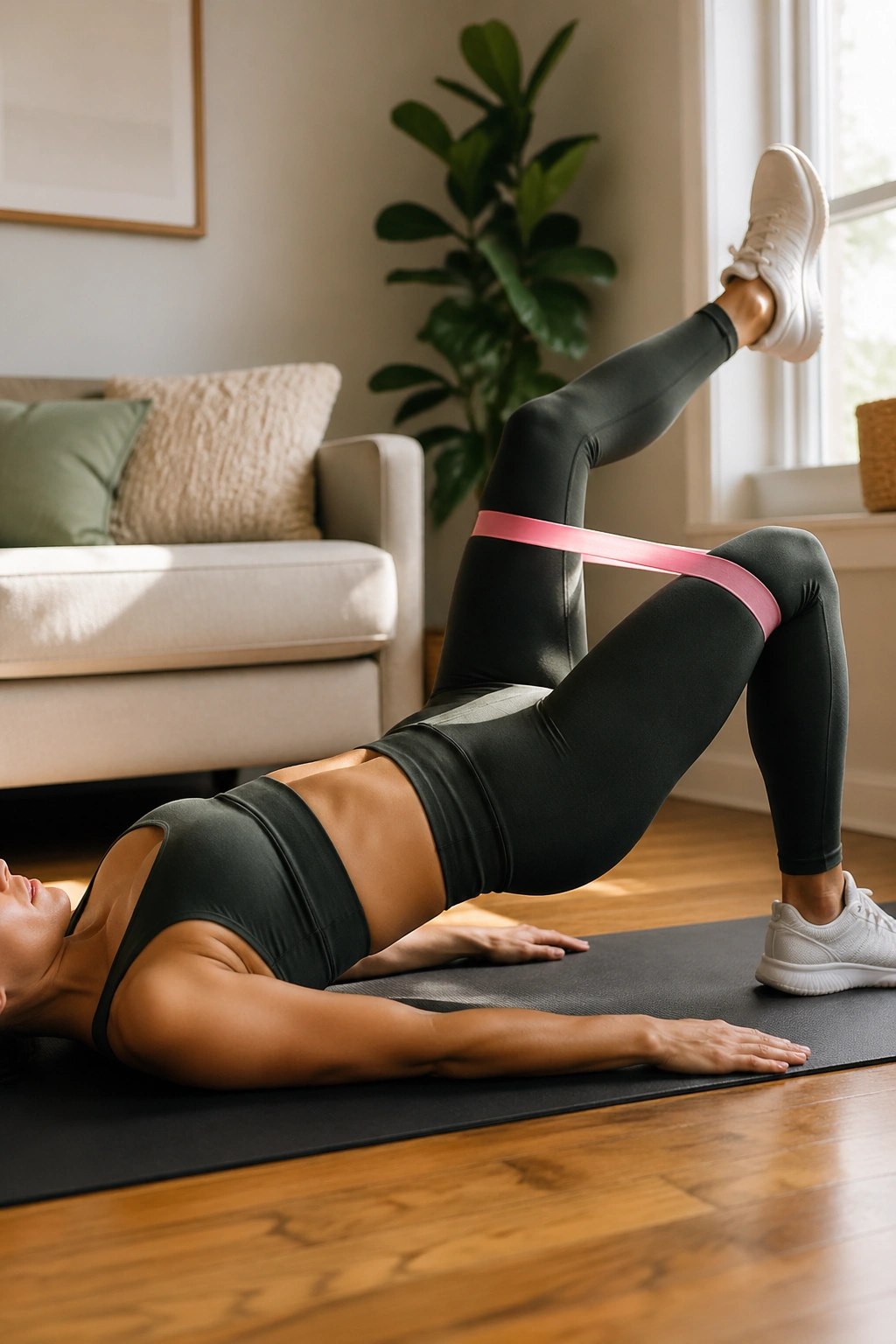
Photo via gymingdaily.com
Lateral Walks
With a band around your ankles or just above your knees, sink into a shallow squat and step sideways, keeping tension on the band at all times. Take ten steps one way, then ten back. This is one of the best exercises for the gluteus medius, the smaller glute muscle that stabilises your hips and knees. Keep your toes pointing forward and resist the urge to let your knees collapse inward.
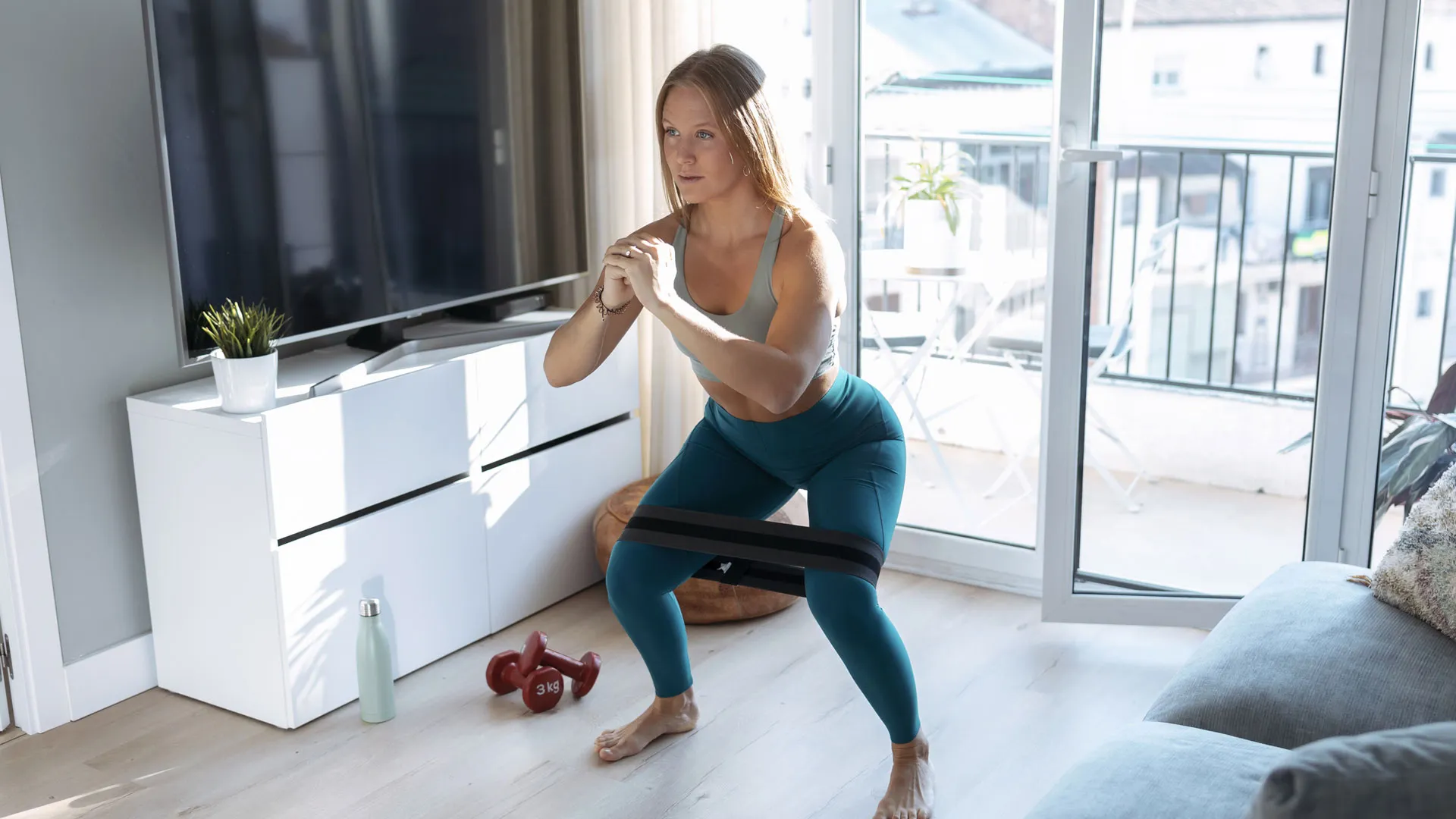
Photo via tomsguide.com
Standing Kickbacks and Romanian Deadlifts
For kickbacks, loop a band around your ankles, hold a chair or wall for balance, and extend one leg straight back, squeezing your glute at the end of the movement. Keep your hips square and avoid arching your lower back. Aim for 3 sets of 12 repetitions per leg.
For the Romanian deadlift, stand on a long band with feet hip-width apart, hold the other end with both hands, and hinge at the hips to lower your torso while keeping your back flat and a soft bend in the knees. Feel the stretch in your hamstrings, then drive your hips forward to stand. Aim for 3 sets of 10 to 12 repetitions. Stretchy, supportive leggings make these moves far more comfortable — Simple Leggings Outfits for Everyday Style and Cute Leggings Outfit Ideas both include pieces that stay put through a full session.
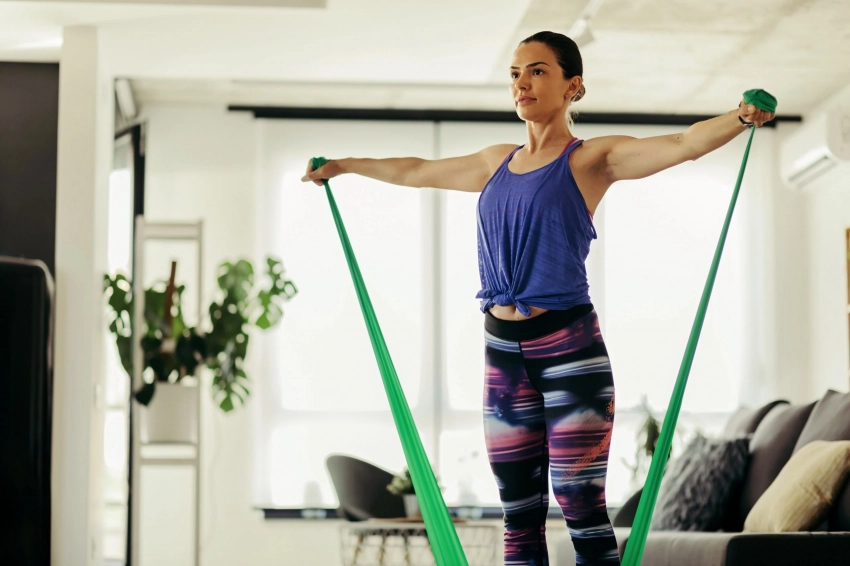
Photo via uenews.ru
A Simple Weekly Plan
Two to three lower-body sessions per week is enough for most people. A simple pattern is the full routine on Monday and Thursday, with a lighter session — just bridges, lateral walks and kickbacks — on Saturday. Muscles grow during recovery, so leave at least one rest day between sessions.
Progress by adding repetitions first, then moving to a heavier band. When you can complete 3 sets of 15 with good form, it is time to step up. Planning the week ahead helps consistency — the Sunday Reset Checklist for Home and Body is a good moment to pick your training days. Recovery also depends on food: muscles need protein to rebuild, so the ideas in High-Protein Diet for Women pair well with regular training, as does the broader nutritional picture in Essential Vitamins for Women.
Common Mistakes to Avoid
Letting your knees collapse inward: the band pulls your knees in — your job is to press them gently outward. Collapsing knees reduce glute activation and strain the joints.
Rushing the lowering phase: the return half of each repetition is where much of the benefit lies. Lower slowly and with control.
Arching your lower back: in bridges and kickbacks, a flat back and a gentle core brace keep the work in the glutes rather than the lower back.
Starting too heavy: a band you cannot control leads to sloppy form. Master the movement with a light band first, then progress.
Skipping the warm-up: five minutes of easy movement — walking, leg swings, bodyweight squats without the band — prepares the muscles and reduces injury risk.
Frequently Asked Questions
Can resistance bands really build muscle?
Yes. Muscles respond to tension, and bands provide progressive tension through the full range of motion. With consistent training and gradual progression to heavier bands, they can build real strength and muscle tone in the glutes and legs.
How often should I train glutes and legs with bands?
Two to three sessions per week, with at least one rest day between sessions, is ideal. Muscles need recovery time to grow stronger.
Which band strength should I start with?
Start with a light or medium loop band. You should be able to complete 12 to 15 repetitions with good form, with the last few feeling challenging. Move up when 15 repetitions feel easy.
Are resistance bands good for bad knees?
Bands are generally joint-friendly because resistance builds gradually, but any knee pain should be checked by a doctor or physiotherapist first. Keep the range of motion comfortable and stop if a movement causes pain.
How long until I see results?
Most people feel stronger within two to three weeks and notice visible changes in muscle tone within six to eight weeks of consistent training, alongside adequate protein and rest.
Final Thoughts
A resistance band is one of the simplest, cheapest and most effective tools for lower-body strength. Start light, master the form, and progress steadily — two or three short sessions a week is enough to build glutes and legs that feel stronger in everything you do, from climbing stairs to carrying the shopping. The band fits in a drawer, the routine fits in twenty minutes, and the results compound week after week.
Disclaimer: This article is for general informational purposes only and does not constitute medical or professional advice. Always consult your doctor or a qualified healthcare provider before starting any new exercise program, especially if you have pre-existing health conditions, joint pain, or are pregnant or postpartum. Stop immediately if you experience sharp pain or discomfort.