Starting a home workout routine is the easy part. The hard part is still doing it in week six, when the novelty has worn off, the sofa looks inviting, and nobody is watching. Home workouts remove every excuse about travel and gym fees — and replace them with a quieter challenge: keeping yourself accountable when the only person in the room is you.
The good news is that consistency is a skill, not a personality trait. It comes from systems — a fixed schedule, a ready space, a plan that is easy to follow on a tired day — rather than from motivation, which comes and goes. This guide covers the habits and tricks that keep a home routine alive for months, not days. Having workout clothes you actually like helps too — the ideas in Gym Outfit Ideas for Your Next Workout make getting changed feel less like a chore.
Key Takeaways
- Schedule workouts like appointments — a fixed time removes the daily decision of whether to train.
- Start small: a 20-minute session you actually do beats a 60-minute one you keep skipping.
- Keep your workout space ready, so starting takes less than a minute.
- Track your sessions — a visible streak is a powerful reason not to break it.
- Plan for bad days in advance: a shorter session still counts as showing up.
Why Home Workouts Fall Apart
Most home routines do not fail because the exercises are wrong. They fail because of friction: the mat is rolled up in a cupboard, the workout time was never fixed, the plan was too ambitious, or a single missed week turned into a month. At a gym, the building and the class timetable do some of the work for you. At home, you have to build that structure yourself.
The fix is not more willpower. It is removing decisions and obstacles until the easiest thing to do is the workout itself. Every tip in this guide works on that principle.
Build Your Schedule First
Pick three days and a time of day, and put them in your calendar. Morning sessions work well for many people because nothing has had a chance to get in the way yet; lunch or early evening works better for others. The right time is the one you can protect most weeks.
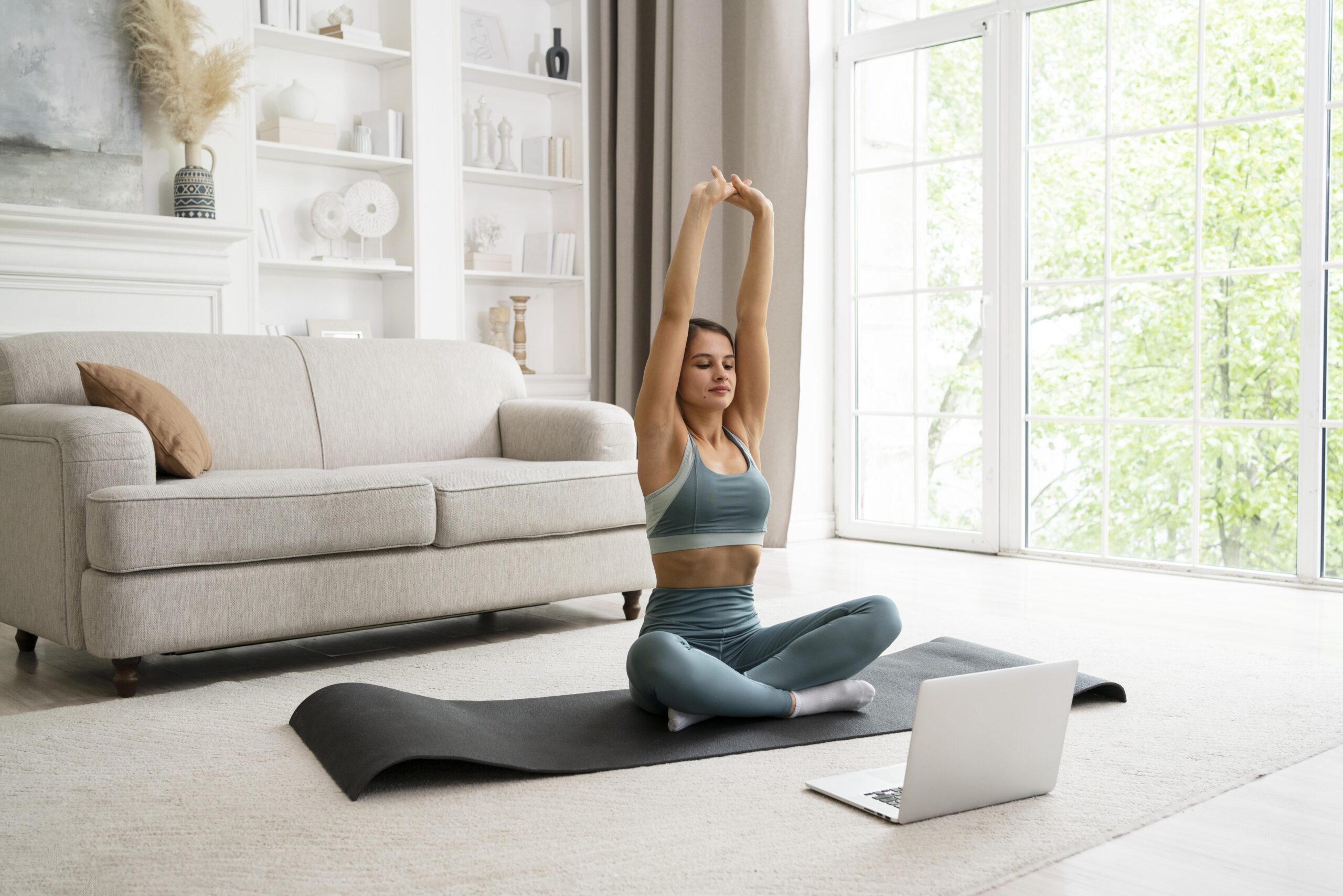
Photo via norma-media.ru
Treat the slot like a meeting you would not casually cancel. If something genuinely clashes, move the session to another day in the same week rather than dropping it — the weekly count matters more than the exact day. A plan that survives real life is one with room to bend.
Make Starting Effortless
Keep Your Space Ready
Choose one corner of a room and keep it workout-ready: mat unrolled or leaning against the wall, water bottle filled, any dumbbells or bands in sight. If setting up takes more than a minute, it becomes a reason to postpone. A dedicated space also sends a signal — when you step onto the mat, it is workout time, even if the room is also your living room.
Lay Out Your Clothes
Changing into workout clothes is a surprisingly strong trigger. Lay them out the night before, or change into them as soon as you get home. Once you are dressed for it, the workout feels like the natural next step. Comfortable, well-fitting pieces make this easier — the relaxed options in Blue Leggings Outfit Ideas with a Hoodie and Sporty Outfit Ideas for Everyday Style are easy to wear all day if your session is squeezed between other things.
Have a Plan Before You Start
Never begin a session by wondering what to do. Decide the workout the day before — which exercises, how many sets — and write it down or queue up the video. Decision fatigue is a real reason sessions get skipped, and a ready plan removes it entirely.
Track It and Make It Visible
What gets measured gets done. A simple paper planner, a notes app, or a wall calendar all work — the point is a visible record of the sessions you complete. Marking an X on each workout day builds a chain, and after a few weeks the chain itself becomes a reason to keep going.
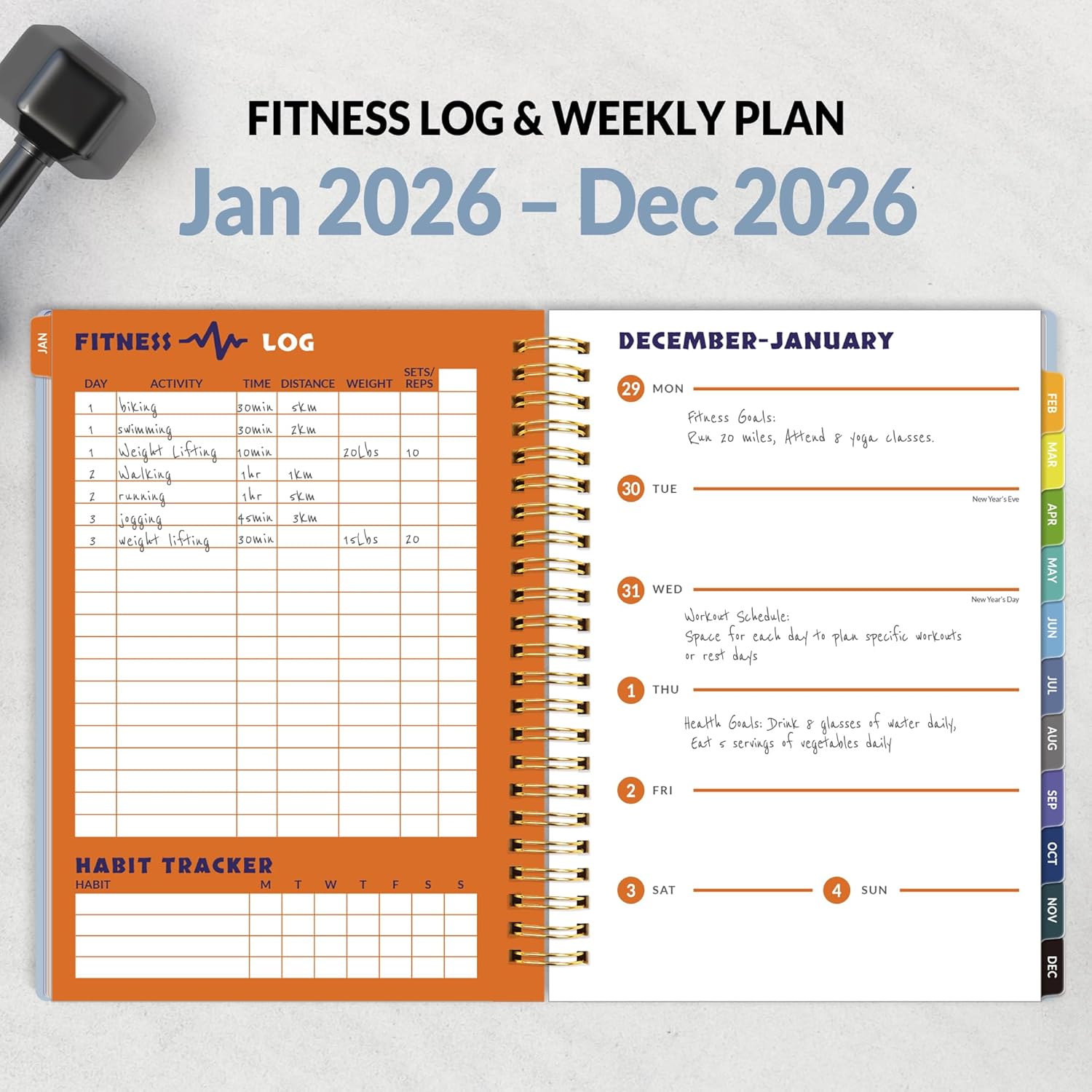
Photo via calendarsstore.com
Note more than just the date: which exercises you did, how many reps, and how you felt. Those notes are how you spot progress — the push-ups that went from five to twelve, the plank that doubled — and progress is the best motivation there is.
Stay Motivated When It Gets Hard
Motivation dips are normal, not a sign that the routine is wrong. The trick is having strategies ready before the dip arrives.
- Shrink the session: on a low-energy day, do ten minutes instead of thirty. A short session keeps the habit alive, and often you keep going once you have started.
- Vary the workout: rotate between strength, stretching, and short cardio sessions so boredom does not set in. A new routine every few weeks keeps things fresh.
- Pair it with something you enjoy: a favourite playlist, a podcast, or a show you only watch while exercising can make the session something to look forward to.
- Find an accountability partner: a friend who checks in — even by text — makes skipping feel different. You do not need to work out together; knowing someone will ask is enough.
- Reward the streak: set small milestones — four weeks of three sessions, for example — and mark them with something you enjoy, like new workout gear. The cosy layers in Grey Sweatpants Outfit Ideas and the relaxed fits in Korean Outfit Ideas with Oversized Grey Sweatpants make good rest-day rewards.
Handle Setbacks Without Quitting
Everyone misses sessions. Illness, travel, a busy week at work — life interrupts every routine eventually. The mistake is treating a missed week as a failed plan. It is not. The research on habits is clear on one point: missing once has almost no effect on long-term success, but missing twice in a row makes it much harder to return.
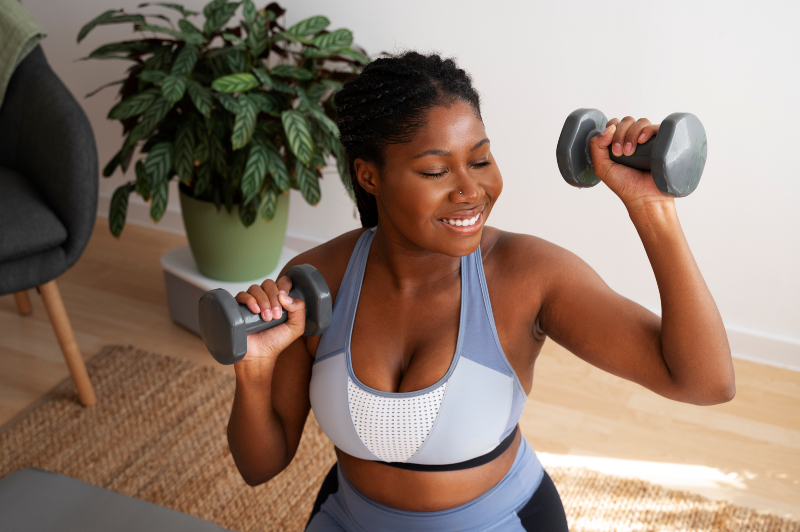
Photo via buzzlifenews.com
So the rule is simple: never miss twice. If you skip Monday, Wednesday is non-negotiable. And when you return after a longer break, start smaller than you were doing before — a short, easy session rebuilds the habit without the soreness that makes you dread the next one.
Keep Progressing Without a Gym
Once the habit is solid, progression keeps it interesting. Add a rep or a set each week, slow the movements down, try a harder variation, or add light dumbbells and a resistance band. Small, regular increases are sustainable; big jumps lead to soreness and skipped sessions.
Rest days are part of the plan, not a break from it. Muscles repair and grow between sessions, so two to three strength days a week with lighter activity — walking, stretching, gentle yoga — on the other days is a pattern you can keep for years. A gentle stretch session is also a good use of a rest day, and the comfortable stretch-friendly pieces in Flare Leggings Outfit Ideas move easily through every pose.

Photo via comunidadevip.com.br
Frequently Asked Questions
How many days a week should I work out at home?
Three days a week is a strong starting point for strength training, with rest or light activity on the other days. It is frequent enough to build real progress and light enough to fit a busy life. You can add a fourth day later if you want more.
What if I keep losing motivation after a few weeks?
That is the most common pattern, and it usually means the plan relied on motivation instead of systems. Fix the schedule, the ready space, and the tracking — those carry you through the weeks when enthusiasm is low. Varying the workouts every few weeks also helps.
Do I need equipment to work out at home?
No. Bodyweight exercises like squats, push-ups, lunges, and planks are enough to build strength for months. A yoga mat and a water bottle are the only essentials. Dumbbells and resistance bands are useful additions later, when bodyweight work starts to feel easy.
How long should a home workout be?
Twenty to forty-five minutes is plenty for most people. A shorter session you do consistently is far more effective than a long one you keep putting off. If time is tight, even ten focused minutes counts — the habit matters more than the length.
What should I do if I miss a whole week?
Do not try to make it up with extra sessions, and do not start over from scratch. Just return to your next scheduled day with a slightly shorter, easier session. One missed week is a blip; the routine only fails if the blip becomes the new normal.
Final Thoughts
Consistency at home is not about being the kind of person who never skips a workout. It is about building a routine that is easy to start, easy to track, and forgiving when life gets in the way. Fix the time, keep the space ready, shrink the session on hard days, and never miss twice. Do that for a few months, and the habit starts carrying itself — the workout becomes something you do because it is Tuesday, not because you talked yourself into it.
Disclaimer: This article is for general informational purposes only and does not constitute medical or professional fitness advice. Before starting a new exercise routine, especially if you have underlying health conditions or concerns, please consult a qualified healthcare professional. Stop exercising and seek advice if you experience pain.