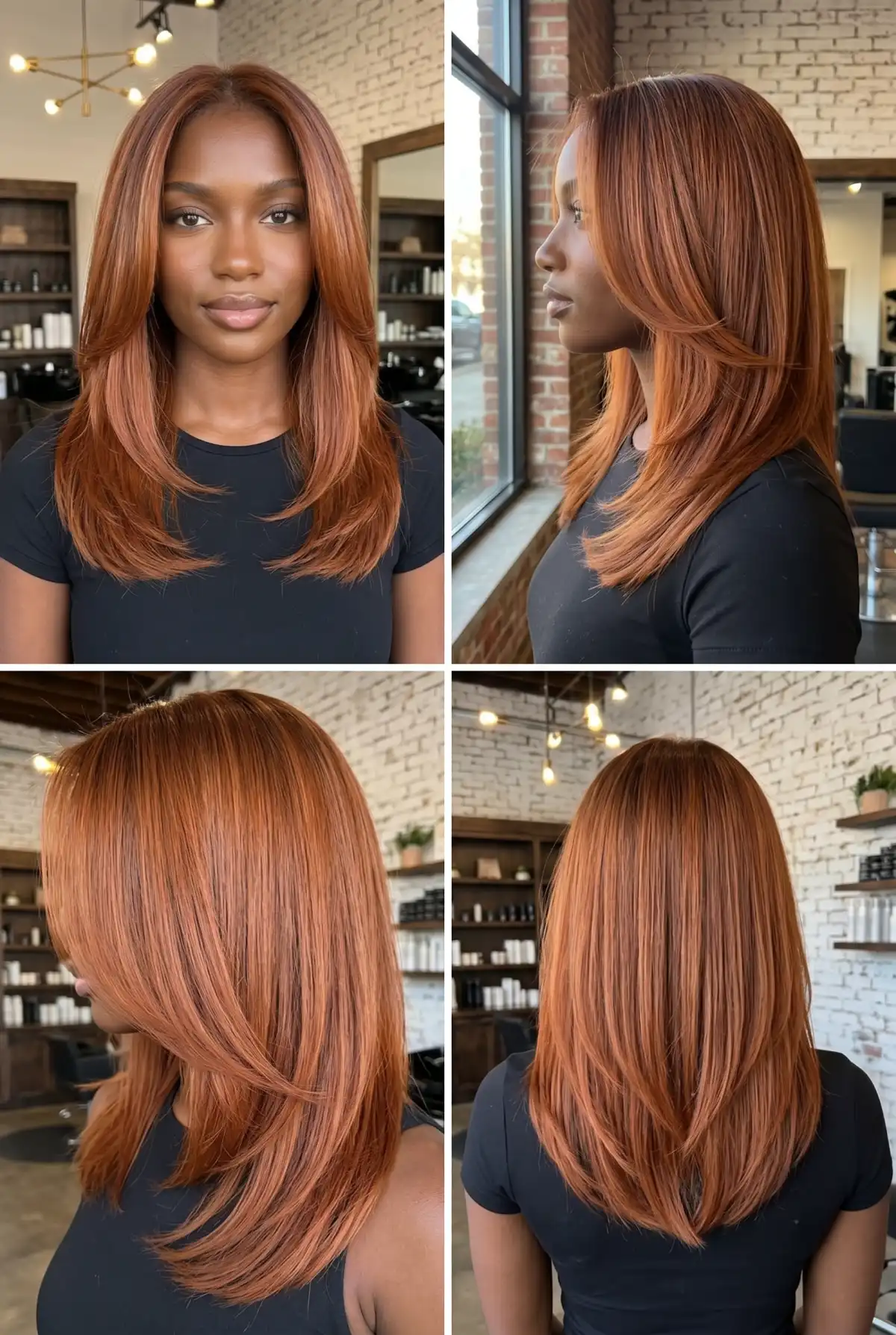
The moment Halle Bailey stepped onto the BET Awards stage with what colorists are now calling “Raw Cinnamon Glaze” — a warm, semi-sheer copper that caught every spotlight like liquid amber — salon booking apps crashed in three major cities. That was the tipping point, but the movement had been building for months. TikTok’s #MelaninHairColor tag surpassed 2.8 billion views this spring, driven by shades with names that sound more like a wine list than a color chart: Black Cherry Soda, Sun-Drenched Syrah, Butter Toffee Brûlée. What makes this moment different from past summers is the sophistication — colorists are finally formulating for dark skin from the start, not retrofitting trends designed for lighter complexions. These colors don’t just sit on top of melanin-rich skin; they harmonize with it.
This guide covers the best natural summer hair color for dark skin 2026, spanning everything from a barely-there espresso gloss you could pass off as your natural shade to a full platinum blonde undercut that announces itself from across the room. Whether you’re rocking 4C coils, relaxed strands, silk-pressed lengths, or protective styles, these twenty shades are built with dimension, movement, and technique in mind — not just a single flat tone slapped on and hoped for the best. We’re talking root smudges, teasylights, money pieces, reverse balayage, and glazing techniques that give each color real architectural depth on dark skin tones specifically.
I’ll be honest — I spent three years afraid of anything warmer than a Level 3 espresso on my own dark skin because a rushed colorist once turned my hair a flat, brassy orange that haunted me (and my Instagram archives). It wasn’t until I found a melanin-specialized colorist who understood undertones that I realized the problem was never the color. It was the technique.
Raw Cinnamon Balayage with Copper Undertones
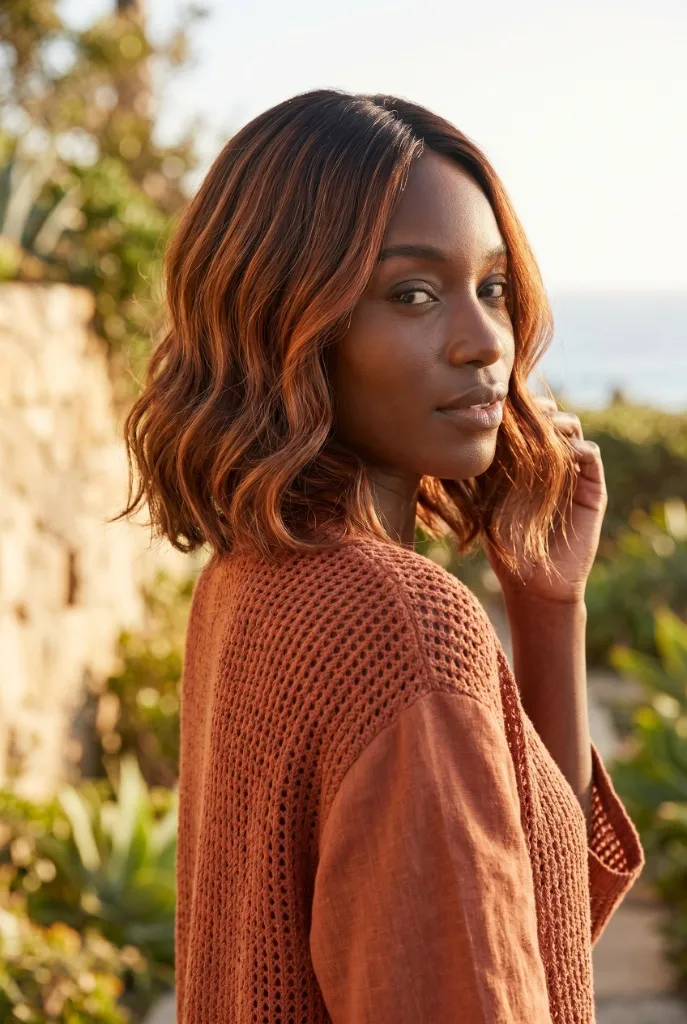
If you’ve been scrolling past warm tones because you’re terrified of going brassy, raw cinnamon balayage is the shade that should change your mind. The technique here involves hand-painting concentrated warmth through the mid-lengths and ends while keeping the root area untouched at a natural Level 2-3 — creating a sun-kissed effect that looks like you spent a month on the Amalfi Coast rather than four hours in a salon chair. The warm copper undertones in this raw cinnamon teasylights variation read as genuinely natural against deep skin tones because the pigment sits in that sweet spot between red and gold (which is exactly where melanin-rich skin glows hardest). My colorist calls this the “golden hour shade” and honestly, she’s not wrong.
Expect this to hold its vibrancy for about 8-10 weeks before the copper starts to soften into a still-beautiful honey territory. You’ll want a sulfate-free, color-depositing shampoo — something with a warm copper tint — every third wash to keep the cinnamon from fading flat. A bond-repair treatment every two weeks is non-negotiable if your hair was lifted to achieve this. Skip if your undertones lean very cool or ashy; this shade fights against cool skin rather than flattering it. Budget around $250–$400 for the initial balayage session. Golden hour, bottled.
Honey Blonde Money Piece on Dark Skin
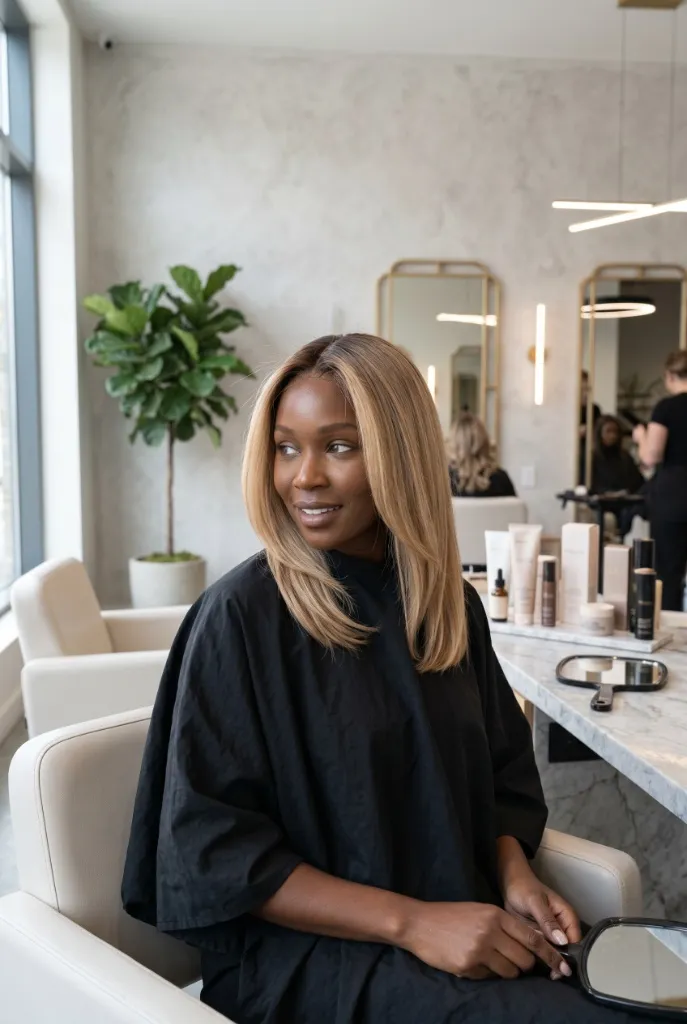
The money piece trend refuses to die, and honestly, on dark skin it shouldn’t — it’s the single most effective face-brightening technique that exists for under $150. A honey blonde money piece on dark skin involves lightening just the two front sections that frame your face to a Level 7-8 warm blonde, blending them into your natural dark base with a soft root smudge so there’s no harsh line of demarcation. The result is instant dimension that draws the eye to your face without the commitment or damage of an all-over color. It’s strategic, it’s flattering, and it works on literally every hair texture I’ve ever seen it on — from 2A waves to 4C coils in a twist-out.
This is about as low-maintenance as color gets. The money piece grew out gracefully for a full 12 weeks in my experience before needing a touch-up, and even then, the grow-out looked intentional thanks to the root smudge technique. Use a purple shampoo once a week if your blonde starts pulling too warm, and a deep conditioning mask every wash day to keep the lightened sections from going straw-like. The only real limitation? If you want dramatic, all-over change, this isn’t it — it’s subtle by design. The ultimate face-brightener.
Black Cherry Ombré for Deep Skin Tones
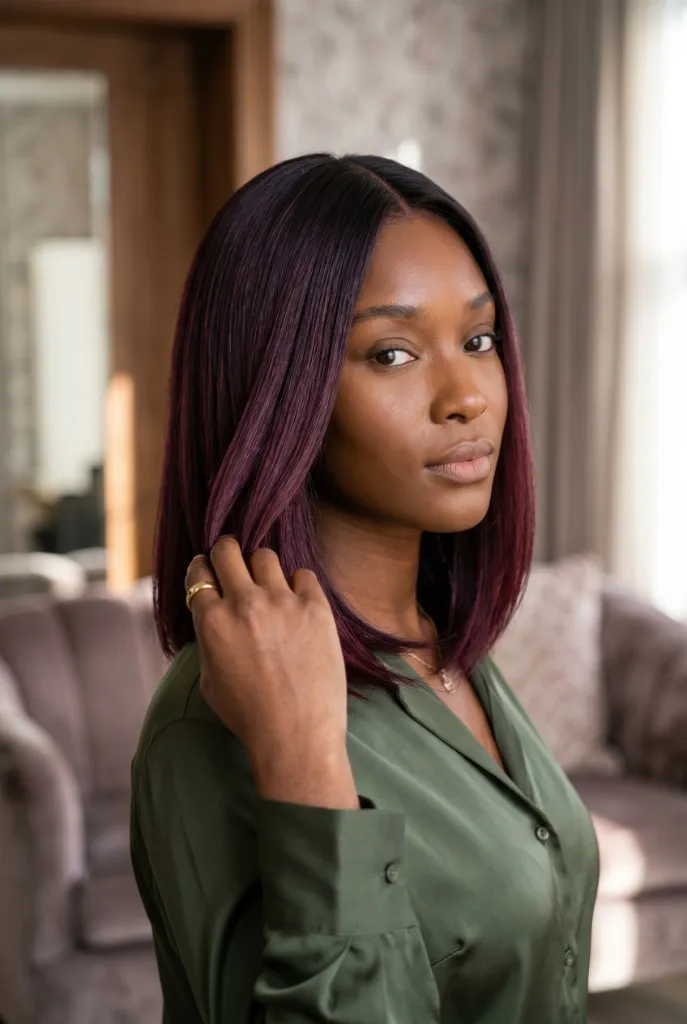
Dark, moody, and absolutely magnetic — black cherry hair color on dark skin is the shade that makes people lean in and ask, “Wait, what color is that?” The technique involves a single-process application of a deep plum-burgundy (think Level 2-3 with heavy violet and red concentrate) over a pre-lightened base, or for less damage, a demi-permanent gloss layered over natural dark hair for a translucent berry effect that only reveals itself in direct light. The result is a black cherry ombré that reads as nearly black indoors but explodes into jewel-toned plum and garnet in sunlight. On melanin-rich skin, this shade creates a monochromatic harmony that cooler-toned shades often can’t achieve.
If you go the demi-permanent route, you’re looking at 4-6 weeks of peak vibrancy before the plum starts washing out — which means touch-ups roughly every 6-8 weeks to keep the depth saturated. A color-depositing conditioner in a burgundy or plum shade is your best friend between appointments. Avoid clarifying shampoos like they’re your ex. The honest limitation: this shade can read very dark on camera unless you’re in excellent lighting, so if Instagram documentation is your priority, talk to your colorist about going half a level lighter than you think you want. Dark, mysterious, captivating.
Merlot Hair Color with Wavy Texture on Dark Skin
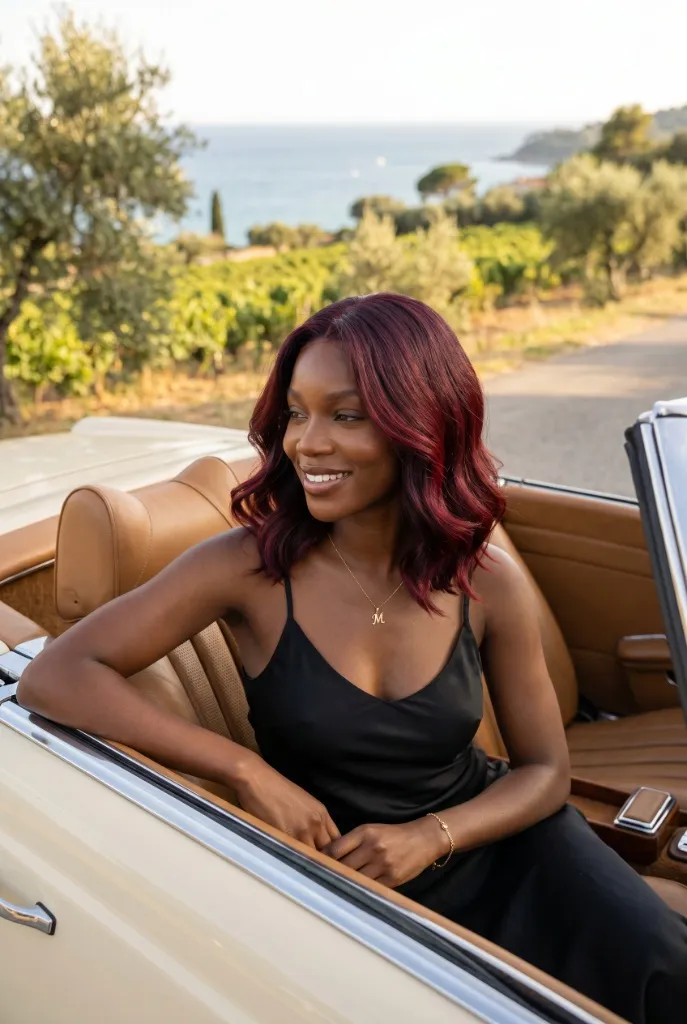
Merlot hair color on dark skin is what happens when you take black cherry and turn the warmth up by two notches — it’s redder, louder, and unapologetically bold. The application typically requires pre-lightening to a Level 5-6 before depositing a rich burgundy-red with warm undertones, and the wavy texture here is doing heavy lifting by catching light at different angles, which gives the color a dimensional quality that flat-ironed hair simply cannot replicate. If you’ve been considering a red family shade for summer, merlot is the most wearable entry point because it still has enough depth to feel grounded against dark skin (unlike a screaming cherry red that can look costume-y without expert execution).
The trade-off for this level of vibrancy? Red pigment molecules are notoriously large and wash out faster than any other color family, so expect noticeable fading by week 5-6. Cold water rinses, color-safe everything, and a red-depositing mask weekly are mandatory — not suggestions. Budget for a gloss refresh every 6 weeks ($80-$120) to maintain that wine-bottle richness. Skip if you hate maintenance, full stop. This is a relationship color, not a fling. Worth every rinse.
Butter Toffee Blonde Root Smudge for Dark Skin
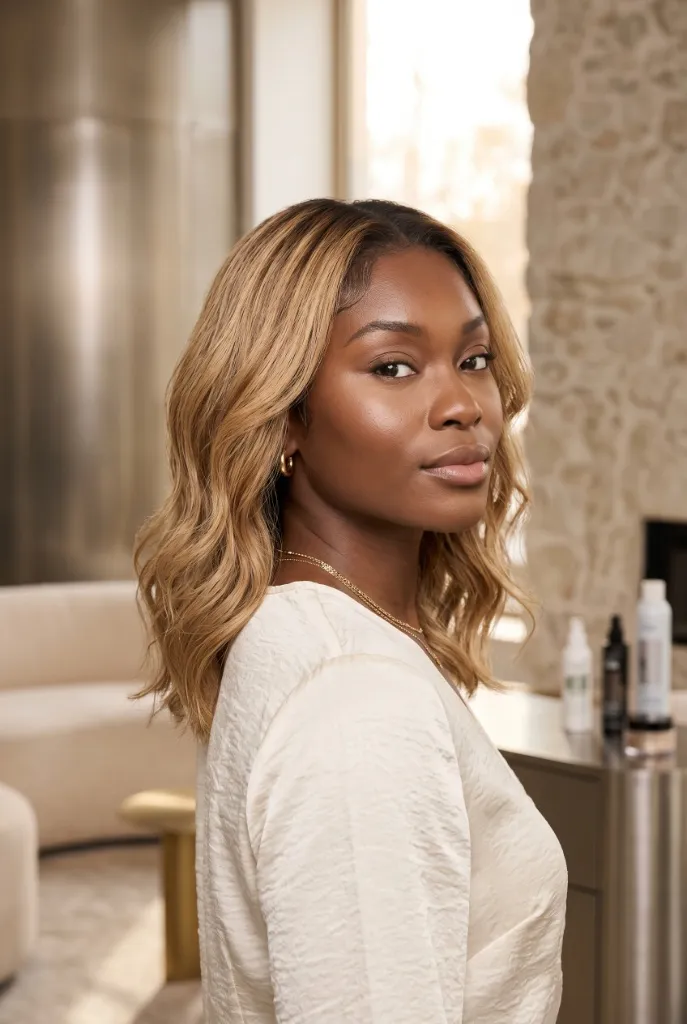
A butter toffee blonde root smudge is the “I woke up like this” of blonde techniques — and on dark skin, it solves the single biggest problem blondes face: the grow-out. Instead of fighting your natural roots, this technique leans into them, using a Level 2-3 root melt that gradually transitions into a warm Level 7-8 toffee blonde through the mid-lengths and ends. The smudge creates a gradient so seamless that at week eight, your hair looks better than it did at week one (a rare feat in the color world). The warm, golden-caramel tonality of butter toffee specifically flatters deep warm and neutral skin undertones without ever veering into ashy territory.
Maintenance is genuinely moderate — the whole point of the root smudge technique is extended wear. My clients who get this go 10-14 weeks between appointments comfortably, which is practically unheard-of for blonde on naturally dark hair. You’ll need a bond-building treatment in-salon during the lightening process ($40-$60 add-on, absolutely worth it) and a purple shampoo rotation at home to keep brassiness in check. The only catch: the initial session takes 3-5 hours and runs $300-$450 depending on your starting level and length. Not for the impatient. Effortless, truly.
Espresso Brown Hair Gloss with Deep Burgundy Tones
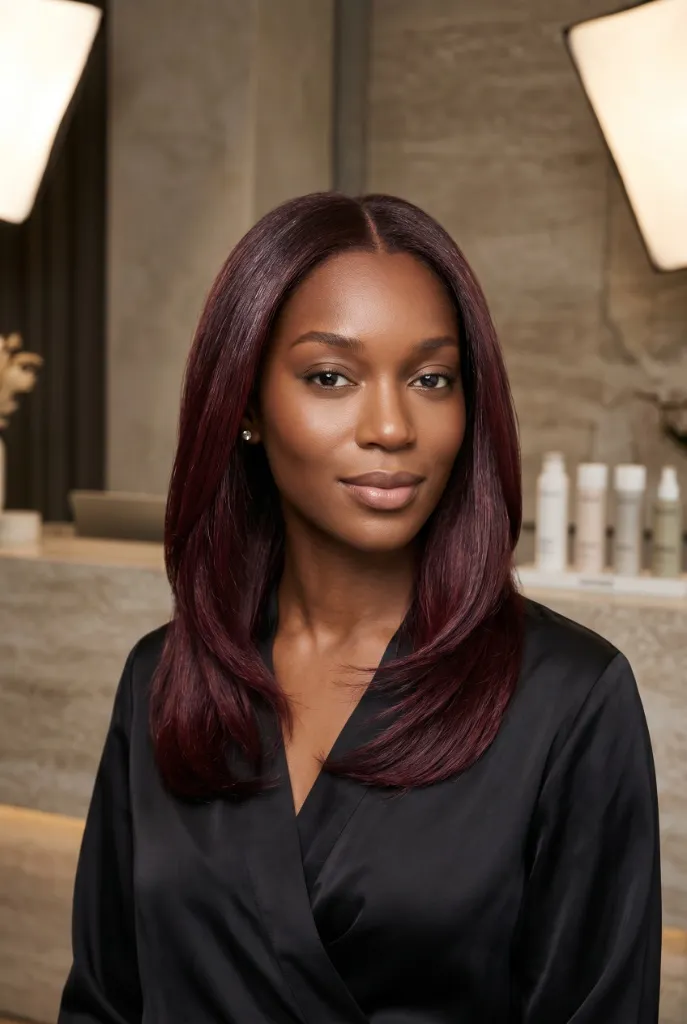
Sometimes the most powerful color statement is the one nobody can quite identify — and espresso brown hair gloss is exactly that kind of quiet flex. No lightener required here; this is a demi-permanent gloss treatment (think Redken Shades EQ or Wella Shinefinity) applied over natural dark hair to add a rich, mirror-like sheen with barely-there burgundy undertones that only reveal themselves when light hits. On dark skin, this creates what I call “your hair but elevated” — a Level 2-3 with so much depth and dimension that people assume you just have incredibly healthy, expensive-looking natural hair. The technique takes under an hour and involves zero damage, which is genuinely rare in the color world.
An espresso gloss lasts 4-6 weeks before gradually fading back to your natural shade with zero harsh lines or awkward grow-out — making it the ideal summer hair color for dark skin 2026 if you want impact without commitment. Use a gentle, sulfate-free shampoo and condition heavily; that’s literally the entire maintenance routine. Skip if you want visible, dramatic color change — this is about enhancing what you already have with a veil of richness, not reinventing the wheel. Sessions run $75-$150 and take about 45 minutes. Glossy, not brassy.
Platinum Blonde Blunt Bob for Dark Skin
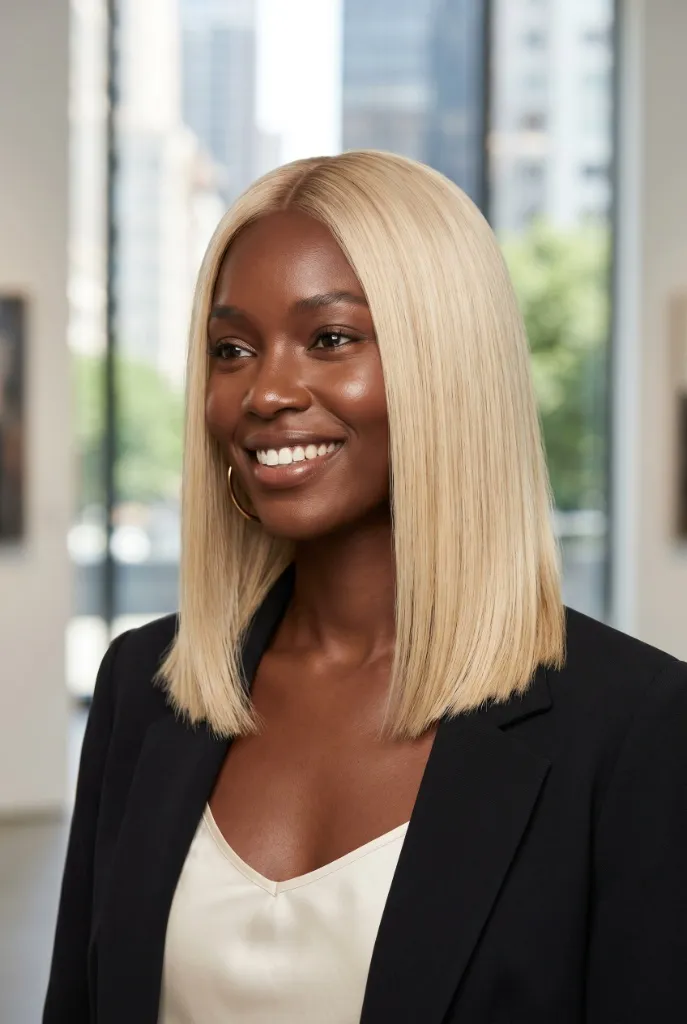
Let’s not pretend this isn’t the most high-impact shade on this entire list — platinum blonde on dark skin is a full-volume declaration, and the blunt bob cut amplifies it by removing any softness. You’re looking at a double-process bleach (often requiring two sessions spaced 2-3 weeks apart to safely lift from Level 1-2 to Level 9-10) followed by a platinum toner that eliminates every trace of warmth. The blunt, one-length cut is deliberate: it maximizes the visual density of fine hair that’s been through the lightening process, creating the illusion of thickness while keeping the silhouette razor-sharp. Butter blonde all-over dark skin is the toned-down cousin — platinum is the one that doesn’t apologize.
I’ll be direct: this is a salon-only, high-maintenance commitment. Toner refreshes every 3-4 weeks ($60-$90), Olaplex or K18 treatments religiously, and a purple shampoo-and-mask rotation that becomes part of your identity. Budget $400-$700 for the initial transformation and block out 5-8 hours of chair time. The honest limitation is significant — the lightening process can cause breakage on already-compromised or fine hair, so a strand test and a long conversation with your colorist is non-negotiable before committing. But when it’s done right? Nothing else comes close. Statement made.
Champagne Babylights with Dark Root Smudge
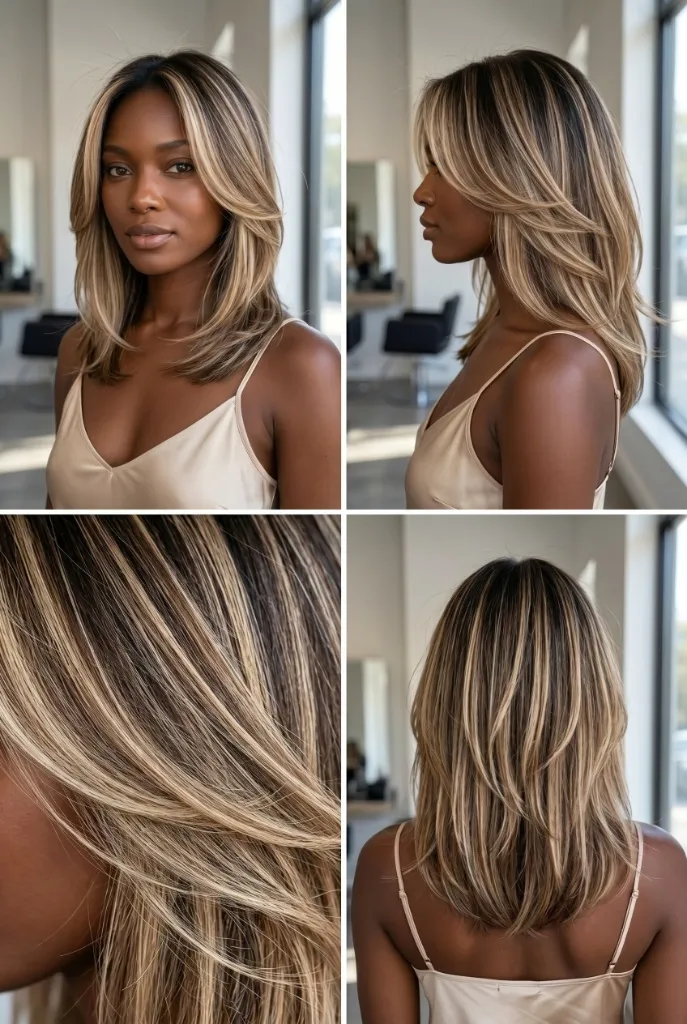
Icy champagne babylights root smudge is the technique that makes blonde look like it grew out of your head — and on dark skin, that illusion is everything. Babylights are ultra-fine, closely woven highlights (much thinner than traditional foils) that mimic the natural variation of sun-lightened hair, and when combined with a root smudge at Level 3-4, the transition from dark to champagne blonde reads as seamlessly organic. The multi-angle view here shows exactly why this technique works: from every direction, the color has movement and depth rather than the flat, helmet-like uniformity that cheap highlights create. Champagne babylights on dark skin have a cool, sandy quality that pairs beautifully with neutral-to-cool undertones.
Expect the babylights to grow out naturally over 12-16 weeks — which is the entire point of the technique. The micro-fine weave means there’s no harsh regrowth line, just a gradual, Instagram-worthy melt. You will need a toner refresh around week 6-8 to keep the champagne from skewing warm ($60-$80), and a weekly purple mask is recommended. The catch: babylights are time-intensive and therefore expensive — plan for $350-$500 and 3-4 hours in the chair. Not for anyone who needs to be in and out quickly. Dimension on another level.
Warm Copper Reverse Balayage with Volume
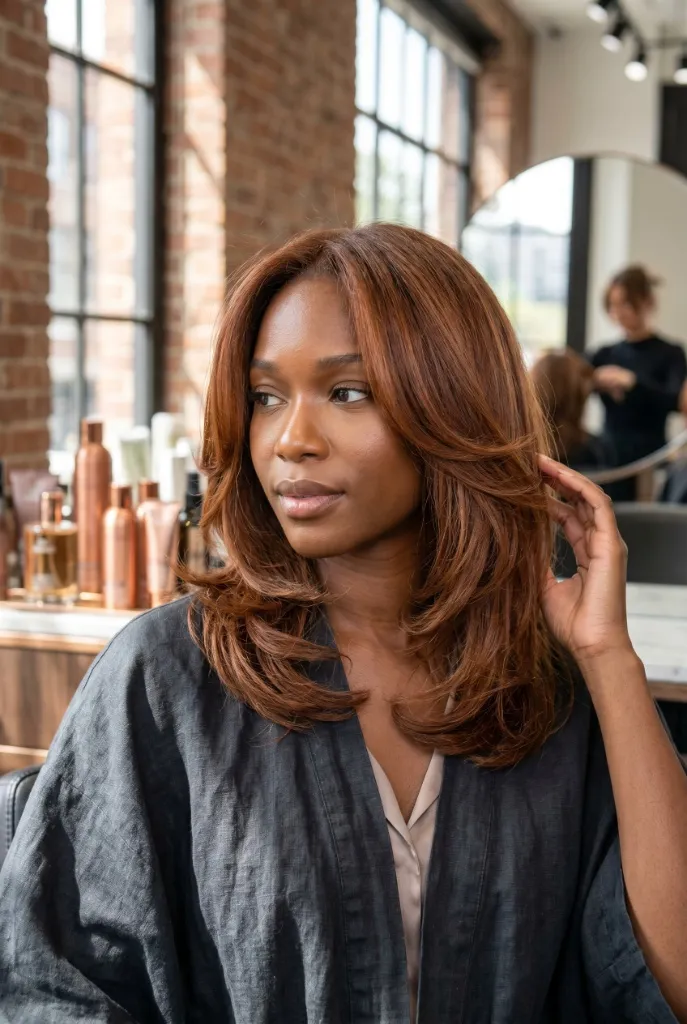
Copper reverse balayage flips the traditional technique on its head — instead of lightening the ends, it deepens the roots while keeping the mid-lengths and ends in a rich, warm copper at Level 5-6. The result on dark skin is a glow that looks like you’ve been standing in perpetual sunset lighting. The volume in this cut is achieved through layering at the crown and mid-shaft, creating movement that lets the copper catch light from every angle (which is exactly why flat, one-length cuts don’t do this shade justice). If raw cinnamon balayage felt too subtle for your taste, copper reverse balayage is its bolder, more opinionated sibling.
Color hold is solid at 8-10 weeks before the copper starts mellowing, though the reverse technique means grow-out is practically invisible since your roots are already dark. A copper-depositing conditioner every other wash keeps vibrancy locked in, and heat protection is non-negotiable — copper fades fastest under hot tools. Skip if you have cool or olive undertones; this shade needs warmth in the skin to harmonize properly. Initial session runs $250-$380 with a processing time of about 3 hours. Sunset in your hair.
Ash Champagne Layered Blowout for Dark Skin
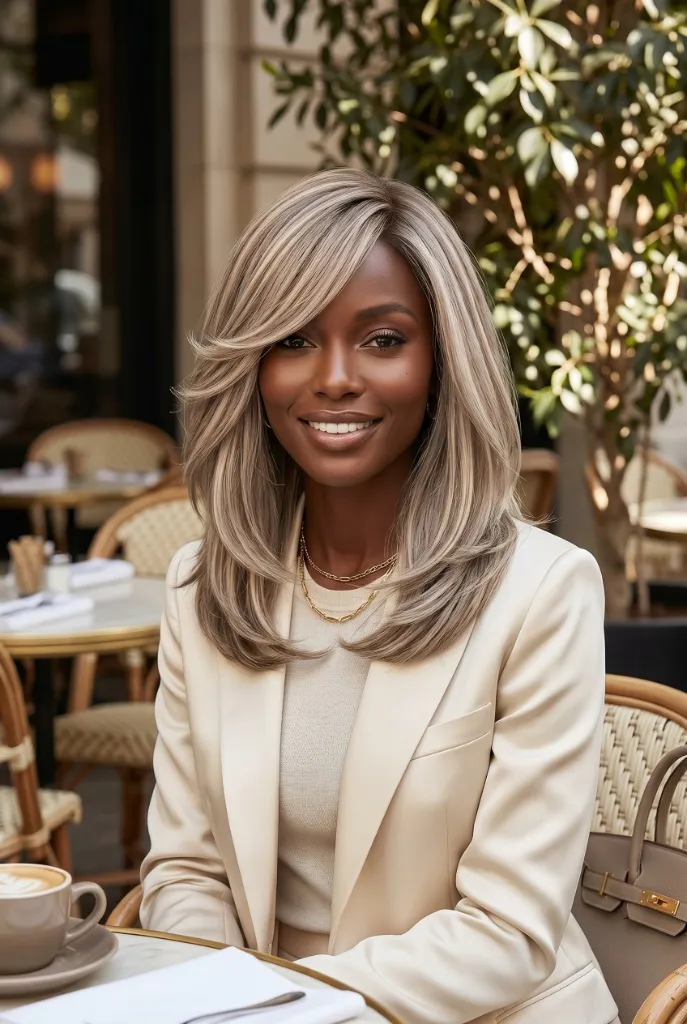
The Parisian blowout has been having a moment, and when you pair it with an ash champagne tone on dark skin, it becomes the most polished thing in any room. The color here lives at a Level 7-8 with cool, ashy undertones that are carefully toned to avoid any warmth — giving the blonde a sophisticated, almost silvery quality that reads as expensive rather than beachy. The layered cut with face-framing pieces and curtain bangs adds movement that prevents the cool tone from reading flat or lifeless. This is mushroom blonde balayage dark skin’s chicer, cooler older sister — the one who orders espresso, not a latte.
Ash tones are notoriously finicky and require more toner maintenance than warm blondes — expect to refresh every 4-5 weeks ($60-$90) to prevent brassiness from creeping in, especially in summer humidity. A purple shampoo 2-3 times per week is baseline, and Olaplex No. 3 weekly keeps the structural integrity intact after lightening. The blowout styling adds 20-30 minutes to your routine, but the payoff is significant. Skip if your hair is highly porous or color-treated — ash tones grab unevenly on damaged hair and can pull grey or green. Parisian polish, perfected.
Strawberry Blonde Money Piece with Warm Waves
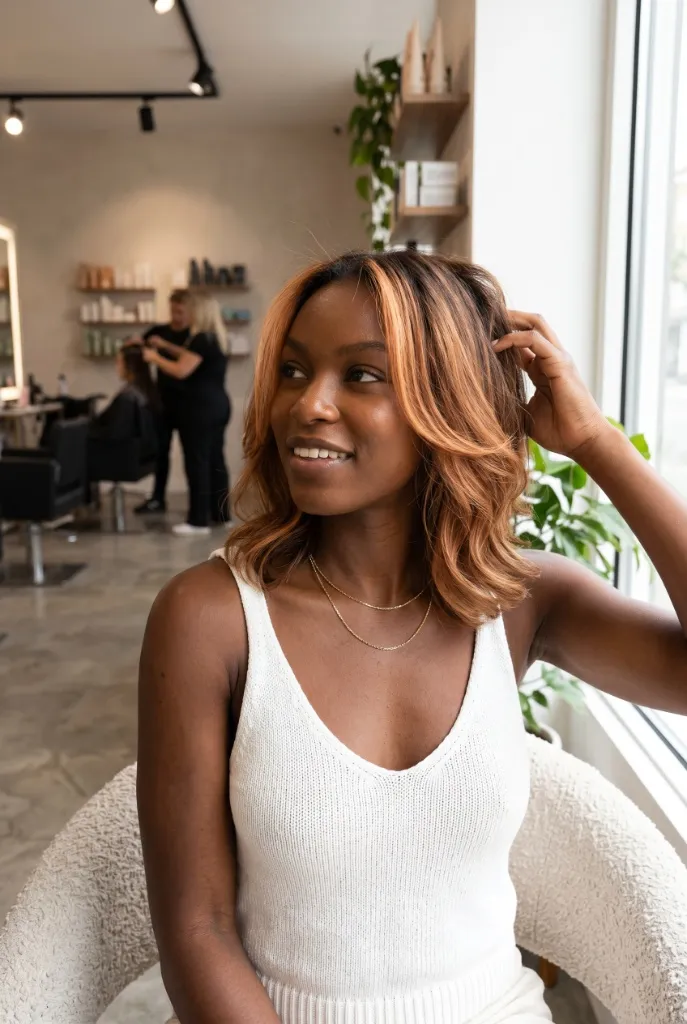
A strawberry blonde money piece is the shade equivalent of dipping your toe in the red pool without diving headfirst — and on dark skin, that restraint is what makes it work. The technique lightens just the face-framing sections to a Level 7 warm blonde with a peachy-copper overlay, while the rest of your hair stays at its natural depth. The wavy texture here amplifies the color beautifully, creating a flickering warmth around the face that’s flattering in both natural and artificial light. I’ve recommended this to clients who say “I want something different but I’m scared,” and it’s never once disappointed (the commitment level is genuinely minimal, which helps).
Because only about 10-15% of your total hair is lightened, maintenance is refreshingly simple. Touch-ups happen every 10-12 weeks, and the grow-out is soft enough to forget about between appointments. A warm-toned gloss refresh at the 6-week mark ($50-$80) keeps the strawberry from going flat, but it’s optional, not mandatory. Use a color-safe shampoo and a weekly hydrating mask — that’s the whole routine. The only downside: if your natural hair is very dark (Level 1-2), the lightening may require two sessions to avoid brassiness in the money piece. Subtle warmth, maximum impact.
Mushroom Mocha Shadow Root with Voluminous Layers
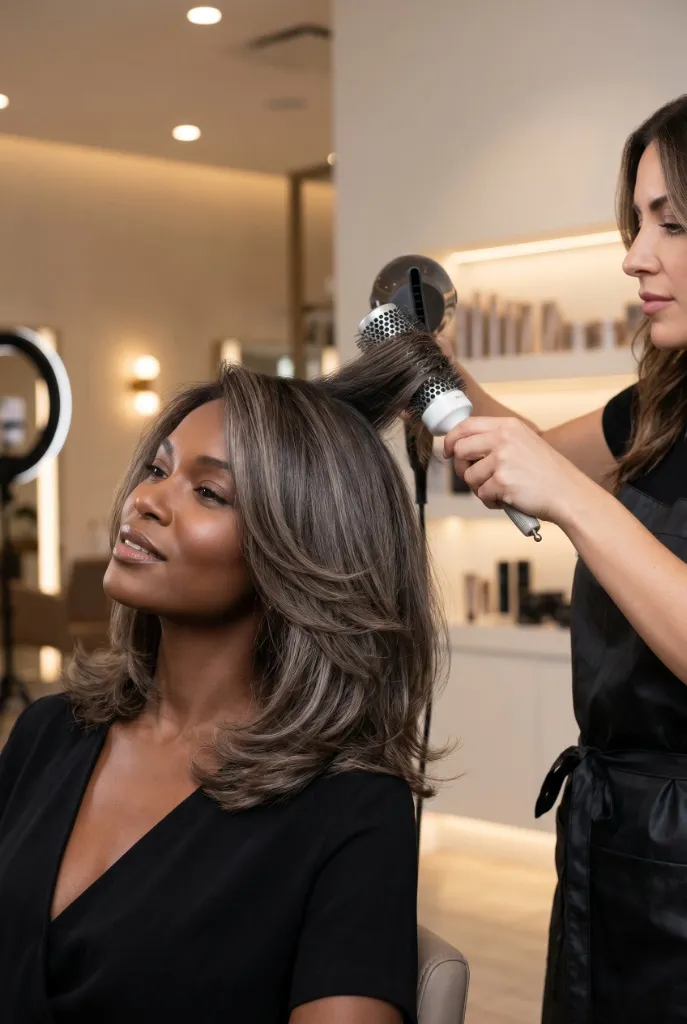
Mushroom mocha balayage — and its close relative, the mushroom mocha shadow root — has been the stealth hit of 2026 because it looks like it costs twice what it actually does. The shade sits at a Level 5-6 with cool-to-neutral brown undertones and a deliberate absence of warmth, giving it that ashy, almost smoky quality that editorial colorists love. The shadow root technique keeps your natural Level 1-2 dark base visible at the scalp, blending into the mushroom mocha through a diffused gradient that eliminates harsh regrowth lines. The voluminous layers here are styled with a round brush blowout, which is exactly the kind of bouncy movement that makes this color shift from “nice brown” to “wait, that’s incredible.”
Performance-wise, mushroom mocha is one of the most forgiving shades for dark-skinned women because the cool-brown family doesn’t shift dramatically as it fades — it just gets slightly warmer, which still looks beautiful. Expect 10-12 weeks between salon visits. A blue-tinted shampoo (not purple — blue counteracts orange, which is what brown tones fade toward) once a week keeps the ash balanced. Skip if you strongly prefer warm tones — mushroom mocha is definitionally cool, and fighting its nature defeats the purpose. Sessions run $200-$350. Cool-toned sophistication.
Crimson Peekaboo Highlights on Natural Dark Hair
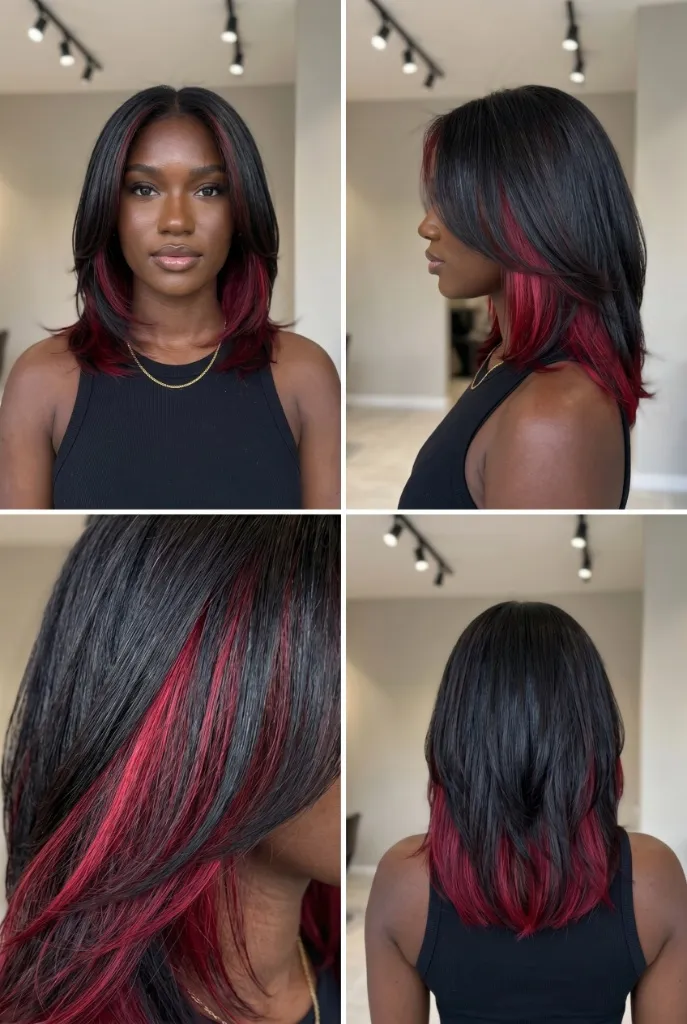
Crimson peekaboo highlights are for the person who wants drama on their own terms — visible when you want them, hidden when you don’t. The technique places vivid red panels underneath the top layer of hair, so when your hair is down and still, you see mostly your natural dark shade, but movement, wind, or a tuck behind the ear reveals streaks of concentrated crimson at Level 6-7 red. On dark skin, the contrast between the deep natural base and the vivid red is striking without being overwhelming, and the strategic placement means you can get away with this in professional settings that might side-eye an all-over red (which is worth considering, even if it shouldn’t be necessary).
Crimson peekaboo highlights held their vibrancy for about 6-8 weeks in testing before softening into a still-pretty wine tone. Because the highlighted sections are hidden beneath the surface layer, the grow-out is essentially invisible — making this one of the lowest-maintenance statement colors you can get. Use cold water and a sulfate-free shampoo on those sections specifically. The limitation: vivid reds require pre-lightening to a Level 7-8 base before the crimson deposit, so expect 2-3 hours in the chair and $200-$300 for the initial service. Hidden fire.
Platinum Pixie Undercut on Dark Skin
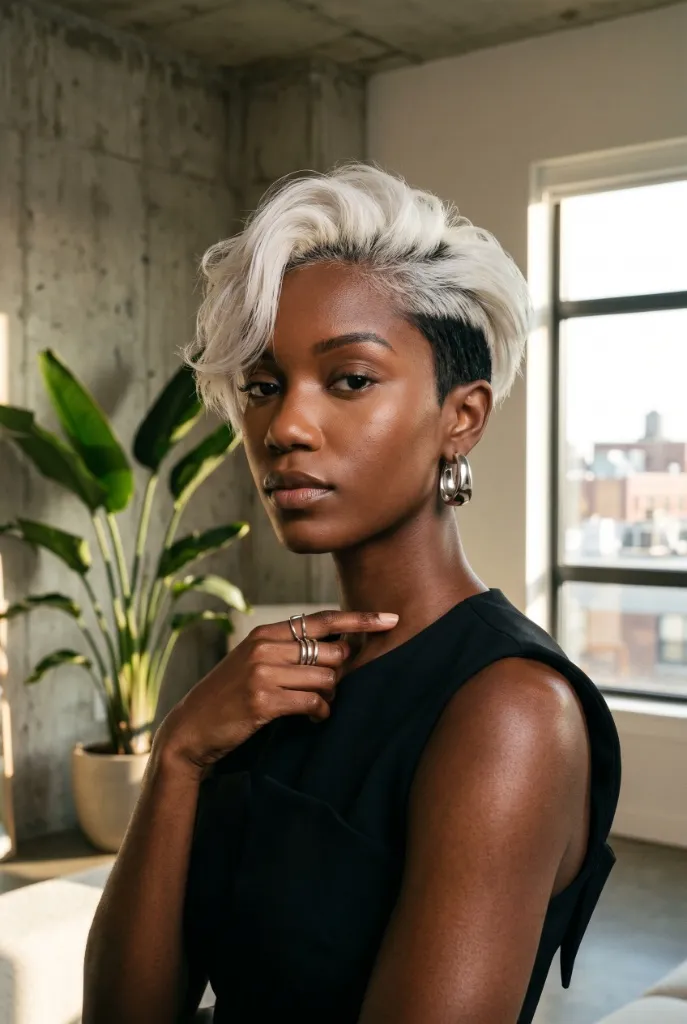
If you’ve ever wanted to feel like a protagonist in an art film, a platinum blonde undercut on dark skin does exactly that — it’s sharp, architectural, and completely unconcerned with being approachable. The technique involves bleaching only the longer top sections to Level 9-10 platinum while leaving the closely cropped sides at their natural dark Level 1-2, creating a stark, deliberate contrast that reads as editorial rather than accidental. The textured, swept-back styling here adds dimension to the platinum section and prevents it from looking flat or one-dimensional. This shade works on dark skin specifically because the contrast between the platinum and the skin creates a frame that makes features pop dramatically.
Maintenance is split: the undercut sides need a trim every 3-4 weeks to stay sharp ($30-$50), and the platinum top needs toner every 3-4 weeks ($60-$80) plus Olaplex treatments to prevent breakage. Because the bleached section is small, the damage is concentrated and manageable with consistent care. Budget around $300-$500 for the initial cut-and-color transformation. Skip if you prefer low-maintenance routines — between the trims, toning, and styling, this look requires genuine daily attention. But the payoff is unmatched confidence. The edge is everything.
Honey Wheat Color Melt on Medium-Length Hair
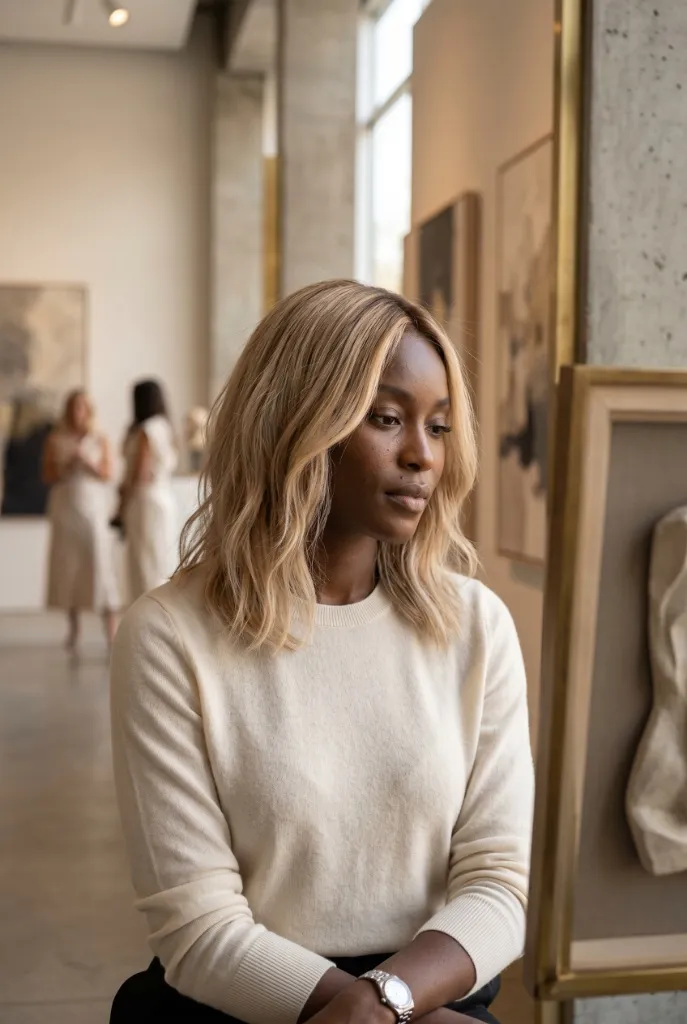
Honey wheat color melt is what I recommend when someone shows me a Pinterest board full of “natural-looking blonde” pins — it’s the shade that actually delivers that promise on dark skin without looking disconnected or forced. The technique uses a color melt (a gradient blend with no visible lines) from a Level 3 root through a Level 6-7 warm honey-wheat blonde at the ends, and the key is the wheat undertone: it’s golden without being yellow, warm without being brassy, and muted enough to look like it belongs on your head rather than on top of it. The medium-length waves here maximize the gradient’s visibility, letting each tonal shift catch light individually.
This is one of the more natural summer hair color for dark skin 2026 options that flies under the radar while still making an impact. Grow-out is seamless for 12-14 weeks because the melt is designed with your natural root color as part of the look. Use a warm-gold color-depositing mask every 2-3 weeks to keep the wheat tone from fading to ash, and a deep conditioner weekly to maintain the softness in the lightened ends. Skip if you want a clearly blonde look — honey wheat is more “did she or didn’t she?” than “she definitely did.” Budget $200-$350. Barely there, but impactful.
Antique Gold Highlights with Salon Blowout on Dark Skin
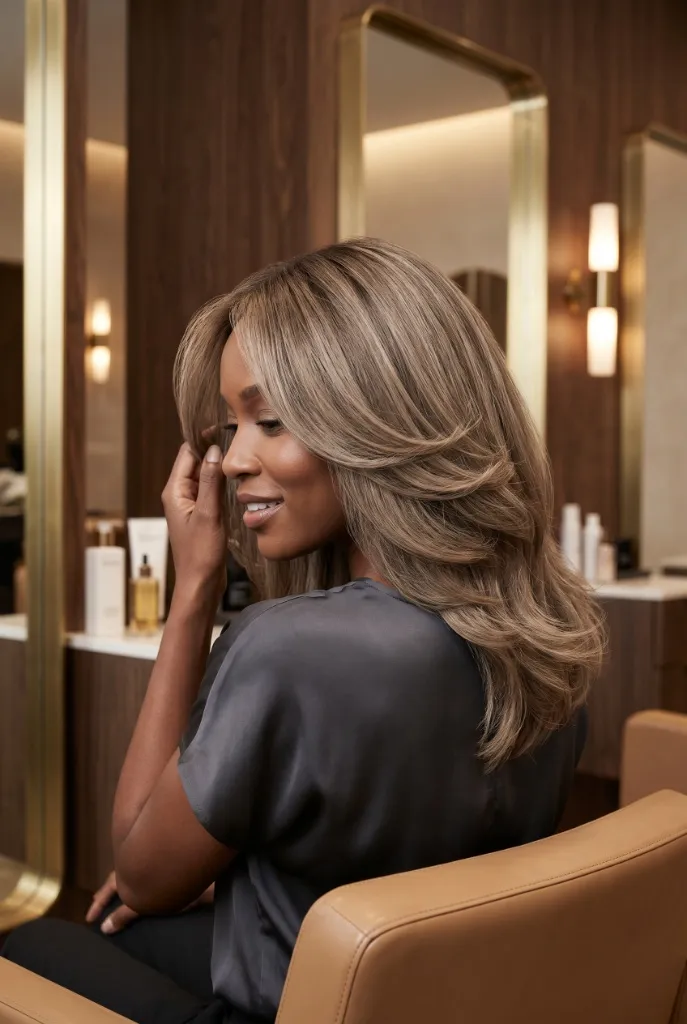
Antique gold highlights on dark skin have a patina quality that modern, bleachy blondes can’t replicate — there’s a richness and depth to the tone that feels vintage and intentional, like jewelry rather than hair color. The technique uses foilayage (a hybrid of foiling and balayage) to place Level 6-7 warm, muted gold highlights through a naturally dark base, concentrating them at the crown and face-framing layers for maximum impact. The professional blowout here is doing exactly what it should: adding enough volume and movement to let each highlighted strand separate from the base and catch light independently. An antique gold money piece variation works beautifully here too, if you want to start smaller.
Antique gold faded gracefully over 10-12 weeks, shifting into a softer, more buttery tone that was still attractive (a sign of well-chosen undertones). Toner refreshes every 8 weeks ($60-$90) keep the gold from going flat. This shade sits in a sweet spot where you won’t need purple shampoo — the warmth is the point — but a sulfate-free formula and weekly bond treatment are standard. Skip if you have very cool-toned skin; antique gold needs warmth to sing. Initial session: $280-$420, about 3 hours. Old-world richness.
Vibrant Copper All-Over Color with Layered Cut
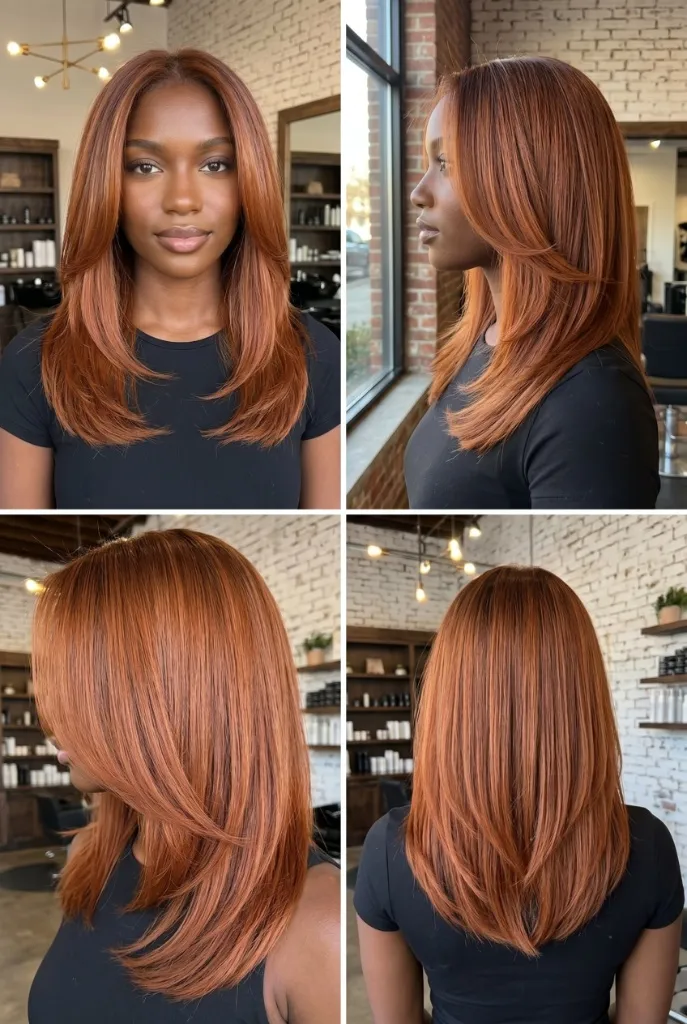
All-over copper is the summer hair color for dark skin 2026 that requires the most courage and delivers the most reward — there’s no hedging here, no “subtle warmth,” just full-commitment, look-at-me copper at Level 5-6 from root to end. The single-process application (or double-process if starting from Level 1-2) creates a uniform copper that, against dark skin, produces a contrast so striking it genuinely stops people in their tracks. The layered cut with face-framing movement is essential here because it prevents the all-over color from reading as a flat block, adding dimension through the cut itself rather than relying on multiple tones.
Performance is the biggest conversation with all-over copper — it starts fading noticeably by week 4-5, and by week 8, you’re in light-auburn territory. Color-depositing treatments are weekly obligations, not options. A copper-pigmented mask (I like Moroccanoil Color Depositing Mask in “Copper”) and cold-water-only washes will extend vibrancy significantly. Budget for gloss refreshes every 5-6 weeks ($80-$120) in addition to the initial service ($250-$400). The honest truth: this shade is high maintenance. Period. But if you’re willing to put in the work, the radiant summer hair colors dark skin payoff is genuinely extraordinary. Maximum copper energy.
Navy Blue-Black Sleek Lob for Dark Skin
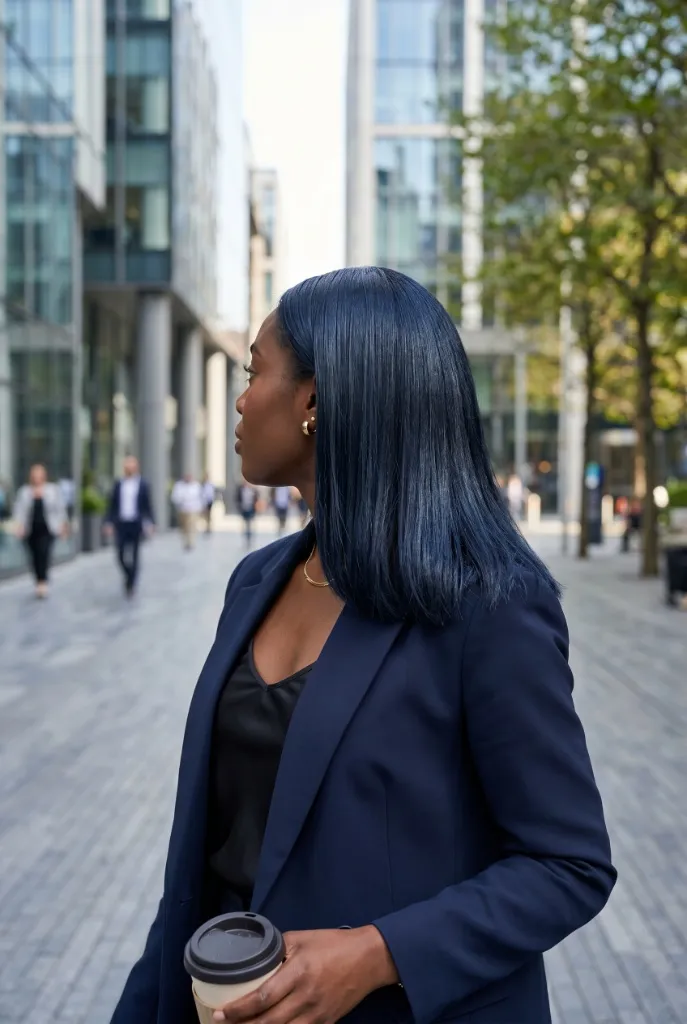
Navy blue-black is the stealth color that looks like natural black until you step outside — and then it shifts into a deep, inky midnight blue that’s genuinely mesmerizing against dark skin. The technique involves a semi-permanent or demi-permanent blue-black deposit over natural dark hair, which means minimal damage and maximum impact. No bleach required for this one, which is practically unheard-of for a fashion color. The sleek lob (long bob) cut with a blunt hemline amplifies the color’s depth by creating a solid, reflective surface that shows off the blue undertone like a still body of water.
Because no lightening is involved, the health of your hair stays completely intact — making this one of the safest radiant summer hair colors for dark skin options on this list. The semi-permanent formula fades gradually over 6-8 weeks, with no awkward grow-out or banding. Wash with cool water and sulfate-free shampoo to maximize longevity. Refresh the deposit at home with a blue-black color-depositing conditioner between salon visits. Skip if you want the blue to be visible indoors — it requires sunlight or bright artificial light to reveal itself, which either delights or frustrates people depending on their expectations. Sessions run $100-$180. Midnight shift.
Mushroom Ash Blunt Bob with Precision Cut
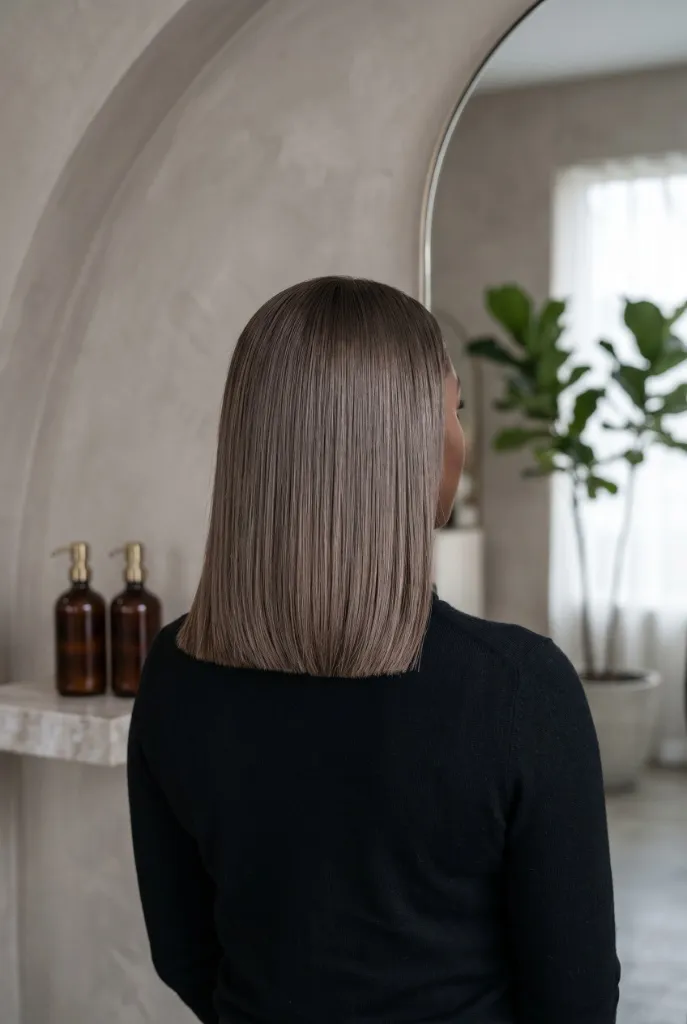
Precision cuts demand precision color, and a mushroom ash blunt bob delivers both simultaneously. The shade sits at a Level 5-6 with distinctly cool, grey-brown undertones — no warmth, no gold, just a clean, ashy brown that reads as incredibly modern. On dark skin, this coolness creates a sophisticated contrast that makes the skin look warmer and more radiant by comparison (it’s color theory at work, and it’s effective). The blunt cut at collarbone length with zero layers forces the eye to focus entirely on the color’s tonality and the hair’s condition — there’s nowhere to hide split ends or dullness here, which is why a regular gloss treatment is part of the package.
The mushroom mocha hair family is generally low-maintenance, and this blunt bob variation follows suit. Expect 10-12 weeks between color appointments, with an optional gloss refresh at week 6 to maintain the high-shine finish. A blue shampoo once a week counteracts any warmth that creeps in during fading. Trims every 6-8 weeks ($40-$60) are mandatory — blunt cuts show uneven growth immediately, which is the one real commitment here. Skip if you love warmth; this shade is deliberately, beautifully cold. Sharp, yet soft.
Berry Ombré with Long Layers on Dark Skin
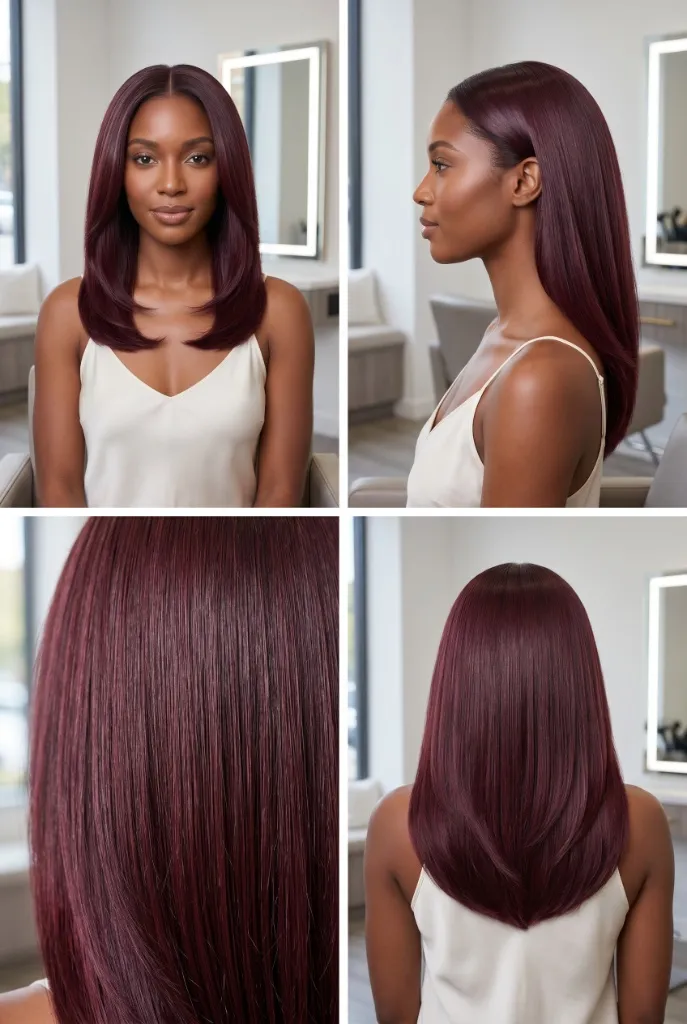
Berry ombré lands in the intersection of wearable and bold — the gradual transition from your natural dark roots into a deep berry-plum at the ends means you get the drama without the root anxiety. The ombré technique here involves lightening the lower third of the hair to Level 5-6 before depositing a concentrated berry-violet tone that reads as rich and saturated against dark skin. Long layers are the ideal pairing because they create multiple surfaces for the ombré transition to display itself, and the face-framing pieces pull some of that berry tone up near the face where it can actually work as a complexion-enhancer.
Berry ombré maintained peak saturation for about 6-8 weeks, with the plum tones fading into a softer mauve that was still pretty (a graceful fader, which is the hallmark of well-formulated color). A purple or burgundy color-depositing conditioner every other wash extends the berry tone significantly. The ombré placement means roots are never an issue — your natural color is literally part of the design. Budget $200-$350 for the initial service. The only skip-if: very fine hair, where the ombré line can look thin and scraggly rather than lush and graduated. Moody meets wearable.