Winter is the season when hair color gets to do the talking. The light is softer, the coats are darker, and a rich, well-chosen shade — whether it’s poured over a silk press, woven into braids, or melted into natural curls — becomes the brightest thing in the room. For 2027, the winter palette for Black women leans warm and dimensional: coppers and cognacs, wine-dark reds, honey and caramel ribbons, and glossy near-blacks with hidden depth. We covered this territory more deeply in Fall Hair Colors 2026.
What makes these colors winter-specific isn’t just the shade itself. It’s how they pair with protective styling, how they hold up under hats and scarves, and how they grow out gracefully when salon visits get spaced out by the holidays. Every idea below includes the technique to ask for, the maintenance rhythm to expect, and who it’s most likely to suit — so you can choose with confidence rather than guesswork. Related reading: Stylish Short Winter Haircuts 2025 2026 for Women takes the same concept further.
Warm Copper with Dark Roots on Long Box Braids

Courtesy of: homyglow.com
Copper braids with the natural root color left visible at the parting are one of winter’s smartest color moves. The base is a warm, burnished copper — not orange, not red, but that glowing-penny middle ground — running the full waist length of neat box braids with clean, precise partings. The dark roots, usually an inch or two of the wearer’s natural black or deep brown, keep the look grounded and make the copper read as an intentional color story rather than a wig-like block of color. For readers who want more, Blonde Winter Hair Color Ideas keeps the ideas coming.
Ask your braider for pre-stretched copper braiding hair in a warm shade (often labeled copper, auburn, or 350) and request that the roots be left with a natural feed-in so there’s no harsh line. Because braids are protective, this style typically lasts six to eight weeks, and the dark-root effect means regrowth is a non-issue. Copper can fade toward a softer bronze with washing — a sulfate-free shampoo and a color-depositing conditioner every few washes will hold the warmth. Best for anyone who wants a bold winter color without touching their own hair with dye.
Chocolate Brown Silk Press with Curled Ends
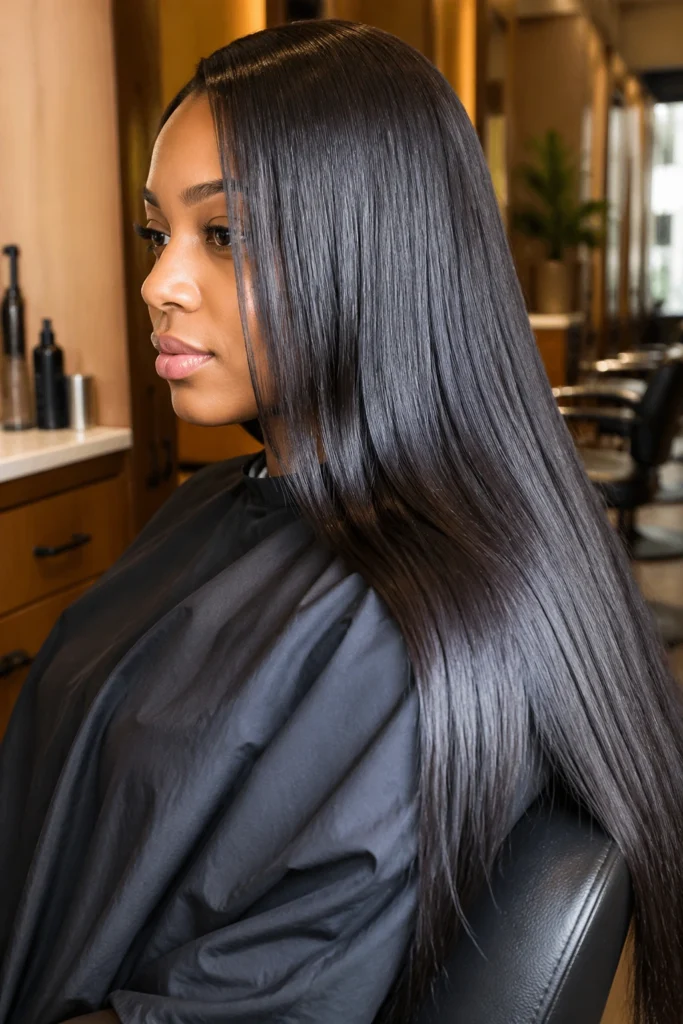
Photo credit: boldhairstyles.com
Chocolate brown is the quiet luxury shade of winter hair color — a rich, medium-dark brown with warm undertones that catches light beautifully on straightened hair. Here it’s worn as a silk press with gently curled ends, mid-back length, with long layers that keep the ends from looking blunt. The color reads almost black indoors but reveals its cocoa warmth in daylight, which makes it endlessly wearable from office to evening.
For natural hair, this is usually achieved with a demi-permanent gloss or rinse rather than permanent color, since there’s no need to lift — the dye simply deposits warmth over the natural base. A silk press typically holds one to three weeks depending on humidity and how you wrap at night; a silk scarf and a light serum keep the shine. The trade-off is weather: winter snow and rain can revert a press faster than summer dryness, so this suits someone willing to re-press or stretch with a flat iron between salon visits.
Burgundy Wine Ombré on a Defined Afro
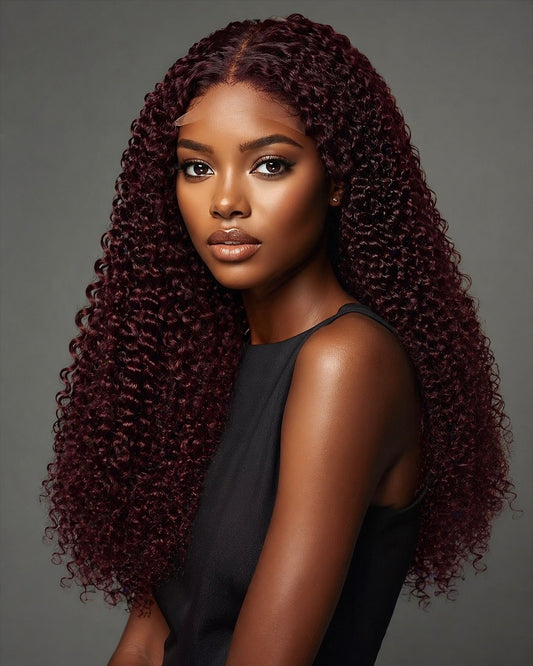
Image credit: fabbeauty.ca
A deep burgundy that melts from near-black roots into wine-red ends gives a natural afro a whole new silhouette in winter. The ombré placement keeps the darkest color at the roots — flattering against deep skin tones and practical, since the line of demarcation stays soft as hair grows. On defined curls, the color shift shows up as dimension rather than a stripe: the roots absorb light while the wine tips catch it. You’ll find the same spirit in Fall Hair Colors for Black Women 2026.
This can be done on natural hair with permanent color on the lengths (curls usually need to be lifted one to two levels for wine tones to show) or with a burgundy wig or crochet style for zero commitment. Reds are notorious faders, so expect the wine to soften toward a coppery red within a month — cool water, color-safe products, and minimal heat help. It suits anyone craving drama without going fully bright, though very dark natural hair will need bleach for the wine to read true, which means extra conditioning.
Honey Blonde Balayage with Loose Curls
Source: divagaze.com
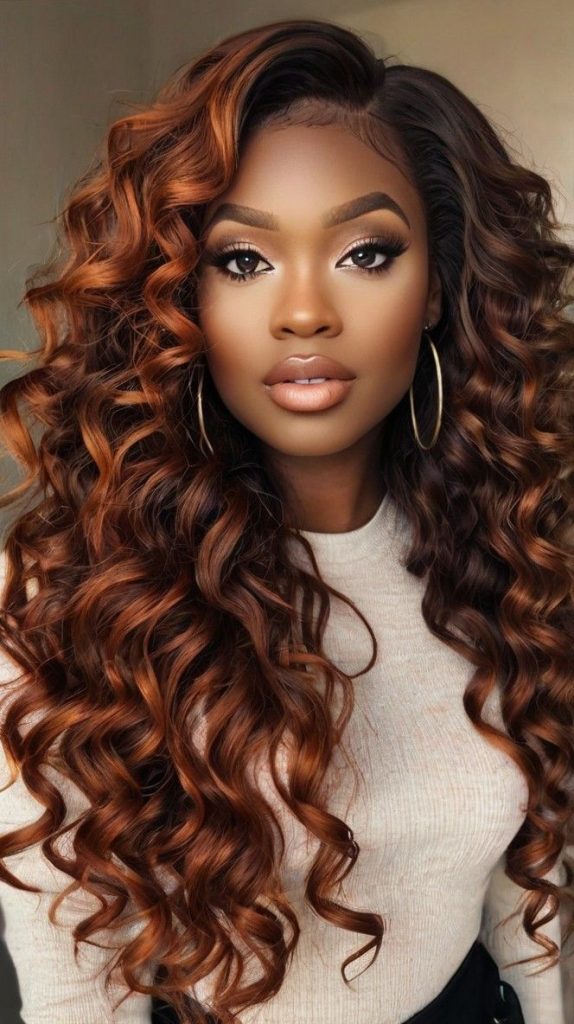
Honey blonde balayage over a dark base is the winter answer to the all-over blonde that gets harder to maintain in cold months. The technique paints golden ribbons through the mid-lengths and ends of loose curls while the roots stay deep, so the grow-out is graceful and the contrast feels sun-warmed rather than summery. The honey tone — warm, golden, never ashy — flatters warm and neutral undertones especially well.
Ask for hand-painted balayage with a honey or golden toner, and clarify how many levels of lift your hair can take in one session — very dark hair may need two appointments to reach honey without damage. Maintenance is moderate: a gloss refresh every eight to twelve weeks keeps the gold from turning brassy, and purple shampoo used sparingly prevents the blonde from going yellow. The trade-off is the lifting required; deep conditioning and bond-building treatments are non-negotiable companions to this color.
Jet Black Blunt Bob with Full Bangs
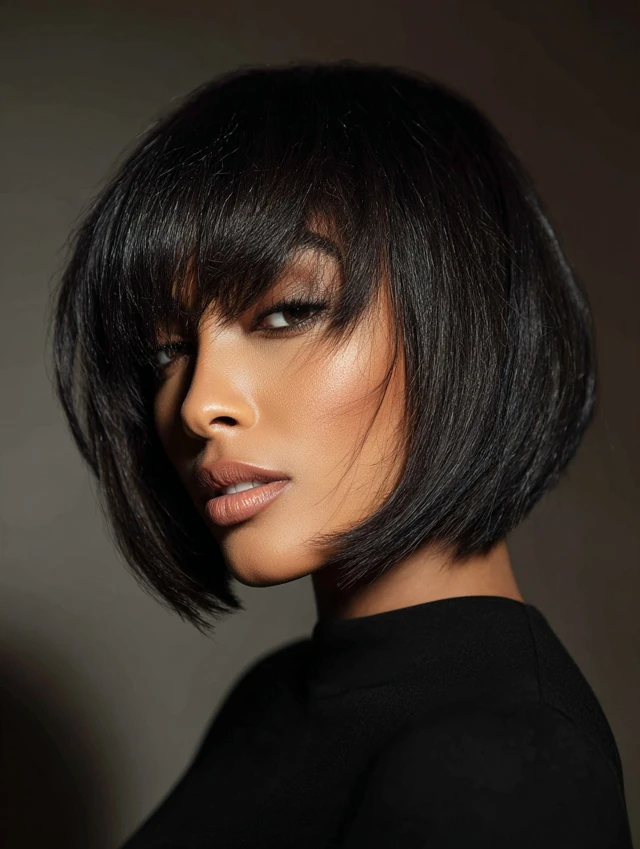
Sometimes the boldest winter color is no color at all — just black, perfected. A jet black blunt bob with full bangs is pure architecture: the deep, light-absorbing black makes the sharp perimeter and the straight-across fringe look even more precise. The glossy, ink-dark finish reflects winter light like glass, and against dark coats and scarves the whole head becomes a statement of polish. Our Fall 2025 Hairstyles for Women Over 50 rounds up more takes on this exact idea.
This works on relaxed hair, a silk press, or a blunt-cut wig; the “color” work is really about condition — black only looks expensive when it’s shiny. A clear gloss treatment at the salon every few weeks keeps the depth. The cut needs trimming every six to eight weeks to hold the blunt line, and full bangs need either regular trims or a willingness to sweep them aside. Best for anyone who wants maximum impact with minimum color commitment — though the bangs do ask for daily styling attention.
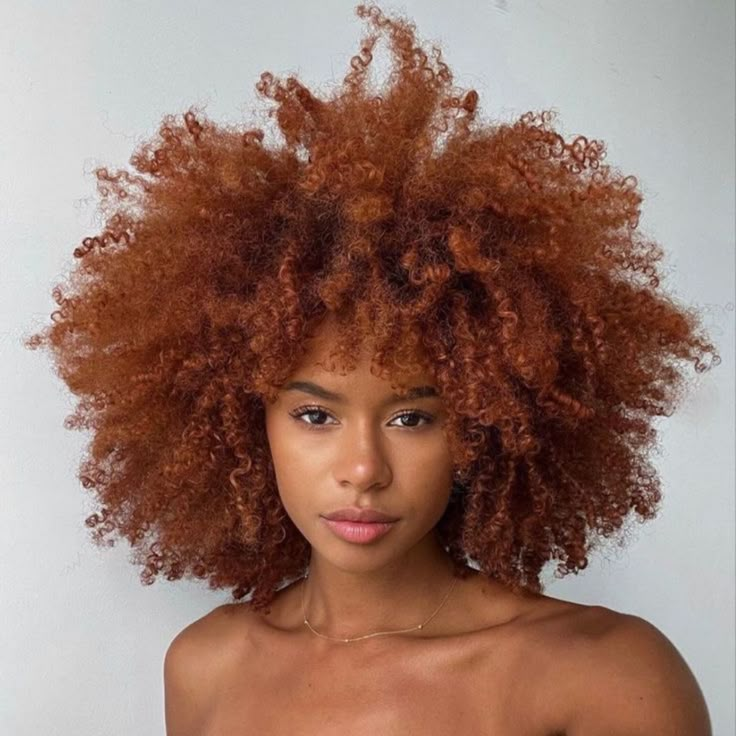
Auburn Copper with Volume Curls
Courtesy of: pinvibe.com
Auburn copper worn big — shoulder-length or longer, with full, separated volume curls — is winter’s answer to the flat, dark months. The shade sits between red and brown: fiery enough to glow against gray skies, deep enough to look natural on deeper skin tones. The volume is part of the effect; copper on compact hair reads subtle, but copper with height and width becomes unmissable.
On natural hair this usually means permanent color lifted two to three levels, then toned to auburn — a salon job for most, since even lift matters more than the final shade. Diffusing or a curly cut with layers builds the shape. Reds fade fastest of all colors, so plan on a color-depositing mask every couple of weeks and washing in cool water. It’s higher maintenance than it looks, but for anyone who wants their hair to be the outfit, few shades deliver like this one.
Caramel Highlights on a Twist-Out
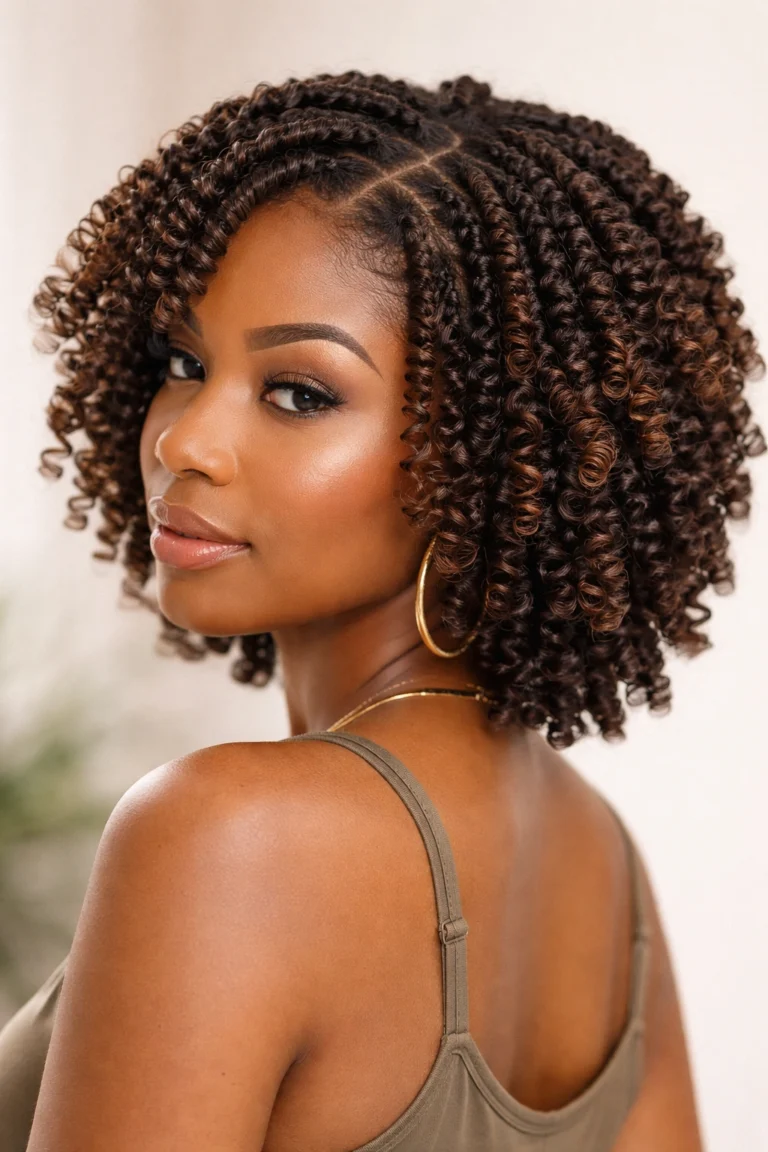
Photo credit: hairtical.com
Caramel highlights scattered through a twist-out give natural texture a candlelit quality in winter. The base stays close to the natural dark brown while fine, warm ribbons of caramel — placed mostly through the crown and ends — catch light every time the head turns. Because the highlights follow the curl pattern, they look painted on by nature rather than by foil, and the twist-out’s definition makes each ribbon visible.
Ask for partial highlights or balayage on the outer layers only, keeping the underneath dark for depth and to limit damage. Twist-outs hold their definition for several days with nightly pineapple-ing and a light oil; the color needs a gloss refresh every two to three months as the caramel can turn brassy. This is a good middle ground for naturalistas who want visible color change without full-head commitment — the trade-off being that highlighted curls need more moisture than virgin ones. The same theme, explored from another angle, is in Beautiful Light Hair Colors for Summer.
Deep Plum Water-Wave Sew-In with Dark Roots
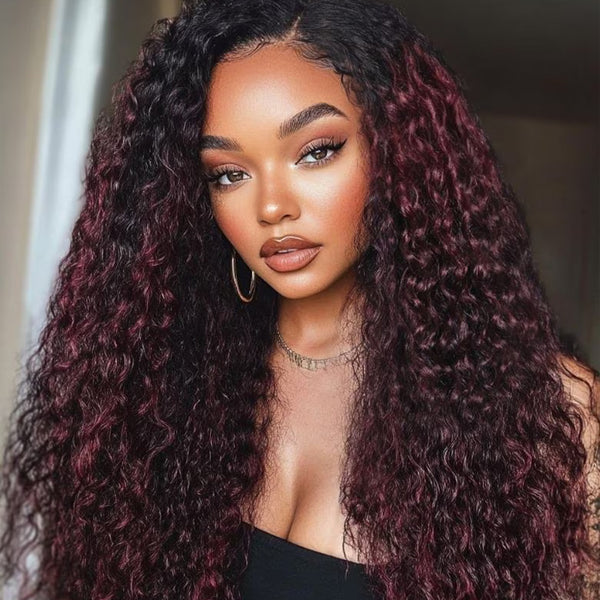
Image credit: pizazzhair.com
Deep plum — a purple so dark it reads black until light hits it — is one of winter’s most wearable fantasy shades. Worn as a long water-wave sew-in or wig with dark roots, it delivers that moment of violet shimmer on every movement without the upkeep of a brighter purple. The wave pattern is key: it breaks up the color so the plum appears as shifting dimension rather than a flat dye job.
The easiest route is colored bundles or a pre-colored unit, which means zero chemical processing on your own hair and an instant style change. Sew-ins typically last six to eight weeks with proper care of the leave-out or closure. Purple tones fade toward a dusty mauve over time, so color-safe shampoo matters even with bundles. Ideal for anyone who wants an obviously-different color that still reads elegant in professional settings.
Golden Brown Bob Braids
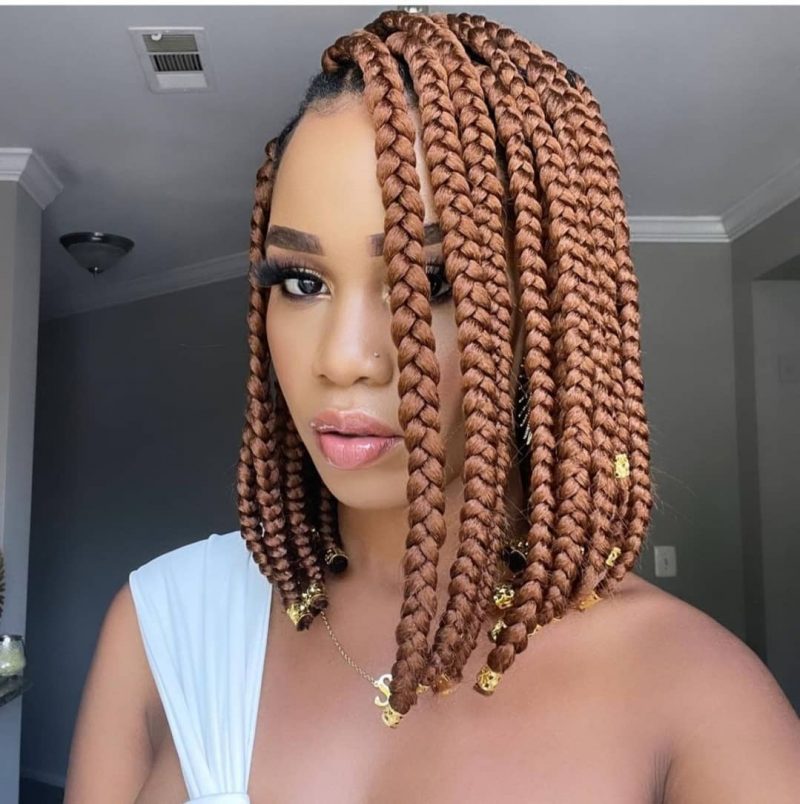
Source: hairstyleforblackwomen.net
Golden brown bob braids — chin to jaw length, in a warm honeyed brown — are winter’s low-effort, high-style protective option. The short length keeps braids from tangling in coat collars and scarves, while the golden brown shade brightens the face in a way black braids don’t. The color reads warm and dimensional, especially in natural light, and suits a wide range of skin tones because it sits in the flattering middle between blonde and brown.
Request knotless or traditional box braids in a golden brown braiding hair (often numbered 27 or 30) cut to bob length, with the ends sealed or curled. Bob braids typically last four to six weeks and are lighter on the neck than waist-length styles — a genuine comfort advantage in winter. The only real trade-off is styling variety: bobs offer fewer updo options than long braids, but what they lose in versatility they gain in polish. For more ideas in the same lane, see our Bob Hairstyles for Black Women.
Ash Brown Layered Silk Press
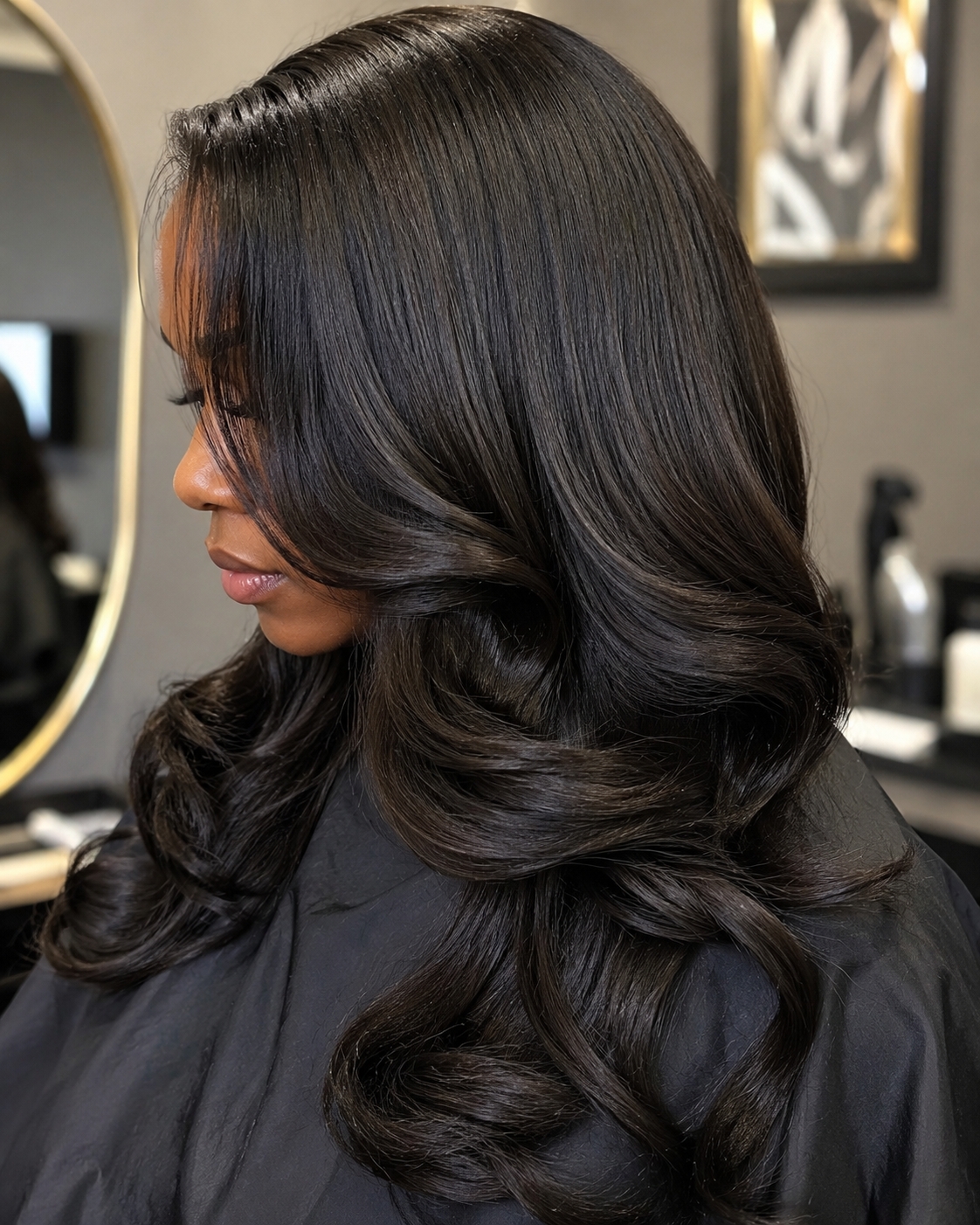
For cool undertones, ash brown is the winter neutral that does everything chocolate does — minus the warmth. This is a medium brown with a smoky, muted finish, worn as a layered silk press with soft waves that keep the cool tone from looking flat. The layers are doing quiet work here: they let the ash shade show variation from root to tip instead of sitting as one cool block.
Ash tones on dark hair usually require lifting past the warm stages, which means this is more chemically involved than it appears — a salon colorist will need to neutralize the underlying orange. Cool browns can also fade warm, so a blue or green-based color-depositing conditioner helps hold the smoke. Best for those with cool or neutral undertones who find warm browns turn brassy on them; the maintenance is moderate-to-high, but the result is strikingly modern.
Chestnut with a Blonde Money Piece, Sleek Ponytail
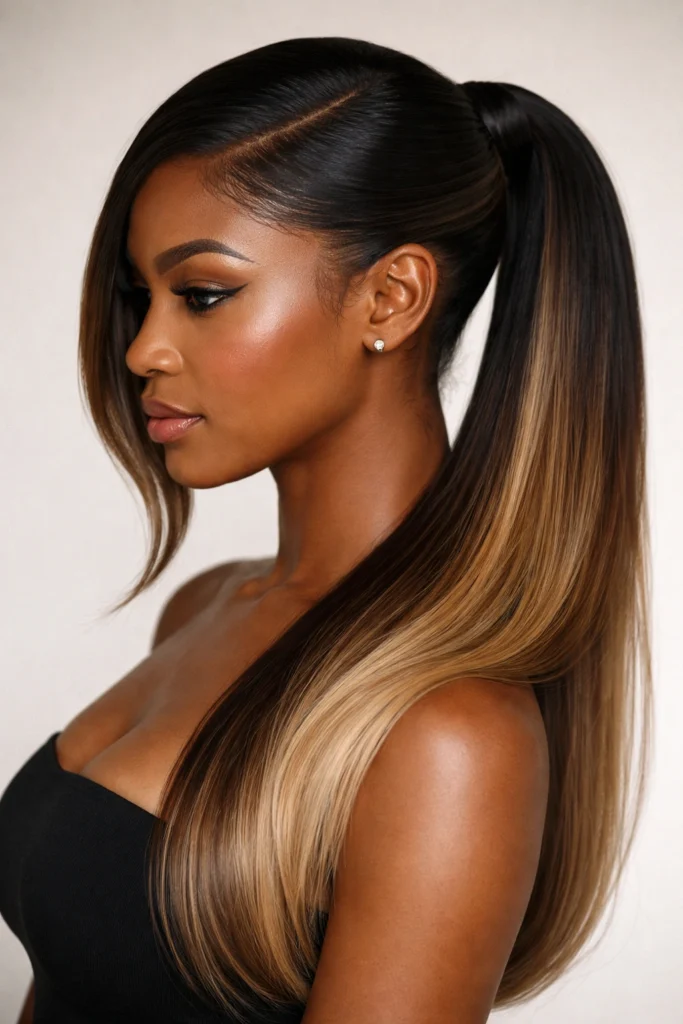
Courtesy of: boldhairstyles.com
The money piece — two face-framing ribbons of blonde against a deep chestnut base — gets its sharpest expression in a sleek ponytail. Pulled back tight and glossy, the ponytail shows off the color contrast at its most graphic: dark, rich brown through the length with bright blonde framing the face. It’s a high-contrast look that photographs beautifully and reads festive without trying.
Ask for the face-framing sections to be lifted to a golden or honey blonde while the rest stays chestnut; on a ponytail install this can be done with colored wefts for zero processing. The sleek style itself needs edge control and a good wrap routine to last the week. Blonde pieces need toning every few weeks to stay honey rather than yellow. Great for special occasions and holiday photos — as an everyday look, it’s best for those who enjoy the upkeep of a snatched style.
Mocha Balayage Knotless Braids
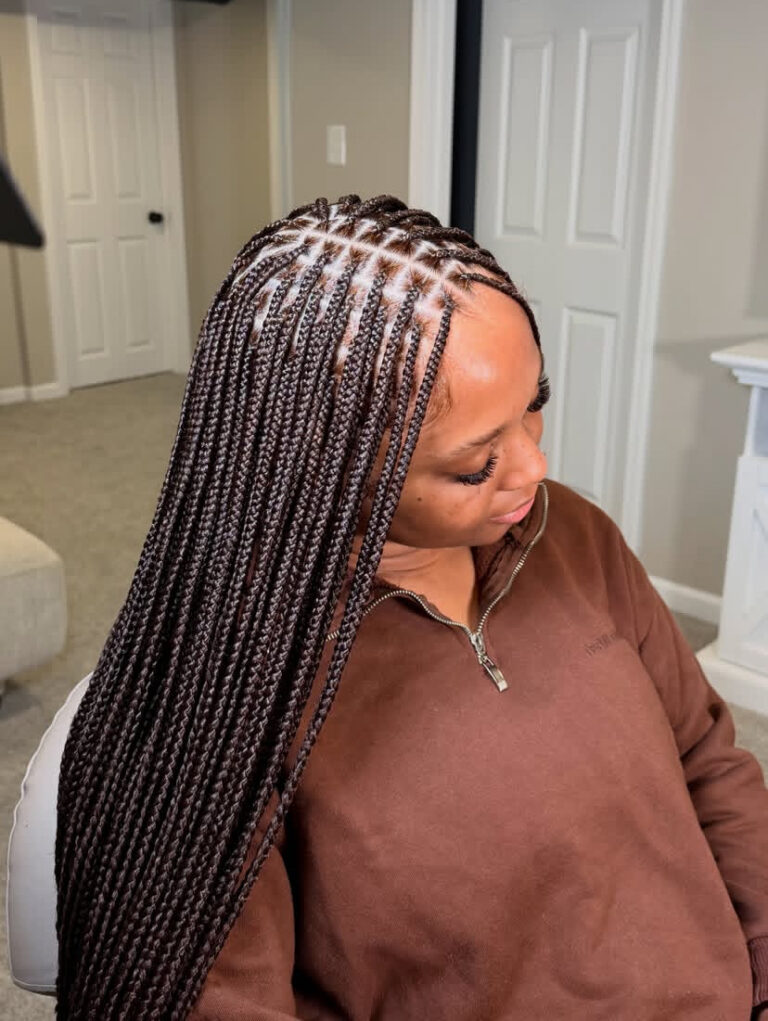
Photo credit: sistersbombshell.com
Mocha balayage braids blend two or three brown tones — espresso at the roots melting into milk-chocolate and caramel through the lengths — into knotless braids with a feathered, natural hairline. The color blend does what balayage does on loose hair: it creates the illusion of sun-touched dimension, except here it’s built into the braiding hair itself. The result looks expensive and grows out invisibly. This pairs naturally with the ideas in Fall Braid Hairstyles 2025 2.
Ask your braider for ombré or pre-blended braiding hair in mocha or brown-blend shades; the knotless technique keeps tension low at the scalp, which matters for a style worn six to eight weeks. Because the color is in the extension hair, your own hair needs no processing at all. The main consideration is cost — blended and ombré braiding hair runs pricier than single-tone — and finding a braider comfortable working with multi-tone hair for clean partings.
Black Cherry Passion Twists
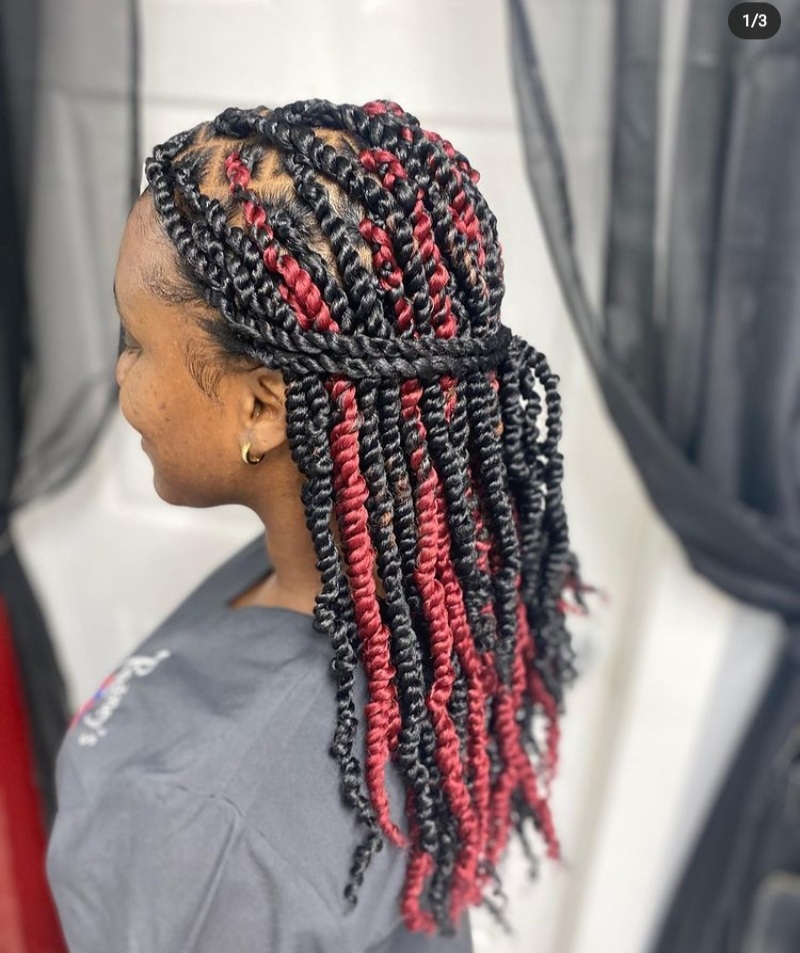
Image credit: theglossychic.com
Black cherry — that almost-black red that reveals itself in sunlight — is tailor-made for passion twists. The twists’ soft, fluffy texture diffuses the color so it reads as depth rather than dye, and the dark-cherry tone adds warmth to the face without the commitment of a bright red. At mid-back length, the twists move beautifully and the color shift shows on every turn.
Colored passion twist hair in black cherry or burgundy-black shades is widely available, so this is another zero-processing option — your natural hair stays untouched underneath. Passion twists typically last four to six weeks; keep the scalp clean with diluted shampoo and a light oil, and pineapple the twists at night to control frizz. The trade-off of the fluffy texture is that it frizzes faster than sleek braids, but the romantic, undone look is exactly the point.
Sandy Blonde Curly Bob Wig
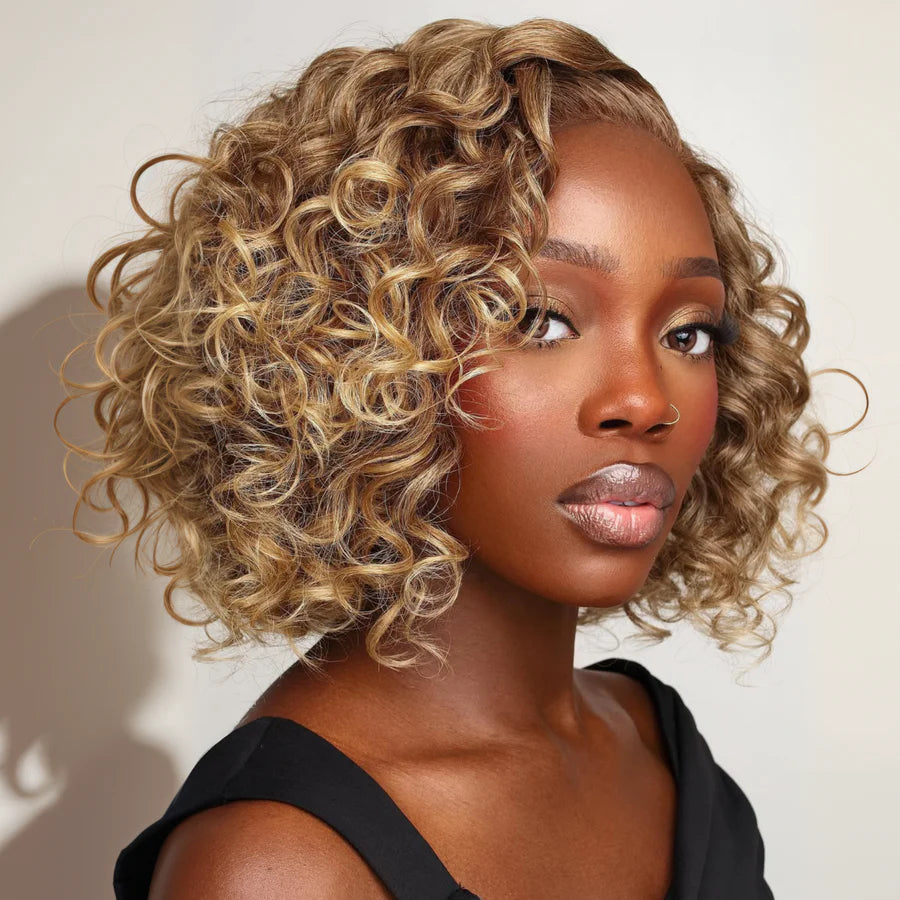
Source: coracrown.com
A sandy blonde curly bob — that beige-gold middle ground with soft highlights — worn as a wig is the ultimate winter color experiment with zero consequences. The bob length keeps a light shade from overwhelming, the curls give the blonde dimension so it doesn’t read flat, and the whole thing comes off at night. For anyone blonde-curious, a unit like this answers the question without a single foil. We break down a similar look in Homecoming Hairstyles for Black Women.
Look for a lace-front or glueless unit in a sandy or dark-rooted blonde so the hairline looks natural against deeper skin. Wig maintenance means washing every couple of weeks, storing on a stand, and refreshing the curls with water and mousse. The trade-off is realism at the hairline — a good lace melt takes practice — but the freedom to switch back to your natural color tomorrow is unmatched.
Mahogany Sleek Pixie
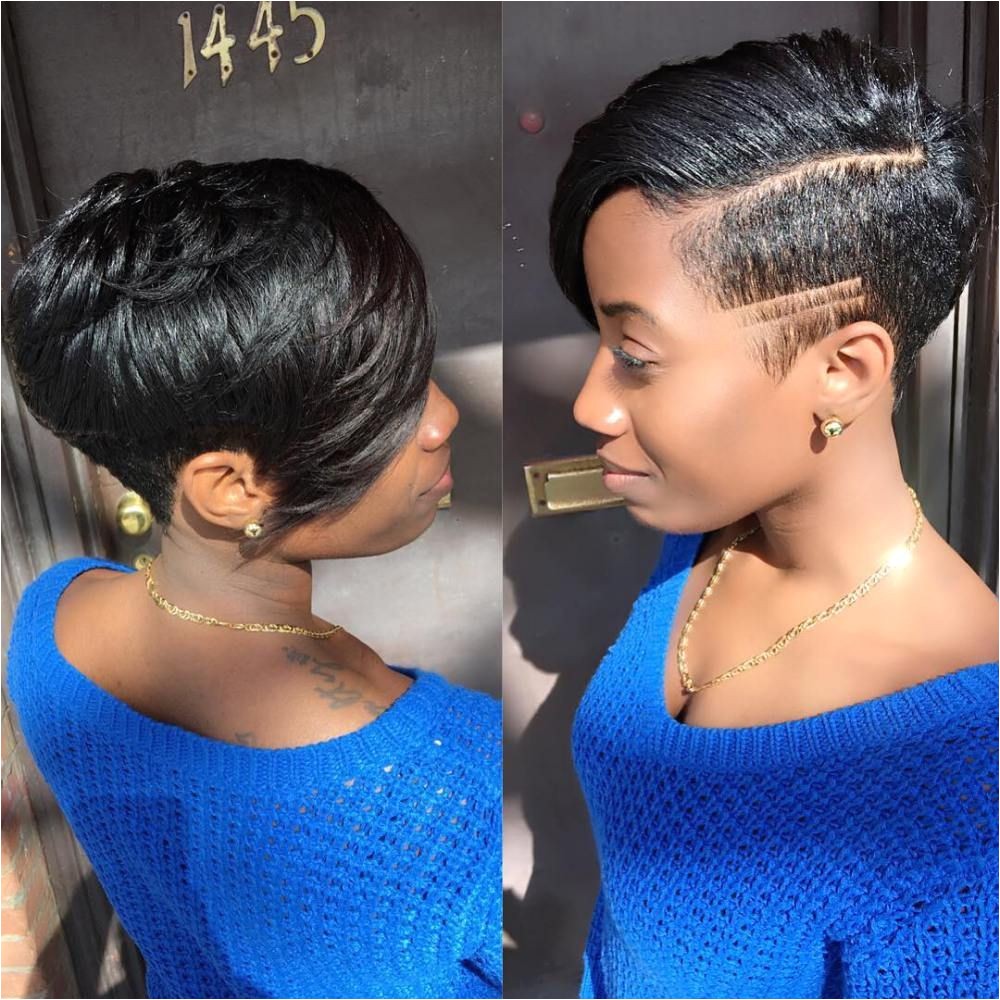
Mahogany on a sleek pixie is winter minimalism with a pulse. The deep red-brown shade — richer than auburn, darker than copper — gives a short, sculpted cut a jewel-like finish, and the sleek styling lets the color’s depth show without any distraction. On a pixie, color becomes the entire design, and mahogany’s warmth keeps the severe silhouette feeling soft.
This is typically permanent color on short natural or relaxed hair, refreshed every four to six weeks as roots show quickly on short cuts. The pixie itself needs shaping trims on the same schedule, so color and cut appointments can combine. Red-browns fade with washing, so color-safe products are essential. Best for confident minimalists — the look is striking, but there’s nowhere to hide a bad color match, so a strand test first is wise.
Dark Root to Golden Ends Goddess Locs
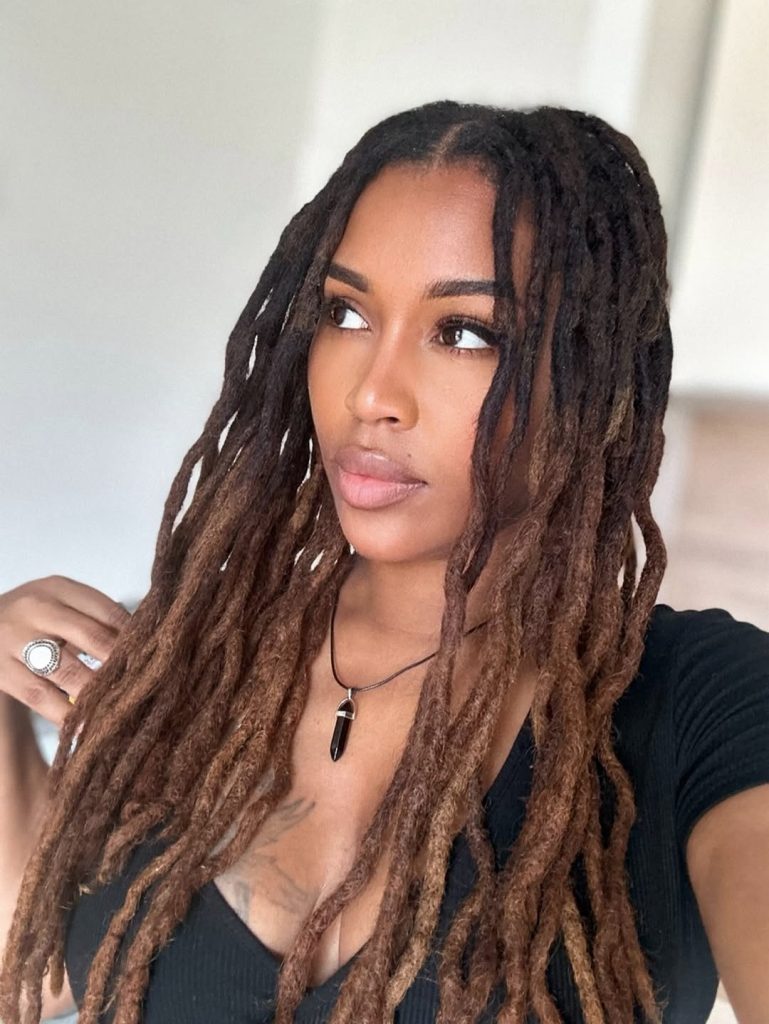
Courtesy of: divagaze.com
Goddess locs already have a romantic, undone texture; adding a dark-to-golden ombré turns them into a full winter color story. The roots stay deep — practical for regrowth and flattering at the hairline — while the ends glow gold, so the eye travels down the length of every loc. The contrast is dramatic but the dark root keeps it wearable.
Ombré locs are usually achieved with pre-colored crochet or faux locs in a dark-to-blonde blend, meaning no bleach on your own hair. They last six to eight weeks with gentle scalp care; the curly ends need occasional re-curling and a light mousse to stay defined. Golden ends show dryness faster than dark ones, so a light oil on the tips helps. Ideal for anyone who wants maximum color payoff with minimum chemical risk. For a different spin on the same theme, browse Autumn 2025 Must Try This Hair Colors Ideas.
Cinnamon Brown Bouncy Bob
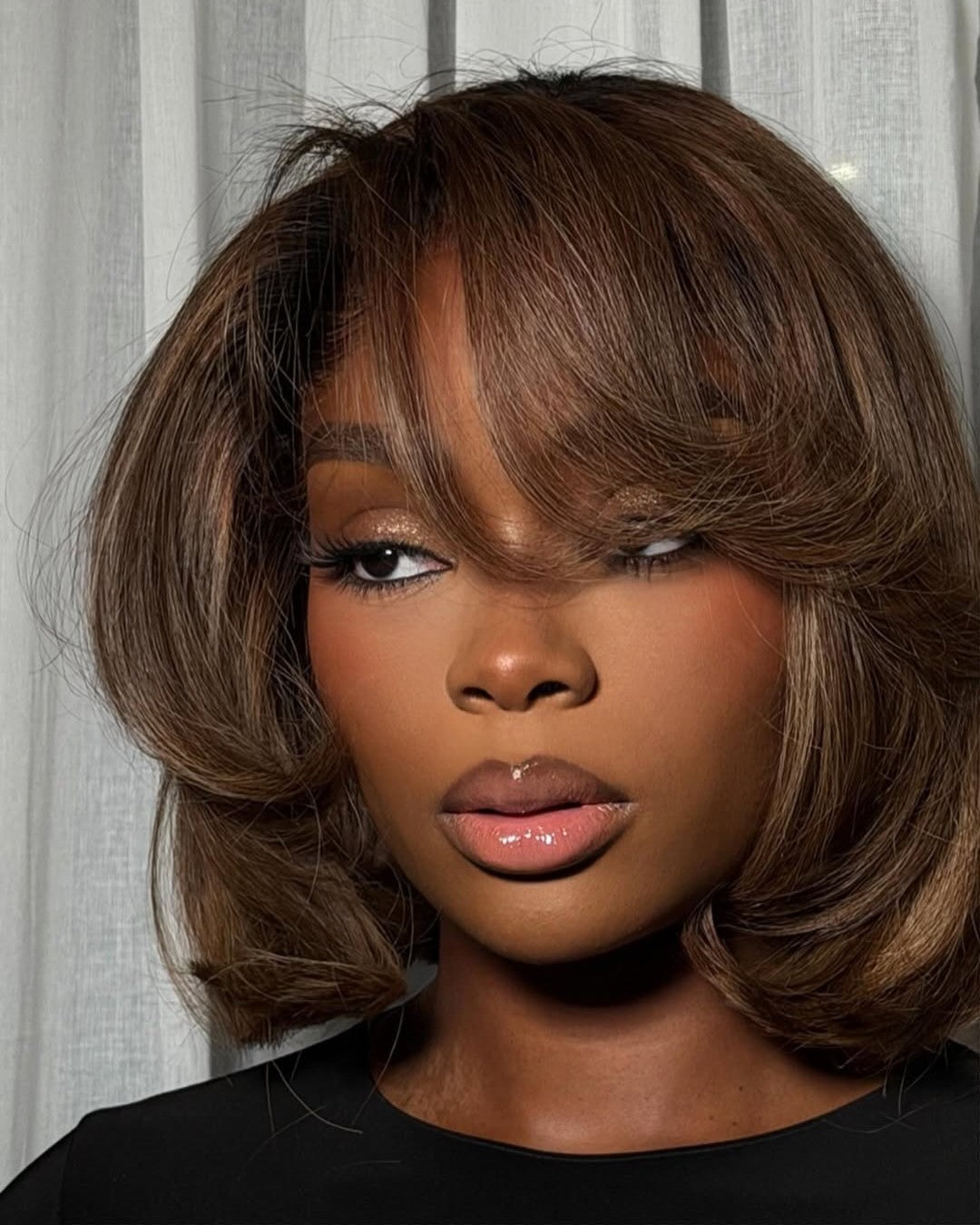
Photo credit: veluxehair.com
Cinnamon brown — warm, spicy, and lighter than chocolate — gives a bouncy bob its glow. The shade sits in the sweet spot where brown meets red-gold, and on a voluminous bob with movement it reads as warmth from every angle. A soft curtain fringe completes the look, framing the face in the same cinnamon tone so the color feels all-enveloping rather than just “dyed ends.”
This works as permanent color on natural or relaxed hair, or as a pre-colored wig for the commitment-shy. Cinnamon’s warmth means it fades gracefully rather than turning brassy — it simply softens toward a golden brown. The bob needs trims every six to eight weeks to keep its bounce, and rollers or a blowout maintain the volume. A lively, friendly shade that suits warm undertones especially well.
Blue-Black Silk-Straight Lengths
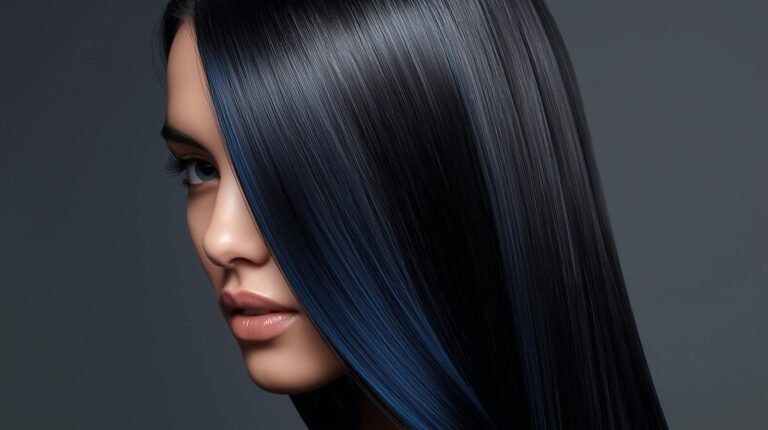
Image credit: skinscarelab.com
Blue-black is black with a secret: a deep blue-violet undertone that only reveals itself in direct light, turning an ordinary dark shade into something almost iridescent. Worn silk-straight and long, the color’s mirror-like shine becomes the whole point — every strand reflects light, and the blue cast keeps the black from looking flat or dull the way pure black sometimes can in winter’s gray light.
Ask for a blue-black permanent or demi-permanent shade (often labeled 1B blue-black or midnight); on already-dark hair it deposits without lifting. The blue undertone fades faster than the black base, so a blue-black color-depositing conditioner every couple of weeks keeps the cool cast alive. Long straight styles need the usual silk-press care — wrapping at night, humidity protection. Best for cool undertones and anyone who wants their “natural” black to look deliberately, expensively colored. The concept gets a fuller treatment in Perfect Hair Colors for Olive Skin.
Toffee Highlights in Feed-In Braids
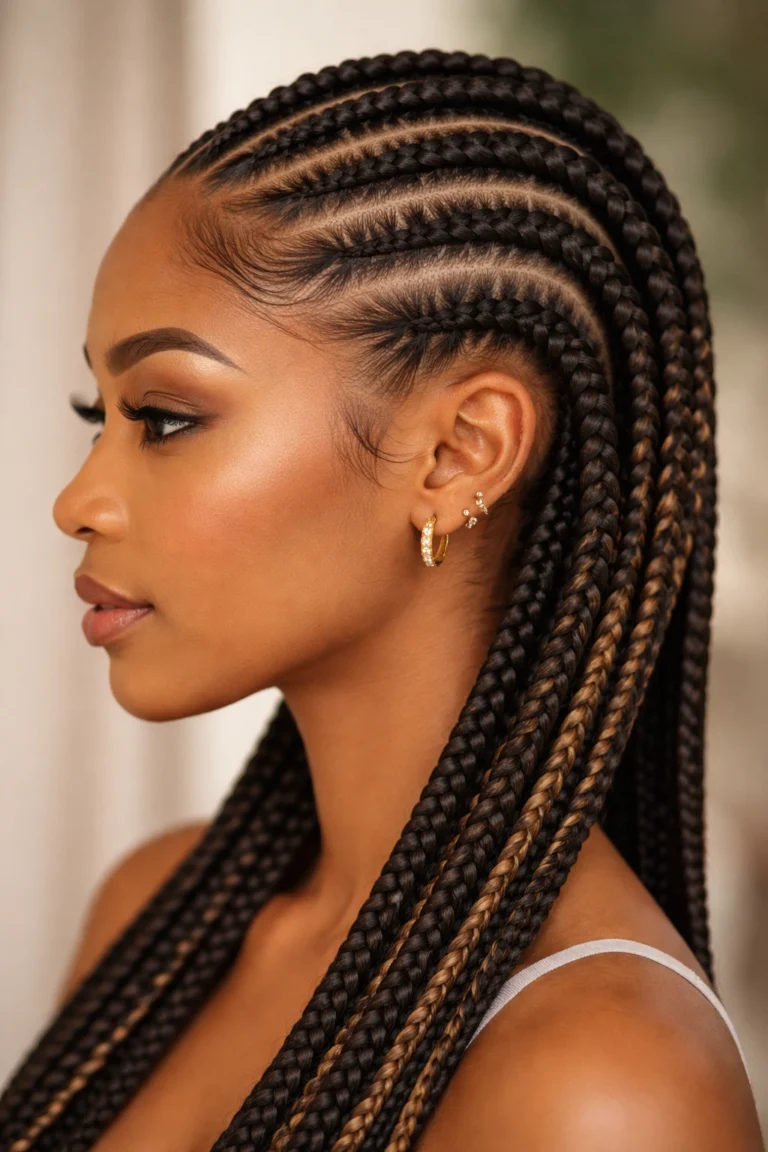
Source: hairtical.com
Feed-in braids with toffee highlights combine two winter wins: the scalp-friendly, natural-looking hairline of the feed-in technique and the warmth of caramel-toned braiding hair woven through. The toffee — a golden caramel, lighter than the dark base braids — is typically placed as accent braids or blended throughout, giving the style a sun-kissed ribbon effect that brightens the whole head.
Request a mix of dark and toffee braiding hair, with the lighter shade concentrated around the face and crown where light hits. Feed-ins last four to six weeks and the gradual hairline means regrowth looks intentional. Since the color lives in the extension hair, your own hair stays virgin. The main trade-off is precision — blended feed-ins take longer at the braider’s chair — but the dimensional result is worth the extra hour.
Espresso Brown Tapered Cut with Crown Curls
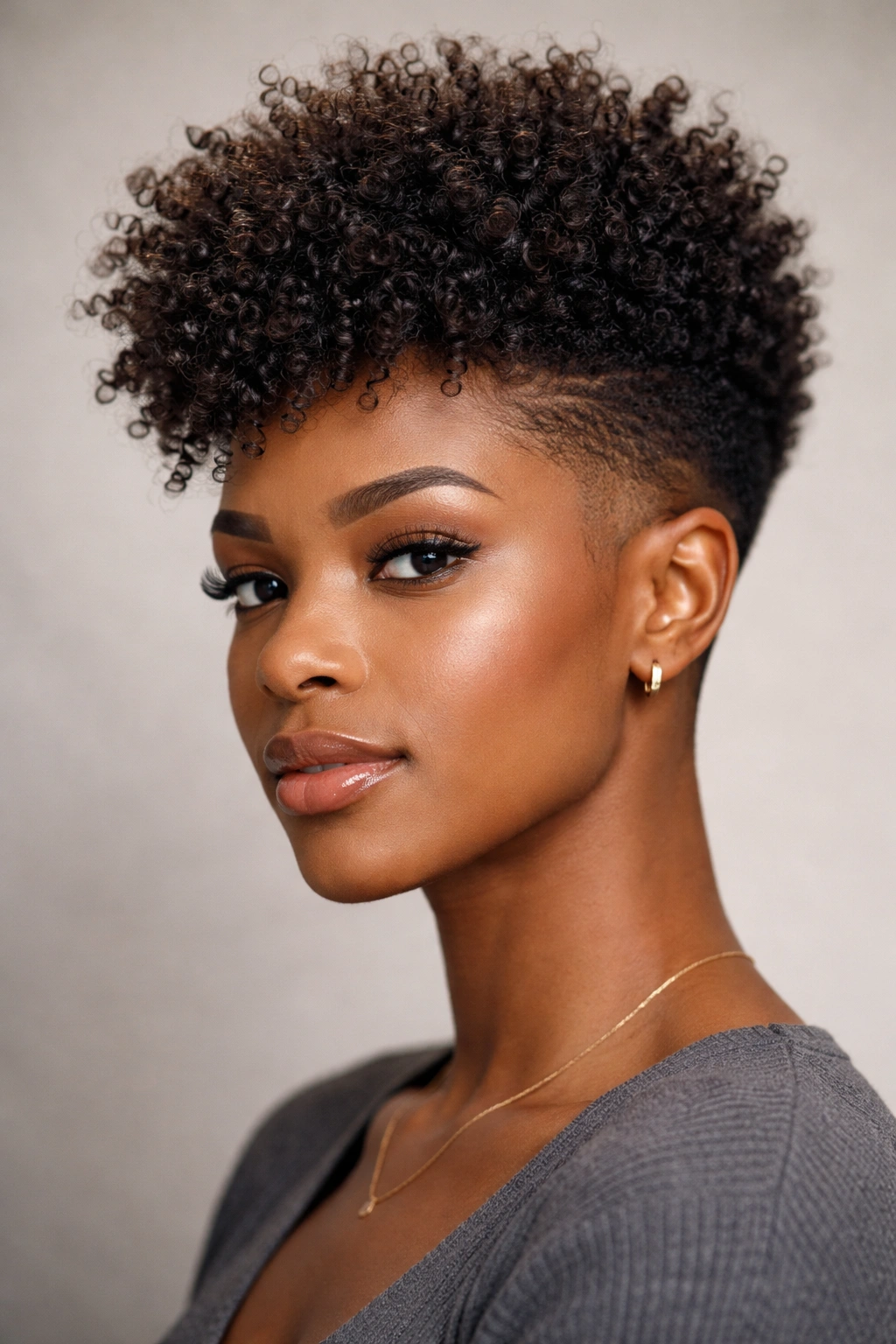
Via hairtical.com
An espresso brown tapered cut — faded or closely cut sides with a crown of defined curls — gets its richness from the darkest brown that still reads as brown. Espresso is nearly black but with a warmth that pure black lacks, and on short natural hair it gives the curls a soft halo of dimension instead of the flat look black can have on very short cuts. The shape is the star; the color is the polish.
This is usually a demi-permanent rinse or gloss over natural hair — no lift needed, minimal damage. The cut needs shaping every three to four weeks to hold the taper, which makes it one of the higher-maintenance shapes here despite the simple color. Curl definition comes from a good wash-and-go routine with a defining cream. Ideal for minimalists who want their color to whisper while their silhouette speaks.
Ginger Copper Afro
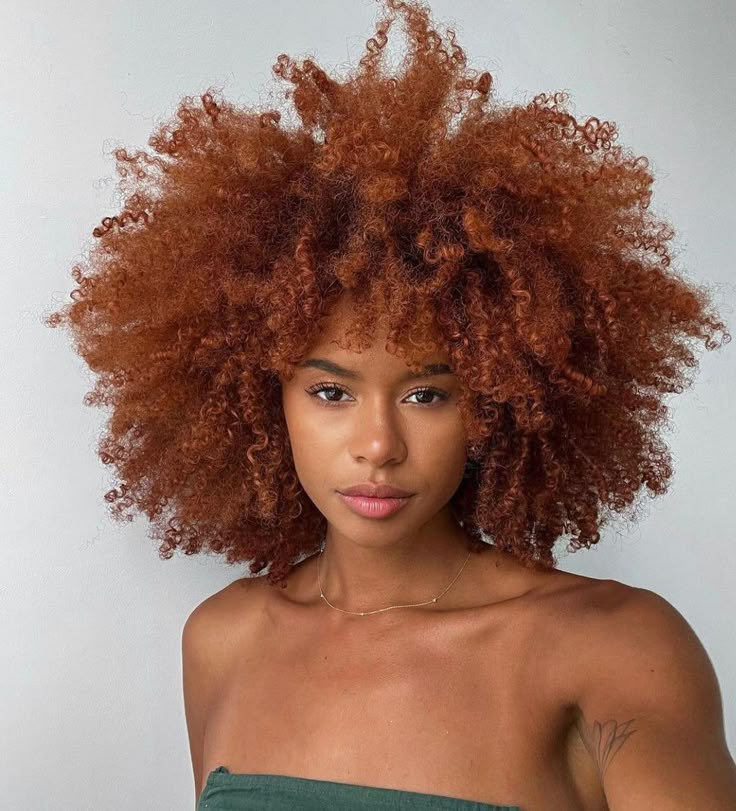
Courtesy of: pinvibe.com
A ginger copper afro — bright, fiery, unapologetic — is the boldest color on this list and arguably the most joyful. The shade is a true copper-orange, worn in a full rounded shape that turns the color into a halo. Against winter’s muted palette, ginger hair doesn’t just stand out; it seems to generate its own light. On deeper skin tones the contrast is striking in the best way. See also Best Blonde Hair Colors for Spring 2026 Bright Highlights Soft Seasonal Shine for more variations on this look.
Reaching true ginger on dark natural hair requires lifting several levels, so this is firmly a salon color with bond protection, followed by diligent deep conditioning. The color fades toward strawberry blonde within weeks — embrace the evolution or refresh with a copper depositing mask. A shaped afro needs trims every six to eight weeks to hold its roundness. High commitment, high reward: this is for the color-lover who wants winter to know they’ve arrived.
Warm Brown Balayage on a Silk Press
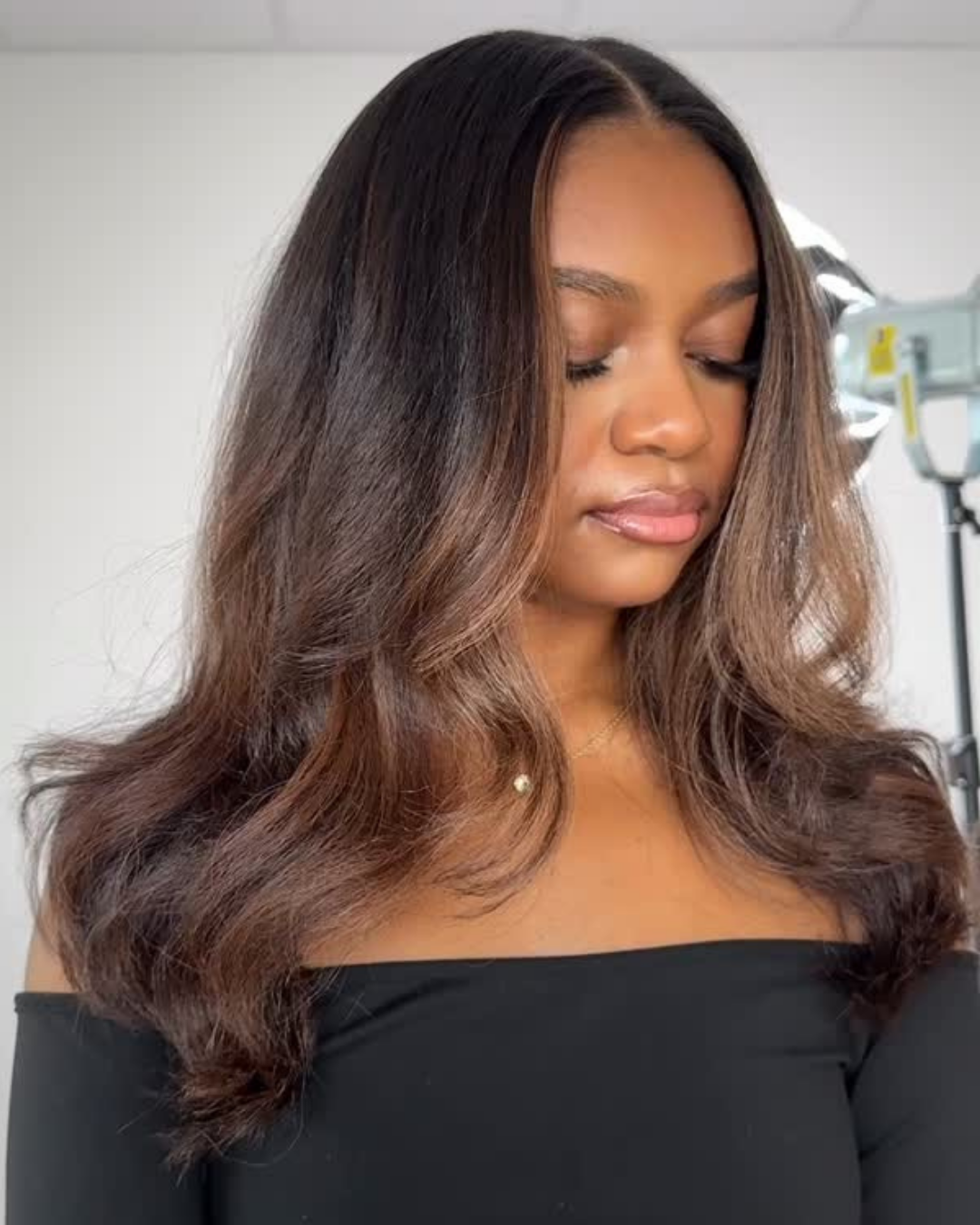
Photo credit: behindthechair.com
Dimensional brunette — warm brown balayage hand-painted over a dark base — looks like the most expensive version of “my hair but better.” The technique weaves ribbons of caramel and toffee through the mid-lengths of a silk press while the roots stay deep, creating movement and light without an obvious dye line. On straightened hair, every ribbon is visible, which is why this color and this finish are made for each other.
Ask for balayage with a warm brown toner rather than an ashy one — winter light flatters gold, not gray. Because the roots are untouched, grow-out is seamless and salon visits stretch to three or four months for the color itself (the press is a separate rhythm). The lifting involved means this needs the usual bond-care and conditioning. Best for professionals who want noticeable color that never reads as “done” — the trade-off is the upfront salon time and cost.
Smoky Chocolate Bob with Bangs
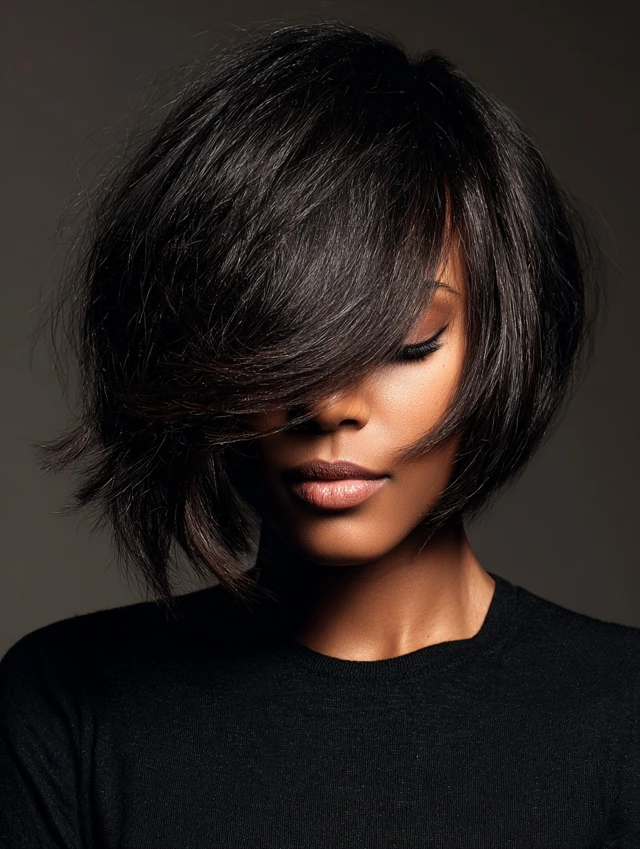
Image credit: yournextinspo.com
Smoky chocolate takes the classic brown bob and cools it down — a medium-dark brown with a muted, almost taupe undertone that feels modern and a little bit editorial. Paired with bangs, the cool brown frames the face in a soft, smoky curtain that flatters cool and neutral undertones. It’s the anti-brass brown: no gold, no red, just depth. For the fuller picture, Summer Hairstyles Black Women 2026 is worth your time.
As with ash brown, the cool tone requires neutralizing warmth during coloring, so this is a salon formulation rather than a box dye. The bob needs trims every six to eight weeks and the bangs need regular maintenance. Cool browns fade warm, so an ash-based gloss between appointments holds the smoke. A sophisticated choice for anyone whose skin rejects warm tones — the maintenance is real, but the result is unmistakably chic.
Bronde Knotless Braids
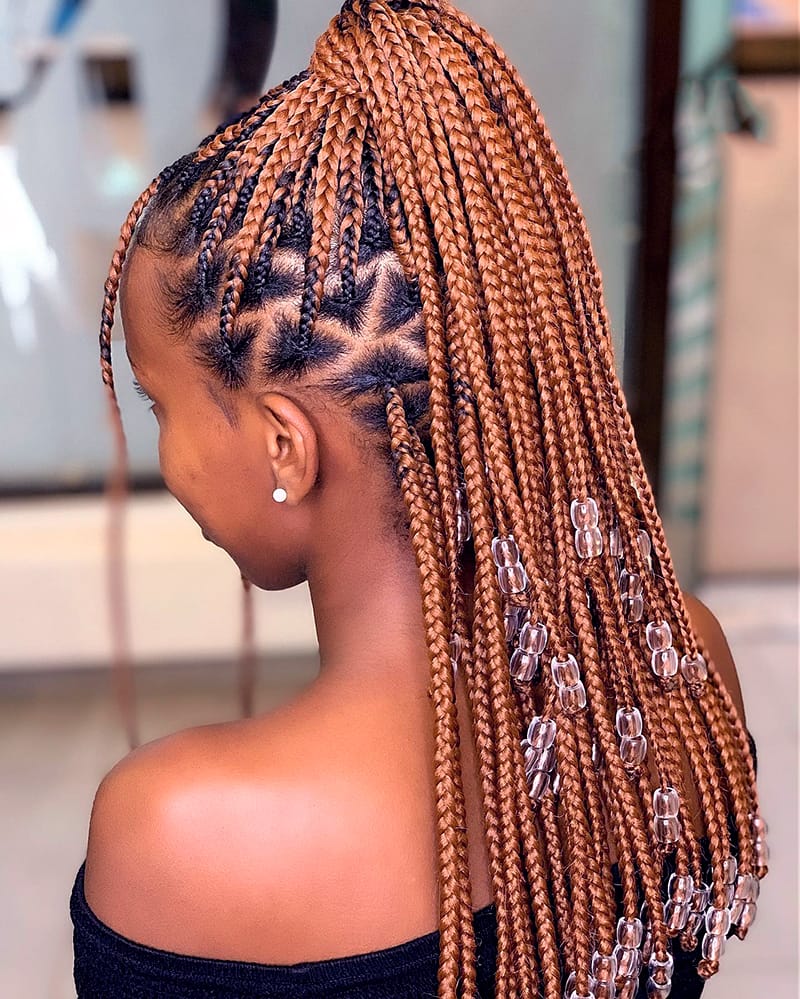
Source: curlycraze.com
Bronde — the brown-blonde hybrid — might be winter’s most versatile braid color. Neither fully brown nor fully blonde, it sits in a honeyed middle that flatters an enormous range of skin tones and reads as naturally sun-lightened even in December. In knotless braids, the blended tone looks soft and dimensional, with the knotless hairline keeping everything believable.
Ask for pre-blended bronde braiding hair, or have your braider mix brown and honey-blonde packs for a custom blend. Like all braided styles, this is zero-processing for your own hair and lasts six to eight weeks. Blonde-blend hair can look slightly duller as it ages, so a light mousse refresh keeps the braids looking fresh. The perfect middle path for anyone torn between staying dark and going light — bronde quietly does both.
Final Thoughts
The strongest winter hair colors for Black women work because of dimension and undertone, not simply because they are dark or light. The coppers, wines, honeys, and espressos above all share one quality: they interact with light, which is exactly what winter hair needs when the days go gray. Whether you get there with dye, a rinse, or colored braiding hair, choose based on your maintenance appetite, your hair’s texture and history, and how much grow-out grace you want — the prettiest color is the one you can actually keep up with through the season.
- Trim every six to eight weeks to keep the shape sharp.
- Use a heat protectant before every hot-tool session.
- Tone blonde or highlighted hair every six weeks to keep brassiness away.
- Match the upkeep schedule to your routine before committing to high-maintenance color.
The best color is the one that still looks intentional at week six.