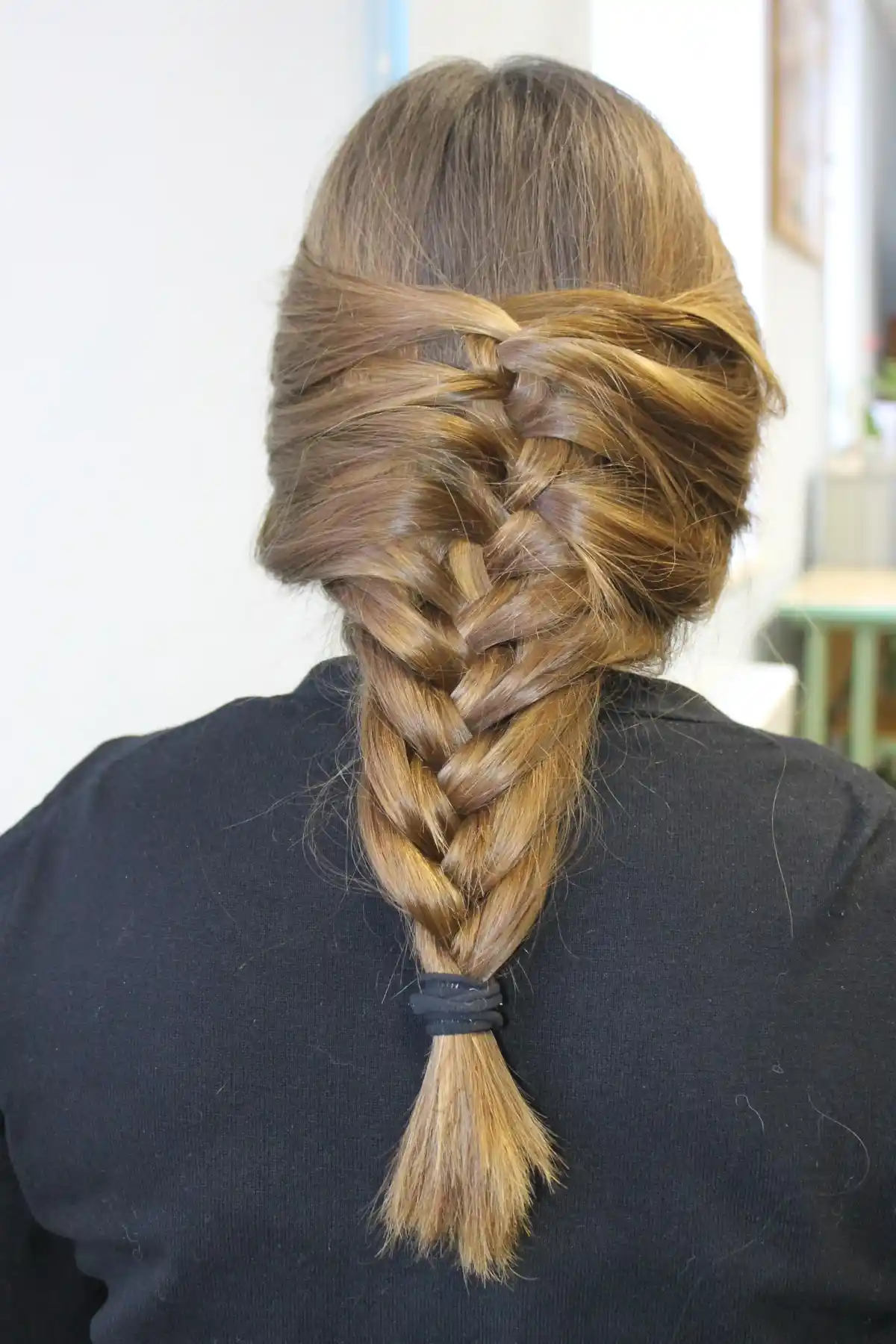
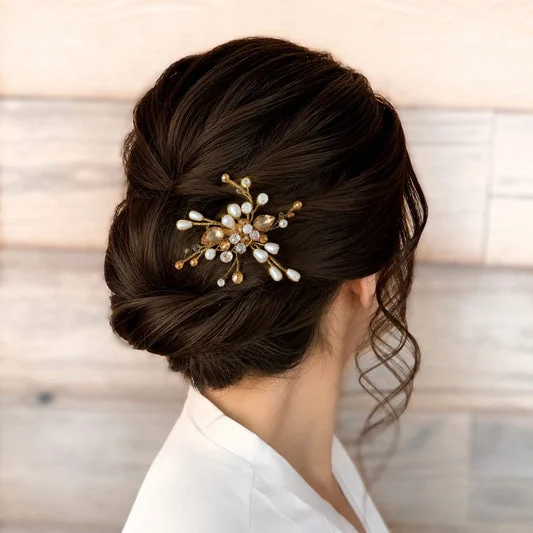
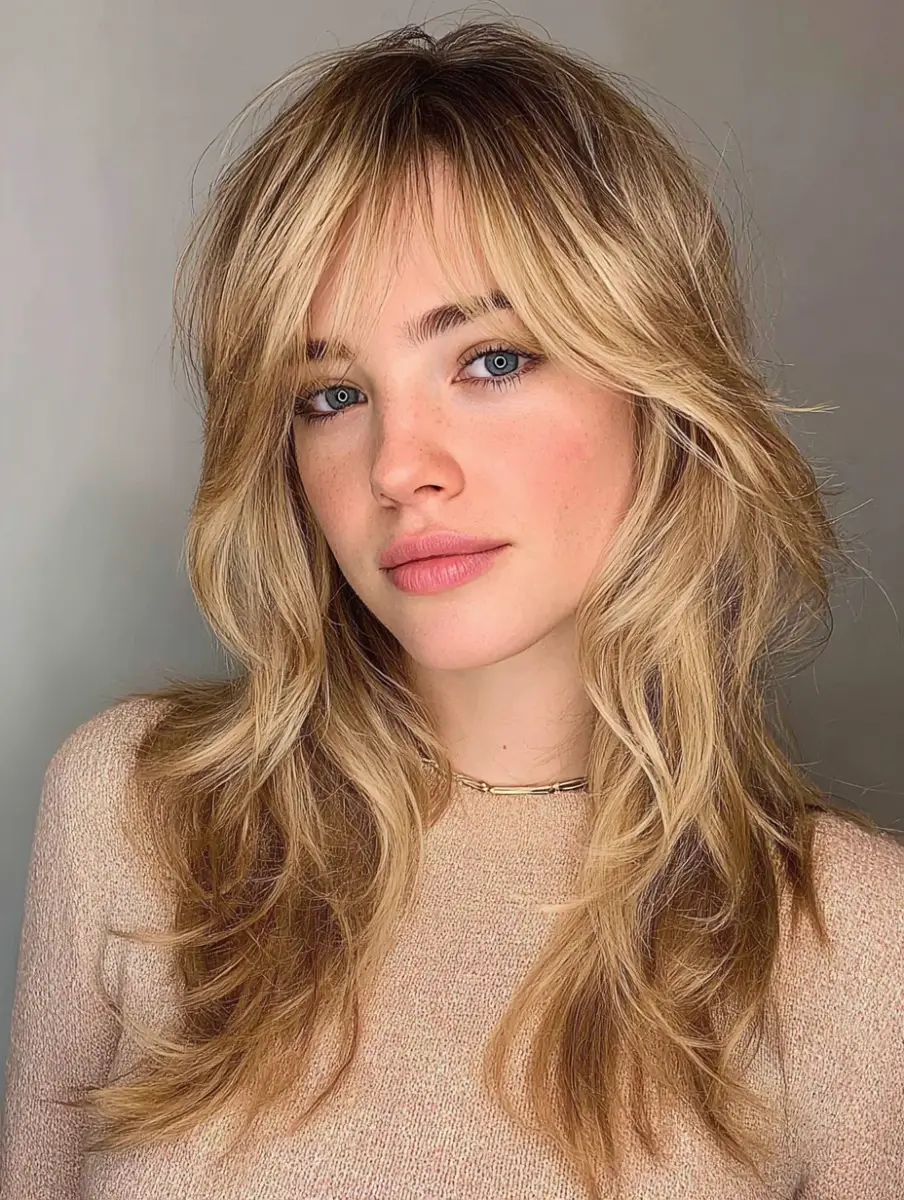
A dance hairstyle has a harder job than an everyday one. It has to survive spins, jumps, quick changes and hot stage lights, and still look intentional from the back row. The styles that work best are the ones built on structure first and decoration second: a braid that anchors the crown, a twist that locks the nape, a bun that sits exactly where it will not wobble. When the foundation is secure, the pretty details — pearls, bows, glitter — get to shine instead of doing the holding.
This roundup covers twenty ideas across braids, twists, buns, ponytails and curls, for fine hair that slips out of everything and thick hair that needs taming. Some take ten minutes and two elastics; others belong in a stylist’s chair the morning of the show. If you perform in a team, the same thinking behind cheerleader hairstyles applies here — grip, symmetry and a finish that reads from a distance — and if you need something that survives sport as well as stage, volleyball hairstyles are built on the same stay-put logic.
Soft Twisted Low Bun With Face-Framing Tendrils
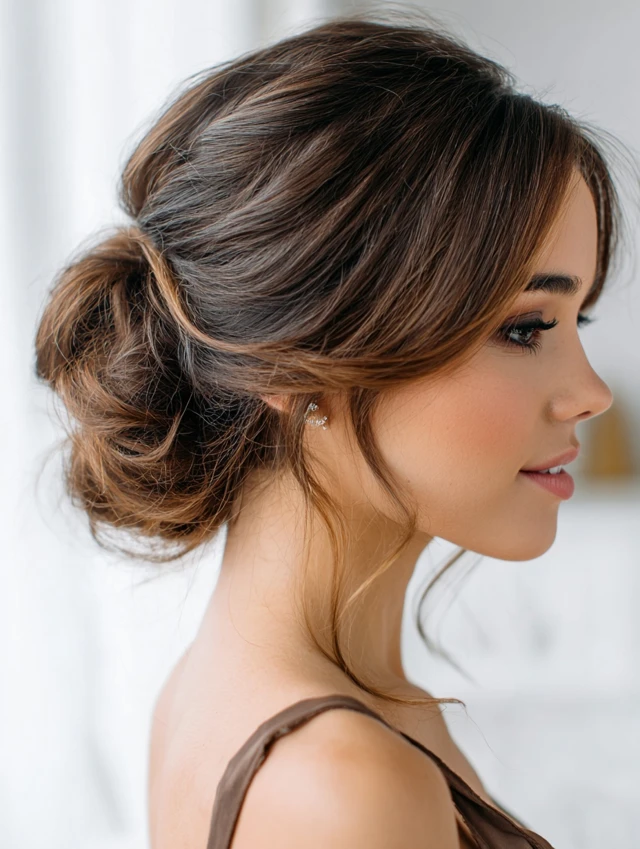
Photo via Your Style Inspo
A low bun made from twisted sections is the quiet workhorse of performance hair. It suits medium-density wavy hair at shoulder length or longer, because the twists need enough weight to hold their shape without sliding. The tendrils left loose around the face are doing real work too: they soften the hairline and stop the style from reading severe under bright lights. A texture spray worked through before twisting gives each section grip, so the bun stays put through a full rehearsal and the show after it.
Ask for soft twisted sections gathered low at the nape, with the face-framing pieces left deliberately loose rather than pinned back. The trade-off is maintenance at the front — those tendrils will need a light mist of flexible-hold spray between numbers — but the payoff is a style that looks finished from every angle, including the side profile the audience actually sees.
Intricate Braided Updo With Pearl Pins
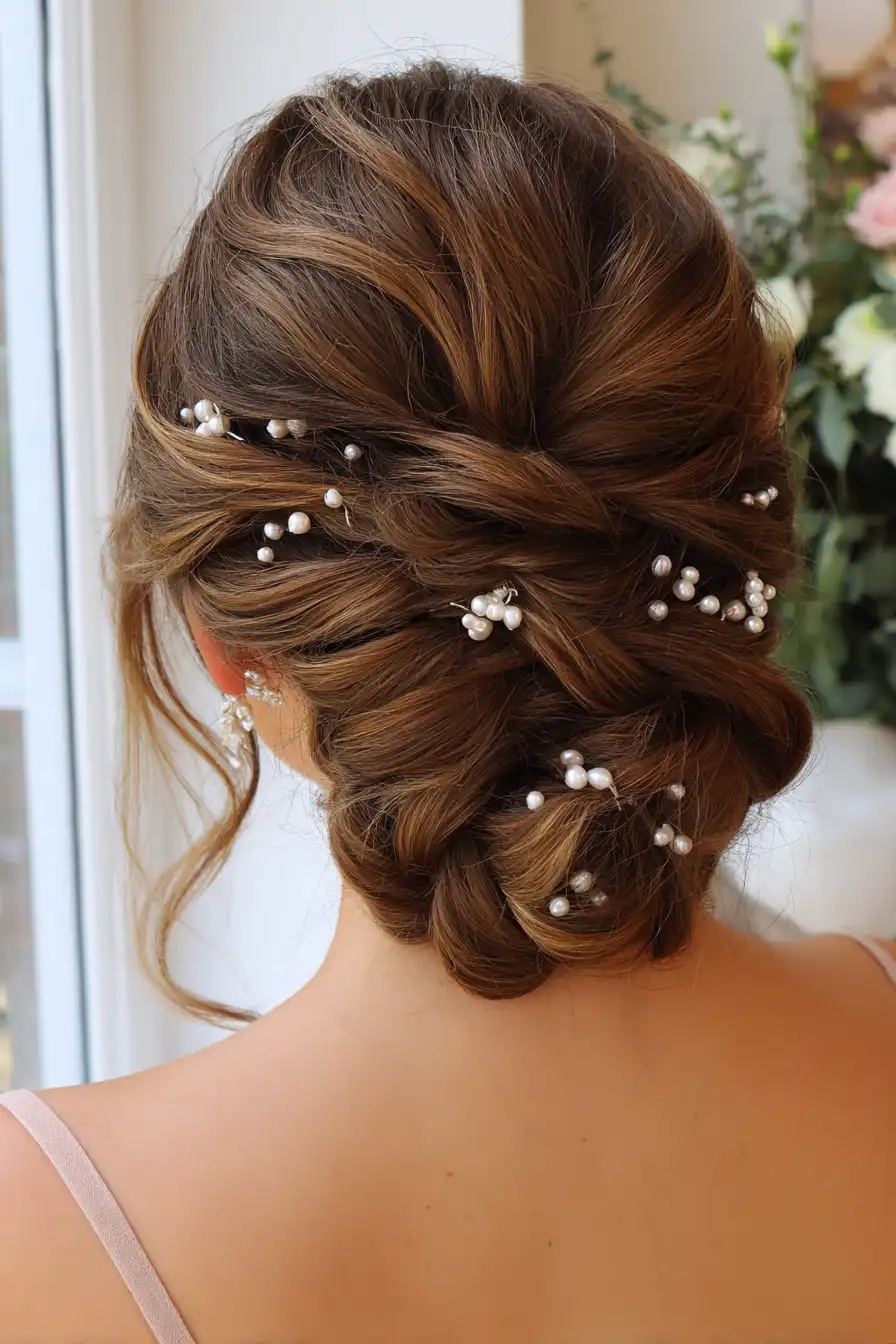
Image credit: Matched Hearts
Multiple interlocking braids pinned into a compact shape, with small pearls tucked along the braided sections and into the bun, make a braided updo feel like an occasion rather than a rehearsal. The structure is the event and the pearls are the supporting detail, so keep them scattered and small instead of clustered in one spot. Wavy, thick hair at shoulder length or longer gives the braids enough substance to stay visible once they are pinned up.
This is a formal choice — competition, recital, gala — and it is best built in the chair, since the pinning pattern decides whether the shape holds. A smoothing cream before braiding keeps flyaways down, and each pearl pin should be pushed into the base of a braid rather than balanced on top of it. The result reads polished from the back, which is where most of the audience sits.
Half-Up, Half-Down Style With a Braided Crown
Courtesy of Deer Pearl Flowers
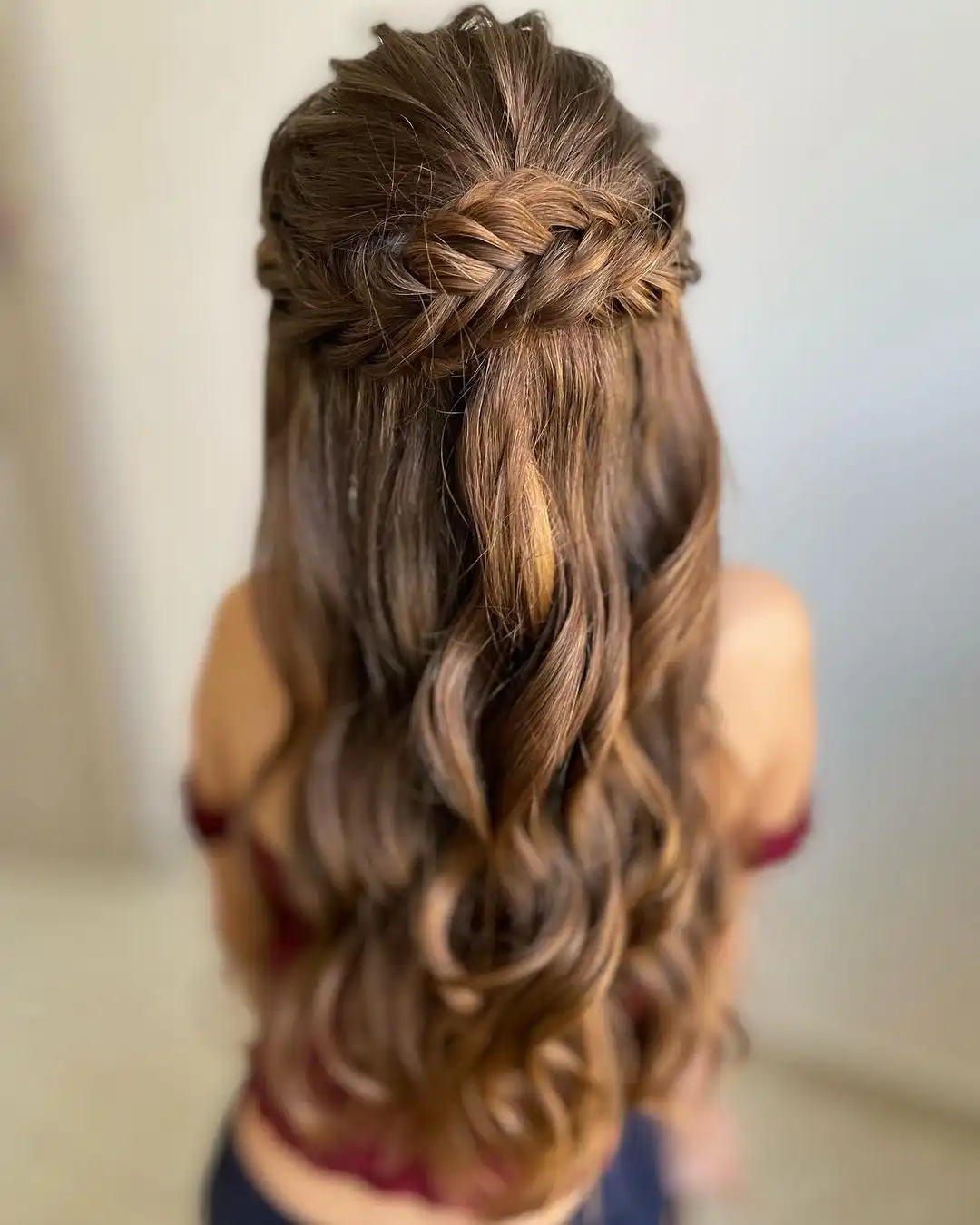
A braided crown that runs across the back of the head, rather than along the hairline, puts volume exactly where thick wavy hair can carry it. The braid pulls the top section up and back, which takes bulk away from the nape, while the rest of the hair falls in loose waves underneath. The middle part keeps the symmetry clean, and the braid itself anchors the top so the waves below can move without the whole style collapsing.
Tease the crown section lightly before braiding so the braid has presence instead of sinking into the waves. This is a good middle ground for dancers who want their hair down but cannot have it in their face — the same balance that makes bora bora braids so popular, where the braiding does the containing and the length still gets to move. A trim every eight to ten weeks keeps the layers holding their shape.
Double Dutch Braids Into a Low Ponytail
Source: Haber724
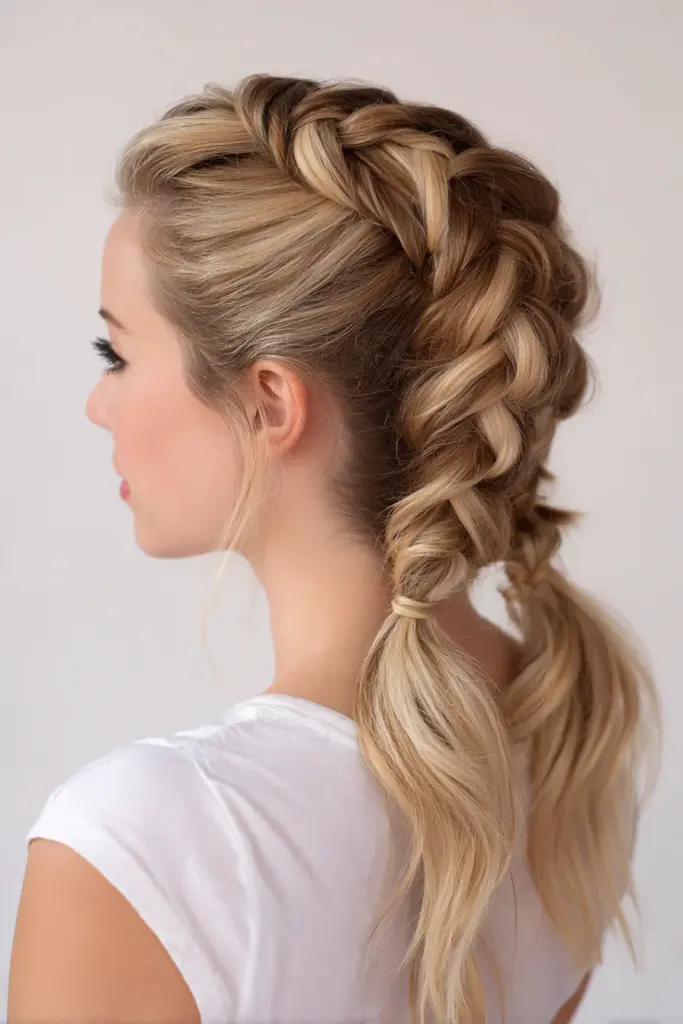
Two Dutch braids that meet at the nape and feed into a low ponytail solve a specific problem: keeping long hair contained without flattening the crown. The braids pull the sides back cleanly, the ponytail gives the ends somewhere to go, and the whole thing is genuinely doable at home. Start with a middle part, braid each side from the hairline down, then secure both braids together low with one elastic.
Blonde highlights running through the braids make the pattern easier to read, which matters when the audience sees the back of your head for most of the routine. A smoothing serum before braiding prevents flyaways, and because Dutch braids cross under rather than over, the ridge sits raised and defined. If your hair is fine, a little texturizing powder at the roots stops the braids from sliding by the second number.
Ash Blonde Shoulder-Length Layers With a Side Braid
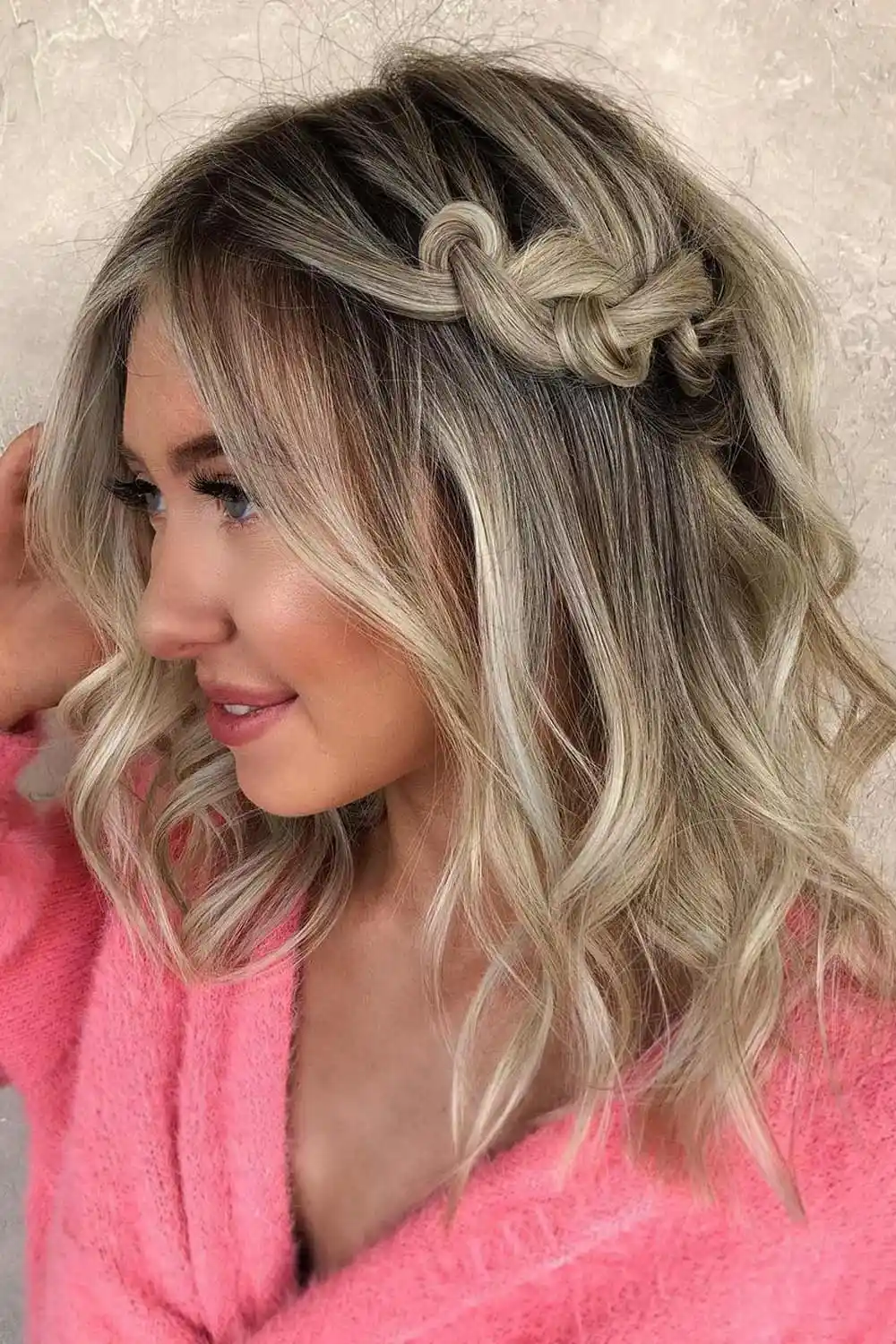
Photo credit: Glaminati
Shoulder-length layers sit in an awkward middle: too short to stay in most updos, too long to ignore. A side braid is the practical answer — it gathers the bulk to one side while the rest of the hair stays in loose waves, and the face-framing pieces soften the front. Medium-textured wavy hair works best here because the natural wave gives the braid body without extra product.
The ash blonde tone adds a quiet complication worth knowing about. Ash shades grab warmth faster than expected, so the pieces around the face can turn brassy between toning appointments, and darker roots mean you can stretch a toner to eight weeks but not much further. Keep the face-framing layers trimmed every six to eight weeks or they start to look ragged against the braid.
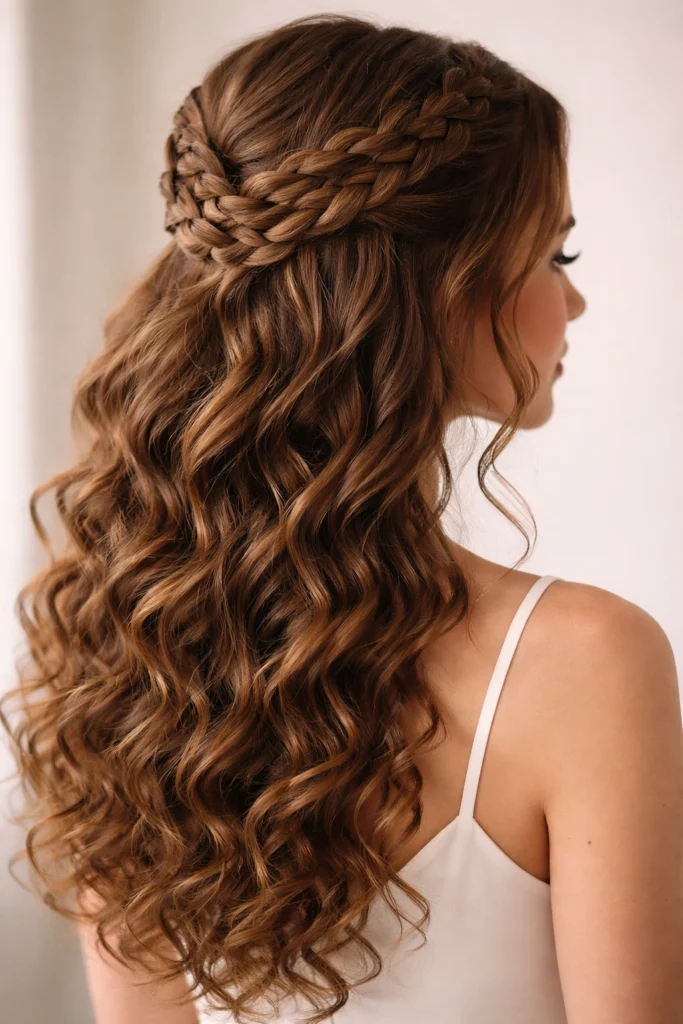
Brunette Half-Up Style With a Heart-Shaped Braid
Via Bold Hairstyles
Two braids starting at the sides and meeting at the back to form a heart shape turn a simple half-up style into something the audience remembers. The mid-back length falls in loose waves below, and a brunette base with subtle balayage keeps the dimension visible without overpowering the braid work. Thick, wavy hair at least mid-back length holds the shape best, because shorter lengths let the heart collapse toward the nape.
Secure the crossing point with bobby pins first, then mist with flexible-hold spray so the waves still move. The heart draws the eye upward, which suits round and oval faces equally, and a middle part keeps the two sides symmetrical. Compared with a plain half-up twist, this takes more prep time in the chair but stays put noticeably longer — a fair trade on a performance day.
Curly Auburn Updo With Jeweled Pins
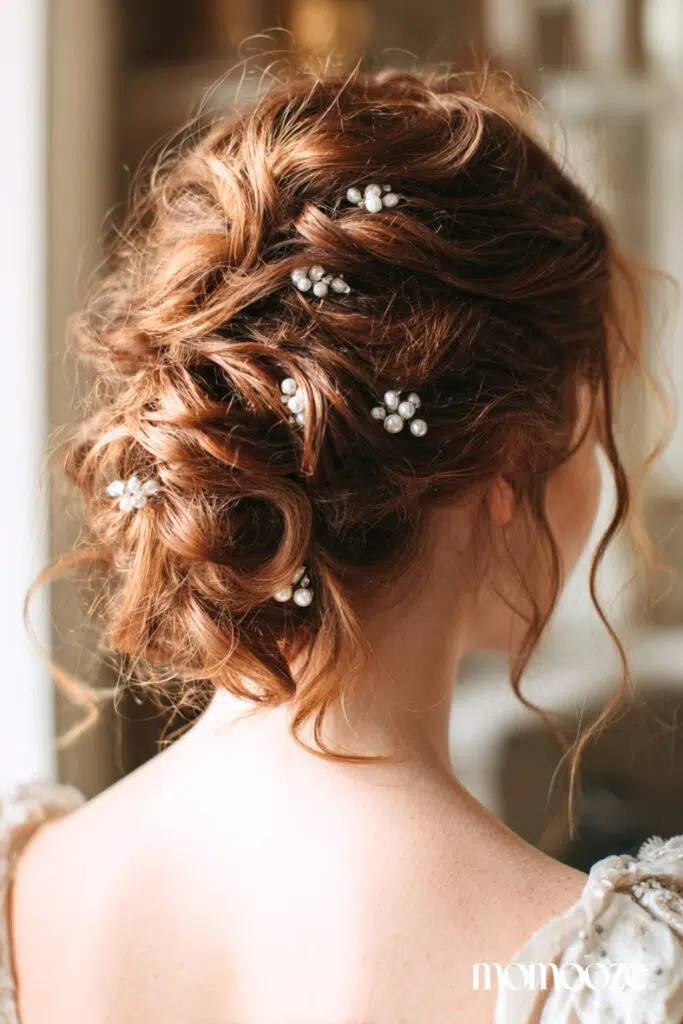
Photo via Momooze
Sculpting curly hair into an updo without flattening the texture takes deliberate sectioning. This style pulls thick, mid-back auburn curls into a voluminous shape at the crown, with delicate jeweled pins tucked along the curves. The auburn base has lighter undertones that stop the mass from reading as one solid block, and the pins catch the light every time the head turns — exactly what you want under stage lighting.
A strong-hold mousse on damp curls defines the pattern before styling, and each pin needs to be secured into the base of a curl rather than clipped to the surface. This is a formal or performance look for a recital, gala or competition, where the hair has to stay intact through multiple bows and spins. Expect it to take longer in the chair than a straight-hair updo, and budget a silk scarf at night if you need it to survive to a second day.
Braided Bun With a Large Black Satin Bow
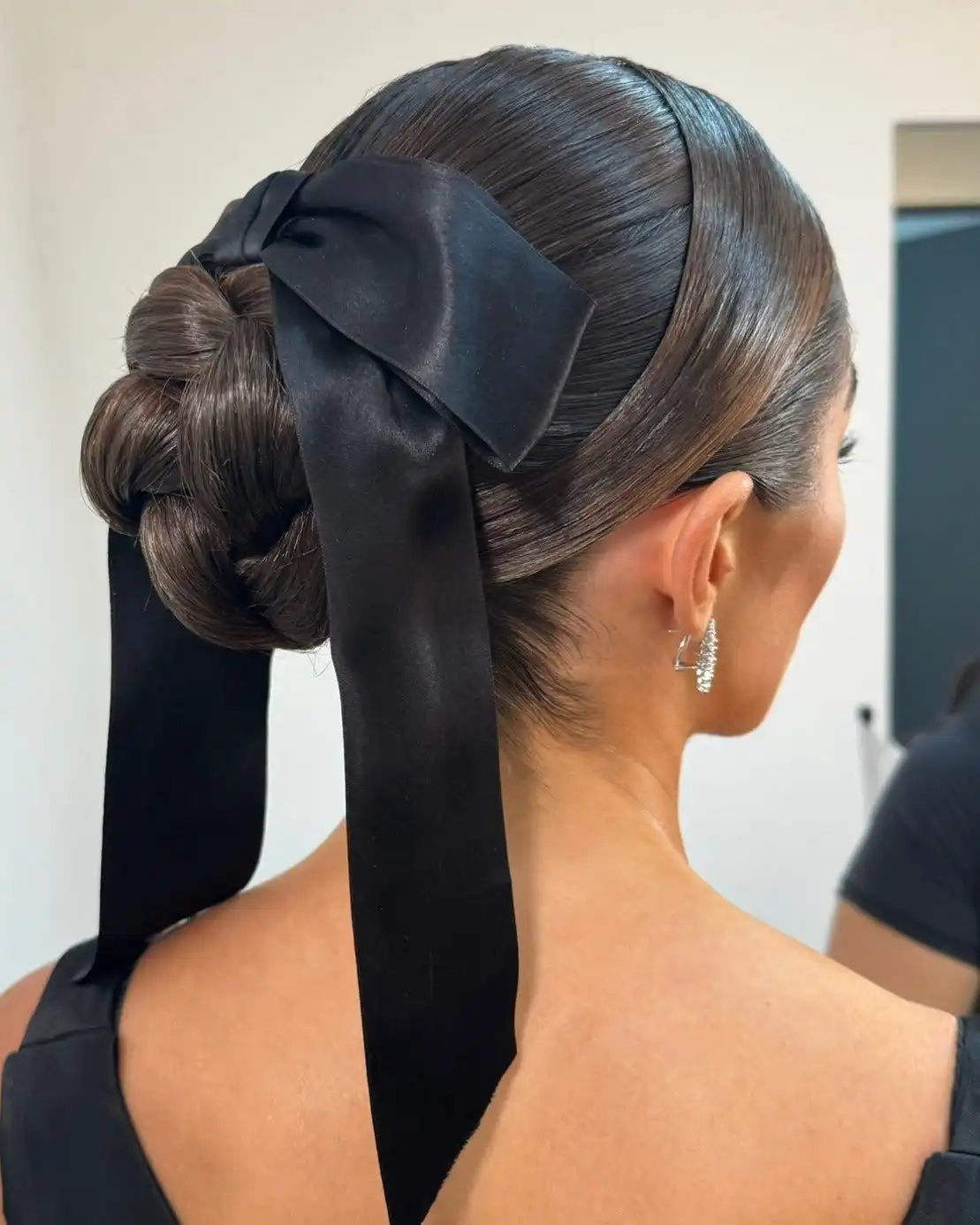
Image credit: Creative Booster
A neat braided bun at the nape with a black satin bow and trailing ribbons is ballet-core without the costume feel. Dark brown hair, thick and straight, is slicked back from the face and woven into a tight braid that wraps into a round bun, with the bow sitting at the top to frame the back of the head. The style flatters anyone with thick, straight hair at collarbone length or longer, and the low placement means it does not fight a round face.
The bow placement is the trick: too high and it fights the bun, too low and the ribbons drag against the neck. A professional can pin the bow so the ribbons fall evenly, and at home you should expect to re-pin it twice before it sits straight. Fine hair or heavy layering will struggle to hold the braid volume, so this one is honest about who it suits. A trim every six weeks keeps the ends blunt and the braid uniform.
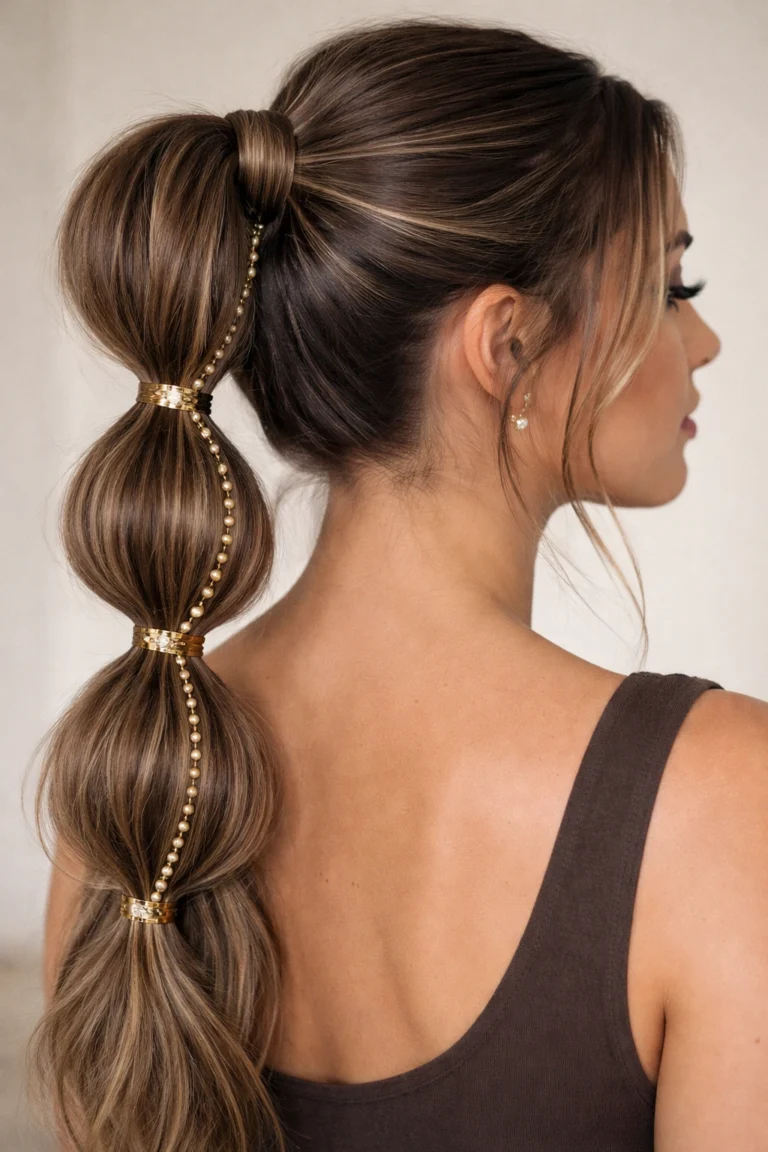
Mid-Back Bubble Braids With Gold Cuffs
Courtesy of Bold Hairstyles
Multiple bubble braids run down the back, each section secured with a clear elastic and gently pulled apart to form the signature bubbles, with gold cuffs sitting at intervals along the length. The dark brown hair is thick and straight at mid-back length, with intricate braiding visible at the scalp, and a middle part keeps the two sides even. The cuffs catch the light as the head turns, which gives a simple technique a stage-ready finish.
The bubble technique works best on straight texture because curls or waves blur the clean segments. A shine spray over the finished braids adds gloss without weighing them down, and the style lands naturally in warmer months, when a heavy updo feels suffocating and a loose style tangles mid-routine. If you want more braid variety in the same spirit, butterfly braids use a similar section-and-pull logic with a softer, winged finish.
High Ponytail With Decorative Braids
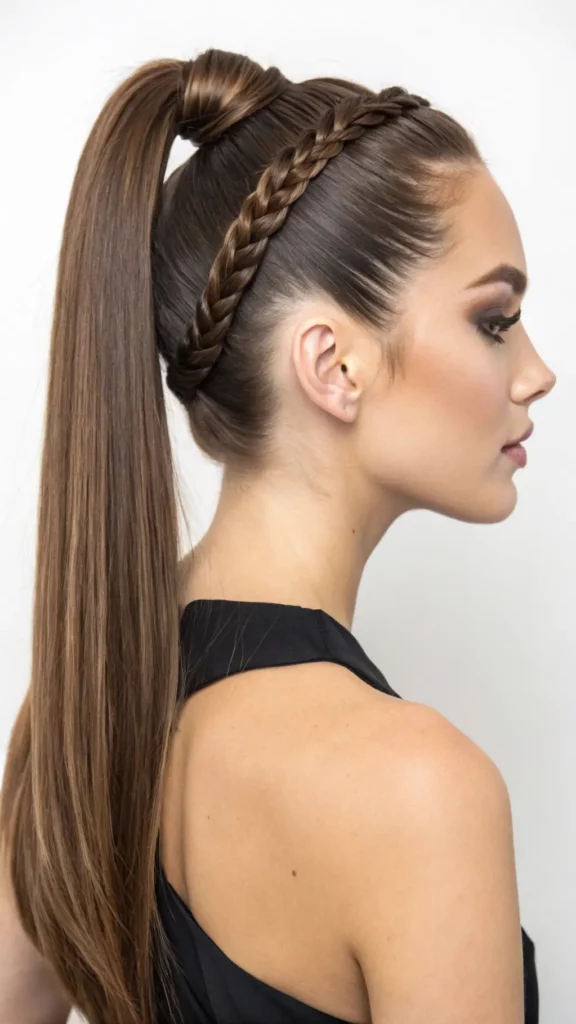
Source: Hair Expert Hub
A high ponytail is standard dance-wear, but decorative braids and twists leading into it push the style past basic. Dark brown, thick, straight hair is sectioned into multiple braids that start at the scalp and feed into a single high ponytail at the crown, with gold clips placed along the braids for a polished finish. The braids distribute tension across the scalp, so the ponytail holds its height longer without slipping.
A smoothing cream applied before braiding keeps flyaways under control, and a trim every eight to ten weeks stops the ponytail ends from looking ragged. Compared with a plain high pony, this version needs more setup time but stays intact through active routines, and the sleek crown elongates round faces while the braids add visual weight at the back. For more ponytail inspiration built on the same sleek base, sleek ponytail hairstyles cover the full range from gym to stage.
Ash Blonde Low Ponytail With a Twisted Wrap
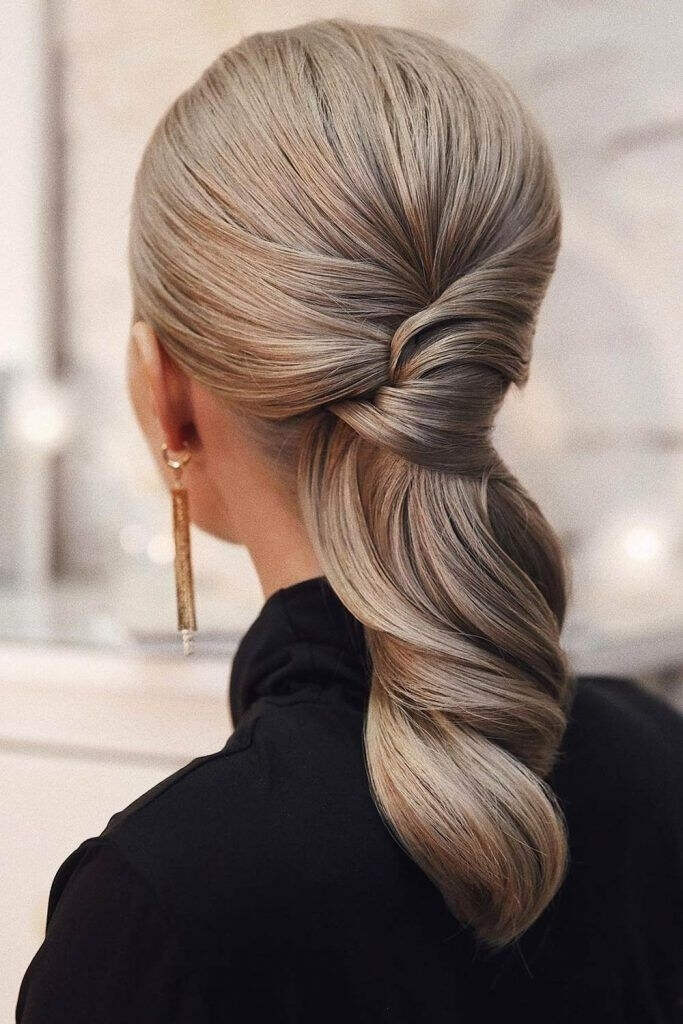
Photo credit: Lapis de Noiva
A low ponytail sounds straightforward until you notice the twisted detail at the base, forming a bow-like wrap in ash blonde hair with darker roots. Medium-density wavy texture at mid-back length is the starting point, and the low placement works best for long faces. Soft waves through the length keep it from looking rigid, while the darker roots mean you can stretch a toning appointment to eight weeks.
The trade-off is that getting the twisted section symmetrical takes a steady hand and about twenty minutes with a mirror behind your head — this is not a five-minute style, even though it looks like one. A side part means the tendrils on one side will need a pin after a few rounds of a waltz, so carry two spares. Trim every six to eight weeks to keep the layers from turning the ponytail into a frayed mess.
Dark Brown Half-Up Style With Voluminous Curls
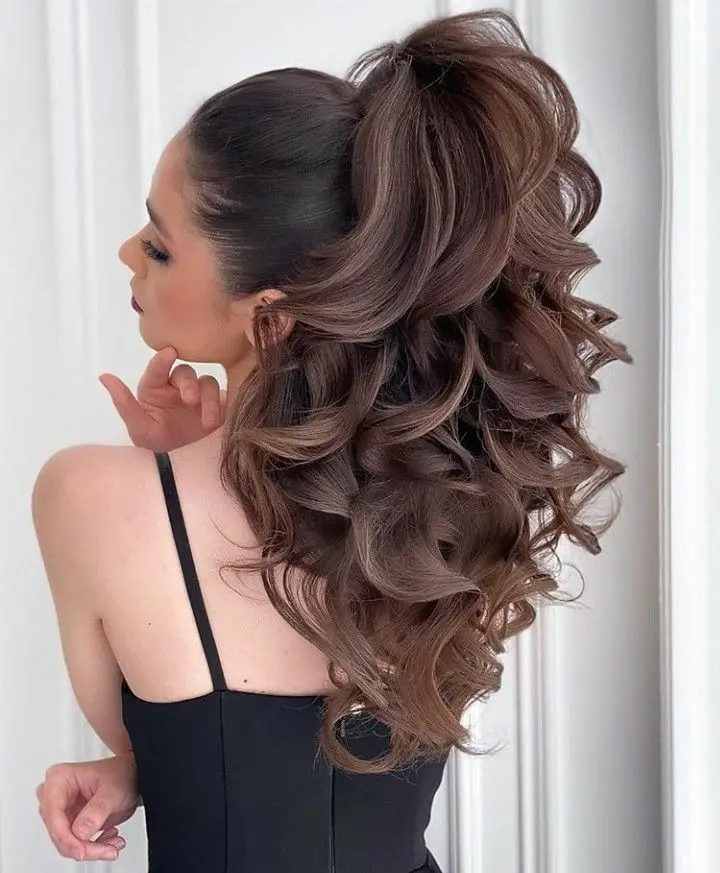
Via Tasia Hub
Voluminous curls in a half-up, half-down shape need thick, naturally curly hair at mid-back length to deliver the density this look requires. The dark brown base with subtle highlights stops the curls from reading as a single dark block, and the top section pulled back keeps the volume controlled at the crown while the curls cascade. The cascading curls suit oval and square faces by adding width at the cheekbone line.
A curl-enhancing spray and a diffuser set on low heat build the volume without frizz, and the face-framing pieces soften the forehead. If your hair is fine or shoulder-length, the top section will look skimpy — this style is honest about needing length and density. The upside is that once the curls are set, the style holds its shape through a performance with very little touching up.
Half Updo With Flower Pins and Soft Curls
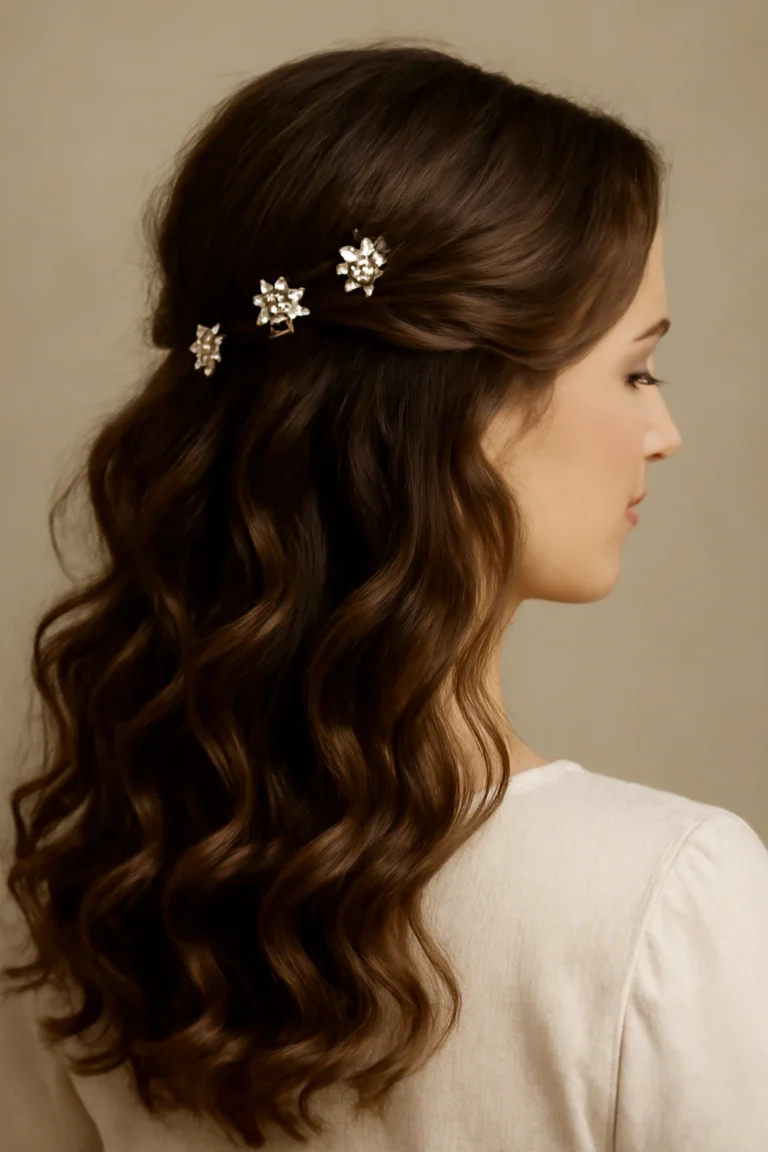
Photo via Hairtical
Flower pins beat complex braiding when you want a performance-ready look without spending an hour on a single plait. This half updo uses twisted sections and loose curls, and suits thick, wavy light brown hair with subtle blonde highlights at mid-back length. Side-swept bangs and the flower accessories add a decorative touch that reads sweet and young, which makes it a natural choice for a child’s recital or a spring performance.
A gentle-hold spray keeps the twists in place through the routine, and the pins are the real anchor: they hide the elastic and hold the top section securely, which a simple clip cannot match for active movement. Place the pins into the twist itself rather than into loose hair, so they do not slide out mid-spin. The style is forgiving to build at home, which is half its charm.
Sculptural Black Braided Updo
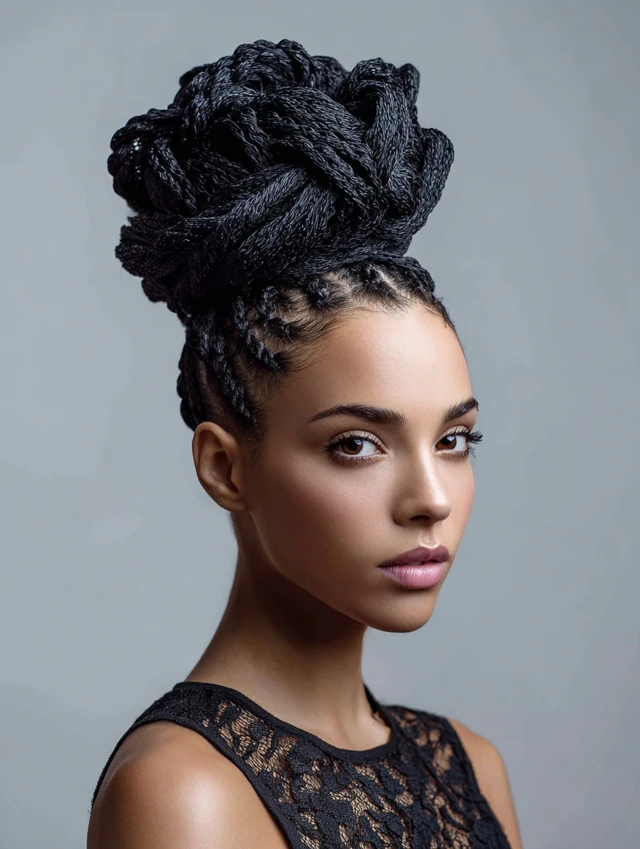
Image credit: Cleo Diva
The sculptural design here is built from precise scalp patterns that need a steady hand and a clear plan before the first section is parted. Thick, coily black hair at long length provides the grip and texture needed for the intricate braided updo and decorative loops that cascade from the high bun. The middle part anchors the symmetry, and the coily texture holds each twist without slipping.
A braiding balm applied before sectioning keeps the definition crisp through a full performance, and this is not a style that survives a quick onstage redo — it relies on the precision of the braiding technique from the start. The overhead view shows the loops as a deliberate composition, and oval and heart faces benefit from the vertical lines of the design. If you love this kind of scalp-pattern work, cornrow hairstyles are the everyday version of the same craft, and feed-in braids show how the technique adapts to every hair length.
Sleek Dark Brown Braided Bun With a Black Bow
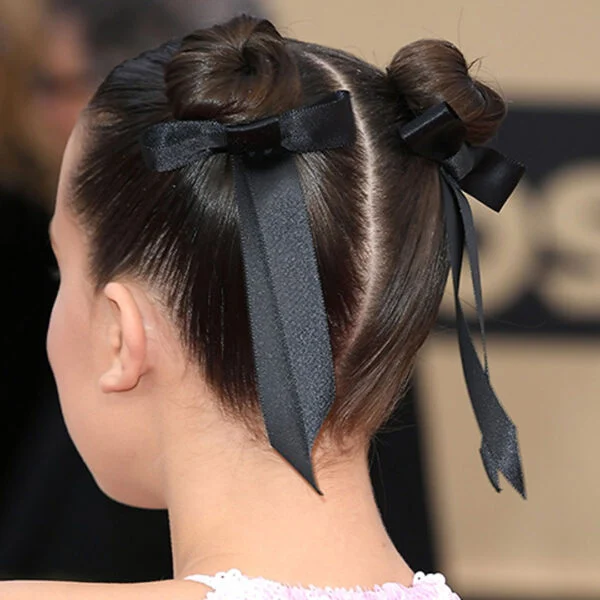
Courtesy of Bounty Parents
A neat braided bun at the nape with a large black satin bow demands straight, thick dark brown hair of at least collarbone length to keep the braid substantial. The slicked-back parting and centered bow create a clean silhouette that reads beautifully from behind — the view the audience gets for most of a routine. The bun itself is straightforward if you can braid tightly, but the bow turns a simple style into a stage-ready one.
The difference from a softer bow bun is the slickness: every strand is smoothed back, so flyaways show immediately and a strong smoothing product is non-negotiable. Pin the bow so the ribbons fall evenly on both sides, and check it from behind with a hand mirror before you go on. For dancers who want the same polished line with more drama, goddess braids carry that sleek, statement energy into a longer braided shape.
Finger Waves With a High Bun
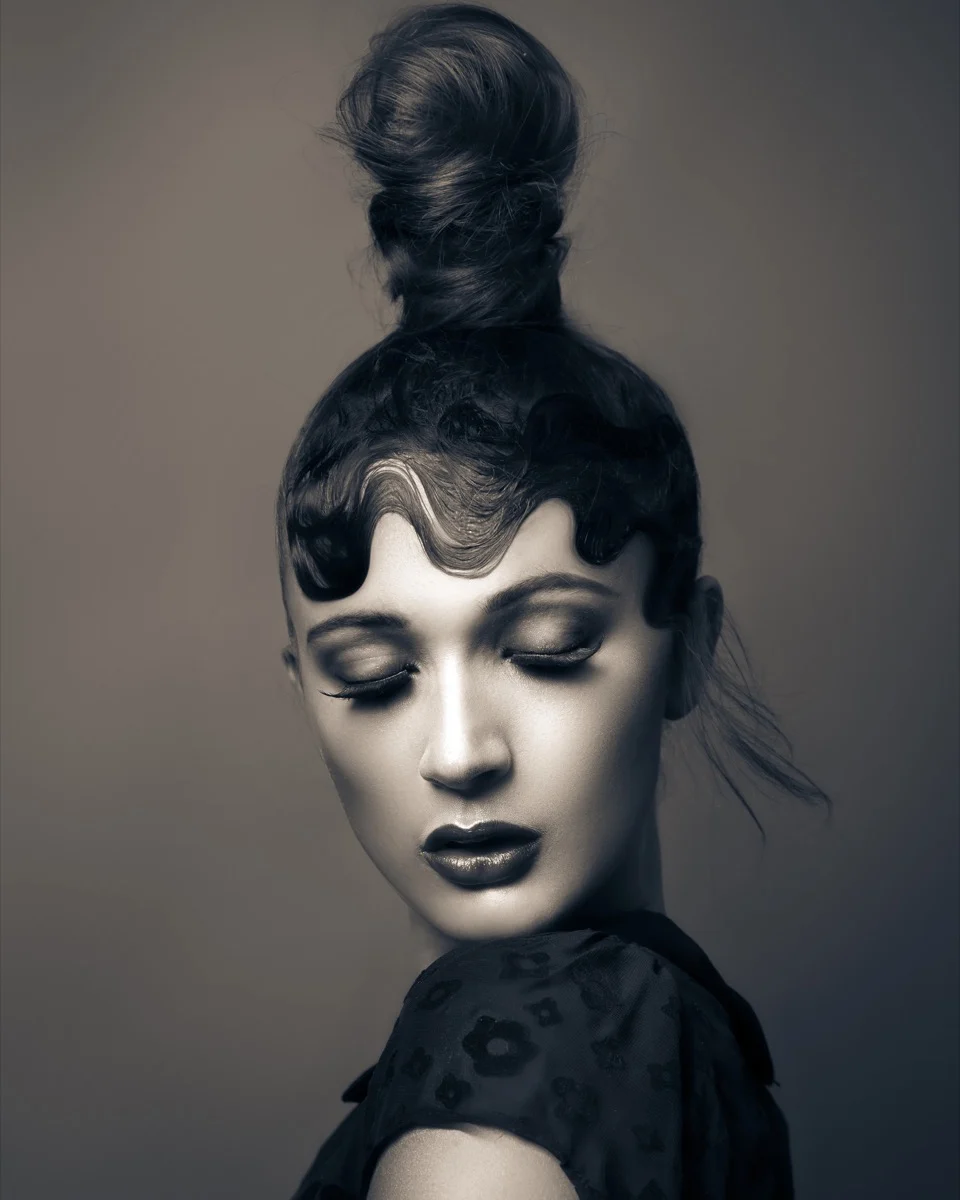
Photo via Professional Hairdresser
Finger waves are not the same as pin curls, and this style makes the distinction clear. Thick, straight dark brown hair is sculpted into glossy waves that sweep from a middle part toward the temples, then pulled into a high bun. The technique works best on hair that holds a firm set, so straight, thick textures are the natural candidates — wavy or fine hair will drop the wave pattern before the first number ends.
A strong-hold gel and a fine-tooth comb are required for the wave pattern, and the bun needs to be secured tightly with pins. The look favors round and oval face shapes, where the horizontal wave lines add structure. This is a vintage-leaning choice that suits themed performances and competitions with a retro brief, and it photographs beautifully because the waves catch the light in ridges.
Blonde Space Buns With Glitter and Braids
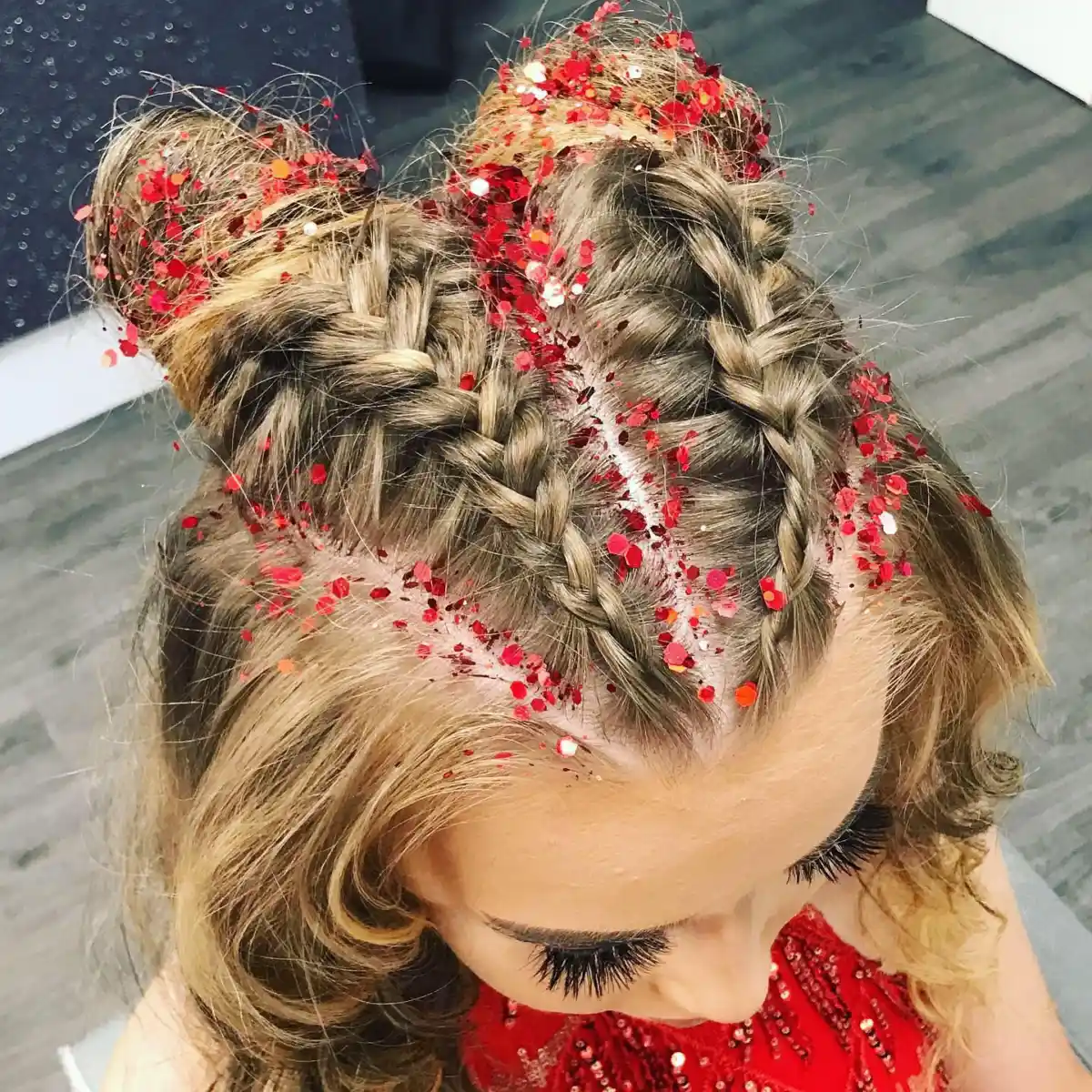
Source: Azure Glam
This one comes with a warning: glitter is a commitment. Mid-back length wavy, thick blonde hair with dark roots is sectioned into two space buns, each anchored by a braided pigtail, with a stripe of glitter down the center parting. The glitter needs a setting spray to stay on through a performance, and the braids benefit from a texturizing spray for grip.
The playful shape suits most face shapes and lands naturally at a festive recital or a themed competition. It is not a five-minute style — between the braiding, the buns and the glitter application, budget at least forty-five minutes in the chair. The dark roots actually help here, giving the blonde sections contrast so the braids and the glitter stripe both read clearly from a distance.
Fishtail Braid With Curtain Bangs
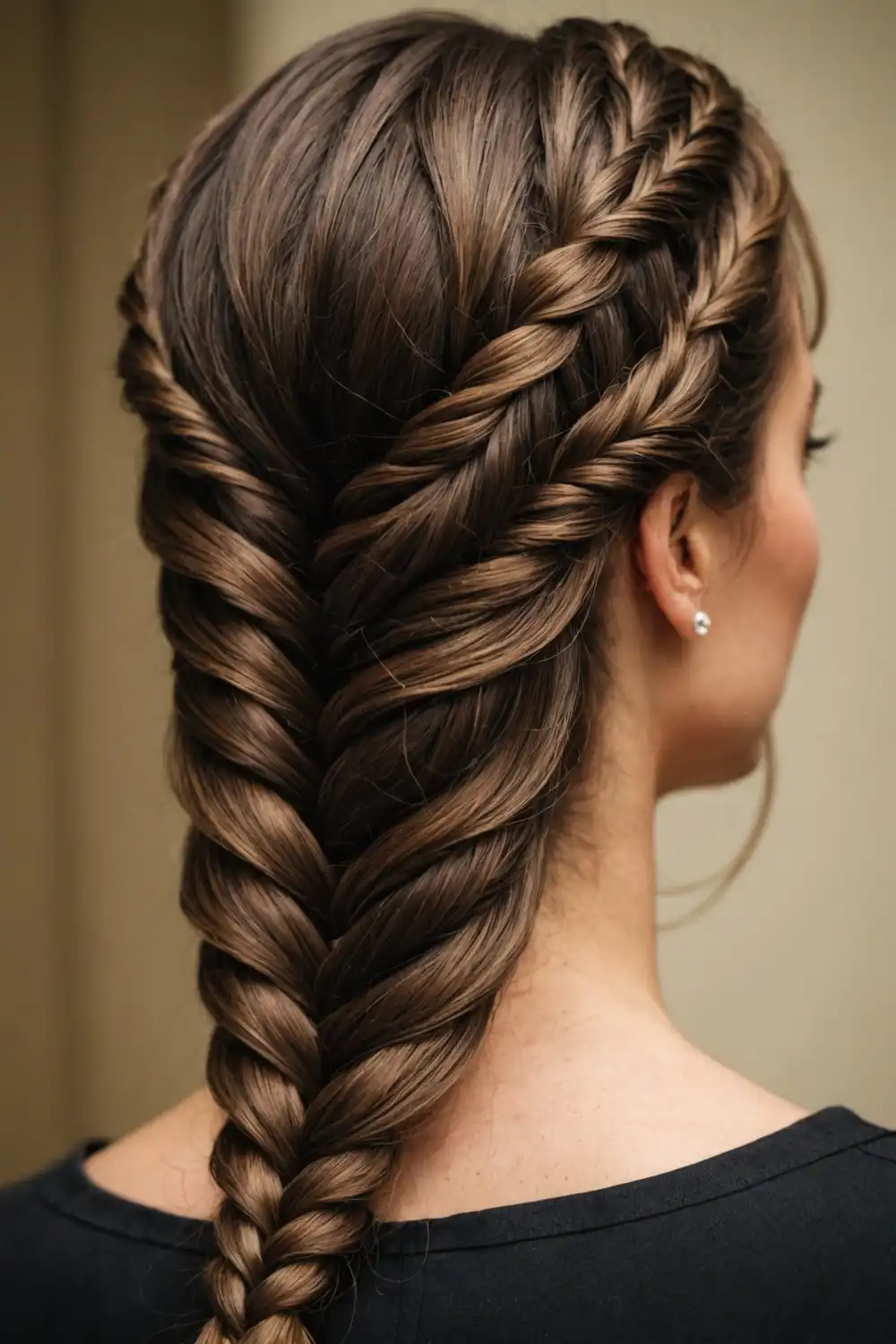
Image credit: Trend Is Style
A fishtail braid on thick, wavy medium brown hair with subtle highlights adds texture without bulk. Loose curtain bangs frame the face, and the braid itself runs to mid-back, giving the style a relaxed finish that still looks deliberate. The fishtail’s fine, woven pattern reads as intricate from the audience while being simpler to build than it looks — two sections, small pieces crossed over, repeated to the ends.
Curtain bangs are the trade-off here: they need a trim every four to six weeks, and they require a round brush and a blow dryer to sit correctly. The upside is that the braid hides the bangs’ grow-out phase, and square and round face shapes benefit from the softening effect of the face-framing pieces. Keep the braid slightly pancaked — gently pulled apart — so it looks full rather than skinny.
Long Dutch Braid With Blonde Highlights
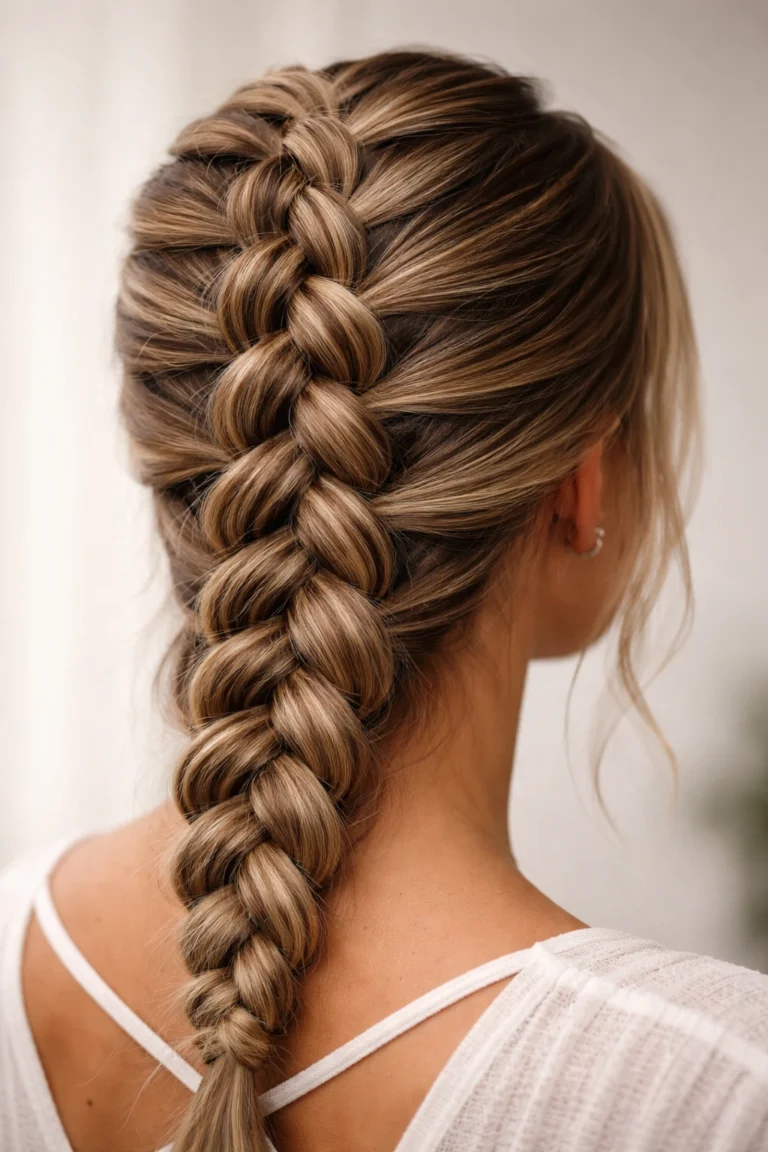
Photo credit: Hairtical
A Dutch braid is essentially a French braid turned inside out: the sections cross under instead of over, creating a raised, defined ridge. Long, thick, straight blonde hair with visible highlights is woven into a single braid that runs from the crown to the ends, with a middle part keeping the line clean. The raised braid looks more deliberate than a flat three-strand version, and the highlights create contrast in each section.
The tight weaving means the style holds for a full rehearsal without slipping, and a smoothing serum applied before braiding prevents flyaways. The braid suits most face shapes because it pulls the hair back completely, and the straight, thick texture is ideal for the crisp sectioning the technique demands. If a single braid feels too plain for stage, the same raised technique scales up into the double-braid and crown shapes earlier in this list.
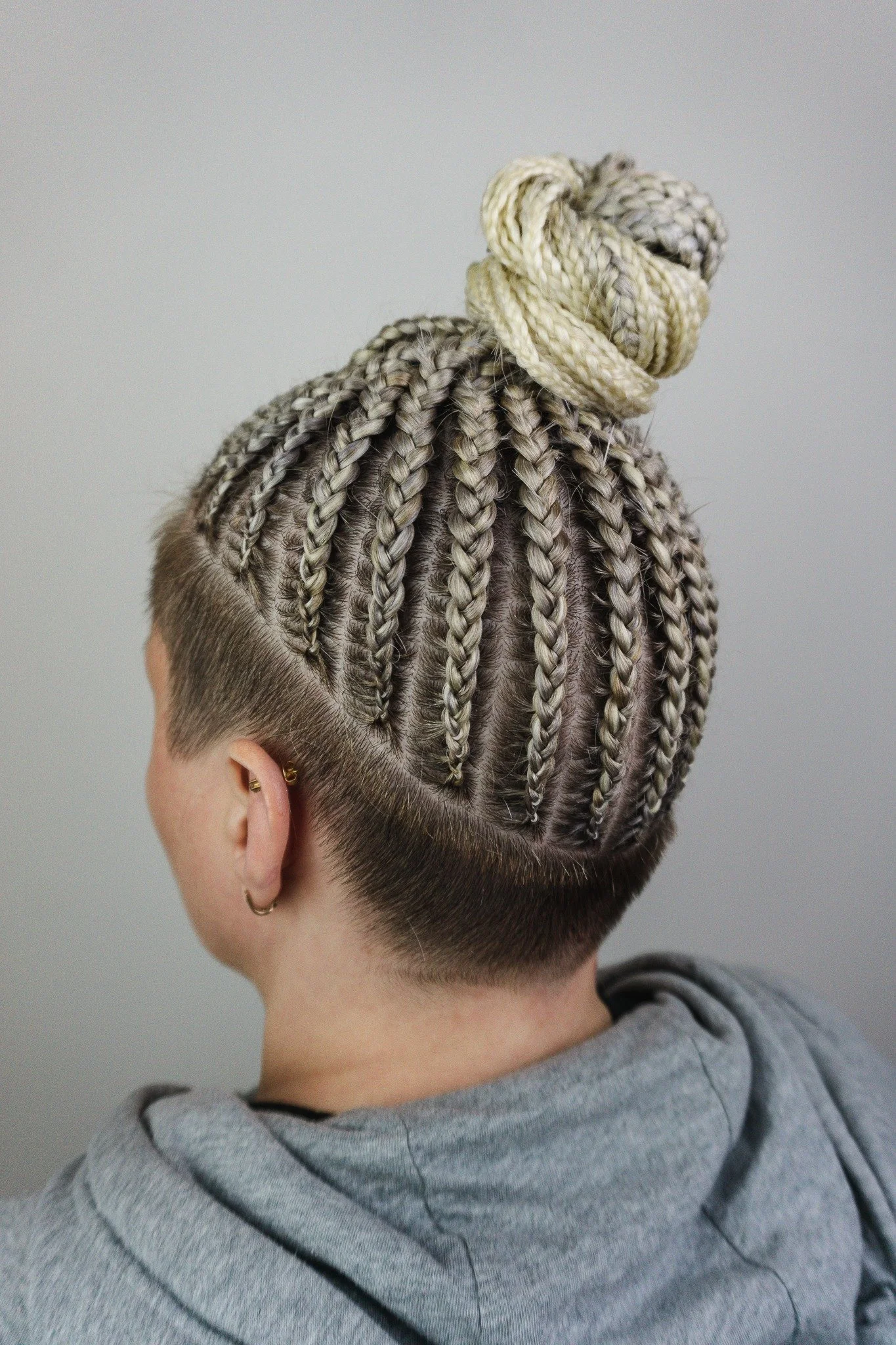
Short Ash Blonde Double Buns With Braids
Via Taa Laura
Short hair does not mean you skip the buns. Fine, straight ash blonde hair with darker roots is sectioned into two high double buns, with intricate braids woven along the scalp and wispy bangs left out at the front. The middle part keeps the look balanced, and the playful shape suits most face shapes — it lands well at a spring recital or a casual performance where a formal updo would feel overdressed.
Fine hair needs a strong-hold paste worked into the braids for grip, and a mist of hairspray on the buns keeps them intact through a dance routine. The wispy bangs are the finishing touch, but they are also the part that moves first, so pin one side loosely and leave the other free. For more short-hair ideas that actually stay put, ponytail hairstyles for 2026 and school hairstyles both include short-length options built on the same grip-first thinking.
Final Thoughts
The best dance hairstyle is the one you stop thinking about once the music starts. For fine hair, choose styles that build volume, like braided crowns or bubble braids; for thick hair, secure updos and strong braiding techniques keep everything in place. Match the style to the intensity of the dance — a high ponytail for quick turns, a low bun for slow routines — and always do a full rehearsal in the finished style, not just a mirror check.
Refresh braids and buns with a light-hold hairspray, use texturizing spray on wavy or curly hair before styling for better grip, and let styles air dry when possible to minimize heat damage. Plan touch-ups every four to six weeks for intricate updos, and keep spare pins and elastics in your dance bag. Secure your style, then steal the show.