Choosing a haircut in November can feel unnecessarily high-stakes, as though every decision about length or layers has to announce something definitive about your taste before the year ends. It does not. A cut is not a statement you owe anyone. November haircut ideas work best when they start from what already suits the weight and texture of your hair rather than from a trend calendar that was never written with your specific head in mind. You get to move slowly here.
The useful question is not which cut is trending but which visible decisions actually change how a haircut reads on a real person. This article examines twenty-two cuts through four variables: proportion, meaning where the shortest and longest points sit relative to the face and shoulders; movement, meaning how the ends behave when they are left alone; texture, meaning whether the surface reads smooth, feathered, or deliberately rough; and placement, meaning where the layers or the weight line begin and how they frame what is underneath. Each section works from one photograph only, describing what is genuinely visible and why the structural choices hold together. Where an image does not fully support the topic heading, the text says so rather than filling in details that are not there. That honesty is part of how this site works.
1. Warm Copper Tones Soften a Medium Layer Cut
The first thing the eye catches here is the color, a warm copper-auburn that shifts between reddish mid-tones and darker roots depending on where light falls across the surface. The cut sits at mid-length with a visible side part, and the ends are styled into large, rounded curls that flip outward and then tuck back inward. The layering starts well below the chin, keeping the top half relatively smooth while the lower half carries the movement.
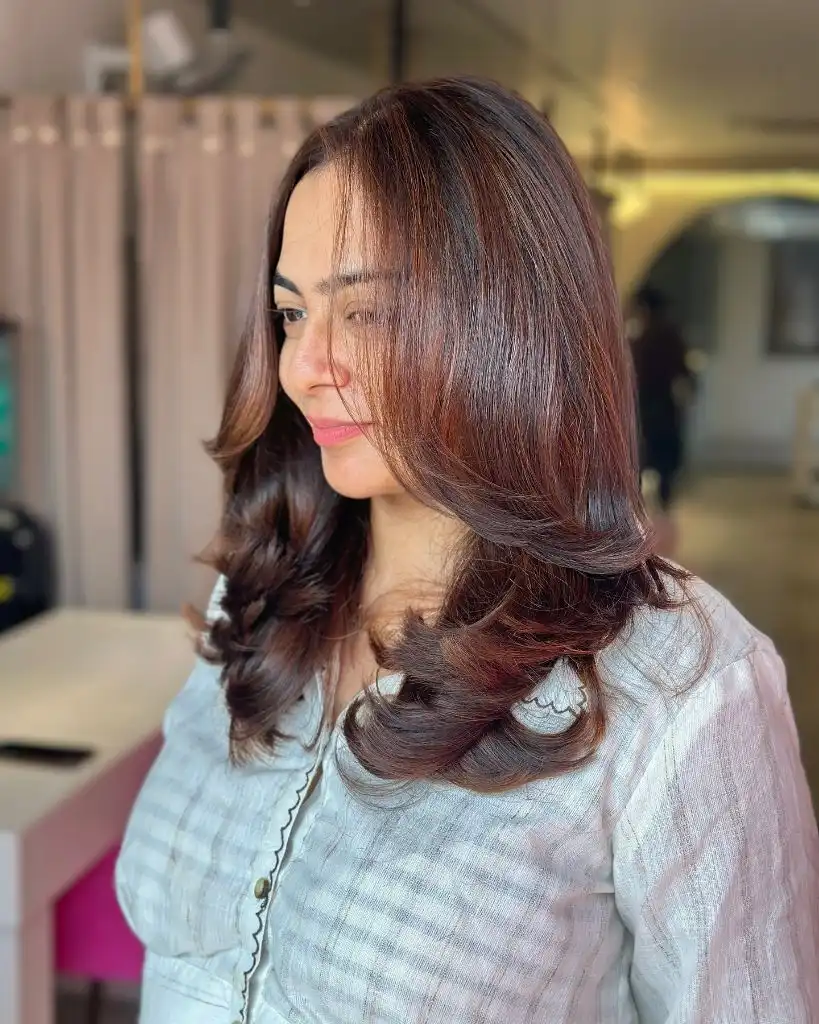
Photo via Instagram
The proportion works because the weight sits at the collarbone, and the curls below that line are generous enough to balance the sleeker crown area. The white linen top visible underneath reads neutral against the rich warmth of the hair, which means the color carries the entire look without competition from the clothing. The side part pushes volume toward the face on one side, and the curtain of hair partially covering one eye creates a deliberate asymmetry that keeps the frame from feeling too polished or stiff. That interplay between the structured curl and the relaxed fall is where the interest lives.
This is a cut that depends heavily on color temperature to land. Without the copper warmth, the same silhouette could read more conservative. The transferable principle is that a rich mid-tone color and face-framing volume on one side can make a relatively standard medium layer cut feel more intentional and personal than its structure alone would suggest.
2. Deep Layering Builds Volume Below the Shoulders
This photograph shows dramatically long dark hair with multiple visible layer levels that begin around the chin and cascade in wide, voluminous curls well past the shoulders. The color is a near-black brunette with very subtle warm undertones that only appear where the light grazes the outer curves of the curls. The styling has been done with a large barrel to create outward-flipping layers that hold their shape without collapsing.
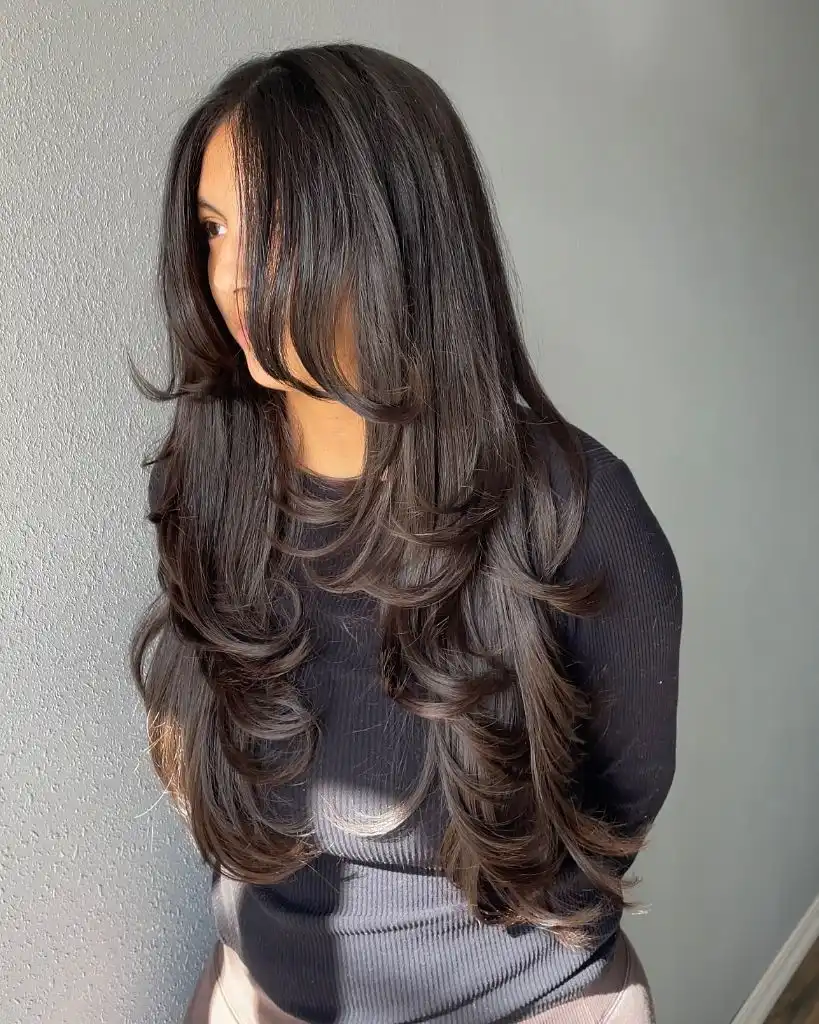
Photo via Instagram
The strength of this cut is its stacking. Each layer flips at a slightly different point, which means the silhouette reads as a wide, triangular shape from the shoulders down rather than a flat curtain. The dark background and dark clothing reduce distraction, so the shape of the hair itself becomes the only thing to evaluate. The face-framing pieces are shorter and straighter, sitting against the cheekbone, which sharpens the area near the face while the rest of the hair expands outward. That contrast between the tight frame at the top and the wide base at the bottom is deliberate and well-controlled.
The appeal is in the sheer scale of the layering without any loss of density. The ends look thick and healthy even at the longest points, which suggests that the layers were cut to remove weight selectively rather than to thin the hair overall. For anyone considering deep layers on very long hair, the visible lesson is that volume depends on where weight is removed, not just on how many layers exist.
3. Feathered Face Layers Frame a Wide Smile
The cut here is a long layered style with the shortest pieces starting at chin level and falling in feathered, outward-kicking sections through to below the collarbone. The color is a medium warm brunette, lighter than the previous image, with visible lighter strands running through the mid-lengths. The setting is clearly a salon, with mirrors and neon light visible in the background.
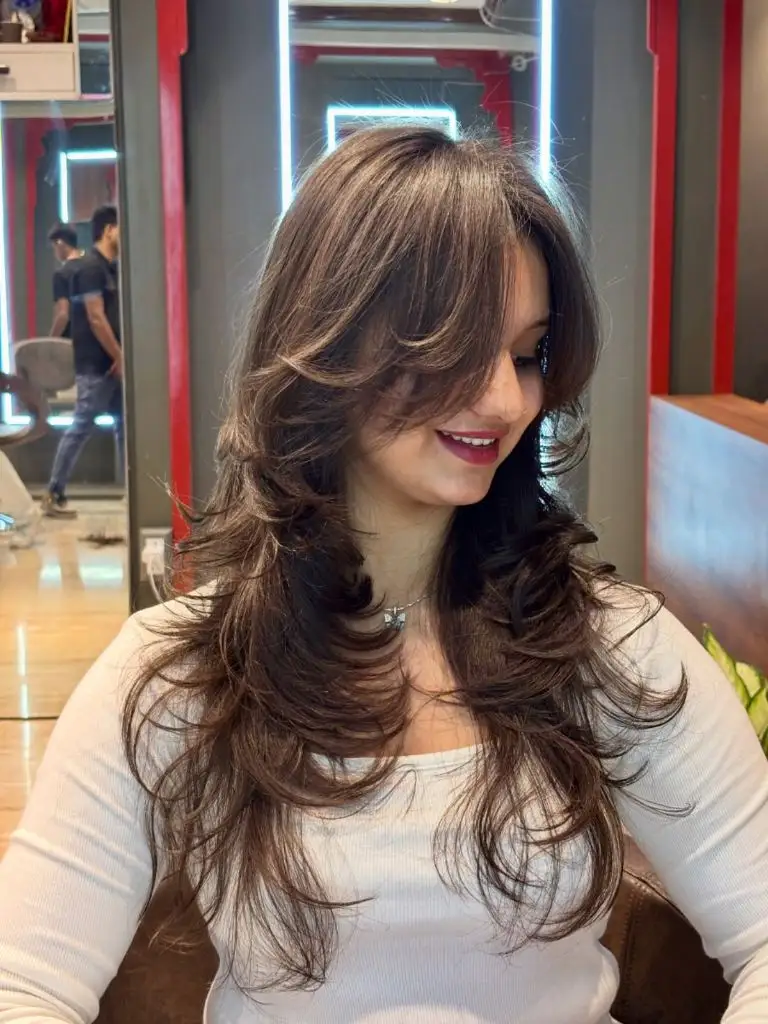
Photo via Instagram
The feathering technique is the main event. Rather than smooth curls, the ends are textured into wispy, slightly separated points that create an airy perimeter around the face and neck. The white top underneath provides a clean backdrop against which the hair’s movement becomes easier to read. The layers are not uniform, and the right side appears slightly more lifted than the left, which could be styling or natural fall. Either way, it introduces a casual asymmetry that prevents the shape from reading as overly styled despite the obvious salon finish.
I like the way the shortest face-framing layers sit just wide of the jawline rather than directly on it. That slight outward angle opens the area around the chin and keeps the framing soft rather than architectural. The transferable idea here is that feathered ends at different levels create more visual interest than perfectly matched layers, and that layered styles for long hair gain character when the ends are allowed to point in slightly different directions.
4. Smooth Weight Anchors a Long Brunette Cut
This image shows long, dark chocolate-brown hair with a center-ish part, worn straight through the top and mid-lengths with a gentle outward curve beginning only at the very ends. The layering is minimal, with most of the weight sitting at one length near the waist. The setting includes an arched mirror with greenery, giving the photograph a warm, domestic quality distinct from the salon images elsewhere in this article.
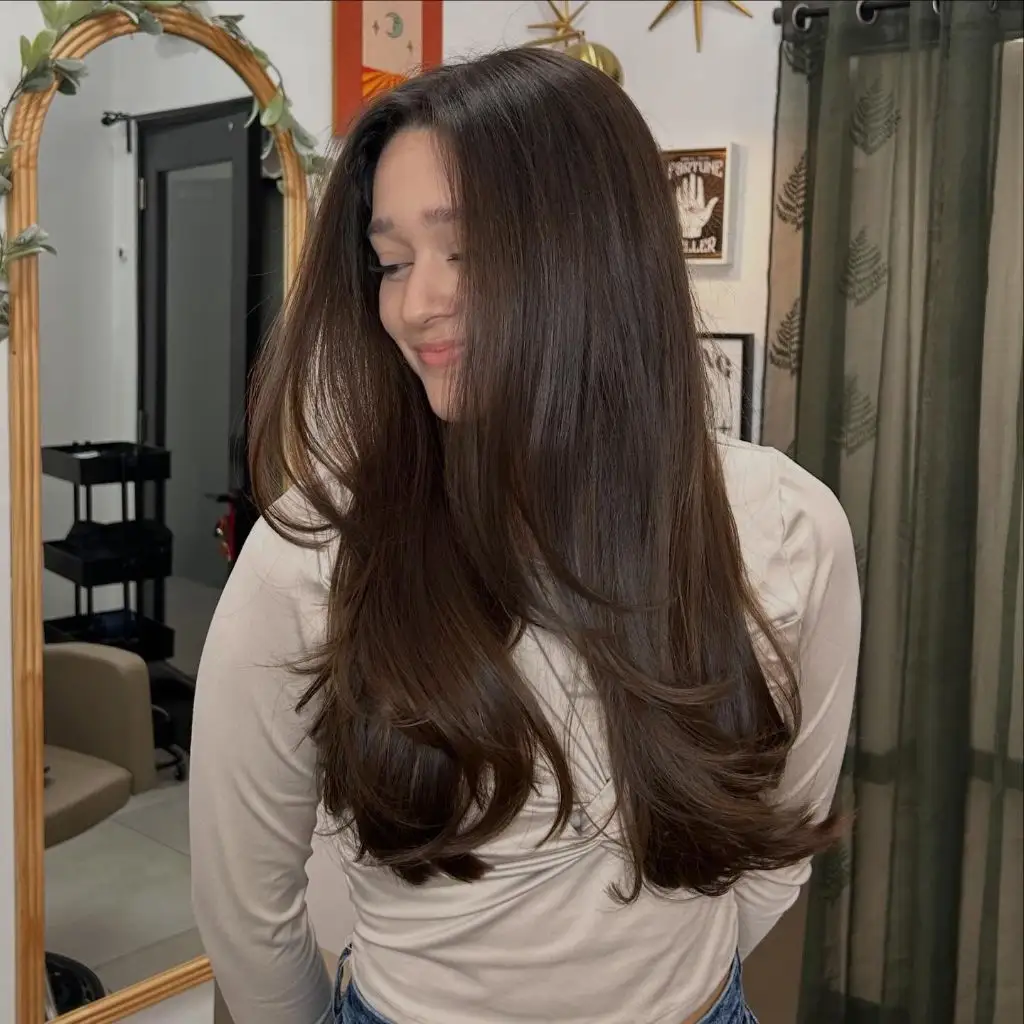
Photo via Instagram
What works here is the restraint. The surface is smooth and reflective, which means the hair reads as healthy and dense without relying on layers or curls to create interest. The slight bend at the ends is just enough to prevent a blunt, heavy bottom edge, but it does not introduce the kind of movement seen in the earlier layered cuts. The cream long-sleeved top is nearly the same value as the lightest sections of the hair, which creates a soft transition between the hair and the clothing rather than a hard border.
The effect is one of simplicity used as structure. This cut would not photograph the same way on thin or fine hair because the visible density is carrying the entire silhouette. The principle worth noting is that not every November haircut idea needs dramatic layering. Sometimes a strong, mostly one-length base with healthy ends and a controlled curve does exactly what it needs to without additional intervention.
5. Cascading Layers Create a Visible Step Pattern
The back and side view here reveals a layered cut where each level is distinctly separated from the next, creating a staircase-like pattern from the crown to below the shoulders. The color is a warm chestnut brunette with lighter caramel tones appearing at the tips of each flipped layer. The face is mostly obscured, so the photograph is primarily about the shape of the cut itself.
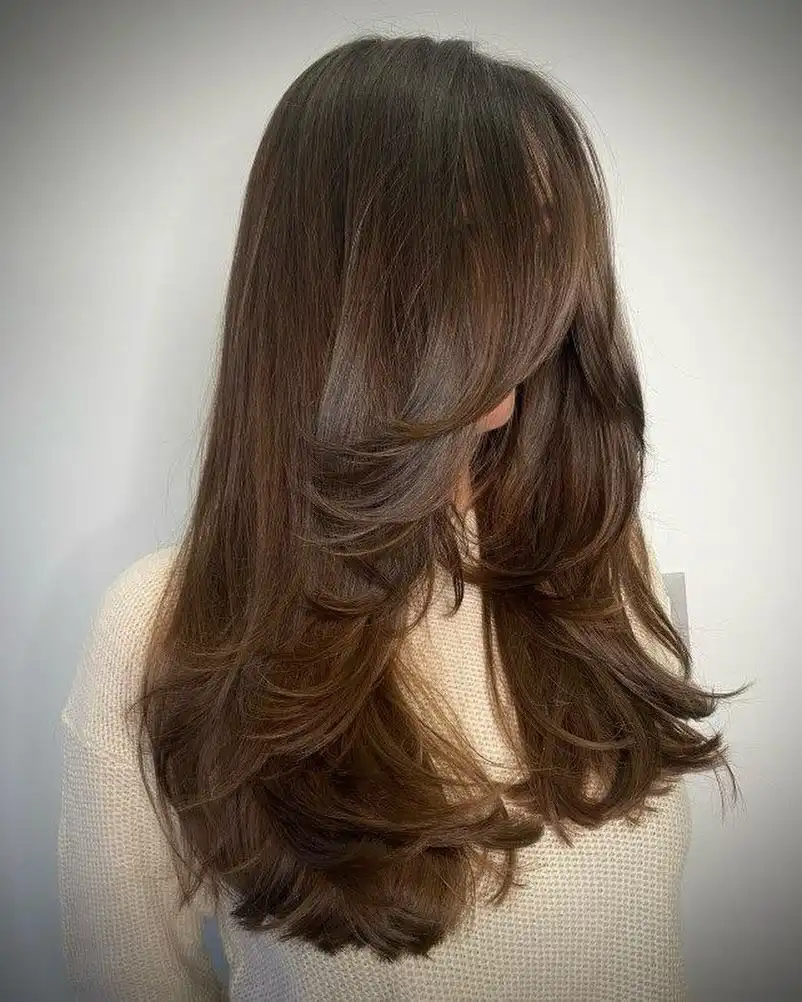
Photo via Instagram
Because this is a rear-angle shot, the structure becomes clearer than it would from the front. The top layer sits near the jaw and flips outward, the next sits near the collarbone and curves under, and the longest reaches mid-back with a soft outward movement. The cream-colored top creates a neutral surface against which the layers are readable. The slight variation in curl direction, some flipping in, some out, prevents the steps from looking too uniform and keeps the overall silhouette organic rather than geometric.
This is the cut in this article that best illustrates how layered haircuts gain definition when viewed from behind. The front may read as simple face framing, but the rear view shows the engineering. The transferable principle is that when layers are cut with enough separation between each level, the shape holds even without heavy styling because each section has room to move independently.
6. Back-View Volume Shows Rounded Ends at Mid-Length
This rear-angle photograph captures medium-to-long hair with large, rounded curls at the ends, viewed from behind in what appears to be a salon with glass doors and warm overhead lighting. The color is a rich warm brunette, darker at the roots and shifting to a lighter auburn through the mid-lengths and ends. The white ribbed tank top provides a clean contrast.
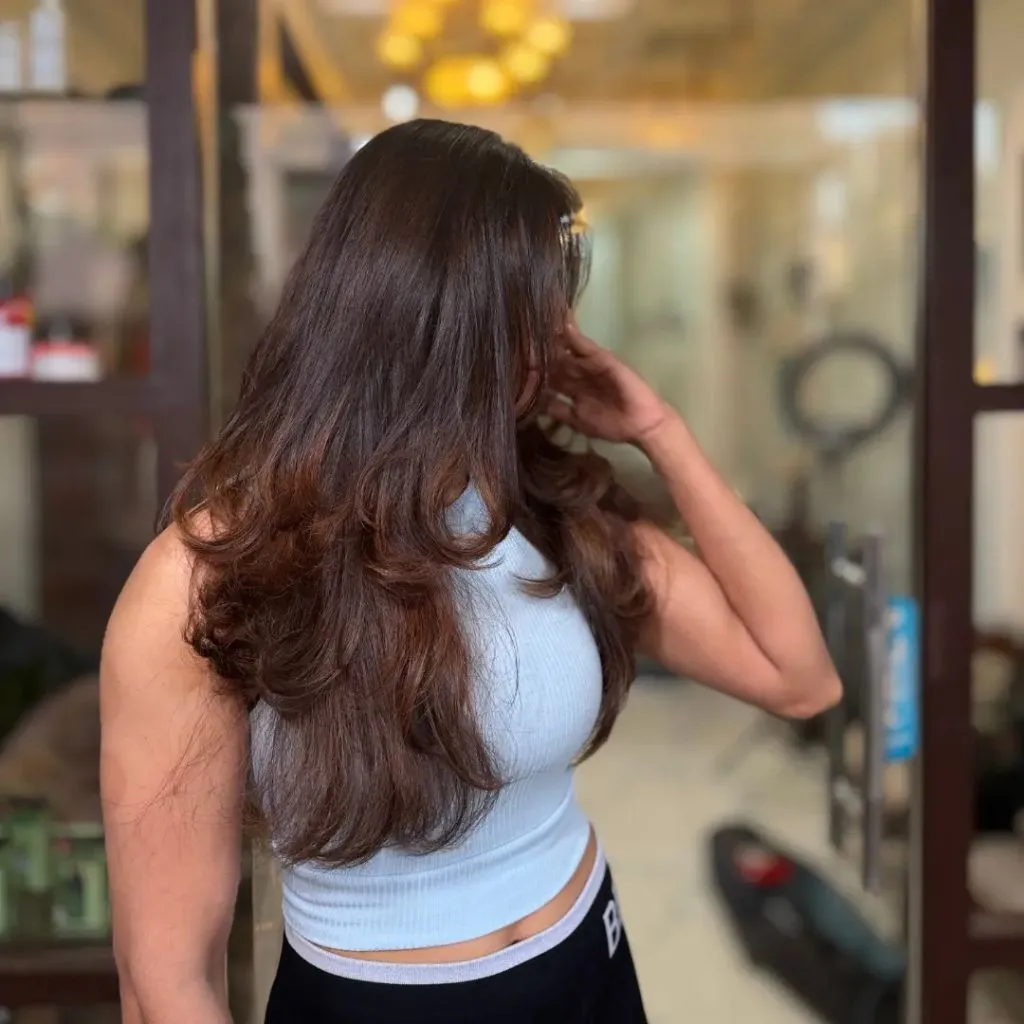
Photo via Instagram
The curls here are different from the feathered or flipped ends seen earlier. They are rounded and inward-turning, which creates a tucked, polished perimeter rather than an expansive one. The volume sits primarily at the ends rather than through the mid-lengths, which means the upper portion of the hair falls relatively flat against the back and shoulders. That distribution gives the cut a structured bottom-heavy silhouette. The one hand reaching toward the head introduces a sense of movement to the photograph itself, but the hair shape reads as controlled and deliberate.
The best detail is the consistency of the curl pattern across both sides. Each section curves inward at approximately the same point, which creates a uniform rounded edge at the bottom of the silhouette. For anyone drawn to end-focused volume rather than all-over layering, this image demonstrates that concentrated curl at the tips can create just as much visual impact as full-length layers.
7. Dramatic Side Sweep Carries Maximum Volume Forward
The hair in this photograph is extremely voluminous, with large, wide layers that fan outward from the face in every direction. The color is a cool-toned medium brunette, lighter and ashier than most of the other images in this set. The face is partially covered by a deep side sweep, and the volume extends well past the shoulders on both sides. The yellow-and-white patterned top is visible beneath the hair.
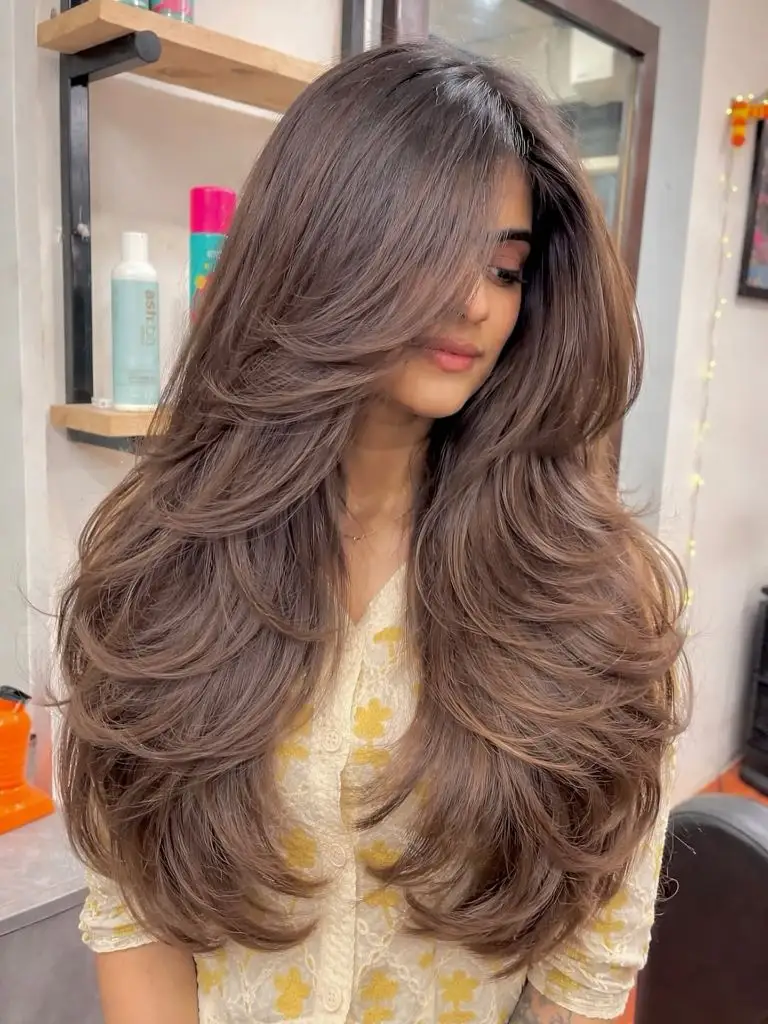
Photo via Instagram
This is the most theatrical cut in the article and the one where volume is pushed to its deliberate maximum. The layers begin very high, possibly at ear level, and each one flips outward in a wide arc that creates a halo-like silhouette. The result is that the hair occupies more visual space than the body, which reverses the usual proportion. The salon products visible on the shelf behind suggest this level of volume is styled rather than natural, and the overall effect reads as editorial rather than everyday. The clothing pattern beneath is barely visible, which reinforces that the hair is doing all the work.
The strength here is the commitment to scale. Half-measures with this kind of layering would read as unfinished, but taken to this extreme, the shape becomes its own statement. The transferable lesson is that if the goal is maximum volume, the layers need to start high enough to create width at the face rather than only below the shoulders.
8. Tousled Layers With Warmth on a Side Profile
Viewed from the side, this image shows long layers with natural-looking movement, the ends kicking outward and backward in an effortless pattern. The color is warm brunette with subtle reddish undertones visible where the light catches the mid-lengths. A white ribbed tank top and what appears to be a salon interior with glass and warm fixtures form the background.
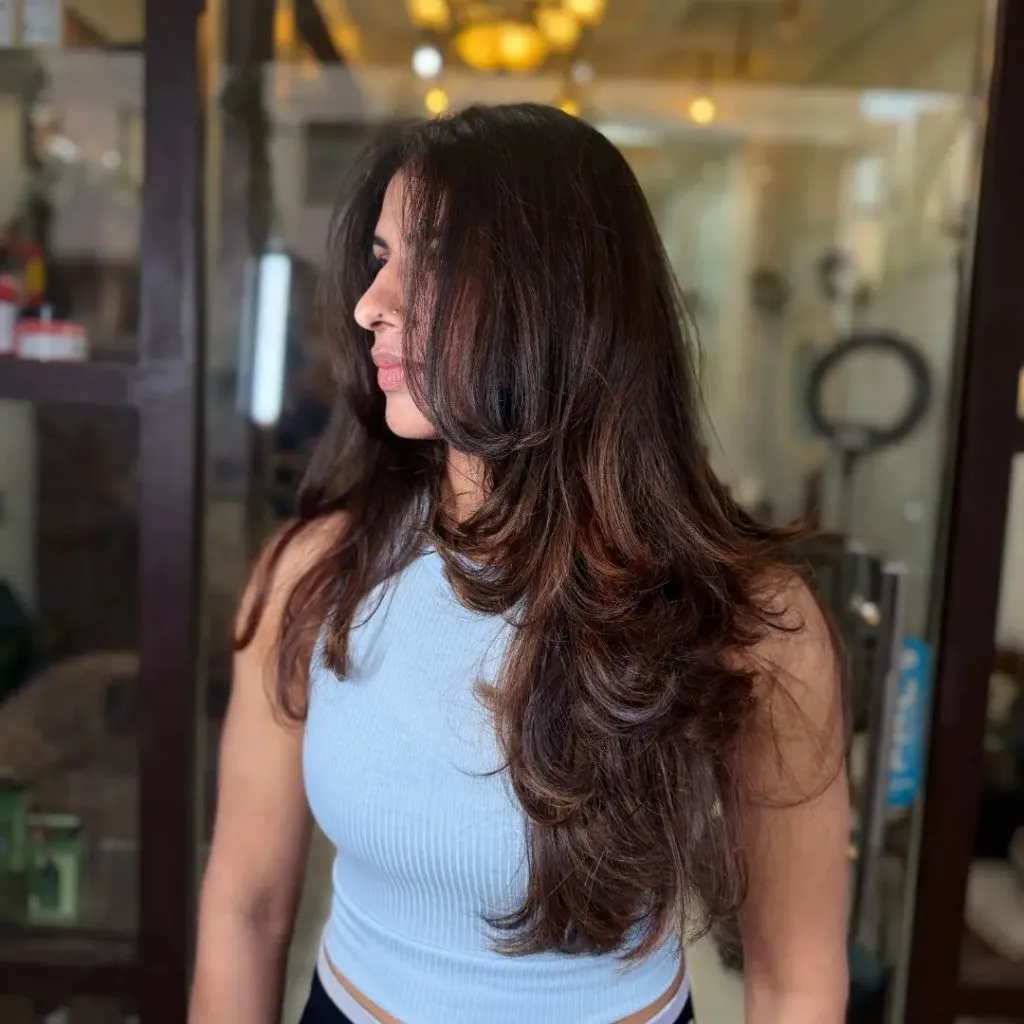
Photo via Instagram
This photograph is useful for evaluating how layered cuts read in profile because the silhouette is clearly visible against the bright salon background. The shortest layers sit around the chin and the longest fall past the mid-back, which means there is significant distance between the top and bottom of the layering. The movement is less controlled than in earlier images. The ends separate and flip in slightly different directions, which gives the overall shape a lived-in quality rather than a freshly-styled one. The warm tones in the hair complement the warm lighting in the room, creating a cohesive warm palette.
This is a cut that openly shows what November haircut ideas look like between salon visits. The natural movement and slight imperfection are part of the appeal rather than a flaw. The useful takeaway is that good layering should hold its basic shape and movement even when it is not freshly blown out, and that warmth in the color helps compensate for any loss of polish in the styling.
9. A Classic Bob With Dense Texture at the Nape
This image is notably different from the rest of the article. It shows a short, chin-length bob viewed from behind, with dense, slightly coarse-textured dark hair cut to a mostly uniform length. There are no layers, no curls, and no visible color treatment. The person wears a black top, and the background is soft and warm-toned.
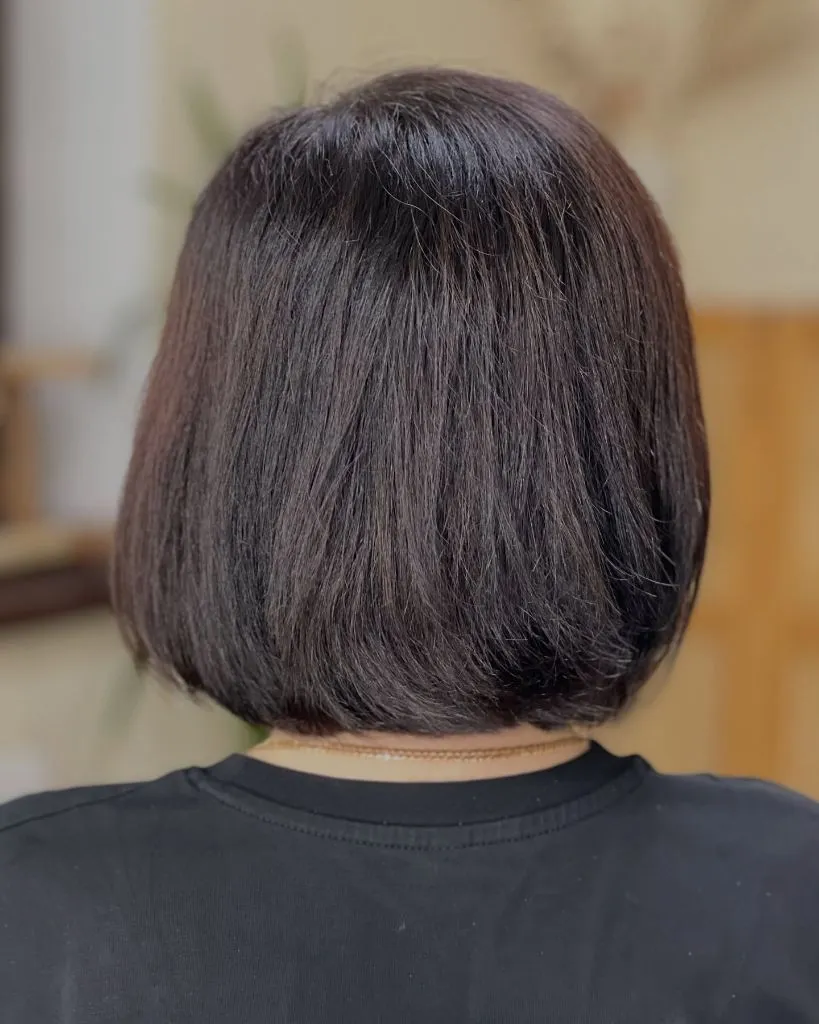
Photo via Instagram
This photograph does not show the front of the cut, so the face framing, bang style, and overall proportion from the front cannot be assessed. What is visible is the weight line, which sits exactly at the nape and curves very slightly inward, creating a rounded rather than angular bottom edge. The density of the hair means the perimeter looks thick and full without any thinning or texturing at the ends. The simplicity of the shape is striking after the highly layered cuts that precede it in this article.
The value is in the contrast this bob provides against the layered styles dominating the rest of the set. It demonstrates that a clean, blunt perimeter with no layering at all can be just as considered a choice as dramatic volume. The principle is that density at the ends, when the hair texture supports it, creates its own kind of structure that does not need movement or curl to read as intentional.
10. A Textured Crop Balances Short Bangs and Length Behind the Ear
This is a short, cropped cut with choppy micro-bangs across the forehead, textured short layers on top, and longer wispy pieces that extend past the ear and reach toward the neck. The color is a natural medium brown with no visible highlights. The styling has a deliberately undone, slightly spiky quality on the crown.
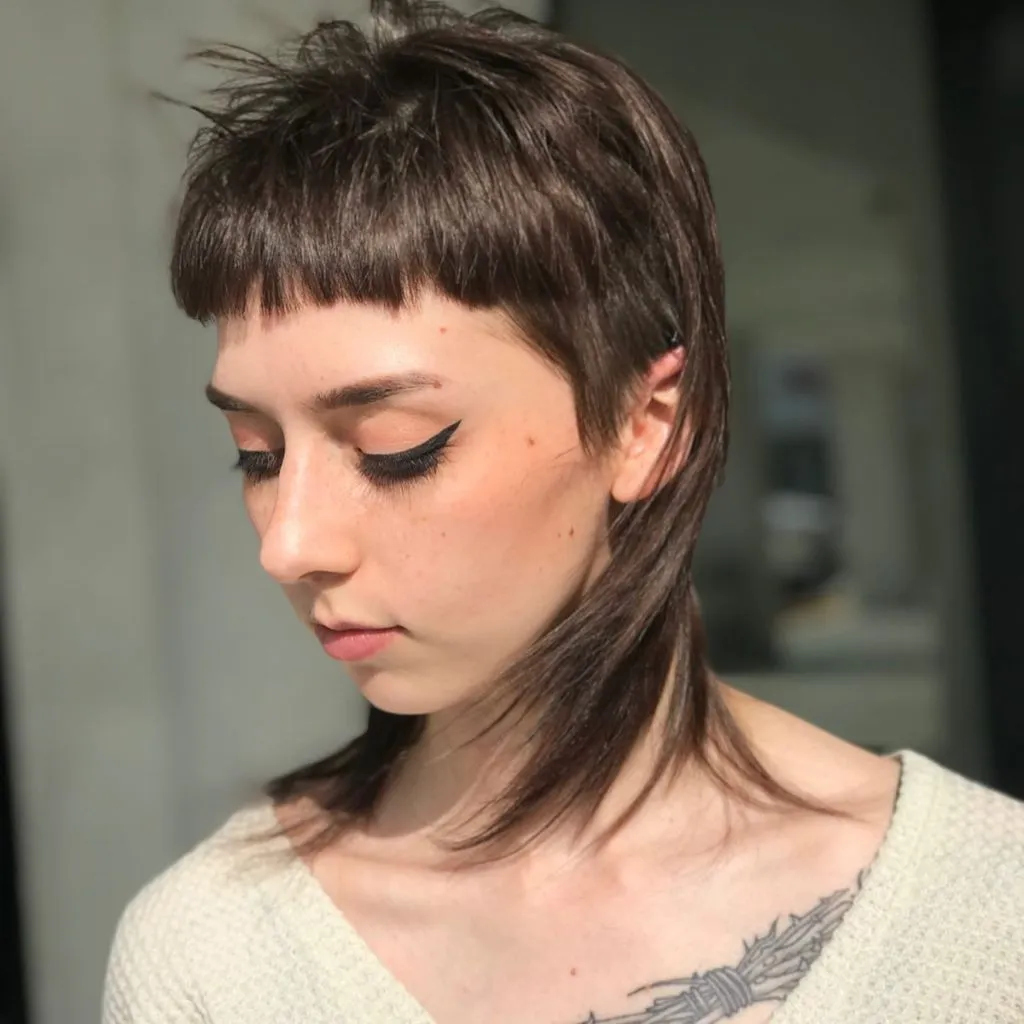
Photo via Instagram
The interesting tension in this cut is between the very short bangs, which sit well above the eyebrows, and the longer tail pieces behind the ear, which touch the collarbone area. That range of lengths within a single cut creates an unexpected silhouette that reads as modern and deliberate. The winged eyeliner and the visible collarbone tattoo contribute to an overall aesthetic that supports the edginess of the cut, but those are styling choices, not hair structure. The hair itself is doing the work through its contrasts in length.
What stands out most is the confidence of the short bang line. Micro-bangs demand precision because there is no length to hide behind, and here they are cut straight and clean. For anyone considering a short textured haircut this November, the visible lesson is that combining very short and very long sections within one cut requires strong contrast to look intentional rather than accidental.
11. Heavy Volume on Dark Hair Fills a Wide Silhouette
This photograph shows very long, very voluminous dark hair with large cascading layers that begin near the jaw and expand outward past the shoulders into a wide triangular shape. The color is a deep, near-black brunette with cooler undertones than the warmer cuts earlier in the article. The person wears a navy zip-up jacket, and the background suggests a salon or shop environment.
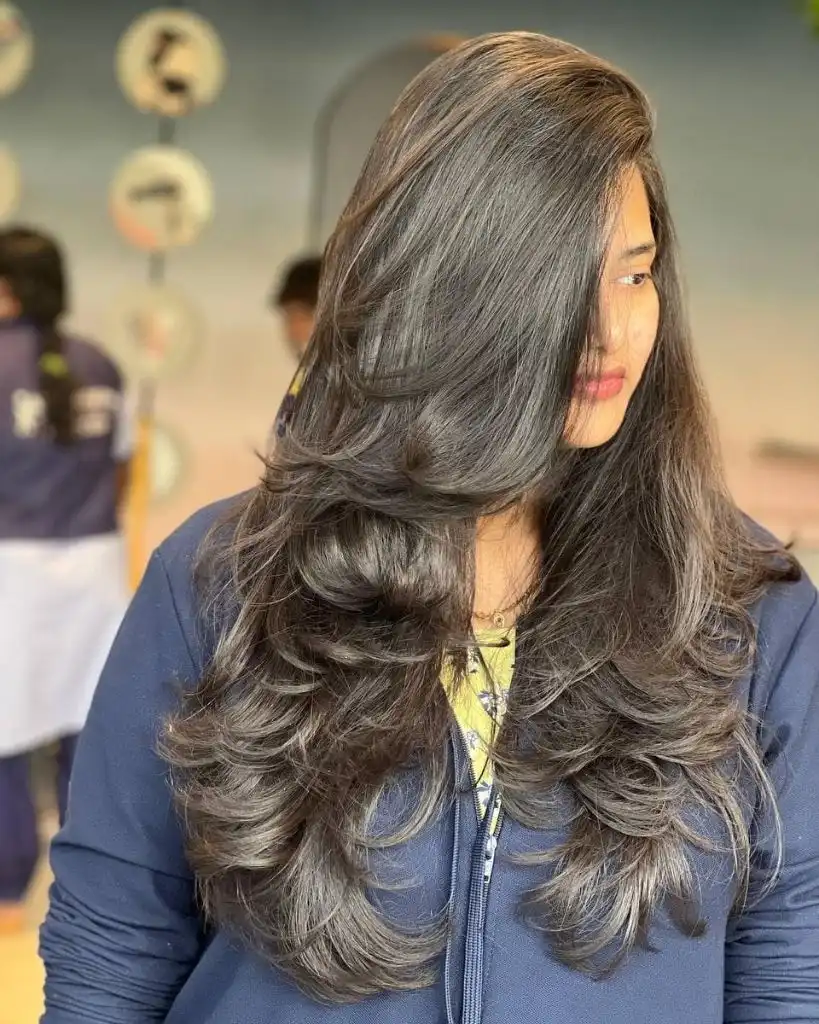
Photo via Instagram
The volume here rivals the dramatic side-swept cut in section seven, but the effect is different because the color is darker and cooler. Dark hair at this volume creates a denser visual mass, which means the silhouette reads as heavy and substantial rather than airy. The layers flip outward at multiple levels, but because the color is so uniform, the individual layers are harder to distinguish than in the lighter brunette versions. The navy jacket blends into the lower sections of the hair, which makes the shape appear even larger where the hair meets the shoulders.
The appeal is in the unapologetic scale of the cut on naturally dark, thick hair. This is not a style that aims for subtlety, and it does not need to. The transferable principle is that very dark hair requires even more separation between layers to make the layered structure visible, because without color variation, shape becomes the primary way to read the cut.
12. A Blonde Bob Sharpens the Jawline
This image introduces a completely different palette. The cut is a short, chin-length bob with a side part, blonde highlights over darker roots, and a smooth, straight finish with the ends curving slightly inward. The person wears a sage green collared shirt, and the background is a dark lattice pattern.
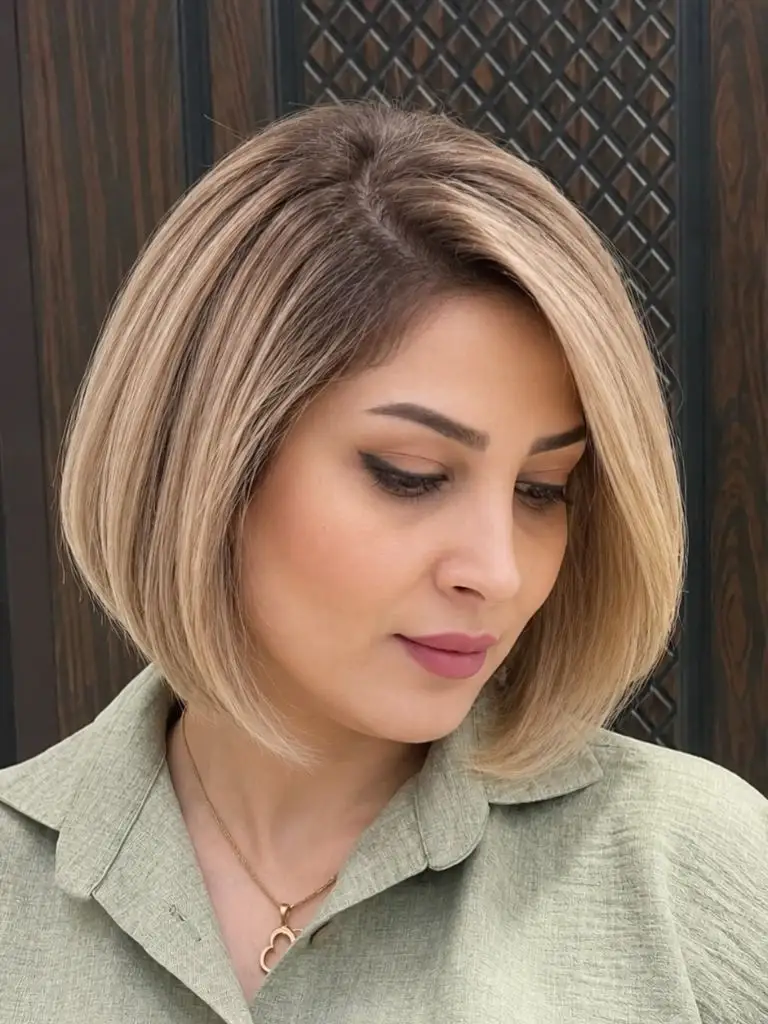
Photo via Instagram
The color contrast between the dark roots and the blonde lengths creates a visual depth that a single-process blonde would not achieve. The roots anchor the top of the head with a darker tone, and the lighter blonde sections draw the eye outward and downward toward the jawline, which is exactly where the bob terminates. The inward curve at the ends tucks the shape against the jaw, creating a clean, fitted perimeter that follows the bone structure. The sage green shirt adds a muted warm-cool contrast without competing with the hair color.
This is the cut in the article that most clearly demonstrates how color placement and cut shape work together. The dark root is not grow-out to be corrected; it is a deliberate anchoring device. For anyone exploring shorter bob options, the lesson is that a visible root shadow on a bob gives the eye a starting point at the crown and a destination at the jaw, creating a readable path.
13. Curtain Bangs With Waves Create a Textured Middle Length
This medium-length cut falls between the jaw and the collarbone, with curtain bangs parted in the center and tousled waves running through the lengths. The color is a rich, dark brunette with subtle warm tones. The texture is deliberately undone, with visible separation between the wave sections and a slight frizz halo that reads as natural rather than styled.
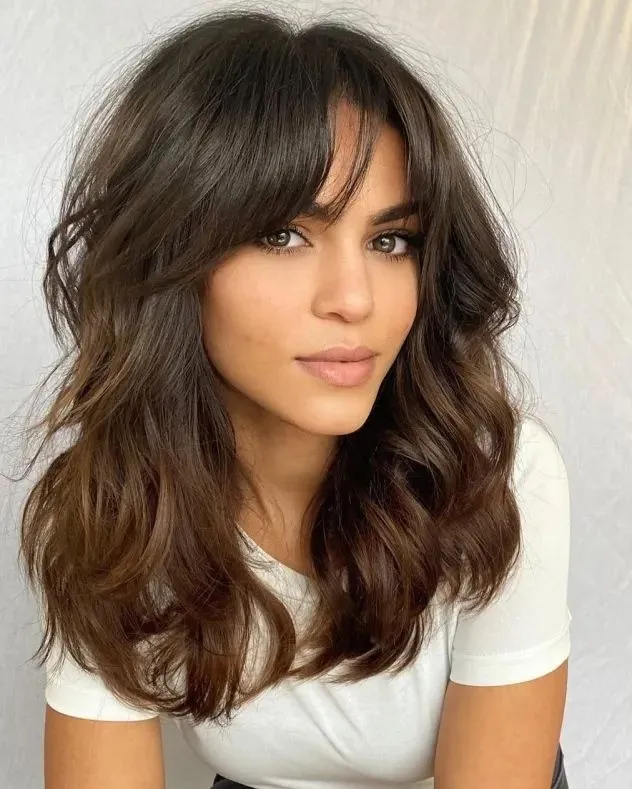
Photo via Instagram
The curtain bangs here are doing the heaviest lifting. They split at the center and sweep outward past the cheekbones, creating a frame that opens the face while still providing coverage at the forehead. The waves below are loose and imprecise, which prevents the overall look from reading as too calculated. The white t-shirt provides a minimal background that keeps attention on the hair texture. The slight asymmetry between the two sides, with one curtain sitting slightly longer than the other, adds a naturalistic quality that flat-ironed symmetry would not achieve.
The effect is relaxed precision. The bangs are clearly cut with intention, but the waves are allowed to fall where they want. This is a strong example of how November haircut ideas can combine a structured element with an unstructured one and still read as cohesive. The transferable principle is that curtain bangs work best with textured, wavy styling because the movement below prevents the framing above from looking too isolated.
14. Rounded Layers Soften a Warm Brunette Base
The cut is medium-to-long with large, smoothly rounded layers that begin at the chin and curve inward around the face before flipping outward at the collarbone. The color is a warm chestnut-auburn brunette, and the credit watermark visible in the lower portion identifies the stylist. The person wears a dark salon cape, and the background is a bright, modern salon interior.
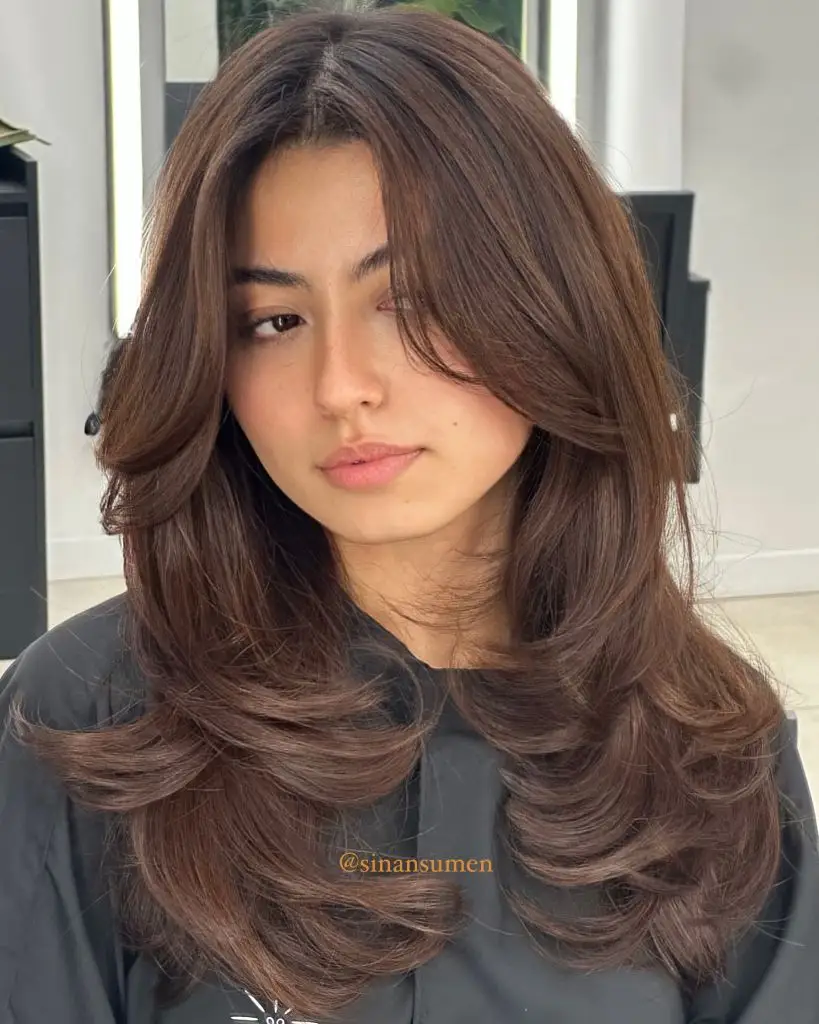
Photo via Instagram
The rounded quality of these layers distinguishes them from the feathered or flipped styles seen earlier. Each layer curves in a smooth arc rather than separating into wispy points, which gives the overall silhouette a polished, almost retro quality. The face-framing pieces curve inward at the cheekbone, closing the frame slightly and drawing attention toward the center of the face. Below the chin, the layers reverse direction and curve outward, creating a visible S-shape in profile. The warm color enhances the curves by catching light on each rounded surface.
The best detail is the consistent radius of each curl. The layers do not fight each other because they all follow the same arc pattern, just at different starting points. For anyone considering rounded layering as part of their November approach, the face-framing technique visible here shows that inward movement near the eyes and outward movement at the shoulders create a natural, balanced frame.
15. Dark Layers With a Highlight Accent Change the Perimeter
This medium-length cut has dark black hair with visible volume through the crown and flipped layers at the ends that curve both inward and outward. The most notable detail is a streak of lighter blonde-gold color at the very ends of one section near the neck, creating a small but visible contrast point. The person wears a navy top with pink horizontal stripes, and the background has a warm, golden quality.
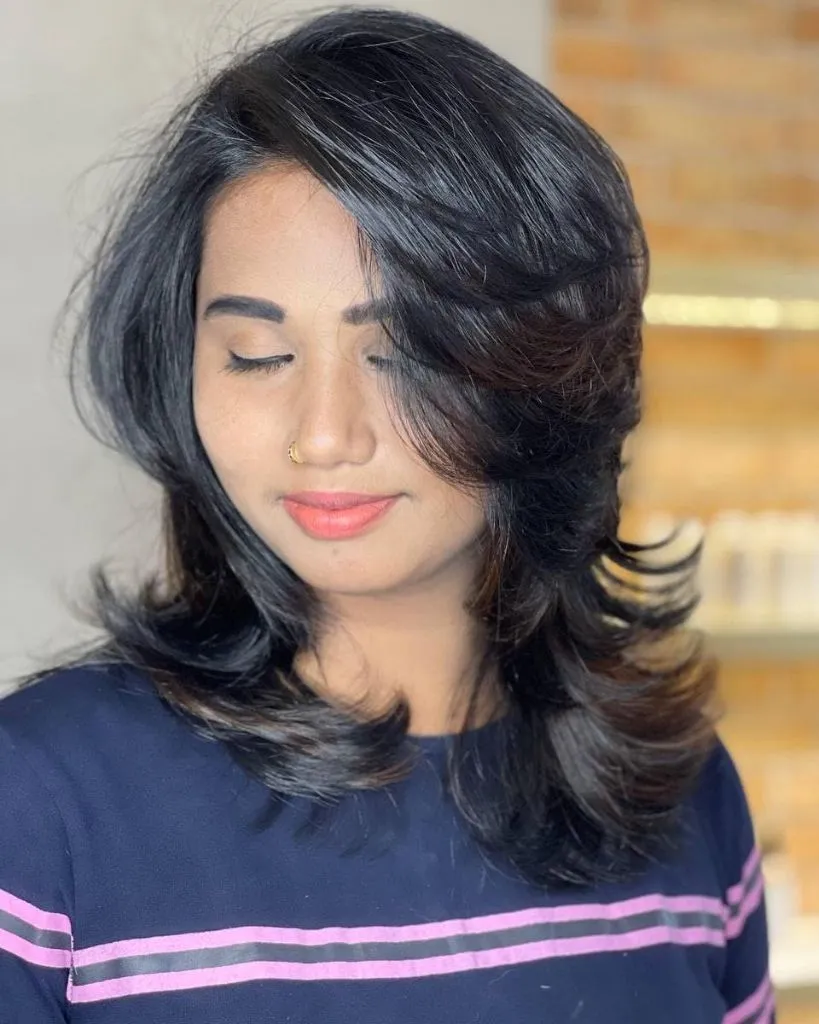
Photo via Instagram
The blonde accent is small in area but disproportionately impactful. On an otherwise uniformly dark head of hair, that single lighter section breaks the bottom edge and draws the eye to a specific point rather than allowing it to scan the perimeter evenly. The navy-and-pink top adds its own color rhythm below, which means the lower portion of the frame has more visual activity than the upper portion. The crown volume is natural and soft, pushed slightly forward, and the overall impression is of a relaxed layered style that uses one deliberate color choice to add complexity.
The strength here is in the economy of the color placement. Rather than full highlights or balayage, a single accent section changes how the entire cut reads. The transferable principle is that a small amount of contrasting color placed at the perimeter of a dark cut can do more work than an all-over treatment, particularly when the goal is subtle disruption rather than transformation.
16. A Cool-Toned Shag Opens Up a Shorter Length
This shorter cut sits between the chin and the shoulders, with choppy, textured layers, a visible side part, and a cool blue-gray color treatment over what appears to be a naturally dark base. The texture is wavy and slightly messy, with pieces falling across the forehead and separating at the ends. The person wears a beige ribbed tank top and a chain necklace.
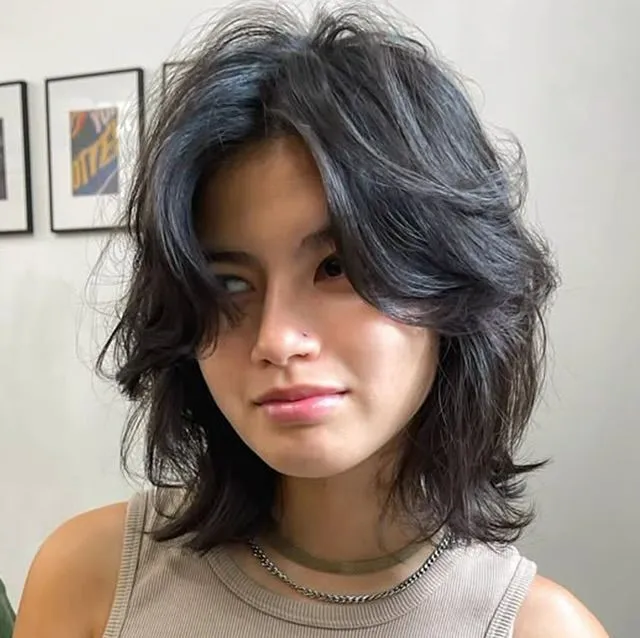
Photo via Instagram
The color is the most immediately unusual element in the article. The blue-gray tone reads as deliberately unconventional, and on shorter hair with this level of texture, it avoids looking costume-like because the cut itself is relaxed enough to ground it. The layers are cut with visible razor texture, which creates separated, pointed ends rather than smooth curves. The chain necklace sits at the collarbone and provides a metallic accent that echoes the cool, silvery quality of the hair color. The beige tank provides warmth underneath, which keeps the overall palette from reading as entirely cold.
This is a cut that demonstrates how color temperature and cut texture need to agree. A cool-toned color on smooth, polished hair would read very differently than it does here on a textured shag. For anyone drawn to unconventional color as part of their November decisions, the principle is that the cut’s texture should match the color’s temperature, and that shorter shag shapes absorb bold color more naturally than longer, sleeker silhouettes.
17. Long Feathered Layers Build Depth in a Side View
This side-angle photograph shows very long, richly layered hair with warm brunette tones and visible lighter sections where the ends catch the light. The layers begin high, near the crown, and cascade in feathered, outward-flipping sections all the way past the shoulders. The person wears a black t-shirt that reads partially as a brand or studio name, and the background suggests a salon with large windows.
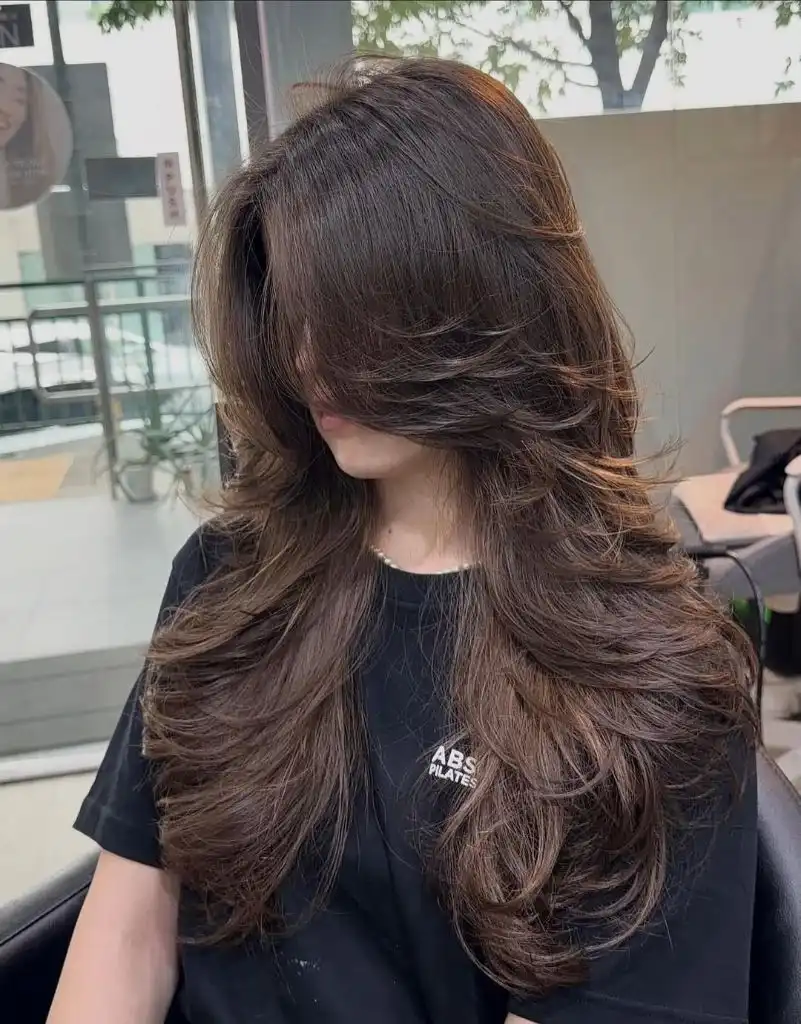
Photo via Instagram
The side view makes the depth of the layering visible in a way that a front-facing shot would not. Each layer occupies its own plane, and because the hair is long enough for the layers to separate fully, there is visible air between each section. The warm brunette color helps distinguish the individual layers because the lighter ends catch light differently than the darker mid-shafts. The black t-shirt recedes visually, which means the hair’s shape is what defines the silhouette from the neck down.
The appeal is the architectural quality of the layering when viewed from this angle. The shape reads almost like stacked petals, each one sitting slightly above and behind the next. This is a useful reference for anyone considering long layered cuts because it shows that the real structure of deep layering is often more visible from the side than from the front, which is worth considering when evaluating a cut in the mirror.
18. Stepped Layers Repeat From a Different Angle
This image appears to be the same or a very similar cut to the one in section five, showing cascading layers in a warm chestnut brunette viewed from behind and to one side. The stepped pattern of outward-curving layers is clearly visible, with each level sitting distinctly above the next. The person wears a cream-colored top.
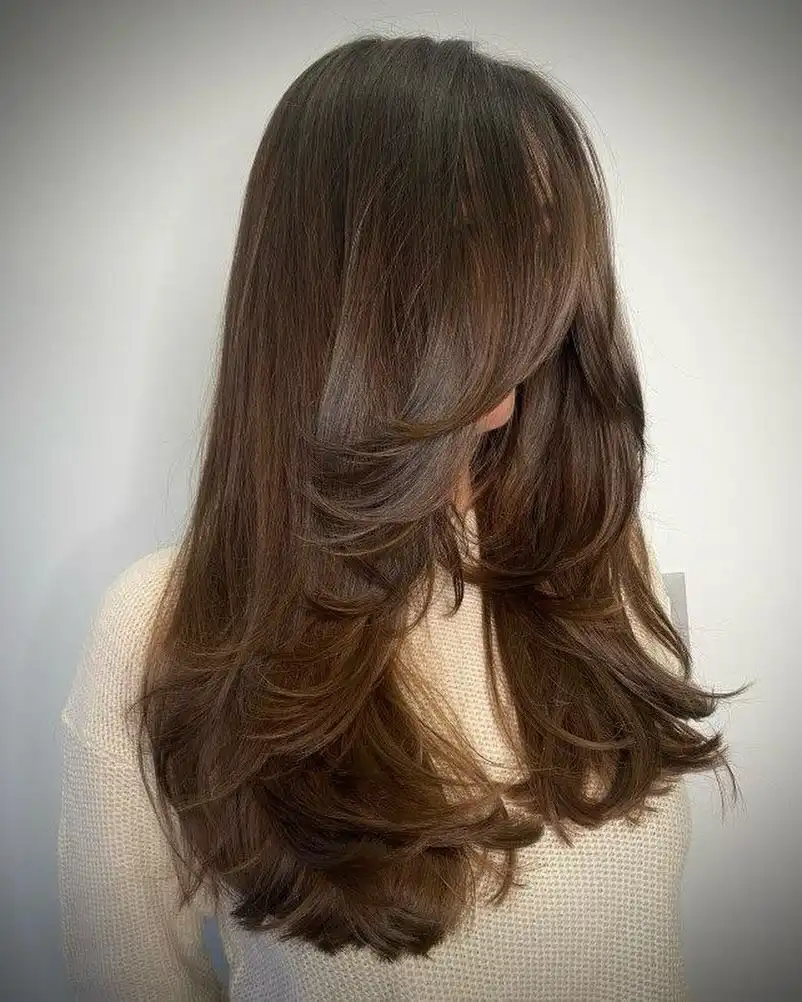
Photo via Instagram
Because this image closely resembles the earlier rear-view photograph, this section is most honestly used to examine what the repeated angle confirms rather than to present something new. The stepped layer pattern is consistent, with three or four distinct levels visible between the jaw and the mid-back. The slight variation in curl direction at each level, some flipping inward and some outward, appears consistent across both angles, suggesting this is a styling choice rather than an accident. The cream top again provides a neutral canvas.
This is the section that openly acknowledges the limits of its source image. The photograph supports the same structural observations made earlier about step-pattern layering, and does not introduce a meaningfully new haircut idea. The useful takeaway remains the same: distinct separation between layer levels creates readable shape from behind, and that rear-view structure is part of how a layered cut communicates when the wearer is not facing the viewer.
19. Curtain Framing Grounds a Dark Layered Length
This front-facing photograph shows long, dark brunette hair with face-framing curtain layers that part near the center and sweep outward past the cheekbones. The layers continue through the lengths with soft, voluminous curves at the ends. The color is a rich, cool-leaning brunette with no visible highlights. The person wears a black top, and the background includes green foliage and a modern interior.
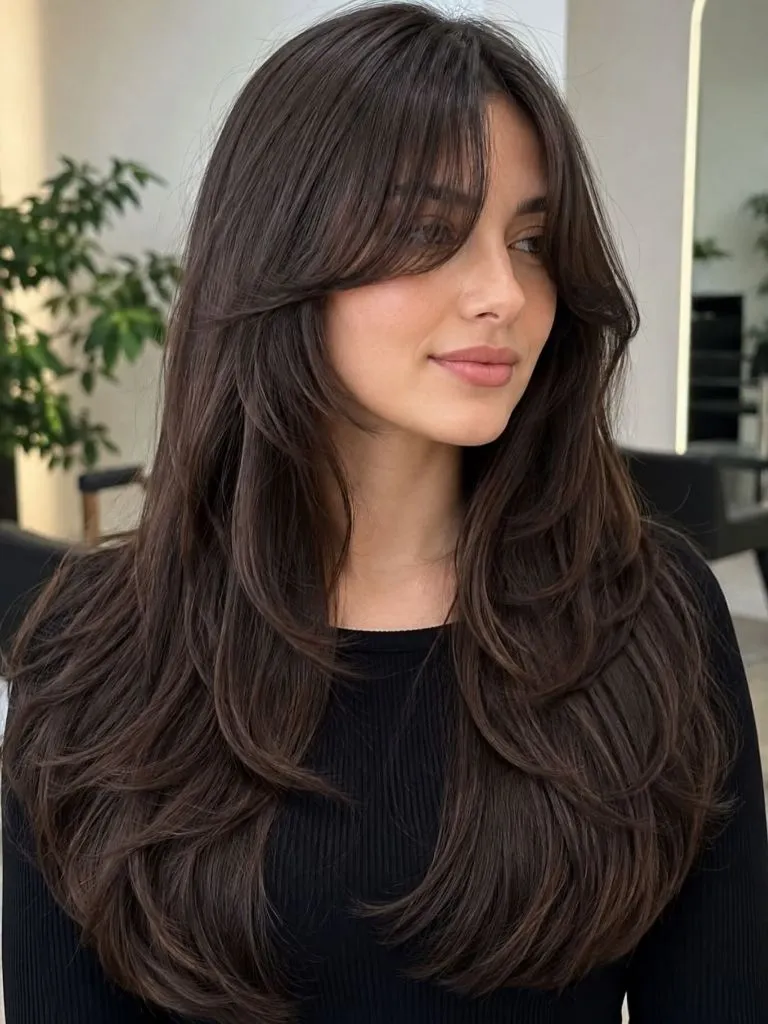
Photo via Instagram
The curtain framing is wider and more open than in section thirteen, with the face-framing pieces sitting farther from the center of the face and curving outward rather than falling straight. This wider frame exposes more of the forehead and cheekbones, which changes the proportion of the face relative to the hair. The long layers below curve inward toward the body, creating a tapered bottom edge that narrows the silhouette. The black top merges with the lower sections of the dark hair, making the waist area visually continuous.
The effect is a combination of openness at the face and containment at the body. The wide curtain opens the top of the frame while the inward-curving ends close the bottom, creating an hourglass-like hair shape. The principle here is that the width of curtain bangs directly affects how much of the face becomes part of the composition, and a wider part creates a more open, less sheltered look than a narrower curtain frame.
20. A Platinum Undercut Pixie Sharpens Angular Features
This image shifts entirely from the long, layered cuts that dominate the article. The cut is a short pixie with platinum blonde on top, shaved or closely cropped darker sides, and swooping bangs that cover part of the forehead. The person wears a deep emerald green satin top and has visible neck and chest tattoos, along with gold jewelry.
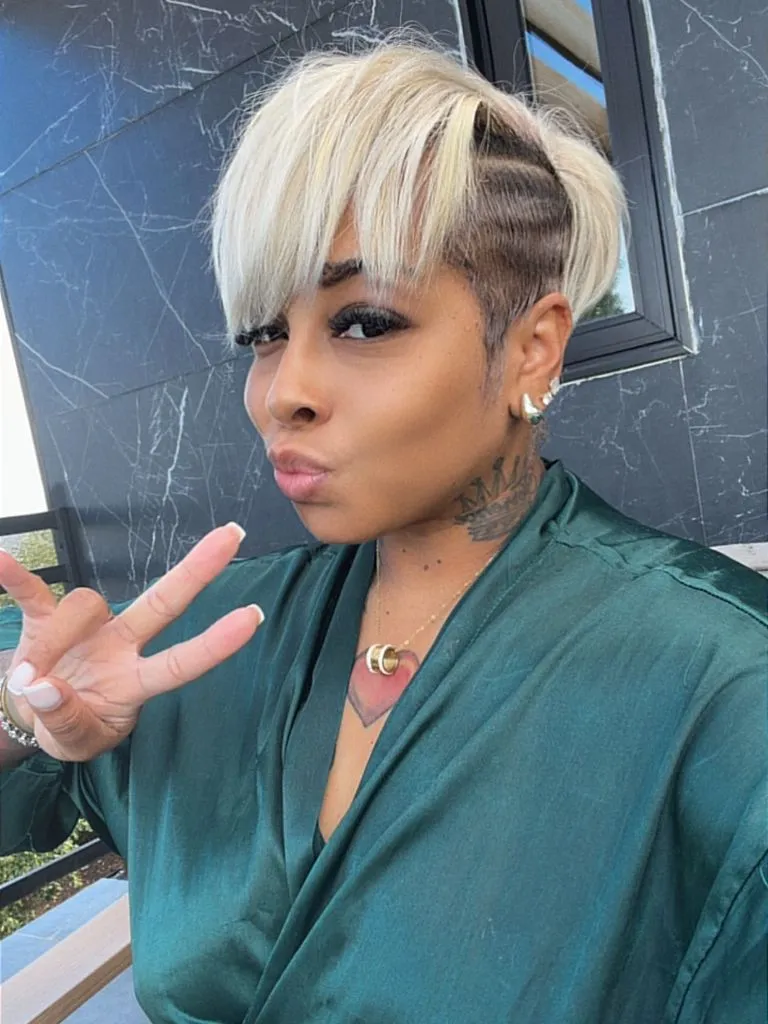
Photo via Instagram
The two-tone color scheme, platinum blonde on the longer top sections and the natural darker shade left on the shaved sides, creates a strong graphic contrast that defines the shape of the cut. The swooping bangs carry the blonde forward and to one side, adding asymmetry. The emerald satin top and gold jewelry introduce richness below the hairline, which means the overall look has three distinct zones: the cool platinum crown, the warm gold and green at the neck, and the darker shaved sides bridging the two.
This is a cut that requires confidence in its maintenance because the grow-out pattern will be visible and fast. It functions as a reminder that November haircut ideas are not limited to layered brunette lengths, and that a well-executed undercut pixie creates a silhouette that is entirely different in both proportion and attitude. The principle is that high-contrast color within a short cut, combining shaved and styled sections, reads as architectural rather than decorative.
21. A Choppy Bob Shag Balances Texture With Short Length
This profile view shows a short, choppy bob-length shag with visible layers, textured ends, and highlights running through a medium-to-light brunette base. The layers are cut with intentional unevenness, creating a tousled, slightly windswept appearance. The person wears a dark leather or faux-leather jacket over a white top, and the background is a painted brick wall.
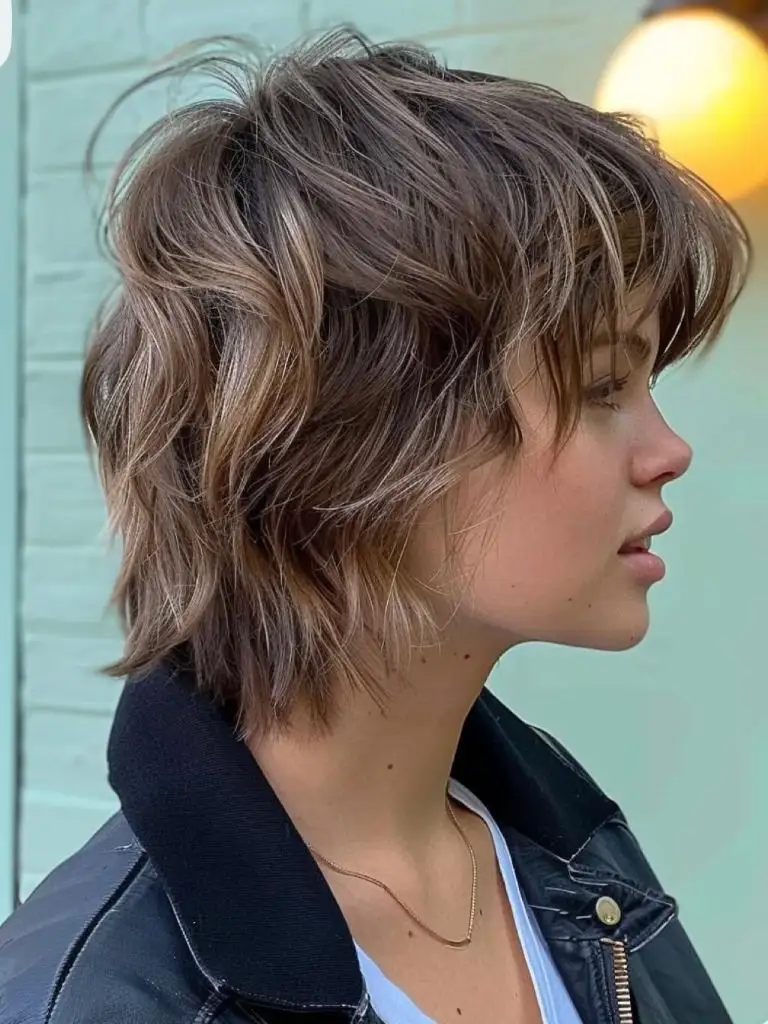
Photo via Instagram
The texture here is the defining feature. The ends are not smooth or curled but deliberately choppy and separated, giving the perimeter an unfinished quality that reads as intentional because of the visible skill in the layering. The highlights add dimension by making each choppy section individually readable against the darker base. The leather jacket introduces a tonal weight below the hair that keeps the overall composition grounded, and the profile angle shows how the shortest layers at the crown create lift while the longer pieces at the nape provide a tapered finish.
The strength here is the combination of mess and control. The cut looks effortless but the layering pattern is clearly precise. For anyone considering a shorter option this November, this demonstrates that a bob-length shag can carry as much personality as a longer layered cut when the texture is committed to rather than smoothed away. The useful idea is that choppy texture on a short bob needs enough highlight variation to keep the individual layers readable.
22. Highlighted Long Layers With Full Feathering Show Movement at Every Level
This final image shows very long, heavily layered hair with warm golden-caramel highlights running through a medium brunette base. The layers begin near the crown and cascade in wide, feathered arcs through to the mid-back. The styling uses large curls that flip outward at every level, creating continuous visible movement from top to bottom. The person wears a blue-gray top, and the setting is a salon interior with a mirror and furniture visible.
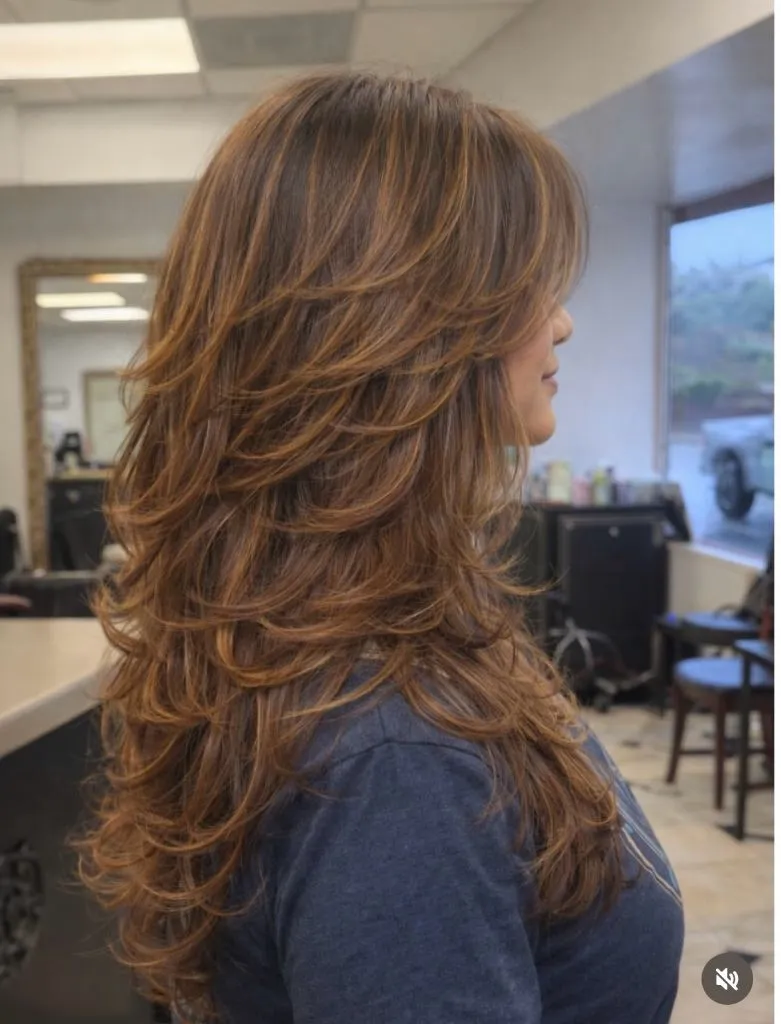
Photo via Instagram
The highlights here do something structurally important: they make each feathered layer individually visible. Because the lighter caramel sections sit on the outer curves of each flip, every layer catches light separately, which means the depth of the layering is readable even from a distance. Without the highlights, this same cut on a single-color base would read as flatter and less dimensional. The blue-gray top provides a cool counterpoint to the warm hair tones, and the salon mirror in the background doubles part of the shape, reinforcing how much visual space the hair occupies.
The best detail is the consistency of the feathering pattern from the crown to the longest lengths. Every layer participates in the same outward movement, which creates a unified rhythm rather than a collection of unrelated sections. This is a fitting final note for an article about November haircut ideas because it demonstrates the full potential of combining layered structure with strategic color placement, and the principle that warm highlights on feathered layers function as a lighting tool that reveals the architecture of the cut itself.