Plum is the winter hair color that does the most with the least. Sitting somewhere between brunette, burgundy and violet, it reads as a rich neutral indoors and reveals its purple character the moment light hits it. For 2027, the most wearable versions lean deep and dimensional rather than bright — shades that grow out softly, flatter a wide range of skin tones, and don’t demand a salon visit every three weeks. A companion piece, Rich Dark Brown Fall Hair Color for 2025, explores the same palette.
This roundup gathers 24 plum hair color ideas across every length and commitment level: single-process shades you can maintain at home, balayage and highlight techniques worth booking a colorist for, and subtle options like root shadows and peekaboo panels for anyone testing the waters. Each idea notes who it suits best and what the upkeep really looks like, so you can choose with open eyes. The same idea, styled another way, appears in Best Summer Hair Color for Dark Skin 2026.
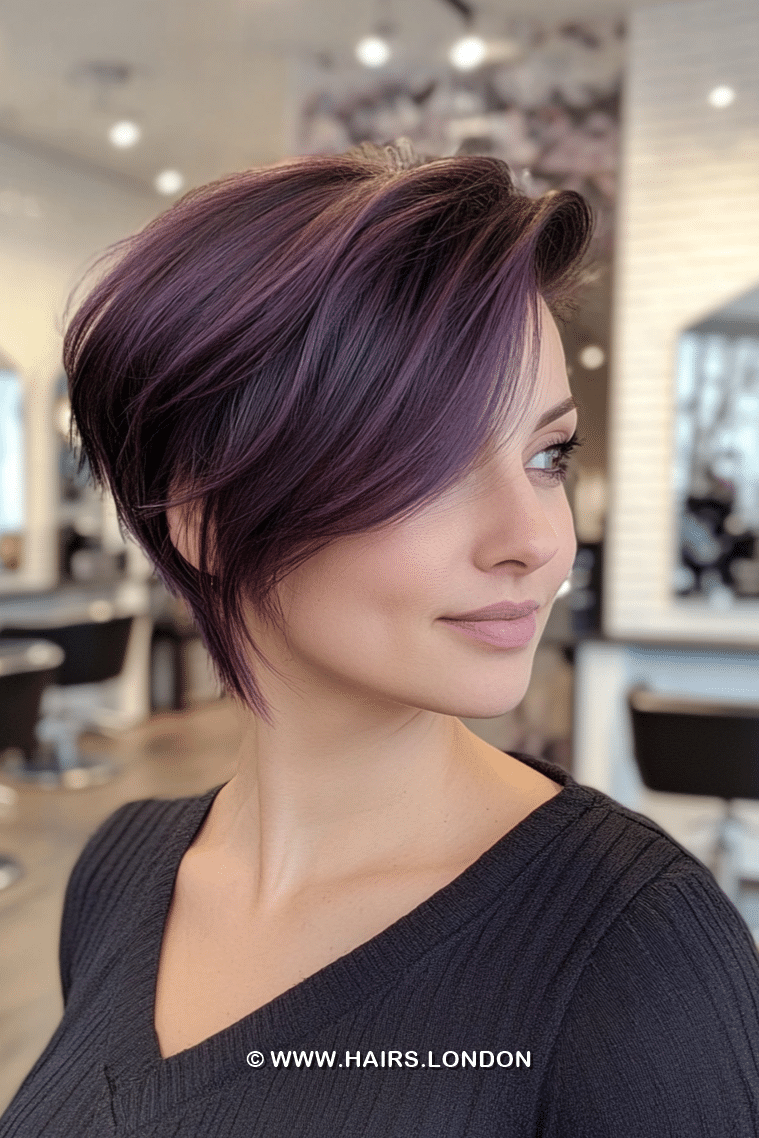
1. Deep Plum Pixie with Soft Micro-Fringe
Courtesy of: hairs.london
A deep plum base on a short pixie with a soft micro-fringe is proof that a fashion shade doesn’t need length to make an impact. The color sits close to natural dark brown, so the violet notes read as depth rather than dye, while the short fringe keeps the cut feeling deliberate and chic. This pairing flatters oval, heart and square face shapes, and the cropped length shows off the color’s richness around the cheekbones and jawline. It works best on straight to wavy textures where the pixie’s shape stays crisp. We break down a similar look in Stunning Burgundy Hair Color Ideas.
Ask your colorist for a level 3–4 plum with cool violet reflect — single-process, no bleach needed on dark hair. The cut needs a trim every four to five weeks to hold its shape, and the color benefits from a plum-depositing conditioner every third wash to keep the violet from dulling. Ideal if you want a bold-but-polished change with minimal daily styling; less suited to very curly textures, where the pixie shape needs more maintenance to stay defined.
2. Plum-Tinted Classic Bob with a Deep Side Part
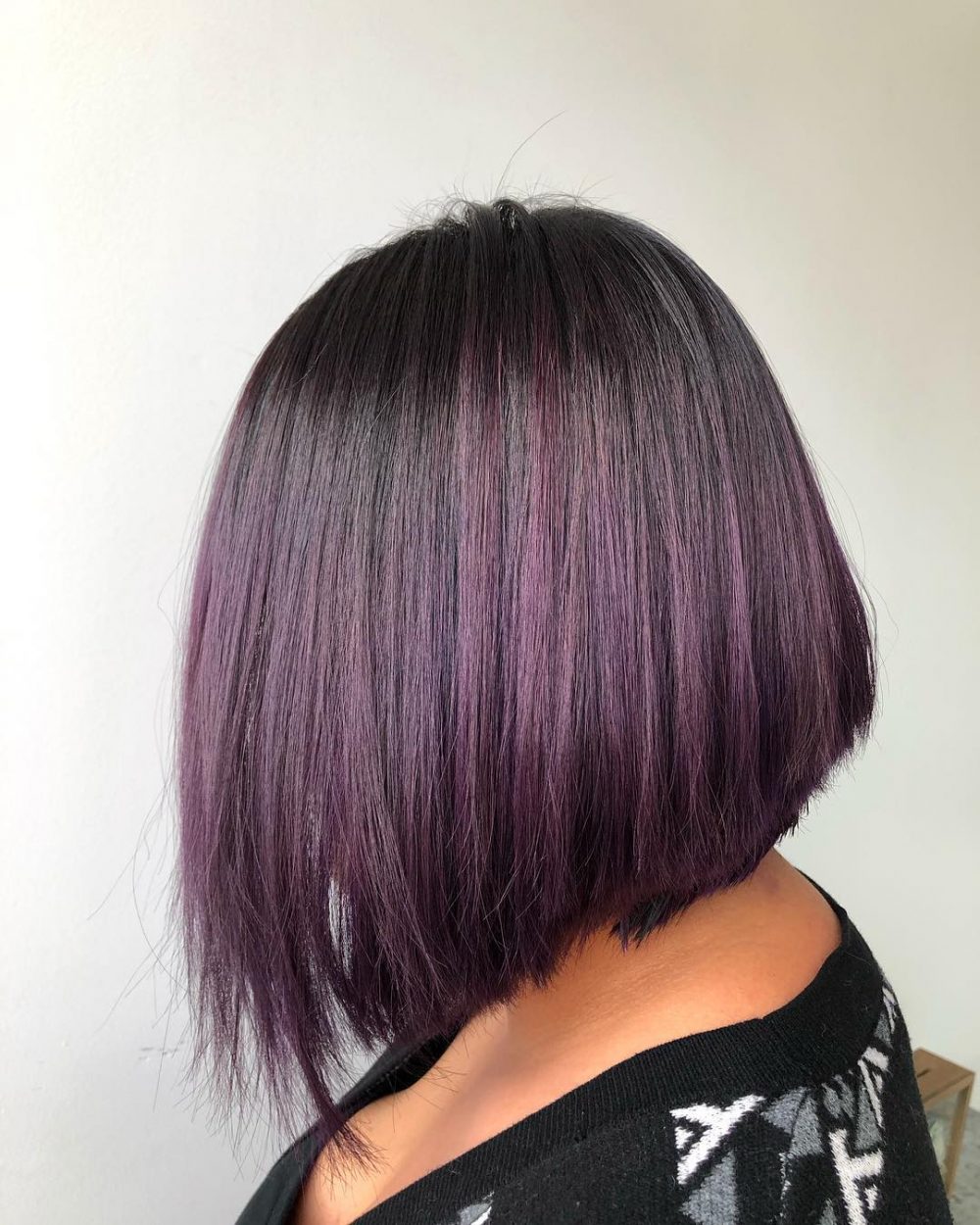
Photo credit: hairs.london
A chin-to-jaw-length bob tinted with violet plum, worn with a deep side part, gives a classic cut a quietly modern edge. The side part creates volume at the crown and lets the plum catch light unevenly across the head, which adds dimension without any highlight work. The violet undertone is most visible on the lengths and ends, while the roots stay deep — a forgiving combination for anyone growing out natural dark hair. Round and oval faces suit this shape well, and medium-density hair holds the bob’s swing best.
This is typically a single-process color applied over a dark base, so the salon visit is straightforward — ask for violet plum rather than red plum if you want to avoid warm fade. Root regrowth is gentle since the shade sits close to natural brunette; plan a refresh every six to eight weeks. Style with a round brush for polish or air-dry for a softer finish. Those wanting a dramatic transformation may find it too subtle, but for a first step into fashion color it’s close to ideal.
3. Long Dark Plum Waves with Airy Layers
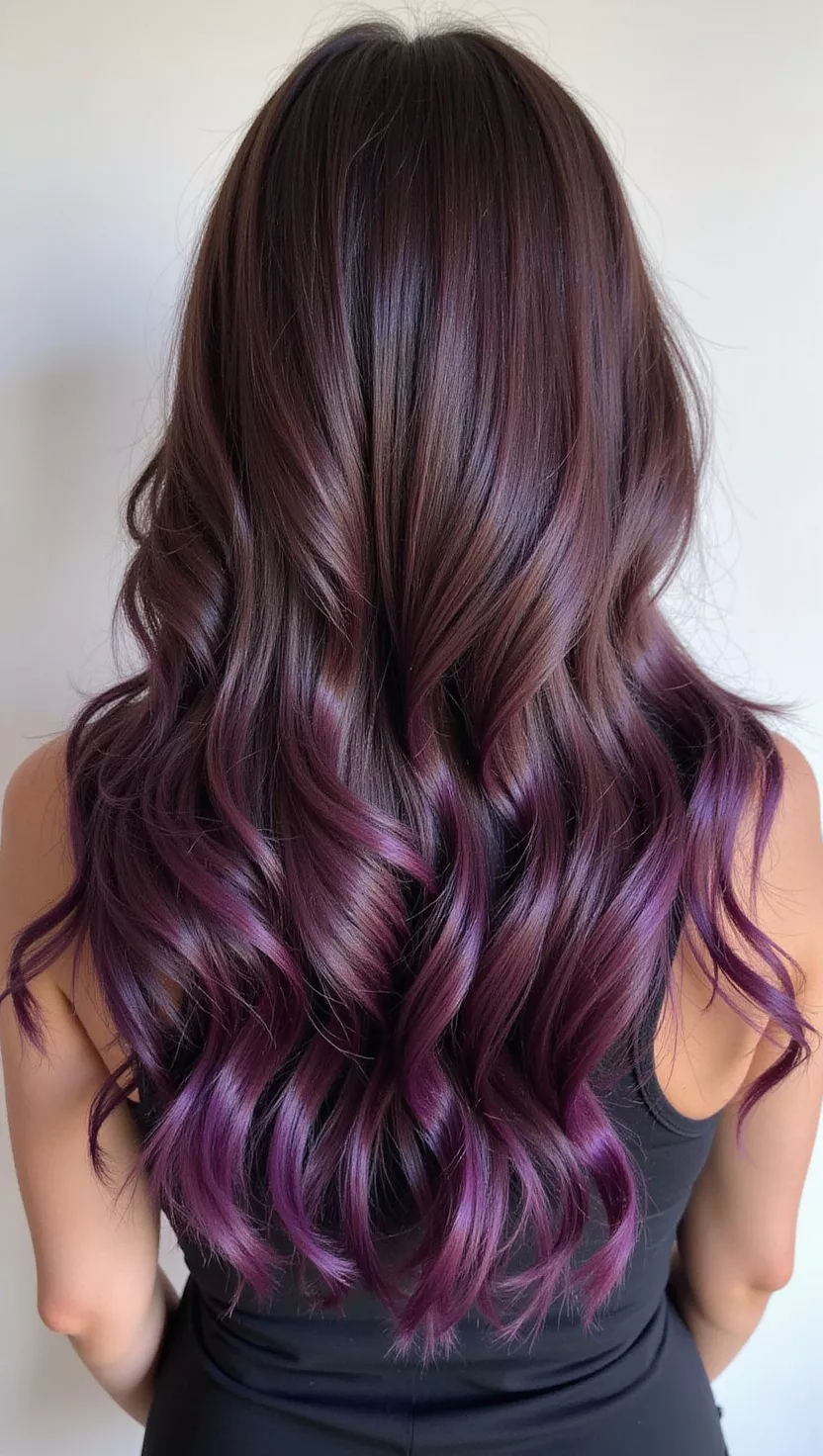
Image credit: partygleam.com
Long hair past the shoulders, cut with airy layers and colored a dark plum, is the low-drama way to wear the trend. The length gives the color room to shift — near-black in dim rooms, unmistakably plum in daylight — and the layers stop the shade from sitting as one flat block. Loose waves amplify the effect, breaking the surface so violet reflects appear and disappear as you move. It suits most face shapes and is especially kind to thick hair, where the layers remove weight without sacrificing the color’s depth. The same theme, explored from another angle, is in Stunning Brown Hair Color Ideas 2026 Fresh Shades Every Woman Will Love.
A single-process deep plum over dark hair usually needs no pre-lightening, keeping the appointment under two hours. Long layers need a trim every ten to twelve weeks, and the color holds well with sulfate-free shampoo; a gloss refresh at week six revives the violet. This is a strong pick if you want plum’s richness with minimal upkeep. Fine hair can wear it too, but may need texturizing layers to keep the ends from looking sparse.
4. Plum Balayage Melted into Dark Brown
Source: itakeyou.co.uk
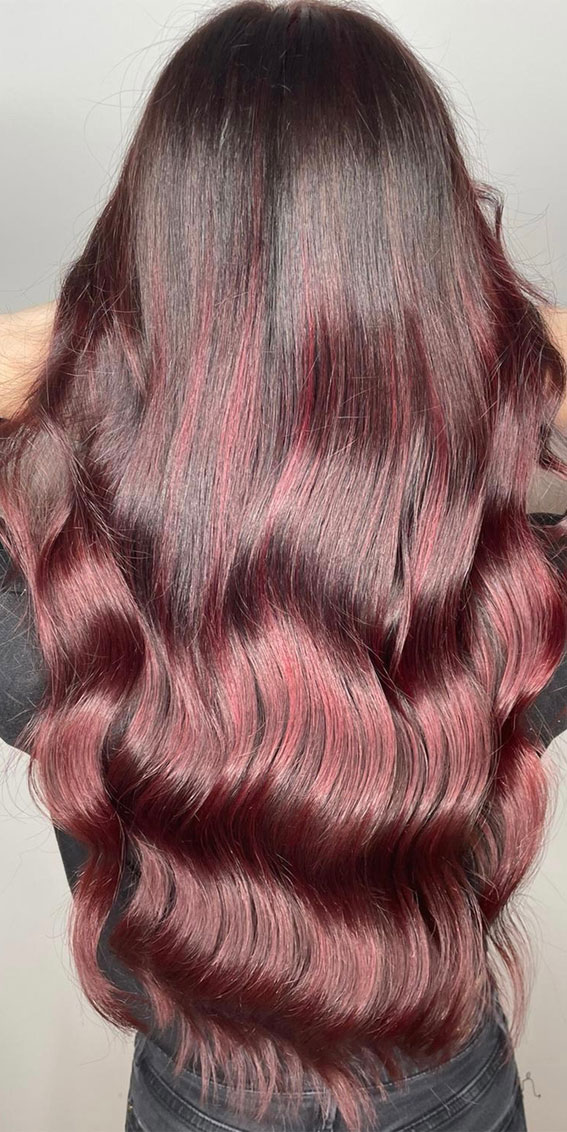
Hand-painted plum balayage swept through a dark brown base delivers dimension with the softest possible grow-out. Because the color is melted rather than foiled to the root, there’s no harsh line as it grows — the plum simply lives through the mid-lengths and ends where light naturally hits. The effect is dimensional but office-friendly, and it flatters warm and neutral skin tones since the brown base keeps everything grounded. Medium to thick hair shows the painting best; the technique relies on hair with enough density for the sweeps to read.
Book a balayage specialist and ask for plum painted two to three levels lighter than your base, concentrated from the ears down. Expect a two-to-three-hour appointment and a higher initial cost, but touch-ups can stretch to three or four months. A color-safe shampoo and occasional purple conditioner keep the plum from warming up. Not the choice for anyone wanting instant, all-over plum — but arguably the most forgiving way to wear the shade.
5. Violet Plum Lob with Curtain Bangs
Via partygleam.com
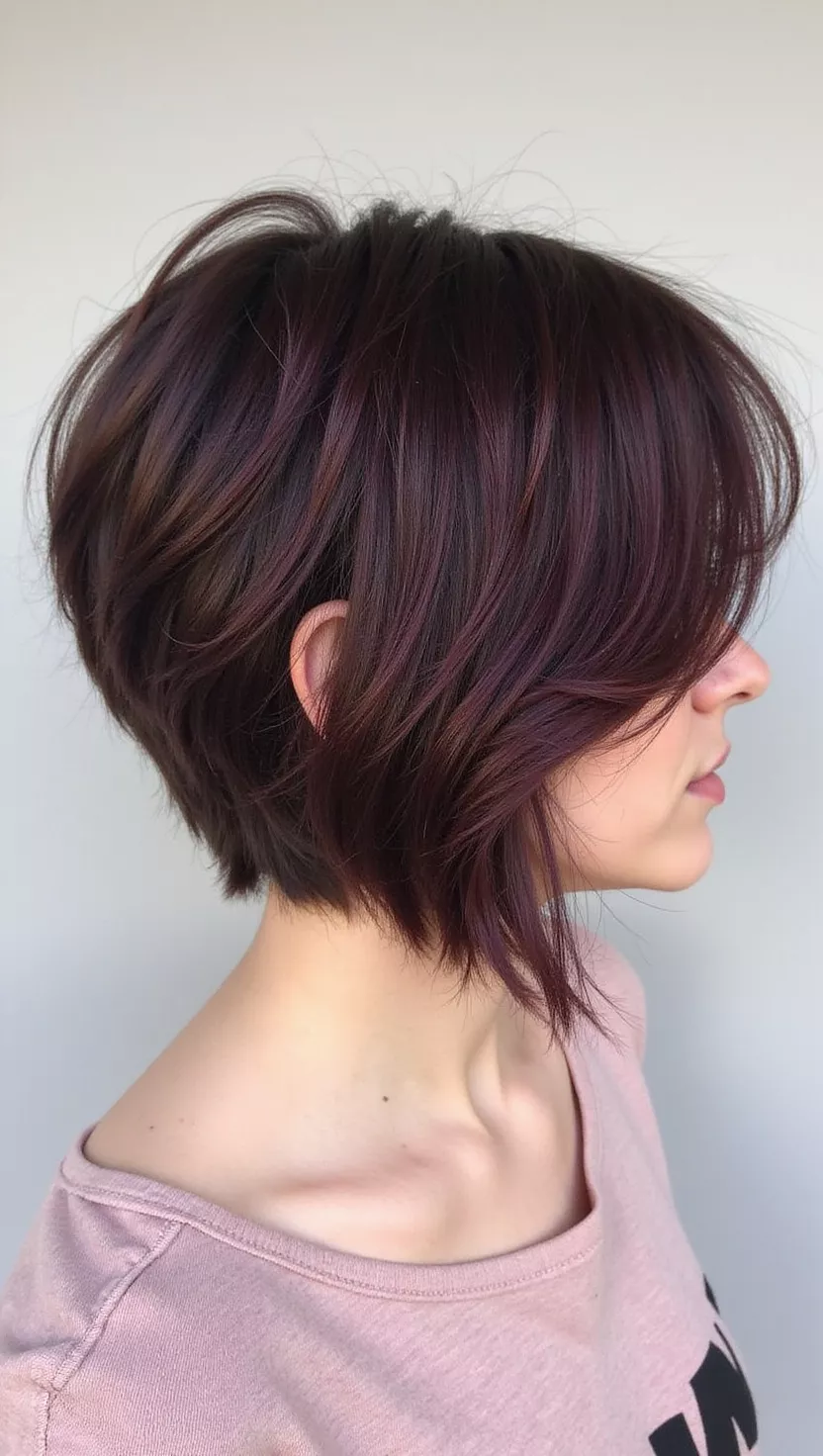
A collarbone-grazing lob in violet plum, paired with curtain bangs, hits the sweet spot between trendy and timeless. The curtain fringe frames the cheekbones and opens up the face, while the lob length is long enough to tie back but short enough to feel fresh. The violet undertone leans cool, which tends to flatter fair to medium skin with pink or neutral undertones. Wavy or wavy-straight textures get the most from this cut, since the bangs blend into the layers with natural movement. Our Must Try Hair Color Ideas for 2026 Bold Soft Stylish Shades That Transform Your Look rounds up more takes on this exact idea.
Ask for a violet-based plum (not red-based) in a demi-permanent formula if you want a softer grow-out. Curtain bangs need a trim every three to four weeks — the one real maintenance demand here — while the lob itself can go eight to ten weeks between cuts. Color refreshes every six to eight weeks keep the violet vivid. A good option for anyone who wants bangs without the commitment of a full fringe.
6. Burgundy Plum Blend on Long Hair
Courtesy of: itakeyou.co.uk
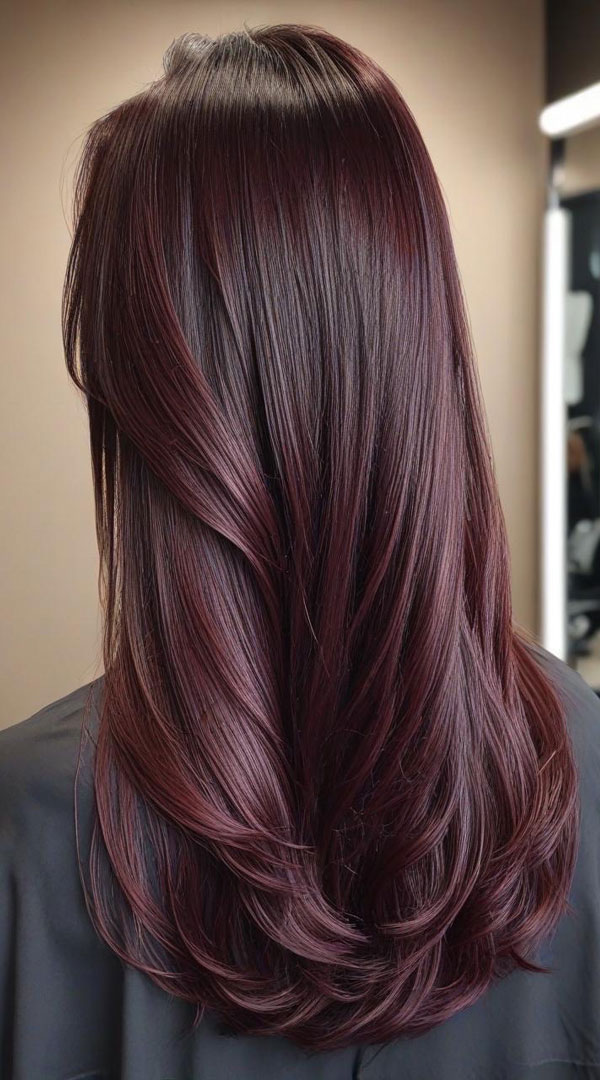
Where violet plum leans cool, a burgundy plum blend leans warm — think blackberry wine rather than grape. On long hair, the warmth reads as richness: the color glows in sunlight and stays deep and mysterious indoors. This undertone is particularly flattering on warm and olive skin tones, where cool violets can sometimes look flat. Long layers keep the color from feeling heavy, and the length lets the burgundy build depth from roots to ends.
A single-process burgundy plum over dark hair is usually achievable without bleach; on previously colored or lighter hair, your colorist may need to fill first so the warmth doesn’t grab unevenly. Expect the red tones to fade faster than the violet base, so a color-depositing mask every couple of weeks helps. Trims every ten weeks keep long hair healthy. Choose this if warm, wine-like color appeals more than cool purple — skip it if your skin has strong pink undertones, which burgundy can emphasize.
7. Cool Ash-Plum Ombré
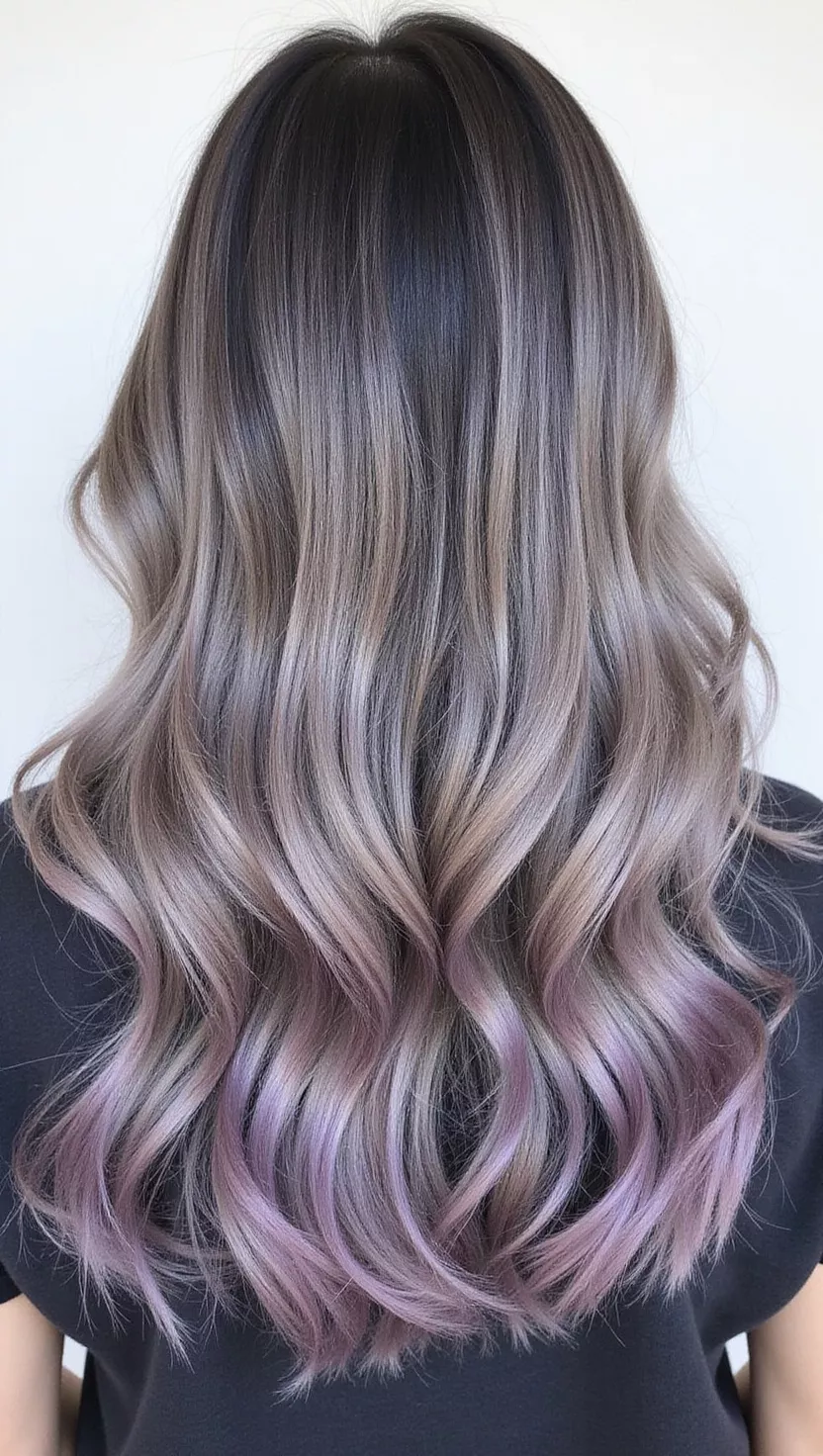
Photo credit: glamifica.com
An ash-plum ombré takes the trend in a smokier direction: deep, muted roots melting into cooler plum ends with almost no warmth. The ashy quality makes it one of the most modern plum variations — less “fashion color,” more “expensive brunette with a secret.” It suits cool and neutral skin tones beautifully, and the gradient placement means the brightest color sits away from the face, which keeps the grow-out exceptionally graceful. Best on medium to long lengths where the melt has room to unfold. See also Beige Blonde Hair Color Ideas for more variations on this look.
The technique usually involves lightening the ends before toning with an ash-violet formula, so this is a salon job — ask to see the toner swatched, since ash can go muddy if overdone. Maintenance is moderate: gloss refreshes every six to eight weeks, trims every ten. The trade-off is that ash tones fade fastest, so this needs more upkeep than a straight deep plum. Worth it if you love cool, smoky color; less ideal for warm skin tones, where ash can look dull.
8. Magenta-Kissed Plum with Face-Framing Layers
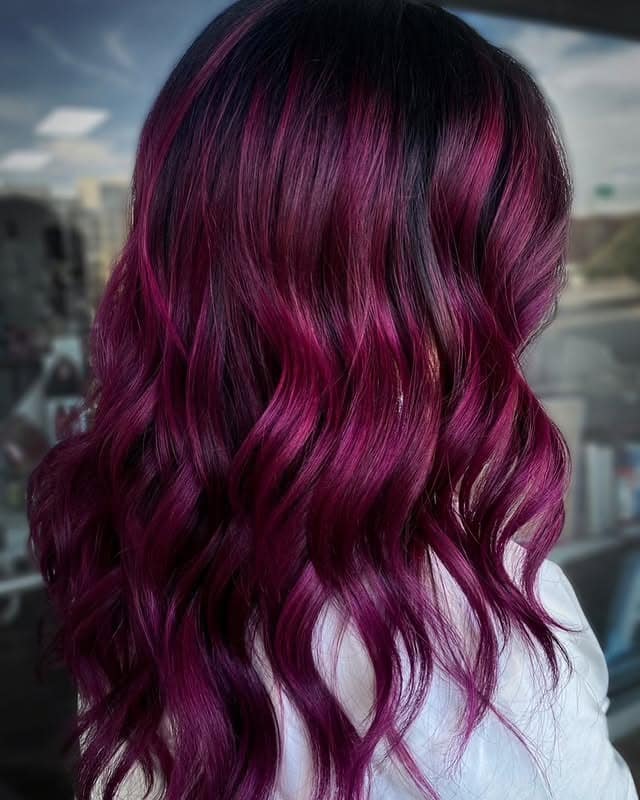
Image credit: cozyandhome.com
For those who want plum with the volume turned up, a magenta-kissed version adds vivid pink-violet energy through face-framing layers. The brightness concentrates around the face, which lifts the complexion and photographs beautifully, while the deeper plum base keeps the overall look anchored. A high-gloss finish is what makes this shade sing — magenta without shine can look dry, but with it, the color looks liquid. It suits medium to thick hair that can carry the vibrancy without the color overwhelming the cut.
Magenta is a high-maintenance fashion shade: expect noticeable fading within two to three weeks and plan refreshes every four to six. Cold-water washing, sulfate-free products and a magenta color-depositing conditioner are close to mandatory. Ask your colorist about the brightest magenta your base can support without heavy bleaching. This is the pick for maximum impact and regular salon commitment — not for anyone hoping to stretch appointments past two months.
9. Subtle Plum Root Shadow on Natural Brunette
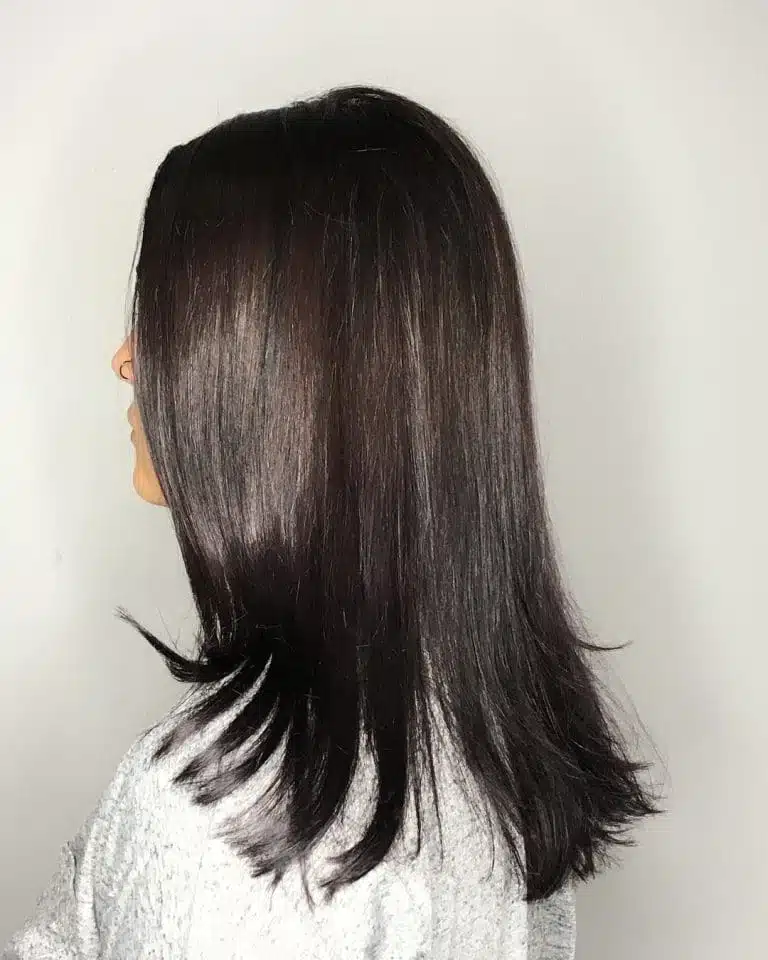
Source: hairs.london
A plum root shadow — sometimes called a plum smudge — keeps your natural brunette at the roots and melts it into plum through the lengths. From a distance it reads as rich brown hair; up close, the violet notes appear. It’s the most discreet entry point into the trend and works on nearly every skin tone, since the color near the face stays close to natural. Any length from bob to long hair can carry it, and it flatters all textures because the technique is about color placement, not styling. For a different spin on the same theme, browse Fun Hair Color Ideas for Brunettes.
Ask for a demi-permanent plum gloss melted from the mid-shaft down, leaving two to three inches of natural root. Because the root is your own color, regrowth is invisible — many people stretch this to four or five months between appointments. The trade-off is subtlety: if you want obviously plum hair, this won’t satisfy. But for low-maintenance color that still feels special, it’s hard to beat.
10. Glossy Black-Plum on Sleek Straight Hair

Via unice.com
Black-plum is plum at its darkest: essentially black hair with a violet undertone that only reveals itself in direct light. On sleek, straight hair with a mirror-gloss finish, it looks impossibly polished — the color equivalent of patent leather. The straight texture is key here, since every strand reflects light the same way and the plum reads as a unified, lacquered sheet. It suits all skin tones and is particularly striking on long, one-length cuts where the shine does the talking.
A single-process black-violet over dark hair, finished with a clear gloss, is all this needs — no lightening required. Maintenance is easy: the dark base hides regrowth, and the gloss can be refreshed at home with a clear shine treatment every few weeks. The main demand is on the hair’s condition, since the look depends on smoothness; regular trims and heat protection matter more than color appointments. Ideal for a sleek, professional aesthetic with a hidden edge.
11. Plum-to-Copper Color Melt
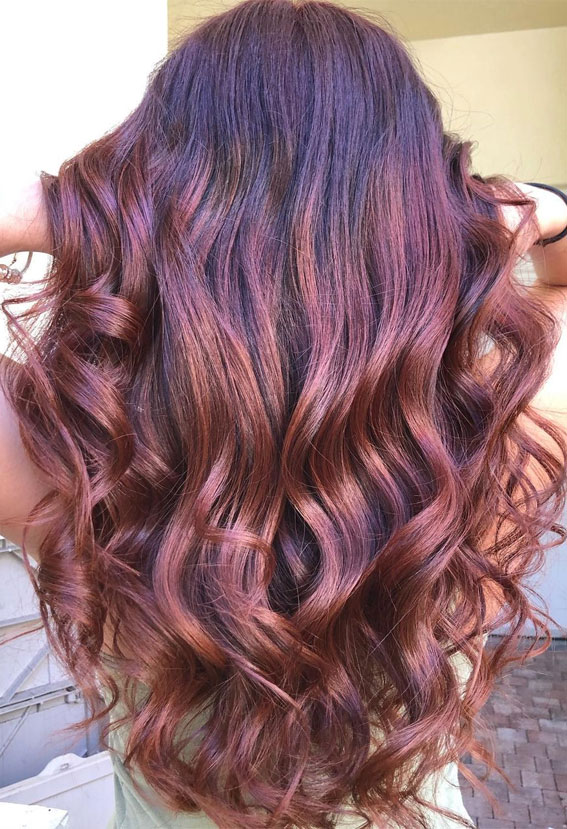
Courtesy of: itakeyou.co.uk
A plum-to-copper melt pairs two autumnal shades in one head of hair: deep plum at the roots flowing into warm copper through the ends. The combination sounds daring but wears surprisingly naturally, since both tones share red undertones — the result reads as a rich, dimensional auburn with violet depth at the crown. It flatters warm and neutral skin tones and looks best on medium to long hair, where the transition has space to blend. Wavy textures show the melt most beautifully. For readers who want more, Best Hair Color Ideas to Make Blue Eyes Stand Out keeps the ideas coming.
This is advanced color work: the colorist applies plum at the root, copper at the ends, and melts them where they meet, usually in one long appointment. Ask for a seamless blend with no visible line. Upkeep is moderate to high — copper fades fast, so expect gloss refreshes every six weeks and copper-depositing conditioner at home. Choose it if you love warm, dimensional color; cool-toned complexions may find the copper overwhelming.
12. Dusty Mauve Plum with Soft Dimension
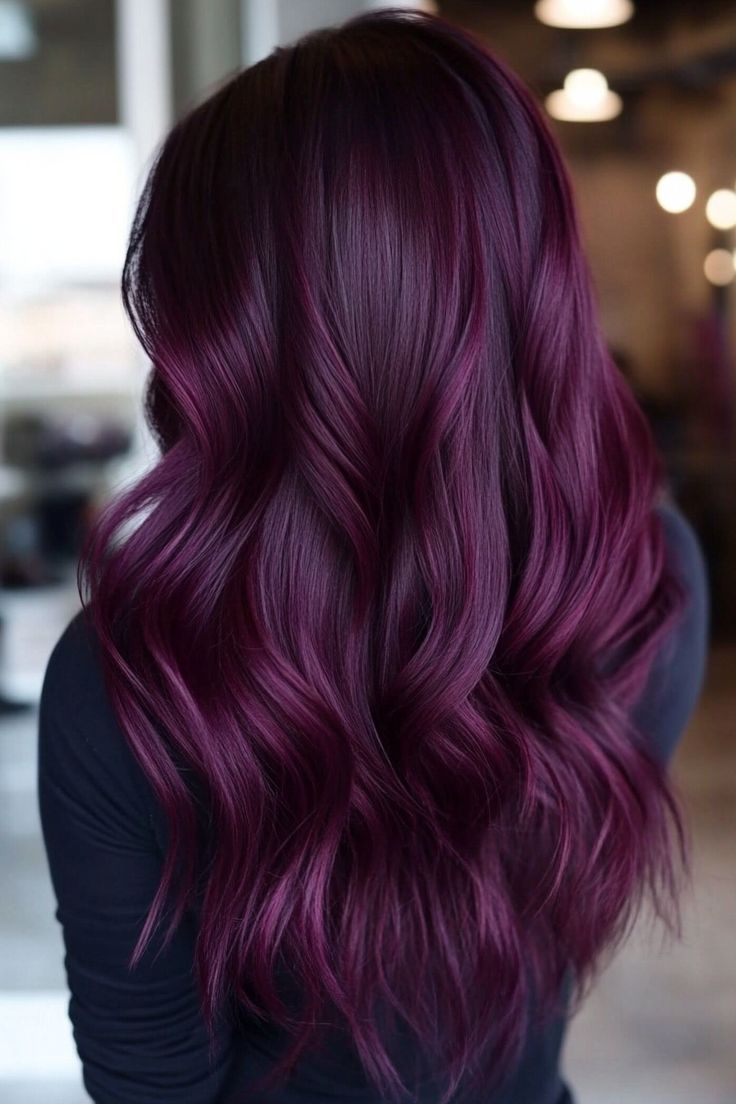
Photo credit: pinterest.com
Dusty mauve plum is the muted, grayish-violet cousin of brighter plums — softer, hazier, and very 2027. The dustiness keeps it wearable in conservative settings while still reading as a deliberate fashion choice. It suits fair to medium skin tones particularly well, and the muted quality is forgiving on fine hair, where brighter colors can look harsh against a visible scalp. Shoulder-length to long cuts with soft layers let the haze move naturally.
Achieving the dusty effect usually requires lightening to a mid-brown base, then toning with a mauve-violet formula — so this needs more lift than deep plum options. The muted tone fades relatively quickly, and without upkeep it can drift toward flat gray-brown; plan toning refreshes every five to six weeks. Best for those who love understated, editorial color and don’t mind the salon commitment. If you prefer richness over softness, a deeper plum will satisfy more.
13. Rich Wine-Plum Curls
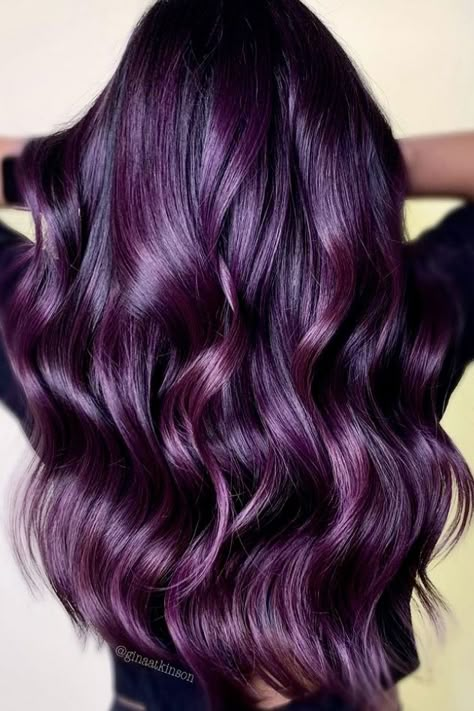
Image credit: pinterest.com.au
Curly hair and wine plum are a natural match: each curl catches light differently, so the color shifts between deep burgundy and bright violet across the head without any highlight work. The volume of curls also carries rich color beautifully — where the same shade might look heavy on straight hair, on curls it looks lush. This suits all face shapes, and the color’s warmth flatters warm and deep skin tones especially well. For more ideas in the same lane, see our Brunette Hair Color for Summer 2026.
A single-process wine plum over dark hair usually takes without bleach; curls show color variation naturally, so even application matters more than dimension techniques. Ask your colorist for a moisturizing formula — curly hair and permanent color both need hydration. Deep conditioning weekly and color-safe, sulfate-free products keep the shade vivid. Refresh every six to eight weeks. The main trade-off is dryness management, but the dimensional payoff on curls is unmatched.
14. Plum Money-Piece Highlights
Source: pinvibe.com
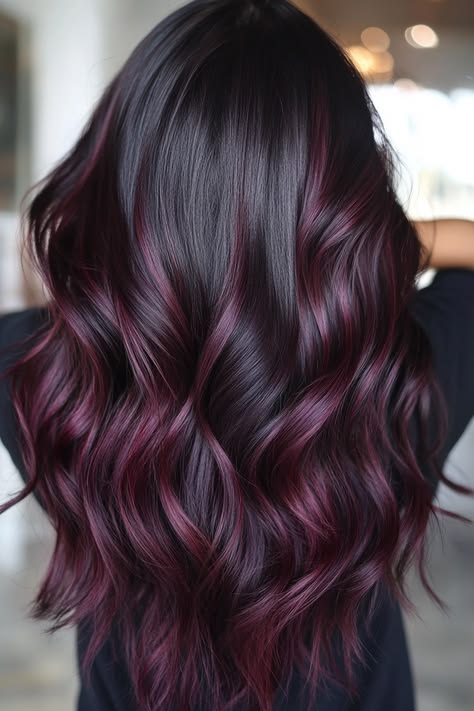
Money-piece highlights — the two brighter face-framing sections — done in plum give you the trend in its most economical form: all the impact around the face, minimal color elsewhere. It works over any dark base, from natural brunette to existing dark plum, and instantly brightens the complexion. The technique suits every length, though it’s most visible on hair that falls past the chin. A smart choice if you want to try plum without coloring your whole head.
The face-framing sections usually need lightening before the plum is applied, so this is a salon service despite its small footprint — ask for the money piece two levels brighter than your base for visible contrast. Grow-out is soft since only the front sections are colored; touch-ups every eight to ten weeks suffice. The limitation is coverage: from behind, the plum barely registers. But as a low-commitment statement, it’s excellent.
15. Smoky Plum Shag with Curtain Fringe

Via egitimkultur.com
A shag haircut in smoky plum with curtain fringe is the rock-and-roll entry in this roundup. The shag’s choppy layers create endless surfaces for the color to play across, and the smoky plum — muted, slightly grayed violet — keeps the edgy cut from tipping into costume. Curtain fringe softens the forehead and blends into the face-framing layers. This suits oval, oblong and heart faces, and medium to thick textures hold the shag’s piece-y shape best. Related reading: Best Hair Color Trends for Summer takes the same concept further.
The cut is the star here: ask for heavily textured layers and a fringe that parts in the middle. Color-wise, a smoky plum gloss over a dark base is usually enough. The shag needs reshaping every six to eight weeks, and the fringe needs trims every three to four. Styling is wash-and-wear friendly — a little texture spray does the job. Not for anyone wanting polish, but perfect for low-effort cool.
16. Deep Plum with Berry Balayage Ends
Courtesy of: womanandlifestyle.com
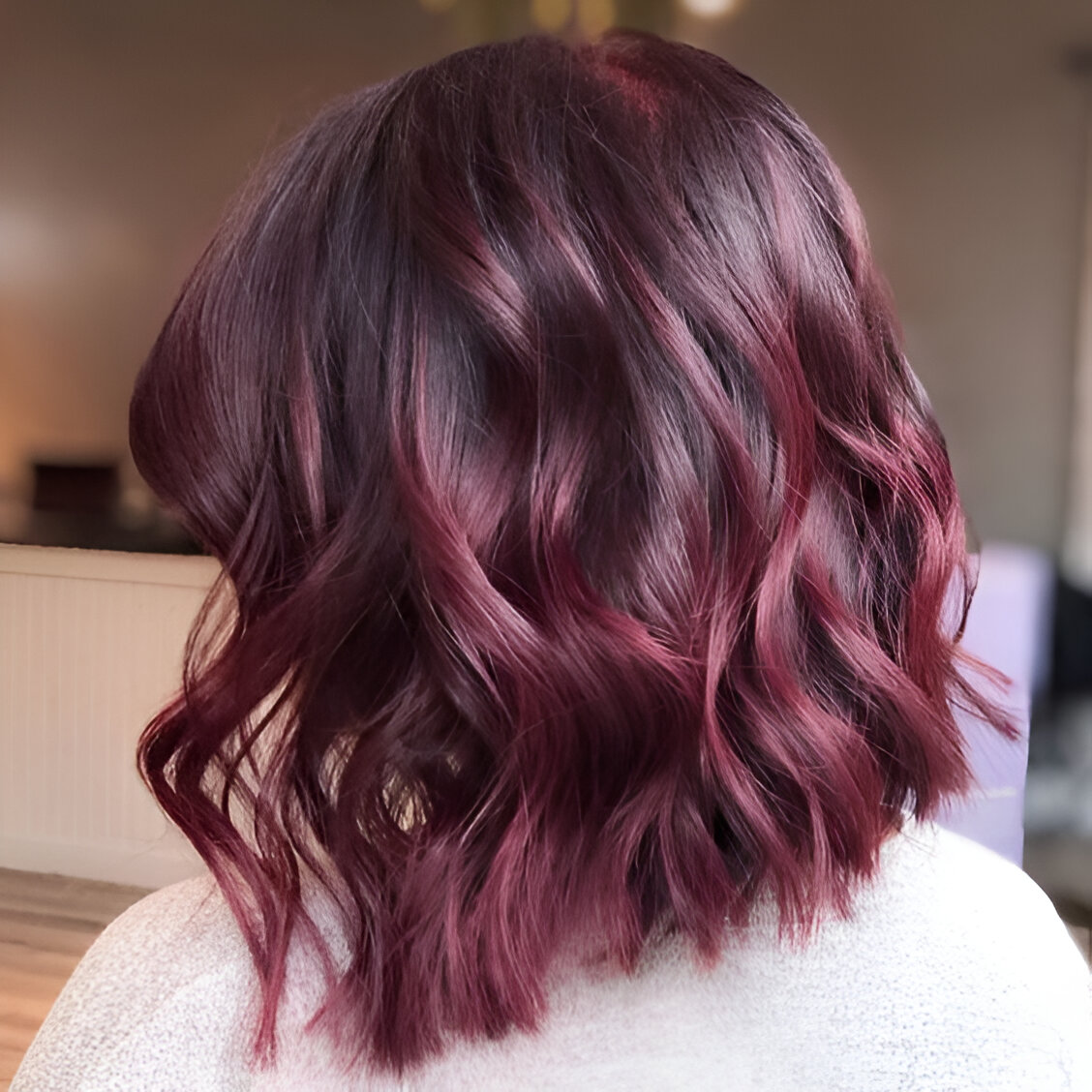
Deep plum roots melting into brighter berry ends give you two shades in one: professional and dark at the crown, playful and vivid at the tips. The berry ends — raspberry to blackberry tones — lift the whole look and keep long hair from feeling heavy. This placement flatters most skin tones since the brightest color sits away from the face, and it shines on long, wavy hair where the gradient has maximum room. A modern take on the ombré that feels very 2027.
The ends typically need lightening before the berry tone is applied, so budget a longer salon appointment and ask for a melted transition with no line. Berry fades faster than the plum base, so the ends need glossing every six weeks while the roots can go months. At-home care means color-safe shampoo and cool water. High impact with a manageable root situation — the main cost is keeping those ends vivid.
17. Warm Chestnut Plum for Depth
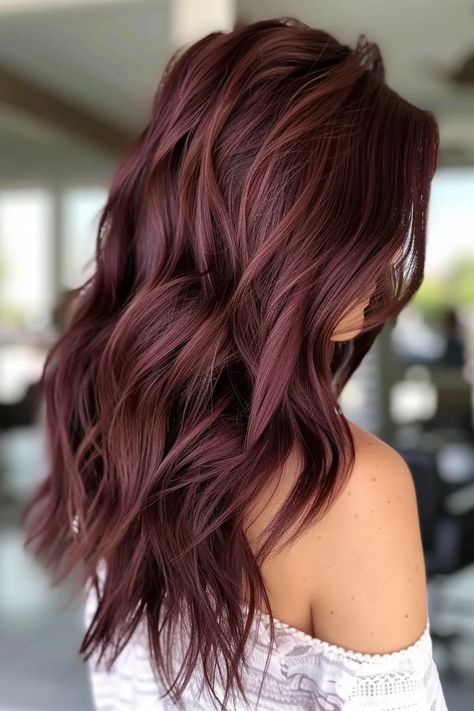
Photo credit: pinvibe.com
Chestnut plum blends warm brown with a violet undertone for a shade that reads as an expensive brunette first and plum second. It’s the warmest option in this roundup that still qualifies as plum, and it flatters warm, olive and deep skin tones beautifully. The brown base keeps it office-appropriate while the plum adds a richness flat brown can’t match. Any length works, and it’s kind to all textures since it’s a single, even color. We covered this territory more deeply in Best Hair Color Ideas for Brown Skin 2026 Modern Highlights Rich Reds Soft Chocolate Tones.
A single-process chestnut plum is one of the simplest salon services — often achievable without bleach on dark hair. Ask for the plum undertone to be visible but not dominant. Regrowth is gentle and fading is graceful, so eight-to-ten-week refreshes are plenty. This is the best “starter plum” for anyone nervous about purple tones. The only real trade-off is subtlety: committed plum lovers may find it too close to brown.
18. Plum French Bob with Soft Under-Curl
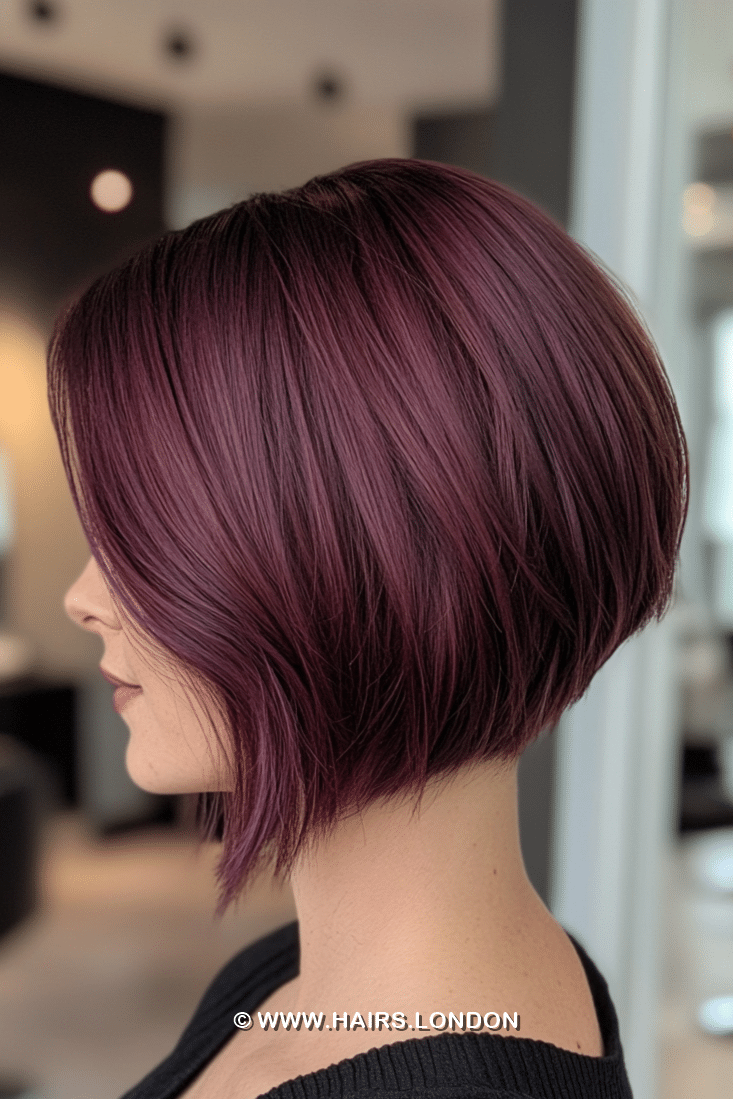
Image credit: hairs.london
The French bob — jaw-length, blunt, with a soft under-curl — takes on new depth in a velvety mulberry plum. The curved-under ends make the color look denser and more saturated, like the shade is folded into the hair. It’s a chic, Parisian-feeling combination that suits oval, heart and long faces, with the bob’s horizontal line adding width where it’s wanted. Straight to slightly wavy textures give the cleanest version of the shape.
Ask for a blunt jaw-length bob with the ends curved under, colored in a mulberry plum — red-violet rather than blue-violet. The precision cut needs trimming every five to six weeks to keep the line sharp. Color maintenance is easy: single-process, with refreshes every seven to eight weeks. A round brush or straighteners with a flick-under finish the style in minutes. Elegant and low-fuss, though the frequent trims are non-negotiable.
19. Long Plum Hair with Polished Curls
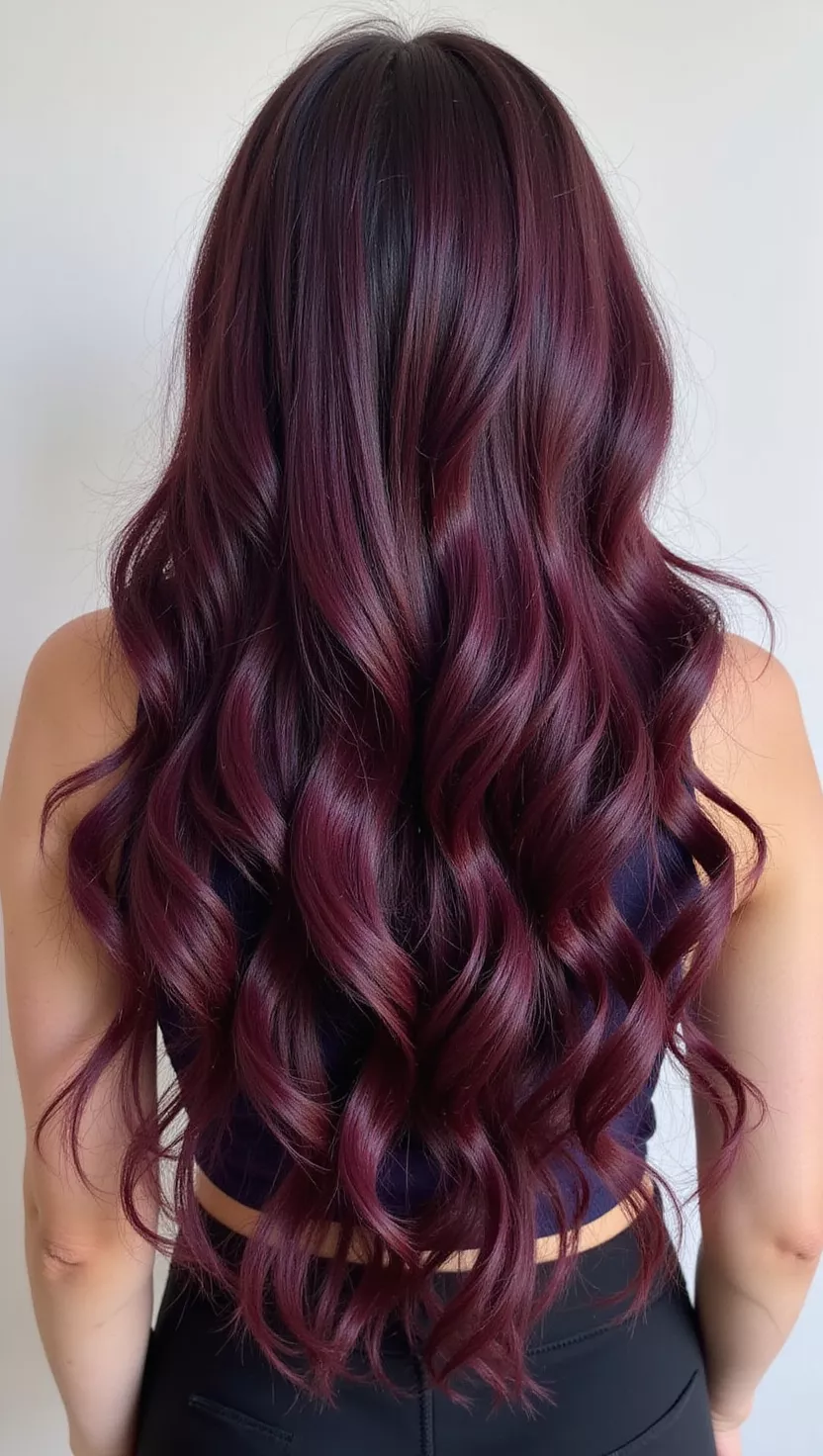
Source: hairprimo.com
Very long plum hair, styled in polished, defined curls, is the most glamorous way to wear the shade. The curls act like prisms: each one shows a slightly different tone, from deep plum in shadow to bright violet on the curve. Length amplifies everything about the color, so this is unapologetically dramatic. It suits those with the density to support very long hair, and the vertical lines flatter round and square faces by adding length. This pairs naturally with the ideas in Hair Color Ideas for Pale Skin.
Long hair plus fashion color means commitment: single-process plum needs refreshing every six to eight weeks, and very long hair shows damage faster, so trims every eight to ten weeks are wise. Heat protection is essential if you curl regularly, and a weekly mask keeps the color from looking dry. This is for those who love high-maintenance glamour — anyone wanting wash-and-go should choose a shorter, simpler plum instead.
20. Plum Dip-Dye Ends
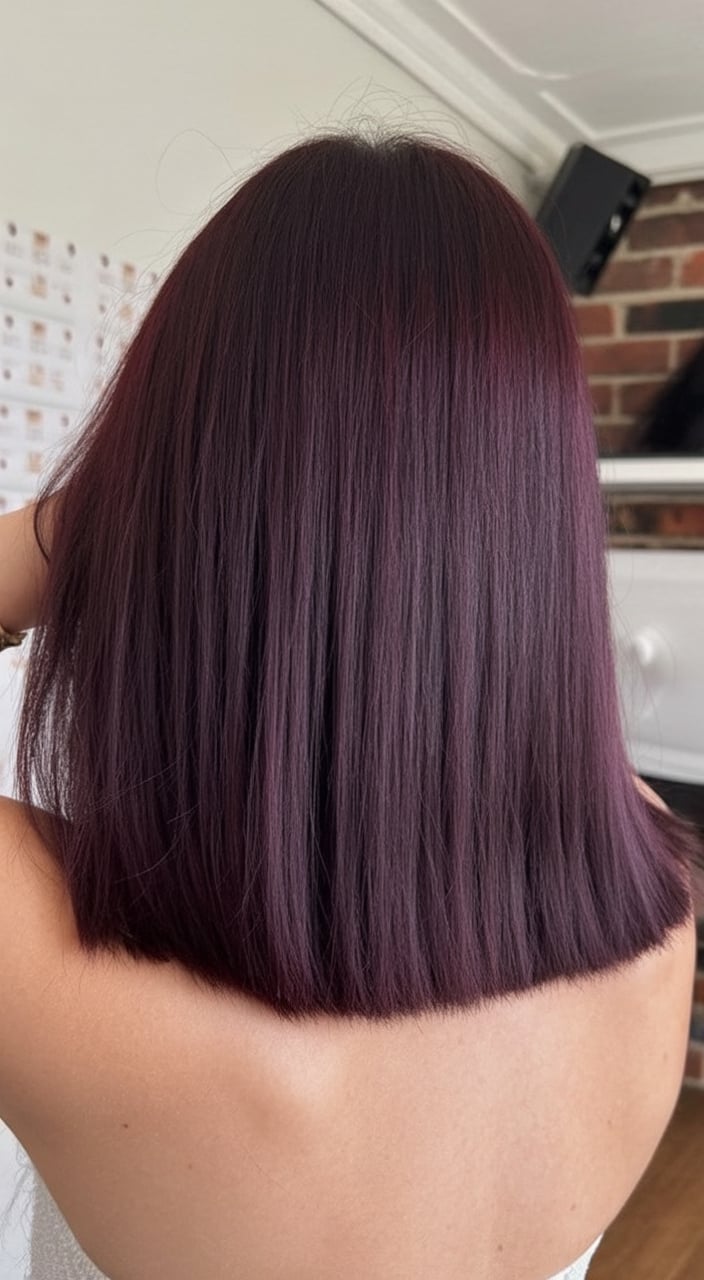
Via azureglam.com
Dip-dye ends — where only the last few inches carry the plum — are the most playful and reversible option here. The contrast between a natural dark base and vivid plum tips feels youthful and fun, and because the color never touches the roots, grow-out is a non-issue: you simply trim it away when you’re done. It works on medium to long hair of any texture, and the placement keeps the brightest color away from the face.
The ends usually need bleaching before the plum goes on, so this is a salon job despite its simplicity — ask for a clean horizontal transition rather than a gradient if you want the true dip-dye look. After that, maintenance is minimal: the color lives on the oldest hair, so fading just means trimming sooner. A color-depositing conditioner keeps the tips vivid. Ideal for experimenting; less suited to conservative workplaces.
21. Muted Plum for Graceful Gray Blending
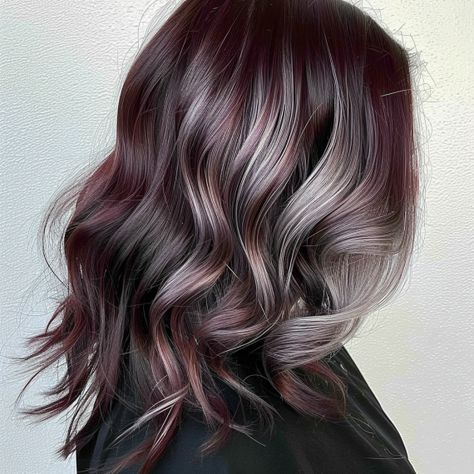
Courtesy of: pinvibe.com
A muted plum is a clever ally for blending gray: the violet tones camouflage silver strands far better than flat brown, and the softness of the shade means regrowth doesn’t announce itself. Rather than fighting gray with opaque coverage, this approach weaves plum through it for a dimensional, intentional look. It suits anyone transitioning to gray or maintaining silver with warmth, and works at any length — shorter cuts show the blending best. If this look speaks to you, Must Try Spring Hair Trends for 2026 with Fresh Cuts and Color Updates continues the thread.
Ask your colorist for a demi-permanent muted plum — demi formulas blend rather than fully cover gray, which is exactly the point. Refreshes every six to eight weeks keep the tone even, and because there’s no harsh root line, appointments feel optional rather than urgent. The trade-off is coverage: if you want every gray strand hidden, a permanent formula in a deeper plum is the alternative. But for graceful, low-stress gray blending, muted plum is superb.
22. Plum Reverse Balayage
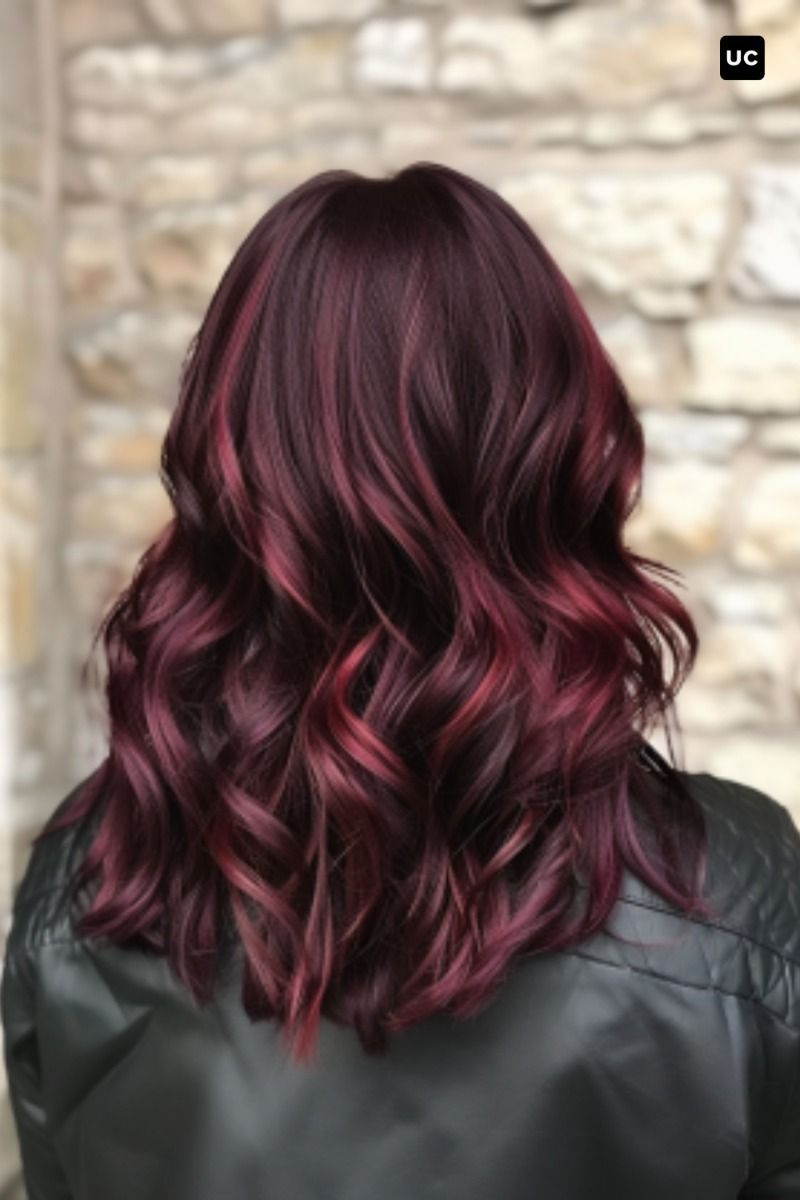
Photo credit: hairstyletalk.com
Reverse balayage flips the usual script: instead of lightening toward the ends, depth is painted back into previously lightened hair — here, deep plum lowlights woven through lighter lengths. The result is ribbon-like dimension with unusual depth, as the plum sections recede and the lighter pieces pop forward. It’s a particularly smart fix for over-lightened hair that needs richness restored, and it suits medium to long lengths where the weaving shows.
This is corrective color work, so choose a colorist experienced with reverse techniques — ask for plum lowlights painted in fine weaves, leaving the existing lightness as the highlight. The appointment runs two to three hours, but grow-out is soft and refreshes can wait three to four months. At-home care is standard color-safe routine. Best for those with existing highlights wanting depth; unnecessary if your hair is already dark and even.
23. Short Textured Plum Crop
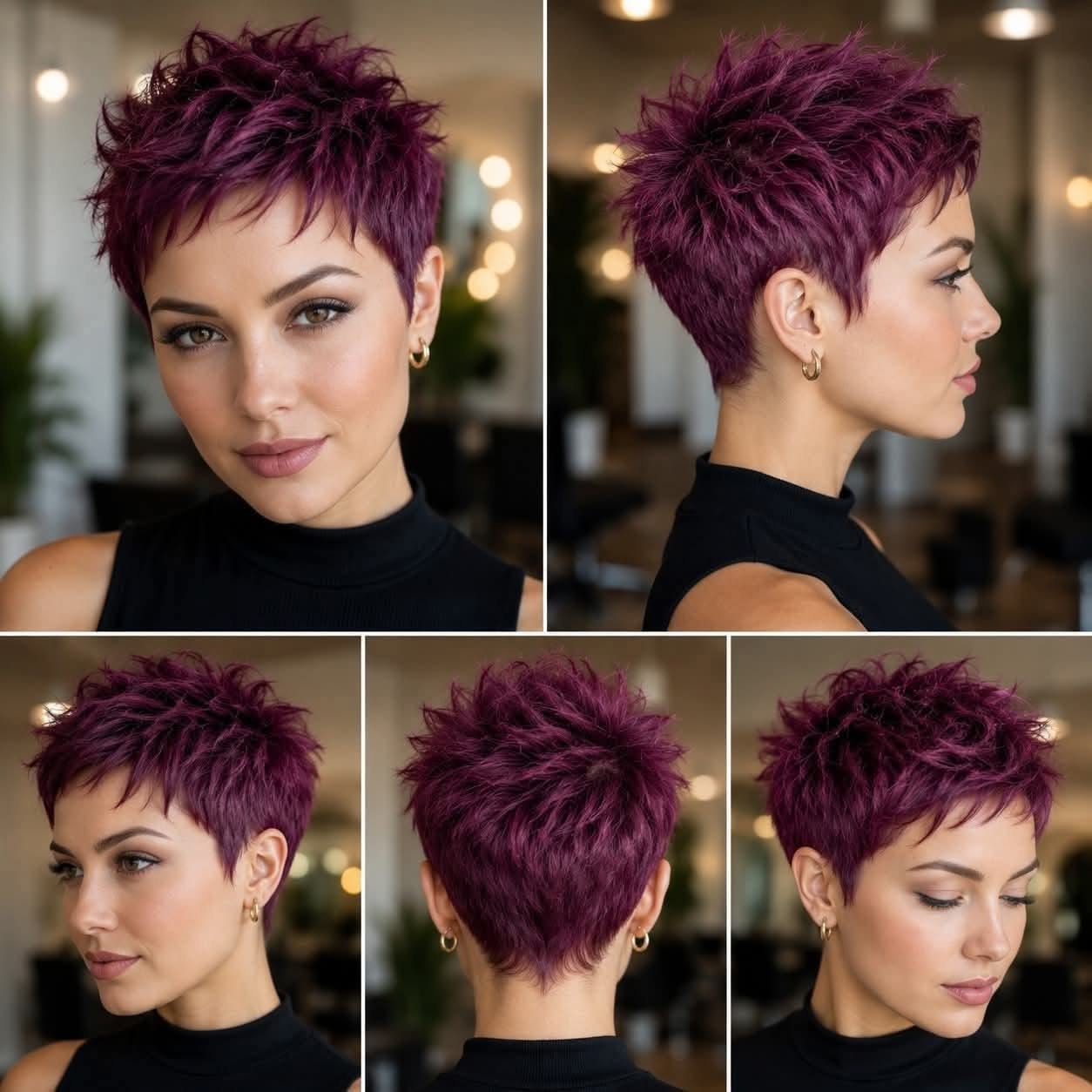
Image credit: pinterest.com.au
A short, heavily textured crop in deep plum is bold minimalism: the cut does the architectural work while the color adds richness. Choppy, piece-y texture breaks the plum into highlights and shadows across the head, so even a single-process color looks dimensional. It suits oval, heart and square faces, and the short length puts the focus on eyes and cheekbones. Straight to wavy textures texture most easily; very curly hair can wear it with a curl-defining approach. For the fuller picture, Gorgeous White Hair Color Ideas is worth your time.
Single-process plum, no bleach needed on dark hair — the color appointment is the easy part. The cut needs reshaping every four to six weeks, and daily styling is a dab of texture paste, nothing more. A plum-depositing conditioner keeps the violet fresh between salon visits. Great for anyone wanting maximum style with minimum morning effort; less ideal if you like versatile, tie-it-back lengths.
24. Plum Peekaboo Underlayer
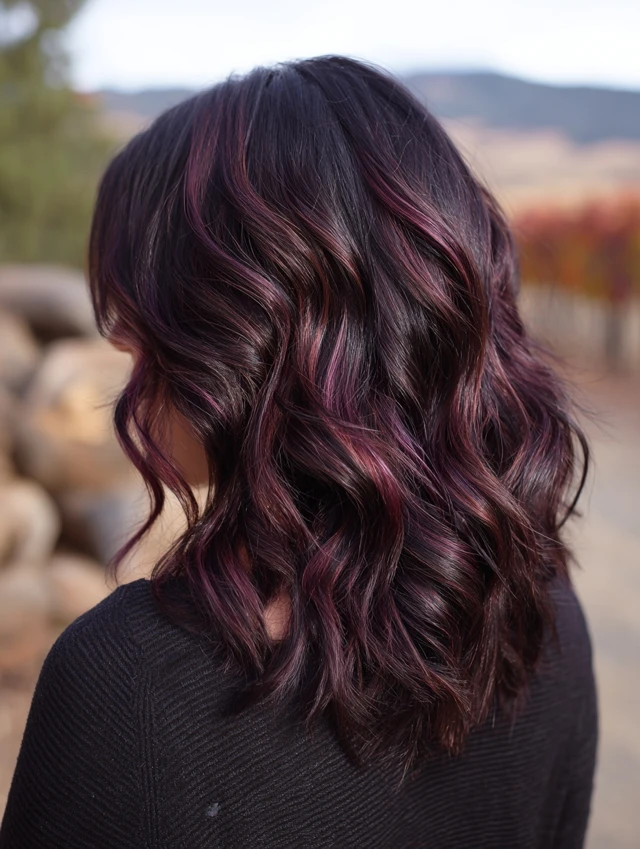
Source: yournextinspo.com
Peekaboo plum hides the color in the underlayer, revealing it only when hair moves, is tied up, or catches the wind. It’s the secret-version of the trend — completely concealable for work, fully visible when you want it. The hidden placement also means the brightest color never sits against the face, which suits those who find vivid shades overwhelming near the skin. Any length past the chin works; longer hair hides the panel more completely.
The underlayer usually needs lightening before plum is applied, so book a salon visit and ask for the panel placed from ear to ear underneath. Grow-out is invisible from above, and refreshes every eight to ten weeks are plenty. The main limitation is visibility: most days, only you know it’s there. But that’s precisely the appeal — plum on your own terms.
Final Thoughts
The strongest plum options work because of dimension, undertone and placement — not simply because they are dark or purple. A deep plum with the right undertone for your skin (cool violet for pink undertones, warm burgundy for golden ones) will always outperform a brighter shade chosen at random. Choose based on maintenance appetite first: single-process deeps and root shadows for low effort, balayage and melts for soft grow-out, magentas and coppers for those happy to commit to regular glosses. Match the technique to your texture and the length to your lifestyle, and plum becomes less a trend and more a signature.
- Trim every six to eight weeks to keep the shape sharp.
- Use a heat protectant before every hot-tool session.
- Tone blonde or highlighted hair every six weeks to keep brassiness away.
- Match the upkeep schedule to your routine before committing to high-maintenance color.
The best color is the one that still looks intentional at week six.