Winter is the hardest season for curly hair. Heated indoor air pulls moisture out of every coil, wool hats create static and flatten volume, and cold wind roughs up the cuticle — which is why the best winter hairstyles for curls are the simple ones. The 24 ideas below focus on low-manipulation cuts, protective styling, and color choices that look richer in winter light, all chosen to keep wash days easy and ends intact through the coldest months of 2027. The same idea, styled another way, appears in Easy Chic Winter Hairstyles for Women in 2025 2026 That Elevate Your Everyday Style.
You’ll find wash-and-go bobs, hat-friendly updos, protective twists, and dimensional color from chestnut to plum. Each idea includes honest guidance on the salon visit, the at-home routine, and who the style suits best — so you can pick based on your texture, your maintenance budget, and how much time you actually want to spend on your hair. The concept gets a fuller treatment in Best Fall Hairstyles for Round Faces 2025.
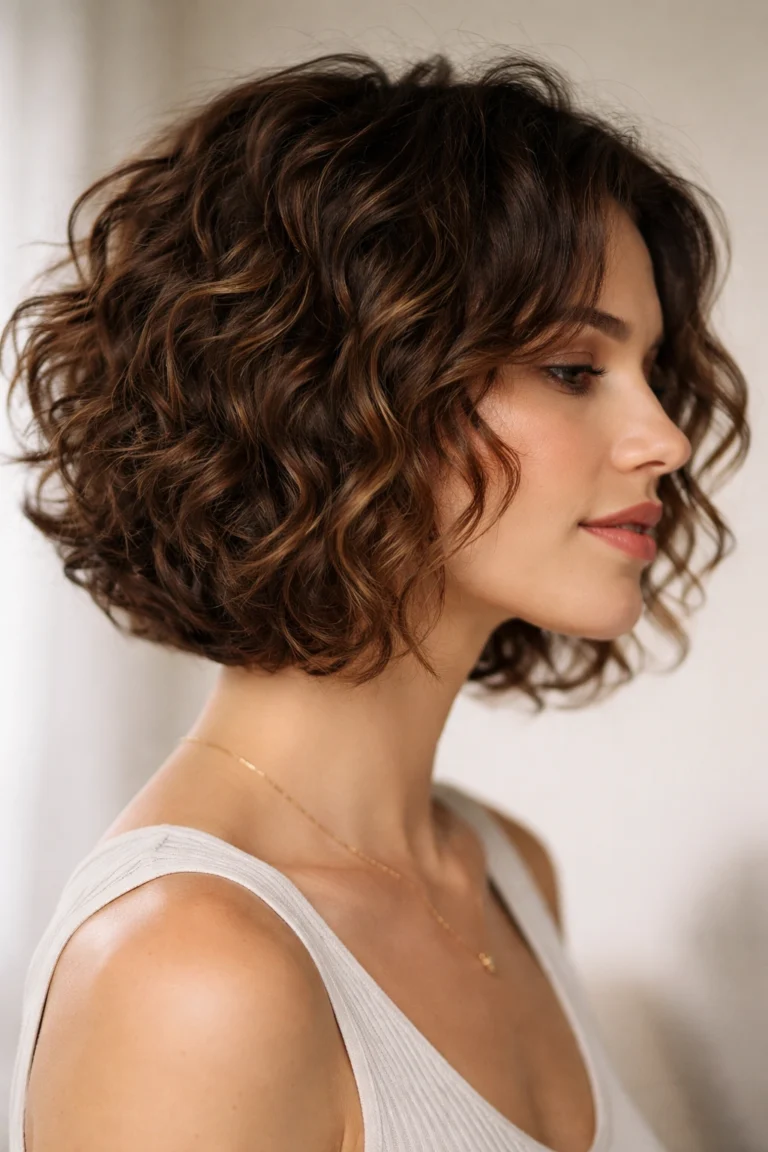
Rounded Wash-and-Go Bob with Soft Crown Layers
Courtesy of: hairtical.com
The cut is a chin-to-neck-length bob shaped into a soft, rounded silhouette, with slightly longer layers through the crown so curls stack instead of flaring outward. It works best on type 2c to 3b curls worn with a natural part — side or center both sit well because the shape is built around the curl pattern rather than against it. The finish is airy and touchable, and the rounded outline flatters oval, long, and heart-shaped faces by adding width exactly where cheeks and jaw need balance. This pairs naturally with the ideas in Formal Winter 2025 2026 Hairstyles for Women 25 Chic Styles.
Ask a stylist for a dry cut shaped curl by curl, since a wet-cut bob shrinks unpredictably as it dries. At home the routine is genuinely simple: wash, rake through a leave-in and a light curl cream, then air-dry or diffuse on low heat. Trims every 8–10 weeks keep the rounded shape from turning triangular at the ends. This is a strong pick for anyone who wants a true wash-and-go winter routine; those with very tight coils may prefer a slightly longer version so shrinkage doesn’t push the silhouette above the ears.
Chestnut Brown with Caramel Balayage Ribbons
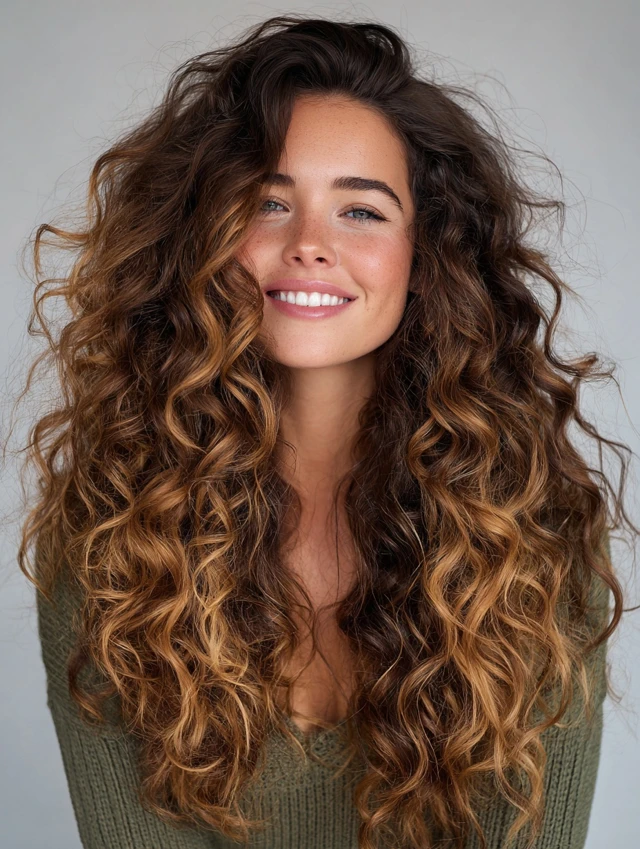
Photo credit: cleodiva.com
The base is a warm chestnut brown, lifted through the mid-lengths and ends with hand-painted caramel ribbons that follow each curl’s natural twist. On long 3a–3c hair worn past the shoulders, the lighter pieces catch light every time the hair moves, which gives flat winter hair an easy sense of dimension. The warmer undertone flatters medium and deep skin tones and softens strong features; cooler complexions may prefer the caramel kept more golden than orange.
Balayage on curly hair is usually painted on dry, stretched curls so the colorist can see exactly where each ribbon will fall once the hair springs back up. Maintenance is gentle — a gloss or toner every 8–12 weeks keeps the caramel from going brassy, and the grow-out is soft enough that full appointments can stretch to three or four months. Deep-condition weekly in winter, since lightened ends dry out faster in heated indoor air. Skip this if you want a one-visit, zero-upkeep color; a single-process chestnut would be simpler. We break down a similar look in Winter Hair Colors.
Curly Pixie with Long Crown Layers
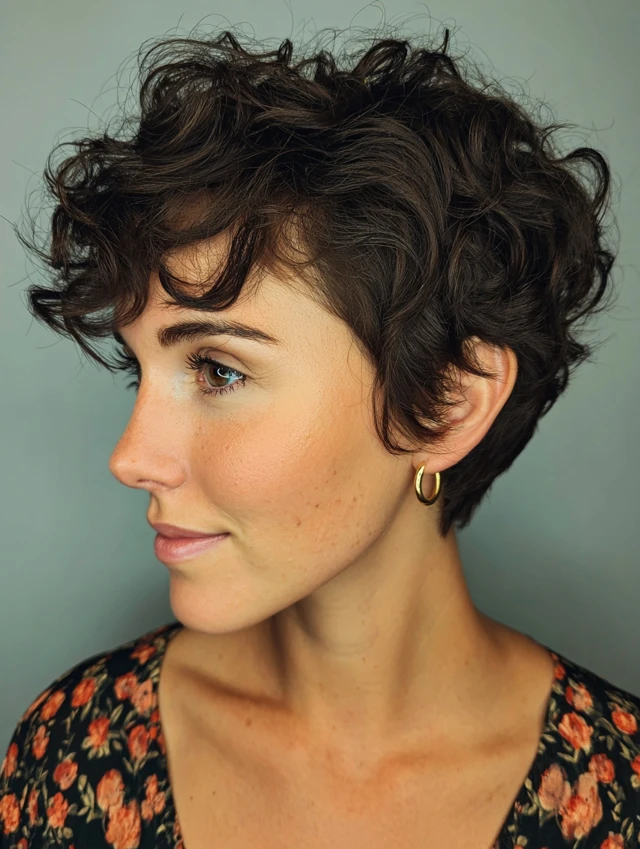
Image credit: outfitarea.com
This cut keeps the sides and nape tapered close while leaving several inches of length through the crown, so tight curls and coils stand up in a soft, sculpted column of texture. The contrast between the neat perimeter and the full top makes it a striking choice for oval and heart-shaped faces, and the short length shows off earrings, scarves, and high winter collars beautifully. It suits dense 3c–4c textures best, where the natural volume does most of the styling work.
Ask for a curl-by-curl dry cut and be clear you want the crown left long enough to coil — a pixie cut too short on top loses the texture that makes it work. Nightly, a satin bonnet or scarf keeps the shape intact; in the morning, a spritz of water and a dab of curl cream is usually enough to revive it. Trims every 4–6 weeks keep the taper crisp. It’s wonderfully low-effort day to day, but the frequent salon visits are the trade-off — anyone wanting to stretch appointments should look at a longer cut instead.
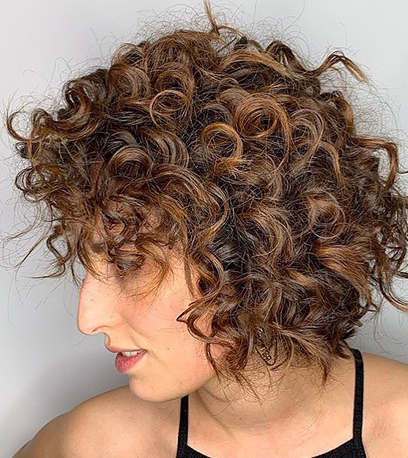
Chocolate Lob with a Curly Fringe
Source: ie.d1.wella.professionalstore.com
A collarbone-grazing lob in deep chocolate brown, paired with a soft curly fringe that hits just at or above the brow. The rich, even color gives curls a polished, expensive-looking finish, while the fringe draws attention to the eyes and balances longer face shapes. It works across curl types, though looser curls may need a little more styling to keep the fringe from separating into gaps.
The fringe should be cut dry and left slightly longer than you think you want it — curly bangs spring up as they dry. At the salon, a demi-permanent chocolate gloss adds the shine this look depends on and fades gracefully over 6–8 weeks. For winter, the length is ideal: long enough to pull back on windy days, short enough to dry quickly. If you wear tight-fitting beanies daily, know the fringe will need a quick refresh after the hat comes off. If this look speaks to you, Fall Hairstyle Ideas for Women Over 50 continues the thread.
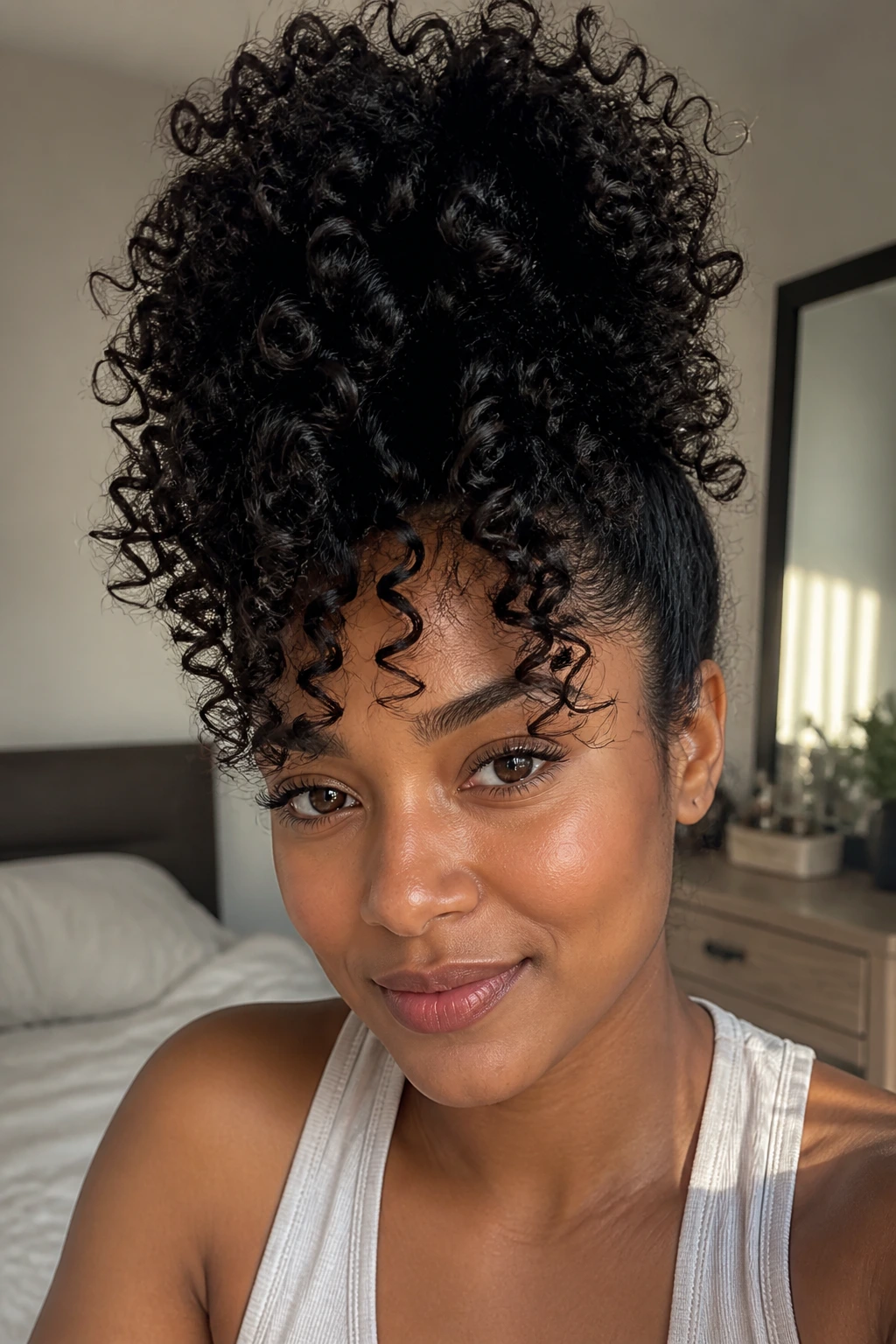
Pineapple Puff with a Satin-Lined Hat
Via hairmatiq.com
The classic high puff — all the hair gathered at the crown with a satin scrunchie or band — gets a winter upgrade by pairing it with a satin-lined beanie. The puff itself is a rounded halo of curls that suits every face shape, and pulling everything up keeps ends off coat collars and zippers where breakage happens. It works on medium to long curly and coily hair with enough length to gather.
To style, flip the head forward, smooth the sides with a brush and a little gel, and secure at the crown without pulling tight — tension headaches and edge breakage come from bands that are too snug. A satin-lined hat (or a satin scarf under a regular beanie) prevents cotton from wicking moisture out of your curls all day. Refresh the puff at night by re-gathering loosely. This is one of the simplest protective options for winter, though very short hair won’t have the length to gather yet.
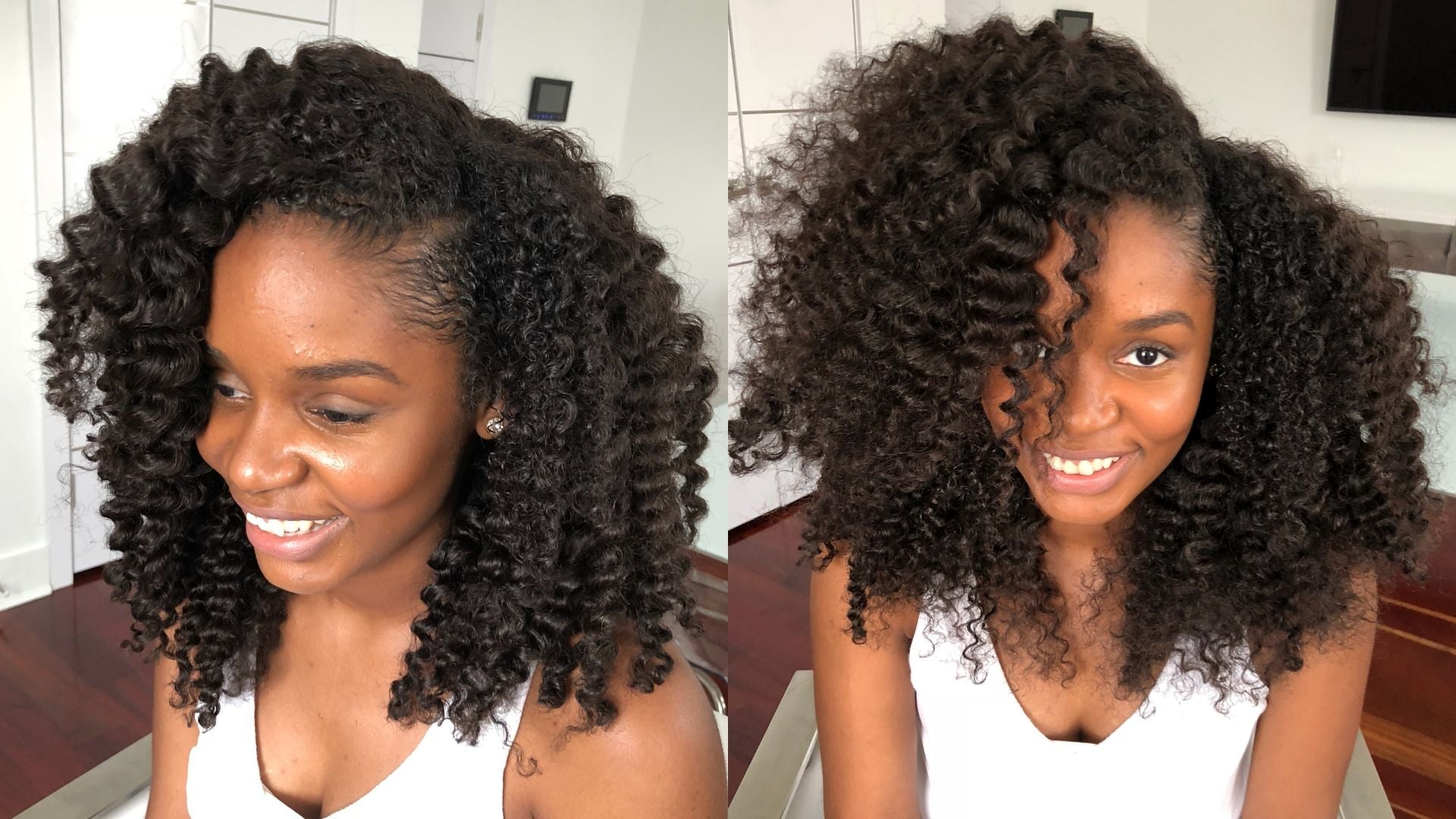
Defined Twist-Out on Collarbone-Length Curls
Courtesy of: heatfreehair.com
Two-strand twists, unraveled once fully dry, produce stretched, uniform waves with more visible length than a wash-and-go on the same head of hair. At collarbone length the result is a full, swingy style with definition from roots to ends. It suits 3b–4c textures especially well and gives round faces a lengthening effect, since the twists pull the silhouette downward instead of outward.
Twist on damp, conditioned hair in small sections — smaller twists mean more definition and longer wear, typically 5–7 days with nightly pineappling. The trade-off is time: a full head can take an hour or more to install. Use a twisting butter or cream with hold, and don’t separate the twists until the hair is completely dry or frizz takes over. In winter, the stretched style exposes less of each strand to dry air than a picked-out afro, which helps ends retain moisture. You’ll find the same spirit in Best Old Money Short Hairstyles.
Honey-Blonde Face-Framing Highlights on Dark Curls
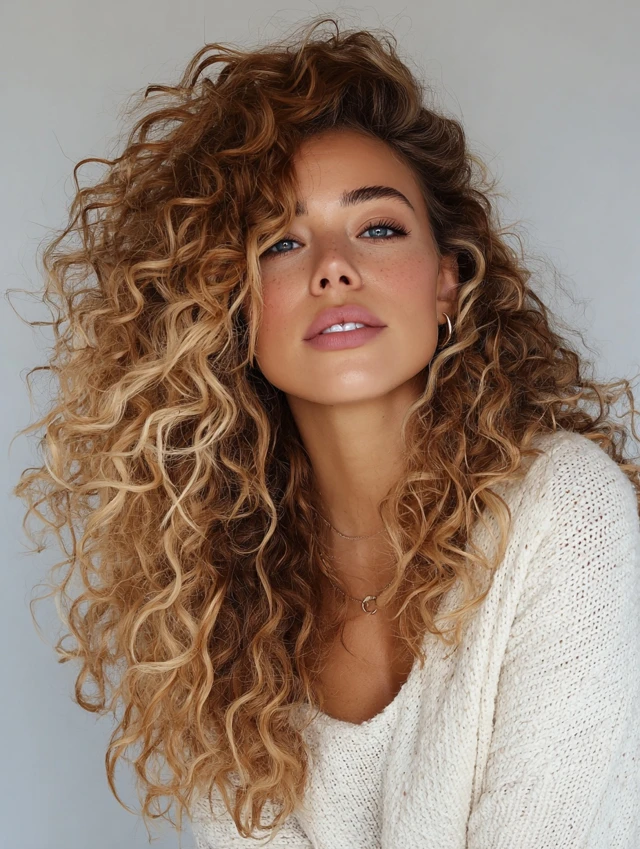
Photo credit: outfitsplan.com
Keep your natural dark base and add honey-blonde pieces just around the face — along the part and the front hairline — so the brightness lands exactly where it flatters. The contrast makes eyes look brighter and gives dark winter hair a lift without committing to all-over blonde. It works on any curl type and any length past the chin, and it’s especially pretty on deep skin tones where the golden pieces glow.
Ask for a partial balayage or face-framing foilay, and bring reference photos showing how bold you want the contrast. Because only a small section is lightened, upkeep is minimal: a toning gloss every couple of months and regular deep conditioning on the blonde pieces, which are more fragile than the rest. This is the lowest-commitment way to try blonde on curls; if you want a bigger transformation, a full balayage is the next step up.
Curly Shag with a Wispy Curtain Fringe
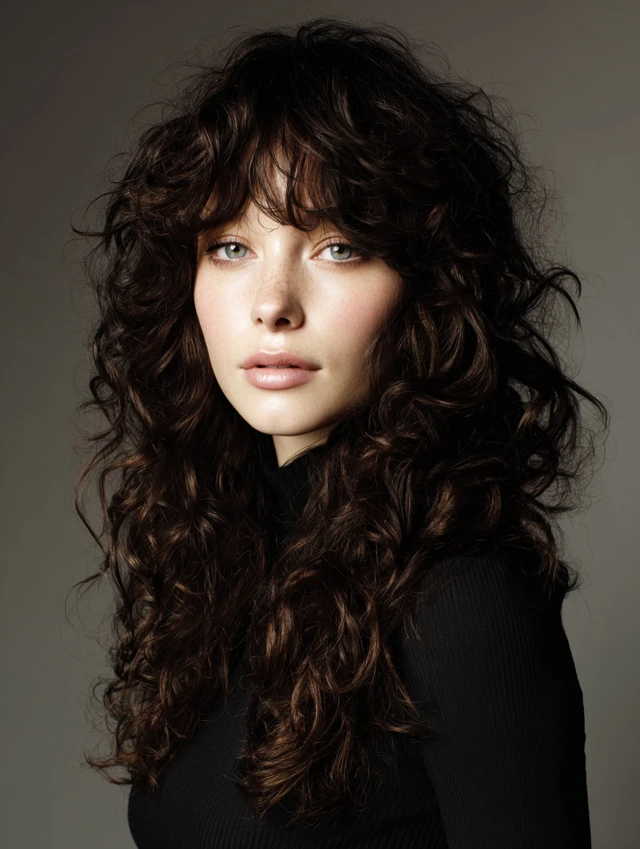
Image credit: womenshairtoday.com
The modern shag brings choppy, face-framing layers and a wispy curtain fringe to curly hair, usually at a medium length that falls between the chin and shoulders. The layers remove bulk so curls move independently instead of forming one heavy triangle, and the fringe parts softly in the middle to frame both sides of the face. It’s a great match for thick, dense curls and for square or round faces that benefit from the vertical lines the layers create.
A shag needs a stylist who is genuinely comfortable with curly texture — the layering has to be carved dry, curl by curl, or the shape collapses. Styling is refreshingly simple: scrunch in a mousse or foam and diffuse, and the cut does the rest. Trims every 10–12 weeks keep the fringe from overgrowing into the eyes. The trade-off is grow-out: shag layers can look awkward at the in-between stage, so it’s best for someone ready to commit to the shape for a while. A companion piece, Trending Bridesmaid Hairstyles, explores the same palette.
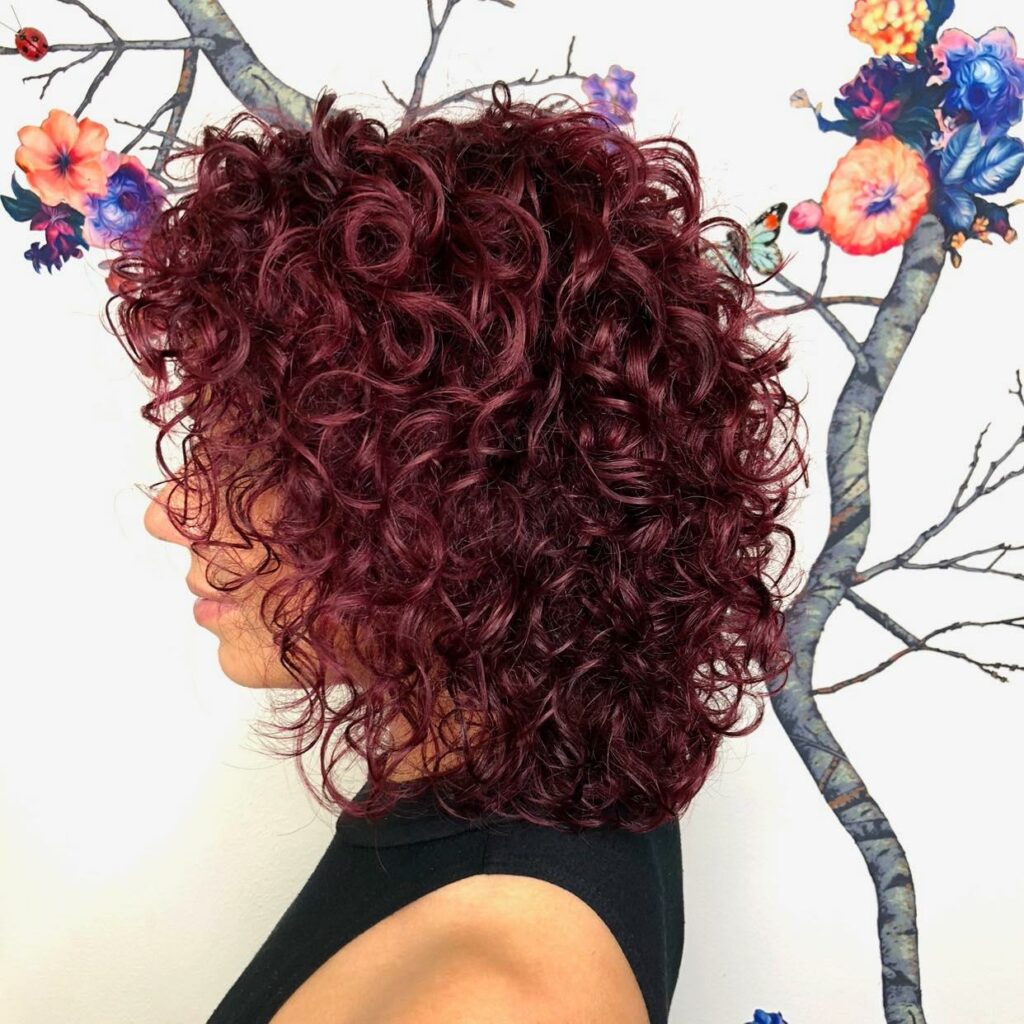
Burgundy-Wine Color on Voluminous Curls
Source: momooze.com
A deep burgundy — red wine with a violet undertone — saturates every curl with rich, dimensional color that looks almost black indoors and glows red in sunlight. On voluminous medium-to-long curls the effect is dramatic without a single strand of bleach, since the red-violet pigment shows up well on dark bases. It flatters warm and neutral skin tones beautifully; very cool complexions may prefer a more violet-leaning version.
Burgundy is usually achieved with a demi-permanent or permanent red-violet formula, no lightener needed on most dark hair — a genuine advantage for curl health. The catch is fading: reds wash out faster than any other color family, so expect a refresh every 4–6 weeks and use color-safe, sulfate-free shampoo with cool water. In winter the deep tone looks especially rich against dark coats and scarves. If frequent salon visits aren’t realistic, a burgundy color-depositing conditioner can stretch the time between appointments.
Low Curly Ponytail with a Wrapped Base
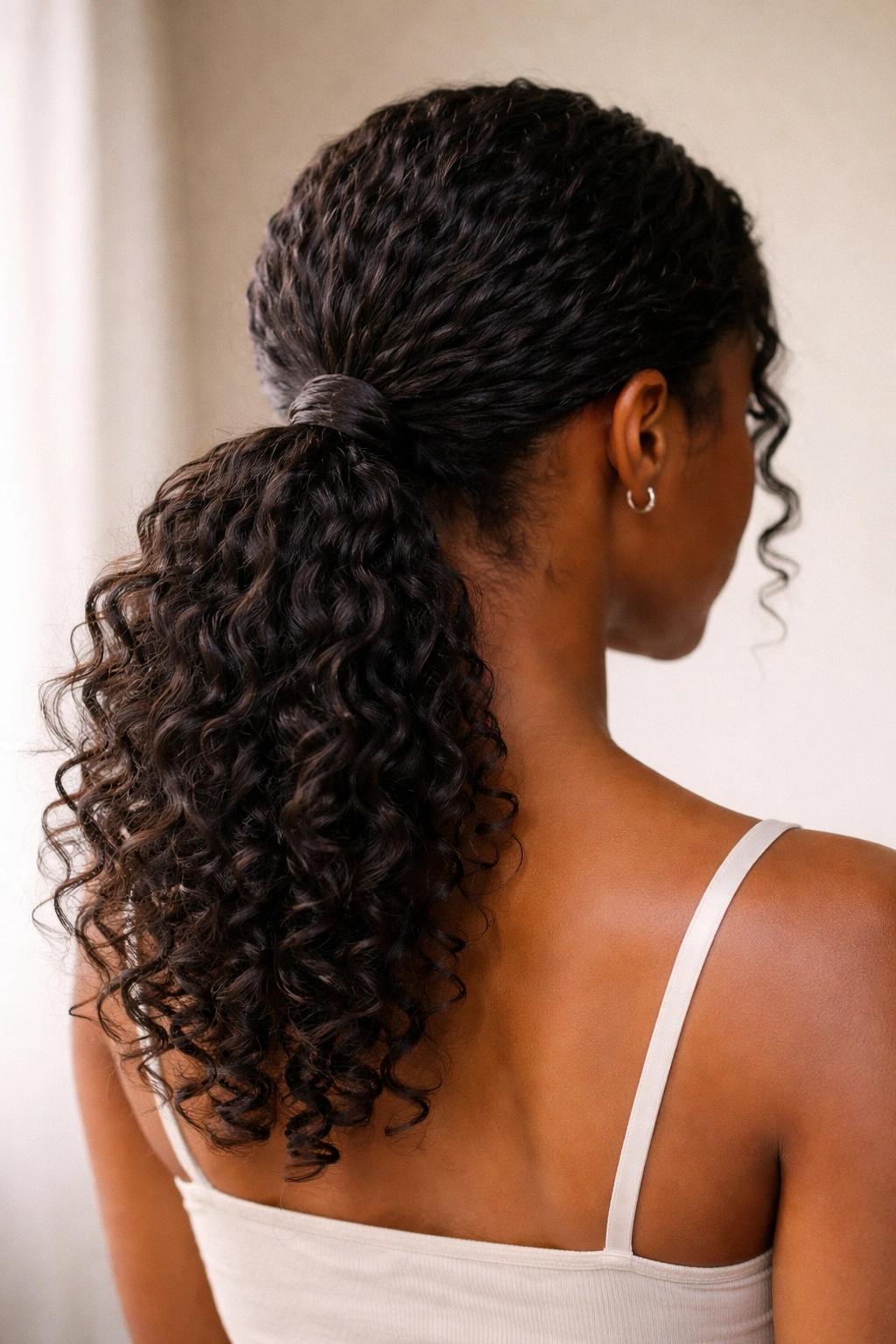
A ponytail worn low at the nape, with a small section of hair wrapped around the elastic to hide it, reads polished rather than sporty. The curls spill over one shoulder or down the back, and the wrapped base gives the style a finished, deliberate look. It suits medium to long hair of any curl type and is kind to oval and long faces, since the low placement doesn’t add height on top. The same theme, explored from another angle, is in Trendy Winter Hair Color Ideas.
Smooth the hair back with a brush and a light gel or edge control, secure with a snag-free band, then wrap and pin. It’s a five-minute style that survives commutes, workouts, and hat removal better than most — just re-fluff the curls after the hat comes off. Because the ends hang free, they’re exposed to winter friction from coats, so tuck them into a scarf or coat on the coldest days. Anyone with very short layers may find too many pieces slipping out; bobby pins solve most of that.
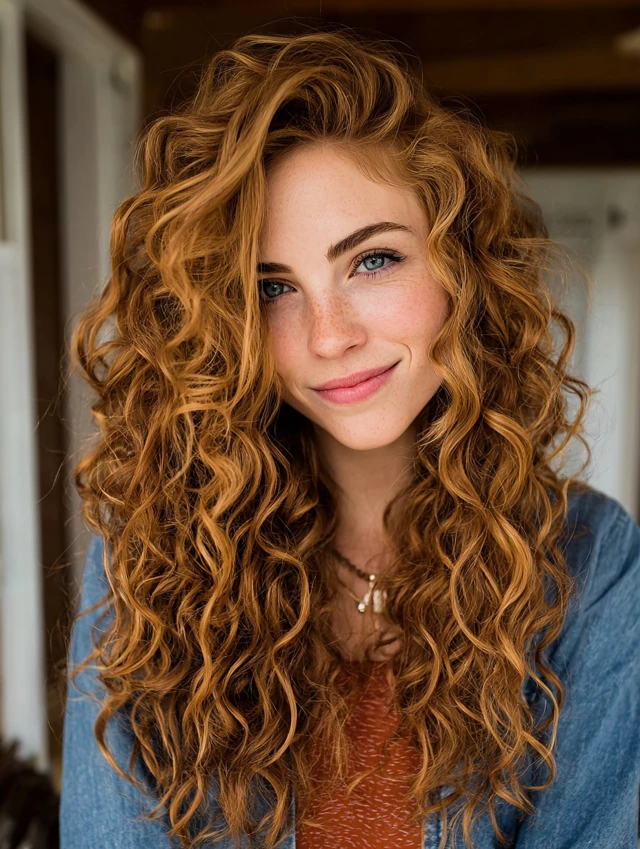
Copper-Auburn Glow on Defined Ringlets
Courtesy of: fitsbydee.com
Copper auburn — that glowing penny-red with golden undertones — turns defined ringlets into the focal point of the whole look. The warmth intensifies the appearance of shine, so curls look healthier and more dimensional even in flat winter light. It’s a standout on fair to medium skin with warm undertones, and on deeper skin it creates a striking, editorial contrast.
Going copper from dark hair usually requires lightening first, which means this color asks more of your hair than the burgundy above — protein-moisture balance becomes non-negotiable in winter. Book a colorist experienced with curly hair, since porosity varies along each curl and the color can grab unevenly. Refresh every 5–7 weeks; copper fades notoriously fast. If your curls are already fragile or you heat-style often, consider a copper gloss over your natural base instead of full permanent color.
Long Layers with Caramel Ribbon Highlights
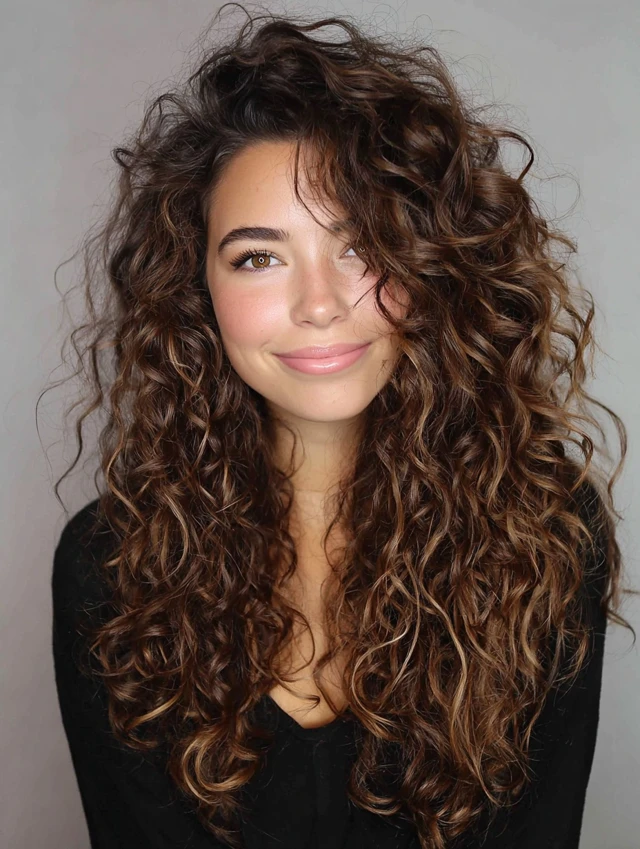
Photo credit: yourstyleinspo.com
This is the cut-first option for long curly hair: long, seamless layers that remove weight and let curls cascade instead of stacking into a shelf at the bottom. Woven through the layers are fine caramel ribbons that emphasize the movement of each curl. The combination keeps very long hair from looking heavy or shapeless, and the vertical lines are flattering on round and square faces. We covered this territory more deeply in Fall 2025 Bob Hairstyles Ideas.
Ask for long layers cut dry — many stylists slide-cut or carve curls individually to keep the layers invisible rather than choppy. The caramel ribbons are a partial balayage, so upkeep stays moderate with a gloss every 10–12 weeks. Long curly hair needs the most winter moisture of any length, so plan on weekly deep conditioning and sleeping in a satin bonnet. The trade-off is wash-day time: more hair simply takes longer at every step.
Middle-Part Curly Lob with Beveled Ends

Image credit: cozyfeeds.com
A lob that hits right at the collarbone, worn with a clean middle part and ends that are subtly beveled so they tuck inward instead of flipping out. The symmetry of the middle part gives curly hair a sleek, intentional look, and the beveled ends keep the silhouette narrow and controlled. It suits oval, heart, and diamond faces; very round faces may prefer a deep side part for asymmetry.
The middle part has to be trained — if your hair has parted on the side for years, expect a week or two of redirecting it while damp. A stylist shapes the bevel dry, curl by curl. Day to day it’s wash-and-go friendly, and the length works with hats without the bulk that longer hair creates under a beanie. Trims every 8–10 weeks maintain the bevel. If your curl pattern is very tight, the lob may shrink to chin length — discuss realistic dry length with your stylist first.
Glossy Espresso Black with Mirror Shine
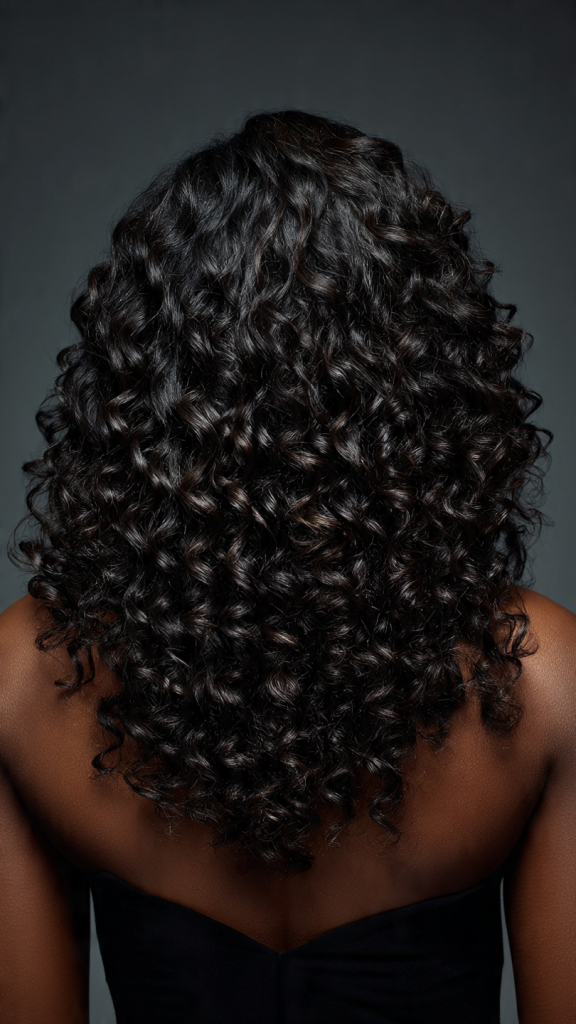
Source: trendinnails.com
Espresso black — the darkest brown, one step from true black — gives curls a sleek, reflective quality that reads as pure shine. Unlike flat box-black dye, a salon espresso has subtle brown warmth that keeps it from looking harsh, and on healthy curls the light reflection makes every coil look defined. It’s universally flattering and makes a strong, low-effort statement through winter. Our Easy Fall Hairstyles for Medium Hair rounds up more takes on this exact idea.
A demi-permanent espresso gloss is the gentlest route: it deposits rich color and shine without lifting, and it fades gradually over 6–8 weeks. Shine depends on the cuticle lying flat, so winter care matters — seal with a light oil after moisturizing, and avoid over-washing, which strips the gloss faster. This is one of the lowest-maintenance colors on the list; the only real caution is that going lighter later requires color removal, so be sure about the dark side before committing.
High Curly Bun with Soft Tendrils
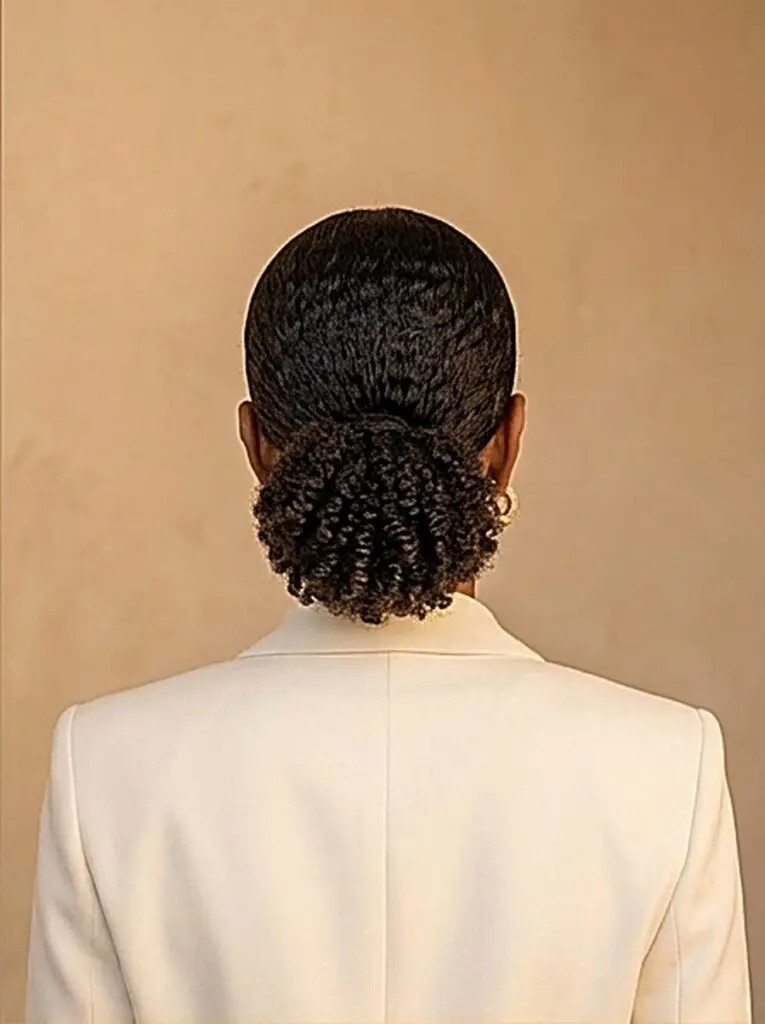
All the hair swept into a bun at the crown, with a few curls left loose around the hairline to soften the look. The height elongates the neck and shows off the face, making it a natural choice for evenings out, and the tendrils keep it from looking severe. It works on medium to long hair; shorter lengths can fake the fullness with a mesh bun form.
Gather with a satin scrunchie, twist loosely, and pin — the key word is loosely, since tight buns stress edges and cause breakage over time. Leave the tendrils out before securing, and define them with a dab of cream. This is a genuinely hat-friendly updo: a beanie sits neatly over it without crushing the shape. Alternate its position (high one day, low the next) so the same strands aren’t always under tension.
All-Over Golden Brown with a Diffused Finish
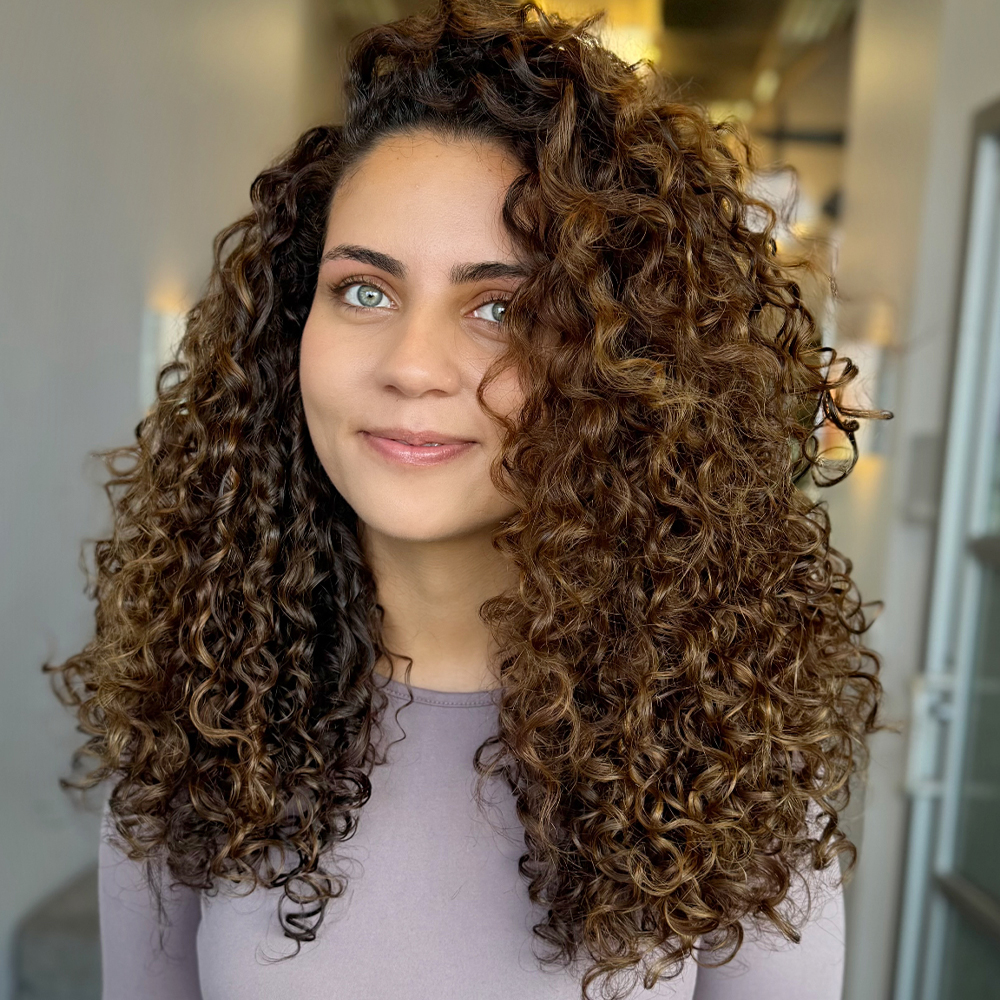
Courtesy of: newbeautymedia.wpenginepowered.com
A single-process golden brown, warm and luminous, worn all over with curls diffused for maximum volume. The uniform color makes hair look thicker and healthier, and the golden undertone brings warmth to the complexion during the palest months of the year. It’s a flattering, natural-looking choice across skin tones, especially medium and olive complexions. Related reading: Stunning Fall Hair Colors for Brunettes takes the same concept further.
Single-process color means one salon visit covers everything, and root touch-ups every 4–6 weeks keep it seamless — though a skilled colorist can melt the regrowth so it stretches longer. The diffused finish comes from drying with a diffuser on medium heat, lifting at the roots for volume. Because the whole head is colored, winter moisture care is essential: rotate protein and moisture treatments so the hair stays elastic. If you prefer the least possible upkeep, ask about a demi-permanent formula that fades instead of leaving a hard regrowth line.
Full Curly Bangs with a High Puff

Photo credit: nadula.com
This pairs a full, brow-grazing curly fringe with the rest of the hair gathered into a high puff — a bold, graphic shape that frames the entire face. The fringe softens foreheads and adds balance to long faces, while the puff keeps the bulk up and away from winter coat collars. It needs enough density for the fringe to read as a fringe rather than a few wisps.
Curly bangs must be cut dry and conservatively — they bounce up significantly as they dry, and you can always take more off later. Style the fringe separately from the puff: define the curls with a small brush or finger-coiling while damp. In the morning, the fringe usually needs a quick water refresh even when the puff doesn’t. Beanie wearers, take note: the fringe will flatten under a hat, so this style suits days when the hat comes off indoors. For more ideas in the same lane, see our Fall 2025 Hairstyles for Women Over 40.
Rounded Afro with a Shaped Silhouette

Image credit: yournextinspo.com
A rounded afro, carefully shaped into a soft sphere, celebrates natural volume with intention — the outline is even all the way around rather than picked into a random cloud. The symmetry flatters most face shapes, and the shape reads polished enough for professional settings while still being completely natural. It suits 3c–4c textures with the density to hold the form.
The shape comes from regular trims — every 8–12 weeks — where the stylist evens the silhouette while the hair is picked out dry. Daily, moisture is everything in winter: the LOC or LCO layering method (leave-in, oil, cream) keeps picked-out hair from drying into brittleness. Sleep in a satin bonnet and re-pick in the morning rather than starting over. This style asks for consistent moisture discipline, but it needs no heat and no salon styling between trims.
Chunky Caramel Highlights on Near-Black Curls

Source: womenshairtoday.com
Thick, face-framing ribbons of caramel painted over a near-black base create the highest-contrast look on this list — each curl reads as a swirl of dark and light. The chunkiness is deliberate: fine babylights get lost in curls, while bold ribbons actually show up. It’s a statement choice that flatters deep skin tones especially, and it gives fine curly hair the illusion of much more dimension.
Chunky highlights mean more lightener per section, so this is a job for a colorist who understands curly porosity — overlapping lightener causes breakage fast. Maintenance runs higher than the subtler balayage looks: toning every 6–8 weeks keeps the caramel from turning brassy. Deep-condition the lightened pieces weekly through winter. If your hair is fine or fragile, ask for fewer, well-placed ribbons rather than a full head of them. See also Mother of the Groom Hairstyles for Women with Glasses for more variations on this look.
Sleek Middle-Part Low Bun with Curly Ends
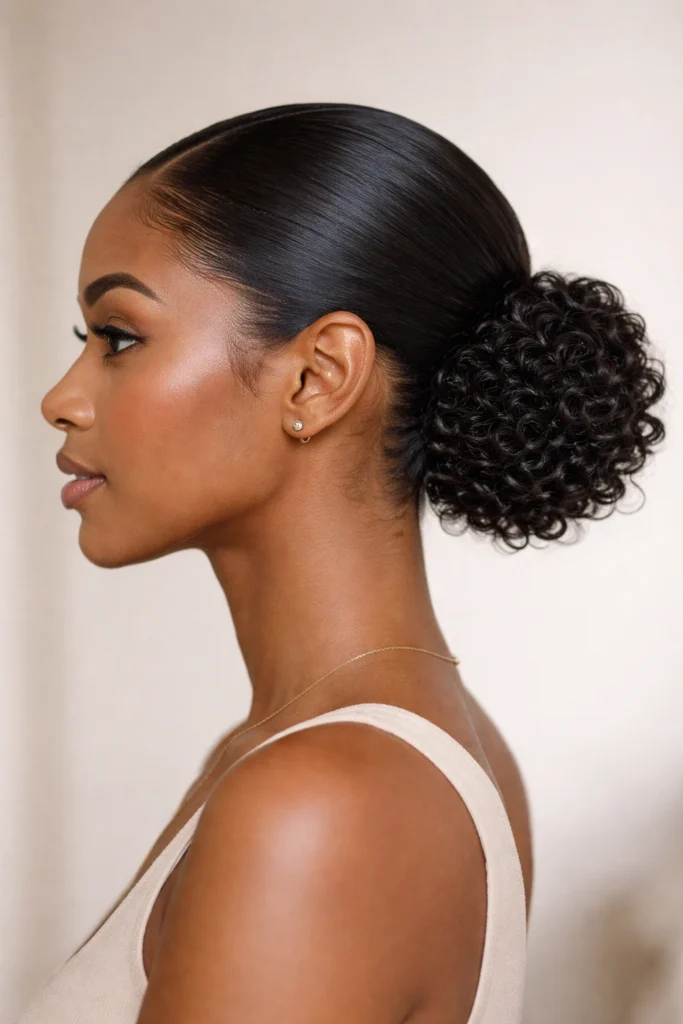
Via hairtical.com
The top is smoothed sleek with a crisp middle part, then gathered into a low bun at the nape — but the bun itself is left curly and textured rather than twisted smooth. The contrast between the polished crown and the soft, curly bun is what makes it modern. It’s elegant on oval and heart-shaped faces and works beautifully for offices, events, and anywhere a puff would feel too casual.
Smooth the crown with a brush, a little gel, and the tension of a snag-free band; leave the lengths curly by applying gel only at the roots. A light edge control finishes the hairline. The style holds up well under winter hats — the low placement means a beanie slides right over it. Take it down gently at night and moisturize the ends, since gel can be drying if it’s the only product on the hair. Very short hair may not reach; chin-length and longer works best.
Cinnamon-Spice Balayage on Warm Curls
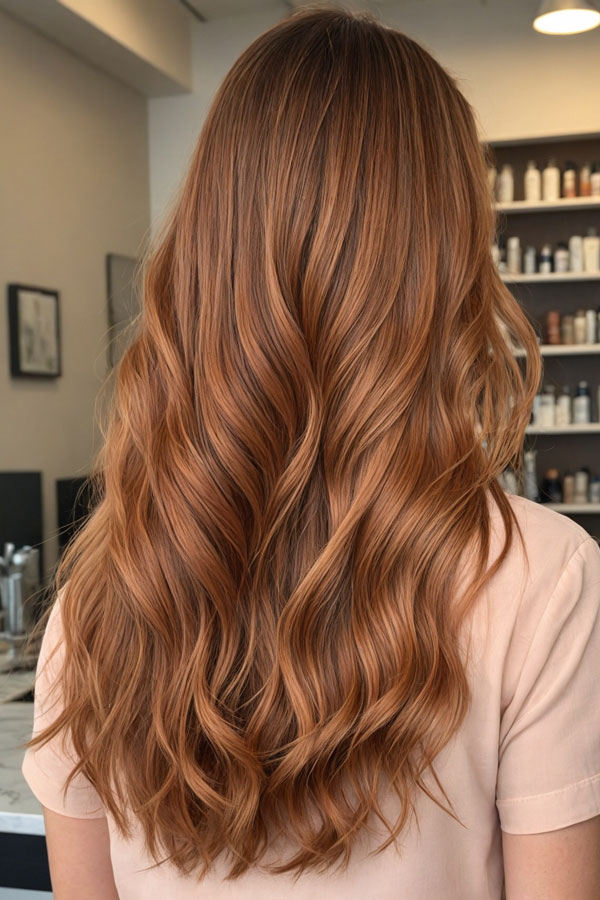
Courtesy of: itakeyou.co.uk
Cinnamon — a spicy copper-brown with red and golden undertones — is painted through warm brown curls as a balayage that concentrates brightness at the ends. The result looks like the hair is glowing from within, and the spiced tone is particularly striking in winter sunlight. It flatters warm and neutral skin tones; cooler complexions can ask for the formula to lean more copper than red.
Like all balayage, it’s painted to grow out softly, so full appointments stretch to 3–4 months with just a gloss refresh in between. The red-copper pigment fades faster than brown, so color-safe shampoo and cooler wash water extend its life. Winter dryness is the main enemy — seal lightened ends with a cream or butter after every wash. This sits between the subtle caramel looks and the full copper in both impact and upkeep. For a different spin on the same theme, browse Winter Haircuts.
Curly Bob with a Side-Swept Fringe
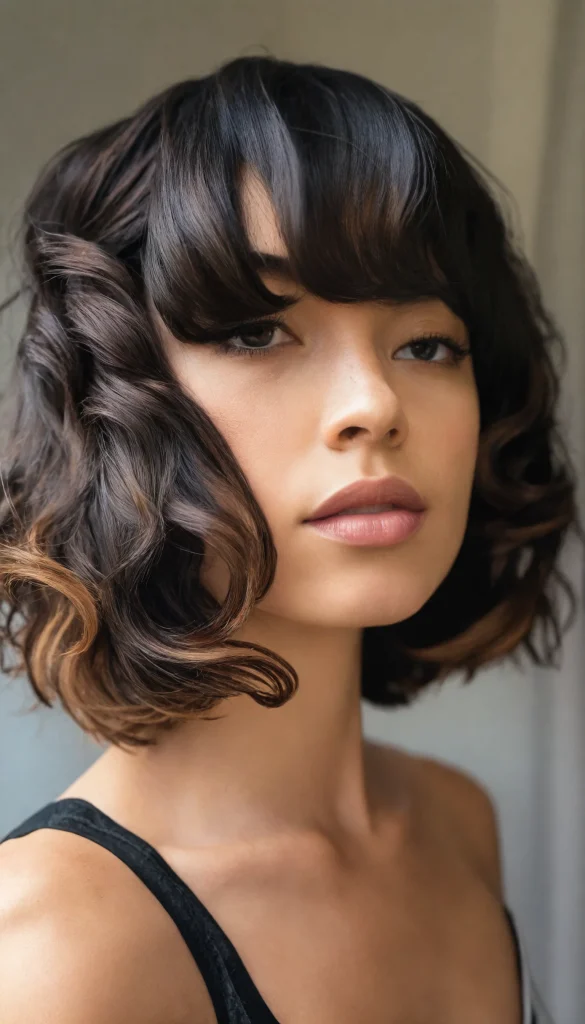
Photo credit: egitimkultur.com
A chin-length curly bob paired with a fringe that sweeps diagonally across the forehead. The diagonal line breaks up the roundness of the bob’s silhouette, which makes it a smart choice for round faces, and the asymmetry gives the classic bob a fresher, less predictable feel. It works best on 2c–3b curls with enough weight to make the fringe drape rather than spring straight up.
The fringe is cut dry, longer at the outer edge so it sweeps naturally. Train it by diffusing it in the sweep direction while damp — curls have memory, and a week of consistent direction-setting makes it fall into place. Trims every 6–8 weeks keep the sweep from growing into the eyes. Under winter hats the fringe will compress, so carry a travel-size cream to revive it after the hat comes off.
Flat-Twist Crown into a Low Puff
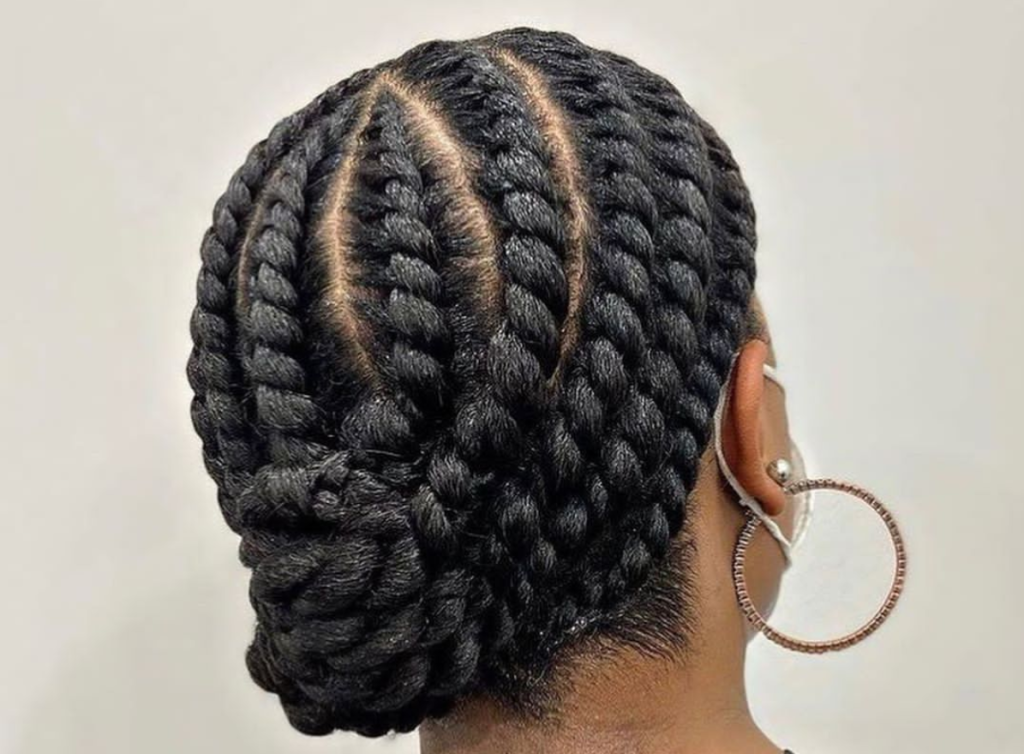
Image credit: napturallyval.com
Two flat twists run from the temples back along each side of the head and feed into a low, curly puff at the nape — a protective style that looks intricate but uses one simple technique. The twists keep the front neat and edges protected, while the puff shows off curl texture at the back. It’s genuinely protective: the majority of the hair is tucked and undisturbed for a week or more.
Flat-twist on stretched, moisturized hair — blow-dried on low heat or banded overnight — so the twists lie flat and neat. Keep the tension moderate around the hairline; edges are the first casualty of tight protective styles. The style lasts 7–10 days with a satin scarf at night, and it’s one of the best winter options for retaining length since the ends stay tucked. Take it down gently with oiled fingers to avoid breakage, and give the hair a rest week with loose styles between installs. For readers who want more, Must Try Hairstyles for Oval Faces keeps the ideas coming.
Soft Black with Dark Plum Undertones
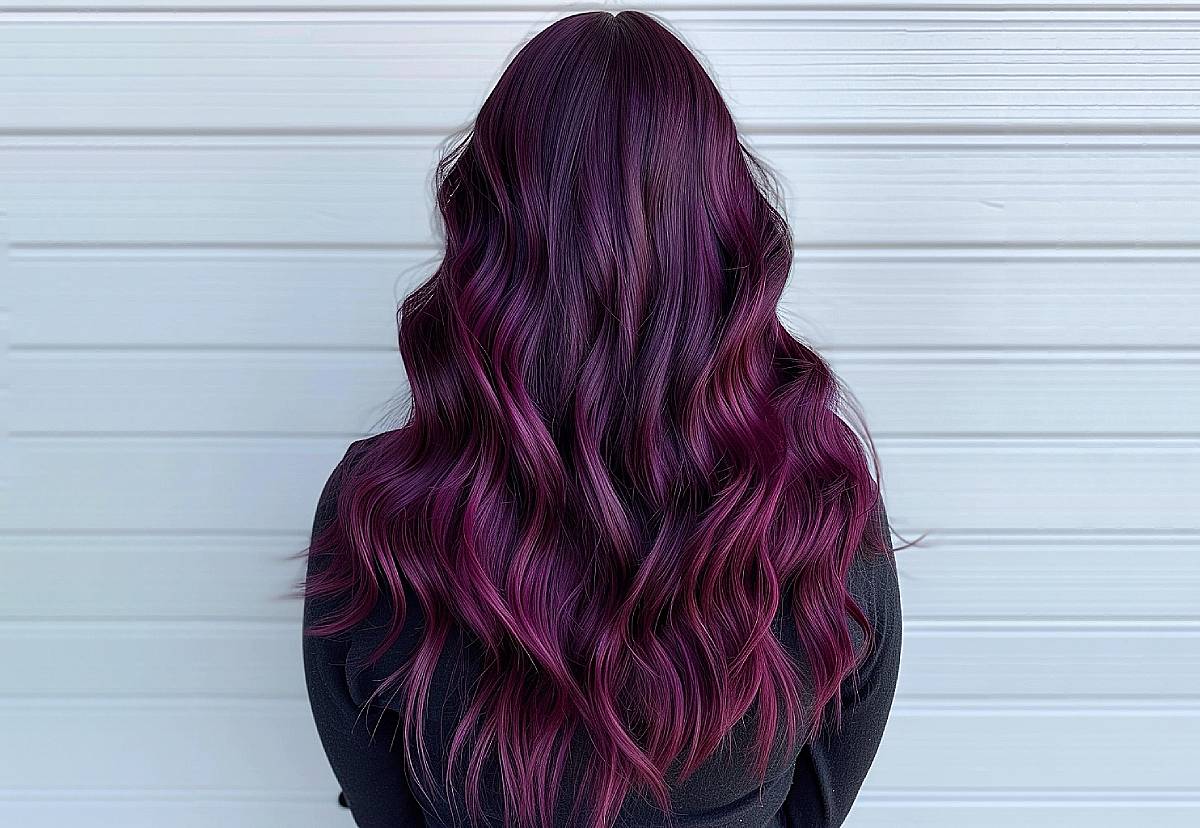
Source: latest-hairstyles.com
The base reads as soft black, but woven through it are deep plum undertones — violet-black ribbons that reveal themselves in sunlight and under indoor lighting. It’s subtler than burgundy and moodier than espresso: a color with a secret. The violet undertone flatters cool and neutral skin tones and gives dark winter hair a dimension that flat black dye never achieves.
Plum on dark hair is usually done with a violet-based demi-permanent, which means minimal damage and a graceful fade over 6–8 weeks. Like all fashion-leaning tones, it fades — expect the violet to soften toward a neutral dark brown and plan a refresh when the secret disappears. Cool water and color-safe shampoo slow the fade. If you want the plum to stay vivid, a violet color-depositing conditioner once a week makes a noticeable difference.
Final Thoughts
The strongest options here work because of dimension, shape, and face framing — not simply because they are dark, short, or long. A caramel ribbon means little without the curl pattern to carry it; a bob succeeds because of how the layers stack, not just where it ends. Choose based on honest maintenance math: how often you’ll deep-condition, how you feel about root appointments, and whether your texture springs tighter or looser than the inspiration photo. Winter rewards the low-manipulation choices — puffs, twists, and wash-and-go cuts — so when in doubt, pick the style that asks less of your hair in dry, heated air.
- Trim every six to eight weeks to keep the shape sharp.
- Use a heat protectant before every hot-tool session.
- Tone blonde or highlighted hair every six weeks to keep brassiness away.
- Match the upkeep schedule to your routine before committing to high-maintenance color.
The best color is the one that still looks intentional at week six.