The blonde conversation has shifted. What Sydney Sweeney started with her buttery, unapologetic warmth and Sofia Richie cemented with her quiet luxury aesthetic has now fully evolved into something broader, more textured, and infinitely more personal. Summer blonde hair color for 2026 isn’t about one shade or one vibe — it’s about the anti-trend trend, the idea that your blonde should look like it belongs to you and no one else. We’re seeing the “Coastal Grandmother 2.0” palette merge with Old Money undertones, and the result is a season of blondes that feel expensive without trying too hard. The anti-blowout movement is in full swing, and the hair color is following suit.
What you’ll find here is a true range — from cropped pixie-adjacent bobs to waist-grazing layers, from tight natural curls kissed with caramel to pin-straight platinum that looks like spun glass. Whether your hair is fine and flat, thick and unruly, or somewhere beautifully in between, there’s a version of summer blonde that will work with your texture rather than fighting against it. Oval faces, square jaws, heart shapes, round cheeks — every architecture gets something here.
I’ve spent enough money on color corrections to know that “low maintenance” is often a lie stylists tell you while you’re still in the chair feeling gorgeous. So I’m going to be honest about what each of these looks actually requires — the gloss appointments, the purple shampoo commitment, the trims you can’t skip. Consider this your real-talk guide to finding your summer shade without the post-appointment regret spiral.
The Beachy Textured Lob
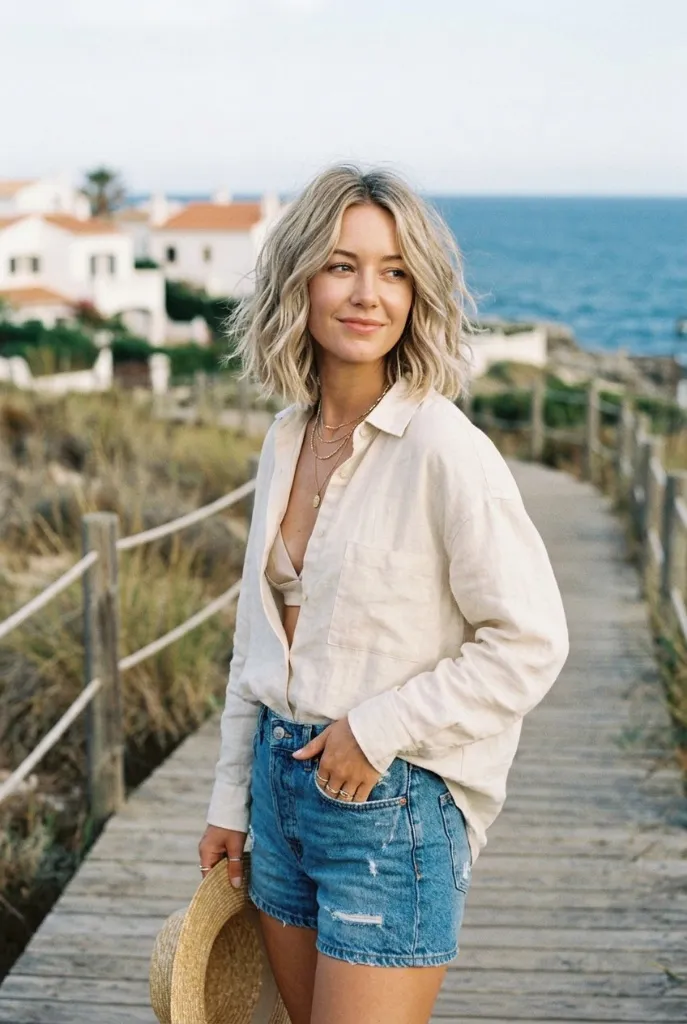
Not every blonde needs to scream. Sometimes it whispers, and the whisper sounds like salt air and bare feet on warm wood. This beachy textured lob is the physical embodiment of summer blonde hair color for 2026 at its most relaxed — a chin-to-shoulder length cut with lived-in waves that look like they were shaped by the ocean rather than a curling wand. The color is a soft Level 8–9 with babylights so fine they disappear into the texture, creating a lit-from-within glow rather than obvious streaks.
The roots are left naturally deeper — Level 6 or 7 — which is both an aesthetic choice and a maintenance strategy. The cut has no harsh lines; it’s razored at the ends for that slightly deconstructed edge, with layers starting just below the ear to encourage natural movement without bulk. This works beautifully on naturally wavy hair (Type 2A–2B) and looks equally fantastic on heart and oval face shapes.
Styling takes five minutes on a good hair day: sea salt spray, scrunch, air dry. Maybe ten on a less cooperative morning. Trim every 10–12 weeks. Gloss every 8 weeks. Skip this if you need polished, because this look actively resists it. It’s meant to look undone, and if that makes you anxious, we should talk about other options. Effortless, truly.
The Sunlit Linen Blonde
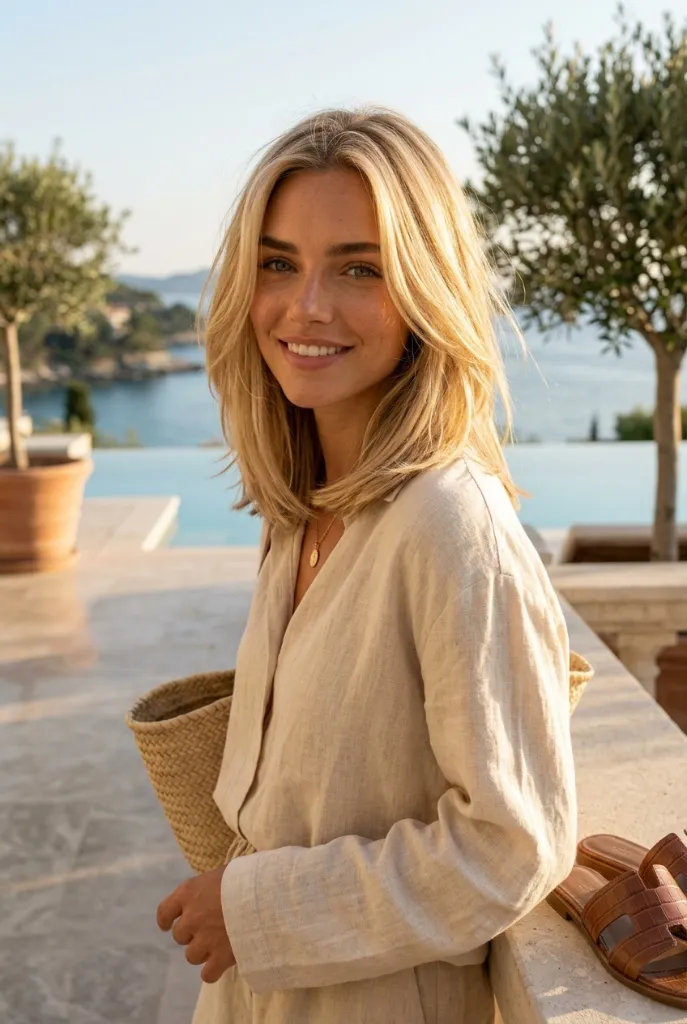
Sofia Richie’s entire aesthetic condensed into a hair color. This is the shade that launched a thousand “quiet luxury blonde” Pinterest boards — a soft, buttery Level 9 with the faintest cool undertone that keeps it from veering into yellow territory. It reads as natural on fair to light-medium skin, especially those with blue or green eyes and a neutral-to-cool undertone in their complexion. The cut is a textured medium-length with soft layers and piece-y ends that catch light without looking overdone.
The technique here is a combination of babylights through the mid-lengths and a root melt that starts at Level 7 and gradually warms into that signature linen tone. Your colorist will likely use a demi-permanent toner in a beige or sand family to tie everything together. The movement in this cut comes from internal layers — what some stylists call “ghost layers” — that create bounce without visible stepping.
- Cut: Medium-length, ghost layers, piece-y ends with slight face-framing
- Color: Level 9 linen blonde, babylights, root melt from Level 7, beige toner
- Styling: Lightweight mousse, diffuse or air dry, 10 minutes
Expect salon visits every 6–8 weeks to maintain that pristine, un-brassy quality. Purple shampoo once a week is your friend here. Skip this if your natural hair is darker than a Level 5 — the upkeep will drain your soul and your savings account.
The Ash Blonde Blunt Bob
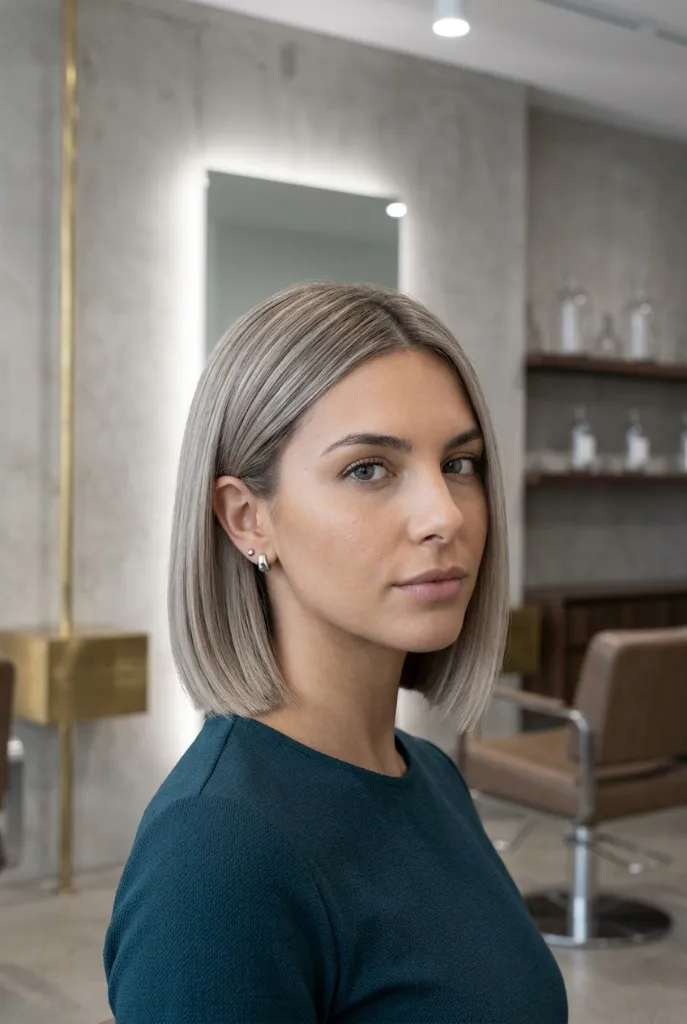
Sharp. Deliberate. The kind of haircut that makes people assume you have a corner office. This ash blonde blunt bob is all precision — one-length, jaw-grazing, not a layer in sight. The power is in the simplicity. Color-wise, we’re talking a Level 8 ash with cool violet undertones and the slightest root shadow at Level 6 to ground it. No warmth here. Not even a whisper.
This is a salon-only cut and color. The bluntness requires scissor-over-comb precision at the perimeter, and the ash tone requires a colorist who understands how to neutralize without going grey or green. It photographs like a dream on those with cool-toned skin, sharp bone structure, and angular jaw shapes — think square and oblong faces. On round faces, the lack of layers can emphasize width, so consider a slightly longer version if that’s a concern.
Styling is straightforward but non-optional: flat iron, smoothing serum, done. Five minutes if your hair cooperates. Trim every 4–5 weeks because even a millimeter of growth ruins the line. Toner refresh every 3–4 weeks because ash fades fast. This is high maintenance masked as minimalism, and if you’re not prepared for that commitment, look elsewhere. Not subtle. Not supposed to be.
The Platinum Midi
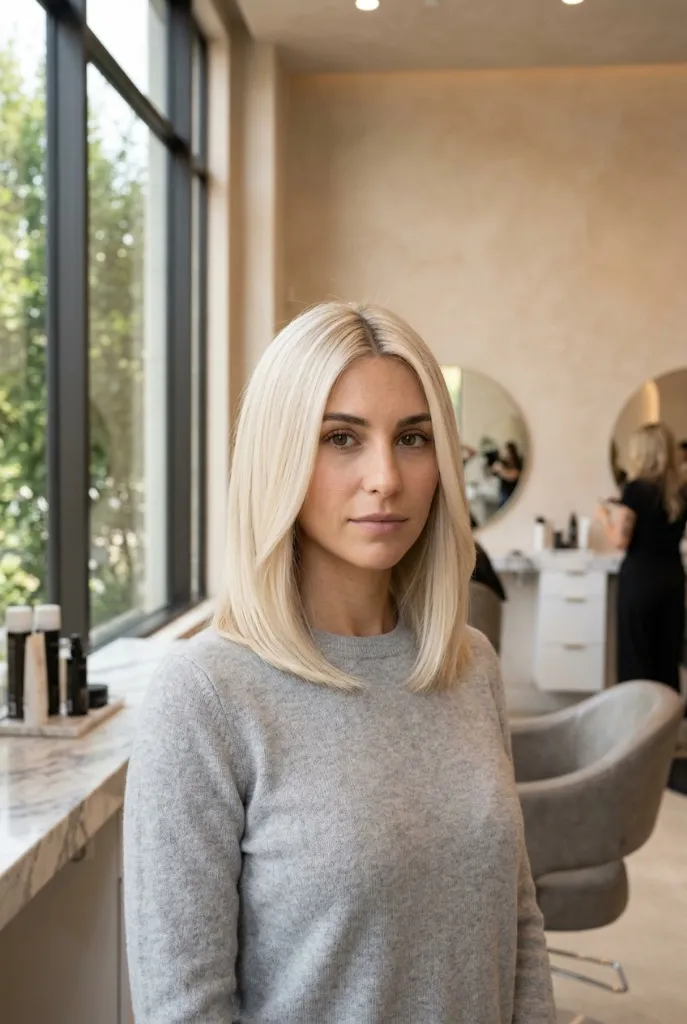
Let’s be honest — platinum is never truly effortless. But when done at this level, it can look like it was meant to be yours all along. The platinum midi sits just past the shoulders, with a center part and the kind of density-preserving technique that keeps the hair looking healthy rather than fried. We’re at a Level 10 here, almost reflective, with cool beige undertones rather than silver or white. The result is ice-queen adjacent but approachable.
The key to making platinum work in 2026 is the integrity of the hair itself. No one wants to see platinum on damaged, straw-like ends. The cut is simple — one-length with barely-there internal layers for natural movement — because the color does all the talking. This works best on naturally light hair (Level 6 and above) where the lifting process won’t require multiple sessions of potential damage.
Expect to be in your stylist’s chair every 4–6 weeks for root touch-ups and Olaplex treatments. Weekly purple toning at home is essential. This is the highest maintenance option on this entire list, and I won’t pretend otherwise. If you want summer blonde hair color for 2026 with minimal effort, scroll past this one immediately. But if you’re willing to commit? The payoff is unmatched.
The Textured Sand Blonde
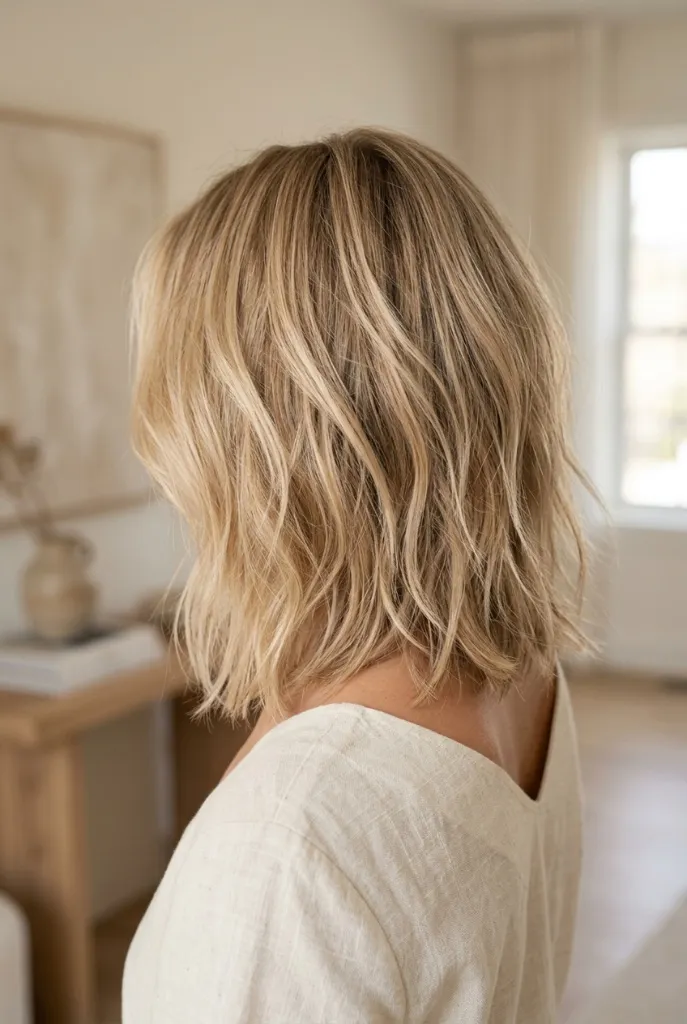
The back view tells the whole story here. This is what “lived-in” actually means when it’s done correctly — a mid-length cut with soft, undulating waves and a color that transitions seamlessly from a Level 7 root to Level 9 ends. The highlights are placed to catch light at the curve of each wave, creating natural-looking dimension that a single process could never achieve. It’s balayage at its most refined.
The texture is the real star. These aren’t polished curls or perfectly uniform waves — they’re slightly irregular, slightly roughed up, the kind of movement that happens when you braid damp hair overnight or scrunch with a lightweight mousse and let it air dry. The cut has invisible layers throughout that prevent weight from dragging the waves flat.
Low maintenance, genuinely. Trim every 10–12 weeks. Color refresh every 12–14 weeks because the root growth is intentional and the tones deepen gracefully over time. Skip this if you need your hair to look “done” — this is permanently in a beautiful state of undone. Your air-dry texture is the styling.
The Bronde Wave
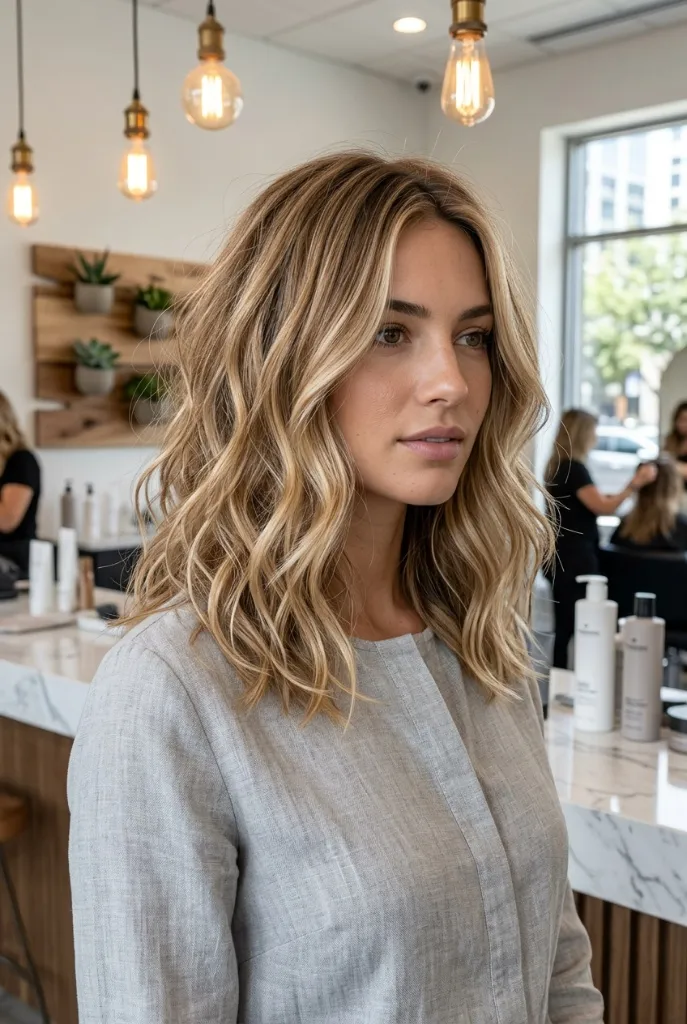
Somewhere between brunette and blonde lives this gorgeous in-between — the shade that flatters literally everyone and offends no one’s natural coloring. This bronde wave sits at Level 7–8 with chunky, modern highlights placed through the mid-lengths and face frame. The waves are defined but relaxed, created with a large-barrel iron and immediately brushed out for that “second-day curl” texture.
The beauty of bronde is its universality. Warm skin? Cool skin? Olive? Freckled? Yes to all of it. The trick is adjusting the undertone — more golden for warm complexions, more ashy for cool ones — while keeping the depth consistent. This particular version leans warm, with buttery tones that feel sun-drenched without being overtly summery.
- Cut: Collarbone-length, long layers starting at the chin, texturized ends
- Color: Level 7 base, foilayage to Level 8–9, warm butter tones, dimensional placement
- Styling: 1.25-inch curling iron, brushed-out waves, flexible hold spray, 15–20 minutes
Maintenance is moderate. The darker base means grow-out is graceful — push color appointments to every 10–12 weeks. Trim every 8 weeks to keep those texturized ends from looking scraggly. This is the “gateway blonde” for brunettes who aren’t ready to fully commit but want that summer glow.
The Mushroom Platinum
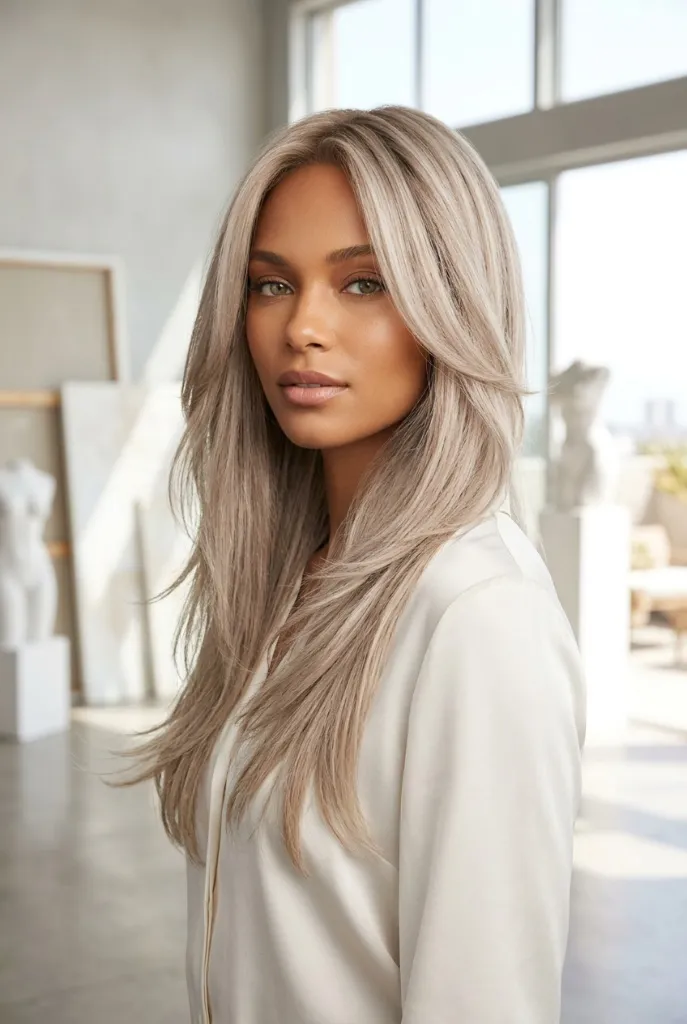
Zendaya’s colorist would understand this shade immediately. It’s not silver, it’s not beige, it’s not lavender — it’s somewhere in that impossible space where all three meet. Mushroom platinum is Level 9–10 with a taupe-violet undertone that reads as both cool and warm depending on the light. On deeper skin tones, it creates a stunning contrast that looks editorial without trying. On lighter skin, it reads ethereal, almost otherworldly.
The length here is past-the-shoulder, with butterfly layers that create movement from the collarbone down. The face-framing pieces are slightly lighter — a few carefully placed babylights that draw focus to the eyes and cheekbones. The overall effect is luxurious, high-fashion, and completely modern. This isn’t your 2019 “mushroom blonde” trend — it’s evolved into something with more personality and more platinum.
This requires a skilled colorist. Period. The undertone is everything, and the difference between mushroom platinum and accidental grandmother grey is a single toner choice. Maintenance is high — toner every 3–4 weeks, purple shampoo alternating with bond-repair treatments, trim every 8 weeks. If you color your hair at home, this is not for you. If you have a colorist you trust with your life? Go for it.
The Soft Blowout Blonde
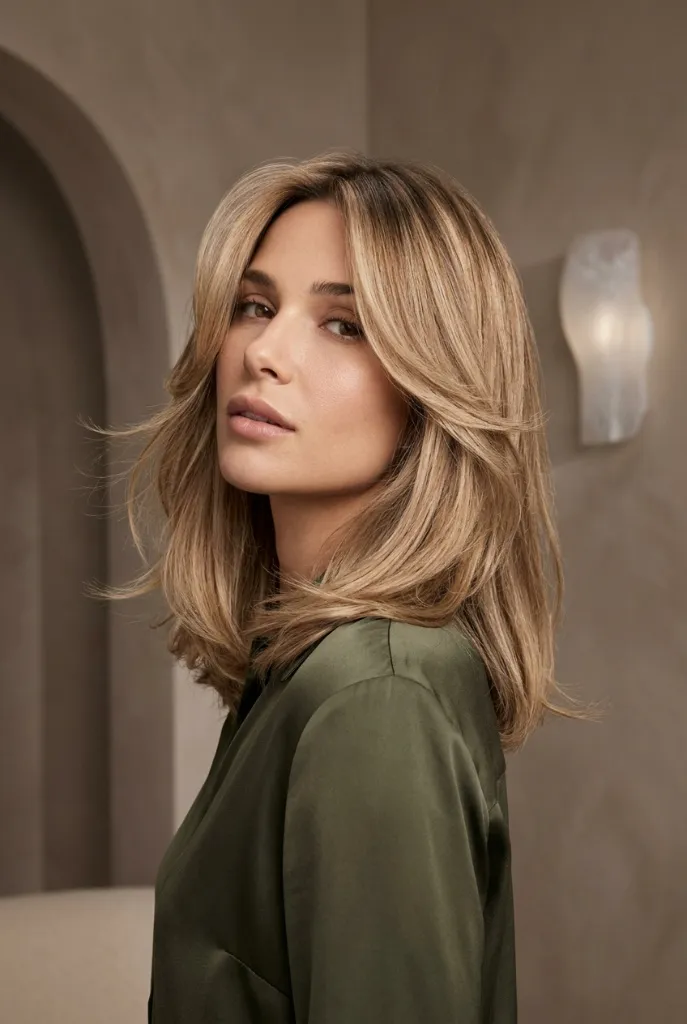
This is the hair that makes people think you have a personal stylist on retainer. A classic, medium-length blonde with perfectly placed highlights and a blowout so bouncy it defies humidity. Level 8 base with Level 9–10 foils, concentrated through the crown and face frame for maximum dimension without the skunk-stripe effect. The layers are all internal — visible from the movement, not from looking at the ends.
The cut is crucial here: shoulder-length with curtain layers starting at the cheekbone that flip outward with a round brush. It’s giving Rachel Green season 6, but updated with warmer tones and less structured volume. The finish is smooth but not flat, voluminous but not helmet-y. It demands a blowout, which means it demands 20–25 minutes of your morning and a willingness to wield a round brush.
Skip this if you air-dry exclusively or if humidity is your summer reality. This look wilts in moisture. But if you live for the ritual of a good blowout, and you have medium-to-thick hair that holds a shape, this is your summer signature. Trim every 6–8 weeks. Color every 8 weeks. Blowout every wash day. The commitment is real, but so is the payoff.
The Layered Curtain Fringe Blonde
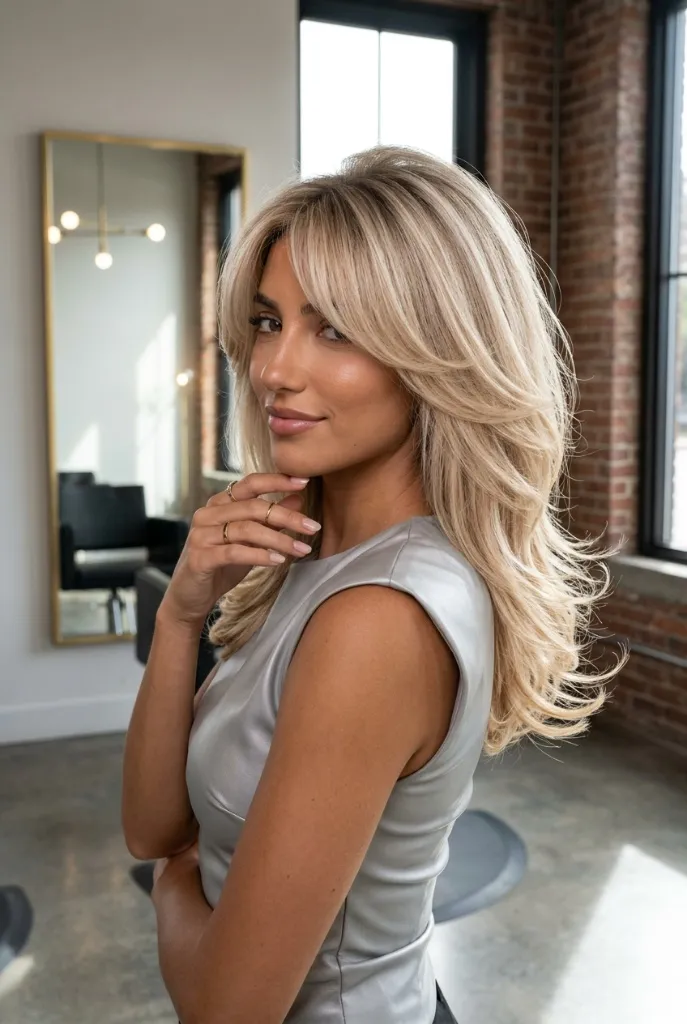
The fringe makes it. Without it, this would be a perfectly nice long blonde haircut. With it, it becomes the most requested style in salons across Brooklyn, Nashville, and West Hollywood simultaneously. Sabrina Carpenter energy — playful, flirtatious, undeniably cool. The curtain fringe starts just below the brow and sweeps to the sides, blending seamlessly into face-framing layers that extend to the collarbone.
Color-wise, this is Level 8–9 with a warm sandy base and brighter pieces through the fringe and front sections. The technique is partial foilayage — only the top canopy and face frame are highlighted, which keeps maintenance manageable and the underneath dimension intact. The layers are long and feathered, flipped outward at the bottom with a round brush for that retro-meets-modern movement.
- Cut: Long layers, curtain fringe (brow-length), feathered ends, face-framing starting at cheekbone
- Color: Level 8–9 sandy blonde, partial foilayage, brighter pieces through fringe
- Styling: Round brush blowout on fringe (essential), 1.5-inch barrel for body, 20 minutes
The fringe needs trimming every 3–4 weeks. Color every 8–10 weeks. If you have a cowlick at your forehead or super fine hair that won’t hold a part, curtain bangs will fight you. Also skip if you wear glasses daily — the constant interaction between frames and fringe can be maddening.
The Cool Ash Midi Straight
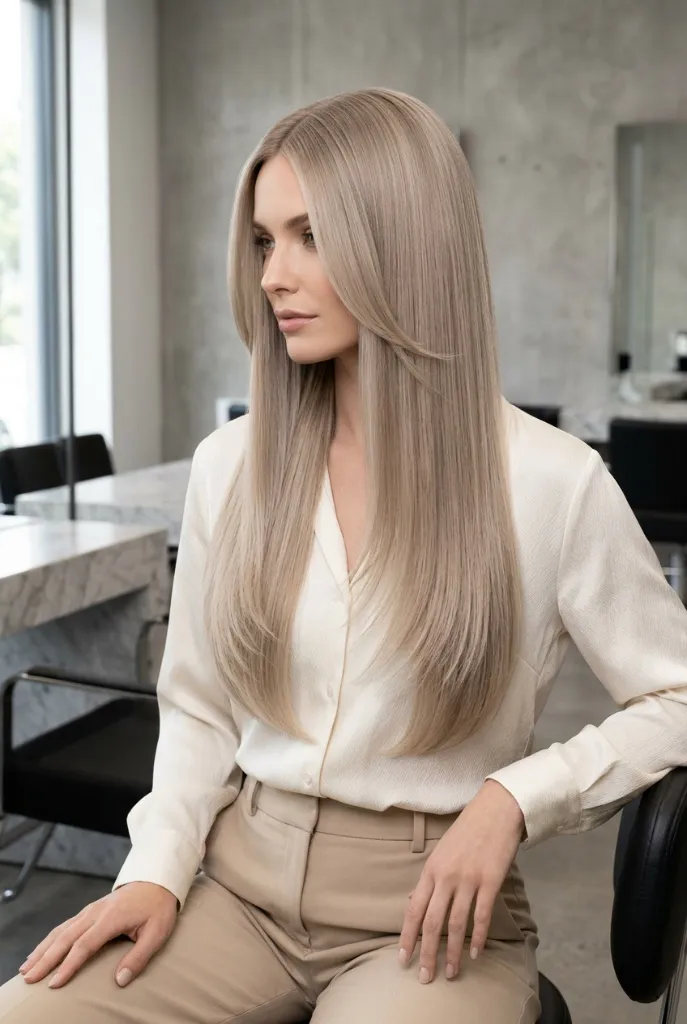
Sometimes the most powerful statement is restraint. This ultra-long, pin-straight, Level 8 ash blonde is so glossy it looks lacquered. No layers. No texture. No movement. Just impeccable shine and a shade so perfectly neutral it could be mistaken for your natural color if your natural color happened to be flawless. The center part is exact. The ends are blunt. The whole thing whispers money.
The technique is a single-process glaze over pre-lightened hair, with no visible highlights or lowlights. The uniformity is the point — in a world of lived-in balayage and textured everything, choosing one-dimensional color is a radical act. This works on naturally straight hair (Type 1A–1B) and looks most striking on those with sharp, angular features and cool undertones.
Maintenance is paradoxically simple in concept but demanding in execution. The color itself only needs refreshing every 6–8 weeks, but the styling requires a flat iron pass every single wash day to maintain that mirror-finish effect. Any frizz, any flyaway, and the illusion breaks. Heat protectant is not optional — it’s survival. You’ll also want trims every 8 weeks to maintain those razor-sharp ends. This is not a wash-and-go life. Know that before you commit.
The Dimensional Honey Layer
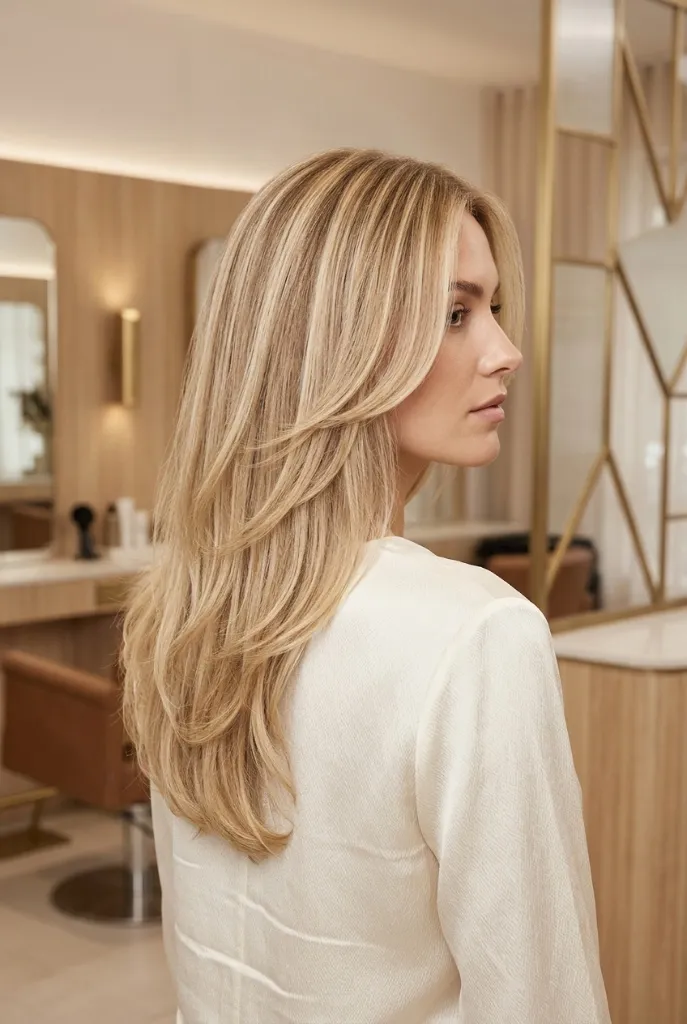
From the back, this is pure poetry. Long, layered, golden — the kind of blonde that photographs beautifully and looks expensive from every angle. The color story here is Level 7 at the root transitioning through Level 8 mids into Level 9 ends, with woven highlights that create a gradient effect rather than obvious contrast. It’s the most natural-looking highlighted blonde you can achieve at this level of lightness.
The layers start below the shoulders and cascade in soft, internal movements that prevent bulk while maintaining length. There’s no face-framing from this angle because the magic is in the overall blending — no stripiness, no blocky sections, just seamless transition from warm to warmer to warmest. This is what happens when a colorist takes their time with placement rather than rushing through a full head of foils.
This grows out like a dream. You can genuinely push appointments to every 12–14 weeks and still look intentional. The warm tones deepen rather than go brassy, and the root growth reads as deliberate shadow. Trim every 10 weeks to keep layers from losing their shape. This is summer blonde hair color for 2026 at its most forgiving — ideal for anyone who wants beautiful color without the every-six-weeks treadmill.
The Layered Fringe Midi with Soft Bangs
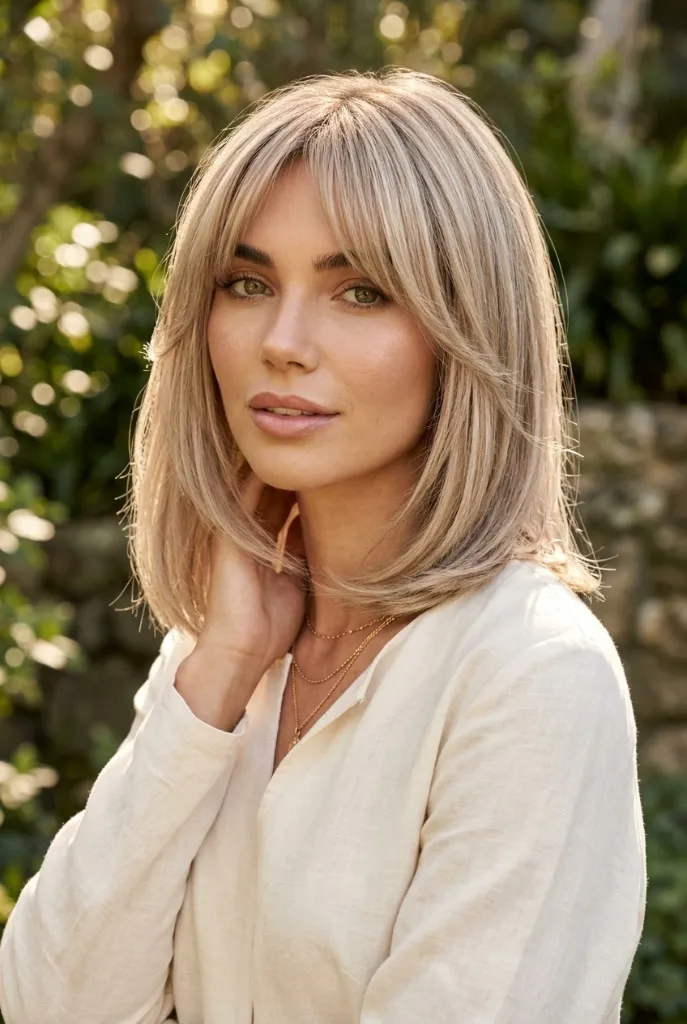
This is the haircut equivalent of a linen dress — elevated but relaxed, structured but breathable. A shoulder-grazing length with soft, wispy bangs that hit just at the brow, framing the face without overwhelming it. The color is a Level 8 ash-blonde with sandy undertones and the kind of dimension that comes from extremely fine babylights woven throughout. On camera, it catches light like candleflame.
The bangs here are the softer cousin of the curtain fringe — thinner, more see-through, less committed. They work on round and oval faces by creating the illusion of length, and they soften square jawlines by drawing the eye upward. The overall silhouette is relaxed: layers that start at the chin and fall loosely, ends that flick slightly outward with minimal encouragement.
Styling is low-demand. Air-dry with a lightweight cream, then a quick pass with a round brush on just the bangs. Total time: seven minutes. Maintenance is moderate — trim the bangs every 3 weeks (learn to do this yourself with point-cutting scissors, seriously), overall cut every 8–10 weeks, and color every 10–12 weeks. The only people who should skip this are those who cannot commit to bang trims. Overgrown bangs ruin even the most expensive color job.
The Copper-Kissed Long Blonde
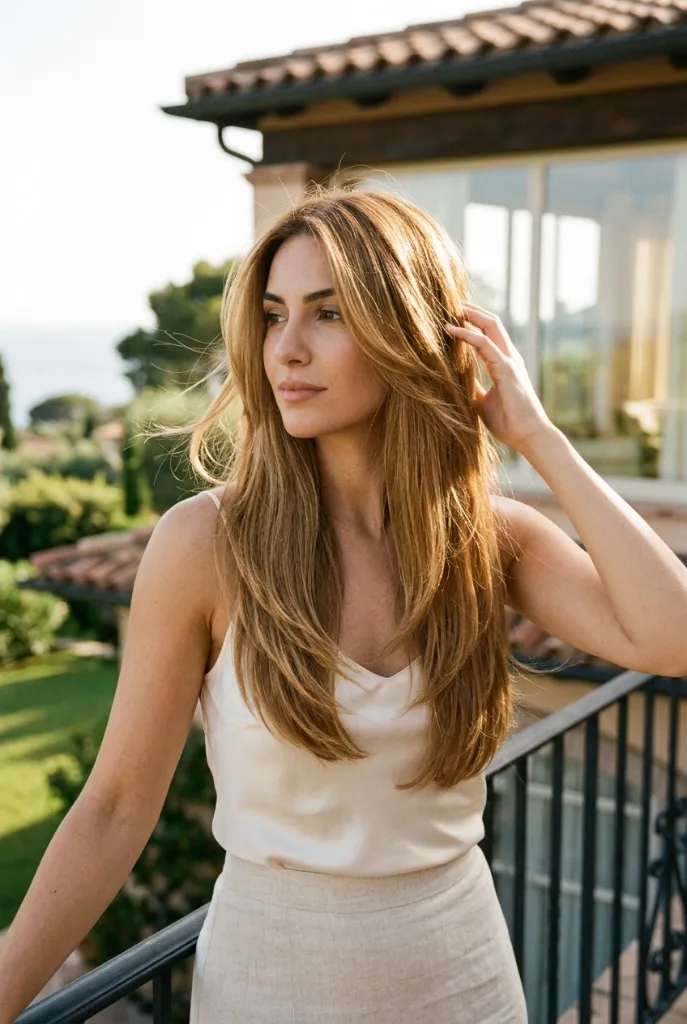
Blake Lively made us all consider it. That warm, honeyed copper-blonde that exists in the golden hour light between strawberry and caramel. This is Level 7 with heavy copper and gold undertones — not quite red, not quite blonde, occupying a space that feels romantic and cinematic. The layers are long and face-framing, starting at the collarbone and falling to mid-rib with soft, curtain-like movement.
This color looks divine on warm and neutral skin tones, particularly those with golden or olive undertones. Brown eyes become tiger-eye stones. Green eyes turn emerald. The technique is typically a combination of baby foils through the top with a rich copper glaze over everything, creating that lit-from-within warmth that photographs as pure magic.
- Cut: Long layers, face-framing from collarbone, soft rounded ends
- Color: Level 7 copper-gold, baby foils, copper glaze overlay, natural root
- Styling: Air-dry with curl cream or blowout with a large barrel brush, 15 minutes either way
This is one of the more forgiving options on this list. The warm tones fade slowly and gracefully — expect 10–12 weeks between color appointments. But if your underlying pigment runs cool or ashy, achieving this tone requires a colorist who understands warm formulation deeply. Skip if you have very cool skin — the copper can make you look flushed rather than glowing. Honesty over flattery.
The Icy Vanilla Long Blonde
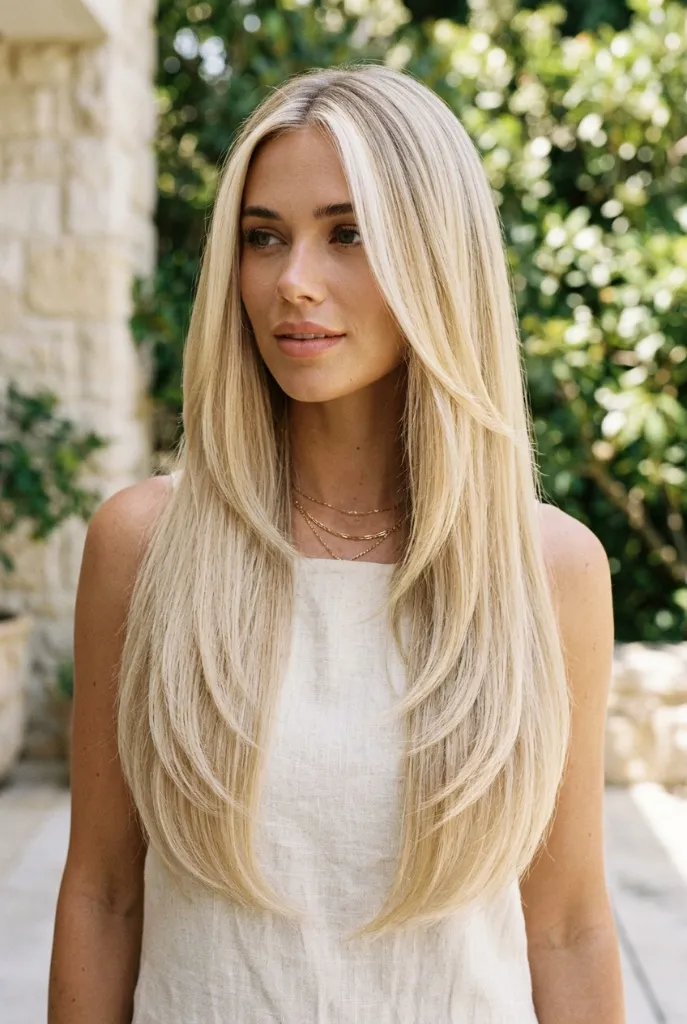
This is the shade you screenshot and bring to your colorist while they try to explain the commitment level and you nod without really listening. I’ve been there. Icy vanilla is Level 9–10 with a cool beige undertone — brighter than champagne, warmer than platinum, more dimensional than either. It’s Kristin Cavallari-era blonde brought into 2026 with better technique and healthier hair.
The length is waist-grazing with long, internal layers that keep the weight distributed without creating visible steps. The color is achieved through a full head of foils with meticulous toning — we’re talking a glaze that balances violet and beige to create that creamy, never-yellow finish. The roots are kept to a natural Level 5–6, with a soft melt into the blonde that prevents any harsh grow-out line.
Let me be real: this requires financial commitment. Full highlight every 8–10 weeks, toner refresh at week 4–5, and weekly bond treatments at home to maintain integrity at this level of lightness. Deep conditioning is non-negotiable. But the result — especially in summer light — is genuinely breathtaking. If your budget allows for bi-monthly salon visits and you start at Level 6 or lighter, this can be yours.
The Caramel Balayage on Natural Curls
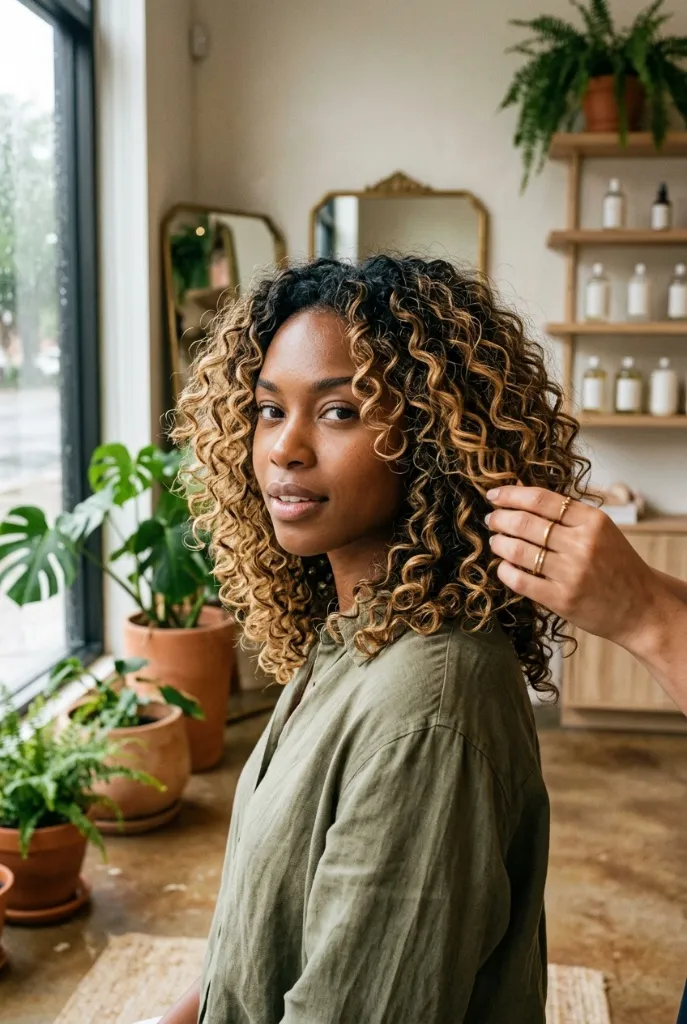
Finally — a blonde that celebrates texture rather than fighting it. This caramel balayage on natural Type 3B–3C curls is everything summer should be: warm, joyful, unapologetically bold. The color is Level 6–7 at the root melting into Level 8–9 caramel and honey tones through the mid-lengths and ends. On curly hair, balayage creates a completely different effect than on straight — each curl catches light independently, creating a mosaic of tone and dimension.
The placement here is critical. A colorist experienced with curly textures knows to paint the hair in its natural curl pattern rather than pulling it straight, which ensures the highlights fall exactly where they should when the curls spring back up. The darker roots aren’t just stylish — they protect the most fragile part of curly hair from additional processing.
Maintenance is specific to textured hair. Color every 12–14 weeks minimum — curly hair is already more vulnerable to dryness, so limiting chemical processes is essential. Use color-safe, sulfate-free products. Deep condition weekly. Trim (dry cut by a curl specialist) every 10–12 weeks. Skip this if your colorist doesn’t have a portfolio of curly clients — improper balayage on curls leads to spotty, unflattering results. Demand expertise. Your curls deserve it.
The Shaggy Curtain Blonde
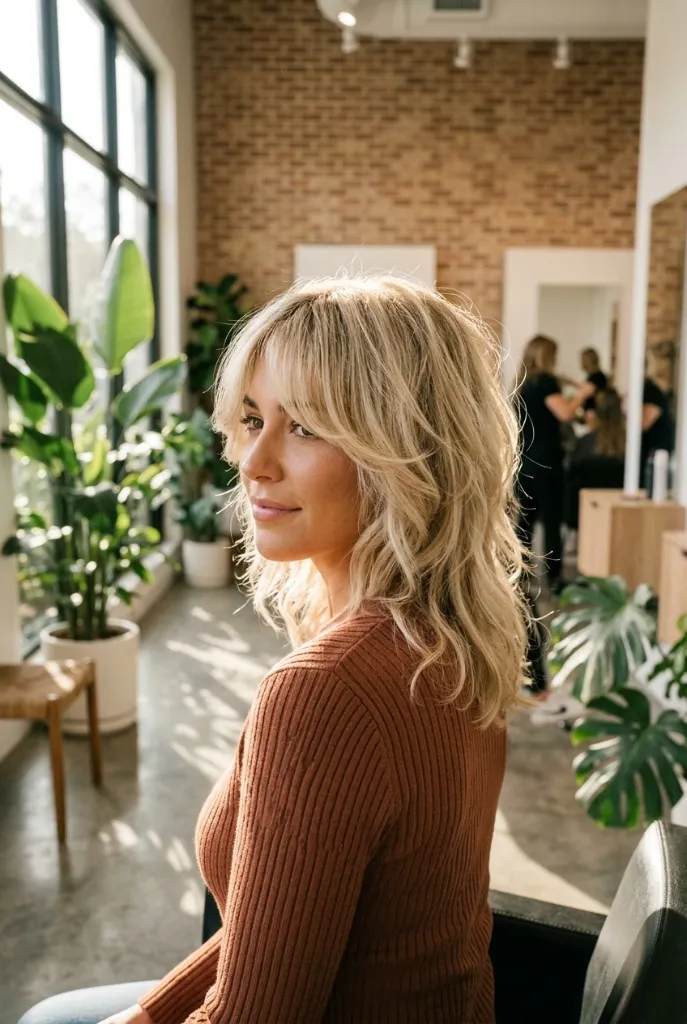
Messy on purpose. Intentionally imperfect. This shaggy blonde channels Stevie Nicks by way of a Brooklyn editorial shoot — heavily layered throughout with curtain bangs and a color that moves between Level 8 and Level 10 with complete abandon. The highlights are chunky by modern standards, placed for maximum impact rather than seamless blending, and the roots are left at a natural Level 6–7 for at least an inch of visible depth. Rules? This cut doesn’t know them.
The shag works because of the layers — short at the crown, longer through the back, face-framing pieces that hit at the cheekbone. It’s point-cut throughout for maximum movement with minimum weight. The texture is enhanced with a salt spray or texturizing cream and left to do its thing. No smoothing. No polishing. The chaos is the point.
This is genuinely low maintenance once established. The grow-out looks intentional because the whole vibe is already undone. Color every 12–14 weeks. Trim every 8–10 weeks to maintain the shape (shags that grow out without trims become mullets — fair warning). Skip if you need your hair to look corporate or if you have very fine hair that can’t support heavy layering without looking thin. This cut needs density.
The Warm Honey Blunt Bob
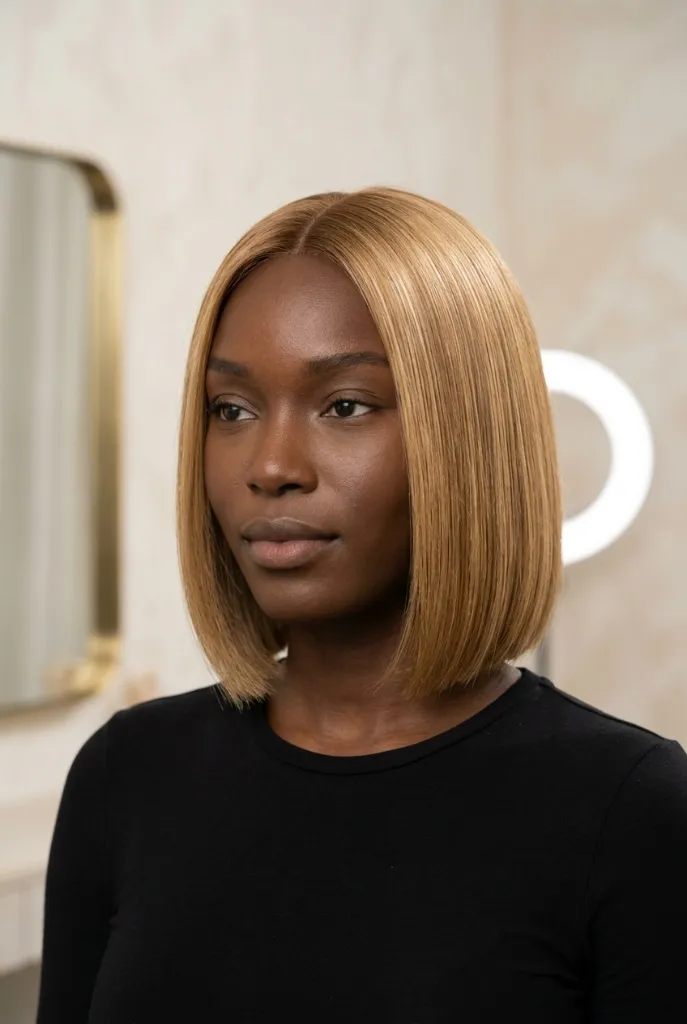
Clean lines. Warm gold. Absolute precision. This chin-length blunt bob in a Level 7–8 warm honey shade is quietly stunning — no layers, no texture, just a perfectly straight line that frames the face like an exclamation point. On deeper skin tones, this particular gold reads as luminous and rich, like someone poured molten amber over the hair and let it set. The effect is polished, modern, and unequivocally intentional.
The cut requires a stylist who understands how to create a perfectly even perimeter — no razoring, no point-cutting, just clean scissor work. The color is typically achieved through a full lightening process to Level 8 followed by a warm gold toner that sits in the honey-caramel family. The roots can be left natural for a few millimeters or blended with a root tap for seamlessness.
Trim every 4–5 weeks. At this length and with this precision, growth shows immediately and unevenly. Color every 6–8 weeks to maintain that warm gold without it pulling too yellow or too orange. Skip if you have natural wave or curl that fights a straight line — you’ll be flat-ironing daily, and that’s a lot of heat damage for a vibe. This works best on Type 1A–2A textures. Beautiful but demanding.
The Icy Blonde Precision Bob
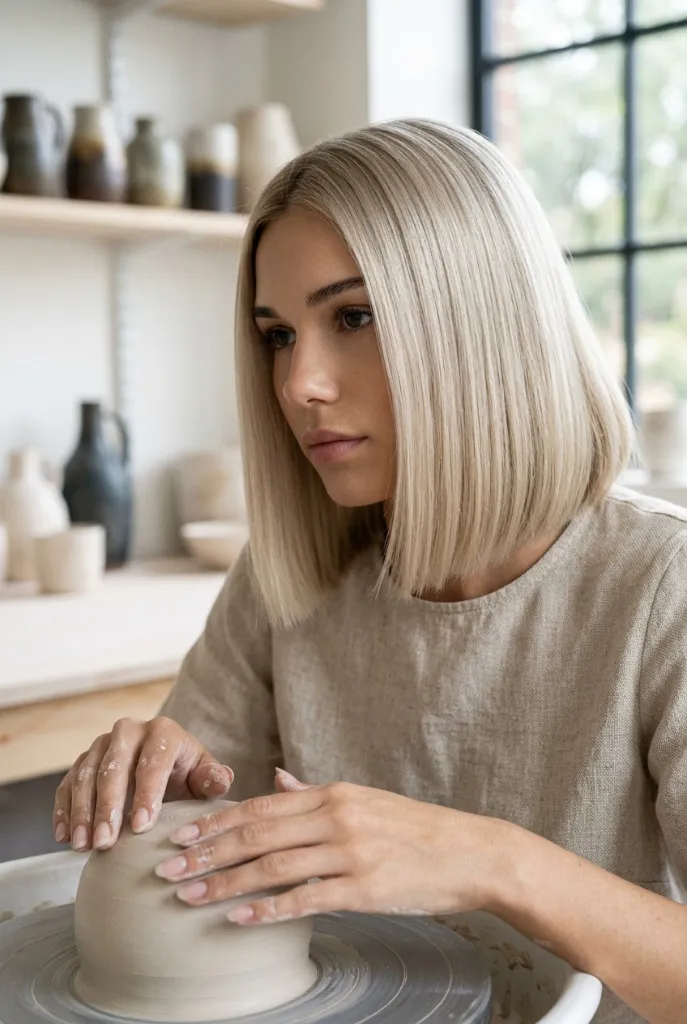
There’s something almost meditative about this shade — a Level 10 cool blonde so pale it’s nearly white, cut into a blunt bob that grazes just below the jaw. No dimension. No warmth. No noise. It’s the hair equivalent of a white gallery wall: what matters is what it showcases around it. On fair-to-medium skin with cool undertones, it looks editorial. On warmer complexions, it creates a striking, high-contrast moment.
The technique requires complete commitment to lift. We’re talking a double-process minimum for most natural levels, followed by an ice-toned glaze that eliminates any remaining gold. The bob is cut with precision at a single length, slightly angled forward toward the face. No graduation, no stacking, no texture. Just geometry.
- Cut: Chin-length blunt bob, slight forward angle, no layers
- Color: Level 10, double-process, ice/violet toner, zero warmth
- Styling: Flat iron for glass finish or air-dry for slight natural movement, 5–10 minutes
This is salon-only territory for both cut and color. Toner every 2–3 weeks in the first month, then monthly once stable. Purple shampoo every other wash. Bond treatments weekly. This is the most high-maintenance option here and also potentially the most striking. Know your limits. If you can’t keep the appointments, the yellow creep will happen, and it won’t be pretty.
The Scandinavian Effortless Layer
Wait — didn’t we see this before? Almost, but not quite. The Scandinavian effortless layer is its own creature: longer, blonder, with a naturalness that suggests this woman hasn’t seen the inside of a salon in months (she has, she just has an excellent colorist). This is Level 8–9 throughout with the faintest root shadow and long, face-framing layers that start below the chin and extend to mid-back. The movement comes from a rough blow-dry and nothing else.
The “Scandinavian” quality comes from the color balance — neither warm nor cool, sitting perfectly neutral in that Nordic blonde territory that feels genetic rather than achieved. It’s the kind of shade that works year-round but especially shines in summer when natural sun exposure deepens the root and brightens the ends organically.
Maintenance is refreshingly minimal for this level of blonde. Because the goal is “natural,” some root growth is welcome. Color every 10–12 weeks. Trim every 10 weeks. Skip heavy products — this look dies under buildup. A lightweight leave-in and air drying are your primary tools. Works on most face shapes and hair textures Type 1B–2B. Skip if you crave warmth — this is neutral-cool territory only.
The Honey-Kissed Layered Bob
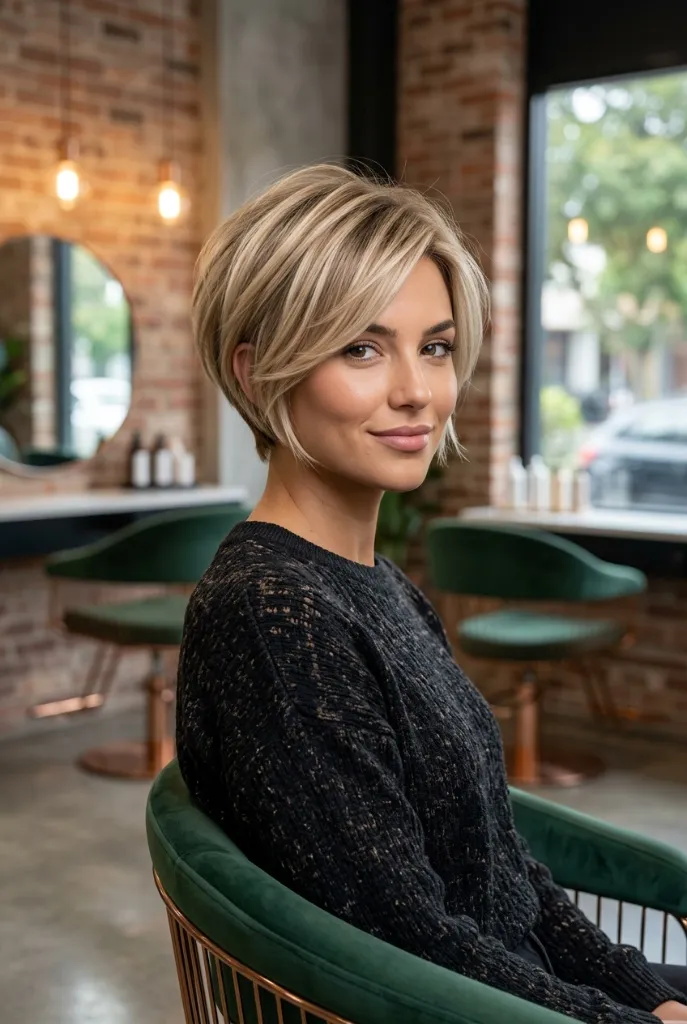
There’s a reason every woman who sits in a salon chair with a Pinterest board eventually lands on something close to this. The honey-kissed layered bob is the gateway blonde — warm enough to feel natural, short enough to feel bold, and layered just right so it doesn’t go triangle on day two. Think Level 8 base with hand-painted Level 9–10 pieces concentrated around the face, blending into a darker Level 7 nape. The cut itself is textured, point-cut through the ends with internal layers that give it that “just stepped out of a convertible” bounce. Best on oval and heart-shaped faces with warm or neutral skin tones — those with green or hazel eyes will find this shade lights them up like nothing else.
- Cut: Short layered bob, point-cut ends, slight graduation at the back for volume
- Color: Level 8 base, balayage to Level 9–10, warm honey and wheat tones, root smudge at Level 6
- Styling: Texturizing spray + round brush blowout, 10–15 minutes max
Trim every 6 weeks — non-negotiable with a bob this structured. Gloss refresh every 4–5 weeks to keep brassiness from creeping in. Skip this if you hate frequent salon visits or if your hair is extremely fine and tends to go limp without layers to support it. This cut demands consistency.
The Mediterranean Golden Blonde
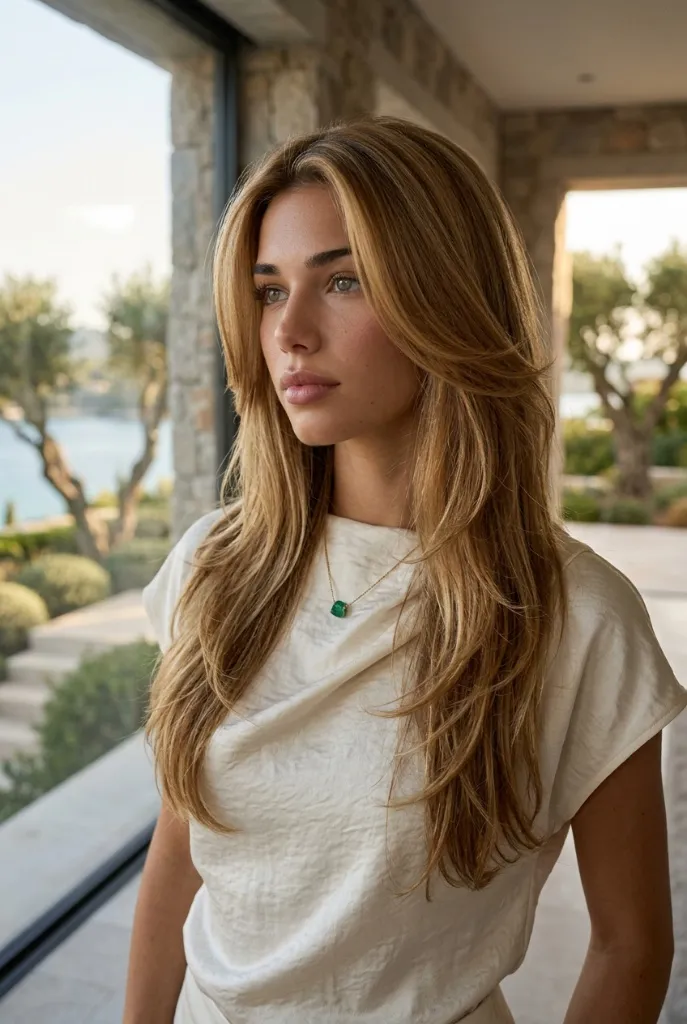
Hailey Bieber’s colorist would call this “expensive warmth.” It’s the kind of blonde that makes people ask if you just came back from three weeks on the Amalfi Coast — a rich, golden Level 7–8 with ribbons of caramel and toffee woven throughout. The length is past the collarbone, layered with soft face-framing that starts at the cheekbone and cascades into longer interior layers. This is foilayage territory, where precision meets diffusion, and the result is dimension that catches every angle of summer light.
The genius of this shade is in the undertone balance. It’s warm, yes, but grounded — not orange, not brassy, not that unfortunate boxed-dye gold. Think toasted wheat, think aged honey, think the inside of a croissant. It flatters medium and olive skin tones like almost nothing else, and it makes brown and green eyes look positively feline. The styling is intentionally undone: a diffuser, a drop of argan oil, and the confidence to let your natural wave pattern do the talking.
Maintenance is moderate. Because the tones are warm and the grow-out is designed to look intentional (that root smudge at Level 5–6 does the heavy lifting), you can push appointments to every 10–12 weeks. But you’ll want a gloss around week 6 to keep things rich rather than muddy. If your hair is very straight and fine, you’ll need a curling iron or texturizing spray to achieve that effortless movement — otherwise it can read a bit flat.
Final Thought
Writing through twenty shades of summer blonde has reinforced something I already suspected but now feel certain about: there is no singular “best” blonde. The best summer blonde hair color for 2026 is the one that accounts for your texture, your lifestyle, your maintenance tolerance, and your skin’s unique undertones. It’s the one you won’t resent at week eight when the roots are showing and the toner has faded. It’s the shade that grows out gracefully rather than demanding constant correction.
The “effortless” myth deserves to be retired — or at least heavily qualified. Even the most lived-in, beachy, air-dry blonde on this list required a skilled colorist, a thoughtful consultation, and an honest conversation about what maintenance actually looks like. The intention behind the ease is what makes it work. So bring your screenshots, yes, but also bring your questions. Ask about upkeep. Ask about grow-out. Ask what happens at week twelve. That’s where the real relationship between you and your blonde begins.
Your hair, your rules, your summer glow.