Winter is the season when hair color gets to do the heavy lifting. And for curvy women, the right shade is never just about the color itself — it is about how the cut, the placement of lightness, and the finish work together to frame the face. The ideas below all lean on the same flattering principles: vertical lines that draw the eye downward, face-framing brightness that opens up the cheekbones, and dimension that keeps one-tone color from falling flat. Whether you want a barely-there refresh or a full copper transformation, there is a winter shade here that suits your maintenance budget and your hair texture. The same idea, styled another way, appears in Trendy Haircuts for Plus Size Women 2026 Confident Chic Style Ideas.
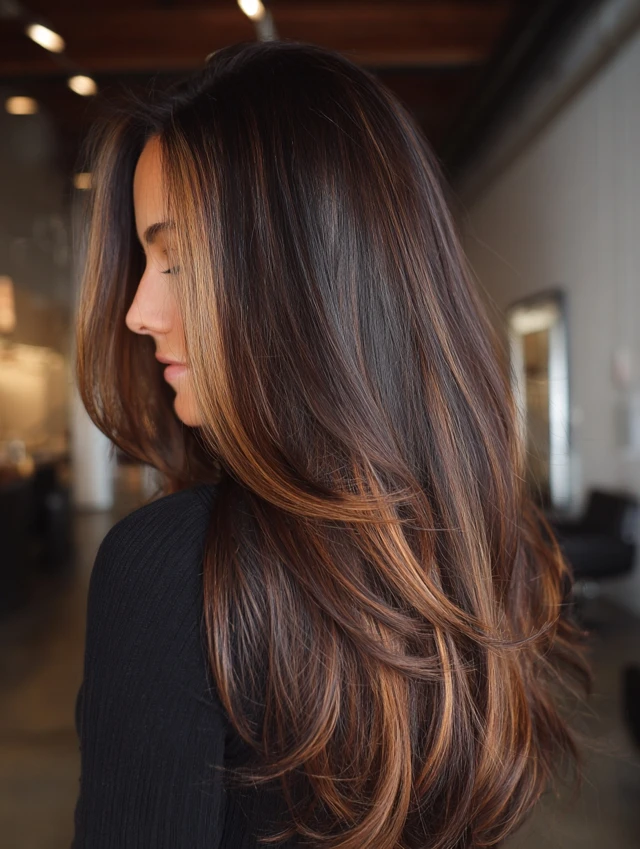
Espresso balayage with caramel face-framing
Courtesy of: yournextinspo.com
A deep espresso base keeps everything rich and winter-appropriate, while hand-painted caramel ribbons start at the cheekbones and melt toward the ends. The long, softly layered length falls well past the shoulders, and the lighter pieces around the face are what make this cut work for a fuller face — they break up the width at the cheeks and pull the eye down the length of the hair. A center or slightly off-center part keeps the framing symmetrical and slimming. For a different spin on the same theme, browse Classy Half Up Mother of the Groom Hairstyles.
Ask your colorist for a lived-in balayage with a dark natural root and caramel pieces concentrated from mid-length down, with two brighter face-framing panels. Style with a large-barrel curling iron for loose bends, or let it air-dry for a straighter, sleeker fall. Maintenance is gentle: gloss every 6 to 8 weeks to keep the caramel from turning brassy, and full balayage touch-ups can stretch to 3 or 4 months. Best for naturally dark hair that wants dimension without a full-color commitment; very thick hair may need the layers thinned so the color reads rather than disappears into bulk. We covered this territory more deeply in Winter Hair Color for Black Women.
Chocolate-cherry gloss with long layers
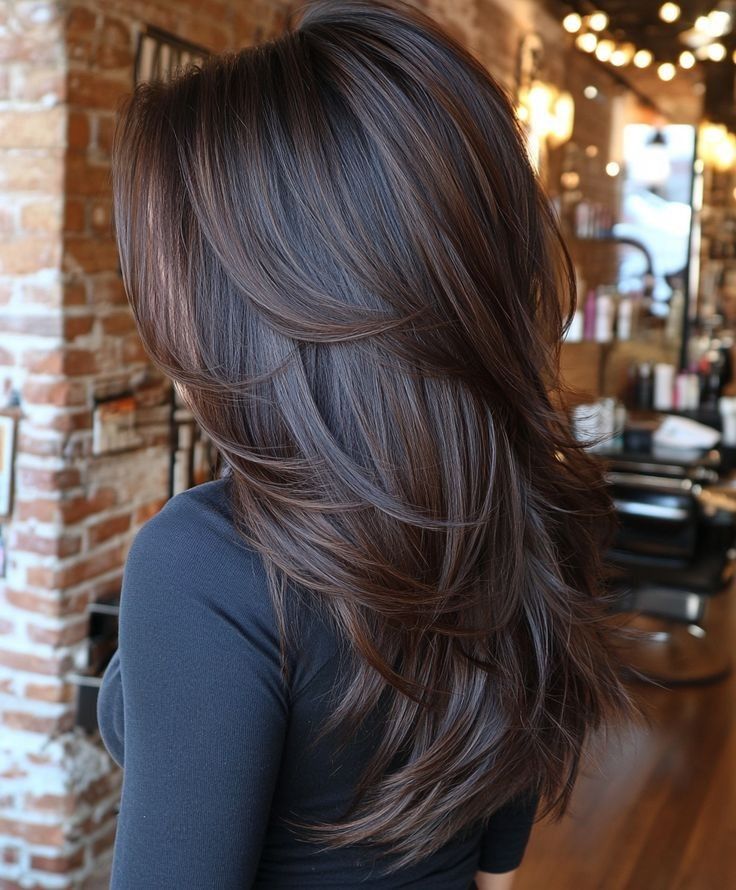
Photo credit: artofit.org
This is chocolate brown taken one step warmer: a cherry-red gloss layered over a brunette base gives the hair a stained-glass depth that looks especially rich under winter light. Long layers keep the shape moving so the length never reads heavy against a rounder face, and the reddish reflect brings warmth to the skin — flattering for fair-to-medium complexions that can look washed out in gray weather. The finish is high-shine rather than matte, which adds polish.
In the salon, request a chocolate brown base with a red-violet gloss or glaze on top rather than permanent red color; the gloss fades gracefully instead of leaving a harsh line. Red molecules wash out fastest, so plan a gloss refresh every 4 to 6 weeks and use a color-depositing conditioner between visits. It suits anyone who wants a noticeable but office-friendly change. Those with very warm, olive, or deep skin tones may prefer the cooler black-cherry version below, since red glosses can clash with golden undertones.
Cinnamon copper lob with a glossy finish

Image credit: creativebooster.net
Cinnamon copper sits right between red and brown: spicy, warm, and unmistakably winter. Worn on a lob that grazes the collarbone, it frames the jawline without cutting the face in half the way a chin-length bob can. The glossy, slightly wavy finish catches light along the bend of each wave, which adds vertical movement — the visual trick that keeps a shorter cut flattering on a fuller face. Side-swept length at the front softens a wider forehead.
This shade typically needs lightening first unless your hair is already a medium brown or lighter, so ask for a cinnamon copper gloss over pre-lightened ends for the truest tone. Style with a 1.25-inch iron, alternating curl directions for that tousled look, and finish with a shine serum. Copper fades faster than any neutral shade, so expect a tone refresh every 4 to 5 weeks. It is ideal for medium skin with warm or neutral undertones; very cool, pink complexions sometimes find copper emphasizes redness, so a strand test or a wig-try-on first is sensible.
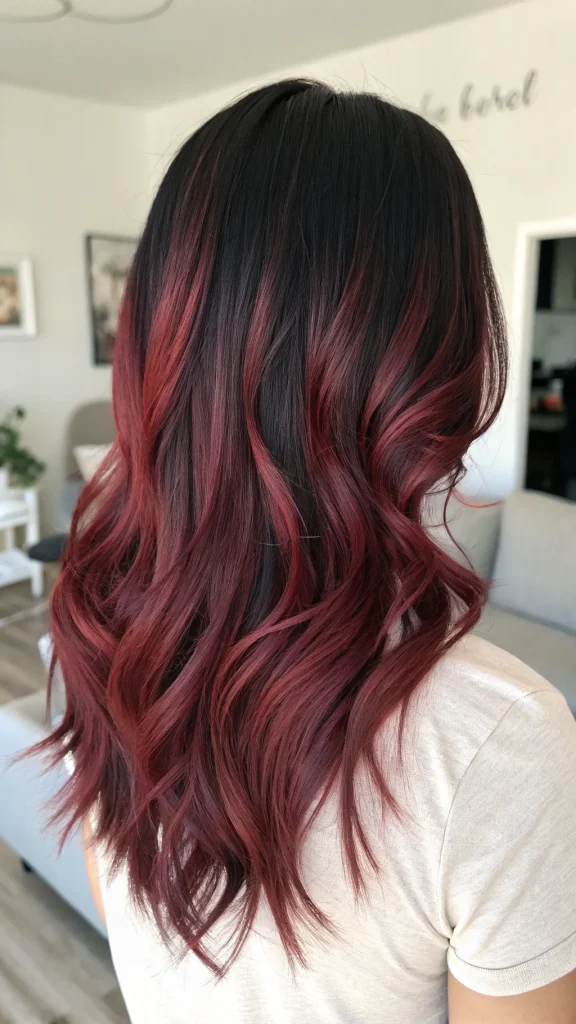
Cherry cola melt on long waves
Source: herstylepulse.com
Cherry cola is the darker, moodier sibling of cinnamon copper — a near-black brunette base with cola-red ribbons that show up in the light and recede in the shade. On long, loose waves the effect is dimensional rather than loud, and the length does the face-framing work: long hair worn forward over the shoulders narrows the visual width of the face more reliably than any contouring trick. The waves keep the heavy color from looking flat or severe. For the fuller picture, Best Cozy Hair Colors for October 2025 is worth your time.
Ask for a dark brown base with cherry-red balayage pieces melted in from the ears down, so the brightest color never sits right at the root. Style with a waver or loose curls, and a shine spray to show off the red reflect. Roots grow out softly, so salon visits can space out to 8 to 10 weeks, with a red gloss at the halfway mark. This is a strong pick for naturally dark hair that wants visible change without bleach damage; fine hair may want fewer, chunkier ribbons so the color has something to cling to.
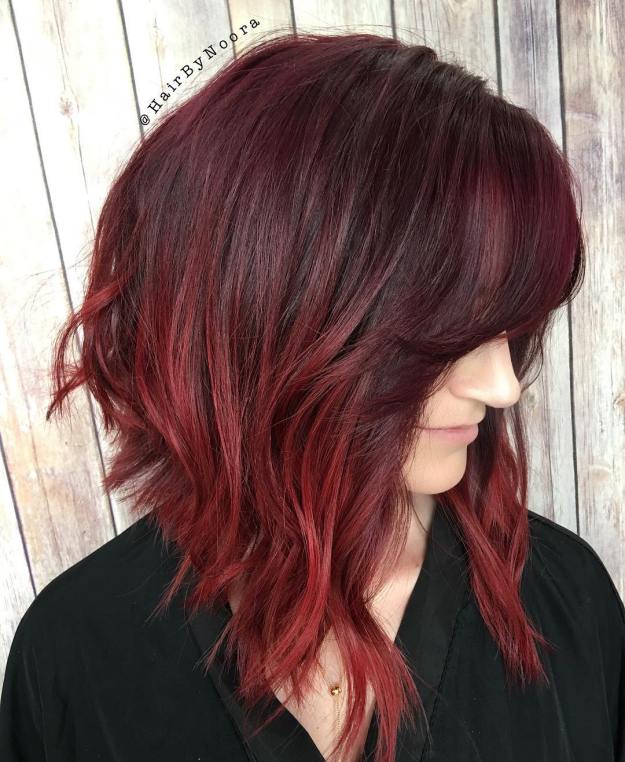
Burgundy balayage on a lob
Via hairs.london
Burgundy reads as wine-dark indoors and glows violet-red in sunlight, which makes it one of the most dynamic winter colors. On a jagged, textured lob the choppy ends prevent the dark shade from looking heavy, and keeping the length at or just below the collarbone avoids the face-widening effect of a cut that ends right at the chin. The balayage placement — darker at the root, burgundy through the ends — adds length to the silhouette.
Request a dark base with burgundy balayage and a few brighter pieces around the face for lift. The textured cut is key: point-cut ends and internal layers stop the lob from poufing outward at the jaw. Style with a texturizing spray and a quick bend through the mid-lengths. Burgundy holds better than true red but still fades, so a color-depositing mask every other week and a gloss at 6 weeks keeps it vivid. Suits cool and neutral skin tones especially well; very warm complexions may find the violet cast fights their undertone.
Cascading mahogany layers

Courtesy of: creativebooster.net
Mahogany is brown with a red soul — deep, glossy, and warm without tipping into orange. Worn in long cascading layers, it is one of the most forgiving shapes for a fuller face: the layers start below the chin so they never add width where you don’t want it, and the continuous fall of hair creates a long vertical line from crown to ends. The red-brown reflect flatters warm and medium skin tones and looks expensive in winter’s low light.
Ask for an all-over mahogany demi-permanent color with long, blended layers and face-framing pieces that begin at the collarbone. Blow-dry with a round brush flipping the ends slightly under, or wear it straight for maximum length. Demi-permanent color fades in 6 to 8 weeks, so plan refreshes seasonally; the red tones will soften to a warm brown, which is a graceful fade rather than a harsh one. Best for medium-to-thick hair that can carry the length; very fine hair may look stringy at this length and could try the mahogany on a lob instead. Related reading: Best Blonde Hair Colors for Spring 2026 Bright Highlights Soft Seasonal Shine takes the same concept further.
Honey balayage on dark brown
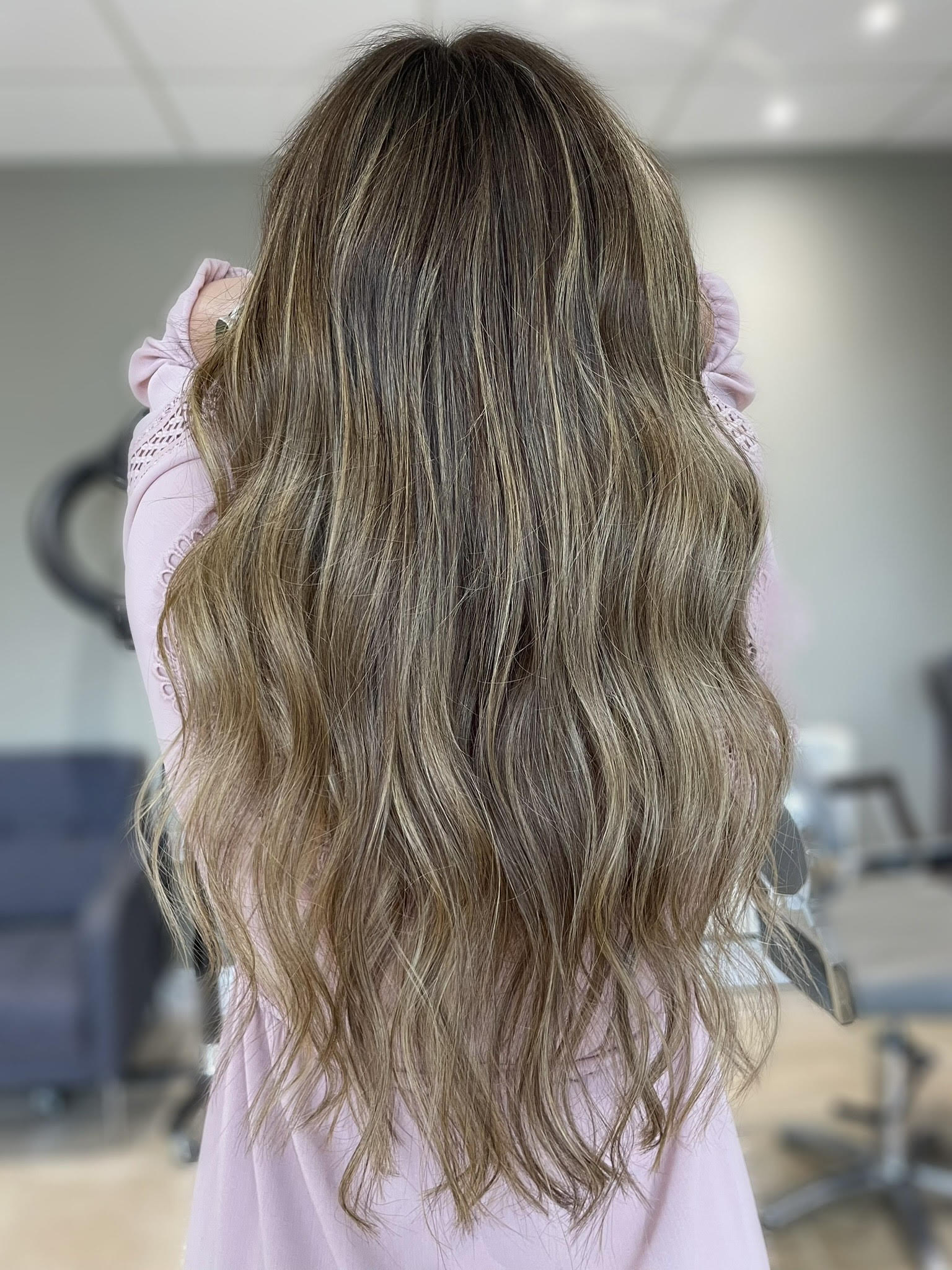
Photo credit: the-blonde-chronicles.com
Honey balayage is the crowd-pleaser of winter blonding: warm golden ribbons painted through a dark brown base that brighten the whole face without the upkeep of all-over blonde. The contrast between the dark root and the honey ends adds perceived length, and placing the brightest pieces around the face draws attention to the eyes and cheekbones. It works beautifully on warm and olive skin tones, echoing their golden undertones.
Ask for a lived-in balayage with honey-toned pieces, keeping the root natural for soft grow-out. A purple or blue shampoo is not needed here — instead use a sulfate-free routine and a gloss at 8 weeks to keep the honey from going brassy. Full appointments can stretch to 3 or 4 months, which makes this one of the most budget-friendly blondes. The trade-off: honey can pull brassy on very dark or previously colored hair, so your colorist may need two sessions to get the tone right the first time.
Icy ash blonde with a shadow root
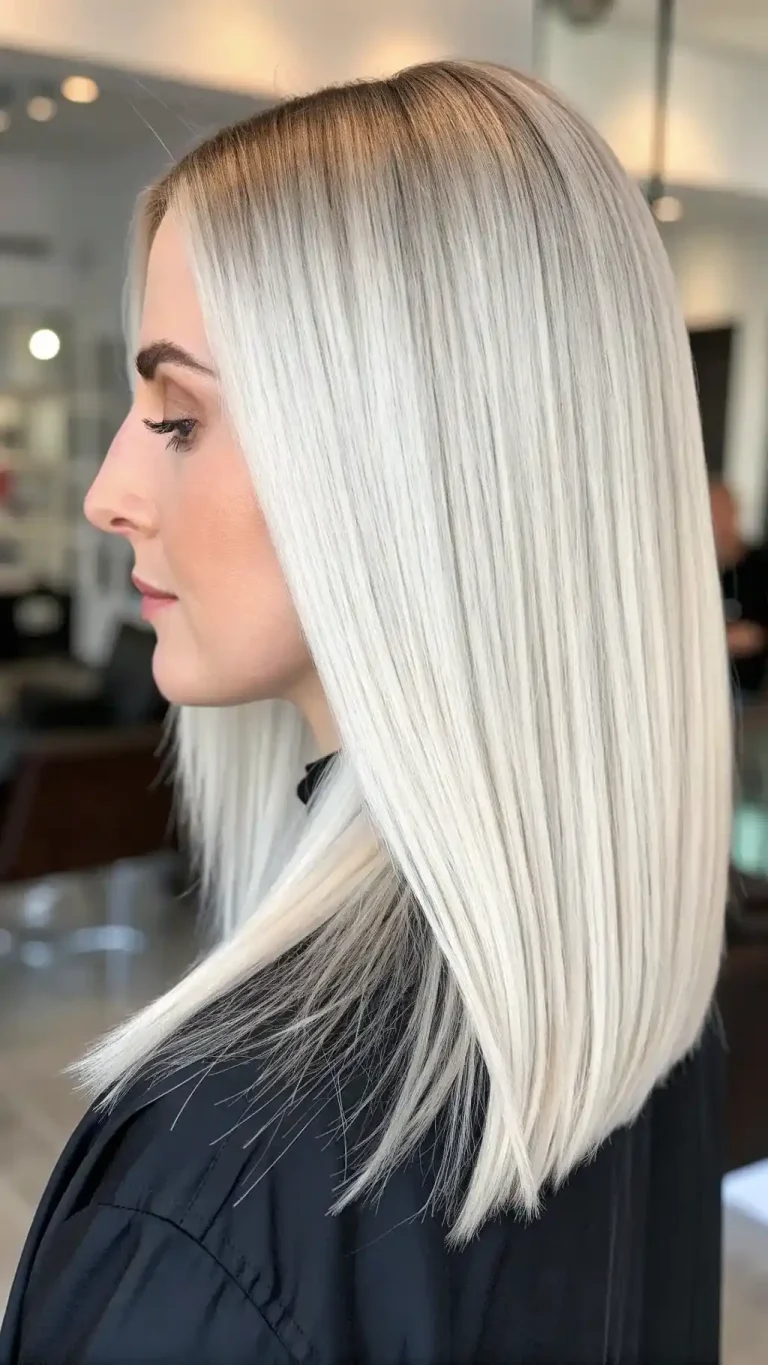
Image credit: herstylepulse.com
Icy ash blonde is winter’s signature cool tone — silvery, crisp, and striking against dark winter clothing. The shadow root is what makes it wearable and face-friendly: the dark depth at the crown adds height and contour at the top of the head, while the pale lengths draw the eye downward in one long line. Worn straight and long, it is a dramatic, elongating combination for rounder faces.
This is a high-commitment color. Ask for full lightening to a level 9 or 10 with an ash toner and a smudged dark root of 2 to 3 inches. At home, purple shampoo once a week keeps the ice from yellowing, and bond-building treatments are close to mandatory after bleaching. Root touch-ups land every 6 to 8 weeks. It flatters cool and fair skin tones most; on warm or deep skin the icy tone can look stark, in which case the golden blonde idea below is the safer blonde.
Golden blonde balayage with long layers
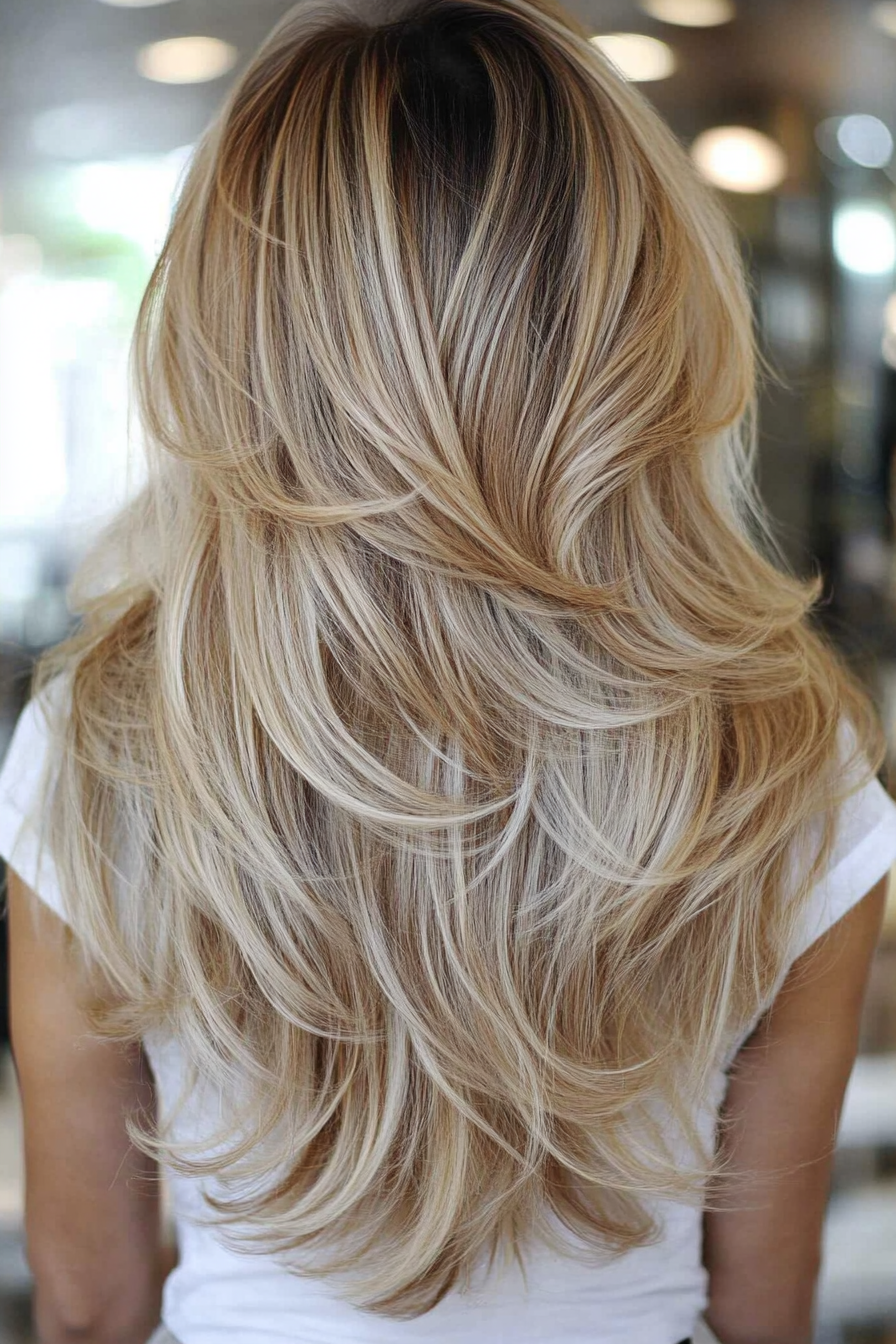
Source: artofit.org
Golden blonde balayage is the warm-weather blonde adapted for winter: buttery ribbons through a darker base that keep the face lit even in gray daylight. The long layers are doing quiet work here — they distribute the blonde so it never pools in one heavy band, and the length past the shoulders keeps the overall line long and lean. A center part with the blonde framing both sides of the face is the most slimming way to wear it.
Ask for a golden (not ashy, not platinum) balayage with a soft root melt so regrowth is invisible. Style with loose waves to show the dimension, or straighten for a sleeker take. Maintenance sits in the easy-middle: gloss at 8 weeks, full balayage at 3 to 4 months. Best for warm, medium, and olive complexions. The honest trade-off is warmth creep — golden blondes can turn brassy in hard water, so a shower filter or chelating shampoo is a worthwhile investment. We break down a similar look in Stunning Fall Hair Colors for Brunettes.
Platinum with dark roots on a bob
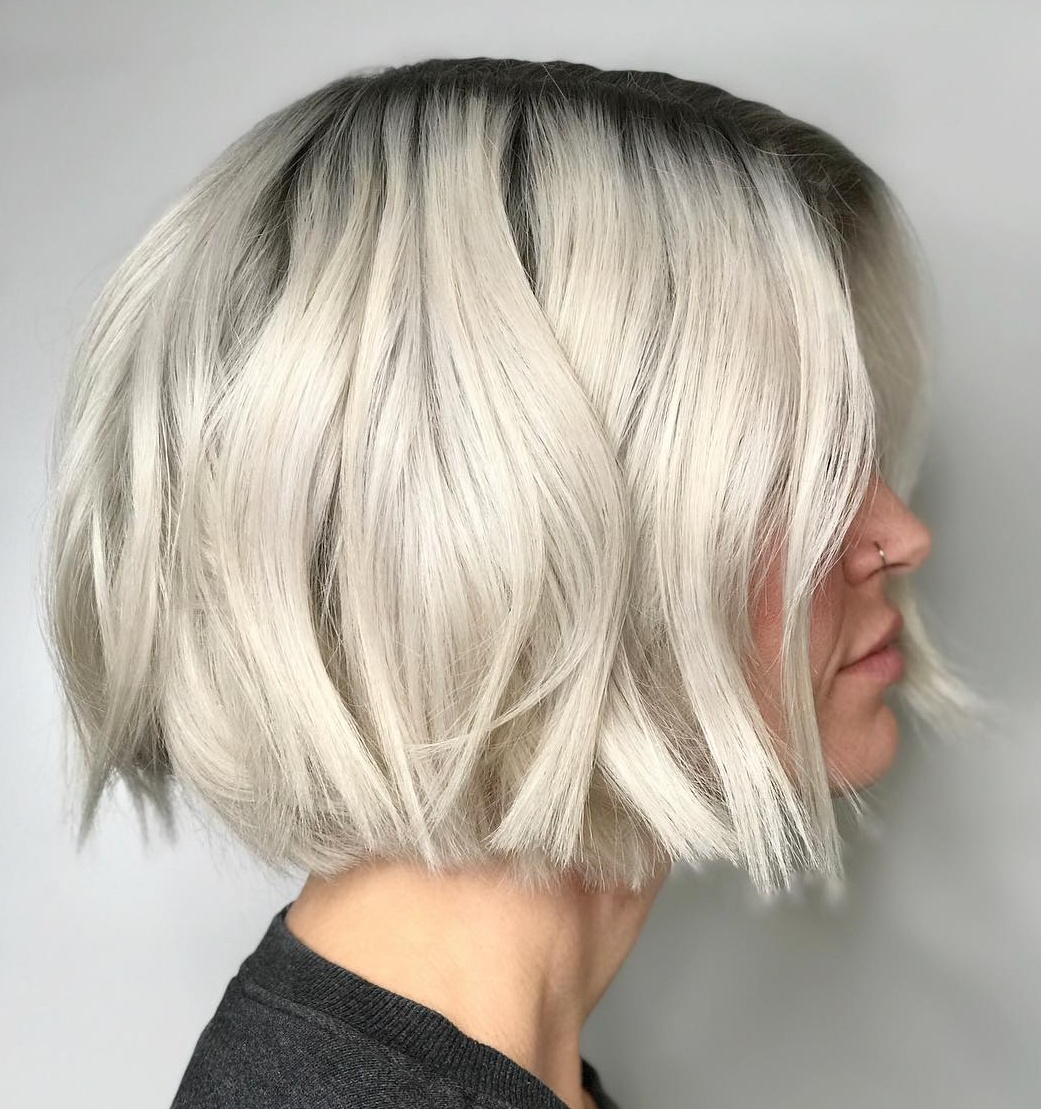
Via hadviser.com
A platinum bob with dark roots is the boldest short option on this list, and the dark root is doing structural work: it adds visual height at the crown and breaks up the roundness that an all-one-length pale bob can create. Keeping the bob at jaw-skimming length or slightly longer, with the ends tucked or flipped, avoids the bowl effect. This is a statement cut-color combo that reads confident rather than cute.
Request a platinum toner over fully lightened hair with a deliberately smudged natural root of 1 to 2 inches. Style sleek and straight or with a slight bend at the ends. This is the highest-maintenance blonde here: purple shampoo weekly, toning gloss every 4 to 6 weeks, root lightening every 6 to 8. It suits cool fair skin best and fine-to-medium hair that lifts cleanly. Thick, dark, or previously colored hair faces a long, expensive first appointment — budget for a full day in the chair.
Rose gold tint on medium waves
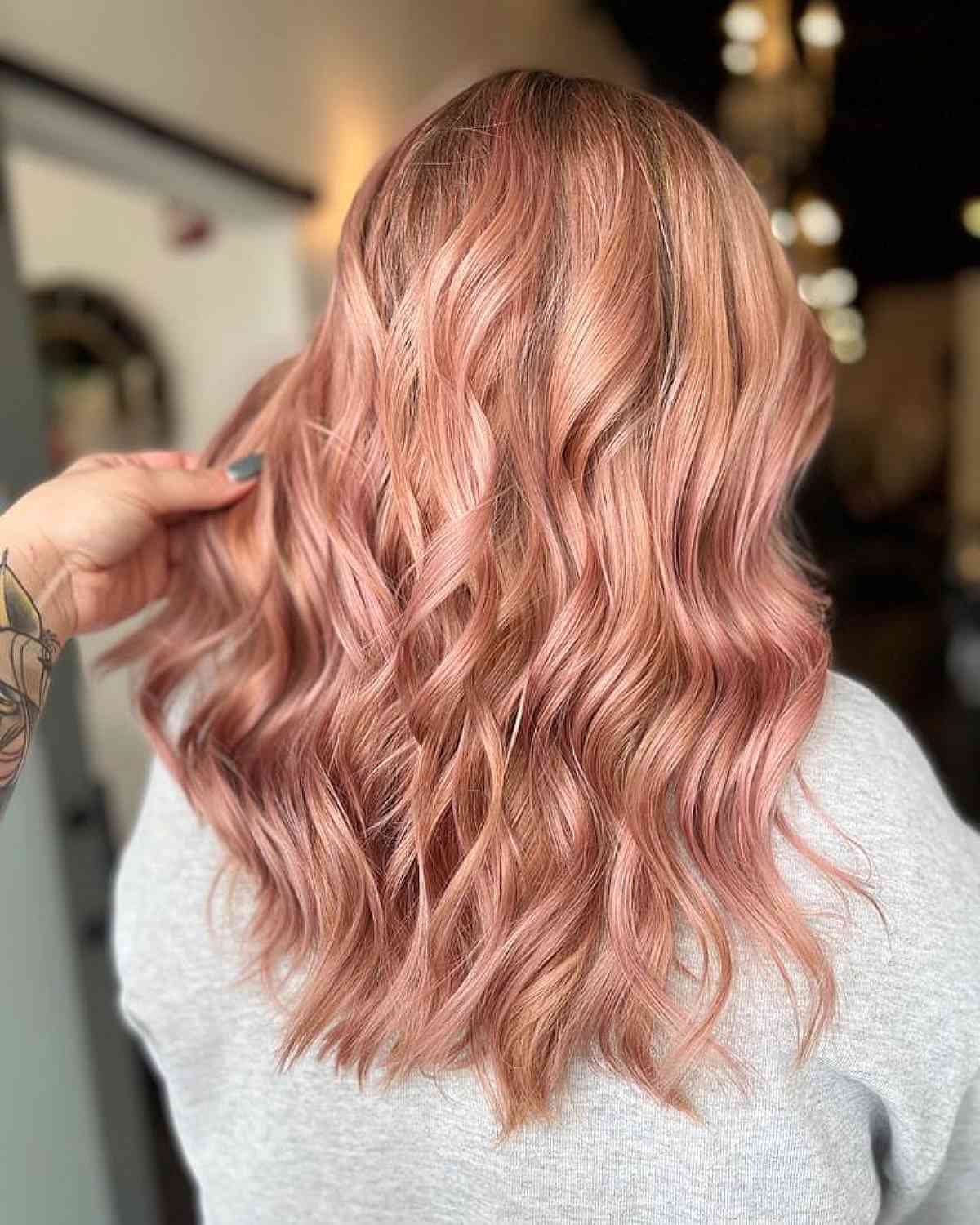
Courtesy of: chicessences.com
Rose gold is pink with manners — a blush-toned tint that reads romantic rather than punk, and it is surprisingly flattering on fuller faces because the soft pink reflect warms the skin and the medium-length waves keep everything in motion. The length, falling between chin and shoulder, is balanced by the waves’ vertical rhythm; there is no blunt horizontal line to widen the face. It is a playful winter pick for anyone bored of browns.
Ask for a rose gold gloss over pre-lightened or naturally light hair; on dark hair it will barely show without lifting first. Style with a waver for soft S-bends and a light-hold spray. The tint fades within 4 to 6 weeks, which is either a feature (low commitment) or a frustration (constant upkeep) depending on your view. Best for fair-to-light skin with cool or neutral undertones; deeper skin tones can wear it as peekaboo pieces rather than all-over for a more harmonious result.
Mulled wine red
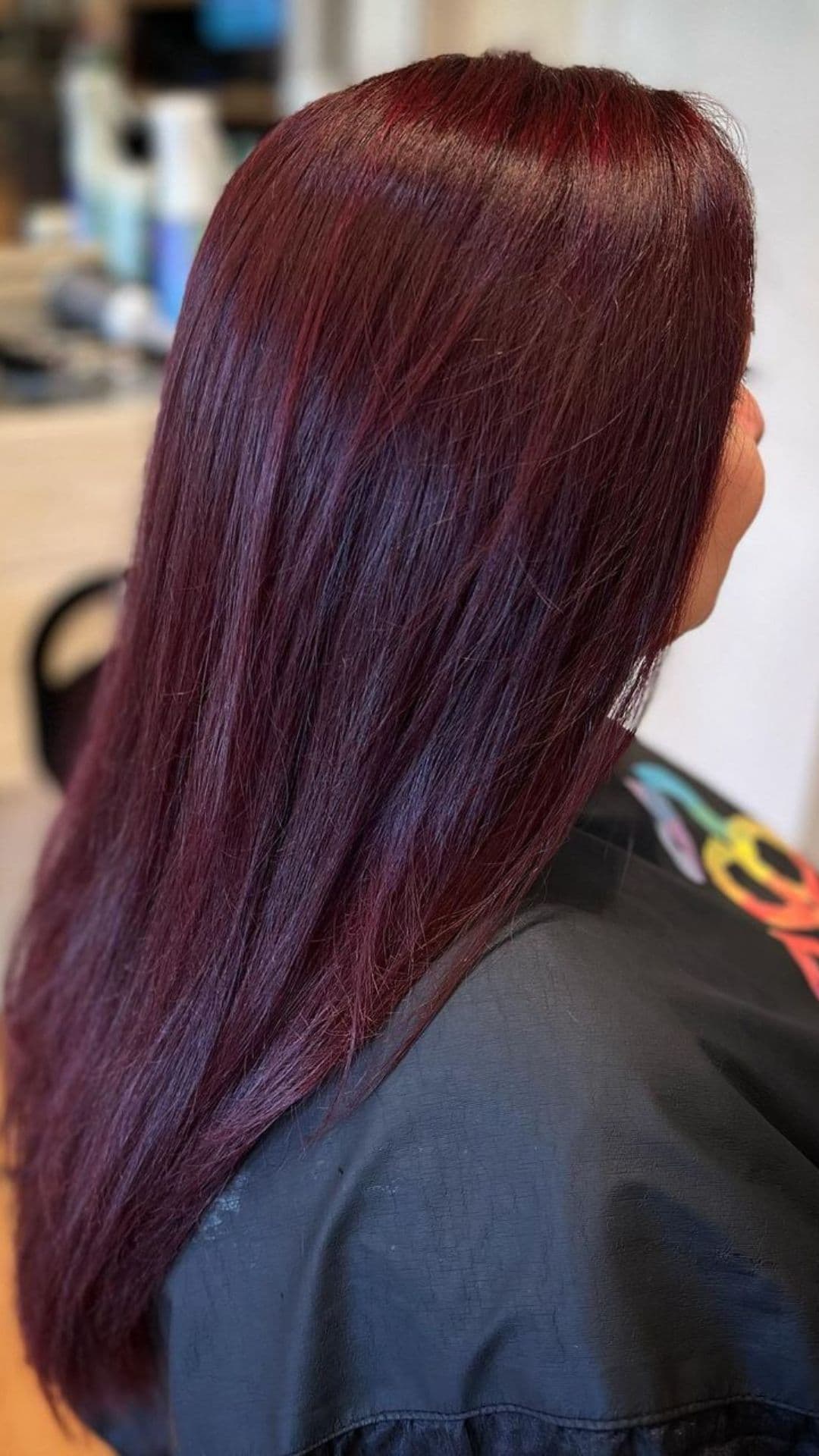
Photo credit: lookosm.com
Mulled wine is red at its most wintery: deep, spiced, and dark enough to read as brunette indoors before flashing red in the light. That darkness is an advantage for rounder faces — dark colors recede visually, so the hair acts like a slimming frame, while the red undertone keeps it from looking flat or harsh. Worn long with soft movement, it is quietly dramatic. Our Fall Hairstyles for Women 40 rounds up more takes on this exact idea.
Ask for a deep red-violet all-over color or a wine-toned gloss over dark brown. Because it is close to your natural depth if you are brunette, grow-out is forgiving; gloss refreshes every 5 to 7 weeks keep the wine tone from browning out. Style however you like — the color carries the look. It flatters fair-to-medium skin with cool or neutral undertones especially. Very warm complexions may prefer the mahogany or cinnamon options, which share the warmth rather than contrasting with it.
Cowboy copper on long waves
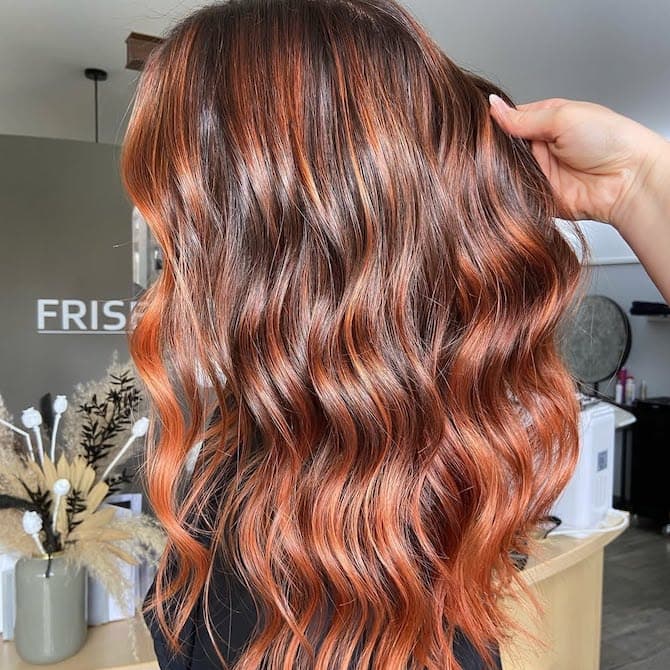
Image credit: au.wella.professionalstore.com
Cowboy copper — a lived-in blend of auburn, bronze, and golden brown — is 2027’s defining red, and it earns its hype. The multi-tonal blend gives the hair enormous depth, and on long waves the color shifts with every movement, which keeps the eye traveling down the length rather than settling on width. The warm tones light up the face, making this one of the most complexion-flattering reds for medium and warm skin.
Ask your colorist for a dimensional copper: a coppery brown base with brighter copper balayage pieces and a few golden ribbons, finished with a gloss. Style with loose, brushed-out waves for that expensive lived-in texture. Copper is the fastest-fading family, so plan tone refreshes every 4 weeks and wash in cool water with sulfate-free shampoo. Ideal for warm and neutral undertones; if your skin is very cool or pink, ask for the blend to lean more auburn than orange.
Auburn ombré on medium length

Source: fashionblogblogger.com
An auburn ombré keeps the roots in your natural dark territory and lets the ends bloom into warm reddish-brown — a gradient that is inherently slimming because the eye follows the color downward. Medium length, falling between the collarbone and the bust, is a sweet spot for fuller faces: long enough to elongate, short enough to hold volume at the ends rather than dragging flat. The auburn ends add warmth right where winter complexions need it.
Request a soft ombré (not a harsh two-tone line) with the transition starting at the cheekbones or below. Scrunch in a curl cream for texture or blow out smooth for polish. Grow-out is nearly invisible since the roots are natural, so salon visits can space to 3 months, with a gloss at the midpoint to keep the auburn rich. Suits most skin tones because the dark root anchors it. The main caution: ombré ends take the most damage, so ends need regular trims and deep conditioning to avoid a fried look. A companion piece, Stunning Hair Colors That Make Green Eyes, explores the same palette.
Toffee highlights on a brunette lob
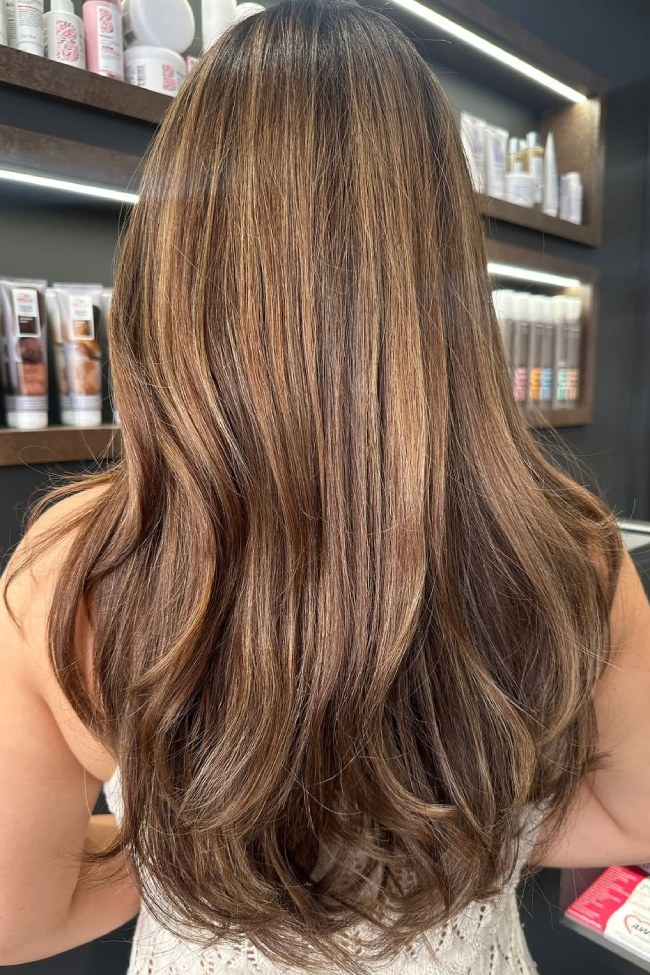
Via fabmood.com
Toffee highlights are caramel’s deeper, glossier cousin — golden-brown ribbons that read as lit-from-within rather than stripey. On a lob, they add the dimension a one-length cut needs to avoid looking like a helmet, and the lighter pieces through the mid-lengths and ends create vertical streaks that lengthen the face. The glossy finish is doing real work here: shine reflects light along the hair’s length, emphasizing the vertical line.
Ask for partial or full highlights in a toffee tone (level 7–8 gold-brown) with a root shadow so the regrowth melts in. Style straight to show the shine, or with a slight bend at the ends. Highlights need a refresh every 8 to 10 weeks; a gloss at 4 weeks keeps the toffee from dulling. This is a safe, flattering entry point to lighter color for brunettes. Very dark or coarse hair may need the highlights lifted in two passes to reach true toffee without brassiness.
Black cherry on sleek lengths
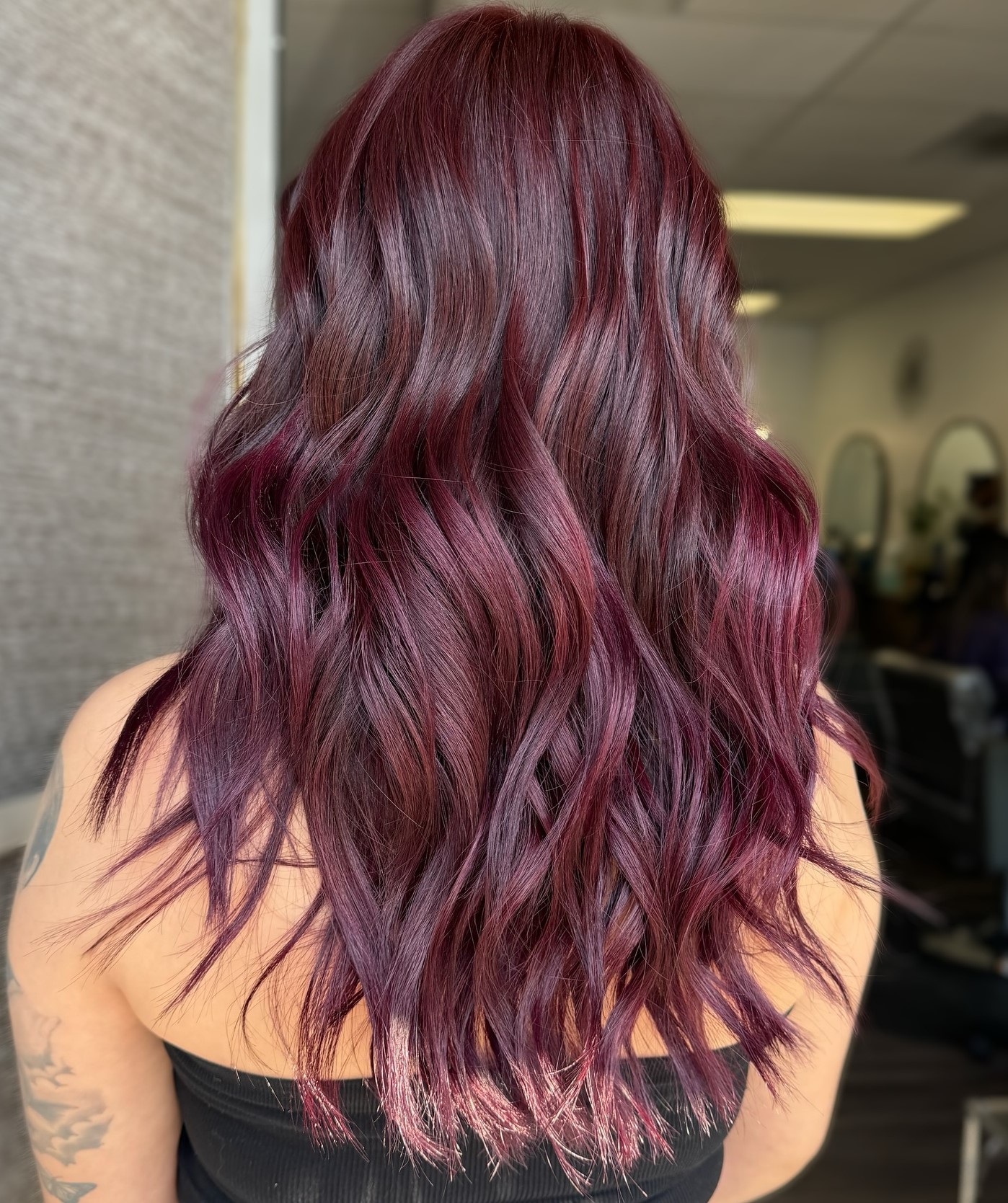
Courtesy of: therighthairstyles.com
Black cherry is nearly black with a hidden red-violet heart — the color looks ink-dark indoors and reveals its cherry depth in sunlight. On sleek, straight lengths it is strikingly polished, and the darkness is genuinely slimming around the face, acting like a soft-focus frame. Wearing it pin-straight and long maximizes the elongating effect; tucking one side behind the ear opens up the cheekbone.
Ask for a level 2–3 base with a red-violet reflect, either as permanent color or a dark gloss over your natural shade. Straighten with a flat iron and finish with a shine serum — this color lives or dies by its gloss. The red reflect fades in 5 to 7 weeks, so a color-depositing conditioner extends the life. It suits cool and neutral undertones and anyone who wants drama without bleach. Fine hair should keep the lengths from getting too long and limp; a few long layers preserve movement.
Bronde blend with soft layers

Photo credit: therighthairstyles.com
Bronde — the true middle ground between brown and blonde — is the most universally flattering color on this list because it borrows brightness from blonde and depth from brunette. On thick, long hair with soft layers, the blend keeps heavy hair from looking like a single dark mass; the lighter ribbons break up the bulk visually, which matters when density adds width around the face. The effect is sunlit even in December. The concept gets a fuller treatment in Homecoming Hairstyles for Black Women.
Ask for a bronde melt: dark blonde to light brown balayage with a natural root, tailored to sit halfway between your base and your lightest piece. Style with big soft waves to show the blend, or straight for a sleeker read. Maintenance is easy — gloss at 8 weeks, full service at 3 to 4 months. It suits nearly every skin tone because the colorist can tilt it warm or cool. The only real downside: on very dark hair, reaching bronde takes significant lifting, so expect a longer first session and diligent aftercare.
Mushroom brown at shoulder length
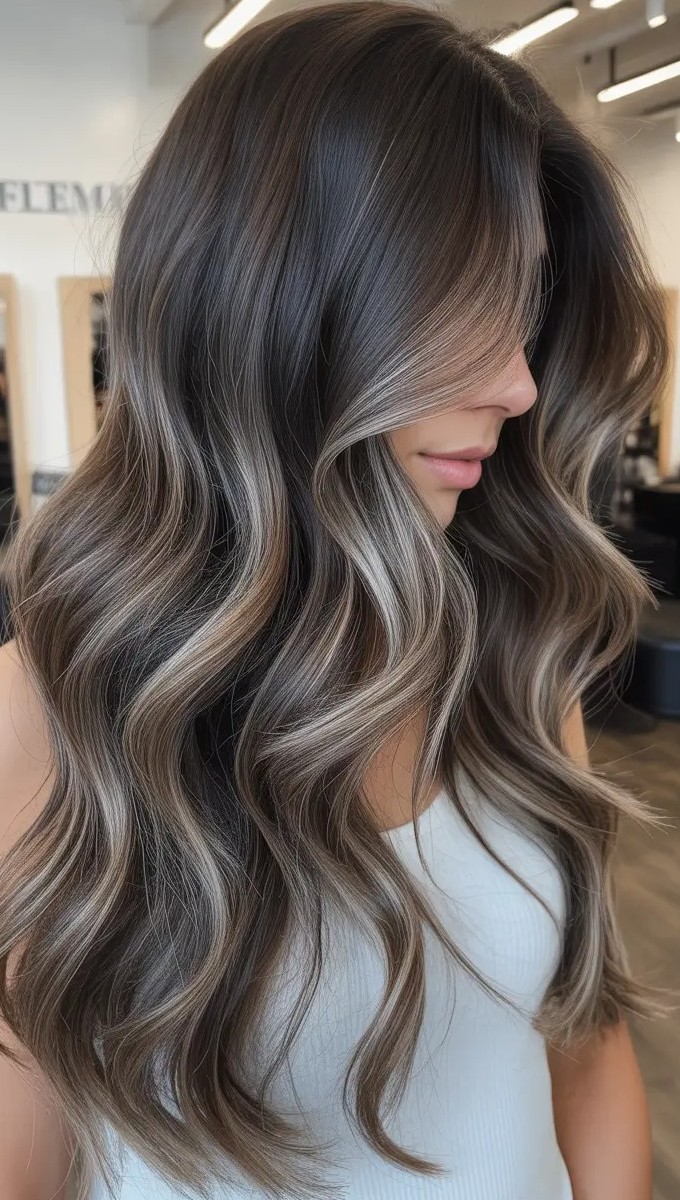
Image credit: hairstunner.com
Mushroom brown is winter’s coolest brunette: an ashy, taupe-toned brown with beige and gray reflects that looks modern and understated. At shoulder length with a center part, it frames the face in a clean vertical curtain — and the cool tone recedes visually, which is flattering on fuller faces the way dark clothing is. It is the anti-brass choice for anyone whose hair always pulls warm.
Ask for an ash-brown base with beige lowlights and a cool gloss; the mushroom tone is all about the toner, so bring reference photos. Style straight or with a slight bend — the color’s subtlety shows best on smooth hair. Cool toners fade fastest of all, so expect a gloss refresh every 4 to 5 weeks and avoid clarifying shampoos. Best for cool and neutral skin tones. Warm complexions can find mushroom brown draining, in which case the mocha or toffee options keep the warmth the skin needs.
Warm chestnut with face-framing fringe
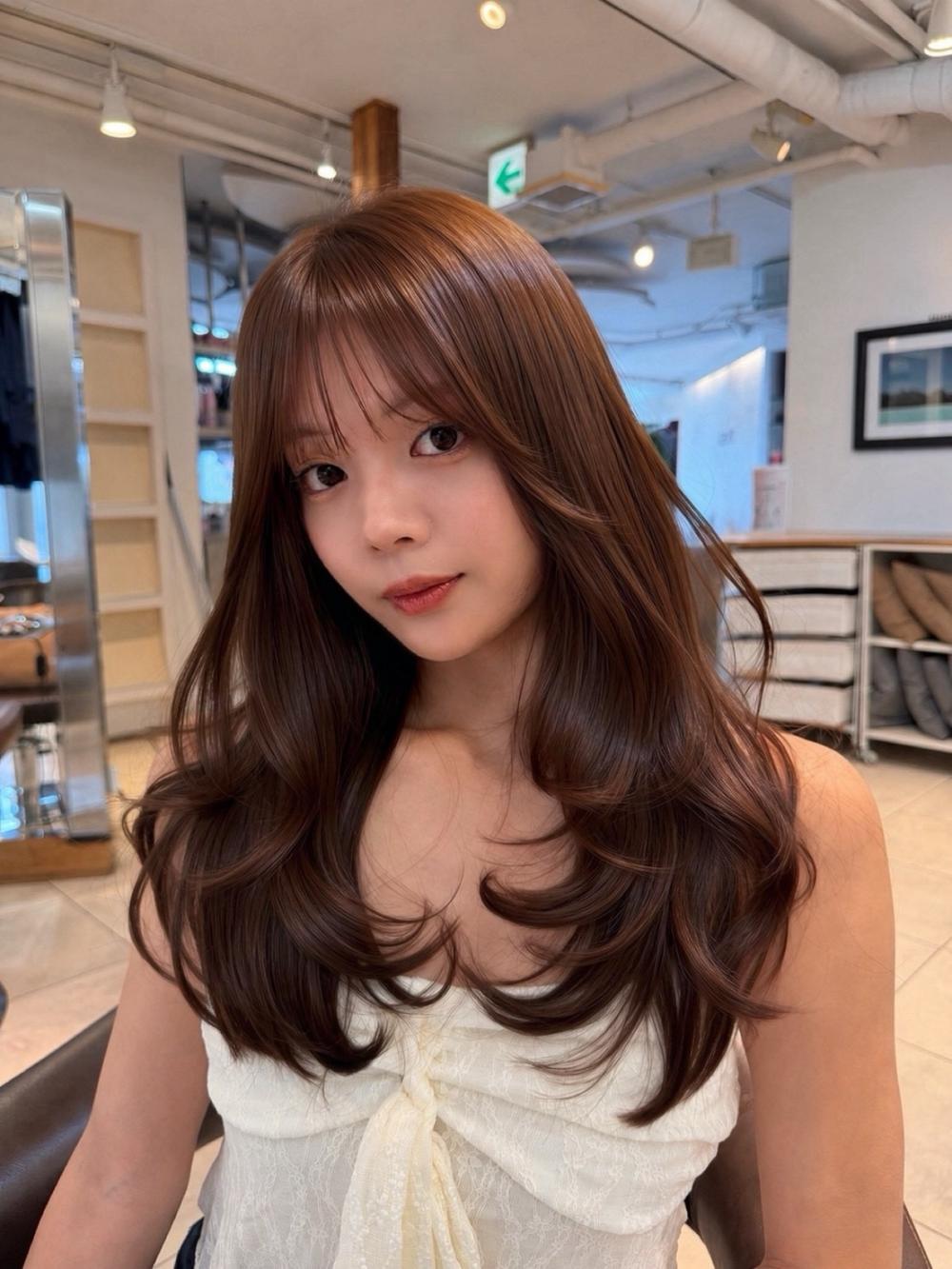
Source: beach-glc.jp
Warm chestnut is the classic reddish-brown that never really leaves the winter trends, and paired with long layers plus a soft face-framing fringe it becomes a genuinely face-flattering package. The fringe pieces sweep outward from the center, opening up the forehead without the widening effect of a blunt straight-across bang, and the long layers keep the silhouette narrow through the cheeks. The warm tone brings life to winter-pale skin.
Ask for a chestnut all-over color or gloss with long layers and curtain-style fringe that starts at the cheekbones. Blow-dry the fringe with a small round brush, sweeping it to the sides. All-over color needs root touch-ups every 5 to 6 weeks; a gloss-only version on your natural base stretches further. It suits warm and neutral skin tones beautifully. If your forehead is narrow, keep the fringe wispy rather than heavy so it opens rather than closes the face.
Espresso with a copper money piece
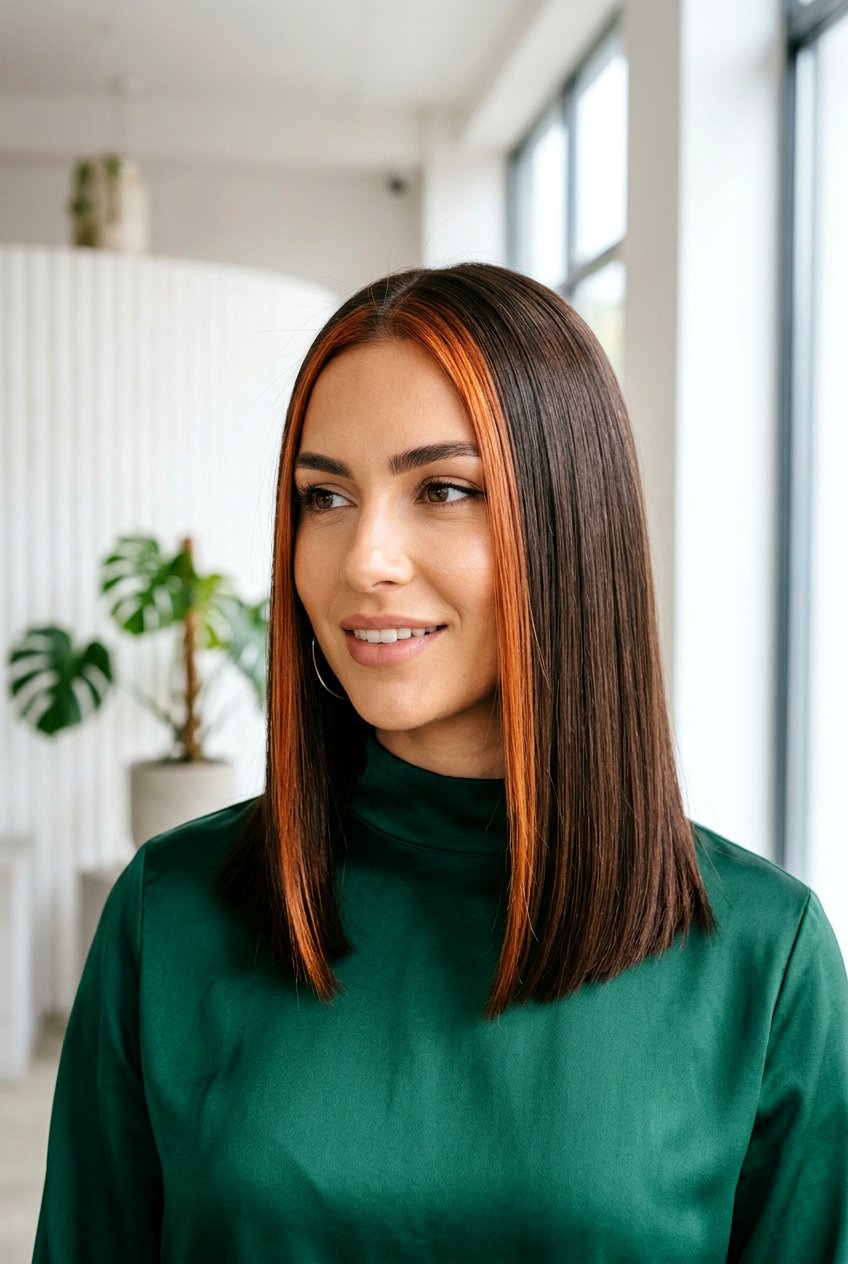
Via lovelyish.com
The money piece — two bright face-framing panels — is the highest-impact, lowest-commitment color move in this roundup. Against an espresso base, copper panels light up the eyes and cheekbones instantly, and because the brightness sits vertically along the face, it draws the eye down rather than across. Worn straight, the contrast is graphic and modern; the dark lengths behind it keep the face framed in slimming shadow. The same theme, explored from another angle, is in Blonde Winter Hair Color Ideas.
Ask for a copper money piece: the two front sections lightened and toned to a bright copper, blended into the dark base. Style straight or with a slight bend. The panels grow out softly but the copper fades fast, so a tone refresh every 4 to 6 weeks keeps them bright; the rest of the hair can go months untouched. Ideal for brunettes who want change without coloring all their hair. The panels need lightening, so previously colored or fragile front pieces should be assessed by your colorist first.
Deep merlot on long curls
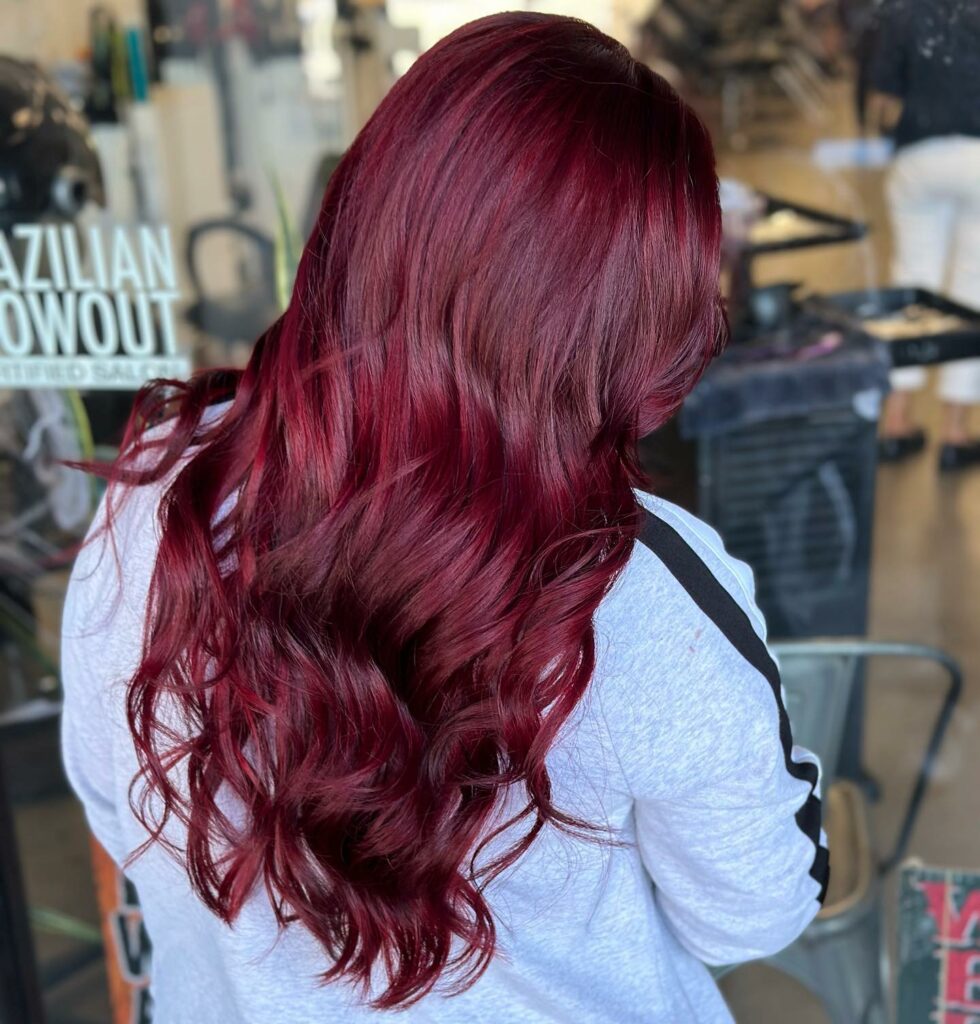
Courtesy of: momooze.com
Merlot is red wine in hair form — deep, blue-based red that looks luxurious on long hair. Curls are its best partner: each curl catches the light differently, so the color reads as dimensional rather than flat, and the long curly silhouette keeps the volume below the chin where it elongates rather than widens. For naturally curly or wavy textures, this is a color that works with the hair instead of fighting it.
Ask for a merlot all-over color or a red-violet gloss, and have your stylist cut the layers dry or on your natural curl pattern so the shape holds. Style with curl cream and a diffuser. Red fades quickly — plan gloss refreshes every 4 to 6 weeks and wash as infrequently as your scalp allows. It flatters cool and neutral undertones most. Curly hair is naturally drier, and red color adds chemical stress, so deep conditioning becomes non-negotiable rather than optional.
Sandy beige balayage
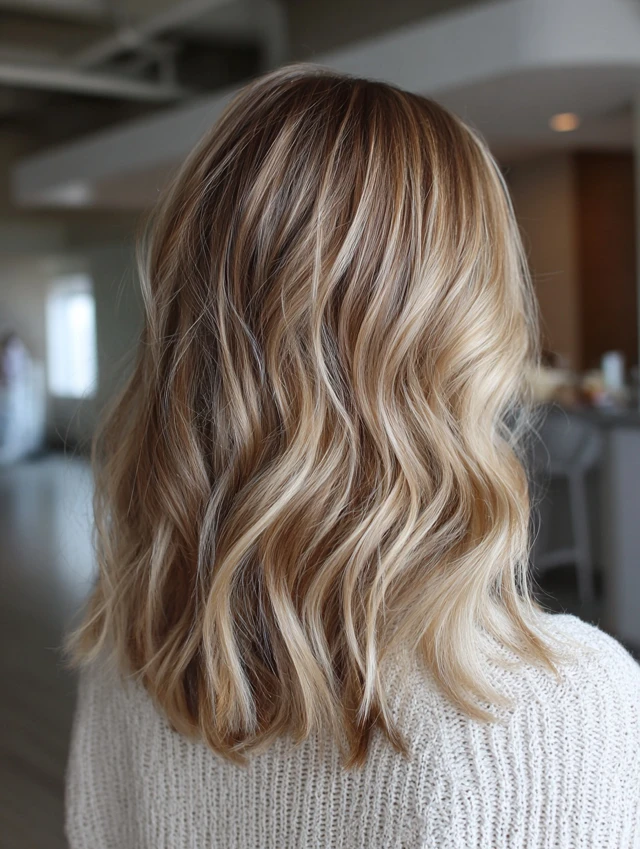
Photo credit: yournextinspo.com
Sandy beige is blonde at its most natural-looking — neither golden nor ashy, just sun-faded and soft. As a balayage it adds lightness without the maintenance of a full blonde, and the neutral tone suits a wide range of complexions without pulling brassy or stark. The painted placement means the brightest pieces can be kept away from the widest part of the face, with softer brightness at the ends for length.
Ask for a beige-blonde balayage with a root melt in your natural shade, keeping the face-framing pieces subtle rather than bold. Style with loose waves for maximum dimension. Maintenance is forgiving: gloss at 8 to 10 weeks, full balayage at 3 to 4 months. Best for neutral skin tones and anyone who wants blonde without the ice-queen upkeep. The trade-off is subtlety — if you want visible drama, the golden or platinum blondes above deliver more contrast. This pairs naturally with the ideas in Top 15 Fall 2025 Hairstyles Hair Colors Ideas.
Mocha with face-framing highlights
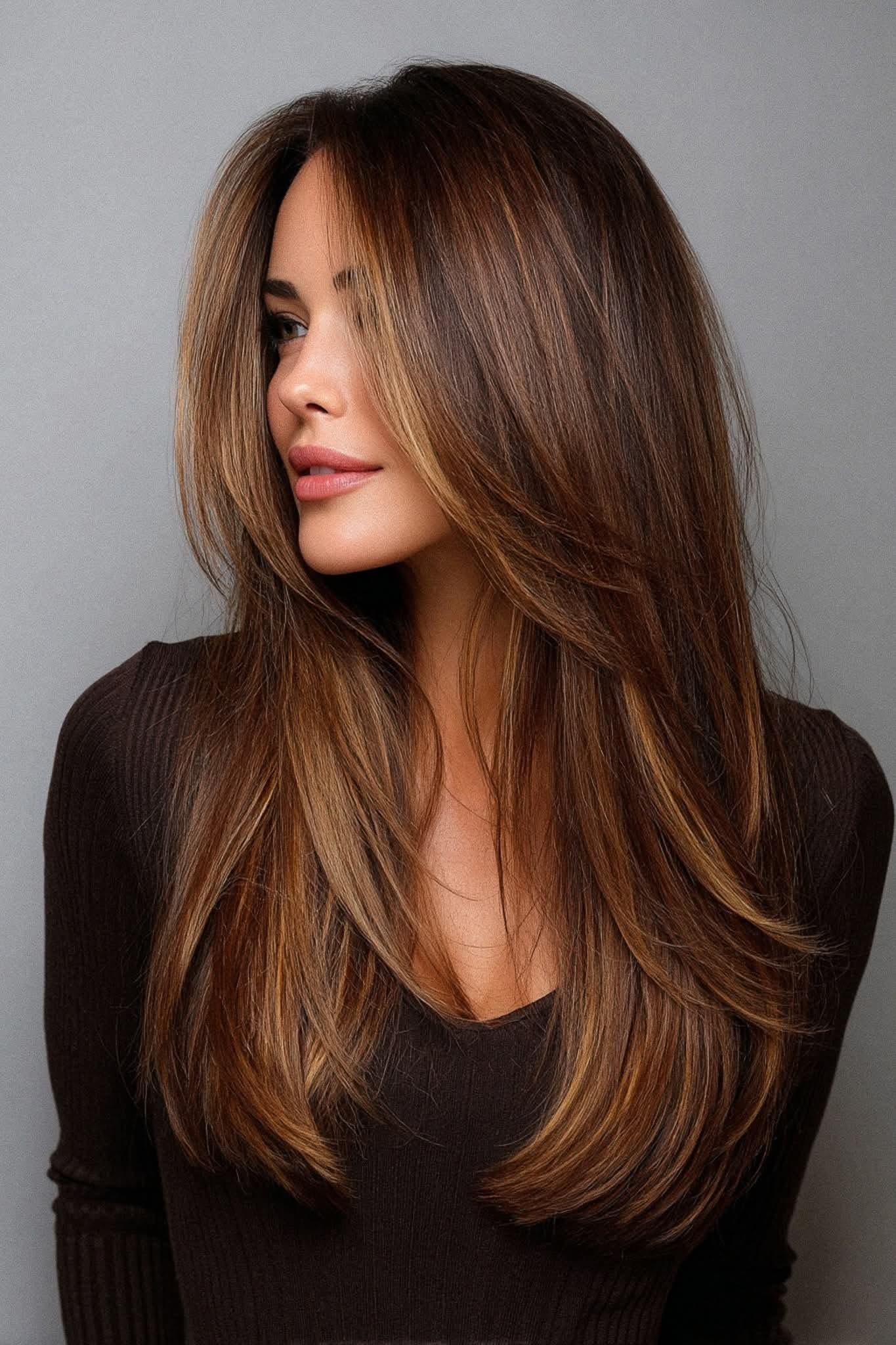
Image credit: artofit.org
Mocha is the coffee-shop brunette — rich brown with a shot of warm lightness — and with face-framing highlights it becomes a precision tool for flattering a fuller face. The highlights sit exactly where they open up the features: along the cheekbones and jawline, breaking up the solid dark mass that can otherwise emphasize width. Long straight layers keep everything in one clean vertical line, the most slimming silhouette there is.
Ask for a mocha brown base with fine highlights concentrated in the face-framing sections, blended so there are no harsh lines. Style sleek and straight with a flat iron, finishing with a shine serum. Highlights need refreshing every 8 to 10 weeks; the base can go longer. This suits almost everyone, which is its strength — but it is also the least adventurous pick here, so pair it with a fresh cut (long layers, curtain fringe) if you want the overall change to feel bigger.
Smoky chocolate balayage
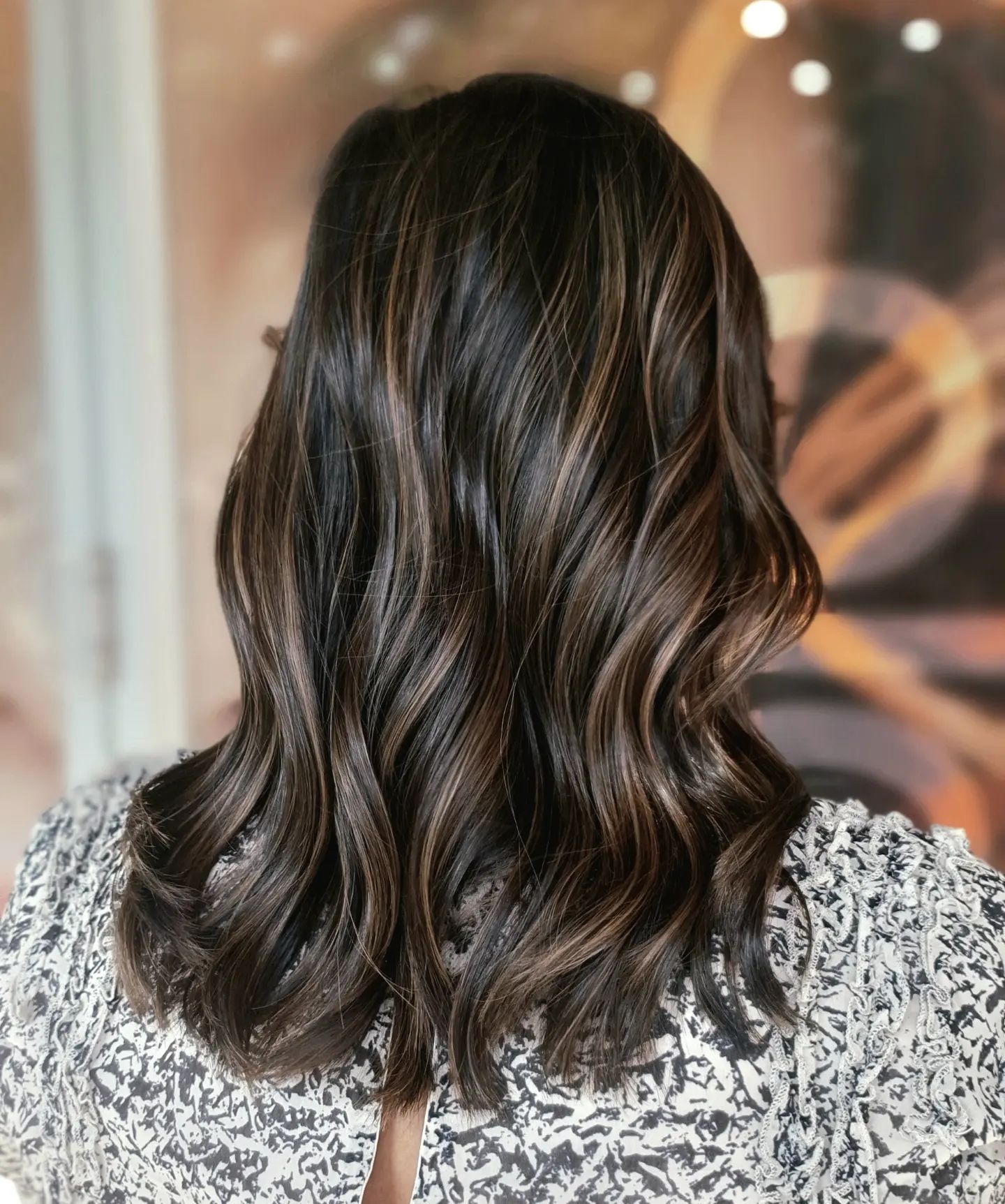
Source: momooze.com
Smoky chocolate takes the classic brunette balayage and cools it down — cocoa ribbons with a soft, diffused edge that look expensive rather than stripy. The smoky finish mutes contrast, which is flattering when you want dimension without obvious highlights, and the long length does the familiar elongating work for rounder faces. It is the quiet-luxury pick of the winter browns.
Ask for a chocolate balayage with cool-to-neutral toning and a shadow root for seamless grow-out. Style straight or with loose bends; the color shows best with movement and shine. Gloss every 6 to 8 weeks to keep the smoky tone from warming up, with full balayage at 3 to 4 months. Best for neutral-to-cool skin tones and naturally dark hair. The main caveat: “smoky” toners wash out toward warmth, so if you hate any hint of brass, budget for regular toning.
Final Thoughts
The strongest options on this list work because of dimension, placement, and undertone — not simply because they are dark or light. Face-framing brightness opens up the features, vertical color placement elongates, and the right undertone (warm copper for warm skin, cool mushroom for cool skin) does more for your complexion than any specific shade name. Choose based on your maintenance tolerance first: lived-in balayage and glosses ask little, while copper, red, and platinum ask for regular salon dates. Then match the tone to your skin, and let the length do the framing.
- Trim every six to eight weeks to keep the shape sharp.
- Use a heat protectant before every hot-tool session.
- Tone blonde or highlighted hair every six weeks to keep brassiness away.
- Match the upkeep schedule to your routine before committing to high-maintenance color.
The best color is the one that still looks intentional at week six.