If you spend hours at a desk, you have probably noticed your shoulders creeping forward or your neck feeling tight by the end of the day. Hours of sitting shorten the chest muscles, weaken the upper back, and pull the head forward — a pattern so common it has its own nickname: desk posture. The good news is that it responds well to short, regular movement, and you do not need a gym or a lunch break to do it.
This guide covers simple posture exercises designed to fit between meetings: neck and shoulder moves you can do in your chair, stretches that open the chest, and a weekly plan that builds the habit without overwhelming your schedule. A sticky note on the monitor with two or three exercise names is often all it takes to remember them. And since posture is part of how you carry yourself all day, it pairs naturally with feeling put-together at work — whether that is Simple Work Outfits for Women or the polished layers in Classy Casual Office Outfit: Beige Trench Coat.
Key Takeaways
- Perform exercises slowly and with control, focusing on muscle engagement rather than momentum.
- Take short movement breaks every 30 to 60 minutes to reduce the effects of prolonged sitting.
- Include both strengthening moves, like chin tucks, and stretches, like the doorway chest stretch.
- Consistent practice for a few minutes several times a day can show initial improvements within a few weeks.
- Pair exercises with small ergonomic fixes — monitor height, chair position, keyboard placement.
Why Sitting All Day Changes Your Posture
Sitting itself is not the villain; sitting still for hours without moving is. When you sit hunched over a keyboard, the chest muscles shorten, the upper back muscles weaken from disuse, and the head drifts forward of the shoulders. Over weeks and months, the body adapts to that shape — which is why “just sit up straight” rarely works for long. The muscles that hold you upright need both strengthening and stretching to remember their job.
The fix is movement, little and often. Short bursts of exercise throughout the workday are more effective than one long session once a week, because they interrupt the pattern while it is happening. Five minutes of focused movement, two or three times a day, is enough to start noticing a difference — less stiffness, better body awareness, and a straighter, easier standing posture by the end of the week.
Neck and Shoulders: The First Stiffness to Fix
Gentle Neck Rolls
Start by sitting or standing tall with your chin slightly tucked. Slowly roll your head in a half-circle from your right shoulder to your left, keeping the movement controlled and gentle. Focus on releasing tension in the neck and shoulders as you move. Aim for five to ten rolls in each direction, and keep the chin tucked slightly to protect the neck — avoid full circles, which can strain the cervical spine. For a deeper stretch, pause at the end of each roll for two to three seconds.

Photo via eresdeportista.com
Chin Tucks
Sit tall with your head level and eyes forward. Gently pull your chin straight back, creating a slight “double chin” sensation, while keeping your head level. Hold for five seconds, then release. This strengthens the deep neck flexors and helps correct forward head posture — the single most common desk-related issue. Aim for ten to fifteen repetitions, imagining a string pulling the crown of your head upward as you tuck. For support, perform them seated against a wall; for a challenge, hold the tuck for up to ten seconds.
Shoulder Blade Squeezes
Sit or stand tall with your arms at your sides. Gently squeeze your shoulder blades together as if holding a pencil between them, keeping your shoulders down and relaxed. Hold for three to five seconds, then release. This targets the weak upper-back muscles that counteract rounded shoulders. Aim for ten to fifteen repetitions, focusing on the muscles between the shoulder blades rather than shrugging toward your ears. Bending the arms to 90 degrees and rotating the palms outward increases activation.
Chest and Upper Back: Opening What Sitting Closes
Doorway Chest Stretch
Stand in a doorway with your forearms placed on the frame at shoulder height. Step forward gently with one foot until you feel a stretch across your chest and front shoulders. Hold for 20 to 30 seconds, then repeat two to three times. This counteracts the tight chest muscles that prolonged sitting creates. Keep your shoulders relaxed and avoid arching your lower back; placing the forearms higher or lower on the frame targets different parts of the chest.

Photo via fitnessestetica.com
Standing Cat-Cow
Stand with your knees slightly bent and place your hands on your thighs just above your knees. Inhale as you arch your back, lifting your chest and tailbone; exhale as you round your spine, tucking your chin toward your chest and drawing your belly in. Flow through five to ten slow, controlled breaths, moving from your spine rather than your arms. It is a quick way to wake up the whole back between tasks, and it needs nothing but a few feet of floor space — easy to fit in even in a smart work outfit, from the sharp tailoring in Office Siren Outfit Ideas for a Polished Look to whatever you already wear to the office.
Lower Back and Hips: Pelvic Tilts and the Desk Pigeon
Seated Pelvic Tilts
Sit on the edge of your chair with your feet flat on the floor. Gently rock your pelvis forward, arching your lower back, then rock it backward, flattening your lower back. Keep the movement slow and controlled, focusing on the motion coming from the pelvis rather than the upper body. Aim for ten to fifteen slow repetitions. A useful image: your pelvis is a bowl of water — tilt it forward to spill, then back to catch it. Holding the backward tilt for five seconds adds a gentle challenge.
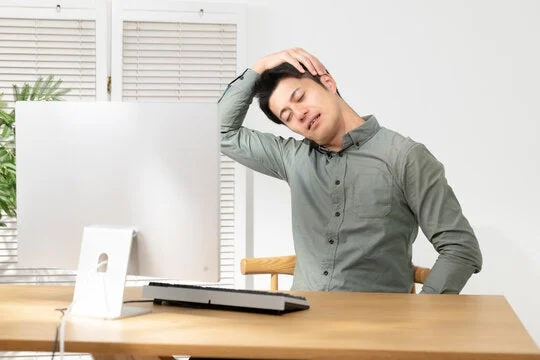
Photo via ameblo.jp
Standing Back Extensions
Stand tall with your feet hip-width apart and place your hands on your lower back for support, fingers pointing down. Gently arch your back, lifting your chest and looking slightly up, until you feel a mild stretch in your abdomen and lower back. Aim for five to ten gentle extensions, keeping your hips stable. Only extend as far as comfortable — stop if you feel sharp pain.
Desk Pigeon Stretch
Sit tall on your chair and place your right ankle over your left knee, keeping the foot flexed to protect the knee joint. Gently lean forward from the hips, keeping your back straight, until you feel a stretch in your right hip and glute. Hold for 20 to 30 seconds per side and repeat twice. Keep your chest lifted and avoid rounding the shoulders forward; if the knee feels uncomfortable, keep the foot closer to the hip.
Your Weekly Posture Plan
Consistency matters more than duration. Aim for short bursts of these exercises throughout the workday rather than one long session once a week. A simple rotation keeps the habit fresh without overwhelming your schedule.

Photo via corvuspay.com
- Monday — neck and shoulders: neck rolls, chin tucks, shoulder blade squeezes.
- Tuesday — chest and upper back: doorway chest stretch, standing cat-cow.
- Wednesday — lower back and hips: seated pelvic tilts, desk pigeon stretch.
- Thursday — full spine: standing back extensions, standing cat-cow.
- Friday — mix and match: pick any three exercises you enjoyed most.
Integrate these movements into your breaks every 30 to 60 minutes. Listen to your body and adjust repetitions or hold times as needed. A phone timer or a sticky note on the monitor helps until the habit is automatic, and pairing an exercise with a routine task — a shoulder squeeze after sending an email, a chin tuck while the kettle boils — makes remembering effortless. A weekly planning moment helps too, and the Sunday Reset Checklist for Home and Body is a good place to set the intention for the week ahead.
Ergonomics and Common Mistakes
Rushing through exercises: moving too fast or using momentum reduces muscle engagement. Perform each repetition slowly and with control to get the full benefit.
Ignoring pain: sharp or shooting pain is a signal to stop. Exercises should feel like a stretch or muscle activation, not discomfort. Modify the movement or skip it if it hurts.
Neglecting ergonomics: exercises alone will not fix poor posture if your workspace pulls you out of alignment. Adjust your monitor to eye level, position your chair so your feet rest flat, and keep your keyboard at a height that lets your elbows bend at about 90 degrees.
Holding your breath: deep, rhythmic breathing helps oxygenate muscles and promotes relaxation during stretches. Exhale during the effort phase and inhale during the release.
Inconsistency: posture improvement is a marathon, not a sprint. Regular, even short, practice is key — a few minutes daily beats a long session once a week. Small daily polish helps the habit stick too, from a neat finish like Professional Nail Ideas for a Polished Look to activewear for a longer session, such as the pieces in Gym Outfit Ideas for Your Next Workout.
Frequently Asked Questions
How often should I do posture exercises?
Short bursts throughout your workday are more effective than one long session once a week. Aim for a few minutes every 30 to 60 minutes during your breaks. Consistency matters more than duration.
Can posture exercises cure chronic back pain?
Posture exercises can help alleviate discomfort and improve spinal alignment, but they are not a cure for chronic back pain. If you have persistent or severe pain, consult a healthcare professional or physical therapist before starting a new exercise program.
What is the best way to remember to do these exercises?
Set a timer on your phone or computer to remind you every 30 to 60 minutes. You can also pair an exercise with a routine task, like doing a shoulder blade squeeze after you send an email. A sticky note on your monitor works well too.
Are there any tools I need for these exercises?
No special tools are required. You only need your office chair, a desk, and a wall or door frame for stretches. A yoga mat is optional for floor exercises. The exercises are designed to be done in a typical office setting.
How long does it take to see results from posture exercises?
With consistent practice for a few minutes several times a day, you may notice initial improvements in comfort and body awareness within a few weeks. More significant changes in posture and muscle strength typically take several months of regular effort.
Final Thoughts
Pick two or three exercises from this list and do them during a short break twice a day. Keep expectations realistic: you may notice better awareness and less stiffness within a few weeks, but more significant changes take several months of consistent practice. Pair the exercises with small ergonomic adjustments to your desk setup for the best long-term results. Posture is not fixed in a single session — it is the sum of hundreds of small moments, and every break is a chance to add one more.
Disclaimer: This article is for general informational purposes only and does not constitute medical or professional advice. The exercises described may not be suitable for everyone. If you have a pre-existing condition, chronic pain, or experience sharp pain, numbness, or tingling during exercise, stop immediately and consult a healthcare professional or physical therapist.