Strength training at home starts with a simple question that turns out to be surprisingly tricky: which dumbbell weight should you pick up? There is no single magic number. The right weight depends on the exercise, the muscle group, and where your strength is today — and the answer changes as you get stronger.
This guide covers how to find your starting weight, the difference between fixed and adjustable dumbbells, the mistakes that slow progress, and how to move up safely over time. With the right weights and a comfortable setup — a supportive outfit from the gym outfit ideas for your next workout can make the whole session feel easier — home strength training becomes something you look forward to rather than a chore you put off.
Key Takeaways
- Start with 2–5 pounds for upper-body moves and 5–10 pounds for lower-body exercises.
- The right weight makes the last two or three reps of an 8–12 rep set feel challenging but doable.
- Legs are stronger than arms, so you will need different weights for different muscle groups.
- Increase weight gradually — about 2–5 pounds at a time — once 12 good reps feel comfortable.
- Good form always comes before heavier weight; sloppy reps build injuries, not strength.
Why the Right Weight Matters
A weight that is too light will not challenge your muscles enough to make them adapt, and a weight that is too heavy will pull your form apart and raise your injury risk. The sweet spot sits in between: heavy enough that the final reps of a set demand real effort, light enough that every rep still looks clean and controlled.
Getting this right matters even more at home, where there is no trainer watching your form. Choosing wisely from the start saves you from the two most common beginner frustrations — feeling like nothing is changing, or nursing a sore shoulder after one over-ambitious session. A small, well-chosen set of weights is one of the best investments a home gym can have.
Finding Your Starting Weight
If you are new to strength training, a sensible starting point is 2–5 pounds for upper-body exercises such as bicep curls, lateral raises, and shoulder presses. For lower-body moves like squats, lunges, and deadlifts, begin with 5–10 pounds. These ranges work for most beginners because they let you learn the movement pattern before the load becomes the limiting factor.
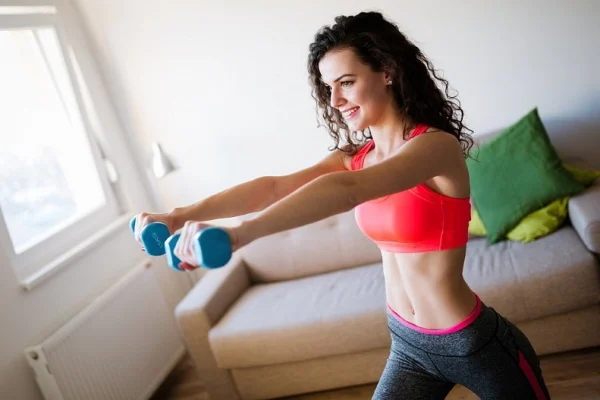
Photo via ladyglow.decorexpro.com
The simplest test is the 8–12 rep check. Pick a weight, perform the exercise with controlled form, and see how the set feels. If you can finish 12 reps and the last few feel genuinely hard, the weight is right. If you breeze past 12, go heavier next time. If you cannot reach 8 with good form, go lighter. There is no shame in the lighter end of the range — starting light and progressing steadily beats starting heavy and stopping altogether.
Fixed vs Adjustable Dumbbells: Which Type Suits Your Home?
Fixed-weight dumbbells are simple and durable: one weight per pair, always ready to grab. They are ideal if you know exactly which weights you use most and have space for a small rack. Adjustable dumbbells use a dial or pin system to change weight in seconds, which saves a lot of space and lets one pair cover many exercises — a strong advantage in a small home gym.
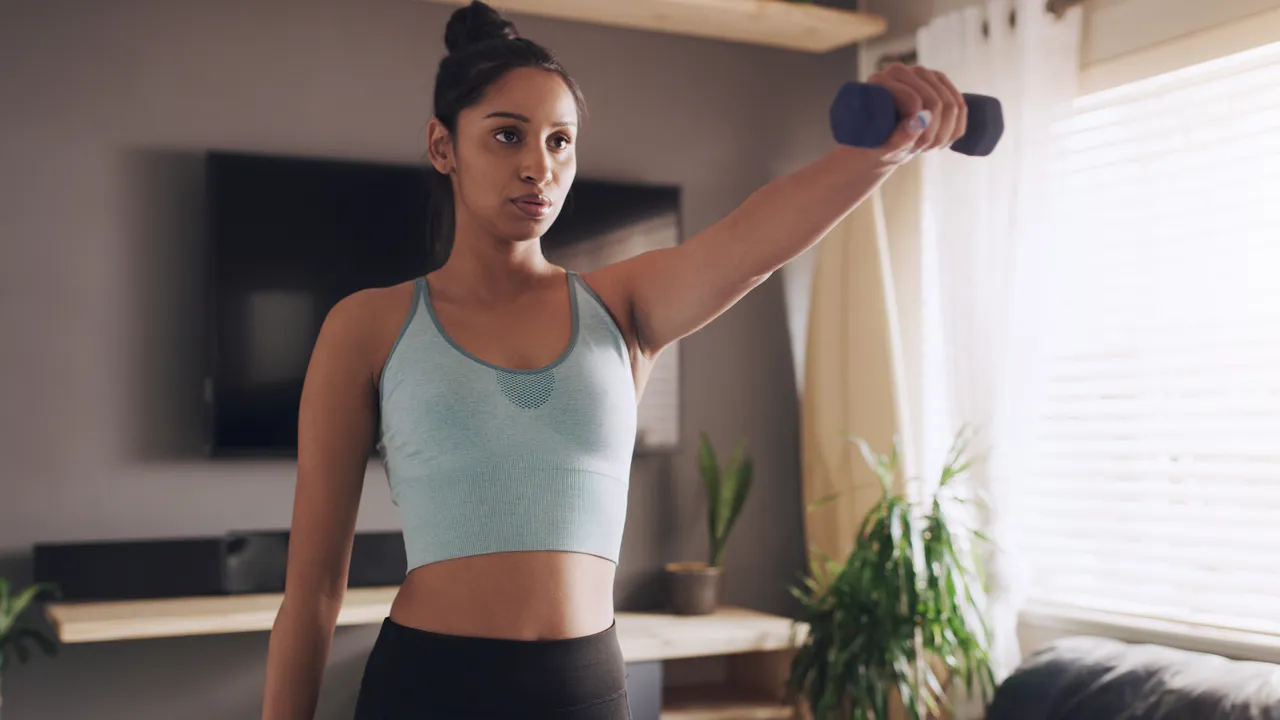
Photo via fitandwell.com
What About the Coating?
Material affects grip, noise, and your floors. Neoprene or vinyl coatings are gentle on floors and comfortable to hold, which makes them a popular choice for living-room workouts. Rubber coatings are quieter when you set them down. Bare cast iron is extremely durable but can scratch floors and clank loudly, so pair it with a mat. Whatever you choose, a pair of cute black leggings and a mat are all the extra kit you need to train comfortably on a hard floor.
How to Test a Weight in Four Steps
Use this quick sequence whenever you try a new exercise or consider moving up a weight. It takes one set and removes the guesswork.
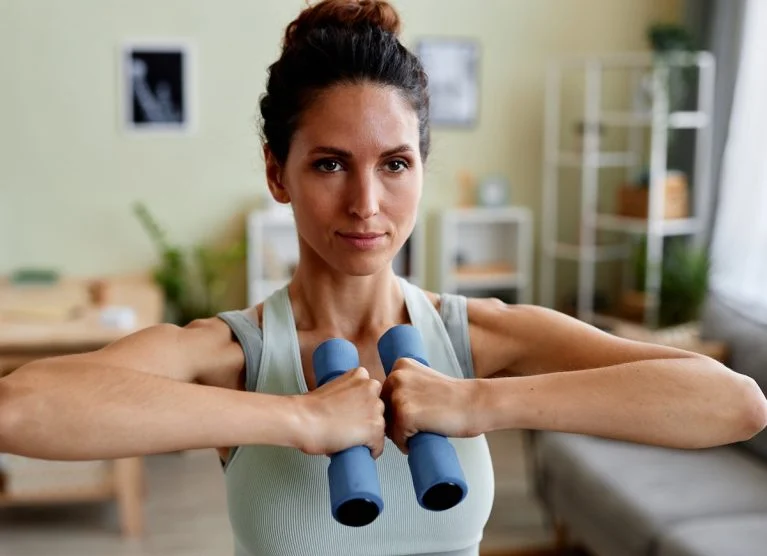
Photo via eatthis.com
- Start conservative: pick a weight you suspect is slightly too light. For a new exercise, underestimating is safer than overestimating.
- Perform 8–12 reps: move through the full range of motion with control. If you cannot finish 8 reps with good form, the weight is too heavy.
- Judge the last reps: the final two or three should feel difficult but still possible without breaking form. If you could easily do 13 or more, increase the weight next set.
- Move up when ready: when you can complete 12 clean reps for two workouts in a row, add 2–5 pounds. That small step is progressive overload in action.
Keep a simple note of the weight you used for each exercise — a phone note or a small notebook works fine. It removes the “what did I lift last time?” guessing game and makes progress visible week to week.
Mistakes That Stall Your Progress
Picking weights that are too light: if you can comfortably do 15 or more reps, the load is not challenging your muscles enough to trigger growth. Strength adapts to demand, and a weight that never demands anything changes nothing.
Picking weights that are too heavy: swinging, arching, or rushing through reps to move a weight you cannot control is how shoulders and lower backs get hurt. Form first, always.
Using one weight for everything: your legs can handle far more than your arms. A pair that challenges your bicep curls will feel trivial for squats, so build a small range rather than a single pair.
Skipping progression: muscles adapt quickly. Lifting the same weight for months keeps you fit but stops building strength. A small increase every few weeks is what keeps the gains coming.
Comparing yourself to others: your starting weight belongs to you alone. The only comparison that matters is with your own last workout. Tying your hair back in one of the slick-back ponytail hairstyles and focusing on your own form beats watching anyone else’s numbers.
Progressive Overload: The Key to Getting Stronger
Your muscles adapt to the stress you place on them. Lift the same weight forever and your strength will plateau, because your body has no reason to change. Progressive overload is the practice of gradually increasing the challenge — a little more weight, an extra rep, one more set, or slightly shorter rests between sets.
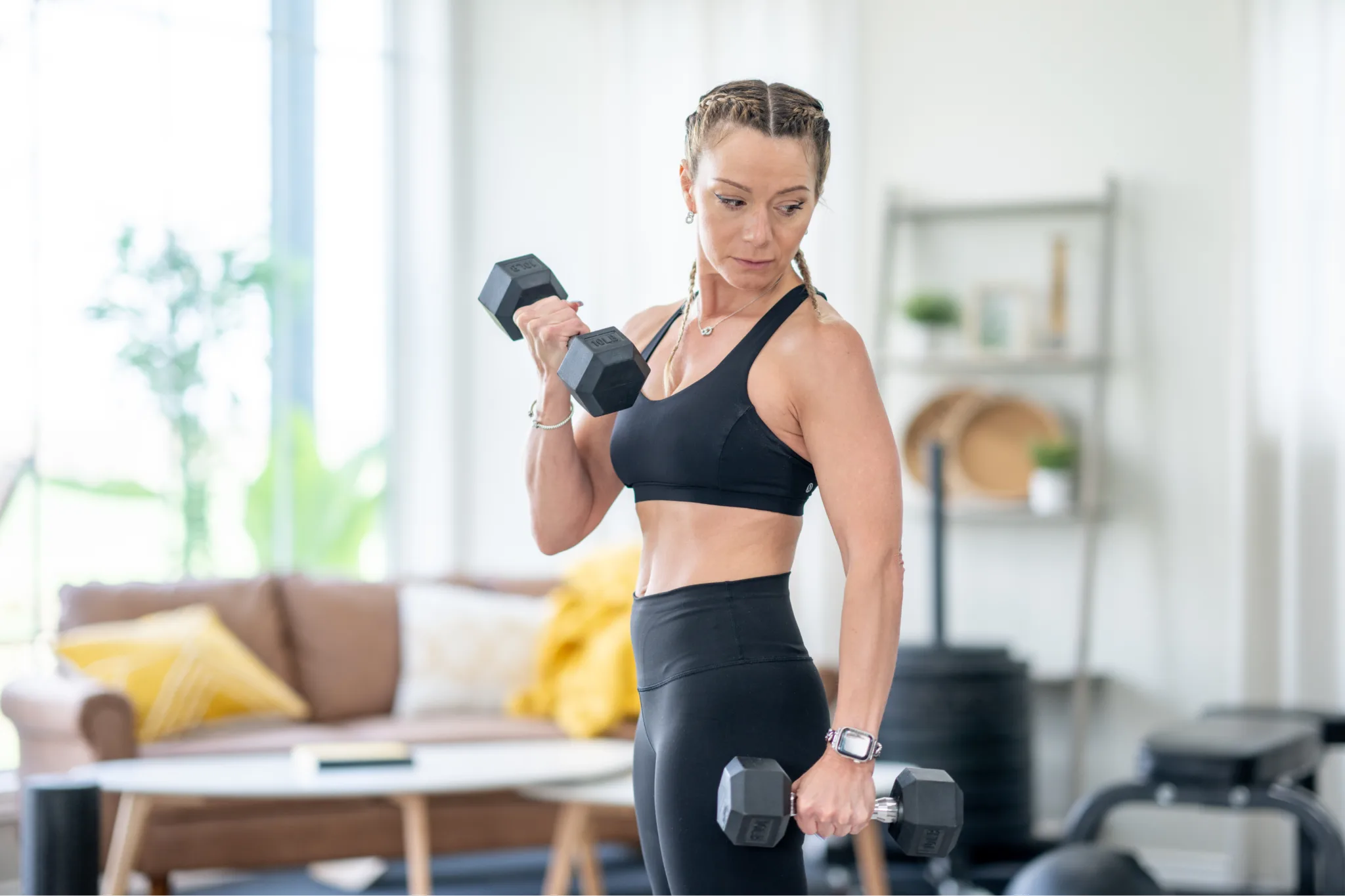
Photo via macrosinc.net
The increases do not need to be dramatic. Adding two pounds to a press or one rep to a set is enough to signal your body to keep building. Over weeks and months, those small steps add up to real strength. Pair consistent training with enough protein — the guide to a high-protein diet for women explains how much your body needs to repair and grow — and with rest days, since muscles rebuild between sessions, not during them.
Smart Tips for Safe, Effective Home Training
Warm up for five to ten minutes before lifting, with light cardio and dynamic stretches for the joints you are about to use. Cool down with gentle stretching afterwards. Breathe steadily — exhale on the effort, inhale on the release — and never hold your breath through a heavy rep. Listen to your body: ordinary muscle fatigue is normal, sharp pain is not, and rest days are part of the program rather than a sign of laziness.
Set up a dedicated corner if you can, even a small one. A mat, your dumbbells, and a water bottle are enough, and having the space ready removes the friction that kills motivation. Comfortable layers help too — simple black leggings outfits work as well for a living-room workout as they do for errands afterwards. And remember that strength training supports bone density, which matters for women at every age — one more reason the habit is worth building.
When to Ask a Professional
Check with a doctor before starting a new exercise program, especially if you have a health condition or are recovering from an injury. If you feel sharp or persistent pain during a workout, stop and seek professional advice. A certified personal trainer can also check your form, design a program around your goals, and help you progress safely. A single session early on can prevent months of bad habits, and a balanced approach to the nutrients that support training — covered in the guide to essential vitamins for women — rounds out the picture.
Frequently Asked Questions
How often should I increase my dumbbell weight?
Increase when you can comfortably complete 12 repetitions with good form and the last few reps no longer feel challenging. For most people this happens every few weeks, though some muscle groups progress faster than others. Add 2–5 pounds at a time and re-test with the 8–12 rep check.
Can I build muscle with just light dumbbells?
Yes, especially as a beginner. Light weights build strength when you challenge your muscles by adding reps, slowing the movement down, or shortening rest periods. Over time you will need heavier weights to keep progressing, but light dumbbells are a genuine starting point, not a wasted one.
How do I know if my form is correct?
Good form means moving through the full range of motion without momentum, without arching your back, and without pain in your joints. Recording yourself and comparing with a trusted demonstration video helps, as does one session with a certified trainer who can check your alignment in person.
Is strength training good for bone density?
Yes. Resistance training is one of the most effective ways to maintain and improve bone density, which is especially important for women as they age. The load placed on bones during lifting encourages them to become stronger. Start with a weight you can handle safely and talk to your doctor if you have concerns.
What is a good starting dumbbell weight for a woman?
A common starting range is 2–5 pounds for upper-body exercises and 5–10 pounds for lower-body exercises. If you are unsure, begin at the lighter end and test with 8–12 reps. The weight should feel challenging by the last few reps but still allow clean, controlled form.
Final Thoughts
Choosing dumbbells comes down to a few honest checks: start light, test with 8–12 reps, keep your form clean, and add weight only when the reps stop challenging you. A small set that covers a few light and medium weights will carry you through months of progress, and the habit you build matters more than the number on the dumbbell. Expect strength gains within four to eight weeks of consistent training, with visible changes following over two to three months. Start where you are, progress patiently, and let consistency do the heavy lifting.
Disclaimer: This article is for general informational purposes only and does not constitute medical or professional fitness advice. Always consult a doctor before starting a new exercise program, especially if you have a health condition or injury. Stop immediately if you experience sharp pain and seek guidance from a qualified professional.