Dry brushing has been praised for everything from smoother skin to detoxing the body — and, as usual, the truth sits somewhere in the middle. It is a simple, inexpensive form of physical exfoliation: a stiff-bristled brush swept over dry skin before a shower. Done correctly, it leaves skin noticeably smoother within a few sessions. Done aggressively, it irritates more than it helps.
This guide covers the correct technique, the direction to brush in, how often to do it, and how to choose a brush — plus the myths worth ignoring and the mistakes that cause the most problems. For the broader picture of exfoliation, Exfoliation: Physical vs Chemical for Skin explains how dry brushing compares with other methods.
Key Takeaways
- Always brush on dry skin before showering, using gentle, upward strokes toward the heart.
- Choose a brush with medium-firm natural bristles such as sisal or boar for the best balance.
- Dry brush three to five times a week for two to three minutes per session.
- Clean your brush weekly with mild soap and water to prevent bacterial buildup.
- Moisturise after your shower to rehydrate freshly exfoliated skin.
What Is Dry Brushing and How Does It Work?
Dry brushing is a physical exfoliation method where a stiff-bristled brush is swept over dry skin, usually before a shower. The bristles lift away dead skin cells, leaving skin smoother after just a few sessions. The friction also temporarily boosts circulation to the surface, which gives skin a flushed, energised look right after brushing.
The routine itself is simple: brush on dry skin, shower to rinse off the loosened cells, and follow with moisturiser. The whole process takes two to three minutes, and the only equipment needed is a brush. That simplicity is the appeal — and also the reason technique matters, since there is no product to buffer a heavy hand.
Choosing the Right Brush
The brush is the star of the show, and the choice is straightforward. Look for a body brush with natural bristles — sisal, boar, or vegetable fibres are the usual options. Beginners should choose medium firmness: soft bristles do not exfoliate enough, and very stiff ones can scratch the skin.
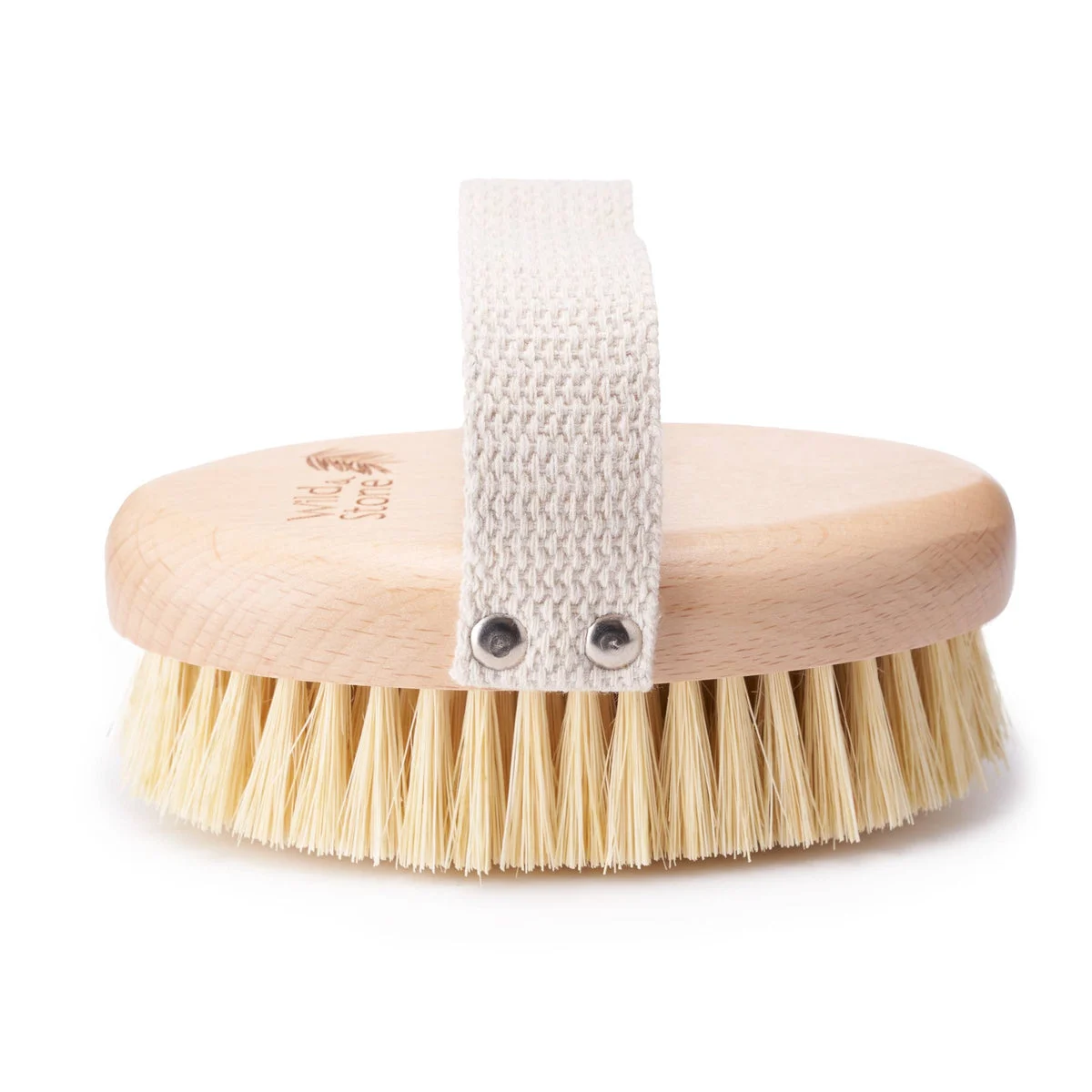
Photo via potagersoap.com
- Long-handled brushes reach the back easily and suit a full-body routine.
- Small hand brushes with a strap give more control on legs, arms, and the stomach.
- Mild soap for cleaning the brush regularly and preventing bacterial buildup.
- A good moisturiser or body oil for rehydrating skin after exfoliation and showering.
A good natural bristle brush is a one-time purchase that costs roughly what a single salon treatment would, and it lasts for months with proper care. There is no need for expensive extras.
Your Step-by-Step Guide to Dry Brushing
Follow this order for the best results and the least irritation. The direction matters: strokes move toward the heart, following the body’s lymphatic flow.

Photo via beautifullifestyleonline.com
- Start on dry skin: do not wet your skin or the brush. Dry brushing relies on friction against dry skin to exfoliate effectively.
- Begin at your feet: use gentle, upward strokes moving toward the heart. This direction follows lymphatic flow and feels most natural on the skin.
- Work upward through the body: move up the legs, over the hips, and onto the stomach, arms, and back. Use a lighter touch on sensitive areas like the stomach and inner arms.
- Shower immediately: rinse off the loosened dead skin cells with warm water. A quick shower is all you need.
- Moisturise generously: pat skin dry, then apply body oil or moisturiser while skin is still slightly damp to lock in hydration.
- Clean your brush: every few uses, wash the bristles with mild soap and warm water, then let the brush air dry completely, bristles down.
The best time to dry brush is in the morning before your shower, when it doubles as a small wake-up ritual. A calm morning routine supports the habit, and the gentle sequence in Glowing Skin Morning Skincare Routine pairs naturally with a body care step like this one.
Common Dry Brushing Mistakes to Avoid
Brushing too aggressively: pressing hard causes irritation, redness, and even broken capillaries. Gentle strokes are all you need — the brush should glide, not scrape.
Brushing on wet skin: wet bristles drag across the skin instead of gliding over it. Always brush on completely dry skin before your shower.
Neglecting brush hygiene: a dirty brush traps dead skin cells and bacteria, which can lead to breakouts or skin infections. Clean it every few uses.
Expecting cellulite or detox results: dry brushing does not detoxify the body or permanently reduce cellulite. Any temporary improvement comes from increased circulation, not a structural change.
Forgetting to moisturise: exfoliation removes oils along with dead skin. Skipping moisturiser leaves skin feeling tight and dry after brushing.
Separating Fact from Fiction
Two claims follow dry brushing everywhere, and both need a clear answer.
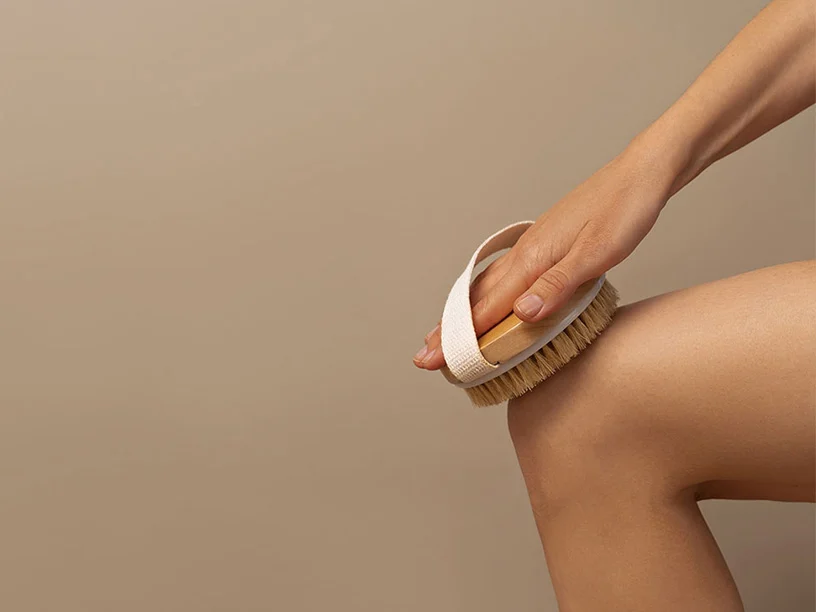
Photo via lizearle.com
Myth: Dry Brushing Detoxifies Your Body
Your lymphatic system moves waste and fluid through muscle contractions, not through friction on the skin. Brushing does not pull toxins out of the body. What you see after a session — a healthy flush — is temporary blood flow to the surface, not a detox.
Myth: Dry Brushing Gets Rid of Cellulite
Cellulite is structural fat beneath the skin, and brushing cannot change that structure. The smoother look some people notice right after brushing comes from increased circulation and plumped skin, and it fades within hours. Dry brushing is exfoliation, not a cellulite treatment — and it is a good one when judged on its real merits.
Pro Tips for a Better Experience
Start with medium-firm natural bristles and let your skin adjust over the first week. Listen to your skin: if you feel stinging or see redness beyond a light flush, you are pressing too hard or brushing too often — reduce pressure or skip a day. Consistency matters more than pressure; three to five short sessions a week give smoother results than one aggressive session.

Photo via welife.es
Pair brushing with a rich body oil or lotion right after the shower to lock in moisture, and keep the ritual short enough to survive busy mornings. Smooth skin shows best in simple, well-fitting clothes — the clean lines in Black Pants Outfit Ideas with Wide Leg Styling, the soft neutrals in Beige Dress Looks with Ribbed Styling, or the easy day-to-night options in Simple Day to Night Dress Looks all let healthy skin do the talking. A polished finish like Natural Nail Designs with a Subtle Glow completes the same understated effect.
When to Consult a Dermatologist
Stop brushing and see a dermatologist if you develop persistent redness, irritation, or pain after dry brushing. Never brush over broken skin, rashes, cuts, sunburn, or varicose veins. If you have eczema, psoriasis, or rosacea, skip dry brushing unless your dermatologist says it is safe — the friction can flare these conditions. When in doubt, test a small patch on your inner arm and wait 24 hours before brushing your whole body.
Frequently Asked Questions
How often should I dry brush?
Three to five times a week, spending two to three minutes per session before your shower. This frequency gives skin time to recover between sessions while still providing consistent exfoliation. If your skin feels irritated, reduce the frequency to every other day.
Can dry brushing help with cellulite?
Claims that dry brushing significantly reduces cellulite are not scientifically proven. It can temporarily plump the skin and improve blood flow, but any visible change is short-lived. Lasting cellulite improvement typically requires a combination of approaches beyond brushing.
Is dry brushing good for sensitive skin?
Dry brushing is not suitable for sensitive skin conditions like eczema, psoriasis, or rosacea. If you have any underlying skin concerns, consult a dermatologist before starting. Even with normal skin, use gentle pressure and stop immediately if you notice persistent redness or irritation.
What kind of brush is best for dry brushing?
Look for a body brush with natural bristles such as sisal, boar, or vegetable fibres. Beginners should choose medium firmness, which is effective without being too harsh. Long-handled versions help you reach your back, while smaller hand-held brushes work well for arms and legs.
Should I moisturise after dry brushing?
Yes. Moisturising after dry brushing and showering is important to rehydrate your skin. Exfoliation removes dead skin cells and can leave the skin barrier temporarily exposed, so applying a body oil or lotion right after your shower locks in moisture and keeps skin feeling smooth.
Final Thoughts
Dry brushing is worth trying if you want a simple, low-cost addition to your routine. Stick with it three to five times a week and you will notice smoother skin after just a few sessions. Keep the pressure gentle, brush toward the heart, clean the brush regularly, and always moisturise after. It will not detox your body or erase cellulite — but as an exfoliation ritual, done properly, it earns its place in the bathroom.
Disclaimer: This article is for general informational purposes only and does not constitute medical or professional advice. Always consult a dermatologist or healthcare provider before starting any new skin care routine, especially if you have a skin condition or concern. If you experience persistent irritation or pain, stop use and seek professional guidance.