You finish a workout feeling strong, then wake up the next morning and every muscle protests as you roll out of bed. That familiar ache is usually just your body adapting and getting stronger — but sometimes pain after exercise signals something more serious. Knowing the difference matters, because soreness and injury need opposite responses.
This guide explains how to tell normal muscle soreness, known as DOMS, apart from an injury: when each one shows up, what each one feels like, what helps, and the warning signs that mean it is time to see a doctor. And if your workout wardrobe needs a refresh before your next session, the ideas in Gym Outfit Ideas for Your Next Workout make it easy to train in comfort.
Key Takeaways
- DOMS usually begins 12 to 24 hours after exercise and feels like a dull, widespread ache across a muscle group.
- An injury typically causes sharp, stabbing, or burning pain that starts during or right after activity, often in one specific spot.
- Heat and gentle movement help DOMS; ice and rest are the right first response for an acute injury.
- Seek medical attention for sudden severe pain, inability to bear weight, visible deformity, numbness, or pain that keeps getting worse.
- Raise workout intensity by no more than about 10% per week to reduce the risk of excessive soreness and injury.
What Is Delayed Onset Muscle Soreness (DOMS)?
DOMS is the dull, stiff ache that appears a day or so after exercise, especially after a new movement, a harder session, or an exercise that lengthens muscles under load — like lowering slowly into a squat. It happens because exercise creates tiny micro-tears in muscle fibres, and the body’s natural repair process brings mild inflammation as it rebuilds them stronger.

Photo via health.online
DOMS usually peaks between 24 and 72 hours after the workout, then fades on its own within three to five days. It tends to feel spread out across a whole muscle group rather than pinned to one point, and it is not usually accompanied by swelling or bruising. It is uncomfortable, but it is a normal part of training — and it is not a reliable scorecard: you can build strength and fitness without feeling sore after every session. A comfortable recovery day outfit, like the relaxed looks in Blue Sweatpants Outfit Ideas for Cozy Comfort, makes those stiff mornings a little easier.
Soreness or Injury? How to Compare the Two
When a new pain appears, run through these questions. The pattern of answers usually points clearly in one direction.
- When did it start? Soreness shows up 12 to 24 hours after exercise. Injury pain usually begins during the activity or immediately afterwards.
- What does it feel like? Soreness is a dull, aching stiffness. Injury pain is more often sharp, stabbing, burning, or throbbing.
- Where is it? Soreness spreads across a muscle group. Injury pain is usually localised to one specific point, joint, or tendon.
- What comes with it? Soreness rarely brings other symptoms. Swelling, bruising, redness, warmth, or loss of strength and range of motion all point toward injury.
- How long does it last? Soreness resolves in three to five days. Pain that persists for a week or more, or keeps worsening, needs professional attention.
If your symptoms match the injury side of this list, stop exercising the affected area and assess carefully before continuing. Pushing through injury pain rarely ends well.
What to Do for Muscle Soreness
When DOMS hits, the goal is to support recovery without adding more damage. Heat is genuinely helpful here: a warm bath or a heating pad for 15 to 20 minutes encourages blood flow and helps tight muscles relax.

Photo via medpoint.ie
Gentle movement is the other reliable remedy. Light walking, easy cycling, or gentle stretching increases circulation and can ease the ache noticeably. Keep the intensity low — the point is to move blood, not to create more micro-tears. Light self-massage with a foam roller can help too, as long as the pressure stays comfortable. Hydration and protein-rich meals support the repair process as well, so a balanced meal within a couple of hours of training is worth the habit. Avoid vigorous massage or aggressive stretching on acutely sore muscles, which can aggravate inflammation and slow healing. For outdoor recovery walks, a secure style like the ones in Classy Hiking Hairstyles That Stay Put keeps hair out of the way.
What to Do If It Might Be an Injury
If the pain is sharp, localised, or came on suddenly during exercise, treat it as a possible injury. Stop the activity, rest the area, and apply ice — not heat — for the first 48 hours. Ice helps limit swelling, while heat increases blood flow and can make swelling worse in an acute injury.
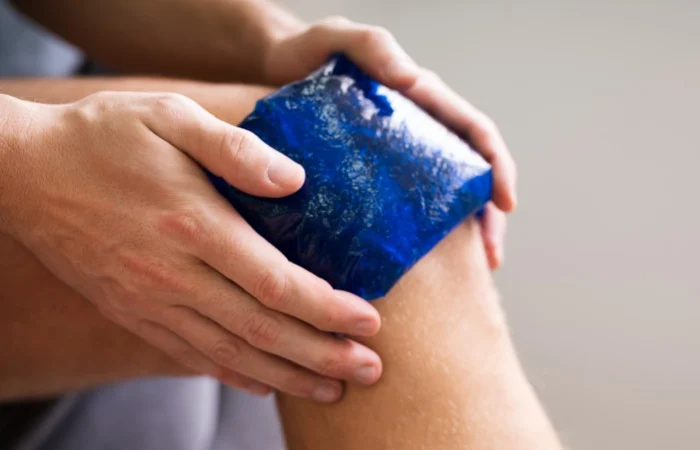
Photo via axon.me
Wrap the ice pack in a thin cloth, apply it for 15 to 20 minutes at a time, and elevate the area if it is swollen. Avoid stretching the painful spot aggressively and do not test it with heavy loads to “see if it still hurts.” If the pain is severe, if you cannot bear weight on the limb, or if there is visible deformity, numbness, or tingling, seek medical care promptly rather than waiting to see how it develops. The same applies to pain that does not improve after a few days of rest, or that returns every time you resume training.
Common Mistakes When Dealing With Post-Workout Pain
Confusing the two kinds of pain: treating sharp, localised pain as ordinary soreness can turn a small injury into a long layoff, while treating DOMS as an injury can mean unnecessary days off.
Thinking no soreness means no progress: soreness fades as your body adapts to a routine. Getting stronger without aching is normal, not a sign the workout failed.
Applying heat to an acute injury: heat feels soothing, but on a fresh injury it can increase swelling. Ice first, heat later — and only for the dull ache of DOMS.
Stretching cold muscles aggressively: forcing a deep stretch into cold, sore muscles can cause more damage. Warm up with light movement first, then stretch gently.
Ignoring pain that persists: pain that lasts longer than a few days or keeps getting worse is information, not something to push through. It deserves a professional opinion.
Preventing Excessive Soreness and Injuries
Prevention starts with smart training habits that give your body time to adapt. The most useful rule is gradual progression: increase weight, distance, or duration by no more than about 10% per week so muscles, tendons, and joints adjust together.

Photo via herzindagi.com
Warm up for five to ten minutes with light cardio before training, and cool down with gentle stretching afterwards. Pay attention to form — proper technique reduces injury risk and makes every rep more effective, so consider a session with a trainer if you are unsure about a lift. Schedule at least one full rest day per week, because muscles repair and rebuild during recovery, not during the workout itself. And take care of the basics that support recovery: enough sleep, regular water, and a simple morning skincare habit like the one in Glowing Skin Morning Skincare Routine so the rest of you feels as looked after as your muscles. A polished everyday look, such as the ideas in Basic Outfit Ideas in Black Tailored Style, is easy to pull together when your body is not fighting stiffness.
Frequently Asked Questions
Is it normal to be sore every time I work out?
It is common to feel sore after a new or more intense workout, but constant soreness is not required for progress. If you are sore after every session, your muscles may not be recovering fully between workouts. Consider easing intensity, adding rest days, or varying your training so each muscle group gets time to adapt.
Can I still work out if I have DOMS?
Yes, light activity such as walking, gentle stretching, or low-intensity cycling can help ease the ache by increasing blood flow. Avoid heavy lifting or intense exercise on the same sore muscle group until the soreness subsides, since pushing hard through DOMS raises the risk of injury.
How can I speed up recovery from muscle soreness?
Gentle movement, staying hydrated, and eating enough protein support your body’s repair process. Heat, such as a warm bath or heating pad, can relax tight muscles. DOMS usually resolves on its own within a few days, so patience is part of the plan — most remedies ease the discomfort rather than erase it.
What is the difference between a muscle strain and DOMS?
A muscle strain is an injury involving overstretched or torn muscle fibres, often causing sudden, sharp pain and sometimes swelling or bruising. DOMS is a normal response to exercise that produces a dull, widespread ache 12 to 24 hours later. If the pain is immediate and localised, it is more likely a strain.
How can I tell if my leg pain is soreness or an injury?
Consider when it started and what it feels like. Soreness appears a day after exercise and feels like a dull ache across the muscle. Injury pain usually begins during activity, is sharp or burning, and is focused on one spot. If there is swelling, bruising, or trouble bearing weight, treat it as an injury and get it checked.
Final Thoughts
Let the type of pain guide your next move. A dull, muscle-wide ache that arrived a day after your workout calls for gentle movement, heat, and patience — it will usually resolve within a few days. Sharp, localised, or sudden pain calls for rest, ice, and, if it does not improve, a professional opinion. Listening to your body is not a soft skill; it is what keeps you training consistently for years instead of sidelined for months. And on the days you feel good again, a small finishing touch — a fresh manicure like the ones in Blush Nail Ideas in Soft Pink — is a nice way to mark being back on your feet.
Disclaimer: This article is for general informational purposes only and does not constitute medical advice. Pain after exercise can have many causes, and only a qualified healthcare professional can diagnose an injury. If you have persistent, severe, or concerning symptoms, please consult a doctor or physiotherapist before continuing to train.