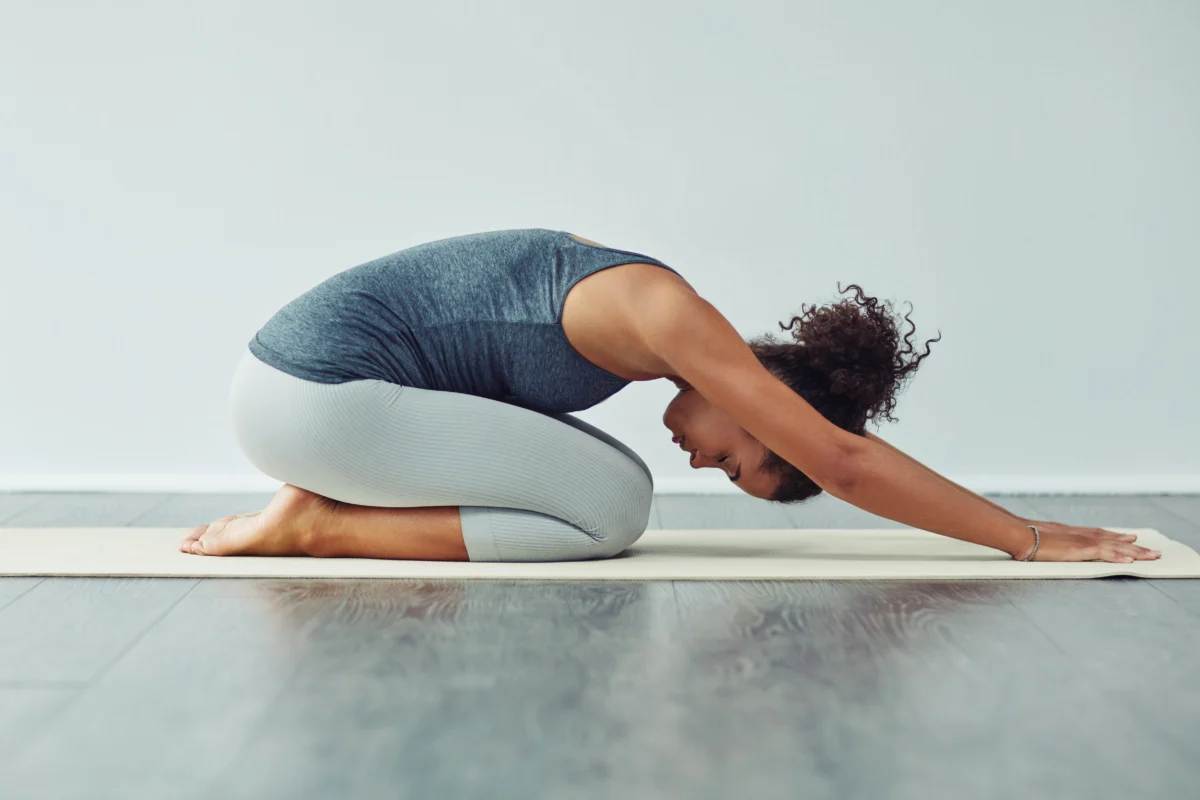
The splits look effortless in photos — and almost impossible from the floor. If you have ever tried and found yourself stuck several inches above the ground, you are in good company. The splits are a flexibility goal that rewards patience far more than force, and most people who achieve them do it through a steady, structured stretching plan rather than a single heroic effort.
This guide gives beginners a safe, realistic splits stretching plan: what the splits actually require, how to warm up properly, the key stretches for hip flexors, hamstrings, and inner thighs, a weekly schedule you can follow at home, and the mistakes that cause injury. You need no special equipment — just a mat, comfortable clothes like the blue leggings outfit ideas or simple cozy leggings outfits that let you move freely, and twenty to thirty minutes a few times a week.
Key Takeaways
- The splits need flexible hip flexors, hamstrings, and inner thighs — not just one muscle group.
- Always warm up for 5 to 10 minutes before stretching; never stretch cold muscles.
- Hold each stretch for 30 to 60 seconds and breathe steadily — no bouncing.
- Train 3 to 4 times a week, with rest days in between, for steady progress.
- Progress typically takes weeks to months depending on your starting flexibility.
- Sharp pain is a stop signal — mild tension is normal, pain is not.
What It Really Takes to Get Your Splits
There are two kinds of splits. Front splits (one leg forward, one back) demand flexible hip flexors in the back leg and hamstrings in the front leg. Side splits (legs out to each side) demand flexible inner thighs, or adductors, plus hip mobility. Most beginners start with front splits, which are usually more achievable, and work on side splits later.
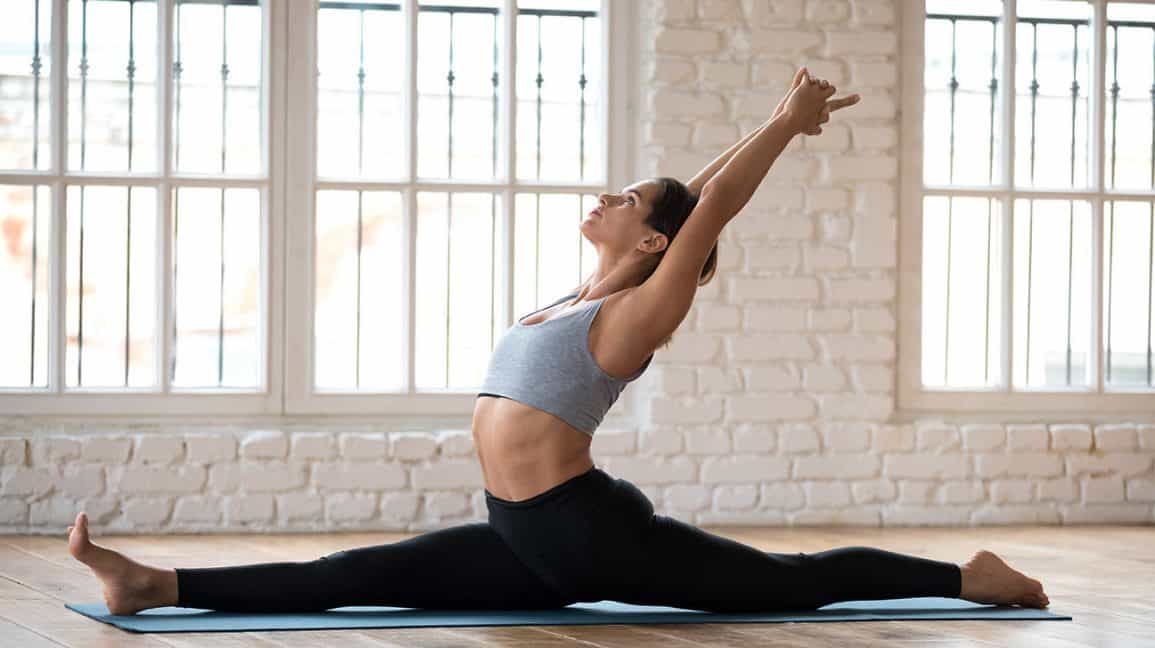
Photo via usghof.org
Flexibility varies enormously from person to person. Hip structure, previous injuries, age, and how much you already stretch all affect your starting point — and none of them are a verdict on whether you can get there. What matters is consistent, gentle training. Forcing the splits before your body is ready is the fastest route to a pulled hamstring, which can set you back months. The plan below is built around gradual progress, not speed.
Warm Up First, Always
Stretching cold muscles is the single most common beginner mistake. Cold muscles are stiffer and less elastic, which means they resist stretching and tear more easily. A proper warm-up raises your body temperature, increases blood flow to the muscles you are about to stretch, and makes the whole session both safer and more effective.
Spend five to ten minutes on light movement before any splits work: marching in place, gentle jogging, jumping jacks, leg swings, or a few sun salutations. You should feel warm and slightly loose before you hold your first stretch. If you have just finished a workout, your muscles are already warm — that is an ideal time to stretch. Many people pair their splits plan with a regular workout routine; comfortable gear from the Gym Outfit Ideas collection makes the transition from workout to stretching seamless.
The Key Stretches for Splits
These stretches target the three muscle groups that matter most. Hold each one for 30 to 60 seconds per side, breathe steadily, and ease deeper into the stretch as your muscles relax. You should feel a strong pull or mild tension — never sharp pain.
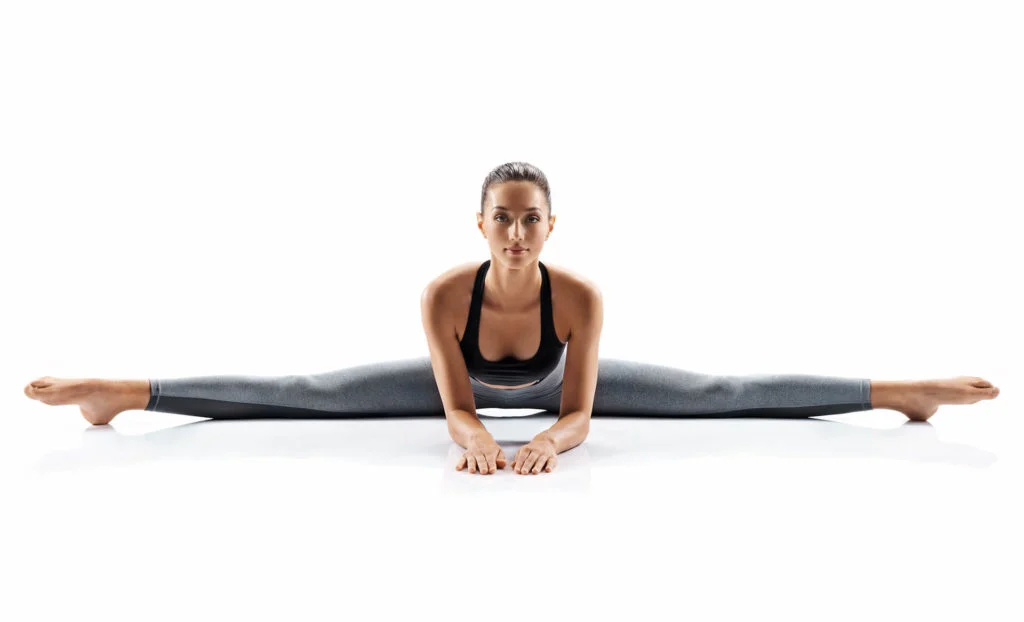
Photo via nikoladesigner.com
Hip Flexors: Low Lunge
Step one foot forward into a deep lunge, with the back knee on the floor and the back foot relaxed. Keep your torso upright and gently press your hips forward until you feel a stretch at the front of the back leg’s hip. For a deeper stretch, raise both arms overhead and lean very slightly back. Hold for 30 to 60 seconds, then switch sides. Tight hip flexors are the most common reason beginners stall on front splits, so give this stretch the time it deserves.
Hamstrings: Seated Forward Fold and Standing Fold
Sit with one leg extended and the other bent, foot against the inner thigh. Hinge forward from the hips toward the extended leg, keeping your back as straight as you can, until you feel a stretch along the back of the thigh. Hold, breathe, and switch sides. A standing forward fold — feet hip-width apart, hinging forward with a slight bend in the knees — stretches both hamstrings at once and is a good finisher.
Inner Thighs: Butterfly and Wide-Legged Fold
For the butterfly stretch, sit with the soles of your feet together and your knees falling outward. Gently press your knees toward the floor with your elbows, without forcing them. For a wide-legged fold, stand with feet wide apart and hinge forward, letting your hands rest on the floor or a block. Both stretches open the adductors, which are essential for side splits and helpful for front splits too.
The Splits Progression Itself
Once warmed up and stretched, practise the splits position with support. Place yoga blocks or firm cushions under your hands or under the front thigh, and slide gently into the deepest position you can hold comfortably. Stay for 30 to 60 seconds, breathing deeply. Over weeks, lower the support as your range improves. The goal is a position you can hold with control, not a dramatic drop to the floor.
Your Weekly Splits Plan
Consistency beats intensity. Three to four sessions a week, with at least one rest day between them, gives your muscles time to adapt without overloading them. Each session takes twenty to thirty minutes.
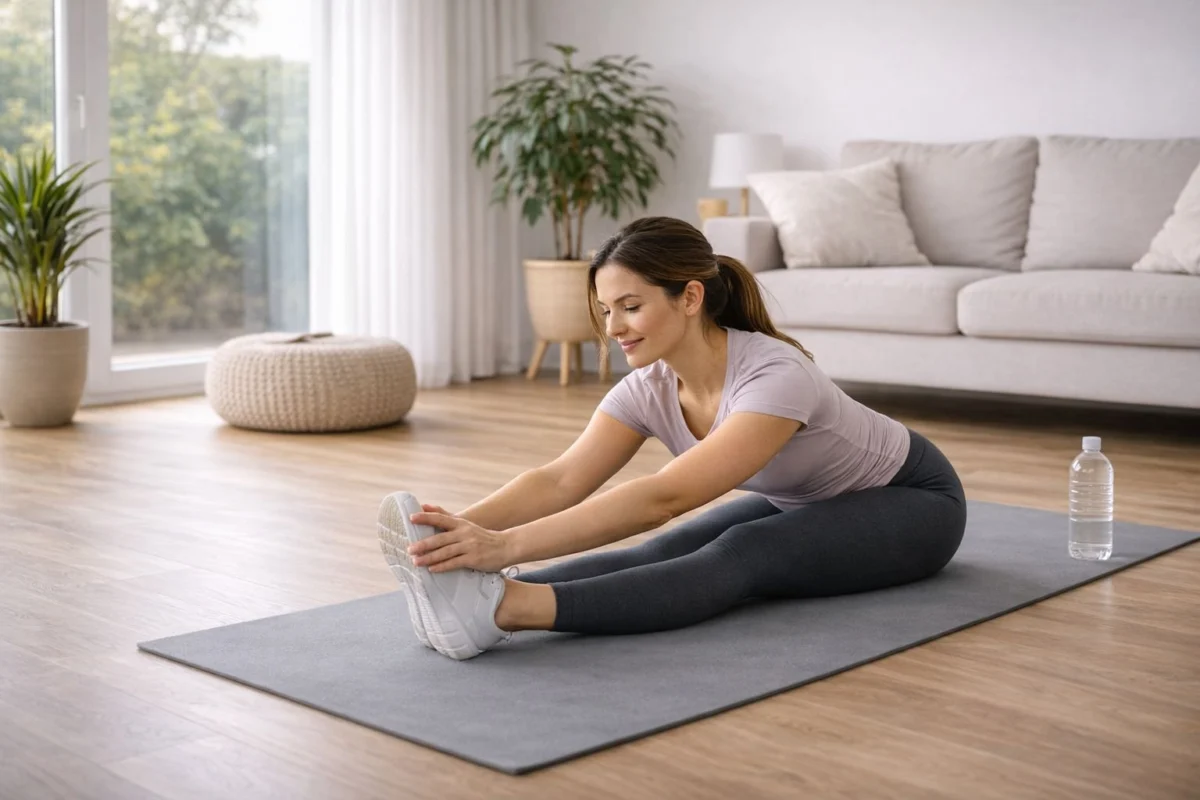
Photo via fitfuelkg.com
- Monday: full session — warm-up, low lunge, hamstring stretches, butterfly, supported splits hold.
- Tuesday: rest or gentle walking.
- Wednesday: full session, with extra time on whichever muscle group feels tightest.
- Thursday: rest or light yoga.
- Friday: full session, including the splits progression with support.
- Saturday: optional gentle session or active recovery — a walk, a swim, or easy stretching.
- Sunday: rest. Use the day to plan the week ahead — the Sunday Reset Checklist for Home and Body pairs well with a training plan.
Track your progress with a photo or a simple measurement, such as the height of the support block you need. Progress in flexibility is slow and easy to miss day to day, but a photo from a month ago usually tells a encouraging story.
Common Mistakes That Cause Injury
Stretching cold muscles: always warm up first. Cold stretching is the fastest route to a pulled hamstring or hip flexor strain.
Bouncing: ballistic stretching — bouncing in and out of a stretch — triggers a reflex that tightens the muscle and increases injury risk. Hold stretches still and breathe into them.
Forcing the position: pushing into pain, or having someone push you deeper, can tear muscle fibres. Mild tension is the right intensity; sharp pain means stop immediately.
Training only one side: the splits need both legs. Stretch both sides evenly, even if one side is naturally more flexible.
Skipping rest days: muscles adapt during recovery, not during the stretch itself. Daily aggressive stretching without rest leads to irritation and stalled progress.
Comparing yourself to others: hip structure and starting flexibility vary widely. Your timeline is your own, and comparing it to someone else’s only invites frustration and risky shortcuts.
How Long Until You See Progress?
That depends on your starting point. Someone who is already fairly flexible may reach the splits in six to eight weeks of consistent practice. Someone starting from very tight hamstrings and hip flexors may need three to six months — or longer. Both timelines are normal, and both are worth it.
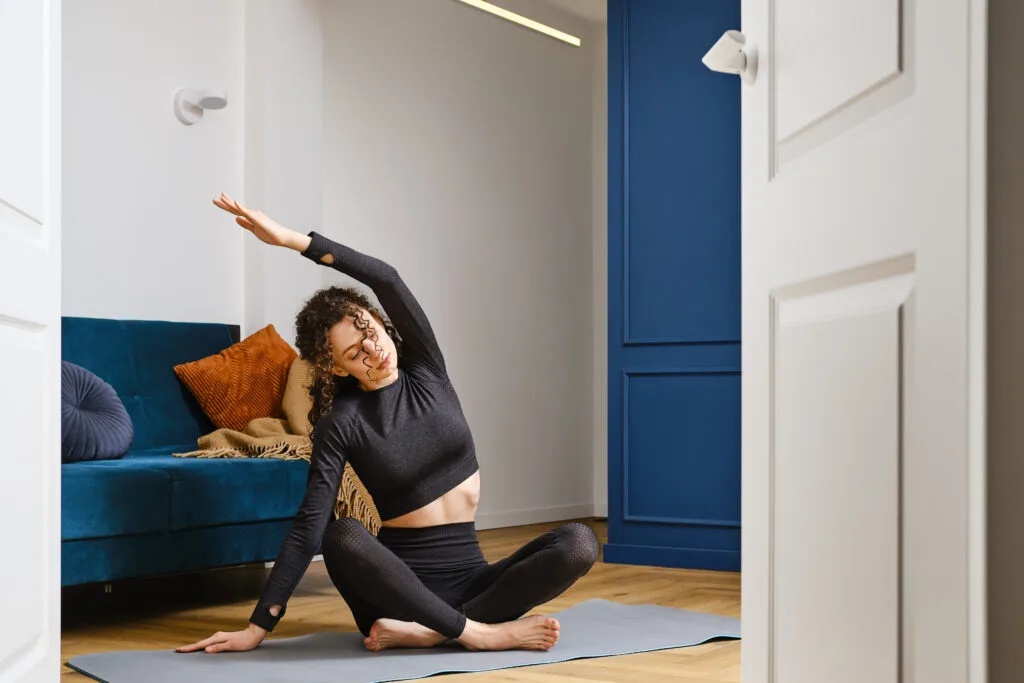
Photo via beginnerfithome.com
Progress is rarely linear. You will have weeks where your range improves noticeably and weeks where nothing seems to change. That plateau is normal — flexibility adapts in waves. What matters is showing up for the next session. Supporting habits help too: staying hydrated, sleeping well, and eating a nutrient-rich diet all support muscle recovery, and the Vitamins for Women: Essential Nutrients guide covers the nutrients that matter most for active women. A simple morning routine that includes stretching, hydration, and skin care — like the Glowing Skin Morning Skincare Routine — turns the splits goal into part of a wider habit of looking after yourself.
If you feel a sharp pain, a pop, or persistent soreness that does not ease within a few days, stop training and see a healthcare professional or physiotherapist. A minor strain caught early heals in weeks; one trained through can take months.
Frequently Asked Questions
How long does it take to learn the splits as a beginner?
It varies widely. Fairly flexible beginners may get there in six to eight weeks of consistent practice; those starting from very tight muscles may need three to six months or more. Regular training three to four times a week is the biggest factor.
Should I stretch every day to get my splits faster?
Not aggressively. Muscles adapt during recovery, so rest days matter. Three to four focused sessions a week is more effective than daily intense stretching, which can cause irritation and stall progress. Gentle daily movement is fine; deep splits work needs recovery time.
Is it normal to feel pain when stretching for splits?
Mild tension or a strong pull is normal. Sharp, stabbing, or burning pain is not — it is a signal to stop immediately. If pain persists after you stop, rest and consider seeing a physiotherapist before resuming.
Can anyone learn the splits, regardless of age?
Most people can improve their flexibility significantly at any age, though hip structure and previous injuries affect the end point. Some people’s hip anatomy makes full splits very difficult. Progress and comfort matter more than achieving a perfect flat split.
What is the best time of day to stretch for splits?
Whenever your muscles are warmest — usually late afternoon or evening, or right after a workout. Morning stretching is fine too, but allow extra warm-up time, since muscles are stiffer after sleep.
Final Thoughts
The splits are a goal that rewards the tortoise, not the hare. Warm up every time, stretch the right muscles, train three to four times a week, and respect the difference between tension and pain. Progress will come in waves — sometimes fast, sometimes slow — but it will come. And the flexibility, body awareness, and patience you build along the way are worth as much as the splits themselves.
Disclaimer: This article is for general informational purposes only and does not constitute medical or fitness advice. Stretching carries a risk of injury, especially if you have existing joint, muscle, or back conditions. Please consult a healthcare professional or qualified fitness instructor before starting a new stretching programme, and stop immediately if you feel sharp pain.