Squats show up in almost every strength program for a reason. One movement works the legs, glutes, and core together, builds everyday strength for climbing stairs and carrying groceries, and needs no equipment to start. The challenge is not the squat itself — it is knowing which variation suits you and how to do it with form that keeps your knees and back happy.
This guide covers the squat variations that work best for women at every level: the bodyweight squat, the goblet squat, the sumo squat, and the front squat. You will find step-by-step form cues, the gear that helps, the mistakes that hold people back, and a simple weekly plan to follow. Comfortable workout clothes make the whole thing easier, and the ideas in Gym Outfit Ideas for Your Next Workout are a good place to start if your gym drawer needs a refresh.
Key Takeaways
- Master the bodyweight squat before adding any weight — good form is the foundation everything else builds on.
- Start the movement by hinging at the hips, then bend the knees, as if you are sitting back into a chair.
- Keep your knees tracking in line with your toes throughout the whole squat.
- Aim for two to three squat-focused sessions a week, with at least one rest day between them.
- Stop right away if you feel sharp pain in your knees, hips, or back.
Why Squats Deserve a Place in Your Week
Squats are a compound movement, which means they work several large muscle groups at once: the quadriceps at the front of the thigh, the glutes, the hamstrings, and the core muscles that keep your torso steady. Few exercises give you that much return for one movement, and the strength carries straight into daily life — getting up from a low chair, lifting a suitcase, or walking up a steep hill all get easier.
Variety is the other advantage. A bodyweight squat, a goblet squat, a sumo squat, and a front squat each shift the emphasis slightly, so you can keep progressing without getting bored and without needing a full gym. A supportive outfit helps you move freely through all of them — stretchy, well-fitted bottoms like the ones in Blue Leggings Outfit Ideas with a Hoodie stay in place through deep squats and lunges alike.
Your Squat Toolkit: What You Will Need
You can start squatting with nothing at all, but a few simple pieces of gear make training more comfortable and open up new variations as you get stronger.
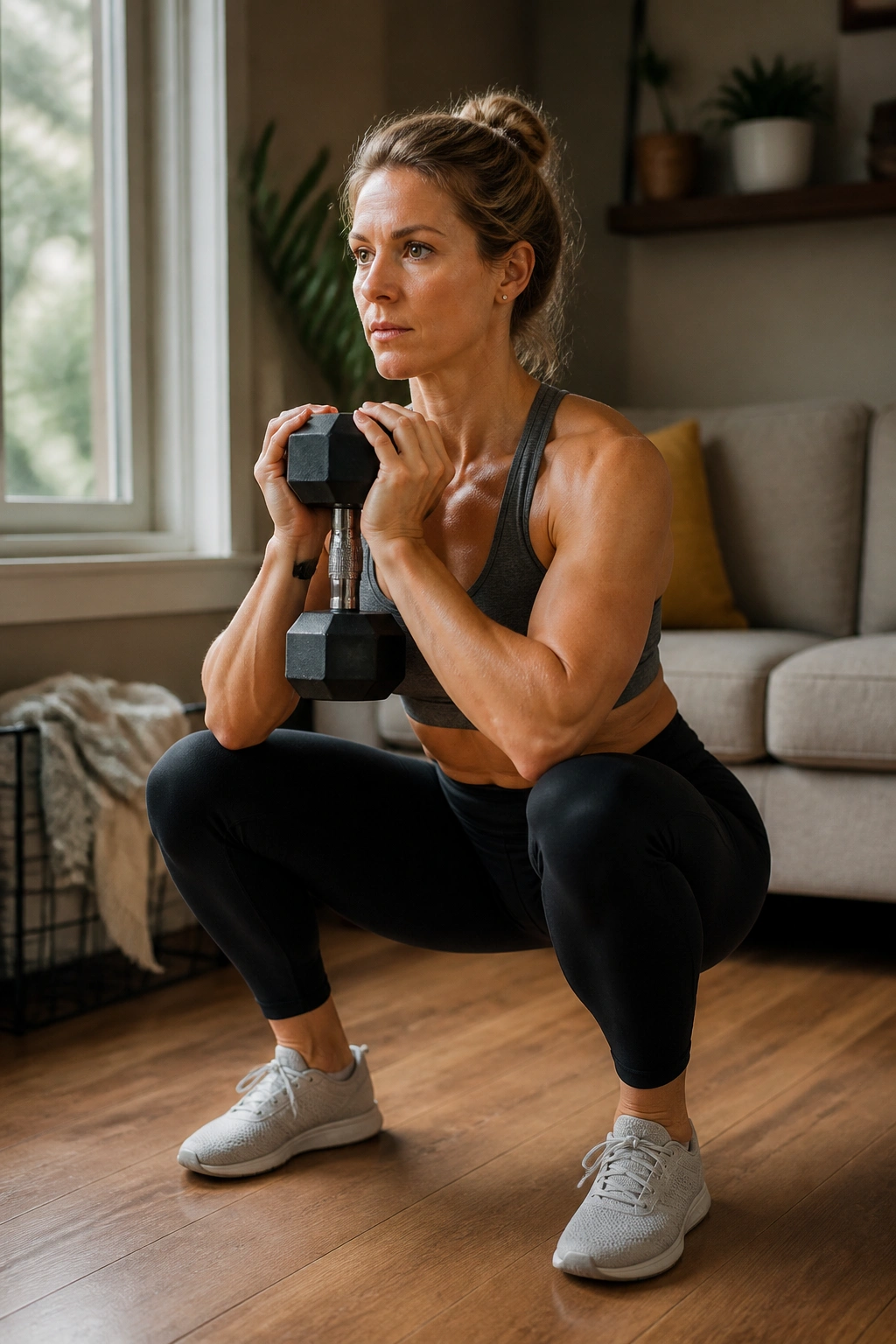
Photo via gymingdaily.com
- Stable athletic shoes: flat, grippy soles keep your feet planted. Avoid very cushioned running shoes, which can make you wobble.
- Dumbbells or a kettlebell: one dumbbell held at your chest turns a bodyweight squat into a goblet squat; two dumbbells at your sides add load to a regular squat.
- Resistance band: a loop band just above the knees wakes up the glutes and reminds your knees to track outward.
- Barbell and squat rack (optional): for heavier lifting later on, a rack lets you load and unload the bar safely.
None of this needs to be expensive. A single medium dumbbell and one loop band will carry you through months of progress before you need anything heavier.
Mastering the Bodyweight Squat: Step by Step
Every variation starts here. Spend a week or two making the bodyweight squat feel smooth and controlled before you add weight, and the harder versions will come much more easily.
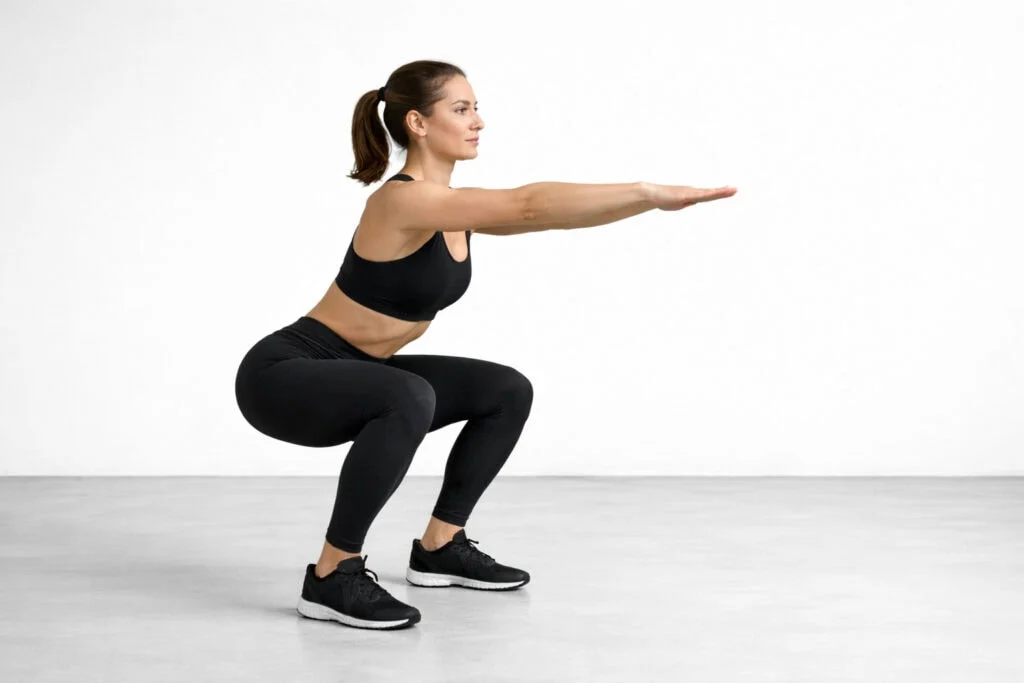
Photo via getfitsafely.com
- Set your stance: stand with your feet about shoulder-width apart, toes pointing forward or slightly outward, weight spread evenly across both feet.
- Hinge at the hips: push your hips back first, as if you are closing a car door with your glutes. The hips start the movement before the knees bend.
- Lower like sitting into a chair: bend your knees and lower your body, keeping your chest up and your spine in its natural position. Go as low as your mobility allows without rounding your back.
- Track your knees: your knees should travel in the same direction as your toes. If they drift inward, think about gently pushing them outward or widen your stance slightly.
- Drive up through your heels: press through your heels and midfoot to stand, and squeeze your glutes at the top.
Filming yourself from the side is one of the fastest ways to check your form. A mirror works too — look for an upright chest, a neutral back, and knees that stay in line with your toes.
Squat Variations Worth Trying
Once the bodyweight squat feels natural, these variations target different muscles and keep your training interesting.
Goblet Squat
Hold a dumbbell or kettlebell vertically against your chest with both hands. The weight acts as a counterbalance, which helps you stay upright and reach a comfortable depth. Keep your elbows pointing down and let the weight guide you into the squat. This is usually the best first weighted variation.
Sumo Squat
Take a wider stance with your toes turned outward more than in a regular squat. The wider position places extra emphasis on the inner thighs and glutes. Focus on pushing your knees out in the same direction as your toes for the whole movement.
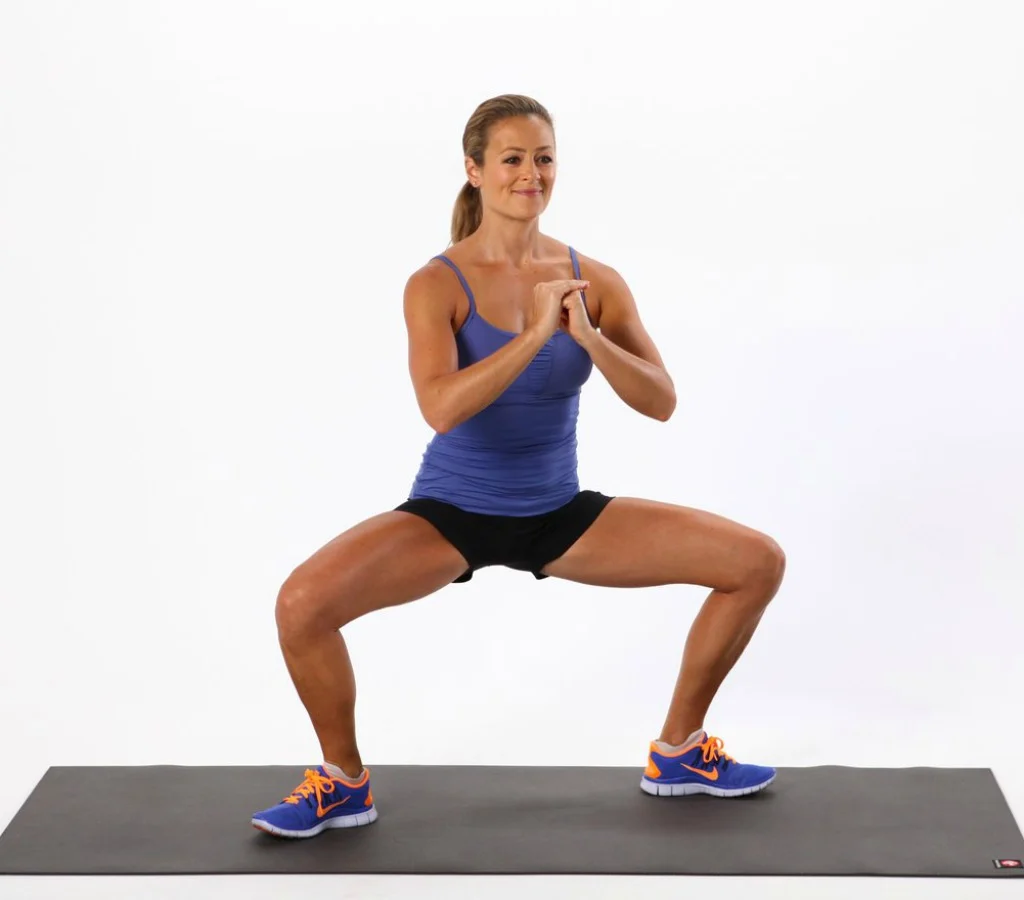
Photo via mogujatosama.rs
Front Squat
Rest a barbell across the front of your shoulders, or hold a dumbbell at each shoulder. The front-loaded position forces your torso to stay tall and places more demand on the quadriceps and core. The barbell version needs good wrist and upper-back mobility, so starting with dumbbells is a sensible way in.
Adding Resistance
Intensity can rise in small steps: hold dumbbells, wear a weighted vest, or loop a resistance band around your thighs. For barbell back squats, always use a squat rack and, when the weight gets heavy, a spotter. Whatever you wear should let you move without restriction — the comfortable everyday options in Cute Leggings Outfit Ideas work just as well for a home session as for errands afterwards.
Your Weekly Squat Plan
Two to three squat sessions a week, with at least one rest day between them, is enough to build real strength. A simple week looks like this:
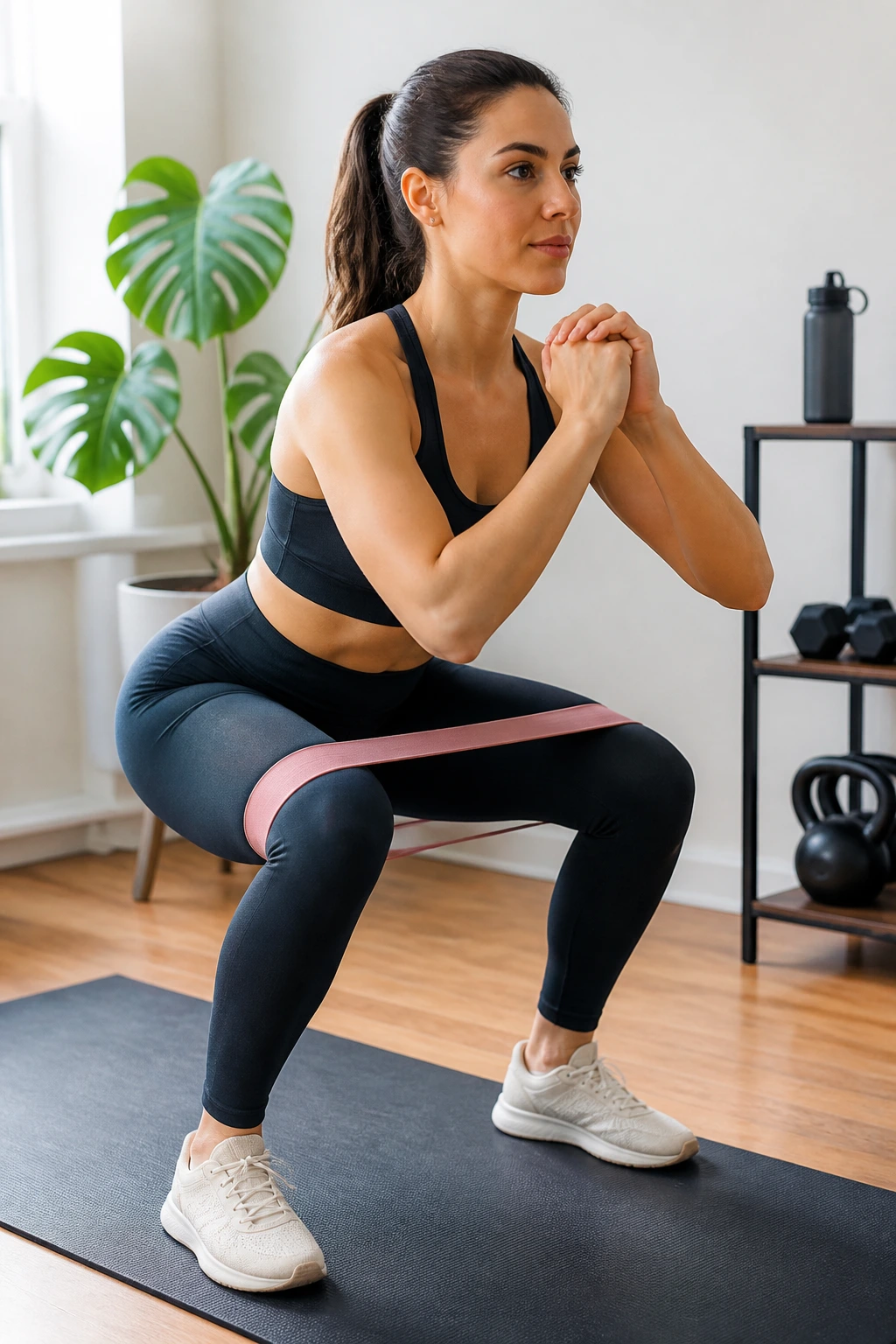
Photo via gymingdaily.com
- Monday — bodyweight squats: 3 sets of 10–12 reps. Focus on depth and control.
- Wednesday — goblet squats: 3 sets of 8–10 reps with a dumbbell or kettlebell.
- Friday — sumo squats: 3 sets of 10–12 reps, with or without a band above the knees.
- Other days: rest or light activity such as walking or gentle stretching.
Warm up for five minutes before each session with leg swings, hip circles, and a few easy bodyweight squats. If you feel unusual fatigue or joint discomfort, take an extra rest day or drop the weight — steady practice over weeks is what builds strength, not pushing through pain. A sporty, put-together look can make showing up easier, and the ideas in Sporty Outfit Ideas for Everyday Style bridge the gap between workout and the rest of your day.
Common Squat Mistakes and How to Fix Them
Rounding your back: keep your chest up and your core braced through the whole movement. Thinking about gently drawing your shoulder blades together can help.
Knees caving inward: push your knees outward so they track over your toes. A loop band just above the knees gives instant feedback if they drift in.
Not going deep enough: work on hip and ankle mobility with stretches and deep squat holds. Aim for thighs parallel to the floor, or lower if your mobility allows.
Heels lifting off the floor: press through your midfoot and heels rather than your toes. If your heels still lift, a small weight plate under each heel can help while you work on ankle mobility.
Holding your breath: breathe in as you lower down and breathe out as you stand up. Holding your breath raises pressure unnecessarily and makes the lift feel harder than it is.
When to Talk to a Professional
If you feel sharp pain in your knees, hips, or back during a squat, stop immediately and do not try to work through it. Anyone with existing joint issues, an injury, or a medical condition should check with a doctor or physical therapist before starting a squat routine. A certified personal trainer can also be worth a session or two: personalised form correction early on prevents habits that are much harder to undo later. And if your workout wardrobe needs pieces that move with you, the layered looks in Simple Leggings Outfits with Casual Cozy Layers and the flattering fits in Flare Leggings Outfit Ideas are both easy, comfortable choices.
Frequently Asked Questions
How many squats should I do a day to see results?
Rather than a daily number, aim for two to three squat-focused sessions a week. Within each session, three sets of 8–12 reps of a variation you can do with good form is a solid starting point. Consistency over several weeks matters far more than a high count in a single day.
Can squats help with knee pain?
For some people, strengthening the muscles around the knees through proper squatting can ease certain types of knee discomfort. But if you already have knee pain or an injury, talk to a doctor or physical therapist before starting a squat routine, and never squat through sharp pain.
What is the best squat variation for glutes?
The sumo squat, with its wider stance, emphasises the inner thighs and glutes more than a traditional squat. To target the glutes further, drive through your heels and squeeze at the top of each rep. Adding a dumbbell or a resistance band increases the challenge.
How do I know if my squat form is correct?
Check that your knees track in line with your toes, your chest stays up, your back stays neutral rather than rounded, and your weight sits through your heels. Squatting in front of a mirror or filming yourself from the side makes it easy to spot what needs adjusting.
Can I do squats every day?
Daily squatting is not recommended, because muscles need time to recover and rebuild. Two to three dedicated sessions a week with rest days between is the better pattern. Light bodyweight squats as part of a warm-up on other days are fine, but save the heavier work for your training days.
Final Thoughts
Start with bodyweight squats and stay with them until the movement feels natural and controlled. When it does, the goblet squat is the natural next step — it adds resistance while keeping your torso upright and your form honest. Within a few weeks of steady practice, most people notice real improvements in strength and stability. Quality always beats quantity with squats, so take your time, listen to your body, and let the weight follow the form rather than the other way around.
Disclaimer: This article is for general informational purposes only and does not constitute medical or professional fitness advice. Always consult a doctor, physical therapist, or certified fitness professional before starting a new exercise routine, especially if you have pre-existing injuries or health conditions. Stop exercising and seek medical advice if you experience sharp pain.