Some days your head feels less like a mind and more like a browser with forty tabs open: the half-finished errand list, the email you meant to send, the worry about next week, the birthday gift you still have not bought. None of it is huge on its own, but together it makes focusing on any single thing almost impossible. That crowded, buzzing feeling is mental clutter, and it is far more common than most people admit.
The brain dump method is a deliberately simple answer to that noise. You sit down for five to fifteen minutes and write down everything occupying your mind — tasks, worries, ideas, reminders — without sorting, judging, or editing anything. This guide explains how the technique works, what you need, the step-by-step process, and how to turn a raw list into a plan you can actually follow. Paired with a calmer weekly rhythm, like the one in the Sunday Reset Checklist for Home and Body, a regular brain dump can quietly change how heavy your days feel.
Key Takeaways
- A brain dump means writing down every thought, task, and worry for 5 to 15 minutes without editing or organizing anything.
- Pen and paper suit most people, but a notes app works too — pick whichever option distracts you less.
- Take a short break after writing before you review or sort the list.
- After the dump, group items into things to do now, things to schedule, and things to let go.
- Use it whenever overwhelm builds: daily, weekly, or whenever your head feels full.
What Is a Brain Dump, Exactly?
A brain dump is a short, focused writing exercise in which you move everything from your head onto a page. The aim is not to solve problems, make decisions, or produce a beautiful plan. It is simply to externalize the contents of your mind so you can look at them from the outside. Once a worry or task is written down, it stops looping in the background and becomes something concrete you can deal with — or deliberately set aside.
The technique is sometimes confused with journaling, but the two serve different purposes. Journaling usually means reflecting on feelings or events in sentences and stories. A brain dump is faster and rougher: fragments, single words, half-thoughts, and reminders in whatever order they surface. There is no narrative, no audience, and no standard for what counts. If it is taking up space in your mind, it belongs on the page.
Why Your Mind Feels So Full
Modern life asks your brain to hold an enormous number of open loops at once. Work deadlines sit beside household admin, family schedules, health reminders, and the constant drip of messages and notifications. Your mind was not designed to be a storage system, yet most of us use it as one — and the result is a background hum of unease that makes it hard to concentrate, fall asleep, or enjoy a quiet moment.

Photo via thesimplyblog.com
The Cost of Carrying It All
When thoughts stay unspoken and unwritten, they tend to repeat. You remind yourself of the same task a dozen times a day because you do not quite trust yourself to remember it. That repetition drains attention and energy, and it feeds procrastination: a vague pile of “things to do” feels so large that starting anything seems pointless. Writing the pile down breaks the cycle. The list is almost always shorter and more manageable than the fog in your head suggested, and seeing it clearly is the first step toward acting on it.
Work is often the biggest source of this overload, especially when the boundary between office and home blurs. If your mornings start in a rush, simplifying the small decisions helps too — a ready-to-go outfit from the Simple Work Outfits for Women or the Classy Casual Work Outfits collections is one less thing for your brain to hold before the day begins.
What You Need for a Brain Dump Session
One of the best things about this technique is how little it requires. There is no app to buy, no course to complete, and no special stationery to hunt down. Gather these basics and you are ready:
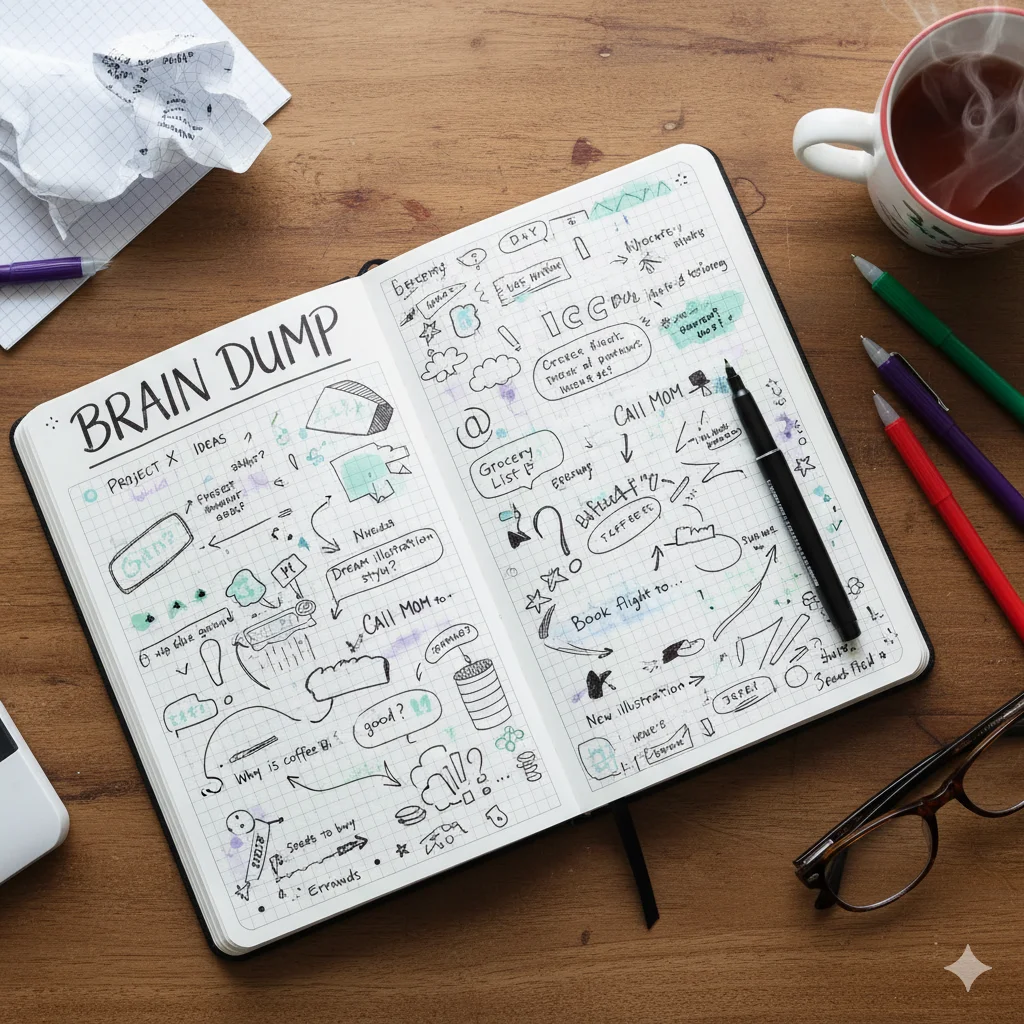
Photo via roseglyde.com
- A pen you enjoy writing with: a pen that flows smoothly keeps the words coming. The physical act of handwriting also slows you down just enough to let buried thoughts surface.
- Paper or a notebook: loose sheets work fine, but a dedicated notebook keeps your dumps in one place and makes the habit feel intentional.
- A timer: your phone timer is enough. A fixed window of 5 to 15 minutes keeps the session short and focused.
- A quiet spot: somewhere you will not be interrupted for the length of the session — a kitchen table, a park bench, or a corner of your bedroom.
- A digital option (optional): if typing feels more natural, a notes app or blank document works. Just silence notifications first so the tool does not become the distraction.
Comfort matters more than it sounds. A session done curled up in soft clothes, perhaps in your favourite cozy sweatpants outfit or a warm grey cardigan, is easier to return to than one squeezed into a stressful corner of the day. Make the ritual pleasant and it will stick.
How to Do a Brain Dump, Step by Step
Set aside fifteen quiet minutes, silence your phone, and close the tabs you do not need. The goal is to give the emptying process your full attention, even if only briefly.
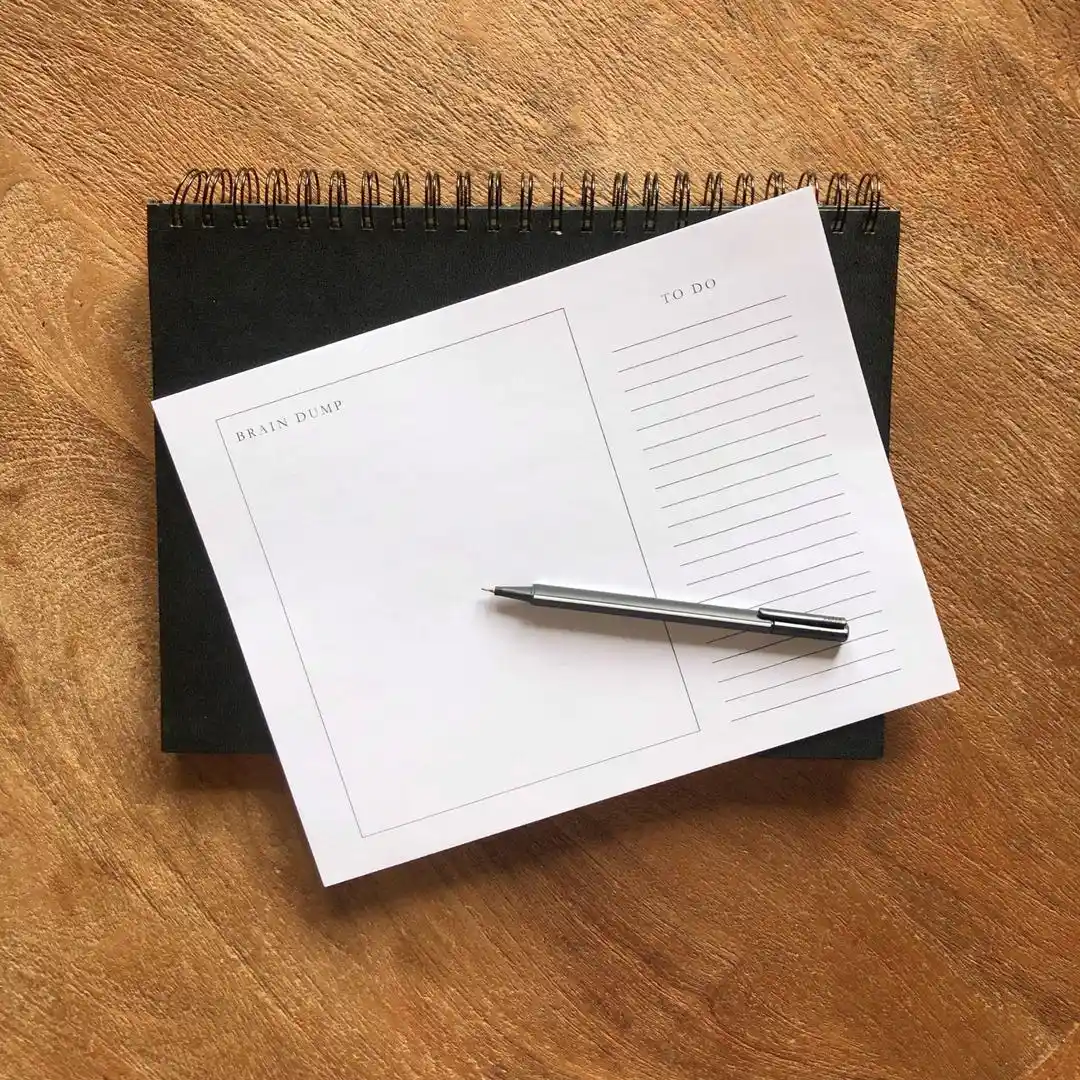
Photo via etsy.com
- Set a timer for 5 to 15 minutes: ten minutes is a good starting point. A short window pushes you to write quickly, which helps bypass the inner critic that wants every line to be neat and sensible.
- Write down everything: every task, worry, idea, reminder, and loose end. No item is too small or too silly. The dentist appointment, the awkward conversation from Tuesday, the gift idea for your sister — all of it goes on the page.
- Resist all editing: do not fix spelling, tidy your handwriting, group related items, or cross anything out. The only rule is to keep the pen moving until the timer rings. If you run dry, write the same thought again or describe what is around you until the next one surfaces.
- Take a short break: when the timer goes off, step away for two to five minutes. Get a glass of water, stretch, or look out of the window. This pause helps you shift from dumping mode into organizing mode with fresh eyes.
- Review and sort: read through the list and mark each item. Group the things you can do today, the things to schedule for later, the ideas worth keeping, and the things that can be delegated or simply discarded. This is where the raw list becomes a usable plan.
Keep the finished list somewhere visible for the rest of the day. Knowing the items have been processed reduces the urge to keep replaying them in your head, which is the whole point of the exercise.
Common Mistakes That Waste the Session
Organizing while you write: sorting, prioritizing, or categorizing during the dump defeats its purpose. Output first, organizing second — the two modes do not mix well.
Stopping too soon: the first minute usually surfaces the obvious items. The useful ones — the half-buried worry or the forgotten commitment — often appear in minutes three to eight. Keep writing until the timer ends, even if you repeat yourself.
Letting distractions in: a quick glance at your phone can pull you out of the flow for the rest of the session. Silence notifications and keep the phone face down.
Skipping the follow-up: a dump without a review is only half the technique. A few minutes of sorting afterward is what turns relief into real progress.
Treating it as a one-time fix: mental clutter rebuilds itself. A single session helps, but regular dumps — even short ones — prevent the pile from growing back.
Making Brain Dumps a Habit
The simplest way to keep the habit alive is to attach it to a moment that already exists in your day. A five-minute dump with your morning coffee can set a clear tone before the day starts, while an evening dump can quiet a busy mind before bed. Some people do a longer weekly session on Sunday, pairing it with planning the week ahead and a slow reset at home.

Photo via shoptearoom.com
Morning routines pair especially well with a short dump. A calm start — a few minutes of writing, then a simple glowing skin morning skincare routine — gives the day structure before the demands arrive. The point is not to build an elaborate ritual but to give your mind the same regular care you give your skin: a few steady minutes, every day, beats an occasional grand effort.
How Often Should You Do It?
There is no rule. Daily dumps suit people whose minds run busy, while a weekly session is enough for others. The honest signal is how your head feels: if the fog is back, it is time for another dump. Over time, you will notice patterns in what keeps appearing — recurring worries, tasks you keep avoiding, ideas that will not leave you alone. Those patterns are useful information, not failures.
When to Get Extra Support
A brain dump is a tool for everyday mental clutter, not a treatment for clinical conditions. If your lists consistently reveal severe anxiety, persistent low mood, or a feeling that you cannot cope with daily life, it is time to speak with a mental health professional. If overwhelm continues despite regular use of this and other self-help techniques, a therapist or counselor can offer deeper, tailored support. There is nothing weak about asking for it — it is simply the right tool for a bigger job.
Frequently Asked Questions
What if I do not know what to write?
Start with anything at all, even something small like “buy milk” or “reply to Priya.” If you still feel stuck, write about your surroundings or how your body feels right now. The act of writing itself usually unlocks more thoughts within a minute or two.
Is a brain dump the same as journaling?
No. Journaling usually involves reflecting on emotions, events, or goals in sentences or stories. A brain dump is a fast, unfiltered list of everything on your mind, with no reflection or storytelling. Its purpose is to clear mental clutter, not to process feelings in depth.
What is the best time of day for a brain dump?
It depends on when your mind feels most crowded. Many people like the morning, to clear overnight thoughts before the day starts, or the evening, to quiet the mind before sleep. Try both and keep whichever feels more useful.
Can I do a brain dump on my phone or laptop?
Yes. A notes app or a blank document works well if typing feels natural. The trade-off is distraction: notifications and open tabs can pull you away, so silence everything and use a full-screen, plain writing space if you go digital.
How long should a brain dump take?
Most sessions take 5 to 15 minutes. Ten minutes is a good default. The sorting step afterward takes another few minutes. The whole exercise, including the review, fits comfortably inside twenty minutes.
Final Thoughts
A brain dump will not organize your life for you, but it will show you what is actually in your head — and that is often a relief in itself. Keep a notebook or a note on your phone ready so the tool is there when the fog rolls in. Expect the first few sessions to feel messy; that is the point. With regular practice, you will notice clearer thinking, less procrastination, and a quieter mind at the end of the day. The goal was never a perfect list. It is giving your mind the space it needs to reset.
Disclaimer: This article is for general informational purposes only and does not constitute medical or professional advice. A brain dump is a tool for managing everyday mental clutter, not a treatment for clinical conditions. If you experience persistent severe anxiety, depression, or difficulty coping with daily life, please consult a qualified mental health professional.