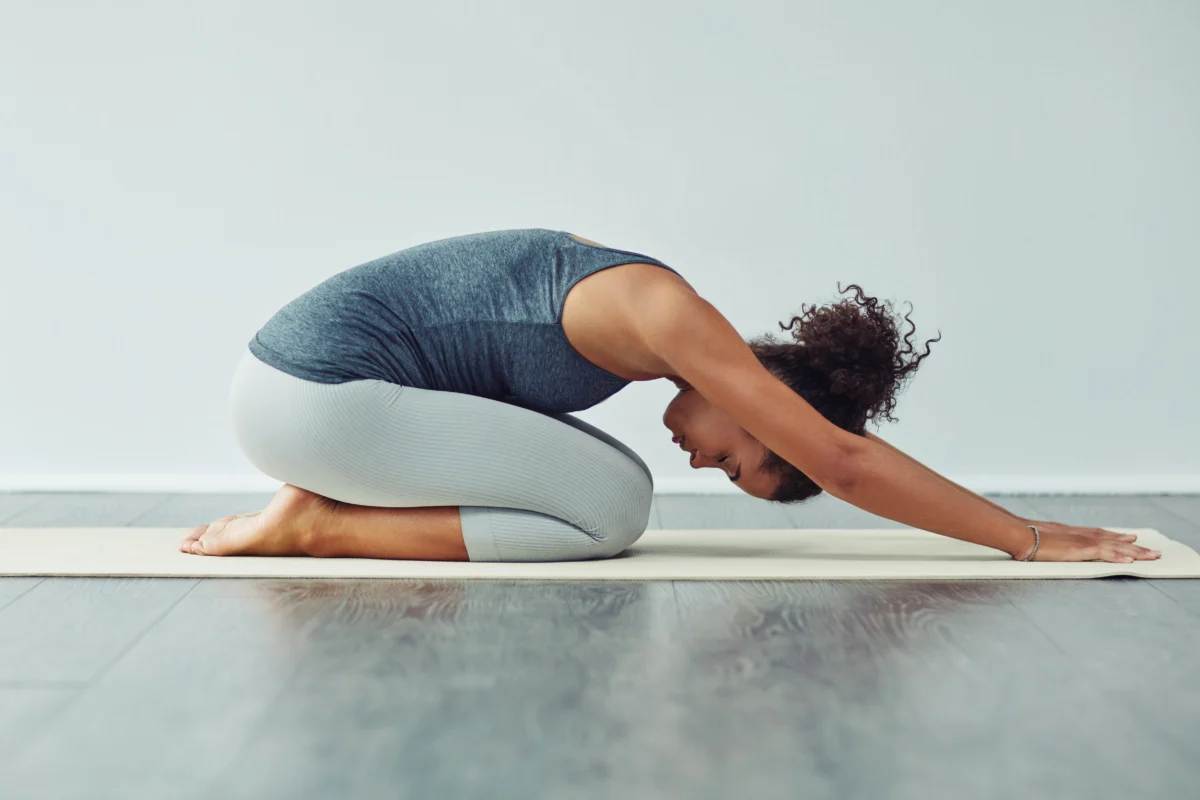
Everyone knows someone who smells wonderful at 6 p.m. — not overpowering, just a soft, lovely scent that seems to follow them everywhere. The secret is rarely an expensive perfume alone. It is layering: building fragrance in light, complementary stages from the shower onwards, so the scent has something to hold on to all day.
This guide explains why perfume fades, how to layer fragrance step by step, how to choose scents that work together, and the small habits that keep you smelling fresh from morning to night. A good scent is also part of a finished look — it pairs naturally with a polished outfit, whether that is a soft daytime look from Elegant Boho Outfits for Summer or an evening option from Classy Casual Party Outfits.
Key Takeaways
- Fragrance lasts longer on moisturised skin — always apply lotion before perfume.
- Layer in the same scent family: shower gel, body lotion, then perfume.
- Apply perfume to pulse points — wrists, neck, behind the ears — where warmth diffuses the scent.
- Do not rub your wrists together after spraying; it crushes the top notes.
- Store perfume away from heat, light and humidity to keep it smelling true.
Why Perfume Fades by Lunchtime
Perfume fades for a few predictable reasons. Dry skin gives fragrance nothing to grip, so it evaporates quickly. A single spritz on bare skin has only one thin layer to work with. And heat, movement and the natural chemistry of your skin all break scent down over the hours. The result is a fragrance that smells wonderful at 8 a.m. and is gone by noon.
Layering solves this by giving the scent a foundation. Each layer — shower gel, lotion, perfume — adds a little more fragrance and a little more staying power, and because the layers share a scent family, they blend into one smooth, long-lasting impression rather than competing with each other.
The Layering Method, Step by Step
Layering sounds elaborate, but it adds only a minute or two to a normal routine. The order matters: lightest products first, perfume last.
Step 1: Start in the Shower
Use a shower gel or body wash in a scent you love — floral, citrus, musky, whatever suits you. The warm water opens your pores and the scent settles lightly onto the skin as a first layer. Avoid heavily fragranced washes if your skin is sensitive; a gentle, lightly scented formula is enough.
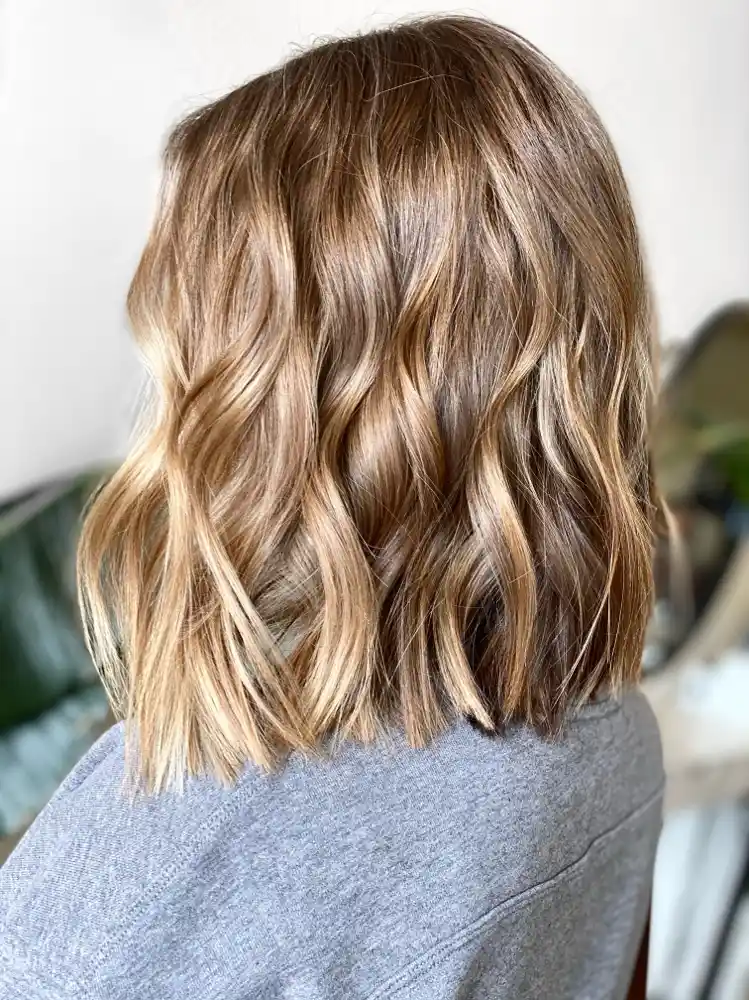
Photo via telegrafi.com
Step 2: Moisturise While Skin Is Damp
Apply body lotion or body oil within a few minutes of towelling off, while the skin is still slightly damp. This is the most important step for longevity: hydrated skin holds fragrance far longer than dry skin. Use a lotion in the same scent family as your perfume, or an unscented one if you prefer the perfume to speak alone. A matching body lotion from the same fragrance line is ideal — many brands sell them as sets.
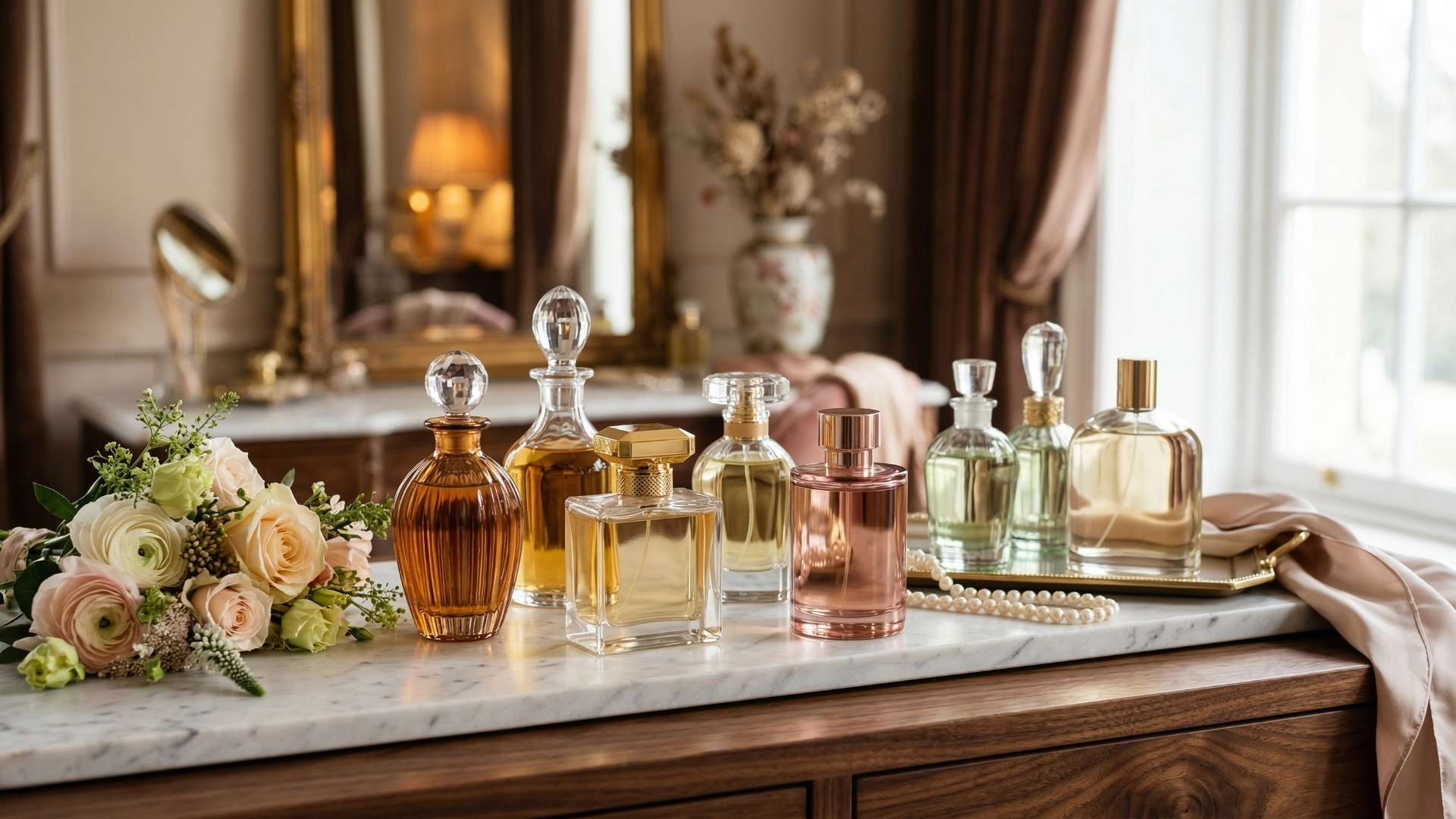
Photo via scentheaven.eu
Step 3: Apply Perfume to Pulse Points
Spray perfume onto your pulse points — the wrists, the sides of the neck, behind the ears, and the inner elbows. These warm spots gently diffuse the scent through the day. Two to four sprays is usually enough; the goal is a scent people notice when they are close to you, not one that enters the room before you do.
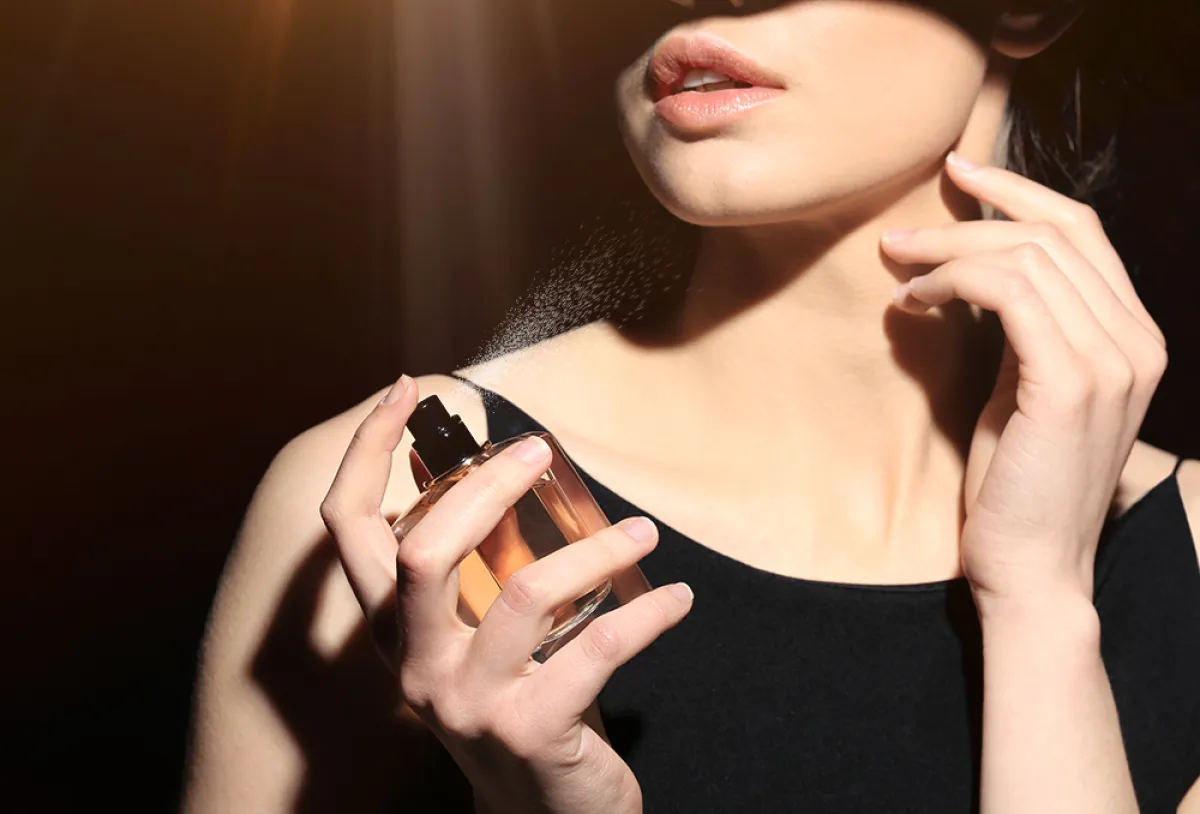
Photo via sayidaty.net
Step 4: A Light Touch on Hair and Clothes
A single spritz on the ends of your hair or on a scarf carries scent beautifully, since fabric and hair hold fragrance longer than skin. Spray from a distance rather than up close, and avoid spraying directly onto delicate fabrics such as silk, which can stain. Never spray perfume onto jewellery — alcohol can damage plating and stones.
Choosing Scents That Work Together
The simplest approach is to stay within one scent family. Floral shower gel, floral lotion and a floral perfume will always blend. Citrus layers well with light florals and green notes; vanilla and amber pair beautifully with warm woods and soft musks. If you want to mix, keep one scent dominant and let the others sit quietly underneath — a strongly scented lotion plus a strongly scented perfume in different families will clash rather than layer.
Season matters too. Light citrus, green and aquatic scents suit warm weather, when heat amplifies fragrance. Richer vanilla, amber and woody scents come into their own in cooler months, when they have room to unfold slowly. A cosy autumn look, like the layers in Classy Pink Sweater Outfits, pairs naturally with a warm, soft scent.
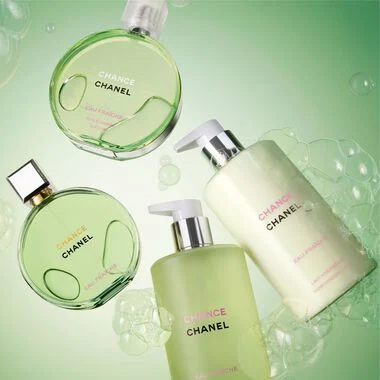
Photo via faces.ae
Making It Last All Day
Carry a travel spray: a small atomiser in your bag lets you refresh with one spritz in the afternoon. Reapply to one pulse point rather than redoing the whole routine.
Do not rub your wrists together: rubbing crushes the delicate top notes and changes how the perfume develops. Spray and let it dry on its own.
Apply after dressing, not before: spraying onto bare skin at the pulse points works better than spraying onto clothes, and it avoids staining fabric.
Store perfume properly: heat, light and humidity break fragrance down. Keep bottles in a cool, dark drawer — not in the bathroom, where steam and temperature swings shorten their life.
Stay hydrated and fresh: clean skin, fresh clothes and good hydration all support how fragrance sits. A weekly reset, like the one in Sunday Reset Checklist for Home and Body, is a good moment to wash scarves, refresh your bag and check your bottles. Small finishing touches complete the picture — a neat manicure with Natural Nail Designs with a Subtle Glow and a fresh morning routine like the Glowing Skin Morning Skincare Routine make the whole look feel intentional.
Common Mistakes to Avoid
Spraying too much: more perfume does not mean longer-lasting perfume — it means overpowering perfume. Two to four sprays is the sweet spot.
Mixing clashing scents: a strongly scented lotion in one family plus a perfume in another creates a muddle. Match your layers or keep the base unscented.
Applying to dry skin: perfume evaporates quickly from dry skin. Moisturise first, every time.
Spraying into the air and walking through it: most of the perfume lands on the floor, not on you. Apply directly to pulse points instead.
Keeping old bottles: perfume changes over time, especially once opened. If a bottle smells sour, sharp or nothing like it used to, it is time to replace it.
Frequently Asked Questions
How many sprays of perfume should I use?
Two to four sprays is enough for most eau de parfums. One on each wrist and one on the neck is a classic combination. Stronger concentrations need even less.
Why does my perfume not last on me?
The most common reason is dry skin, which lets fragrance evaporate quickly. Moisturising before applying perfume makes the biggest difference. Skin chemistry, a light eau de toilette formula and hot weather can also shorten wear time.
Can I layer two different perfumes?
Yes, if they share a scent family or complementary notes — for example, a citrus perfume over a soft musk base. Keep one dominant and test the combination on your wrist before wearing it out.
Where should I spray perfume for the longest wear?
Pulse points — wrists, neck, behind the ears and inner elbows — where body warmth diffuses the scent gradually. Hair ends and scarves also hold fragrance well.
Does perfume expire?
Perfume does not have a fixed expiry date, but it degrades over time, especially with heat, light and air exposure. Stored in a cool, dark place, a bottle typically stays true for three to five years after opening.
Final Thoughts
Smelling good all day is less about the price of your perfume and more about the foundation underneath it. A scented shower, a good moisturiser, two or three well-placed sprays and a travel atomiser for the afternoon will carry a fragrance from morning to night without ever overwhelming the room. Layer lightly, match your scents, and let the perfume do its quiet work — the best compliment a fragrance can earn is someone leaning in and asking what you are wearing.
Disclaimer: This article is for general informational purposes only. Fragrance products can cause irritation or allergic reactions in some people — patch test new products on a small area of skin first, and discontinue use if redness, itching, or irritation occurs. If you have sensitive skin or a known fragrance allergy, consult a dermatologist before trying new scented products.