Intermittent fasting has moved from a niche health trend to a mainstream eating pattern — and for good reason. Instead of telling you what to eat, it sets a window for when to eat, which many women find simpler to follow than calorie counting or cutting out whole food groups. Done well, it can help with weight management, steadier energy, and a calmer relationship with food. Done carelessly, though, it can leave you tired, irritable, and under-fueled.
This beginner’s guide covers the most popular methods, what to eat during your eating window, how to start gently over two weeks, and — just as importantly — who should not fast at all. Because fasting only works when the meals inside the window are genuinely nourishing, the High Protein Diet for Women guide is a useful companion for building satisfying, protein-rich plates.
Key Takeaways
- Intermittent fasting sets an eating window; it does not prescribe specific foods.
- Beginners usually start with a 14:10 or 16:8 schedule — 14 or 16 hours fasting, the rest eating.
- Stay hydrated during the fast with water, black coffee, or plain tea.
- Break the fast with a balanced meal built on protein, fiber, and healthy fats.
- Fasting is not suitable for everyone — check the safety section before starting.
What Intermittent Fasting Is
Intermittent fasting is an eating pattern that cycles between periods of eating and periods of not eating. During the fast, you consume no calories — water, black coffee, and unsweetened tea are fine — and during the eating window, you eat normally. It is not a diet in the usual sense: it does not ban foods or require special products. The structure itself does the work, mainly by making it easier to eat less overall and by giving digestion a regular break.
Photo via amazingteamnames.com
Research suggests intermittent fasting can support weight loss, improve insulin sensitivity, and help some people feel more in control of their eating. Results vary, and the evidence is still developing — fasting is a tool, not a miracle. What matters most is whether the pattern fits your life, your health, and your relationship with food. A method you can sustain for months beats an aggressive one you abandon in a week.
Popular Methods for Beginners
There is no single best schedule. The right one is the one that fits your routine and leaves you feeling well, not miserable.
14:10 — The Gentle Start
Fast for 14 hours and eat within a 10-hour window — for example, finishing dinner at 8 p.m. and eating breakfast at 10 a.m. This is the easiest entry point, and for many women it is enough: it simply formalizes skipping a late-night snack and a very early breakfast.
16:8 — The Most Common Method
Fast for 16 hours and eat within an 8-hour window, such as noon to 8 p.m. This usually means skipping breakfast and eating lunch and dinner. It is the most widely used method, and a natural next step after a week or two of 14:10.
5:2 — Two Light Days a Week
Eat normally five days a week, and on two non-consecutive days eat around 500–600 calories. This suits people who prefer normal eating most of the time, but the low-calorie days need planning to stay nutritious and tolerable.

Photo via ramble.cz
Whichever method you choose, hydration is essential during the fast. Water is the priority; black coffee and plain tea are generally fine and can help with morning hunger. Anything with calories — milk in coffee, juice, a “small bite” — breaks the fast.
What to Eat When You Do Eat
The eating window is not a free pass. Fasting works best when the meals inside it are balanced and satisfying — otherwise hunger and low energy will push you toward exactly the foods the fast was meant to reduce.
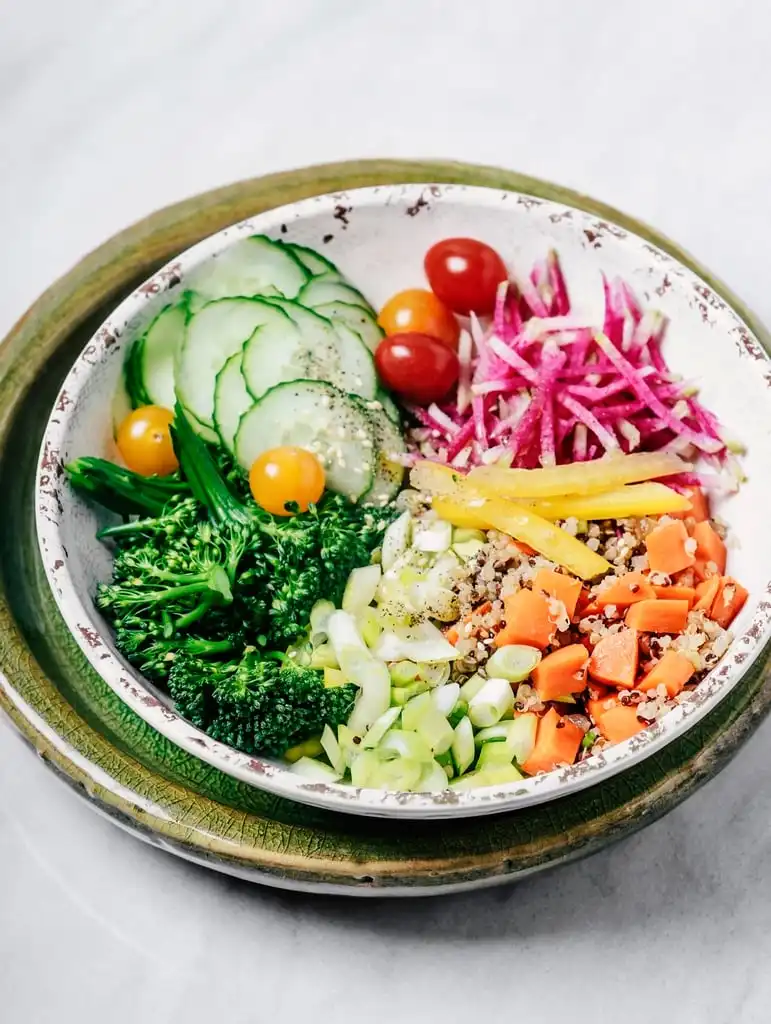
Photo via domedashboard.com
Build Meals on Protein and Fiber
Protein and fiber keep you full for longer, which makes the next fast much easier. Aim for a protein source at every meal — eggs, chicken, fish, beans, lentils, tofu, or yogurt — plus vegetables, whole grains, and healthy fats such as olive oil, nuts, and avocado. A colourful bowl with grains, roasted vegetables, and a protein is the template to aim for.
Break the Fast Gently
After 14 or 16 hours without food, a huge, heavy meal can leave you sluggish and uncomfortable. Break the fast with something balanced and moderate — a proper meal, not a feast — and eat slowly enough to notice fullness. If your first meal is breakfast, a protein-rich bowl with fruit, like the one below, is an easy start.
Because a shorter eating window makes it easier to miss nutrients, it is worth knowing what your body needs each day. The Vitamins for Women: Essential Nutrients guide covers the essentials — and if you are unsure whether your diet covers them, a doctor or dietitian can advise far better than a supplement shelf can.
Getting Started: Your First Two Weeks
Ease in rather than diving in. A gentle ramp lets your body and your schedule adjust without a miserable first week.
- Week 1, days 1–3: try 12:12. Simply stop eating three hours before bed and eat breakfast at your usual time. This builds the habit of a defined window with almost no hunger.
- Week 1, days 4–7: move to 14:10. Push breakfast an hour or two later, or finish dinner a little earlier. Drink water first thing — morning hunger often fades within an hour.
- Week 2: try 16:8 on some days. If 14:10 feels comfortable, extend the fast on two or three days and see how you feel. There is no rush to do it daily.
- Keep meals regular inside the window. Two or three satisfying meals beat constant grazing. Plan the week’s meals in advance if you can — the Sunday Reset Checklist for Home and Body is a good moment to do it.
- Track how you feel, not just the clock. Energy, sleep, mood, and hunger matter more than hitting an exact number of fasting hours. Adjust the window to fit your life, not the other way around.
Mistakes to Avoid
Starting too aggressively: jumping straight to long fasts usually ends in exhaustion and overeating. A gentle ramp builds a habit that lasts.
Treating the window as a free-for-all: fasting does not cancel out a diet of processed food and sugar. The meals inside the window decide most of the results.
Skipping protein: without enough protein, fasting can cost muscle along with fat, and hunger becomes much harder to manage.
Ignoring hunger signals: mild hunger is normal at first, but persistent dizziness, headaches, irritability, or exhaustion are signs to eat — and to reconsider the schedule.
Forgetting hydration: thirst often disguises itself as hunger. Keep water nearby all day, fasting or not.
Exercising hard while fasted before you are used to it: light movement is usually fine, but intense workouts on an empty stomach can feel awful at first. Schedule harder sessions inside or just after your eating window until you know how your body responds.
Who Should Not Fast
Fasting is not suitable for everyone, and for some people it can be harmful. Do not start intermittent fasting without medical advice if you are pregnant, breastfeeding, or trying to conceive; if you have diabetes or take medication that affects blood sugar; if you have a history of eating disorders; or if you are underweight or have a condition that affects nutrient absorption. Women with irregular cycles or hormonal conditions should also discuss fasting with a doctor first, since calorie restriction can affect hormones. If you take any regular medication, check whether it needs to be taken with food — that alone can rule out longer fasts.

Photo via oatsovernight.com
If fasting leaves you constantly tired, cold, irritable, or obsessed with food, it is not the right tool for you right now — and that is useful information, not failure. There are many ways to eat well, and the best one is the one that supports your health without taking over your life.
Frequently Asked Questions
Can I drink coffee while fasting?
Yes — black coffee, plain tea, and water do not break a fast. Milk, sugar, cream, or juice do add calories and will break it. If coffee on an empty stomach bothers you, wait until your eating window opens.
Will fasting slow down my metabolism?
Short daily fasts like 16:8 do not meaningfully slow metabolism for most people. Very low calorie intake over a long period can reduce metabolic rate, which is another reason to keep the eating window genuinely nourishing rather than restrictive.
Can I exercise while fasting?
Light exercise such as walking or gentle yoga is usually fine while fasted. For intense workouts, most beginners feel better training inside or just after the eating window. Listen to your body and adjust.
How long until I see results from intermittent fasting?
Many people notice changes in energy and appetite within two to three weeks, with weight changes — if that is the goal — showing over four to eight weeks of consistent practice. Results depend heavily on what you eat in the window and your overall activity.
Is fasting safe for women long-term?
Many women follow intermittent fasting long-term without problems, but responses vary. Some women find longer fasts disrupt their cycle, sleep, or energy. A moderate schedule like 14:10 or 16:8, with adequate nutrition, is generally better tolerated than aggressive fasting. If anything feels off, talk to a doctor.
Final Thoughts
Intermittent fasting works best when it is simple, moderate, and built on genuinely good meals. Start with 14:10, eat well inside your window, drink plenty of water, and let the habit settle over two weeks before deciding whether to go further. And keep the rest of life easy around it — comfortable clothes for the day, like the relaxed fits in Simple Leggings Outfits for Everyday Style and the gym-ready ideas in Gym Outfit Ideas for Your Next Workout, mean one less thing to think about while the new routine finds its place.
Disclaimer: This article is for general informational purposes only and does not constitute medical or dietary advice. Fasting is not suitable for everyone and can be harmful for some people, including those who are pregnant, breastfeeding, managing diabetes, taking certain medications, or with a history of eating disorders. Please consult a doctor or qualified dietitian before starting any fasting program.