Collagen is everywhere right now — in powders, capsules, drinks, and bone broth — all promising firmer skin, stronger nails, and healthier joints. Behind the marketing is a real story: collagen is the most abundant protein in your body, and your natural production starts declining from your mid-twenties, at roughly 1% a year. The question is not whether collagen matters, but how best to support it.
This guide explains what collagen does, the difference between getting it from food and from supplements, which foods genuinely help your body make more of it, and how to choose an approach that fits your budget and routine. It pairs well with the protein foundations in High Protein Diet for Women, since collagen is, at its core, a protein story.
Key Takeaways
- Collagen production declines from around age 25, which affects skin firmness, elasticity, and hydration over time.
- Hydrolyzed collagen peptides are broken into smaller pieces, so they absorb more efficiently than whole collagen from food.
- Food sources like bone broth, fish, and chicken supply collagen plus other nutrients that support your body.
- Vitamin C is essential for collagen synthesis — without it, your body cannot build collagen properly.
- Most people need at least 4–8 weeks of daily use before seeing noticeable skin changes.
What Is Collagen and Why Does It Decline?
Collagen is the structural protein that holds your body together. It makes up about 30% of your total protein and forms the scaffolding of your skin, bones, tendons, ligaments, and blood vessels. In skin, it is what keeps things firm, plump, and elastic. Type I collagen is the most common — around 90% of the collagen in your body — and it is the type most associated with skin, hair, and nails.
From about age 25, production starts to fall, and the decline speeds up over time. By the mid-forties, levels can be significantly lower than they were in your twenties. Sun damage, smoking, and a diet high in sugar accelerate the loss further by breaking down existing collagen. That is why the same skin that bounced back quickly at 22 starts to show fine lines and a little less firmness later — and why protecting what you have matters as much as adding more.
Collagen from Food: The Natural Sources
Dietary collagen comes from animal foods that contain connective tissue. These whole-food sources deliver collagen along with other nutrients, which is part of their appeal.

Photo via eatthis.com
Bone Broth
Made by simmering animal bones for 12–24 hours, bone broth extracts collagen from bones and connective tissue. The long cooking process breaks collagen down into gelatin, which your body can absorb more easily than intact collagen. It is also a comforting, low-cost way to get collagen into your week — as a soup base, a warm drink, or a cooking liquid for grains.
Fish and Chicken
Fish skin, scales, and bones contain marine collagen, which some research suggests may be more bioavailable than other types. Salmon, mackerel, and sardines are strong choices. Chicken — especially skin, cartilage, and bone-in cuts — provides Type II collagen, which is particularly associated with joint health. A roast chicken dinner, skin and all, is doing more for your collagen than a plain fillet.
Foods That Help Your Body Make Collagen
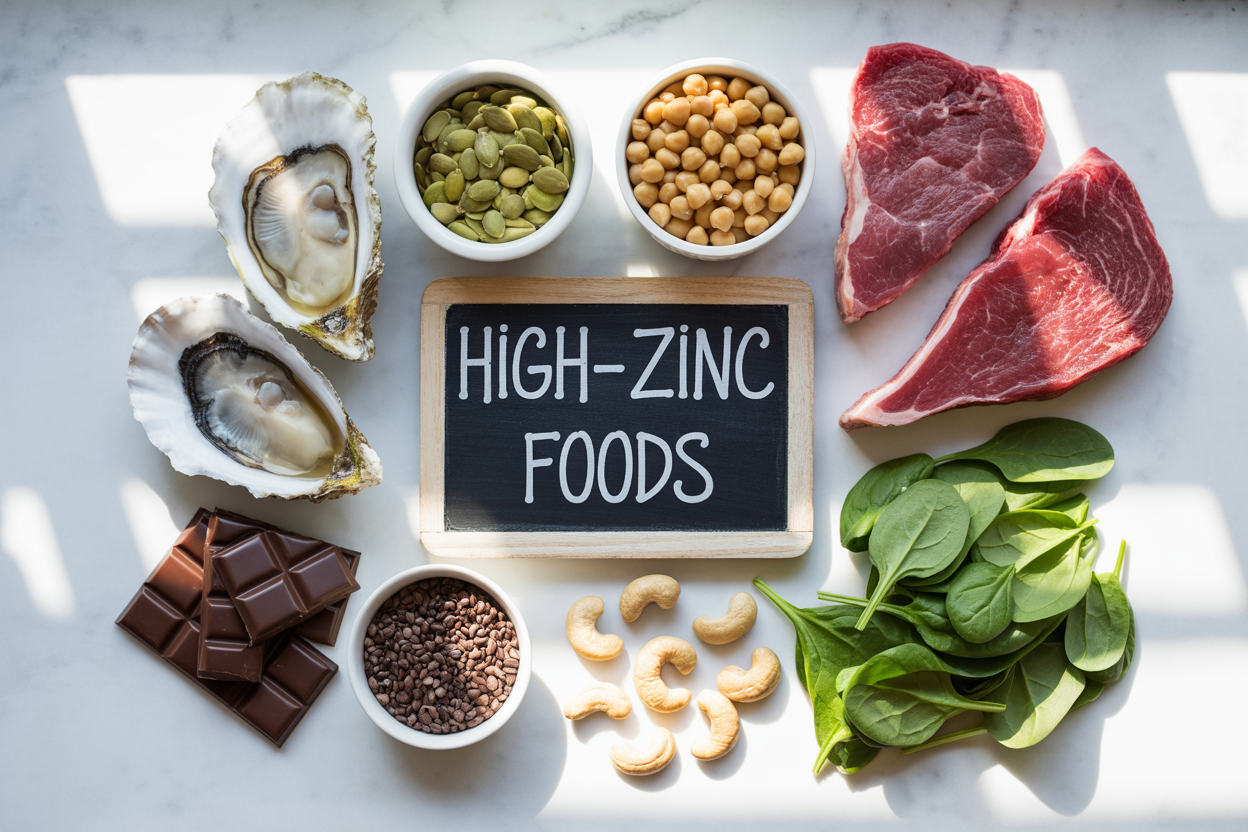
You do not only need collagen itself; you need the building blocks your body uses to make it. Vitamin C is the critical one — it drives the formation of procollagen, the precursor your body assembles from the amino acids glycine and proline. Citrus fruits, berries, kiwis, and bell peppers are rich in vitamin C. Proline comes from egg whites, dairy, cabbage, and mushrooms, while glycine is found in pork skin, chicken skin, and gelatin. Zinc and copper, found in nuts, seeds, and shellfish, also support collagen structure. The nutrient picture is covered in more detail in Vitamins for Women: Essential Nutrients.

Photo via momtasty.com
Collagen Supplements Explained
Supplements take a different route. Most contain hydrolyzed collagen — also called collagen peptides — which has been broken down by enzymes into much smaller pieces. That smaller size is the point: the peptides absorb more efficiently than the large collagen molecules in whole food, appearing in the bloodstream within about an hour of taking them.
Marine vs Bovine
Marine collagen, from fish skin and scales, is predominantly Type I — the type most associated with skin. Bovine collagen, from cows, typically provides Types I and III, supporting both skin and gut. Multi-collagen blends combine several types for broader coverage. For skin-focused goals, Type I is the one to look for; for joints, Type II from chicken collagen is the usual choice.
How Supplements Actually Work
An important clarification: you do not absorb collagen directly into your skin. The peptides are broken down during digestion, and the resulting amino acids signal your body to produce more of its own collagen. That is why consistency matters — the benefit comes from a steady supply over weeks, not a single scoop. Studies suggest supplements may improve skin hydration, elasticity, and wrinkle depth when taken daily for at least 4–8 weeks, though results vary and the strongest independent research is more modest than the marketing suggests.
How Much and When
For skin health, 10 grams of hydrolyzed collagen per day is a common starting point; broader goals, including muscle support, may use 20–30 grams. There is no best time of day — take it whenever it fits your routine, mixed into coffee, a smoothie, or soup. Powders and liquids tend to absorb faster than tablets, simply because they are already dissolved.

Photo via hlbenefits.com
Food vs Supplements: How to Choose
Neither approach is universally better — they suit different situations.
- Choose food first if you enjoy cooking, want the widest range of nutrients, and prefer a lower-cost route. Bone broth, fish, and vitamin C-rich produce cover a lot of ground.
- Choose supplements if you want a measured, consistent dose without changing your meals, or you rarely eat collagen-rich foods. Peptides are convenient and easy to absorb.
- Combine both if you want the best of each: a collagen-rich diet for the foundation, plus a daily peptide scoop for a reliable top-up.
What does not work well is relying on collagen creams to rebuild deep collagen. Collagen molecules are too large to pass through the skin, so creams hydrate the surface but do not replace lost collagen underneath. For topical support, ingredients like retinol, peptides, and vitamin C are more useful because they stimulate your skin’s own production — the same actives at the heart of Glowing Skin Morning Skincare Routine and the exfoliation guidance in Exfoliation: Physical vs Chemical Skin Care.
Common Collagen Mistakes to Avoid
Expecting instant results: collagen support is a slow build. Give any approach at least 8 weeks before judging it.
Ignoring vitamin C: without enough vitamin C, your body cannot synthesize collagen efficiently, no matter how much collagen you eat or take. Pair your collagen source with vitamin C-rich foods.
Forgetting sun protection: UV damage breaks down collagen faster than diet can rebuild it. Daily sunscreen protects the collagen you already have.
Choosing vegan “collagen” without reading the label: collagen is an animal protein and cannot be vegan. Products labelled vegan collagen are actually blends of the nutrients that support your body’s own production — useful, but not collagen itself.
Taking a huge dose at once: your body can only absorb a limited amount of protein per hour, so spreading intake through the day is more effective than one very large serving.

Photo via gourmendfoods.com
Frequently Asked Questions
How long does it take for collagen supplements to work?
Most people need at least 4–8 weeks of daily use before noticing changes in skin hydration or elasticity. Some studies show results closer to 8–12 weeks. Consistency matters more than dose — a daily habit beats an occasional large serving.
Can I get enough collagen from food alone?
Yes, if you regularly eat collagen-rich foods like bone broth, fish with skin, and chicken, and you get enough vitamin C, protein, zinc, and copper. Supplements are a convenient top-up rather than a necessity for most people.
Is marine or bovine collagen better for skin?
Marine collagen is predominantly Type I, which is the type most associated with skin, and some research suggests it may be slightly more bioavailable. Bovine collagen provides Types I and III and is usually more affordable. Either can support skin when taken consistently.
Do collagen creams rebuild collagen in the skin?
No. Collagen molecules are too large to be absorbed through the skin, so creams mainly hydrate the surface. To support collagen from the outside, look for products with retinol, peptides, or vitamin C, which help stimulate your skin’s own production.
Is there a vegan collagen supplement?
Not truly — collagen is an animal protein. Vegan products labelled as collagen are blends of amino acids, vitamin C, and minerals designed to support your body’s own collagen production. They can be useful, but they do not contain collagen itself.
Final Thoughts
Collagen support works best as a combination: collagen-rich foods and the nutrients that build it, daily sun protection to preserve what you have, and — if it fits your routine and budget — a peptide supplement for a consistent top-up. Give it two months before judging the results, and keep expectations honest: collagen is one piece of the puzzle, not a miracle cure. Healthy skin shows in the whole picture — from the glow of well-cared-for skin to warm-toned hair like Cute Caramel Brown Hair with a Sun-Kissed Glow and the soft dimension in Simple Honey Brown Highlights with a Warm Glow.
Disclaimer: This article is for general informational purposes only and does not constitute medical or nutritional advice. Supplements are not regulated in the same way as medicines, and individual results vary. If you have a medical condition, are pregnant, or take medication, please consult a healthcare professional before starting any supplement.