Humidity is the great undoer of good hair days. You can leave the house with smooth, defined curls and arrive with a halo of frizz, because hair absorbs moisture from damp air, swells, and lifts the cuticle that normally lies flat. The frustrating part is that frizz is not a sign of unhealthy hair — it is often a sign of thirsty hair reaching for water wherever it can find it.
The fix is a routine that gives hair the moisture it needs in the shower, seals it in while styling, and protects it from the air outside. This guide walks through each step: washing and conditioning for humidity, the styling products that actually help, drying methods that reduce frizz, and the habits that keep curls defined all day. Once the routine is working, the payoff shows in styles like the ones in Classy Curly Hair Natural Hairstyles, where healthy, defined curls do all the talking.
Key Takeaways
- Frizz happens when dry hair absorbs moisture from humid air — hydrated hair frizzes far less.
- Wash with lukewarm water and a sulfate-free shampoo, and always follow with conditioner.
- Apply leave-in conditioner and a sealing oil or serum to damp hair before styling.
- Dry with a diffuser on low heat, or air-dry without touching the curls as they set.
- Sleep on a silk or satin pillowcase to reduce friction frizz overnight.
Why Humidity Makes Hair Frizzy
Each hair strand is covered in overlapping cuticle scales, like tiles on a roof. When hair is dry or damaged, those scales lift slightly, and humid air slips moisture underneath. The strand swells unevenly, the cuticle roughens, and individual hairs bend in different directions — that is frizz. Curly and wavy hair frizzes most visibly because its bends and twists already lift the cuticle, and because natural oils from the scalp travel less easily down a curled strand.
This is why the same hair can look sleek in dry weather and wild in a humid one, and why the real solution is moisture management rather than fighting each strand. Hair that is already well hydrated has little reason to grab water from the air, so the cuticle stays flatter and the shape holds longer.
Your Anti-Frizz Toolkit
A short list of products covers the whole routine. Quality matters more than quantity — a few well-chosen formulas beat a shelf of half-used bottles.

Photo via coiffeur-soiree.com
- Sulfate-free shampoo: cleanses without stripping the natural oils that keep the cuticle smooth.
- Rich conditioner: the single most important step for frizz-prone hair; look for glycerin, shea butter, or argan oil.
- Leave-in conditioner: adds a layer of moisture that stays in the hair after the shower.
- Anti-frizz serum or light oil: seals the cuticle and creates a barrier against humid air.
- Microfiber towel or cotton T-shirt: absorbs water without the rough friction of a terry towel.
- Diffuser attachment: spreads dryer airflow so curls dry in their natural shape instead of being blown apart.
Step-by-Step: Washing and Conditioning for Humid Days
The shower sets the tone for everything that follows. A gentle wash routine keeps the cuticle calm from the start.
- Wash with lukewarm water: hot water lifts the cuticle and strips moisture. Keep the temperature comfortable, and finish with a cool rinse to help the cuticle lie flat.
- Shampoo the scalp, not the lengths: massage a sulfate-free shampoo into the roots, and let the rinse carry it through the ends. The lengths rarely need direct scrubbing.
- Condition generously: apply conditioner from mid-length to ends, where hair is driest. Leave it for two to three minutes so it can actually absorb.
- Detangle while the conditioner is in: use a wide-tooth comb on wet, conditioned hair, working from the ends upward. Never brush dry curly hair — it breaks the curl pattern and creates instant frizz.
- Do a weekly deep treatment: a hydrating mask once a week, especially in the humid season, keeps moisture levels up and reduces the hair’s urge to drink from the air.
How often you wash depends on your hair. Many people with curly or frizz-prone hair wash two to three times a week and refresh with water or a light leave-in on the other days. Over-washing strips the oils that protect against humidity, so less is often more.
Styling Products That Fight Humidity
Styling for humidity is about layering: moisture first, then a seal, then hold. Applied to damp hair in the right order, these layers work together instead of fighting each other.

Photo via waldajalia.com
Leave-In Conditioner First
Apply a leave-in conditioner to damp hair, focusing on the mid-lengths and ends. This is the moisture layer — it fills the hair shaft so humid air has less to offer. Use a small amount and add more only if the hair still feels dry; too much product weighs curls down and makes them look limp.
Seal with Serum or Oil
A few drops of anti-frizz serum or a light oil such as argan or jojoba, smoothed over the outside of the hair, seals the cuticle and creates a barrier against moisture in the air. Warm the product between your palms first, then glide it down the lengths rather than rubbing it in, which roughs up the cuticle you are trying to smooth.
Add Hold with a Curl Cream or Gel
For defined curls, a curl cream or a light gel applied with a scrunching motion helps curls clump together and hold their shape as they dry. A gel cast — the slight crunch that forms as gel dries — can be scrunched out once the hair is fully dry, leaving soft, defined curls underneath. The result is the kind of polished definition you see in Curly Hair Haircut Ideas for Defined Curls.
Drying Methods That Reduce Frizz
How hair dries matters as much as what goes on it. Rough drying is one of the biggest frizz triggers, and it is also one of the easiest to fix.
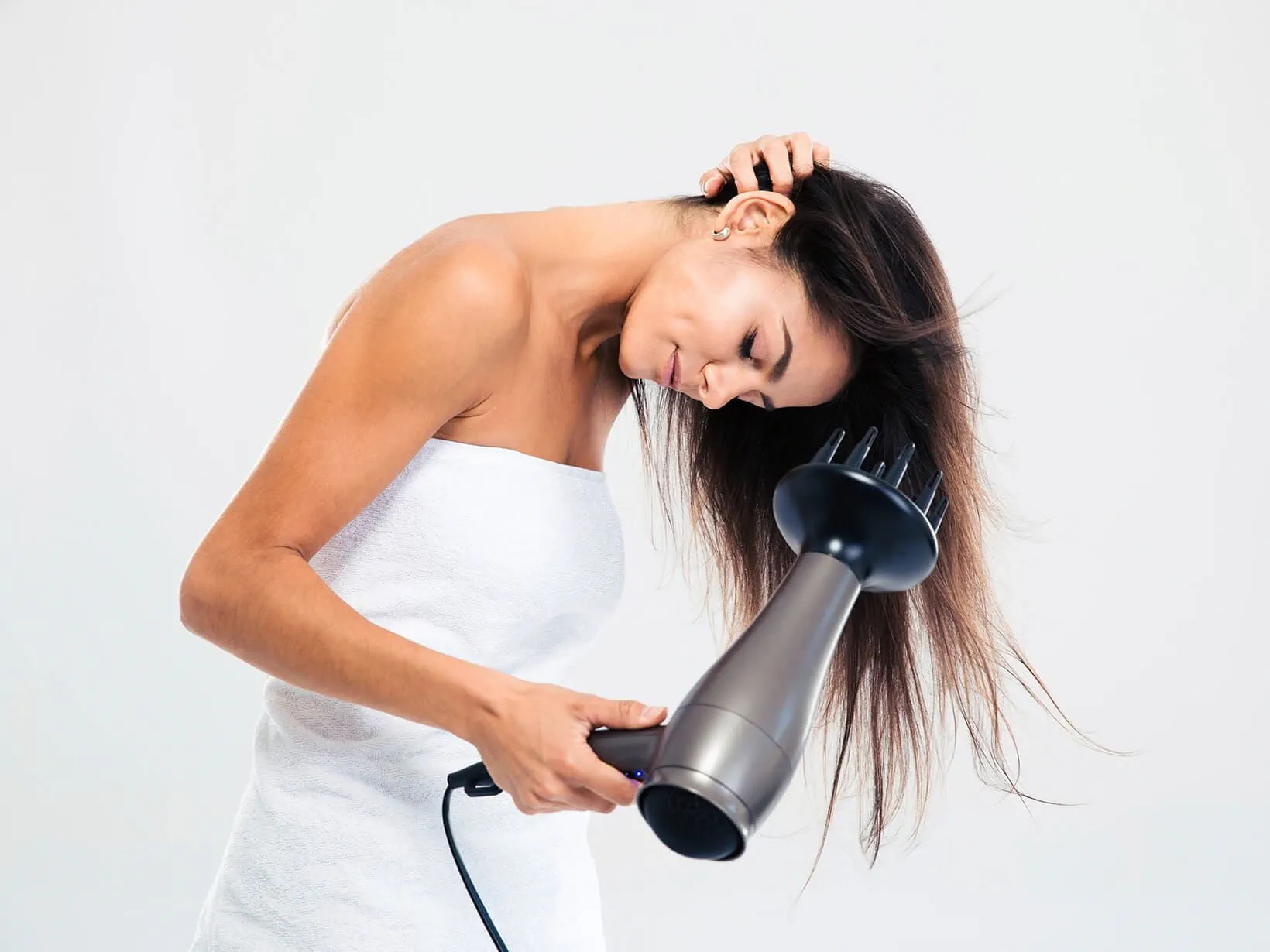
Photo via nivea.at
Blot, do not rub: after washing, press water out with a microfiber towel or an old cotton T-shirt. Rubbing with a terry towel roughs up the cuticle and creates frizz before styling even starts.
Diffuse on low heat: a diffuser spreads the airflow so curls keep their shape. Use low or medium heat, cup sections of hair into the diffuser, and hold still rather than moving the dryer around. High heat dries the surface fast but leaves the inside damp, which invites frizz as the hair finishes drying unevenly.
Air-dry hands-off: if you air-dry, apply your products, arrange the curls, and then leave them alone until fully dry. Touching wet curls breaks them apart and invites frizz. It takes patience, but the definition is worth it.
Do not brush dry hair: once curls are dry, use fingers only to arrange them. A brush turns defined curls into a cloud of frizz in seconds.
Daily Habits That Keep Frizz Away
Sleep on silk or satin: a silk or satin pillowcase — or a loose pineapple ponytail on top of the head — reduces overnight friction, so morning hair keeps yesterday’s definition instead of starting over.
Refresh with water, not more product: on non-wash days, mist the hair lightly with water and scrunch to reactivate yesterday’s products. Adding layer after layer of product builds up and dulls the hair.
Protect hair from rain and damp air: a light scarf or a loose updo on very humid days keeps the hair from drinking in moisture all day. Loose styles are kinder than tight ones, which stretch and break the curl pattern.
Trim regularly: split ends travel upward and roughen the cuticle, which makes frizz worse. A trim every eight to twelve weeks keeps the ends smooth and the shape tidy. A good cut also makes styling easier — the layered shapes in 3C Hairstyle Ideas for Defined Curls and Aesthetic Brown Wavy Hair with Face-Framing Layers work with the curl pattern instead of against it.
What to Expect, and When
Some changes show up immediately: a gentler wash and a proper seal can make the very next humid day noticeably smoother. The deeper improvement — hair that holds its shape for days and frizzes less overall — usually builds over three to four weeks, as moisture levels recover and the cuticle stays calmer wash after wash.

Photo via rootstocurls.com
Cost is modest: a sulfate-free shampoo, a good conditioner, one leave-in, and one serum cover the routine. Spend where it shows — usually the conditioner and the serum — and keep the rest simple. And remember that some frizz on the most humid days is normal, even with a perfect routine. The goal is hair that looks intentional and healthy, like the voluminous, glossy styles in Classy Medium Curly Hair Hairstyles for Volume and Shine, not hair that never moves at all.
Frequently Asked Questions
Why does my hair frizz more in summer?
Warm air holds more moisture, and humid summer air gives dry hair more water to absorb. The cuticle swells, the strand bends unevenly, and frizz appears. Keeping hair well hydrated and sealed is the most reliable defence in the humid months.
Should I brush my curly hair?
Only when it is wet and coated with conditioner, using a wide-tooth comb. Brushing dry curly hair breaks the curl clumps apart and creates frizz. For dry hair, use your fingers to arrange curls.
Is air-drying or diffusing better for frizzy hair?
Both work well if done gently. Diffusing on low heat with a diffuser attachment sets curls faster and with more definition, while air-drying is gentlest of all — as long as you leave the curls untouched until they are fully dry.
Can I use oil on fine hair without weighing it down?
Yes, if you keep the amount tiny — one or two drops, warmed between the palms and smoothed only over the ends. Light oils such as argan or jojoba work better on fine hair than heavier oils like castor or coconut.
How do I refresh second-day curls?
Mist the hair lightly with water, scrunch gently to reactivate the products already in it, and let it dry without touching. Add a tiny amount of leave-in conditioner only to the driest sections.
Final Thoughts
Taming frizz in humid weather is less about fighting your hair and more about understanding it. Give it moisture in the shower, seal it in while styling, dry it gently, and protect it overnight — and it will stop reaching for water from the air. The routine is short, the products are few, and the results build week by week. For finishing inspiration, the soft, defined looks in Curly Hair Highlight Ideas for Dimension show what well-cared-for curls can look like when the routine is doing its quiet work.
Disclaimer: This article is for general informational purposes only and does not constitute professional advice. Hair care results vary by hair type, texture, and condition, and a product that works for one person may not suit another. If you experience persistent scalp irritation, hair loss, or an allergic reaction to a product, please consult a dermatologist or qualified hair professional.