Grounding — also called earthing — is one of the simplest wellness practices there is: making direct skin contact with the surface of the Earth. No equipment, no app, no membership. Just bare feet on grass, sand, or soil, and a few unhurried minutes outdoors. It sounds almost too simple to matter, which is exactly why many people are curious about it.
This guide walks through what grounding is, why people practise it, which surfaces actually work, and how to start safely as a beginner. It also covers indoor alternatives for days when getting outside is not possible. Like any small ritual, grounding works best when it becomes a regular part of the week — the same gentle structure behind a routine such as the Sunday Reset Checklist for Home and Body.
Key Takeaways
- Grounding means direct skin contact with conductive surfaces such as grass, sand, soil, or unsealed concrete.
- Aim for 15 to 30 minutes a day; benefits, if any, tend to build slowly over weeks of regular practice.
- Asphalt, wood, and synthetic turf do not conduct, so they do not work for grounding.
- Always check the ground for sharp objects, glass, or contaminants before walking barefoot.
- Talk to a healthcare professional first if you have a medical condition or use a pacemaker.
What Grounding Is and How It Is Said to Work
The idea behind grounding is that the Earth carries a subtle electrical charge — a constant flow of electrons across its surface — and that direct skin contact lets the body absorb some of those electrons. Supporters of the practice believe this helps balance the body’s own electrical potential, which may in turn support lower stress and reduced inflammation. It is a complementary wellness practice, not a medical treatment, and the research behind it is still early: small studies exist, but large-scale evidence is limited.
What is not in doubt is that the practice itself is pleasant. Standing barefoot on cool grass or warm sand, away from screens, for fifteen unhurried minutes is a genuinely calming way to spend time outdoors — whether or not the electrical explanation convinces you. Many people treat grounding as a mindfulness ritual first and an experiment second, and that framing keeps expectations honest.
The Surfaces That Work — and the Ones That Don’t
Not every outdoor surface counts. For grounding, the surface needs to conduct the Earth’s charge to bare skin. Grass, sand, soil, and unsealed concrete all work well. Wet grass is often described as the easiest starting point, since moisture improves conductivity and the surface is soft underfoot.

Photo via hasanjasim.online
Asphalt, wood decking, and synthetic turf do not conduct, so standing on them barefoot will not provide the same connection. Shoes with rubber soles block the transfer too, which is why the practice requires bare skin. A useful rule: if the surface is natural and part of the ground itself — grass, earth, sand — it works; if it is a manufactured layer sitting on top of the ground, it usually does not. A beach is an ideal setting, and if a seaside walk is on the cards, the looks in Coastal Outfit Ideas for Beach Vacations make the outing feel like an occasion rather than a chore.
How to Start Grounding Outdoors
Beginning is deliberately simple. There is no technique to master and no posture to hold — the whole point is to make contact and stay there for a while.
- Choose your spot: find a safe, natural area — a patch of grass, a sandy beach, or a stretch of soil. Check the ground for sharp objects, glass, or animal waste before you begin.
- Remove shoes and socks: direct skin contact is essential. Feet need to touch the surface without any barrier. If you plan to sit or lie down, expose your hands, arms, or legs as well.
- Make contact: walk slowly on the grass or sand, or sit or lie down directly on the ground. The more skin surface in contact, the greater the potential connection.
- Stay consistent: aim for at least 15 to 30 minutes of uninterrupted contact each day. Benefits are often subtle and tend to build over weeks or months of regular practice.
- Stay safe: avoid grounding during lightning storms or near electrical hazards. If you have a pacemaker or another implanted device, talk to your doctor before starting.
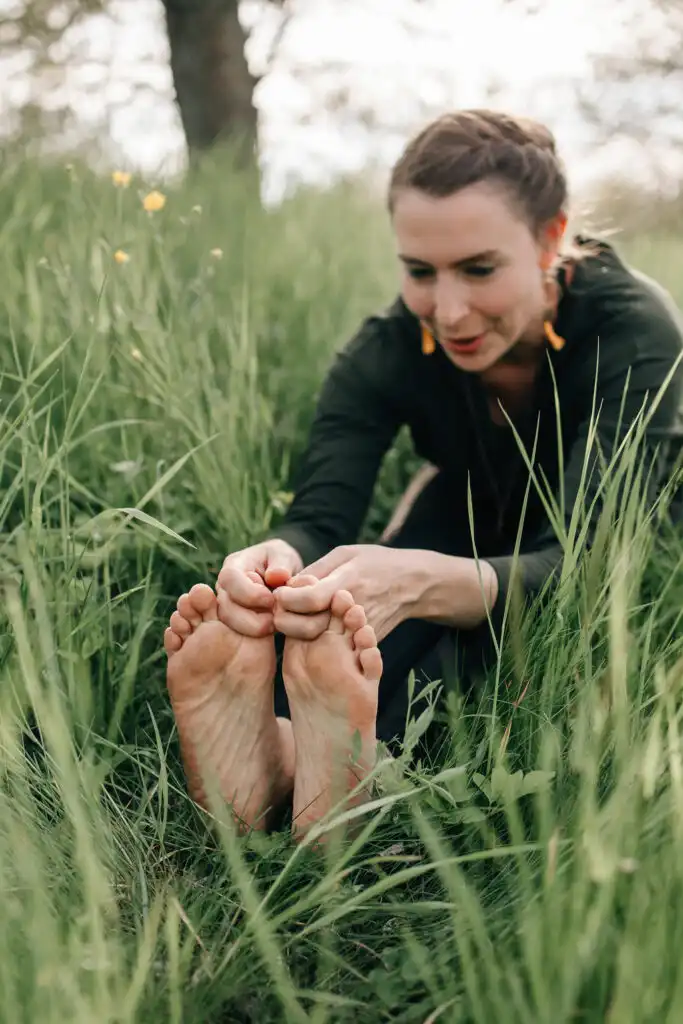
Photo via koerpergefuehl.net
Different Ways to Connect With the Earth
Walk Barefoot on Natural Surfaces
This is the most straightforward method: walk on grass, sand, or soil for 15 to 30 minutes. It works well as a morning or evening ritual, and it pairs naturally with a slow walk rather than brisk exercise. Choose a clean area free of debris and pesticides, and rinse your feet afterwards. A warm-weather walk fits beautifully with holiday plans too — the easy, sunlit mood of Tropical Outfit Ideas for Your Next Vacation is exactly the kind of unhurried day grounding suits.

Photo via healthyfeetsolutions.com
Sit or Lie Directly on the Ground
For more skin contact, sit on the grass or lie down directly on the ground. This lets the whole body connect at once, which some people prefer to walking. If you want a light barrier, a thin cotton blanket still allows significant contact. Check for ants, ticks, or other insects before settling in, and keep the session short at first while you get used to the feeling.
Use Indoor Grounding Products
If you live in a city or have limited outdoor access, grounding mats, sheets, or patches offer a practical alternative. They connect to a grounded outlet to simulate the Earth’s charge: mats sit under a desk or feet while working, sheets work overnight on the bed, and patches stick to specific areas of skin. Follow the manufacturer’s instructions carefully, and treat them as a complement to outdoor time rather than a full replacement.
Common Grounding Mistakes to Avoid
Assuming any outdoor surface works: asphalt, wood, and synthetic turf are not conductive, so they will not provide the connection. Always confirm you are on grass, sand, soil, or unsealed concrete.
Keeping shoes on: being outside does not automatically mean you are grounded. Rubber soles block the transfer, so shoes and socks need to come off for the practice to work as intended.
Expecting immediate, dramatic changes: many people find any benefits build slowly over weeks or months. Consistency matters far more than intensity — a short daily session beats one long weekend attempt.
Skipping the safety check: barefoot walking needs a quick scan of the ground first. Sharp stones, broken glass, and hot pavement are all real hazards, and a cut foot ends the practice for days.

Photo via namaslaycrew.com
Bare feet also deserve a little care of their own — after a session, wash and moisturise them, and keep nails neat. A simple finish like the one in Simple Toe Nails Designs: Classic French Pedicure or the seaside-inspired Pedicure Nail Ideas for Beach Vacations keeps feet looking as good as they feel.
How Long, How Often, and When to Check With a Doctor
Aim for at least 15 to 30 minutes of grounding each day. You can break it into shorter sessions if that fits your schedule better — two ten-minute walks count just as well as one twenty-minute sit. Outdoor grounding costs nothing; indoor mats or sheets require a one-time purchase but can be a good alternative when you cannot get outside.
Talk to your doctor before starting grounding if you have a medical condition or take medication, and especially if you have a pacemaker or another implanted medical device, since the electrical connection may interfere with it. Grounding is a complementary wellness practice, not a replacement for medical treatment — and it works best alongside the fundamentals of health, including the nutrients covered in Vitamins for Women: Essential Nutrients.
Frequently Asked Questions
How long does it take to feel effects from grounding?
There is no set timeline, and many people find that any benefits are subtle and build gradually over weeks or months of consistent practice. Some notice a difference in how they feel after a single session, but grounding works best as a long-term habit rather than a quick fix.
Can I ground indoors effectively?
Yes, conductive mats, sheets, or patches that connect to the Earth through a grounded outlet can work indoors. This is a good option with limited access to safe outdoor spaces — just make sure the product is designed for earthing and follow the manufacturer’s instructions.
Is grounding safe for everyone?
Grounding is generally considered safe for most people, but there are exceptions. If you have a pacemaker or another implanted medical device, talk to your doctor before trying it, especially with indoor equipment. Also avoid grounding during lightning storms or near electrical hazards.
What surfaces are best for grounding?
The best surfaces are natural, conductive materials like grass, sand, soil, and unsealed concrete. Asphalt, wood, and synthetic turf do not conduct the Earth’s charge. Always make sure you have direct skin contact with a conductive surface.
Does grounding replace medical treatment?
No. Grounding is a complementary wellness practice and should not replace any medical treatment or medication. If you have a health condition or take medication, consult your healthcare provider before adding grounding to your routine.
Final Thoughts
If you are new to grounding, start with 15 to 30 minutes a day on a clean patch of grass or sand. Keep expectations modest, stay consistent, and treat the time as a small daily pause rather than a task to optimise. The most important thing is to make it a regular, enjoyable part of your outdoor time — barefoot, unhurried, and away from screens. Whether the benefits come from electrons or simply from twenty quiet minutes outside, the habit itself is a good one to keep.
Disclaimer: This article is for general informational purposes only and does not constitute medical advice. Grounding is a complementary wellness practice and should not replace professional medical care. If you have a health condition, take medication, or use a medical device, consult your healthcare provider before starting grounding.