Choosing a hairstyle should not feel like solving someone else’s puzzle. The pressure to find something that looks current, sits well with your face, and still feels like a decision you actually made can turn a simple style change into an overwhelming task. Hairstyle ideas for Black women work best when they start from what you already know about your own texture, your comfort, and how much maintenance you want to carry through the week. You get to set the terms before anyone else weighs in.
A good decision begins before the reference photo. The useful question is not which style is trending but which visible details make a style hold together on a real person in a real setting. This article judges each look by four variables: proportion, meaning how the volume and length sit relative to the head and shoulders; texture contrast, meaning what happens when smooth meets coiled or twisted meets loose; placement, meaning where the visual weight falls and how sections are divided; and finish, meaning whether the surface reads as matte, glossy, defined, or deliberately undone. Those four filters appear in every section that follows, applied to what each photograph actually shows rather than to what a caption might claim. Where a photo cannot fully support its topic heading, the text says so directly.
1. Flat Twists Carry Volume to the Ends
The strongest detail here is the transition point where flat cornrow-style braids along the scalp give way to chunky two-strand twists that hang freely past the ear. The hair is dark black with a slight sheen, and the twists curl inward at their tips, creating a rounded silhouette at jaw level. The parting pattern fans outward from the crown, with narrow, clean rows visible across the entire top half of the head.
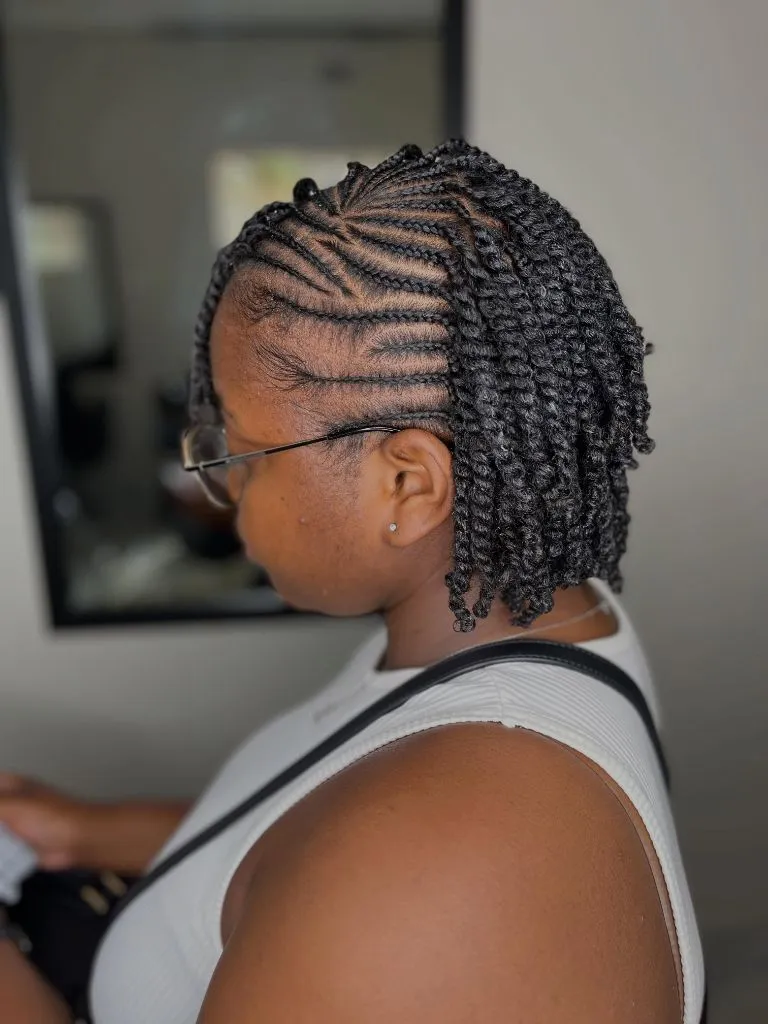
Photo via Instagram
The proportion works because the tight, flat base compresses volume at the top while the free-hanging twists expand it at the bottom. This moves the widest point of the hairstyle to the jawline rather than the crown, which frames the side of the face with soft, textured movement instead of height. The glasses sit neatly below the braided section, and the white top provides a clean background that makes the dark texture more readable. The ear is partially revealed, which keeps the overall silhouette from feeling closed.
This is a style that earns its shape through the transition between two techniques rather than through a single repeated pattern. The flat-to-free shift gives the eye a clear journey from structured to relaxed. Anyone working with medium-length natural hair can use a similar principle: keep the roots organized and let the ends carry the personality.
2. Chunky Twists Frame the Forehead Softly
This photograph shows thick two-strand twists parted into wide, front-to-back sections that fall forward across the forehead and along the sides. The twists are uniform in width, and the ends curl slightly inward. The hair reads as natural, dark, and matte with no visible product sheen. The sections are large enough that the scalp is visible between each twist, creating a striped rhythm across the head.
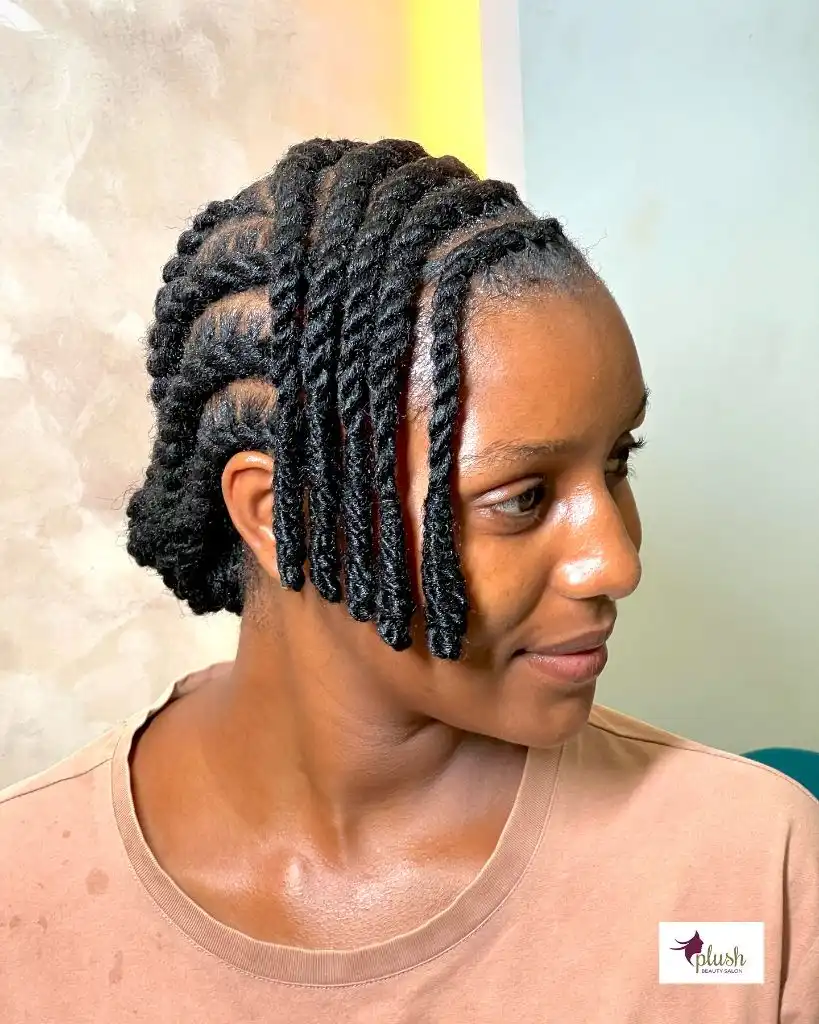
Photo via Instagram
The forward direction of the twists is what distinguishes this from a pulled-back protective style. Instead of clearing the face, the twists drape across it, creating a curtain effect that softens the forehead and temples. The width of each section keeps the look from reading as busy. There is a Plush Beauty Salon watermark in the lower right corner, which confirms this is a salon setting. The peach-toned top underneath stays neutral enough that the hair texture remains the dominant visual element across the frame.
The appeal is the scale. Larger sections mean fewer twists, fewer visible lines, and a calmer overall rhythm. This reads as a deliberate choice rather than a default, and it demonstrates that protective styling does not require density to feel finished. The transferable principle is straightforward: when twist size increases, section count should decrease, and the style gains its presence from weight rather than repetition.
3. Cornrow Rows Anchor a Twist-Out Shape
The image is taken from above and behind, revealing a full head of cornrows that travel from the hairline toward the crown in curved, concentric rows. At the point where each cornrow ends, the remaining length transitions into a thick two-strand twist. The overall shape is a close-fitting cap of braids with textured twist ends sitting flat against the head. A gold hoop earring and a dark burgundy top are visible at the neck.
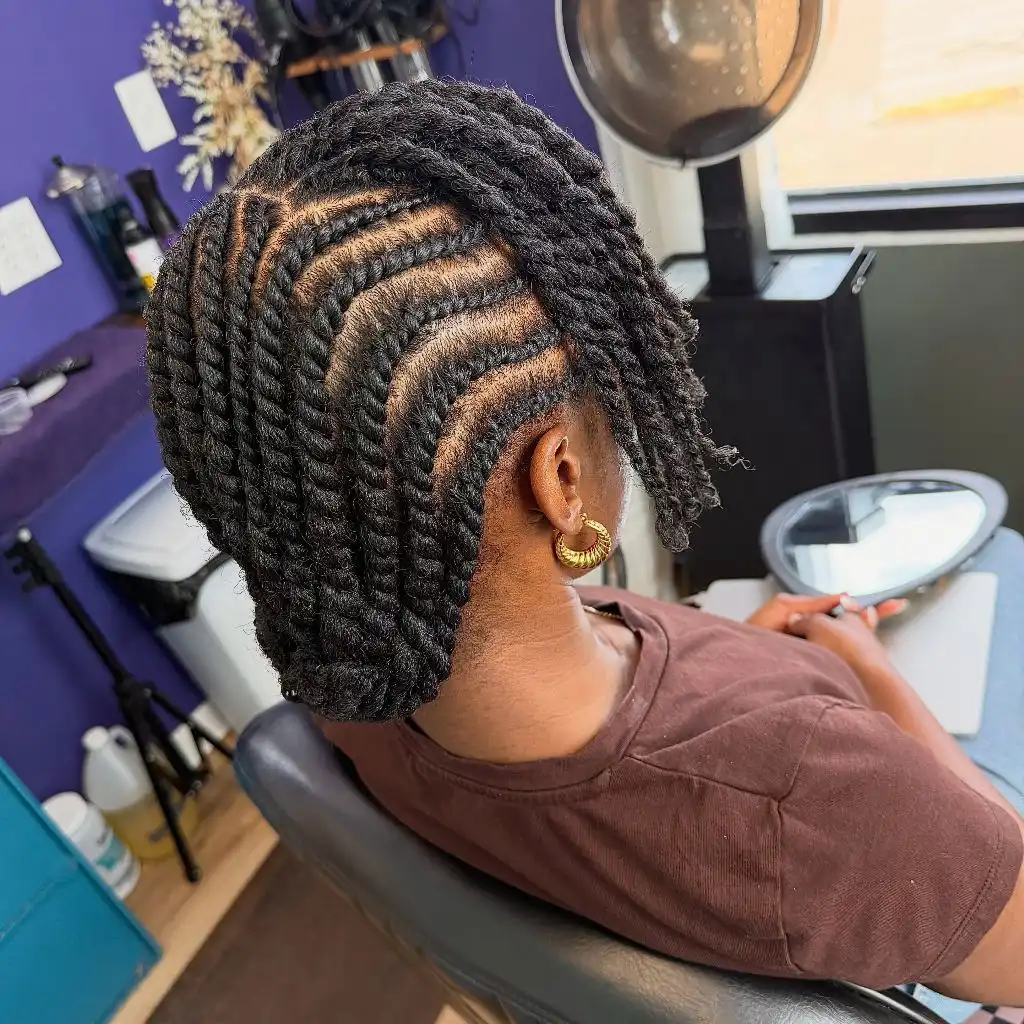
Photo via Instagram
The curved row pattern is the structural achievement here. Rather than straight-back lines, the cornrows follow the natural contour of the head, which makes the shape feel organic rather than geometric. The twists at the ends add just enough volume to prevent the style from lying completely flat, and they keep the back of the head from looking bare. The purple wall behind the salon chair intensifies the dark tones of the hair and draws attention to the parting lines and row spacing.
The strength here is the precision of the curved partings, which require a steady hand and a clear plan. The style sits close to the head without sacrificing visual interest because the curves create movement that straight rows would not. For anyone considering a cornrow-based protective look, the lesson is that the direction and shape of the rows matter as much as the technique at the ends.
4. Long Curly Texture Opens the Frame
This is a departure from the structured styles above. The hair is long, dense, and uniformly curly, falling well past the shoulders with a center part. The curl pattern is tight and consistent, reading as a type 3B or 3C texture, and the overall silhouette is wide, voluminous, and symmetrical. The hair is dark black with no visible highlights or color variation. The face is partially framed by curls on both sides.
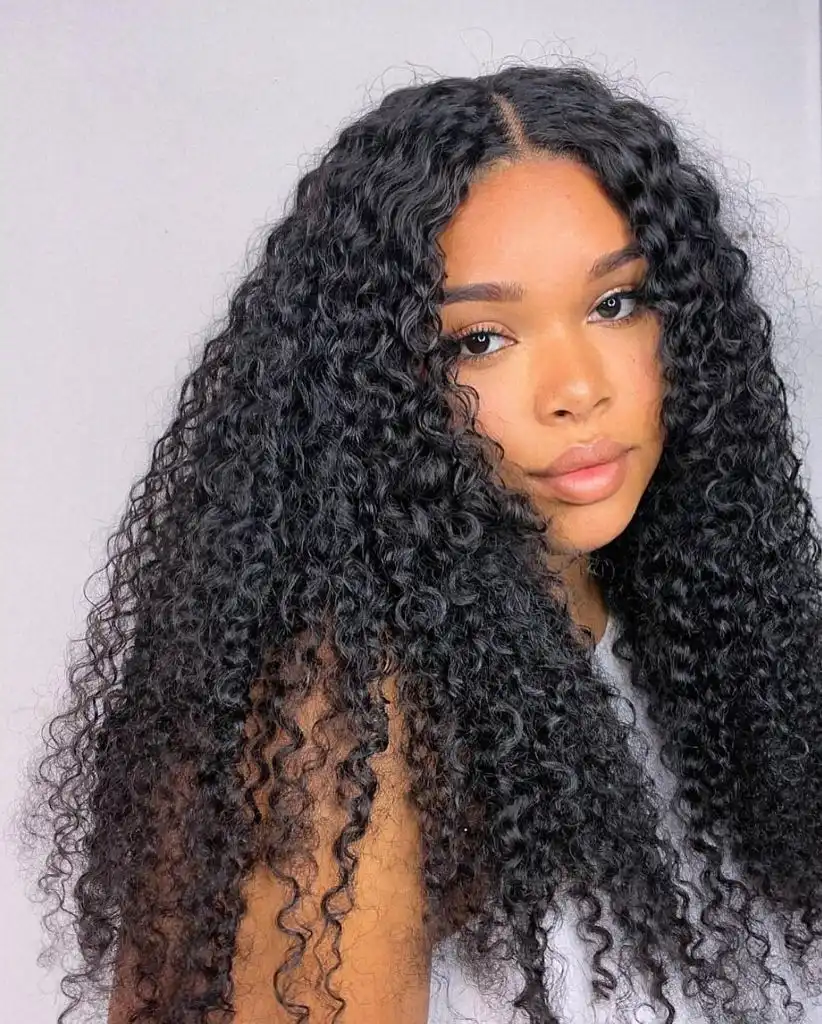
Photo via Instagram
The volume here is distributed evenly on both sides of the part, which creates a balanced, almost triangular silhouette from the crown to the shoulders. The curls are well-defined, each one maintaining its coil without visible frizz, which suggests either a careful wash-and-go routine or a curly extension installation. The neutral gray background allows the texture to carry all of the visual information. There is no visible jewelry or clothing detail competing with the hair, which makes this an effective reference for curl definition alone.
The best detail is the consistency. Every curl sits at roughly the same tightness and length, which gives the overall shape a sense of completeness that loose or varied curl patterns do not always achieve. The principle worth carrying forward is that volume without definition reads as undone, but volume with uniform curl definition reads as intentional and full.
5. Mixed-Tone Braids Interrupt a Dark Base
The hair is styled in medium-sized box braids that begin with cornrow-flat sections at the scalp and transition into free-hanging three-strand braids past the crown. The color is a deliberate mix of dark brown and warm caramel or honey tones woven together, creating a two-tone effect that is visible in every braid. The braids fall past the shoulder on one side, and the parting lines are clean and diagonal.
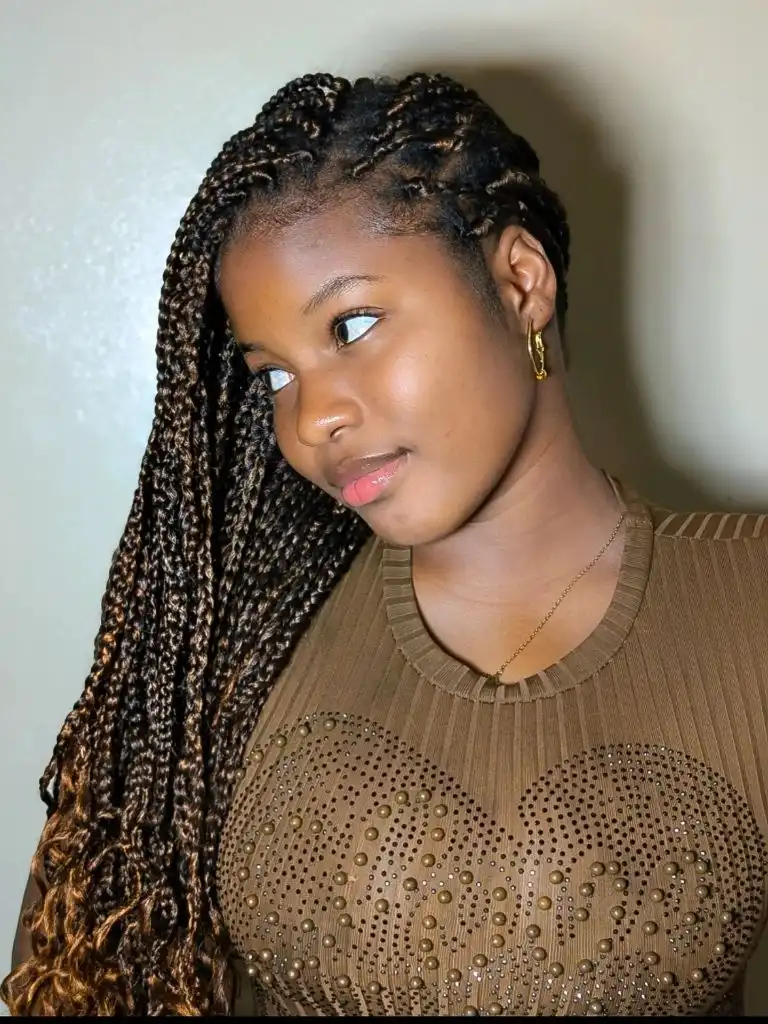
Photo via Instagram
The two-tone color is what lifts this beyond a standard braid installation. The darker and lighter strands are twisted together within each braid, so the color shift is not blocky or sectioned but integrated into the texture itself. This creates a subtle shimmer effect as the braids move. The olive-brown top and small gold hoop earring keep the frame warm without introducing a competing color family. The scalp-flat beginning of each braid also means the roots sit close, keeping the crown area sleek while the length provides movement.
I like the way the color choice turns a familiar silhouette into something more specific. Without the two-tone braiding hair, this would be a clean but unremarkable installation. The addition of a second tone gives the eye something to follow along the length of each braid. The takeaway is that color variation woven into the braid itself, rather than painted on afterward, creates dimension that moves with the hair rather than sitting on its surface.
6. Locs With Center Weight and Natural Movement
The photograph shows shoulder-length locs that are parted loosely in the center and fall freely around the face. The locs vary slightly in thickness, and their texture ranges from smooth and cylindrical near the roots to slightly unraveled and tapered at the ends. The overall tone is dark brown with natural variation. The setting appears to be a hair product shop, with bottles visible on shelves behind the subject, and the person is wearing a white jacket over a black top with an ankh pendant.
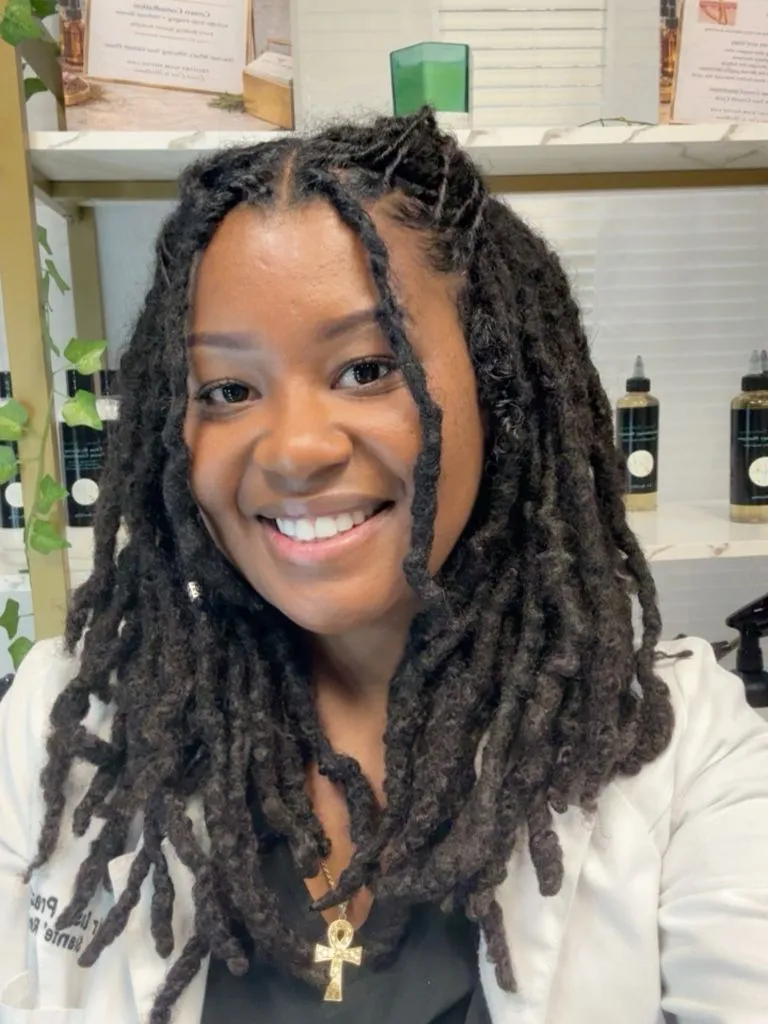
Photo via Instagram
The locs here are at a stage where they carry enough weight to drape naturally but are not yet so long that they pull the silhouette downward. This mid-stage length creates a rounded, full shape around the face that is more frame-like than curtain-like. The slight variation in loc thickness adds visual rhythm, and the tapered ends give the perimeter a soft, unfinished quality that reads as organic. The product shelves in the background suggest this is a professional space, but the style itself reads as low-maintenance and lived-in rather than freshly styled.
The value is the naturalness. Nothing about this silhouette looks forced or overworked. The locs fall where gravity and their own weight take them, and the center part keeps the distribution even. For anyone exploring hairstyle ideas for Black women who want a protective option that does not require daily restyling, this image is a useful reference for what locs look like when they are simply allowed to exist in their current form.
7. A Short Afro Grounds the Face Simply
This selfie shows a short, natural afro with no defined part, no added product sheen, and no visible styling manipulation. The hair grows upward and outward from the scalp in a rounded cloud shape, sitting higher on one side than the other in a way that reads as natural growth direction rather than deliberate asymmetry. The texture is dense and coily, and the overall length is about three to four inches. The person wears a dark graphic sweatshirt and a small earring.
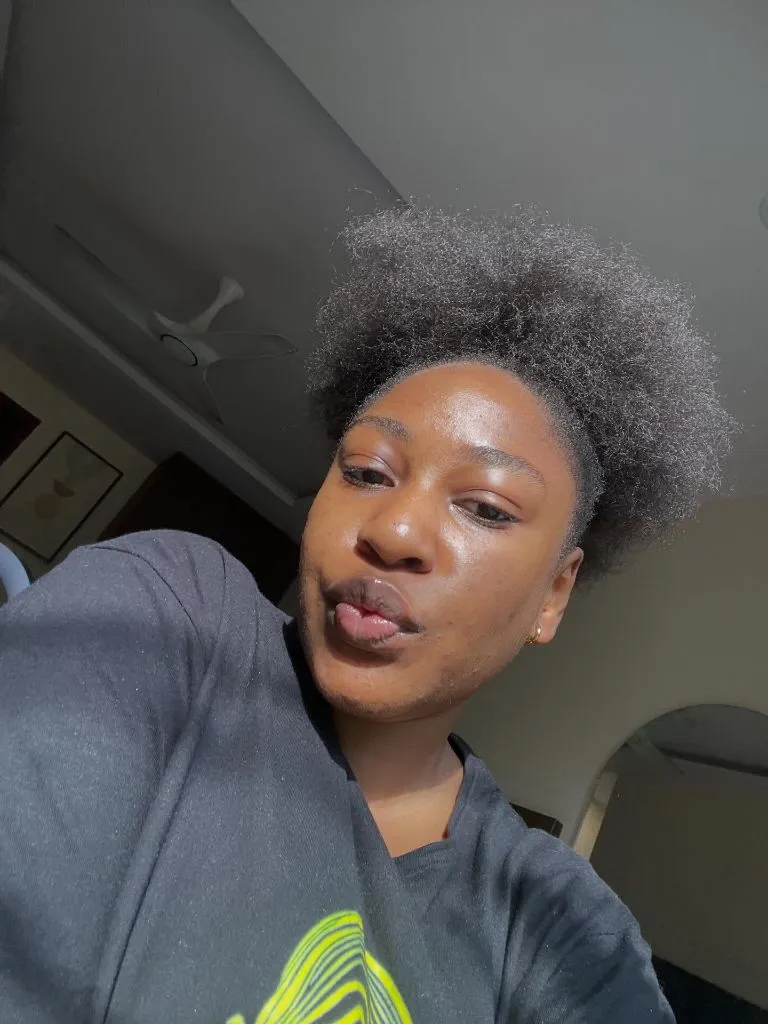
Photo via Instagram
This image supports a conversation about minimal styling and natural texture, but it does not demonstrate a specific technique or shaped cut in the way that a tapered or sculpted afro would. The strength is its honesty: this is what natural hair looks like between styles, between appointments, between decisions. The ceiling fan and room setting confirm a home environment, which reinforces the unstaged quality. The slight asymmetry is not a flaw but a record of how the hair naturally grows and rests.
This is the section that openly acknowledges the gap between topic and image. The photograph does not show a designed shape or intentional styling choice in the way that the other sections do. What it does show is the raw starting point that all of those other decisions build from. The principle here is that natural texture at its shortest and most unmanipulated is itself a valid reference, and understanding what your hair does when left alone is the first step toward any informed style decision.
8. A Low Bun Refines a Sleek Side Part
The hair is gathered into a low bun at the nape with a single cornrow or flat twist running along the side of the head from front to back, just above the ear. The surface is smooth and glossy along the top and sides, with the bun sitting compact and rounded at the back. The overall silhouette is close to the head with no stray pieces except a subtle sweep of hair along the forehead. The person wears a white V-neck top, a drop earring, and a ring.
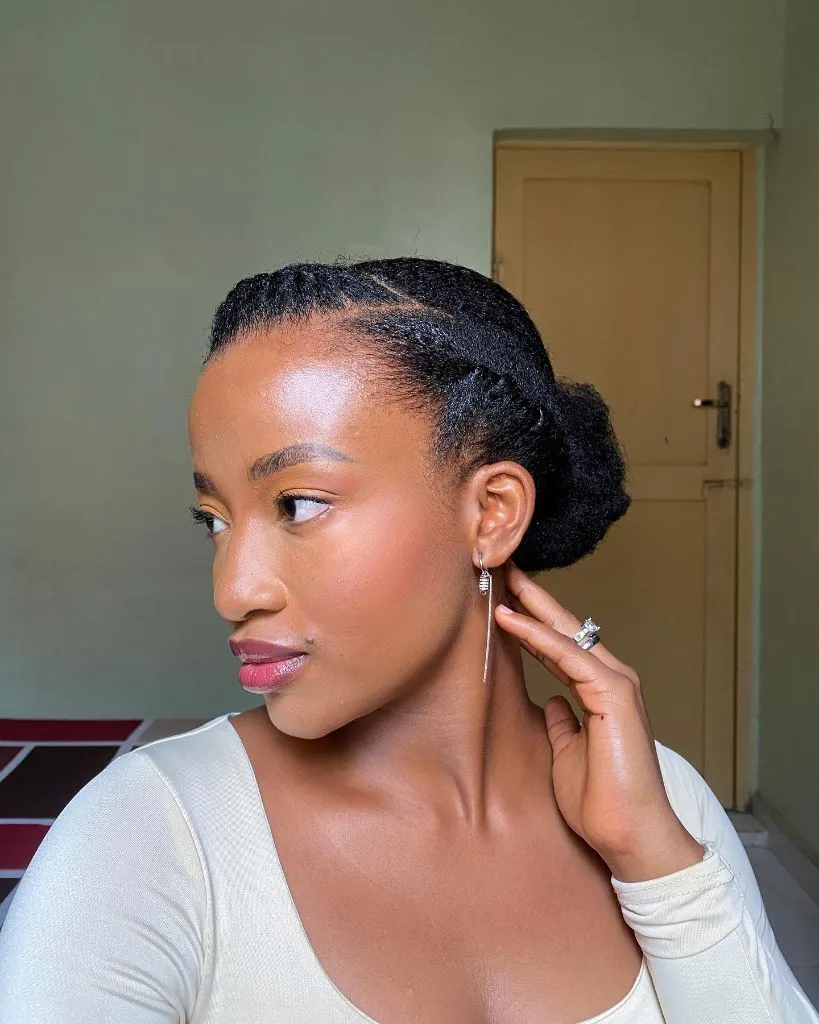
Photo via Instagram
The single cornrow detail is what separates this from a basic pulled-back bun. It introduces a textured line into an otherwise smooth silhouette, creating a subtle contrast between sleek and braided that gives the eye a path to follow. The low placement of the bun keeps the visual weight anchored at the bottom of the frame, which elongates the profile and draws attention upward to the forehead and the gentle swoop of the hairline. The drop earring echoes the downward pull of the bun, reinforcing the overall sense of calm, vertical movement.
The effect is understated authority. Nothing about this look demands attention, but everything about it is considered. The cornrow could be omitted and the bun would still work, but its presence turns a functional style into a deliberate composition. The transferable principle is that adding a single braided or twisted detail to an otherwise smooth updo creates just enough tension to keep the style from reading as plain.
9. Mini Twists Build a Lifted Ponytail
The hair is styled in small, uniform two-strand twists that are gathered into a high ponytail at the crown. The twists fall from the ponytail point past the shoulders, creating a dense, textured cascade. Around the hairline and above the ears, some twists hang free rather than being pulled into the ponytail, framing the face and neck. The overall color is dark brown to black, and the person wears a green lace-knit tank top.
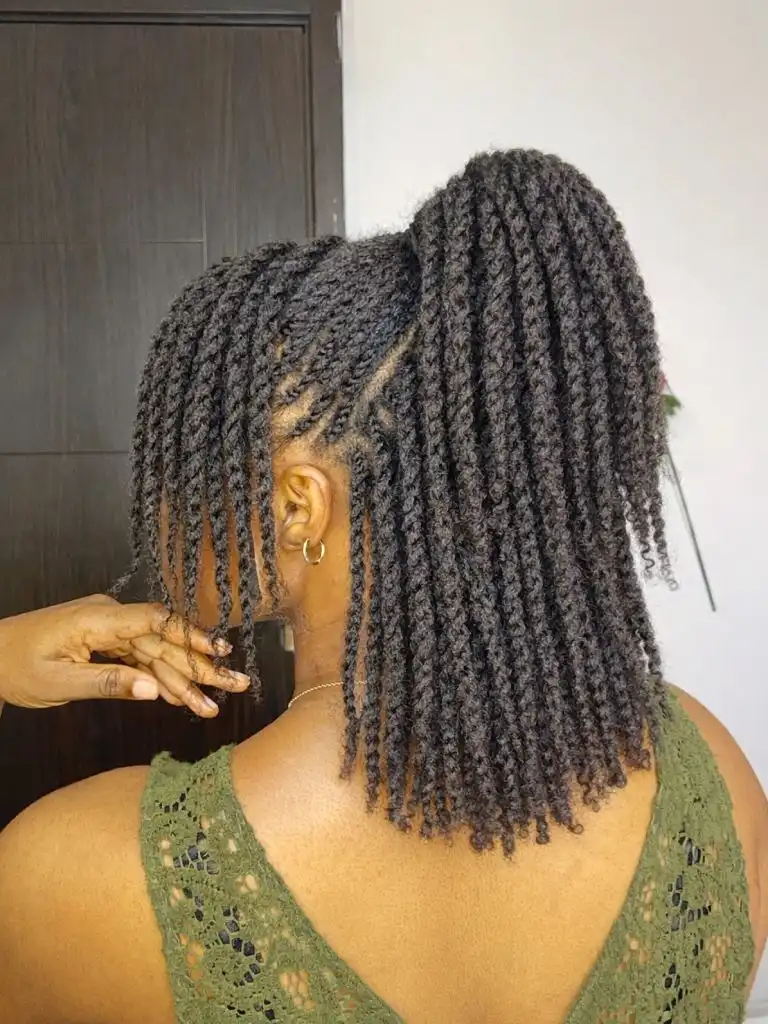
Photo via Instagram
The combination of a gathered ponytail with loose framing pieces is a well-known technique, but it works especially well here because the twists themselves add texture to both zones. The pulled-up section has visible twist definition even at the gathering point, and the loose pieces around the ears are thick enough to register as intentional rather than escaped. The green lace of the top introduces a second texture that complements the hair without competing. The back-facing angle of the photograph makes the density of the twist cascade the primary subject.
What stands out most is the volume distribution. The ponytail sits high enough to create lift at the crown, and the falling twists spread wide enough to fill the space between the head and the shoulders. This avoids the thin, pulled look that high ponytails sometimes create with finer textures. The principle to carry forward is that textured hair in a ponytail does not need smoothing at the base; the twist pattern provides its own structure and visual interest all the way from root to end.
10. A Low Puff Balances Density and Restraint
This rear-view photograph shows natural hair gathered into a low puff at the nape of the neck, held by a dark pink satin scrunchie. The hair above the scrunchie is smoothed down, and the hair below it expands into a wide, dense cloud of coily texture. The overall shape is a top-heavy mushroom silhouette in reverse: compressed on top, expanded below. The person wears a blue T-shirt, and hair product bottles are visible on a shelf in the upper background.
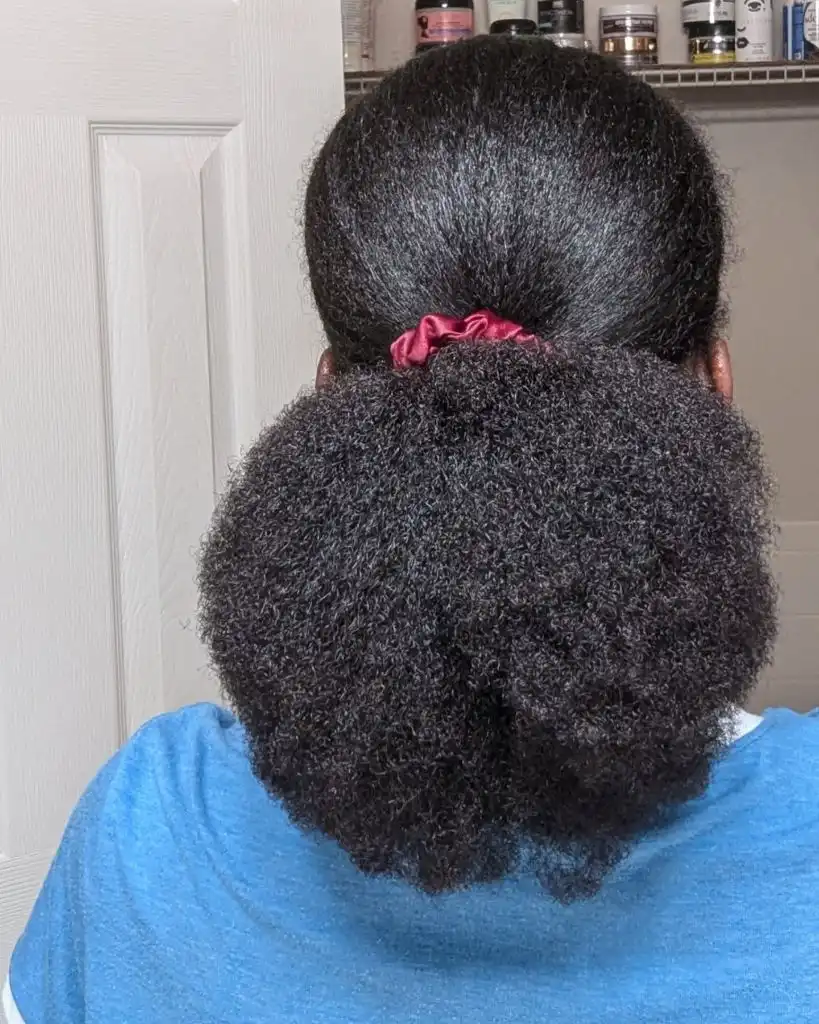
Photo via Instagram
The contrast between the smoothed upper section and the free lower puff is the structural engine of this style. The scrunchie acts as a dividing line, and everything above it is controlled while everything below it is released. The result is a shape that feels both managed and natural at the same time. The satin scrunchie is a functional choice rather than a decorative one, reducing friction on the hair, but its dark pink color also provides the only spot of warmth in an otherwise cool-toned frame of dark hair and blue fabric.
The appeal is the simplicity. This requires no braiding, no heat, no extensions, and no professional installation. It is a style that anyone with enough length to gather at the nape can achieve at home, and the visual payoff comes entirely from the natural density and texture of the hair itself. The transferable insight is that a single gathering point can create a defined shape without suppressing the hair’s natural volume.
11. Straight Highlights Sharpen a Dark Length
The hair is long, straight, and sleek, falling past the shoulders with a subtle side part. The base color is a deep dark brown, and there are visible blonde or caramel highlights concentrated at the lower lengths and the front face-framing pieces. The surface has a polished, reflective finish that suggests flat-ironing or a pressed weave. The person sits in a salon chair wearing a black cape, and styling products are visible on shelves behind.
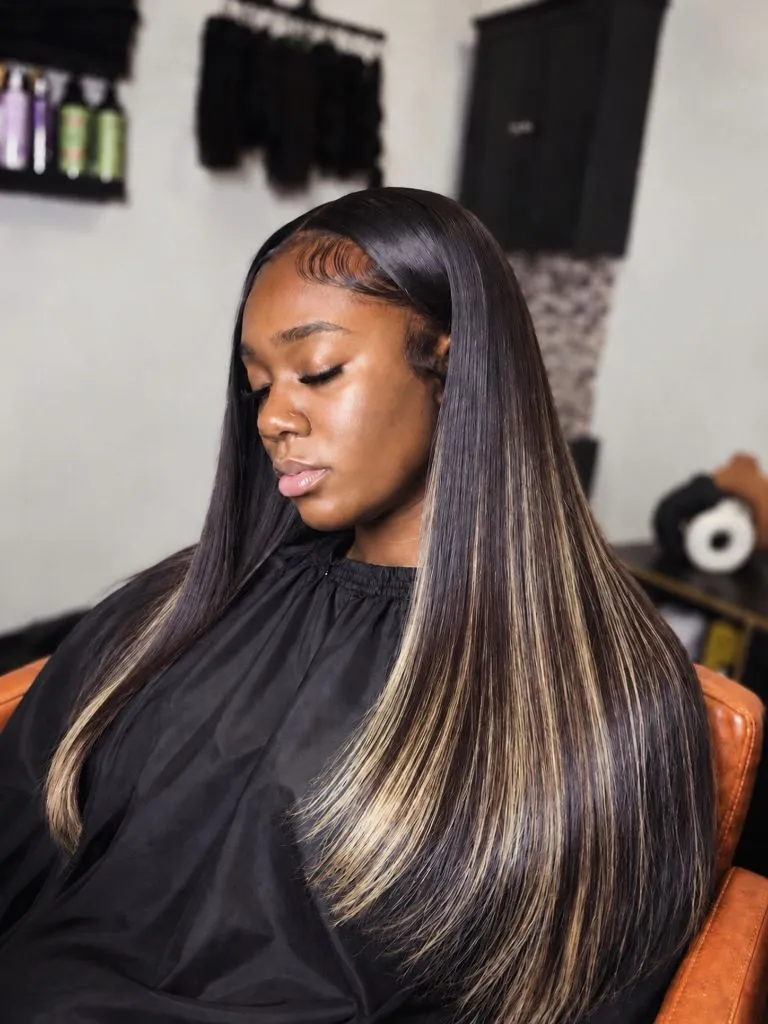
Photo via Instagram
The highlight placement follows a classic strategy: lighter tones at the front and the tips, darker tones at the root and the interior. This creates depth without breaking the smoothness of the surface, and it draws the eye forward and downward, which elongates the overall silhouette. The straight texture is uniform from root to end, with no visible wave or bend, which means the highlights and the cut line carry all of the visual variation. The salon background confirms a professional setting and the lighting is positioned to catch the reflective surface of the hair.
This is a style that depends entirely on finish. Without the high-shine surface, the same cut and color would read very differently, likely softer and more casual. With it, the hair functions almost like a smooth fabric panel framing the face. The lesson for anyone considering a similar approach to straight hairstyle options is that the finish must be committed to completely; partial smoothing or uneven shine breaks the effect.
12. Deep Waves Open Around a Center Part
The hair falls in long, deep, defined waves from a center part, reaching past the collarbone. The wave pattern is loose and consistent, with each wave maintaining the same width and rhythm. The hair is dark black with a glossy finish, and the waves frame both sides of the face symmetrically. The person wears a white zip-up jacket and sits in what appears to be a home styling setup with a ring light and a tropical plant visible behind.
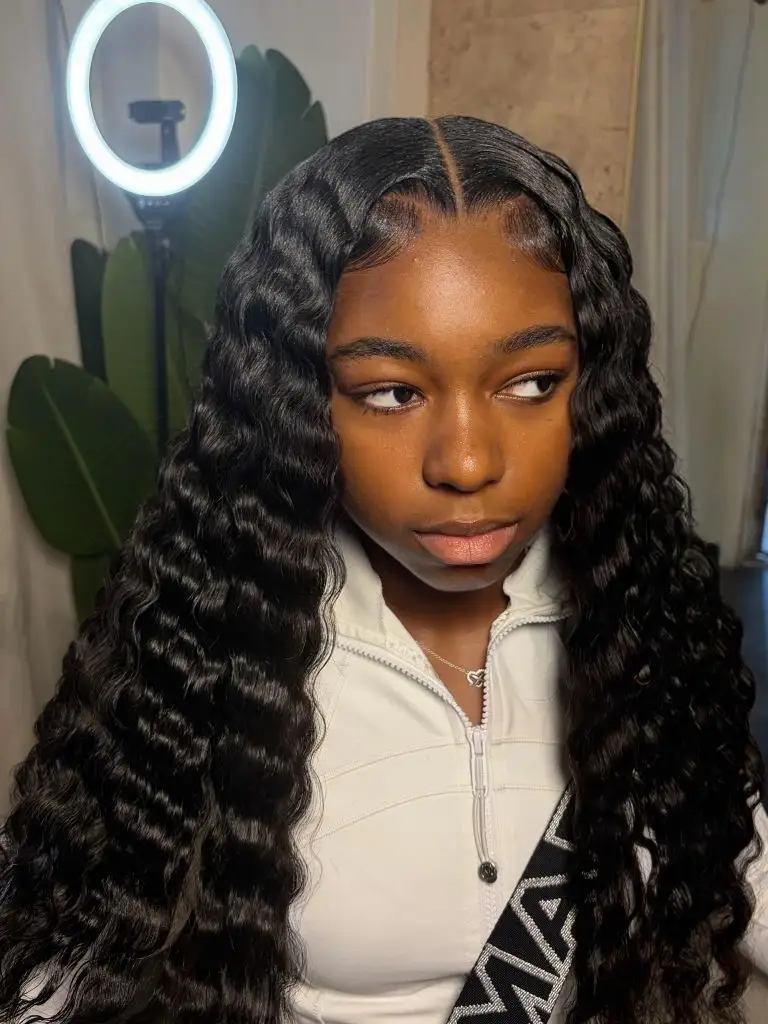
Photo via Instagram
The symmetry of the part and the evenness of the wave pattern create a very balanced, almost mirrored silhouette. This is a polished style that reads as deliberate and occasion-ready without relying on height or dramatic volume. The waves have enough weight to stay close to the shoulders rather than standing away from the head, which keeps the overall shape long and narrow rather than wide. The ring light and plant in the background suggest a content creation setup, and the front-facing lighting makes the glossy surface of the waves highly visible.
The effect is calm and expensive-looking. Deep waves at this width and regularity suggest either a professional wand curl or a high-quality body wave installation, and the consistent shine reinforces the sense of quality. The transferable principle is that wave size matters: tight waves add volume and energy, while wide, heavy waves like these create a sense of polished weight and controlled movement that feels more restrained.
13. Loose Curls Soften a Shoulder-Length Frame
This image shows dark brown to black hair in large, soft curls that bounce at and just below the shoulders. The hair is parted on one side, and the curls have a wide, barrel-rolled shape rather than a tight spiral. The surface has a satin finish with visible light reflection. The person wears a cream-colored high-neck top, and a heart pendant necklace is visible at the collarbone. The setting is a home interior with a television and curtains blurred in the background.
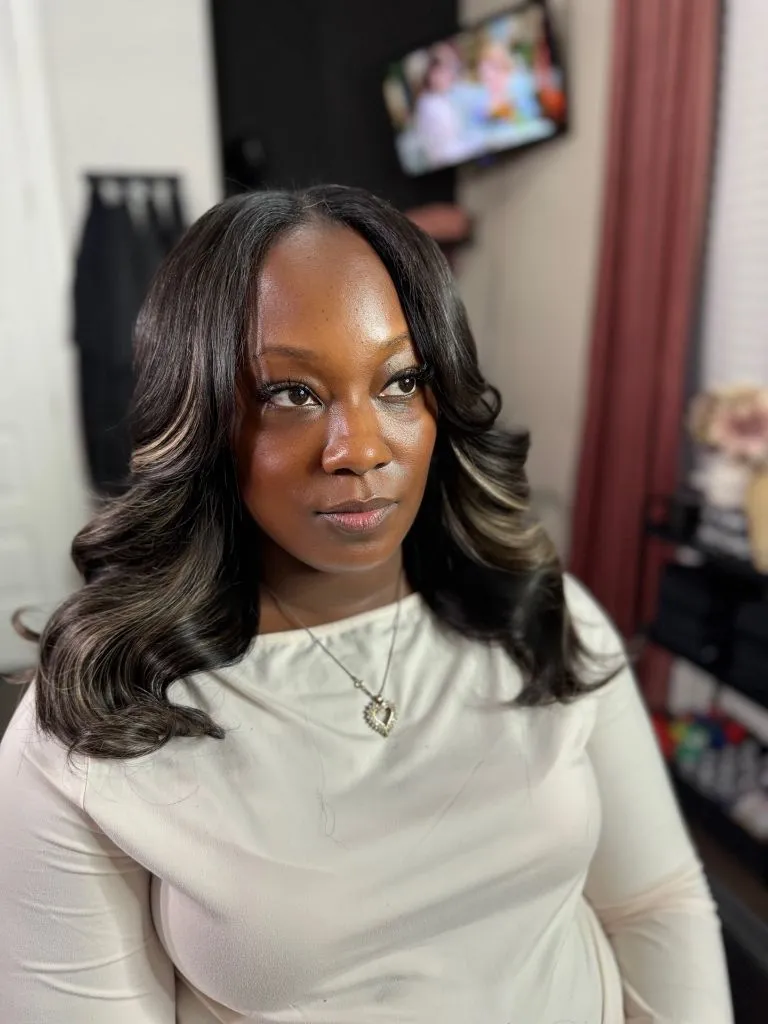
Photo via Instagram
The curl size is the defining feature. These are not tight, defined curls but large, open barrel shapes that create a sense of movement and bounce without adding excessive volume. The asymmetric side part tilts the visual weight slightly, which prevents the symmetrical boredom that centered curls can sometimes create. The cream top and the pendant both sit in a warm neutral palette that supports the hair color without drawing focus away from the curl pattern. The lighting from the right side catches the reflective surface and makes the individual curl shapes legible.
This is the kind of finish that reads as effortless while actually requiring careful technique. Barrel curls at this size need consistent heat, tension, and release timing to maintain their uniformity. The takeaway for anyone exploring this kind of curl pattern at medium length is that the balance between curl openness and strand weight determines whether the style reads as bouncy or simply big, and here it lands squarely on bouncy.
14. Copper Color Changes the Entire Conversation
The most immediate visible detail is the color: a warm, saturated copper-red that covers the entire head from root to tip. The hair is styled in large, loose waves with a deep side part, and a single curled tendril sits in front of the ear. The volume is concentrated at the mid-lengths and ends, and the surface has a moderate sheen. The person wears a black long-sleeved top, and the setting is a neutral-walled room that looks like a home styling space.
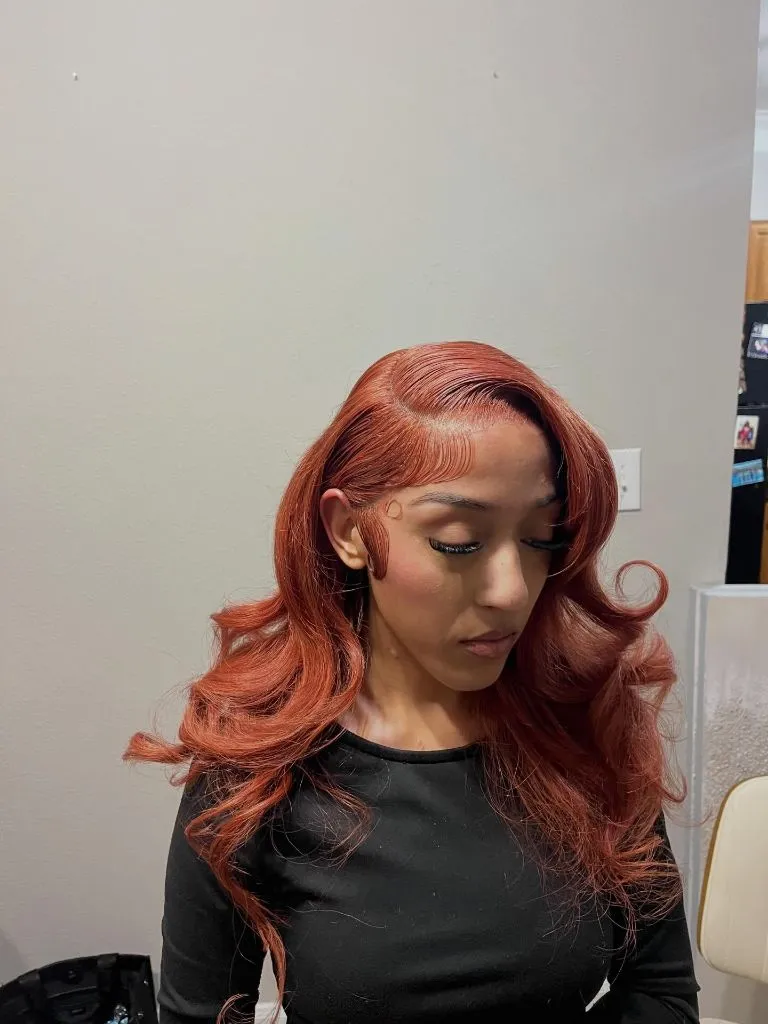
Photo via Instagram
The color does the majority of the work in this image. Against the neutral wall and the black fabric, the copper reads as bold without being neon or artificial. The tone sits in the warm family between true red and true orange, and it suits the visible skin tone well, picking up warmth rather than clashing with it. The curled tendril at the ear is a small detail, but it introduces a vintage sensibility that the loose waves alone would not provide. The overall shape is wide at the bottom and close at the crown, which is a natural consequence of the deep side part directing volume to one side.
The best detail is the commitment. Partial color or highlights would dilute this effect considerably. The all-over application gives the style an identity that the cut and the wave pattern alone could not provide. For anyone considering a full color shift, the lesson is that the surrounding wardrobe and setting become more important when the hair color is this assertive; the black top and bare background here give the copper the room it needs to be the only statement.
15. A Half-Up Ponytail Lifts Long Body Waves
The hair is divided into two sections: the top half is gathered into a high ponytail at the crown, and the bottom half falls freely in long, loose body waves past the shoulders. The hair is black with a reflective, silky finish, and the waves have a wide, gentle rhythm rather than tight curls. The person is viewed from the side, holding a phone, and wearing a black short-sleeved top. A brown leather bag edge is visible at the bottom of the frame.
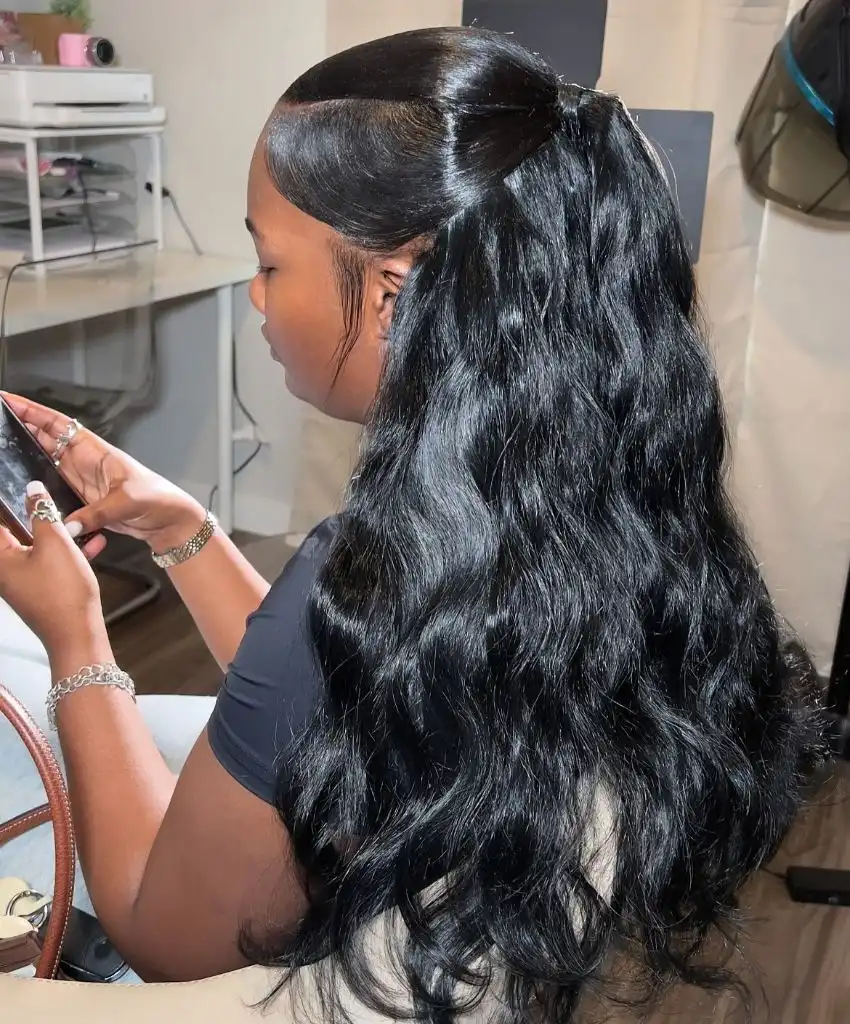
Photo via Instagram
The half-up structure creates lift at the crown without sacrificing length, which is a proportion most people find universally flattering. The ponytail itself is smooth and sleek, with the hair pulled flat against the head before the gathering point, while the loose lower section carries all of the movement and texture. The body waves give the lower half just enough shape to prevent it from hanging flat, and the silky finish catches light along the wave ridges. The side angle of the photograph is ideal for seeing how the two zones interact at the ear, where the division point is most visible.
The strength here is the proportion between gathered and free. If more hair were pulled up, the ponytail would become the focus; if less, the half-up gesture would be unreadable. This version splits the visual weight almost evenly, which makes both sections legible. The principle is that a half-up style reads best when the gathered portion is tight enough to create a clean line at the crown and the free portion has enough shape to avoid looking like an afterthought.
16. A Sleek Ponytail With Swoop Bangs Frames the Profile
This side-view photograph shows hair pulled into a high ponytail that falls past the shoulders in a straight, flipped-end style. The front section features a dramatic swoop bang that curves forward over the forehead and tucks behind the ear. The sides of the head are slicked flat, and the gathering point is high on the crown. A small circular tattoo is visible behind the ear. The person wears a black sleeveless top.
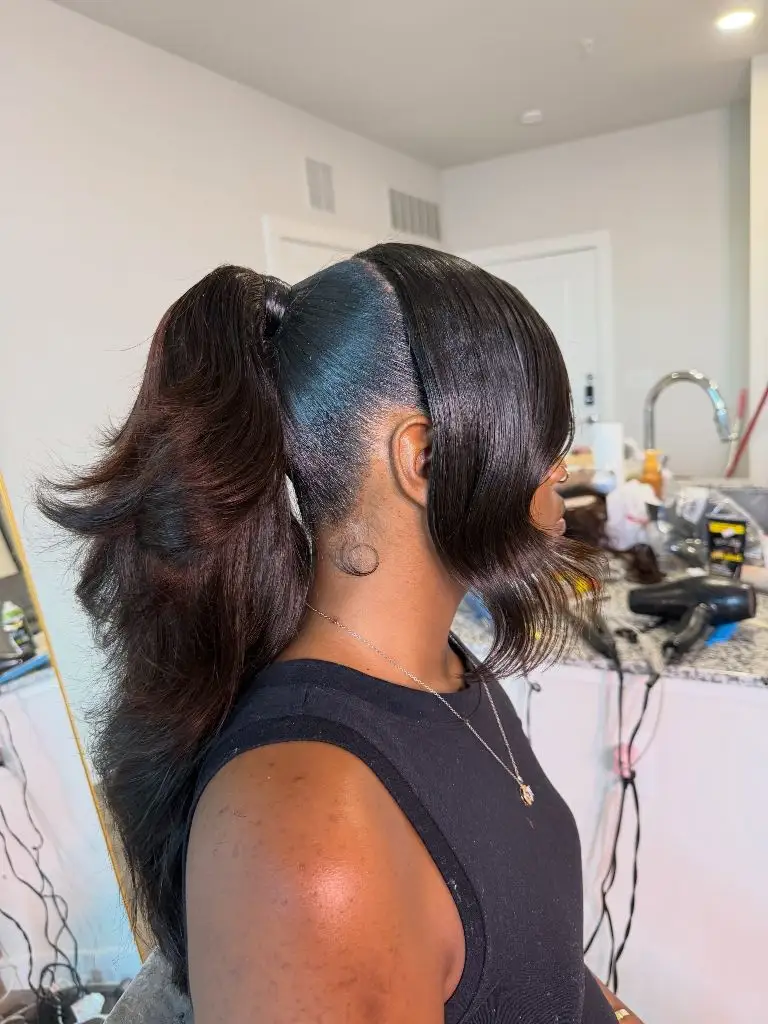
Photo via Instagram
The swoop bang is the organizing detail. It creates an arc across the forehead that introduces a curved line into what is otherwise a sharply pulled-back, linear silhouette. The contrast between the slicked-flat sides and the volume of the ponytail makes the gathering point feel intentional and architectural. The flipped ends of the ponytail add a retro detail that keeps the style from reading as strictly utilitarian. The visible tattoo behind the ear is incidental but benefits from the hairstyle’s decision to clear the neck and jawline completely.
The appeal is the tension between sleek restraint and decorative shape. The sides and crown say control; the swoop and the flipped ends say personality. That combination is what makes this more than a gym ponytail. For anyone building a similar look, the insight is that the slicking of the sides must be thorough for the front swoop detail to register as design rather than as a section that was missed.
17. Long Straight Hair Anchors a Side Part
The hair in this photograph is very long, falling past the chest, and completely straight with a subtle side part. The surface is matte to satin, with no visible highlights or color variation. The person is photographed in a salon with the name partially visible on the wall behind, and she wears an all-black outfit. A small swirl of baby hair is styled at the temple, and a cross pendant necklace sits at the neckline.
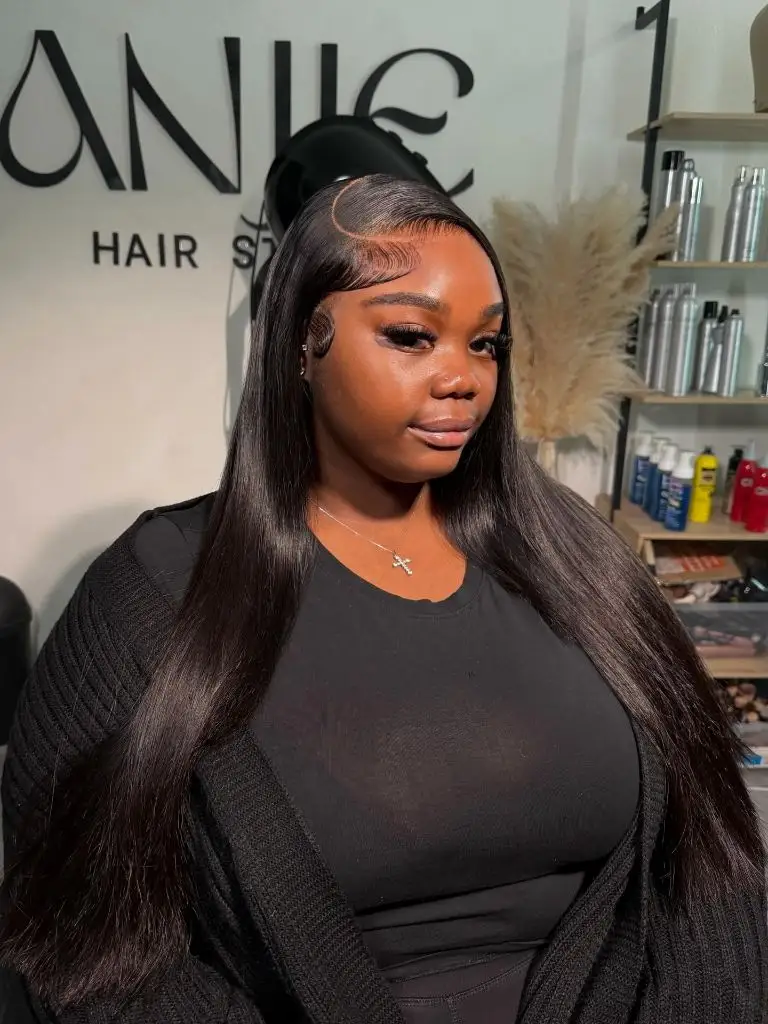
Photo via Instagram
The length is the dominant feature, and it shifts the visual weight of the entire frame downward. The hair reaches well past the bust line, which means the eye travels a considerable distance from the part to the tips. The styled baby hair at the temple is a small but deliberate detail that signals care and customization at the hairline, an area that long, heavy installations can sometimes neglect. The all-black clothing removes any color competition and lets the hair’s texture and length function as the only visual subject.
This is a look that requires commitment to maintenance. Hair at this length and this degree of straightness needs regular attention to stay smooth and tangle-free, and the matte surface suggests a quality that does not rely on heavy product shine to look polished. The principle worth noting is that extreme length changes the rules of proportion: when hair reaches past the shoulders, the neckline and the jewelry become framing elements rather than focal points, and everything in the composition supports the length.
18. Deep Side-Part Waves With Glamour Weight
The hair is styled in large, defined waves that fall from a deep side part, concentrating volume on one side. The texture is smooth and glossy, with the waves maintaining a consistent barrel shape from mid-length to the ends. The color is dark black, and the overall length reaches below the collarbone. The person is seated in a salon chair with professional lighting equipment visible behind, and she wears a black salon cape.
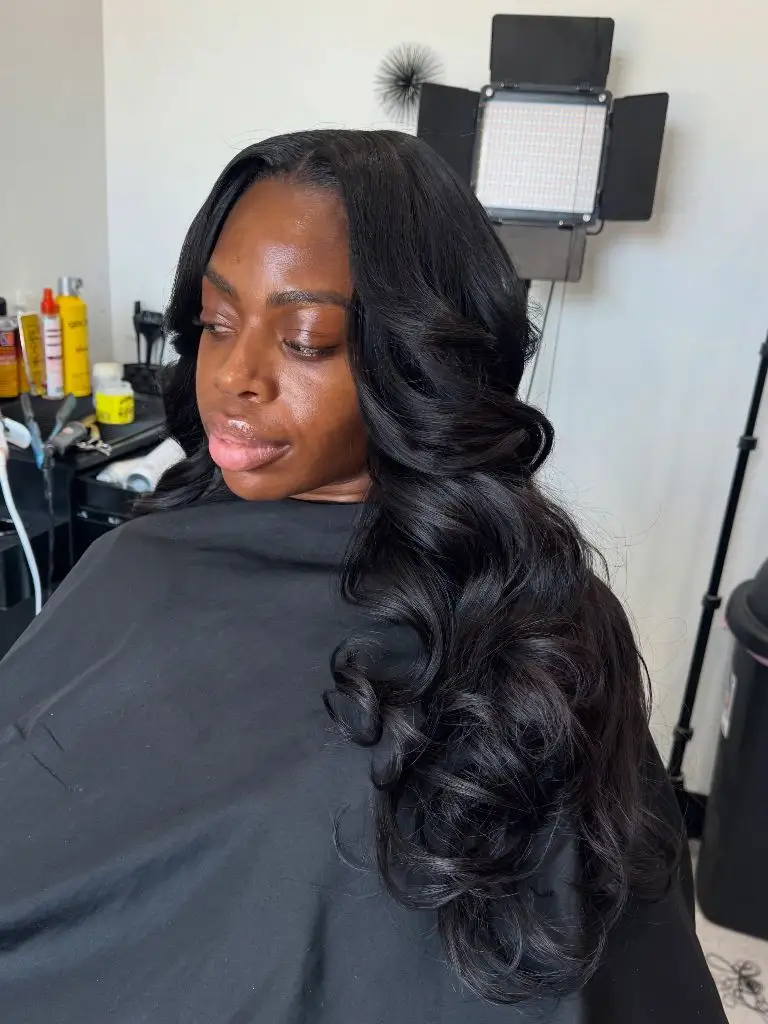
Photo via Instagram
The deep side part is doing most of the compositional work. By shifting nearly all of the volume to one side, it creates an asymmetry that makes the waves feel more dramatic than they would with a center part. The glossy surface catches the professional lighting and creates a highlight pattern that follows the curve of each wave, which adds depth and dimension. The salon cape and the lighting rig confirm that this is a professional result photographed immediately after styling, before any natural movement or settling has occurred.
The effect is old-Hollywood weight. These waves reference a classic glamour tradition while sitting on a modern installation. The consistency of the curl pattern and the uniform shine are what make the reference legible. The lesson is that deep side parts amplify wave patterns by doubling the volume on the visible side, but they also demand that the flat side be completely smooth, because any unevenness there will read as a mistake against the dramatic sweep.
19. Curly Volume Lifts a High Ponytail Shape
The hair is styled in a high, voluminous arrangement with tight curls pulled up and away from the face. The curls are long, reaching past the shoulders, and the overall shape is wide and full. The hair is dark black, and the curl pattern is consistent throughout. The person wears a yellow athletic-style top with stripe details, and the setting is a bright interior room. This image could read as either natural curls or a curly extension ponytail, and the photograph does not make the construction method entirely clear.
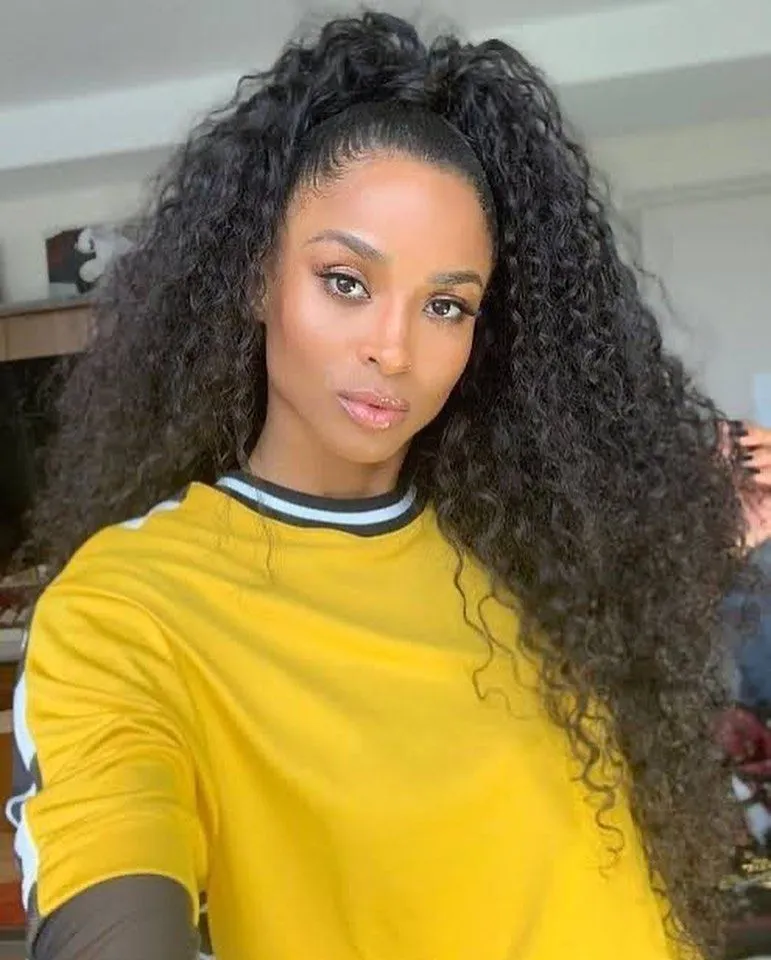
Photo via Instagram
The volume is the centerpiece. The curls extend outward from the head in all directions, creating a halo-like silhouette that is wider than the shoulders. The tight, uniform curl definition prevents this volume from reading as frizzy or uncontrolled; instead, it reads as abundant and structured. The yellow top introduces a strong warm tone that energizes the frame and complements the dark hair through contrast rather than coordination. The front-facing selfie angle makes the full width and height of the style visible, which is important for understanding the true scale of the volume.
What stands out most is the confidence of the proportions. This is not a style that tries to minimize itself. The width exceeds the head by several inches on each side, and the height adds lift above the crown. For anyone exploring hairstyle ideas for Black women with naturally curly or coily textures, this is a clear demonstration that volume can be both maximal and defined, and that the combination creates presence rather than chaos.
20. Shoulder Body Waves Quiet a Side Part
This photograph shows shoulder-length hair styled in soft, open body waves with a subtle side part. The color is dark brown to black, and the surface has a gentle sheen without heavy gloss. The waves are loose and natural-looking, with the ends curving inward at the shoulders. The person wears a pink knit cardigan over a white top, and the background features a geometric black-and-white wall pattern.
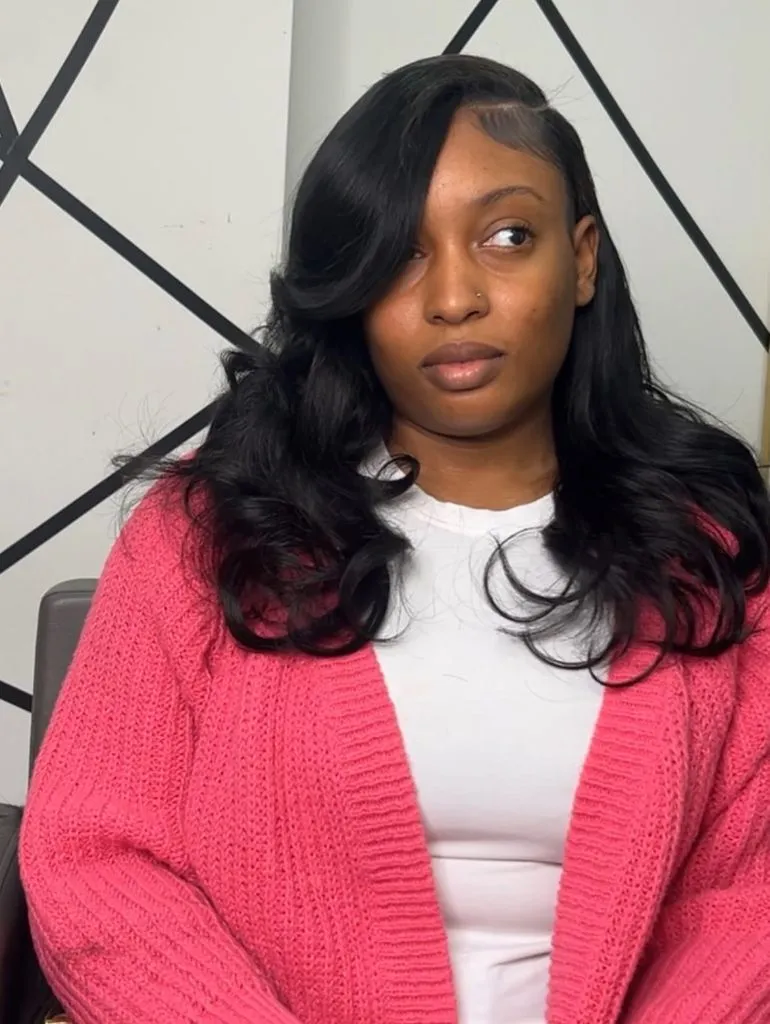
Photo via Instagram
The restraint is what makes this effective. The waves are present but not dramatic, the part is there but not deep, and the length is grown-up and manageable without being long enough to compete with the outfit. The pink cardigan and white top create a soft, warm color environment that the dark hair sits comfortably within rather than against. The geometric wall behind introduces sharp angles that contrast with the soft curves of the waves, making the hair look even softer by comparison.
The value is the wearability. This is a style that does not require explanation or context to make sense. It works for professional settings, casual ones, and dressed-up occasions equally well because it occupies the middle ground between effort and ease. The transferable principle is that moderate-length waves with inward-curving ends create a self-contained shape that flatters without demanding attention, and that quality makes them one of the most versatile styling foundations available.
21. Jumbo Braids Ground a Full-Glam Finish
The hair is styled in four to six large, thick braids that fall past the chest. The braids are black, and the sections are wide enough that each braid is substantial in diameter. The braids begin with flat, cornrow-like bases at the scalp, with clean parting lines visible along the forehead and center. The person wears a gray mesh long-sleeved top, full makeup including dramatic lashes, and is photographed against a green hedge background.
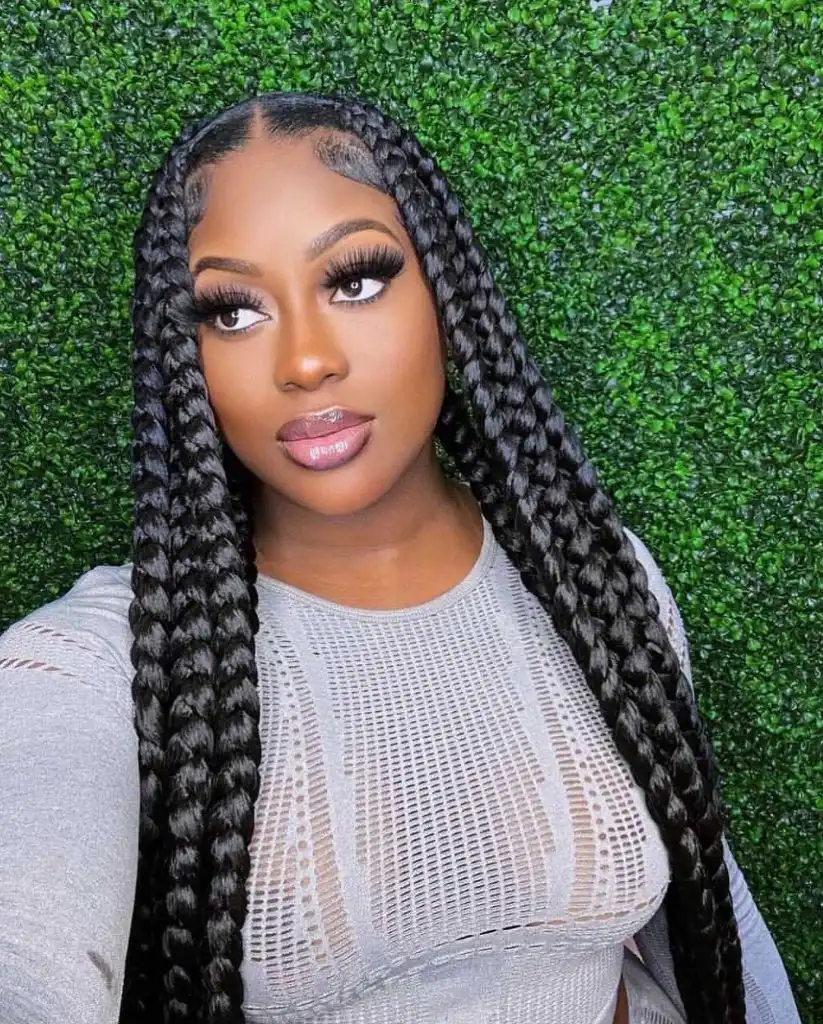
Photo via Instagram
The scale of the braids does most of the communicating. At this width, each braid functions almost like a rope or a sculptural element rather than a fine, delicate detail. The clean parting lines at the scalp are essential because they give the large braids an organized starting point that prevents them from looking heavy or haphazard. The green hedge background adds a saturated, textured backdrop that makes the dark braids pop visually. The full makeup and dramatic lashes create a contrast between the raw, thick quality of the braids and the polished finish of the face.
This is a style that proves proportion can scale up without losing its logic. Jumbo braids require fewer sections, less time, and less tension on the scalp than micro braids, but they demand cleaner partings and more consistent tension within each braid because any irregularity is magnified at this size. The principle is that as braid size increases, the execution must become more precise, not less, and the reward is a bold, graphic silhouette that is unmistakable.