Fat spent decades as the villain of nutrition advice, and the confusion it left behind still lingers. The truth is simpler than the old headlines suggested: not all fats are created equal. The unsaturated fats found in avocados, olive oil, nuts, seeds, and fatty fish are essential for absorbing nutrients, producing hormones, and keeping your cells — including your skin cells — strong and healthy.
This guide breaks down the everyday foods packed with healthy fats, explains the difference between the types, and gives you practical ways to add them to your meals without overcomplicating anything. For the protein side of a balanced plate, the High-Protein Diet for Women guide is a natural companion.
Key Takeaways
- Include a source of healthy fat — avocado, nuts, or olive oil — with each meal for better nutrient absorption.
- Aim for at least two servings of fatty fish like salmon or mackerel per week for omega-3s.
- Snack on a handful of nuts or seeds instead of processed snacks to support heart health and fullness.
- Use olive oil or avocado oil for cooking and dressings, and avoid hydrogenated oils with trans fats.
- Even healthy fats are calorie-dense, so portion control matters — a little goes a long way.
Understanding Healthy Fats and Why They Matter
Healthy fats are primarily unsaturated fats — monounsaturated fats (MUFAs) and polyunsaturated fats (PUFAs) — that your body needs for nutrient absorption, hormone production, and cell structure. When you swap them in for less healthy fats, they can help lower LDL (“bad”) cholesterol and reduce heart disease risk. The key is getting them from whole foods like avocados, nuts, seeds, and fatty fish as part of a balanced diet, rather than from processed products that happen to contain them.
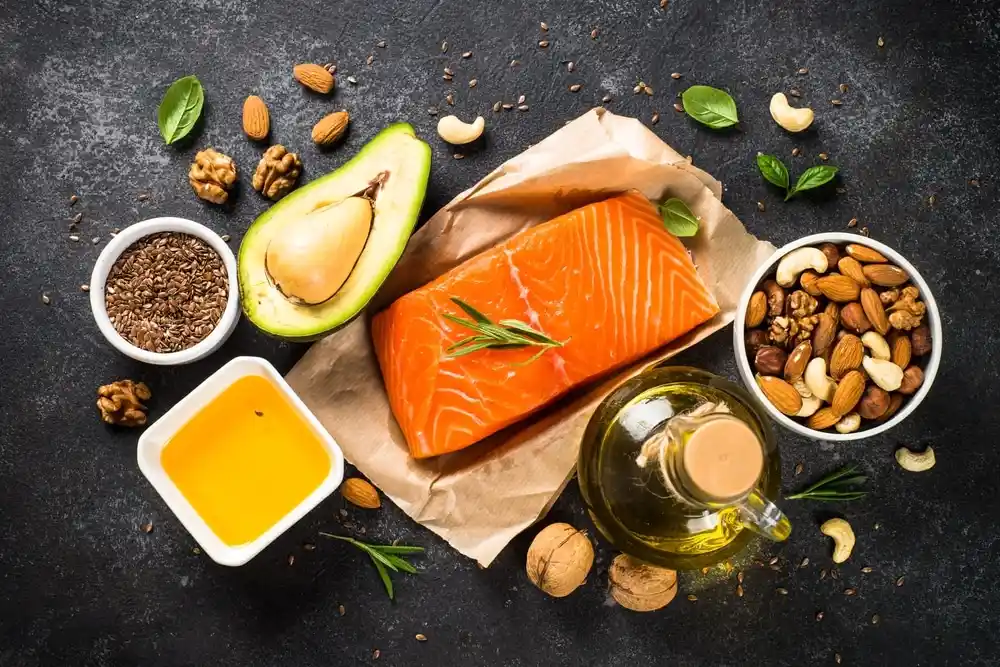
Photo via alternativemedicine.com
Fat also helps your body absorb the fat-soluble vitamins A, D, E, and K. A salad without any fat delivers far less nutrition than the same salad with a drizzle of olive oil — the oil is not just flavour, it is part of how your body accesses the nutrients in the vegetables. That is one reason healthy fats support skin health too: vitamin E and omega-3s nourish skin from within, working alongside the topical care in a glowing skin morning skincare routine.
Avocados, Olive Oil, and Avocado Oil
Avocados
Avocados are loaded with heart-healthy monounsaturated fats, plus fibre, potassium, and vitamins K, C, B6, and E. That combination supports everything from digestion to skin health, and the fibre helps keep you full long after eating.
Add sliced avocado to salads or sandwiches, mash it for guacamole, or blend it into smoothies for extra creaminess and nutrients. A quarter to half an avocado per serving is plenty — it is nutrient-dense, and a little goes a long way.
Olive Oil and Avocado Oil
Extra virgin olive oil is a Mediterranean diet staple packed with monounsaturated fats and antioxidants. Its anti-inflammatory properties support heart health when used regularly. Drizzle it over roasted vegetables, use it in salad dressings, or finish a dish with a splash.
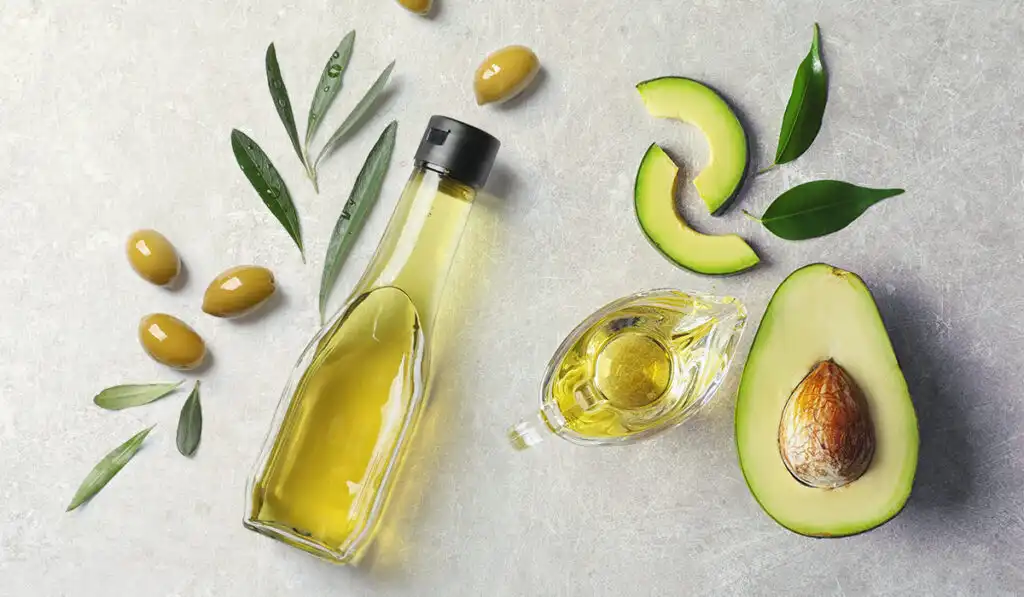
Photo via mymetabolicmeals.com
Do not use extra virgin olive oil for high-heat cooking — the heat can break down its beneficial compounds. For sautéing, roasting, or frying, reach for avocado oil instead. It has a similar monounsaturated fat profile but a higher smoke point, making it ideal for high-heat cooking, and it provides vitamin E while helping your body absorb fat-soluble vitamins. Use it for stir-frying, baking, and as a neutral-flavoured base for homemade salad dressings.
2. Nuts and Seeds
Nuts like almonds, walnuts, and pecans deliver healthy fats, protein, and fibre, which help keep you full and support heart health. Walnuts stand out for their omega-3 fatty acid content. Seeds like chia, flax, pumpkin, and sunflower are packed with polyunsaturated fats — including omega-3s from flax and chia and omega-6s from pumpkin and sunflower — plus fibre, protein, and minerals like magnesium and zinc.
Keep a handful of mixed nuts for a quick snack, or sprinkle them over oatmeal and yoghurt. Watch your portion size: nuts are calorie-dense, so about a quarter cup (a small handful) is a good serving. Grind flaxseeds before adding them to smoothies for better absorption, sprinkle chia seeds into yoghurt or oatmeal, and toss pumpkin or sunflower seeds onto salads for crunch.
3. Fatty Fish
Fatty fish such as salmon, mackerel, and sardines are top sources of omega-3 fatty acids EPA and DHA, which support brain function, vision, and help reduce inflammation. Dietary guidelines recommend at least two servings per week. Bake salmon with herbs, grill mackerel, or add sardines to salads for an easy omega-3 boost.
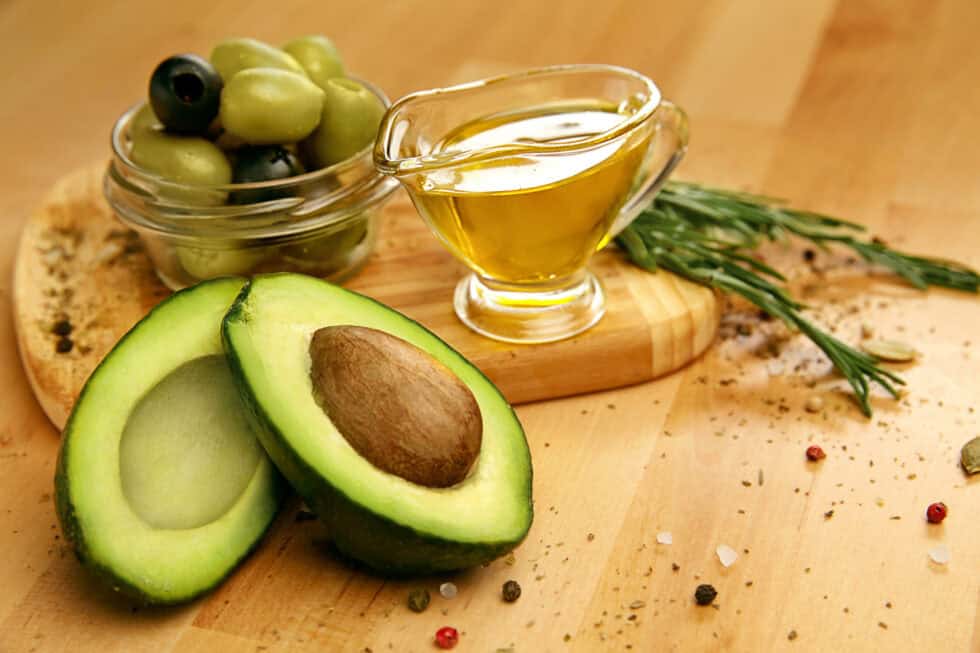
Photo via avoiceforchoiceadvocacy.org
If fresh fish feels like a chore, canned salmon and sardines are affordable, shelf-stable, and just as rich in omega-3s. Keep a few tins in the cupboard for quick lunches — sardines on toast with lemon, or salmon stirred through pasta, takes less than ten minutes.
4. Eggs, Nut Butters, Olives, and More
Eggs offer a balanced mix of healthy fats, high-quality protein, and essential vitamins. The yolk holds most of the fat and nutrients, including choline, which supports brain health. Enjoy eggs scrambled, poached, or hard-boiled, and look for omega-3 enriched eggs for an extra dose of healthy fats.
Natural nut butters made from just nuts (and maybe a little salt) provide a convenient source of healthy fats and protein without added sugars or hydrogenated oils. Always check the ingredient list to confirm it is pure nuts. Spread on whole-grain toast, stir into smoothies, or use as a dip for apple slices.
Olives, like olive oil, are rich in monounsaturated fats and antioxidants, including vitamin E. Their briny flavour adds depth to salads, pasta dishes, and antipasto platters. Just be mindful of their sodium content, especially if you are watching your salt intake.
A few more worth knowing: soybeans and their derivatives, like edamame and tofu, provide healthy polyunsaturated fats along with plant-based protein and fibre. And high-quality dark chocolate (70% cocoa or higher) contains healthy fats, fibre, iron, magnesium, and antioxidants — in moderation, a small square or two is a genuinely nutritious treat. A weekly shop that stocks these staples makes healthy eating automatic, and a Sunday reset is a good time to plan the week’s meals around them.
How Much Healthy Fat Should You Eat?
There is no single number that fits everyone, but dietary guidelines recommend limiting saturated fat to less than 10% of daily calories. For unsaturated fats, aim to include a source at each meal — a slice of avocado, a drizzle of olive oil, a handful of nuts — adjusting for your total calorie needs. Because all fats provide about 9 calories per gram, portions matter: a tablespoon of oil, a quarter of an avocado, or a small handful of nuts is a sensible serving.
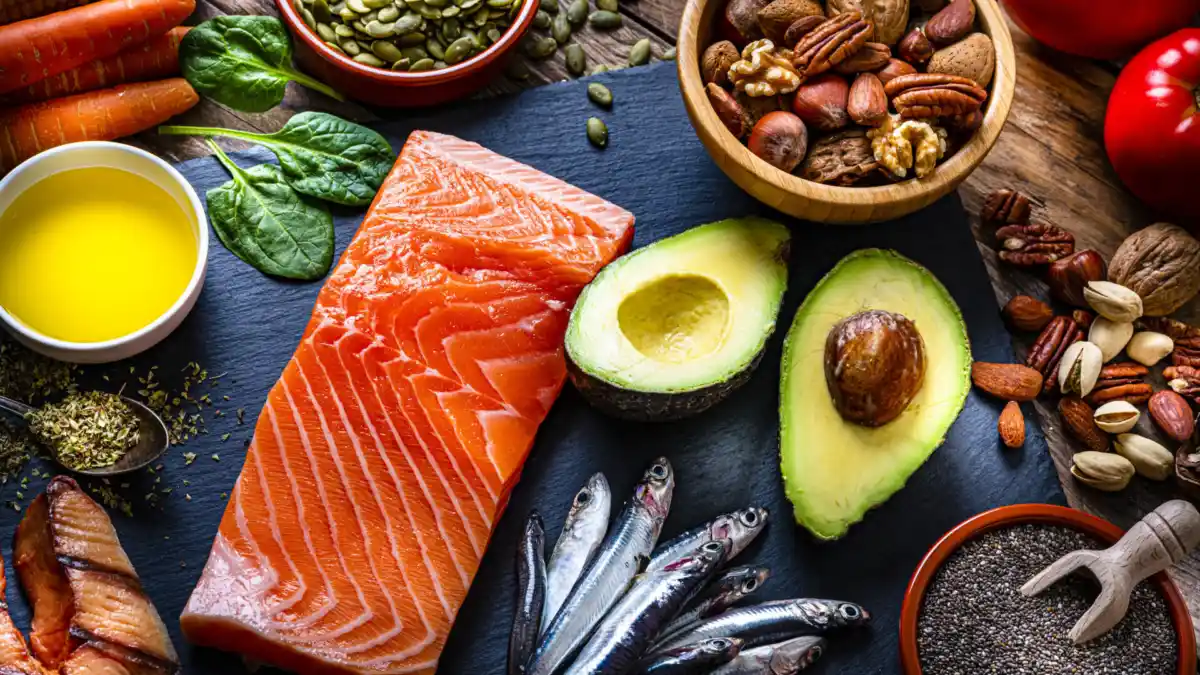
Photo via stylist.co.uk
Balance matters too. Most modern diets are heavy on omega-6 fats (from vegetable oils and processed foods) and light on omega-3s. Aim to raise your omega-3 intake rather than worrying about eliminating omega-6 entirely — variety across whole food sources is the simplest way to keep the ratio healthy. If you want the full nutrient picture, the Vitamins for Women: Essential Nutrients guide covers the vitamins and minerals that work alongside healthy fats, and Physical vs Chemical Exfoliation for Skin explains how the nutrients you eat show up in your skin.
When to Consult a Healthcare Professional
If you have a condition such as heart disease, high cholesterol, or diabetes, a healthcare professional or registered dietitian can offer dietary advice tailored to your specific needs. They can help you balance healthy fats with your overall treatment plan. If you experience digestive upset or an allergic reaction after adding new fats to your diet, seek medical guidance to identify the cause and adjust your intake safely.
A dietitian is also worth consulting if you are considering major dietary changes, such as a very high-fat diet. What works well for one person may not suit another, and personalised advice beats generic rules every time. And when healthy eating becomes a habit rather than a project, it leaves room for the enjoyable parts of life — like a relaxed dinner out in a favourite look from the Cute Dinner Outfits collection.
Frequently Asked Questions
Are all unsaturated fats healthy?
Both monounsaturated and polyunsaturated fats are considered healthy when consumed as part of a balanced diet. It is worth balancing omega-6 polyunsaturated fats with omega-3s, as too much omega-6 relative to omega-3 may promote inflammation. Whole food sources are always best.
Can healthy fats cause weight gain?
Yes, because all fats, including healthy ones, are calorie-dense, providing about 9 calories per gram. Eating them in large amounts without adjusting other calories can lead to weight gain. Stick to recommended serving sizes, like a handful of nuts or a tablespoon of oil.
Is coconut oil a healthy fat?
Coconut oil contains medium-chain triglycerides (MCTs), which are metabolized differently than other fats, but its health benefits are still debated. It is high in saturated fat, so it should be used in moderation as part of an overall balanced diet.
What are the best sources of healthy fats?
Some of the top sources include avocados, extra virgin olive oil, nuts like almonds and walnuts, seeds like chia and flax, fatty fish such as salmon and mackerel, eggs, natural nut butters, olives, and avocado oil. Variety ensures you get a broad range of nutrients.
How do I add healthy fats to my diet without overdoing calories?
Use fats as swaps, not additions: replace butter with olive oil, crisps with a handful of nuts, or a creamy dressing with an avocado-based one. Measure oils by the tablespoon rather than pouring freely, and let one healthy fat per meal do the work.
Final Thoughts
Start by swapping one less healthy fat source in your diet for a better option — using avocado oil for roasting instead of butter, or snacking on almonds instead of crisps. You can expect benefits like improved energy and better cholesterol numbers over a few weeks to months of consistent choices. The key is to make these swaps a regular part of your routine without stressing over perfection. Healthy fats are not a diet trend; they are a normal, enjoyable part of eating well.
Disclaimer: This article is for general informational purposes only and does not constitute medical or dietary advice. Always consult a qualified healthcare professional or registered dietitian for personalised recommendations, especially if you have a medical condition like heart disease, high cholesterol, or diabetes.