Flat irons, curling wands, and hairdryers make styling faster and more versatile — and they all do the same quiet damage. Heat above a certain point dries out the hair shaft, lifts the cuticle, and over time leaves hair brittle, frizzy, and prone to split ends. A heat protectant does not make heat harmless, but it does slow the damage considerably, and it is the single easiest step to add to a styling routine.
This guide explains how heat damages hair, the difference between protectant sprays and creams, which formula suits your hair type, and how to apply it so it actually protects. Healthy, heat-protected hair is also what makes a good style last — the smooth finishes in Classy Straight Hair Hairstyles and the polished blowouts in Trendy Blowout Hairstyles both start with hair that has been looked after.
Key Takeaways
- Heat protectants form a barrier that slows moisture loss and reduces cuticle damage from styling tools.
- Sprays suit fine and thin hair; creams and serums suit thick, curly, or coarse hair.
- Apply protectant to damp hair before blow-drying, and to dry hair before flat irons or curling tools.
- Use the lowest effective heat setting — most hair does not need the maximum temperature.
- No protectant makes heat damage-proof; limiting how often you heat-style matters just as much.
How Heat Damages Your Hair
Hair is mostly keratin, a protein that starts to change above roughly 150°C (300°F). A flat iron can reach 230°C, and a hairdryer on high can push air well past 100°C. At those temperatures, the water inside the hair shaft heats and expands, the protective cuticle layer lifts and cracks, and the inner cortex loses moisture and strength.
The damage is cumulative. One hot styling session will not ruin your hair, but daily high-heat styling without protection shows up over weeks as dryness, frizz that will not smooth down, split ends, and a rough texture — especially at the ends, which are the oldest and most exposed part of each strand. Colour-treated and bleached hair is more vulnerable still, because its cuticle is already compromised.
Sprays vs. Creams: Which Formula Is Right for You?
Both formats do the same job — coat the hair with heat-resistant ingredients, usually silicones, that slow heat transfer and seal in moisture. The difference is weight and coverage.
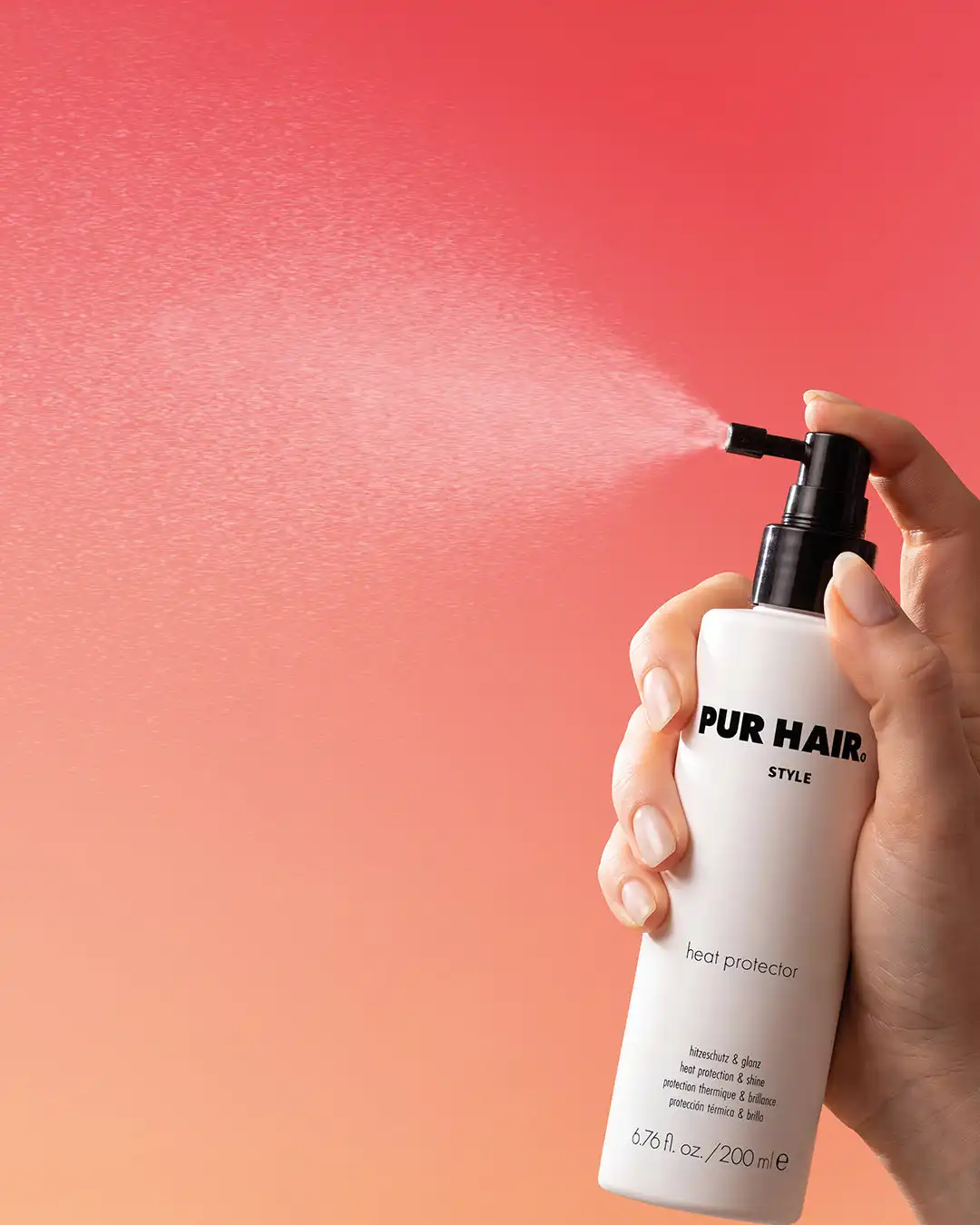
Photo via skaistumabars.lv
Heat Protectant Sprays
Lightweight and easy to distribute evenly, sprays are the best choice for fine, thin, or straight hair that is easily weighed down. They mist over the hair quickly and dry fast, making them ideal before blow-drying. The trade-off is lighter coverage, so thick or very curly hair may need a second pass.
Heat Protectant Creams and Serums
Thicker formulas coat each strand more heavily, which suits thick, curly, coily, or coarse hair. Creams also add smoothing and frizz control, so they double as a styling product. On fine hair they can feel heavy and flatten volume, so use a small amount and keep it away from the roots.
What to Look for on the Label
- Silicones (dimethicone, cyclomethicone): the most effective heat-barrier ingredients; they coat the shaft and slow heat transfer.
- A stated heat-protection level: many products list protection up to a temperature — 230°C is a common claim.
- Added conditioning ingredients: panthenol, argan oil, or keratin help the hair recover from styling.
- No drying alcohols high on the list: alcohol denat in large amounts can dry hair out, which defeats the purpose.
How to Apply Heat Protectant Properly
Application matters as much as the product. An uneven coat leaves unprotected patches that take the full heat.
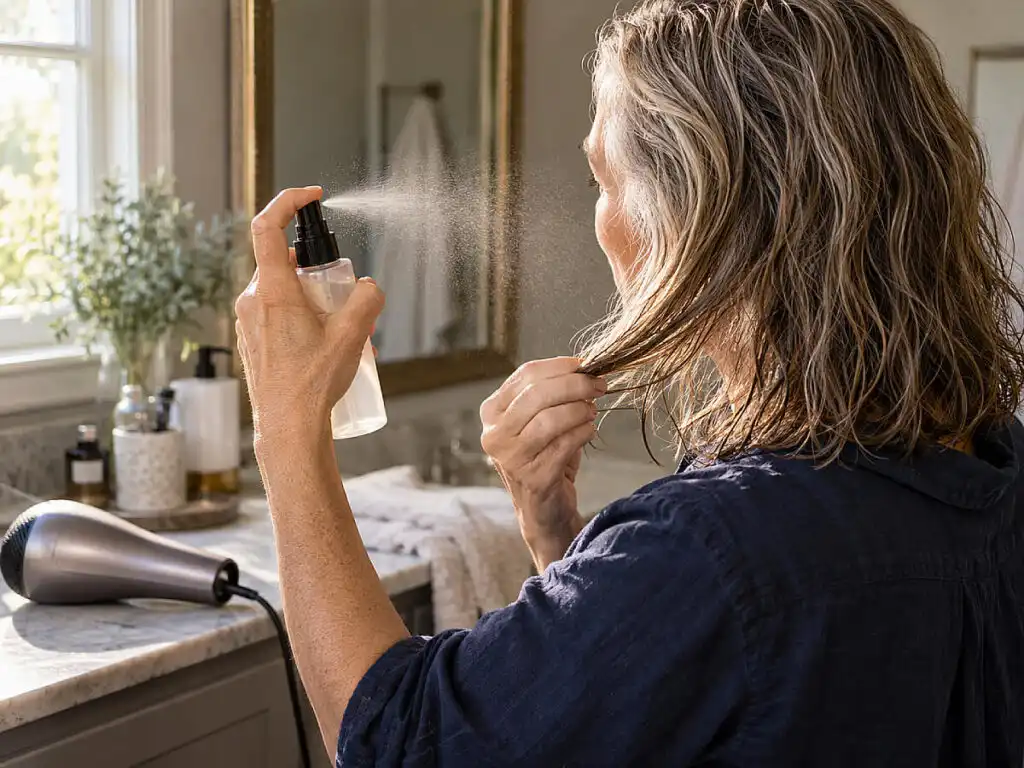
Photo via trendyhairideas.com
- Start with damp hair for blow-drying: towel-dry gently, then mist spray evenly through the lengths or smooth a small amount of cream through with your hands. Comb through to distribute it.
- Apply to dry hair before hot tools: for flat irons, curling wands, and hot brushes, apply protectant to fully dry hair, section by section, just before styling each section.
- Cover the ends: the ends are the oldest, driest part of the hair and the most heat-sensitive. Make sure they are coated, not just the roots and mid-lengths.
- Do not overload: too much product leaves hair greasy and can make flat irons sizzle. A light, even coat is enough — you can always add a second light pass on thick hair.
- Let it dry briefly: give spray a few seconds to settle before the tool touches the hair, so the barrier has formed.
Heat Styling Habits That Reduce Damage
A protectant helps, but how you use the tools matters just as much. A few habits make a real difference:
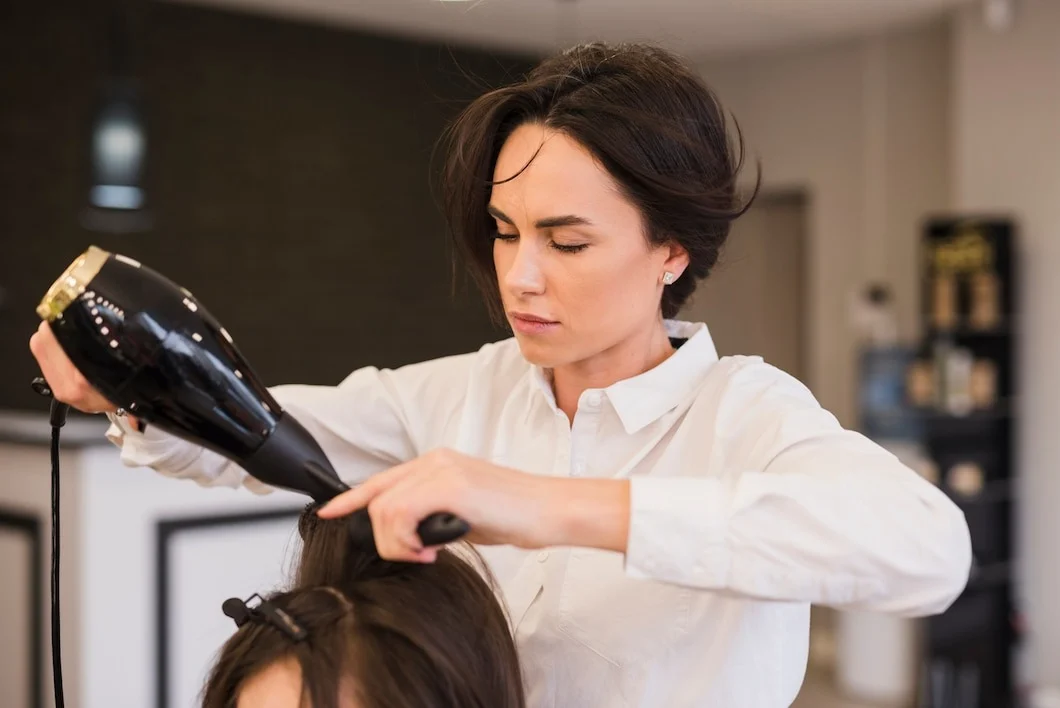
Photo via relieved.co
- Use the lowest effective temperature: fine or damaged hair usually needs no more than 150–170°C; thick or coarse hair may need 180–200°C. The maximum setting is rarely necessary.
- Keep the tool moving: never hold a flat iron or dryer in one spot. Slow, steady passes do the job without scorching one section.
- Do not iron wet or damp hair: the sizzling sound is water boiling inside the shaft. Hair must be fully dry before a flat iron or curler touches it.
- Limit frequency: two to three heat-styled days a week, with rest days in between, gives hair time to recover.
- Deep-condition weekly: a weekly mask or deep conditioner replaces moisture that heat styling removes.
Lower heat and fewer passes also preserve the shape of a good cut — the face-framing layers in Brown Wavy Hair with Face-Framing Layers and Long Haircut Ideas with Face Framing stay smoother for longer when the hair is not over-dried.
Common Heat Protectant Mistakes
Skipping it on “quick” styles: even a two-minute touch-up with a flat iron reaches damaging temperatures. If heat touches the hair, protectant should be on it first.
Applying it only to the top layer: the underneath sections and the ends need coverage too. Sectioning the hair and applying to each layer takes a minute longer and protects the whole head.
Using oils as a substitute: cooking oils and most hair oils do not protect against high heat — some can actually fry the hair at flat-iron temperatures. Use a product designed for the job.
Assuming protection means unlimited heat: a protectant reduces damage; it does not eliminate it. The highest setting on a flat iron will still stress protected hair over time.
Forgetting the hairdryer: many people only use protectant before irons, but blow-drying is heat styling too. Apply it before drying, especially on high settings.
When Your Hair Needs a Break
If your hair feels rough, snaps easily, or will not hold moisture no matter what you use, it may be time for a heat holiday. A few weeks of air-drying, heatless styles, and weekly deep-conditioning treatments let the cuticle recover. Trimming the most damaged ends also helps — split ends travel upward if left alone, so a small trim now prevents a bigger cut later. Gentle, low-heat styles such as the soft waves in Wavy Hairstyle Ideas at the Collarbone and the long layered looks in Black Long Hair Styles with Curtain Bangs are easy to achieve with minimal heat.
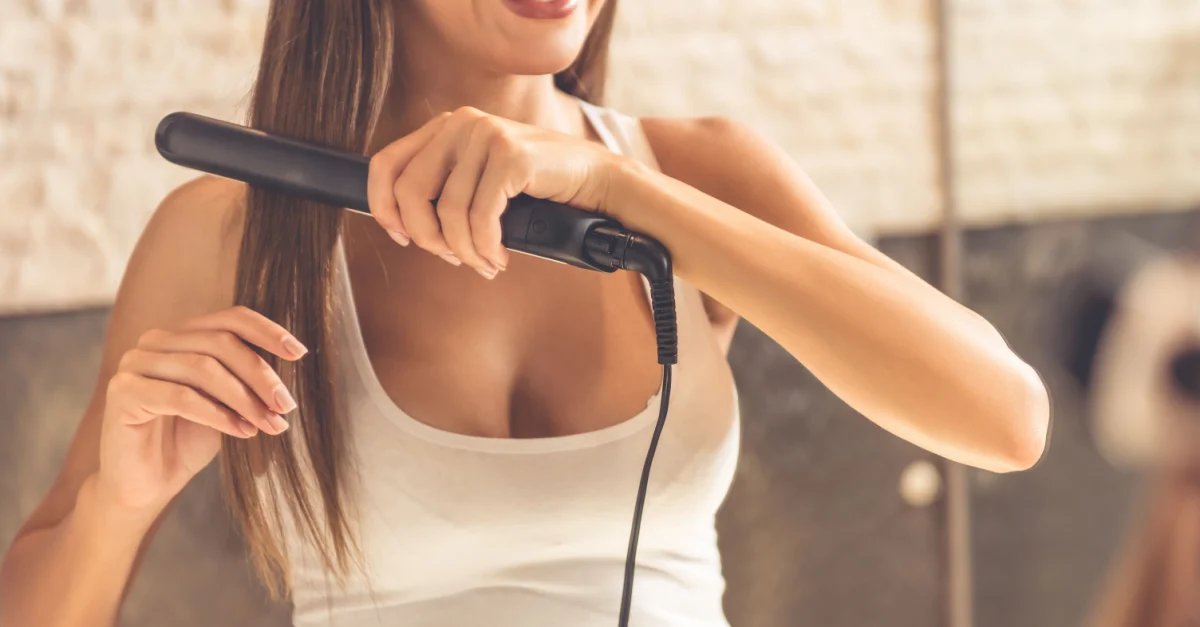
Photo via blog.kotsovolos.gr
Frequently Asked Questions
Do heat protectants really work?
Yes — studies show that products containing silicones measurably reduce moisture loss and cuticle damage from hot tools. They do not make heat styling harmless, but they significantly slow the damage compared with styling unprotected hair.
Should I use a spray or a cream?
Sprays suit fine, thin, or straight hair because they are lightweight and distribute evenly without weighing hair down. Creams and serums suit thick, curly, or coarse hair, where heavier coverage and extra smoothing are useful. Many people use a spray before blow-drying and a cream before flat irons.
Can I use heat protectant on dry hair?
Yes — in fact, protectant should be applied to dry hair before flat irons and curling tools. For blow-drying, apply it to damp hair first. The key is that the hair is dry before a hot iron touches it, never damp.
How much heat protectant should I use?
Less than you might think. For a spray, a light all-over mist is enough; for a cream, a pea-sized amount smoothed through the lengths. Too much product leaves hair greasy and can make irons sizzle. Thick hair may need a second light pass rather than one heavy one.
Can I skip heat protectant if I use a low heat setting?
It is still worth using. Even moderate heat dries hair out over time, and protectant also adds conditioning and frizz control. Think of it as the cheapest insurance in your styling routine — a few seconds of application for measurably less damage.
Final Thoughts
Heat protectant is a small step with an outsized payoff. Pick the formula that suits your hair — a light spray for fine hair, a cream for thick or curly hair — apply it evenly every time heat touches your hair, and keep your tools at the lowest temperature that gets the job done. Pair that with a weekly deep-conditioning treatment and a few heat-free days, and your hair will stay smoother, stronger, and shinier for far longer.
Disclaimer: This article is for general informational purposes only and does not constitute medical or professional advice. If you experience sudden hair loss, scalp irritation, or a reaction to a hair product, please consult a dermatologist or trichologist before continuing use.