A kettlebell looks simple — a cast-iron ball with a handle — but it is one of the most versatile training tools there is. With a single bell you can build strength, improve cardio fitness, train balance, and work the whole body in twenty minutes. For women starting strength training, kettlebells have a particular advantage: the movements are natural, the learning curve is gentle, and the results show up quickly in everyday life, from carrying groceries to climbing stairs without thinking about it.
This guide covers the basics: why kettlebells work, how to choose your first bell, the four foundational moves to learn first, and a simple beginner workout you can do two to three times a week. Comfortable, flexible clothing helps — the ideas in Gym Outfit Ideas for Your Next Workout are made for exactly this kind of training.
Key Takeaways
- Most women start with an 8 kg (18 lb) kettlebell for two-handed moves and a lighter one for single-arm work.
- Learn the deadlift first — it teaches the hip hinge that every kettlebell move depends on.
- Keep your back flat, drive from the hips, and let the arms stay relaxed on swings.
- Train 2 to 3 times a week, with at least one rest day between sessions.
- Good form matters more than heavy weight; add load only when the movement feels solid.
Why Kettlebells Suit Beginners
Kettlebell training is built around natural movement patterns — hinging at the hips, squatting, carrying, and pressing — rather than isolated machine exercises. That makes it unusually practical: the strength you build transfers directly to daily life. A swing trains the same hip drive you use to lift a heavy box; a goblet squat trains the same pattern as sitting down and standing up.
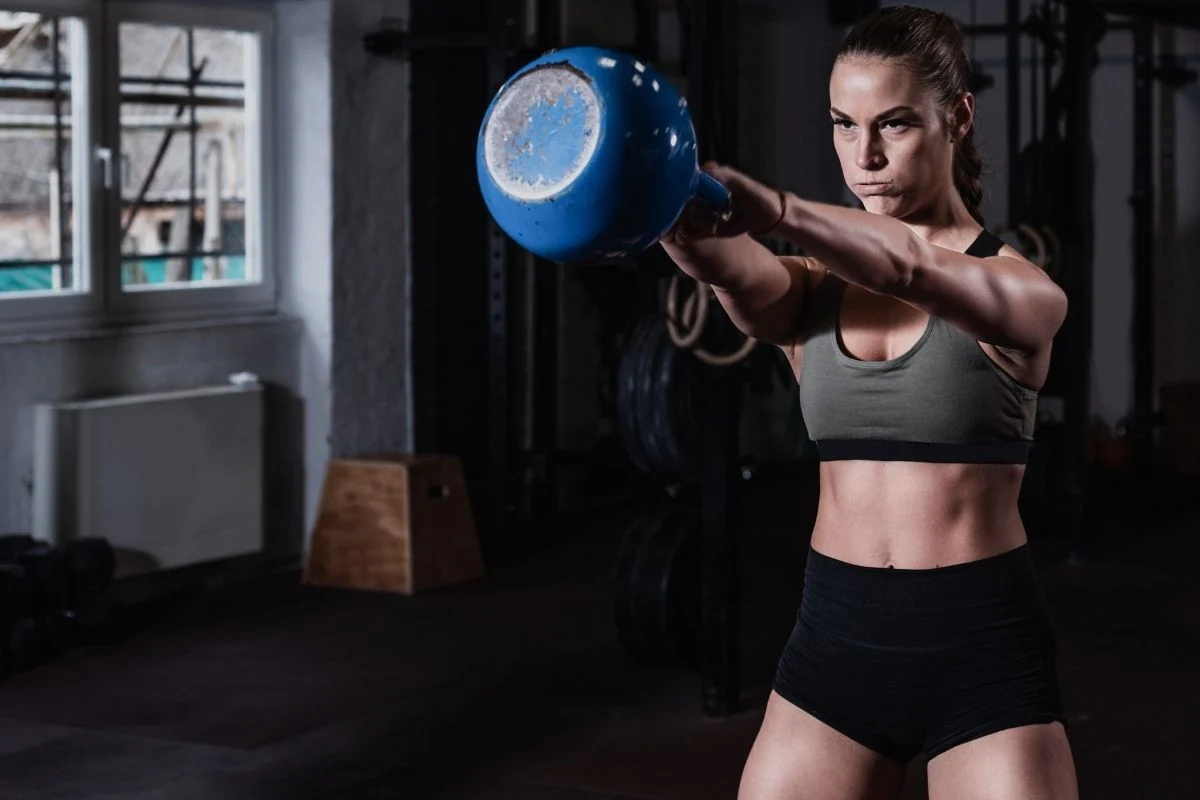
Photo via cult.fit
Kettlebells are also efficient. Because most moves use the whole body, a short session trains strength and cardio at the same time — twenty minutes with a bell can leave you as worked as a much longer gym session. And the equipment is minimal: one or two bells and a small patch of floor are enough, at home or in the gym. For women who have felt unsure in the weights area, a single kettlebell is a friendly way in.
Choosing Your First Kettlebell
Weight matters more than brand. Too light, and the bell will not teach you the hip hinge properly — you will end up lifting with your arms. Too heavy, and your form will break down. As a general starting point, most women begin with an 8 kg (18 lb) bell for two-handed moves like the deadlift and swing, and a lighter 4–6 kg bell for single-arm moves like the press.
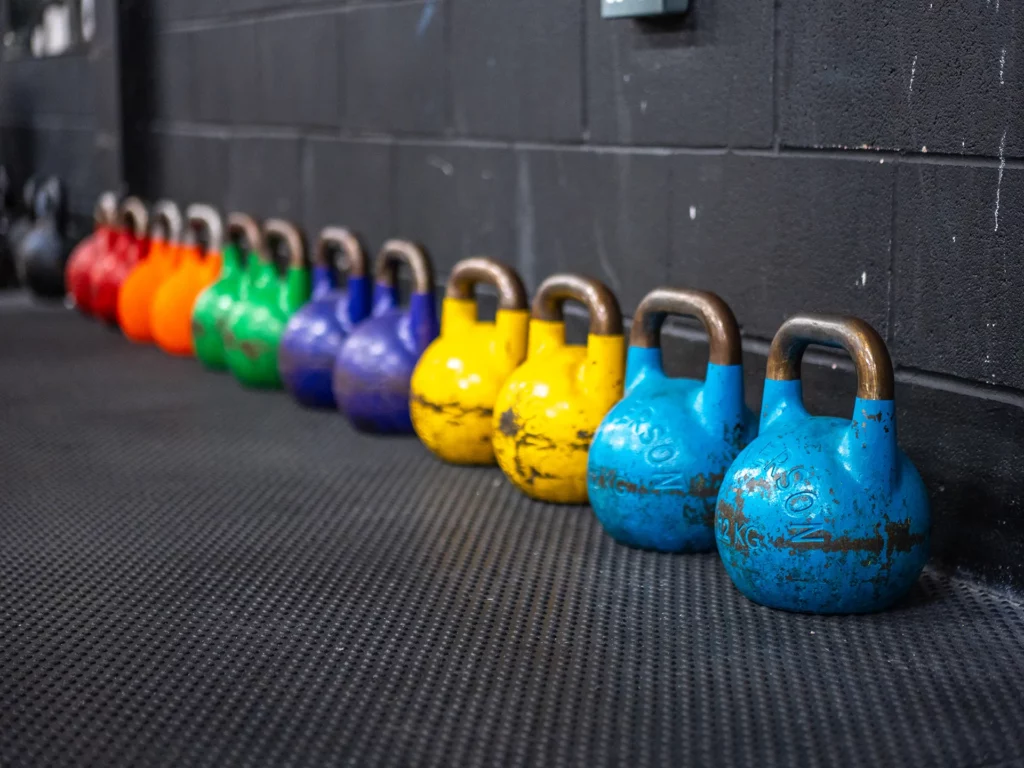
Photo via achievehealth.uk
- Handle: look for a smooth handle wide enough for two hands, with enough texture to grip without tearing your palms. Chalk helps if your hands get sweaty.
- Material: cast-iron bells are the classic choice; competition bells keep the same size at every weight, which some people prefer. Vinyl-coated bells protect floors at home.
- Shape: a flat base lets the bell sit safely on the floor between sets.
- Space: you need roughly a yoga mat’s worth of clear floor, with nothing breakable within arm’s reach — swings move the bell forward, not just up.
Wear flat, stable shoes or train barefoot on a mat, and choose clothes that let your hips move freely — the flexible fits in Simple Leggings Outfits for Everyday Style work well here.
The Foundational Moves
Learn these four moves in order. Each one builds on the last, and the first — the deadlift — teaches the hip hinge that makes everything else safe.
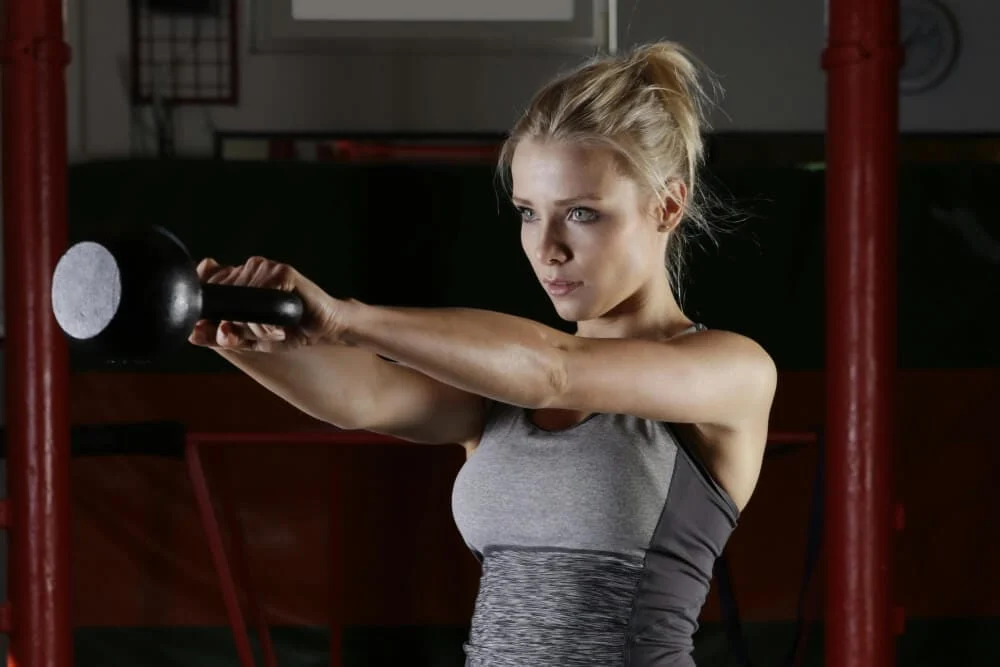
Photo via realfit.ae
1. Kettlebell Deadlift
Stand with feet hip-width apart, the bell between your feet. Hinge at the hips, pushing your bottom back, and grip the handle with both hands. Keep your back flat and your chest up, then drive through your heels to stand tall, squeezing your glutes at the top. Lower with control by hinging again. The deadlift is the foundation — practice it until the hinge feels natural before moving on.
2. Two-Handed Swing
Start as if for a deadlift, then hike the bell back between your legs and drive your hips forward powerfully, letting the bell float up to chest height on the momentum. Your arms stay relaxed — they are hooks, not lifters. At the top, stand tall with glutes squeezed; then let the bell fall and hinge to receive it. The power comes from the hips, never from the arms or the lower back.
3. Goblet Squat
Hold the bell close to your chest by the horns, elbows tucked in. Squat down between your heels, keeping your chest up and your knees tracking over your toes, then drive up through your whole foot. The front-loaded weight naturally teaches upright posture, which makes this one of the best squat variations for beginners.
4. Single-Arm Press
Clean the bell to your shoulder — a small hip pop that brings it up without banging your wrist — then press it overhead until your arm is straight, and lower with control. The press builds shoulder strength and core stability at the same time, because the off-center weight forces your midsection to work hard to stay square.
A Simple Beginner Workout
Do this session two to three times a week, with at least one rest day between sessions. Warm up first with five minutes of easy movement — walking, arm circles, and a few bodyweight squats — and finish with gentle stretching.
- Kettlebell deadlift: 3 sets of 8–10 reps. Rest 60–90 seconds between sets.
- Goblet squat: 3 sets of 8–10 reps. Rest 60–90 seconds between sets.
- Two-handed swing: 3 sets of 10–15 reps. Rest 60–90 seconds between sets.
- Single-arm press: 3 sets of 5–8 reps per side. Rest 60 seconds between sets.
- Farmer’s carry: hold a bell in each hand (or one, switching sides) and walk for 30–40 seconds. Two rounds.
The whole session takes about twenty to twenty-five minutes. When all sets feel comfortable for two sessions in a row, add a rep or two — or move to the next bell size. Progress in small steps is what keeps the habit going, and scheduling sessions ahead of time helps even more: the Sunday Reset Checklist for Home and Body is a simple way to plan the week’s workouts in one sitting.
Common Mistakes to Avoid
Squatting the swing: the swing is a hinge, not a squat. If your knees bend deeply and the bell barely moves, you are squatting it. Push the hips back, then drive them forward — the bell follows the hips.
Lifting with the arms: on swings, the arms are just hooks connecting you to the bell. If your shoulders ache after swinging, the arms are doing work the hips should do.
Rounding the lower back: a flat back is non-negotiable on deadlifts and swings. If you cannot keep it flat, the weight is too heavy or the hinge needs more practice. Drop the weight and rebuild the pattern.
Skipping the warm-up: cold hips and a cold back are a poor start to a hinge workout. Five minutes of easy movement first makes the session both safer and stronger.
Going too heavy, too soon: a bell you can move with perfect form beats a heavier one you fight. Strength builds fastest on good patterns, not on grinding reps.
Staying Safe and Progressing
Kettlebell training is safe when the fundamentals are respected — flat back, hips driving the movement, and loads that match your current ability. A session or two with a qualified coach is worth considering at the start: a trained eye can spot a rounding back or an arm-driven swing in seconds, and the correction saves weeks of unlearning.
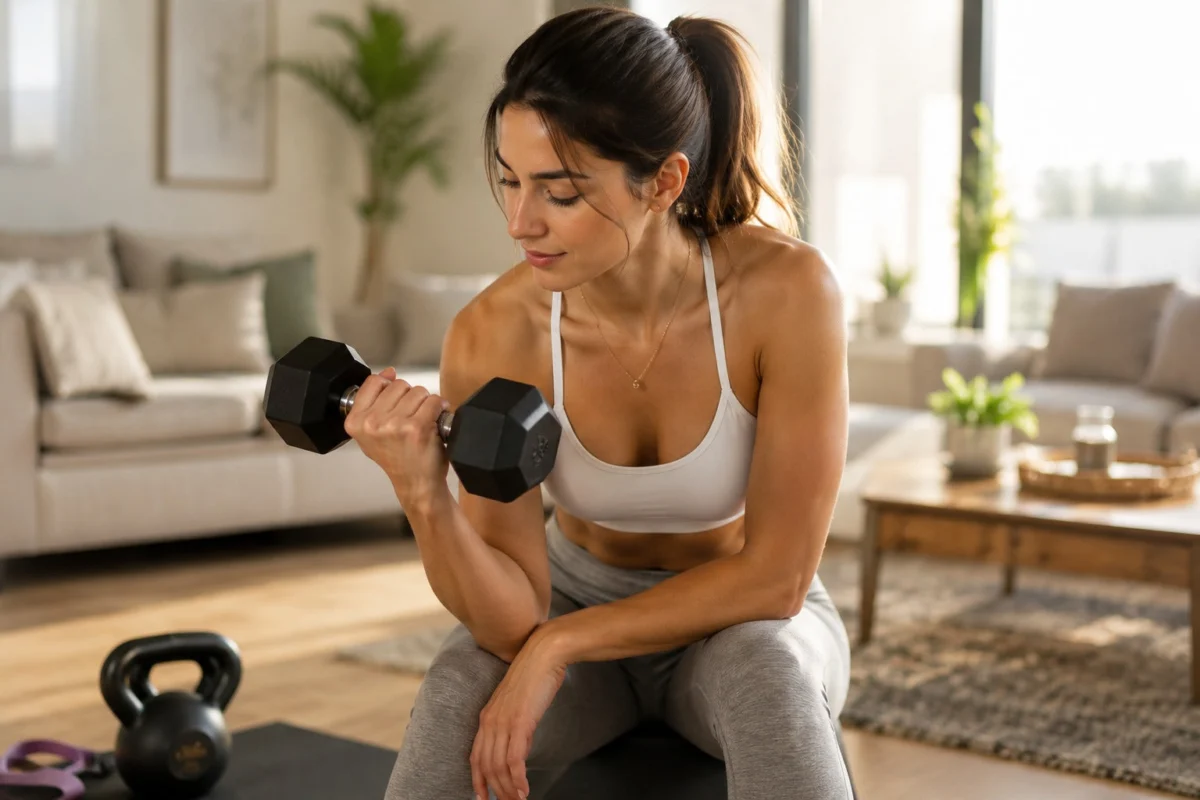
Photo via bluetruehealth.com
Stop and get advice if you feel sharp pain, especially in the lower back, wrists, or shoulders — muscle tiredness is normal, joint pain is not. And remember that recovery is part of training: sleep, rest days, and enough protein all help the body adapt to the new demands. The High Protein Diet for Women guide and the Vitamins for Women: Essential Nutrients guide cover the nutrition side of getting stronger.
Frequently Asked Questions
What weight kettlebell should a woman start with?
Most women start with an 8 kg (18 lb) bell for two-handed moves and a lighter 4–6 kg bell for single-arm work. If you are already active, 10–12 kg may suit two-handed swings. The right weight is one you can move with good form for the full set.
Can kettlebell training replace a gym membership?
For general strength and fitness, largely yes. A bell or two and a small space cover most training needs. A gym still offers more variety and heavier loads, but many women train effectively at home with kettlebells alone.
Will kettlebells make me bulky?
No. Building large muscle mass requires heavy loads, high volume, and a calorie surplus over a long period. Kettlebell training typically builds lean strength, better posture, and endurance — not bulk.
How often should beginners train with kettlebells?
Two to three times a week is ideal, with at least one rest day between sessions. Rest days are when the body adapts and gets stronger, so they are part of the program, not a gap in it.
Are kettlebells safe for bad knees or a bad back?
It depends on the condition. The hip hinge can actually strengthen the muscles that support the back, but anyone with a knee, back, or joint issue should check with a doctor or physiotherapist first and consider learning the moves with a qualified coach.
Final Thoughts
Kettlebell training rewards patience at the start and pays it back for years. Learn the deadlift, earn the swing, squat and press with control, and add weight only when the movement feels easy. Two or three short sessions a week will build strength you can feel in everyday life — steadier balance, easier lifting, better posture — and the habit is simple enough to keep for the long term. For training days that flow into the rest of life, the comfortable everyday looks in Sporty Outfit Ideas for Everyday Style are made for exactly that kind of day.
Disclaimer: This article is for general informational purposes only and does not constitute medical or professional advice. Always consult a doctor before starting a new exercise program, especially if you have pre-existing health conditions, joint issues, or are pregnant. If you experience pain during exercise, stop and seek professional guidance.