Short on time but still want a workout that actually works? A jump rope might be the answer. Ten minutes of jumping can deliver real cardiovascular benefits, sharpen coordination, and engage the whole body — without a gym, a class booking, or an hour carved out of the day. All you need is a rope, a little floor space, and a pair of supportive shoes.
This guide covers a simple, effective routine you can do at home: the warm-up, the basic moves, the gear that matters, and a weekly plan that builds stamina safely. It is designed for busy women who want fitness to fit into real life, not the other way around. Comfortable workout clothes help too — the ideas in Gym Outfit Ideas for Your Next Workout make it easy to feel ready the moment you pick up the rope.
Key Takeaways
- Ten minutes of jump rope can offer cardiovascular benefits comparable to running.
- Begin with 30 seconds of jumping followed by 30 seconds of rest.
- Aim for 3 to 5 sessions a week, with at least one rest day between workouts.
- Size your rope so the handles reach your armpits when you stand on its middle.
- Always warm up before jumping and stretch your calves afterward.
Why Jump Rope Works So Well
Jump rope is one of the most efficient workouts you can do in a short time. It raises the heart rate quickly, which builds cardiovascular fitness, and it trains coordination and agility because every jump asks your hands, feet, and eyes to work together. The legs, core, shoulders, and arms all contribute, so ten focused minutes genuinely count as a full-body session.

Photo via 400hobbies.com
It is also unusually practical. A rope costs little, weighs almost nothing, and works in a living room, a garden, a hotel room, or a park. There is no commute, no waiting for equipment, and no schedule to keep — which is exactly why it suits women whose days are already full. The workout ends when the timer does, and the rest of the day is still yours.
The 10-Minute Routine
Work through these moves in order, resting 30 seconds between each one. The whole session, including warm-up and cool-down, takes about ten minutes.
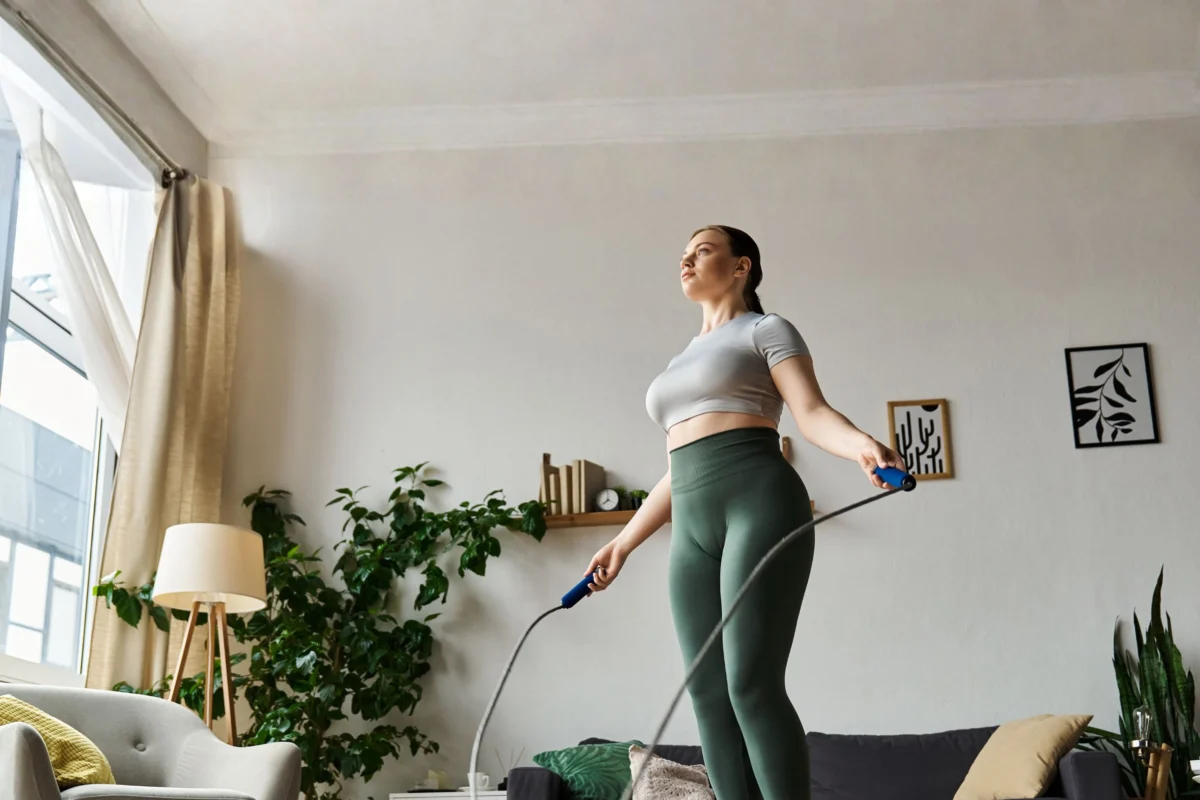
Photo via simplewellnesstoday.com
- Warm-up: arm circles (1 minute). Stand tall, extend your arms to the sides, and make small forward circles for 30 seconds, then reverse for 30 seconds. This prepares the shoulders for the rope’s rotation.
- Basic bounce (30 seconds). Hold the handles with your elbows close to your body and turn the rope with your wrists. Jump just high enough for the rope to pass under your feet, landing softly on the balls of your feet with knees slightly bent.
- Alternate foot step (30 seconds). Shift your weight from one foot to the other with each rotation, as if jogging in place. Keep the jumps low and the rhythm steady.
- Side-to-side jumps (30 seconds). With each rope pass, jump a few inches to the right, then a few inches to the left. Keep your core engaged and the movements small and controlled.
- High knees (30 seconds). Lift your knees toward your chest with each jump, alternating legs. Focus on lifting the knees rather than jumping high off the ground, and keep your torso upright.
- Criss-cross arms (30 seconds). After a regular jump, cross your arms in front of your body for the next rope pass, then uncross. Cross at the elbows, not the wrists, and start with one cross per set if it feels tricky.
- Cool-down: calf stretch (1 minute). Face a wall, place your hands on it at shoulder height, step one foot back with the heel pressed down, and lean forward until you feel a stretch in the calf. Hold 20–30 seconds per leg.
Gear: What You Actually Need
The right gear makes jumping easier and safer, but the list is short — and most of it you may already own.

Photo via stylesnyou.com
- A properly sized rope: stand on the middle of the rope and pull the handles up — they should reach your armpits. A rope that is too long or too short forces awkward posture and breaks your rhythm. A basic adjustable rope is ideal for beginners.
- Supportive athletic shoes: these absorb the impact of each landing and protect your feet and ankles. Avoid barefoot jumping or flat, unsupportive shoes.
- A workout mat (optional): a mat softens landings on hard floors, reduces joint stress, and protects the rope from wear.
- Comfortable workout clothes: leggings and a fitted top stay out of the rope’s path. The flexible fits in Simple Leggings Outfits for Everyday Style and the easy layers in Blue Leggings Outfit Ideas with a Hoodie work just as well for a workout as for the school run.
Your Weekly Plan
Consistency matters more than duration. Aim for 3 to 5 sessions per week, with at least one rest day between workouts, and build the work intervals gradually:
- Weeks 1–2: 30 seconds jumping, 30 seconds rest, for 10 minutes total.
- Weeks 3–4: 45 seconds jumping, 30 seconds rest, for 10 minutes total.
- Week 5 onward: 60 seconds jumping, 30 seconds rest, for 10 minutes total.
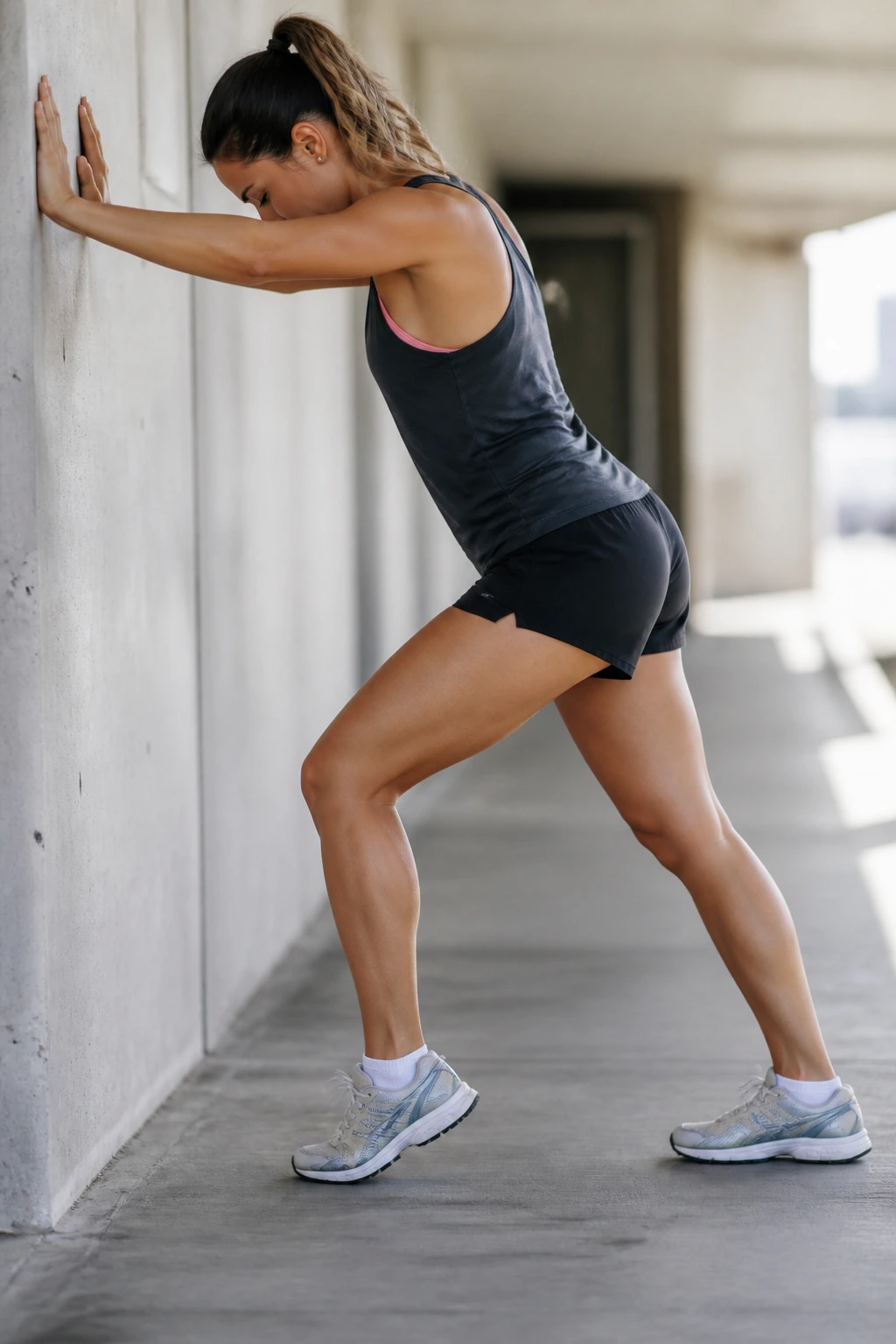
Photo via gymingdaily.com
As stamina improves, the work intervals grow while the rest stays the same. Listen to your body along the way: if you feel sharp pain or unusual fatigue, take an extra rest day. Progress comes faster when you stay consistent and avoid overdoing it. A weekly planning habit helps here — the Sunday Reset Checklist for Home and Body is a simple way to schedule your sessions for the week ahead instead of hoping they happen.
Common Mistakes to Avoid
Jumping too high: you only need to clear the rope by an inch or two. High jumps waste energy and increase impact on the knees and ankles.
Using the arms instead of the wrists: the rotation should come from the wrists, with elbows tucked close to the body. Big arm circles tire you out fast and tangle the rope.
Skipping the warm-up and cool-down: cold muscles and tight calves are the fastest route to soreness or a strain. The one-minute warm-up and calf stretch are part of the workout, not optional extras.
Starting too fast: enthusiasm in week one leads to sore calves and a skipped week two. The 30-second intervals exist for a reason — build the base first, then the intensity.
Ignoring pain: muscle tiredness is normal; sharp or persistent joint pain is not. Stop, rest, and get advice if pain does not settle.
When to Check With a Doctor First
Jump rope is generally considered lower impact than running when done with good technique, but it is still a high-intensity activity. Check with a doctor before starting if you have knee, ankle, or joint problems, a heart condition, or any concern about high-impact exercise — and always stop if you feel sharp pain, dizziness, or unusual shortness of breath. A little caution at the start protects a habit that can last for years.
Frequently Asked Questions
How long should a beginner jump rope?
Start with 30 seconds of jumping followed by 30 seconds of rest, for a total of about 10 minutes including warm-up and cool-down. As you get comfortable, increase the work intervals before you increase the total time.
Can jumping rope help with weight loss?
It can burn a significant number of calories in a short time, which may support weight loss as part of a balanced routine. Results depend on overall diet and activity — it is an effective tool, not a quick fix. Pairing workouts with enough protein helps recovery; the High Protein Diet for Women guide explains how to build that into everyday meals.
What kind of jump rope is best for beginners?
A basic adjustable rope is a good starting point because you can size it to your height. Look for something lightweight and easy to turn, and avoid beaded or heavy-handled ropes until the basic bounce feels natural.
Is jumping rope bad for your knees?
With proper technique — landing softly on the balls of the feet with slightly bent knees — it is generally lower impact than running. If you have existing knee issues, consult a doctor first, and stop immediately if you feel sharp pain.
How often should I jump rope for fitness?
Aim for 3 to 5 sessions per week with at least one rest day between workouts. Consistency matters more than any single session, and this frequency lets the body adapt and recover while stamina builds.
Final Thoughts
The best workout is the one you actually do, and ten minutes with a jump rope is one of the easiest workouts to keep. Treat those ten minutes as non-negotiable, like brushing your teeth, and expect noticeable gains in stamina and coordination within a few weeks. Keep it simple, listen to your body, and enjoy the fact that a solid workout can fit into less time than it takes to find parking at the gym. For days when you want to take the routine outside, the comfortable everyday looks in Sporty Outfit Ideas for Everyday Style move just as easily from a park session to the rest of your day.
Disclaimer: This article is for general informational purposes only and does not constitute medical or professional advice. Always consult a doctor before starting a new exercise program, especially if you have pre-existing health conditions, joint issues, or are pregnant. If you experience pain or discomfort during exercise, stop and seek professional guidance.