Every now and then, a feeling from childhood shows up uninvited in adult life: a wave of sadness at a small rejection, a flash of fear before speaking up, or a longing to be comforted that seems out of proportion to the moment. That younger part of you — the one that still carries old feelings, unmet needs, and half-remembered hurts — is often called your inner child. Connecting with it, gently and without judgment, can be a real path toward understanding yourself better.
This guide explains what inner child healing is, why journaling is such a useful tool for it, and offers groups of prompts for reconnecting with your younger self, exploring unmet needs, processing difficult emotions, re-parenting yourself with kindness, and celebrating the joy and strengths that were always there. You do not need to answer them all — start with whichever prompt feels least intimidating, and let the rest wait. A calm weekly rhythm, like the one in the Sunday Reset Checklist for Home and Body, can give this kind of gentle reflection a regular home.
Key Takeaways
- Inner child healing means acknowledging how childhood experiences still shape adult feelings, behaviours, and relationships.
- Journaling gives you a private, pressure-free space to explore memories and patterns with self-compassion.
- Prompts work best when you write freely, without editing or judging what comes out.
- Healing is not linear — progress happens in small shifts over weeks, months, or years.
- If journaling brings up overwhelming emotions or significant trauma, professional support is the right next step.
What Is Inner Child Healing, and Why Does Journaling Help?
Inner child healing is a therapeutic idea focused on acknowledging childhood experiences and their impact on your present-day behaviour, emotions, and relationships. It means connecting with your younger self to process unresolved hurts and unmet needs — not to erase the past, but to integrate it, so your adult self can respond with more self-compassion and steadier emotional regulation.

Photo via hopewoodlifestyle.com.au
Journaling suits this work because it is private, unhurried, and entirely yours. There is no audience to impress and no right answer to produce. Writing by hand slows your thoughts down just enough to notice what is actually there, and the page holds whatever comes out without reacting. Over time, patterns emerge — the same need appearing again and again, the same trigger, the same small joy — and those patterns are often the most useful part of the practice.
A few ground rules make the work gentler. Write where you feel safe and will not be interrupted. Let yourself stop whenever a prompt feels too heavy — you can always return to it later. And treat everything you write as information, not a verdict on who you are. A soft, comfortable setting helps: many people journal wrapped in something cozy, like a favourite fleece outfit, with a warm drink nearby, so the ritual itself feels like care.
Prompts for Connecting With Your Younger Self
These prompts help you picture and recall your younger self with curiosity and kindness. Write freely, without editing, and let the memories surface in their own order — even a single honest sentence counts.
- Picture yourself at age five. What were you wearing, and where were you standing?
- Describe your favourite hiding spot as a child, and what made it feel safe.
- What song made you dance when you were little?
- Recall a game you played over and over again. Who played it with you?
- Who was your best friend at age seven, and what did you do together?
- What did you dream about becoming when you grew up?
- Name a toy you loved, and why it mattered so much to you.
- What made you laugh hardest as a kid?
- Describe your childhood bedroom — the colours, the smells, the light.
- What did you fear most at night, and what helped you feel brave?
- Remember a proud moment from your school years.
- How did you spend long summer days outside?
- What book did you read again and again?
- Think of a smell you loved in childhood. Where does it take you?
Prompts for Exploring Unmet Childhood Needs
These prompts guide you to notice what may have been missing, without blame or judgment. Let patterns in your adult life point back to those early needs. If a prompt stirs something painful, write one line and move on — depth comes with time, not force.
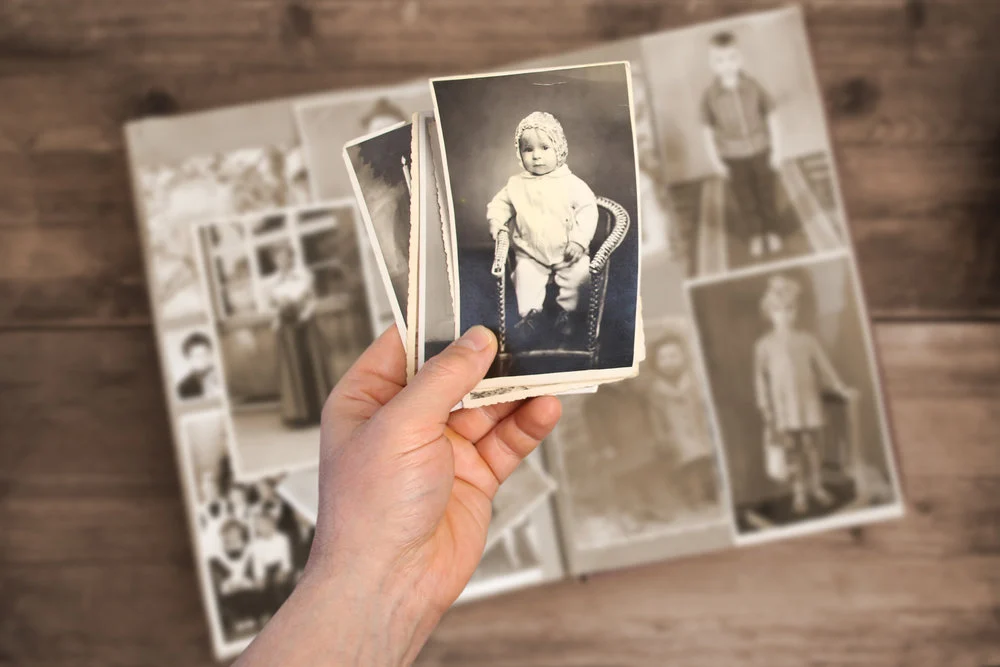
Photo via club.coolpeople.cz
- When did you feel unheard as a child?
- What did you need to hear but never did?
- Did you feel seen for who you truly were?
- Who protected you when you felt scared?
- How was love shown in your family?
- Were your feelings validated, or dismissed?
- When did you feel invisible at home?
- What approval did you crave most?
- Did you have space to make mistakes?
- Who listened to you without interrupting?
- What comfort did you lack during hard times?
- Were your boundaries respected as a child?
- What did you need from a parent that you did not get?
- How did you ask for help back then?
- Did you feel safe expressing anger or sadness?
Prompts for Processing Difficult Emotions and Memories
These prompts help difficult emotions surface and be acknowledged rather than pushed away. Go slowly — if anything feels overwhelming, pause and consider speaking with a therapist, especially if intense memories arise.
- What sadness did you carry from childhood?
- When did you feel abandoned or left behind?
- What anger did you swallow as a child?
- Describe a moment you felt deep fear.
- What did you cry about that no one noticed?
- When did you feel ashamed of something you did?
- What loss did you experience early on?
- How did you show hurt without words?
- What memory still stings when you recall it?
- When did you feel betrayed by someone you trusted?
- What did you worry about that felt too big for a child?
- Where did you feel lonely, even in a crowd?
- What did you suppress to keep the peace?
- Describe a time you felt helpless.
- What did you blame yourself for, unfairly?
Prompts for Re-Parenting and Nurturing Your Inner Child
Re-parenting means stepping into the role of a nurturing adult for your younger self: offering the comfort, protection, and permission that were missing. These prompts help you practise that steady, kind voice.

Photo via yoursoulsplan.com
- Write a letter to your inner child telling them they are safe now.
- Ask your inner child what they need to hear today.
- Promise your inner child you will always listen to them.
- Tell your inner child they did nothing wrong.
- Imagine hugging your younger self and saying, “I am here.”
- Set a boundary with someone who drains you, for your inner child’s sake.
- Write a permission slip for your inner child to rest or play.
- Reassure your inner child that they are worthy of love and care.
- Offer your inner child the apology you wish they had received.
- Visualize your adult self sitting beside your younger self in a safe place.
- Tell your inner child their feelings are valid and important.
- Write a list of things you will protect your inner child from now on.
- Ask your inner child what they want to play or create today.
- Give your inner child permission to say no without guilt.
- Write a bedtime story for your inner child that ends with peace.
Small acts of care count as re-parenting too. Keeping a simple morning routine like the glowing skin morning skincare routine, or treating yourself to a fresh soft pink manicure, are quiet ways of telling your younger self that you are looked after now.
Prompts for Celebrating Inner Child Strengths and Joy
Healing is not only about the hard parts. These prompts help you remember the joy, creativity, and resilience that have always been part of you — qualities your younger self carried that still serve you today.
- Recall a moment from childhood when you felt completely happy.
- Write about your favourite game or activity as a child.
- Describe a time you felt proud of something you made or did.
- List three things your younger self loved about the world.
- Remember a friend or a pet who brought you joy.
- Write about a creative project you loved as a child.
- Recall a song or story that made you feel safe or excited.
- Describe a place where your inner child felt free and happy.
- List qualities your younger self had that you still admire.
- Write about a time your inner child showed courage or kindness.
- Remember a holiday or celebration that felt magical to you.
- List small pleasures your younger self enjoyed, like a favourite snack or colour.
- Write about a dream or goal your inner child had.
- Recall a moment when you felt deeply curious or amazed.
- Describe a skill your younger self learned that still serves you.
Joy is a legitimate part of healing, not a distraction from it. Wearing something that makes you feel like yourself — a clean, easy look from the Clean Girl Outfits collection or a soft everyday style from Brown Everyday Outfit Ideas — can be a small daily way of honouring who you are becoming.
How to Use These Prompts Without Overwhelming Yourself
Seventy-five prompts is a library, not a homework assignment. The most sustainable approach is to pick one prompt at a time, write for ten to fifteen minutes, and stop while it still feels manageable. Some people journal daily; others open the notebook once a week. Both are fine — what matters is returning to the practice gently, not forcing a breakthrough.

Photo via healthylivingdaily.net
Close each session deliberately: after writing about something hard, add one kind sentence to yourself or one thing you are looking forward to.
Frequently Asked Questions
How long does inner child healing take?
It is an ongoing, non-linear process, not a quick fix. Progress often happens in small, gradual shifts over weeks, months, or even years. Focus on consistency rather than speed.
Can I do inner child healing on my own?
Many people use journaling and self-reflection on their own. However, if you are dealing with significant trauma or emotions become overwhelming, seek guidance from a qualified therapist or mental health professional.
What if I do not remember much from my childhood?
Gaps in childhood memories are common, especially when there were difficult experiences. You can still connect with your inner child by focusing on feelings, patterns, or recurring themes in your adult life.
Is inner child healing only about negative experiences?
No. It is also about recognizing the joy, creativity, and resilience from your childhood. Celebrating positive memories and strengths is an important part of building a balanced, compassionate relationship with your past.
How do I know if my inner child is healing?
Healing is not a final destination. Signs of progress include more self-compassion, less intense reactions to old triggers, and an ability to soothe yourself when difficult emotions arise. You may notice healthier boundaries and greater emotional freedom.
Final Thoughts
Inner child healing is an ongoing process, not a destination. Start with one prompt that feels least intimidating — perhaps one about a favourite childhood game or song — and write without expectations. Over time, you may notice gradual shifts in how you respond to triggers and a deeper compassion for yourself. Each small step is a meaningful one.
Disclaimer: This article is for general informational purposes only and does not constitute medical or professional advice. Inner child healing is not a substitute for professional mental health treatment. If you are experiencing severe depression, anxiety, trauma, or other mental health concerns, please consult a qualified therapist or healthcare provider.