When hair starts thinning or simply needs a boost, rosemary is one of the first natural ingredients people reach for — and for good reason. The herb has been used in hair care for generations, and modern interest has only grown as more people look for plant-based ways to support fuller, healthier-looking hair. The question is rarely whether to try rosemary, but which form to choose.
Rosemary water and rosemary oil both aim to nourish the scalp, but they differ in strength, application, and who they suit best. This guide compares the two side by side, explains how to use each one safely, and helps you decide which fits your hair type, your sensitivity, and the time you want to spend on it. Whichever you choose, healthy hair also shows in the styles you wear — from defined curls like those in Curly Hair Haircut Ideas: Defined Curls to soft, voluminous looks such as Classy Medium Curly Hair Hairstyles for Volume and Shine.
Key Takeaways
- Rosemary oil is a concentrated essential oil that must always be diluted with a carrier oil before it touches the scalp.
- Rosemary water is a milder infusion made by steeping leaves in water, and it suits sensitive scalps well.
- Use rosemary oil as a pre-shampoo scalp massage and rosemary water as a final rinse or leave-in spray.
- Consistent use for at least three to six months is usually needed before growth changes become noticeable.
- Homemade rosemary water spoils quickly — refrigerate it and use it within one to two weeks.
How Rosemary Supports Hair Health
Rosemary contains active compounds — including rosmarinic acid, carnosic acid, and ursolic acid — that are thought to improve blood circulation in the scalp. Better circulation means more oxygen and nutrients reaching the hair follicles, and healthier follicles are better placed to produce stronger, thicker strands and shed less over time. That mechanism is the same whether the rosemary arrives as oil or as water; what changes is the concentration and how long it stays on the scalp.
It is worth keeping expectations realistic. Rosemary is a supportive remedy, not a medical treatment, and it works gradually. The people who see the best results are the ones who apply it regularly for months, not the ones who try it twice and stop. Think of it as part of a wider hair-care picture — alongside gentle washing, minimal heat, and good nutrition, including the nutrients covered in Vitamins for Women: Essential Nutrients.
Rosemary Water vs Rosemary Oil at a Glance
The two forms are not rivals so much as different tools. Rosemary oil is the concentrated essential oil, steam-distilled from the plant, and it is the more potent option — which also means it carries a higher risk of irritation if used undiluted. Rosemary water is a gentle infusion: fresh or dried leaves steeped in hot water, then cooled. It is far milder, leaves no greasy residue, and can be used almost daily.

Photo via mollyshomeguide.com
- Form: oil is a concentrated essential oil; water is a mild aqueous infusion.
- Application: oil is massaged into the scalp before shampooing; water is used as a rinse or leave-in spray after washing.
- Potency: oil is stronger and needs dilution; water is gentler and ready to use.
- Residue: oil can leave hair greasy if overused; water rinses clean with no residue.
- Shelf life: oil keeps for months to years in a cool, dark place; homemade water lasts one to two weeks refrigerated.
- Best for: oil suits people wanting a stronger weekly treatment; water suits sensitive scalps and frequent use.
How to Use Rosemary Oil for Hair Growth
Rosemary oil works best as a pre-shampoo scalp treatment. The routine is simple, but the dilution step is non-negotiable: undiluted essential oil on the scalp can cause burning, redness, and irritation.

Photo via themorfose.com
- Dilute the oil: mix three to five drops of rosemary essential oil into a tablespoon of a carrier oil such as jojoba, coconut, or sweet almond oil.
- Patch test first: apply a small amount of the diluted mixture to the inner arm and wait 24 hours to check for any reaction before using it on the scalp.
- Massage into the scalp: part the hair and use the fingertips to massage the mixture in for five to ten minutes. The massage itself stimulates circulation, so do not rush it.
- Leave it on: let the oil sit for at least 30 minutes, or overnight if you prefer, then shampoo and condition as usual.
A few drops diluted in a teaspoon of carrier oil is plenty for one application — more oil does not mean more growth, only more grease to wash out. A weekly oil massage also pairs well with protective styling afterwards, such as the crown styles in Boho Braid Styles: Hairstyles With a Crown, which keep treated hair tucked away neatly.
How to Use Rosemary Water for Hair Growth
Rosemary water is the gentler, everyday-friendly option. The most common method is a final rinse: after shampooing and conditioning, pour the rosemary water over the scalp and lengths, let it sit for two to three minutes, then rinse with cool water — or leave it in if you prefer the light herbal scent.
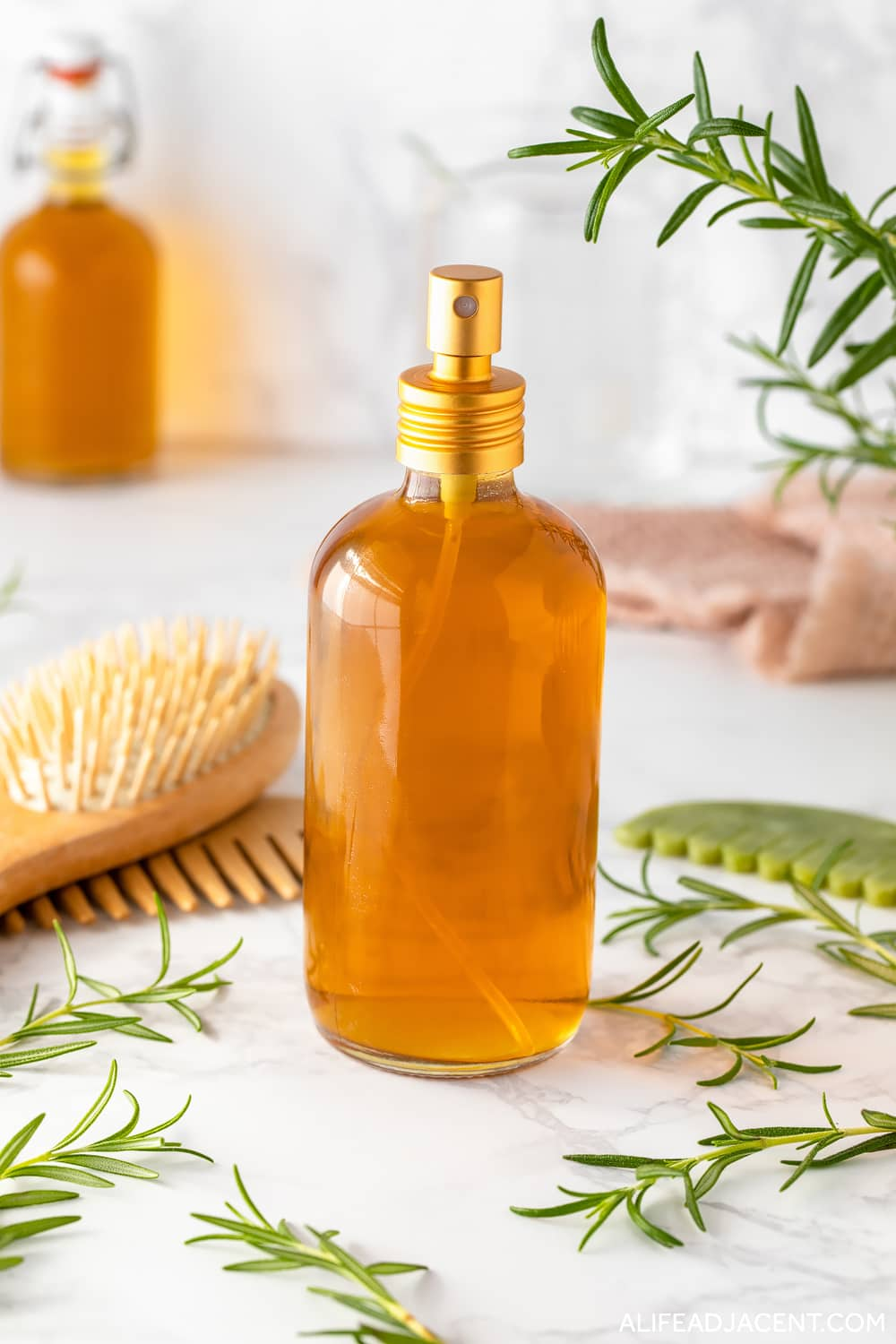
Photo via alifeadjacent.com
As a Leave-In Spray
For use between washes, keep the rosemary water in a spray bottle and mist it onto the scalp and hair whenever the scalp feels dry or the hair needs refreshing. It adds no grease, so it works well on fine hair and on styles that need to stay light, from layered cuts like those in Layered Hairstyle Ideas: Shaggy Cut With Curtain Bangs to smooth, straight finishes.
Storage matters more here than with the oil. Homemade rosemary water has no preservatives, so keep it sealed in the refrigerator and use it within one to two weeks. Discard it immediately if it develops an off smell or any mould. For longer storage, freeze the infusion in ice cube trays and thaw a cube as needed.
Common Mistakes to Avoid
Applying undiluted essential oil: rosemary essential oil is highly concentrated. Putting it directly on the scalp can cause burning, redness, and irritation. Always mix it with a carrier oil first, and always patch test.
Expecting instant results: hair grows slowly, and consistent use for at least three to six months is typically needed before changes in thickness or shedding become visible. Stopping after a few weeks means stopping before the routine has had a fair chance.
Storing rosemary water at room temperature: a homemade infusion left out on the counter invites bacteria and mould. Refrigerate it, and respect the one-to-two-week limit.
Over-applying oil: using too much rosemary or carrier oil leaves hair looking greasy and causes buildup on the scalp. A few drops, well diluted, is the right amount.
Using both forms at once: oil and water can both be part of a routine, but not in the same session. A common pattern is oil as a pre-shampoo treatment on wash day and water as a rinse or spray between washes.
When to Talk to a Professional
Rosemary water and oil are supportive remedies, not replacements for medical care. If you are experiencing severe hair loss, sudden thinning, or a patchy bald spot, see a doctor or dermatologist — those patterns can have causes that a home remedy will not address. Persistent scalp irritation, redness, or itching also deserves a professional opinion rather than a stronger home treatment.
Photo via alifeadjacent.com
If you have an underlying condition such as high blood pressure or epilepsy, or if you are pregnant or breastfeeding, check with a healthcare provider before using rosemary essential oil. And never stop or change a prescribed hair-loss treatment without talking to your doctor first. The same care-first approach applies to skin — a gentle, steady routine like the one in Glowing Skin Morning Skincare Routine works on the same principle of consistency over intensity.
Frequently Asked Questions
Can I use rosemary water and oil together?
Yes, but not at the same time. Many people use rosemary oil as a pre-shampoo scalp treatment and rosemary water as a post-wash rinse or leave-in spray. That way you get the potency of the oil and the gentle, refreshing effect of the water without overloading the scalp.
How long does it take to see results from rosemary for hair?
Hair growth is slow, so changes are not visible overnight. Consistent use for at least three to six months is often suggested before improvements in thickness or reduced shedding become noticeable. Individual results vary, so patience matters.
Is store-bought rosemary water as effective as homemade?
Store-bought rosemary water, sometimes labelled rosemary hydrosol, is a steam distillate and may differ slightly from a homemade infusion. It is convenient and generally safe, while homemade water can be fresher and more cost-effective. Both can work well when used consistently.
What are the signs of an allergic reaction to rosemary on the scalp?
Redness, itching, burning, or a rash on the scalp or skin where it was applied are all signs to stop immediately. Always patch test diluted oil on the inner arm 24 hours before full application to check for sensitivity.
Can rosemary water or oil make my hair greasy?
Rosemary water is unlikely to make hair greasy because it is water-based and rinses out easily. Rosemary oil, even diluted, can leave a greasy residue if you use too much or do not wash it out thoroughly — stick to the recommended dilution and rinse well.
Final Thoughts
For most people, rosemary water is the gentler, everyday-friendly starting point, while rosemary oil offers more potency for those who tolerate it. A sensible path is to begin with the water if your scalp is sensitive or you are new to rosemary, then consider the diluted oil if you want a stronger weekly treatment. Either way, the real ingredient is patience: apply it regularly, give it months rather than weeks, and judge the results on what your hair actually does. Consistency, not concentration, is what turns a herb into a habit that works.
Disclaimer: This article is for general informational purposes only and does not constitute medical advice. Rosemary water and oil are home remedies, not treatments for medical hair loss. If you are experiencing significant hair loss, scalp irritation, or have a medical condition, consult a doctor or dermatologist before using rosemary treatments.