Stretching before a workout is one of those habits everyone knows they should do — and one of the first things to get skipped when time is short. Yet a few minutes of the right kind of stretching can be the difference between a workout that feels good and one that ends with a pulled muscle.
This guide covers what a pre-workout stretching routine should actually look like: why dynamic stretching beats static holds before exercise, a simple 10-minute routine you can use before any workout, and the mistakes that turn a warm-up into an injury risk. All you need is a little floor space and comfortable clothes — the gym outfit ideas for your next workout cover the kit side in one go.
Key Takeaways
- Stretch dynamically before a workout — moving stretches that warm the muscles, not long static holds.
- Spend 5–10 minutes warming up, including light cardio before you stretch.
- Target the muscles your workout will use most, plus the hips, hamstrings, and shoulders.
- Save long static stretches for after your workout, when muscles are warm and pliable.
- Stretching should feel like gentle tension, never sharp pain.
Why Stretching Before Exercise Matters
A good warm-up does three things: it raises your body temperature, increases blood flow to the muscles you are about to use, and takes your joints through their range of motion so nothing is asked to perform cold. Muscles that are warm and supple respond better, produce more power, and are less likely to strain than muscles asked to go from sitting to sprinting in seconds.

Photo via plumhealthyfine.com
Stretching before exercise is also a mental transition. Those few minutes shift your attention from the day you have just had to the workout you are about to do, which improves coordination and focus once the real work starts. It is a small investment with an outsized return.
Dynamic vs Static Stretching: Know the Difference
Not all stretching is the same, and the type matters more than most people realise.
Dynamic Stretching — Before Your Workout
Dynamic stretches are controlled, moving stretches: leg swings, walking lunges, arm circles, hip openers. They warm the muscles, lubricate the joints, and rehearse the movement patterns your workout will demand. This is the stretching to do before exercise.
Static Stretching — After Your Workout
Static stretches are the familiar hold-and-wait kind: touching your toes and holding, a seated hamstring stretch held for 30 seconds. These are best saved for after your workout, when muscles are warm and pliable. Long static holds before exercise can temporarily reduce strength and power, which is the opposite of what a warm-up should do.
The rule is simple: move before, hold after. A comfortable, flexible outfit makes both easier — simple navy leggings outfits give you full range of motion without fuss.
A Simple 10-Minute Pre-Workout Stretching Routine
Use this routine before any workout. Start with two to three minutes of light cardio — marching in place, a brisk walk, or easy cycling — then move through these stretches, spending about a minute on each.
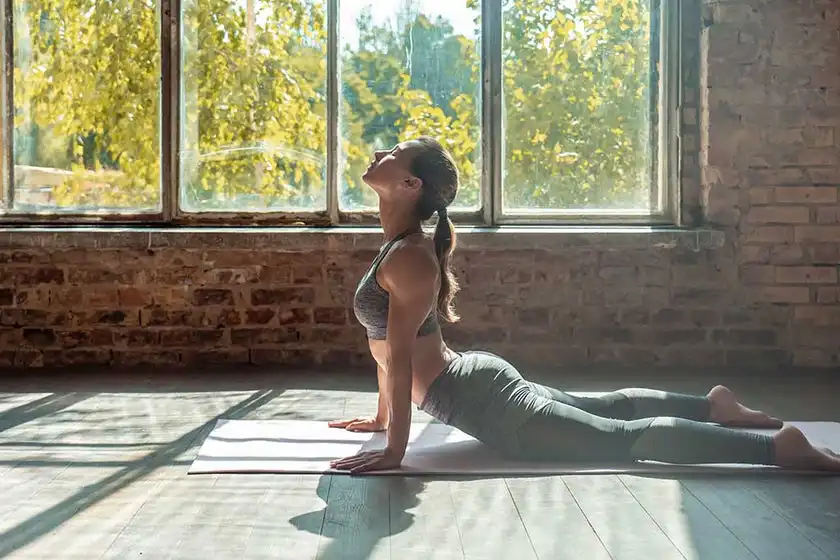
Photo via puffy.com
- Arm circles: extend your arms to the sides and make small circles, gradually increasing the size, then reverse direction. This warms the shoulders and upper back.
- Leg swings: holding a wall for balance, swing one leg forward and back in a controlled arc, then side to side. Repeat on the other leg to loosen the hips and hamstrings.
- Walking lunges: step forward into a lunge, keeping your torso upright, then step through into the next one. This opens the hip flexors and activates the glutes and quads.
- Hip openers: standing, lift one knee and rotate it outward in a wide circle, then inward. Repeat on the other side to mobilise the hip joints.
- Cat-cow: on all fours, alternate between arching your back upward and letting it dip gently downward, moving with your breath. This wakes up the spine and core.
- Gentle torso twists: standing with feet hip-width apart, rotate your upper body slowly from side to side, letting your arms swing loosely. This warms the spine and obliques.
- Calf raises: rise up onto your toes and lower slowly, ten to fifteen times, to warm the calves and ankles before any running or jumping.
Stretching for Different Workouts
Tailor the last few minutes of your warm-up to the session ahead. The principle is the same — prepare the muscles you are about to use — but the emphasis shifts.

Photo via womenfitness.net
- Before running: emphasise leg swings, walking lunges, and calf raises, and add a few minutes of brisk walking to ease into pace.
- Before strength training: mobilise the joints the lifts will use — shoulders and thoracic spine for pressing, hips and ankles for squats — and finish with a light set of the first exercise.
- Before yoga or Pilates: a gentle flow of cat-cow, hip openers, and slow spinal twists prepares the body without tiring it.
- Before a class or sport: include lateral movements and light jumps or shuffles to prepare for the change-of-direction demands ahead.
On colder days, give yourself an extra minute or two — muscles take longer to warm up when it is chilly, and a cosy layer like the cozy fleece outfit ideas makes the warm-up itself more pleasant.
Common Pre-Workout Stretching Mistakes
Stretching cold muscles: diving straight into deep stretches without any light cardio first is how strains happen. Always raise your temperature with two to three minutes of easy movement before stretching.
Holding long static stretches: pre-workout static holds can temporarily reduce strength and power. Keep the holds for after the session, when they help recovery instead.
Bouncing: ballistic, bouncing stretches can overstretch tissue and trigger a protective tightening response. Move smoothly and with control instead.
Skipping the warm-up entirely: the most common mistake of all. Even five minutes makes a measurable difference to performance and injury risk.
Pushing through pain: a stretch should feel like gentle tension, never sharp or stabbing pain. If it hurts, ease off immediately. And if your body is telling you it needs more support, the guide to essential vitamins for women covers the nutrients that support muscles and joints between sessions.
After Your Workout: The Cool-Down Stretch

Photo via fitnessvolt.com
Once your workout is done, spend five minutes on static stretches while your muscles are warm. Hold each stretch for 20–30 seconds, breathing slowly, and focus on the muscles you worked hardest: quads, hamstrings, calves, chest, shoulders, and back. This is when flexibility genuinely improves, because warm muscle tissue responds to a sustained stretch far better than cold tissue does.
A proper cool-down also helps your heart rate and breathing return to normal gradually, rather than dropping off a cliff. It is the bookend to the warm-up, and skipping it is as much a false economy as skipping the warm-up itself. Afterwards, comfortable clothes for the journey home — the sporty everyday outfit ideas — make the whole routine feel effortless.
When to Talk to a Professional
If stretching causes persistent pain, or if you have a joint condition, a recent injury, or limited mobility that makes standard stretches difficult, talk to a doctor or physical therapist before building a routine. A professional can design stretches that fit your body and flag any movements to avoid. Sharp pain during any stretch is always a signal to stop and seek advice.
Frequently Asked Questions
How long should I stretch before a workout?
Five to ten minutes is enough for most workouts: two to three minutes of light cardio followed by five to seven minutes of dynamic stretching. Longer or more intense sessions may deserve the full ten minutes, especially in cold weather.
Should I stretch before or after exercise?
Both, but differently. Stretch dynamically before exercise to warm up the muscles, and statically after exercise to improve flexibility while muscles are warm. Long static holds belong after the workout, not before it.
Can stretching before a workout prevent injury?
A proper dynamic warm-up reduces injury risk by preparing muscles and joints for the demands ahead. No routine can guarantee you will never get injured, but warming up properly is one of the most reliable protective steps you can take.
What if I am not flexible?
Flexibility is not a requirement for stretching — it is the result of it. Start with a small, comfortable range of motion and let it grow over weeks of consistent practice. Never force a stretch to match someone else’s range.
Is it okay to stretch every day?
Yes, gentle daily stretching is fine and beneficial for most people. Keep the intensity moderate, listen to your body, and give sore muscles a lighter day when they need one.
Final Thoughts
A stretching routine before your workout does not need to be long or complicated: a few minutes of light cardio, a handful of dynamic moves aimed at the muscles you are about to use, and you are ready. Move before, hold after, never stretch through pain, and treat the warm-up as part of the workout rather than an optional extra. Your muscles will perform better, recover faster, and stay healthier for it.
Disclaimer: This article is for general informational purposes only and does not constitute medical or professional fitness advice. Consult a doctor or physical therapist before starting any new exercise or stretching program, especially if you have a health condition, joint issue, or recent injury. Stop immediately if you experience sharp pain.